The Shield of Memory – Articles from “Der Schild”, Journal of the Reich Federation of Jewish Front-Line Soldiers: April 3, 1936 – “Pesach Before Verdun”

Given the importance of PassoverPesach – to the Jewish people, both as a discrete historical event and in terms of its perennial centrality in the arc of Jewish (and dare one say … indirectly world?) history, it’s only natural that this blog presents examples of Pesach observance by Jewish soldiers in a variety of historical settings, and, within the armed forces of different nations.  In that light, you can read about military Pesach observance in the following posts:

World War One

Soldiers of The Great War: Jewish Military Service in WW I, as Reported in l’Univers Israélite (The Jewish World) – Le Séder sur le Front (The Seder at The Front), April 9, 1915 (March 22, 2017)

World War Two

The Jews of Hawaii in World War Two: The Jewish Exponent, September 10, 1943 (November 10, 2022)

Pacific Pesach – The Guam Haggadah (parts one, two, three, four, and five (references).  (January, 2017)

Pesach with the Jewish Brigade: Italy – March, 1945 (May 24, 2018)

The commonality of these posts is obvious: They pertain to Pesach observance by Jewish servicemen specifically in the Allied armies in both wars.  While this is so by definition – alas, truly needing no explanation – in the Second World War, in the First World War (the ironically named “Great War”) Pesach was observed by Jewish soldiers serving in the militaries of both the Allies and Central Powers, among the latter most obviously and prominently Imperial Germany.  The latter is the topic of “this” post: Passover observance, specifically in terms of the Seder, amidst the horrific Battle of Verdun, during 1916.  This was the subject of former Feldrabbiner (Field Rabbi) Georg Salberger’s detailed reminiscence in Der Schild, which was published in April of 1936.  

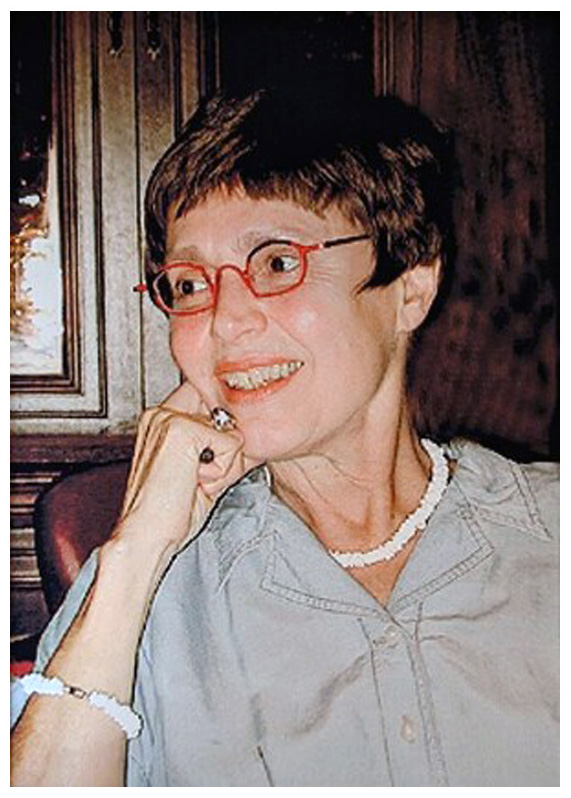
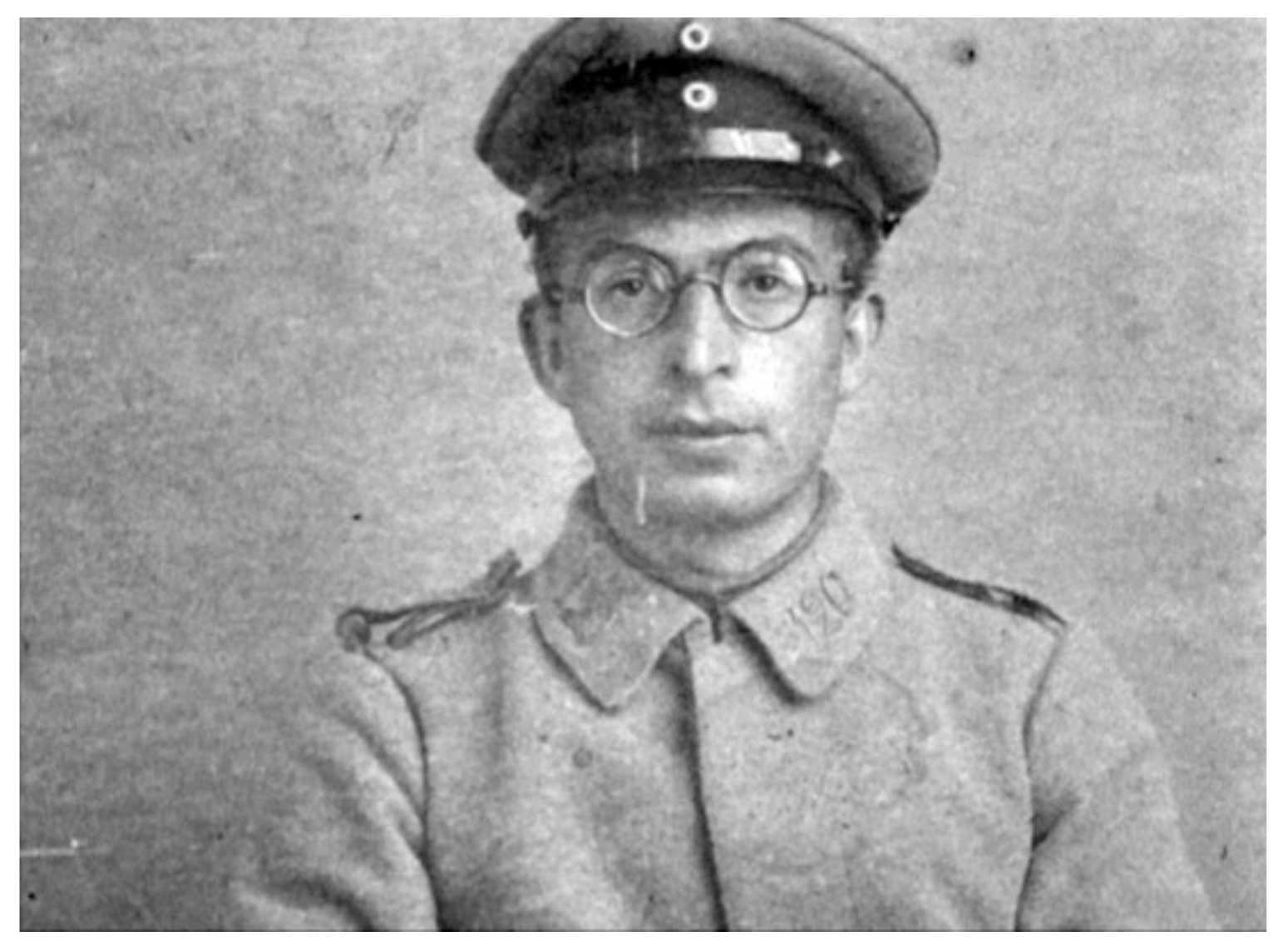
As described at the Leo Baeck Institute – Edythe Griffinger Portal“Georg Salzberger was born in Culm, West-Prussia (Chełmno, Poland) in 1882 and grew up in Erfurt, Germany, where his father Moritz Salzberger was the rabbi.  He studied at universities in Berlin and Heidelberg, and he was ordained rabbi at Hochschule für die Wissenschaft des Judentums in Berlin in 1909.  From 1910 to 1937, Salzberger was rabbi at the liberal Westend-Synagogue in Frankfurt am Main; he also lectured at the Philanthropin and other Jewish institutions.  After incarceration at Dachau, Salzberger emigrated to London, England, where he was co-founder of the German-speaking “New Liberal Jewish Congregation”.  Rabbi Dr. Georg Salzberger died in London in 1975.”

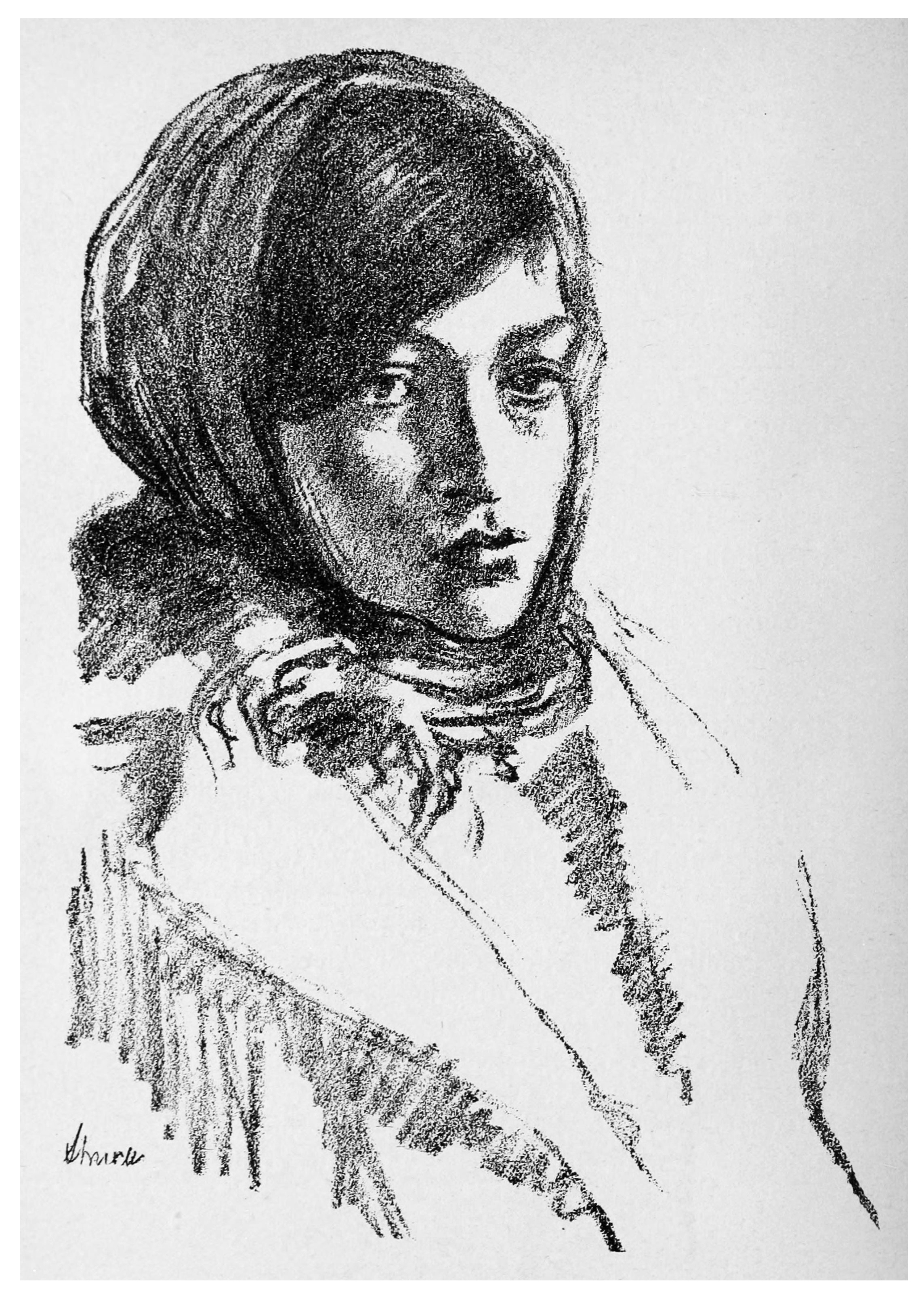
Here’s Rabbi Salzberger’s undated portrait from the Leo Baeck Institute: “Part of the Paul Arnsberg Collection, AR 7206; Accession Number F826.”  You can also view the portrait via the Center for Jewish History.  

As in my prior posts about Der Schild, this posts includes images of the article, followed by an English-language translation, and finally, the same article in the original German.  (Unfortunately, the final paragraph, illegible, is absent from this post.)  Both versions of the article close with Julius Rosenbaum’s sketch of the crowded Seder, which appeared on page seven of the March 13, 1936 issue of the newspaper – that issue (awaiting translation to English…) being almost entirely devoted to the service and experiences of German Jewish soldiers during the Battle of Verdun.  (Not that it mattered in the Germany of 1936, but anyway…) 

And so, the Seder of 1916 in the Deutsches Heer.  

Pesach Before Verdun
by Kam. Field Rabbi (ret.) Georg Salzberger, Frankfurt a.M.

The Shield
April 3, 1936

Number 14/15

“Oh, this night is certainly different from all other nights,
from those in our beloved homeland with father and mother,
with wife and child,
but also from the nights in the muddy trenches,
in the “bomb-proof” shelter,
at the forward post or during the assault.
War is outside, and here, for one night, there is peace.
Many a tear steals from their eye
when they hear the old melodies here
or when they see the long procession of their ancestors,
heroic, storm-hardened men and women,
pass by in the text of the Haggadah.”

Since February 21, 1916, the beginning of the great offensive, the cannons thundered day and night around the old, defiant fortress. In heroic attacks and counterattacks, the German positions had been pushed forward to the barrier forts: Fort Vaux had been taken after admirable resistance from the French garrison. The German Crown Prince had received its brave commander, a Jewish captain, as we were told, in his headquarters in Stenay on the Meuse and returned his sword to him as a sign of his appreciation. Troops of captured Frenchmen could be seen everywhere. But the hospitals also filled up. Hecatombs of flourishing people were sacrificed in the murderous battles of those days and months; hecatombs succumbed to their wounds behind the front despite the self-sacrificing care of doctors, medics and nurses. In some cases a relatively light injury was enough to cause death within a few days through the development of gas phlegmon.

I had asked the general doctor of the 5th Army, to which I was assigned as field rabbi, to telegraph me when Jewish wounded were brought to a field or military hospital or when Jewish casualties were to be buried. The request was granted wherever possible. I was constantly on the move: in a car, on a truck, on a horse-drawn cart, on foot. In Stenay, where I was based, in Carnigon, in Montmedy, in Longuyon and Pierrepont – to name just the large hospitals – everywhere it was necessary to seek out the wounded, to bring them gifts of love and spiritual support, to accept their wishes and to report back home on their behalf. It is impossible to describe all the torments, but also all the quiet heroism that took place in the houses and barracks. Of course there was no difference between Jew and non-Jew: not in the torments, and not in the heroism for the brave men who lay there in bed next to bed, not for the priest who went from bed to bed. For how many, any consolation and any help came too late! Now here, now there, we lowered a brave man into the foreign earth with the ever moving song of the good comrade; often there were many at once, wrapped in white sheets, whom we buried in the military grave, and then it was not uncommon for the priest or the rabbi to give the funeral oration for all of them.

Under such circumstances, it was not easy to prepare for the Passover celebration. I had obtained an army order from the AOK [Army Higher Command], according to which the Jewish officers and men of all units of the “Crown Prince’s Army”, as far as they were available, were to be sent on leave to Stenay on the first evening of the festival or to Longuyon on the second, in order to take part in the service and the subsequent “religious meal”. The reports came in far more than I had expected, and I was happy that my good boy had brought a hundredweight of ritual smoked meat, generously donated by my home community, from Frankfurt am Main, as well as sizeable packages of matzo and a crate of wine. The director’s office supplied potatoes and canned vegetables. The rooms for the Seder celebration had to be inspected and prepared in a hurry, the meat had to be cooked in a large kashered kettle, the potatoes had to be peeled, etc.

The first evening service gathered in the beautiful church in Stenay about 300 men who had come from the most varied regions, some from far away, through bottomless mud and at the risk of their lives, from the VI, VII and XXII: RK [Reserve Corps] and from the staging areas of Stenay, Dun and Mouzon. In the absence of a Hazzan – the one from the previous year had fallen – I had to take over the office of preacher. The sight of the church filled to the last seat when I then stepped up to the improvised pulpit was overwhelming. The value of memory was spoken of in the sermon, which is presented to us in the three main symbols of the Seder table! As usual, we ended with a prayer and the Kaddish, just as we had begun with the beautiful Dutch prayer of thanksgiving accompanied by the organ; its powerful ending: “Lord, set us free!” was still ringing in our ears when we went to the town’s market square after the tribunal to celebrate the “domestic celebration” together. Because of the large number of participants, we had to do it three times in a row. This meant that not only the meal, which was served from an anteroom, was a little short, but unfortunately also the Haggadah, although I did not fail to explain the signs and customs.

Officers and doctors, as well as 5 Jewish nurses from the nearby Inor epidemic hospital, took part in the first Seder. The second Seder was given by an old family father whose name I no longer remember, the third by the younger son of Rabbi Meyer from Regensburg: It was exactly “around the middle of the night” when the last guests left the room, who had certainly never seen such a strange group together before or since.

The next morning, in the same hall, the comrades who did not have to return to the front held a service among themselves. But I had to drive in the pouring rain, laden with matzo and wine and a mailbag full of Jewish newspapers and magazines in a small car that Major Vogt from the A.O.K. had granted me, via Montmedy and Charency to Longuyon. I unloaded at Levys’s (from Diedenhoefn) sutler’s. I had sent a large crate of matzo and two of canned fruit from Frankfurt by train. The platoon commander, Lt. Colonel V. Schott, who I spoke to, had approved 400 rations of meat and 8 hundredweight of potatoes. At around 7 a.m., around 300 men lined up on the square in front of the town hall. Lt. Sergeant Wanghenheim had them counted and marched to the cinema in four formations. Festively decorated and illuminated, it welcomes our congregation, which includes two officers, several doctors (one of them the late D. Jungmann from Breslau) and sisters from Pierrepont and Longuyon. This time our prayer leader is Hofsanger Platz, who has already performed excellently at the Yom Kippur service in Montmedy. Here I only need to be a rabbi: ancient, proud memories will become an experience for us today – experiences will become memories again, that was more or less the basic idea of my sermon. During a short break, wine and matzah are served, although of course there is only one bottle for one person and one matzah for two people. But there is not a symbol missing from the Seder plate in front of me. And even though everyone only drinks four sips of wine instead of the prescribed four cups, there is still a youngest person there (a member of the Israeli Religious Society in Frankfurt am Main) who asks Ma Nishstana. Oh, this night is certainly different from all other nights, from those in our beloved homeland with father and mother, with wife and child, but also from the nights in the muddy trenches, in the “bomb-proof” shelter, at the forward post or during the assault. War is outside, and here, for one night, there is peace. Many a tear steals from their eye when they hear the old melodies here or when they see the long procession of their ancestors, heroic, storm-hardened men and women, pass by in the text of the Haggadah. The fare is meager, and I cannot blame a humorous comrade for thinking that even the meat today is only symbolic: and yet they all join in with grateful hearts when Dr. S___andi says the grace before meals.

Meanwhile, in the cafe opposite, the 100 men who no longer had room with us had held their own service and Seder. The next morning we all met again in the cinema for a peaceful service with learning, haftorah and musaf. A Mater who experienced it has captured it in his picture. (This picture of the Mater, our Kam. Julius Rosenbaum [of] Berlin, was in No. 11, page 7, D. R.d.)

Pesach vor Verdun
von Kam. Feldrabbiner a.D. Georg Salzberger, Frankfurt a.M.

Der Schild
April 3, 1936

Nummer 14/15

Seit dem 21. Februar 1916, dem Beginn der grossen Offensive, donnerten Tag und Nacht die Kanonen um die alte trotzige Festung. In heldenmütigen Angriffen und Gegenangriffen waren die deutschen Stellungen bis zu den Sperrforts vorgeschoben worden: Fort Vaux war nach bewundernswertner Widerstand der französischen Besatzung genommen. Ihren tapferen Kommandanten, einen jüdischen Hauptmann, wie man uns erzählte, hatte der Deutsche Kronprinz in seinem Hauptquartier zu Stenay an der Maas empfangen und ihm zum Zeichen seiner Anerkennung den Degen zurückgegeben. Ueberall sah man Trupps von gefangenen Franzosen. Aber auch die Lazarette füllten sich. Hekatomben blühender Menschen wurden in den mörderischen Schlachten jener Tage und Monde geopfert, Hekatomben erlagen trotz aufopfernder Pflege von Aerzten, Sanitätern un7d Krankenschwestern hinter der Front ihren Verwundungen. Ost genügte eine verhältnismässing leichte Verletzung, um durch sich entwickelnde Gasphlegmone in wenigen Tagen den Tod herbeizufuhren.

Ich hatte den Generalarzt der 5. Armee, der ich als Feldrabbiner zugeteilt war, gebeten, dass ich telegraphisch verständigt würde, wenn in einen Feld- oder Kriegslazarette jüdische Verwundete eingeliefert wurden oder jüdische Gefallene zu bestatten waren. Nach Möglichkeit entsprach man der Bitte. Ich war ständig unterwegs: im Personenauto, auf Kraftlastwagen, auf Pferdefuhrwerken, zu Fuss. In Stenay, wo ich mein Standquartier hatte, in Carnigon, in Montmedy, in Longuyon und Pierrepont – um nur die grossen Lazarette zu nennen – überall galt es, Verwundete aufzusuchen, ihnen Liebesgaben zu bringen und seelische Aufrichtung, ihre Wünsche entgegen zu nehmen und für sie nach der Heimat zu berichten. Unmöglich, all die Qualen, aber auch all das stille Heldentum zu schildern, die sich in den Häusern und Baracken abspielten. Natürlich gas es de zwischen Jude und Nichtjude keinen Unterschied: nicht in der Qual, und nicht im Heldentum für die Braven, die dort Bett an Bett lagen, nicht für den Geistlichen, der von Bett zu Bette ging. Bei wievielen kam jeder Trost und jede Hilfe zu spät! Bald da, bald dort senkten wir mit dem immer wieder ergreifenden Liede vom guten Kameraden einen Braven in die fremde Erde, oft waren es viele auf einmal, die wir in weisse Laken gehüllt im Waffengrab begruben und dann kam es nicht selten vor, dass der Pfarrer oder der Rabbiner ihnen insgesamt die Grabrede hielt.

Unter solchen Umständen war es nicht leicht, für die Pessachfeier zu rüsten. Ich hatte heim AOK [Armeeoberkommando], einen Armeebefehl erwirkt, wonach die jüdischen Offiziere und Mannschaften aller Truppenteile der „Kronprinzen-Armee“, soweit sir irgend abkömmlich waren, zum 1. Abend des Festes nach Stenay oder zum 2. Nach Longuyon zu beurlauben seien, um am Gottesdienst und am anschliessenden „religiösen Mahl“ teilzunehmen. Weit zahlreicher, als ich erwartet hatte, liefen die Meldungen ein, und ich war glücklich, dass mein braver Bursche einen Zentner rituelles Rauchfleisch, das meine Heimatgemeinde grosszügig gestiftet, aus Frankfurt am Main gebracht hatte, dazu ansehnliche Pakete Mazzen und eine Kiste Wein. Kartoffeln und Gemüsekonserven lieferte die Intendantur. In Eile mussten die Räume für die Seder-Feier besichtigt und hergerichtet, das Fleisch in einem grossen gekascherten Kessel gekocht, die Kartoffeln geschält werden ufw.

Der erste Abendgottesdienst versammelte in der schönen Kirche zu Stenay annahernd 300 Mann, die aus den verschiedensten Gegenden, teilweise von weit her, durch grundlosen Schlamme und unter Lebensgefahr, vom VI, VII und XXII: RK [Reserve-Korps] und aus den Etappenorten Stenay. Dun und Mouzon gekommen waren. In Ermangelung eines Chasen – der vom vorigen Jahr war gefallen – musste ich das Amt eines Barbeters übernehmen. Ueber wältigend der Anblick des bis auf den letzten. Platz gefüllten Gotteshauses, als ich dann an die improvisierte Kanzel trat. Von dem Wert der Erinnerung sprach in der Predigt, die in den drei Hauptsymbolen der Seder-Tafel uns entgegen tritt! Wie zumeist schlossen wir mit einem Gebet und dem Kaddisch, wie wir mit dem schönen Niederländischen Dankgebet unter Orgelbegleitung begonnen hatten; sein kraftvoller Ausklang: „Herr, mach uns frei!“ lag uns noch im Ohr, als wir uns nach dem Tribunal auf den Marktplatz des Fleckens begaben, um dort zusammen die „häusliche Feier“ zu begehen. Wegen der Fülte der Teilnehmer mussten wir es dreimal nacheinander tun. Dadurch kam nicht nur das Mahl etwas zu kurz, das von einem Vorraum, aus serviert wurde, sondern leider auch die Haggada, obwohl ich es an Erklärungen der Zeichen und Bräuche nicht fehlen liess.

Am ersten Seder nahmen Offiziere und Aerzte, auch 5 jüdische Krankenschwestern aus dem nahen Seuchenlazarett Inor teil. Den zweiten Seder gab ein alter Familienvater, dessen Namen ich nicht mehr weiss, den dritten der jüngere Sohn des Rabbiners Meyer aus Regensburg: Es war genau „um die Mitte der Nacht,“ als der letzten Gäste den Raum verliessen, de gewiss weder vor noch nachher eine so merkwürdige Gesellschaft beisammen gesehen hat.

Am anderen Morgen hielten im gleichen Saal die Kameraden, die nicht gleich zur Front zurück mussten, unter sich einen Gottesdienst ab. Ich aber musste, beladen mit Mazzen und Wein und einem Postsack voll jüdischer Zeitungen und Zeitschriften in einem Klein-Auto, das mir Major Vogt vom AOK bewilligte, bei strömendem Regen über Montmedy und Charency nach Longuyon fahren. In der Marketenderei von Levys (aus Diedenhoefn) lud ich ab. Eine grosse Kiste mit Mazzen und zwei mit Obstkonserven aus Frankfurt hatte ich per Bahn vorangeschickt. Etappen-Kommandant Oberstltn. V. Schott, bei dem ich vorgesprochen, hatte 400 Rationen Fleisch und 8 Zentner Kartoffeln bewilligt. Gegen 7 Uhr treten auf dem Platz vor dem Rathaus etwa 300 Mann an. Feldwebel-Ltn. Wanghenheim lässt abzählen und in 4 Gliedern zum Kino marschieren. Festlich geschmückt und beleuchtet empfängt es unsere Gemeinde, unter der sich auch 2 Offiziere, mehrere Aerzte (einer von ihnen der inzwischen verstorbene D. Jungmann aus Breslau) und Schwestern aus Pierrepont und Longuyon befinden. Diesmal ist unser Vorbeter Hofsänger Platz, der sich bereits beim Yom-Kippur-Gottesdienst in Montmedy hervorragend bewährt hat. Hier brauche ich nur Rabbiner zu sein: Uralte stolze Erinnerung wird uns heute zum Erlebnis – Erlebnis wird wieder zur Erinnerung werden, das etwa war der Grundgedanke meiner Predigt. Während einer kurzen Pause werden Wein und Mazzen gereicht, wobei freilich nur 1 Flasche auf 1 Mann und 1 Mazze auf 2 Mann kommt. Aber auf der Sederschüssel vor mir fehlt kein Symbol. Und wenn auch jeder statt der vorgeschriebenen 4 Becher nur 4 Schluck Wein trinkt, so ist doch ein Jüngster da (Mitglied der Isr. Religionsgesellschaft im Frankfurt a. M.), der ma nischstanno fragt. O., diese Nacht unterscheidet sich allerdings von allen andern Nächten, von denen in der lieben Heimat bei Vater und Mutter, bei Weib und Kind, aber auch von den Nachten in den schlammigen Schützengraben, im „bombensicheren“ Unterstand, auf vorgeschobenem Posten oder beim Sturmangriff. Kriegs ist draussen, und hier für eine Nacht Frieden. Manchem stiehlt sich eine Träne aus dem Auge, wenn er die alten Melodien hier vernimmt oder in langem Zuge die Geschlechter seiner Ahnen, heldenhafter, sturmerprobter Männer und Frauen im Texte der Haggada an sich vorüberziehen steht. Schmal ist die Kost, und ich kann es einem humorvollen Kameraden nicht verargen, wenn er meint, auch das Fleisch sei wohl heute nur symbolisch geboten: und doch stimmen sie alle aus dankbaren Herzen ein, als Dr. S___andi das Tischgebetspricht.

Im Cafe gegenüber haben inzwischen die 100 Mann, die bei uns nicht mehr Platz fanden, ihren eigenen Gottesdienst und Seder gehalten. Am nächsten Morgen finden wir alle uns noch einmal im Kino zu friedlicher And____ mit Leienen, Haftoro und Mussaph zusammen Ein Mater, der sie miterlebt, hat sie im Bilde, sein gehalten. (Dieses Bild des Maters, unseres Kam. Julius Rosenbaum Berlin, war in Nr. 11, Seite 7, D. R.d.)

Here’s an overview of how to access Der Schild at Goethe University, excerpted from my post “Infantry Against Tanks: A German Jewish Soldier at Cambrai, November, 1917“, of September 9, 2017.  (It certainly seems to have come in handy, just over seven years later!)

“Stories and depictions of World War One combat, composed both during and after the “Great War”, are abundantly available in print and on the web. 

“A fascinating source of such accounts – but even moreso a source particularly; poignantly ironic – is the newspaper Der Schild, which was published by the association of German-Jewish war veterans, the “Reichsbundes Jüdischer Frontsoldaten”, from January of 1922 through late 1938, the latter date paralleling the disbandment of the RjF.  Der Schild is available as 35mm microfilm at the Dorot Jewish Division of the New York Public Library, and in digital format through Goethe University Frankfurt am Main.  

“The screen-shot below shows the Goethe University’s catalog entry for Der Schild, which allows for immediate and direct access of the library’s holdings of the newspaper.  All years of the publication, with the exception of 1924, are available; all as PDFs. 

“Of equal (greater?!) importance, accessing digital holdings is as simple as it is intuitive (and easy, too!)  In effect and intent, this is a very well designed website!  This is shown through this screen-shot, presenting holdings of Der Schild for 1933. 

“The total digitized holdings of Der Schild in the Goethe University’s collection comprise approximately 530 issues.  “Gaps” do exist, with 1922 comprising only four issues (9, 10, 13, and 14) and 1923 comprising three issues (14, 15, and 17).  However, holdings for all years commencing with 1925 are – I believe – complete, through the final issue (number 44, published November 4, 1938).

“Not unexpectedly, Der Schild’s content sheds fascinating and retrospectively haunting light on Jewish life in Germany during the 1920s and 1930s; on Jewish genealogy; on the military service of German Jews (not only in the First World War but the Franco-Prussian War as well), often focusing on Jewish religious services at “the Front”, rather than “combat”, per se (see the issue of April 3, 1936, with its cover article “Pesach vor Verdun”); on occasion about Jewish military service in the Allied nations during “The Great War”(1); on Jewish history, literature, and religion; on Jewish life and Jewish news outside of Germany.

“There is much to be explored.”

References

Bund jüdischer Soldaten (YouTube Channel)

Der Schild (digital version) (at Goethe University Frankfurt website)

Reichsbund jüdischer Frontsoldaten (at Wikipedia)

Vaterländischer Bund jüdischer Frontsoldaten (Patriotic Union of Jewish Front-Line Soldiers”) 

The Shield of Memory – Articles from “Der Schild”, Journal of the Reich Federation of Jewish Front-Line Soldiers: August 7, 1936 – “Symbol of Jewish Honor”

“And we, the Jewish front-line soldiers of the old German army,
who on the other side, in the trenches opposite,
took part in the defense of our homeland with our lives and bodies,
we visit this silent and yet so convincing memorial at Douaumont
with awe-struck hearts.”

There are many ways to contemplate the past, one of which is from both “within” the past itself, and, from the perspective of the present.  This is so for my seven posts about the military service of Jews in the French Army – the Armée de terre – in the First World War.  Four of these posts (here, here, and here, pertaining to a 1918 essay by Maurice Barres, and here, pertaining to a 1915 news item) explore the military service of French Jews as recorded during the war itself, while the other three – pertaining to a discovery from a compilation of information about Jewish military casualties, and, the legend surrounding Rabbi Abraham Bloch (two posts, one in English and the other in French) are based on genealogical and historical research from 1921, and, 1999, respectively. 

“This” post, however, comes from a moment in time between the First and Second World Wars: It presents a news item / editorial that appeared on the front page of Der Schild on August 7, 1936, concerning the planned construction of a memorial dedicated to the memory of the Jewish soldiers of France who fell in the Battle of Verdun, and more generally, in commemoration of all French Jewish soldiers who fell in battle between 1914 and 1918.  Der Schild’s article is wistful is if not near-inexpressibly poignant on multiple levels: First, it pertains to the commemoration of Jewish fallen by a former enemy of Germany.  Second, even before the advent of the Third Reich and by definition certainly not after, no analogous monument for the Jewish military fallen of the German was – to the best of my knowledge – even created in that country.  And third, in light of what we in 2025 now indelibly* know about the impending future of the Jews of Germany (Jewish veterans of the Great War among them) and European Jews in general, in the years subsequent to 1933.

(* Truth be told, probably not indelible after all.  Or to be more accurate, while indelible to the Jewish people, for the rest of the world, not so much.)     

The monument was completed just under two years later after the appearance of Der Schild’s article, as described in this news item from the Jewish Telegraphic Agency, which was published on June 20, 1938:

Monument to Jews Who Fell in War Unveiled Near Verdun

Paris, June 19. (JTA) — Condemnation of persecution and advice to the Jews to remember history, to be patient and not to despair were voiced today by Deputy Caesar Campinchi, speaking on behalf of the French Government during ceremonies at the unveiling of an imposing monument at Douamont, near Verdun, to 6,500 French Jews and 2,000 Americans and British Jews of the Foreign Legion who fell in the war.

The unveiling was the main feature of the national celebration of the twenty-second anniversary of the battle of Verdun.  It was attended by 1,000 Jewish and non-Jewish veterans with General Andre Weller, a Jew, presiding.  Other speakers included Government officials and the mayor of Douaumont.

Deputy Campinchi assailed the racial theories “practiced in other countries” and declared that France stood for the ideal of equality of all people, an ideal for which, he said, Jewish soldiers fell.

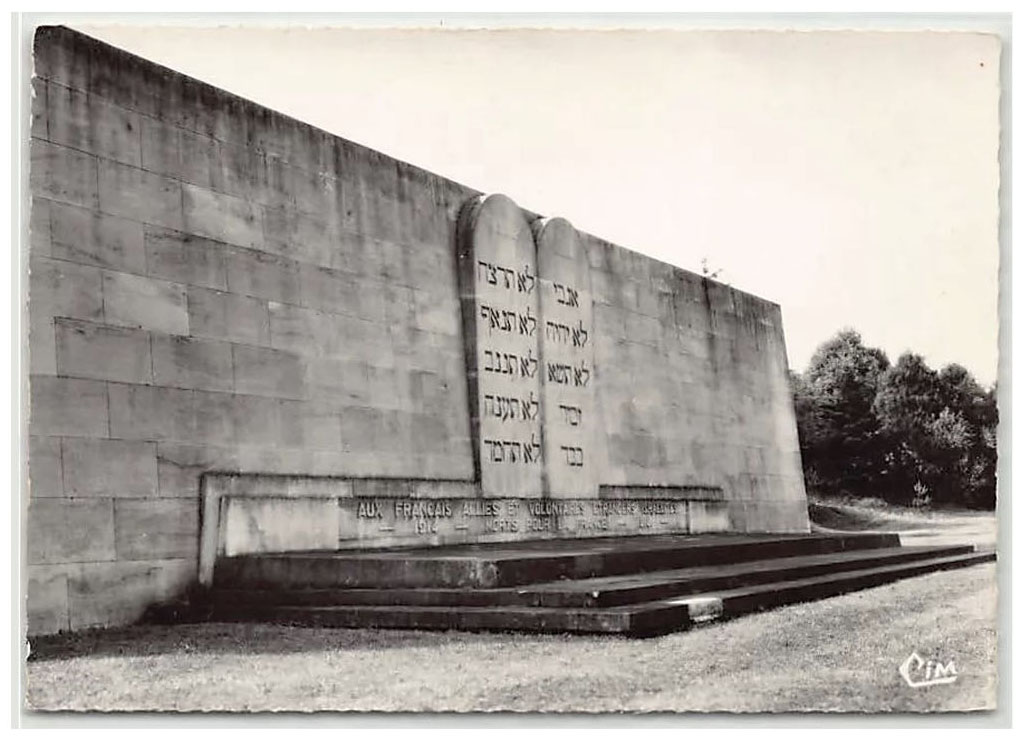
Here are three images of the monument.  

This undated picture is Publ. Combier postcard 5631, the sepia tone suggesting that it was printed between the late 30s and late 50s.  (Just a guess.)  

This excellent image is from Wikimedia Commons…  

… while the following glowing tafofil image is from Facebook.  

But first… The text standing in relief on the monument’s base states: 

AUX FRANCAIS, ALLIES ET VOLONTAIRES ETRANGERS ISRAELITES
– 1914 – MORTS POUR LA FRANCE – 1918 –
…translation…
DEDICATED TO THE FRENCH, ALLIED, AND FOREIGN ISRAELITE VOLUNTEERS
– 1914 – DIED FOR FRANCE – 1918 –

And so, the article as it appeared on the front page of Der Schild, following by English-language translation, and, the original German.

Symbol of Jewish honor
The memorial at Douaumont

The shield
August 7, 1936
Number 32

“It looks down on the graves at a place of world history,
where German and French soldiers,
German and French Jews among them,
are laid to eternal rest, just as the bullet, the grenade, the gas struck them back then.”  

Only recently – we read it in the newspapers – former front-line soldiers from the armies involved met on the battlefields of Verdun and exchanged words of respect for the former enemy, words of camaraderie and commitment to an honorable peace at this site consecrated by endless streams of precious blood.  And now we hear that in the future a towering memorial will be a silent yet speaking witness to Jewish fulfillment of duty, Jewish blood sacrifice, Jewish honor at this very site.  A huge memorial, which owes its existence to the exemplary initiative of the Israelite religious community of the Meuse department, will rise near Douaumont, west of the cemetery, facing east, for marriages and in remembrance of the Jews who fell for France.

The memorial, which is already being built, was designed by an old front-line soldier, the architect Geo Stern.  It has the shape of a huge wall, 30 m long and 7 m high; at its front are the two tablets of the law with the 10 commandments.

This memorial will thus look down silently on the greatest battlefield in history, on which 400,000 heroes fell for their fatherland.

Inside, each of the 10,000 names of the Jews who fell for France will be carved in the stone and illuminated by the glow of an eternal lamp.

Edmond Fleg, the well-known Jewish-French writer, calls the memorial “worthy of those who, in defending France, also defended our honor at the cost of their lives.”

In this spirit, French Jewry proudly remembers its sons who fell for their fatherland.  And we, the Jewish front-line soldiers of the old German army, who on the other side, in the trenches opposite, took part in the defense of our homeland with our lives and bodies, we visit this silent and yet so convincing memorial at Douaumont with awe-struck hearts.

It looks down on the graves at a place of world history, where German and French soldiers, German and French Jews among them, are laid to eternal rest, just as the bullet, the grenade, the gas struck them back then.  Where human voices are silent, this Jewish memorial speaks; speaks the word of God from the Ten Commandments, which were proclaimed to mankind by Israel…


Wahrzeichen jüdischer Ehre
Das Mahnmal am Douaumont

Der Schild
August 7, 1936

Number 32

Erst kürzlich haben sich – wir lasen es in den Zeitungen – auf den Schlachtfeldern von Verdun ehemalige Frontkämpfer der beteiligten Armeen getroffen und Worte der Achtung vor dem einstigen Gegner, Worte der Kameradschaft und Bekenntnisse zu einem ehrenvollen Frieden an dieser, durch unendliche Ströme kostbaten Blutes geweihten Stätte gewechselt.  Und nun hören wir, dass künftig an eben dieser Stätte ein – ragendes Ehrenmal stummer und doch sprechender Zeuge jüdischer Pflichterfüllung, jüdischen Blutopfers, jüdischer Ehre sein wird.  Ein gewaltiges-Mahnmal, des seine Entstehung der vorbildlichen Initiative der Israelitischen Kultusgemeinschaft des Departments Meuse verdankt, wird sich bei Douaumont, westlich des Gräberfelds, mit Front nach Osten, erheben, zu Ehen und zur Erinnerung an die für Frankreich gefallenen Juden.

Der Entwurf des Ehrenmals, das sich bereits in Ausführung befindet, stammt von einem alten Frontkampfer, dem Architekten Geo Stern.  Es hat die Gestalt einer gewaltigen Mauer, die 30 m lang und 7 m hoch ist; an ihrer Stirnseite befinden sich die beiden Gesetzestafeln mit den 10 Geboten.

So wird dieses Ehrenmal auf das gröszte Schlachtfeld, das die Geschichte kennt und auf dem 400 000 Helden für das Vaterland gefallen sind, still berniederschauen.

Im Innern wird jeder der 10 000 Namen der für Frankreich gefallenen Juden in den Stein gemeisselt und vom Schimmer de ewigen Lampe bestrahlt sein.

Edmond Fleg, der bekannte jüdsich-französische Schriftsteller, nennt das Erinnerungsmal „würdig derer, die, indem sie Frankreich verteidigten, gleichzeitig unsere Ehre mit dem Preise ihres Lebens verteidigt haben“

In diesem Geiste gedenkt Frankreichs Judentum stolz seiner für ihr Vaterland gefallenen Söhne.  Und wir jüdischen Frontsoldaten der alten deutschen Armee, die wir auf der anderen Seite, in den Gräben gegenüber, mit Leib und Leben an der Verteidigung unseres Heimatlandes teilnahmen, wir grossen dieses stumme und doch so überzeugende Mahnmal am Douaumont-ehrfürchtig bewegten Herzens.

Es blickt an weltgeschichtlicher Stätte auf die Gräberfelder herab, zu denen deutsche und französische Soldaten, deutsche und französische Juden unter ihnen, zur ewigen Ruhe gebettet sind, wie die Kugel, die Granate, das Gas sie damals getroffen.  Wo Menschenstimmen schweigen, spricht dieses jüdische Mahnmal, spricht das Wort Gottes aus den Zehn Geboten, die durch Israel der Menschheit verkündet wurden…

Here’s an overview of how to access Der Schild at Goethe University, excerpted from my post “Infantry Against Tanks: A German Jewish Soldier at Cambrai, November, 1917“, of September 9, 2017.  (It certainly seems to have come in handy, just over seven years later!)

“Stories and depictions of World War One combat, composed both during and after the “Great War”, are abundantly available in print and on the web. 

“A fascinating source of such accounts – but even moreso a source particularly; poignantly ironic – is the newspaper Der Schild, which was published by the association of German-Jewish war veterans, the “Reichsbundes Jüdischer Frontsoldaten”, from January of 1922 through late 1938, the latter date paralleling the disbandment of the RjF.  Der Schild is available as 35mm microfilm at the Dorot Jewish Division of the New York Public Library, and in digital format through Goethe University Frankfurt am Main.  

“The screen-shot below shows the Goethe University’s catalog entry for Der Schild, which allows for immediate and direct access of the library’s holdings of the newspaper.  All years of the publication, with the exception of 1924, are available; all as PDFs. 

“Of equal (greater?!) importance, accessing digital holdings is as simple as it is intuitive (and easy, too!)  In effect and intent, this is a very well designed website!  This is shown through this screen-shot, presenting holdings of Der Schild for 1933. 

“The total digitized holdings of Der Schild in the Goethe University’s collection comprise approximately 530 issues.  “Gaps” do exist, with 1922 comprising only four issues (9, 10, 13, and 14) and 1923 comprising three issues (14, 15, and 17).  However, holdings for all years commencing with 1925 are – I believe – complete, through the final issue (number 44, published November 4, 1938).

“Not unexpectedly, Der Schild’s content sheds fascinating and retrospectively haunting light on Jewish life in Germany during the 1920s and 1930s; on Jewish genealogy; on the military service of German Jews (not only in the First World War but the Franco-Prussian War as well), often focusing on Jewish religious services at “the Front”, rather than “combat”, per se (see the issue of April 3, 1936, with its cover article “Pesach vor Verdun”); on occasion about Jewish military service in the Allied nations during “The Great War”(1); on Jewish history, literature, and religion; on Jewish life and Jewish news outside of Germany.

“There is much to be explored.”

References

Bund jüdischer Soldaten (YouTube Channel)

Der Schild (digital version) (at Goethe University Frankfurt website)

Reichsbund jüdischer Frontsoldaten (at Wikipedia)

Vaterländischer Bund jüdischer Frontsoldaten (Patriotic Union of Jewish Front-Line Soldiers”) 

The Shield of Memory – Articles from “Der Schild”, Journal of the Reich Federation of Jewish Front-Line Soldiers: January 11, 1926 – “The Jewish Landwehr Officers at Waterloo”

This 1926 article from Der Schild is very much off the pixelated-track of this blog’s content, for it pertains to the Battle of Waterloo, and specifically, the role of Jewish officers in the Prussian Landwehr during that pivotal battle. 

As such, the article is reflective of the newspaper’s value in covering the experience of Jews in the military well removed from the context of the First World War.  Ironically, the thrust of the article is to disprove an assertion that appeared in the German-Jewish periodical Sulamith, to the effect that “55 Prussian officer of the Jewish faith were killed at Waterloo.”  Based on information presented by the article’s anonymous author, this was not so: As of 1915, “Neither a complete list of Prussian soldiers who died in the Battle of Waterloo nor any other source has been found.  This is evidently a misunderstanding or a printing error in the magazine “Sulamith”, possibly caused by the fact that Lord Wellington spoke in the English House of Lords on August 1, 1933 of 15 officers of the Jewish faith who served in the Battle of Waterloo.” 

It turns out that Der Schild takes this supposed statement by Lord Wellington out of context, for, as reported in the Jewish Chronicle in 2015, the comment about 15 Jewish officers under Wellington’s command was actually spoken by a peer in Parliament, who supported the Jewish Civil Disabilities Bill of 1833, and passage of which Lord \Wellington was adamantly against.  

In any event, the article’s unknown author then segues into a brief discussion of the military service of German Jews subsequent to 1804; in early decades of the nineteenth century.  The conclusion of this 1926 article ends with an ironic note, remarking on Silberstein’s earlier comment in Sulamith, expressing, “…the hope that after the World War there will not be a similar relapse into hatred and lack of culture.  This hope was deceptive.”

Well, if it was deceptive in 1926, perhaps it is still deceptive in 2025. 

Will it always be so, for a nation that stands alone? 

Perhaps.  Perhaps not.  Perhaps both.  

The Jewish Landwehr Officers at Waterloo

The Shield
January 11, 1926
Number 2

In No. 35 of the “Schild”, Horwitz reports on a note in an old volume of the magazine “Sulamith”, according to which 55 Prussian Landwehr officers of the Jewish faith were killed at Waterloo. The improbability of this number is immediately apparent. It is hardly conceivable that just a few years after the edict of March 11, 1812 opened the way for Prussian Jews to join the army, there should already have been so many Jewish officers that no fewer than 55 of their ranks could have been killed in battle. This figure also clearly does not agree with the general casualty figures. In total, 7,000 men of the Prussian troops were put out of action at Waterloo (Richter: History of the Wars of Liberation, Berlin 1890, Volume 4, page 304; Jager: World History, Bielefeld-Leipzig 1899, Volume 4, page 350). I was unable to determine how many officers are included in this number from the sources available to me. If one assumes that the ratio was the same as with the British and Hanoverians, where 600 officers were among 14-15,000 out of action (Richter: ibid.), it would turn out that the Prussian army lost around 300 officers at Waterloo. This number would therefore include those killed and wounded. If one also assumes that around 33 percent – a very high percentage! – were killed, one would arrive at the conclusion that around 100 officers remained on the battlefield. It is simply not conceivable that there were around 55 Jewish Landwehr officers among 100 officers of the active ranks and the Landwehr. Of course, there are many possible sources of error in this calculation. It is obvious that the number 55 cannot be correct.

But there is no need for this probability calculation. One of the leading authorities in the field of Jewish history, Professor Dr. Brann, conducted an investigation into the accuracy of the numerical information published in the magazine “Sulamith” and elsewhere in the “Monthly Journal for the History and Science of Judaism”, year 1915, volume 59, page 131, and he came to the conclusion that the number is incorrect. Neither a complete list of Prussian soldiers who died in the Battle of Waterloo nor any other source has been found. This is evidently a misunderstanding or a printing error in the magazine “Sulamith”, possibly caused by the fact that Lord Wellington spoke in the English House of Lords on August 1, 1933 of 15 officers of the Jewish faith who served in the Battle of Waterloo. (Brann, op. cit., page 240.) It seems necessary to clarify this. The article in the “The Shield” could lead to corresponding claims being made in the defensive. But nothing would be more dangerous than that. Every false statement is damaging. We do not need to use dubious or at least insufficiently provable means; there are enough clear facts at our disposal that can be supported with evidence at any time, which demonstrate the military performance of the Jews in the older and more recent past. This is especially true of the wars of liberation. The volume of the “Monthly Magazine” cited above alone offers a wealth of factual information.

The State Chancellor Prince von Hardenberg wrote on January 4, 1915: “The history of our last war against France has already shown that the Jews have become worthy of the state that has taken them into its fold through their loyal devotion. The young men of the Jewish faith have been comrades in arms of their Christian fellow citizens and have shown [?] examples of true heroism and the most praiseworthy contempt for the dangers of war, just as the other Jewish inhabitants, especially the women, joined the Christians in every kind of sacrifice. (Silberstein, op. cit., page 99.)

“The most shameful thing
was that after the end of the wars of liberation,
only those Jewish fighters who had not been promoted
were called up for militia exercises,
while those who had been appointed officers in the field
were not called up,
and were forced to leave the army
in order to wean Christians off the sight of a Jewish commander.”

According to the Rabinett files in the Schwerin main archive, it has been established, particularly on the basis of letters from pastors, that the Mecklenburg peasants only volunteered for the army in small numbers, whereas the Jews made up the largest contingent of volunteers (op. cit., page 100). Admittedly, our comrades did not receive the gratitude of their fatherland and their homeland even then. It is significant that the small Mecklenburg town of Gnoien, when a Jew was among the first four volunteers, approached the Duke, asking that promotion to officer should be made without distinction of birth and religion and only on the basis of suitability; but that the same magistrate who expressed this in 1813 went so far as to refuse to admit a freedom fighter as a citizen in 1817 because he was Jewish. The same man who was one of the first to enlist in the army in 1813 could not be admitted to the merchant company of the town of Wolgast in 1830 unless he was baptized. (ibid., pages 96, 106.) The most shameful thing was that after the end of the wars of liberation, only those Jewish fighters who had not been promoted were called up for militia exercises, while those who had been appointed officers in the field were not called up, and were forced to leave the army in order to wean Christians off the sight of a Jewish commander.

“”So after 1813 – the setback after 1870 is well known,”
and then expresses the hope that after the World War
there will not be a similar relapse into hatred and lack of culture.
This hope was deceptive.”

Silberstein’s essay, written in 1915, follows this description with the words: “So after 1813 – the setback after 1870 is well known,” and then expresses the hope that after the World War there will not be a similar relapse into hatred and lack of culture. This hope was deceptive.

But we are aware that we have done our duty, just like our fellow believers in the wars of liberation. For even if 55 Jewish Landwehr officers did not fall at Waterloo, one thing is certain: that, as was generally the case in the Wars of Liberation, many Jewish warriors and Jewish officers fought in surprisingly large numbers in that battle (ibid., p. 240).

Die jüdischen Landwehroffiziere bei Waterloo.

Der Schild
Januar 11, 1926
Nummer 2

In Nr. 35 des “Schild” berichtet Horwitz von einer Notiz in einem alten Band der Zeitschrift „Sulamith“, nach der bei Waterloo 55 preussische Landwehroffiziere jüdischen Glaubens gefallen seien. Die Unwahrscheinlichkeit dieser Zahl drängt sich sofort auf. Es ist kaum denkbar, dass es wenige Jahre, nachdem das Edikt vom 11. März 1812 den preussischen Juden den Weg ins Heer geöffnet hatte, bereits so viele jüdische Offiziere gegeben haben sollte, dass aus ihren Reihen in einer Schlacht nicht weniger als 55 gefallen sein könnten. Auch mit den allgemeinen Verluftziffern stimmt die Angabe offensichtlich nicht überein. Insgesamt wurden bei Waterloo von den preussischen Truppen 7000 Mann ausser Gefecht gesetzt (Richter: Geschichte der Befreiungskriege, Berlin 1890, Band 4, Seite 304; Jager: Weltgeschichte, Bielefeld-Leipzig 1899, Band 4, Seite 350). Wieviel Offiziere in dieser Zahl enthalten sind, konnte ich aus den mir zur Verfügung stehenden Quellen nicht feststellen. Wenn man annimmt, dass der Verhältnis das gleiche gewesen sei, wie bei den Briten und Hannoveranern, bei denen sich unter 14-15 000 ausser Gefecht gesetzten 600 Offiziere befanden (Richtr: a.a.O.), so wurde sich ergeben, dass das preussische Heer bei Waterloo etwa 300 Offiziere verloren hätte. Diese Zahl würde also Gefallene und Verwundete in such begreifen. Nimmt man weiter an, etwa 33 Prozent – ein sehr hoher Hundertsatz! – wäre gefallen, so würde man dazu gelangen, dass etwa 100 Offiziere auf dem Schlachtfeld gebleiben seien. Dass unter 100 Offizieren des aktiven Standes und der Landwehr etwa 55 jüdische Landwehroffiziere gewesen seien, ist schlechterdings nicht denkbar. Gewiss sind bei dieser Berechnung mancherlei Fehlerquellen denkbar. Dass aber die Zahl 55 nicht stimmen kann, ergibt sich wohl ohne weiteres.

Es bedarf aber gar nicht dieser Wahrscheinlichkeitsberechnung. Einer der ersten Autoritäten auf dem Gebiete der jüdischen Geschichte, Professor Dr. Brann, hat in der „Monatsschrift für Geschichte und Wissenschaft des Judentums“, Jahrg. 1915, Bd. 59, Seite 131, eine Untersuchung über die Richtigkeit jener zahlenmässigen Angabe, die in der Zeitschrift „Sulamith“ und anderwärts veröffentlicht war, angestellt und er ist zu dem Ergebnis gelangt, dass die Zahl nicht stimmt. Es hat sich weder überhaupt eine preussische Gesamtliste der in der Schlacht bei Waterloo gefallenen Krieger noch eine sonstige Quelle feststellen lassen. Offenbar handelt es sich um ein Missverständnis oder einen Druckfehler in der Zeitschrift „Sulamith“, möglicherweise mit veranlasst dadurch, dass Lord Wellington am 1. August 1933 im englischen Oberhaus von 15 Offizieren jüdischen Glaubens, die in der Schlacht bei Waterloo gedient haben, gesprochen hat. (Brann a.a.O. Seite 240.) Dies klarzustellen, schient erforderlich Der Aufsatz im „Schild“ könnte dazu führen, dass entsprechende Behauptungen im Abwehrkampf aufgestellt werden. Nichts aber wäre gefährlicher als das. Jede falsche Angabe schadet. Wir haben es ja auch nicht notwendig, zweifelhafter oder doch nicht genügend beweisbarer Behelfe uns zu bedienen; es stehen genügend klar zu Tage liegende und jederzeit mit Beweis zu vertretende Tatsachen uns zur Verfügung, die die soldatische Bewährung der Juden in älterer und jüngerer Vergangenheit dartun. Dies gilt insbesondere auch von den Freiheitskriegen. Allein der angeführte Band der „Monatsschrift“ bietet eine Fülle von tatsächlichen Angaben.

So hat der Staatskanzler Fürst von Hardenberg am 4. Januar 1915 geschrieben: „Auch die Geschichte unseres letzten Krieges wider Frankreich bereits erwiesen, dass die Juden des Staates, der sie in seinen Schoss aufgenommen, durch treue Anhänglichkeit würdig geworden. Die jungen Männer jüdischen Glaubens sind die Waffengefährten ihrer christlichen Mitbürger gewesen und wir haben unser ihnen Beispiele des wahren Heldenmutes und der rühmlichsten Verachtung der Kriegsgefahren auszuweisen, so wie die übrigen jüdischen Einwohner, namentlich auch die Frauen, in Aufopferung jeder Art den Christen sich anschlossen. (Silberstein a.a.O., Seite 99.)

Nach den Rabinettsakten im Schweriner Hauptarchiv ist, insbesondere auf Grund von Briefen von Pfarrern, festgestellt, dass die Mecklenburger Bauern sich nur in geringen Umfange zum Heere meldeten, dagegen die Juden das grösste Kontingent der Freiwilligen stellten (a.a.O., Seite 100). Freilich: Der Dank des Vaterlandes und ihrer Heimatstätte ist auch damals unseren Kameraden nicht geworden. Es ist bezeichnend, dass die kleine mecklenburgische Stadt Gnoien, als sich unter den 4 ersten Freiwilligen ein Jude befand, bei dem Herzog vorstellig wurde, es möge die Beförderung zum Offizier ohne Unterschied der Geburt und Religion nur mit Rücksicht auf die Eignung erfolgen; dass aber dann der gleiche Magistrat, der dies 1813 zum Ausdruck gebracht, bereits im Jahre 1817 soweit ging, einem Freiheitskampfer die Aufnahme als Bürger zu verweigern, weil er Jude war. Auch konnte der gleiche Mann, der im Jahre 1813 sich mit als erster zu den Fahnen gemeldet hatte, noch im Jahre 1830 keine Aufnahme in die Kaufmannskompagnie der Stadt Wolgast erlangen, wenn er sich nicht der Taufe unterwarf. (a.a.O., Seite 96, 106.) Das schmählichste war wohl, das man nach Abschuss der Freiheitskriege nur diejenigen jüdischen Kämpfer zu Landwehrübungen einberief, die nicht befördert worden waren, dagegen von einer Einberufung der im Felde zu Offizieren ernannten, absah, ja sie zwang, aus dem Heere auszuscheiden, um die Christen von dem Anblick eines jüdischen Befehlshabers zu entwöhnen.

Der im Jahre 1915 geschriebene Aufsatz von Silberstein setzt nach dieser Schilderung die Worte: „So nach 1813 – der Rückschlag nach 1870 ist bekannt“, um dann der Hoffnung Ausdruck zu geben, dass nach dem Weltkriege ein gleiches Zurückfallen in Hass und Unkultur nicht erfolgen wird. Diese Hoffnung hat getrogen.

Das Bewusstsein aber haben wir, unsere Pflicht getan zu haben, wie unsere Glaubensgenossen in den Freiheitskriegen. Denn wenn auch nicht 55 jüdische Landwehroffiziere bei Waterloo gefallen sind, das steht fest: Dass, wie allgemein in den Freiheitskriegen viele jüdische Krieger, jüdische Offiziere in überraschend grosser Anzahl in jener Schlacht mitgekämpft haben (a.a.O., S. 240).

Here’s an overview of how to access Der Schild at Goethe University, excerpted from my post “Infantry Against Tanks: A German Jewish Soldier at Cambrai, November, 1917“, of September 9, 2017.  (It certainly seems to have come in handy, just over seven years later!)

“Stories and depictions of World War One combat, composed both during and after the “Great War”, are abundantly available in print and on the web. 

“A fascinating source of such accounts – but even moreso a source particularly; poignantly ironic – is the newspaper Der Schild, which was published by the association of German-Jewish war veterans, the “Reichsbundes Jüdischer Frontsoldaten”, from January of 1922 through late 1938, the latter date paralleling the disbandment of the RjF.  Der Schild is available as 35mm microfilm at the Dorot Jewish Division of the New York Public Library, and in digital format through Goethe University Frankfurt am Main.  

“The screen-shot below shows the Goethe University’s catalog entry for Der Schild, which allows for immediate and direct access of the library’s holdings of the newspaper.  All years of the publication, with the exception of 1924, are available; all as PDFs. 

“Of equal (greater?!) importance, accessing digital holdings is as simple as it is intuitive (and easy, too!)  In effect and intent, this is a very well designed website!  This is shown through this screen-shot, presenting holdings of Der Schild for 1933. 

“The total digitized holdings of Der Schild in the Goethe University’s collection comprise approximately 530 issues.  “Gaps” do exist, with 1922 comprising only four issues (9, 10, 13, and 14) and 1923 comprising three issues (14, 15, and 17).  However, holdings for all years commencing with 1925 are – I believe – complete, through the final issue (number 44, published November 4, 1938).

“Not unexpectedly, Der Schild’s content sheds fascinating and retrospectively haunting light on Jewish life in Germany during the 1920s and 1930s; on Jewish genealogy; on the military service of German Jews (not only in the First World War but the Franco-Prussian War as well), often focusing on Jewish religious services at “the Front”, rather than “combat”, per se (see the issue of April 3, 1936, with its cover article “Pesach vor Verdun”); on occasion about Jewish military service in the Allied nations during “The Great War”(1); on Jewish history, literature, and religion; on Jewish life and Jewish news outside of Germany.

“There is much to be explored.”

References

Bund jüdischer Soldaten (YouTube Channel)

Der Schild (digital version) (at Goethe University Frankfurt website)

Reichsbund jüdischer Frontsoldaten (at Wikipedia)

Vaterländischer Bund jüdischer Frontsoldaten (Patriotic Union of Jewish Front-Line Soldiers”) 

The Shield of Memory – Articles from “Der Schild”, Journal of the Reich Federation of Jewish Front-Line Soldiers: January 4, 1926 – “From the diary of a Jewish front-line soldier”

My overview of Der Schild revealed that the newspaper’s content encompassed a very wide variety of material, much of this, particularly in the latter years of the publication history, completely unrelated to Jewish military history.  However, given the publication’s raison d’être, much of its content by comprises items about the service of Jews in the German military, encompassing veterans’ post-WW I reminiscences, and, excerpts of diaries and correspondence, as well as historical studies – done at a high level, for a non-academic periodical, albeit without footnotes! – about Jewish military service, a few of these articles even pertaining to the Franco-Prussian War.  Though items about these topics appeared throughout the paper’s history, my review of the periodical suggested (…?…) that with the ascension  of Adolf Hitler (יִמַּח שְׁמוֹ) to power in 1933, Der Schild made a subtle and gradual shift, in retrospect born of inevitability, towards content – news articles, essays, editorials – focused less on German Jewish military history in particular, and more towards worldwide Jewish news – from Western and Eastern Europe, the Americas, and the Yishuv – in general, or, to Jewish history. 

It’d be most enlightening to make a statistical survey of the newspaper’s content throughout its sixteen-year existence, to see how this reflects the currents of thought of German Jewry – well, at least that of German Jewish veterans and members of the RJF – throughout these years.  But, that project is vastly beyond the scope of this blog, so I leave the endeavor for the Ph.D. thesis of an enterprising and as-yet unknown doctoral candidate in Jewish history.

Well, this post is neither abstract nor academic.  Instead, here I present one of the very many above-mentioned excerpts of letters from a Jewish soldier in the German army in the “Great War”.  

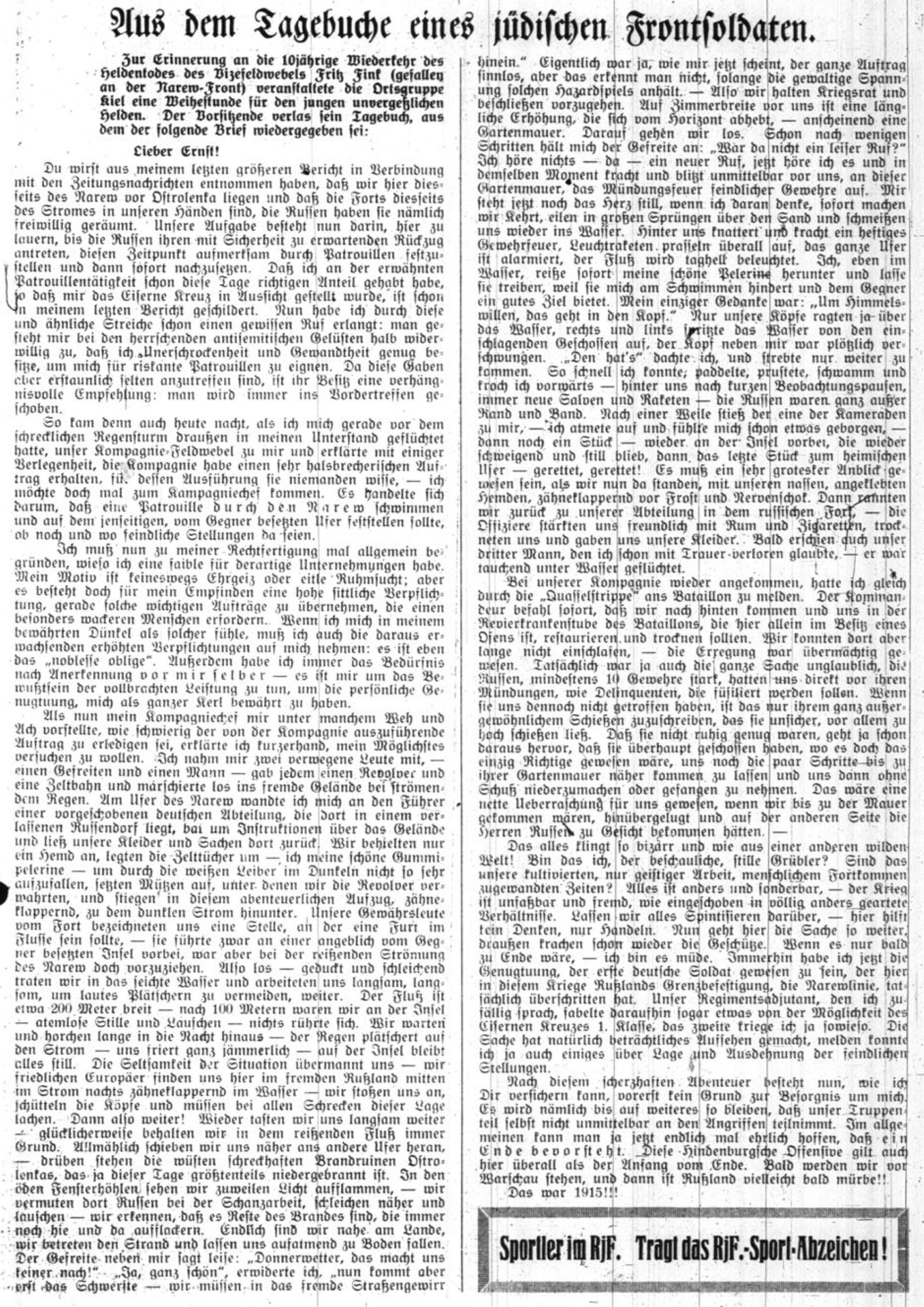
On January 4, 1926, Der Schild published a letter from Vizefeldwebel (platoon senior non-commissioned officer) Fritz Friedrich Fink, to one “Ernst” – the latter unidentified, but probably Fritz’s brother or friend – concerning the former’s experience leading two soldiers during a reconnaissance patrol on the Narew Front.  Though the date of this event is not given, it presumably occurred between 19 July and 3 August of 1915 in what is present-day Poland.  More than a detailed description of the events of the patrol itself (the events of the letter only transpired over a single evening) are Fritz’s honest reflections on his motivation for this hazardous duty, which include (he starts right-off-the-bat with this one) antisemitism (at least, indirectly), a sense of moral obligation, the desire to prove himself (in his own eyes, at least) and what I perceive as an unarticulated but genuine inclination towards adventure, even if hazardous adventure.  The article closes on the so-very-ironic note of an anticipation of a German victory in the East in 1915.

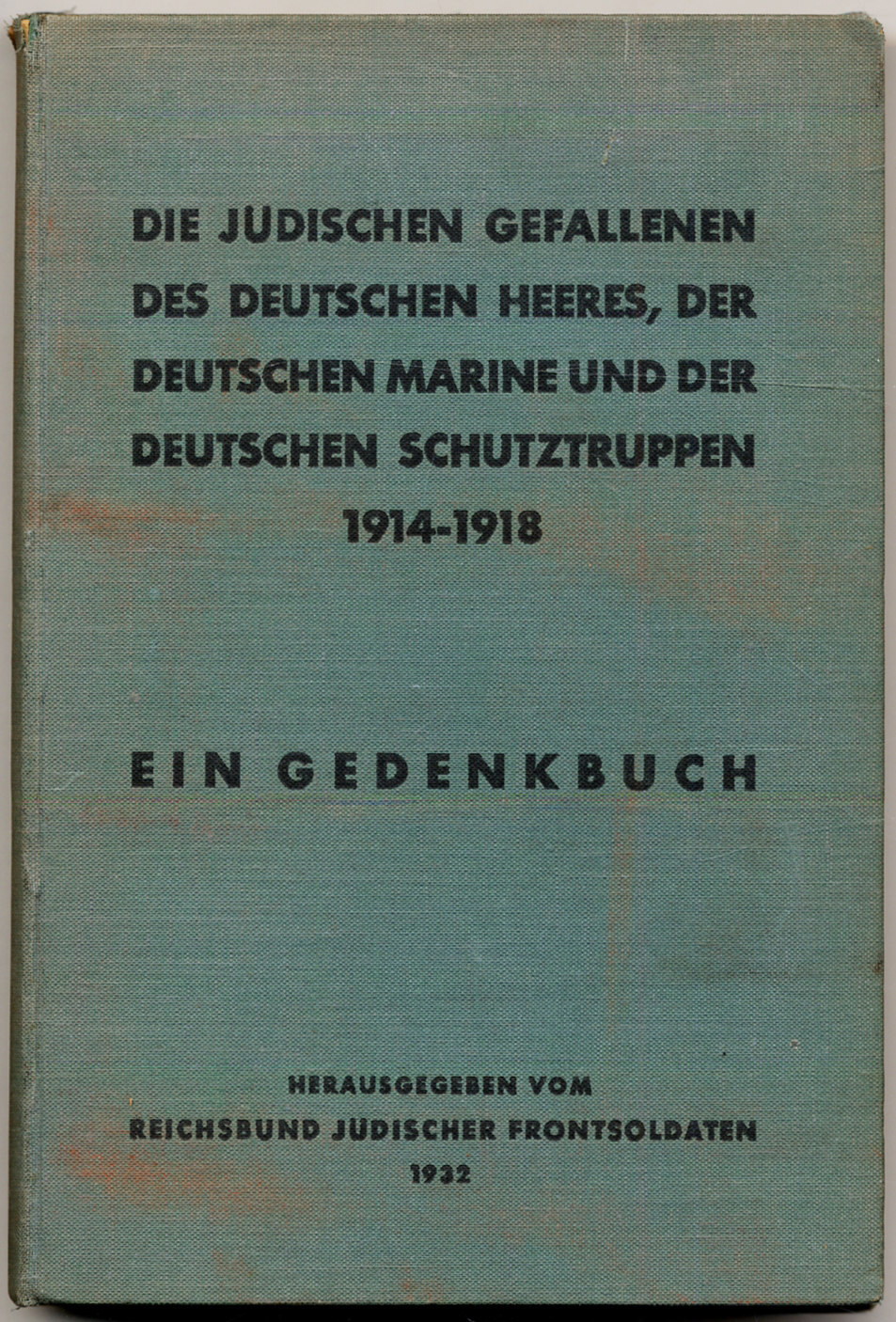
Equally ironic and especially sad, in light of Fritz’s closing thoughts, was his subsequent fate.  A member of 37. Division147. Infanterieregiment, 3. Bataillon, 9. Kompanie, he was killed in action on August 18, 1915, shortly after the close of the Narew Offensive.  Born in Hamburg on August 11, 1889, the son of Emmanuel and Mary (Wertheimer) Fink, his name appeared in Verlustmeldung (Casualty Message) 335, and can be found on page 370 of Die Jüdischen Gefallenen Des Deutschen Heeres, Deutschen Marine Und Der Deutschen Schutztruppen

His place of burial, perhaps in a forgotten, or now-destroyed or overgrown Jewish cemetery somewhere in Poland, is unknown.

This post presents Frizt’s letter as published in Der Schild, followed by an English-language translation, and then the original text in German.

From the diary of a Jewish front-line soldier.

The Shield
January 4, 1926

“… in the face of the prevailing anti-Semitic sentiments,
I am admitted, half reluctantly,
to have enough courage and agility to be suitable for risky patrols.
But since these gifts are surprisingly rare, possessing them is a fatal recommendation:
you are always pushed to the front.”

To commemorate the 10th anniversary of the heroic death of Sergeant Fritz Fink (killed on the Narew front), the Kiel local group held a ceremony for the unforgettable young hero. The chairman read his diary, from which the following letter is reproduced:

Dear Ernst!

You will have gathered from my last major account in connection with newspaper reports that we are here on this side of the Narew in front of Ostrolenka and that the forts on this side of the river are in our hands, because the Russians have voluntarily evacuated them. Our task now is to lie in wait here until the Russians begin their retreat, which is certain, to determine this point carefully through patrols and then to pursue them immediately. The fact that I have already played a real part in the patrolling activities mentioned in these days, so that I have been promised the Iron Cross, has already been described in my last account. Now I have already gained a certain reputation through these and similar pranks: in the face of the prevailing anti-Semitic sentiments, I am admitted, half reluctantly, to have enough courage and agility to be suitable for risky patrols. But since these gifts are surprisingly rare, possessing them is a fatal recommendation: you are always pushed to the front.

“… the company had received a very dangerous assignment,
for which they knew no one to carry out…”

So tonight, when I had just taken refuge in my shelter outside from the terrible rainstorm, our company sergeant came to me and explained with some embarrassment that the company had received a very dangerous assignment, for which they knew no one to carry out – I would like to go to the company commander. It was about a patrol swimming across the Narew and finding out on the other bank, occupied by the enemy, whether there were any enemy positions and where they were.

“My motive is by no means ambition or vain desire for fame;
but I do feel that there is a high moral obligation
to take on such important assignments that require a particularly brave person.”

To justify myself, I must now explain in general terms why I have a weakness for such undertakings. My motive is by no means ambition or vain desire for fame; but I do feel that there is a high moral obligation to take on such important assignments that require a particularly brave person. If I feel myself to be such in my proven conceit, I must also accept the increased obligations that arise from it: it is simply the “noblesse oblige”. In addition, I always have the need for self-recognition – I am concerned with the awareness of the achievement I have made, with the personal satisfaction of having proven myself as a real man.

“The strangeness of the situation overwhelms us –
we peaceful Europeans find ourselves here in the middle of the river in foreign Russia at night,
teeth chattering in the water –
we bump into each other,
shake our heads and have to laugh at all the horror of this situation. “

When my company commander explained to me, with much moaning and sighing, how difficult the company’s task would be, I simply declared that I would do my best. I took two daring men with me – a Private and a man – gave each of them a revolver and a tarpaulin and marched off into the unfamiliar terrain in the pouring rain. On the banks of the Narew I turned to the leader of an advanced German detachment stationed in a deserted Russian village, asked for instructions about the terrain and left our clothes and belongings there. We kept only one shirt on, put on the tarpaulins – I mean beautiful rubber capes – so that our white bodies would not be too conspicuous in the dark, put on caps under which we kept the revolvers, and climbed down to the dark river in this adventurous outfit, chattering our teeth. Our informants from the fort indicated a place where there was supposed to be a ford in the river – it led past an island supposedly occupied by the enemy, but was preferable given the rapid current of the Narew. So off we went – crouching and creeping, we entered the shallow water and worked our way slowly, slowly, to avoid loud splashing. The river is about 200 meters wide – after 100 meters we were at the island – breathless silence and listening – nothing moved. We wait and listen for a long time into the night – the rain splashes on the river – we freeze miserably – everything on the island remains quiet. The strangeness of the situation overwhelms us – we peaceful Europeans find ourselves here in the middle of the river in foreign Russia at night, teeth chattering in the water – we bump into each other, shake our heads and have to laugh at all the horror of this situation. So we carry on! Again we slowly feel our way forward – fortunately we always keep our footing in the rushing river. Gradually we move closer to the other bank – over there are the desolate, terrible burnt-out ruins of Ostrolenka, which has mostly burned down in recent days. We occasionally see lights flickering in the desolate window recesses – we suspect Russians there at work digging trenches, creep closer and listen – we realize there are remnants of the fire that are still flaring up here and there. Finally we are close to land, we step onto the beach and let ourselves fall to the ground with a sigh of relief. The private next to me says quietly: “Wow, no one can do that like us!” “Yes, very well,” I replied, “but now comes the hardest part – we have to go into the strange maze of streets.” Actually, as it seems to me now, the whole mission was pointless, but you don’t realize that as long as the tremendous tension of such a gamble continues. So we hold a council of war and decide to advance. A long elevation, as wide as a room in front of us, stands out from the horizon – apparently a garden wall. We set off towards it. After just a few steps the private stops me: “Wasn’t there a faint call?” I hear nothing – there – another call, now I hear it and at the same moment the muzzle flash of enemy rifles crackles and flashes directly in front of us, on this garden wall. My heart still stops when I think about it, we immediately turn around, run in big leaps across the sand and throw ourselves back into the water. Behind us there is a crackle and crash of rifle fire, flares explode everywhere, the whole bank is alarmed, the river is lit up as bright as day. I, just in the water, immediately rip off my beautiful cape and let it float because it prevents me from swimming and offers the enemy a good target. My only thought was: “For heaven’s sake, this is going to get in my head.” Only our heads were above the water, the water splashed up to the right and left from the impact of the projectiles, the head next to me had suddenly disappeared. “That’s him,” I thought, and just tried to keep going. I paddled, snorted, swam and crawled forward as fast as I could – behind us, after short pauses to observe, more and more salvos and rockets – the Russians were completely out of control. After a while, one of my comrades joined me – I breathed a sigh of relief and felt somewhat safe – then a little further – past the island again, which remained silent and still again, then the last stretch to the home shore – saved, saved! It must have been a very grotesque sight as we stood there with our wet, stuck-together shirts, our teeth chattering from the cold and nervous shock. Then we ran back to our detachment in the Russian fort – the officers kindly refreshed us with rum and cigarettes, dried us and gave us our clothes. Soon our third man appeared, whom I thought was already lost – he was diving under water.

When I got back to our company, I had to report to the battalion straight away through the “chatty boy”. The commander immediately ordered us to go to the back and get some rest and dry off in the battalion’s infirmary, which is the only one in the possession of a stove. We couldn’t sleep there for a long time – the excitement was overwhelming. In fact, the whole thing was unbelievable. The Russians, at least 10 rifles strong, had us right in front of their muzzles, like delinquents who were about to be shot. If they still didn’t hit us, it can only be put down to their very unusual shooting, which made them uncertain and above all shoot too high. The fact that they weren’t calm enough is already evident from the fact that they shot at all, when the only right thing to do would have been to let us come a few steps closer to their garden wall and then kill us without firing a shot or take us prisoner. It would have been a nice surprise for us if we had got to the wall, looked over and seen the Russians on the other side. –

It all sounds so bizarre and like it’s from another wild world! Is that me, the contemplative, quiet thinker? Are these our cultivated times, devoted only to intellectual work and human progress? Everything is different and strange – the war is incomprehensible and alien, as if inserted into completely different circumstances. Let’s stop speculating about it – thinking is no use here, only action. Now things are going on like this here, the guns are blaring outside again. If only it would end soon – I’m tired of it. At least I now have the satisfaction of having been the first German soldier to actually cross Russia’s border fortifications, the Narew Line, in this war. Our regimental adjutant, whom I happened to speak to, even started talking about the possibility of an Iron Cross 1st Class, and I’m getting the second one anyway. The whole thing caused quite a stir, of course, and I was able to report a lot about the location and extent of the enemy positions.

“This Hindenburg offensive is also seen everywhere here as the beginning of the end.
We will soon be standing in front of Warsaw, and then Russia may soon be worn down!”

After this humorous adventure, I can assure you that there is no reason for me to be worried for the time being. For the time being, our unit will not be taking part in the attacks. In general, we can now finally hope that an end is near. This Hindenburg offensive is also seen everywhere here as the beginning of the end. We will soon be standing in front of Warsaw, and then Russia may soon be worn down!

That was 1915!!!

And so, the article in the original German…

Aus dem Tagebuche eines jüdischen Frontsoldaten.

Der Schild
4. Januar 1926

Zur Erinnerung an die 10jährige Wiederkehr des Heldentodes des Vizefeldwebels Fritz Fink (gefallen an der Narew-Front) veranstaltete die Ortsgruppe Kiel eine Weihestunde für den jungen unvergesslichen Helden. Der Vorsitzende verlas sein Tagebuch, aus dem der folgende Brief wiedergegeben sei:

Lieber Ernst!

Du wirst aus meinem letzten grösseren Bericht in Verbindung mit den Zeitungsnachrichten entnommen haben, dass wir hier diesseits des Narew vor Ostrolenka liegen und dass die Forts diesseits des Stromes in unseren Händen sind, die Russen haben sie nämlich freiwillig geräumt. Unsere Aufgabe besteht nun darin, hier zu lauern, bis die Russen ihren mit Sicherheit zu erwartenden Rückzug antreten, diesen Zeitpunkt aufmerksam durch Patrouillen festzustellen und dann sofort nachzusetzen. Dass ich an der erwähnten Patrouillentätigkeit schon diese Tage richtigen Anteil gehabt habe, so dass mir das Eiserne Kreuz in Aussicht gestellt wurde, ist schon in meinem letzten Bericht geschildert. Nun habe ich durch diese und ähnliche Streiche schon einen gewissen Ruf erlangt: man gesteht mir bei den herrschenden antisemitischen Gelüsten halb widerwillig zu, dass ich Unerschrockenheit und Gewandtheit genug besitze, um mich für riskante Patrouillen zu eignen. Da diese Gaben aber erstaunlich selten anzutreffen sind, ist ihr Besitz eine verhängnisvolle Empfehlung: man wird immer ins Vordertreffen geschoben.

So kam denn auch heute nacht, als ich mich gerade vor dem schrecklichen Regensturm draussen in meinen Unterstand geflüchtet hatte, unser Kompagnie-Feldwebel zur mir und erklärte mit einiger Verlegenheit, die Kompagnie habe einen sehr halsbrecherischen Auftrag erhalten, für dessen Ausführung sie niemanden wissse, – ich möchte doch mal zum Kompagniechef kommen. Es handelte sich darum, dass eine Patrouille durch den Narew schwimmen und auf dem jenseitigen, vom Gegner besetzten Ufer feststellen sollte, ob noch und wo feindliche Stellungen da seien.

Ich muss nun zu meiner Rechtfertigung mal allgemein begründen, wieso ich eine faible für derartige Unternehmungen habe. Mein Motiv ist keineswegs Ehrgeiz oder eitle Ruhmsucht; aber es besteht doch für mein Empfinden eine hohe sittliche Verpflichtung, gerade solche wichtigen Aufträge zu übernehmen, die einen besonders wackeren Menschen erfordern. Wenn ich mich in meinem bewährten Dünkel als solcher fühle, muss ich auch die daraus erwachsenden erhölten Verpflichtungen auf mich nehmen: es ist eben das „noblesse oblige“. Ausserdem habe ich immer das Bedürfnis nach Anerkennung vor mir selber – es ist mir um das Bewusstsein der vollbrachten Leistung zu tun, um die persönliche Genugtuung, mich als ganzer Kerl bewährt zu haben.

Als nun mein Kompagniechef mir unter manchem Weh und Ach vorstellte, wie schwierig der von der Kompagnie auszuführende Auftrag zu erledigen sei, erklärte ich kurzerhand, mein Möglichstes versuchen zu wollen. Ich nahm mir zwei verwegene Leute mit, – einen Gefreiten und einen Mann – gab jedem einen Revolver und eine Zeltbahn und marschierte los ins fremde Gelände bei strömendem Regen. Am Ufer des Narew wandte ich mich an den Führer einer vorgeschobenen deutschen Abteilung, die dort in einem verlassenen Russendorf liegt, bat um Instruktionen über das Gelände und liess unsere Kleider und Sachen dort zurück. Wir behielten nur ein Hemd an, legten die Zelttücher um – ich meine schöne Gummipelerine – um durch die weissen Leiber im Dunkeln nicht so sehr aufzufallen, setzten Mützen auf, unter denen wir die Revolver verwahrten, und stiegen in diesem abenteuerlichen Aufzug, zähneklappernd, zu dem dunklen Strom hinunter. Unsere Gewährsleute vom Fort bezeichneten und eine Stelle, an der eine Furt im Flusse sein sollte, – sie führte zwar an einer angeblich vom Gegner besetzten Insel vorbei, war aber bei der reissenden Strömung des Narew doch vorzuziehen. Also los – geduckt und schleichend traten wir in das seichte Wasser und arbeiteten uns langsam, langsam, um lautes Plätschern zu vermeiden, weiter. Der Fluss ist etwa 200 Meter breit – nach 100 Metern waren wir an der Insel – atemlose Stille und Lauschen – nichts rührte sich. Wir warten und horchen lange in die Nacht hinaus – der Regen plätschert auf den Strom – uns friert ganz jämmerlich – auf der Insel bleibt alles still. Die Seltsamkeit der Situation übermannt uns – wir friedlichen Europäer finden uns hier im fremden Russland mitten im Strom nachts zähneklappernd im Wasser – wir stossen uns an, schütteln die Kopfe und müssen bei allen Schrecken dieser Lage lachen. Dann also weiter! Wieder tasten wir uns langsam weiter – glücklicherweise behalten wir in dem reissenden Fluss immer Grund. Allmählich schieben wir uns näher ans andere Ufer heran, – drüben stehen die wüsten schreckhaften Brandruinen Ostrolenkas, das ja dieser Tage grösstenteils niedergebrannt ist. In den öden Fensterhöhlen sehen wir zuweilen Licht aufflammen, – wir vermuten dort Russen bei der Schanzarbeit, schleichen näher und lauschen – wir erkennen, dass es Reste des Brandes sind, die immer noch die und da aufflakern. Endlich sind war nahe am Lande, wir betreten den Strand und lassen uns aufatmend zu Boden fallen. Der Gefreite neben mir sagt leise: „Donnerwetter, das macht uns keiner nach!“ „Ja, ganz schön“, erwiderte ich, „nun kommt aber orst das Schwerste – wir müssen in das fremde Strassengewirr hinein.“ Eigentlich war ja, wir mir jetzt scheint, der ganze Auftrag sinnlos, aber das erkennt man nicht, solange die gewaltige Spannung solchen Hazardspiels anhält. – Also wir halten Kriegsrat und beschliessen vorzugehen. Auf Zimmerbreite vor uns it eine längliche Erhöhung, die sich vom Horizont abhebt, – anscheined eine Gartenmauer. Darauf gehen wir los. Schon nach wenigen Schritten hält mich der Gefreite an: „War da nicht ein leiser Ruf?“ Ich höre nichts – da – ein neuer Ruf, jetzt höre ich es und in demselben Moment kracht und blitzt unmittelbar vor uns, an dieser Gartenmauer, das Mündungsfeuer feindlicher Gewehre auf. Mir steht jetzt noch das Herz still, wenn ich daran denke, sofort machen wir Kehrt, eilen in grossen Sprüngen über den Sand und schmeissen uns wieder ins Wasser. Hinter uns knattert und kracht ein heftiges Gewehrfeuer, Leuchtraketen prasseln überall auf, das ganze Ufer ist alarmiert, der Fluss wird taghell beleuchtet. Ich, eben im Wasser, reisse sofort meine schüne Pelerine herunter und lasse sie treiben, weil sie mich am Schwimmen hindert und dem Gegner ein gutes Ziel bietet. Mein einziger Gedanke war: „Um Himmelswillen, das geht in den Kopf.“ Nur unsere Köpfe ragten ja über das Wasser, rechts und links spritzte das Wasser von den einschlagenden Geschossen auf, der Kopt neben mir war plötzlich verschwungen. „Den hat’s“ drachte ich, und strebte nur weiter zu kommen. So schnell ich konnte, paddelte, prustete, schwamm und kroch ich vorwärts – hinter uns nach kurzen Beobachtungspausen, immer neue Salven und Raketen – die Russen waren ganz ausser Kand und Band. Nach einer Weile stiess der eine der Kameraden zu mir, – ich atmete auf und fühlte mich schon etwas geborgen, – dann noch ein Stück – wieder an der Insel vorbei, die wieder schweigend und still blieb, dann das letzte Stück zum heimischen Ufer – gerettet, gerettet! Es muss ein sehr grotesker Anblick gewesen sein, als wir nun da standen, mit unseren nassen, angeklebten Hemden, zähneklappernd vor Frost und Nervenschok. Dann rannten wir zurück zu unserer Abteilung in dem russischen Fort, – die Offiziere stärkten uns freundlich mit Rum und Zigaretten, trockneten uns und gaben uns unsere Kleider. Bald erschien auch unser dritter Mann, den ich schon mit Trauer-verloren glaubte, – er war tauchend unter Wasser geflüchtet.

Bei unserer Kompagnie wieder angekommen, hatte ich gleich durch die „Quasselstrippe“ ans Bataillon zu melden. Der Kommandeur befehl sofort, dass wir nach hinter kommen und uns in der Revierkrankenstube des Bataillons, die hier allein im Besitz eines Ofens ist, restaurieren und trocknen sollten. Wir konnten dort aber lange nicht einschlafen, – die Erregung war übermächtig gewesen. Tatächlich war ja auch die ganze Sache unglaublich, die Russen, mindestens 10 Gewehre stark, hatten uns direkt vor ihren Mündungen, wie Delinquenten, die füsiliert werden sollen. Wenn sie uns dennoch nicht getroffen haben, ist das nur ihrem ganz aussergewöhnlichem Schiessen zuzuschreiben, das sie unsicher, vor allem zu hoch schiessen liess. Dass sie nicht ruhig genug waren, geht ja schon daraus hervor, dass sie überhaupt geschossen haben, wo es doch das einzig Richtige gewesen wäre, uns noch die paar Schritte bis zu ihrer Gartenmauer näher kommen zu lassen und uns dann ohne Schuss niederzumachen oder gefangen zu nehmen. Das wäre eine nette Ueberraschung für uns gewesen, wenn wir bis zu der Mauer gekommen wären, hinübergelugt und auf der anderen Seite die Herren Russen zu Gesicht bekommen hätten. –

Das alles klingt so bizarr und wie aus einer anderen wilden Welt! Bin das ich, der beschauliche, stille Grübler? Sind das unsere kultivierten, nur geistiger Arbeit, menschlichem Fortkommen zugewandten Zeiten? Alles ist anders und sonderbar, – der Krieg ist unfassbar und fremd, wie eingeschoben in völlig anders geartete Verhältnisse. Lassen wir alles Spintisieren darüber, – hier hilft kein Denken, nur Handeln. Nun geht hier die Sache so weiter, draussen krachen schon wieder die Geschütze. Wenn es nur bald zu Ende wäre, – ich bin es müde. Immerhin habe ich jetzt die Genugtuung, der erste deutsche Soldat gewesen zu sein, der hier in diesem Kriege Russlands Grenzbefestigung, die Narewlinie, tatsächlich überschritten hat. Unser Regimentsadjutant, den ich zufällig sprach, fabelte daraufhin sogar etwas von der Möglichkeit des Eisernen Kreuzes 1. Klasse, das zweite kriege ich ja sowieso. Die Sache hat natürlich beträchtliches Aufsehen gemacht, melden konnte ich ja auch einiges über Lage und Ausdehnung der feindlichen Stellungen.

Nach diesem scherzhaften Abenteur besteht nun, wie ich Dir versichern kann, vorerst kein Grund zur Besorgnis um mich. Es wird nämlich bis auf weiteres so bleiben, dass unser Truppenteil selbst nicht unmittelbar an den Angriffen teilnimmt. Im allgemeinen kann man ja jetzt endlich mal ehrlich hoffen, dass ein Ende bevor steht. Diese Hindenburgsche Offensive gilt auch hier überall als der Anfang vom Ende. Bald werden wir vor Warschau stehen, und dann ist Russland vielleicht bald mürbe!

Das war 1915!!!

Here’s an overview of how to access Der Schild at Goethe University, excerpted from my post “Infantry Against Tanks: A German Jewish Soldier at Cambrai, November, 1917“, of September 9, 2017.  (It certainly seems to have come in handy, just over seven years later!)

“Stories and depictions of World War One combat, composed both during and after the “Great War”, are abundantly available in print and on the web. 

“A fascinating source of such accounts – but even moreso a source particularly; poignantly ironic – is the newspaper Der Schild, which was published by the association of German-Jewish war veterans, the “Reichsbundes Jüdischer Frontsoldaten”, from January of 1922 through late 1938, the latter date paralleling the disbandment of the RjF.  Der Schild is available as 35mm microfilm at the Dorot Jewish Division of the New York Public Library, and in digital format through Goethe University Frankfurt am Main.  

“The screen-shot below shows the Goethe University’s catalog entry for Der Schild, which allows for immediate and direct access of the library’s holdings of the newspaper.  All years of the publication, with the exception of 1924, are available; all as PDFs. 

“Of equal (greater?!) importance, accessing digital holdings is as simple as it is intuitive (and easy, too!)  In effect and intent, this is a very well designed website!  This is shown through this screen-shot, presenting holdings of Der Schild for 1933. 

“The total digitized holdings of Der Schild in the Goethe University’s collection comprise approximately 530 issues.  “Gaps” do exist, with 1922 comprising only four issues (9, 10, 13, and 14) and 1923 comprising three issues (14, 15, and 17).  However, holdings for all years commencing with 1925 are – I believe – complete, through the final issue (number 44, published November 4, 1938).

“Not unexpectedly, Der Schild’s content sheds fascinating and retrospectively haunting light on Jewish life in Germany during the 1920s and 1930s; on Jewish genealogy; on the military service of German Jews (not only in the First World War but the Franco-Prussian War as well), often focusing on Jewish religious services at “the Front”, rather than “combat”, per se (see the issue of April 3, 1936, with its cover article “Pesach vor Verdun”); on occasion about Jewish military service in the Allied nations during “The Great War”(1); on Jewish history, literature, and religion; on Jewish life and Jewish news outside of Germany.

“There is much to be explored.”

References

Bund jüdischer Soldaten (YouTube Channel)

Der Schild (digital version) (at Goethe University Frankfurt website)

Die Jüdischen Gefallenen Des Deutschen Heeres, Deutschen Marine Und Der Deutschen Schutztruppen 1914-1918 – Ein Gedenkbuch, Reichsbund Jüdischer Frontsoldaten, Forward by Dr. Leo Löwenstein, Berlin, Germany, 1932

Reichsbund jüdischer Frontsoldaten (at Wikipedia)

Vaterländischer Bund jüdischer Frontsoldaten (Patriotic Union of Jewish Front-Line Soldiers”)

A Confrontation With the Past: When We Remember the Fallen, What do We Remember?

A Confrontation With the Past?

I’d like to dedicate this post to the memory of the late Dr. Ruth R. Pierson, formerly of the University of Toronto, whose 1974 article about the Reichsbund Jüdischer Frontsoldaten (the RJF) in The Leo Baeck Institute Year Book was instrumental in my discovery of the two editorials presented below.

~~~~~~~~~~~~~~~~~~~~~~~~~~~~~~

(This photograph below is from Dr. Pierson’s obituary, which appeared in the Toronto Star on October 19, 2024 (…alas; just a month before my writing this post…)

~~~~~~~~~~~~~~~~~~~~~~~~~~~~~~

By its very nature, “this” blog is an exploration of the military service of Jewish soldiers, sailors, and airmen of all areas (well… for airmen obviously since 1914!) in the militaries of all countries, with a primary emphasis – thus far – on the First and Second World Wars.  One impetus for the blog has been my curiosity about the military service of Jewish soldiers in the armed forces of the WW II Allies, given the ethos and ultimate aim of the Third Reich regarding the Jewish people.  This poses a question:  To what extent did Jewish military service during that war impart or reinforce a sense of Jewish identity and historical consciousness among Jewish soldiers who participated in that now nearly-century-gone-by global conflict? 

Yet… 

Having since moved beyond WW II to explorations of Jewish military service in the “Great War”, let alone (to a thus-far, far lesser extent!) the Viet-Nam war, and, works of fiction as books and film, there arise questions that are more abstract and perhaps philosophical in nature.  Namely, what are the basis and ultimate end to any commemoration of Jewish military fallen?  Does a soldier having served, been wounded, taken prisoner, or fallen in war … does a recitation of names, dates, military units, and specific details about his military service – actually perpetuate a sense of Jewish peoplehood?    

These questions bring to mind skeptical musings about the many works of “apologetic literature” – to the tune of “Great Jews in Sports”, “Great Jews in pick-any-other-field-of-endeavor-or-pop-culture” (rock & roll, acting, art, music, etc., etc., etc.!) produced by Jewish authors in Europe and the Americas from the nineteenth through the mid-twentieth centuries, largely prior to Israel’s 1948 re-establishment, yet still today albeit to a lesser extent today.  Has such literature actually been of significance or made a positive impact in terms of the degree to which Jews are seen as equal citizens, whether in the 1930s or this year of 2024?  

One of the several animating assumptions – there have been several – behind such literature is that the perception of Jews can be transformed and positively influenced by a presentation of factual information about the contributions of Jews – scientific, military, cultural, social – to the wider world.  About this I wonder, for it’s largely based on the belief that attitudes toward Jews are based upon logic and reason.  In reality, the perception of Jews – both recognized and unrealized – is “wired” deeply into Western Civilization, emanating from levels distant in time, near-irrevocably resistant to rationality, at perhaps founded at impenetrably deep level of consciousness. 

The best and most recent explorations / explanations of this topic are Bernard Harrison’s Blaming the Jews (great book!), and, David Nirenberg’s Anti-Judaism: The Western Tradition. , which I heartily recommend.

But, I digress.  (A little.) 

I won’t present my own beliefs about these issues “here”, but suffice to sat that I’ve most definitely entertained thoughts about them.  Of course, innumerable others have pondered these questions as well.  Two such explorations, brief yet provocative, appeared nearly a century ago in Germany.  They took the form of essays in the newspapers Der Israelit (The Israelite), and, Jüdische Rundschau (Jewish Review), respectively published in 1931 and 1932.  I learned about these short but pithy writings a few decades ago, while researching the military service of Jews in the German armed forces during the First World War.  The impetus was Dr. Ruth R. Pierson’s article “Embattled Veterans: The Reichsbund Jüdischer Frontsoldaten”, which was published in the The Leo Baeck Institute Year Book in 1974. 

The essays were found within digitized (PDF) versions of these newspapers, among the many (many (did I say “many”?!)) such periodicals openly accessible via Goethe University Frankfurt’s (Johann Wolfgang Goethe-Universität Frankfurt am Main) Digital Collections (Digitale Sammlungen) website: Der Israelit here, and Jüdische Rundschau here.     

These essays are presented below, first in English, and then in German, translated via Oogle Translate.  They approach the above-mentioned questions from perspectives reflective of the publications’ very different editorial stances regarding the nature, place (for lack of a better word … I mean that symbolically!), and perhaps the destiny of German Jews during a period of enormous and rapid social and technological change, and … to put it mildly … extraordinary political and social turbulence: Der Israelit from the standpoint of Orthodox Judaism, and Judische Rundschau from the standpoint of (I think secular) Zionism. 

The excerpts are preceded by images of the newspapers’ mastheads, and also include images of the specific pages within these newspapers on which the two essays appeared.

~~~~~~~~~~~~~~~~~~~~~~~~~~~~~~

Der Israelit
February 26, 1931

“But is it necessary that we allow ourselves to be lured by the enemy
into his blood-soaked territories,
follow him into his medieval world of thought,
in order to turn death and destruction into an adorable cult
to which one cannot offer enough sacrifices?

Insufficient Dead!…

A peculiar argument is currently being waged in the anti-Semitic and Defence press.  The “Stürmer” seeks to destroy the “Tale of the 12,000 fallen Jews”.  It only knows of 4700.  The “C.-V.-Zeitung” [Central-Verein-Zeitung] and the “Schild” stick to their twelve thousand and don’t let them deal with a single piece.  The “Stürmer” storms against this wall, as always, with assumptions, suspicions and slanders.  The C.V. and R.j.F. but attach them with indications and lists.  More and more dead, more and more, every single one a gain!  But the gentlemen on the other side don’t begrudge us the dead, they are envious; mouth their number in the most shameful way.

Wouldn’t that be a motif for a Purim-grotesque?  If only the background weren’t so gloomy and deeply sad!

Shame and pain seize us at the thought of the four years of human and cultural annihilation.  All of mankind’s misery grips us when we only think of a dear head, that this unfortunate war has cost us.  Pacifists on both sides of the border meet on the endless battlefields [ ויצאו  וראו בפגרי האנשים ] “and they went out and saw the corpses of the people to learn to shudder”, to take the admonishing voice of the dead armies into their hearts.  Full of horror, they rush back home with the cry: “No more war!  Stop killing people!”

And then reasonable people who are certainly open to peace defend themselves against the accusation that they had not provided enough dead from their community…

Here the question arises: we valiantly defend our honor, the Jewish name, Jewish morality, the sacred doctrine, Jewish life and property, to defend ourselves against slander and defamation.  But is it necessary that we allow ourselves to be lured by the enemy into his blood-soaked territories, follow him into his medieval world of thought, in order to turn death and destruction into an adorable cult to which one cannot offer enough sacrifices? … That seems to us to be a too far-reaching concession to the darkest night sides of antiquated souls, who only indicate the fever curve of a sick time.

The defense associations draw up lists.  And since they want to protect themselves against attacks and doubts with numbers, dates and numbers from the outset, it will still take some time before they are completely established and concluded.  Unfortunately, unfortunately! – said with certainty today.

But should we already today boast and brag about the number of deaths ?  Just because the other side doesn’t begrudge us it?

However many of the dead there were, among Jews and non-Jews, in Germany or in France, in England, in Russia and Italy, there were too many!  And once the victims have fallen, their blood cries out to us on earth.  Not for revenge.  The blood shed by a lost humanity cries: Reconciliation!  War to war!  Hate and fight hate!  Amalek’s memory of fame should be eradicated, wherever and however it erodes human thought!

Zu wenig Tote!…

Ein eigenartiger Streit wird zur Zeit in der antisemitischen und der Abwehrpresse ausgetragen.  Der “Stürmer” sucht das “Märchen von der 12 000 gefallenen Juden” zu zerstören.  Er weiss nur von 4700.  Die “C.-V.-Zeitung” und der “Schild” aber halten fest an ihren Zwölftausend und lassen sich kein Stück abhandeln.  Der “Stürmer” stürmt gegen diese Mauer, wie immer, mit Vermutungen, Verdächtigungen und Verleumdungen.  C.V. und R.j.F. befestigen sie aber mit Angaben und Listen.  Mehr und mehr Tote, noch und noch, jeder einzelne ein Gewinn!  Die Herren auf der anderen Seite gönnen uns aber die Toten nicht, sind neidisch, mundern ihre Zahl in schändlichster Weise.

Wäre das nicht ein Motiv zu einer Purim-Groteske?  Wenn nur der Hintergrund nicht gar so düster und tieftraurig wäre!

Scham und Schmerz ergreifen uns bei dem Gedanken an die vier Jahre der Menschen- und Kulturvernichtung.  Der Menschheit ganzer Jammer fasst uns an, wenn wir nur an ein liebes Haupt denken, das uns dieser unselige Krieg gekostet hat.  Pazifisten dieseits und jenseits der Grenze treffen sich auf den endlosen Schlachtfeldern ויצאו וראו בפגרי האנשים um das Gruseln zu lernen, um die mahnende Stimme der toten Armeen in ihr Herz aufzunehmen.  Voller Entsetzen spregen sie in die Heimat zurück mit dem Rufe: “Nie mehr Krieg!  Schluss mit dem Menschenmorden!”

Und da verteidigen sich vernünftige und gewiss dem Frieden zugewandte Menschen gegen den Vorwurf, sie hätten zu wenig Tote aus ihrer Gemeinschaft gestellt…

Hier entsteht die Frage: Wir verteidigen tapfer unsere Ehre, den jüdischen Namen, die jüdische Moral, die heilige Lehre, jüdisches Leben und jüdisches Eigentum, wehren uns gegen Verleumdung und Verunglimpfung.  Aber ist es nötig, dass wir uns vom Feinde auf seine bluttriefenden Gebiete-locken lassen, ihm in seine mittelalterliche Gedankenwelt folgen, um aus Tod und Verderben einen anbetungswürdigen Kult zu Machen, dem mann gar nicht genug opfern kann?  …  Das scheint uns doch eine zu weitgehende Konzession an die dunkelsten Nachtseiten antiquierter Seelen, die ja nur die Fieberkurve einer kranken Zeit angeben.

Die Abwehrvereine legen Listen an.  Und da sie sich mit Zahlen, Daten und Nummern von vornherein gegen Angriffe und Anzweifelungen sichern wollen, so wird es noch einige Zeit dauern, bis die ganz hergestellt und abgeschlossen sind.  Dass die Zahl 12 000 noch weit übertroffen wird, lässt sich – leider, leider! – heute schon mit Sicherheit sagen.

Aber sollen wir heute schon mit unserer Totenzahl prunken und prahlen?  Nur darum, weil sie die Gegenseite uns nicht gönnt?

Wieviel der Toten es auch waren, bei Juden und bei Nichtjuden, in Deutschland oder in Frankreich, in England, in Russland and Italien, es waren zu viel!  Und sind die Opfer einmal gefallen, so schreit ihr Blut zu uns aud der Erde.  Nicht nach Rache.  Das von einer verirrten Menschheit vergossene Blut schreit: Versöhnung!  Krieg dem Kriege!  Hass und Kampf dem Hasse!  Ausgerottet sei das Ruhmesgedächtnis Amaleks, wo und wie immer es am Menschheitsgedanken zehrt!

The original editorial…

Here are the first two pages of this issue of Der Israelit.  The editorial appears in the first and second columns of page two.

Descriptive information about Der Israelit, from Digitale Sammlungen

Der Israelit had been published weekly since the spring of 1860.  In late autumn 1938 the magazine was banned by the National Socialists.  The circulation in October 1934 was 4250 copies.  Against the backdrop of increasing secularization, growing assimilation efforts and the profound reform of Jewish ritual and worship since the beginning of the 19th century, Der Israelit was the most important publication organ of German-Jewish Orthodoxy for almost eight decades.  Under the leadership of its founder, the renowned rabbi and writer Marcus Lehmann (1831-1890), the tradition-conscious magazine saw itself as a counterweight to the liberal-reform Allgemeine Zeitung des Judentums and its successor, the CV-Zeitung.

Der Israelit was considered by its long-time editor to be a forum for all interests and areas of life of German Jewry, with the most attention being paid to Jewish rituals and cults.  After the old edition of the monthly magazine Jeschurun merged with Der Israelit in 1870, Lehmann initiated a Hebrew parallel edition of the paper in 1871 and a Yiddish edition in 1873, which meant that it could also be noticed beyond the borders of the German-speaking area.  After Lehmann’s death in 1890, his son Oscar Lehmann (1858-1928) took over the management of the magazine.

Source reference: The graphics in the magazine Der Israelit are partly based on the original templates of the magazine in the German National Library in Leipzig (DNL).

~~~~~~~~~~~~~~~~~~~~~~~~~~~~~~

Jüdische Rundschau
November 29, 1932

“It may be, that this book,
which arouses the most painful feelings in many Jewish families,
makes an impression on some parts of the German public,
but in our opinion this impression is bought too dearly,
if in this way we have to refer to the highest possible number of our dead.”  

After Hitler’s Rejection

It is high time that the German Jews remembered to protect their interests.  The previous defensive activity of individual organizations may have had a certain benefit here or there, but it is completely irrelevant to the overall position of German Jews.  And also actions such as the “Reich Association of Jewish Frontline Soldiers” memorial book of the fallen, which was sent to the authorities last week, cannot be seen as a positive policy of the German Jews.  It may be, that this book, which arouses the most painful feelings in many Jewish families, makes an impression on some parts of the German public, but in our opinion this impression is bought too dearly, if in this way we have to refer to the highest possible number of our dead.  What is needed would be a completely different, new Jewish policy that would have to be supported by the Jewish generation, which has become aware of the value and meaning of Judaism.  Only a Jewry that actively stands up for its own future with all its might and therefore carries the certainty of this future within itself can also pursue Jewish politics with pride and calm.  We certainly do not claim any partisan point of view in this matter; there are situations and times when the empirical party groupings take a back seat or have to be restricted to a narrower area; but the spirit on which Jewish politics is based must be that of a real will to assert and renew.  It would be time for a leadership to emerge within German Jewry that has the authority to speak and act.  We do not want to decide whether a general representation of this kind by the Reich Association, which has been a long time coming, or in some other way, whether it must be created out of spontaneous need, out of the feeling of shame about the previous laissez-faire.  But nothing would be sadder than returning to a vague optimism after Hitler’s defeat.  The reality in Germany is clear enough, even without Germany reporting to the world under a Hitler government.  Just think of the incidents in Breslau, where a politically completely neutral professor was prevented from reading and physically threatened just because his name was Cohn.  This state of the milieu in which we have to live cannot be overcome by intervening with the authorities (although this, too, is of course necessary).  The discussion about our future destiny has to take place on a much broader basis, and this can only happen if the leadership that we need, both externally and internally, is finally there.

Nach Hitlers Abweisung

Es ist hohe Zeit, dass die deutschen Juden sich auf eine Wahrung ihrer Interessen besinnen.  Die bisherige Abwehrtätigkeit einzelner Organisationen mag im kleinen da oder dort einen gewissen Nutzen gehabt haben, für die Gesamtstellung der deutschen Juden ist sie völlig irrelevant.  Und auch Aktionen wie etwa das in der vergangenen Woche den behörden überrichte Gefallenen-Gedenkbuch des “Reichsbundes jüdischer Frontsoldaten” können nicht als positive Politik der deutschen Juden gewertet werden.  Es mag sein, dass dieses Buch, das in vielen jüdischen Familien die schmerzlichsten Gefühle weckt, bei manchen Stellen der deutschen Oeffentlichkeit einen Eindruck macht, nach unserem Empfinden aber ist dieser Eindruck zu teuer erkauft, wenn wir in dieser Weise auf die möglichst hohe Ziffer unserer Toten uns berufen müssen.  Was not täte, wäre eine ganz andere, neue jüdische Politik, die getragen seine müsste von der jüdischen Generation, die sich des Wertes und des Sinns des Judentums bewusst geworden ist.  Nur ein Judentum, das selbst mit aller Kraft aktiv für seine eigene Zukunft einsteht und daher die Gewissheit dieser Zukunft in sich trägt, kann auch mit Stolz und Ruhe jüdische Politik machen.  Wir vollen in diser Sache gewiss keine Partei gesichtspuntke geltend machen, es gibt Situationen und Zeiten, wo die empirischen Partiegruppierungen zurücktreten oder auf ein engeres Gebiet beschränkt werden müssen; aber der Geist, von dem die jüdische Politik getragen ist, muss der eines wirklichen Behauptungs- und Erneuerungswillens sein.  Es wäre an der Zeit, dass im deutschen Judentum eine Führung entsteht, die die Autorität besitzt, zu sprechen un zu handeln.  Ob eine Gesamtvertretung dieser Art durch den Reichsverband, der jetzt schon zu lange auf sich warten lässt, oder auf andere Art, ob sie aus dem spontanen Bedürfnis, aus dem Gefühl der Beschämung über das bisherige Laisser-aller geschaffen werden muss, wollen wir nicht entscheiden.  Aber nichts wäre trauriger, als wenn man nach dem Misserfolg Hitlers sich wieder einem vagen Optimismus hingeben wollte.  Die Wirklichkeit in Deutschland tritt deutlich genug hervor, auch ohne dass Deutschland der welt gegenüber unter einer Regierung Hitler firmiert.  Man denke nur an die Vorfälle in Breslau, wo ein politisch völlig neutraler Professor nur aus dem Grunde, weil er Cohn heisst, am Lesen verhindert und tätlich bedroht wird.  Dieser Zustand des Milieus, in dem wir leben müssen, ist nicht dadurch aus der Welt zu schaffen, dass wir bei Behörden intervenieren (obwohl auch dies selbstverständlich notwendig ist).  Auf viel breiterer Basis muss die Auseinandersetzung über unser künftiges Schicksal aufgenommen werden, und dies kann nur geschehen, wenn endlich die Führung da ist, die wir nach aussen und innen brauchen.

The original editorial…

Here are the first two pages of this issue of Judische Rundschau.  The editorial appears in the lower right on page one and continues at the upper left of page two.

Descriptive information about Jüdische Rundschau, from Digitale Sammlungen:

Publisher: Heinrich Loewe Changing editors-in-chief: Julius Becker, Felix Abraham, Hugo Hermann, Leo Hermann, Fritz Löwenstein, Hans Klötzel, Robert Weltsch, Hans Bloch and others.  Jüdische Rundschau initially appeared once a week, but since 1919 twice a week at three – to four-day intervals.  Special issues have been published mainly since 1932.  In 1925 and 1936 the Rundschau briefly returned to weekly publication.  From 1934 to 1938 Jüdische Rundschau had a circulation of 25,300 to 37,000 copies.

Countless supplements:

Von jüdischer Musik (On Jewish Music) (occasionally attached to the relevant issues)
Palästina-Beilage (Palestine Supplement) (occasionally attached to the relevant issues)
Jungzionistische Blätter (Young Zionist Paper)
Jüdisches Frauenblatt (Jewish Women’s Paper)
Zionistisches Frauenblatt (Zionist Women’s Paper)
Unterhaltungs-Beilage (Entertainment Supplement)
Frauen-Beilage (Women’s Supplement)
Musik-Blatt (Music Paper)
Palästina-Blatt (Palestine Paper (occasionally attached to the relevant issues))
Wirtschafts-Blatt (Business Paper)
Palästina-Wirtschaftsblatt (Palestine Business Paper) occasionally attached to the relevant issues)
Literatur-Blatt (Literature Paper) (in later years also occasionally attached directly to the relevant issue of the Judische Rundschau)
Sport-Blatt (Sports Paper) (occasionally attached to the relevant issues)
Berliner Rundschau (occasionally attached to the relevant issues)
Die Jüdische Schule (The Jewish School) (occasionally attached to the relevant issues)
Kinder Rundschau (Children’s Review) (occasionally attached to the relevant issues)

Jüdische Rundschau (1902-1938) – which emerged from the Berliner Vereinsboten (1895-1901) and the Israelitische Rundschau (1901-1902) – is, alongside the C.V.-Zeitung, one of the Jewish weekly newspapers with the highest circulation in the German-speaking world.  Founded as the official ‘organ of the Zionist Association for Germany’, the magazine aimed, especially among young people, to “clearly and distinctly express the political idea as expressed in the Basel Program of the Zionist Party” and “to create a homeland in Palestine for the Jewish people” (H. Loewe).  Zionism is considered the “national bond” that guarantees this program.

As an influential weekly newspaper, Jüdische Rundschau reported on all areas of Jewish life at home and abroad.  In this context, the modern, decidedly combative reporting contributed significantly to the politicization of the Jewish press in the German-speaking world.

Due to its commitment to combating increasing anti-Semitism, the magazine was able to increase its circulation to 40,000 copies at the end of the Weimar Republic.  After the National Socialists took power, Jüdische Rundschau reduced its Zionist activities in order to report more on the difficult living conditions of Jews in Germany and to provide readers who wanted to emigrate with detailed information about emigration options.

Jüdische Rundschau had to stop publishing after the so-called Reichskristallnacht on November 8, 1938; its successor, the Jüdische Weltrundschau, was published from 1939 to 1949, initially in Switzerland and later in Jerusalem.

~~~~~~~~~~

Here’s the entirely simple cover of Die Jüdischen Gefallenen Des Deutschen Heeres, Deutschen Marine Und Der Deutschen Schutztruppen 1914-1918 – Ein Gedenkbuch, Reichsbund Jüdischer Frontsoldaten, forward by Dr. Leo Löwenstein, published in Berlin in 1932  This book has been the primary (I’d say truly central and essential) source of information for my posts about German Jewish WW I military casualties.  

~~~~~~~~~~~~~~~~~~~~~~~~~~~~~~

The (original) article of inspiration…

Pierson, Ruth R., Embattled Veterans: The Reichsbund Jüdischer Frontsoldaten, The Leo Baeck Institute Year Book, V 19, N 1, January 1974, pp. 139–154 (https://doi.org/10.1093/leobaeck/19.1.139)

Dr. Ruth Roach Pierson, at…

University of Toronto

The Toronto Star (Obituary (1938-10/13/24))

Literary Review of Canada (articles)

Palimpsest Press

The Kaddish of The Century (and more): Gaza, January, 2024. … Israeli Soldiers at the Graves of Jewish Soldiers of the First World War

“The past is never dead.  It’s not even past.”
– spoken by “Gavin”, in from “Requiem for a Nun”, by William Faulkner

If you spend enough time focused upon the past, whether as one man or many – contemplating the past; reconstructing the past; interpreting the past – eventually, whether through an accidental epiphany, the currents of fate (is there really such a thing as fate?), or the natural and inexorable flow of time, you will eventually be drawn forward – irresistibly – to the reality of the present.

If you only spend time in the present, whether as an individual or a nation – living in the “here and now” in the manner of all mankind; immersed in the fashion of the day; oblivious of those who came before you and how and why they came before you; willfully blind to those who threaten your own people, or, civilization as a whole (whether they’re narcissistically obsessed with messianically “transforming” the world, or, have dessicated souls that can only be enlivened through chaos, destruction, and the negation of the good) you may find yourself, aghast and in horror, pulled backwards to a world – long the tragic norm for most of humanity – that only recently had become obscured from the memory of man.  

Yet, between past and present, in the lives of all peoples there occur moments when the strands of time intersect – at first randomly, and on reflection perhaps purposefully – weaving themselves into a tapestry of memory that hints at an altogether greater reality.

Such an event seems to occurred early during Israel’s ongoing war against Hamas, three months after the terror organization’s razzia of October 7, 2023 (23rd of Tishrei, 5784) in southern Israel.  (What’s a razzia?  Baruch Hasofer offers us a description: “This is a slave raid into enemy territory, involving massacre, despoliation and the taking of captives.  Razzias, or ghazawat, were employed everywhere Muslims encountered non-Muslims whom they were not capable of conquering immediately-Spain, the Balkans, Anatolia, the Ukraine, Russia, Central Asia.  The immediate aim was the weakening of the enemy and the enrichment of the participants via slavetrading.  The longterm aim was the extortion of tribute.”)

In early January, in the midst of Israel’s military operations and presented in news and social media, images and videos appeared of soldiers of the 74th Armored Battalion of Israel’s 188th Armored Brigade, paying their respects at the grave of a British Jewish soldier of the First World War, a certain “Private I. Goldreich”.  (Actually, “Goldrich”, as we shall see below.)  This occurred at the Commonwealth War Grave Commission’s Deir El Belah War Cemetery in central Gaza.  Images from this event comprise close-ups of two matzevot, and, photos of three soldiers (one of whom is a seren, or captain) at Goldrich’s matzeva, behind which they hold an Israeli-flag, and before which the captain recites Kaddish.

Here’s the insignia of the 188th Armored Brigade…

… and that of the 74th Armored Battalion.

This is the story as reported at YNetnews by Yoav Zitun on January 31, under the title “Piece of paradise in the rubble’: Soldiers find Jewish tombs in Gaza“:

IDF soldiers on Wednesday found a well-preserved cemetery near the town of Al-Mawasi in Gaza in which dozens of graves belonging to World War I veterans were located.  Patrolling the area, some of the troops noticed several of the graves were decorated with a Star of David, marking the resting spot of Jewish soldiers who fought in the British Army over a century ago.

Photos uploaded by the soldiers to the X (formerly Twitter) social media platform, featuring the Israeli flag next to the graves, went viral, with one of the posts even receiving over 3.5 million views.  Some claimed that this was evidence that Hamas also preserves Jewish graves, but an inquiry into the matter by the soldiers has disproved the claims.

“This facility is maintained by the UK via local authorities in the Gaza Strip,” Lt. Col. Oren, the commander of the 74th Battalion, told Ynet. “It’s a really special place, finding a spot that seems like a piece of paradise, with it being green and untouched amid the rubble.  It suffered some damage in the battles, but it can be restored.  We noticed the Star of David seen on the graves with names like Goldreich.  After a few days, we returned to the site and prayed in front of the graves after many years,” he recounted.

Lt. Col. Oren added the location was never settled by Israel in the past.  According to him, the British developed the site and even renovated some of the graves.  “We found about seven Jewish out of hundreds.  We photographed the names and the brief descriptions of the battle in which they fell.  It was an emotional moment.

“I told myself this wasn’t only our battle.  We’re fighting here because they did the same over a century ago,” he said.  Lt. Col. Oren described how his forces engaged in battles against Hamas terrorists who fired RPG missiles at them only 100 meters away from the location of the cemetery.

“We located a Hamas factory for manufacturing weapons and ammunition next to the cemetery.  We didn’t [know] whether terror tunnels were beneath the cemetery because we didn’t want to violate its sanctity.   We found Hamas-built tunnels below other cemeteries.  We were amazed to find such a sacred place in this cursed area.”

Here’s the story as reported by Felix Pope at the The Jewish Chronicle on February 1, under the title “IDF soldiers shocked to find Jewish graves in Gaza“.  

While fighting their way through Gaza, Israeli soldiers have stumbled across several well preserved Jewish graves.

Near the town of Al-Maazi, in the centre of the Palestinian enclave, the IDF troops discovered a British World War One cemetery. 

Some of the tombstones within it were engraved with Stars of David.

Speaking to Israeli media, Lt. Col. Oren said: “It was damaged a bit in the battles, but it can be restored.

“We noticed the stars of David on the tombstones and names like Goldreich. We returned after a few days to the place and said Kaddish on the graves after many years.

“We also found there, next to the cemetery, a cache for the production of many weapons. We did not check if there was an underground tunnel under the cemetery because we did not want to harm its sanctity.

“In other cemeteries, we located combat tunnels that Hamas had built underneath. We were amazed that we found such a pure place in this cursed area.”

Schindler added: “It was an exciting moment. I told myself it wasn’t just our fight — our war is here, because they also fought here at the beginning of the last century.”

In November, IDF soldiers prayed at a sixth-century synagogue in Gaza, marking the first time Jews had worshipped there for decades.

Located in the Rimal neighborhood of Gaza City, it was built in 508 CE during the Byzantine period.

The site featured a famous mosaic featuring King David with a lyre and his name inscribed in Hebrew that was transferred to the Israel Museum in Jerusalem after Israel captured the Gaza Strip during the 1967 Six-Day War.

And now, the photos.

First, here are images of 74th Armored Battalion soldiers at the cemetery, accompanied by captions from at YNet.  (Alas, there’s not much to the captions.  They’re presented here “as is”, the source for all three simply having been attributed to “Courtesy”.  (Whoever that is!)  

Ynet: #1: “Soldiers next to a Jewish tomb located in Gaza”

This photo shows the unidentified captain standing before Goldreich’s (Goldrich’s) matzeva.
Ynet: #2:  “IDF soldiers in the cemetery”
  XX

As mentioned above, though both YNet and The Jewish Chronicle mention the surname of the soldier who was commemorated as “Goldreich”, according to the Commonwealth War Graves Commission and other sources, the actual spelling of hissurname – as engraved on his matzeva and mentioned above – is Goldrich.
 XX
Who was he?
 XX
I. Goldrich (don’t know his first name) served in the 38th Battalion (Royal Fusiliers), and as such – as a member of the Jewish Legion – died on active service on October 19, 1918.  His name appears on page 92 of the British Jewry Book of Honour, and appeared in a Casualty List published in The Jewish Chronicle on December 20, 1918, the latter listing his serial number as J/219 (it’s actually J/249).  Born in Zeromin, Poland, in 1890, he was the son of Nison and Sharna Goldrich of Liverpool, and possibly (?) the husband of Mrs. M. Goldrich, who also hailed from Zeromin … though if so, I don’t know if she emigrated to England.  Most importantly, the soldier’s given name is unknown (Isaac? Israel? Isaiah? Iosif?), as the Chronicle, in its publication of names of Jewish military casualties during the Great War, had the genealogically exasperating habit of – typically – only including the first initial of a man’s first name.  (Whether this reflects editorial policy on the part of the Chronicle, or the content of casualty lists as provided to the newspaper by the War Office, or, Reverend Michael Adler, I’ve no idea.) 
 XX 
Ynet: #3: “One of the Jewish tombs found in Gaza”
  XX

And now, two videos.

First, on January 14, Israel’s Channel 14 made available a video captioned בלב עזה כוחותינו אומרים קדיש ומניחים דגלי ישראל על קברי חיילים יהודים שנפלו במלחמת העולם הראשונה”, which translates as “In the heart of Gaza, our forces say Kaddish and place Israeli flags on the graves of Jewish soldiers who fell in the First World War”. 

The same video – the captain reciting Kaddish, sans any introduction – can be found in at least two Facebook pages, onto both of which it was loaded on January 12, 2014.

First, the Facebook page of Mitzpe Kramim (מצפה כרמים), where the video is accompanied by the caption “גלעד היקר- אחד מנציגי מצפה כרמים בחזית, שלח לנו ד ש חמה ומרגשת מקברי יהודים בבית העלמין הבריטי בעזה. שבת שלום ובשורות טובות !”, which translates as, “Dear Gilad – one of the representatives of Mitzpe Kramim at the front, sent us a warm and moving message from the Jewish graves in the British Cemetery in Gaza.  Shabbat peace and good news!”

Second, the Facebook page of Sivan Rahav Meir (סיון רהב מאיר), where the caption is “שלום סיוון. גדוד 74 חטיבה 188 שלח הבוקר מעזה. חייל יהודי ממלחמת העולם הראשונה זוכה לאזכרה כזו, אחרי שנים, על ידי חייל יהודי, אחיו”, or… “Hello Sivan. The 74th Battalion, 188th Brigade sent this morning from Gaza.  A Jewish soldier from the First World War receives such a memorial, years later, by a Jewish soldier, his brother.”

And now … the video:

About a minute-and-a-half long, the video comprises a 360o view of the cemetery.  It commences upon a pair of Merkava tanks at left center (one of which appears to have a cope cage installed atop the turret), and then very rapidly sweeps to the right.  During this rapid movement the view encompasses damaged and destroyed buildings on the periphery of the cemetery, rows of tombstones within the cemetery, and then, at about eleven seconds, the view settles upon Pvt. Goldrich’s Israeli-flag-bedecked matzeva, with the captain on the right.  Throughout this time explanatory comments are made by the soldier videoing the scene, and then, commencing at 24 seconds, the captain begins to recite Kaddish.

No other people are visible in the video, which I assume was taken by one of the two soldiers holding the flag in YNet photo #1.

And, the sound of two volleys of gunfire echo as a backdrop to the captain’s recitation of Kaddish. 

Neither specifically a prayer about death or mourning, nor directed to the souls of those who have died  – the prayer is routinely recited a number of times during Jewish religious services, in variations such as the Half Kaddish, Full Kaddish, and the Rabbi’s Kaddish – the Kaddish is instead an acknowledgement of God’s ongoing sovereignty in the world, its recitation meant to ensure the merit of the soul of the dead (or fallen, as the case may be) in the eyes of God.  The actual Jewish mourner’s prayer is El Molai Rachamim, which is recited at grave sites and during funerals.

And, returning full-circle, the video ends where it began: With a view of the same two Merkava tanks in the background.  

And so, for a brief moment in time – outside of time – past and present – 1918 (5678) and 2024 (5784) came together.  Then, they moved apart, and then in its own way, time continued.

As does and always will the Jewish people.    

Neither the war against Israel in the Middle East
nor opposition to the Jews’ right to a state will likely fade in the years ahead.
Let us see if we have the power and moral stamina to keep that hope alive.”

– Ruth R. Wisse

The following newspaper article lists the names – surnames and first initials – of soldiers of the Jewish Legion who fell in combat (a few of whom rest in Gaza), were wounded or missing, or who received military awards.  The article was published on December 28, 1918 in The New York Times.  Remarkable and a little incongruous, given the newspaper’s abiding and animating loathing of any form of Jewish peoplehood and Jewish Nationalism.

Here are the men listed in the article:

Officers

Julian, A.W., Capt.
Wolffe, Bernard, Lt.

Sergeants

Greyson, B.
Lasefit, Edward
Levenson, B.

Corporals

Klugman, J.
Lloyd, A.
Strong, H.
Trautenberg, Mendel

Privates

Abrahamson, S.
Alick, M.
Allonowitz, L.
Barnett, Daniel
Berman, J.
Bernstein, S. (buried in Gaza – see below)
Bienstock, M.
Black, L.
Bloomenthal, S.
Breslauer, J. (buried in Gaza – see below)
Canter, H
Dietz, M.
Freeman, M. (“N.”?) (buried in Gaza – see below)
Freiner, M.
Galinsky, M.
Goldrich, L. (buried in Gaza – see below)
Greyman, B.
Hart, S.
Hartman, Louis
Levy, J. (see below)
Malkin, J.
Marx, R.
Milderner, S.
Redlich, D.
Rosenberg, Frederick
Rosenberg, S. (buried in Gaza – see below)
Serember, C.
Shaft, J.
Sobovinsky, B.
Tenans, P.
Weinberg, W.
Zimmerman, M.

Missing

Levy, B., Sgt.
Levy, C., Sgt.

Wounded

Cross, H.B., Pvt.
Leftkovitch, P., Pvt.
Robinson, A.J., Pvt.

Military Cross

Brown, T.B., Capt.
Bullock, A.E., 2 Lt.
Cameron, J., 2 Lt.
Fliegelstone, T.H., 2 Lt.

Military Medal

Angel, J., Pvt.
Broom, M., Pvt.
Elfman, M., L/Cpl.
Gordon, C., Pvt.
Robinson, A.J., Pvt.
Speichville, R., Pvt.

Below you’ll find biographical details about – and a few photographs of – Jewish WW I military casualties buried in the two CWGC cemeteries in Gaza.  Notice that the matzevot of least four of these men (Frederick A. Cohen, Paul E. Frankau, H. Furst, and J. Levy) bear crucifixes as religious symbols, while the matzevot of at least two (N. Freeman and Chaim Hazan) are apparently absent of any religious symbols.  And, notice that Private Philip Greenberg was an American.  He was from Chelsea, Massachusetts.

Deir El Belah War Cemetery
(Information from Commonwealth War Graves Commission)

This Apple map gives a general view of the Gaza Strip.

This image of the cemetery – pre 2024 – appears at the CWGC website…

…while this is a satellite (?) image of the locality.

“Deir El Belah … is about 16 kilometres east of the Egyptian border, and 20 kilometres south-west of Gaza.  To reach the cemetery, travel along main road number 4 and the entrance is to be found down a sand track just before a junction.  Look out for a sign over the road on the right of the junction.”

– .ת.נ.צ.ב.ה. –
…Tehé Nafshó Tzrurá Bitzrór Haḥayím
May his soul be bound up in the bond of everlasting life.

Breslauer, Jack Isadore, Pte., J/2862
Royal Fusiliers, 39th Battalion (Jewish Legion)
10/13/18
Mrs. M. Breslauer (?), 84 Angel Lane, Stratford, London, E, England, Poland
Tredegar Square, London, E, England
Born 1876
Deir El Belah War Cemetery – B,178 (Magen David on matzeva)
Inscription on matzeva: “Deeply mourned – By his wife and children – God grant that his soul – May rest in peace”
British Jewry Book of Honour 082
The Jewish Chronicle 12/20/18
The New York Times 12/28/18

______________________________

Chazan, Haim, Pte., 4878
Royal Fusiliers, 40th Battalion
6/10/19
Mr. and Mrs. Machloof and Simcha Hazan (parents), Rehov Ha Maaravim, Jerusalem, Israel
Born 1883
Deir El Belah War Cemetery – C,95 (No religious symbol on matzeva)
British Jewry Book of Honour – Not Listed

______________________________

Cohen, Frederick Arthur, L/Cpl., 450842
Regiment (Finsbury Rifles), 1st/11th Battalion
4/19/17
Mr. and Mrs. Henry “Hy” and Emma Louisa Cohen (parents), 56 Collingbourne Road, Hanwell, London, W12, England
Born 1893
Gaza War Cemetery – XIV,E,8 (Crucifix on matzeva)
British Jewry Book of Honour – Not Listed

______________________________

Frankau, Paul Ewart, Lt.
Rifle Brigade, 20th Battalion
11/2/17
Mrs. Frances Alica de Burgh Frankau (wife), Wilton, Macheke, Southern Rhodesia
Mr. and Mrs. Arthur and Julia Frankau (parents), 144 Mitcham Lane, London, SW16, England
Born 1887
Gaza War Cemetery – XIV,A,1 (Crucifix on matzeva)
British Jewry Book of Honour – 70

______________________________

Freeman, N., Pte., J/1266 (Died on active service)
Royal Fusiliers, 38th Battalion  (Jewish Legion)
Born 10/27/18
14 Severn St., Commercial Road, London, E1, England
Deir El Belah War Cemetery – B,211 (No religious symbol on matzeva)
British Jewry Book of Honour – 90
The Jewish Chronicle 12/20/18

______________________________

Furst, H., Rifleman, 451104
London Regiment (Finsbury Rifles), 11th Battalion
4/19/17
Mrs. Jenny Furst (mother),  24 Burma Road, Stoke Newington, London, N16, England
Born 1896
Gaza War Cemetery – XIV,G,12 (Crucifix on matzeva)
Inscription on matzeva: “Not lost, but gone before”
British Jewry Book of Honour – 126

______________________________

Goldrich, I., Pte., J/249 (see above…!)
Royal Fusiliers, 38th Battalion (Jewish Legion)
10/19/18 (Died on active service)
Mr. and Mrs. Nison and Sharna Goldrich (parents), Liverpool, England
Mr. M. Goldrich (?), Zeromin, Plocka, pow Sierpiecki, Poland
Born Zeromin, Poland, 1890
Deir El Belah War Cemetery – D,84 (Magen David on matzeva)
British Jewry Book of Honour – 92
The Jewish Chronicle 12/20/18 (Lists serial as J/219)
The New York Times 12/28/18

______________________________

Greenbaum, D., Pte., 52702
Machine Gun Corps (Cavalry), 17th Squadron
6/29/17
Mr. and Mrs. Solomon and Sarah Greenbaum (parents), 94 Bridge St., Burdett Road, Bow, London, England
Born 1888
Deir El Belah War Cemetery – C,71 (Magen David on matzeva)
Inscription on matzeva: “Gone from our sight – But not from our hearts”
British Jewry Book of Honour – Not Listed

______________________________

Greenberg, Phillip, Pte., 6427 (United States)
Royal Fusiliers, 38th Battalion  (Jewish Legion)
Mrs. Rebecca E. Greenberg (wife),  46 Quincy St., Roxbury, Ma., USA
Mr. and Mrs. Joseph and Sarah Greenberg (parents), 75 Walnut St., Chelsea, Ma., USA
Born 1/16/19
Deir El Belah War Cemetery – C,93 (Magen David on matzeva)
British Jewry Book of Honour – 94

______________________________

Jacobs, J., Driver, 624995
Royal Artillery, Honourable Artillery Company, B Battery Ammunition Col.
5/1/17
Mrs. Sarah Jacobs (mother), 78 Eric St., Mile End, London, E3, England
Born 1894
Deir El Belah War Cemetery – A,96 (Magen David on matzeva)
British Jewry Book of Honour – 99

Driver Jacobs’ matzeva.

______________________________

Rittenbaum, Barnett, Pte., J/1078
Royal Fusiliers, 38th Battalion  (Jewish Legion)
12/19/18
Mrs. Milly Rittenbaum (wife), 26 Finch St., Brick Lane (26-30 Turk St.?), Spitalfields, London, E1, England
Born Warsaw, Poland, 1892
Mr. and Mrs. Mordecai and Freda Rittenbaum (parents)
Deir El Belah War Cemetery – C,25 (Magen David on matzeva)
British Jewry Book of Honour 113

______________________________

Rosenberg, Solomon, Pte., J/303
Royal Fusiliers, 38th Battalion  (Jewish Legion)
10/21/18, Died on active service
Mrs. Esther Rosenberg (wife), 17-18 Carburton St., Great Portland St., London, W1, England
Mr. and Mrs. Aaron Leybush and Malka Rosenberg (parents), Wloszcrowie, Kielecka, Poland
Born Poland, 1880
Deir El Belah War Cemetery – B,187 (Magen David on matzeva)
Inscription on matzeva: “In fond memory from Esther – Your loving wife”
British Jewry Book of Honour 114
The Jewish Chronicle 12/20/18

Gaza War Cemetery
(Information from Commonwealth War Graves Commission)

Here’s a satellite (?) view of the cemetery.

“Gaza War Cemetery is 1.5 kilometres north-east of the city near the Bureir Road and 370 metres from the railway station.  The Cemetery is approximately 8 kilometres to the left of the main dual carriageway, Highway 250 through Gaza, and is about 200 metres back from the road through an avenue of trees.  Alternatively, turn left off the highway after 4 kilometres, continuing with Highway 4 until Sha’arei Aza junction and turn right, then turn right into Gaza proper, heading back towards the border.  In this direction the cemetery will be found on the right hand side after approximately 3 kilometres.”

– .ת.נ.צ.ב.ה. –
…Tehé Nafshó Tzrurá Bitzrór Haḥayím
May his soul be bound up in the bond of everlasting life.

Bernstein, Sam, Pte., J/698
Royal Fusiliers, 39th Battalion (Jewish Legion)
10/21/18 (Died on active service)
Mrs. Cissie Bernstein (wife), 69 Benson St., North St., Leeds, England
3 Cowper St., Leeds, England
Born 1878
Gaza War Cemetery – II,E,14
British Jewry Book of Honour – 80
The Jewish Chronicle 11/8/18, 12/20/18 (Lists name as “Bernstein, Simon”)
The New York Times 12/28/18

______________________________

Goodfriend, Hyman, Rifleman, 573510
London Regiment, 17th Battalion
11/7/17 (Wounded in action in January of 1917)
Esquire and Mrs. Michael and Leah Goodfriend (parents), 70 Settles St., Commercial Road, London, E1, England
Miss Sarah Shulman (fiancee), 39 Nottingham Place, E, London, England
Born 1892
Gaza War Cemetery – II,E,17 (Magen David on matzeva)
Inscription on matzeva: “Deeply mourned – By his beloved parents – And family”
British Jewry Book of Honour – 93
The Jewish Chronicle 2/16/17, 11/30/17, 3/28/19
The Jewish Chronicle (Obituary Page) 11/30/17

______________________________

Joseph, Wilfrid Gordon Aron, 2 Lt.
Northamptonshire Regiment, 1st Battalion (Attached to Norfolk Regiment, 1st/5th Battalion)
4/19/17
Mrs. Winifred L. Joseph (wife),  28 Heber Road, Cricklewood, NW2, London, England
Mr. Edward A. Joseph (father), 23 Clanricarde Gardens, Paddington, London, W2, England
Born 1896
Gaza War Cemetery – II,E,16
British Jewry Book of Honour – 72
The Jewish Chronicle 5/25/17, 11/23/17
The Jewish Chronicle (Obituary Page) 11/23/17

______________________________

Levy, J., 2 Lt.
Norfolk Regiment, 1st/4th Battalion
4/19/17
2 Thornfield Road, Linthorpe, Middlesborough, England
Gaza War Cemetery – XXX,F,10 (Crucifix on matzeva)
British Jewry Book of Honour 125, 610 (Lists unit as “1/5th Battalion”)
The Jewish Chronicle 6/15/17

______________________________

Magasiner, Maurice, Rifleman, 451369
London Regiment (Finsbury Rifles), 11th Battalion
11/2/17
Mrs. Rosalie Magasiner (wife),  49 High St., Stoke Newington, London, N16, England
Born 1896
Inscription on matzeva: Always remembered
Gaza War Cemetery – XIV,B,1 (Magen David on matzeva)
British Jewry Book of Honour 481 (Lists serial as “3693” and indicates not KIA)

Referentially speaking…

Here’s a Book

Adler, Michael, and Freeman, Max R.G., British Jewry Book of Honour, Caxton Publishing Company, London, England, 1922 (Republished in 2006 by Naval & Military Press, Uckfield, East Sussex)

Israeli Armed Forces

IDF Ranks, at Wikipedia

188th Armored Brigade and 74th Armored Battalion, at Wikipedia

The Kaddish Prayer

Chabad

Sefaria

Aish

My Jewish Learning

The Calculus of Patriotism: Arnold Zweig’s “Judenzählung” – “The Census of the Jews Before Verdun” – in Die Schaubühne, February, 1917

“Great fatherland, I intended to die and rest for you!” 
But a whirlwind stirred the dead;
they stood at the table one after the other,
captains and medical officers
first and lieutenants and doctors,
sergeants and watch-masters,
non-commissioned officers, privates,
common soldiers. 
And the scribe put a dry quill in each hand;
it flowed like a scratched finger;
each one wrote his Hebrew name in small red letters that shone like square seals. 

✡                                 ✡

But a bright cross shone over the forehead of some who were baptized;
the writer asked everyone:
Jew? 
And he nodded, he said, “You know”; he said,
“Mosaic denomination”;
“Israelite” he said,
“German of Jewish faith” –
“Jew, yes” some said and stretched,
and the crosses faded from everyone. 

✡                                 ✡

“Oh Akiba,” I cried, “when will the Messiah come?”
His gaze examined my soul.
“At the gates of Rome a hunchbacked beggar,
the Messiah, sits and waits,” said he;
it frightens me like a threat.
“What is he waiting for, Master?” I cried out in fear.
“For you” said the old man and turned.
And I awoke to a sudden, glaring, heart-breaking shock.

✡                                 ✡                                 ✡

The lives of men, as much as peoples and nations, are affected by the winds of history in different ways.  Some men, entirely unaffected by the even most threatening physical and spiritual challenges, “after the fact” remain much the same as before.  Other men, to a greater or lesser degree, may “pause” for a time … weeks, months, years … and eventually, though the trajectory of their lives may be temporarily altered, return to the path previously charted for them by decision and happenstance.  Other men are different.  An event that for most may have been seen as trivial, or at worst an unintended and soon forgotten diversion, may be perceived in the fullness of its meaning, message, and implications, and symbolically become part of one’s identity, outlook upon life, and vision of the future.

Such seems to have been true of the German writer Arnold Zweig as a soldier in the Deutsches Heer – the Imperial German Army – in the First World War, the course of whose life was strongly influenced by the German Army’s Judenzählung – Census of the Jews – of late 1916. 

There are many, many sources of information about the Judenzählung, encompassing books and academic papers, focusing on the event in terms of the specific history of Jews in the German military, to the larger scope of German Jewish history, and in an even wider perspective (like that of David Vital), the post-Emancipation history of European Jews as a whole.  However, for the sake of brevity, I’ll simply quote the Wikipedia entry for the the Judenzählung.  (Yeah, I know it’s Wikipedia, but the information is definitely useful, while the 12 references and 8 extra readings do provide paths for further understanding of the event.)

So…

[The] Judenzählung … was a measure instituted by the German Oberste Heeresleitung (OHL) in October 1916, during the upheaval of World War I.  Designed to confirm accusations of the lack of patriotism among German Jews, the census disproved the charges, but its results were not made public.  However, its figures were published in an antisemitic brochure.  Jewish authorities, who themselves had compiled statistics that considerably exceeded the figures in the brochure, were denied access to government archives, and informed by the Republican Minister of Defense that the brochure’s contents were correct.  In the atmosphere of growing antisemitism, many German Jews saw “the Great War” as an opportunity to prove their commitment to the German homeland.

Background

The census was seen as a way to prove that Jews were betraying the Fatherland by shirking military service.  According to Amos Elon, “In October 1916, when almost three thousand Jews had already died on the battlefield and more than seven thousand had been decorated, War Minister Wild von Hohenborn saw fit to sanction the growing prejudices.  He ordered a “Jew census” in the army to determine the actual number of Jews on the front lines as opposed to those serving in the rear. Ignoring protests in the Reichstag and the press, he proceeded with his head count.  The results were not made public, ostensibly to “spare Jewish feelings.”  The truth was that the census disproved the accusations: 80 percent served on the front lines.”

Results and Reactions

The results of the census were never officially released by the army and any records of the census were most likely lost when the German military archives were destroyed during the allied bombing campaigns of Berlin and Potsdam.  The episode marked a shocking moment for the Jewish community, which had passionately backed the War effort and displayed great patriotism; many Jews saw it as an opportunity to prove their commitment to the German homeland.

That their fellow countrymen could turn on them was a source of major dismay for most German Jews, and the moment marked a point of rapid decline in what some historians (Fritz Stern) called “Jewish-German symbiosis.”

(Digressing…  Was there a German-Jewish symbiosis?  As described by Yehuda Bauer in the Yad Vashem publication ”German-Jewish Symbiosis” – Against The Background Of The 30’s”, interviewed by Amos Goldberg in 1998:

Question: From a historical perspective, was the so-called “German-Jewish symbiosis” real or an illusion?

Answer:  People talk today about a Jewish-German symbiosis that existed before Hitler.  There was a love affair between Jews and Germans, but it was one-sided: Jews loved Germany and Germans; Germans didn’t love Jews, even if they didn’t hate them.  One-sided love affairs usually don’t work very well.  In this case, the so-called symbiosis between Jews and Germans is a postfactum invention.  It never existed.  Jews participated in German life, in German cultural life, but to say that they were accepted, even if the product they produced was accepted….  They were not accepted, even if they converted.”)

You can read much more about the above topic in Alexander Gelley’s essay “On the “Myth of the German-Jewish Dialogue”: Scholem and Benjamin”, particularly noting his reference to Gershon Scholem’s essay, “Against the Myth of the German-Jewish Dialogue,” from On Jews and Judaism in Crisis.

Back to the Judenzählung…  Reproduced as the Appendix (pp. 167-168) of Werner Angress’ 1978 Leo Baeck Institute Yearbook article “‘Judenzählung’ of 1916 Genesis – Consequences – Significance”, here’s an image of the questionnaire used for the survey: ‘Nachweisung uber noch nicht zur Einstellung gelangte, auf Reklamation zuriickgestellte und als kr.u. [kriegsuntauglich] befundene Juden’. [‘Proof of items that have not yet been discontinued, are deferred following a complaint and are considered Jews found [unfit for war]’.  The document is from the Bundesarchiv Koblenz, Reichskanzlei, Film 2197, No. 161 (Sections A and B); and ibid., No. 161 a (Section C).
✡                                 ✡

Angress discusses the origin, implications, and impact of the Judenzählung are discussed in great detail, concluding that the contemporary and retrospective significance of the Judenzählung – was it portentous or not? – must understood in the context and contingencies of history:

“We may ask, in conclusion, whether the Judenzdhlung was a watershed, a milestone on the road to Auschwitz as has been occasionally maintained.  For those who reject the inevitability of human events – and most historians do – the answer must be in the negative.  Antisemitism had been a part of the German scene before the First World War and remained a potent force during the brief life of the Weimar Republic, though here, too, its intensity fluctuated.  Granted that during the First World War antisemitism had gained new strength, and that the War Ministry’s Erlass [order] of 11th October 1916 was a direct outgrowth of this trend.  But taken by itself, the Judenzdhlung — a tactless blunder committed by a handful of high-ranking and most probably antisemitic army officers – was a symptom, a warning sign that antisemitism in Germany was alive and well, especially in times of stress and national reverses.  More than this it did not signify.  If the course of German history during the post-war period had taken a different direction from that which it ultimately did take – and this possibility existed at least until 30th January 1933, if not beyond that date – the Judenzdhlung would have remained a mere episode, a humiliation like others before, remembered with distaste, but ultimately shrugged off as just another manifestation of Risches [modernism; radicalism] on the part of Wilhelminian Germany’s military elite.”

Though a subject of straightforward academic interest several decades later (but no longer in the early 21st Century, it seems!) the Judenzählung most definitely impacted German Jewish soldiers on an individual level.  Though I don’t know if – and I doubt that – any large-scale research as ever been done into any still-extant letters and diaries of German Jewish veterans of the Great War pertaining to their reactions to the census, the event did have an impact – an extremely significant, life changing impact – upon a writer whose future oeuvre focused upon themes of the First World War, the European Jewish experience in the early twentieth century, and to a lesser extent (*ugh*) socialism (oh well, two out o’ three ain’t bad!):  Arnold Zweig. 

As variously recounted by Noah William Eisenberg, Martin Grabolle, and Bernd-Rüdiger Hüppauf, Zweig, then a private in the German Army, a, “loyal Vaterlandsverteidiger (defender of the Fatherland),” so patriotic as to have been married in uniform in 1916, was very deeply affected by the implications of the Judenzählung.  As he described in a letter of February 15, 1917 to Martin Buber written from the Maas Front (quoted by Martin Grabolle), “Judenzählung war eine Reflexbewegung unerhörter Trauer über Deutschlands Schande und unsere Qual; kein Essay sondern ein Bild…  Wenn es keinen Antisemitismus im Heere gabe: die unerträgliche „Dienstpflicht“ wäre fast leicht.  Aber: verächtlichen und elenden Kreaturen untergeben zu sein!  Ich bezeichne mich vor mir selbst als Zivilgefangen und staatenlosen Ausländer.“  [“’The Census of the Jews’ was a reflex movement of unheard-of grief over Germany’s shame and our torment; not an essay but a picture…  If there were no anti-Semitism in the army: the unbearable “duty” would be almost easy.  But: to be subordinate to contemptible and miserable creatures!  I refer to myself a civil prisoner and a stateless alien.”]

The then twenty-nine year old private’s response was to pen an extraordinarily vivid short fictional piece that was macabre, haunting, grotesque, and yet (with intended irony?) – by the tale’s end – deeply inspirational, entitled “Judenzählung vor Verdun” [The Jewish Census at Verdun]. 

Inwardly, Zweig was transformed by the census.  According to Martin Grabollle, “Where not too long ago Zweig had celebrated the new-found unity of the German people, he now felt himself to be a foreigner without a state (“staatenlose[r] Ausländer).  All that remained two years after his embrace of Germany at war was a feeling of “unerhörte Trauer über Deutschlands Schande und unsere Qual” (“enormous grief for Germany’s disgrace and our [the Jews’] pain”).” 

Outwardly, Zweig was also transformed.  Quoting Eisenberg, “…in June, 1917, he was transferred to the Eastern region of Ober-Ost (in Lithuanian Kovno) to serve in the special wartime press division.  There, as he traveled to the various shtetls in Lithuania, Zweig witnessed for the first time the problems that the Eastern Jews faced during the war – animosity and ill-treatment from both sides of the battle – and, more importantly, the unique community they maintained in the face of such contradictions.”  One result of his spiritual and intellectual metamorphosis appeared six years later, in the volume Das ostjüdische Antlitz [The Eastern Jewish Face], produced in collaboration with artist Hermann Struck.

The first commentary about the Judenzählung (that I know of!) was a leading page editorial by “M.M.” in the October 27, 1916 issue of Judische Rundschau.  M.M. correctly surmises that, “The tendency of those who introduced the resolution is clear.  An anti-Semitic suspicion should be given special weight by a parliamentary resolution.”  The author then discusses the influence on the position of Jewish citizens in the Allied countries resulting from the Allies’ alliance with Imperial Russia, but notes that such a factor was irrelevant in Germany, since anti-Jewish feeling in that country was in some ways already parallel to – but obviously independent of – Russian influence.  The editorial explains that even as early as 1916, despite the valor, sacrifice, and patriotism of German Jewish soldiers, there was, and would be, no commensurate “improvement in the political position of German Jews after the war”.  He then correctly explains that antisemitism is entirely unrelated to the actions and beliefs of Jews, instead being primarily “rooted in the consciousness of the surrounding people”.  M.M. concludes with the imperative of collectively establishing Jewish life on a common territory, albeit naively concluding (the naivete can be forgiven given the what we know in 2023, let alone what was known in 1948, let alone the 1930s) that a Jewish nation-state would actually reduce antisemitism.   

Here’s an English-language translation of “M.M.’s” editorial about the Judenzählung, from the October 27, 1916, issue of Judische Rundschau, via Goethe University.  

The Jewish Census [Alternatively, “Count of the Jews”]

On October 19, 1916, the Budget Commission of the German Reichstag resolved to compile statistics on the denomination of the people employed in the wartime societies.  The decision is justified by the fact that the survey is intended to refute “a widespread opinion” that there were a particularly large number of “Jewish slackers” in the war societies.  The Reichstag plenum has not yet approved the implementation of the resolution, but the symptomatic fact is sufficient that the representatives of all factions belonging to the commission, with the exception of the Liberals and Social Democrats, i.e. also the National Liberals and clericals, voted in favor of the resolution.  The tendency of those who introduced the resolution is clear.  An anti-Semitic suspicion should be given special weight by a parliamentary resolution.  The result of the inquiry will not be according to the applicants’ secret wishes.  Because even if, which is by no means certain, a larger number of Jews were to be employed in the German wartime societies, that would still not be proof of “Jewish shirking”.  The proportion of Jews in German economic life is proportionately greater than that of the rest of the population, and it has rightly been pointed out that the number of indispensable Jews in other occupations closed to Jews is all the smaller.

There has been much talk lately of the pernicious influence which the alliance of the western powers with Russia had on the position of the Jews of those countries.  Conservative and clerical German newspapers also stated that the French and British governments gave in to pressure from St. Petersburg and gave the anti-Semites of both countries a freer hand, not without condemning references to the bad effects of the Russian reaction.  The anti-Semites of Germany do not seem to have needed this Russian pressure in order to shame the German Jews by a measure that would do even Russian Jew-baiting credit.  The statistics passed by the budget commission of the German Reichstag are in line with some Russian army orders, about which the entire German press, including the conservative and clerical ones, broke the baton.  About the Russian secret order that the Russian soldiers should observe the attitude of their Jewish comrades-in-arms very closely and provide information about it for statistical purposes, there was only one voice in the German press of indignation.  As much as German Jews should consider it beneath their table dignity to justify themselves against the anti-Semitic insinuation that there is a specifically “Jewish shirking,” they have a duty to protest against this “census.”  It is a monstrous violation of the honor and civil equality of German Jewry.

The decision of the German Reich Budget Committee has another meaning.  It confirms the fear that German anti-Semitism did not decrease during the war and that hopes for an improvement in the political position of German Jews after the war are premature.  Since the outbreak of the war, certain Jewish circles in Germany had been full of high hopes for the post-war period, reveling in envisioning the brilliant civic position which the Jews would enjoy after the war in recognition of their patriotic and military prowess, and could not do enough in apologetic references to the patriotic attitude of German Jewry.  They will have to see that anti-Semitism is not, as they think, a reaction to “bad Jewish habits” but a power deeply rooted in the consciousness of the surrounding people, which is even sometimes – and not only in Russia – used to distract attention the masses of burning but uncomfortable domestic issues.  This deep-rooted anti-Semitic mood is neither erased by apologies and references to merits, nor even diminished by the striving for conformity.  There is only one way to effectively combat hatred of Jews.  It is the way of redeeming the Jews from their isolation by concentrating on a common territory.  And even if this goal can only be reached through the work of generations, striving for it improves our situation among the peoples.  Objectively, in that the virtues of pride and self-dignity, developed through the uncompromising emphasis on Jewish characteristics, wrested more respect for the Jews from the surrounding peoples than the unstable method of assimilation, subjectively, insofar as the defense against anti-Semitism, albeit with all the honorable means of the carried out with passion and acumen, will only make up a modest part of our Jewish life.  Only when the work for the restoration of the Jewish people in our own land has become our main Jewish focus will we be able to fight anti-Semitism effectively and at the same time reduce it to the natural degree that its importance in Jewish life is: an annoying defense against intolerance and slander coming from the outside. – M.M.

✡                                 ✡

Here’s the editorial, in the original German…

Judenzählung

Die Budget-Kommission des Deutschen Reichstags hat am 19. Oktober 1916 den Beschluss gefasst, eine Statistik über die Konfession der in den Kriegsgesellschaften beschäftigten Personen vorzunehmen.  Der Beschluss wird damit begründet, dass durch die Erhebung “eine weit im Volke verbreitete Meinung” widerlegt werden soll, wonach in den Kreigsgesellschaften besonders viel “jüdische Drückeberger“ sässen.  Noch hat das Reichstagsplenum die Durchführung des Beschlusses nicht genehmigt, aber es genügt die symptomatische Tatsache, dass die Vertreter aller Fraktionen, die der Kommission angehören, mit Ausnahme der Freisinnigen und Sozialdemokraten, also auch die Nationalliberalen und Klerikalen, für die Resolution stimmten.  Die Tendenz derer, die den Beschluss einbrachten, liegt klar zutage.  Einer antisemitischen Verdächtigung soll durch Parlamentsbeschluss besonders Gewicht gegeben werden.  Das Ergebnis der Enquete wird nicht nach den geheimen Wünschen der Antragsteller ausfallen.  Denn wenn auch, was durchaus nicht feststeht, in den deutschen Kriegsgesellschaften eine grössere Anzahl Juden angestellt sein sollte, so wäre das noch kein Beweis für die “jüdische Drückebergerei”.  Der Anteil der Juden am deutschen Wirtschaftsleben ist verhältnismässig grösser als der der übrigen Bevölkerung und mit Recht hat man darauf hingewiesen, dass die Zahl der jüdischen Unabkömmlichen in anderen, Juden verschlossenen Berufszweigen um so geringer ist.

Man hat in letzter Zeit viel von dem schädlichen Einfluss gesprochen, den das Bündnis der Westmächte mit Russland auf die Lage der Juden dieser Länder hatte.  Die französische und englische Regierung hat, so konstatierten auch konservative und klerikale deutsche Blätter nicht ohne verurteilenden Hinweis auf die schlimmen Wirkungen der russischen Reaktion, dem Drucke Petersburgs nachgegeben und den Antisemiten beider Länder freiere Hand gegeben.  Dieses russischen Druckes scheinen die Antisemiten Deutschlands nicht bedurft zu haben, um die deutschen Juden durch eine Massnahme an den Schandpfahl zu stellen, die selbst russischen Judenhetzern alle Ehre machen würde.  Die von der Budget-Kommission des deutschen Reichstags beschlossene Statistik steht mit manchen russischen Ameebefehlen in einer Reihe, über die die gesamte deutsche Presse auch die konservative und klerikale, seinerzeit den Stab brach.  Ueber den russischen Geheimbefehl, die russischen Soldaten sollten die Haltung ihrer jüdischen Mitkämpfer genauestens beobachten und darüber zu statistischen Zwecken Auskunft geben, herrschte im deutschen Blätterwald nur eine Stimme der Entrüstung.  So sehr es die deutschen Juden unter ihrer tische Wurde halten sollten, sich gegen die antisemitische Insinuation, es gäbe eine spezifisch “jüdische Drückebergerei,” zu rechtfertigen, so sehr haben sir die Pflicht, gegen diese “Zählung” zu protestieren.  Sie ist eine ungeheuerliche Verletzung der Ehre und der bürgerlichen Gleichstellung des deutschen Judentums.

Der Beschluss des deutschen Reichshaushaltausschusses hat noch eine andere Bedeutung.  Er bestätigt die Befürchtung, dass der deutsche Antisemitismus während des Krieges nicht abgenommen habe und dass die Hoffnungen auf eine Besserung der politischen Stellung der deutschen Juden nach dem Kriege verfrüht seien.  Gewisse jüdische Kreise Deutschlands waren seit Ausbruch des Krieges voll hochgespannter Hoffnungen für die Zeit nach dem Weltkrieg, schwelgten im Ausmalen der glänzenden staatsbürgerlichen Stellung, deren sich die Juden in Anerkennung ihrer patriotischen und militärischen Bewährung nach dem Kriege zu erfreuen haben werden, und konnten sich nicht genug tun in apologetischen Hinweisen auf die vaterländische Haltung des deutschen Judentums.  Sie werden einsehen müssen, dass der Antisemitismus nicht, wie sie meinen, eine Reaktion auf “schlechte jüdische Gewohnheiten” ist, sondern eine im Bewusstsein des umgebenden Volkes tiefwurzelnde Macht, deren man sich sogar manchmal – und nicht bloss in Russland – zur Ablenkung des Interesses der Massen von brennenden, aber unbequemen innerpolitischen Fragen bedient.  Diese tiefwurzelnde antisemitische Grundstimmung wird weder durch Apologie und Hinweis auf Verdienste aus der Welt geschafft, noch durch das Streben nach Anpassung auch nur vermindert.  Es gibt nur einen Weg zur wirksamen Bekämpfung des Judenhasses.  Es ist der Weg der Erlösung der Juden aus ihrer Vereinzelung durch Konzentrierung auf einem gemeinsamen Territorium.  Und wenn dieses Ziel auch erst durch die Arbeit von Generationen erreich bar sein wird: schon das Streben nach ihm bessert unsere Lage unter den Völkern.  Objektiv, indem die durch die kompromisslose Betonung der jüdischen Eigenart entwickelten Tugenden des Stolzes und der Selbstwürde den umgebenden Völkern mehr Achtung gegen den Juden abringen als die haltlose Anpassungs-methode, subjektiv, insofern die Abwehr gegen die Judenfeindschaft, wenn auch mit allen ehrenhaften Mitteln der Leidenschaft und des Scharfsinns durchgeführt, nur noch einen bescheidenen Teil unseres jüdischen Lebensinhaltes ausmachen wird.  Erst wenn die Arbeit für die Wiederherstellung des jüdischen Volkes im eigenen Lande zu unserem jüdischen Hauptinhalt geworden ist, werden wir den Antisemitismus wirksam bekämpfen und seine Bekämpfung zugleich auf das natürliche Mass zurückführen können, das seiner Bedeutung für das jüdische Leben zukommt: einer lästigen Abwehr gegen Intoleranz und Verleumdung, die von aussen kommt. – M.M.

…and, as it actually appeared in the newspaper…
…where it can be found on the newspaper’s front page, comprising two columns.
✡                                 ✡                                 ✡

The first appearance of “Judenzählung vor Verdun” was in the February, 1917 (Volume 13, Issue 1) issue of Die Siegfried Jacobsohn’s Die Schaubühne (The Theater).  Here (…drum roll!!…) is an English-language translation of the tale. 

The Jewish Census at Verdun

At midnight a soft hand touched me: “Get up”.  I stepped in front of the door of the silent bunkhouse and saw: “Azrael, cherub who commands the dead, fell from the night sky – vengeful anger – blew the shofar and cried: “To the count, you dead Jews in the German army!”

Before long the field swarmed with silent figures up to the rolling hills, behind which the Fortress of Verdun roared, fanned anew, and their little bastards roared loudly; flames erupted terribly, twitching and shattering the wailing night on the gun’s horizon.  The wind flew from Orion, which hung feebly over the heights in dim veils.  Murmurs trembled over the area; a gloomy glow surrounded thousands.  A table stood, a large book open, and a clerk in uniform sat behind it, pointy-nosed with yellow hair.  He called:

“Line up according to rank!  The roll of names of the people is to be recognized!”  Then a gentle voice said: “Oh, why don’t you let us sleep, since we were already lying in the restful arms of the earth!”  And the writer: “Statistics ask how many of you Jews pressed themselves to their graves from the distant war.”  Groans rose from the ground, as if the earth was wailing, and the voice cried out painfully:

“Great fatherland, I intended to die and rest for you!”  But a whirlwind stirred the dead; they stood at the table one after the other, captains and medical officers first and lieutenants and doctors, sergeants and watch-masters, non-commissioned officers, privates, common soldiers.  And the scribe put a dry quill in each hand; it flowed like a scratched finger; each one wrote his Hebrew name in small red letters that shone like square seals.  There the corpses stood patiently and waited, and whoever wrote silently placed on the table the badges he wore and stood back, as one in the crowd.  There lay the thick epaulettes of the medical officers and the silver ones of the officers, sword knots like silver eggs, the braids of the non-commissioned officers, the small batons of the Rod of Asclepius, the big buttons of privates; the Iron Crosses of the First Class and like many of the Second Class, other crosses and medals, black and white ribbons in all sorts of colors.  But the heap swelled on the table.

The quiet men approached, wrote and became a crowd.  The outline of the old body surrounded it like a light aura, phosphorescent like rotten wood; but the darker core was given by the body which was laid in the grave in due time.  The bellies were eaten away by typhus and hollowed out by dysentery.  Their heads showed holes from bullets, half of their skulls had been carried off by grenades, arms were missing, broken legs and ribs protruded from tattered uniforms; they were bandaged, clothed in rags, without boots; dead eyes looked gloomy, white light fell from lowered foreheads, the dead were silent in shame and mourning.  Youngsters stood next to boys and young men next to mature ones.  And they stated how old they were and where they were born: everywhere in Germany, and what their professions were: teachers and lawyers, rabbis and doctors, travelers, many students of all faculties, pupils, painters, young poets, merchants, craftsmen and merchants in turn and merchants again and again.  And where fallen; where did they lie in the grave?  Near Lille, they said, and Pozieres, all along the Somme, Thiaumont it was called and Azannes, Fleury and Vaux, Champagne, Argonne, Vosges, all of Flanders (they lay in the damp ground the longest); Bzuraklangs, East Prussia, the Carpathians, the Slota Lipa (which was called Sanward), Kovno and Dunaburg, Volhynian swamp, Hungarian forest, Serbian mountain, Galician valley: and Azrael, the angel, nodded at everyone, he had sown them like seeds, thrown far away here; there.  Everything was written down in the book, the pen moved, small red letters appeared on the pale sheet.  But a bright cross shone over the forehead of some who were baptized; the writer asked everyone: Jew?  And he nodded, he said, “You know”; he said, “Mosaic denomination”; “Israelite” he said, “German of Jewish faith” – “Jew, yes” some said and stretched, and the crosses faded from everyone.  And as the freshest stood at the table, almost still bleeding, blown from Romania, the Dobruja, the Somme…

The moon lost its shine, the wind blew more violently into the darkness, Azrael raised his hand, the field lay empty, overgrown with scattered light.  Night fell, all black, blazing at the edge of the forge of Verdun roaring behind the heights.

But the dead Jews could no longer stand at the bottom of their graves.  They sank; slowly and soullessly the bodies slid deeper down, deeper down.  A river, black and soundless, flowed in the veins of the earth, taking it up and rolling it eastward; each one became a round cylinder, shrunk, became as big as a brick and very soft.  And it threw them out in the early morning, flowing under palm trees into the light of a jubilant sun that rose from the sea.  But a tall man with a broad black beard, a reproachful look and a workman’s apron, the trowel lying to his right and his naked sword to his left, seized each one and pressed it; it became hard as a stone in the sun and laid it into low masonry, and the stream threw roller after roller at his feet.   The waller put stone next to stone; he didn’t look up.  An old man came up to him and greeted him, a young smile lay like dawn on old rock over the weather-beaten forehead and the aged beard. “Greetings to he who builds the tower,” he said, and: “Thanks to him who has seen the daughter of Zion,” answered the builder and set a stone.  “The daughter of Zion is on her way,” said Akiba, and the maker blushed with happiness.  But I could no longer contain myself: “Oh Akiba,” I cried, “when will the Messiah come?”  His gaze examined my soul.  “At the gates of Rome a hunchbacked beggar, the Messiah, sits and waits,” said he; it frightens me like a threat.  “What is he waiting for, Master?” I cried out in fear.  “For you,” said the old man and turned.  And I awoke to a sudden, glaring, heart-breaking shock.

✡                                 ✡

Some comments…

Note how Zweig introduces the tale with mention of “Azrael”, the angel of death. 

Wikipedia reveals that – oddly – while the figure of “Azriel” is mentioned in the Zohar, neither “Azrael” or “Azriel” appear in the Tanach or Talmud, also stating that, “… the name Azrael is suggestive of a Hebrew theophoric עזראל, meaning “the one whom God helps,” and that, “Archeological evidence uncovered in Jewish settlements in Mesopotamia confirm that it was indeed at one time used on an Aramaic incantation bowl from the 7th century.  However, as the text thereon only lists names, an association of this angelic name with death cannot be identified in Judaism.” 

Azrael is a much more significant figure in Islam, being one of the four archangels, the others being Jibrāʾīl, Mīkāʾīl, and Isrāfīl.  The only mention of the name in the context of Christianity is in the Ethiopic version of Apocalypse of Peter (dating to the 16th century), where Azrael – spelled as Ezrā’ël – appears is an angel of hell who avenges those who had been wronged during life.”  In a much different sense, Azrael appears in the works of Henry Wadsworth Longfellow and G. K. Chesterton’s, and in the world of the Smurfs, as the evil wizard Gargamel’s cat.

And so, the tale…

And then…  A “whirlwind” stirs the dead.  At Azrael’s command, after a momentary protest, the spirits of fallen Jewish soldiers rise from the sleep of death within in their graves, and stand before the angel. 

And then… One after another in line, without regard to rank, the spirits stand before a table upon which lies an open book, upon which they inscribe their names in small, block-like Hebrew letters, with a quill given to them by Azrael.

And then… Nearby, they deposit their insignia of rank and medals in a swelling pile.

And then…  Zweig’s tale becomes explicit; macabre, grotesque.  The fatal wounds of the fallen are described in graphic detail; then, their professions or vocations are given; then, they state where they fell.  This is are also recorded by each man’s spirit.  Every fallen soldier appears as a phosphorescent aura with a dark, inner core, the latter vaguely implied to still lie within his grave. 

And then…  Those Jews who had been baptized are also standing before Azrael, bright crosses shining above their foreheads.  As they identify themselves as members of the “Mosaic denomination”, “Israelites”, or “Germans of Jewish faith”, the crosses fade away. 

And then…  The souls and bodies of the dead are transformed.  They sink into the earth, roll eastward, and with this they shrink to the size of bricks, take on the shape of cylinders, become pliable and soft, and move eastward under the sea, until they emerge under a bright sun, in a land of sunlight and palms. 

And then…  As each brick is taken up by a black-bearded mason with a sword and trowel it hardens, and is pressed into a wall of masonry.  And the process continues, brick by brick.

And then…  Akiba (Rabbi Akiba) and the anonymous mason greet one another, the former anticipating the arrival of the Daughter of Zion.

And then…  The anonymous narrator implores of Akiba to know the date of the Messiah’s arrival.  And as Akiba turns away, he reveals that the Messiah’s arrival depends, “on you”: on the narrator himself. 

And finally…  From nightmare, from dream, from mystical vision, the narrator awakens… 

And then…?

Here’s the tale in the original German:

Judenzählung vor Verdun

Um Mitternacht rührte mich eine leise Hand an: “Steh auf”.  Ich trat vor die Tür der schweigenden Schlafbaracke und sah: “Azrael, Cherub, der über Tote gebietet, stürzte vom Nachtfirmament herab, rachegeflügelter Zorn, stiess ins Horn Schofar und schrie: “Auf zur Zählung, ihr toten Juden im deutschen Heer!”

Es verging keine Zeit, da wimmelte das Feld von leisen Gestalten bis an die gebogenen Hügel, hinter denen brüllte die Feste Verdun, neu angefacht, und ihre kleinern Essen brüllten laut; Flammen schlugen furchtbar auf, zuckend zerbrach am Horizont des Geschützes die wehklagende Nacht.  Der Wind flog vom Orion her, der schwach über den Höhen hing in trüben Schleiern.  Raunen bebte übers Gelände, düsterer Schein umwitterte Tausende.  Ein Tisch stand, aufgeschlagen ein grosses Buch, ein Schreiber sass in Montur dahinter, spitznäsig mit gelbem Schopf.  Er rief:

“Antreten dem Range nach!  Die Totenstammrolle ist anzuerkennen!”  Da sagte eine milde Stimme: “Oh warum lasst ihr uns nicht schlafen, da wir schon lagen in der Erde Arm ruhevoll!”  Und der Schreiber: “Die Statistik fragt, wieviel von euch Juden sich vom fernern Krieg gedrückt ins Grab.”  Stöhnen steig auf vom Gelände, als klagte der Boden, und die Stimme rief schmerzlich:

“Grosses Vaterland, ich gedachte für dich zu sterben und zu ruhn!”  Aber ein Wirbel bewegte die Toten, sie standen am Tische einer nach dem andern, Hauptleute und Stabsärzte zuvor und Leutnants und Aerzte, Feldwebel und Wachtmeister, Unteroffiziere, Gefreite, Gemeine.  Und eine dürre Feder gab der Schreiber in jede Hand, sie floss wie ein geritzter Finger, seinen hebräischen Namen schrieb ein jeder in kleinen roten Lettern, die leuchteten wie quadratische Siegel.  Da standen die Leichname geduldig und warteten, und wer geschrieben, der legte schweigend die Abzeichen auf den Tisch, die er trug, und trat zurück, einer in der Menge.  Da lagen die dicken Achselstücke der Stabsärzte und die silbernen der Offiziere, Portepees wie silberne Eier, die Tressen der Unteroffiziere, die kleinen Aeskulapstäbe, die grossen Knöpfe der Gefreiten; die Eisernen Kreuze der Ersten Klasse und wie viele der Zweiten, andre Kreuze und Medaillen, schwarzweisse Bänder in allerlei Farben.  Der Haufen schwoll aber auf dem Tische.

Die stillen Männer traten heran, schrieben und wurden Menge.  Wie eine leichte Aura umgab sie der Umriss des alten Leibes, phosphoreszierend wie faules Holz; aber den dunklern Kern gab der Körper, den man ins Grab gelegt zu seiner Zeit.  Die Bäuche waren zerfressen vom Flecktyphus und ausgehöhlt von Ruhr.  Ihre Köpfe wiesen Löcher auf vom Geschoss, halbe Schädel hatten Granaten entführt, Arme mangelten, Beine, Rippen zerbrochen drangen aus zerfetzten Uniformen; sie waren mit Verbänden umwickelt, mit Lumpen bekleidet, ohne Stiefel; erloschene Augen blickten düster, von gesenkten Stirnen fiel weisser Schein, die Toten schwiegen in Scham und Trauer.  Da standen Jünglinge bei Knaben und junge Männer neben reifen.  Und sie gaben an, wie alt sie seien und wo geboren: überall im deutschen Land, und was für Berufe: Lehrer und Rechtsanwälte, Rabbiner und Aerzte, Reisende, viele Studenten aller Fakultäten, Schüler, Maler, junge Dichter, Kaufleute, Handwerker und Kaufleute wiederum und immer wieder Kaufleute.  Und wo gefallen, wo lagen sie im Grabe?  Bei Lille, sagten sie, und Pozieres, die ganze Somme entlang, Thiaumont hiess es und Azannes, Fleury und Vaux, Champagne, Argonnen, Vogesen, ganz Flandern, die lagen am längsten im feuchten Grund; Bzura klangs, Ostpreussen, Karpathen, die Slota Lipa, der San ward genannt, Kowno und Dünaburg, wolhynischer Sumpf, ungarischer Wald, serbischer Berg, galizisches Tal: und Azrael nickte, der Engel, bei jedem, er hatte sie ausgesät wie Samenkörner, weit geworfen, hierhin, dorthin.  Alles stand verzeichnet im Buche, die Feder bewegte sich, kleine rote Buchstaben erschienen auf dem bleichen Blatte.  Manchen aber leuchtete ein helles Kreuz über der Stirn, die waren getauft; der Schreiber fragte jeden: Jude?  Und er nickte, er sagte: “Sie wissen doch”; er sagte: “Mosaischer Konfession”; “Israelit” sagte er, “Deutscher jüdischen Glaubens” – “Jude, ja” sprach mancher und streckte sich, und die Kreuze verblichen jedem.  Und wie die frischesten am Tische standen, fast noch blutend, aus Rumänien hergeweht, der Dobrudscha, der Somme…

Der Mond verlor der Schein, Wind wehte heftiger ins Dunkel, Azrael hob die Hand, das Feld lag leer, überbuscht von zerstiebendem Scheine.  Nacht brach herein, ganz schwarz, am Rande zerloht von der Esse Verdun brüllend hinter den Höhen.

Aber es war den toten Juden kein Halt mehr auf dem Grund ihrer Gräber.  Sie sanken, langsam glitten und seelenlos tiefer die Körper abwärts, tiefer hinab.  Ein Strom, schwarz und lautlos, floss in den Adern der Erde, er nahm sie auf und wälzte sie ostwärts; runde Walze wurde jeder, schrumpfte, ward gross wie ein Ziegel und ganz weich.  Und er warf sie aus im frühen Morgen, mündend unter Palmen ans Licht einer jubelnden Sonne, die stieg aus dem Meer.  Ein grosser Mann aber mit schwarzem, breitem Bart, dem rügenden Blick und der Schürze des Werkmannes, die Kelle rechts neben sich liegend und links das nackte Schwert, ergriff einen jeden und presste ihn, er ward in der Sonne hart zum Stein und gefüat in ein niederes Mauerwerk, und Walze neben Walze warf der Strom ihm zu Füssen.  Stein neben Stein setzte der Mauernde, er sah nicht auf.  Ein Greis trat zu ihm und grüsste ihn, ein junges Lächeln lag wie Morgenrot auf altem Fels über verwitterter Stirn und dem greisen Barte.  “Gegrüsst sei, der am Turme mauert”, sagte er, und: “Gedankt dem, der die Tochter Zions erblickt hat”, antwortete der Baumeister und setzte einen Stein.  “Die Tochter Zions ist auf dem Wege”, sprach Akiba, und der Schaffer errötete vor Glück.  Ich aber konnte nicht mehr an mich halten: “Oh Akiba”, rief ich, “wann kommt der Messias!”  Sein Blick prüfte meine Seele.  “Vor den Toren Roms sitzt ein buckliger Bettler, der Messias, und wartet”, sprach er; mich erschreckt’ es wie Drohung.  “Worauf wartet er, Meister? rief ich voll Angst.  “Auf dich” sprach der Greis und wandte sich.  Und ich erwachte vor jähem, grellem, herzerneuerndem Schreck.

This is Zweig’s text as published in Siegfried Jacobsohn’s Die Schaubühne (Band 13, Ausgabe 1 [Volume 13, Issue 1]).  You can see that it appears on three successive pages.

And…here are the cover and title pages of the same issue of Die Schaubühne, which can be found at OogleBooks.
✡                                 ✡                                 ✡

Zweig’s tale is as vivid, as it is haunting, as it is compelling.  Below, I’ve transformed it into a prose poem, the appearance of which, though entirely identical in content to the original text, perhaps lends it a degree of visual impact not apparent in the text in the original paragraph format. 

The Jewish Census at Verdun

At midnight a soft hand touched me:
“Get up”.
I stepped in front of the door of the silent bunkhouse and saw:
“Azrael, cherub who commands the dead, fell from the night sky –
vengeful anger –
blew the shofar and cried:
“To the count, you dead Jews in the German army!”

Before long the field swarmed with silent figures up to the rolling hills,
behind which the Fortress of Verdun roared,
fanned anew,
and their little bastards roared loudly;
flames erupted terribly, twitching and shattering the wailing night on the gun’s horizon.
The wind flew from Orion, which hung feebly over the heights in dim veils. 
Murmurs trembled over the area; a gloomy glow surrounded thousands.

A table stood, a large book open,
and a clerk in uniform sat behind it, pointy-nosed with yellow hair.
He called:

“Line up according to rank!
The roll of names of the people is to be recognized!”
Then a gentle voice said:
“Oh, why don’t you let us sleep,
since we were already lying in the restful arms of the earth!”
And the writer:
“Statistics ask how many of you Jews pressed themselves to their graves from the distant war.”  Groans rose from the ground,
as if the earth was wailing, and the voice cried out painfully:

“Great fatherland, I intended to die and rest for you!”
But a whirlwind stirred the dead;
they stood at the table one after the other,
captains and medical officers
first and lieutenants and doctors,
sergeants and watch-masters,
non-commissioned officers, privates,
common soldiers.
And the scribe put a dry quill in each hand;
it flowed like a scratched finger;
each one wrote his Hebrew name in small red letters that shone like square seals. 
There the corpses stood patiently and waited,

and whoever wrote silently placed on the table the badges he wore and stood back,
as one in the crowd.
There lay the thick epaulettes of the medical officers and the silver ones of the officers,
sword knots like silver eggs,
the braids of the non-commissioned officers,
the small batons of the Rod of Asclepius,
the big buttons of privates;
the Iron Crosses of the First Class and like many of the Second Class,
other crosses and medals, black and white ribbons in all sorts of colors.
But the heap swelled on the table.

The quiet men approached, wrote and became a crowd.
The outline of the old body surrounded it like a light aura,
phosphorescent like rotten wood;
but the darker core was given by the body which was laid in the grave in due time.
The bellies were eaten away by typhus and hollowed out by dysentery.
Their heads showed holes from bullets,
half of their skulls had been carried off by grenades,
arms were missing,
broken legs and ribs protruded from tattered uniforms;
they were bandaged, clothed in rags,
without boots;
dead eyes looked gloomy,
white light fell from lowered foreheads,
the dead were silent in shame and mourning.
Youngsters stood next to boys and young men next to mature ones.
And they stated how old they were and where they were born:
everywhere in Germany,
and what their professions were:
teachers and lawyers,
rabbis and doctors,
travelers,
many students of all faculties,
pupils,
painters,
young poets,
merchants,
craftsmen and merchants in turn and merchants again and again.
And where fallen; where did they lie in the grave?
Near Lille, they said, and Pozieres, all along the Somme,
Thiaumont it was called and Azannes,
Fleury and Vaux,
Champagne,
Argonne,
Vosges,
all of Flanders (they lay in the damp ground the longest);
Bzuraklangs,
East Prussia,
the Carpathians,
the Slota Lipa (which was called Sanward),
Kovno and Dunaburg,
Volhynian swamp,
Hungarian forest,
Serbian mountain,
Galician valley:
and Azrael, the angel, nodded at everyone,
he had sown them like seeds, thrown far away here; there.
Everything was written down in the book,
the pen moved, small red letters appeared on the pale sheet.
But a bright cross shone over the forehead of some who were baptized;
the writer asked everyone:
Jew?
And he nodded, he said, “You know”; he said,
“Mosaic denomination”;
“Israelite” he said,
“German of Jewish faith” –
“Jew, yes” some said and stretched, and the crosses faded from everyone.
And as the freshest stood at the table, almost still bleeding,
blown from Romania, the Dobruja, the Somme…

The moon lost its shine,
the wind blew more violently into the darkness,
Azrael raised his hand,
the field lay empty, overgrown with scattered light.
Night fell, all black,
blazing at the edge of the forge of Verdun roaring behind the heights.

But the dead Jews could no longer stand at the bottom of their graves.
They sank; slowly and soullessly the bodies slid deeper down, deeper down.
A river, black and soundless, flowed in the veins of the earth,
taking it up and rolling it eastward;
each one became a round cylinder, shrunk, became as big as a brick and very soft.
And it threw them out in the early morning,
flowing under palm trees into the light of a jubilant sun that rose from the sea.
But a tall man with a broad black beard,
a reproachful look and a workman’s apron,
the trowel lying to his right and his naked sword to his left,
seized each one and pressed it;
it became hard as a stone in the sun and laid it into low masonry,
and the stream threw roller after roller at his feet.
The waller put stone next to stone; he didn’t look up.
An old man came up to him and greeted him,
a young smile lay like dawn on old rock over the weather-beaten forehead and the aged beard. “Greetings to he who builds the tower,” he said, and:
“Thanks to him who has seen the daughter of Zion,” answered the builder and set a stone.
“The daughter of Zion is on her way,” said Akiba, and the maker blushed with happiness.
But I could no longer contain myself:
“Oh Akiba,” I cried, “when will the Messiah come?”
His gaze examined my soul.
“At the gates of Rome a hunchbacked beggar, the Messiah, sits and waits,” said he;
it frightens me like a threat.
“What is he waiting for, Master?” I cried out in fear.
“For you” said the old man and turned.
And I awoke to a sudden, glaring, heart-breaking shock.

An observation…

Zweig’s concluding paragraph struck a distant chord of memory within me.  I vaguely remembered that I’d encountered a legend concerning the resurrection of the dead in Messianic days, to the effect that they will literally roll across land and under sea to reach Eretz Israel.  My memory was correct, and was verified at Jack Zaientz’s blog, “Jewish Monster Hunting: A Practical Guide to Jewish Magic, Monsters, and Mayhem”, in his post “First we die.  Then we roll.  A “Rolling To Jerusalem” Subway Map.”  This references Talmud, Kettubot 111a (3) at Sefaria, in which the following debate is recorded:

וּלְרַבִּי אֶלְעָזָר, צַדִּיקִים שֶׁבְּחוּץ לָאָרֶץ אֵינָם חַיִּים?! אָמַר רַבִּי אִילְעָא: עַל יְדֵי גִּלְגּוּל. מַתְקֵיף לַהּ רַבִּי אַבָּא סַלָּא רַבָּא: גִּלְגּוּל לְצַדִּיקִים צַעַר הוּא! אָמַר אַבָּיֵי: מְחִילּוֹת נַעֲשׂוֹת לָהֶם בַּקַּרְקַע.

“The Gemara asks: And according to the opinion of Rabbi Elazar, will the righteous outside of Eretz Yisrael not come alive at the time of the resurrection of the dead?  Rabbi Ile’a said: They will be resurrected by means of rolling, i.e., they will roll until they reach Eretz Yisrael, where they will be brought back to life.  Rabbi Abba Salla Rava strongly objects to this: Rolling is an ordeal that entails suffering for the righteous.  Abaye said: Tunnels are prepared for them in the ground, through which they pass to Eretz Yisrael.”

Another observation…

There’s “something” about the concluding three sentences of Zweig’s text:

“What is he waiting for, Master?” I cried out in fear.
“For you” said the old man and turned.
And I awoke to a sudden, glaring, heart-breaking shock.

Specifically, there’s a remarkable similarity to the closing lines of Franz Kafka’s “Before the Law”:

“What do you still want to know, then?” asks the gatekeeper.
“You are insatiable.”
“Everyone strives after the law,” says the man,
“so how is that in these many years no one except me has requested entry?”
The gatekeeper sees that the man is already dying and,
in order to reach his diminishing sense of hearing, he shouts at him,
“Here no one else can gain entry, since this entrance was assigned only to you.
I’m going now to close it.”

In both cases, the anonymous narrator implores of an authority figure – Rabbi Akiva, or, “the gatekeeper” – that his future course of action, or, secret knowledge, be revealed.  The two answers lead to dramatically different outcomes:  In Zweig’s tale, the narrator lives, and, transformed, faces a perhaps revised future, which is entirely dependent on his choice of action.  In Kafka’s story, the narrator is at the point of death, the outcome of events – perhaps preordained by circumstance or providence? – having already been preordained for him.

I have no idea of the degree of Kafka and Zweig’s familiarity with one another’s works, but they were contemporaries, the former having been 29 years old in 1916, and the latter 32.  Being that “Before the Law” (“Vor dem Gesetz”) was published in the 1915 New Year’s edition of the independent Jewish weekly Selbstwehr, the possibility exists that the final lines of “Judenzählung vor Verdun” were inspired by Zweig’s reading of Kafka’s tale.

Having come this far, one can readily appreciate Zweig’s literary talents.  The piece is short – a little less than a thousand words in length – yet even with this economy of words, the imagery of the tale is stunning in its clarity, in terms of physical setting, atmosphere, mood, and the description of the fallen as both spirit and body; spirit in body. 

✡                                 ✡                                 ✡

Arnold Zweig, 1916 (From deutsche-kinemathek)
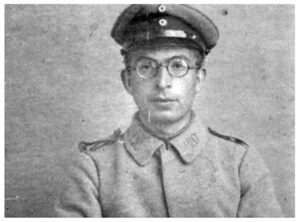
✡                                 ✡

Arnold Zweig, New York City, 1939 (Photo by Eric Schaal)

✡                                 ✡

Arnold Zweig, Haifa, Yishuv, 1939 (Photographer Unknown)

✡                                 ✡                                 ✡

I’ve not read any other works by Zweig, but given his skill and imagination; his ability to so powerfully craft scene and mood; the era in which he was active – the first half of the twentieth century – I can readily envision him – if the trajectory of his life had been different, having been a masterful and successful writer of pulp fiction, perhaps in the genres of adventure, fantasy, or horror.  Perhaps his work would have appeared in such pulps as The Magazine of Fantasy and Science Fiction; Weird Tales; Unknown; Fantastic Novels.  It’s nice to speculate…

The Magazine of Fantasy and Science Fiction, December, 1950 (Absolutely wonderful cover art! – by Chesley Bonestell) (From my own collection.)
Fantastic Novels, July, 1950 (Cover art by “Lawrence” (Lawrence Sterne Stevens)), illustrating Moore and Kuttner’s “Earth’s Last Citadel”) (Also from my own collection.  (Shameless self-promotion!)  See more of such, here.)

✡                                 ✡                                 ✡

Zweig’s macabre story concludes by transitioning to a scene of transformative and mystical renewal – an explicitly collective renewal – with startling abruptness, revealing to the narrator; to the reader – to us, even and especially in this year of 2023 – that to the Jews is granted the ability to return. 

And so, in symbolic answer to the anonymous narrator’s awakening, let’s wordlessly conclude with an allegorical image entitled “Der Jüdische Mai” [“The Jewish May”], from Ephraim Moses Lilien’s, Sein Werk, published in 1903 in Berlin.  (Specifically, page 280 in volume 2.)

For your consideration: Some references…

Arnold Zweig, at…

Wikipedia

Britannica

United States Holocaust Memorial Museum

GoodReads

Kuenste im Exil [Art in Exile]

Deutsche Kiemathek [German Cinema Library]

University of Massachusetts DEFA Film Library

Mahler Foundation

Internet Movie Database

Geni.com

FindAGrave

Die Schaubühne [“The Stage”], at …

Internet Archive

… Wikipedia (Die Weltbühne)

Weimar Berlin

University of Michigan Digital Library

Die Schaubühne (Band 13, Ausgabe 1 [Volume 13, Issue 1]), pages 115-117

…at OogleBooks

Siegfried Jacobsohn, at…

Wikipedia

FindAGrave

Franz Kafka, at…

Wikipedia

“Before the Law”, at…

Wikipedia

Azrael, at…

Wikipedia

Some books…

Eisenberg, Noah William, Between Redemption and Doom – The Strains of German-Jewish Modernism, University of Nebraska Press, 1999

Grabolle, Harro, Verdun And the Somme, Akademiai Kiado, Budapest, Hungary, 2004

Hüppauf, Bernd-Rüdiger, War, Violence, and the Modern Condition, Walter de Gruyter, Berlin, Germany, 1997

Franz Kafka – The Complete Stories

Lilien, Ephraim Mose, and Zweig, Stefan, E. M. Lilien, Sein Werk, mit einer Emleitung von Stefan Zweig, band zwei, Schuster & Loeffler, Berlin, Germany, 1903, OCLC 7720842

Vital, David, A People Apart – A Political History of the Jews in Europe, 1789-1939, Oxford University Press, 2001

Vital, David, A People Apart – A Political History of the Jews in Europe, 1789-1939, at GoodReads.com

Wenzel, Georg, Arnold Zweig, 1887-1968 : Werk und Leben in Dokumenten und Bildern : mit unveröffentlichten Manuskripten und Briefen aus dem Nachlass [Arnold Zweig, 1887-1968: Work and life in documents and images: with unpublished manuscripts and letters from the estate], Aufbau-Verlag, Berlin, 1978

Zweig, Arnold, and Struck, Hermann, Das ostjüdische Antlitz [The Eastern Jewish Face], Berlin Weltverlag, Berlin, Germany, 1922

(Das ostjüdische Antlitz includes many, many thematic sketches by Hermann Struck, none of which, unfortunately, have captions.  (Oh, well!)  This drawing of a young woman appears on page 112.)
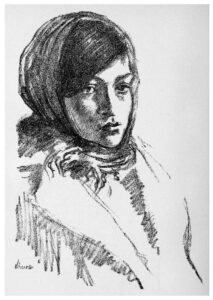
Some articles…

Angress, Werner T., The German Army’s “Judenzahlung” of 1916 Genesis – Consequences – Significance, Leo Baeck Institute Yearbook, V 23, N 1, 1978

Gelley, Alexander, On the “Myth of the German-Jewish Dialogue”: Scholem and Benjamin, University of California, Irvine, 1999

Goldberg, Amos, “German-Jewish Symbiosis” – Against the Background of the 30s – Excerpt from interview with Professor Yehuda Bauer, Director of the International Center for Holocaust Studies of Yad Vashem, Jerusalem, Israel

And, otherwise…

The World at War, The Jews in War: Jewish Military Service in World War One, in David Vital’s “A People Apart”
Dr. Bloch’s Öesterreishische Wochenschrift – Life Beyond The Great War

Naturally, innumerable article in the Wochenschrift have little to nothing to do with the Great War itself, instead focusing on varied aspect of Jewish life “in general”.  Here are two such examples, one from 1917 and the other from 1918.  The first article focuses on the Bene Israel of India (albeit not specifically using that term), and the second a place known as Oswiecim, which makes a passing reference to Jewish self-defense.  

The articles appear in the same format as the related posts about the WochenschriftThe English-language translation is first, followed by a verbatim transcript of the article in German (in blue), then an image of the article as it appeared in the newspaper, and finally an image of the entire page in which the news item appeared.  

______________________________
_______________
______________________________

Year 1917

Black Jews in India
February 9, 1917
Issue Number 6, Page 90 (Issue page 10)

It is well known that there are black Jews in Abyssinia.  But also in distant India lives a Jewish tribe with black skin color.  In the farthest reaches of India there lives a tribe of a peculiarity which is such that the most learned minds would have to concern themselves ex officio with its origins.  These are the Jews of Cochin.  Whence the conspicuous color (deep dark, almost black, like that of the Negro); whence the race (pronounced European-Jewish)?  The Holy Scriptures give information.  3,000 years ago, King Solomon repeatedly equipped circuitous coastal voyages for trading purposes to the fabled land of Ophir (near modern-day East Africa).  These each lasted three years.  Some of the participants settled, then wandered on, in these distant lands, founded tribes that had survived through the millennia.  These “black Jews” belong to them, because certain Bible texts speak of them so clearly that their identity can now be considered irreproachable.  At the last of the “Eastern European Reception Evenings”, which the associations created in Berlin hold every Wednesday in the Hotel “Prinz Albrecht” in Berlin for a better acquaintance with our new allies in the east and south-east, the connections were shown in a highly interesting way by Dr. Hermann von Staden, a guest in Cochin on his trip to India.  The black Jewish dignitaries met him in a patriarchal, venerable manner, remarkably friendly in those districts where – the Englishman is to blame! – otherwise the Europeans are extremely suspicious.  The people have their own synagogue in the middle of the Indian kingdom; They feel European, practice their cult according to old rites, course: they have remained the same, although three millennia have passed.  It is significant that, like the most armed elements of the Indian people, their hatred of the British vampire goes to their hearts.  The British also hoarded this beautiful Cochin early on as the “God-willed lord of creation”, if only because it has a beautiful harbor.  But the black Jews, together with their non-religious compatriots, cherish the deepest wish that this war may come to an end as soon as possible, so that the conquerors of India can finally feel the weapons that the peaceful natives taught them early on as masters (for their purposes).  Don’t you know that the frivolous word came from the mouths of the English: “The dead Hindu is the best…”
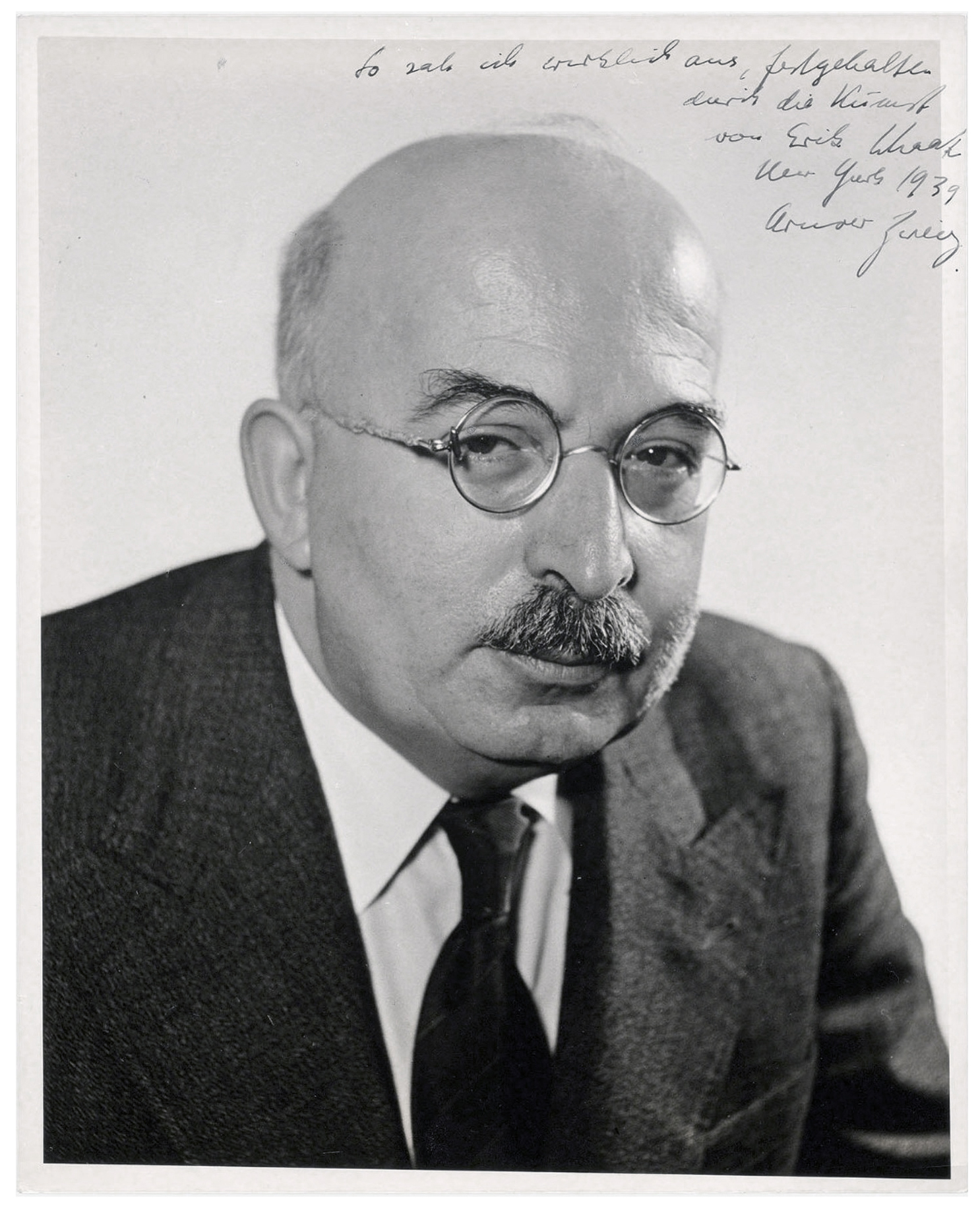
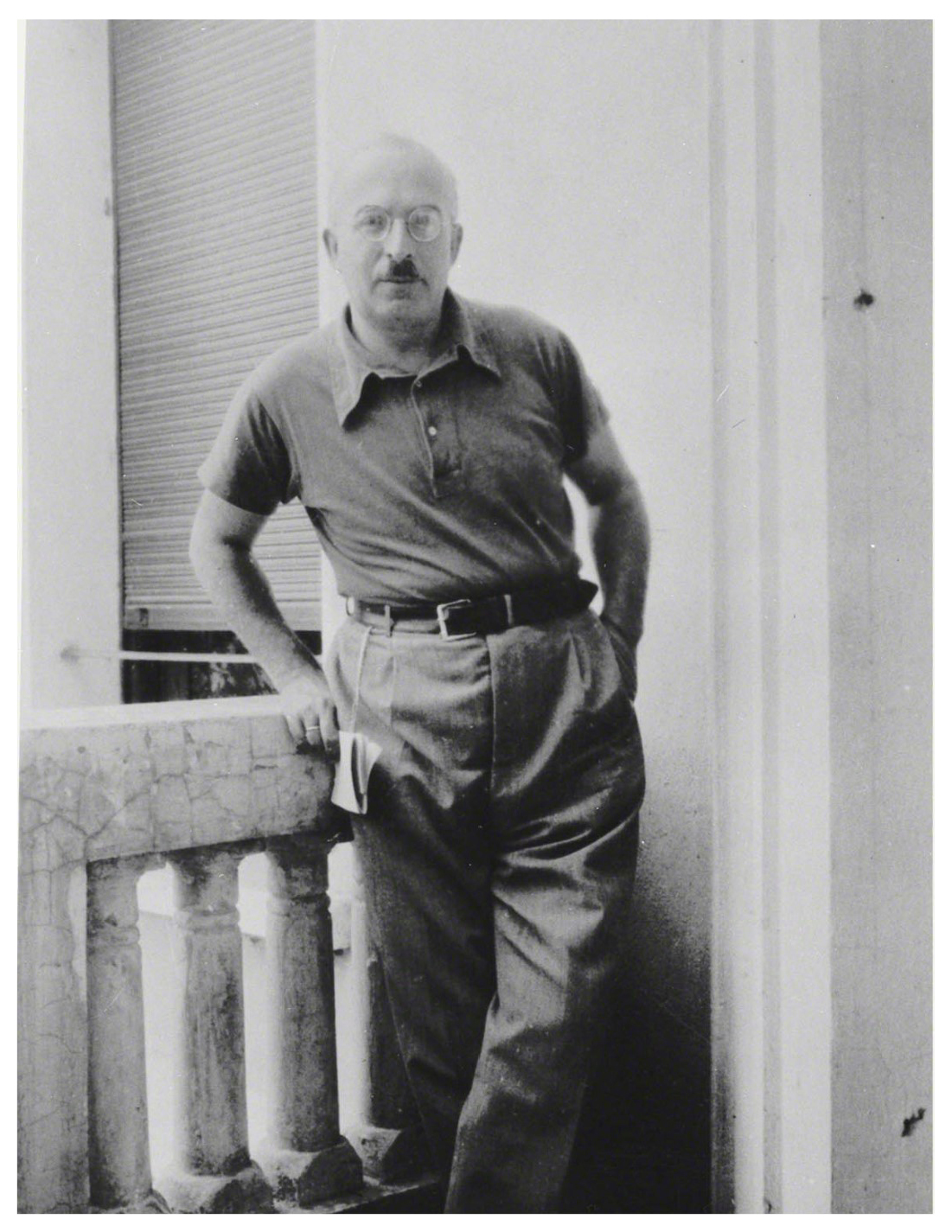
Of particular interest is the relationship between the black Jewish colony and a white Jewish community that has lived there for a long time.  The black Jews live completely separated from the white ones, hold their services for themselves.  Marriage between black and white Jews is forbidden.  Externally, the difference between the two communities is all the more striking as there are many blond types among the white Jews.  After a long slumber, which it had fallen into since the Portuguese heyday, Cochin has awakened to the growing attention that its port has received, not least through the activities of the Hamburg-America Line and other German shipping companies that go to this remote corner as bearers of culture.

Schwarze Juden in Indien

Schwarze Juden gibt es bekanntlich in Abessynien.  Aber auch im fernen Indien wohnt ein judischer Volksstamm mit schwarzer Hautfarbe.  Im fernsten Indien haust ein Volksstamm von einer Eigenart, die durchaus dazu angetan ist, dass die gelehrtesten Köpfe sich um seine Herkunst ex officio tümmern müssten.  Das sind die Juden von Kotschin.  Woher die auffällige Farbe (tiefdunkel, fast schwarz, wie die des Negers), woher die Rasse (ausgesprochen europäisch-jüdisch)?  Die heilige Schrift erteilt Auskunft.  Vor 3000 Jahren rüstete Konig Salomo zu wiederholtenmalen umständliche Küstenfahrten zu Handelszwecken nach dem sagenhaften Lande Ofir aus (unferent heutigen Ostafrika).  Diese dauerten jede hut ihre drei Jahre.  Manche von ven Teilnehmern siedelten sich, dann weiterwandernd, in diesen fernen Landen an, gründeten Stämme, die sich durch die Jahrtausende zu erhalten mussten.  Zu ihnen gehören diese „schwarzen Juden“, denn bestimmte Bibeltexte sprechen von ihnen so greifbar deutlich, dass ihre Identität jesst als einwandfrei festgestellt erachtet werden kann.  Auf dem letzten der „osteuropäischen Empfangsabende“, die die in Berlin geschaffen Verbande für ein näheres Bekanntwerden mit den uns in Osten und Südosten neu Verbündeten jeden Mittwoch im Hotel „Prinz Albrecht“ zu Berlin abhalten, zeigte in hochinteressanter Weise die Zusammenhänge Dr. Hermann von Staden auf der Gast in Kotschin auf seiner Indienreise gewesen ist.  Patriarchenhaft-ehrwürdig kamen ihm die schwarzen jüdischen Honoratioren entgegen, auffalend fruendlich in jenen Bezirken, wo man – der Englander hat Schuld! – sonst dem Europäer denkbar misstrauisch gegenübersteht.  Die Leute haben ihre eigene Synagogre mitten im Inderreich; sir fleiden sich europaisch, äben ihren Kultus nach altem Ritus aus, kurs: sie sind dieselben geblieben, obwohl drie Jahrtausende darüber verstrichen sind.  Bezeichnend ist, dass ihnen, wie den waffentüchtigsten Elementen des Indervolkes, der Hass gegen den britischen Vampyr bis ins Herzblut geht.  Der Brite hat auch dieses schöne Kotschin, schon weil es einen schönen Hafen hat, früh zeitig als der „von Gott gewollte Herr der Schöpfung“ eingehamstert.  Die schwarzen Juden aber hegen mit den ihnen glaubensfremden Landesgenossen den innigsten Wunsch, dass dieser Krieg baldigst zu Ende gehen möge, damit die Bezwinger Indiens endlich die Waffen zu spüren bekämen, die zu frühren sie die friedlichen Eingeborenen herrenmässig (fur ihre Zwecke) gelehrt haben.  Wissen sie doch, dass aus Engländermunde das frivole Wort-kam: „Der tote Hindu ist der beste…“

Besonders interessant ist das Verhältnis zwischen der schwarzen jüdischen Kolonie und einer auch seit langen Zeiten dort heinrischen weissen jüdischen Gemeinde.  Die schwarzen Juden leben völlig von den weissen getrennt, halten für sich ihre Gottesdienste.  Heirat zwischen schwarzen und weissen Juden ist ausgeschlossen.  Aeusserlich ist der Unterschied zwischen beiden Gemeinden umso auffallender, als unter den weissen Juden sehr viele blonde Typen sind.  Kotschin ist nach langen Schlafe, in den es seit der portugiesischen Blützeit gefallen war, durch die wachsende Beachtung, die sein Hafen fand, erwacht, nicht zum wenigsten durch die Betätigung der Hamburg – Amerika-Linie und anderer deutschen Schifffahrtsgesellschaften, die in diesen weltverlorenen Winkel als Kulturträger kamen.

______________________________
_______________
______________________________

Year 1918

A Requisition in Oswiecim
September 27, 1918
Issue Number 38, Page 619 (Issue page 11)

As reported by Oswiecim, a commission of several “detective” officers suddenly appeared on the 4th d. M., allegedly charged with searching and requisitioning goods in the homes of the Jews.  Supported by the anti-Semitic district headquarters, the commission penetrated Jewish houses, broke cupboards and stole goods of all kinds, especially privately used linen and clothing, even a shtreimel fell victim to this strange requisition.  A confirmation of the removal of the items was denied.  The goods were deposited with the Silesians.  Only the intervention of the Jews, organized as a self-organized youth, made an end of the bustle.

Eine Requisition in Oswiecim

Wie aus Oswiecim berichtet wird, erschien dort am 4 d M. plötzlich eine aus mehreren “Detektivs” bestehende Kommission, die angeblich den Auftrag hatte, in den Häusern der Juden eine Durchsuchung und Requisition von Waren vorzunehmen.  Von der antisemitischen Bezirkshauptmannschaft unterstützt, drang die Kommission in die jüdischen Häuser ein, erbrach Schränke und raubte Waren aller Art, insbesondere dem Privatgebrauche dienende Wäsche und Kleidungstücke, selbst ein “Strejmel” fiel dieser seltsamen Requisition zum Opfer.  Eine Bestätigung uber die Wegnahme der Gegenstände wurde verweigert.  Die Waren wurden bei den Salesianern deponiert.  Erst das Eingreifen der jüdsichen, als Selbstwehr organisierten Jugend machte dem Treiben ein Ende.

Dr. Bloch’s Öesterreishische Wochenschrift – Jews in the Allied Armed Forces

Though the Jewish Chronicle, and, the Wochenschrift were published in countries within alliances that were at war with one another, during the early part of the Great War both publications occasionally featured news items about the military service and patriotism of Jews in “the enemy camp”.  Such articles focused on Jews who received significant awards for military services in the armed forces of the opposing country, or, persons involved in unusual or singular military activity.  Though such news items were relatively few in total number and decreased in frequency as the war horribly ground on, the very fact that such articles were even published – to begin with – was I think remarkable, and remarkably unapologetic.  

Four examples of these articles follow.

The first item, published well over a year after the war’s beginning in August of 1914, is a survey of Jews in the British Army.  The second and third articles relate to Major Alfred Dreyfus: His son Peter; Major Esterhazy (Charles Marie Ferdinand Walsin Esterhazy) the actual spy in the Dreyfus Affair; his nephew Emile.  The fourth article, two Jewish aviators in the British armed forces, “Barnato” (Isaak Henry Woolf ‘Jack’ Barnato of the Royal Naval Air Service, and, “Cyril Davis”.  

Like my other posts about the Wochenschrift, the articles below follow the same format of English-language translation first, then verbatim transcript of the article in German (in blue), next an image of the article as it appeared in the newspaper, and finally an image of the entire page in which the news item appeared.  

______________________________
_______________
______________________________

Year  1 9 1 5

Jews in the English Army
October 8, 1915
Issue 40, Page 747 (Issue page 11)

The Copenhagen “Jewish People’s Daily” writes from London: There are over 25,000 Jews in the English army.  This fact is confirmed by Rabbi Herz and Rabbi Adler, who recently returned from the Belgian theater of war, as well as by the British Minister for War.  There are now no fewer than 20,000 Jews at the front and no more than 5,000 Jewish soldiers in the military camps in England itself.  Considering that there are 220,000 Jews in England in all, 10 per cent of the total Jewish population of England is now under arms, a comparatively very large number.  Everywhere it is admitted that the Jews display great patriotism.  They were the first to heed the war call.  On the battlefields they demonstrated the courage to make sacrifices.  “No English soldier has yet shown more bravery and ability than the Jewish,” was the opinion French said publicly.  In the British War Office and everywhere, the devotion and sacrifice of the Jewish soldiers is recognized.  Rabbis Herz and Adler made a special investigation and organized the Jewish soldiers to hold special services for them.  In this way it was determined exactly how many soldiers are serving in the English army.  Among the Jewish soldiers and officers are representatives of all strata of English Jewry, from the richest to the poorest: many sons of rabbis have already fallen.  The Jewish aristocrats, like the Rothschild family and others, sent their sons into the army.  An interesting fact is reported by the well-known Jewish writer Zangwill that 10 percent of the Zouaves (from Algiers) are Jews.

Juden in der englischen Armee

Aus London schreibt man der Kopenhagener “Jüdischen Volkszeitung”: Ueber 25,000 Juden befinden sich in der englischen Armee.  Diese Tatsache wird von Rabbi Herz und Rabbi Adler, die vor kurzen vom belgischen Kriegsschauplatz zurückgekehrt sind, sowie auch vom englischen Kriegsminister bestätigt.  An der Front befinden sich jetzt nicht weniger als 20,000 Juden und in den militärischen Lagern in England selbst nicht mehr als 5,000 jüdsiche Soldaten.  Wenn mann in Betrach zieht, dass es in England im ganzen 220,000 Juden gibt, so stehen jetzt 10 Prozent der gesamten jüdsichen Bevölkerung Englands unter Waffen, eine verhältnismässig sehr grosse Zahl.  Ueberall gibt man zu, dass die Juden grossen Patriotismus an den Tag legen.  Sie waren die ersten, die dem Kriegsruf Folge geleistet haben.  Auf den Schlachtfelderm bewiesen sie feltenen Opfermut.  “Kein englischer Soldat hat bis jetzt mehr Tapferkeit und Fähigkeit bewiesen als der jüdische”, war die Meinung, die French öffentlich sagte.  Im englischen kriegsministerium und überall erkennt man die Ergebenheit und Opferwilligkeit der jüdischen Soldaten an.  Die Rabbis Herz und Adler stellten eine spezielle Untersuchung an und organisierten der jüdischen Soldaten, un für sie spezielle Gottesdienste abzuhalten.  Auf diese Weise wurde genan festgestellt, wie viel Soldaten in der englischen Armee dienen.  Unter den jüdsichen Soldaten und Offizieren befinden sich Vertreter aller Schichten des englischen Judentums, von den reichsten bis zu den ärmsten: viele Söhne von Rabbinern sind schon gefallen.  Die jüdsichen Aristokraten, wie die Familie Rothschild und andere, schickten ihre Sohne in die Armee.  Eine interessante Tatsache meldet der bekannte jüdsiche Schriftsteller Zangwill, dass 10 Prozent der Zuaven (aus Algier) Juden seien.

______________________________
_______________
______________________________

Year  1 9 1 6

Alfred Dreyfus’ Son
May 19, 1916
Issue Number 20, Page 338 (Issue page 6)

The son of the exile from Devil’s Island, Artillery Lieutenant Peter Dreyfus, has been praised for his bravery before Verdun in the Order of the Day.  Especially on the 26th, 27th, and 28th of February, but also in March, as an observation officer in the fiercest enemy fire, he maintained the connection with his battery and secured its own effective fire.  Gustave Herve, who literally prints the words of the daily order in the “Victorie” (Volume 4), remarks: “What joy does that, after so much bitterness, mean for Father Alfred Dreyfus?”  One can only agree with that, because no one in the world will want this late recognition for the officer so terribly abused by French militarism.

Alfred Dreyfus’ Sohn

Der Sohn des Verbannten von der Teufelsinsel, Artillerieleutnant Peter Dreyfus, ist wegen seiner Tapferkeit vor Verdun im Tagesbefehl gelobt worden.  Besonders am 26, 27 und 28 Februar, aber auch im März het er als Beobachtungsoffizier im heftigsten feindlichen Feuer die Verbindung mit seiner Batterie aufrechterhalten und ihr eigenes wirksames Feuer gesichert.  Gustave Herve, der in der “Victorie” (vom. 4) den Wortlaut des Tagesbefehles wörtlich abdruckt, bemerkt dazu: “Welche Freude mag das, nach soviel Bitterkeiten, für den Vater Alfred Dreyfus bedeuten?”  Dem kann man sich nur anschliessen, denn niemand in der Welt wird dem vom französischen Militarismus so furchtbar misshandelten Offizier diese späte Anerkennung missgonnen wollen.  (“Abend” v. 10 Mai)

______________________________
_______________
______________________________

The Dreyfus Affair
June 30, 1916
Issue Number 26, Page 8

The “Cry of Paris” writes: The “holy unity” has also devoured the Dreyfus Affair.  Major Alfred Dreyfus commands artillery in a sector of Paris.  His son Pierre has just been honored for his heroic behavior at Douaumont.  His nephew Emil, the son of Mathieu Dreyfus, fell in the Champagne Battle and received the ribbon of the Legion of Honor.  Colonel Paty de Clam and his sons received the War Cross.  Captain Lauth was promoted to lieutenant colonel and is in Lorraine.  And Esterhazy?  Nobody knows what happened to him.  Is he hiding under a false name?  Is he dead?  Nobody can answer these questions.

(Sous Lieutenant Emile Dreyfus, a member of the 32eme Regiment d’Artillerie de Campagne, died of wounds at Mourmelon-le-Grand, Marne, on October 22, 1915.  He was born at Mulhouse, Haut-Rhin, on May 22, 1891.  His name appears on page 30 of Les Israelites dans l’Armée Française.  The two “Partie À Remplir Par Le Corps” cards pertaining to his casualty status, from the “Morts pour la France de la Première Guerre mondiale” (“Died for France in the First World War”) database, are shown below.)

Affaire Dreyfus

Der “Cri de Paris” schreibt: Die “heilige Einigkeit” hat auch die Dreyfus-Affäre verschlungen.  Major Alfred Dreyfus kommandiert die Artillerie in einem Sektor von Paris.  Sein Sohn Pierre wurde soeben wegen seines heroischen Verhaltens bei Douaumont ausgezeichnet.  Sein Neffe Emil, der Sohn von Mathieu Dreyfus, fiel in der Champagne-Schlacht und erhielt das Band der Ehrenlegion.  Oberst Paty de Clam und seine Söhne erhielten das Kriegskreuz.  Hauptmann Lauth wurde zum Oberstleutnant befördert und steht in Lorhringen.  Und Esterhazy?  Was aus ihm geworden ist, weiss niemand.  Versteckt er sich unter einem falschen Namen?  Ist er tot?  Niemand kann auf diese Fragen eine Antwort geben.


______________________________
_______________
______________________________

English Aviation Officers
June 30, 1916
Issue Number 26, Page 8

As aviation officers, the Jews Barnato and Cyril Davis have distinguished themselves in England.  The “Jewish World” calls them the true “air people.”

Englische Fliegeroffiziere

Als Fliegeroffiziere haben sich in England die Juden Barnato und Cyril Davis ausgezeichnet.  “Jewish World” nennt sie die wahren “Luftmenschen”.

A Book

Les Israelites dans l’Armée Française (Israelites [Jews] in the French Army), Angers, 1921 – Avant-Propos de la Deuxième Épreuve [Forward to the Second Edition], Albert Manuel, Paris, Juillet, 1921 – (Réédité par le Cercle de Généalogie juive [Reissued by the Circle for Jewish Genealogy], Paris, 2006

Stories from a Vanished Empire: Dr. Bloch’s Öesterreishische Wochenschrift – Aviators

The ten articles below comprise all those published by Dr. Bloch’s Oesterreichische Wochenschrift pertaining to the service of Jewish Aviators in the K.u.K. Luftfahrtruppen (Kaiserliche und Königliche Luftfahrtruppen) [Austro-Hungarian Aviation Troops / Imperial and Royal Aviation Troops ], and, the Deutsche Luftstreitkräfte [German Air Force].  

Two of the articles pertain to Wilhelm Frankl, one of which reveals that the German Jewish aviator had a younger brother living in Vienna.  To these I’ve included some images from Heinz Nowarra’s 1967 biography of Frankl, The Jew With the Blue Max(I picked up Nowarra’s book at the Smithsonian some years ago.)  

Though there exist compilations of aerial victories and losses for the World War One air arms of the Allies (specifically covering the British Commonwealth, France, and the United States) and Germany (albeit solely comprising aviators’ names, not information about their aircraft), I don’t know if any such works have ever been compiled pertaining to the K.u.K. Luftfahrtruppen.    

The articles appear in the same format as my other posts about the Wochenschrift: The English-language translation first, followed by a verbatim transcript of the article in German (in blue), then an image of the article as it appeared in the newspaper, concluding with an image of the entire page in which the news item appeared.  

______________________________
_______________
______________________________

Year 1915

The Death of the Austrian Aviator Rosenthal
April 2, 1915
Issue Number 14, Page 3

The Lemberg newspapers, which appeared under Russian censorship, reported the death of the aviator Rosenthal as follows: Rosenthal came to Zolkiew during a reconnaissance flight and noticed that a Russian aviator was billeted in a house.  He began bombing the house, but did no damage.  When the Russian aviator recognized the enemy, he took off, and now a bitter duel with guns developed between the two aviators in the air.  The result of this peculiar duel was that the Russian pilot, fatally wounded, fell to the ground with his aircraft and in the crash dragged Rosenthal’s plane with him.  The Russian plane, which was of French manufacture, landed almost unharmed, while the Austrian plane was a veritable heap of rubble, from which the plane was pulled out, still alive but badly injured.  Rosenthal suffered a fracture of the spine and passed away after a few minutes.  Reporting on the Austrian pilot’s tragic end, Russian newspapers praised his boldness and heroism.

Der Tod des österreichischen Fliegers Rosenthal

Die unter russischer Zensur erscheinenden Lemberger Zeitungen brachten über den Tod des Fliegers Rosenthal folgende Darstellung: Rosenthal kam während eines Erkundungsfluges nach Zolkiew und bemerkte, dass in einem Hause ein russischer Flieger einquartiert war.  Er begann das Haus mit Bomben zu belegen, die aber keinen Schaden anrichteten.  Als der russiche Flieger den Gegner erkannte, stieg er auf, und nun entwickelte sich in den Lüften zwischen den beiden Fliegern ein Revolverzweikampf von grosser Erbitterung.  Das Ergebnis dieses eigenartigen Duells war, dass der russiche Flieger, tötlich getroffen, mit seinem Apparat zu Boden stürzte und im Absturze das Flugzug Rosenthals mit sich riss.  Das russiche Flugzeug, das französisches Fabrikat war, gelangte fast unversehrt zu Boden, das österreichische bildete dagegen einen wahren Trümmerhaufen, unter dem man den Flieger noch lebend, aber schwerverletzt hervorzog.  Rosenthal hatte einen Bruch der Wirbelsäule erlitten und verschied nach wenigen Minuten.  In den Berichten über das tragische Ende des österreichischen Piloten hoben die russischen Zeitungen dessen Kühnheit und Heldenmut anerkennend hervor.

______________________________
_______________
______________________________

The Hero of F-10
April 9, 1915
Issue Number 15, Page 5

“Egyenlösseg” reports: Corporal Ludwig Helfer, motor driver at Z. Flugpark, is the hero of the “F. 10”.  “F 10” is an army flying machine on which Oberleutnant Osvath flew up from Rszeczow with Corporal Helfer on March 4 to bring mail and orders to Przemysl.  After four hours of flight, they arrived at the besieged fortress.  The lieutenant took orders and mail and they flew back.  In Skala, the first lieutenant was directing the plane to land when a Russian patrol suddenly appeared and saw the “F. 10” under fire.  The two pilots defended themselves with their pistols, but a bullet hit the gasoline reservoir 10 meters up and the machine exploded and crashed to the ground.  An Austro-Hungarian patrol, which had meanwhile arrived, drove out the Cossacks and hurried to help the inmates of the flying machine.  Lieutenant Osvath lay lifeless under the rubble.  Ludwig Helfer, with four bullets in his body, was still fully conscious and with the last effort handed over the post and command of our patrol.  After that he lost consciousness.  In the Jaroslau hospital, where he has been cared for ever since, he received the second class silver medal for bravery.

Der Held des F. 10

“Egyenlösseg” berichtet: Korporal Ludwig Helfer, Motorführer beim Z. Flugpark, ist der Held des “F. 10”.  “F 10” ist eine Flugmaschine unserer Armee, auf welcher Oberleutnant Osvath mit Korporal Helfer am 4 März von Rszeczow aufflog, um Post und Befehle nach Przemysl zu bringen.  Nach vierstündigem Flug langten sie in der belagerten Festung an.  Der Oberleutnant übernahm Befehle und Post und sie flogen zurück.  In Skala dirigierte der Oberleutant die Maschine zur Landung, als eine plötzlich aufgetauchte russische Patrouille die abwärts sausende “F. 10” unter Feuer nahm.  Die beiden Piloten verteidigten sich mit ihren Pistolen, eine Kugel traf jedoch in 10 Meter Höhe das Benzinreservoir und die Maschine explodierte und stürzte zu Boden.  Eine inzwischen eingetroffene österreichisch-ungarisch Patrouille vertrieb die Kosaken und eilte den Insassen der Flugmaschine zu Hilfe.  Oberleutnant Osvath lag leblos unter den Trümmern.  Ludwig Helfer war mit vier Kugeln im Leibe noch bie Bewusztsein ünd übergab mit letzter Kraftanstrengung Post und Befehl unserer Patrouille.  Hierauf verlor er das Bewusztsein.  Im Jaroslauer Spitale, wo er seitdem gepflegt wird, erhielt er die silberne Tapferkeitsmedaille zweiter Klasse.

______________________________
_______________
______________________________

Year 1916

Field Pilot Lieutenant Mandl
April 7, 1916
Issue Number 15, Page 5

The “Fremdenblatt” (March 30, 1916) is asked by a higher active officer to publish the following obituary for Field Pilot Lieutenant Hans Mandl, who died in Görz: “The relentless Grim Reaper has demanded a new, noble sacrifice.  The name Hans Mandl has a good reputation far beyond the borders of our homeland, as this young human life was full of duty and heroism.  The achievements that he accomplished for the emperor and the empire are marked with golden pencils in the history of the fifth weapon, which played such a prominent role in the world war.  Hans Mandl!  All those whom knew, valued, and loved you are shaken, the only thing left to us is the memory of your amiable personality, but we will faithfully preserve it.  Countless friends mourn at your grave; the air fleet, who lost one of their noblest; the whole fatherland, which you so dearly loved and so ardently defended!”

Feldpilot Oberleutnant Mandl

Von einem höheren aktiven Offizier wird das “Fremdenblatt” (30. Marz 1916) um Veröffentlichung folgenden Nachrufes für den bei Görz gefallenen Feldpiloten Oberleutnant Hans Mandl gebeten: “Der unerbittliche Sensenmann hat ein neues, edles Opfer gefordert.  Weit über die Gaue unserer Heimat hinaus hat der Name Hans Mandl einen guten Klang, war doch dieses junge Menschenleben vollausgefüllt von Pflichterfüllung und Heldentum.  Die Leistungen, die er für Kaiser und Reich vollbrachte, sind mit goldenen Griffel in der Geschichte der am Weltkriege so hervorragend beteiligten fünfsten Waffe eingezeichnet.  Hans Mandl!  Alle, die wir dich kannten, schätzten und liebten, sind erschüttert, uns bleibt nur die Erinnerung an deine liebenswürdige Persönlichkeit, die aber wollen wir treulich bewahren.  An deinem Grabe trauern zahllose Freunde, die Luftflotte, die einen ihrer Vornehmsten verloren, das ganze von dir so heiss geliebte und heiss verteidigte Vaterland!”

______________________________
_______________
______________________________

The following brief sketch of Lieutenant Mandl’s life and military service isn’t from Dr. Bloch’s Öesterreishische Wochenschrift, instead having been published in the 1916 edition of the German aviation journal Flugsport.  I found the text and image via Oogle Books.  

Aviation
Illustrated Technical Journal for the Whole of Aviation
Oskar Ursinus – Frankfurt am Main
1916

Field pilot Lieutenant Hans Mandl is killed.  Field pilot Hans Mandl, first lieutenant in Fortress Artillery Regiment No. 4, died a hero’s death in a flight near Gorizia.  Mandl, who was only 29 years old, was one of the best and most efficient Austrian pilots.  In 1912 he was assigned to the Air Corps, passed the field pilot’s examination on February 24, 1913 and then worked as a flight instructor in Wiener-Neustadt until the outbreak of war.  On August 24, 1913, Mandl, who was still a lieutenant at the time, made the flight from Wiener-Neustadt via Graz to Ljubljana.  This was the second crossing of the Pemmering in an airplane and the first flight over this long distance, which Mandl flew in three and a half hours at an average speed of over a hundred kilometers.  For his outstanding service in the war he was awarded the Order of the Iron Crown, third class, and recently the Signum laudis.

Flugsport
Illustriert-Technische Zeitschrift fur das Gesamte Flugwesen
von Oskar Ursinus – Frankfurt am Main

Feldpilot Oberleutnant Hans Mandl gefallen.  Feldpilot Hans Mandl, Oberleutnant im Festungsartillerieregiment Nr. 4, hat bei einem Fluge in der Nahe von Görz den Heldentod gefunden.  Mandl, der erst im 29. Lebensjahre stand, war einer der besten und tüchtigsten Österreichischen Flieger.  Im Jahre 1912 liess er sich dem Fliegerkorps zuteilen, legte am 24. Februar 1913 die Prüfung als Feldpilot ab und war dann bis zum Ausbruch des Krieges als Fluglehrer in Wiener-Neustadt tätig.  Am 24. August 1913 hatte Mandl, damals noch Leutnant, den Flug von Wiener-Neustadt über Graz nach Laibach gemacht.  Es war dies die zweite Ueberquerung des Pemmerings im Flugzeug und der erste Flug über diese weite Strecke, welche Mandl in dreieinhalb Stunden mit einer Durchschnittsgeschwindigkeit von über hundert Kilometer durchflog.  Für seine hervorragenden Leistungen im Kriege wurde er durch die Verleihung des Ordens der Eisernen Krone dritter Klasse und kürzlich durch die Verleihung des Signum laudis ausgezeichnet.

Here’s the cover of Flugsport’s 1916 edition

______________________________

Lieutenant Mandl crashed to earth east of Gorizia, Italy, near the source (head) of the Lijak Stream, within present-day Slovenia, during an interregnum between the fifth and sixth Battles of the Isonzo.  In this air photo, the head of the Lijak Stream appears near the very center of the image.  The stream itself flows to the southwest, and can be seen – as a narrow and irregular strip of vegetation – just to the right (east) of a small airstrip in the lower left center of the image.    

Zooming out, you can see the Lijak Stream’s head near the right edge of the image.  The stream itself (farmland to the right and forest to the left) flows south-southwest, and is crossed by highway 444.  The white line running north-northeast to west-southwest in the left side of the image is the national border between Slovenia to the east and Italy to the west.  The cities of Nova Gorica and Gorizia are respectively situated on opposite sides of the border.   

This map, at the same scale as the above photo, shows the geography of Gorizia and Nova Gorica.  

At an even smaller scale, this map shows the border between Italy and Slovenia.  The two above-mentioned cities are situated near the center of the map.  

Five images of the spot where Lt. Mandl crashed, and, a plaque in his memory mounted upon on a rock wall at the site, can be viewed at Mihel Spomemnik’s August, 2005 post at Pro Hereditate 1915-1917 (“avstroogrskemu pilotu nadporočniku Hansu Mandlu” [“Austro-Hungarian pilot Lieutenant Hans Mandel”]).  As described at the post, “Tekstovni opis V bližini izvira potoka Lijak stoji večja skala, na kateri je pritrjena napisna plošča, postavljena v spomim na sestreljenega avstroogrskega pilota Hansa Mandla.”  (“Near the source of the stream Lijak there is a larger rock, on which is attached an inscription plaque, erected in memory of the downed Austrian pilot Hans Mandel.”)

The monument bears this inscription:

He stormed in front of the
enemies on March 30, 1916
Kaiserliche und Königliche First Lieutenant
HANS MANDL
Knight of the Iron Cross III Class 
Cross of Military Merit – Old Reward Files
In 1914, 1915 and 1916
Austria’s best flyer.
———————————
Dedicated by Flying (?) 19

Original German text:

Hier stürmte vor dem
Feinde am 30. März 1916
der k. u. k. Oberlt
HANS MANDL
Ritter des E.K.III Kl.
M. V. K. A. B. A.
In den Jahren 1914,15 u. 16
Östr. bester Flieger.
——————————–
gew. von der Fliegerad. 19

As described below by Harald D. Groller in St. Radegund.  A Styrian health resort and its history, Lieutenant Mandl is buried at the Sankt Radegund Cemetery.  The municipality of St. Radegund (for Sankt Radegund (English: Saint Radegund)) is in the district of Braunau am Inn in the Austrian state of Upper Austria.  The cemetery itself is located at Braunau am Inn, Braunau am Inn Bezirk.

“Anyone who knows the St. Radegund cemetery a little better will perhaps have noticed one of the most peculiar gravestones in the country: it is that of the brothers Dr. Viktor Mandl, judge in Fürstenfeld, who had already fallen in November 1914 in Galicia, and Lieutenant Colonel Hans Mandl, who fell in March 1916 in the southern theater of war.  Both dead were sons of the St. Radegund spa director at the time.

As the gravestone makes it easy to guess, Hans Mandl was one of the flying aces of his time.  In 1913 he became the second Austrian to fly over the Semmering and he was the pilot of the first Austrian long-distance flight from Vienna to Ljubljana, although this triumph was diminished by the fact that the plane burned down on the return flight.  Hans Mandl was also the first Austrian pilot to fly one – and then several – loops, thereby writing sports history.  In the years 1914 to 1916 the best Austrian pilot, he crashed on March 21, 1916 on the Isonzo front near Gorizia and died.”

____________________

Wer den St. Radegunder Friedhof etwas näher kennt, dem wird vielleicht schon einer der eigenartigsten Grabsteine des Landes aufgefallen sein: Es handelt sich um jenen der Brüder Dr. Viktor Mandl, Richter in Fürstenfeld, der bereits im November 1914 in Galizien gefallen war, und des Oberstleutnants Hans Mandl, gefallen im März 1916 am südlichen Kriegsschauplatz.  Beide Gefallenen waren Söhne des damaligen St. Radegunder Kurdirektors.

Wie der Grabstein unschwer erahnen lässt, handelt es sich bei Hans Mandl um eines der Fliegerasse seiner Zeit.  Ihm gelang es 1913 als zweitem Österreicher, den Semmering zu überfliegen, und er war der Pilot des ersten österreichischen Langstreckenfluges von Wien nach Laibach, wobei dieser Triumph dadurch geschmälert wurde, dass das Flugzeug beim Start zum Rückflug abbrannte.  Hans Mandl war auch der erste österreichische Pilot, der einen – und gleich darauf mehrere – Loopings flog und damit Sportgeschichte schrieb.  In den Jahren 1914 bis 1916 bester österreichischer Flieger, stürzte er am 21.  März 1916 an der Isonzofront bei Görz ab und kam dabei ums Leben.

Harald Groller’s article includes a photograph of the eagle-headed monument erected at the grave of the Mandl brothers, as shown in this 2017 photo by HLK / Meinhard Brunner.  The fact that Hans Mandls’ death in combat was reported upon in Dr. Bloch’s Öesterreishische Wochenschrift, yet he and his brother were buried in a Christian cemetery, suggests that the though the family were Jews, by the advent of the First World War the family’s ties to or affiliation with the Jewish community – whether in terms of religion, history, community, kinship, or simple feeling – had attenuated to the point of dissolution.   

In this, I’m so much reminded of the 1999 movie Sunshine, which you can view at ok.ru/video…  

…and so I wonder:  Will an as-yet-unknown film director, years or decades from 2023 – if movies continue to exist – make a parallel, non-saccharin, non-Spielbergian visual chronicle about the Jews of the United States, viewed through the multi-generational chronicle of a single family’s history?

______________________________
_______________
______________________________

This article pertains to Vizefeldwebel Frankl’s shooting down of BE2c 4109 of No. 7 Squadron.  On an Artillery Registration Flight, the aircraft departed at 2:10 P.M. and was shot down in flames, crashing at Ploegsteert Wood.  2 Lt. Edward G. Ryckman and 2 Lt. John R. Dennistoun were both killed.

Wilhelm Frankl
May 19, 1916
Issue Number 20, Page 6

The daily report of the German Supreme Army Command reported on 6 May:
South of Varneton, on May 4th, Vice Sergeant Frankl shot down an English biplane, knocking out his fourth enemy aircraft.  His majesty has expressed his appreciation for the achievements of the able aviator by promotion to officer.
Pilot William Frankl has previously been awarded the Iron Cross I and 2 Class.

Wilhelm Frankl

Der Tagesbericht der deutschen Obersten Heeresleitung berichtete am 6 Mai:
Südlich von Varneton hat Vizefeldwebel Frankl am 4 Mai eine englischen Doppeldecker abgeschossen und damit sein viertes feindliches Flugzeug ausser Gefecht gesetzt.  Seine Mjestät hat seiner Anerkennung für die Leistungen des tüchtigen Fliegers durch die Beförderung zum Offizier Ausdruck verliehen.
Flugzeugführer Wilhelm Frankl wurde bereits früher mit den Eisernen Kreuze I und 2 Klasse ausgezeichnet.

______________________________
_______________
______________________________

There appear to have been two picture postcards created with formal portraits of Wilhelm Frankel.  One of these cards bears an image of Frankl standing before an Albatross while wearing a heavy coat, bearing the date “31.1.1917” in large script at the bottom of the card. 

The “other” postcard of Wilhelm Frankel, shown below, is abundantly available on the internet at many levels of contrast and resolution.  However, this particular, specific example is among the best that I’ve seen of this image.  Available via Kedem Auction House, entitled “Postcard Hand Signed by Pilot Wilhelm Frankl – The Jewish Flying Ace of the German Air Force – World War I“, it’s described there as follows:

Photographic postcard depicting the Jewish-German pilot Wilhelm Frankl, hand-signed by him. Berlin: W. Sanke, [1916 or 1917].

In the picture, Frankl is seen in the uniform of the German Air Force, wearing the Pour le Mérite decoration on his neck and the Iron Cross on his chest. The postcard is signed at lower recto by Frankl (W. Frankl) and inscribed on verso. Appearing alongside the addressee’s address is a stamp of the fourth squadron of the German Air Force.

Wilhelm Frankl (1893-1917) is considered the most famed Jewish fighter pilot of World War I. He started studying aviation immediately after graduating from school and in 1913 earned pilot’s license number 49. With the outbreak of World War I, he was recruited to the fourth squadron (Jagdstaffel 4) of the German Air Force and quickly proved to be a brilliant fighter pilot (he is credited with 20 aerial victories throughout the war, three of them on the same day). For his successes, Frankl was awarded the highest order of merit of the German army – the Pour le Mérite and the Iron Cross. On April 8, 1917, during a series of daring combat maneuvers, his aircraft began falling apart in the air and Frankl fell to his death. He was 23 when he died.

Due to his untimely death, Frankl’s signatures are extremely rare.

Approx. 8.5X14.5 cm. Good condition.

(This isn’t a “plug” for Kedem.  Rather, I always try to provide links and citations to the sources of the images in my posts, regardless of the source!) 

The following three pictures are among the nineteen illustrations in Heinz J. Nowarra’s 1967 biography of Wilhelm Frankl, The Jew With The Blue Max.  The three pictures are accompanied by their original captions.

“Oberleutnant Buddecke, leader of Jasta 4, and Frankl at Vaux.”

____________________

“Lt. Frankl testing the Pfalx D Vi.”

____________________

“The first new Albatross D III sent to Jasta 4 at Hivry-Circourt.  January, 1917.”

____________________

The Jew With The Blue Max, front cover.

______________________________
_______________
______________________________

Lieutenant Wilhelm Frankl
August 18, 1916
Issue Number 33, Page 4

Lieutenant Wilhelm Frankl, who was awarded the Order Pour le Merite by Kaiser Wilhelm in recognition of his outstanding achievements as a flying officer after his participation in the successful air battles south of Baupaume on August 9, is a Hamburger and is 22 years old.  The youngest knight of the order Pour le merit had distinguished himself as a sportsman and especially as an aviator even before the beginning of the war.  He had volunteered for military service, aspired to be assigned to the airship department and passed his pilot’s exam with distinction.  His activities during the war began as a vice sergeant; he had already shot down half a dozen enemy aircraft in aerial combat and had been promoted to lieutenant and awarded the Iron Cross, first and second class.  The number of enemy planes he has neutralized has now reached eight.  Lieutenant Wilhelm Frankl is no stranger to Vienna.  Both in aeronautical circles and in society, to which he occasionally repeated.  Visits to his brother in Vienna found connections; the bold young aviator is well known.  His brother is the head of the business building on the corner of Kärntnerstrasse and Schwangasse, which deals in Persian and antique carpets.  Hermann Frankl also enlisted at the beginning of the war, but was then released from military service.  He and those around him follow his younger brother’s activities as a pilot with understandable interest.

Leutnant Wilhelm Frankl

Leutnant Wilhelm Frankl, der in Anerkennung seiner hervorragenden Leistungen als Fliegeroffizier nach seiner Beteiligung an den erfolgreichen Luftkämpfen südlich von Baupaume am 9 August vom Kaiser Wilhelm mit dem Orden Pour le merite ausgezeichnet wurde, ist ein Hamburger und steht im 22 Lebensjahre.  Der jüngste Ritter des Ordens Pour le merit hat sich schon vor Beginn des Krieges als Sportsmann und namentlich als Flieger hervorgetan.  Er hatte sich freiwillig zum Militärdienste gemeldet, strebte seine Zuteilung zur Luftschifferabteilung an und legte das Piloteneramen mit Auszeichnung ab.  Als Vizefeldwebel begann seine Tätigkeit im Kriege, ein halbes Dutzend feindliche Flugzeuge hatte er bereits im Luftkampfe abgeschossen und war zum Leutnant befordert und mit dem Eisernen Kreuz erster und zweiter klasse ausgezeichnet worden.  Nunmehr hat die Zahl der von ihm unschädlich gemachten feindlichen Flugzeuge die Ziffer acht erreicht.  Leutnant Wilhelm Frankl ist in Wien nicht fremd.  Sowohl in den aeronautischen Kreisen als auch in der Gesellschaft, zu der er gelegentlich wiederholter.  Besuche bei seinem Bruder in Wien Beziechungen fand, ist der kühne junge Flieger bekannt.  Sein Bruder ist der Chef des an der Ecke der Kärntnerstrasse und der Schwangasse befindlichen Geschäftshauses, der mit persischen und antiken Teppichen Handel treibt.  Auch Hermann Frankl war zu Beginn des Krieges eingerückt, wurde aber dann aus dem Kriegsdienste entlassen.  Er sowie seine Umgebung verfolgen mit begreiflichem Interesse die Tätigkeit des jüngeren Bruders als Flieger.

______________________________
_______________
______________________________

Flyer – Lance Corporal Robert Fried
December 29, 1916
Issue Number 51, page 6

Robert Fried from Budapest is a well-known motor and two-wheeled biker; who won the first prize in various races.  In the Ljubljana Military Bicycle Race he won the prize honored by Honvedminister [Royal Hungarian Army National Defense Minister] Baron Samuel Hazai.  The first mobilization met him as an active soldier of a Vienna air force regiment.  He came to the Serbian theater of war, where he performed successful reconnaissance services.  From there he came to the Italian theater of war, took part in the bombardment of the Italian cities.  Then he was transferred to the Russian front, carried out here also successful enlightenment, for which he was awarded by the German Emperor with the Iron Cross second class.  Now he is proposed for promotion and distinction.  As “Egyenloseg” reports, Fried’s three brothers are still on different fronts, where they have already distinguished themselves.

Flieger-Gefreiter Robert Fried

Robert Fried aus Budapest ist ein bekannter Motor- und Zweirad-Wettfahrer; der in verschiedenen Wettfahrten den ersten Preis gewann.  In dem Laibacher Militär-Fahrrad-Wettfahren gewann er den vom Honvedminister Baron Samuel Hazai gewidmeten Preis.  Die erste Mobilisierung traf ihn als aktiven Soldaten eines Wiener Fliegerregiments.  Er kam auf den serbischen Kriegsschauplatz, wo er erfolgreiche Ausklärungsdienste leistete.  Von dort kam er auf den italianischen Kriegsschauplatz, hat an der Bombardierung der italianischen Städte teilgenommen.  Dann wurde er an die russische Front versezt, führte auch hier erfolgreiche Aufklärungen durch, wofür er vom deutschen Kaiser mit dem Eisernen Kreuz zweiter Klasse ausgezeichnet wurde.  Jetzt ist er zur Beförderung und Auszeichnung vorgeschlagen.  Wie “Egyenloseg” berichtet, sind noch drei Brüder des Fried an verschiedenen Fronten, wo sie sich bereits ausgezciehnet haben.

______________________________
_______________
______________________________

Year 1917

A Little Bit of Flying
May 18, 1917
Issue Number 19, Page 9

Lieutenant Rosin from Freiburg i. B., the son of the local Geh. Council Prof. Dr. Rosin, a Jew, was awarded the Iron Cross, First Class, in the air arm for excellence in aerial combat.  The war correspondent of the “Frankfurter Zeitung” tells about the reason for this: “On the same night as Laon was hit with bombs, a German plane received the order to drop a load of 500 kilograms of dynamite on an important traffic point behind the enemy front.  He rose, seeking his target but unable to explore in the rising mist, he flew back to catch a better hour.  Above Laon he saw detonation points from anti-aircraft guns in the air and soon discovered the French squadron in question.  Then an idea occurs to him: carefully he hangs on the squadron’s tail and follows it unnoticed in the darkness over the enemy line.  He’s confident that people will take him for a keen Frenchman, and I think he was.  It wasn’t long before he saw the landing lights from the French airdrome below.  The pilots of the squadron went gliding to the ground and our plane was the last to prepare for it.  With strange awkwardness he steered quite close over the hangar, dropped his load from a very short distance, maybe only 50 meters, jerked up the controls and disappeared into the night.  The explosive charge, fitted with a 60-second timer, detonated precisely and with terrible effect.”

Ein Fliegerstückchen

Leutnant Rosin aus Freiburg i. B., der Sohn des dortigen Geh. Rats Prof. Dr. Rosin, ein Jude, wurde bei einer Fliegertruppe wegen herrvoragender Leistungen im Luftkampf mit dem eisernen Kreuz erster Klasse ausgezeichnet.  Ueber die Veranlassung hiezu erzählt der Kriegsberichterstatter der “Frankfurter Zeitung”: “In derselben Nacht als Laon mit Bomben heimgesucht wurde, erhielt ein deutscher Flieger den Auftrag, eine Ladung von 500 Kilogramm Dynamit auf einen wichtigen Verkehrspunkt hinter der feindlichen Front abzuwverfen.  Er stieg auf, suchte sein Ziel, konnte es aber im aufstiegenen Nebel nicht erkunden und flog zurück, um eine bessere Stunde wahrzunehmen.  Ueber der Höhe von Laon sah er Sprengpunkte von Abwehrgeschützen in der Luft und entdeckte auch alsbald das betroffene franzüsische Geschwader.  Da kommt ihm ein Gedanke: vorsichtig hängt er sich dem Geschwader an den Schwanz und folgt ihm unbemerkt in der Dunkelheit über die feindliche Linie.  Er vertraut darauf, dass man ihn für einen ausgepichten Franzosen halten werde, und so war es wohl auch.  Nicht lange, so sah er unter sich die Landungsfeuer des französischen Flughafens.  Die Piloten des Geschwaders gingen im Gleitflug zur Erde und als letzter schickte sich auch unser Flieger scheinbar dazu an.  Er steurte in sonderbaren Ungeschick recht nahe über die Flugzeugschuppen hin, liess-aus geringster Entfernung, 50 Meter vielleicht nur, seine Ladung fallen, riss die Steuerung hoch und entschwand in der Nacht.  Die Sprengladung, mit 60 Sekunden-Zeitzünder versehen, krepierte genau und mit furchtbarer Wirkung.”

______________________________
_______________
______________________________

Aviation Officers
June 29, 1917
Issue Number 25, Pages 410-411 (Issue pages 6-7)

At the. 13d. M. the first lieutenant in the Radetzky Hussars Maximilian Bardach Edler v. Shlumberg fell from a height of 150 meters and died instantly.  Lieutenant v. Bardach son of the deceased hussar major Wolf Bardach Edlen v. Shlumberg, was mustered from the Maerisch-Weisskirchen cavalry cadet school at the age of 18.  Since the outbreak of war he fought almost continuously in various theaters of war and was awarded twice for brave behavior in front of the enemy, in 1914 with the signum laudis and in 1916 with the military cross of merit.  On May 15, 1917, after voluntarily reporting, he was sent to the Air Officers’ School, where he died just before completing his training.  The body was found on 15 d. M. was transferred to Vienna with all military honors, with the participation of his superiors, comrades and the civilian population.  In the air, aviators circling the funeral procession gave the last escort to their dead comrade.  The burial in Vienna took place on Sunday, 17 d. M., in the central cemetery (Isr. department) in all silence, only in the presence of the closest relatives, the former cavalry division officer of the deceased, FML Baron Peteani, the deputations of the Count Radetzky Hussar Regiment and the Air Officers School as well as some comrades and friends, in one of Heroes’ grave dedicated to the Israelite religious community.  Lieutenant Maximilian Bardach Edler v. Shlumberg was well known in sports circles as a successful cavalryman, had won prizes as a jumper at various cavalry events, and was extremely popular for his cheerfulness, camaraderie, and friendliness.

Herr Fritz Steiner, lieutenant in an air company, owner of the signum laudis with the swords and the silver medal for bravery first class, found his death in the air on March 20th, 24 years old, in the northern theater of war.

Fliegeroffiziere

Am. 13 d. M. ist der Oberleutnant bei den Radetzky-Husaren Maximilian Bardach Edler v. Shlumberg aus einer Höhe von 150 Meter abgestürzt und sofort tot liegen geblieben.  Oberleutnant v. Bardach Sohn des verstorbenen, 1866 mit der goldenen Tapferkeitsmedaille auszgezeichneten Husarenmajors Wolf Bardach Edlen v. Shlumberg, wurde mit 18 Jahren aus der Kavalleriekadettenschule Mährisch-Weisskirchen ausgmustert.  Seit Kriegsausbruch kämpfte er fast ununterbrochen auf verschiedenen Kriegsschauplätzen und wurde für tapferes Verhalten vor dem Feinde zweimal, 1914 mit dem Signum laudis, 1916 mit dem Militär-verdienstkreuze ausgezeichnet.  Am 15 Mai 1917 wurde er nach freiwilliger Meldung in die Fliegeroffiszierschule kommandiert, wo ihm knapp vor Beendigung seiner Ausbildung der Fleigertod ereilte.  Die Leiche wurde am 15 d. M. mit allen militärischen Ehren unter grosser Beteiligung seiner Vorgesetzten, Kameraden und der Zivilbevölkerung nach Wien überführt.  In den Lüften gaben Flieger, den Trauerzug umkreisend, ihrem toten Kameraden das letzte Geleite.  Die Beisetzung in Wien erfolgte Sonntag, den 17 d. M., auf dem Zentralfriedhofe (isr. Abteilung) in aller Stille, bloss in Anwesenheit der engsten Angehörigen, des ehemaligen Kavalleriedivisionnärs des Verstorbenen, FML Baron Peteani, der Abordnungen des Husarenregiments Graf Radetzky und der Fliegeroffizierschule sowie einiger Kamerden und Freunde, in einem von der israelitischen Kultusgemeinde gewidmeten Heldengrabe.  Oberleutnant Maximilian Bardach Edler v. Shlumberg war in Sportkreisen als erfolgreicher herrenreiter sehr bekannt, hatte bei verschiedenen kavalleristischen Veranstaltungen als Preisspringer Preise erworben und war wegen seines Frohsinnes, seiner Kameradschaftlichkeit und Liebenswurdigkeit ausserordentlich beliebt.

Herr Fritz Steiner, Leutnant bei einer Fliegerkompagnie, Besitzer des Signum laudis mit den Schwertern und der silbernen Tapferkeitsmedaille erster Klasse, fand am 20 d M, 24 Jahre alt, auf dem nördlichen Kriegsschauplatz den Tod in den Lüften. 

______________________________
_______________
______________________________

Tenth Award of a Jewish Aviation Lieutenant
July 20, 1917
Issue Number 28, Page 456 (Issue page 4)

Flight Lieutenant Hermann Back, son of the late Smichow Rabbi Dr. S. Back has received the Iron Cross First Class for excellence in the Asian theater of war as the tenth war award.

Zehnte Auszeichnung eines jüdischen Flieger-Oberleutnants

Fliegeroberleutnant Hermann Back, Sohn des verstorbenen Smichower Rabbiners Dr. S. Back, hat für hervorragende Fliegerleistungen auf dem asiatischen Kriegsschauplatz als zehnte Kriegsauszeichnung das eiserne Kreuz erster Klasse erhalten.

______________________________
_______________
______________________________

Year 1918

Heroic Death of a Jewish Aviator
August 16, 1918
Issue Number 32, Page 5

We are written from Gloggnitz:

The family of the board of directors of our busy southern railway station, Herr Imperial Council Anton Zinner, has suffered a heavy and bitter loss.  At the youthful age of only 23 years, the hopeful, elder of the two sons, Lieutenant Karl Zinner, died a heroic death as a pilot on the south-west front after being severely wounded in an air battle on 6th March.  After graduating from middle school in Wiener-Neustadt, where he was one of the most diligent and attentive students of the religion professor Landau, Lieutenant Karl Zinner immediately enlisted for military service and volunteered as an officer for the air force.  He held the Military Merit Cross, the Signum laudis, the silver and bronze medals for bravery and the Karl Troop Cross.  Now the terrible fate of war has abruptly torn him from his deeply mourning family and from the fatherland, for the glory of which he fought heroically.  The young officer will have an honorable place in the hero book of the Austro-Hungarian army alongside the numerous other Jewish sons of heroes whom we can draw the attention of our hateful opponents to.

Heldentod eines judischen Fliegersoffiziers

Aus Gloggnitz wird uns geschrieben:

Einen schweren und herben Verlust hat die Familie des Vorstandes unserer verkehrsreichen Südbahnstation, Herrn kaiserl. Rates Anton Zinner, erlitten.  Im jugendlichen Alter von nur 23 Jahren hat der hoffnungsvolle, ältere der zwei Söhne, Herr Leutnant Karl Zinner, an der Südwestfront nach schwerer Verwundung im Luftkampfe am 6 d M. den Heldentod als Flieger gefunden.  Leutnant Karl Zinner ist nach Absolvierung der Mittelschule in Wiener-Neustadt, wo er einer der fleissigisten und aufmerksamsten Schüler des Religionsprofessors Landau war, sofort zur militärischen Dienstleistung eingerückt und meldete sich als Offizier freiwillig zur Fliegertruppe.  Er besass das Militärverdienstkreuz, das Signum laudis, die silberne und bronzene Tapferkeitsmedaille und das Karl-Truppenkreuz.  Nun hat ihn das grause Kriegsgeschick seiner tieftrauernden Familie und dem Vaterlande, für dessen Ruhm er heldenhaft kämpfte, jäh entrissen.  Der junge Offizier wird im Heldenbuche der österreichisch-ungarischen Armee neben den zahlreichen anderen jüdsichen Heldensöhnen, auf die wir unsere hasserfüllten Gegner aufmertsam machen können, einen ehrenvollen Platz einnehmen.  

Otherwise…

Some Books…

Bailey, Frank W., and Coney, Christopher, The French Air Service War Chronology 1914-1918, Grub Street, London, England, 2001

Henshaw, Trevor, The Sky Their Battlefield – Air Fighting and The Complete List of Allied Air Casualties From Enemy Action in The First War, Grub Street, London, England, 1995

Nowarra, Heinz J., The Jew With The Blue Max, John W. Caler, Sun Valley, Ca., 1967

Hans Mandl 

Pro Hereditate 1915-1917 (“avstroogrskemu pilotu nadporočniku Hansu Mandlu” [“Austro-Hungarian pilot Lieutenant Hans Mandel”]), by Mihel Spomenik, August, 2005

Harald D. Groller, Hans Mandl. In: Bernhard A. Reismann / Harald D. Groller (Hgg.), St. Radegund. Ein steirischer Kurort und seine Geschichte, Bd. 2 (St. Radegund 2016), 287–289, hier 287f. [Groller, Harald D., “Hans Mandl”, In: Bernhard A. Reismann / Harald D. Groller (eds.), St. Radegund.  A Styrian health resort and its history, vol. 2 (St. Radegund 2016), 287-289, here 287f.]

Reismann, Bernhard A., “Der Erste Weltkrieg im Schöcklland”, (in) Mitteilungen der Korrespondentinnen und Korrespondenten der Historischen Landeskommission für Steiermark, Robert F. Hausmann im Auftrag der Historischen Landeskommission für Steiermark [“The First World War in Schöcklland”, (in) Communications of correspondents and correspondents of National Historical Commission for Styria“, Published by Robert F Hausman on behalf of the Historical State Commission for Styria], Graz, Austria, 2017 (p. 55)

Wilhelm Frankl 

The Aerodrome

Wikipedia (yeah, I know it’s Wikipedia, but still!…)

de.Wikipedia (as above!…)

Haaretz (“In Germany, a Fight to Preserve the Grave of a Jewish Flying Ace Erased by the Nazis”, by Ofer Aderet, Feb. 28, 2021) ((yeah, yeah; I know it’s Haaretz, but still, this is worthwhile…))

Kedem Auction House (“Postcard Hand-Signed by Pilot Wilhelm Frankl – The Jewish Flying Ace of the German Air Force – World War I”)

flickr (“Voisin Canon (SFA number V.991) was shot down by Leutnant Frankl on 10 January 1916 near Woumen (Belgium).”)