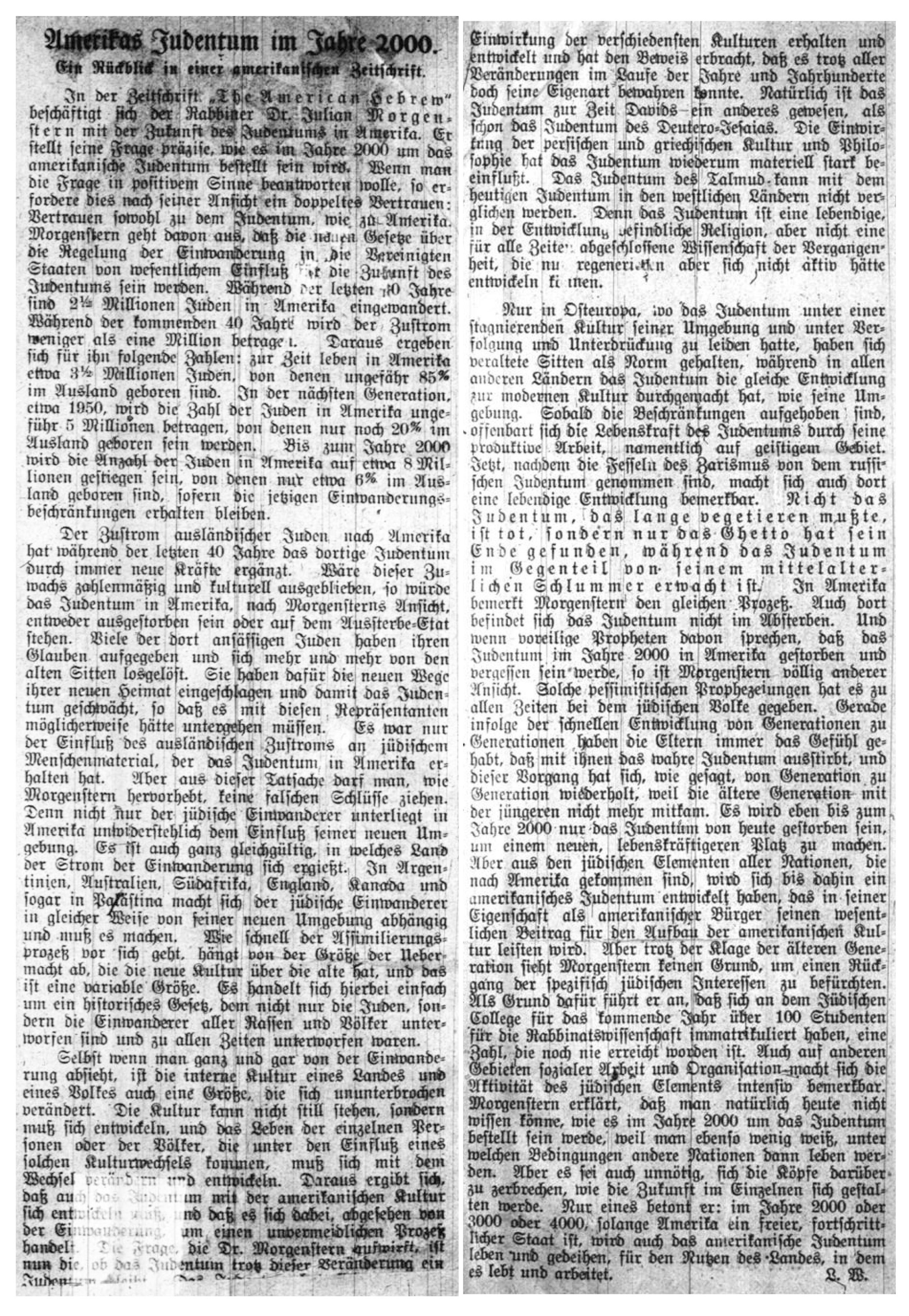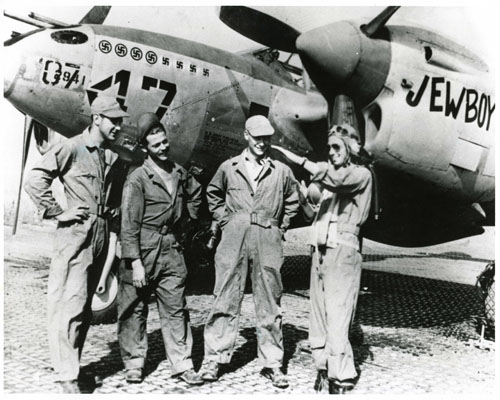
The Shield of Memory – Articles from “Der Schild”, Journal of the Reich Federation of Jewish Front-Line Soldiers: April 3, 1936 – “Pesach Before Verdun”

Given the importance of Passover – Pesach – to the Jewish people, both as a discrete historical event and in terms of its perennial centrality in the arc of Jewish (and dare one say … indirectly world?) history, it’s only natural that this blog presents examples of Pesach observance by Jewish soldiers in a variety of historical settings, and, within the armed forces of different nations.  In that light, you can read about military Pesach observance in the following posts:

World War One

Soldiers of The Great War: Jewish Military Service in WW I, as Reported in l’Univers Israélite (The Jewish World) – Le Séder sur le Front (The Seder at The Front), April 9, 1915 (March 22, 2017)

World War Two

The Jews of Hawaii in World War Two: The Jewish Exponent, September 10, 1943 (November 10, 2022)

Pacific Pesach – The Guam Haggadah (parts one, two, three, four, and five (references).  (January, 2017)

Pesach with the Jewish Brigade: Italy – March, 1945 (May 24, 2018)

The commonality of these posts is obvious: They pertain to Pesach observance by Jewish servicemen specifically in the Allied armies in both wars.  While this is so by definition – alas, truly needing no explanation – in the Second World War, in the First World War (the ironically named “Great War”) Pesach was observed by Jewish soldiers serving in the militaries of both the Allies and Central Powers, among the latter most obviously and prominently Imperial Germany.  The latter is the topic of “this” post: Passover observance, specifically in terms of the Seder, amidst the horrific Battle of Verdun, during 1916.  This was the subject of former Feldrabbiner (Field Rabbi) Georg Salberger’s detailed reminiscence in Der Schild, which was published in April of 1936.  

As described at the Leo Baeck Institute – Edythe Griffinger Portal, “Georg Salzberger was born in Culm, West-Prussia (Chełmno, Poland) in 1882 and grew up in Erfurt, Germany, where his father Moritz Salzberger was the rabbi.  He studied at universities in Berlin and Heidelberg, and he was ordained rabbi at Hochschule für die Wissenschaft des Judentums in Berlin in 1909.  From 1910 to 1937, Salzberger was rabbi at the liberal Westend-Synagogue in Frankfurt am Main; he also lectured at the Philanthropin and other Jewish institutions.  After incarceration at Dachau, Salzberger emigrated to London, England, where he was co-founder of the German-speaking “New Liberal Jewish Congregation”.  Rabbi Dr. Georg Salzberger died in London in 1975.”

Here’s Rabbi Salzberger’s undated portrait from the Leo Baeck Institute: “Part of the Paul Arnsberg Collection, AR 7206; Accession Number F826.”  You can also view the portrait via the Center for Jewish History.  

As in my prior posts about Der Schild, this posts includes images of the article, followed by an English-language translation, and finally, the same article in the original German.  (Unfortunately, the final paragraph, illegible, is absent from this post.)  Both versions of the article close with Julius Rosenbaum’s sketch of the crowded Seder, which appeared on page seven of the March 13, 1936 issue of the newspaper – that issue (awaiting translation to English…) being almost entirely devoted to the service and experiences of German Jewish soldiers during the Battle of Verdun.  (Not that it mattered in the Germany of 1936, but anyway…) 

And so, the Seder of 1916 in the Deutsches Heer.  

Pesach Before Verdun
by Kam. Field Rabbi (ret.) Georg Salzberger, Frankfurt a.M.

The Shield
April 3, 1936

Number 14/15

“Oh, this night is certainly different from all other nights,
from those in our beloved homeland with father and mother,
with wife and child,
but also from the nights in the muddy trenches,
in the “bomb-proof” shelter,
at the forward post or during the assault.
War is outside, and here, for one night, there is peace.
Many a tear steals from their eye
when they hear the old melodies here
or when they see the long procession of their ancestors,
heroic, storm-hardened men and women,
pass by in the text of the Haggadah.”

Since February 21, 1916, the beginning of the great offensive, the cannons thundered day and night around the old, defiant fortress. In heroic attacks and counterattacks, the German positions had been pushed forward to the barrier forts: Fort Vaux had been taken after admirable resistance from the French garrison. The German Crown Prince had received its brave commander, a Jewish captain, as we were told, in his headquarters in Stenay on the Meuse and returned his sword to him as a sign of his appreciation. Troops of captured Frenchmen could be seen everywhere. But the hospitals also filled up. Hecatombs of flourishing people were sacrificed in the murderous battles of those days and months; hecatombs succumbed to their wounds behind the front despite the self-sacrificing care of doctors, medics and nurses. In some cases a relatively light injury was enough to cause death within a few days through the development of gas phlegmon.

I had asked the general doctor of the 5th Army, to which I was assigned as field rabbi, to telegraph me when Jewish wounded were brought to a field or military hospital or when Jewish casualties were to be buried. The request was granted wherever possible. I was constantly on the move: in a car, on a truck, on a horse-drawn cart, on foot. In Stenay, where I was based, in Carnigon, in Montmedy, in Longuyon and Pierrepont – to name just the large hospitals – everywhere it was necessary to seek out the wounded, to bring them gifts of love and spiritual support, to accept their wishes and to report back home on their behalf. It is impossible to describe all the torments, but also all the quiet heroism that took place in the houses and barracks. Of course there was no difference between Jew and non-Jew: not in the torments, and not in the heroism for the brave men who lay there in bed next to bed, not for the priest who went from bed to bed. For how many, any consolation and any help came too late! Now here, now there, we lowered a brave man into the foreign earth with the ever moving song of the good comrade; often there were many at once, wrapped in white sheets, whom we buried in the military grave, and then it was not uncommon for the priest or the rabbi to give the funeral oration for all of them.

Under such circumstances, it was not easy to prepare for the Passover celebration. I had obtained an army order from the AOK [Army Higher Command], according to which the Jewish officers and men of all units of the “Crown Prince’s Army”, as far as they were available, were to be sent on leave to Stenay on the first evening of the festival or to Longuyon on the second, in order to take part in the service and the subsequent “religious meal”. The reports came in far more than I had expected, and I was happy that my good boy had brought a hundredweight of ritual smoked meat, generously donated by my home community, from Frankfurt am Main, as well as sizeable packages of matzo and a crate of wine. The director’s office supplied potatoes and canned vegetables. The rooms for the Seder celebration had to be inspected and prepared in a hurry, the meat had to be cooked in a large kashered kettle, the potatoes had to be peeled, etc.

The first evening service gathered in the beautiful church in Stenay about 300 men who had come from the most varied regions, some from far away, through bottomless mud and at the risk of their lives, from the VI, VII and XXII: RK [Reserve Corps] and from the staging areas of Stenay, Dun and Mouzon. In the absence of a Hazzan – the one from the previous year had fallen – I had to take over the office of preacher. The sight of the church filled to the last seat when I then stepped up to the improvised pulpit was overwhelming. The value of memory was spoken of in the sermon, which is presented to us in the three main symbols of the Seder table! As usual, we ended with a prayer and the Kaddish, just as we had begun with the beautiful Dutch prayer of thanksgiving accompanied by the organ; its powerful ending: “Lord, set us free!” was still ringing in our ears when we went to the town’s market square after the tribunal to celebrate the “domestic celebration” together. Because of the large number of participants, we had to do it three times in a row. This meant that not only the meal, which was served from an anteroom, was a little short, but unfortunately also the Haggadah, although I did not fail to explain the signs and customs.

Officers and doctors, as well as 5 Jewish nurses from the nearby Inor epidemic hospital, took part in the first Seder. The second Seder was given by an old family father whose name I no longer remember, the third by the younger son of Rabbi Meyer from Regensburg: It was exactly “around the middle of the night” when the last guests left the room, who had certainly never seen such a strange group together before or since.

The next morning, in the same hall, the comrades who did not have to return to the front held a service among themselves. But I had to drive in the pouring rain, laden with matzo and wine and a mailbag full of Jewish newspapers and magazines in a small car that Major Vogt from the A.O.K. had granted me, via Montmedy and Charency to Longuyon. I unloaded at Levys’s (from Diedenhoefn) sutler’s. I had sent a large crate of matzo and two of canned fruit from Frankfurt by train. The platoon commander, Lt. Colonel V. Schott, who I spoke to, had approved 400 rations of meat and 8 hundredweight of potatoes. At around 7 a.m., around 300 men lined up on the square in front of the town hall. Lt. Sergeant Wanghenheim had them counted and marched to the cinema in four formations. Festively decorated and illuminated, it welcomes our congregation, which includes two officers, several doctors (one of them the late D. Jungmann from Breslau) and sisters from Pierrepont and Longuyon. This time our prayer leader is Hofsanger Platz, who has already performed excellently at the Yom Kippur service in Montmedy. Here I only need to be a rabbi: ancient, proud memories will become an experience for us today – experiences will become memories again, that was more or less the basic idea of my sermon. During a short break, wine and matzah are served, although of course there is only one bottle for one person and one matzah for two people. But there is not a symbol missing from the Seder plate in front of me. And even though everyone only drinks four sips of wine instead of the prescribed four cups, there is still a youngest person there (a member of the Israeli Religious Society in Frankfurt am Main) who asks Ma Nishstana. Oh, this night is certainly different from all other nights, from those in our beloved homeland with father and mother, with wife and child, but also from the nights in the muddy trenches, in the “bomb-proof” shelter, at the forward post or during the assault. War is outside, and here, for one night, there is peace. Many a tear steals from their eye when they hear the old melodies here or when they see the long procession of their ancestors, heroic, storm-hardened men and women, pass by in the text of the Haggadah. The fare is meager, and I cannot blame a humorous comrade for thinking that even the meat today is only symbolic: and yet they all join in with grateful hearts when Dr. S___andi says the grace before meals.

Meanwhile, in the cafe opposite, the 100 men who no longer had room with us had held their own service and Seder. The next morning we all met again in the cinema for a peaceful service with learning, haftorah and musaf. A Mater who experienced it has captured it in his picture. (This picture of the Mater, our Kam. Julius Rosenbaum [of] Berlin, was in No. 11, page 7, D. R.d.)

Pesach vor Verdun
von Kam. Feldrabbiner a.D. Georg Salzberger, Frankfurt a.M.

Der Schild
April 3, 1936

Nummer 14/15

Seit dem 21. Februar 1916, dem Beginn der grossen Offensive, donnerten Tag und Nacht die Kanonen um die alte trotzige Festung. In heldenmütigen Angriffen und Gegenangriffen waren die deutschen Stellungen bis zu den Sperrforts vorgeschoben worden: Fort Vaux war nach bewundernswertner Widerstand der französischen Besatzung genommen. Ihren tapferen Kommandanten, einen jüdischen Hauptmann, wie man uns erzählte, hatte der Deutsche Kronprinz in seinem Hauptquartier zu Stenay an der Maas empfangen und ihm zum Zeichen seiner Anerkennung den Degen zurückgegeben. Ueberall sah man Trupps von gefangenen Franzosen. Aber auch die Lazarette füllten sich. Hekatomben blühender Menschen wurden in den mörderischen Schlachten jener Tage und Monde geopfert, Hekatomben erlagen trotz aufopfernder Pflege von Aerzten, Sanitätern un7d Krankenschwestern hinter der Front ihren Verwundungen. Ost genügte eine verhältnismässing leichte Verletzung, um durch sich entwickelnde Gasphlegmone in wenigen Tagen den Tod herbeizufuhren.

Ich hatte den Generalarzt der 5. Armee, der ich als Feldrabbiner zugeteilt war, gebeten, dass ich telegraphisch verständigt würde, wenn in einen Feld- oder Kriegslazarette jüdische Verwundete eingeliefert wurden oder jüdische Gefallene zu bestatten waren. Nach Möglichkeit entsprach man der Bitte. Ich war ständig unterwegs: im Personenauto, auf Kraftlastwagen, auf Pferdefuhrwerken, zu Fuss. In Stenay, wo ich mein Standquartier hatte, in Carnigon, in Montmedy, in Longuyon und Pierrepont – um nur die grossen Lazarette zu nennen – überall galt es, Verwundete aufzusuchen, ihnen Liebesgaben zu bringen und seelische Aufrichtung, ihre Wünsche entgegen zu nehmen und für sie nach der Heimat zu berichten. Unmöglich, all die Qualen, aber auch all das stille Heldentum zu schildern, die sich in den Häusern und Baracken abspielten. Natürlich gas es de zwischen Jude und Nichtjude keinen Unterschied: nicht in der Qual, und nicht im Heldentum für die Braven, die dort Bett an Bett lagen, nicht für den Geistlichen, der von Bett zu Bette ging. Bei wievielen kam jeder Trost und jede Hilfe zu spät! Bald da, bald dort senkten wir mit dem immer wieder ergreifenden Liede vom guten Kameraden einen Braven in die fremde Erde, oft waren es viele auf einmal, die wir in weisse Laken gehüllt im Waffengrab begruben und dann kam es nicht selten vor, dass der Pfarrer oder der Rabbiner ihnen insgesamt die Grabrede hielt.

Unter solchen Umständen war es nicht leicht, für die Pessachfeier zu rüsten. Ich hatte heim AOK [Armeeoberkommando], einen Armeebefehl erwirkt, wonach die jüdischen Offiziere und Mannschaften aller Truppenteile der „Kronprinzen-Armee“, soweit sir irgend abkömmlich waren, zum 1. Abend des Festes nach Stenay oder zum 2. Nach Longuyon zu beurlauben seien, um am Gottesdienst und am anschliessenden „religiösen Mahl“ teilzunehmen. Weit zahlreicher, als ich erwartet hatte, liefen die Meldungen ein, und ich war glücklich, dass mein braver Bursche einen Zentner rituelles Rauchfleisch, das meine Heimatgemeinde grosszügig gestiftet, aus Frankfurt am Main gebracht hatte, dazu ansehnliche Pakete Mazzen und eine Kiste Wein. Kartoffeln und Gemüsekonserven lieferte die Intendantur. In Eile mussten die Räume für die Seder-Feier besichtigt und hergerichtet, das Fleisch in einem grossen gekascherten Kessel gekocht, die Kartoffeln geschält werden ufw.

Der erste Abendgottesdienst versammelte in der schönen Kirche zu Stenay annahernd 300 Mann, die aus den verschiedensten Gegenden, teilweise von weit her, durch grundlosen Schlamme und unter Lebensgefahr, vom VI, VII und XXII: RK [Reserve-Korps] und aus den Etappenorten Stenay. Dun und Mouzon gekommen waren. In Ermangelung eines Chasen – der vom vorigen Jahr war gefallen – musste ich das Amt eines Barbeters übernehmen. Ueber wältigend der Anblick des bis auf den letzten. Platz gefüllten Gotteshauses, als ich dann an die improvisierte Kanzel trat. Von dem Wert der Erinnerung sprach in der Predigt, die in den drei Hauptsymbolen der Seder-Tafel uns entgegen tritt! Wie zumeist schlossen wir mit einem Gebet und dem Kaddisch, wie wir mit dem schönen Niederländischen Dankgebet unter Orgelbegleitung begonnen hatten; sein kraftvoller Ausklang: „Herr, mach uns frei!“ lag uns noch im Ohr, als wir uns nach dem Tribunal auf den Marktplatz des Fleckens begaben, um dort zusammen die „häusliche Feier“ zu begehen. Wegen der Fülte der Teilnehmer mussten wir es dreimal nacheinander tun. Dadurch kam nicht nur das Mahl etwas zu kurz, das von einem Vorraum, aus serviert wurde, sondern leider auch die Haggada, obwohl ich es an Erklärungen der Zeichen und Bräuche nicht fehlen liess.

Am ersten Seder nahmen Offiziere und Aerzte, auch 5 jüdische Krankenschwestern aus dem nahen Seuchenlazarett Inor teil. Den zweiten Seder gab ein alter Familienvater, dessen Namen ich nicht mehr weiss, den dritten der jüngere Sohn des Rabbiners Meyer aus Regensburg: Es war genau „um die Mitte der Nacht,“ als der letzten Gäste den Raum verliessen, de gewiss weder vor noch nachher eine so merkwürdige Gesellschaft beisammen gesehen hat.

Am anderen Morgen hielten im gleichen Saal die Kameraden, die nicht gleich zur Front zurück mussten, unter sich einen Gottesdienst ab. Ich aber musste, beladen mit Mazzen und Wein und einem Postsack voll jüdischer Zeitungen und Zeitschriften in einem Klein-Auto, das mir Major Vogt vom AOK bewilligte, bei strömendem Regen über Montmedy und Charency nach Longuyon fahren. In der Marketenderei von Levys (aus Diedenhoefn) lud ich ab. Eine grosse Kiste mit Mazzen und zwei mit Obstkonserven aus Frankfurt hatte ich per Bahn vorangeschickt. Etappen-Kommandant Oberstltn. V. Schott, bei dem ich vorgesprochen, hatte 400 Rationen Fleisch und 8 Zentner Kartoffeln bewilligt. Gegen 7 Uhr treten auf dem Platz vor dem Rathaus etwa 300 Mann an. Feldwebel-Ltn. Wanghenheim lässt abzählen und in 4 Gliedern zum Kino marschieren. Festlich geschmückt und beleuchtet empfängt es unsere Gemeinde, unter der sich auch 2 Offiziere, mehrere Aerzte (einer von ihnen der inzwischen verstorbene D. Jungmann aus Breslau) und Schwestern aus Pierrepont und Longuyon befinden. Diesmal ist unser Vorbeter Hofsänger Platz, der sich bereits beim Yom-Kippur-Gottesdienst in Montmedy hervorragend bewährt hat. Hier brauche ich nur Rabbiner zu sein: Uralte stolze Erinnerung wird uns heute zum Erlebnis – Erlebnis wird wieder zur Erinnerung werden, das etwa war der Grundgedanke meiner Predigt. Während einer kurzen Pause werden Wein und Mazzen gereicht, wobei freilich nur 1 Flasche auf 1 Mann und 1 Mazze auf 2 Mann kommt. Aber auf der Sederschüssel vor mir fehlt kein Symbol. Und wenn auch jeder statt der vorgeschriebenen 4 Becher nur 4 Schluck Wein trinkt, so ist doch ein Jüngster da (Mitglied der Isr. Religionsgesellschaft im Frankfurt a. M.), der ma nischstanno fragt. O., diese Nacht unterscheidet sich allerdings von allen andern Nächten, von denen in der lieben Heimat bei Vater und Mutter, bei Weib und Kind, aber auch von den Nachten in den schlammigen Schützengraben, im „bombensicheren“ Unterstand, auf vorgeschobenem Posten oder beim Sturmangriff. Kriegs ist draussen, und hier für eine Nacht Frieden. Manchem stiehlt sich eine Träne aus dem Auge, wenn er die alten Melodien hier vernimmt oder in langem Zuge die Geschlechter seiner Ahnen, heldenhafter, sturmerprobter Männer und Frauen im Texte der Haggada an sich vorüberziehen steht. Schmal ist die Kost, und ich kann es einem humorvollen Kameraden nicht verargen, wenn er meint, auch das Fleisch sei wohl heute nur symbolisch geboten: und doch stimmen sie alle aus dankbaren Herzen ein, als Dr. S___andi das Tischgebetspricht.

Im Cafe gegenüber haben inzwischen die 100 Mann, die bei uns nicht mehr Platz fanden, ihren eigenen Gottesdienst und Seder gehalten. Am nächsten Morgen finden wir alle uns noch einmal im Kino zu friedlicher And____ mit Leienen, Haftoro und Mussaph zusammen Ein Mater, der sie miterlebt, hat sie im Bilde, sein gehalten. (Dieses Bild des Maters, unseres Kam. Julius Rosenbaum Berlin, war in Nr. 11, Seite 7, D. R.d.)

Here’s an overview of how to access Der Schild at Goethe University, excerpted from my post “Infantry Against Tanks: A German Jewish Soldier at Cambrai, November, 1917“, of September 9, 2017.  (It certainly seems to have come in handy, just over seven years later!)

“Stories and depictions of World War One combat, composed both during and after the “Great War”, are abundantly available in print and on the web. 

“A fascinating source of such accounts – but even moreso a source particularly; poignantly ironic – is the newspaper Der Schild, which was published by the association of German-Jewish war veterans, the “Reichsbundes Jüdischer Frontsoldaten”, from January of 1922 through late 1938, the latter date paralleling the disbandment of the RjF.  Der Schild is available as 35mm microfilm at the Dorot Jewish Division of the New York Public Library, and in digital format through Goethe University Frankfurt am Main.  

“The screen-shot below shows the Goethe University’s catalog entry for Der Schild, which allows for immediate and direct access of the library’s holdings of the newspaper.  All years of the publication, with the exception of 1924, are available; all as PDFs. 

“Of equal (greater?!) importance, accessing digital holdings is as simple as it is intuitive (and easy, too!)  In effect and intent, this is a very well designed website!  This is shown through this screen-shot, presenting holdings of Der Schild for 1933. 

“The total digitized holdings of Der Schild in the Goethe University’s collection comprise approximately 530 issues.  “Gaps” do exist, with 1922 comprising only four issues (9, 10, 13, and 14) and 1923 comprising three issues (14, 15, and 17).  However, holdings for all years commencing with 1925 are – I believe – complete, through the final issue (number 44, published November 4, 1938).

“Not unexpectedly, Der Schild’s content sheds fascinating and retrospectively haunting light on Jewish life in Germany during the 1920s and 1930s; on Jewish genealogy; on the military service of German Jews (not only in the First World War but the Franco-Prussian War as well), often focusing on Jewish religious services at “the Front”, rather than “combat”, per se (see the issue of April 3, 1936, with its cover article “Pesach vor Verdun”); on occasion about Jewish military service in the Allied nations during “The Great War”(1); on Jewish history, literature, and religion; on Jewish life and Jewish news outside of Germany.

“There is much to be explored.”

References

Bund jüdischer Soldaten (YouTube Channel)

Der Schild (digital version) (at Goethe University Frankfurt website)

Reichsbund jüdischer Frontsoldaten (at Wikipedia)

Vaterländischer Bund jüdischer Frontsoldaten (Patriotic Union of Jewish Front-Line Soldiers”) 
The Shield of Memory – Articles from “Der Schild”, Journal of the Reich Federation of Jewish Front-Line Soldiers: August 7, 1936 – “Symbol of Jewish Honor”

“And we, the Jewish front-line soldiers of the old German army,
who on the other side, in the trenches opposite,
took part in the defense of our homeland with our lives and bodies,
we visit this silent and yet so convincing memorial at Douaumont
with awe-struck hearts.”

There are many ways to contemplate the past, one of which is from both “within” the past itself, and, from the perspective of the present.  This is so for my seven posts about the military service of Jews in the French Army – the Armée de terre – in the First World War.  Four of these posts (here, here, and here, pertaining to a 1918 essay by Maurice Barres, and here, pertaining to a 1915 news item) explore the military service of French Jews as recorded during the war itself, while the other three – pertaining to a discovery from a compilation of information about Jewish military casualties, and, the legend surrounding Rabbi Abraham Bloch (two posts, one in English and the other in French) are based on genealogical and historical research from 1921, and, 1999, respectively. 

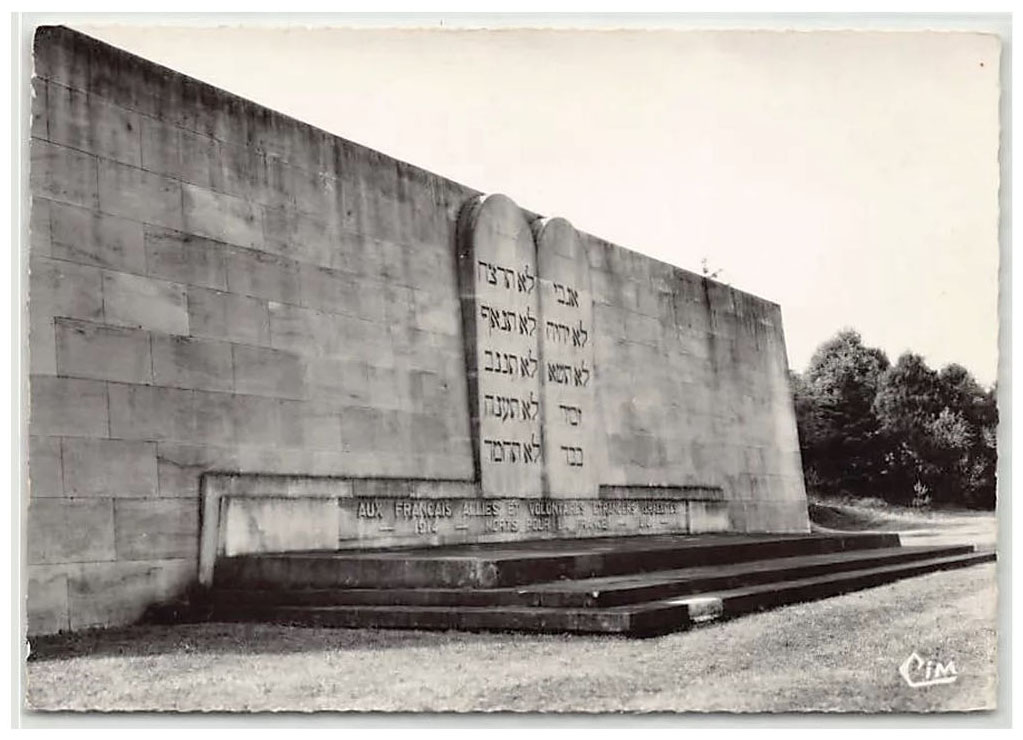
“This” post, however, comes from a moment in time between the First and Second World Wars: It presents a news item / editorial that appeared on the front page of Der Schild on August 7, 1936, concerning the planned construction of a memorial dedicated to the memory of the Jewish soldiers of France who fell in the Battle of Verdun, and more generally, in commemoration of all French Jewish soldiers who fell in battle between 1914 and 1918.  Der Schild’s article is wistful is if not near-inexpressibly poignant on multiple levels: First, it pertains to the commemoration of Jewish fallen by a former enemy of Germany.  Second, even before the advent of the Third Reich and by definition certainly not after, no analogous monument for the Jewish military fallen of the German was – to the best of my knowledge – even created in that country.  And third, in light of what we in 2025 now indelibly* know about the impending future of the Jews of Germany (Jewish veterans of the Great War among them) and European Jews in general, in the years subsequent to 1933.

(* Truth be told, probably not indelible after all.  Or to be more accurate, while indelible to the Jewish people, for the rest of the world, not so much.)     

The monument was completed just under two years later after the appearance of Der Schild’s article, as described in this news item from the Jewish Telegraphic Agency, which was published on June 20, 1938:

Monument to Jews Who Fell in War Unveiled Near Verdun

Paris, June 19. (JTA) — Condemnation of persecution and advice to the Jews to remember history, to be patient and not to despair were voiced today by Deputy Caesar Campinchi, speaking on behalf of the French Government during ceremonies at the unveiling of an imposing monument at Douamont, near Verdun, to 6,500 French Jews and 2,000 Americans and British Jews of the Foreign Legion who fell in the war.

The unveiling was the main feature of the national celebration of the twenty-second anniversary of the battle of Verdun.  It was attended by 1,000 Jewish and non-Jewish veterans with General Andre Weller, a Jew, presiding.  Other speakers included Government officials and the mayor of Douaumont.

Deputy Campinchi assailed the racial theories “practiced in other countries” and declared that France stood for the ideal of equality of all people, an ideal for which, he said, Jewish soldiers fell.

Here are three images of the monument.  

This undated picture is Publ. Combier postcard 5631, the sepia tone suggesting that it was printed between the late 30s and late 50s.  (Just a guess.)  

This excellent image is from Wikimedia Commons…  

… while the following glowing tafofil image is from Facebook.  

But first… The text standing in relief on the monument’s base states: 

AUX FRANCAIS, ALLIES ET VOLONTAIRES ETRANGERS ISRAELITES
– 1914 – MORTS POUR LA FRANCE – 1918 –
…translation…
DEDICATED TO THE FRENCH, ALLIED, AND FOREIGN ISRAELITE VOLUNTEERS
– 1914 – DIED FOR FRANCE – 1918 –

And so, the article as it appeared on the front page of Der Schild, following by English-language translation, and, the original German.

Symbol of Jewish honor
The memorial at Douaumont

The shield
August 7, 1936
Number 32

“It looks down on the graves at a place of world history,
where German and French soldiers,
German and French Jews among them,
are laid to eternal rest, just as the bullet, the grenade, the gas struck them back then.”  

Only recently – we read it in the newspapers – former front-line soldiers from the armies involved met on the battlefields of Verdun and exchanged words of respect for the former enemy, words of camaraderie and commitment to an honorable peace at this site consecrated by endless streams of precious blood.  And now we hear that in the future a towering memorial will be a silent yet speaking witness to Jewish fulfillment of duty, Jewish blood sacrifice, Jewish honor at this very site.  A huge memorial, which owes its existence to the exemplary initiative of the Israelite religious community of the Meuse department, will rise near Douaumont, west of the cemetery, facing east, for marriages and in remembrance of the Jews who fell for France.

The memorial, which is already being built, was designed by an old front-line soldier, the architect Geo Stern.  It has the shape of a huge wall, 30 m long and 7 m high; at its front are the two tablets of the law with the 10 commandments.

This memorial will thus look down silently on the greatest battlefield in history, on which 400,000 heroes fell for their fatherland.

Inside, each of the 10,000 names of the Jews who fell for France will be carved in the stone and illuminated by the glow of an eternal lamp.

Edmond Fleg, the well-known Jewish-French writer, calls the memorial “worthy of those who, in defending France, also defended our honor at the cost of their lives.”

In this spirit, French Jewry proudly remembers its sons who fell for their fatherland.  And we, the Jewish front-line soldiers of the old German army, who on the other side, in the trenches opposite, took part in the defense of our homeland with our lives and bodies, we visit this silent and yet so convincing memorial at Douaumont with awe-struck hearts.

It looks down on the graves at a place of world history, where German and French soldiers, German and French Jews among them, are laid to eternal rest, just as the bullet, the grenade, the gas struck them back then.  Where human voices are silent, this Jewish memorial speaks; speaks the word of God from the Ten Commandments, which were proclaimed to mankind by Israel…


Wahrzeichen jüdischer Ehre
Das Mahnmal am Douaumont

Der Schild
August 7, 1936

Number 32

Erst kürzlich haben sich – wir lasen es in den Zeitungen – auf den Schlachtfeldern von Verdun ehemalige Frontkämpfer der beteiligten Armeen getroffen und Worte der Achtung vor dem einstigen Gegner, Worte der Kameradschaft und Bekenntnisse zu einem ehrenvollen Frieden an dieser, durch unendliche Ströme kostbaten Blutes geweihten Stätte gewechselt.  Und nun hören wir, dass künftig an eben dieser Stätte ein – ragendes Ehrenmal stummer und doch sprechender Zeuge jüdischer Pflichterfüllung, jüdischen Blutopfers, jüdischer Ehre sein wird.  Ein gewaltiges-Mahnmal, des seine Entstehung der vorbildlichen Initiative der Israelitischen Kultusgemeinschaft des Departments Meuse verdankt, wird sich bei Douaumont, westlich des Gräberfelds, mit Front nach Osten, erheben, zu Ehen und zur Erinnerung an die für Frankreich gefallenen Juden.

Der Entwurf des Ehrenmals, das sich bereits in Ausführung befindet, stammt von einem alten Frontkampfer, dem Architekten Geo Stern.  Es hat die Gestalt einer gewaltigen Mauer, die 30 m lang und 7 m hoch ist; an ihrer Stirnseite befinden sich die beiden Gesetzestafeln mit den 10 Geboten.

So wird dieses Ehrenmal auf das gröszte Schlachtfeld, das die Geschichte kennt und auf dem 400 000 Helden für das Vaterland gefallen sind, still berniederschauen.

Im Innern wird jeder der 10 000 Namen der für Frankreich gefallenen Juden in den Stein gemeisselt und vom Schimmer de ewigen Lampe bestrahlt sein.

Edmond Fleg, der bekannte jüdsich-französische Schriftsteller, nennt das Erinnerungsmal „würdig derer, die, indem sie Frankreich verteidigten, gleichzeitig unsere Ehre mit dem Preise ihres Lebens verteidigt haben“

In diesem Geiste gedenkt Frankreichs Judentum stolz seiner für ihr Vaterland gefallenen Söhne.  Und wir jüdischen Frontsoldaten der alten deutschen Armee, die wir auf der anderen Seite, in den Gräben gegenüber, mit Leib und Leben an der Verteidigung unseres Heimatlandes teilnahmen, wir grossen dieses stumme und doch so überzeugende Mahnmal am Douaumont-ehrfürchtig bewegten Herzens.

Es blickt an weltgeschichtlicher Stätte auf die Gräberfelder herab, zu denen deutsche und französische Soldaten, deutsche und französische Juden unter ihnen, zur ewigen Ruhe gebettet sind, wie die Kugel, die Granate, das Gas sie damals getroffen.  Wo Menschenstimmen schweigen, spricht dieses jüdische Mahnmal, spricht das Wort Gottes aus den Zehn Geboten, die durch Israel der Menschheit verkündet wurden…

Here’s an overview of how to access Der Schild at Goethe University, excerpted from my post “Infantry Against Tanks: A German Jewish Soldier at Cambrai, November, 1917“, of September 9, 2017.  (It certainly seems to have come in handy, just over seven years later!)

“Stories and depictions of World War One combat, composed both during and after the “Great War”, are abundantly available in print and on the web. 

“A fascinating source of such accounts – but even moreso a source particularly; poignantly ironic – is the newspaper Der Schild, which was published by the association of German-Jewish war veterans, the “Reichsbundes Jüdischer Frontsoldaten”, from January of 1922 through late 1938, the latter date paralleling the disbandment of the RjF.  Der Schild is available as 35mm microfilm at the Dorot Jewish Division of the New York Public Library, and in digital format through Goethe University Frankfurt am Main.  

“The screen-shot below shows the Goethe University’s catalog entry for Der Schild, which allows for immediate and direct access of the library’s holdings of the newspaper.  All years of the publication, with the exception of 1924, are available; all as PDFs. 

“Of equal (greater?!) importance, accessing digital holdings is as simple as it is intuitive (and easy, too!)  In effect and intent, this is a very well designed website!  This is shown through this screen-shot, presenting holdings of Der Schild for 1933. 

“The total digitized holdings of Der Schild in the Goethe University’s collection comprise approximately 530 issues.  “Gaps” do exist, with 1922 comprising only four issues (9, 10, 13, and 14) and 1923 comprising three issues (14, 15, and 17).  However, holdings for all years commencing with 1925 are – I believe – complete, through the final issue (number 44, published November 4, 1938).

“Not unexpectedly, Der Schild’s content sheds fascinating and retrospectively haunting light on Jewish life in Germany during the 1920s and 1930s; on Jewish genealogy; on the military service of German Jews (not only in the First World War but the Franco-Prussian War as well), often focusing on Jewish religious services at “the Front”, rather than “combat”, per se (see the issue of April 3, 1936, with its cover article “Pesach vor Verdun”); on occasion about Jewish military service in the Allied nations during “The Great War”(1); on Jewish history, literature, and religion; on Jewish life and Jewish news outside of Germany.

“There is much to be explored.”

References

Bund jüdischer Soldaten (YouTube Channel)

Der Schild (digital version) (at Goethe University Frankfurt website)

Reichsbund jüdischer Frontsoldaten (at Wikipedia)

Vaterländischer Bund jüdischer Frontsoldaten (Patriotic Union of Jewish Front-Line Soldiers”) 

The Shield of Memory – Articles from “Der Schild”, Journal of the Reich Federation of Jewish Front-Line Soldiers: January 11, 1926 – “The Jewish Landwehr Officers at Waterloo”

This 1926 article from Der Schild is very much off the pixelated-track of this blog’s content, for it pertains to the Battle of Waterloo, and specifically, the role of Jewish officers in the Prussian Landwehr during that pivotal battle. 

As such, the article is reflective of the newspaper’s value in covering the experience of Jews in the military well removed from the context of the First World War.  Ironically, the thrust of the article is to disprove an assertion that appeared in the German-Jewish periodical Sulamith, to the effect that “55 Prussian officer of the Jewish faith were killed at Waterloo.”  Based on information presented by the article’s anonymous author, this was not so: As of 1915, “Neither a complete list of Prussian soldiers who died in the Battle of Waterloo nor any other source has been found.  This is evidently a misunderstanding or a printing error in the magazine “Sulamith”, possibly caused by the fact that Lord Wellington spoke in the English House of Lords on August 1, 1933 of 15 officers of the Jewish faith who served in the Battle of Waterloo.” 

It turns out that Der Schild takes this supposed statement by Lord Wellington out of context, for, as reported in the Jewish Chronicle in 2015, the comment about 15 Jewish officers under Wellington’s command was actually spoken by a peer in Parliament, who supported the Jewish Civil Disabilities Bill of 1833, and passage of which Lord \Wellington was adamantly against.  

In any event, the article’s unknown author then segues into a brief discussion of the military service of German Jews subsequent to 1804; in early decades of the nineteenth century.  The conclusion of this 1926 article ends with an ironic note, remarking on Silberstein’s earlier comment in Sulamith, expressing, “…the hope that after the World War there will not be a similar relapse into hatred and lack of culture.  This hope was deceptive.”

Well, if it was deceptive in 1926, perhaps it is still deceptive in 2025. 

Will it always be so, for a nation that stands alone? 

Perhaps.  Perhaps not.  Perhaps both.  

The Jewish Landwehr Officers at Waterloo

The Shield
January 11, 1926
Number 2

In No. 35 of the “Schild”, Horwitz reports on a note in an old volume of the magazine “Sulamith”, according to which 55 Prussian Landwehr officers of the Jewish faith were killed at Waterloo. The improbability of this number is immediately apparent. It is hardly conceivable that just a few years after the edict of March 11, 1812 opened the way for Prussian Jews to join the army, there should already have been so many Jewish officers that no fewer than 55 of their ranks could have been killed in battle. This figure also clearly does not agree with the general casualty figures. In total, 7,000 men of the Prussian troops were put out of action at Waterloo (Richter: History of the Wars of Liberation, Berlin 1890, Volume 4, page 304; Jager: World History, Bielefeld-Leipzig 1899, Volume 4, page 350). I was unable to determine how many officers are included in this number from the sources available to me. If one assumes that the ratio was the same as with the British and Hanoverians, where 600 officers were among 14-15,000 out of action (Richter: ibid.), it would turn out that the Prussian army lost around 300 officers at Waterloo. This number would therefore include those killed and wounded. If one also assumes that around 33 percent – a very high percentage! – were killed, one would arrive at the conclusion that around 100 officers remained on the battlefield. It is simply not conceivable that there were around 55 Jewish Landwehr officers among 100 officers of the active ranks and the Landwehr. Of course, there are many possible sources of error in this calculation. It is obvious that the number 55 cannot be correct.

But there is no need for this probability calculation. One of the leading authorities in the field of Jewish history, Professor Dr. Brann, conducted an investigation into the accuracy of the numerical information published in the magazine “Sulamith” and elsewhere in the “Monthly Journal for the History and Science of Judaism”, year 1915, volume 59, page 131, and he came to the conclusion that the number is incorrect. Neither a complete list of Prussian soldiers who died in the Battle of Waterloo nor any other source has been found. This is evidently a misunderstanding or a printing error in the magazine “Sulamith”, possibly caused by the fact that Lord Wellington spoke in the English House of Lords on August 1, 1933 of 15 officers of the Jewish faith who served in the Battle of Waterloo. (Brann, op. cit., page 240.) It seems necessary to clarify this. The article in the “The Shield” could lead to corresponding claims being made in the defensive. But nothing would be more dangerous than that. Every false statement is damaging. We do not need to use dubious or at least insufficiently provable means; there are enough clear facts at our disposal that can be supported with evidence at any time, which demonstrate the military performance of the Jews in the older and more recent past. This is especially true of the wars of liberation. The volume of the “Monthly Magazine” cited above alone offers a wealth of factual information.

The State Chancellor Prince von Hardenberg wrote on January 4, 1915: “The history of our last war against France has already shown that the Jews have become worthy of the state that has taken them into its fold through their loyal devotion. The young men of the Jewish faith have been comrades in arms of their Christian fellow citizens and have shown [?] examples of true heroism and the most praiseworthy contempt for the dangers of war, just as the other Jewish inhabitants, especially the women, joined the Christians in every kind of sacrifice. (Silberstein, op. cit., page 99.)

“The most shameful thing
was that after the end of the wars of liberation,
only those Jewish fighters who had not been promoted
were called up for militia exercises,
while those who had been appointed officers in the field
were not called up,
and were forced to leave the army
in order to wean Christians off the sight of a Jewish commander.”

According to the Rabinett files in the Schwerin main archive, it has been established, particularly on the basis of letters from pastors, that the Mecklenburg peasants only volunteered for the army in small numbers, whereas the Jews made up the largest contingent of volunteers (op. cit., page 100). Admittedly, our comrades did not receive the gratitude of their fatherland and their homeland even then. It is significant that the small Mecklenburg town of Gnoien, when a Jew was among the first four volunteers, approached the Duke, asking that promotion to officer should be made without distinction of birth and religion and only on the basis of suitability; but that the same magistrate who expressed this in 1813 went so far as to refuse to admit a freedom fighter as a citizen in 1817 because he was Jewish. The same man who was one of the first to enlist in the army in 1813 could not be admitted to the merchant company of the town of Wolgast in 1830 unless he was baptized. (ibid., pages 96, 106.) The most shameful thing was that after the end of the wars of liberation, only those Jewish fighters who had not been promoted were called up for militia exercises, while those who had been appointed officers in the field were not called up, and were forced to leave the army in order to wean Christians off the sight of a Jewish commander.

“”So after 1813 – the setback after 1870 is well known,”
and then expresses the hope that after the World War
there will not be a similar relapse into hatred and lack of culture.
This hope was deceptive.”

Silberstein’s essay, written in 1915, follows this description with the words: “So after 1813 – the setback after 1870 is well known,” and then expresses the hope that after the World War there will not be a similar relapse into hatred and lack of culture. This hope was deceptive.

But we are aware that we have done our duty, just like our fellow believers in the wars of liberation. For even if 55 Jewish Landwehr officers did not fall at Waterloo, one thing is certain: that, as was generally the case in the Wars of Liberation, many Jewish warriors and Jewish officers fought in surprisingly large numbers in that battle (ibid., p. 240).

Die jüdischen Landwehroffiziere bei Waterloo.

Der Schild
Januar 11, 1926
Nummer 2

In Nr. 35 des “Schild” berichtet Horwitz von einer Notiz in einem alten Band der Zeitschrift „Sulamith“, nach der bei Waterloo 55 preussische Landwehroffiziere jüdischen Glaubens gefallen seien. Die Unwahrscheinlichkeit dieser Zahl drängt sich sofort auf. Es ist kaum denkbar, dass es wenige Jahre, nachdem das Edikt vom 11. März 1812 den preussischen Juden den Weg ins Heer geöffnet hatte, bereits so viele jüdische Offiziere gegeben haben sollte, dass aus ihren Reihen in einer Schlacht nicht weniger als 55 gefallen sein könnten. Auch mit den allgemeinen Verluftziffern stimmt die Angabe offensichtlich nicht überein. Insgesamt wurden bei Waterloo von den preussischen Truppen 7000 Mann ausser Gefecht gesetzt (Richter: Geschichte der Befreiungskriege, Berlin 1890, Band 4, Seite 304; Jager: Weltgeschichte, Bielefeld-Leipzig 1899, Band 4, Seite 350). Wieviel Offiziere in dieser Zahl enthalten sind, konnte ich aus den mir zur Verfügung stehenden Quellen nicht feststellen. Wenn man annimmt, dass der Verhältnis das gleiche gewesen sei, wie bei den Briten und Hannoveranern, bei denen sich unter 14-15 000 ausser Gefecht gesetzten 600 Offiziere befanden (Richtr: a.a.O.), so wurde sich ergeben, dass das preussische Heer bei Waterloo etwa 300 Offiziere verloren hätte. Diese Zahl würde also Gefallene und Verwundete in such begreifen. Nimmt man weiter an, etwa 33 Prozent – ein sehr hoher Hundertsatz! – wäre gefallen, so würde man dazu gelangen, dass etwa 100 Offiziere auf dem Schlachtfeld gebleiben seien. Dass unter 100 Offizieren des aktiven Standes und der Landwehr etwa 55 jüdische Landwehroffiziere gewesen seien, ist schlechterdings nicht denkbar. Gewiss sind bei dieser Berechnung mancherlei Fehlerquellen denkbar. Dass aber die Zahl 55 nicht stimmen kann, ergibt sich wohl ohne weiteres.

Es bedarf aber gar nicht dieser Wahrscheinlichkeitsberechnung. Einer der ersten Autoritäten auf dem Gebiete der jüdischen Geschichte, Professor Dr. Brann, hat in der „Monatsschrift für Geschichte und Wissenschaft des Judentums“, Jahrg. 1915, Bd. 59, Seite 131, eine Untersuchung über die Richtigkeit jener zahlenmässigen Angabe, die in der Zeitschrift „Sulamith“ und anderwärts veröffentlicht war, angestellt und er ist zu dem Ergebnis gelangt, dass die Zahl nicht stimmt. Es hat sich weder überhaupt eine preussische Gesamtliste der in der Schlacht bei Waterloo gefallenen Krieger noch eine sonstige Quelle feststellen lassen. Offenbar handelt es sich um ein Missverständnis oder einen Druckfehler in der Zeitschrift „Sulamith“, möglicherweise mit veranlasst dadurch, dass Lord Wellington am 1. August 1933 im englischen Oberhaus von 15 Offizieren jüdischen Glaubens, die in der Schlacht bei Waterloo gedient haben, gesprochen hat. (Brann a.a.O. Seite 240.) Dies klarzustellen, schient erforderlich Der Aufsatz im „Schild“ könnte dazu führen, dass entsprechende Behauptungen im Abwehrkampf aufgestellt werden. Nichts aber wäre gefährlicher als das. Jede falsche Angabe schadet. Wir haben es ja auch nicht notwendig, zweifelhafter oder doch nicht genügend beweisbarer Behelfe uns zu bedienen; es stehen genügend klar zu Tage liegende und jederzeit mit Beweis zu vertretende Tatsachen uns zur Verfügung, die die soldatische Bewährung der Juden in älterer und jüngerer Vergangenheit dartun. Dies gilt insbesondere auch von den Freiheitskriegen. Allein der angeführte Band der „Monatsschrift“ bietet eine Fülle von tatsächlichen Angaben.

So hat der Staatskanzler Fürst von Hardenberg am 4. Januar 1915 geschrieben: „Auch die Geschichte unseres letzten Krieges wider Frankreich bereits erwiesen, dass die Juden des Staates, der sie in seinen Schoss aufgenommen, durch treue Anhänglichkeit würdig geworden. Die jungen Männer jüdischen Glaubens sind die Waffengefährten ihrer christlichen Mitbürger gewesen und wir haben unser ihnen Beispiele des wahren Heldenmutes und der rühmlichsten Verachtung der Kriegsgefahren auszuweisen, so wie die übrigen jüdischen Einwohner, namentlich auch die Frauen, in Aufopferung jeder Art den Christen sich anschlossen. (Silberstein a.a.O., Seite 99.)

Nach den Rabinettsakten im Schweriner Hauptarchiv ist, insbesondere auf Grund von Briefen von Pfarrern, festgestellt, dass die Mecklenburger Bauern sich nur in geringen Umfange zum Heere meldeten, dagegen die Juden das grösste Kontingent der Freiwilligen stellten (a.a.O., Seite 100). Freilich: Der Dank des Vaterlandes und ihrer Heimatstätte ist auch damals unseren Kameraden nicht geworden. Es ist bezeichnend, dass die kleine mecklenburgische Stadt Gnoien, als sich unter den 4 ersten Freiwilligen ein Jude befand, bei dem Herzog vorstellig wurde, es möge die Beförderung zum Offizier ohne Unterschied der Geburt und Religion nur mit Rücksicht auf die Eignung erfolgen; dass aber dann der gleiche Magistrat, der dies 1813 zum Ausdruck gebracht, bereits im Jahre 1817 soweit ging, einem Freiheitskampfer die Aufnahme als Bürger zu verweigern, weil er Jude war. Auch konnte der gleiche Mann, der im Jahre 1813 sich mit als erster zu den Fahnen gemeldet hatte, noch im Jahre 1830 keine Aufnahme in die Kaufmannskompagnie der Stadt Wolgast erlangen, wenn er sich nicht der Taufe unterwarf. (a.a.O., Seite 96, 106.) Das schmählichste war wohl, das man nach Abschuss der Freiheitskriege nur diejenigen jüdischen Kämpfer zu Landwehrübungen einberief, die nicht befördert worden waren, dagegen von einer Einberufung der im Felde zu Offizieren ernannten, absah, ja sie zwang, aus dem Heere auszuscheiden, um die Christen von dem Anblick eines jüdischen Befehlshabers zu entwöhnen.

Der im Jahre 1915 geschriebene Aufsatz von Silberstein setzt nach dieser Schilderung die Worte: „So nach 1813 – der Rückschlag nach 1870 ist bekannt“, um dann der Hoffnung Ausdruck zu geben, dass nach dem Weltkriege ein gleiches Zurückfallen in Hass und Unkultur nicht erfolgen wird. Diese Hoffnung hat getrogen.

Das Bewusstsein aber haben wir, unsere Pflicht getan zu haben, wie unsere Glaubensgenossen in den Freiheitskriegen. Denn wenn auch nicht 55 jüdische Landwehroffiziere bei Waterloo gefallen sind, das steht fest: Dass, wie allgemein in den Freiheitskriegen viele jüdische Krieger, jüdische Offiziere in überraschend grosser Anzahl in jener Schlacht mitgekämpft haben (a.a.O., S. 240).

Here’s an overview of how to access Der Schild at Goethe University, excerpted from my post “Infantry Against Tanks: A German Jewish Soldier at Cambrai, November, 1917“, of September 9, 2017.  (It certainly seems to have come in handy, just over seven years later!)

“Stories and depictions of World War One combat, composed both during and after the “Great War”, are abundantly available in print and on the web. 

“A fascinating source of such accounts – but even moreso a source particularly; poignantly ironic – is the newspaper Der Schild, which was published by the association of German-Jewish war veterans, the “Reichsbundes Jüdischer Frontsoldaten”, from January of 1922 through late 1938, the latter date paralleling the disbandment of the RjF.  Der Schild is available as 35mm microfilm at the Dorot Jewish Division of the New York Public Library, and in digital format through Goethe University Frankfurt am Main.  

“The screen-shot below shows the Goethe University’s catalog entry for Der Schild, which allows for immediate and direct access of the library’s holdings of the newspaper.  All years of the publication, with the exception of 1924, are available; all as PDFs. 

“Of equal (greater?!) importance, accessing digital holdings is as simple as it is intuitive (and easy, too!)  In effect and intent, this is a very well designed website!  This is shown through this screen-shot, presenting holdings of Der Schild for 1933. 

“The total digitized holdings of Der Schild in the Goethe University’s collection comprise approximately 530 issues.  “Gaps” do exist, with 1922 comprising only four issues (9, 10, 13, and 14) and 1923 comprising three issues (14, 15, and 17).  However, holdings for all years commencing with 1925 are – I believe – complete, through the final issue (number 44, published November 4, 1938).

“Not unexpectedly, Der Schild’s content sheds fascinating and retrospectively haunting light on Jewish life in Germany during the 1920s and 1930s; on Jewish genealogy; on the military service of German Jews (not only in the First World War but the Franco-Prussian War as well), often focusing on Jewish religious services at “the Front”, rather than “combat”, per se (see the issue of April 3, 1936, with its cover article “Pesach vor Verdun”); on occasion about Jewish military service in the Allied nations during “The Great War”(1); on Jewish history, literature, and religion; on Jewish life and Jewish news outside of Germany.

“There is much to be explored.”

References

Bund jüdischer Soldaten (YouTube Channel)

Der Schild (digital version) (at Goethe University Frankfurt website)

Reichsbund jüdischer Frontsoldaten (at Wikipedia)

Vaterländischer Bund jüdischer Frontsoldaten (Patriotic Union of Jewish Front-Line Soldiers”) 

The Shield of Memory – Articles from “Der Schild”, Journal of the Reich Federation of Jewish Front-Line Soldiers: January 4, 1926 – “From the diary of a Jewish front-line soldier”

My overview of Der Schild revealed that the newspaper’s content encompassed a very wide variety of material, much of this, particularly in the latter years of the publication history, completely unrelated to Jewish military history.  However, given the publication’s raison d’être, much of its content by comprises items about the service of Jews in the German military, encompassing veterans’ post-WW I reminiscences, and, excerpts of diaries and correspondence, as well as historical studies – done at a high level, for a non-academic periodical, albeit without footnotes! – about Jewish military service, a few of these articles even pertaining to the Franco-Prussian War.  Though items about these topics appeared throughout the paper’s history, my review of the periodical suggested (…?…) that with the ascension  of Adolf Hitler (יִמַּח שְׁמוֹ) to power in 1933, Der Schild made a subtle and gradual shift, in retrospect born of inevitability, towards content – news articles, essays, editorials – focused less on German Jewish military history in particular, and more towards worldwide Jewish news – from Western and Eastern Europe, the Americas, and the Yishuv – in general, or, to Jewish history. 

It’d be most enlightening to make a statistical survey of the newspaper’s content throughout its sixteen-year existence, to see how this reflects the currents of thought of German Jewry – well, at least that of German Jewish veterans and members of the RJF – throughout these years.  But, that project is vastly beyond the scope of this blog, so I leave the endeavor for the Ph.D. thesis of an enterprising and as-yet unknown doctoral candidate in Jewish history.

Well, this post is neither abstract nor academic.  Instead, here I present one of the very many above-mentioned excerpts of letters from a Jewish soldier in the German army in the “Great War”.  

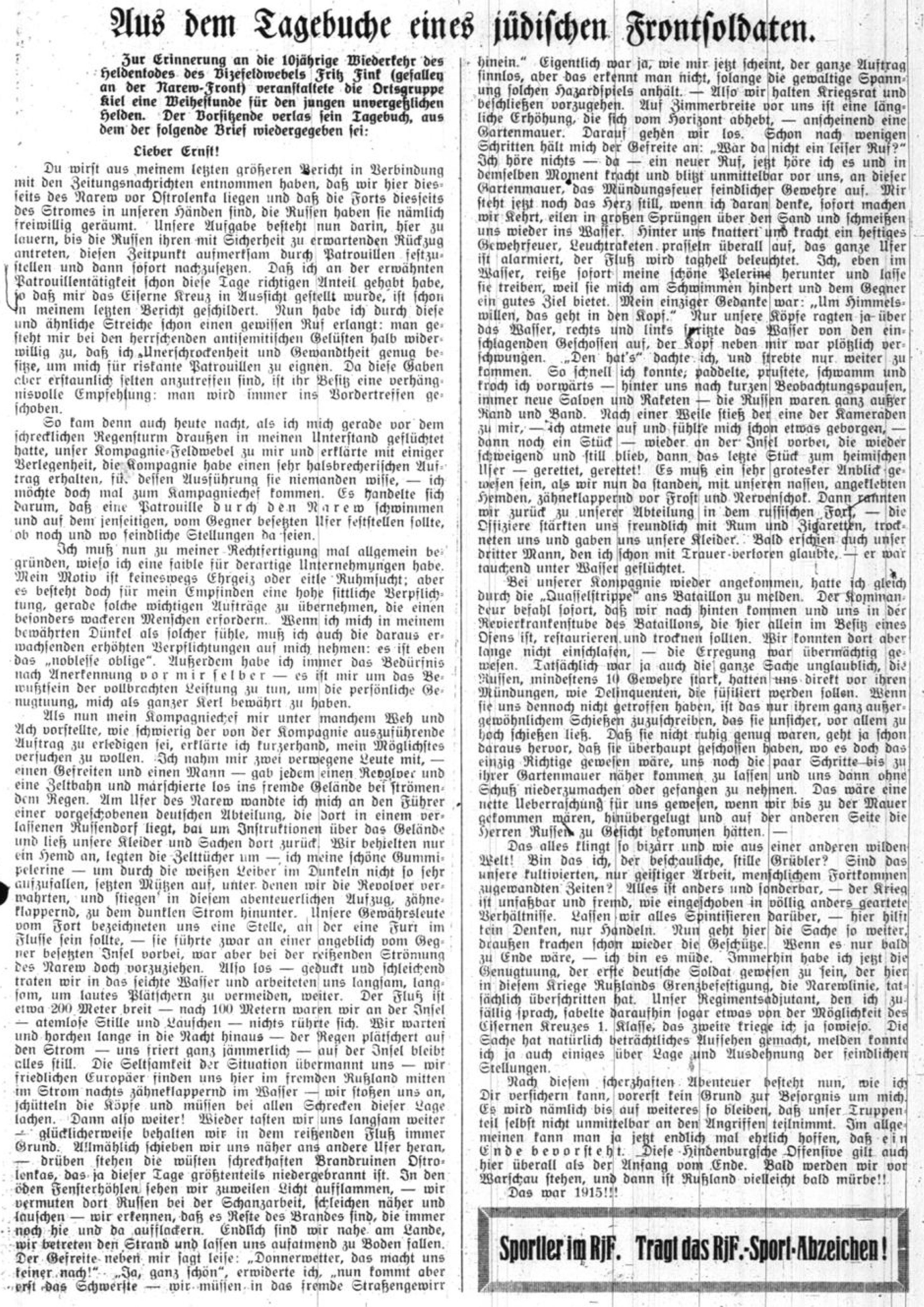
On January 4, 1926, Der Schild published a letter from Vizefeldwebel (platoon senior non-commissioned officer) Fritz Friedrich Fink, to one “Ernst” – the latter unidentified, but probably Fritz’s brother or friend – concerning the former’s experience leading two soldiers during a reconnaissance patrol on the Narew Front.  Though the date of this event is not given, it presumably occurred between 19 July and 3 August of 1915 in what is present-day Poland.  More than a detailed description of the events of the patrol itself (the events of the letter only transpired over a single evening) are Fritz’s honest reflections on his motivation for this hazardous duty, which include (he starts right-off-the-bat with this one) antisemitism (at least, indirectly), a sense of moral obligation, the desire to prove himself (in his own eyes, at least) and what I perceive as an unarticulated but genuine inclination towards adventure, even if hazardous adventure.  The article closes on the so-very-ironic note of an anticipation of a German victory in the East in 1915.

Equally ironic and especially sad, in light of Fritz’s closing thoughts, was his subsequent fate.  A member of 37. Division, 147. Infanterieregiment, 3. Bataillon, 9. Kompanie, he was killed in action on August 18, 1915, shortly after the close of the Narew Offensive.  Born in Hamburg on August 11, 1889, the son of Emmanuel and Mary (Wertheimer) Fink, his name appeared in Verlustmeldung (Casualty Message) 335, and can be found on page 370 of Die Jüdischen Gefallenen Des Deutschen Heeres, Deutschen Marine Und Der Deutschen Schutztruppen. 

His place of burial, perhaps in a forgotten, or now-destroyed or overgrown Jewish cemetery somewhere in Poland, is unknown.

This post presents Frizt’s letter as published in Der Schild, followed by an English-language translation, and then the original text in German.

From the diary of a Jewish front-line soldier.

The Shield
January 4, 1926

“… in the face of the prevailing anti-Semitic sentiments,
I am admitted, half reluctantly,
to have enough courage and agility to be suitable for risky patrols.
But since these gifts are surprisingly rare, possessing them is a fatal recommendation:
you are always pushed to the front.”

To commemorate the 10th anniversary of the heroic death of Sergeant Fritz Fink (killed on the Narew front), the Kiel local group held a ceremony for the unforgettable young hero. The chairman read his diary, from which the following letter is reproduced:

Dear Ernst!

You will have gathered from my last major account in connection with newspaper reports that we are here on this side of the Narew in front of Ostrolenka and that the forts on this side of the river are in our hands, because the Russians have voluntarily evacuated them. Our task now is to lie in wait here until the Russians begin their retreat, which is certain, to determine this point carefully through patrols and then to pursue them immediately. The fact that I have already played a real part in the patrolling activities mentioned in these days, so that I have been promised the Iron Cross, has already been described in my last account. Now I have already gained a certain reputation through these and similar pranks: in the face of the prevailing anti-Semitic sentiments, I am admitted, half reluctantly, to have enough courage and agility to be suitable for risky patrols. But since these gifts are surprisingly rare, possessing them is a fatal recommendation: you are always pushed to the front.

“… the company had received a very dangerous assignment,
for which they knew no one to carry out…”

So tonight, when I had just taken refuge in my shelter outside from the terrible rainstorm, our company sergeant came to me and explained with some embarrassment that the company had received a very dangerous assignment, for which they knew no one to carry out – I would like to go to the company commander. It was about a patrol swimming across the Narew and finding out on the other bank, occupied by the enemy, whether there were any enemy positions and where they were.

“My motive is by no means ambition or vain desire for fame;
but I do feel that there is a high moral obligation
to take on such important assignments that require a particularly brave person.”

To justify myself, I must now explain in general terms why I have a weakness for such undertakings. My motive is by no means ambition or vain desire for fame; but I do feel that there is a high moral obligation to take on such important assignments that require a particularly brave person. If I feel myself to be such in my proven conceit, I must also accept the increased obligations that arise from it: it is simply the “noblesse oblige”. In addition, I always have the need for self-recognition – I am concerned with the awareness of the achievement I have made, with the personal satisfaction of having proven myself as a real man.

“The strangeness of the situation overwhelms us –
we peaceful Europeans find ourselves here in the middle of the river in foreign Russia at night,
teeth chattering in the water –
we bump into each other,
shake our heads and have to laugh at all the horror of this situation. “

When my company commander explained to me, with much moaning and sighing, how difficult the company’s task would be, I simply declared that I would do my best. I took two daring men with me – a Private and a man – gave each of them a revolver and a tarpaulin and marched off into the unfamiliar terrain in the pouring rain. On the banks of the Narew I turned to the leader of an advanced German detachment stationed in a deserted Russian village, asked for instructions about the terrain and left our clothes and belongings there. We kept only one shirt on, put on the tarpaulins – I mean beautiful rubber capes – so that our white bodies would not be too conspicuous in the dark, put on caps under which we kept the revolvers, and climbed down to the dark river in this adventurous outfit, chattering our teeth. Our informants from the fort indicated a place where there was supposed to be a ford in the river – it led past an island supposedly occupied by the enemy, but was preferable given the rapid current of the Narew. So off we went – crouching and creeping, we entered the shallow water and worked our way slowly, slowly, to avoid loud splashing. The river is about 200 meters wide – after 100 meters we were at the island – breathless silence and listening – nothing moved. We wait and listen for a long time into the night – the rain splashes on the river – we freeze miserably – everything on the island remains quiet. The strangeness of the situation overwhelms us – we peaceful Europeans find ourselves here in the middle of the river in foreign Russia at night, teeth chattering in the water – we bump into each other, shake our heads and have to laugh at all the horror of this situation. So we carry on! Again we slowly feel our way forward – fortunately we always keep our footing in the rushing river. Gradually we move closer to the other bank – over there are the desolate, terrible burnt-out ruins of Ostrolenka, which has mostly burned down in recent days. We occasionally see lights flickering in the desolate window recesses – we suspect Russians there at work digging trenches, creep closer and listen – we realize there are remnants of the fire that are still flaring up here and there. Finally we are close to land, we step onto the beach and let ourselves fall to the ground with a sigh of relief. The private next to me says quietly: “Wow, no one can do that like us!” “Yes, very well,” I replied, “but now comes the hardest part – we have to go into the strange maze of streets.” Actually, as it seems to me now, the whole mission was pointless, but you don’t realize that as long as the tremendous tension of such a gamble continues. So we hold a council of war and decide to advance. A long elevation, as wide as a room in front of us, stands out from the horizon – apparently a garden wall. We set off towards it. After just a few steps the private stops me: “Wasn’t there a faint call?” I hear nothing – there – another call, now I hear it and at the same moment the muzzle flash of enemy rifles crackles and flashes directly in front of us, on this garden wall. My heart still stops when I think about it, we immediately turn around, run in big leaps across the sand and throw ourselves back into the water. Behind us there is a crackle and crash of rifle fire, flares explode everywhere, the whole bank is alarmed, the river is lit up as bright as day. I, just in the water, immediately rip off my beautiful cape and let it float because it prevents me from swimming and offers the enemy a good target. My only thought was: “For heaven’s sake, this is going to get in my head.” Only our heads were above the water, the water splashed up to the right and left from the impact of the projectiles, the head next to me had suddenly disappeared. “That’s him,” I thought, and just tried to keep going. I paddled, snorted, swam and crawled forward as fast as I could – behind us, after short pauses to observe, more and more salvos and rockets – the Russians were completely out of control. After a while, one of my comrades joined me – I breathed a sigh of relief and felt somewhat safe – then a little further – past the island again, which remained silent and still again, then the last stretch to the home shore – saved, saved! It must have been a very grotesque sight as we stood there with our wet, stuck-together shirts, our teeth chattering from the cold and nervous shock. Then we ran back to our detachment in the Russian fort – the officers kindly refreshed us with rum and cigarettes, dried us and gave us our clothes. Soon our third man appeared, whom I thought was already lost – he was diving under water.

When I got back to our company, I had to report to the battalion straight away through the “chatty boy”. The commander immediately ordered us to go to the back and get some rest and dry off in the battalion’s infirmary, which is the only one in the possession of a stove. We couldn’t sleep there for a long time – the excitement was overwhelming. In fact, the whole thing was unbelievable. The Russians, at least 10 rifles strong, had us right in front of their muzzles, like delinquents who were about to be shot. If they still didn’t hit us, it can only be put down to their very unusual shooting, which made them uncertain and above all shoot too high. The fact that they weren’t calm enough is already evident from the fact that they shot at all, when the only right thing to do would have been to let us come a few steps closer to their garden wall and then kill us without firing a shot or take us prisoner. It would have been a nice surprise for us if we had got to the wall, looked over and seen the Russians on the other side. –

It all sounds so bizarre and like it’s from another wild world! Is that me, the contemplative, quiet thinker? Are these our cultivated times, devoted only to intellectual work and human progress? Everything is different and strange – the war is incomprehensible and alien, as if inserted into completely different circumstances. Let’s stop speculating about it – thinking is no use here, only action. Now things are going on like this here, the guns are blaring outside again. If only it would end soon – I’m tired of it. At least I now have the satisfaction of having been the first German soldier to actually cross Russia’s border fortifications, the Narew Line, in this war. Our regimental adjutant, whom I happened to speak to, even started talking about the possibility of an Iron Cross 1st Class, and I’m getting the second one anyway. The whole thing caused quite a stir, of course, and I was able to report a lot about the location and extent of the enemy positions.

“This Hindenburg offensive is also seen everywhere here as the beginning of the end.
We will soon be standing in front of Warsaw, and then Russia may soon be worn down!”

After this humorous adventure, I can assure you that there is no reason for me to be worried for the time being. For the time being, our unit will not be taking part in the attacks. In general, we can now finally hope that an end is near. This Hindenburg offensive is also seen everywhere here as the beginning of the end. We will soon be standing in front of Warsaw, and then Russia may soon be worn down!

That was 1915!!!

And so, the article in the original German…

Aus dem Tagebuche eines jüdischen Frontsoldaten.

Der Schild
4. Januar 1926

Zur Erinnerung an die 10jährige Wiederkehr des Heldentodes des Vizefeldwebels Fritz Fink (gefallen an der Narew-Front) veranstaltete die Ortsgruppe Kiel eine Weihestunde für den jungen unvergesslichen Helden. Der Vorsitzende verlas sein Tagebuch, aus dem der folgende Brief wiedergegeben sei:

Lieber Ernst!

Du wirst aus meinem letzten grösseren Bericht in Verbindung mit den Zeitungsnachrichten entnommen haben, dass wir hier diesseits des Narew vor Ostrolenka liegen und dass die Forts diesseits des Stromes in unseren Händen sind, die Russen haben sie nämlich freiwillig geräumt. Unsere Aufgabe besteht nun darin, hier zu lauern, bis die Russen ihren mit Sicherheit zu erwartenden Rückzug antreten, diesen Zeitpunkt aufmerksam durch Patrouillen festzustellen und dann sofort nachzusetzen. Dass ich an der erwähnten Patrouillentätigkeit schon diese Tage richtigen Anteil gehabt habe, so dass mir das Eiserne Kreuz in Aussicht gestellt wurde, ist schon in meinem letzten Bericht geschildert. Nun habe ich durch diese und ähnliche Streiche schon einen gewissen Ruf erlangt: man gesteht mir bei den herrschenden antisemitischen Gelüsten halb widerwillig zu, dass ich Unerschrockenheit und Gewandtheit genug besitze, um mich für riskante Patrouillen zu eignen. Da diese Gaben aber erstaunlich selten anzutreffen sind, ist ihr Besitz eine verhängnisvolle Empfehlung: man wird immer ins Vordertreffen geschoben.

So kam denn auch heute nacht, als ich mich gerade vor dem schrecklichen Regensturm draussen in meinen Unterstand geflüchtet hatte, unser Kompagnie-Feldwebel zur mir und erklärte mit einiger Verlegenheit, die Kompagnie habe einen sehr halsbrecherischen Auftrag erhalten, für dessen Ausführung sie niemanden wissse, – ich möchte doch mal zum Kompagniechef kommen. Es handelte sich darum, dass eine Patrouille durch den Narew schwimmen und auf dem jenseitigen, vom Gegner besetzten Ufer feststellen sollte, ob noch und wo feindliche Stellungen da seien.

Ich muss nun zu meiner Rechtfertigung mal allgemein begründen, wieso ich eine faible für derartige Unternehmungen habe. Mein Motiv ist keineswegs Ehrgeiz oder eitle Ruhmsucht; aber es besteht doch für mein Empfinden eine hohe sittliche Verpflichtung, gerade solche wichtigen Aufträge zu übernehmen, die einen besonders wackeren Menschen erfordern. Wenn ich mich in meinem bewährten Dünkel als solcher fühle, muss ich auch die daraus erwachsenden erhölten Verpflichtungen auf mich nehmen: es ist eben das „noblesse oblige“. Ausserdem habe ich immer das Bedürfnis nach Anerkennung vor mir selber – es ist mir um das Bewusstsein der vollbrachten Leistung zu tun, um die persönliche Genugtuung, mich als ganzer Kerl bewährt zu haben.

Als nun mein Kompagniechef mir unter manchem Weh und Ach vorstellte, wie schwierig der von der Kompagnie auszuführende Auftrag zu erledigen sei, erklärte ich kurzerhand, mein Möglichstes versuchen zu wollen. Ich nahm mir zwei verwegene Leute mit, – einen Gefreiten und einen Mann – gab jedem einen Revolver und eine Zeltbahn und marschierte los ins fremde Gelände bei strömendem Regen. Am Ufer des Narew wandte ich mich an den Führer einer vorgeschobenen deutschen Abteilung, die dort in einem verlassenen Russendorf liegt, bat um Instruktionen über das Gelände und liess unsere Kleider und Sachen dort zurück. Wir behielten nur ein Hemd an, legten die Zelttücher um – ich meine schöne Gummipelerine – um durch die weissen Leiber im Dunkeln nicht so sehr aufzufallen, setzten Mützen auf, unter denen wir die Revolver verwahrten, und stiegen in diesem abenteuerlichen Aufzug, zähneklappernd, zu dem dunklen Strom hinunter. Unsere Gewährsleute vom Fort bezeichneten und eine Stelle, an der eine Furt im Flusse sein sollte, – sie führte zwar an einer angeblich vom Gegner besetzten Insel vorbei, war aber bei der reissenden Strömung des Narew doch vorzuziehen. Also los – geduckt und schleichend traten wir in das seichte Wasser und arbeiteten uns langsam, langsam, um lautes Plätschern zu vermeiden, weiter. Der Fluss ist etwa 200 Meter breit – nach 100 Metern waren wir an der Insel – atemlose Stille und Lauschen – nichts rührte sich. Wir warten und horchen lange in die Nacht hinaus – der Regen plätschert auf den Strom – uns friert ganz jämmerlich – auf der Insel bleibt alles still. Die Seltsamkeit der Situation übermannt uns – wir friedlichen Europäer finden uns hier im fremden Russland mitten im Strom nachts zähneklappernd im Wasser – wir stossen uns an, schütteln die Kopfe und müssen bei allen Schrecken dieser Lage lachen. Dann also weiter! Wieder tasten wir uns langsam weiter – glücklicherweise behalten wir in dem reissenden Fluss immer Grund. Allmählich schieben wir uns näher ans andere Ufer heran, – drüben stehen die wüsten schreckhaften Brandruinen Ostrolenkas, das ja dieser Tage grösstenteils niedergebrannt ist. In den öden Fensterhöhlen sehen wir zuweilen Licht aufflammen, – wir vermuten dort Russen bei der Schanzarbeit, schleichen näher und lauschen – wir erkennen, dass es Reste des Brandes sind, die immer noch die und da aufflakern. Endlich sind war nahe am Lande, wir betreten den Strand und lassen uns aufatmend zu Boden fallen. Der Gefreite neben mir sagt leise: „Donnerwetter, das macht uns keiner nach!“ „Ja, ganz schön“, erwiderte ich, „nun kommt aber orst das Schwerste – wir müssen in das fremde Strassengewirr hinein.“ Eigentlich war ja, wir mir jetzt scheint, der ganze Auftrag sinnlos, aber das erkennt man nicht, solange die gewaltige Spannung solchen Hazardspiels anhält. – Also wir halten Kriegsrat und beschliessen vorzugehen. Auf Zimmerbreite vor uns it eine längliche Erhöhung, die sich vom Horizont abhebt, – anscheined eine Gartenmauer. Darauf gehen wir los. Schon nach wenigen Schritten hält mich der Gefreite an: „War da nicht ein leiser Ruf?“ Ich höre nichts – da – ein neuer Ruf, jetzt höre ich es und in demselben Moment kracht und blitzt unmittelbar vor uns, an dieser Gartenmauer, das Mündungsfeuer feindlicher Gewehre auf. Mir steht jetzt noch das Herz still, wenn ich daran denke, sofort machen wir Kehrt, eilen in grossen Sprüngen über den Sand und schmeissen uns wieder ins Wasser. Hinter uns knattert und kracht ein heftiges Gewehrfeuer, Leuchtraketen prasseln überall auf, das ganze Ufer ist alarmiert, der Fluss wird taghell beleuchtet. Ich, eben im Wasser, reisse sofort meine schüne Pelerine herunter und lasse sie treiben, weil sie mich am Schwimmen hindert und dem Gegner ein gutes Ziel bietet. Mein einziger Gedanke war: „Um Himmelswillen, das geht in den Kopf.“ Nur unsere Köpfe ragten ja über das Wasser, rechts und links spritzte das Wasser von den einschlagenden Geschossen auf, der Kopt neben mir war plötzlich verschwungen. „Den hat’s“ drachte ich, und strebte nur weiter zu kommen. So schnell ich konnte, paddelte, prustete, schwamm und kroch ich vorwärts – hinter uns nach kurzen Beobachtungspausen, immer neue Salven und Raketen – die Russen waren ganz ausser Kand und Band. Nach einer Weile stiess der eine der Kameraden zu mir, – ich atmete auf und fühlte mich schon etwas geborgen, – dann noch ein Stück – wieder an der Insel vorbei, die wieder schweigend und still blieb, dann das letzte Stück zum heimischen Ufer – gerettet, gerettet! Es muss ein sehr grotesker Anblick gewesen sein, als wir nun da standen, mit unseren nassen, angeklebten Hemden, zähneklappernd vor Frost und Nervenschok. Dann rannten wir zurück zu unserer Abteilung in dem russischen Fort, – die Offiziere stärkten uns freundlich mit Rum und Zigaretten, trockneten uns und gaben uns unsere Kleider. Bald erschien auch unser dritter Mann, den ich schon mit Trauer-verloren glaubte, – er war tauchend unter Wasser geflüchtet.

Bei unserer Kompagnie wieder angekommen, hatte ich gleich durch die „Quasselstrippe“ ans Bataillon zu melden. Der Kommandeur befehl sofort, dass wir nach hinter kommen und uns in der Revierkrankenstube des Bataillons, die hier allein im Besitz eines Ofens ist, restaurieren und trocknen sollten. Wir konnten dort aber lange nicht einschlafen, – die Erregung war übermächtig gewesen. Tatächlich war ja auch die ganze Sache unglaublich, die Russen, mindestens 10 Gewehre stark, hatten uns direkt vor ihren Mündungen, wie Delinquenten, die füsiliert werden sollen. Wenn sie uns dennoch nicht getroffen haben, ist das nur ihrem ganz aussergewöhnlichem Schiessen zuzuschreiben, das sie unsicher, vor allem zu hoch schiessen liess. Dass sie nicht ruhig genug waren, geht ja schon daraus hervor, dass sie überhaupt geschossen haben, wo es doch das einzig Richtige gewesen wäre, uns noch die paar Schritte bis zu ihrer Gartenmauer näher kommen zu lassen und uns dann ohne Schuss niederzumachen oder gefangen zu nehmen. Das wäre eine nette Ueberraschung für uns gewesen, wenn wir bis zu der Mauer gekommen wären, hinübergelugt und auf der anderen Seite die Herren Russen zu Gesicht bekommen hätten. –

Das alles klingt so bizarr und wie aus einer anderen wilden Welt! Bin das ich, der beschauliche, stille Grübler? Sind das unsere kultivierten, nur geistiger Arbeit, menschlichem Fortkommen zugewandten Zeiten? Alles ist anders und sonderbar, – der Krieg ist unfassbar und fremd, wie eingeschoben in völlig anders geartete Verhältnisse. Lassen wir alles Spintisieren darüber, – hier hilft kein Denken, nur Handeln. Nun geht hier die Sache so weiter, draussen krachen schon wieder die Geschütze. Wenn es nur bald zu Ende wäre, – ich bin es müde. Immerhin habe ich jetzt die Genugtuung, der erste deutsche Soldat gewesen zu sein, der hier in diesem Kriege Russlands Grenzbefestigung, die Narewlinie, tatsächlich überschritten hat. Unser Regimentsadjutant, den ich zufällig sprach, fabelte daraufhin sogar etwas von der Möglichkeit des Eisernen Kreuzes 1. Klasse, das zweite kriege ich ja sowieso. Die Sache hat natürlich beträchtliches Aufsehen gemacht, melden konnte ich ja auch einiges über Lage und Ausdehnung der feindlichen Stellungen.

Nach diesem scherzhaften Abenteur besteht nun, wie ich Dir versichern kann, vorerst kein Grund zur Besorgnis um mich. Es wird nämlich bis auf weiteres so bleiben, dass unser Truppenteil selbst nicht unmittelbar an den Angriffen teilnimmt. Im allgemeinen kann man ja jetzt endlich mal ehrlich hoffen, dass ein Ende bevor steht. Diese Hindenburgsche Offensive gilt auch hier überall als der Anfang vom Ende. Bald werden wir vor Warschau stehen, und dann ist Russland vielleicht bald mürbe!

Das war 1915!!!

Here’s an overview of how to access Der Schild at Goethe University, excerpted from my post “Infantry Against Tanks: A German Jewish Soldier at Cambrai, November, 1917“, of September 9, 2017.  (It certainly seems to have come in handy, just over seven years later!)

“Stories and depictions of World War One combat, composed both during and after the “Great War”, are abundantly available in print and on the web. 

“A fascinating source of such accounts – but even moreso a source particularly; poignantly ironic – is the newspaper Der Schild, which was published by the association of German-Jewish war veterans, the “Reichsbundes Jüdischer Frontsoldaten”, from January of 1922 through late 1938, the latter date paralleling the disbandment of the RjF.  Der Schild is available as 35mm microfilm at the Dorot Jewish Division of the New York Public Library, and in digital format through Goethe University Frankfurt am Main.  

“The screen-shot below shows the Goethe University’s catalog entry for Der Schild, which allows for immediate and direct access of the library’s holdings of the newspaper.  All years of the publication, with the exception of 1924, are available; all as PDFs. 

“Of equal (greater?!) importance, accessing digital holdings is as simple as it is intuitive (and easy, too!)  In effect and intent, this is a very well designed website!  This is shown through this screen-shot, presenting holdings of Der Schild for 1933. 

“The total digitized holdings of Der Schild in the Goethe University’s collection comprise approximately 530 issues.  “Gaps” do exist, with 1922 comprising only four issues (9, 10, 13, and 14) and 1923 comprising three issues (14, 15, and 17).  However, holdings for all years commencing with 1925 are – I believe – complete, through the final issue (number 44, published November 4, 1938).

“Not unexpectedly, Der Schild’s content sheds fascinating and retrospectively haunting light on Jewish life in Germany during the 1920s and 1930s; on Jewish genealogy; on the military service of German Jews (not only in the First World War but the Franco-Prussian War as well), often focusing on Jewish religious services at “the Front”, rather than “combat”, per se (see the issue of April 3, 1936, with its cover article “Pesach vor Verdun”); on occasion about Jewish military service in the Allied nations during “The Great War”(1); on Jewish history, literature, and religion; on Jewish life and Jewish news outside of Germany.

“There is much to be explored.”

References

Bund jüdischer Soldaten (YouTube Channel)

Der Schild (digital version) (at Goethe University Frankfurt website)

Die Jüdischen Gefallenen Des Deutschen Heeres, Deutschen Marine Und Der Deutschen Schutztruppen 1914-1918 – Ein Gedenkbuch, Reichsbund Jüdischer Frontsoldaten, Forward by Dr. Leo Löwenstein, Berlin, Germany, 1932

Reichsbund jüdischer Frontsoldaten (at Wikipedia)

Vaterländischer Bund jüdischer Frontsoldaten (Patriotic Union of Jewish Front-Line Soldiers”)

The Shield of Memory – Articles from “Der Schild”, Journal of the Reich Federation of Jewish Front-Line Soldiers: January, 1925 – “American Judaism in the Year 2000”

Many of my recent posts having centered around Jewish military service in the Second World War, I though I’d travel back in time to the First World War (in strange and appropriate irony sometimes known as “The Great War”) and bring to you items from the official newspaper of the “Reichsbundes Jüdischer Frontsoldaten” – the  “Reich Federation of Jewish Front-Line Soldiers” – Der Schild (The Shield).  I explored Der Schild in digital format via Goethe University of Frankfurt am Main about ten years ago, downloading every issue of the publication in PDF format.  My goal?  To identify articles, editorials, essays, and letters that appeared – based on a cursory glance at both title and text (that’s all I could go by, given that I don’t speak German!) to be significant or unusual, and therefore worthy of translation into English.  Of which, I found many.  Very, very (did I say very?!) many, of which “this” post – about the future envisioned of the Jews of the United States in the year 2000 – is the first example.  Wth more to follow. 

Entitled “Amerikas Judentum im Jahre 2000” – “American Judaism in the Year 2000”, the essay appeared in the first issue of Der Schild published in 1925; appropriately, in January. 

Here’s an image of the essay as it appears in Der Schild.  It’s in Fraktur font, like many items in the newspaper, particularly those published during its early years.  If you look closely at the end of the final paragraph, you’ll see that the author was a certain “L.W.”

Here’s L.W.’s essay in translation.  Typical of the nature of predictions, the article’s conclusions are arrived at based on the assumption that conditions in the present will persist unchanged and unchangeable into the future, which is tragically ironic given what would transpire in Germany – and beyond – only eight short years later.  Otherwise, the author’s estimate of an American Jewish population of eight million by the year 2000 would prove to be far too optimistic, given that the Jewish population of the United States was 5,828,000 in 1992 and 6,544,000 in 2009.  Even in the recently-ended year of 2024 the American Jewish population of 7,698,840 was still about 300,000 short of the article’s year-2000 prediction. (See References at bottom of this post.)  Otherwise, the essay’s characterization of Eastern European Jewry is a curious mixture of condescension and arrogance, while in its description of the sometime belief that each generation has a tendency to perceive itself as the “last”, it shows insight into human nature in general, and Jewish history in particular.

Here’s the article…

American Judaism in the Year 2000
A review in an American magazine

The Shield
January, 1925

“By the year 2000, if current immigration restrictions remain in place,
the number of Jews in America will have risen to about 8 million,
of whom only about 6% will be foreign-born.”

In the magazine “The American Hebrew,” Rabbi Dr. Julian Morgenstern examines the future of Judaism in America.  He asks precisely what the situation will be for American Judaism in the year 2000.  In his opinion, if one wants to answer the question in the positive sense, this requires twofold trust: trust in Judaism, and in America.  Morgenstern assumes that the new laws regulating immigration to the United States will have a significant impact on the future of Judaism.  Over the last 10 years, 2.5 million Jews have immigrated to America.  Over the next 40 years, the influx will be less than a million.  For him, this leads to the following figures: there are currently about 3.5 million Jews living in America, of whom about 85% were born abroad.  In the next generation, around 1950, the number of Jews in America will be about 5 million, of whom only 20% will be born abroad.  By the year 2000, if current immigration restrictions remain in place, the number of Jews in America will have risen to about 8 million, of whom only about 6% will be foreign-born.

The influx of foreign Jews to America has, over the past 40 years, added ever new forces to the Jewish community there.  If this increase in numbers and culture had not occurred, then, in Morgenstern’s view, Judaism in America would either have died out or would be on the verge of extinction.  Many of the Jews living there have given up their faith and become more and more detached from the old customs.  In return, they have taken the new paths of their new homeland and thereby weakened Judaism, so that it might have perished with these representatives.  It was only the influence of the foreign influx of Jewish human material that has kept Judaism in America alive.  But, as Morgenstern points out, we must not draw the wrong conclusions from this fact.  For it is not only the Jewish immigrant in America who is irresistibly influenced by his new environment.  It is also quite irrelevant to which country the stream of immigration flows.  In Argentina, Australia, South Africa, England, Canada, and even in Palestine, the Jewish immigrant makes himself dependent on his new environment in the same way and must do so.  How quickly the process of assimilation takes place depends on the degree of superiority that the new culture has over the old, and this is a variable factor.  It is simply a historical law to which not only the Jews but immigrants of all races and peoples are and have been subject at all times.

Even if one completely disregards immigration, the internal culture of a country and a people is also a factor that is constantly changing.  Culture cannot stand still, but must develop, and the lives of individuals or peoples who come under the influence of such a cultural change must change and develop with the change.  It follows that Judaism must also develop with American culture, and that this is an inevitable process, apart from immigration.  The question that Dr. Morgenstern ______ is now whether Judaism will _____ remain Judaism despite these changes.  The _____ _____ influence of the most diverse cultures has been maintained and developed and has shown that it has been able to preserve its own character despite all the changes over the years and centuries.  Of course, Judaism in David’s time was different from the Judaism of Deutero-Isaiah.

The influence of Persian and Greek culture and philosophy has in turn had a strong material impact on Judaism.  The Judaism of the Talmud cannot be compared with the Judaism of today in the western countries.  Judaism is a living religion that is still developing, but not a science of the past that has been shut down for all time and that could now be regenerated but not actively developed.

“Only in Eastern Europe,
where Judaism suffered from a stagnant culture of its surroundings and from persecution and oppression,
have outdated customs remained the norm,
while in all other countries Judaism has undergone the same development into modern culture as its surroundings.”

 ~~~~~~~~~~

“Precisely as a result of the rapid development from generation to generation,
parents have always had the feeling that true Judaism was dying out with them,
and this process has, as I have said,
repeated itself from generation to generation
because the older generation could no longer keep up with the younger.”

Only in Eastern Europe, where Judaism suffered from a stagnant culture of its surroundings and from persecution and oppression, have outdated customs remained the norm, while in all other countries Judaism has undergone the same development into modern culture as its surroundings.  As soon as the restrictions are lifted, the vitality of Judaism reveals itself through its productive work, especially in the intellectual field.  Now that the shackles of Tsarism have been removed from Russian Jewry, a lively development is noticeable there too.  It is not Judaism, which had to vegetate for a long time, that is dead; it is only the ghetto that has come to an end, while Judaism, on the contrary, has awakened from its medieval slumber.  Morgenstern notices the same process in America.  Judaism there is not dying out either.  And when hasty prophets speak of Judaism being dead and forgotten in America by the year 2000, Morgenstern takes a completely different view.  Such pessimistic prophecies have always existed among the Jewish people.  Precisely as a result of the rapid development from generation to generation, parents have always had the feeling that true Judaism was dying out with them, and this process has, as I have said, repeated itself from generation to generation because the older generation could no longer keep up with the younger.  By the year 2000, only today’s Judaism will have died out to make way for a new, more vibrant one.  But by then, an American Jewry will have developed from the Jewish elements of all nations that have come to America, which, in its capacity as American citizens, will make its essential contribution to the development of American culture.  Despite the complaints of the older generation, Morgenstern sees no reason to fear a decline in specifically Jewish interests.  He says that the reason for this is that over 100 students have enrolled at the Jewish College for the coming year to study rabbinical studies, a number that has never been reached before.  The activity of the Jewish element is also making itself felt in other areas of social work and organization.  Morgenstern explains that, of course, one cannot know today what the situation will be for Judaism in the year 2000, because one also does not know under what conditions other nations will then be living.  But it is also unnecessary to rack one’s brains over how the future will shape itself in detail.  He stresses only one thing: in the year 2000 or 3000 or 4000, as long as America is a free, progressive state, American Jewry will live and prosper, for the benefit of the country in which it lives and works.  L.W.

And so, the article in the original German…

Amerikas Judentum im Jahre 2000
Ein Rückblick in einer amerikanischen Zeitschrift

Der Schild
Januar, 1925

In der Zeitschrift „The American Hebrew“ beschäftigt sich der Rabbiner Dr. Julian Morgenstern mit der Zukunft des Judentums in Amerika.  Er stellt seine Frage präzise, wie es im Jahre 2000 um das amerikanische Judentum bestellt sein wird.  Wenn man die Frage in positivem Sinne beantworten wolle, so erfordere dies nach seiner Ansicht ein doppeltes Vertrauen: Vertrauen sowohl zu dem Judentum, wie zu Amerika.  Morgenstern geht davon aus, dass die neuen Gesetze über die Regelung der Einwanderung in die Vereinigten Staaten von wesentlichem Einfluss hät die Zukunft des Judentums sein werden.  Während der letzten 10 Jahre sind 2 ½ Millionen Juden in Amerika eingewandert.  Während der kommenden 40 Jahre wird der Zustrom weniger als eine Million betragen.  Daraus ergeben sich für ihn folgende Zahlen: zur Zeit leben in Amerika etwa 3 ½ Millionen Juden, von denen ungefähr 85% im Ausland geboren sind.  In der nächsten Generation, etwa 1950, wird die Zahl der Juden in Amerika ungeführ 5 Millionen betragen, von denen nur noch 20% im Ausland geboren sein werden.  Bis zum Jahre 2000 wird die Anzahl der Juden in Amerika auf etwa 8 Millionen gestiegen sein, von denen nur etwa 6& im Ausland geboren sind, sofern die jetzigen Einwanderungsbeschränkungen erhalten bleiben.

Der Zustrom ausländischer Juden nach Amerika hat während der letzten 40 Jahre das dortige Judentum durch immer neue Kräfte ergänzt.  Wäre dieser Zuwachs zahlenmässig und kulturell ausgeblieben, so würde das Judentum in Amerika, nach Morgensterns Ansicht, entweder ausgestorben sein oder auf dem Aussterbe-Etat stehen.  Viele der dort ansässigen Juden haben ihren Glauben aufgegeben und sich mehr und mehr von den alten Sitten losgelöst.  Sie haben dafür die neuen Wege ihrer neuen Heimat eingeschlagen und damit das Judentum geschwächt, so dass es mit diesen Repräsentanten möglicherweise hätte untergehen müssen.  Es war nur der Einfluss des ausländischen Zustroms an jüdischem Menschenmaterial, der das Judentum in Amerika erhalten hat.  Aber aus dieser Tatsache darf man, wie Morgenstern hervorhebt, keine falschen Schlüsse ziehen.  Denn nicht nur der jüdische Einwanderer unterliegt in Amerika unwiderstehlich dem Einfluss seiner neuen Umgebung.  Es ist auch ganz gleichgültig, in welches Land der Strom der Einwanderung such ergiesst.  In Argentinien, Australien, Südafrika, England, Kanada und sogar in Palästina macht sich der jüdische Einwanderer in gleicher Weise von seiner neuen Umgebung abhängig und muss es machen.  Wie schnell der Assimilierungsprozess vor sich geht, hängt von der Grösse der Uebermacht ab, die die neue Kultur über die alte hat, und das ist eine variable Grösse.  Es handelt sich hierbei einfach um ein historische Gesetz, dem nicht nur die Juden, sondern die Einwanderer aller Rassen und Völker unterworfen sind und zu allen Zeiten unterworfen waren.

Selbst wenn man ganz und gar von der Einwanderung absieht, ist die interne Kultur eines Landes und eines Volkes auch eine Grösse, die sich ununterbrochen verändert.  Die Kultur kann nicht still stehen, sondern muss sich entwickeln, und das Leben der einzelnen Personen oder der Völker, die unter den Einfluss eines solchen Kulturwechsels kommen, muss sich mit dem Wechsel verändern und entwickeln.  Daraus ergibt sich, dass auch das Judentum mit der amerikanischen Kultur sich entwickeln muss, und dass es sich dabei, abgesehen von der Einwanderung, um einen unvermeidlichen Prozess handelt.  Die Frage, die Dr. Morgenstern ______, ist nun die, ob das Judentum trotz dieser Veränderung ein Judentum _____ bleibt.  Das _____ _____ Einwirkung der verschiedensten Kulturen erhalten und entwickelt und hat den Beweis erbracht, dass es trotz aller Veränderungen im Laufe der Jahre und Jahrhunderte doch seine Eigenart bewahren konnte.  Natürlich ist das Judentum zur Zeit Davids – ein anderes gewesen, als schon das Judentum des Deutero-Iesaias.  Die Einwirkung der persischen und griechischen Kultur und Philosophie hat das Judentum wiederum materiell stark beinflusst.  Das Judentum des Talmud kann mit dem heutigen Judentum in den westlichen Ländern nicht verglichen werden.  Denn das Judentum ist eine lebendige, in der Entwicklung Befindliche Religion, aber nicht eine für alle Zeiten abgeschossene Wissenschaft der Vergangenheit, die nu regenerieten aber sich nicht aktiv hätte entwickeln können.

Nur in Osteuropa, wo das Judentum unter einer stagnierenden Kultur seiner Umgebung und unter Verfolgung und Unterdrückung zu leiden hatte, haben sich veraltete Sitten als Norm gehalten, während in allen anderen Ländern das Judentum die gleiche Entwicklung zur modernen Kultur durchgemacht hat, wie seine Umgebung.  Sobald die Beschränkungen aufgehoben sind, offenbart sich die Lebenskraft des Judentums durch seine produktive Arbeit, namentlich auf geistigen Gebiet.  Jetzt, nachdem die Fesseln des Zarismus von dem russischen Judentum genommen sind, macht sich auch dort eine lebendige Entwicklung bemerkbar.  Nicht das Judentum, das lange vegetieren musste, ist tot, sondern nur das Ghetto hat sein Ende gefunden, während das Judentum im Gegenteil von seinem mittelalterlichen Schlummer erwacht ist.  In Amerika bemerkt Morgenstern den gleichen Prozess.  Auch dort befindet sich das Judentum nicht im Absterben.  Und wenn voreilige Propheten davon sprechen, dass das Judentum im Jahre 2000 in Amerika gestorben und vergessen sein werde, so ist Morgenstern völlig anderer Ansicht  Solche pessimistischen Prophezeiungen hat es zu allen Zeiten bei dem jüdischen Volke gegeben.  Gerade infolge der schnellen Entwicklung von Generationen zu Generationen haben die Eltern immer das Gefühl gehabt, dass mit ihnen das wahre Judentum ausstirbt, und dieser Vorgang hat sich, wie gesagt, von Generation zu Generation widerholt, weil die ältere Generation mit der jüngeren nicht mehr mitkam.  Es wird eben bis zum Jahre 2000 nur das Judentum von heute gestorben sein, um einem neuen, lebenskräftigeren Platz zu machen.  Aber aus den jüdischen Elementen aller Nationen, die nach Amerika gekommen sind, wird sich bis dahin ein amerikanisches Judentum entwickelt haben, das in seiner Eigenschaft als amerikanischer Bürger seinen wesentlichen Beitrag für den Aufbau der amerikanischen Kultur leisten wird.  Aber trotz der Klage der älteren Generation sieht Morgenstern keinen Grund, um einen Rückgang der spezifisch jüdischen Interessen zu befürchten.  Als Grund dafür fuhrt er an, dass sich an dem Jüdischen College für das kommende Jahr über 100 Studenten für die Rabbinatswissenschaft immatrikuliert haben, eine Zahl, die noch nie erreicht worden ist.  Auch auf anderen Gebieten sozialer Arbeit und Organisation macht sich die Aktivität des jüdischen Elements intensiv bemerkbar.  Morgenstern erklärt, das man natürlich heute nicht wissen könne, wie es im Jahre 2000 um das Judentum bestellt sein werde, weil man ebenso wenig weiss, unter welchen Bedingungen andere Nationen dann leben werden.  Aber es sei auch unnötig, sich die Köpfe darüber zu zerbrechen, wie die Zukunft im Einzelnen sich gestalten werde.  Nur eines betont er: im Jahre 2000 oder 3000 oder 4000, solange Amerika ein freier, fortschrittlicher Staat ist, wird auch das amerikanische Judentum leben und gedeihen, für den Rutzen des Landes, in dem es lebt und arbeitet.  L.W.

Here’s an overview of how to access Der Schild at Goethe University, excerpted from my post “Infantry Against Tanks: A German Jewish Soldier at Cambrai, November, 1917“, of September 9, 2017.  (It certainly seems to have come in handy, even seven years after it was written!)

“Stories and depictions of World War One combat, composed both during and after the “Great War”, are abundantly available in print and on the web. 

“A fascinating source of such accounts – but even moreso a source particularly; poignantly ironic – is the newspaper Der Schild, which was published by the association of German-Jewish war veterans, the “Reichsbundes Jüdischer Frontsoldaten”, from January of 1922 through late 1938, the latter date paralleling the disbandment of the RjF.  Der Schild is available as 35mm microfilm at the Dorot Jewish Division of the New York Public Library, and in digital format through Goethe University Frankfurt am Main.  

“The screen-shot below shows the Goethe University’s catalog entry for Der Schild, which allows for immediate and direct access of the library’s holdings of the newspaper.  All years of the publication, with the exception of 1924, are available; all as PDFs. 

“Of equal (greater?!) importance, accessing digital holdings is as simple as it is intuitive (and easy, too!)  In effect and intent, this is a very well designed website!  This is shown through this screen-shot, presenting holdings of Der Schild for 1933. 

“The total digitized holdings of Der Schild in the Goethe University’s collection comprise approximately 530 issues.  “Gaps” do exist, with 1922 comprising only four issues (9, 10, 13, and 14) and 1923 comprising three issues (14, 15, and 17).  However, holdings for all years commencing with 1925 are – I believe – complete, through the final issue (number 44, published November 4, 1938).

“Not unexpectedly, Der Schild’s content sheds fascinating and retrospectively haunting light on Jewish life in Germany during the 1920s and 1930s; on Jewish genealogy; on the military service of German Jews (not only in the First World War but the Franco-Prussian War as well), often focusing on Jewish religious services at “the Front”, rather than “combat”, per se (see the issue of April 3, 1936, with its cover article “Pesach vor Verdun”); on occasion about Jewish military service in the Allied nations during “The Great War”(1); on Jewish history, literature, and religion; on Jewish life and Jewish news outside of Germany.

“There is much to be explored.”

References

Bund jüdischer Soldaten (YouTube Channel)

Der Schild (digital version) (at Goethe University Frankfurt website)

Reichsbund jüdischer Frontsoldaten (at Wikipedia)

Vaterländischer Bund jüdischer Frontsoldaten (Patriotic Union of Jewish Front-Line Soldiers”)

Population figures for American Jews are based on information at the Jewish Virtual Library, therein based on combining: (A) Core Population – Jews born to Jewish parents or converted to Judaism; (B) Other Persons of Jewish Parentage; and (C) Respective non-Jewish households members.