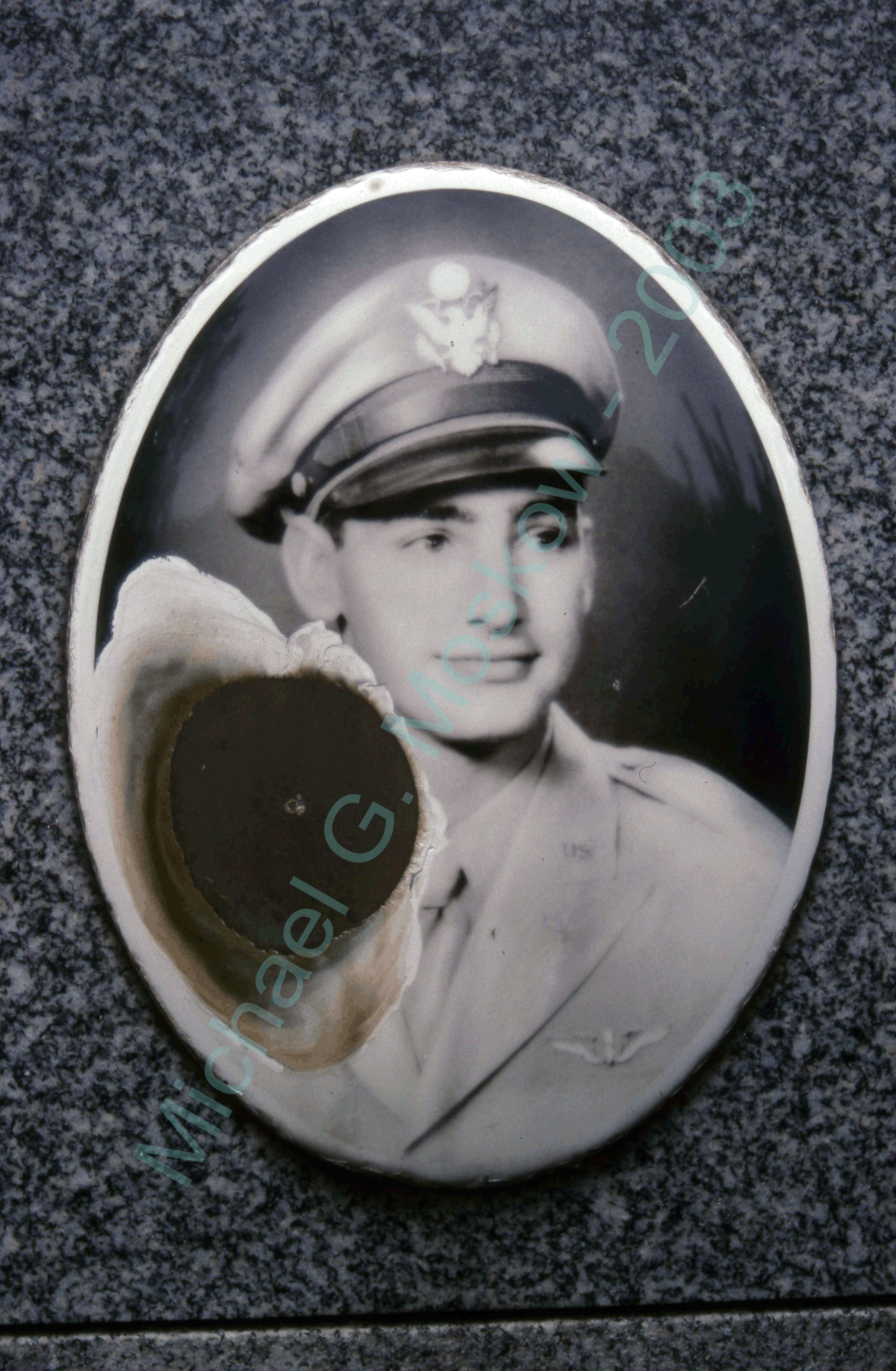
Soldiers from New York: Jewish Soldiers in The New York Times, in World War Two: Private Marc C. Dauber – November 18, 1944

The name of Private Marc C. Dauber, a resident of Brooklyn, appeared in The New York Times on February 4, 1945, in a list of soldiers killed in action in the European Theater of War.  His obituary – shown below – was published on September 26 of that year.

____________________

Second Highest Honor Awarded Him After Death
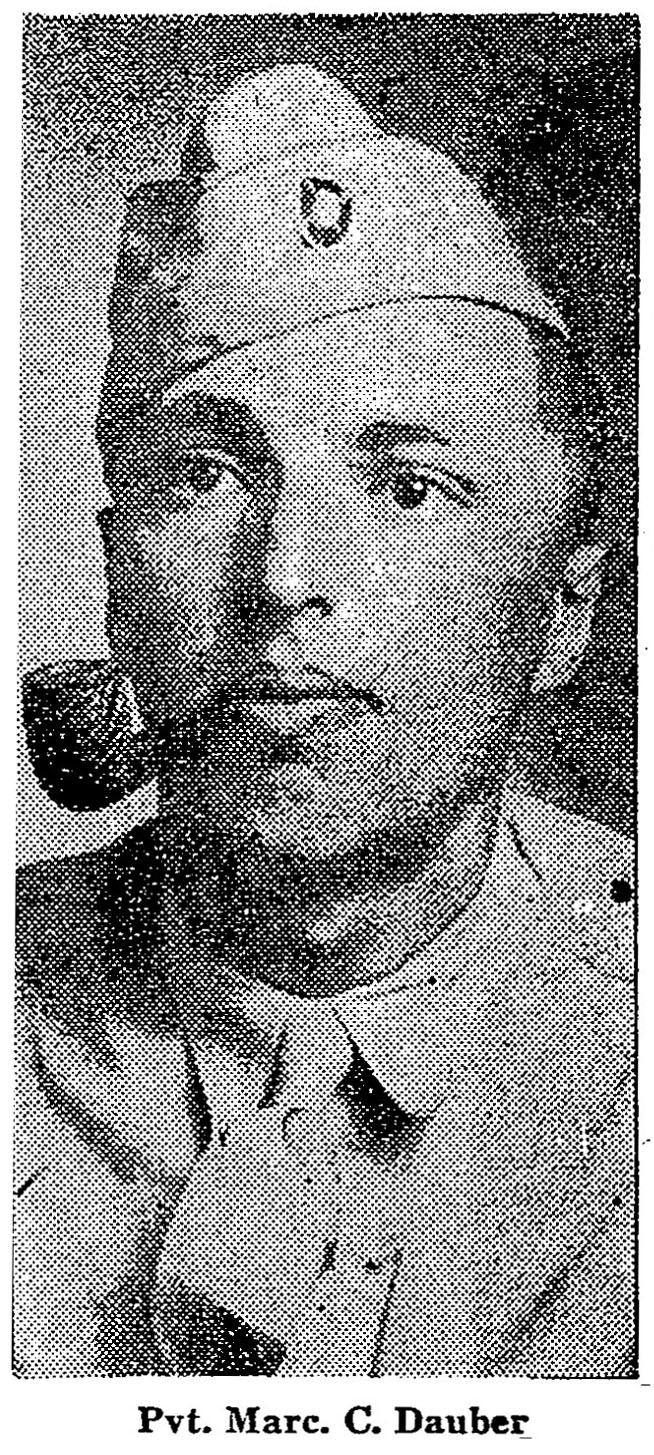
The nation’s second highest honor, the Distinguished Service Cross, was awarded posthumously yesterday to Pvt. Marc C. Dauber, 22 years old, a Brooklyn soldier who was killed in action in the Huertgen Forest at Hamich, Germany, after twice leaving “safe” Army assignments to get into front-line action.

At a ceremony at 90 Church Street, Col. John R. Reitmeyer, Public Relations Officer of the Eastern Defense Command, presented the award to the soldier’s father, Emanuel Dauber of 1574 Fifty-Sixth Street, Brooklyn.  Private Dauber was killed last November while serving with Company L of the Sixteenth Infantry Regiment, of the First Division.  Badly wounded in a German counter-attack, he defended his position until he was killed, shouting and throwing grenades, and drawing enemy fire away from the rest of his platoon.

He had left his engineer camouflage unit to stow away on a landing barge, for the D-Day landing.

Assigned to a desk job in Brittany, he again transferred himself to the infantry unit, and served so well that his commanding officer requested his official transfer.

Before entering the Army he was a senior at Brooklyn College.

____________________

The official citation for Private Dauber’s DSC award, available at Military Times Hall of Valor, states:

A member of 3rd Battalion, L Company, 16th Infantry Regiment, 1st Infantry Division, he was killed in action on November 18, 1944.  A recipient of the Distinguished Service Cross, the citation for his award states, “During action near Hamich, Germany, Private Dauber assumed command of his platoon when the platoon and squad leaders became casualties. He led a group of men into the town, silenced a German machine gun with a grenade, courageously advanced alone on a second machine gun nest and eliminated that position with rifle fire. He continued to lead his men until nightfall when the enemy counterattacked and surrounded his platoon. Although seriously wounded he defended his position with heroic determination against overwhelming odds until he was killed. Private Dauber’s inspirational leadership and supreme devotion to duty at the cost of his life, exemplify the highest traditions of the military forces of the United States and reflect great credit upon himself, the 1st Infantry Division, and the United States Army.”

____________________

Born in Germany on October 24, 1922, Private Dauber is buried at the Henri-Chapelle American Cemetery, in Henri-Chapelle, Belgium, in Grave 18, Row 6, Plot B.  A photograph of his tombstone, by WW II military history researcher Des Philippet, can be found at his biographical profile, at FindAGrave.com.

____________________

A late-2016 Google view of the residence of Marc and his parents – Emanuel (a veteran of the German Army in WW I) and Pauline – in the Borough Park section of Brooklyn, appears below.

____________________

Some other Jewish military casualties on Saturday, November 18, 1944 include…

Killed in Action
– .ת.נ.צ.ב.ה. –

Egel, Ely, PFC, 37619938, Purple Heart
United States Army, 26th Infantry Division, 101st Infantry Regiment
Mr. and Mrs. Simone and Minnie Egel (parents), 956 Hamilton Ave., St. Louis, Mo.; Mr. Sam Goldblatt (best friend), St. Louis, Mo.
Place of burial unknown
Saint Louis Post Dispatch 3/5/45
American Jews in World War II – 209

Ellman
, Alan H., Pvt., 32978581, Purple Heart

United States Army, 95th Infantry Division, 377th Infantry Regiment
Dr. Isadore William Ellman (father), 701 Brighton Beach, Brooklyn, N.Y.
Born 1924
Place of burial unknown
American Jews in World War II – 302

Emmer, Raymond Philip, Pvt., 37618928, Purple Heart
United States Army, 99th Infantry Division, 394th Infantry Regiment, F Company
Mr. and Mrs. Vivien Horace and Blanche (Nathan) Emmer (parents), 6304 Rosemary Drive, St. Louis, Mo.
Born Saint Louis, Mo., 4/6/25
American Jews in World War II – 209
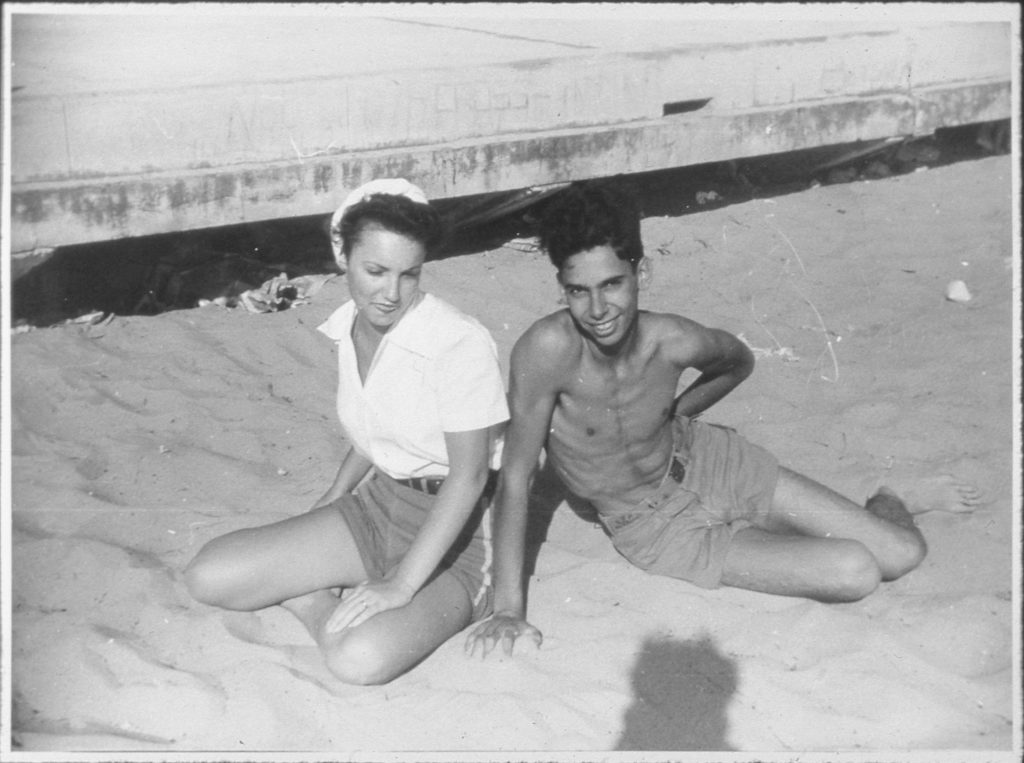
Raymond P. Emmer and Carol Strauss, at Beverly Hills, California, in 1942.  (Photo c/o Robert Alyn)

Fried, Louis, Pvt., 35233154, Purple Heart, Casualty in France
United States Army, 95th Infantry Division, 379th Infantry Regiment
Mr. Samuel Fried (father), 139 Roslyn Drive, Youngstown, Oh.
Born 1923
Place of burial unknown
The Jewish Times (Youngstown, Ohio) 12/22/44
American Jews in World War II – 486

Kaufman
, Arthur S., Pvt., 32525103

United States Army, 32nd Infantry Division, 32nd Signal Company
Mr. and Mrs. Meyer and Mollie Kaufman (parents); Irvin and Norman (brothers), 1735 Walton Ave., Bronx, N.Y.
Born 1921; City College of New York Class of 1942
Place of burial unknown
Casualty List 2/6/45
New York Times obituary page (Memorial Section) 11/17/46
American Jews in World War II – 47, 359

Schlamowitz
, Milton, Pvt., 32803627, Purple Heart, Casualty in Germany

United States Army, 29th Infantry Division, 116th Infantry Regiment, B Company
Mrs. Jennie Schlamowitz (mother), Herbert (brother), 1234 Vyse Ave., New York, N.Y.
Born 1925
Place of burial unknown
Casualty List 3/6/45
American Jews in World War II – 431

Schor
, William, PFC, 42056382, Purple Heart, 1 Oak Leaf Cluster, Casualty in France

United States Army, 103rd Infantry Division, 411th Infantry Regiment, Anti-Tank Company
Died of Wounds 12/5/44
Mrs. Mina R. Schor (mother), 3640 (3650?) Rochambeau Ave., New York, N.Y.
Place of burial unknown
Casualty List 1/28/45
American Jews in World War II – 433

Sussman
, Daniel, Pvt., 36727698

United States Army, 95th Infantry Division, 377th Infantry Regiment
Mr. and Mrs. Charles and Bess (Kaiserman) Sussman (parents), Chicago, Il.; Mrs. Thelma Friedman (sister)
Westlawn Cemetery, Norridge, Chicago, Il. (Buried August, 1949)
Chicago Tribune 8/4/49
American Jews in World War II – 118

Wiesen
, Fred R., PFC, 18151571, Purple Heart, Casualty in France

United States Army
Mr. and Mrs. Alex and Ruth Wiesen (parents), New York, N.Y. / Orleans Parrish, La.
Mrs. Estelle (Wiesen) Levine (sister), Harold and Lois (?); Lenore and Milton, Seasonwein; Gertrude and Arthur Holzsager; Naomi Hicks; Fred and Clara Penner; Carl, Julius, Charlotte, and Harold
Place of burial unknown (Buried 5/21/48)
New York Times Obituary page 5/20/48, 5/21/48, 5/22/48;
New York Times Obituary page Memorial section: 11/18/45, 11/24/26
American Jews in World War II – 472

Died of Wounds
– .ת.נ.צ.ב.ה. –

Captain Wallace Nathan Emmer, USAAF (brother of Raymond Philip Emmer), Capt., 0-730422
United States Army Air Force, 9th Air Force, 354th Fighter Group, 353rd Fighter Squadron
138 combat missions
Silver Star
Distinguished Flying Cross
Distinguished Service Cross,
Air Medal with 24 Oak Leaf Clusters
Purple Heart
Born Omaha, Nebraska, 11/18/17
Shot down by flak 8/9/44; Prisoner of war; Died 2/15/45 at Wetzlar / Lahn, Klosterwald, Germany, of a heart attack, from effects of severe burns received when his Mustang was shot down.
MACR 8149, P-51D 44-13948, No Luftgaukommando Report
American Jews in World War II – Not listed

Unlike all other soldiers listed in this post, Captain Wallace N. Emmer was not a casualty on November 18, 1944.  Information about him is presented here because he was Private Raymond P. Emmer’s brother. 

Raymond and Wallace are among the numerous sets of brothers profiled in Helen Kantzler’s article “Double Gold Stars”, which was published in the Jewish Criterion (Pittsburgh) on September 20, 1946.  The Emmer brothers were buried alongside one another at New Mount Sinai Cemetery, in Saint Louis, Missouri, on April 21, 1948.  (Section Q, Lot 25)   For more information about Raymond and Wallace, visit their biographical profile (by Trip Alyn) at FindAGrave.com.

The image below, reproduced from a photographic print loaned to me by Robert Alyn, shows Wallace’s personal P-51D, “Arson’s Reward”.  Very (very, very!) close magnification of that photographic print showed that this aircraft’s serial number is 44-13400.      

According to the Aviation Archeology database, 44-13400 was wrecked in a landing accident Criqueville, France, on August 3, 1944, while being flown by Franklin Rose, Jr.  This was six days before Captain Emmer was shot down in P-51D 44-13948. 
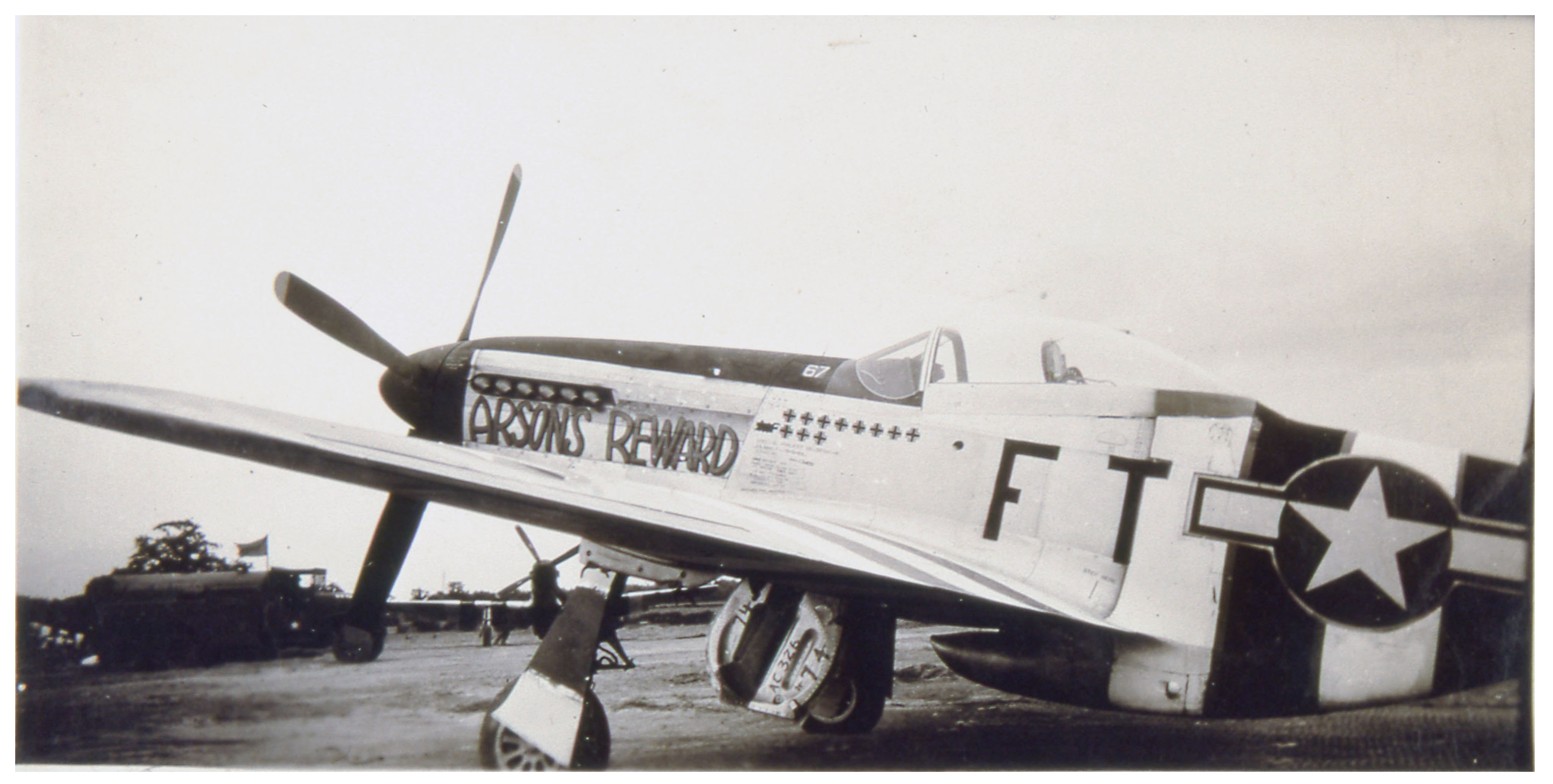
Though low resolution, the image below, from the book History in the Sky: 354th Pioneer Mustang Fighter Group, clearly shows the wreck of “Arson’s Reward”.  The picture shows the plane’s nickname on its forward cowling.  (Plus, a rather broken left wing.)

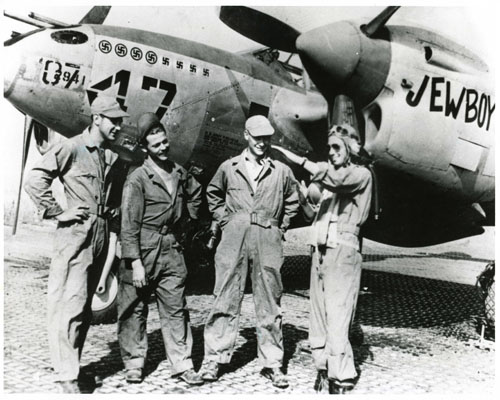
Notice that while the photo above shows the plane with 11 crosses denoting German planes shot down, the image below shows 16 crosses.  Based on the dates (in USAF Historical Study 85) of Emmer’s 13 full-credit and two half-credit aerial victories, this suggests that the above photograph was probably taken in very late June through mid-July of 1944.

Therefore, it seems that 44-13948 – the aircraft in which Wallace Emmer was shot down – was not “Arson’s Reward” and thus, not his “personal” Mustang.

____________________

Since information about Captain Emmer abundantly exists in digital and print formats, the following two pictures are included here as representative images.

____________________

This superb photograph shows Captain Emmer standing before a P-51B Mustang fighter, at the 354th Fighter Group’s base at Boxted, England.  Curiously, it is not an official USAAF photograph.  Instead, it was obtained through Britain’s Imperial War Museum, where it has been cataloged as image EA18248.  It may have been taken by Childs & Coxey Photographers, who apparently visited Boxted for a photo session early in 1944.

____________________

This photograph, of Raymond and Wallace’s parents, Vivien Horace and Blanche (Nathan) Emmer, accompanied by Robert Alyn, was taken in Saint Louis on July 14, 1951.  They passed away within a day of one another in October, 1975.  (Image c/o Robert Alyn.) 

Wounded in Action

Burstein, Charles, 2 Lt., 0-1822586, Purple Heart
United States Army, 702nd Tank Destroyer Battalion
Mrs. Mary Burstein (mother), 1002 Keniston Ave., Los Angeles, Ca.
Casualty List 1/31/45
American Jews in World War II – 286

Friedenwald
, Aaron, Capt., Silver Star, Purple Heart

United States Army, 29th Infantry Division
Miss Dorothy Lane (fiancée)
Dr. and Mrs. Edgar B. Friedenwald (parents), 1616 Linden Ave., Baltimore, Md.
Baltimore Sun 1/21/45, 1/26/45
Jewish Times (Baltimore) 2/2/45
American Jews in World War II – 138

Epstein
, Herbert W., Pvt., 12225760, Purple Heart, Severely Wounded, France

United States Army,
Mr. Samuel S. Epstein (father), 229 Van Cortlandt Park Ave., Yonkers, N.Y.

Born 1925
Casualty List 1/31/45;
The Herald Statesman (Yonkers) 12/21/44

American Jews in World War II – 303

Prisoners of War

Feier, Joseph Arthur, Pvt., 42109607
84th Infantry Division, 334th Infantry Regiment
Stalag 2B (Hammerstein)
Mrs. Elsie Feier (mother), 153 Grove St., Passaic, N.J.
Casualty Lists 4/6/45, 6/13/45
American Jews in World War II – p. 232

Hanowitz
, Stanley, Pvt., 33588225

84th Infantry Division, 334th Infantry Regiment
Stalag 2A (Neubrandenburg)
Mrs. Rosita Hanowitz (wife), 601 West 163rd St., New York, N.Y.
Mr. and Mrs. Abraham Albert and Frances Hanowitz (parents), 5058 F Street, Philadelphia, Pa.
Born Philadelphia, Pa., 4/26/24
The Jewish Exponent 4/13/45; The Philadelphia Inquirer 4/5/45, 6/10/45; The Philadelphia Record 1/23/45, 4/5/45
American Jews in World War II – Not listed

Sackter, Arnold M., Pvt., 36864894
26th Infantry Division, 104th Infantry Regiment
Stalag 12A (Limburg an der Lahn)
Mr. Jacob Sackter (father), 3824 Humphrey St., Detroit, Mi. / 446 1/2 North Curson, Los Angeles, Ca.
Casualty Lists 5/4/45, 6/19/45
American Jews in World War II – Not listed

____________________

References

Brown, Arthur F., History in the Sky: 354th Pioneer Mustang Fighter Group, San Angelo, Tx., 1946

Dublin, Louis I., and Kohs, Samuel C., American Jews in World War II – The Story of 550,000 Fighters for Freedom, The Dial Press, New York, N.Y., 1947.

The 16th Infantry: 1798 – 1946, Edited by Lieutenant John W. Baumgartner, 1st Sergeant Al De Poto, Sergeant William Fraccio, and Corporal Sammy Fuller

Brooklyn Eagle
, February 23, 1946, “96 Jewish Vets Get State Service Cross” (p. 2)

New York Post, October 6, 1945, “Parents Seek Word of Son” (p. 11)

New York Post, October 10, 1945, “Seek Word of Missing Relatives” (p. 11)

Military Times Hall of Valor – DSC Award for Private Marc C. Dauber, at
http://valor.militarytimes.com/recipient.php?recipientid=22028

USAF Credits for the Destruction of Enemy Aircraft, World War II, Albert F. Simpson Historical Research Center, Air University, Office of Air Force History, Headquarters USAF, 1978 (Wallace N. Emmer, pp. 60-61)
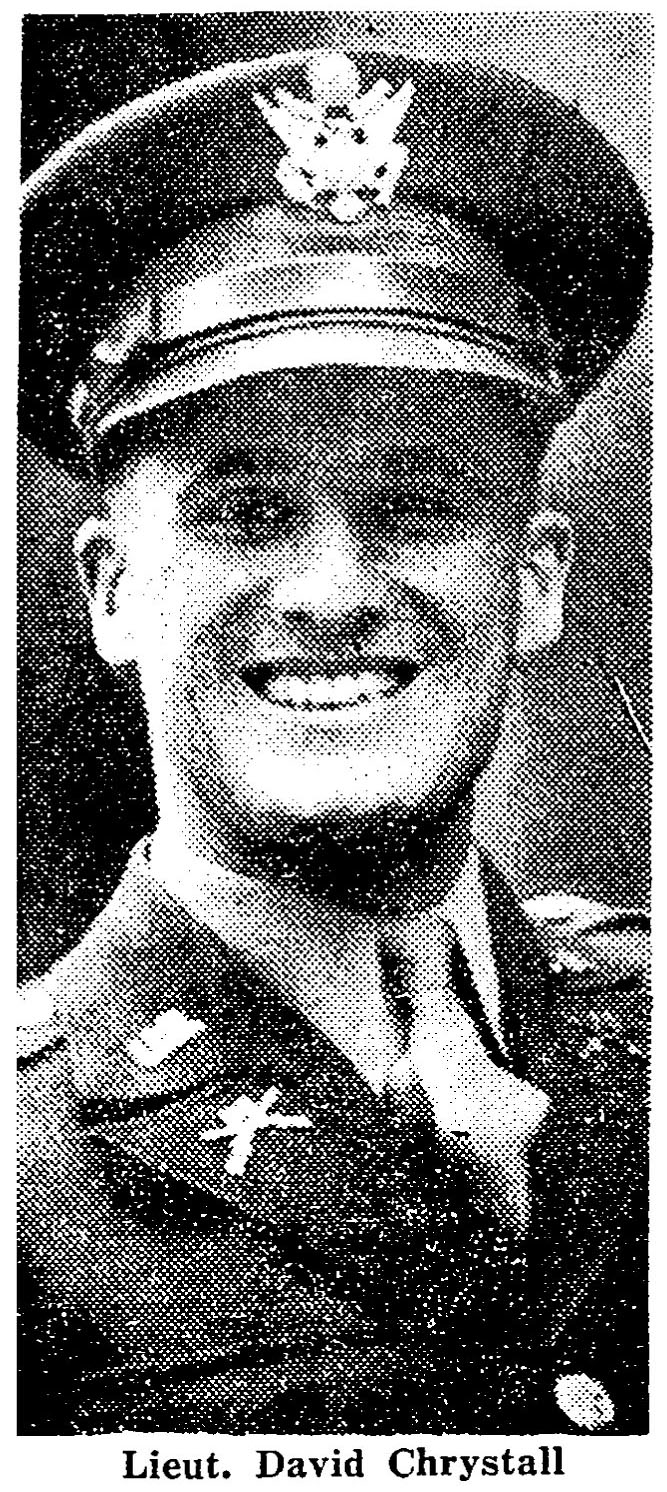
Soldiers from New York: Jewish Soldiers in The New York Times, in World War Two: First Lieutenant David Chrystall – January 4, 1945

First Lieutenant David Chrystall (0-452872), born in 1918, who served in the 550th Airborne Infantry Battalion, was killed in action in Belgium on January 4, 1945.  His name appeared in a Casualty List published on March 8 of that year, while his obituary – transcribed below – appeared in the Times a little over one year later: On January 6, 1946. 

He is buried at the Luxembourg American Cemetery, in Luxembourg, at Plot E, Row 8, Grave 41. 

____________________

Officer Lost in Action With Airborne Infantry

The War Department has notified Maurice M. Chrystall of 311 East Seventy-Second Street, that his son, Lieut. David Chrystall of the airborne infantry, was killed in action in Belgium early in January.  He was 27 years old.

Born in New York City, he attended public schools in Paterson, N.J., and was graduated from Cornell University.  He enlisted in the Army in December, 1940, and attended the Infantry School at Fort Benning, Ga.  He later attended the Advanced Infantry School at Fort Benning and was promoted to a first lieutenancy.

In addition to his father he is survived by a sister, Mrs. Claire Seckler of Brooklyn.

__________

An image (from Apartments.com) of the building where the Chrystall family resided: 311 East 72nd Street, in New York City..

____________________

Some other Jewish military casualties on Thursday, January 4, 1945…

Killed in Action
– .ת.נ.צ.ב.ה. –

Brafman, Arthur A., PFC, 42134385, Purple Heart, Killed in France
United States Army, 70th Infantry Division, 275th Infantry Regiment, C Company
Mr. Samuel Brafman (father [12/26/50]), 128 Bay 28th St., Brooklyn, N.Y.
Born 1926
New Montefiore Cemetery, West Babylon, N.Y. – Society Bayview Nemo B.A., Block 11, Row 16, Section 3, Grave 1R; Buried 1/10/49
American Jews in World War Two – 282

Cooperstein
, Abraham, Pvt., 32231143, Purple Heart, Killed on Leyte Island

United States Army, 242nd Engineer Combat Battalion
Mrs. Yetta Cooperstein (mother), 245 Kosciusko St., Brooklyn, N.Y.
Manila American Cemetery, Manila, Philippines – Plot B, Row 13, Grave 101
American Jews in World War Two – 294

Fishman
, Stanley C., Sgt., 11138290, Silver Star, Purple Heart, Killed in Luxembourg

United States Army, 26th Infantry Division, 104th Infantry Regiment
Mr. Selig Fishman (father), 11 Colony Road, New Haven, Ct.
Born 7/30/25
Congregation B’Nai Jacob Cemetery, New Haven, Ct. – Plot AG4
The American Hebrew 3/30/45
American Jews in World War Two – 63

Haffits
, Joseph H., S/Sgt., 17066957, Purple Heart

United States Army, 4th Infantry Division, 8th Infantry Regiment
Mrs. Bertha Haffits (mother), 2603 Court St., Sioux City, Ia.
Born 1920
Luxembourg American Cemetery, Luxembourg City, Luxembourg – Plot E, Row 2, Grave 45
American Jews in World War Two – 126

Hoffman
, Joseph, S/Sgt., 32894589, Purple Heart

United States Army, 45th Infantry Division, 179th Infantry Regiment
Mr. Abraham Hoffman (father), 2102 Daly Ave., New York, N.Y.
Lorraine American Cemetery, St. Avold, France – Plot D, Row 6, Grave 18
Casualty List 3/1/45
American Jews in World War Two – 346

Jachman
, Isadore Siegfried, S/Sgt., 13136814, Medal of Honor, Purple Heart

United States Army, 17th Airborne Division, 513th Parachute Infantry Regiment, B Company
Mr. Leo Jachman (father), 2005 Whitter Ave., Baltimore, Md.
Born Berlin, Germany, 12/14/22
Hebrew Mount Carmel Cemetery, Adath Israel Anshe Sfarad Cemetery, Baltimore, Md.
American Jews in World War Two – 140
Images of Staff Sergeant Jachman’s matzeva can be found at his biographical profile at FindAGrave.com. 

Leshne
, Jerome, PFC, 32974066, Purple Heart

United States Army, 26th Infantry Division
Mr. and Mrs. Abraham and Lillian Leshne (parents), Seymour Leshne (brother), 1500 Ocean Parkway, Brooklyn, N.Y.; Mr. Robert Lippin (“foxhole buddy”)
Beth David Cemetery, Elmont, N.Y.; Buried 8/22/48
Casualty List 3/13/45
The New York Times Obituary Page 8/22/48
American Jews in World War Two – 375

Wounded in Action

Erlick, Samuel, PFC, 13185920, BSM, Purple Heart, 1 Oak Leaf Cluster
United States Army, 26th Infantry Division, 104th Infantry Regiment, K Company
Also wounded 11/10/44
Mr. and Mrs. Harry and Eva (Borosh) Erlick (parents), 709 Hoffman St., Philadelphia, Pa.
Born Philadelphia, Pa., 6/24/24
American Jews in World War Two – Not listed

Silver, Alvin S., Pvt., 33577617, Purple Heart, 1 Oak Leaf Cluster, Wounded in Germany (Also wounded 3/28/45)
United States Army
Mrs. Rhoda Mae Silver (wife); Barbara Ann and Michael David (daughter and son), 1133 Cobbs St., Drexel Hill, Pa.
Mrs. Rose Bass (mother), 5701 Lebanon Ave., Philadelphia, Pa.
Born Philadelphia, Pa., 7/28/23
The Jewish Exponent (Philadelphia) 5/4/45
Philadelphia Inquirer and Philadelphia Record 4/21/45
American Jews in World War Two – 552

Prisoners of War

Cohen, Melvin, Pvt., 11047725, Purple Heart
United States Army, 550th Airborne Infantry Battalion
POW at Stalag 4B (Muhlberg)
Mrs. Lena Cohen (mother), 32 Coleman Road, Arlington, Ma.
Casualty List (Liberated POW) 6/13/45
American Jews in World War Two – 154

Goldberg
, Melvin I., Pvt., 12220289, Purple Heart

United States Army, 550th Airborne Infantry Battalion
POW at Stalag 4B (Muhlberg) (German POW # 98655)
Mr. Benjamin Goldberg (father), 58 Manhattan Ave., New York, N.Y.
Casualty List (Liberated POW) 6/20/45
American Jews in World War Two – 325

References

Dublin, Louis I., and Kohs, Samuel C., American Jews in World War II – The Story of 550,000 Fighters for Freedom, The Dial Press, New York, N.Y., 1947.

Email correspondence with Samuel Erlick, 2004-2006


Soldiers from New York: Jewish Soldiers in The New York Times, in World War Two: Second Lieutenant Arthur Chasen and Sergeant Alfred R. Friedlander – December 23, 1944

Sometimes, a coincidence is only apparent in retrospect.

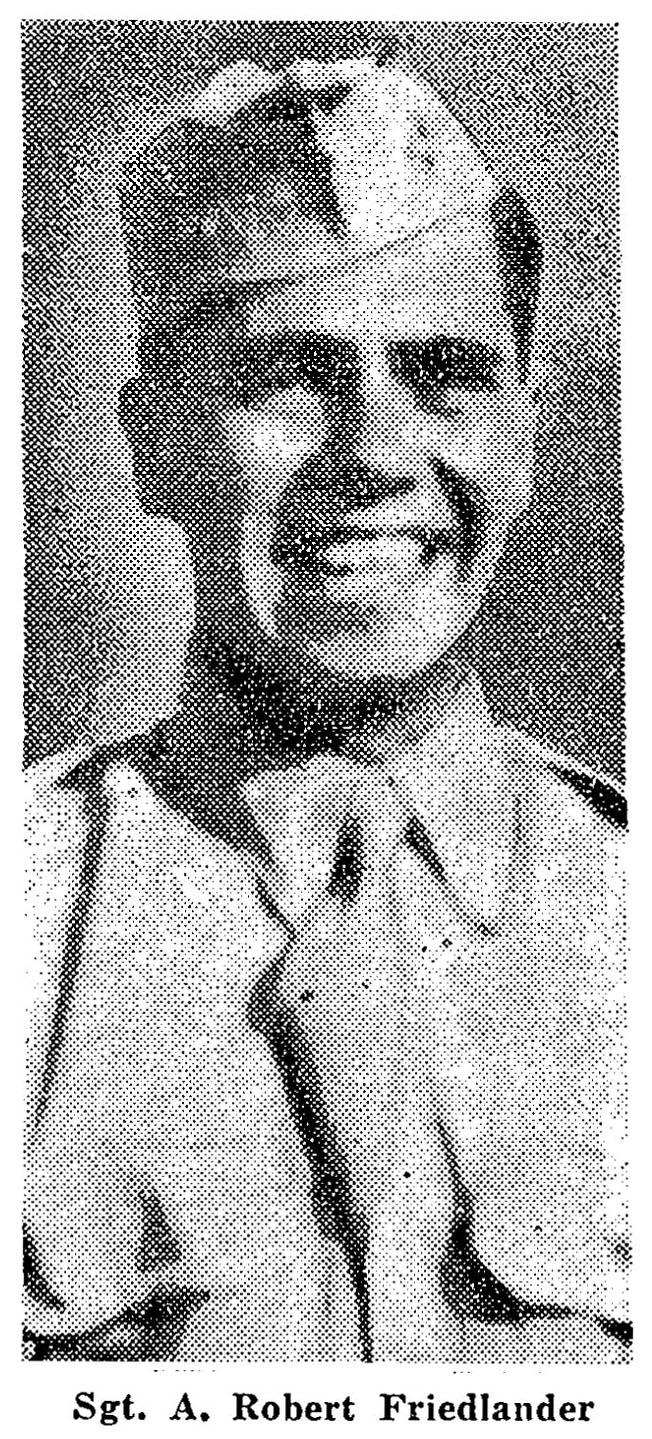
On February 27 and March 6, 1945, the Times published obituaries for two members of the Army Air Force – Second Lieutenant Arthur M. Chasen, and Sergeant Alfred Robert Friedlander – respectively, who were both described as having been killed in action in Yugoslavia on December 23, 1944, during their second combat mission.  At the time, it might only have been realized by the most astute reader that Chasen and Friedlander were members of the same aircrew.  Both were lost – along with their seven fellow crewmen – in the same aircraft, on the same combat mission: A sortie to parachute two B.A.F. (Balkan Air Force) agents into the area of Banja Luka, Yugoslavia. 

Chasen and Friedlander were assigned to the 15th Air Force’s 885th Bomb Squadron, based at Brindisi, Italy, and were crew members of the B-24L Liberator 44-49336, “Lady Mary”, piloted by Second Lieutenant Arthur B. Legath.  As recorded in the Missing Air Crew Report (#10934) covering the plane’s loss, the aircraft, which departed at 1024, was contacted twice during the mission: once at 1202 hours, and later at 1545 hours.  Each message was acknowledged shortly after its receipt, with the plane’s last response being received by the 885th at 1549. 

No further communication was received from the aircraft. 

By the time the Missing Air Crew Report was compiled (on either the 28th or 30th of December) unofficial word was received that the aircraft had crashed on the Yugoslavian coast.  News about the crew’s loss presumably reached the United States not longer after.     

According to information compiled by Enrico Barbina at his superb The Solomon Crew website, the mission of December 23, 1944 was also the second combat flight for Lieutenant Legath.  The flight was the 13th combat mission of Lady Mary

____________________

Lieutenant Chasen’s obituary was published in the Times on February 27, and in the Brooklyn Eagle on February 28, 1945.  His name appeared in a Casualty List on March 27.  He is presumably buried in a private cemetery in the United States. 

Brooklyn Flier Casualty on Yugoslav Mission

Lieut. Arthur M. Chasen, navigator in the crew of a bomber that was lost over Yugoslavia Dec. 23, was reported as killed in action on that date, in a telegram received by his parents from the War Department Thursday.  He lived at 727 East Third Street, Brooklyn.  It was his second mission from a base in Italy.

Prior to enlisting while a senior at St. John’s University in Brooklyn in 1942, Lieutenant Chasen had attended Erasmus Hall High School in that borough.  He was commissioned at San Marcos, Texas, in July, 1944.  In addition to his parents, Mr. and Mrs. Isidor Chasen, the young navigator is survived by two sisters, Mrs. Betty Lebowitz and Mrs. Gladys Hyman, both of Brooklyn.

____________________

Sergeant Friedlander’s obituary was published in the Times on March 6, and appeared in a Casualty List on March 27, 1945.  His name also appeared in the “In Memoriam” section of the Times in October of 1945, and, in 1946 and 1947.   

Initially a member of the 721st Bomb Squadron of the 450th “Cottontails” Bomb Group, he was also mentioned in The Herald Statesman (Yonkers) on January 6, 1944.  He is buried at the Sicily-Rome American Cemetery, in Nettuno, Italy.  (Plot I, Row 3, Grave 69) 

Killed on Second Mission From Italy Bomber Base

Mr. and Mrs. Sidney Friedlander of 461 Riverdale Avenue, Yonkers, have received word from the War Department of the death of their son, Sgt. A. Robert Friedlander, radio-gunner in the crew of a B-24 bomber that was lost over Yugoslavia on Dec. 23.  Sergeant Friedlander, who was reported killed on that date, was on his second mission from a base in Italy.

He was in his second year at the University of Illinois when he enlisted as an aviation cadet in September, 1942.  He was a member of the Sons of the American Legion, Post 935.

____________________

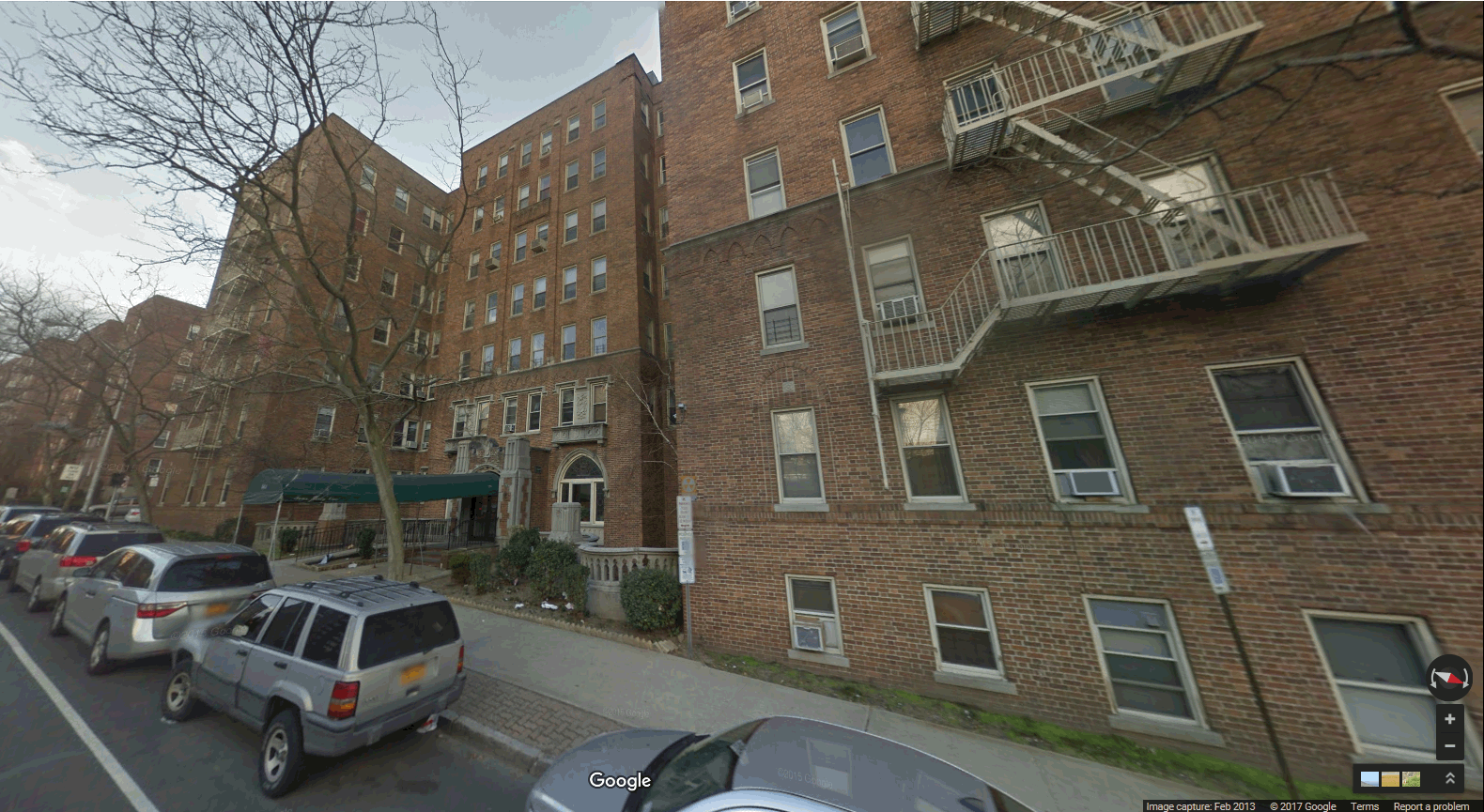
Here is a 2013 Google Street view of the wartime residence of the Friedlander family: 461 Riverdale Avenue, Yonkers. 

____________________

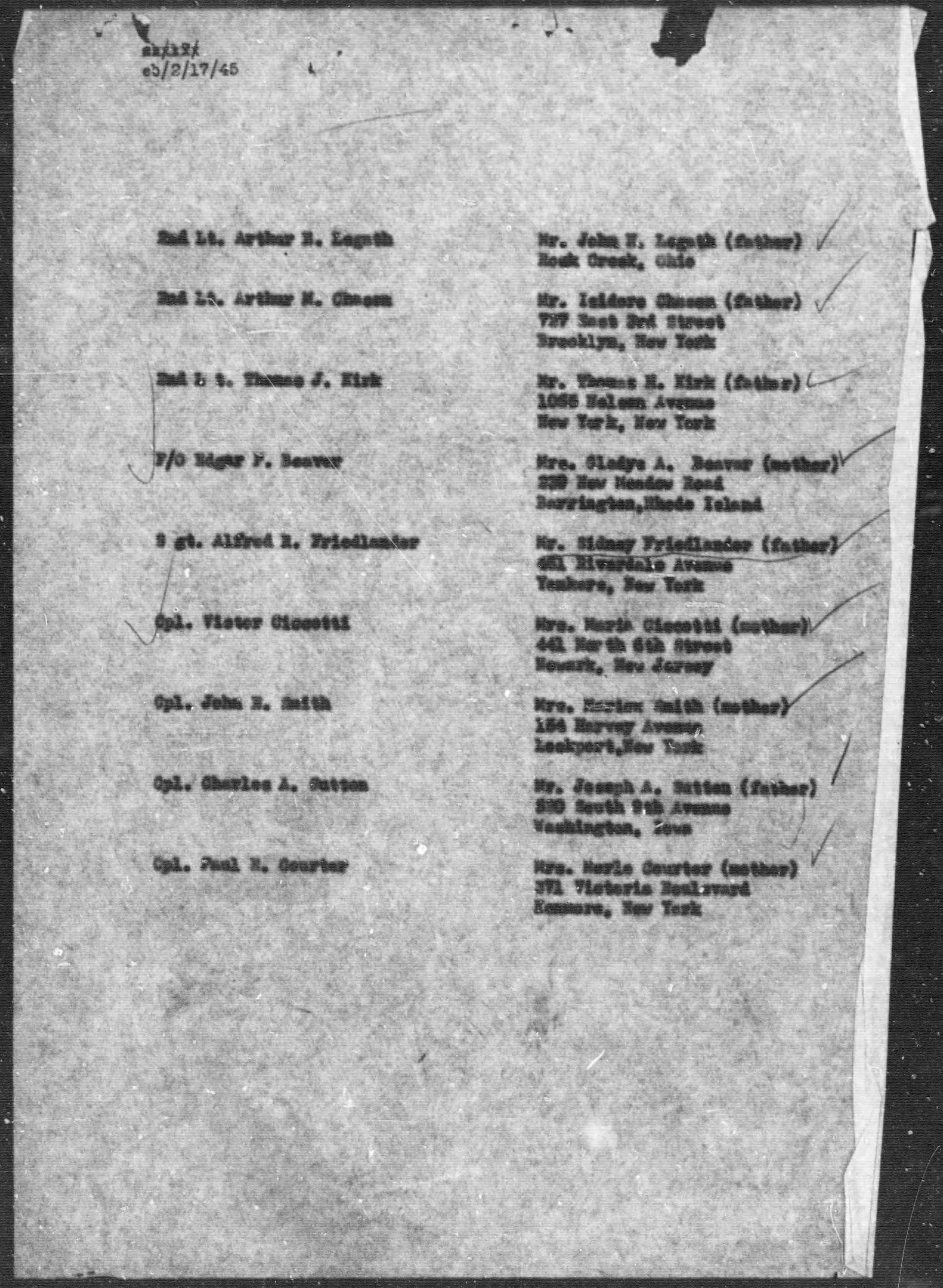
Here are pages from Missing Air Crew Report 10934 for “Lady Mary”.  Although specific mention is made of the two B.A.F. agents, neither their names nor information about their fate are presented.

____________________

Some other Jewish military casualties on Saturday, December 23, 1944 are listed below.  (The names of casualties for army ground forces on this date are presented in the post covering Private Alfred A. Berg)

Killed in Action
– .ת.נ.צ.ב.ה. –

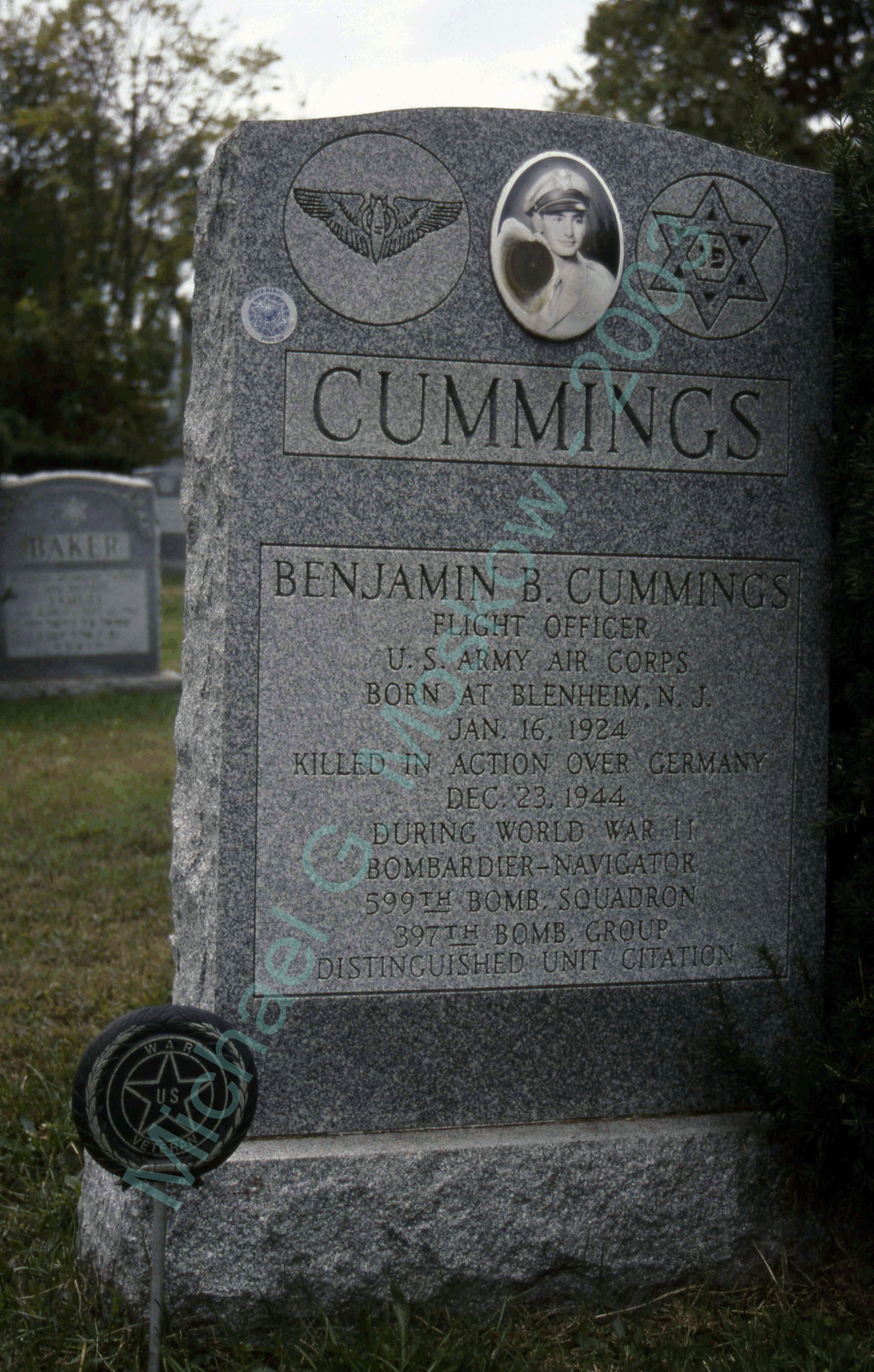
Cummings, Benjamin B., F/O, T-005736, Bombardier, Purple Heart (Killed on his very first combat mission)
United States Army Air Force, 9th Air Force, 397th Bomb Group, 599th Bomb Squadron
Mrs. Dorit (“Little”) Cummings (wife); Benjamin Cummings, Jr. (son), 4400 Pacific Ave., Wildwood, N.J.
Mr. and Mrs. Samuel and Celia Cummings (parents), Henry, Dr. Martin M., and Reuben M. Cummings (brothers), 301 West High St., Glassboro, N.J. / 11 Clementon Road, Camden, N.J.
Born at Blenheim, N.J., 1/16/24; Graduate of Glassboro State Teachers College
MACR 11897, B-26G 43-34159, “Hun Conscious II”, “6B * J”, Pilot – 1 Lt. Philip C. Dryden, 6 crew – 2 survivors
Buried at Crescent Burial Park, Pennsauken, N.J.
American Jews in World War II – 230 (See full biography at DVRBS.com)


____________________

Korn, Abraham J., PFC, 12029144, Togglier, Purple Heart
United States Army Air Force,  9th Air Force, 397th Bomb Group, 596th Bomb Squadron
Mrs. Nellie Korn (mother), 354 Fabyan Place, Newark, N.J.
Jefferson Barracks National Cemetery, St. Louis, Mo. – Section 84, Grave 156-158; Buried 6/9/50
American Jews in World War II – 242

Lewis, Craig E., 1 Lt., 0-417548, Bombardier, Air Medal, Purple Heart
United States Army Air Force,  9th Air Force, 397th Bomb Group, 596th Bomb Squadron
Mr. Benjamin F. Lewis (father), 5486 Blackstone Ave., Chicago, Il.
Ardennes American Cemetery, Neupre, Belgium – Plot C, Row 9, Grave 22
Casualty List 11/7/45
American Jews in World War II – 108

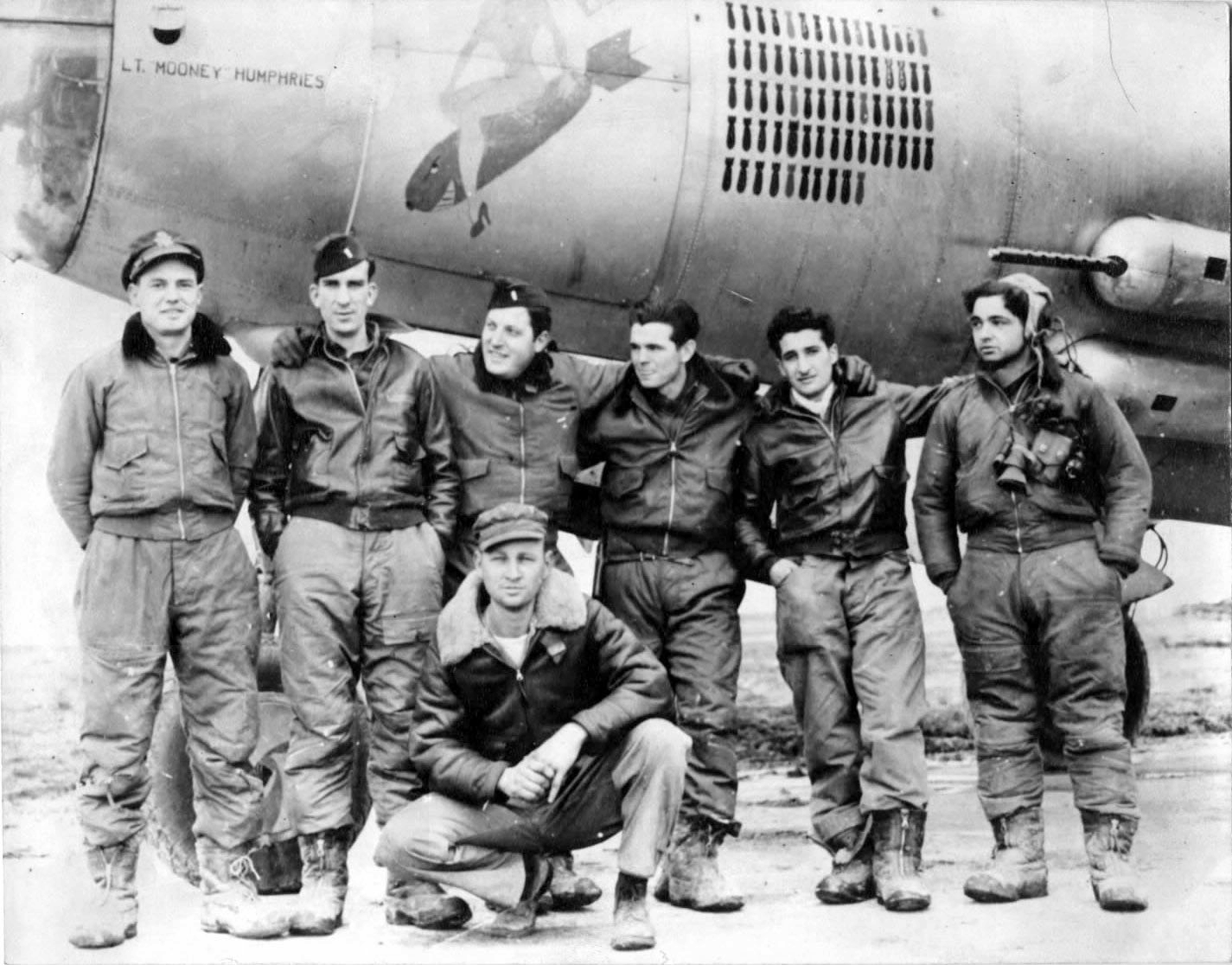
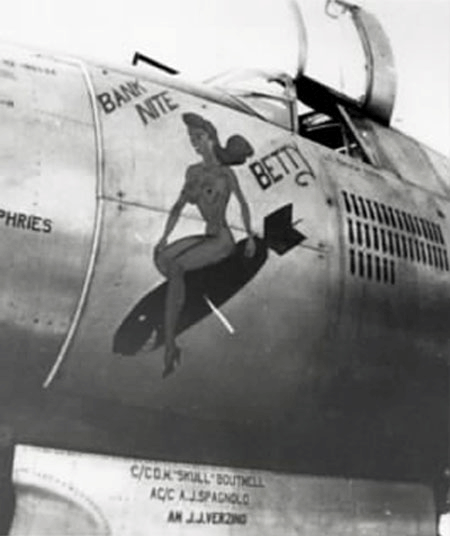
PFC Korn and Lt. Lewis were crewmen in B-26B Mauarder 42-96144, “Bank Nite Betty”, “X2 * C”, piloted by 1 Lt. Charles W. Estes.  (MACR #11483)  None of the plane’s seven crewmen survived the mission.

Excellent and highly evocative photographs of Bank Nite Betty and her crew can be found at the website of the American Air Museum in Britain.  As mentioned in the photo’s the caption, the plane received a direct flak hit and crashed northeast of Saint Vith.  As captioned at the website, the men are as follows:  “Crew: Pilot 1st Lt Charles W Estes (Mo.) [standing at far left], Co-pilot 1st Lt William D Collins (Ia.), Bomb 1st Lt Craig E Lewis (Il.), Eng S/Sgt James P Negri (N.Y.), Radio T/Sgt William E Epps (Ar.), Arm Sgt Bruno T Daszkiewicz (I.) X Gun Pfc Abraham J Korn (N.J.).”

____________________

Mendelsohn, Jerome H., Sgt., 32538446, Radio Operator, Air Medal, 1 Oak Leaf Cluster, Purple Heart, 12 to 14 missions
United States Army Air Force, 9th Air Force, 394th Bomb Group, 584th Bomb Squadron
Mr. Irving Mendelsohn (father), 1432 Harrod Ave., New York, N.Y.
MACR 11402, B-26B 42-96061, “Heavens Above”, “K5 * P”, Pilot – 2 Lt. Fred E. Riegner, 6 crewmen – 2 survivors
Lorraine American Cemetery, St. Avold, France – Plot J, Row 50, Grave 19
Casualty List 12/7/45
American Jews in World War II – 391

____________________

Sampson, William Gilbert (“Sonny”) (וועלוויל נעציל בן מענדיל – Velvel Getzel ben Mendil), Cpl., 36589011, Radio Operator, Air Medal, Purple Heart, 8 missions
United States Army Air Force, 9th Air Force, 391st Bomb Group, 574th Bomb Squadron
Mr. and Mrs. Max [2/22/00-12/13/51] and Debby (Levine) Sampson [1905-11/22/58] (parents), 11818 14th St., Detroit, Mi. [only child]
Born 12/2/24
MACR 11671, B-26B 42-95841, “Powerful Katrinka”, “4L * S”, Pilot – 2 Lt. Edward F. Donnelly, 6 crewmen – no survivors
Machpelah Cemetery, Ferndale, Mi. – Buried 1/2/49; Unveiling 6/12/49
Detroit Jewish Chronicle 12/31/48, 6/9/49
Jewish News (Detroit) 12/14/45, 12/31/48, 6/10/49, 6/14/49
American Jews in World War II – 430

This excellent in-flight image of Powerful Katrinka is from the website of the American Air Museum in Britain.

This image of Corporal Sampson appeared in the Jewish News (Detroit) on December 31, 1948. 

The following two images show the matzevot of Corporal Sampson, and, his father, Max, at the Machpelah Cemetery, in Ferndale, Michigan. The upper image was photographed in 2013 by FindAGrave contributor KChaffeeB., while the lower image was photographed in 2009 by FindAGrave contributor Denise.  I assume (?) that William Sampson’s mother, Debby, is also buried at Machpelah Cemetery.

The similarity of symbols on these two matzevot is more than coincidental.   

Apparently, William was an only child. 

Both of his parents passed away in the 1950s.  They were quite young, even by demographics of that decade:  His father Max was only fifty-one, and his mother Debby only fifty-three.

William’s matzevot bears a pair of wings, centered upon the symbol “9th AF”. 

Max’s mazevot also bears pair of wings, centered upon the symbol of a shield (representing the United States armed forces) surmounted by a resting dove.  

Alas, the Second World War did not “end” in 1945…

____________________

Scherer, Norman S., 1 Lt., 0-887158, Navigator, Air Medal, 1 Oak Leaf Cluster, Purple Heart, 2 Oak Leaf Clusters
United States Army Air Force, 9th Air Force, 397th Bomb Group, 598th Bomb Squadron
Mr. Arthur Scherer (father), Monument Square, Southampton, Long Island, N.Y.
Casualty List 4/12/45; Nassau Daily Review-Star 10/22/45
MACR 11549, B-26G 43-34221, “Lil’ Jan”, “U2 * L”,  Pilot – Capt. Donald H. Stangle, 8 crewmen – no survivors
Luxembourg American Cemetery, Luxembourg City, Luxembourg – Plot C, Row 1, Grave 15
American Jews in World War II – 430

____________________

Shweder, Howard, Cpl., 12219444, Tail Gunner, Purple Heart
United States Army Air Force, 9th Air Force, 387th Bomb Group, 559th Bomb Squadron
Mr. Herman Shweder (father), 1957 74th St., Brooklyn, N.Y.
MACR 11482, B-26B 42-95869, “The Front Burner II”, “TQ * F”, Pilot – 2 Lt. Matthew J. Pusateri, 7 crewmen – no survivors
Jefferson Barracks National Cemetery, St. Louis, Mo. – Section 82, Grave 48; Buried 9/22/49
American Jews in World War II – 441

____________________

Wolf, Edward, 2 Lt., 0-761272, Bombardier-Navigator
United States Army Air Force, 9th Air Force, 391st Bomb Group, 575th Bomb Squadron
Mr. and Mrs. Benjamin and Tillie Wolf (parents); Abraham, Anna, and Ruth (brother and sisters), Chicago, Il.
Mrs. A.S. Wolf (sister in law), 412 South Wells St., Chicago, Il.
Born Connecticut, 1920
(Parents’ and sister’s name from 1940 Census – uncertain if this is correct!)
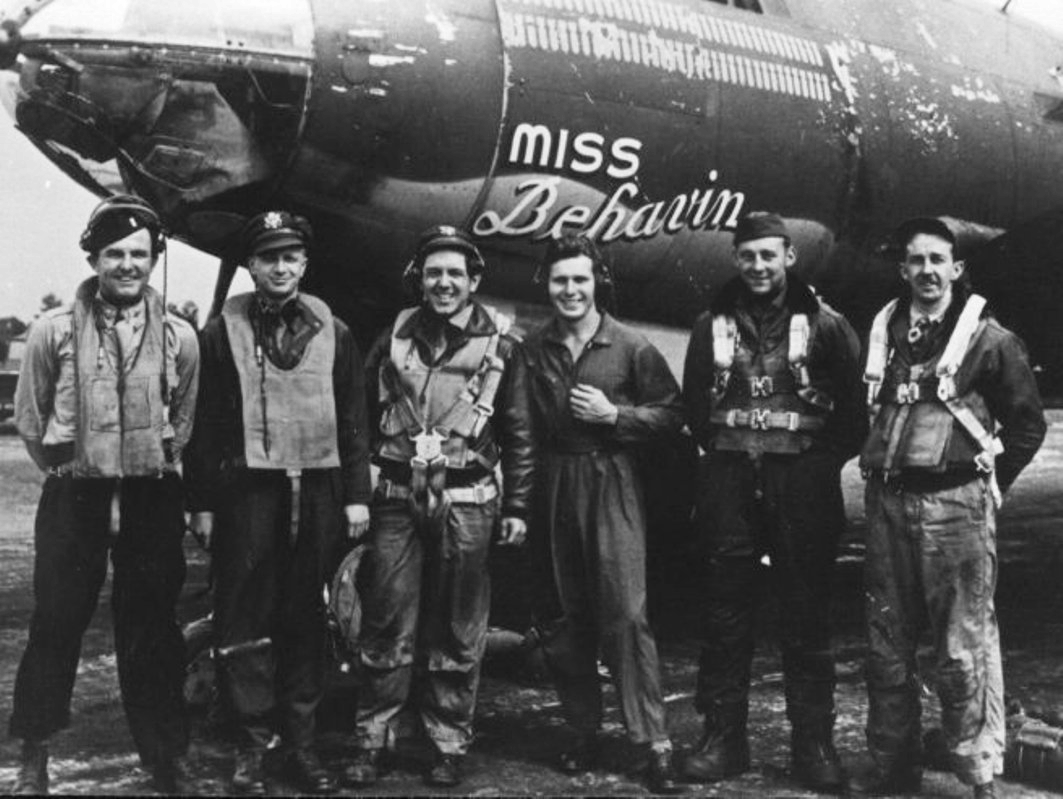
MACR 11670, B-26B 42-95844, “MISS Behavin”, “O8 * D”, Pilot – 2 Lt. William A. Kloepfer, 7 crewmen – 1 survivor
Place of burial – Unknown
American Jews in World War II – Not Listed

This photograph of Miss Behavin is (also) from the American Air Museum in Britain website.  The identities of the men standing before the aircraft are unknown. 

____________________

Schuster, Bernard, F/O, T-123627, Navigator, Air Medal, 3 Oak Leaf Clusters, Purple Heart
United States Army Air Force, 9th Air Force, 9th Troop Carrier Group, 3rd Troop Carrier Squadron
Mrs. Lucille (Rothman) Schuster (wife), 2877 N. Grand Blvd. (or) 2821 Frederick Ave., Milwaukee, Wi.
Mr. Jacob Schuster (father), 2039 N. 9th St., Milwaukee, Wi.
University of Wisconsin Class of 1942
MACR 11025, C-47A 43-48056, Pilot – 1 Lt. Hildren Tyson, 6 crewmen – no survivors
Agudas Achim Cemetery, Milwaukee, Wi. – SB,L3,G3
American Jews in World War II – 586

____________________

Spear, James Dreyfuss, F/O, T-223175, Pilot (Reconnaissance), Air Medal, 2 Oak Leaf Clusters, Purple Heart
United States Army Air Force, 8th Air Force, 25th Bomb Group, 654th Bomb Squadron
Mrs. Marjorie D. (Stern) Spear (wife), Adrian Apartments, 601 Kirtland St., Pittsburgh, Pa.
Mr. and Mrs. Alexander and Lillian (Newman) Dreyfuss (parents), 6306 Beacon St., Pittsburgh, Pa.
Born Cleveland, Oh., 6/7/17
Enlisted in RCAF 9/25/41, with service number R131216; Enlisted in US forces 6/28/44
No MACR, aircraft was Mosquito XVI, NS638; Navigator was 2 Lt. Carroll B. Bryan, of Sevier County, Tennessee – also killed;  Aircraft crashed 2 miles west of Dursley, Gloucestershire, England, on test flight. 
West View Cemetery, Pittsburgh, Pa.
Jewish Criterion (Pittsburgh) 9/7/45 (Name only – no other information)
American Jews in World War II – 554

Wounded in Action

Haas, Alvin Hugo 2 Lt., 0-744129, Navigator, Air Medal, 3 Oak Leaf Clusters, Purple Heart, 56 missions
United States Army Air Force, 5th Air Force, 2nd Emergency Rescue Squadron
Wounded by bomb fragments during Japanese air raid
On 10/26/44, he was a crew member of an OA-10A seaplane that crash-landed in the open sea 30 minutes north by northwest of Morotai at 1920 hours.  He was rescued (along with co-pilot 2 Lt. Richard F. Finn) by a PT boat at 2345 hours; aircraft 44-33877; Pilot – 1 Lt. Fredric F. Hoss, Jr.; 8 crewmen – 6 fatalities
Mr. and Mrs. Hugo (“Hugh”) and Minnie Haas (parents), 28-35 34th St., Astoria, N.Y.
Born New York, N.Y., 10/7/22; Died September 21, 2009
Long Island Star Journal 3/14/45, 3/20/45
American Jews in World War II – Not listed

This image of Lt. Haas is from Jim Bob Teegarden’s excellent PBY Rescue website, which covers the history of the Second Emergency Rescue Squadron.

____________________

Prisoners of War

Lander, Marvin B., 1 Lt., 0-825204, Pilot (Bomber)
United States Army Air Force, 8th Air Force, 94th Bomb Group, 331st Bomb Squadron
Mr. Philip Lander (father), 170 Sherman Ave., Teaneck, N.J.
Born 11/14/23
POW, Stalag Luft I (North Compound I)
MACR 11346, B-17G 44-6619, “Darling Dot“, crash-landed near Woltingen, Germany; 9 crewmen – 8 survivors; Luftgaukommando Report KU 1171A
Teaneck Newspaper 11/30/43, 11/10/44, 12/20/44, 1/18/45, 1/28/45, 3/8/45, 6/1/45
American Jews in World War II – Not listed

Ovis
, Harold, 2 Lt., 0-722655, Radar Operator, Air Medal, Bronze Star Medal

United States Army Air Force, 9th Air Force, 387th Bomb Group, 559th Bomb Squadron
POW, Stalag Luft I (North Compound I)
Mr. Nat Ovis (brother), 1497 Carroll St. / 1113 Avenue O, Brooklyn, N.Y.
MACR 11464, B-26C 42-107598, “Miss Kam”, “TQ * G”, Pilot – 1 Lt. William I. Pile, 9 crewmen – 6 survivors; Luftgaukommando Report KU 1191A
American Jews in World War II – 402

References

Book

Dublin, Louis I., and Kohs, Samuel C., American Jews in World War II – The Story of 550,000 Fighters for Freedom, The Dial Press, New York, N.Y., 1947.

People

Alvin Hugo Haas, at PBY Rescue

          Biography: http://www.pbyrescue.com/Crewmembers/haas.htm

          Mission of October 26, 1944: http://www.pbyrescue.com/Rescues/26oct44.htm

Corporal William G. Sampson (at FindAGrave.com)

Max Sampson (at FindAGrave.com)

The Solomon Crew, at https://thesolomoncrew.com/

Aircraft

B-26B 42-96144, “Bank Nite Betty”, at American Air Museum in Britain, at http://www.americanairmuseum.com/aircraft/10132

B-26B 42-95844, “Miss Behavin“, at American Air Museum in Britain, at

http://www.americanairmuseum.com/media/25748

B-26B 42-95841, “Powerful Katrinka”, at American Air Museum in Britain, at http://www.americanairmuseum.com/aircraft/10064

B-17G 44-6619, “Darling Dot“, at

http://www.americanairmuseum.com/aircraft/15755

Mosquito XVI NS638, at Aviation Safety Net, at

http://aviation-safety.net/wikibase/wiki.php?id=139104

Military Units

Second Emergency Rescue Squadron

http://www.pbyrescue.com/Photos/2ERS0000/817.htm

New Guinea Passover: Letters from Wolfe Freudenheim, WW II – July, 1943

Some nine months after The Jewish Exponent’s publication of letters sent by Pvt. Wolfe V. Freudenheim to his parents in Philadelphia (see New Guinea New Year), the Exponent published more of Wolfe’s letters.  The first dealt with a Passover Seder held in New Guinea, and the second described the living conditions, climate, and wildlife (even the proverbial – and quite real! – bird of paradise) to be found on the island. 

This was the second (and last) occasion on which the Exponent published Pvt. Freudenheim’s letters.

____________________
______________________________
____________________

Passover in New Guinea – Crocodile Hunting

The Jewish Exponent
July 9, 1943

Pvt. Wolfe Freudenheim, stationed in new Guinea, wrote the following letters to his parents, Mr. and Mrs. Abraham Freudenheim of 6237 Christian Street.  Pvt. Freudenheim’s letters have appeared in THE EXPONENT before, and his latest batch is even more interesting.

____________________

New Guinea, April 29, 1943

Dearest Everybody,

I’m just returned from the Passover celebration here in New Guinea.  Rabbi Levy was there.  I had arrived at 7:30, and since the crowd was so large the service was discontinued in favor of eating.  All the men brought their own mess kits.  The dinner was served buffet style.  I can safely state that it was the largest grouping of any religious sect.  (Amount censored.)  It would have done your hearts good to see the men grabbing for “Matzos” and what wine there was.  I believe that every Jewish man in the Australian Army and U.S. forces was there.  Among those present: Lt. Max Daroff, Sgt. Herb Glonin, Eddie Eisenberg of Atlantic City.  I could just go on listing them, but it would sound like a roll call.  Pictures were taken by a war correspondent and also by the U.S. Army Photo section.

The Chaplain admitted that he never anticipated such a large mob.  For that reason the service was terminated and we spent the rest of the time meeting new people – and in general “swapping the best rumors”.

Naturally the “four questions” were asked, but they were never answered.  Undoubtedly they will be answered by the men in the forces in a different manner.  Next year we might be able to answer in peace.

Enough “Matzos” were on hand for every man to have at least one pound each.

Oh yes:  two nurses came.  Nobody looked at them – much.  First the upper strati of the commissioned officers held them enthralled.  A little later 1st and 2nd lieutenants took over.  Almost before anything else happened, a bunch of infantrymen, in their “zoot suits” (jungle uniforms) made a blank attack, and they never relinquished the hold they held – not even for the major, who wanted to take them “home”.  Over a box of “matzos” they spoke of “Seder” night at home.

In a corner a bunch had gotten together for a “go” at “Chad God Yah” – what a noise!  But it was beautiful.

Begging for order, the Chaplain called to the men for the benediction.  After reading an order from “the” General concerning the holiday, we left.

MENU
Matzo
Real Fruit Cocktail
Fresh Meat

WOLFE

____________________

New Guinea, May 13, 1943

Dearest Everybody:

“MY DAY OFF”
or
‘HOW NOT TO REST”

The morning was perfect, as _____ _____ days go, in New Guinea.  Of course it was hot, and the humidity was quite high.

[Being] my day off, I planned [to do] a bit of crocodile hunting on my own.  If I knew what was to transpire, I might have hesitated.

[By 4:15] A.M. I strapped a web belt about my waist, a canteen, jungle knife and a sharp dagger.  Slinging a bandolier and a rifle over my shoulder, then putting two packs of cigs in my pockets with a box of matches, plus four bars of chocolate, which was to be my lunch, I started out.

Hopping a ride was an easy matter, and after two hours we arrived at the habitat of the “crocs”.

Walking through this stinking swamp, down dried-up creeks and streams, was quite an experience.  The place was chockful of tracks and – being ever on the alert – deeper into this Eden I went.  Once I took a pot shot at a large snake, but he was too fast.  Lizards of the larger variety were to be found in abundance.  The reports which came from my rifle made them run in all directions.  Working my way up, I finally reached the summit of this mountain.  Here I met an English-speaking native policeman.  He was a swell fellow – offered me tea and biscuits.  The mountain was 5,000 feet.  Crocodiles?  “Oh, many miles up river, Towhada” (big white man).  He told me of the bird of paradise which roamed the nearby jungle – but telling me that it was against the law to shoot one.  He was quite emphatic about this.

Going back down into the jungle of this mountain took some time.  Then, part way down, I heard a chucking sound and saw a bush move – there walking across the track, not 25 yards away, was a real live bird of paradise in all his glory – strutting as though he were the kind of all he surveyed.  Gee, he was beautiful.  I couldn’t take my eyes off him.  About this time it began to rain, but slowly and quietly I followed my gorgeous friend.  Deeper and deeper into this heavy foliage he went, until he came to an overhanging boulder, under which was a round dry mound.  His lair!

The ground was becoming soggier, and it took quite and effort to pick up my foot, but quite a simply matter to put the other back in the goo.  Reaching into my pouch for a bar of chocolate, I soon found to my utter amazement that a whole colony of ants had beaten me to the draw.  Throwing the bars away, I dug deep into my pockets for a cigarette – only to find them all saturated by the rain, except one, which was only wet at the tip.  Breaking the wet part off, I put my hand into my pocket, and withdrew a broken match box and a few red dyed matches.  Their tips were gone.  Here a wallaby sloshed up the track and further on, I could see through the rain a few large rats.  By a lucky shot, I dropped one.  I noticed a curious feature about this animal – his front legs were much smaller than his hind legs!

I turned back, because it was getting colder and fog had started to close in.  Boy oh boy, how “the rains came”.  Never had I seen it like this before.  The going became tougher.  Hungry, the coveralls became heavier and now a headache started.  What a mess!

Coming onto the road, a truck picked me up, and at the pass we were stopped by an M.P., who advised us to walk because of landslides crossing the road at a few points.  Hitting the road again – road, did I say? – really only a wide mountain track over which cascaded new-made swirling streams, thundering over into an abyss.  Here a lorry was stuck in the mud and further down a boulder had come loose and planted itself in the middle of the track.  At last we made the bottom, where we found a small hospital.  We were fed warm soup and hot bully beef, which tasted just like steak – almost.  Outside a jeep had a flat tire.  I helped the fellow repair it and he took me to where I wanted to go. 

The rain had ceased at last.  Gee but my camp looked swell.  Home and bed!  What a comforting thought.  That last stretch – it looked like a concrete highway – that is, it looked like one, but in reality it wasn’t.  Taking a few steps, I fell into a deep mud hole.  My gun was just coated with mud, and when I opened the bolt the brown slimy stuff oozed out through the barrel.

I showered and crawled slowly into bed.  Then I thought – all the trouble – discomfort – the long trek – was it worth all I had seen and experienced.  I’ll say.

Love, WOLFE

New Guinea New Year: Letters from Wolfe Freudenheim, WW II – November, 1942

During the Second World War, Philadelphia’s The Jewish Exponent reported upon the military service of Jewish soldiers in a variety of ways.  These comprised brief and specific accounts – sometimes based on official documents – of a soldier’s experiences in combat or other activities; announcements about casualties (wounded, missing, prisoners, and deaths in combat), and, brief biographies.  These news items were often accompanied by photographic portraits, both formal and candid.

Curiously; oddly, despite the duration, scope, magnitude, and nature of the war, the Exponent published very few news items about military service that were genuinely “at length”.  However, the few news items of this nature that were published make fascinating and illuminating reading.

One such item follows below.  It’s comprised of letters written by two Philadelphia servicemen who were mutual acquaintances – Lieutenant Maxwell A. Daroff and PFC Wolfe Velvel Freudenheim – concerning life in New Guinea in late 1942.  Especially moving is their mention of Rosh Hashana and Yom Kippur services.

Though Lt. Freudenheim’s military unit is unknown, Lt. Daroff’s letter reveals that he was a member of the Army’s 440th Signal Battalion.  The Battalion, created in 1942 and eventually disbanded in 2008, served in the Second World War, the Korean War, and Iraq.

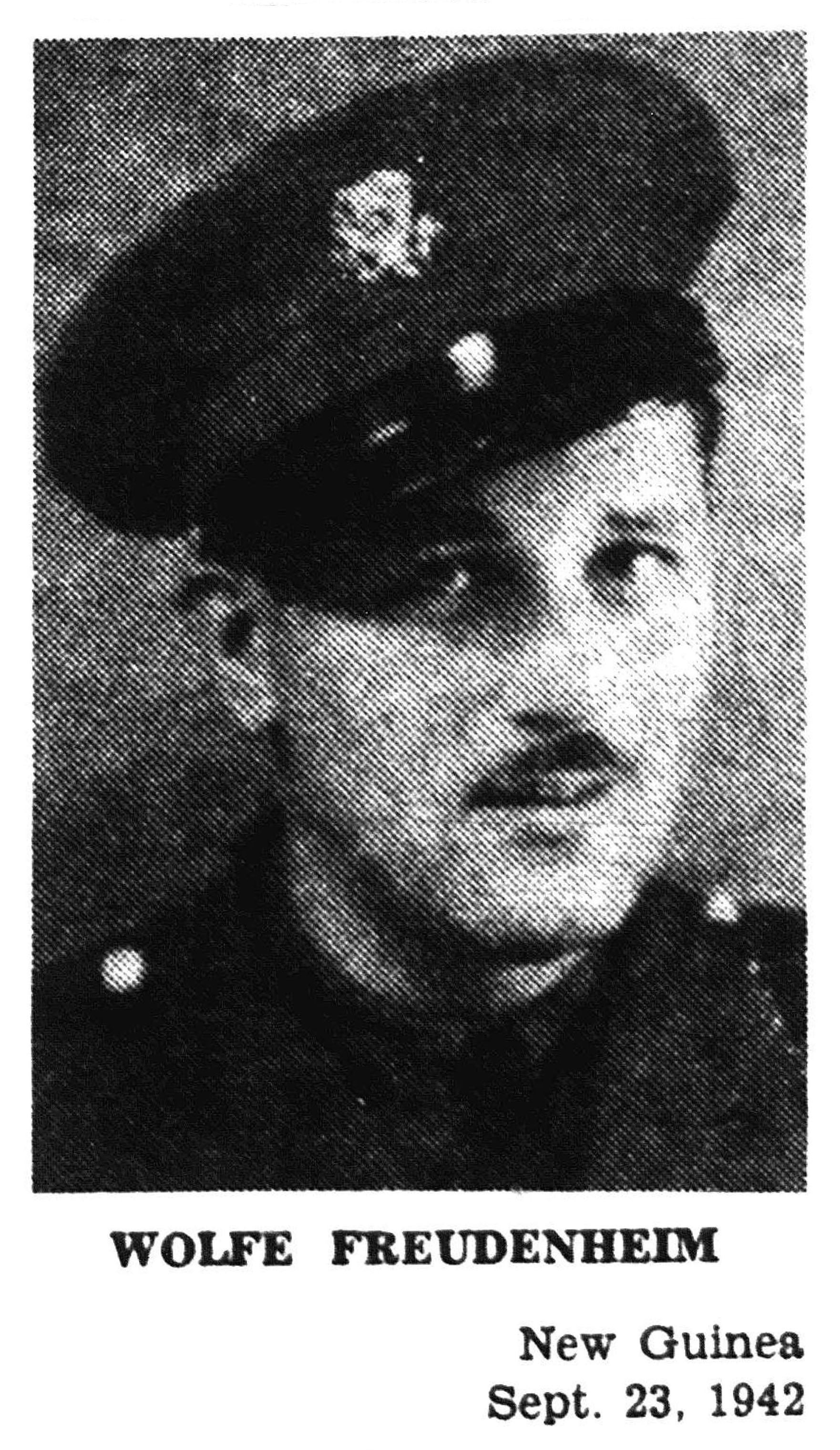
PFC Freudenheim, born in Media, Pennaylvania in January of 1914, was the son of Mr. and Mrs. Abraham and Mamie Freudenheim, his parents residing at 6237 Christian Street (Cobbs Creek section) in Philadelphia.  Married to Ruth V. Freudenheim at the time of his military service, the couple’s postwar address was 5850 Chestnut Street. 

Wolfe Freudenheim passed away in December of 1987.

In 1943, the Exponent published a second article comprised of letters penned by PFC Freudenheim.  That will appear in a future post.

____________________
______________________________
____________________

Local Jewish Boy Writes Home of His Experiences in New Guinea

Wolfe Freudenheim of West Philadelphia Now Stationed in the Pacific War Theatre
Relates Many Interesting Stories

The Jewish Exponent
November 6, 1942

Editor’s Notes: – Herewith is a series of letters written by Private Wolfe Freudenheim, to his parents, Mr. and Mrs. Freudenheim of 6237 Christian Street.  Private Freudenheim is currently on duty in New Guinea, and although we’ve deleted certain personal passages, which we’re sure would be of no interest to the general public, there still remains in each letter a kaleidescopic report of life in that God forsaken island.  Some of the things he does, his emotions, and reactions may give you an idea of what some one very dear to you is undergoing.  The first letter is from another Philadelphia boy, Lt. Maxwell A. Daroff who left for New Guinea after Wolfe did, and then wrote Mrs. Freudenheim that he had met her son.  Some of the incidents are really exciting, especially the letter in which Wolfe describes the High Holiday services in New Guinea.

____________________

New Guinea
Sept. 19, 1942

Dear Mrs. Freudenheim:

Wolfe has most likely written and told you of our meeting ‘way over here.  I am sure that when you saw me that day on 63rd street and told me that Wolfe was in Australia you never even dreamed that in just a few short months I would be able to tell him about it.  This certainly is a small world.  When I left home I knew there were at least two people in Australia that I would know.  My brother and Wolfe.  I found my brother right off the bat.  We had quite a reunion and were together for some time.  However, we were separated again.  But that is war.  We are close enough, however, so that mail to each other gets through in a few days.  As for Wolfe, I had to wait until I got to this God-Forsaken place to find him.  I went to Rosh Hashonah services and there he was.  It so happened that I was the only officer present, so between us we conducted the services.  Me with my rank, and he with his knowledge, as limited as it was, although he remembered a little more than I did.  We had a pretty good service, too.

Earlier this month I wrote to my mother and told her about this.  I also gave her your phone number.  I have a very good memory for phone numbers.  So she may call you. 

I won’t try to tell you anything about this place.  I know Wolfe has already more than adequately described it.  However, if it will ease your mind any, I can tell you truthfully that Wolfe is in damned good health, fairly happy (we all want to get home) and not in any danger at all.  So don’t worry about him.  He will be all right and he knows how to take care of himself. 

Well, this is all.  Give my wishes for a happy and prosperous New Year to Mr. Freudenheim, Babe, Top, and Selma.

Sincerely,
Max.

____________________

Lt. Maxwell A. Daroff, 0-358639
1st Plat. Co. A 440 Sig. Bn.
(Const.) APO 929
c/o Postmaster, San Francisco

Sat., Sept. 12, 1942
New Guinea

Dearest Family:

“Le shonah tovo teeosevu (Hebrew).  [The word “Hebrew” was inserted by the writer for the benefit of the army censors. – Ed. Note.]

In the event that you didn’t receive my last greetings, which I wrote Thursday, services were held here in New Guinea – Friday night at 7 P.M.  Twenty-five men attended – including Lt. Max Daroff.  Really, you could have knocked me over with a pin.  Yep, he is here.  His brother, Lt. Sid Daroff, is in “Aussie”.  He told me about all of you, for which I am very much thankful.

Light night Max and I conducted, but today, at 9 A.M., 50 men were present – I did a solo.  The boys admitted that it was conducted quite well – (mind you, I know very little).

Incidentally, my tour of one week’s K.P. has ended – I am very thankful.  Pop’s package of Dunhills, razor blades, and matches came this P.M.  Gee, but they came in damm handy – all three items!

How I miss you all – you’ll never know.  Oh, yes, after services today Max, Sgt. Herb Glovin (who’s from Wynnefield) and I were talking about what we would be doing were we home.  Max and I agreed that we would be standing outside the West Phila. Com. Center.  Herb, undoubtedly would be at Horn and Hardart’s for coffee.  It was suddenly busted up when I had to wash 6 tubs and cut wood for the next fire.  Chopping with an axe, here, does one good.  Sweating profusely – is the main attraction.  But it really builds one’s shoulders and arm muscles.

It has been almost 10 days since I last heard from you.  We, here, haven’t gotten a thing, even from “Aussie”.

Let me now, before I go on further, reassure you that I am OK – fit as a fiddle, and away from any danger.  Since I haven’t a camera I’m having a portrait done here – by one of our lads.  You probably have received my native pieces and Top [brother] has his boomerang.  Also, I’ve sent a portrait of a native family to you.  Hope you get the lot.  Possibly I’ll be able to procure a few more novelties, grass skirts – arrows, native instruments, things that are not too large to be mailed.  If I mailed a lizard, he’d die enroute.

Last night I went to the movies and saw “Three Sons” – Boy, it was from hunger.

Received cigs from Syl’s sister and brother-in-law.  Nice people.  Stepped on a nail last P.M. about 20:00 hours and got a tetnus “shot”.  Jeeze, but it’s hot!  I change clothes twice a day and shower twice – when it can be done.  Naturally, we dress on Sunday.  Yep – I put my socks on.  Abbreviated shorts, shoes and sun helmet I wear everyday, but I like to dress up on Sunday – I put on socks.  Ho, hum.

Saw a short concerning skiing – darned near caught a cold.

From what the boys (new arrivals) have told me – the people in the States don’t even know that a war is going on.  They had better be careful.  We do need a lot of things.  I hope production will be speeded up more – we that we may be able to use some of it.

Did you ever taste “Aussie” baked beans?  No – DON’T.  I think one word to the wise is sufficient.

Come on gang – news is the thing, and not about the war, either.  I love you all and miss you all horribly.

____________________

New Guinea
Sept. 23, 1942

Well, well, it’s 4 days, or is it 5, since I last wrote you?  Have been very, very busy here of late.  I no longer count the days since we’ve left.  They seem no longer to hold any significance.  Each day being more like the preceding one.  Of course there are moments of tribulation, but they don’t remain as a memory.  All I personally think about is 6237 [Christian Street].  Naturally, things happen here, that don’t occur at home, but I can assure you, that when we do get home – you’ll hear very little from me – concerning New Guinea – I shall relate, however, the funnier side, the side that really, to us, is the morale builder.  Enough of my sentimentality.  What’s new?  How is everyone?

Big news!  We are to get a furlough!  Vacation to you people.  Not all at once – just a very few at a time.  Sort of a rest – if you want to call it that.  Where are we going?  Well, that all depends.  All, I’m sure are going to “somewhere in Australia” – I, back to see the “Greens” and “Cromwells” and a host of friends.  Regardless of the length of time we get – I’m sure that we will spend it having a grand time.

I still don’t drink – and I’m still not tatooed.  Then after that is over – back to New Guinea.  When will it begin?  There again, I can’t answer.  I don’t know.  Maybe a month, maybe two – who knows?  We talk about it incessantly.  Plan – and re-plan.  Jeezel – but it will be great.  I mean it will be something.  Enough of this.

Heard station KWID, San Francisco, the other night.  Bing Crosby, James Cagney, and a host of others.  Sorta made me feel good.  Last night, we heard a bit of propaganda from Japan – what a mess of junk.  Said we lost our whole fleet at Coral Sea, Midway, and one other action.  Can’t see how anyone can believe that stuff.

Last evening I met Lt. Max Daroff and a Major Williams, also Captain (I forgot his name).  Well, the Major had asked me (when we held “Yom Kippur” services), if I could get together a “minyon” for him.  So we held a “minyon” (in my tent) by flashlight!  Never was “Kaddish” said in such environs as this, and I’m sure never under such circumstances – possibly better, but I can assure you never worse.

Well, that’s that.  Maybe you’d like a description of it?  Maybe Rabbi Matt wouldn’t consider it absolutely right, but nevertheless, in New Guinea it was perfect (at least the Major thought so).  Dad, here it goes.  Let me know what you think, please!  Well, we had 12 men to begin with – some wore sun helmets – some helmets – other caps and overseas caps – most had shorts, another had his coveralls – of course, all the officers were dressed in sun tan uniforms.  With my (“sider”) and flashlight, held by me, over the Major’s shoulder, we began.  (“Sheer Hama alos henay”) to (“Vahed V’ahl coll Ma-Ahson) then they said (the two mourners) (“Yiskadahl Va – Yiskadash”).  So, handshaking went the rounds – they left the gang busted up.  There you have it.  Short and sweet – but if it isn’t exactly so, believe me – it was said from he heart.  I guess that’s what counts.  Incidentally, you ask, “Where did you get a “sider”?  Well, when we were in Australia – I had asked a certain Rabbi for one – he obliged.  So there you have it.  I believe I told you in a previous letter all about it.

What’s new here?  Read your daily papers.

I miss you more and more each day, and love you twice as much.

Wolfe

____________________

New Guinea
September 26, 1942

Dearest Everybody:

What do you think happened today.

First, I picked up a small bundle of newspapers and the N.Y. Times magazines.  Papers were grand.  Everybody loves them – naturally, when I’m finished I pass them around to the other boys.

Then the other package was from Isabelle Cohen – 1 carton cigs, 1 Yardley shaving cream cup – 4 boxes chicklets and 2 small cans of tuna packed in peanut oil.  My eyes virtually popped out, at such an array.  The tuna was swell – of the cigs – no mention is made – that is, after you roll them for a while – chicklets – superb.  As for the shaving cream – we won’t use it for a while – due to the fact that (as I’ve told you) I’ve a goatee and a muzzy.

I’m well – weigh 11 stone 10 lbs., which equals 164 lbs.  Don’t worry about me for I shall be, and am, quite safe.

Well – folksies – that’s all for this P.M. – so I’ll sign off.

But before I do I wish to be remembered to all our neighbors, and friends, and by all means, Clifton.  Bye now –

I love and miss you horribly.

Wolfe

____________________

August 20, 1942

Dearest Everybody:

Today I sent you a V … – letter – tomorrow a cable.  I must tell you what happened to me today.  First came the Bulletin and the Readers Digest from you –

Coming down the list, you first Dad.  J.N.F. year book pages.  Whoa – I made the book – not bad.  Thanks, Dad.  Confidentially, your picture (with the old guys) is not so hot.  You’re much to [sic] young to be associated with those old “shleppers”.  Before I forget – one of the Jewish boys in our outfit received a letter from his brother telling of the death of their mother.  I got together a “minyan” for him and I made him say “Kaddish” – probably the first time a “Minyan” was ever held in New Guinea.

Love,

Wolfe

____________________

New Guinea
Sept. 27, 1942

Dearest Family:

Check your notes on your letter to me dates Aug. 30.  As per your request I shall answer all your questions as concise and as clearly as possible.  Meanwhile, thanks for your picture taken behind the garage.

Mother:  I’m glad you received my gifts – and liked them – this is the first notice that I have had to the effect that they arrived safely.  I have answered pertaining to my work – but I shall do so again.  When I was at Jefferson Barracks I took the necessary examinations – so far as I know, I did pass them for aviation mechanics.  But as the schools were complete and they (the army) had no calls for mechanics at this time – we were told that we would have to wait.  Then, I was asked by a Lieutenant if I would be the announcer for the Pres. Ball in St. Louis.  Well, a “shipping list: had been already made and nothing could be done to get me off.  We did practice – but that is where I left them.  Then to Mitchell Field – before we could turn around to find out what was what – we all entrained for Bangor, Maine.  Immediately, we knew what was in the wind.

Well – that’s the story.  My first job was when we arrived in “Aussie”.  “M.P.” or security section – but after a few months I was relieved – believe you me, was I relieved!  So, from there I took over the “Rec Hall” (recreation hall).  Ran table tennis tourneys – had guest players give exhibitions – checker tourneys – chess and any other games the boys wanted.  When our unit came to this island –naturally, me, too – what I had anticipated was just a trifle different. 

Quite different – read your newspapers – that’s all.  Now, I’m on different details (a detail is a working unit) – we do a load of things.  Yep – I had to come all the way to New Guinea to get K.P.  Now, I ask you – hain’t that something?  I do have a little belly – actually it is exceptionally small – quite – my weight is just 11 stone 10 lbs. – which equals 164 lbs.

Side note – I’m sitting now, in front of a short wave radio – just heard “Hi Neighbor” program.  Darned good.  Back to your letter.  The radio – playing “I’m getting sentimental over you.”  Personally speaking – I’ve been and continue to be sentimental over all of you.  To Mr. Berkowitz – my best regards, I’ll eat every end of bologna he has in stock – I can just taste them – even over the “Bully Beef”.  When his pickled lox does arrive – yeh man, out of my way!  Hope it doesn’t curdle, or whatever pickled lox does.

Dad: your carton of cigs hasn’t yet arrived.  Maybe tomorrow.  Wrote you last nite.  I told you about receiving Bulletin of July 21 and 22 for which – thanks, Dad.

Damm glad you got my cables.  Can you comprehend them?  I’m positive you folks write me often – but when one is here – his head does funny things.  Such as – thinking his folks and friends don’t write.  But we know you all do, but the mail is slow.  This letter was a rare exception (yours of today).  I did not  as yet, receive your cable of July 16th.  Tell that to Western Union.

Love,
Wolfe

____________________

Reference

440th Signal Battalion, at
https://en.wikipedia.org/wiki/440th_Signal_Battalion_(United_States)


Soldiers of The Great War: Jewish Military Service in WW I, as Reported in The Jewish Chronicle – “Osnas the Hero” – A Battle Pictured

Previous posts presented two articles from The Jewish Chronicle of 1914 (“Osnas the Hero“, from September 11, and “War and The New Year”, from September 25) mentioning the award of the Cross of Saint George to a soldier surnamed “Osnas”, who was identified as a medical student from Vilna. 

According to “Osnas the Hero”, Osnas had been, “…invalided and is in hospital suffering from severe wounds received in saving the colours of his regiment in the last extremity during the terrible fighting in East Prussia.  His commander telegraphed a special request to the doctors to ‘do everything that was possible to save the life of Osnas, the hero.’”

Well…  Who, actually, was “Osnas”? 

His identity – thus far, at least based on extensive web searches – remains an enigma.  His given name – “Leo” – has been found at only source (This Day…In Jewish History) under the entry, “1914:  During World War I, “on the Eastern Front, the first award of the Cross of St George, the equivalent of the Victoria Cross in Britain,” went to Leo Osnas, a Jewish soldier, “for exceptional bravery on the field of battle.” 

Unfortunately, no bibliographic reference is associated with this item.

Other references repeat, with elaboration and variation, Osnas’ story as presented in the two articles from the Chronicle.
    
For example, the 1916 book The People Who Run – Being The Tragedy of the Refugees in Russia, by Violetta Thurstan, in a chapter devoted to the suffering and experiences Jewish refugees in Eastern Europe during the First World War, states, “Very sad cases of distress come before the Jewish Committee from time to time.  There was a family in Kazan, living in one little room, who had been extremely wealthy and had lost everything they had.  They had been living in Poland and had been ordered by the military authorities to quit the town at once as the Germans were rapidly advancing.  They managed to lay their hands on three thousand roubles, and as they possessed two large barges, they decided to sail down the river to Kiev, bringing as much furniture with them as the barges would carry.  But a Jewish festival was due just then, and they foolishly decided to wait till it was over.  The Russian military authorities, finding they had not started when they were told to, got hold of the idea that they had German sympathies and were waiting till the German troops entered the town to give them information.  Their barges and money were confiscated and they were turned penniless out of the town, and are now living in miserable poverty in Kazan.  But in spite of unfortunate incidents like this, which must occur during any war, a new respect between the Russians and the Jews is steadily growing, and it is hoped that the old prejudices will disappear.  The heroic action of one young Jewish medical student at the front has done a very great deal to raise the status of Jews throughout the whole of Russia.  In the middle of a fierce battle near Goldap [a town in northeastern Poland, located on the Goldapa River], the Russian standard-bearer was bayoneted by a German soldier and the flag captured.  Young Osnas, a Jewish medical student from Vilna, seeing his chance, sprang forward, killed the German soldier and seized the flag, though he was entirely surrounded for a few moments by the enemy striving to recapture it once more.  Osnas, although severely wounded, managed to hold it until reinforcements came up.   For the heroic courage he showed the Emperor himself decorated him with the St. George’s Cross, the highest reward for courage a Russian soldier can obtain.  May it be a happy omen for the future.

Marr Murray’s The Russian Advance (1914), in a chapter covering fighting in East Prussia, presents Osnas’ story in this manner, “It was during this period of the engagement that one of the most significant events – so far as Russia is concerned – of the whole war occurred.  A Russian battalion was in the midst of a veritable inferno.  The Germans were determined to hold an important position at all costs.  The Russians were equally determined to capture it.  On both sides the carnage had been terrible.  At last, with a desperate rush, the Russians succeeded in getting to grips with the Germans.  Indescribable hand-to-hand fighting ensued.  In the midst of the melee a German bayoneted the Russian Standard-bearer and seized the flag.  Emboldened by this emblem of victory the Germans renewed their efforts and dashed to the assistance of their comrade.  But before they could reach him a young Russian had sprung forward, killed him and recaptured the flag.  With a howl of disappointment the Germans attacked him.  For a moment he seemed to be doomed.  Germans, were all round him struggling for the possession of the flag.  Then there came a deep-throated roar, a sudden rush, and the Germans were hurled back.  The Russians had captured the position and saved their flag.

The youth who had held it against such odds was afterwards discovered severely wounded.  He proved to be a young Jewish medical student from Vilna, named Osnas.  He was at once hailed on all sides as a hero, and on being invalided back to Petrograd the Commander himself gave orders that every care was to be taken to save the life of “Osnas the hero.”  Subsequently he received the military cross of St. George, the Russian V.C., from the hands of the Tzar himself.

The significance of the incident does not lie in the bravery of Osnas, but in the fact that he was a Jew.  His action, which has made him a popular hero throughout the Russian Empire, has done more to improve the position of the Jews than any event in the whole course of their history in Russia.  It has made the nation realise that a Jew can be a worthy son of Russia.”

The story – to a brief albeit similar effect – appeared in the Reform Advocate of September 12, 1914:

London, England, Sept. 4 – A Petrograd (St. Petersburg) dispatch to the Central News says that a Jewish medical student of Vilna, named Osnas, received the military cross of Saint George for saving the colors of his regiment in the last extremity during the terrible fighting in East Prussia.

Osnas was badly wounded and his commander telegraphed the doctors to do everything possible to save the life of “Osnas the Hero”.

The report of Osnas’ bravery was not limited to the Jewish Press.  For example, The Los Angeles Herald of September 22, 1914, carried the following item:

Jew Decorated for Saving Colors of Russian Regiment – LONDON, Sept. 22 – A Petrograd dispatch to the Central News says a Jewish medical student of Vilna, named Osnas, received the military cross of Saint George for saving the colors of his regiment in the last extremity during the terrible fighting in East Prussia.

Osnas was badly wounded and his commander telegraphed the doctors to do everything possible to save the life of “Osnas the Hero”.

In contemporary times, Sir Martin Gilbert presented this account about Osnas in his book The First World War:

The hopes of minorities could be raised in unusual ways.  On the Eastern Front the first award of the Cross of St George, the equivalent of the Victoria Cross in Britain, awarded by the Tsar for exceptional bravery on the field of battle, went to a Jewish soldier, Leo Osnas.  According to a British newspaper, the Yorkshire Herald, by his bravery in action Osnas ‘has won freedom for the Jews in Russia; he has gained for his race the right to become officers in the Russian army and navy, hitherto denied them, and he has so delighted the Russian government that it has since proclaimed that henceforth Jews in the Empire shall enjoy the full rights of citizenship.’  Commented the newspaper: ‘Surely no man’s winning of the “V.C.” ever resulted in such magnificent results for a subject people as this!’  In fact, the Jews of Russia did not receive full citizenship during the war; nor did they escape repeated violent attacks on them by Russian townsmen and villagers looking for scapegoats for Russia’s military setbacks.

____________________

Perhaps more information about Osnas will can eventually be found, but for now, his life and story  – both pre-war and post-war – remain a mystery.

This is ironic, because one image of Osnas does exist.  It shows him as he appeared, or, as he is imagined to have appeared. 

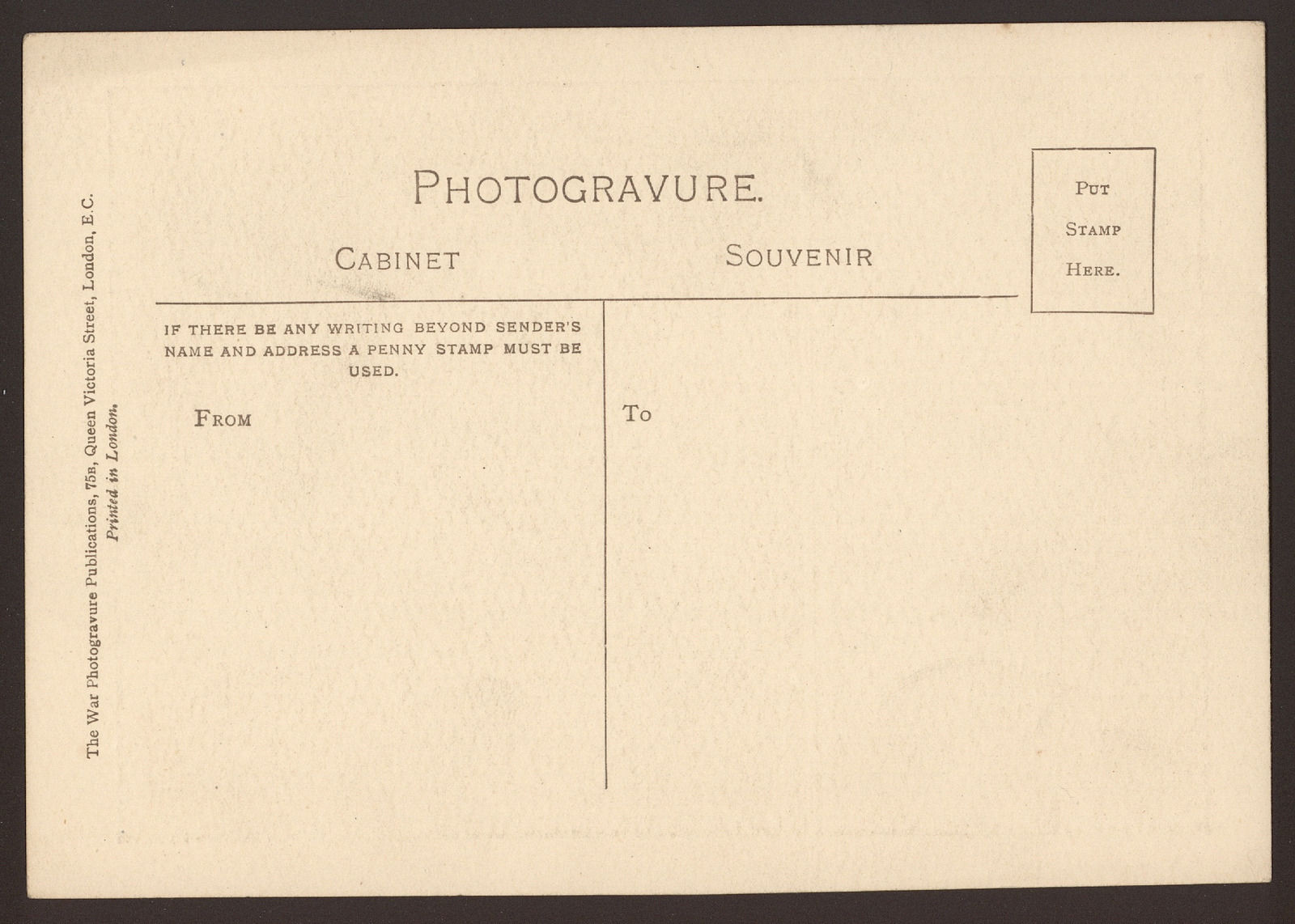
The image is in the form of a painting created by British cartoonist Alfred Pearse (1855-1933), which was reproduced as a picture postcard published by War Photogravure Publications of London.  The painting depicts Osnas wounded, in the midst of battle – an embodiment of courage, determination, and fury – retrieving the Russian flag from German troops.  He is situated in the center of the image, while enemy soldiers surround him, and cavalry, obscured by clouds of dust, observe the scene from behind.

The painting appeared in The Jewish Chronicle’s sister publication, The Jewish World, in late 1914 or early 1915.

Well, it’s an interesting image. (Historically.)

It’s a compelling image.  (Doubtlessly.) 

And, it’s an especially dramatic image.  (Admittedly.) 

But, pondering that no actual photographic portrait of Osnas appeared in the press or – as yet – seems to exist, a question arises:  Is this Osnas as he actually appeared, or Osnas as Pearse imagined him?

Regardless, what became of Osnas after 1914?

References

Gilbert, Martin, The First World War: A Complete History, Rosetta Books, New York, N.Y., 2014

Reform Advocate, September 12, 1914

The Los Angeles Herald, September 22, 1914, “Jew Decorated for Saving Colors of Russian Regiment”

This Day…In Jewish History, at http://jewish1191.rssing.com/chan-15120684/all_p17.html

Cross of Saint George, at https://en.wikipedia.org/wiki/Cross_of_St._George

Jewish Militaria Catalog Part I (Fishburn Books), at http://www.fishburnbooks.com/catalogs/JewishMilitaryPart1_1.pdf

Alfred Pearse (biography), at https://en.wikipedia.org/wiki/Alfred_Pearse

Soldiers of The Great War: Jewish Military Service in WW I, as Reported in The Jewish Chronicle – “Osnas the Hero”, September 11, 1914

“The Jewish Volunteer Katz” was not the only Russian Jewish soldier mentioned in the September 11 issue of the Chronicle.  Within the same issue, the following article mentioned a soldier surnamed “Osnas”, from Vilna, who received the Military Cross of Saint George.

For most reports in the Chronicle about Jews serving in the Russian armed forces during the First World War, little information would be (or, more likely could be) presented, beyond the soldier’s surname and the military award he received.  This item is an exception, listing the soldier’s – Osnas’ – profession and city of residence.

As for the opening sentence: “The war will change many things in Russia,…” who – at the end of 1914 – could possibly have imagined what the next four years, let alone the subsequent seventy-two, would entail? 

____________________

“OSNAS, THE HERO.”
RUSSIAN JEW SAVED THE COLOURS

The Jewish Chronicle
September 11, 1914

The war will change many things in Russia, and the changes will probably include improvements in the position of the Jews, whose bravery and exploits at the front are attracting attention.  A Jewish medical student from Vilna, named Osnas, has just received the Military Cross of St. George.  He has been invalided and is in hospital suffering from severe wounds received in saving the colours of his regiment in the last extremity during the terrible fighting in East Prussia.  His commander telegraphed a special request to the doctors to “do everything that was possible to save the life of Osnas, the hero.” – Central News, Petrograd