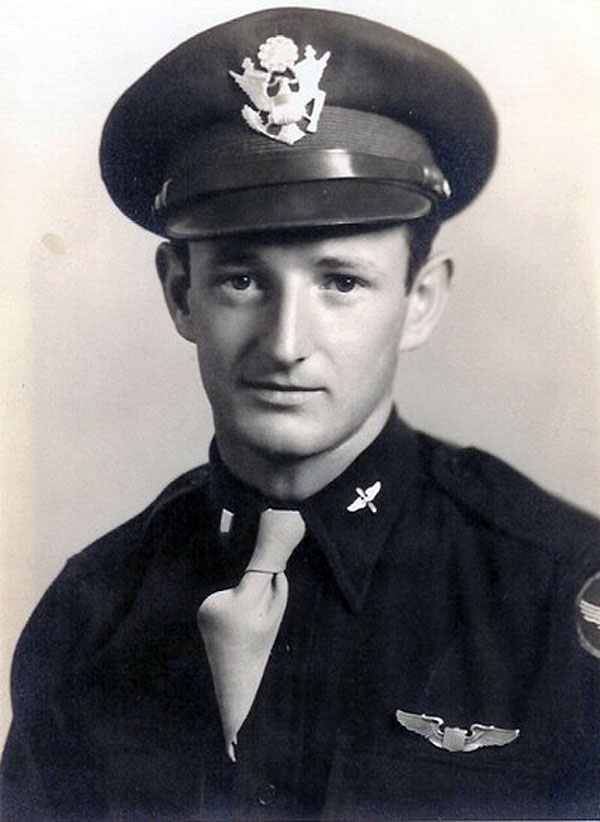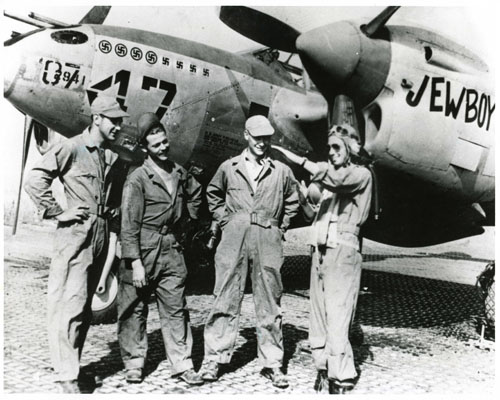
Soldiers from New York: Jewish Soldiers in The New York Times, in World War Two: March 8, 1944 (In the Air…)

My recent posts about Jewish military casualties and participation in World War Two have been centered upon the date of March 8, 1944, based on a news article in The New York Times that reported on the death in combat – on that date – of Second Lieutenant Jesse H. Lack, a navigator who served in the 8th Air Forces’ 458th Bomb Group.  Other posts related to that date present biographical information about Jacob “Jack” Moskowitz of the 452nd Bomb Group, and Milton W. Stern of the 381st Bomb Group, who became prisoners of war of the Germans under dramatically different circumstances, spending the remainder of the war as inadvertent “guests” of their captors in Stalag Luft I.  And, Second Lieutenant Daniel S. Rothenberg and Squadron Leader David A. Goldberg, fighter pilots in the United States Army Air Force, and, Royal Canadian Air Force, respectively. 

Another post pertaining to this date – of much greater brevity – pertains to Jewish soldiers in the ground forces of the Allies  

And so, we now come to this “last” (for now?) post related to Jewish military service on March 8, 1944:  Following the same general format as I’ve previously established, here are biographical profiles (and sometimes even more) about other Jewish aviators in the Allied armed forces who were casualties or otherwise on this day.  Some did not return.  Others, did.   

Their names and very brief stories follow…

For those who lost their lives on this date…
Wednesday, March 8, 1944 / 14 Adar 5704
– .ת.נ.צ.ב.ה. –
…Tehé Nafshó Tzrurá Bitzrór Haḥayím
May his soul be bound up in the bond of everlasting life.

~~~~~~~~~~~~~~~~~~~~~~~~~~~~~~

United States Army Air Force

8th Air Force

~~~~~~~~~~~~~~~~~~~~

~~~~~~~~~~~~~~~~~~~

Sgt. Emanuel Bromberg, 13153157, Riverside, N.J. – Prisoner of War

This is the insignia of the 92nd Bomb Group, via the American Air Museum in Britain (image FRE 5075)…

…and, from Flying Tiger Antiques, this is the emblem of the 327th Bomb Squadron.
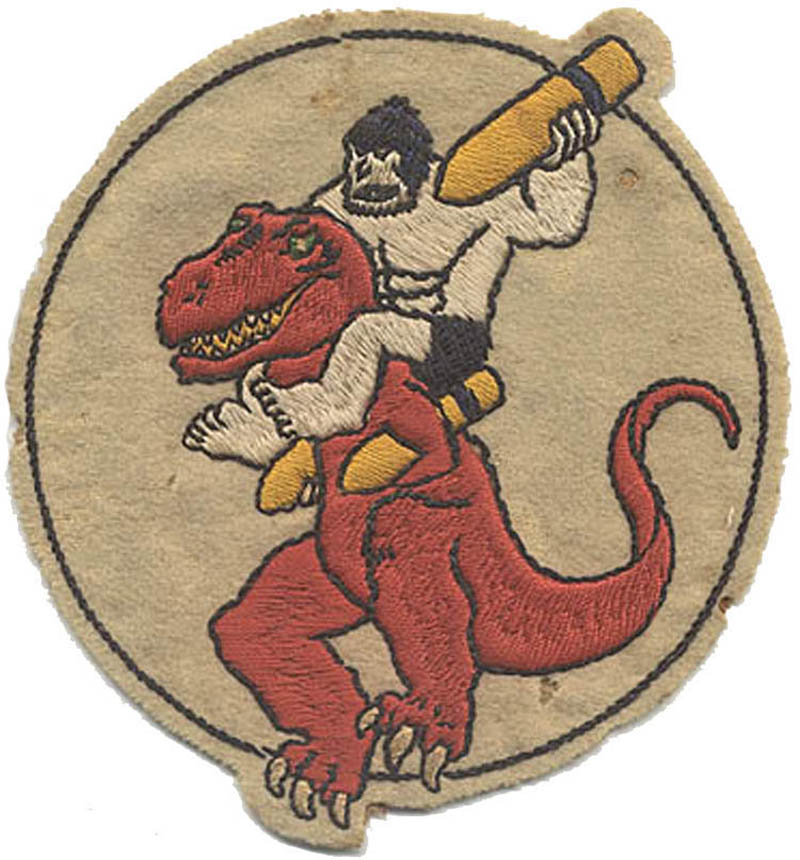
B-17G Flying Fortress 42-31772 of the 92nd Bomb Group’s 407th Bomb Squadron, during the Group’s mission to Berlin, was last reported – albeit not definitely – turning away from the 92nd’s formation and jettisoning its bombs. piloted by 2 Lt. Walter F. Payne, the bomber’s last position doesn’t seem (?) to have been marked upon the map included in Missing Air Crew Report 2995, which documents the plane’s loss.  (At least, going by Fold3’s fuzzily-scanned-microfiche version available via the National Archives.)  However, the MACR’s main data sheet lists the coordinates where the plane was last seen as 53-00 N, 13-40 E … about 45 miles north-northeast of Berlin.  According to the American Air Museum in Britain, the plane crashed near Templin, which is 40 miles (almost) due north of the German capital city.  That’s the only record of the aircraft’s fate, as Luftgaukommando Report KU 1191 only comprises a solitary dog-tag: That of right waist gunner S/Sgt. Thomas M. Farrell, Jr.  Paralleling this, Missing Air Crew Report 2995 simply includes a transcript of the information embossed onto S/Sgt. Farrell’s dog-tag. 

This map shows the location of Templin, relative to Berlin.

As for the B-17s squadron code letter and nickname (if any), these are unknown.

Pilot: Payne, Walter E., 2 Lt., 0-679112 – Piedmont, S.C.
Co-Pilot: Quarter, Gerald L., 2 Lt., 0-687633 – Tuscon, Az.
Navigator: McDowell, William, Jr., 2 Lt., 0-691774 – Niagara Falls, N.Y.
Bombardier: Jenkins, Edward T., 2 Lt., 0-682547 – Summerville, S.C.
Flight Engineer: Rawlings, Vernon Keith, S/Sgt., 38183480 – Wanette, Ok.
Radio Operator: Bannow, Thomas E., S/Sgt., 16154468 – Marinette, Wi.
Gunner (Ball Turret): Hallam, Arthur E., Sgt., 11111800 – Providence, R.I.
Gunner (Right Waist): Farrell, Thomas M., Jr., S/Sgt., 15116362 – Denver, Co.
Gunner (Left Waist): Bromberg, Emanuel, Sgt., 13153157 – Riverside, N.J.
Gunner (Tail): Phipps, Harvey., Jr., Sgt., 35580341 – Indianapolis, In.

Sergeant Emanuel Bromberg, the bomber’s left waist gunner, was born in Riverhead (Long Island), New York, on July 23, 1923.  The son of Joseph and Ada Bromberg, his family resided at 225 Pavillion Ave. in Riverside, New Jersey, though an additional address was 550 Cinnaminson Ave. in Palmyra (also-New-Jersey).  He was imprisoned at Stalag Luft IV, and like all his fellow crewmen, eventually returned to the United States.  

His name appeared in the Philadelphia Inquirer on April 29 (in the Philadelphia Record on that date and May 12) and June 8, 1944, and in a list of liberated POWs published on May 14, 1945.  His name can also be found on page 228 of American Jews in World War II, accompanied by the notation that he received the Purple Heart, albeit with no mention of the Air Medal or Oak Leaf Clusters.  Thus, he’d flown less than five combat missions prior to being shot down.    

He died on July 31, 2007, just after his 84th birthday, and is buried at Arlington National Cemetery: Section 64, Site 5260.  He evidently made the military a career, as his matzeva lists service in Korea and Vietnam, retiring at the rank of CWO4 (Chief Warrant Officer Grade CW-4).  

This image of CWO4 Bromberg’s matzeva is by FindAGrave contributor Ricky Woods.

~~~~~~~~~~~~~~~~~~~

2 Lt. Homer Previn Landau, 0-809644, Pittsburgh, Pa. – Killed in Action

The motto of the 96th Bomb Group, “E Sempre l’Ora”, means “And Always Now”.  This image of the group’s insignia is from the American Air Museum in Britain (“FRE 5092”)…  
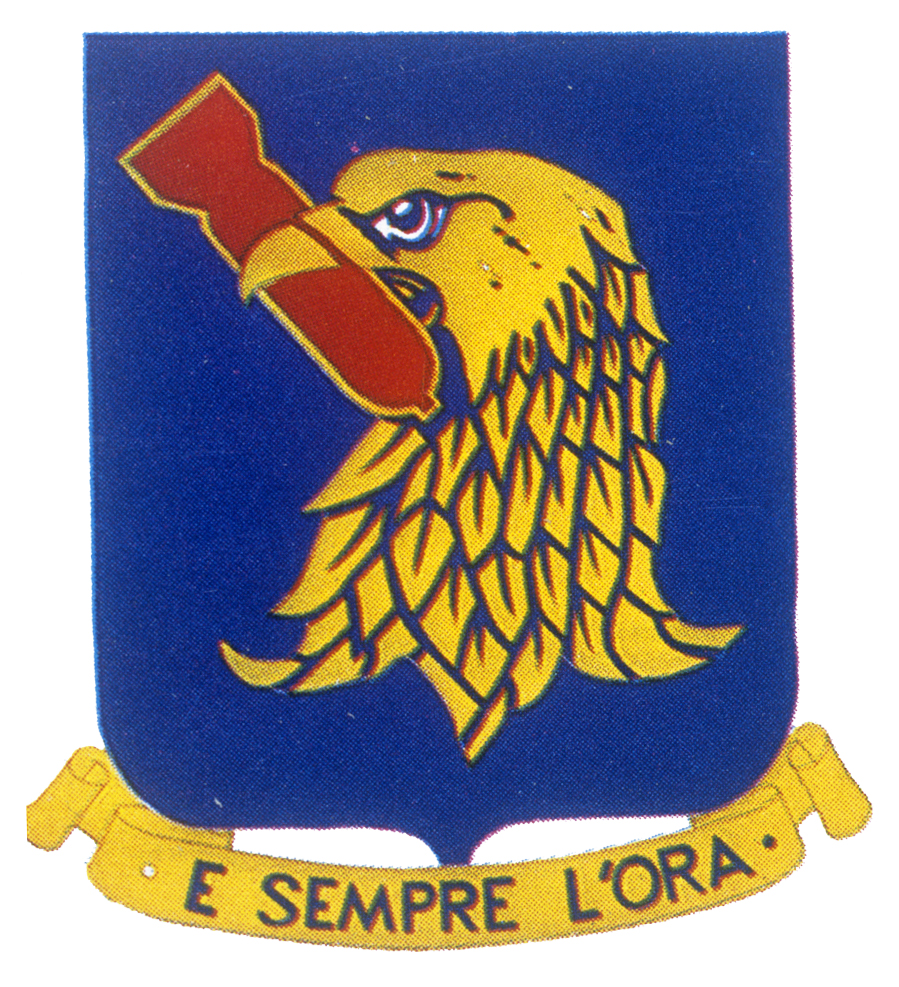
…while this depiction of a winged snake carrying a bomb, the insignia of the 339th Bomb Squadron, is from RedBubble.com.

While information about United States Army Air Force WW II combat casualties might initially be thought of in terms of Missing Air Crew Reports, there were, alas, many circumstances throughout the war for which that set of records was neither bureaucratically “filed” nor informationally relevant.  The death of 2 Lt. Homer Previn Landau (0-809644), a navigator assigned to the 339th Bomb Squadron of the 96th Bomb Group, is one such instance.  His aircraft, B-17G Flying Fortress 42-31657 (otherwise known as “Wildfire II” / “QJ *S“), returned to its base at Snetterton, England, despite being damaged by a 20mm shells fired by attacking German fighters.  Lt. Landau, struck by one of these projectiles, did not survive his injuries.  He is buried at the Cambridge American Cemetery in England, at Plot F Row 6 Grave 94. 

Born in Pittsburgh, Pa., on October 27, 1915, at the age of 29 he was notably older that most of his fellow combat flyers.  He was the son of Saul Albert (4/15/89-11/3/51) and Bessie (Previn) (10/26/92-?) Landau, his family residing at 6558 Bartlett Street in the city of his birth.  A news article about his death was published in the Pittsburgh Press on April 3, 1944, and his name (only his name, and nothing more) can be found in the September 7, 1945, issue of Pittsburgh’s Jewish Criterion, which commemorated Jews from that city who were killed in the (by then) just-concluded-war.  His name also appears on Page 534 of Volume II of American Jews in World War II, which records that he received the Purple Heart, Air Medal, and one Oak Leaf Cluster, thus indicating that he completed between 5 and 10 combat missions.  

~~~~~~~~~~~~~~~~~~~~

T/Sgt. George B. Silverman, 31153017 – Portland, Me.
T/Sgt. Milton Scharf, 12188872 – Brooklyn, N.Y.
Prisoners of War

This image of the insignia of the 100th Bomb Group was uploaded to WW 2 History Fandom by Fargo84.

…while this image of the emblem of the 315st Bomb Squadron was found at EBay Australia.

The entire crew of First Lieutenant Norman Lester Chapman survived the loss of their bomber during the 100th Bomb Group’s mission to Berlin.  There are three brief accounts in Missing Air Crew Report 3032 describing the loss of their plane, B-17G 42-40056, otherwise and perhaps better known as “Holy Terror III” (or was it “Katie’s Boys“?).  Two follow:

First…  “Lt. Chapman feathered one engine, then unfeathered it near Dumer Lake at about 1240 hours.  He continued the formation, although straggling, to the I.P. where three enemy fighters attacked him.  Our escort went down and picked him up.  His A/C was under control when last seen.”

Second…  “Lt. Chapman, flying lead, 2nd element, high squadron, lagged at 1357 hours near 51-50 N 10-54 E.  No. 1 engine was feathered and then unfeathered.”

Like many (definitely not all) MACRs for USAAF aircraft lost in the European Theater of War, MACR 3032 includes a translation from the relevant Luftgaukommando Report – in this case, KU 1153 – which pinpoints the location where the B-17 crashed: 9.5 kilometers east-south-east of Jueterbog in the Sernower heath, or, 1 kilometer “south of the field path Froehden-Schlenzer”.  Time: 1345 hours.  There wasn’t much left of the B-17; it’s described as 95% burnt out, albeit this Luftgaukommando Report’s description of the bomber’s wreckage is extremely detailed, comprising two pages of technical information. 

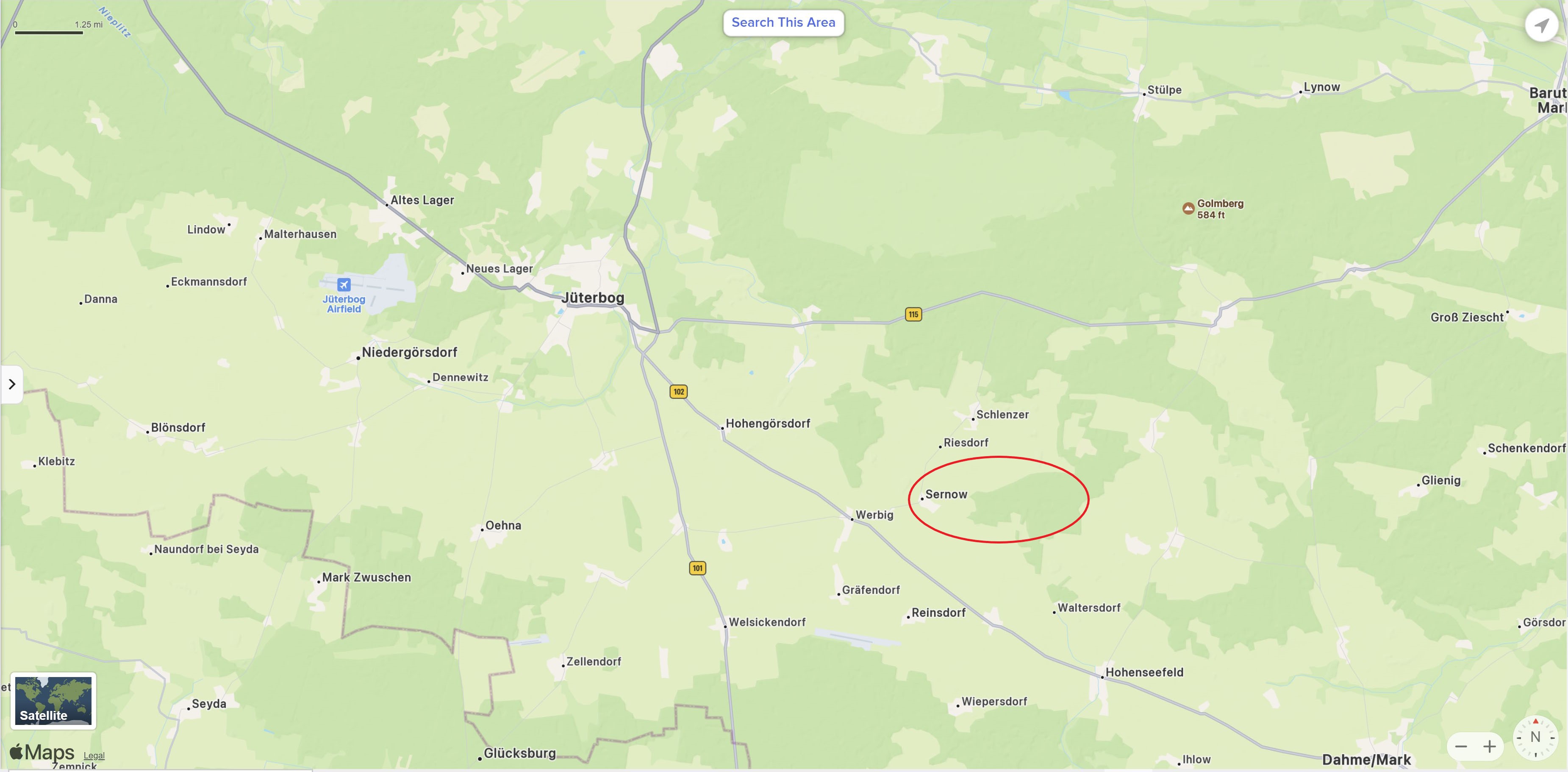
This map shows the location of Sernow (thus, the “Sernower Heath” would be nearby?) relative to Juterbog.  As to the “field path Froehden-Schlenzer””, I have no idea.
Given the final condition of the aircraft yet the fortunate survival of its entire crew, all the men presumably parachuted from the plane.  The crew was comprised of:

Pilot: Chapman, Norman Lester, 1 Lt., 0-746292 – Hillsborough (Hillsborough), N.H. (11/11/18-12/18/98)
Co-Pilot: Ellis, Rex Monroe, 2 Lt., 0-752187 – Ks. (2/2/20-1/16/03)
Navigator: Lindbom, Glenn G., 2 Lt., 0-809659 – Ishpeming, Mi.
Bombardier: Clark, Wilson D., 2 Lt., 0-750274 – Seattle, Wa.
Flight Engineer: Silverman, George B., T/Sgt., 31153017 – Portland, Me.
Radio Operator: Scharf, Milton, T/Sgt., 12188872 – Brooklyn, N.Y.
Gunner (Ball Turret): Hutchings, Durward E., S/Sgt., 12171577 – Hudson, N.Y.
Gunner (Right Waist): Yzenas, Frank A., S/Sgt., 12161945 – Dickson City, Pa.
Gunner (Left Waist): Hill, Leon Earnest, S/Sgt., 38273822 – Ok. (11/25/09-11/1/93)
Gunner (Tail): Dobbs, George E., S/Sgt., 39406131 – Sacramento, Ca.

Like every man in the crew, Technical Sergeant’s Milton Scharf and George Barnett Silverman survived the war as POWs; the former at Stalag Luft IV (Gross-Tychow), and the latter at Stalag Luft III and subsequently Stalag VIIA (Moosburg).

T/Sgt. Milton Scharf, the plane’s radio operator, born in Brooklyn on December 29, 1922, was the son of Nathan and Evelyn Scharf, his family residing at 8909 Avenue B in that borough.  His name appears on page 428 of American Jews in World War Two, which records that he received the Air Medal and two Oak Leaf Clusters.  In the news media (in the fleeting era when the United States actually had what passed for an actual news media), his name appeared in War Department Casualty Lists published on 4/29/44, 5/19/44, and 6/6/45, the last being a list of liberated POWs.  He died on November 21, 2004, and is buried in Pflugerville, Texas.

As evident in many of my prior posts, the names of many American Jewish WW II servicemen, whether decorated or casualties, never appeared in the 1947 compilation American Jews in World War II.  George Barnett Silverman (31153017), the bomber’s flight engineer, is one such example; his name is absent from that volume  Born in South Portland, Maine, on September 9, 1921, he was the son of William S. (5/30/76-12/14/62) and Harriet (Israelon) (1898-9/29/40) Silverman, his family residing at 335 Cumberland Street in Portland.  He was the husband of Marge L. (Kelley) Silverman (9/4/22-3/3/06), whose wartime address was 95 Smith Street in Portland.  Mr. Silverman passed away on July 2, 1991, and is buried alongside his wife at Evergreen Cemetery in Portland.  He was (at least) awarded the Air Medal, as indicated by the following article from the Portland Press-Herald of February 15, 1944.

~~~~~~~~~~~~~~~~~~~~

2 Lt. John Monroe Chapman, Jr., 2 Lt., 0-678165, Birmingham, Al. – Prisoner of War

We’ve just encountered First Lieutenant Norman Lester Chapman.  Another “Chapman” who became a prisoner of war on March 8, 1944, was Second Lieutenant John M. Chapman, Jr. (0-678165), a co-pilot in the 303rd Bomb Group’s 360th Bomb Squadron.

The emblem of the 303rd Bomb Group’s 360th Bomb Squadron.  It’s image UPL 14815 from the American Air Museum in Britain.

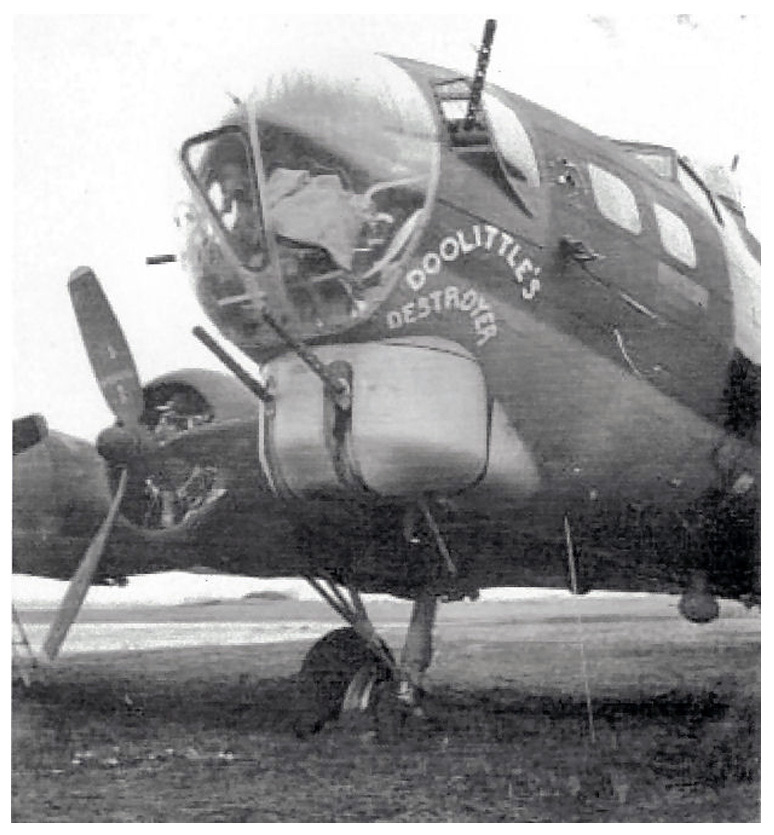
During the 303rd Bomb Group’s mission to Berlin, B-17G 42-31471, “DOOLITTLE’S DESTROYER“, was – according to Missing Air Crew Report 2908 – last seen “apparently under control” but descending very rapidly in the vicinity of Brandenburg, Germany.  Luftgaukommando Report KU 1156 gives four locations for the plane’s crash: 1) “…north of Althaldonsleben, 20 kilometers northwest of Magdeburg”, 2) “Near the ships elevator yard at Rothensee”, 3) “2 kilometers northeast of Magdeburg”, and 4) “2 kilometers southeast of Neu Haldensleben”.

This map shows the general location of Rothensee, a district of Magdeburg.  This is also the crash location of B-17G 42-97525 “Invictus” of the 452nd Bomb Group (see below).

This image of DOOLITTLE’S DESTROYER (“stuck in the mud”) is from the 303rd Bomb Group (c/o the Richard A. Lund Family).
Identical to Lt. Chapman’s crew, the ten men aboard 42-31471 also safely parachuted and survived as POWs.  They were:   

Pilot: McGrath, Leo B., 2 Lt., 0-738444 – Oxnard, Ca.
Co-Pilot: Chapman, John Monroe, Jr., 2 Lt., 0-678165 – Birmingham, Al.
Navigator: Volk, Anthony D., 2 Lt., 0-676183 – Philadelphia, Pa. (5/13/20-2/16/19)
Bombardier: Klasnick, Joseph S., S/Sgt., 13040917 – Pittsburgh, Pa. (4/14/16-11/1/78)
Flight Engineer: Green, Jack E., S/Sgt., 18129763 – Muskogee, Ok.
Radio Operator: Bonn, Charles J., S/Sgt., 12092994 – Union City, N.J. (2/7/23-4/19/97)
Gunner (Ball Turret): Mayfield, James E., S/Sgt., 34397454 – Elrod, Al.
Gunner (Right Waist): Hosso, Harry V., S/Sgt., 15323137 – Martins Ferry, Oh. (1/7/22-3/28/10)
Gunner (Left Waist): Tharp, Wallace L., S/Sgt., 6574982 – Colorado Springs, Ca. (8/21/21/-1/21/15)
Gunner (Tail): Laible, Gilbert N., S/Sgt., 19146806 – Fallbrook, Ca.

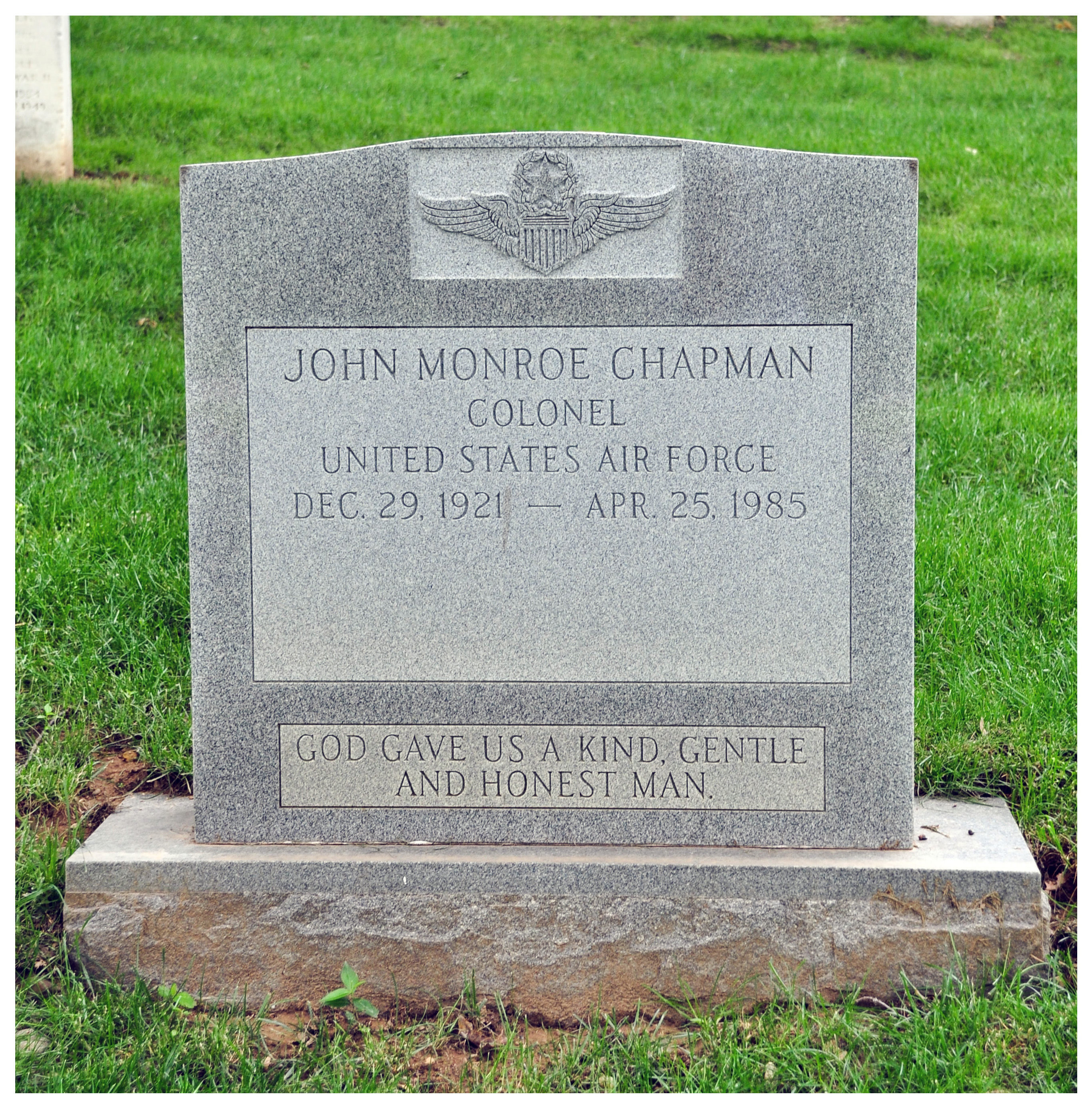
As for Lieutenant Chapman?  He was born in Birmingham, Alabama, on December 29, 1921, the son of John Monroe (Sr.) and Allene R. Chapman, who resided at 3809 12th Court South in that city; his siblings were Donald and Ruth.  He was interned in North Compound 1 of Stalag Luft I.  Though he was identified by the National Jewish Welfare Board as being a Jew – in the organization’s quest to chronicle Jewish military service, and, provide religious and spiritual fellowship as well as practical aid to Jewish servicemen in all theaters of war – and was recorded as such in the NJWB’s files (which denote the award of the Air Medal and two Oak Leaf Clusters), his name never appeared in American Jews in World War II.  He died at the age of 63 on April 25, 1985, and like CWO4 Bromberg, also made the military a career: He is buried in Arlington National Cemetery (Section 8, Site 161-LH), his matzeva listing his rank as Colonel and bearing the symbol of a Command Pilot Badge.

This image of the matzeva of Colonel John M. Chapmani, Jr., is by FindAGrave contributor John Evans.
~~~~~~~~~~~~~~~~~~~~

2 Lt. Alfred Hano, 0-679504, New York, N.Y. – Killed in Action
Sgt. Louis Markson, 32738252, Jeffersonville, N.Y. – Prisoner of War

This is the emblem of the 388th Bomb Group – “Fortress for Freedom” – from US Wars Patches….
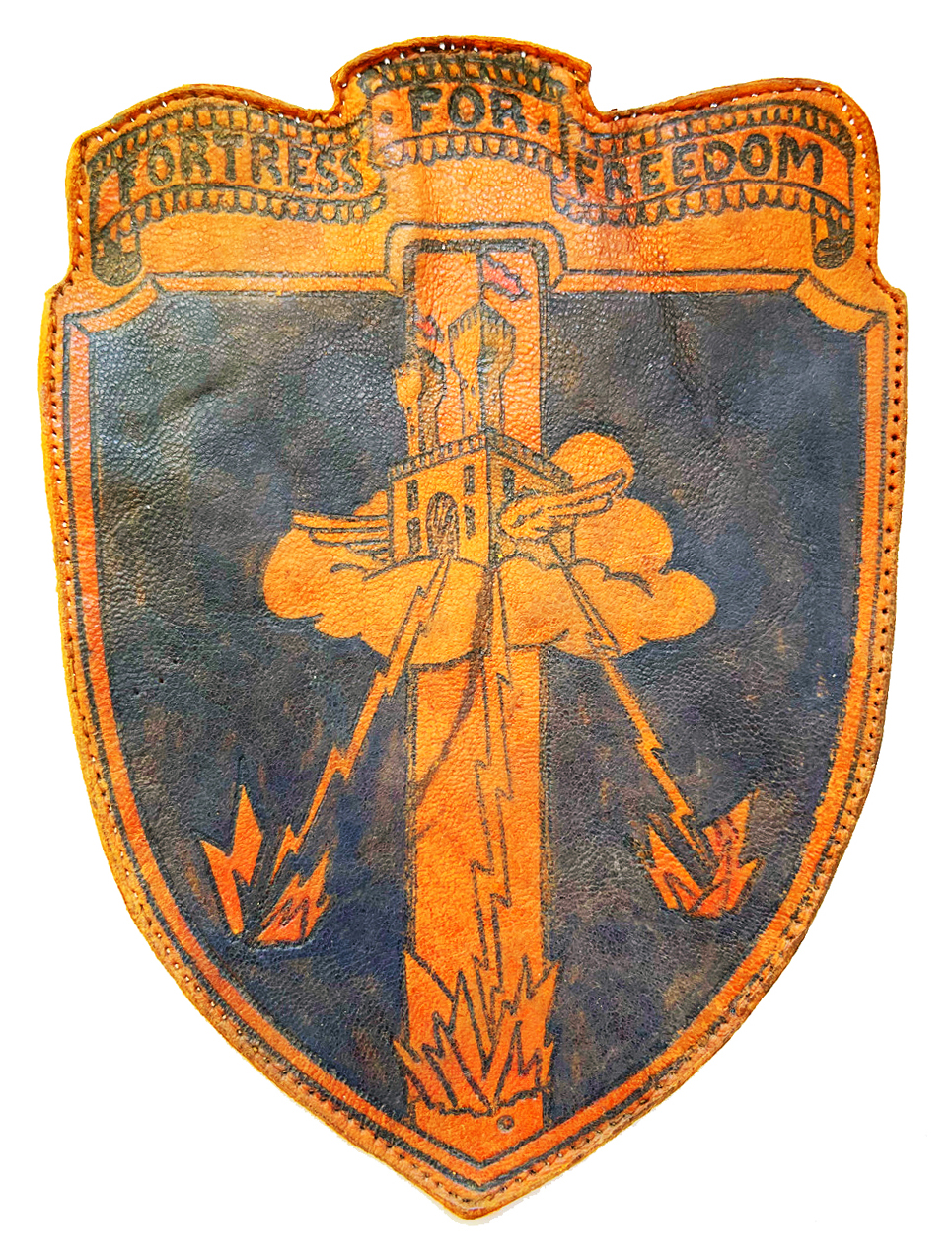
…and this is the emblem of the 560th Bomb Squadron.  

The fate of the ten airmen aboard B-17G 42-37819 (alias “Jimmy Lee” / “P“) of the 388th Bomb Group’s 560th Bomb Squadron was, alas, unlike that of the Chapman and McGrath crews:  Only six members of the crew survived.  Missing Air Crew Report 3087 includes only one terse observation of the bomber’s loss:  “A/C #819 flying second element lead of the low squadron dove out of formation as a result of e/a attacks.  4 chutes in the area at the time could not be definitely identified as having come from this A/C.”  However, the master roster of Luftgaukommando Reports (this one being KU 1182) lists the plane’s crash location as Heppenhorst-Mieste, near Gardelegen, while the single translated sheet from KU 1182 in the MACR lists the location as “Mieste (Miester forest), 25 kilometers northwest of airfield Helmstedt”.

These two maps show the location of Mieste relative to Gardelegen.

Here’s a closer view…

Of course, more important than the plane was the crew within it, whose names are listed below.  As can be seen, six of the ten – all NCOs – survived.  The crew comprised:

Pilot: Tobias, Leonard Travis “Toby”, 1 Lt., 0-799506 – Montgomery, Al. – (10/3/21) KIA
Co-Pilot: Yurkutat, Walter Edward, 2 Lt., 0-747941 – Newark, N.J. – (3/27/20) KIA
Navigator: Gotha, Herbert Joseph, 2 Lt., 0-808037 – Paxton, Ma. – (7/27/20) KIA
Bombardier: Hano, Alfred, 2 Lt., 0-679504 – New York, N.Y. – KIA
Flight Engineer: Eldridge, Raymond W., T/Sgt., 32490041 – Hoosic Falls (?), N.Y.
Radio Operator: McIntyre, Neal W., Jr., T/Sgt., 14140622 – Fitzgerald, Ga.
Gunner (Ball Turret): Albers, Frederick R., S/Sgt., 32507698 – N.Y.
Gunner (Right Waist): Pikor, Joseph, Jr., S/Sgt., 33301162 – Pa. (1921-12/10/60)
Gunner (Left Waist): Markson, Louis, Sgt., 32738252 – Jeffersonville, N.Y. (4/20/17-11/12/04)
Gunner (Tail): Filipowski, John J., S/Sgt., 33292846 – Braddock, Pa. (5/29/21-8/14/04)

Though no single Casualty Questionnaire returned to the Army by the any of the six survivors recounts the entirety of the bomber’s loss in comprehensive, complete, essay-like detail, the brief records that do exist reveal that the bomber broke in half at the radio room while under attack by German fighters – structural damage? – explosion? – both? – with the men in the rear (even the ball turret gunner) parachuting from the tail section, and the flight engineer from the front.  Lieutenants Tobias and Yurkutat were – alas – trapped in their seats … and were seen in the wreckage of the nose section afterwards.  What happened to Lieutenants Hano and Gotha will by now, in 2024, doubtless never really be known.  Hano definitely left the plane – his body was seen near the wreckage by survivors – but how he died is unknown.  It was suggested that his parachute failed, or he was killed after landing under unknown circumstances, as Sgt. McIntrye heard a shot nearby upon reached the ground.  As reported in the MACR, there is no real information about what happened to Lieutenant Gotha.

Or, as described by Sergeant Markson (whose Casualty Questionnaire appears below this quote):

The plane broke or blew up at the radio room.  I was thrown out of plane. 
The reason for my answer of No Knowledge [for Casualty Questionnaires] is the I had flown with the crew on my first mission.  After I was taken prisoner and sent to interrogation camp and then to permanent camp in Germany I met up with

Fred Albers (EM)
Joseph Pikor (EM)
John Filopowski [sic] (EM)
“ McIntyre (EM)

What happened to the remainder of the crew is unknown to me.  The above mentioned men could probably give more information than I for they had been together longer.

xxxxx

Born in Jeffersonville, New York, on May 20, 1917, Sergeant Louis Markson (Hebrew name Eliezer ben Yisrael) was the son of Irving (5/5/92-?) and Lillian (Davis) (9/10/85-11/26/67) Markson (originally “Markowsky”), and the brother of Philip, his family residing in that upstate village which is northwest of Monticello.   His name appeared in the Sullivan County Record on March 30 and April 27 of 1944, and, the Hancock Herald on April 6 and May 4 of that same year, but, not in American Jews in World War II.  Like Sgt. Bromberg, he spent the remainder of the war at Stalag Luft IV.  He passed away at the age of 87 on November 12, 2004, and is buried at Temple Sinai Cemetery in Circleville, N.Y., a hamlet southeast of Monticello.  

These images of his matzeva, and, military grave marker, are by FindAGrave contributor Suzanne.

Lieutenant Hano, born in Manhattan on October 8, 1918, was the son of Alfred Barnard Hano, Sr. (6/30/90-5/15/67) and Clara (Millhauser) Hano (9/8/90-12/9/53), who resided at 124 East 24th St., in Manhattan.  He was married; his wife was Beth Marguerite (Singer) Hano (12/24/24-4/16/94) the couple residing at 170 West 74th St. in New York City.  He’s buried at Temple Israel Cemetery (Mount Hope Cemetery), Hastings-on-Hudson, N.Y., his biography at FindAGrave having much (albeit not exactly) the same information as appearing in this blog post.  His name appeared in a Casualty List published in The New York Times on April 23, 1944, and can also be found on page 341 of American Jews in World War II, which lists him as having received the Air Medal with three Oak Leaf Clusters, and (of course) the Purple Heart.

Pilot: Tobias, Leonard Travis “Toby”, 1 Lt., 0-799506 – Montgomery, Al. – (10/3/21) KIA
Co-Pilot: Yurkutat, Walter Edward, 2 Lt., 0-747941 – Newark, N.J. – (3/27/20) KIA
Navigator: Gotha, Herbert Joseph, 2 Lt., 0-808037 – Paxton, Ma. – (7/27/20) KIA
Bombardier: Hano, Alfred, 2 Lt., 0-679504 – New York, N.Y. – KIA
Flight Engineer: Eldridge, Raymond W., T/Sgt., 32490041 – Hoosic Falls (?), N.Y.
Radio Operator: McIntyre, Neal W., Jr., T/Sgt., 14140622 – Fitzgerald, Ga.
Gunner (Ball Turret): Albers, Frederick R., S/Sgt., 32507698 – N.Y.
Gunner (Right Waist): Pikor, Joseph, Jr., S/Sgt., 33301162 – Pa. (1921-12/10/60)
Gunner (Left Waist): Markson, Louis, Sgt., 32738252 – Jeffersonville, N.Y. (4/20/17-11/12/04)
Gunner (Tail): Filipowski, John J., S/Sgt., 33292846 – Braddock, Pa. (5/29/21-8/14/04)

~~~~~~~~~~~~~~~~~~~~

2 Lt. Irving Levin, 0-809654, Brooklyn, N.Y. – Prisoner of War

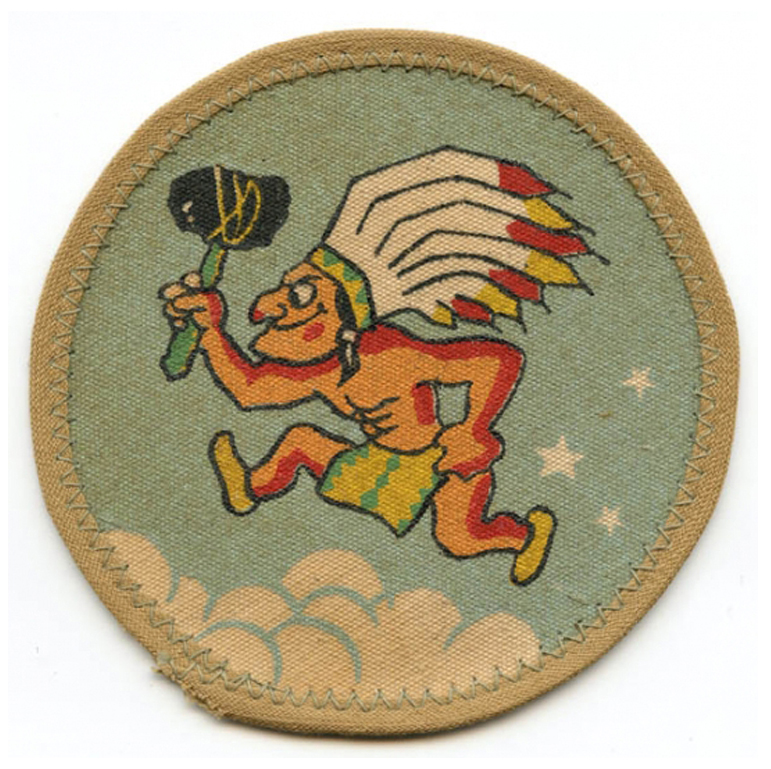
“Labor Ad Futurum” – “Work for the Future”: The emblem of the 452nd Bomb Group, via … the American Air Museum in Britain

…and the emblem of the 730th Bomb Squadron, also from the AAMiB

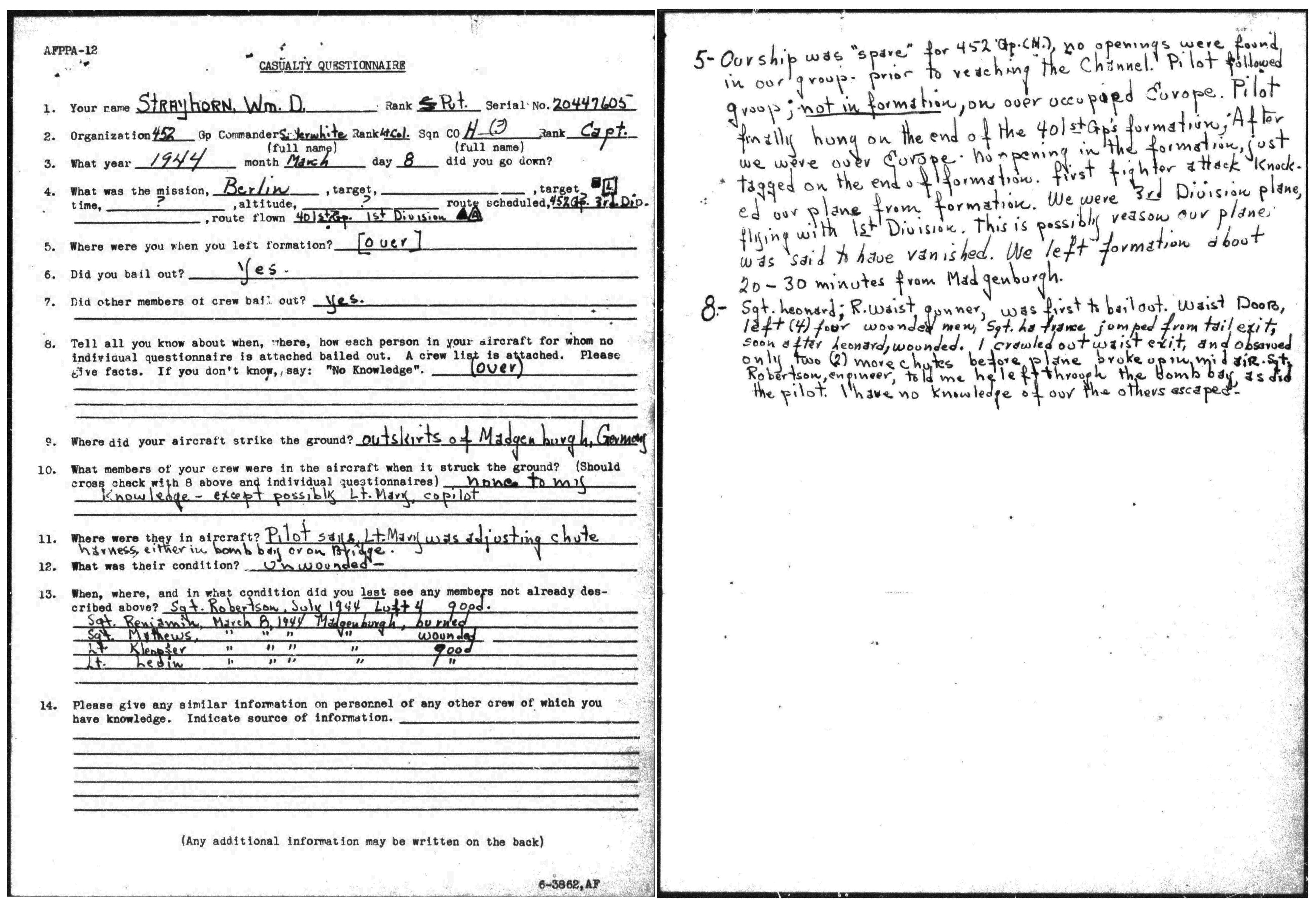
Like the other Flying Fortress losses described on this page, the fate of aircraft 42-97525 “Invictus” of the 452nd Bomb Group’s 730th Bomb Squadron – piloted by 1 Lt. Frank S. Stephens – also entailed uncertainty and ambiguity; at least, as recorded in Missing Air Crew Report 3195.  This is limited to the anonymous statement: “No information concerning loss of this aircraft has been reported.”  The reason for the apparent mystery behind the bomber’s loss is revealed in the postwar Casualty Questionnaire filled out by (former) left waist gunner, William D. Strayhorn:

Our ship was “spare” for 452 Gp. (H.) no openings were found in our group prior to reaching the Channel.  Pilot followed group; not in formation, on over occupied Europe.  Pilot finally hung on the end of the 401st Gp’s formation; After we were over Europe – no opening in the formation, just tagged on the end of formation.  First fighter attack knocked our plane from formation.  We were 3rd Division plane, flying with 1st Division.  This is possible reason our plane, was said to have vanished.  We left formation about 20 – 30 minutes from Madgenburgh.  [sic]

Sgt. Leonard, R. Waist gunner, was first to bail out.  Waist Door left (4) four wounded men, Sgt. LaFrance jumped from tail exit, only two (2) more chutes before plane broke up in mid air.  Sgt. Robertson, engineer, told me he left through the bomb bay, as did the pilot.  I have no knowledge of ou [sic] the others escaped.
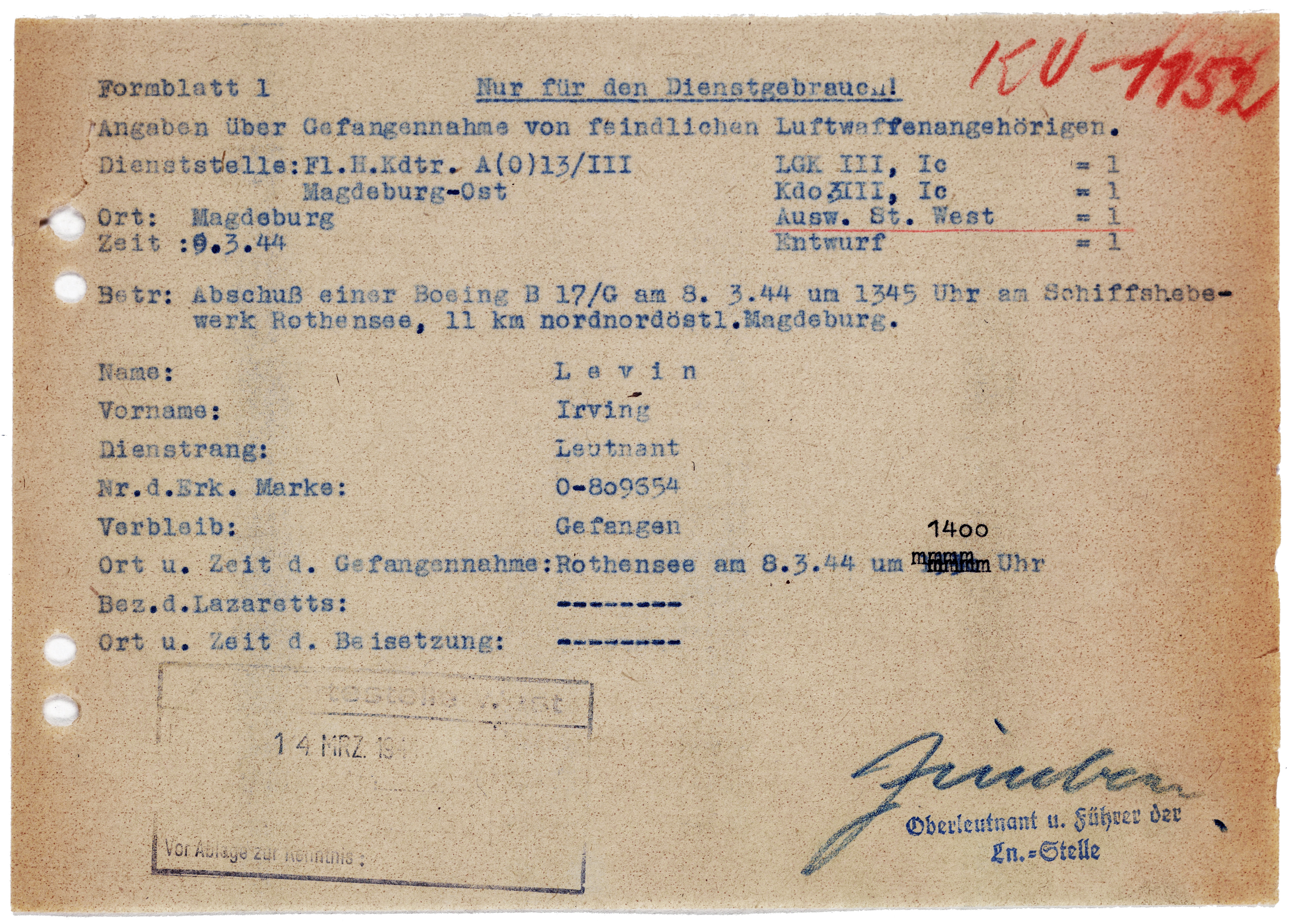
According to English-language translations from Luftgaukommando Report KU 1152 within this MACR, Invictus crashed “Near the ships elevator yard at Rothensee, 11 km north-northeast / 11 km northeast of Magdeburg.” 

This map shows the general location of Rothensee, which is also the crash location of B-17G 42-31471 “DOOLITTLE’S DESTROYER” of the 303rd Bomb Group (see above).

The plane’s crew comprised:

Pilot: Stephens, Frank S., 1 Lt., 0-746455 – Tulsa, Ok.
Co-Pilot: Mary, William Henry “Bill”, Jr., 2 Lt., 0-751749 – Knoxville, Tn. – (Born 6/21/20) KIA
Navigator: Levin, Irving, 2 Lt., 0-809654 – Brooklyn, N.Y.
Bombardier: Kloepfer, Leon Ralph, 2 Lt., 0-747023 – Los Angeles, Ca.
Flight Engineer: Robertson, Benjamin W., S/Sgt., 13066222 – Plymouth, N.C. (1/21/23-12/16/97)
Radio Operator: Benjamin, Floyd Thomas, S/Sgt., 19170290 – Portland, Or. (10/13/24-2/7/02)
Gunner (Ball Turret): Matthews, Earl F., S/Sgt., 15066165 – Ky.
Gunner (Right Waist): Leonard, James F., Sgt., 3334282 – Philadelphia, Pa.
Gunner (Left Waist): Strayhorn, William David, Pvt., 20447605 – Wilmington, N.C. (3/13/21-1/7/94)
Gunner (Tail): LaFrance, Joseph F., Sgt., 11007294 – New Bedford, Ma. (1/17/21-3/22/08)

Though his name appears on a “Report of Capture of members of enemy air forces” sheet within the Luftgaukommando Report, Casualty Questionnaires in the MACR (only a few crewmen completed and returned these documents) offer no definitive information about the sole casualty among the crew, co-pilot 2 Lt. William H. Mary.  The general impression seems to have been that he was believed to be leaving the aircraft at the same time as the pilot, and may have been wounded by still-attacking fighters and unable to leave the aircraft, which – as described by William Strayhorn – broke apart in mid-air, with the bombs still aboard.   In any event, the search for Lt. Mary was recorded as SD Case 5763.Lorraine  Postwar, he was buried at the American Cemetery and Memorial in Lorraine, France, while a commemorative stone in his honor was emplaced between the tombstones of his parents at Knoxville, Tn.

The plane’s navigator, 2 Lt. Irving Levin, was born – probably in New York – on March 10, 1924, to Ben (4/25/92-3/31/44) and Mamie (Seplowitz) (1/99-11/15/81) Levin; he had a sister, Leah (12/19/29-12/29/13).  The family possibly resided at 2373 85th Street, in Brooklyn.  Contemporary records also list a relative or friend as a Mr. Jack Betts, of 2019 80th St., Brooklyn, N.Y.

Lt. Levin was imprisoned at Stalag Luft III and Stalag VIIA.  His name can be found on page 376 of American Jews in World War II, which records that he received the Bronze Star and Purple Heart, thus indicating that he completed less than five combat missions, and, was wounded.  His name also appeared in a Casualty List (of liberated POWs) published on June 10, 1945.

Here’s the document (the only such document) in Luftgaukommando Report KU 1152 pertaining to his capture: an “Angaben über Gefangennahme von feindlichen Luftwaffenangehörigen.  (Nur für den Dienstgebrauch!)” form.  That is, “Information on capture of enemy air force personnel.” (For official use only!)”
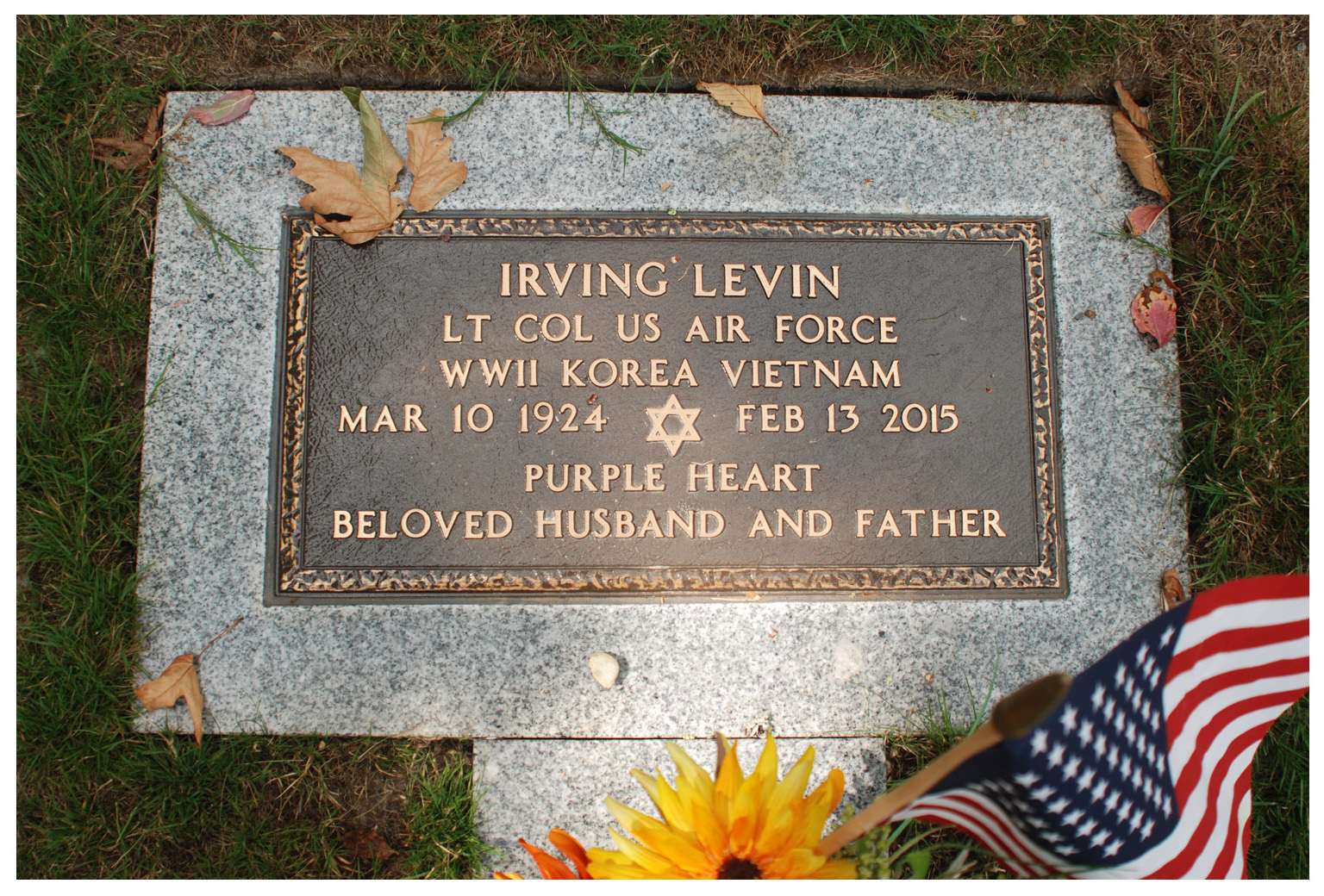
Continuing a pattern unknown to me when I started work on this post, it was discovered that Lt. Levin – like Sgt. Bromberg and Lt. Chapman – despite the impact of having been shot down and made a prisoner of war – nonetheless made military service a postwar career, which is described at his FindAGrave biographical profile.  He passed away on February 13, 2015, and is buried at Arlington National Cemetery. 

This portrait, provided to FindAGrave by Mark Schreiner, shows him postwar…

…while this image (via Mary D) shows his matzeva at Hillside Cemetery, Issaquah, Washington.
~~~~~~~~~~~~~~~~~~~~

Sgt. Manfred “Manny” Stein, 13122870, Glendale, N.Y. – Wounded in Action

Though the Group emblem of the 466th Bomb Group seems to be unavailable via the Internet, the 785th Squadron’s insignia is, via the American Air Museum in Britain.  Here it is: 

Somewhat paralleling the profile of Lt. Landau (at the “top” of this post) – well, in terms of “information”, there’s no Missing Air Crew Report pertaining to Sergeant Manfred “Manny” Stein (13122870), precisely because – having been wounded – he and his crew safely returned to the 466th Bomb Group’s base at Attlebridge, England.  (There might be information about him in historical records of the 785th Bomb Squadron, but I haven’t checked.  He was identified as having been a member of the 785th via the American Air Museum in Britain.)

As described in a news article in the Long Island Star Journal of May 23, 1944 (he was earlier mentioned in that newspaper on October 7, 1943), the sergeant – a waist gunner – was severely wounded when he was struck in his left ankle by shrapnel from a cannon shell.  His name also appeared (without elaboration) in Casualty Lists published in the Ridgewood Times on 5/26/44, and Long Island Daily Press on 5/23/44.  Here’s the latter (via FultonHistory.com), followed by a transcript:

Stein, Aerial Gunner, Hit by Nazi Bullet

Sergeant Manfred Stein, 22-year-old aerial gunner, of Glendale, was wounded in the ankle when a German plane fired at his Liberator.

“One plane that we didn’t see started to fire at us,” he wrote to his mother, Mrs. Bertha Stein of 65-02 Catalpha Avenue.  “A shell hit the plane and exploded.  Several pieces of shrapnel entered my ankle.”

Unaware that his family had been notified of his injuries received on March 8 over Germany, the winner of the Air Medal and Purple Heart had not mentioned them in his letters home.

Sergeant Stein was born in the Bronx and attended Newtown High School and National Youth Administration Aviation Mechanics School in Maine.  Before entering the service in September, 1942, he was employed as an aviation mechanic in Middletown, Pa.

After his training in Columbus, Ohio, and New Mexico, he went overseas in February of this year.  His sisters, Mrs. Solomon Bromberg and Beatrice Stein, live with his mother in Glendale.

Born in the Bronx on November 19, 1921, he was the son of William (4/17/82-5/13/33) and Bertha Jenny (Loeb) (7/20/84-7/13/77) Stein.   His name appears on page 454 of American Jews in World War II, which records him as having been awarded the Air Medal and Purple Heart.  You can learn even more about his life at Legacy.com.    

He passed away on January 6, 2014, and is buried at Middletown Cemetery, Middletown, Pennsylvania.    

~~~~~~~~~~~~~~~~~~~~~~~~~~~~~~

9th Air Force

~~~~~~~~~~~~~~~~~~~~

Sgt. Harry Bear, 33104592, Philadelphia, Pa. – Killed Non-Battle

I can’t find an example of the insignia of the 387th Bomb Group, but…

…here’s the insignia of the 556th Bomb Squadron, from Flying Tiger Antiques.
Some years back, in March of 2009 (seems “just yesterday” … a world nearly unrecognizable from the hindsight of 2024) I was browsing through military and aviation magazines on display at a Borders Books and Music.  (Remember Borders, a p h y s i c a l book and music store?)  By chance; by luck, I came across the most recent issue of Key.Aero’s FlyPast magazine, the cover of which displayed an image of a restored (early version?) B-26 Marauder in flight.  “A B-26 on the cover.  Must be something about the B-26 inside.”  And so there was.  Within, on pages 40 through 45, appeared the article “‘Double Trouble’s’ Destiny” by Alan F. Crouchman.  I flipped through the pages, illustrated with a variety photos of 387th Bomb Group B-26s, air crews, and personnel. some undoubtedly from private collections.  A particular, full-size-page image stood out: a picture credited to the Army Air Force, of a Sergeant Harry Bear kissing a rabbit’s foot.  Then, I remembered:  I knew that name, H a r r y  B e a r.  I came across it before: while reviewing wartime issues of the Philadelphia Inquirer, in 35mm microfilm…

First, an article about Harry Bear was published on April 20, 1944, as the “lead” article in a Casualty List released that day…

“Page 1”

The article…

Death Cheats Flier of Furlough

With only one more combat mission to go before his furlough, Sergeant Harry Bear, engineer-gunner on the Marauder “Doghouse II,” took off from a Ninth Air Force Medium Bomber Station March 8 on a sortie over enemy territory – and failed to come back.

In a War Department telegram received by his mother, Mrs. Rose Bear, 5352 Jackson St., Sergeant Bear was reported to have been killed in action over Europe.

The 24-year-old airman was holder of the Distinguished Flying Cross and the Air Medal with five Oak Leaf Clusters “for conspicuous gallantry.”

A graduate of Overbrook High School, he worked at the Philadelphia Navy Yard prior to his enlistment.
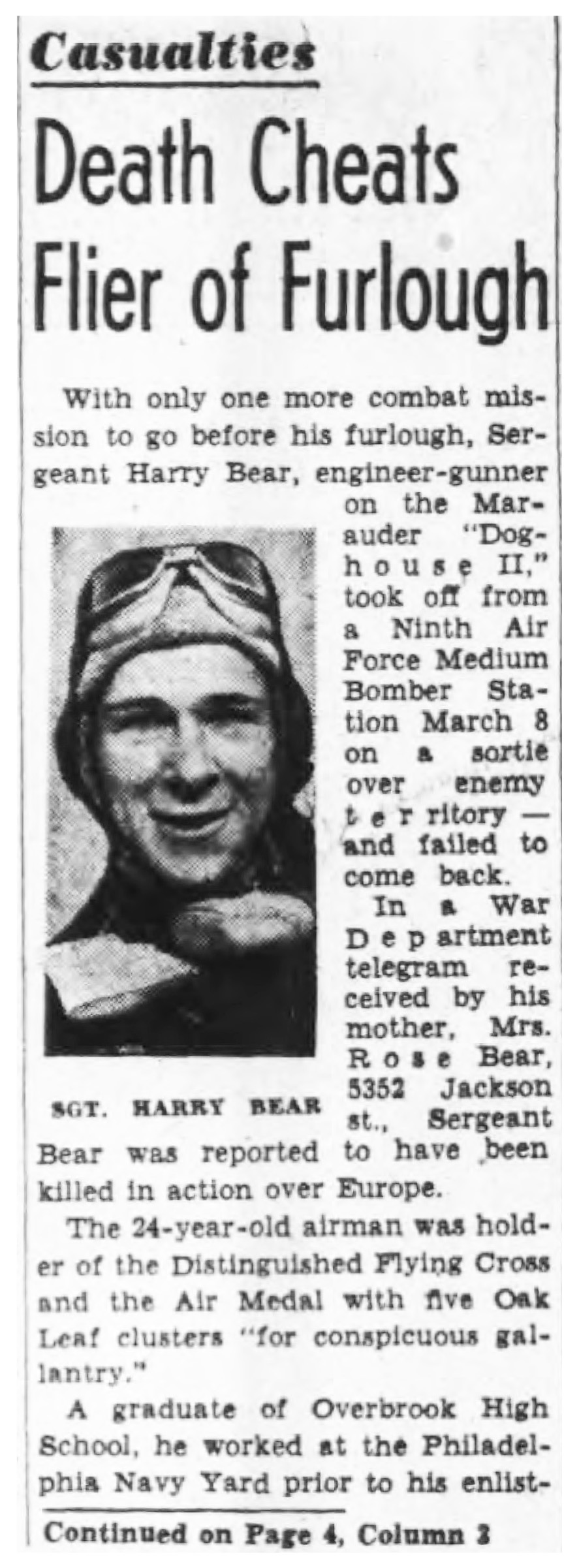
…his portrait, probably sent from England to the Baer family, or snipped from a crew photo…
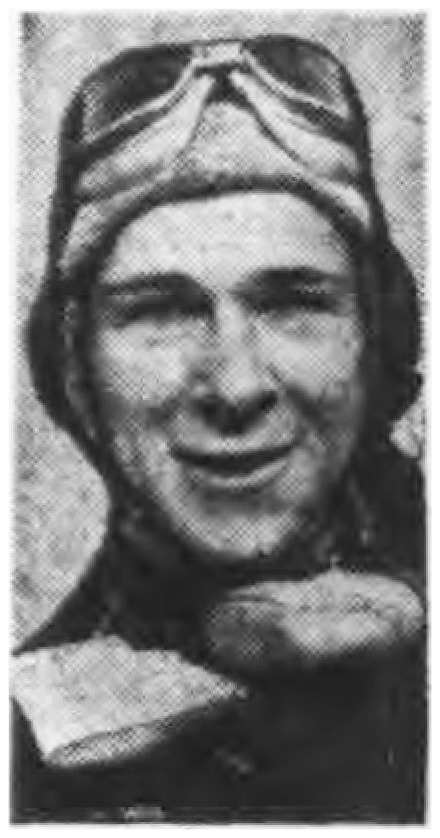
…and, the August 1, 1948 issue of the Inquirer, in a very brief funeral announcement.  
Born in Philadelphia on May 23, 1920, Sergeant Harry Bear (33104592) was the son of Frank Harry (7/15/89-12/22/84) and Rose (Ludfinski) (2/12/98-1/17/71) Bear, and the brother of Edith (1925-12/24/10) and Sally (1923-10/03).  The family resided at 5352 (5253?) Jackson Street or (?) 1210 South 49th Street in that city.  Along with the two news items above, his name appeared in a brief obituary published in the Jewish Exponent on August 6, 1948.  However, unlike some of the airmen mentioned in this post, his name did appear in American Jews in World War II: it’s on page 510, with mention of his having been awarded the Distinguished Flying Cross, Air Medal, five Oak Leaf Clusters, and Purple Heart. 

When I checked the name index to the Missing Air Crew Reports, I found that the index card for Sgt. Bear bore no MACR number.  Thus, no MACR covering the incident in which he was killed, was ever filed.  However, unlike the vast majority of MACR name index cards, this one is specific, for it bears a calendar date in the notation: “KIA March 8, 1944 EA” – which corroborated the Inquirer news article.  It was only some years later, with the advent of the 387th Bomb Group’s website, that the story of Sgt. Bear and his fellow crew members was revealed: There was a mid-air collision between two B-26s over the Group’s base at Chipping Ongar, England, involving the loss of Bear’s B-26, “DOUBLE TROUBLE” (B-26B 41-31684, otherwise known as “FW * A”), and the fortunate survival of the other (damaged) B-26 … “Itsy-Bitsy” (B-26B 41-31679, “FW * K“), which was so badly damaged as to eventuate in its salvage, albeit its entre crew survived.  

The crew of DOUBLE TROUBLE…

Pilot: Sargent, Edward Doyle, 1 Lt., 0-662675 – 11/7/17, Richland County, Oh.
Co-Pilot: Ogden, Donald Lloyd, 2 Lt., 0-672859 – 9/10/20, Gaylord, Mi.
Bombardier / Navigator: Levi, Alexander W. – 0-732868 (Member of 557th Bomb Squadron)
Flight Engineer: Simoski, Joseph E., S/Sgt. – 11018324 – Middlesex County, Ma.
Radio Operator: Nordlohne, Robert Alexander, T/Sgt., 35453740 – 8/25/18, Covington, Ky.
Gunner: Bear, Harry, S/Sgt.

The (partial) crew of Itsy-Bitsy…

Pilot: Ayer, Sam, 2 Lt.
Co-Pilot: Bartley, Houston N., 1 Lt.
Bombardier: Leonard, Ray E., 2 Lt.

Alan Crouchman’s FlyPast article about the 387th includes a very detailed account of the loss of DOUBLE TROUBLE, which, given the specificity therein, is probably based on the Accident Report filed for the mid-air collision of the two Marauders.  Here’s an excerpt from his article:

Tragedy over base

Operations flown by the B-26s during the winter period of 1943-1944 were mainly against the V-weapon sites, with DOUBLE TROUBLE flying 19 missions to these heavily defended targets out of the 29 completed between returning to combat and March 7, 1944.

The second, and fatal, incident occurred on March 8, 1944, on what would have been its 48th mission to attack the enemy airfield at Soesterberg.  Four aircraft of the 48 scheduled failed to take-off due to mechanical difficulties.

Destiny was to dictate that DOUBLE TROUBLE met its fate before the formation had left the vicinity of its home base.  Her last mission was undertaken by pilot 1 Lt. Ed Sargent and crew but because his normal bombardier was sick, a stand-in, 1st Lt. Alex Levi, of the 557th BS, was tasked to fly at the last minute.

Of the 44 aircraft to become airborne, ‘684 was the 42nd, almost at the very rear of the formation – following in line was 41-31679 ‘FW * KItsy Bitsy (flying its 58th mission) piloted by 2nd Lt. Sam Ayer, who had recently arrived with the 556th and was being checked out by experienced pilot 1st Lt. Houston Bentley as co-pilot.

The leader, Captain Rollin Childress, began his take-off run at 09:07 with the rest of the formation departing at 20-second intervals.  All began forming up over the airfield.

It is thought that after the take-off and turning onto the downward leg to formate on their flight leader both DOUBLE TROUBLE and Itsy Bitsy entered low cloud and in so doing ‘TROUBLE climbed up and hit the underside of ‘Bitsy without either pilot seeing each other.

Quickly jettisoning bomb load of ten 300-pound GP bombs, Ed Sargent tried to make for the airfield, but the collision had sliced a foot off each propeller blade.  Lacking sufficient power, ‘TROUBLE came down almost vertically, crashing on the edge of Chipping Ongar at the rear of Rockhills Farm, killing all the crew members instantly.

The damage to Itsy Bitsy, while severe, was not catastrophic.  Controlling bomber 2 Lt. Sam Ayer, sent the co-pilot, 1st Lt. Houston Bartley, to investigate.  He found the aft bomb bay caved in, the catwalk broken, and the left-hand rudder cable severed, as well as both engine nacelles badly smashed about.

They flew to the English Channel to jettison their bombs.  Over the sea they found that because the forward bomb bay doors were bent, the bombs would not release normally or by salvo.  In the end they could only be dropped manually by the bombardier, 2 Lt. Ray E. Leonard, using a screwdriver to individually release each one.

With the bombs gone, Sam returned to Chipping Ongar where a long approach was made and the undercarriage lowered.  The indicators showed that the gear was not locked, although a visual inspection appeared to to it so be down normally.  Not wanting to put a strain on the aircraft by going around again, a landing was made.

Touching down at 10:30, the pilots cut the switches and mixture controls and as the aircraft slowed, the port main undercarriage began to retract.  With the propeller and rear fuselage scraping the ground, the B-26 exited the left-hand side of the runway and slid for a further 50 yards before coming to a halt.  The crew quickly vacated the aircraft, without further injury.

This map shows the location of the 387th Bomb Group’s base at Chipping Ongar (that’s the official location, but in reality the base was adjacent to the village and civil parish of Fyfield), in the district of Essex.  It’s about halfway between Colchester and London.  
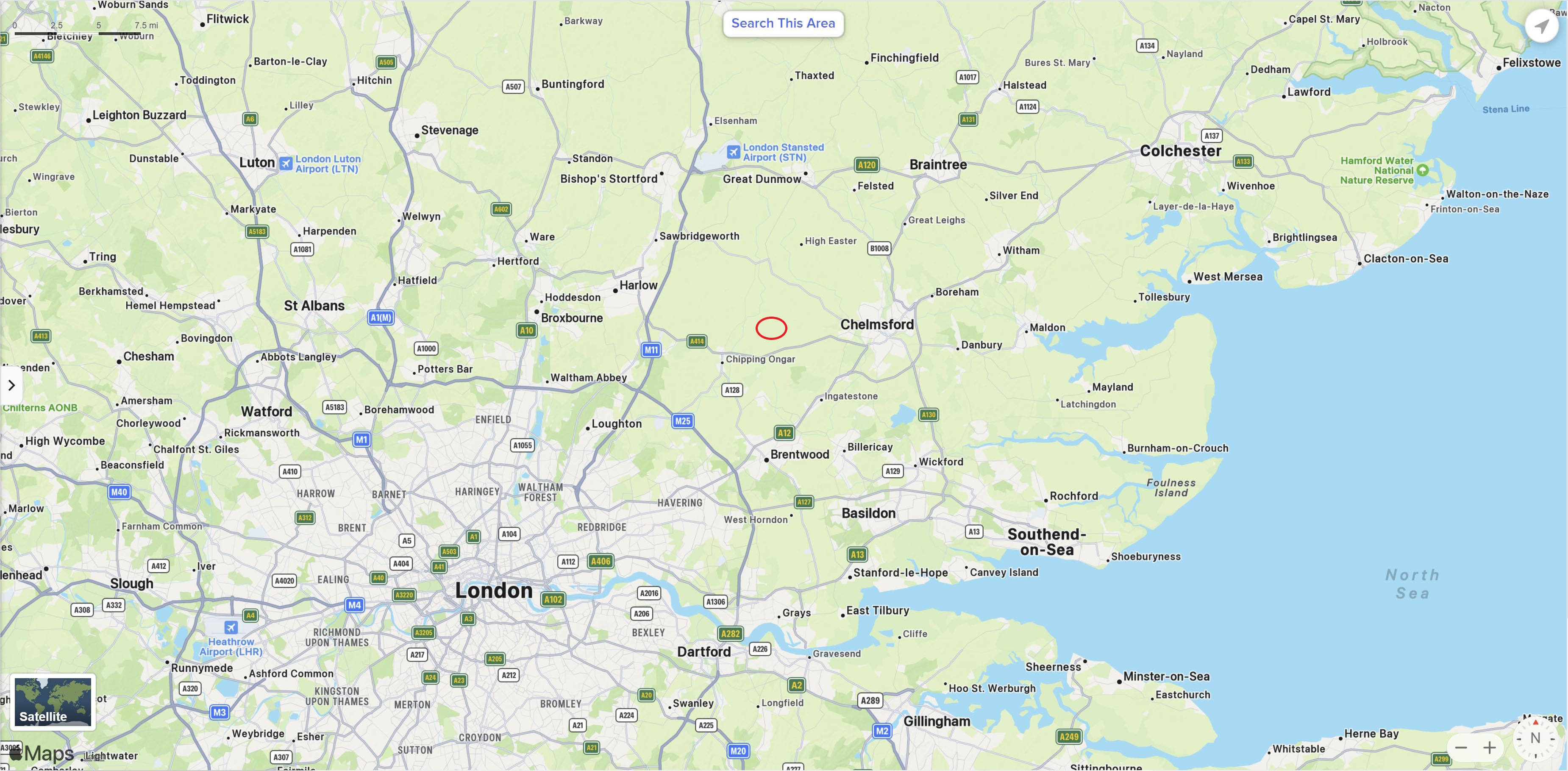
Zooming in, here’s the location of the base relative to Fyfield.  First, this map view…

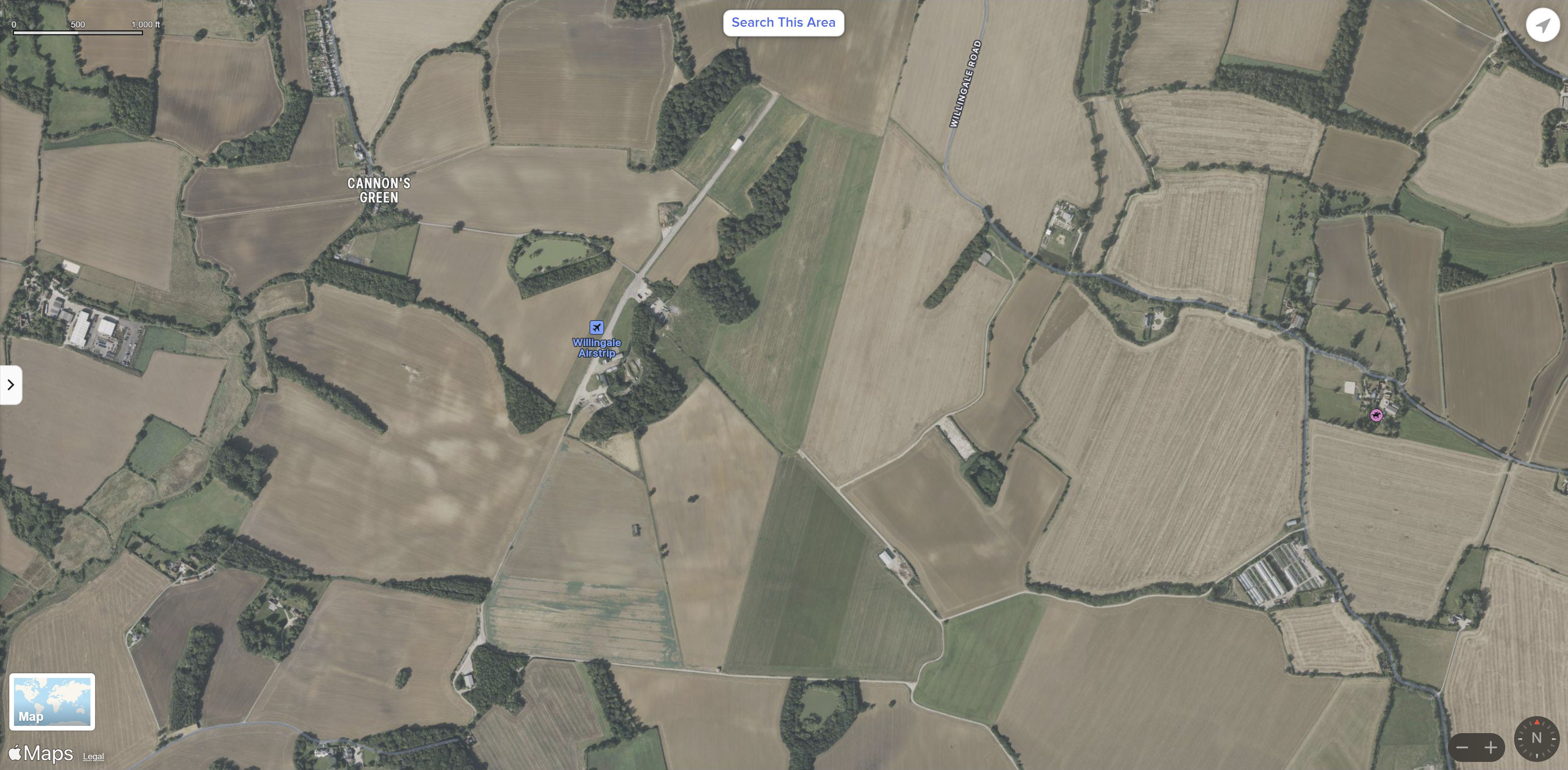
…and now a (very contemporary) air photo view at the same scale.  

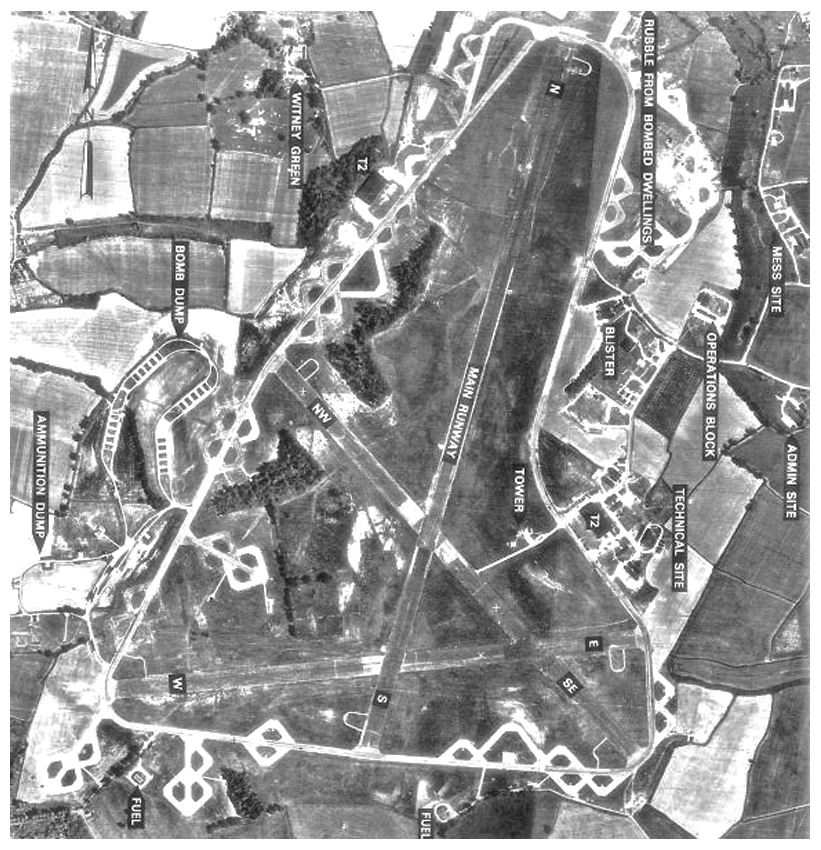
Moving in even closer, the base’s former location is indicated by the hourglass-pattern of agricultural land in the center of the photo.  As you can see by comparing this image with the wartime air photo below, hardstands, taxiways, and runways no longer exist, though the locations of the main and southeast-northwest runways are indicated by the intersecting boundaries of the lighter and darker-toned crop patterns.
Taken in June of 1947, this photograph of the former base can be found at Essex Balloons.  
Sgt. Bear is buried at Mount Sinai Cemetery in Philadelphia; specifically at Section 10B, Lot 1753, Grave 4.  Here’s an image of his military matzeva (photo by Danielle) which appears in his FIndAGrave biographical profile.

Given that the photograph of Sgt. Bear in FlyPast (on page 41, to be specific) is credited to the Army Air Force, I contacted the United States National Archives to see if the picture could be found in the USAAF WW II Photo Collection.  But, it’s not there.  Similarly, a search of the historical records of the 556th Bomb Squadron and 387th Bomb Group (obtained from the Air Force Historical Research Agency; on film rolls A0643, and B0407 + B0410, respectively) revealed no such image.  The conclusion:  It is (or was) part of a private photo collection.  

Since the original image was unavailable, the next best thing was to adapt and modify the half-tone version printed in FlyPast, in order to create a version that would simulate appearance of the original picture.  That’s what you see below.  This was done via Photoshop Elements, with three goals in mind: 1) Remove all superimposed text and photo, 2) adjust lighting and contrast, and 3) drastically reduce the sepia tone of the image … as printed in the magazine.  (Only later did it become apparent that he’s standing next to the propeller of the starboard engine.)

Here’s the result…
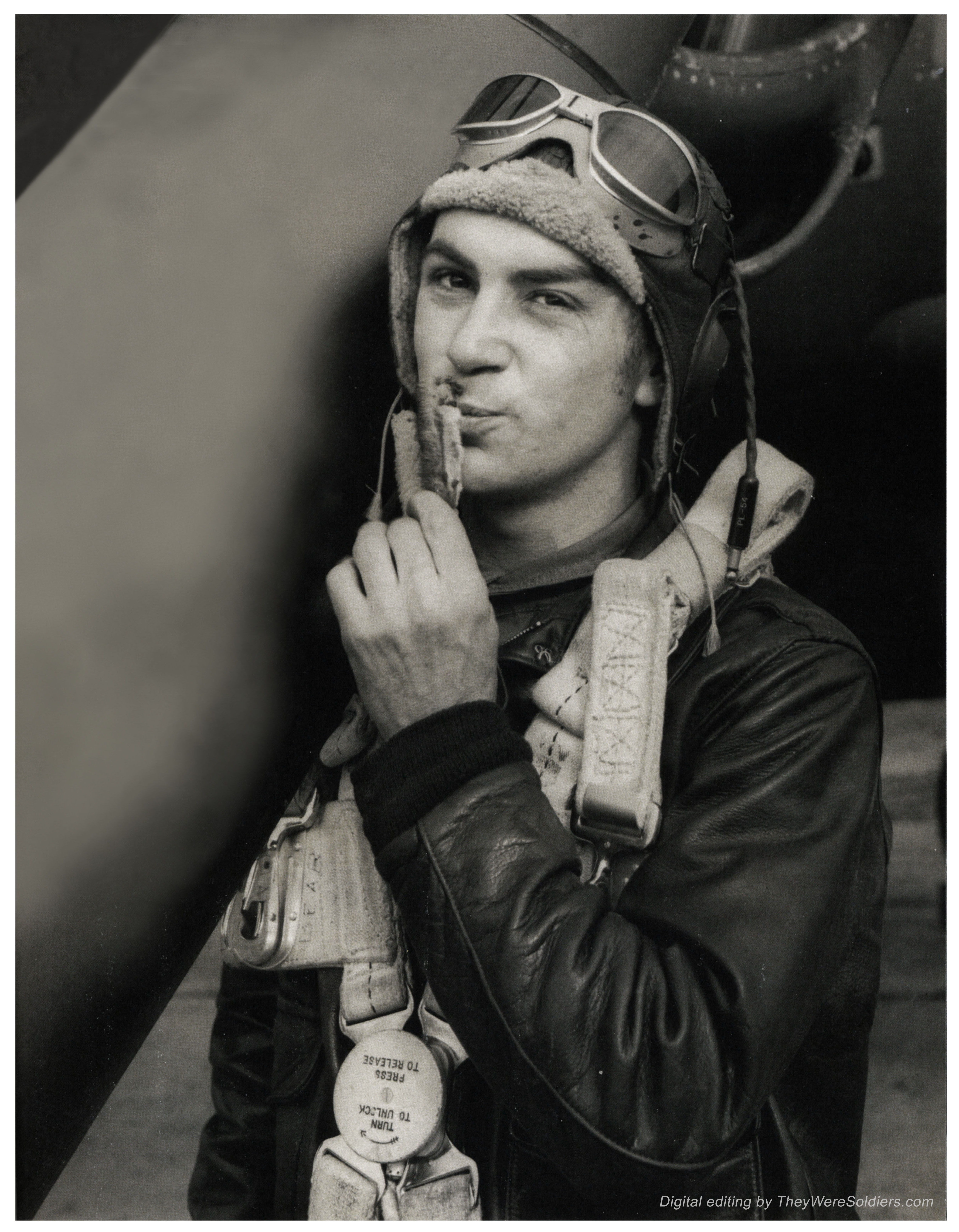
…and, here’s the FlyPast original:

~~~~~~~~~~~~~~~~~~~~

1 Lt. Alexander William Levi, 0-732868, San Bernardino, Ca. – Killed Non-Battle

The emblem is the insignia of the 557th Bomb Squadron – “Keller’s Killers” – via the American Air Museum in Britain (image FRE 5047).  

First Lieutenant Alexander William Levi (0-732868), was born in Manhattan on October 14, 1915 to Arthur E. and Viola Levi, who (during the Second World War) resided at 1042 Western Ave. in San Bernardino, California.  His name appears on page 48 of American Jews in World War II, which indicates that he received the Distinguished Flying Cross, Air Medal, 7 Oak Leaf Clusters (thus implying that he completed between 35 and 39 missions), and Purple Heart.  He’s buried at Cambridge American Cemetery, at Plot E, Row 6, Grave 25.  

His FindAGrave biographical profile includes images of two 557th Bomb Squadron crews in which served, or at least was temporarily assigned, one of which was that of squadron commander Keller.

Alan Crouchman’s article concludes:

Tribute to a stand-in

An entry in the 557th’s “B” Flight diary, maintained by the colleagues of 1st Lt. Alex Levi, read, “We lost Al today.  He was killed in a crash on the edge of the post at about 10am, when the formation was assembling for a bombing mission to Soesterberg airfield, Holland.

“It would have been his 40th mission.  Scheduled at the last minute to ride with a pilot of another squadron, he declined to ground himself for the day to avoid the duty, much as he disliked it.

“Take-off was at 09:20.  The plane in which Al was riding climbed up under and into another ship while joining the formation on the downward leg after take-off.  Still below 1000 ft, the plane crashed almost immediately after the collision, and death was undoubtedly instantaneous for all aboard.

“We packed his things this afternoon – we’ll get over it, and go on as he would.  But not today.  The hut isn’t the same.  Nothing is.  Al was really OK with us.  To a swell guy, “Godspeed.”

This photo of Lt. Levi was contributed to FindAGrave by Astrid.
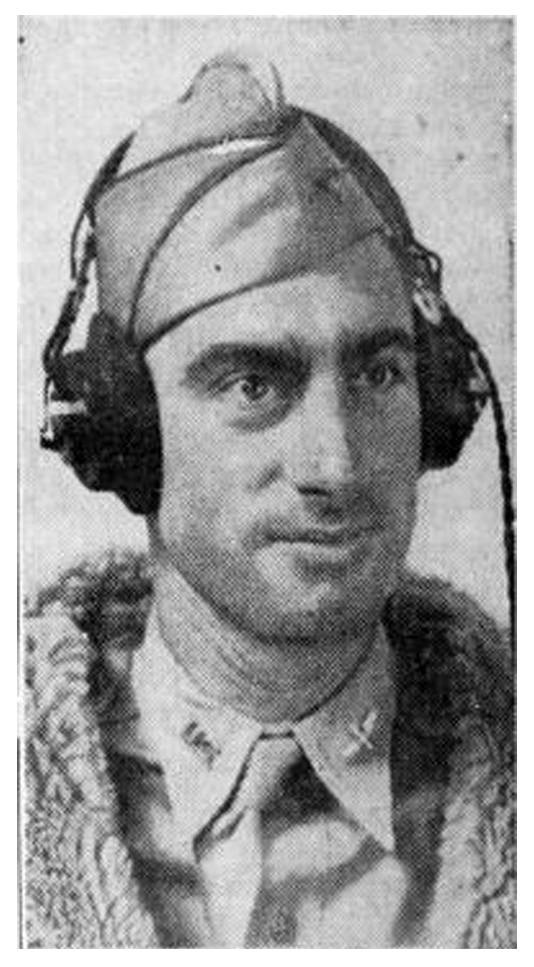
…while these two images are via Joel Frampton Gilbert. Captions are from the images themselves, which were both edited and “niced up” for this blog post via Photoshop.

Lt. Sullivan and crew, left to right:
Front; Lt. Sullivan, Lt. Kelahan, Lt. Levi
Rear: Sgt. Lariscy, Sgt. Badnin, Sgt. Juergens, Sgt. Locurto

Major Keller’s crew, left to right:
Major Keller, Lt. Schill, Lt. Levi, Lt. Hornbarger, Sgt. Miller, Sgt. Schroeder, Sgt. Foreman

~~~~~~~~~~~~~~~~~~~~~~~~~~~~~~

Capt. Jack Eugene Gellman, 0-800704, Niagara Falls, N.Y. – Another Incident…

12th Air Force
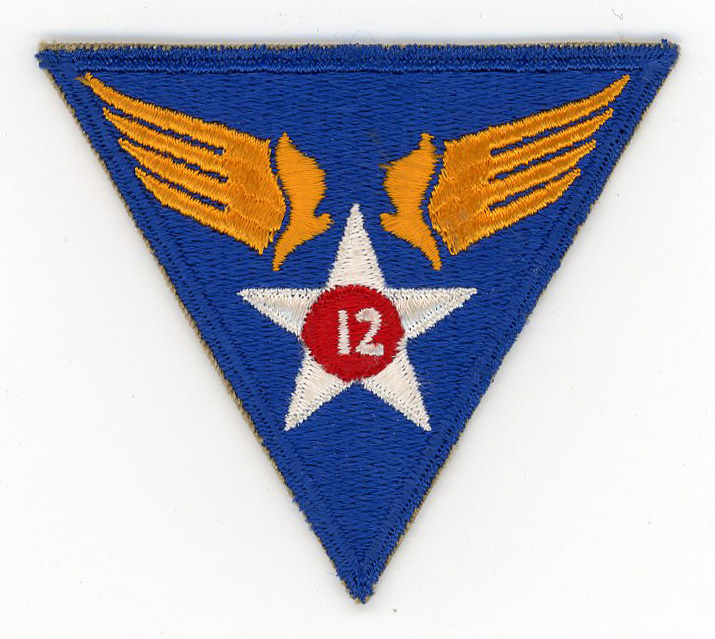
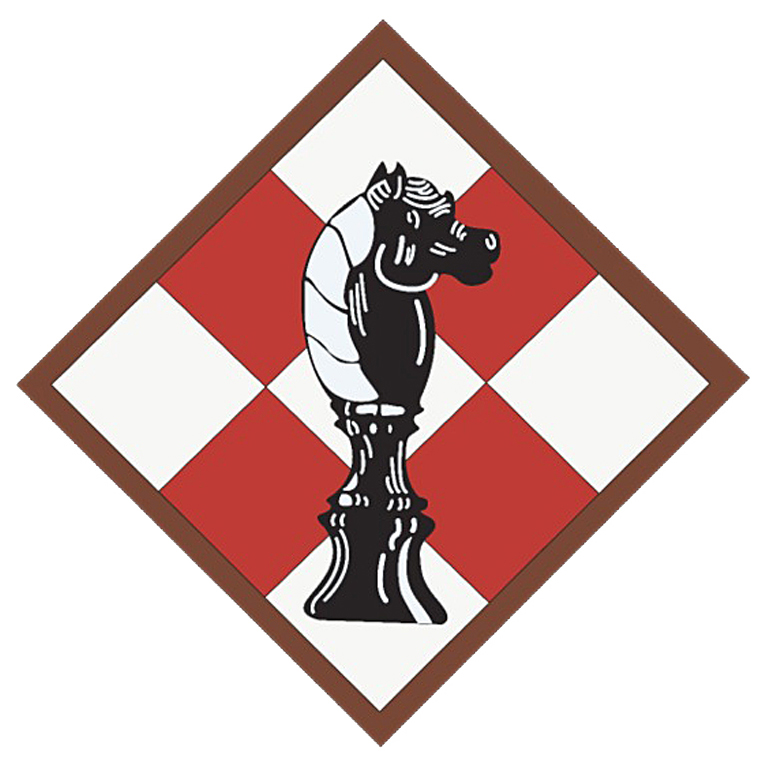
The insignia of the 340th Bomb Group, from WorldWarPatches….

…and the emblem of the 487th Bomb Squadron, from Spreadshirt.com.
Captain Jack Eugene Gellman (0-800704) a B-25 Mitchell Navigator / Bombardier, was born in the Bronx on October 2, 1914, to Benjamin (3/21/83-9/11/51) and Annette (7/15/86-3/25/58) Gellman.  His family later resided at 601 Niagara Street and 442 Sixth Street in Niagara Falls, N.Y.  His wife was Elizabeth (Bloom) Gellman (4/3/15-2/14/99), her wartime residential address having been 1510 Parker St., Columbia, South Carolina.  A member of the 487th Bomb Squadron of the 12th Air Force’s 340th Bomb Group, his wartime service earned him the Distinguished Flying Cross, Air Medal, 4 Oak Leaf Clusters, and Soldier’s Medal.  

Like other men listed in this post, and so many, many more men mentioned in my prior posts, his name is absent from American Jews in World War II.  However, he was the subject of news articles that appeared in the Niagara Falls Gazette on March 6 and May 27, 1944, and in a crew photo photo published in the same newspaper on October 21, 1943.  

He passed away on November 23, 1999, and is buried at Beth Israel Cemetery, in Lewiston, N.Y., his matzeva revealing his Hebrew name to have been “Yakov bar David Baer”.  

Fortunately, he was neither injured, wounded, or captured during his military service, nor (as far as I know) did he have ever to take to parachute to abandon a damaged aircraft.  However, the two aforementioned Niagara Falls Gazette articles point to noteable incidents during his military service, the “latter” of which occurred on March 8, 1944, during a mission to Orte, Italy.  On that date, his quick action prevented the flames from a magnesium flare, which ignited while his B-25 was airborne, from at least damaging and potentially doing vastly worse to his aircraft.  The date of this incident was verified at 57th Bomb Wing by reviewing the 487th Bomb Squadron’s list of missions, which specifically lists Orte as being the target on March 8, 1944.  

~~~~~~~~~~

But first (!), two photos of then Lieutenant Gellman and his crew. 

This image, showing the crew in front of a B-25 nicknamed “Eileen“, was found in the (PDF version of) the 487th Bomb Squadron history for October, 1943, also at 57th Bomb Wing…  

Caption: L to R: 2nd Lieutenant Arthur Hover, Jack E. Gellman, R.E. Pirnie, Sgt. E. K. Rabon & S/Sgt. R.K. Clarkson, in front of Mitchell bomber of 487th B.S., 340 B.Gp.  Lt Hover holds DFC.

~~~~~~~~~~

…and this is the image from the Niagara Falls Gazette of October 21, 1943 (via Fulton History).  Though of very poor quality (it’s a half-tone image converted to 35mm microfilm, then scanned, and finally retouched to the maximum extent possible via Photoshop) certainly the caption is still helpful.  The B-25 serving as a backdrop appears to have a two-word nickname, the first word being “FLYIN’“, and the second completely illegible.  

“SOMEWHERE IN SICLY” – The crew of a Mitchell bomber, prior to taking off for a flight over enemy territory includes two men from Niagara Falls.  In the group, left to right are: standing, Sergeant Elmer Rabon, gunner, of Alabama; Lieutenant Jack Gellman, navigator-bombardier, of this city; Lieutenant Robert Pirnie, co-pilot, of Missouri; Lieut. Arthur Hover, pilot, Missouri; kneeling, Technical Sergeant Robert Purey, radioman-gunner, also of this city.

Lieutenant Gellman is the son of Mr. and Mrs. Benjamin Gellman of Sixth street, and Technical Sergeant Furey is the son of Mr. and Mrs. John P. Furey, of Seventy-seventh street.  Both local men have received the Air Medal.

~~~~~~~~~~

And now, the two articles…

Falls Officer Quickly Makes “Bomb-sight,” Hits Target
The Niagara Falls Gazette
March 6, 1944

Allied war workers are turning out finished bombsights in record time these days but they’ve got to go even faster to beat the time of Lieutenant Jack E. Gellman, navigator-bombardier with the “Avengers,” a medium bombardment group in Italy.

Flying to a target on the Eighth Army’s front In Italy recently in a Mitchell bomber that did not carry a bomb-sight, Lieutenant Gellman, son of Mr. and Mrs. Benjamin Gellman, of 442 Sixth street, this city, rigged up one with a pencil and a piece of cord and then, when the target “swam into sight,” toggled out his bombs. Observers said that his squadron’s bomb pattern was the best one laid down in the 38-plane formation.

“I was just lucky that the bombs, dropped as accurately as they did,” the lieutenant said. “One of the fellows who was lagging behind in our box helped the pattern a lot by holding his bombs longer than usual.”

Lieutenant Robert M. Pirnie, of Sacramento, Calif., pilot of the plane, was flying a wing position when the formation leader was forced to drop out shortly after the takeoff.

“Do you think you can take over this formation?” Pirnie asked Ge!lman.

“We haven’t got a bomb-sight,” was the answer.

“Can you make one?” the pilot then asked.

Lieutenant Gellman could and did. He quickly sketched in a few graduated lines on the plexiglass nose of the bomber, established a dropping angle and completed the “bomb-sight” by stretching a piece of Inter-phone cord at right angles to the vertical line on the glass.

“As we came up on the target I wanted to turn back,” Gellman, stated. “I could see the artillery flashing below and I knew our troops were close to the target area, but then Flight Officer Curtis P. Keough, of Lake Park, Minn., the co-pilot gave me the okay sign, so I crawled back into the nose and dropped them.”

Other members of the crew included Staff Sergeant Raymond K. Clarkson, of Danville, Ky., the radio operator, and Sergeant Elmer E. Rabon, of Webb, Ala., the gunner.

Lieutenant Gellman’s wife, Mrs. Elizabeth R. Gellman, resides at 1S10 Parker Street, Columbia, S.C.

~~~~~~~~~~~~~~~~~~~~

Falls Air Officer Successfully Battles Fire in Plane in Flight
Niagara Falls Gazette
May 27, 1944

Niagara Falls people have received long and minute instructions on how to handle magnesium bombs when they flare up on the ground but what does one do when a magnesium fire is started In a plane? Just ask Captain Jack E. Gellman, of 442 Sixth street. It happened to him.

One day in March, when his formation was returning from bombing Orte, Italy, a pistol loaded with a signal flare, dropped to the floor and sprayed the navigator’s and bombardier’s compartments with white hot magnesium. It burned with such heat that in a fraction of a second parts of the plane itself were burning and melting.

Cool, calm and collected, he reached for the fire extinguisher and started to spray the flames. When they were out to the navigator’s compartment, he turned his efforts to the direction of his trapped companion In the nose of the ship. Pushing himself through the hot crawlway which connected the two compartments, he was seared and scorched, out he managed to hand the extinguisher to the bombardier.

The Ill-fated craft returned to base with but relatively slight damage. Investigation showed that the fire had already partially severed the control cables but that was quickly repaired. The men were patched up and in several days the crew and plane were in the air again.

Captain Gellman received the Soldier’s Medal for this action. With that ribbon, he displays the Air Medal with four Oak Leaf Clusters, the Middle East Area of War Ribbon with two campaign stars, the Distinguished Flying Cross, the Coastal Patrol ribbon and the Before Pearl Harbor ribbon.

“What I really would like to have is an ex-serviceman’s ribbon on a blue serge suit,” he said wistfully, “and hope that I get It quick.”

He carries with him a “short snorter,” composed of 19 different kinds of money. Although he has been through 26 countries and has flown over about 50, he has only that number because many countries now use American money.

On the front of this collection are the autographs of many of his friends with whom he has been overseas. The names of Senator James Mead and comedian Jack Benny are proudly displayed.

The backs of the bills bear a record of the 65 missions on which he has been. Names of cities In the Balkans, Italy and Germany appear many times. On occasion he has had to parachute to the ground or be in his plane, “The Spirit of Niagara Falls,” when it belly-landed.

We fellows to the Air force really admire the boys on the ground,” he said. They have all the hard work, hand-to-hand fighting, the light of blood and death, while we sit up in a plane, relatively far from all that.”

He had nothing but praise for the work of the Red Cross. “They have an uncanny way of appearing just when a soldier needs food, relaxation and companionship,” he said. “The Naples Red Cross center is just like the corner of Broadway and Forty-second street to New York – if one stays there long enough, he can meet all his friends. And believe me. you didn’t have to stay there long.”

He spoke of the food in the army, saying that when the men first got to the Mediterranean theater of war the food wasn’t any too good, but it rapidly grew better. “For a while.” he said, “we were allowed only one coke a week, which was unusual.

“The eggs that the army had were only the dehydrated, powdered kind and soon when we had a day off we would take a plane and fly two or three thousand miles to Cairo, Egypt or Colubra, Africa, for several hundred eggs. They were put in the bomb bay and when the plane came back nearly everyone was out on the field, praying that the ship would land gently.
“Fresh milk could be bad in Malta and we would fly there for a taste of that wonderful liquid.”

Coming back to the States, he was in “war-weary,” a plane that had been In many encounters and was being returned to the states for rejuvenation.
Captain Gellman stated that he was rather anxious to return for the simple reason that “I want to help get this thing over as soon as possible so that I can come home without thinking that I shall ever have to go back.”

~~~~~~~~~~~~~~~~~~~~~~~~~~~~~~

2 Lt. Nathan Shapiro, 0-695541, Dorchester, Ma. – Parachuted to Safety… (once)

As already evident from many of my prior blog posts – let alone innumerable accounts of aviation history elsewhere – military aviation even not involving contact with the enemy inherently carried an element of risk and danger, as well chronicled by works such as Anthony Mireles three-volume trilogy covering fatal Army Air Force accidents in the continental United States during the Second World War, let alone Aviation Archeology’s massive database.

One such incident, involving the loss of a B-24 Liberator, transpired on March 8, 1944.  To quote from pages 716-717 of Volume 2 of Mireles’ Fatal Army Air Force Aviation Accidents in the United States, 1941-1945:

At 0050 MWT, a Consolidated B-24E crashed three miles east of Kuna, Idaho, killing three crewmembers.  Six crewmembers were ale to parachute to safety and were uninjured.  The airplane took off from Gowen Field, Boise, Idaho, on a routine bombing mission.  The B-24 climbed to about 20,000 feet and flew on to the bombing range, but was unable to bomb because of a layer of clouds over the target area. The airplane was unable to established radio contact with the range or with local ground control.  The airplane descended to about 12,000 feet over Gowen Field and was able to establish radio contact with Boise Control Tower only.  The Boise tower was able to relay messages between the airplane and Gowen Field.  The airplane was ordered to fly to range #3 and bomb at 8,500 feet.  The pilot descended to 8,500 feet and then began experiencing trouble with the number three engine.  The pilot was unable to correct the problem or feather the propeller.  The pilot ordered the crew to stand by to abandon ship.  The number three engine began to vibrate badly and the airplane became difficult to control so the pilot ordered the crew to bail out.  The pilot was satisfied that the crew had left the ship as he bailed out.

Assigned to the 29th Combat Crew Training Squadron, the crew of the aircraft in question, B-24E 41-28514, piloted by 2 Lt. Robert Preston Aldridge, comprised:

Pilot: Aldridge, Robert Preston, 2 Lt.
Co-Pilot: Whitman, Stanley E., 2 Lt.
Navigator: Maher, William T., 2 Lt. – Killed
Bombardier Instructor: Haley, Edmond Milton, 2 Lt.
Bombardier: Shapiro, Nathan, 2 Lt.
Flight Engineer: Boreson, Albert J., S/Sgt.
Radio Operator: Shade, Robert L., S/Sgt.
Gunner: Ford, Walter E.J., Sgt. – Killed
Gunner: Scales, Danny D., Sgt. – Killed

The incident is covered in Army Air Force Accident Report 44-3-8-1.

(This is the first blog post where I’m including maps of a WW II crash location inside the United States.)

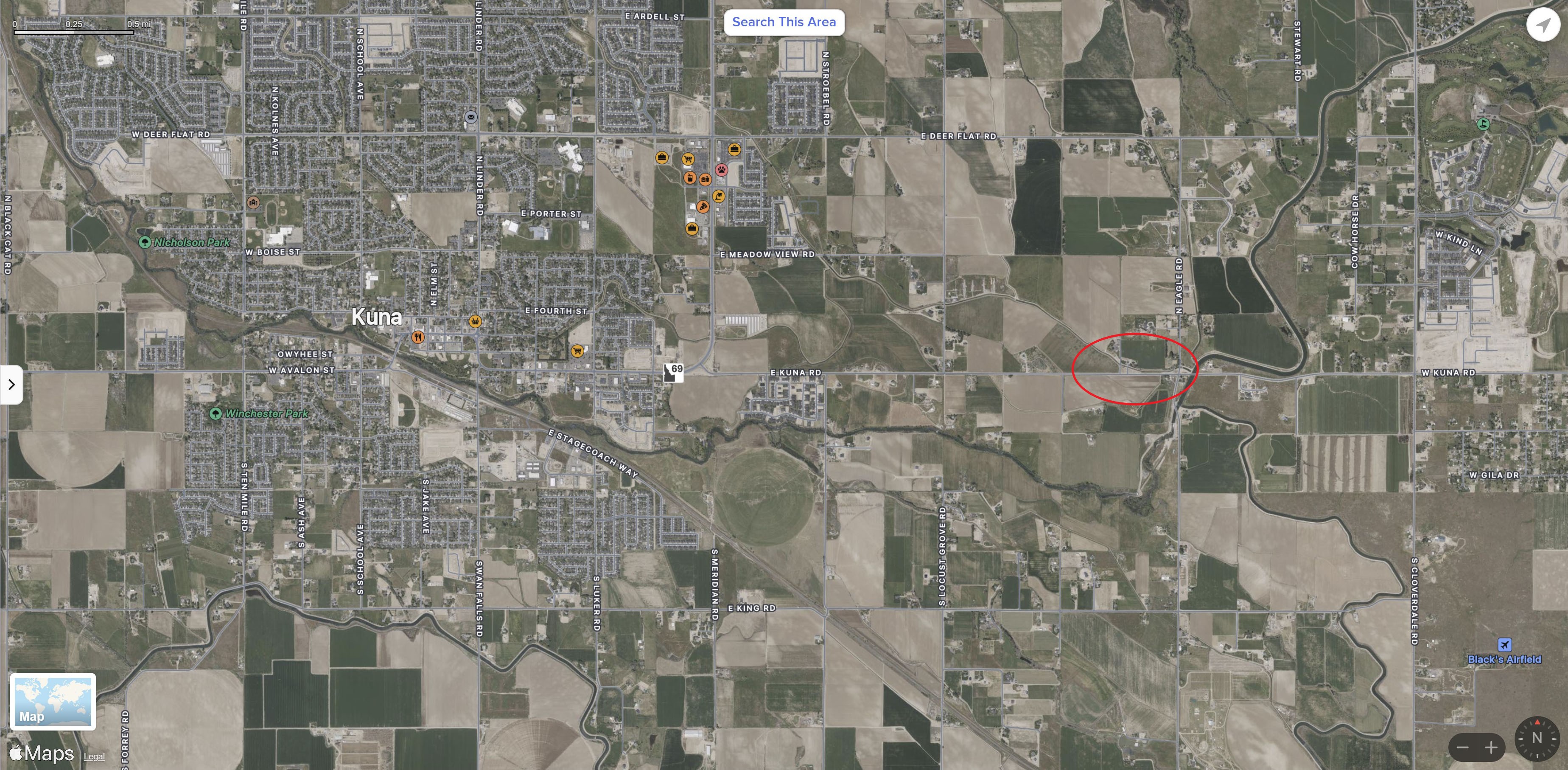
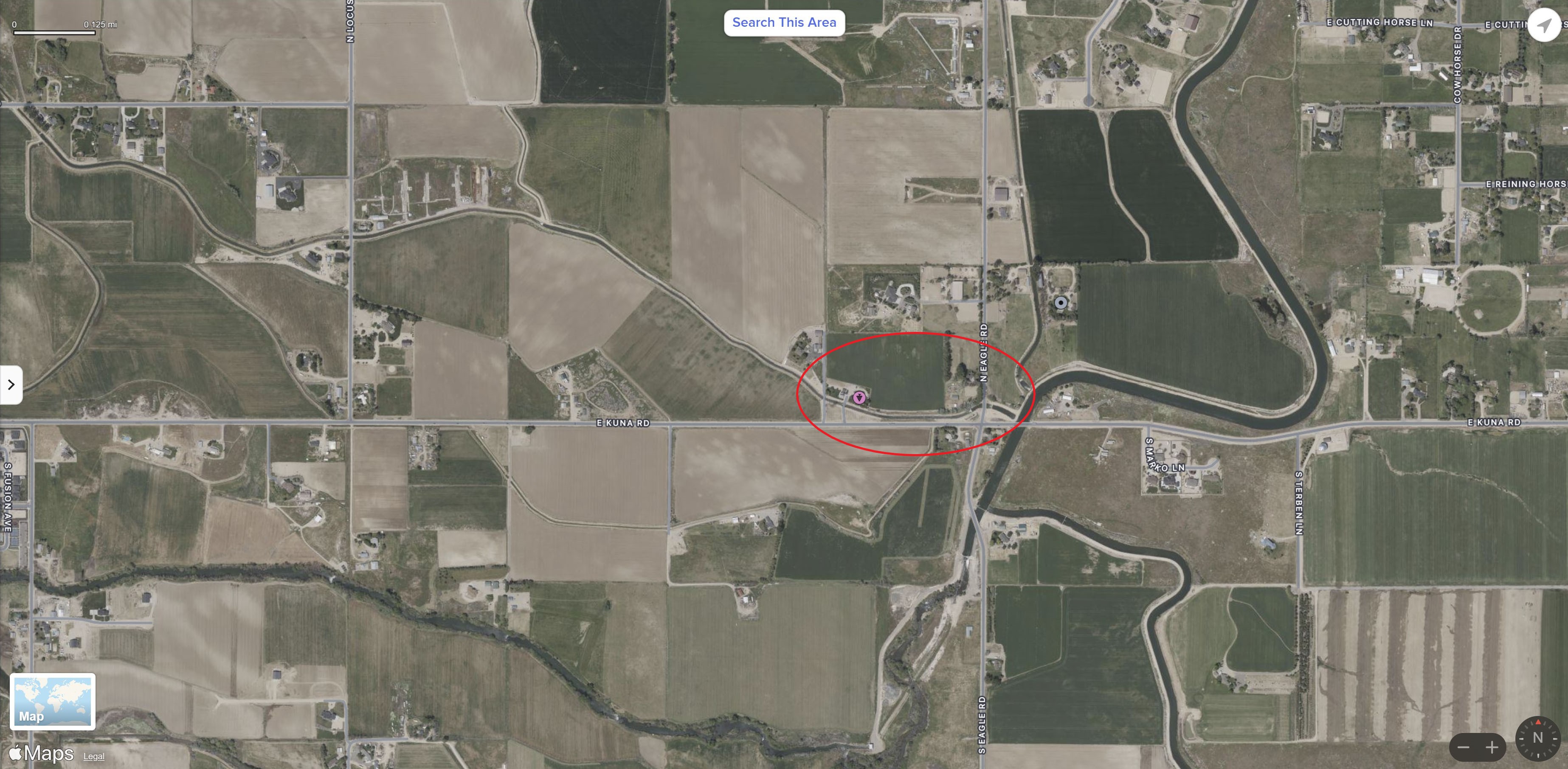
Here’s the location of Kuna relative to Nampa, Meridien, and Boise.  B-24E 41-28514’s approximate crash location is indicated by the red oval.
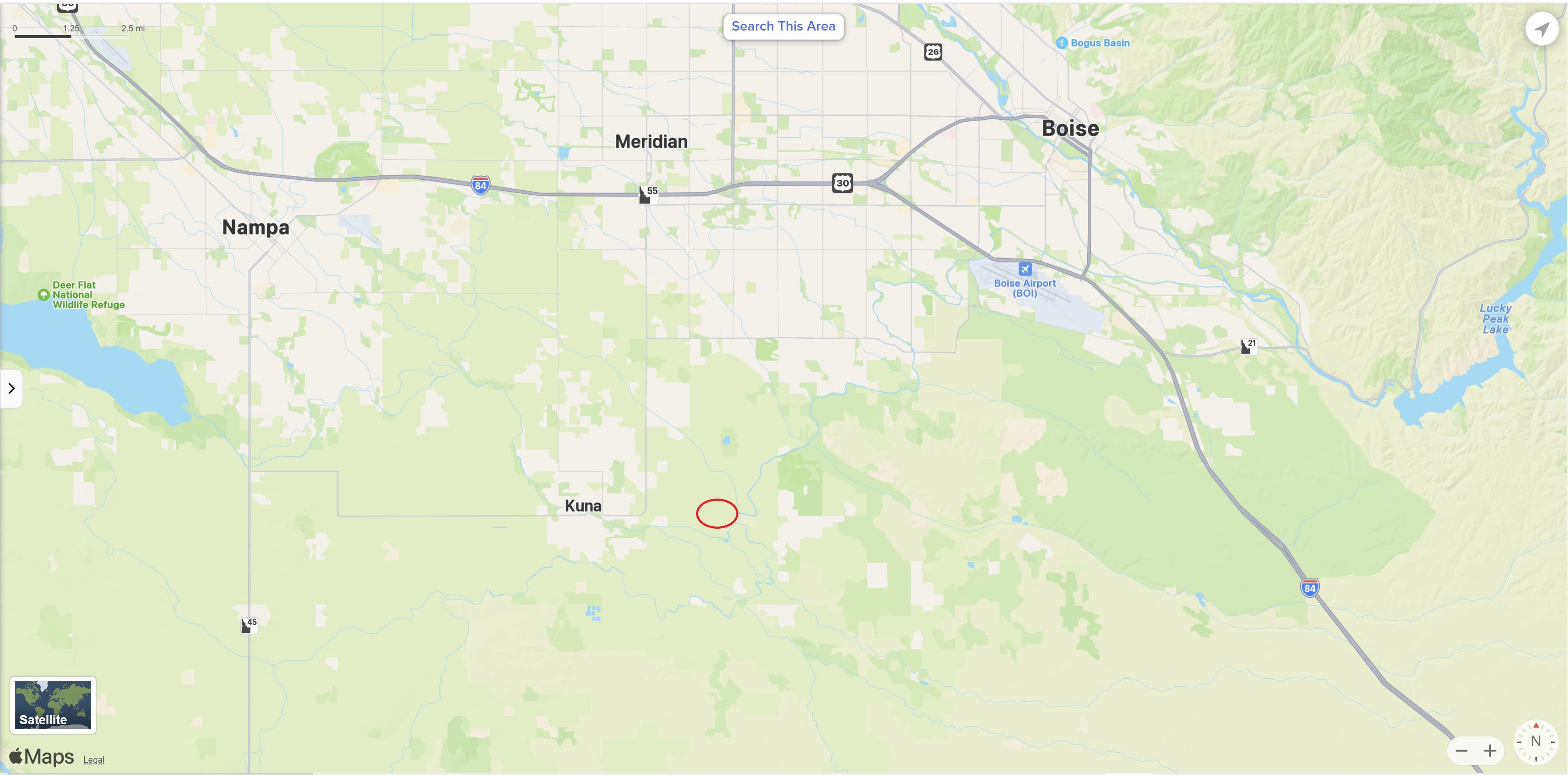
A larger-scale map of the area.  The crash location as shown here is based on calculation of the distance from the center of Kuna.
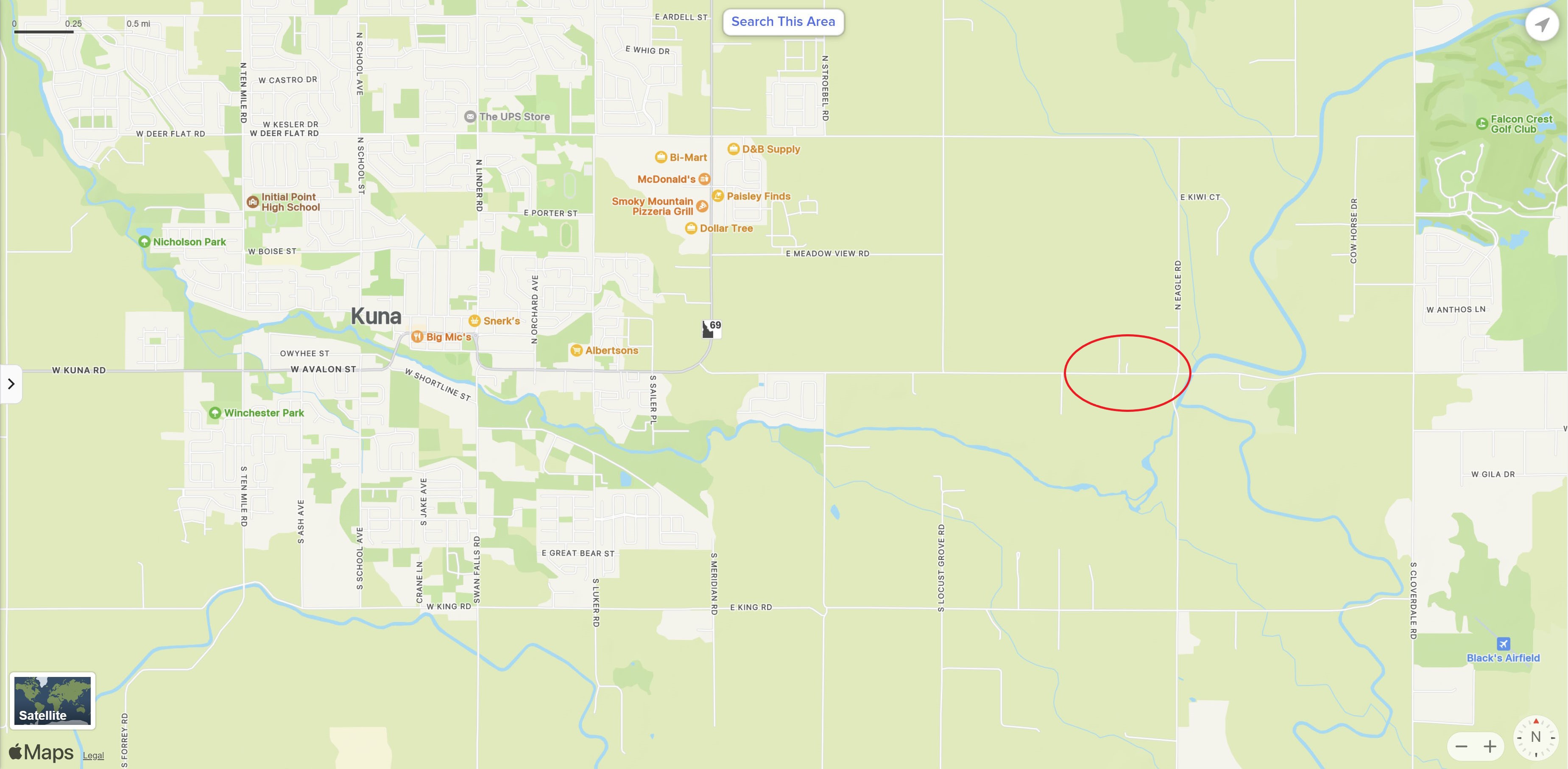
Here’s an air photo view of the above area, at the same scale.  It would seem that 41-28514 fell to earth in agricultural land.  
And, a closer (very close) view.
And then…

2 Lt. Nathan Shapiro, 0-695541, Dorchester, Ma. – Parachuted to Safety… (twice)

14th Air Force

~~~~~~~~~~~~~~~~~~~~

The 373rd Bomb Squadron’s insignia, from A2 Jacket Patches.

Over seven months later, on October 29, 1944, after having been assigned to the 373rd Bomb Squadron of 308th Bomb Group (14th Air Force) Lt. Aldridge’s crew was involved in another incident which involved the bail-out of his crew.  As described at FlightSafety, “Climbing through the undercast, the plane went out of control.  All crew members bailed out except for pilot Aldridge.”  The incident, which occurred at Luliang, China, is also covered in the high-number postwar Missing Air Crew Report # 15526, which (but of course – thanks soooo much, Fold3!) is unavailable via the National Archives online catalog.     

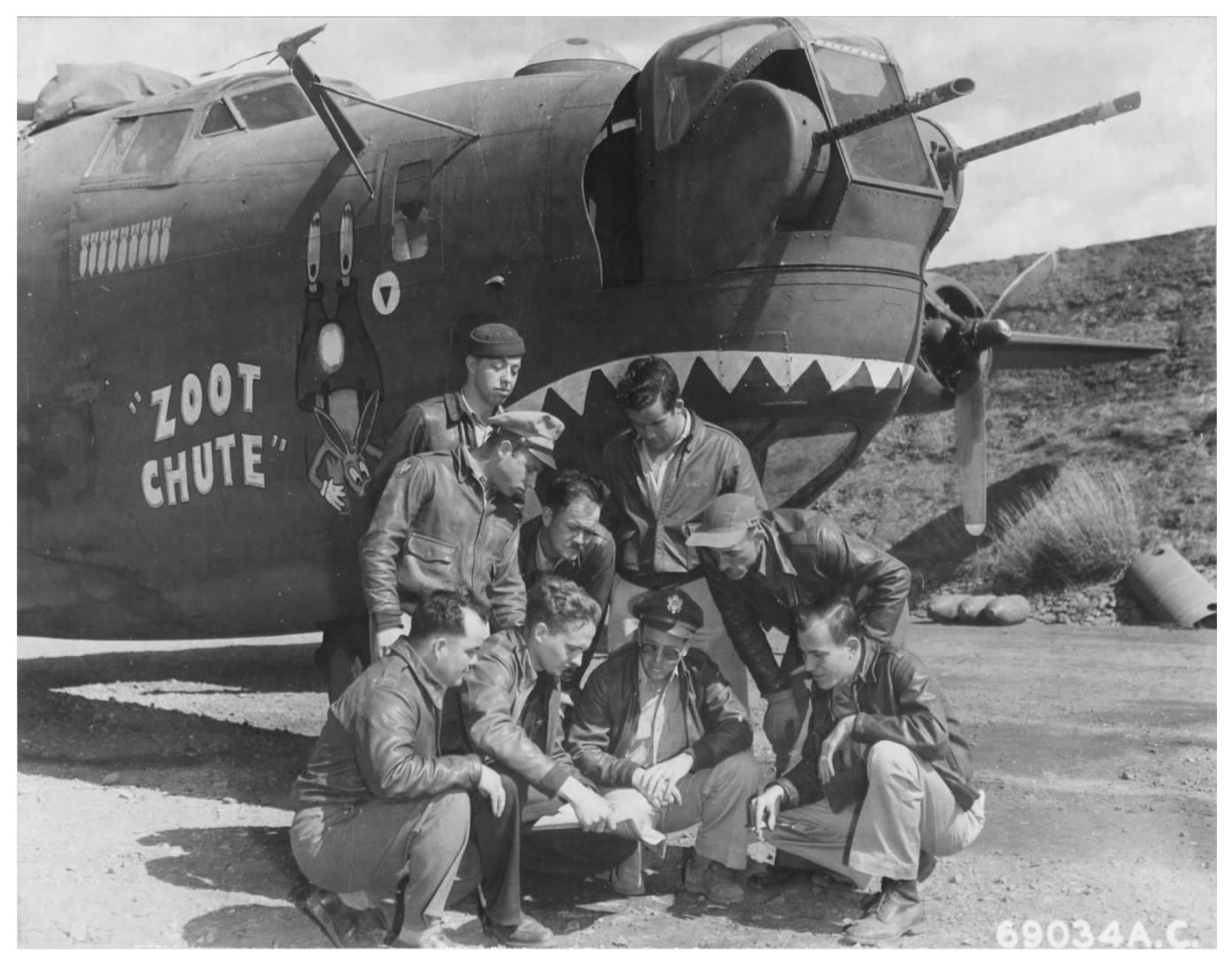
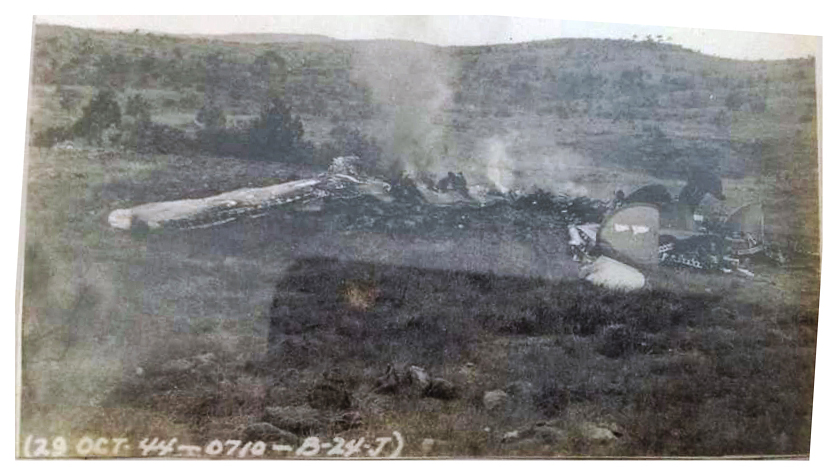
The aircraft in question was “ZOOT CHUTE”, B-24J 42-73320.  The aircraft appears in Army Air Force photo 69034AC – A2189, seen below.  (The names of the men in this photo are unknown.)
This photo, from Everything B-24, shows the post-crash remnants of ZOOT CHUTE.
Lt. Aldridge is buried at the National Memorial Cemetery of the Pacific in Honolulu (Plot P 465).  His portrait (via Adriana), which accompanies his FindAGrave biographical profile, is below:

Second Lieutenant Nathan Shapiro (0-695541), Aldridge’s bombardier, was born in Boston, Massachusetts, on June 19, 1924, the son of Jacob and Jennie Shapiro who lived at 129 Callender Street in Dorchester.  His name appears on page 179 of American Jews in World War II, which lists him as having been awarded the Purple Heart.

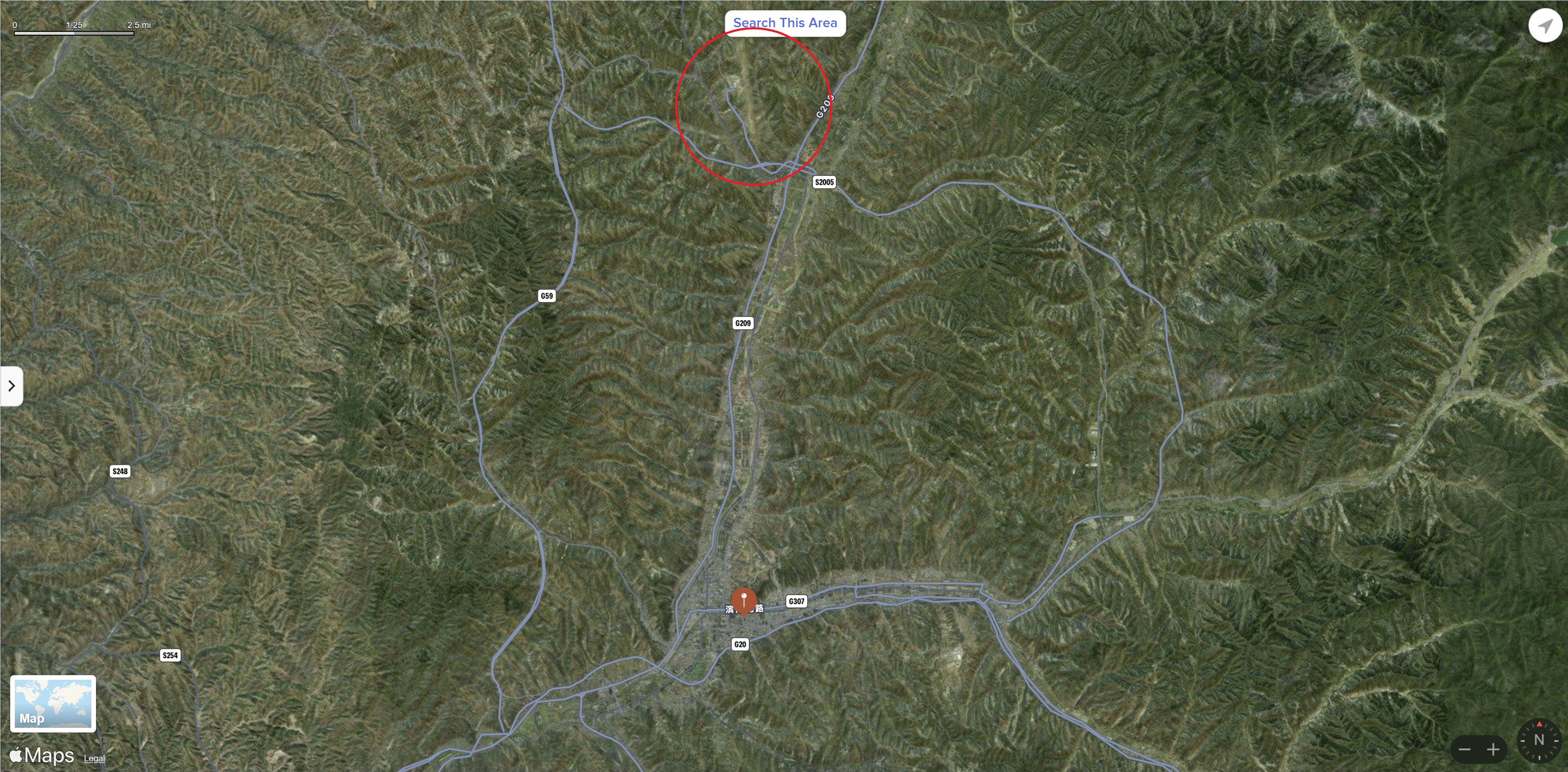
This Apple Map (I vastly prefer Apple Maps to Google maps) shows the location of Luliang, relative to Beijing.

This map shows the location of Luliang Airport, relative to the city of Luliang itself, which is at the bottom center of the image.  I don’t know if – but I am assuming that – this airport occupies the same location as the 308th Bomb Group’s base in WW II. 

This air photo view shows, at the same scale as the above map, the rugged nature of the surrounding terrain.
Finally, a close view of the Luliang Airport, this image making the forbidding nature of the terrain even more obvious.

~~~~~~~~~~~~~~~~~~~~

U.S.S.R. (C.C.C.Р.)
Military Air Forces – VVS
(Военно-воздушные cилы России – ВВС)

Junior Lieutenant Vladimir Yakovlevich Yookhvit – Prisoner of War
(Младший Лейтенант Владимир Яковлевич Юхвит)

Completed 64 combat missions
2nd Air Army, 227th Attack Aviation Division, 687th Attack Aviation Regiment
(2 Воздушная Армия, 227 Штурмовой Авиационной Дивизии, 637 Штурмового Авиационного Полка)
As Pilot [Летчик)…  On 12/13/43, crash-landed as result of attack by Me-109
As Senior Pilot (Летчик Старшии)…  On 3/8/44 – shot down by anti-aircraft artillery in vicinity of Vinnitsa, Ukraine, with Aerial Gunner Senior Sergeant Mikhail Pavlovich Tretyakov.  Both survived as prisoners of war at Stalag Luftwaffe 2, Lodz, Poland
Born 7/28/22, Chelyablinsk Oblast

Parents: Yakov and Anna Yookhvit, city of Sverdlovsk, Tolmacheva Street, Building 4

~~~~~~~~~~~~~~~~~~~~

Four Books

Doherty, Robert E., and Ward, Geoffrey D., Snetterton Falcons : The 96th Bomb Group In World War II, Taylor Publishing Company, Dallas, Texas, 1989

Dublin, Louis I., and Kohs, Samuel C., American Jews in World War II – The Story of 550,000 Fighters for Freedom, The Dial Press, New York, N.Y., 1947

Maryanovskiy, M.F., Pivovarova, N.A., Sobol, I.S. (editors), Memorial Book of Jewish Soldiers Who Died in Battles Against Nazism – 1941-1945 – Volume I [Surnames beginning with А (A), Б (B), В (V), Г (G), Д (D), Е (E), Ж (Zh), З (Z), И (I)]Union of Jewish War Invalids and Veterans, Moscow, Russian Federation, 1994

Mireles, Anthony J., Fatal Army Air Force Aviation Accidents in the United States, 1941-1945 – Volume 2: July, 1943-July, 1944, McFarland & Company, Inc., Publishers, Jefferson, N.C., 2006

Here’s a Magazine

Crouchman, Alan F., ‘Double Trouble’s’ Destiny’, Flypast, March, 2009, pp. 40-45

Soldiers from New York: Jewish Soldiers in The New York Times, in World War Two: March 8, 1944 (In the Air…) … Spitfire and Mustang, Goldberg and Rothenberg: The Forking Path of History

In 1941, the Argentinian writer Jorge Luis Borges completed the short story “El jardín de senderos que se bifurcan”, known in English and later appearing in the August, 1948 issue of Ellery Queen’s Mystery Magazine as “The Garden of Forking Paths.  His book, “uncannily foreshadows contemporary cosmological theories of the ‘multiverse’, in particular the ‘Many Worlds’ interpretation of quantum mechanics,” which has now become very much a staple feature and plot device of popular culture and fiction, let alone a field of study in the disciplines of quantum mechanics, theoretical physics, and philosophy.  At the center of Borges’ short story, which may have been inspired by the works of science fiction writer Olaf Stapledon, is yet another novel – the multiple drafts of various chapters of which actually comprise a single work, in which infinitely forking futures are described.  This novel-within-a-novel is thus “an enormous riddle, or parable, whose theme is time”.  

Thus for fiction.  As for fact?  In 1944, three years after the publication of the original version of Borges’ story, on the eighth of March, two Jewish fighter pilots – one American and the other British – were shot down over Western Europe.  For them, that date represented a very real forking path, one from which the trajectories of their lives irrevocably diverged:  One survived; the other did not.

“May your fondest dreams comes true. – (signed) Danny”…
“…her pride is her fighter-pilot brother…”

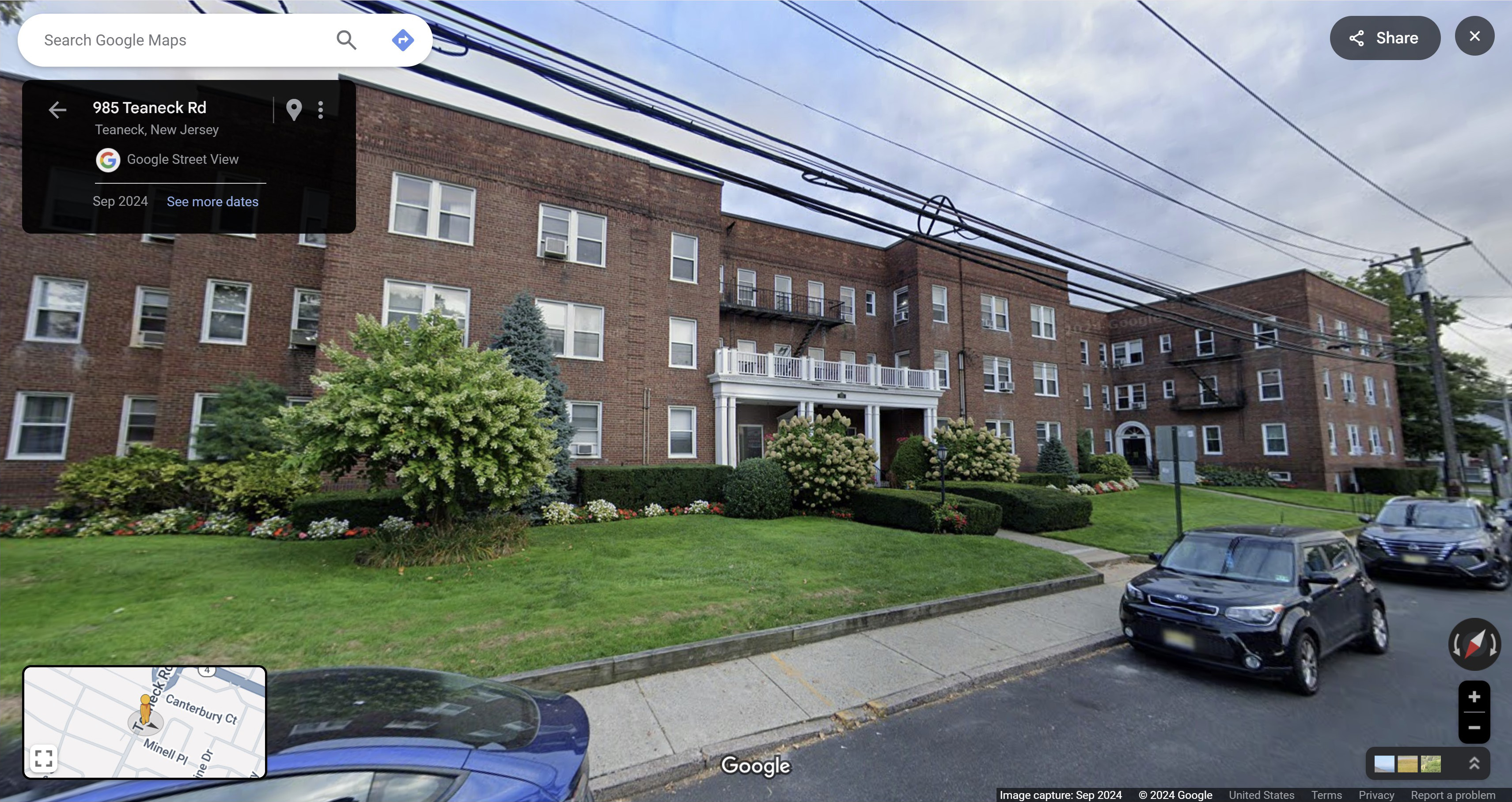
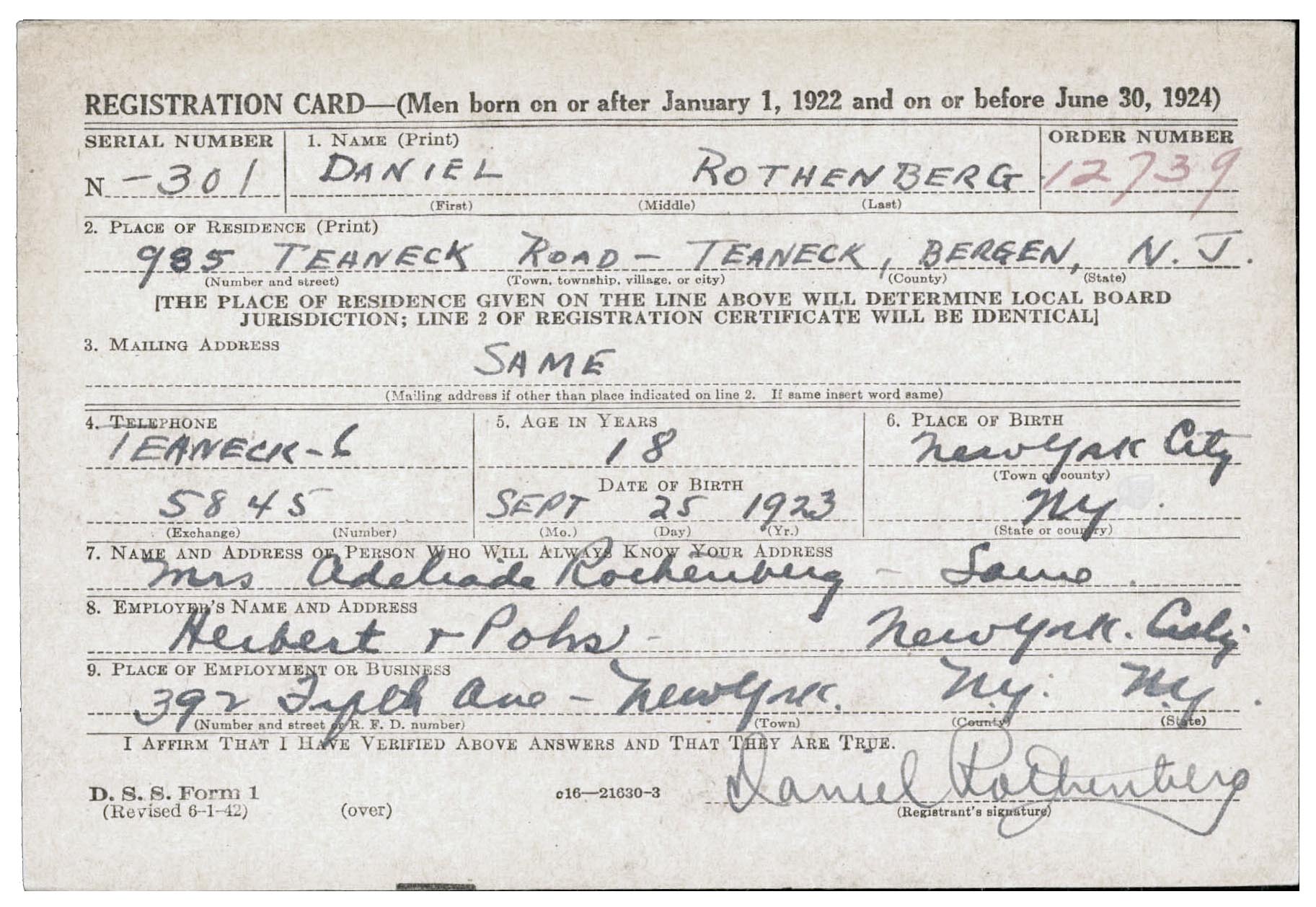
Second Lieutenant Daniel S. Rothenberg (0-687399), born in Manhattan on September 25, 1923, was the son of Elliott (6/11/90-10/67) and Adelaide (1890-4/6/66) (Greenberg) Rothenberg, his family residing at 985 Teaneck Road in Teaneck, New Jersey.  Their home – an apartment building – still stands in 2024, as seen in this Oogle street view….

…while this map shows Teaneck, relative to other locales in northern New Jersey, and, the New York Metropolitan area:

Daniel’s siblings were Hilda (10/16/14-2/22/00), Leon (4/10/09-2/67), Marian (11/8/10-10/20/99), Murray (6/23/13-4/3/85), and Ruth Eunice (3/16/26-11/27/22).  His photograph, taken a few years before he became Lieutenant Daniel Rothenberg, can be found via Ancestry.com in Teaneck High School’s Class of 1940 yearbook.  The specific copy of the yearbook in which his portrait is found includes the dedication, one of several penned for the book’s now-unknown and now-forgotten donor, “May your fondest dreams comes true.  Danny”…

Here’s his portrait.

(“Then I reflected that all things happen to a man
in the precise instant of now.” – Hsi P’eng)

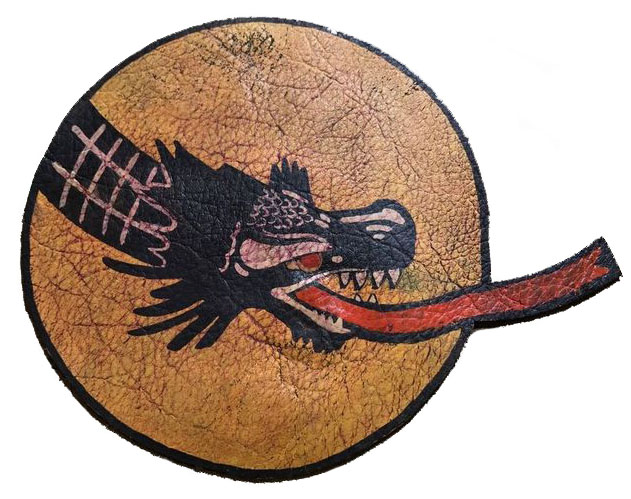
A member of the 357th Fighter Squadron of the 355th Fighter Group (8th Air Force), that day assigned to his squadron’s “Green Flight”, Lt. Rothenberg’s Mustang, P-51B 43-6989 otherwise known as OS * Q, was shot down while on a “Ramrod” mission over Germany.  (Ramrod is a term loosely used to denote a fighter sweep over an area preceding the arrival of heavy bombers, in order to draw enemy aircraft into combat and cumulatively degrade enemy fighter effectiveness.  See Mission4Today and CodeNamesInfo for more information.)

As described in Missing Air Crew Report 3056 by eyewitness and flight leader 1 Lt. Frederick W. Kelley:

As we made R/V with the bombers, Green flight jumped a bogie which turned out to be an FW-190.  He dove for the ground and number three man overran him and number four man got in a burst which hit his left wing.  The FW-190 turned into Lieutenant Rothenberg who was flying number two and evidently hit the pilot, as he rolled over on his back at about fifty feet and dove into the ground and exploded.  I passed over the remains which were scattered over the field, and there is no doubt that he was instantly killed.  Later on the 190 was destroyed by Lieutenant Norman.

~~~~~~~~~~~~~~~~~~~~

This image of P-51B Mustang 43-6886 OS * E, eventually known as Myrt / Kay, provides a good representative view of a 357th Fighter Squadron P-51 in early 1944.  This particular aircraft, piloted by 2 Lt. Harwood M. Harrell, was one of six 355th Fighter Group P-51s lost on June 7, 1944.  Its loss is covered in MACR 5507 and Luftgaukommando Reports J 1354 and J 1451.  Lt. Harrell survived.  (Photo UPL16547 from the American Air Museum in Britain.) 

~~~~~~~~~~~~~~~~~~~~

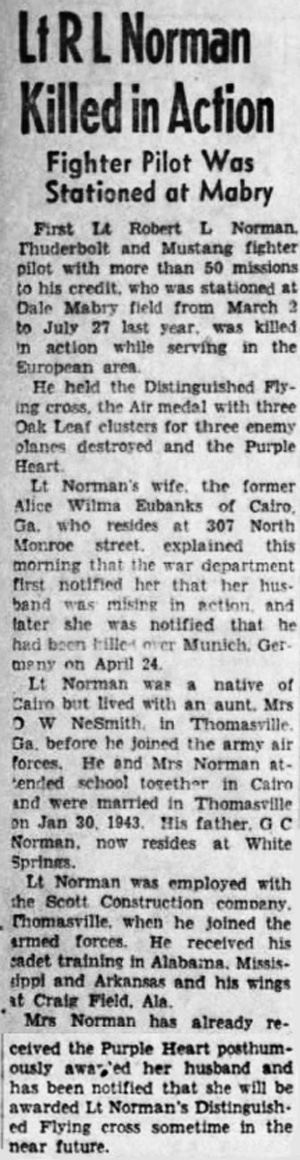
USAF Credits for the Destruction of Enemy Aircraft reveals a little more information about “Norman” and Frederick W. Kelley.  The former was 1 Lt. Robert Lee Norman (0-797697), the FW-190 he shot down being his sole confirmed victory.  Alas, Lieutenant Norman in turn was shot down and killed on April 24, 1944, while flying P-51B 42-106433, OS * R; see MACR 4320.  This article, from FindAGrave contributor TLHGraves, appeared in the Tallahassee Democrat on November 3, 1944.  

First Lieutenant Kelley (0-795972), who eventually became Captain Kelley, survived the war with two aerial victories.   

Here’s the supposed location map of Lt. Rothenberg’s loss, as reported in Missing Air Crew Report 3056.    

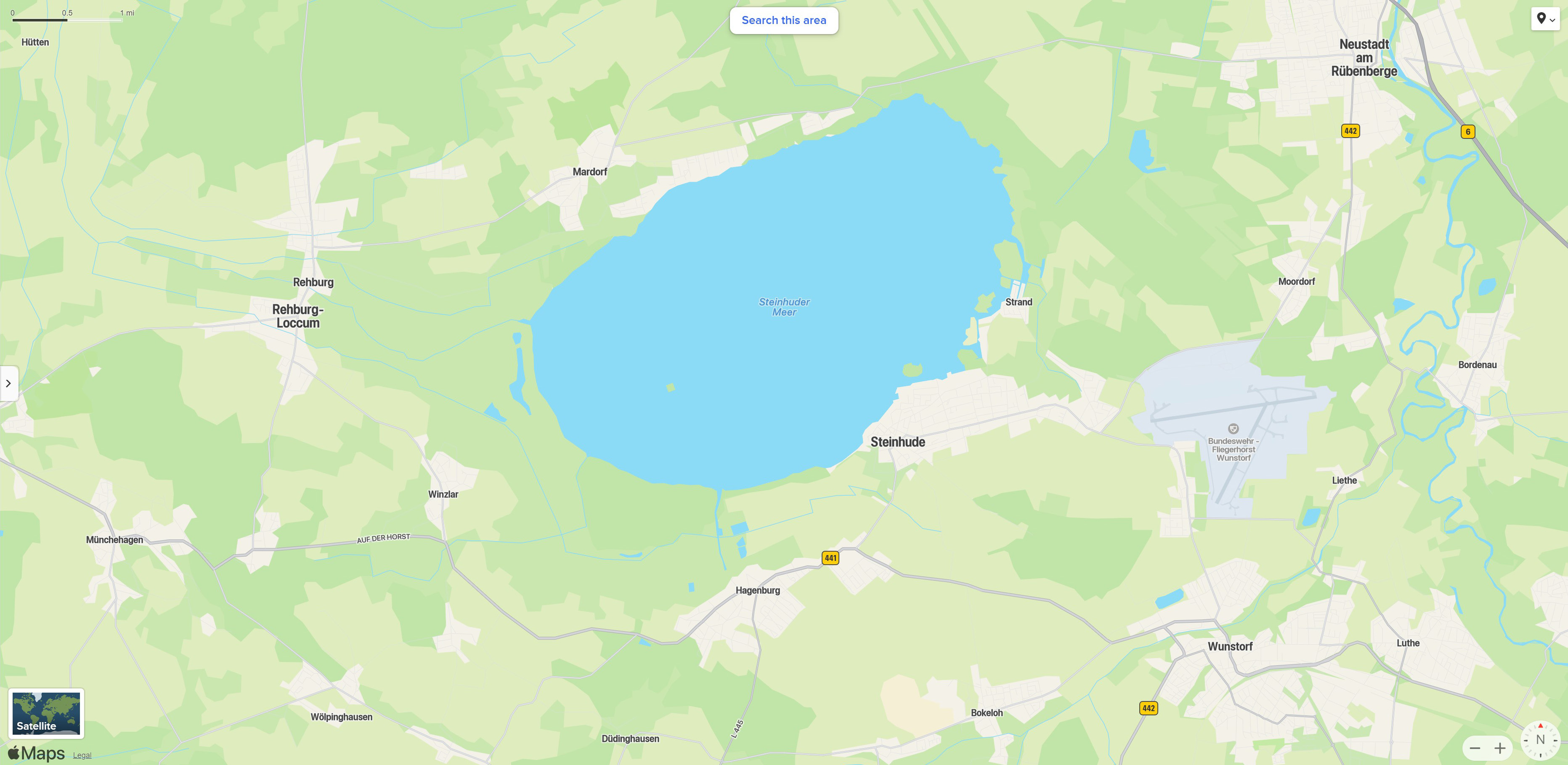
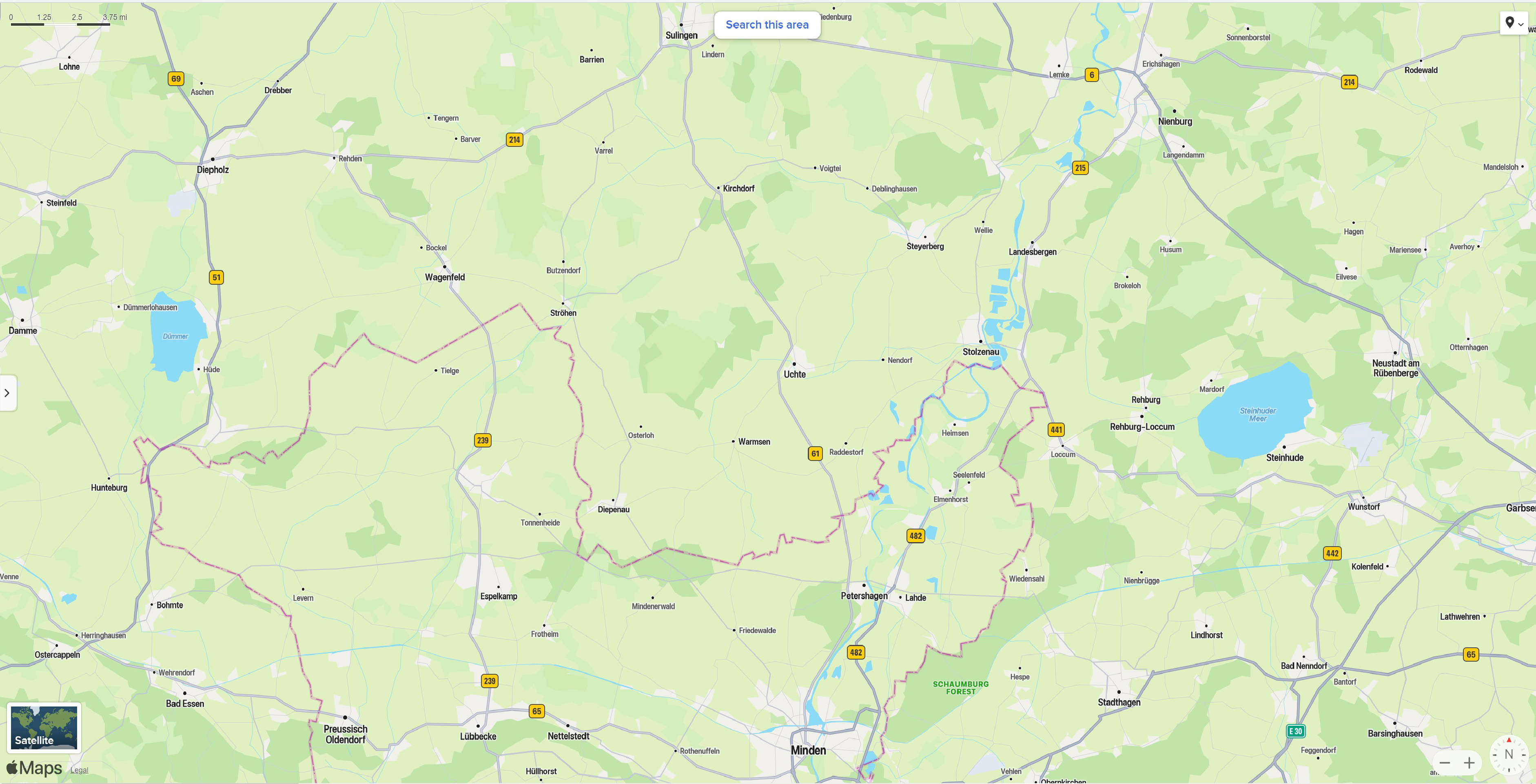
Though the above map indicates that Lt. Rothenberg crashed in the vicinity of Dummer Lake, in actuality, his aircraft was shot down 2 kilometers west of Hagenburg, or, 9 kilometers west of Wunstorf, towns which are directly south and southeast (respectively) of Steinhuder Meer, as shown in the map below.  

Identifying this crash location was a slightly involved process.  This entailed correlating Missing Air Crew Reports for the four P-51s lost over Europe on March 8, to 1) Mustang losses which were reported in Luftgaukommando Reports reported in the “master” list (…as it were…) of these German documents … in NARA Records Group 242, and, 2) within relevant “Mustang-MACRs” for this date, any Luftgaukommando Reports referenced or included (of course, in translation).  In terms of the latter, it turns out that MACRs for the following three pilots do include references to Luftgaukommando Reports, each such report having been filed under a different Luftgaukommando Report format (i.e., six-digit-number, AV Report, and, J Report).  

Edner, Selden R., Lt. Col., 4th Fighter Group, Headquarters Squadron
P-51B 43-6442 – survived; MACR 2838; Report 120808-120809

Gambill, William W., 1 Lt., 357th Fighter Group, 363rd Fighter Squadron
P-51B 42-103041, B6 * F / Speedball Alice – survived, but died while POW at Stalag Luft III on March 23; MACR 2944; Report AV 969 / 44

Ullo, Neil F., 2 Lt., 363rd Fighter Group, 380th Fighter Squadron
P-51B 43-6932 – survived; MACR 2575; Report J 657

But…  While MACR 3056 is absent of a reference to a Luftgaukommando report, the aforementioned “master” list of Luftgaukommando Reports contains an entry for Report J 683, which perfectly correlates to the time and location of Daniel Rothenberg’s loss.  However, this report is not accessible via NARA … probably because the document no longer exists, for as discussed in my series of posts about Major Milton Joel (shot down on November 29, 1943) it seems that low-number “J” and “KU” Luftgaukommando Reports did not survive the war to eventually be incorporated into Records Group 242.  

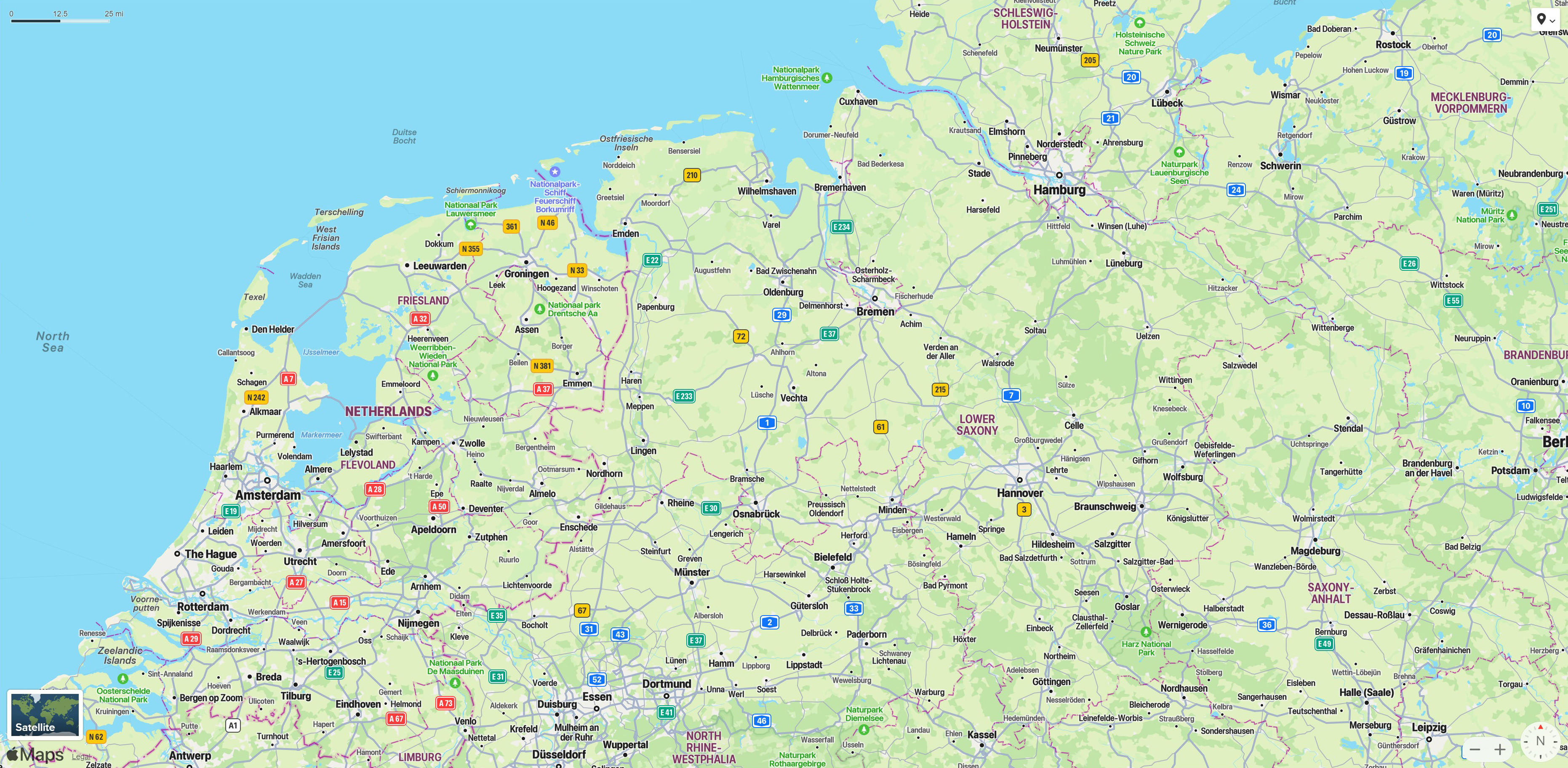
Anyway, the reason for the error in the reported location of P-51B 43-6989’s crash – in MACR 3056 – is evident from the map below: Dummer Lake and Steinhuder Meer, while separated by an east-west distance of over forty miles, lie at practically the same latitude, both are situated in or near rural or forested areas, both are elongated in a north-south direction, and finally, both are – sort of & kind of – roughly the same size.  

This map shows the general geographic setting of Dummer Lake and Steinhuder Meer.  They’re equidistant south from Bremen, and equidistant north from Bielefeld.

All the above information about the location of Lt. Rothenberg’s loss in Luftgaukommando Report J 683 precisely correlates back to an enemy pilot who – himself shot down and killed only seconds after shooting down Lt. Rothenberg, as recounted in MACR 3056 – turns out to have been a member of 9./JG 11, flying FW-190A-7 Werk # 340045: Feldwebel Herman Hoess.  (See Aircrew Remembered.)  

Over five years after his death, on May 16, 1949, Lt. Rothenberg was buried at Long Island National Cemetery in Farmingdale, N.Y.  (Specifically, at Section J, Grave 16094, as seen in this photo by FindAGrave contributor GLENN.)  While his name appeared in Casualty Lists published in 1944 on April 23 (Missing in Action) and June 3 (Killed in Action), like so very (very) many other American Jewish military casualties (or decorated servicemen) of the Second World War, his name never appeared in the 1947 compilation American Jews in World War II

The reason is  suggested by his matzeva: It’s absent of absence of a religious symbol.    

Though, according to the Roster of US WW II Dead (available via Ancestry) Daniel indicated his religious preference as Christian, his Interment Record features the word “none in the “Religious Emblem” section, which I suppose reflected this wishes of his parents, obviously his closest surviving next of kin.  

The uncertainty about Daniel’s religious identification and affiliation is evident even earlier, as seen in the biographical information card filed for for him by the National Jewish Welfare Board (NJWB).  This card was only one of many (many (many)) such cards generated as part of the NJWB’s wartime attempt to identify, record, and preserve historical information Jewish servicemen and military casualties. 

~~~~~~~~~~

It’s my understanding and interpretation that families known or presumed to be Jewish were contacted (via phone? via mail? via personal visit?) by volunteer representatives of the NJWB to the above end, the names of such workers and the dates of contact attempts having been recorded in the “Worker Consulted” data field of the card.  Going by the data on the card, the NJWB reached out to the Rothenberg family on three dates: June 2, July 26, and October 12 of 1944, based on the initial release of a War Department Casualty List on June 2. 

The “blank” rectangle at the left of the card suggests that the Rothenberg family never responded to the NJWB, or, provided no definitive information about their son.  The reason for this silence is not indicated.  (You can read much more about the NJWB’s WW II biographical index cards at Ancestry.com.)  

There’s most definitively information about volunteer worker listed on the card.  He was Rabbi Samuel Geffen, concerning whom information is available at the Center for Jewish History (CJH) and New York Times.  Born in 1907, he passed away in 2002.  Here’s his bio from the CJH:

Rabbi Samuel Geffen, born Febuary 17, 1907 in New York, NY, was the rabbi for the Jewish Center of Forest Hills West for many years.  Prior to his ordination in 1942, Geffen was a concert violinist and lawyer.  He served most his career at the Jewish Center of Forest Hills, from 1948 until his retirement in 1993.  Rabbi Geffen was married to Ruth Lenore Rosenfeld, with whom he had one son, Peter Geffen.  During his time at Forest Hills West, Rabbi Geffen taught for many years at the Hebrew school in addition to his role as a congregational and spiritual leader.  Rabbi Geffen died March 15, 2002 in New York, NY.

And from The New York Times, on March 19, 2002:

GEFFEN-Rabbi Samuel.  The entire Abraham Joshua Heschel School community mourns the passing of our beloved founder Peter Geffen’s revered father, Rabbi Samuel Geffen.  Rabbi Geffen was an exceptionally talented man, who was a concert violinist and lawyer before becoming a Rabbi.  He was the devoted spiritual leader for over 40 years of the Jewish Center of Forest Hills West.  We send our heartfelt sympathy to his wife Ruth (Rosenfield), son Peter, daughter-in-law Susie Kessler and grandchildren Jonah, David and Nessa who will greatly miss this kind, gentle, caring soul.  Shira Nadich Levin President, Board of Trustees Roanna Shorofsky, Director Abraham Joshua Heschel School

GEFFEN-Rabbi Samuel. We mourn with profound sorrow the passing of our beloved colleague.  Ordained in 1942, he served most of his career, from 1948 until his retirement, as rabbi of the Jewish Center of Forest Hills.  We extend our deepest condolences to his wife, Ruth; son, Peter; brother, Dr. Abraham; sisters, Bessie Wilensky and Helen Ziff; and nephews, our collegues, Rabbi David Geffen and Ben Ravid and to all who were touched through his rabbinate.  Rabbi Reuven Hammer, Pres. Rabbi Joel H. Meyers, Exec. VP The Rabbinical Assembly

~~~~~~~~~~

Why was Daniel’s matzeva “silent”?  To answer this question, we have to delve into the history and genealogy of the Rothenberg family.  The probable answer provides a window – in equal measures enlightening and disillusioning – upon the self-perception and “place” of the Jews of the United States in the mid-twentieth-century history, as reflected through the experiences of one family, among very many.  

First, Daniel’s Draft Card identifies his mother as Adelaide.  

Second, census records for 1910 reveal that Elliot and Adelaide were born in Russia and spoke English.  Such records for 1920 are different:  They indicate that Elliot was born in Russia and Adelaide in Rumania, both husband and wife speaking Yiddish.  For 1940, census records once again differ:  Adelaide is again recorded as having been born in Rumania, but, Elliot is now born in New York state.  

Third, Elliott’s World War I Draft Card (dated 1917) lists his occupation as “Salesman” .  This is sort-of consistent with census records.  1910 lists him as a druggist; 1920 as a wholesale drug salesman; 1940 as a retail store salesman.  

Moving to the Cohoes American of October, 25, 1935, this notice concerns Elliot’s trade-marking of a product called “KISS-LAX”, whatever that was.  (All kind of inferences come to mind, but there are no references to the product in Internet-land.)  Perhaps a 1930s version of Chap-Stick? 

There’s a solid degree of information about Daniel’s older bother, Murray.  Here’s his name in a record of marriage to Bernice L. Glover, dated March 16, 1936, in the records of the Chelsea Presbyterian Church…

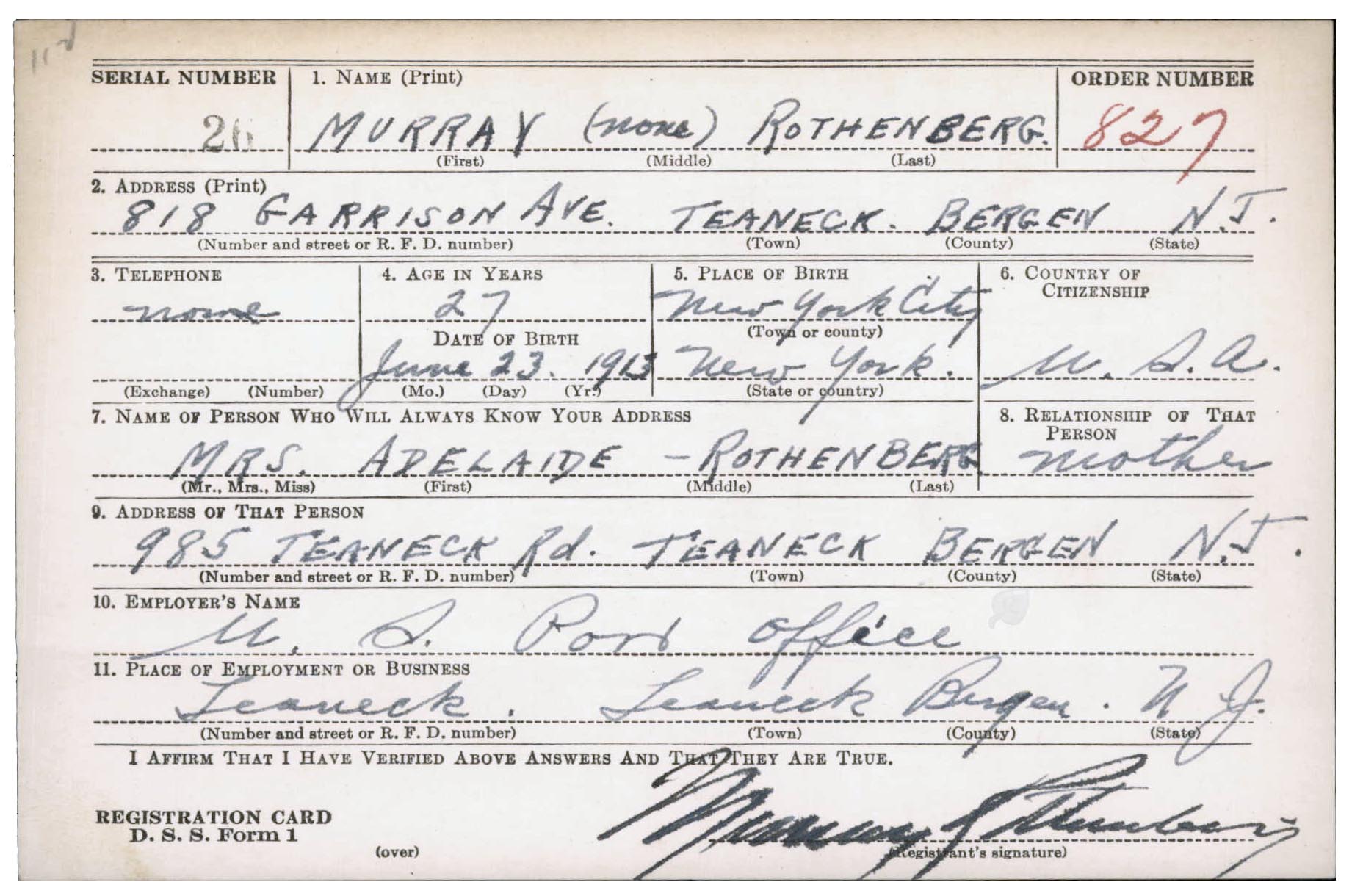
…and, here’s his draft card:

More about Murray, a most multifaceted man:  He was a boxer and wrestler, and during the Second World War, taught self-defense to soldiers, as described in this article from The Bergen Evening Record on September 3, 1943 (via Classic Wrestling Articles).

Ex-Diamond Gloves Champ Will Meet Chief Bamba Tabu In Bout; He’s Now Head Of War Plant Guards

The amazing Murray Rothenberg, ex-Teaneck gridder, former Bergen Evening Record Diamond Gloves champ, judo teacher to soldiers, car salesman, chief of a defense plant police staff, and just about everything else you can think of, branches out into new fields to conquer tonight.

The amazing Murray makes his debut here as a professional wrestler on the card at Columbia Park, North Bergen.

Bergen County has never known another sports figure quite like the husky, scowling Murray Rothenberg. No matter what branch of sports – or in any other of the numerous things – which Murray tried, he always managed to make good.

WRESTLED BEFORE

Usually, in the process, he worked up a widespread dislike for himself among the fans, the sort of thing which helped pack followers of the Diamond Gloves into arenas in the hope that they’d see him get his block knocked off. He never did – he invariably won.

Actually, tonight’s go at Columbia Park won’t be Murray’s first taste of professional wrestling. About 8 or 9 years ago, he went on a tour of the South and had a half dozen or so bouts. Just like in everything else, he won.

Tonight’s mat engagement, however, is his first near home. He’s slated to oppose Chief Bamba Tabu on the card which Promoter Ralph Mondt presents at Columbia Park. The headline attraction is between Jack Wentworth, the Canadian Hercules, and Chief Thunderbird.

Murray, who played football with Teaneck High School early in his athletic career, later was a star in semi-professional football. He boxed a lot as an amateur and even had a few professional engagements.

Still as a high school student, he entered the Record’s Diamond Gloves. He was one of the original Bergen County amateur fistic champs, winning the 160-pound title in the first tournament staged by the Record. He broke his hand in the finals, back in September, 1933, but still came up with a win for the middleweight crown.

Of late, Rothenberg has been working in a defense plant. He is chief of the police guards. Just to keep in trim and to keep his hand in, he drills soldiers in a nearby barracks in the art of judo.

As mentioned in the above article, Murray was most definitely in the automotive business, as attested to by three newspaper items.  First is a blurb from the Brooklyn Eagle of November 16, 1950, concerning an 11:00 (AM or PM?) radio program on WARD:  “Why Worry – See Murray”…

… second, an advertisement for Murray’s Motors published in the Auburn Citizen-Advertiser on December 13, 1962.

…and third, a help-wanted advertisement for auto mechanics in The Journal News of May 14, 1973.

As for Ruth, here’s her portrait in the 1944 Teaneck High School yearbook.  (Via Ancestry.com)  Daniel was on her mind: “…her pride is her fighter-pilot brother…”

~~~~~~~~~~

Now we come to the Second World War, and after.  Other than the appearance of Daniel’s name in the above-mentioned Casualty Lists, this article, from The Bergen Evening Record of March 26, 1944 (via the Johnson Public Library of Hackensack) is evidently the only news item that exists about his wartime service. 

Missing

ROTHENBERG, Second Lieutenant Daniel, 20, son of Mr. and Mrs. Elliot Rothenberg, 985 Teaneck Road, Teaneck.  (European area.).

Second Lieutenant Daniel Rothenberg, 20, pilot of a P-47 Thunderbolt, has been reported missing in action, according to a War Department telegram received by his parents, Mr. and Mrs. Elliott Rothenberg, 985 Teaneck Road, Teaneck.

The parents, who declared they refuse to believe any harm has come to their son, said the telegram listed a mission over Germany on February 24 as his last known flight.  Rothenberg volunteered for the Air Force in September, 1942, after one year as an honor student at John Marshal School of Law in Jersey City.  He has been overseas, based in England, with the Eighth Air Force, for the past 5 months.

“Daniel is resourceful and always was intelligent.  We are sure he is safe,” his father said.  The father now is employed by Saunders Jewelers on Main Street, Hackensack.  Some years ago he operated Elliott’s Drug Store in Hackensack.

The missing pilot’s brother is Murray, once a middleweight champion fighter in the Bergen Evening Record diamond gloves contest.  His younger brother, Daniel; only 5 feet tall never was athletically inclined, according to his parents.

XXX

Forty one years later, following Murray’s April 1985 passing, this letter – a tribute by his sister Ruth (Rothenberg) Eby – appeared the same month in the New Jersey newspaper The Record.  The letter was found in the Cetola Family Tree at Ancestry.com.  The text follows:

A tribute to Murray Rothenberg

Sports Editor, The Record,

There must be many Murray Rothenberg fans left in North Jersey. He was a legendary sports hero for three decades in the Thirties, was a football player for Teaneck High School, and he went on to a semipro team, the Red Devils. He was also a Diamond Glove boxing champ. In the Fifties, became famous to television fans as a pro wrestler. Dennis James, the TV sportscaster, used to love to use “Why worry, see Murray!” – the slogan for Rothenberg’s used-car lot in Little Ferry.

There are many sides to Murray that perhaps his sports fans might not know. He had to champion his birthright; anti-Semitism was rampant in his day as an athlete in Teaneck. He had to scrap his way up, often fighting neighborhood bullies.

Murray became a favorite of a Record sports columnist, the late Al Del Greco, who wrote often of Murray’s style and exploits.  But during World War II, there was a block of time that remained secret until years later. Murray’s judo expertise was used to train special forces, and he was sent on several secret overseas missions to bring “someone” back.  So ingrained was his commitment to secrecy that he never gave out details.

After the war there were some dark years for Murray, but he finally overcame a drinking problem by his complete involvement with Alcoholics Anonymous, and he devoted himself to helping others get what he called “Good, orderly direction”.

Murray passed away this month in Florida, but he left a legacy – a legacy of being a true champion. His sports fans might only remember the games, but there are many others who will cherish the memory of a man who left his mark on their lives.

RUTH EBY
(Murray’s kid sister)
Haworth

As for Elliot and Adelaide, they passed on some years earlier: Adelaide on April 6, 1966, and Elliot on October 13, 1967.  Here are their obituaries, from The Bergen Record on (respectively) April 7, 1966, and October 13, 1967:

ROTHENBERG – Adelaide (nee Greenberg) at Hackensack, N.J., on Wednesday April 6, 1966 of 995 Teaneck Road, Teaneck.  Beloved wife of Elliott.  Devoted mother of Leon, Murray, Mrs. Marion Dintenfast, Mrs. Hilda Weltman and Mrs. Ruth Eby, also surviving 13 grandchildren and 8 great grandchildren.  Sister of Samuel Greenberg.  Christian Science Memorial Service at the Eckert Funeral Home, corner of Main and Poplar Streets, Ridgefield Park, on Thursday, April 7 and _ P.M.  Commitment at the convenience of the family.  In lieu of flowers kindly make contributions to your favorite charity.

Elliot Rothenberg

Englewood – Elliot Rothenberg, 77, of 240 East Palisade Avenue, a retired jeweler, died this morning at the Tenafly Nursing Home.

He had lived in Teaneck for 45 years.

He is survived by a son Murray of Miami, Fla.; three daughters, Mrs. Marian Dintenfast of Philadelphia, Pa.; Mrs. Hilda Weltman of Englewood, and Mrs. Harold Eby of Haworth; 13 grandchildren and eight great-grandchildren.

Taking the history of the Rothenberg family as a whole, particularly in light of Ruth’s letter, and, the obituaries of Elliot and Adelaide, there is – to use a 2025-ish word – very much to “unpack” “between the lines” of these writings.  

First, neither parents’ obituary makes any allusion to their youngest son, Daniel. 

Second, Ruth’s tribute to Murray, though it mentions her brother’s wartime activity with great pride, is entirely absent of any reference to Daniel’s military service and death in combat, though she obviously felt identification with and admiration for him during her late adolescence. 

Third, Ruth refers to Murray’s having participated in, “several secret overseas missions to bring “someone” back.  So ingrained was his commitment to secrecy that he never gave out details.”  In my opinion, this was a “bubbe meise” – a tall-tale; a grandiose biographical embellishment – invented by and heard from her brother in the context of his postwar struggles with alcoholism; a story she accepted and believed in good faith and good will.  I seriously doubt he ever left the United States during the war years.

Fourth, it’s most interesting – and intellectually refreshing – that Ruth had the candor to mention antisemitism having been “rampant” in Teaneck during the twenties and thirties.  One can’t understand the present unless one perceives the past as it really was, rather than through a mindset fogged by the comforting mists of hagiography, a central example of which is the highly over-rated cinematic oeuvre of Steven Spielberg.  (But, that’s another topic…)

Fifth, the “elephant in the foyer” can be found in Adelaide’s obituary: She had a Christian Science Memorial Service upon her passing, her obituary suggesting that she was not interred in a Jewish cemetery.  (As for Elliot?  His place of burial is unknown.)  Which fact leads much further: Adelaide’s involvement with Christian Science was long-lasting and very deep, beginning at least when she was in her early forties and lasting the rest of her life.  She authored 29 articles pertaining to Christian Science in the three decades between August of 1933 and January of 1963 (oddly, none between December of 1941 and December of 1945), these having been published in The Christian Science Journal, Christian Science Sentinel, Der Herold der Christlichen Wissenschaft, Le Héraut de la Science Chrétienne, and, O Arauto da Ciência Cristã.  Absolutely none of these articles (going by the titles, at least) make any reference or allusion – of even the vaguest and most tangential sort – to recent or ongoing events, let alone the situation and fate of the Jews of Europe during the 30s and 40s.

In light of this glimpse of the Rothenberg family’s history, Daniel’s religious preference as a Christian, the complete absence of any religious symbol on his matzeva, whether Jewish or Christian, was more inevitable than it was surprising.  How could he have declared himself otherwise, given the constellation of factors surrounding his youth and upbringing?  Which, in turn, leads to curiosity about how the course of his mother’s life led her to become an adherent of Christian Science, and, the implications of her decision for her family.  A definitive answer to this will never be known – all the “dramatis personae” having since passed on – but one can speculate.  

First, it’s notable that Daniel’s mother, having been born in Rumania in 1890; a woman whose native tongue was Yiddish, went by the very name of Adelaide, which is actually a, “…feminine given name from the English form of a Germanic given name, from the Old High German Adalheidis, meaning “noble natured”, rather than a female name of Yiddish or Hebrew derivation.  (…such as, and, such as…)  Though it’s impossible to trace her ancestry farther back than the 1910 Census, this suggests that “Adelaide” was actually a name she adopted coincident with or some time after her arrival and naturalization in the United States, her original name (perhaps it was Aidel, Adele, or Ada) being lost and now forever untraceable, as is the history of her family in Eastern Europe.

Second, the reason for her adoption of Christian Science could be attributable to any of the small myriad of factors that have not infrequently led more than a few Jews – ever since the advent of Jewish political emancipation a few short centuries ago and continuing undiminished now; even during the days of the Roman Empire; even during the pinnacle of Hellenism; to “fundamentally transform” their identity and persona in a direction assumed to be more acceptable – socially, intellectually, vocationally, and otherwise – to that of the prevailing culture.  (Well, in their own eyes.)  Given Ruth’s comment about the antisemitism experienced by her brother in Teaneck (which reflected an era and setting far wider than Teaneck, the state of New Jersey, or the Middle Atlantic States), perhaps Adelaide – regardless of her residence in that city or any other urban center, simply wanted to jettison an identity to conform to and become part of the larger society.  Or, on a much simpler level, perhaps the social and political currents that relentlessly buffeted the lives of all men and women amidst the turbulence of the late 1800s through the early 1900s (but, is life not always turbulent?), the Jewish people particularly among them, left her unmoored from or even unacquainted with a solid sense of Jewish identity and “Yiddishkeit” – other than a vapid, vestigial and atrophying sense of ethnicity – the void in her soul being replenished by the mores and religion of the surrounding culture. 

~~~~~~~~~~

In this story, I’m reminded of Stephen J. Dubner’s 1998 book, Turbulent Souls: A Catholic Son’s Return To His Jewish Family, here described at GoodReads:

Two years ago, Stephen J. Dubner wrote a cover story for The New York Times Magazine called Choosing My Religion.  It became one of the most widely discussed articles in the magazine’s history.  Turbulent Souls, the book that grew out of that article, is an intimate memoir of a man in search of a Jewish heritage he never knew he had.  It is also a loving portrait of his parents.

Stephen Dubner’s family was as Catholic as they come.  His devout parents attended mass at every opportunity and named their eight children after saints.  Stephen, the youngest child, became an altar boy, studied the catechism, and learned the traditional rituals of the Church — never suspecting that the religion he embraced was not his by blood.

Turbulent Souls is Dubner’s personal account of his family; tumultuous journey from Judaism to Catholicism — and in his own case, back to Judaism — and the effects, some tragic, some comic, of those spiritual transformations.  His parents were Jews, born in Brooklyn to immigrant parents, but — independent of each other and, indeed, before they met — each converted to Christianity, only to be shunned by their families.  After their marriage, they closed the door on Judaism so firmly that their children had no inkling that their background was far different from what it seemed: They didn’t know, for instance, that their mother had a first cousin named Ethel Rosenberg, who was executed for treason in one of the most controversial cases of the cold war era.

Stephen Dubner’s is a story about discovery: of relatives he never knew existed, of family history he’d never learned, and of a faith he’d never thought of as his own and, in fact, knew nothing about.  It’s a fascinating, thoughtful, and thought-provoking exploration of a subject of intense interest to spiritually minded men and women everywhere.

~~~~~~~~~~

One also thinks of Lieutenant General Victor H. Krulak, whose early life is chronicled in Chapter 1 – “Once Upon a Time” – in Robert Coram’s biography Brute: The Life of Victor Krulak, U.S. Marine.  In the same way that the Rothenberg family was contacted by the National Jewish Welfare Board (NJWB) as part of the organization’s effort to identity Jewish servicemen and record their accomplishments, so was then Lt. Col. Krulak (or his wife, Amy Chandler Krulak), after his actions at Choiseul Island, in the Solomon Islands, from late October through early November of 1943.

Was he a Jew?  The answer, as documented in Brute and other sources, like his NJWB information card … below … was: No. 

Perhaps – and perhaps as in the case of Daniel Rothenberg? – this facet of the future General’s life was prefigured for him by a small constellation of major decisions made by his family years before his birth; let alone before he entered the United States Naval Academy.  For, as recounted in Brute, his father Morris, “…was a secular Jew, and his desire for assimilation was so strong that Victor never received any religious instruction, never attended synagogue, and, as far as can be determined, never had a bar mitzvah.  In this way, Morris paved the way for his son later to minimize his Jewish background.”  This chain of the unintended … or quietly intended? ,,, consequences of the actions of one generation upon another, is discussed at great depth in Todd M. Endelman’s Radical Assimilation in English Jewish History, 1656-1945, the conclusions of which are highly pertinent to the history of the Jews of the United States.  In a different vein, the late Barry Rubin’s Assimilation and Its Discontents, which observes intergenerational acculturation, assimilation, and the loss of memory across a much wider time frame, is particularly focused on the Jews of the United States in the nineteenth and twentieth centuries.  

Continuing in 2007, after being shown his family genealogy, Krulak’s choice of words was revealing in that when he talked about his parents, he could not force himself to utter the words “Jew,” “Jewish”, or “Yiddish.”  “My father never talked of his spirituality.  It was always about hard work.  My father was a very serious man.  He was very quiet about his background, about everything, almost silent.  I learned from him that life is serious, that sometimes you have only one choice.  My father always talked of my future.”  
He paused and added, “I would hope that this book not dwell on my father’s spirituality, but rather his lessons of hard work.”
If he and his father never discussed their religion, what of importance did they discuss?
“He told me, ‘You will be short, and you will be bald. But you don’t have to be fat.’ ”
There was but one addition: “He told me the way to get along with a new acquaintance is to express genuine interest in the day-to-day affairs of the other person.”
And that is all Victor Krulak would say about his parents.

~~~~~~~~~~

“As I saw some Germans in the neighborhood, I decided to lie in a ditch until dusk.  I actually stayed till 2200 hrs.”

The path of Squadron Leader David Goldberg (J/4242) on March 8, 1944 led to an outcome infinitely different from that of Lieutenant Daniel Rothenberg.  The son of Harry and Sophia L. Goldberg, who resided at 28 Kent Street in Hamilton, Ontario, David was born in that city on March 20, 1917. 

A member of the Spitfire-equipped No. 403 Squadron (Royal Canadian Air Force), David was shot down during an afternoon Ranger mission.  (Ranger: A “freelance flights over enemy territory by units of any size, to occupy and tire enemy fighters.”, from Wikipedia, based on John D.R. Rawlings’ Fighter Squadrons of the RAF and their Aircraft, published by Macdonald and Jane’s Publishers Ltd.).  Struck by flak at St.-Andre-de-l’Eure, he crash landed his aircraft (Spitfire Mk IX MJ356) and evaded capture, returning to England on May 6.   

(“I leave to the various futures (and not to all) my garden of forking paths.”
 – Ts’ui Pen, Governor of Yunan)

 As recounted in the ORB (Operations Record Book) of No. 403 Squadron, via the RCAF Association, “Two shows and 28 non-operational sorties were flown today.  We were escort wing on the morning do and this afternoon we carried out an eight man Ranger.  No enemy aircraft were seen.  On the Ranger, we lost two pilots, F/O J.H. Ballantyne DFM and F/L D. Goldberg, our adjutant.  F/O Preston’s aircraft was severely damaged by flak but he managed to land at Friston.  F/O Ballantyne’s aircraft [Spitfire MJ876] was seen to hit the ground and explode and very little hope is held for him.  He has been posted as missing believed to be killed.  F/L Goldberg reported that he was going to attempt a crash landing.  He has been posted as missing but we all are hoping that he will be walking back to see us one of these days.  F/O Foster was posted to 53 OTU wef today.”

Awarded the Distinguished Flying Cross, S/L Goldberg’s name can be found on pages 35 and 124, of volumes I and II, respectively, of Canadian Jews in World War II.  David passed away on September 17, 2006, and is buried at Woodland Cemetery in Hamilton.  Other than these nominal genealogical and historical facts, I have no further information about his subsequent military service and postwar life.  His portrait, below, is from Canadian Jews in World War II… 

XXXX

…while this image (via canada.ca) shows the wolf’s head emblem of No. 403 Squadron…

…and this is a depiction of a Spitfire of No 403 Squadron from DCS (Digital Combat Simulator).   

Here’s a transcript of S/L Goldberg’s succinct Escape and Evasion Report, M.I.9/S/P.G.(-)1910, obtained from the The National Archives(You know, the one in Kew, not the one in College Park.)

Left:     GIBRALTAR, 5 May 1944. Arrived: U.K., 6 May 1944.

I was pilot of a Spitfire aircraft which left FRISTON on 8 Mar 44 at 1600 hrs. to carry out a low-level sweep round PARIS.  On the outward journey when somewhere South of EVREUX (N.W. EUROPE, 1:250,000, Sheet 7, R 16) I was hit by Flak and tried to crash land, but crashed about 3 kms. S.W. of CHAMPIGNY-la-FUTELAYE (R 2850) at about 1630 hrs.

I found myself in the aircraft upside-down.  I managed to get out, but had to leave my parachute and harness in the machine, which was smouldering.

I immediately started to run towards a clearing, throwing off my mae west into the trees.  I went in a Northerly direction, gradually heading West until I reached a forest.  As I saw some Germans in the neighborhood, I decided to lie in a ditch until dusk.  I actually stayed till 2200 hrs.

I then started to move West, and walked till 0530 hrs (9 Mar) when I again lay low in a forest, in which I stayed until 2130 hrs.  I then continued for another hour, when I saw a farmhouse and, having looked into the window, decided to enter and make my identity known.  I was given food and shelter for the night.  My host went out and returned in a couple of hours looking pleased with himself, but told me nothing that night.  I was kept here and given food and shelter all next day (10 Mar), and at about 1800 hrs. four men turned up.

From this point my journey was arranged for me.

More information about S/L Goldberg’s subsequent experience, involving a trek over the Pyrenees Mountains in the company of other Allied airmen, can be found at Aircrew Remembered, in the story of the Evasion and Escape of S/Sgt. Isaac Lowell Creason.  A member of the 449th Bomb Squadron, 322nd Bomb Group and a crew member of 1 Lt. Samuel A. Walker, Creason’s B-26B (41-31948) was shot down by flak on January 14, 1944.  You can read the original account of Creason’s experience in E&A Report 616.  The MACR covering the plane’s loss (#1748) is, like many low-number MACRs (and not a few higher-numbered Reports in that set of records) essentially useless(Thank you so much, Fold3!)

The following set of maps and air photos, at successively larger scales, show the likely location of S/L Goldberg’s crash.  

First, this map sets S/L Goldberg’s crash in a regional context.  The crash location, denoted by the red circle, is about 48 miles due west of the center of Paris.

This map shows the approximate location of S/L Goldberg’s crash, based on his E&A Report: southwest of Champigny-la-Futelaye.

Here’s an air photo view of the above map at the same scale.  The probable crash site is in farmland just west of Lignerolles.  This seems to be somewhat inconsistent with S/L Goldberg’s account of running towards a clearing (farmland is already pretty “clear”!), but still, this is the geographic “best fit” given his mention of coming to earth southwest of Champigny-la-Futelaye.

Here’s an even closer view of the above location.  Does anything remain of his Spitfire eighty years later…?

Of David Goldberg’s life subsequent to the Second World War, I have no knowledge.

Books

Borges, Jorge Luis, “The Garden of Forking Paths”, Ellery Queen’s Mystery Magazine, August, 1948, pp. 101-110 (translated by Anthony Boucher)

Coram, Robert, Brute: The Life of Victor Krulak, U.S. Marine, Little, Brown and Co., New York, N.Y., 2010

Dublin, Louis I., and Kohs, Samuel C., American Jews in World War II – The Story of 550,000 Fighters for Freedom, The Dial Press, New York, N.Y., 1947

Endelman, Todd M., Radical Assimilation in English Jewish History 1656-1945, Indiana University Press, Bloomington, In., 1990

Franks, Norman L.R., Royal Air Force Fighter Command Losses of the Second World War – Volume 3: Operational Losses: Aircraft and Crews 1944-1945 (Incorporating Air Defence Great Britain and 2nd TAF), Midland Publishing, Leicester, Great Britain, 2000

Rubin, Barry, Assimilation and Its Discontents, Times Books (Random House), New York, N.Y., 1995

Canadian Jews in World War II – Part I: Decorations, Canadian Jewish Congress, Montreal, Quebec, Canada, 1947

Canadian Jews in World War II – Part II: Casualties, Canadian Jewish Congress, Montreal, Quebec, Canada, 1948

USAF Credits for the Destruction of Enemy Aircraft, World War II, Albert F. Simpson Historical Research Center, Air University, Office of Air Force History, Headquarters, USAF, 1978

One Article (just one)

Rothenberg, Adelaide, “The Cement of a Higher Humanity”, The Christian Science Journal, October 1, 1949, V 67, N 10

The One That Got Away!…  “I Was A Prisoner of War of the Nazis” – “Ich war ein Kriegsgefangener der Nazis,” Aufbau, October 15, 22, and 29, 1943

Whether in war or peace, the nature of man has many facets, which, depending on the circumstance and time, can vary as much within the soul of one person as between different individuals:  Courage.  Fear.  Deliberation.  Rashness.  Boldness.  Hesitation.  Judgement.  Foolhardiness.  Discernment.  Obtuseness.  Bravery.  Cowardice.  Cunning.  Naivete.  And so much more.

One way in which these aspects of the human character have been chronicled, whether in fiction, popular culture, or the “historical record”, is in accounts of the escape from captivity of prisoners of war.  Whether described in official documents, letters and diaries, family stories, legends, passing anecdotes, or the unexpressed memories of men, there are innumerable such tales.  One such account – of very many – from the Second World War, appeared as a three-part series in the New York-published German exile newspaper Aufbau – “Reconstruction” – on October 15, 22, and 29, 1943, under the simple and apropos title “Ich war ein Kriegsgefangener der Nazis” – “I Was a Prisoner of War of the Nazis”.

Written by an un-named Yishuv soldier who escaped from German captivity (the events of the story having transpired in German-occupied Greece) the series commences with the soldier’s interrogation by German officers, continues with fleeting  recollections of his life as a POW (always with escape and defiance in mind), follows with accounts of thwarted escape attempts, and concludes with the soldier’s first encounter – while “on the run” after his eventual, successful escape – with Greek civilians. 

In terms of the soldier’s escape attempts, the first attempt – well, contemplated escape attempt! – would have involved the author and his friend “Sch.” jumping from a moving freight car during a moonlit night.  This plan was aborted at the last moment when rifle fire was heard and a guard entered the car, after which the author and Sch. seem to have been reproached other POWs for jeopardizing the well-being of their comrades. However, during the next train stop, a POW from the adjacent freight car did escape: That man momentarily distracted a guard with the light of a match, and then concealed himself by lying between the rails and allowing the cards to pass over him.

Subsequently, another escape was planned, again involving a night-time train jump by the author and Sch. This was aborted when Sch. pulled the author back into the train, after the author had been “noticed” (again?) … by other POWs?

The second escape attempt occurred as a group of POWs were marching through the pass of Thermopylae: The narrator and Sch. jumped into a nearby ditch during a moment when the column of POWs was temporarily unguarded.  Their immediate escape occurred unnoticed, but the uncoordinated, spontaneous “escapes” of other POWs attracted the attention of a lieutenant and some guards.  Before the arrival of these German soldiers, Sch. and the author managed – unnoticed – to rejoin the main column of POWs.  The other “random” escapees were returned to the POW column to the accompaniment of rifle butts.  Tellingly, two escapees never returned.

So, the third time was the charm.

After leaving Thermopylae the POWs were again loaded onto freight cars.  At night, alone – Sch. having no further interest or motivation in escaping – the narrator jumped from a moving freight car as the train passed over a bridge.  Pursued by rifle fire, he reached the bridge’s railing, and – taking very much of a leap of faith – fell into a stream or river, remaining underwater.  Upon reaching the limit of his endurance, unable to hold his breath any longer, he rose to the surface of the water and saw that he had been left behind: The train has crossed the bridge, without him.

He was a free man.

The tale is well-written, compelling, and inspiring, yet also (deliberately?!) enigmatic, for absolutely nothing is revealed about the soldier’s experiences prior to his capture, let alone the events surrounding his post-escape evasion and eventual return to Allied forces – which together almost certainly encompassed a time period vastly longer than the brief duration of his actual captivity.  Though I’m certain information about each and every aspect of his escape was recorded, corroborated, and archivally preserved by the British military (and probably still exists somewhere – where?! – within The National Archives (not the National Archives!)) for security reasons, this information obviously could never have been released to the news media in wartime.  This, the tale’s “truncated” nature and abrupt end, at least in a literary sense.

Despite the story’s gripping nature and its direct relevance to the nature of the Jewish military service during the Second World War (well, at least in the European Theater…), to the best of my knowledge nothing relating to the tale appeared in any other wartime Jewish periodical.  This was probably attributable to lack of awareness on the part of publishers and editors of other English-language organs of the Jewish news media (whether in the United States, England, South Africa, the Yishuv, or elsewhere) to the very venue of the article’s publication – Aufbau, let alone the article having been published in German.  

One of the most interesting aspects of the story is apparent from its first installment: The author’s identity is a mystery; neither his rank nor his name are given.  His identity is only resolved – and at that, partially resolved – in the third and final part of the series.  However, a general idea of his background can be gained from these clues: 1) Quoting from the introduction to the first installment: “The author of the following diary pages fled as a very young man from Nazi Germany to Palestine and became a member of kvutzah [kibbutz]”.  2) The soldier (and three fellow POWs, “S. and D. and R.”) hailed from the kvutzah of Ashdoth-Ya’akov, now known as Kibbutz Ashdot Yaakov (Ihud); just south of Lake Tiberias.  3) He was born in Germany and graduated from high school there, his parents (…alas, alas…) remaining in that country as of the summer of 1941.  4) He was living in Haifa through 1938.

____________________

This Mapple App Apple Map shows the location of Kibbutz Ashdot Yaakov:  Designated by the red pointer, it’s just south of Lake Tiberias. 

____________________

So, who was this anonymous author?  If you scroll to the very end of this post, you’ll see that the series’ final installment (unlike the first and second installments) published on October 29, 1943, concludes with the initials: “F. J-n.”  Though – perhaps deliberately? – not an exact match, I am confident that these initials refer to Private Y.M. El-Jo’an (serial number PAL/12083), who was reported in The Palestine Post of August 15, 1943, as having escaped from German captivity.  The time-frame of Aufbau’s series fits the August 15 news item perfectly, strongly implying that El-Jo’an evaded (certainly with the assistance of Greek civilians?) for over a remarkable two years, given that the fall of mainland Greece to German forces occurred at the end of April, 1941.   

____________________

Here’s the Post’s front page for August 15, 1943, with the article highlighted…

…and, here’s the brief article itself:

PALESTINIAN P.O.W.’S
ESCAPE

Three Palestinian soldiers, serving in the Royal Fusiliers, who were previously reported prisoners of war, are now officially announced to have escaped from enemy hands.  They are:

Pal/23163, Spr. D. Chaver;
Pal/23183, Spr. J. Menachem;
Pal/23317, Spr. S. Dalah.

Another Palestinian soldier previously reported a prisoner of war, has now been recaptured from enemy hands, is Pal/12083 Pte. El-Jo’an, Y.M., P.C.

____________________

So, assuming “F. J-n.” was in reality Private Y.M. El-Jo’an – as I’m confident he was – I have absolutely no idea of what became of him afterwards.  Paralleling this, I have no information about Sappers Chaver, Menchem, or Dalah.  Perhaps they, too, evaded or escaped from captivity in Greece.  I’m certain their stories would be as compelling as that of Private El-Jo’an, if they could be found.

________________________________________

____________________________________________________________

________________________________________

Of the forty-five Yishuv soldiers captured by the Germans who did not return from or eventually survive captivity, there were thirteen men who attempted to escape, but did not succeed.  They were:

Disappeared after escaping

Private Menashe Durani: 9/5/41 – jumped from train

Died while evading capture

Private Abraham Gelbart: 4/25/42

Shot or killed during escape attempt

Sapper Aharon Arman: 1/26/45
Corporal Michael-Chaim Brajer: 1/16/45 or 1/26/45
Sapper Abraham Elimelech: 7/19/41
Private Norbert Gabriel: 11/1/41
Sergeant Itzchak Goldman: 4/29/41
Private Saadia Tzabari: 4/28/41 – jumped from train
Corporal Shlomo Tzarfati: 10/1/41
Private Jakub Weissberg: 10/30/42
L/Cpl. Aaron Weissman: 8/19/41

Escaped; apprehended 5/17/44, but shot shortly after recapture

Private Dov-Berl Eisenberg – died of wounds 6/28/44
Private Eliahu Krauze – died immediately

Of these thirteen soldiers, some of their stories are partially known; some are barely known; and some will never be known.  (Well, among men.) 

Very brief biographical profiles of these soldiers are presented below, based on information in both volumes of Henry Morris’ invaluable two-volume work We Will Remember Them, random issues of The Jewish Chronicle and The Palestine Post, plus, information available via the Commonwealth War Graves Commission, and, Izkor, The Commemoration Site of The Fallen of the Defense and Security Forces of Israel, where their portraits were found. 

Note that eight of the thirteen have no known graves.

And so, they are…

– .ת. נ. צ. ב. ה –

תהא
נפשו
צרורה
בצרור
החיים

Arman, Aharon (אהרון ארמן), Sapper, PAL/23378, Royal Engineers
1039th Port Operating Company
Stalag 344 Lamsdorf
1/26/45: Shot during escape attempt
Born 1921
Mr. and Mrs. Nathan [Natan] and Miriam Arman (parents), Tel Aviv, Israel
Krakow Rakowicki Cemetery, Poland – 2A,C,6
We Will Remember Them II – 42
German POW # 4784; Year of birth: CWGC 1926; izkor.gov.il: 1921

____________________

Brajer, Michael Chaim [Chaim-Michail] (חיים-מיכאל ברייר), Cpl., PAL/23009, Royal Engineers
1039th Port Operating Company
Stalag 8B Teschen
1/16/45 or 1/26/45: Killed while fleeing POW camp
Born Kandesh, Hungary, 9/2/13
Mrs. Malja Brajer (wife), Tel Aviv, Israel
Mr. Batseva [Bat-Sheva] Brajer (father)
Athens Memorial, Athens, Greece – Face 4
The Jewish Chronicle 7/25/41
We Will Remember Them I – 239
German POW # 4334; POW List as “Breyer, Michail Chain”; LJC gives name as “M.C. Breyer”, and rank as “Sapper”; CWGC and Izkor.gov.il. dates differ.

____________________

Durani, Menashe (מנשה דורני), Pvt., PAL/13216
603rd Palestinian Port Company
Stalag 344 Lamsdorf
9/5/41: Jumped off train during transfer of POWs to Austria, and disappeared
Born Peta Tikva, Israel, 1918
Mr. and Mrs. Yosef and Shvedia Durani (parents), Raanana, Israel
Athens Memorial, Athens, Greece – Face 9
The Jewish Chronicle 7/25/41
German POW # 4869

____________________

Eisenberg, Dov [Dov-Berl] (דב-ברל אייזנברג), Pvt., PAL/11797, Mentioned in Despatches
Pioneer Corps
POW in Poland
5/17/44: Escaped
Died while POW 6/28/44 (murdered)
“All the days of his captivity Dov did not fall in his spirit, he tried to escape from his captivity, and at the first opportunity he escaped with a friend and the two hid in secret.  Squads of German soldiers set out in search of them and later captured them and led them back to the camp.  On the way to the camp, they met a German officer who ordered them to come with him to look for another escaped prisoner.  As they walked in front of the officer, [?] pulled out a gun and shot them in the back.  Dov’s friend was killed on the spot and Dov was fatally wounded.  A [?] asked the Germans to take him to Bloomsdorf Hospital, but they did not comply with his request and brought him to a military camp.  On 6/28/44, Dov died of his wounds.   He was laid to rest in the British Military Cemetery in Krakow, Poland.”
Born Lodz, Poland, 2/24/21
Mr. and Mrs. Haim and Hava Eisenberg (parents)
Crackow Rakowicki Cemetery, Crackow, Poland – 4,A,9
We Will Remember Them I – 242; We Will Remember Them II – 65
We Will Remember Them I as “Eisenberg, Dov”; CWGC as “Eisenberg, Berl”; Izkor.gov.il as “Dov-Berl Eisenberger”

____________________

Elimelech, Abraham (אברהם אלימלך אל-מלך), Sapper, PAL/23170, Royal Engineers
1039th Port Operating Company
POW in Greece
7/19/41: Wounded and killed while attempting to escape
Born Komotini, Greece, 1915
Mr. Hajim [Haim] and Roza Elimelech (parents), Tel Aviv, Israel
Athens Memorial, Athens, Greece – Face 4
The Jewish Chronicle 7/25/41
We Will Remember Them I – 242

____________________

Gabriel, Norbert [Norbert-Nahum] (נוברט-נחום גבריאל), Pvt., PAL/11574
Palestine Regiment
POW in Greece
11/1/41: Killed while attempting to escape
Born Moglanice, Poland, 5/2/03
Mr. and Mrs. Yaakov and Ernestina Gabriel (parents)
Phaleron War Cemetery, Greece – 12,B,11
The Palestine Post 8/19/41
We Will Remember Them I – 244
We Will Remember Them I as “Gavriel, Norbert”; CWGC as “Gabriel, Norbert”; Name not present in Prisoners of War – Allies and Other Forces of the British Empire

____________________

Gelbart, Avraham [Avraham-Yitzhak] (אברהם-יצחק גלברט), Pvt., PAL/13746
Pioneer Corps
POW in Greece
4/25/42: Died during escape attempt
“Following his service, his unit was transferred to the Kalamata Peninsula in Greece, where he was taken prisoner.  They were put on a train and on their way from Athens to Thessaloniki, when slowing down from journey in the mountains Abraham took advantage of the darkness and jumped out.  After a few days of wandering in the mountains he arrived at one of the villages where he was warmly received by the residents and also given shelter in an attic room.  Stayed with them for about two years, working as a shoemaker and liked all the people of the village.  One day, after learning that a patrol of Italian and German soldiers was approaching the village for search purposes, Avraham fled to the forests and took an old shotgun with him.  While in the woods a bullet was fired from his rifle and he was wounded in the leg.  A few days later, he returned to the village, but in the meantime he lost a lot of blood and developed necrosis in his leg.  He died, and was buried in the Christian cemetery in the village.  It was written on the monument that he was not afraid of the Germans.  In 1945, his body was in the main military cemetery near Athens where he was buried as an unknown soldier.  In 1961, when it was clarified beyond any doubt that this was indeed Abraham’s grave; a ceremony was held there.  A new monument was erected with a Star of David and an inscription in Hebrew, stating, among other things: “From the depths of the past, you have returned to the bosom of faith that has been restored.””
Born Germany, 5/8/12
Mrs. Penira Gelbart (wife), Herzlia, Israel
Mr. and Mrs. Shlomo and Hana Gelbart (parents)
Phaleron War Cemetery, Greece – 3,C,15
The Jewish Chronicle 10/19/45
We Will Remember Them I – 244
We Will Remember Them I as “Gelbart, Avraham”; CWGC as “Gelbart, Abraham”; Year of birth: CWCGC 1902; izkor.gov.il: 5/8/12

____________________

Goldman, Itzchak [Icchaak] (יצחק גולדמן), Sgt., PAL/10889
Pioneer Corps
POW in Greece
4/29/41: Killed while attempting to escape
Born Yaroslavl, Poland
Mr. Shmuel Goldman (father)
Athens Memorial, Athens, Greece – Face 9
We Will Remember Them I – 244
We Will Remember Them I as “Goldman, Y”; CWGC as “Goldman, Icchaak”; Yad Vashem Studies XIV, p. 90

____________________

Krauze, Eliahu (אליהו קראוזה), Pvt., PAL/11786, Mentioned in Despatches
Pioneer Corps
POW in Poland
5/17/44: Murdered
“On the first day of his internment in the POW camp he began to look for a way to escape and return to the front.  After three years in a POW camp in Buiten, Germany, he came to terms with a captive friend, Dov Eisenberg.  On 5/17/44 they tried to escape but were immediately captured and returned to the camp.  One of the Nazi sergeants ordered them to accompany him on the pretext of searching for a third captive who had disappeared and in the field shot them from behind.  Dov was seriously injured and Eliyahu was killed on the spot.  He was laid to rest in the British Military Cemetery in Krakow, Poland.”
Born Lodz, Poland, 1920
Mr. and Mrs. Gronem [Gronam] and Frida Krauze (parents)
Mr. Abram Feldman (uncle), Bnai Brak, Israel
Krakow Rakowicki Cemetery, Poland – 4,A,5
We Will Remember Them I – 249

____________________

Tzabari [Zabary], Saadia [Shlomo] (סעדיה צברי), Pvt., PAL/13145
Pioneer Corps
POW in Greece
4/28/41: Jumped off train during transfer to Germany via Yugoslavia; spotted and killed by German guards
Born Sanaa, Yemen, 1925
Mr. and Mrs. Seadya and Zehava Tzabari (parents)
Athens Memorial, Athens, Greece – Face 9
We Will Remember Them I – 260
We Will Remember Them I as “Tzabari, Saadia”; CWGC as “Zabary, Saadia”

____________________

Tzarfati [Zorfati], Shlomo (שלמה צרפתי), Cpl. PAL/23152, Royal Engineers
1039th Port Operating Company
POW in Greece
10/1/41: Killed while attempting to escape
Born Thessalonika, Greece, 1916
Mrs. Sarah Zorfati (wife), Tel Aviv, Israel
Mr. and Mrs. Aron [Aharon] and Bienvenida [Benvenida] Zorfati (parents)
Athens Memorial, Athens, Greece – Face 4
We Will Remember Them I – 260
We Will Remember Them I as “Tzarfati, Shlomo”; CWGC as “Zorfati, Shlomo”

______________

Weissberg [Waisberg], Jakub [Jacob] (יעקב ויסברג), Pvt., PAL/00890
Pioneer Corps
POW in Greece
10/30/42: Killed while attempting to escape
Born Poland, 1903
Mr. Adolf Weissberg (father)
Athens Memorial, Athens, Greece – Face 9
We Will Remember Them I – 261
We Will Remember Them I as “Weissberg, Y”; CWGC as “Waisberg, Jakub”

______________

Weissman, Aaron [Aron] (אהרון וייסמן), L/Cpl., PAL/23026, Royal Engineers
1039th Port Operating Company
Stalag 8B Teschen
8/19/41: Killed while attempting to escape
Born Bucharest, Rumania, 1/1/14
Mr. and Mrs. Itzhak David and Feige Weissman (parents), Tel-Aviv, Israel
Athens Memorial, Athens, Greece – Face 4
We Will Remember Them I – 274
German POW # 4875; POW List as “Weisman, A.”

________________________________________

____________________________________________________________

________________________________________

So, here are all three parts of “F. J-n.” / Private Y.M. El-Jo’an’s story as published in Aufbau.  Transcribed verbatim and presented in chronological order, each segment is followed by an English-language translation.  Note that the first installment of the series is given a prominent “above the fold” presentation, but the last two parts are allocated to the newspaper’s last page.  

Ich war ein Kriegsgefangener der Nazis
October 15, 1943

Der Verfasser der folgenden Tagebuch blätter floh als ganz junger Mensch aus Hitler-Deutschland nach Palästina und wurde dort Mitglied einer Kwuzah.  Bei Ausbruch des Krieges trat er als Freiwilliger in die britische Armee ein, in der er jetzt einen hohen Offiziersrang bekleidet.  Während der Kämpfe in Griechenland geriet er in Nazi-Gefangenschaft, aus der er sich nach kurzer Zeit befreien konnte.  Die Schilderung dieser Gefangenschaft und Flucht ist nicht allein als individuelles Schicksal interessant, sondern sie gibt auch Aufschluss über die Art, wie aus Deutschland stammende jüdische Soldaten der alliierten Armeen behandelt werden, wenn sie in Nazi-Gefangenschaft geraten.

Ende Mai war es, als man uns — endlich! — zum Verhör auf die Kommandantur brachte.  In der Zwischenzeit hatte die Gestapo alle Dokumente, die sie über uns ehemalige deutsche Juden hatte, herbeigeschafft.  Gemäss internationalen Recht sollte uns genau die gleiche Behandlung wie den britischen Gefangenen zuteil werden; dieses Recht wurde in der Weise umgangen, dass versucht wurde, uns nachzuweisen, dass wir uns in Deutschland vor der Flucht irgendwelcher Vergehen schuldig gemacht hatten.  Einer der Gefangenen wurde unter Sonderarrest gesetzt, weil in den Gestapo-Akten verzeichnet war, dass er beim Verlassen Deutschlands die letzte Rate für eine gekaufte Schreibmaschine geblieben war.  Dies ist ein Beispiel.

Mein Name wird aufgerufen.  Ich trete in das Zimmer des Lagerkommandanten und salutiere.  Er erwidert den Salut.  Die strengen Blicke dreier deutscher Offiziere richten sich auf mich.  Just in diesem Augenblick gewinne ich meine ganze Sicherheit wieder: Was kann mir schon Schlimmeres passieren, als dass man mich erschiesst! So muss man mit Deutschen reden.

‘‘Sie haben Eltern in Deutschland?” fragt der Kommandant scharf, ja drohend.

“Ja”, antworte ich ruhig.

“Sie haben ein deutsches Gymnasium absolviert?”

“Ja.”

“Sie kennen Deutschland?”

“Gewiss.”

“1938 hat der deutsche Konsul in Haifa Sie aufgefordert, sich zum Armeedienst zu stellen; wie kommt es, dass Sie als Freiwilliger in der britischen Armee gegen Deutschland gekämpft haben?”

“Weil Deutschland unser Feind ist; ich hasse meinen Feind!”

Wider Erwarten erhob sich der Offizier vom Stuhl, trat auf mich zu und klopfte mir auf die Schulter: “Sehr gut!”

Ich gestehe: aus mir sprach nicht allein verzweifelter Mut, sondern auch Erfahrung.  Ich wusste bereits, dass diese Frage uns allen gestellt wird, und dass es das Beste sei, kurz angebunden und wahrhaft zu sein.  Einige jüdische Soldaten aus Palästina hatten geantwortet, sie seien in die Armee eingetreten, weil sie arbeitslos waren.  Sofort flogen sie zur Tür hinaus, wurden dort von der Wache mit Fusstritten behandelt und weiter befördert.  Das gleiche passierte einem jüdischen Offizier, der in England der Armee beigetreten war.  Er hatte die Frage mit “Konskription” beantwortet.  Er flog alle Treppen hinunter und musste vom Platz getragen werden.  Drei meiner Kameraden aus Ashdoth-Jaacov (Name einer Kwuzah in Palästina. D. Uebers.) S. und D. und R. gaben die gleiche Antwort wie ich und kamen glimpflich davon.  Ich wurde also nicht hinausgeschmissen, sondern verlies erhobenen Hauptes das Kommandanturzimmer.

Vor dem Abtransport ins Reich

Wir hungerten sehr.  Je zwölf von uns erhielten einen Laib Brot.  Täglich wurden Tausend von uns aus dem Lager wegtransportiert.  Unser Brigadier Plenigton liess uns, bevor man ihn wegtransportierte, den folgenden Befehl zugehen:

“Soldaten der britischen Armee, Australier und Neuseeländer!  Euer Schicksal hat es gewollt, dass Ihr in Gefangenschaft geraten seid — für Kriegsdauer.  Der Feind war uns an Zahl überlegen.  Ihr werdet nun Deutschland mit eigenen Augen zu sehen bekommen.  Vielleicht wird Euch vieles dort gefallen; doch hütet Euch vor jeder Beeinflussung.  Es sind Gerüchte in Umlauf, dass am Ufer von Corinth unsere Unterseeboote warten, um flüchtige Gefangene aufzunehmen.  Ich halte das für ausgeschlossen.  Unser Schicksal ist besiegelt.  Gefangenschaft.”

Die letzten Tausend zu denen auch ich gehörte, wurden am 9 Juni abtransportiert.  Ich hatte wieder einen bösen Malaria-Anfall, und die Hitze war unerträglich.  Nackt standen wir vor der Kommandantur.  Unsere Kleider und Schuhe hatten wir zur Desinfektion abgeben müssen, jeder bekam einen Fetzen, wie ein Taschentuch gross, um seine Blösse zu bedeken.  So schritten wir durch die Gässchen von Corinth zur See, um ein Reinigungsbad zu nehmen.  Die Einwohner entsetzten sich, als sie diesen von bewaffneten Deutschen flankierten Zug der Nackten erblickten; sie stürmten, ständig sich bekreuzigend, in die Häuser.  Wir aber vergassen, dass wir nackt waren: endlich aus der Baracke heraus und frei marschieren dürfen! Wir vergangen, dass wir bewacht wurden, stürzten in die Gemüsegärten, gruben mit den Fingern die Rüben und Gurken heraus und assen sie mit der Gartenerde.  Endlich wieder sich den Magen füllen können, gleichgültig mit was!  Schliesslich wurden wir von der aufgeregten Wache wieder zu einem Zug zusammengeprügelt und zum Strand gebracht.  Dort wurden wir mit Karbol bespritzt, und die unbarmherzige Sonne briet unsere Haut.  Doch als wir endlich in der See “frei” schwimmen durften, vergassen wir alle Not.  Wir schrien vor Lust.

Auf dem Rückwege marterte uns wieder der Gedanke: Gefangenschaft.  Wir blickten sehnsüchtig zum Meer zurück, das uns mit den Ufern Erez Israels verbindet.  Und morgen geht’s nach Deutschland.  Bei mir stand der Entschluss fest: Ich werde fliehen.  Ich habe meinem Mädel — im Lande dort — versprochen wiederzukommen, ich werde mein Versprechen halten!

Wir beschliessen die Flucht

Die letzte Nacht verbrachten wir im Hofe vor der Kommandantur.  Von Corinth her knallten in regelmässigen Abständen Salven.  Wer waren die Opfer?  Aus unserer Mitte wurden die Kranken und Schwachen ausgesondert und weggebracht.  Wir haben sie nie wieder gesehen.  Wenige nur hatten sich krank gemeldet, jeder wollte bei den “Seinen” bleiben.  Ich und Sch., ein Jugendlicher aus Kfar-Jehoschua, und die vier Brüder S. aus Petach-Tikvah beschlossen, zusammenzuhalten und nach Fluchtmöglichkeiten Ausschau zu halten.  Unsere Wasser flaschen sollten immer gefüllt sein und unsere Eiserne Ration, bestehend aus drei Schachteln Biscuit und Kränzen getrockneter Feigen, durfte bis zur Flucht nicht angerührt werden.  Mich quälte es, dass ich keine Chinin-Tabletten mehr hatte, denn jeden Tag konnte sich eine Malaria-Attacke einstellen.  Das griechische Wörterbuch “Anu Nachsuy arzah” hegte ich wie ein Kind.

Bei Morgengrauen brachen wir auf: tausend Mann in Dreier-Reihen.  Wir sangen: “Anu nachasor arzah — libnoth ulebaloth bah” (Wir werden ins Land zurückkehren, es aufzubauen und zu bewohnen).  Unsere Stimmen waren die von Verhungernden, doch sie klangen trotzig, ja mutig.  Die Häuser von Corinth antworteten uns im Widerhall, die Einwohner rissen Fenster und Türen auf, um uns ein “Victory” – Zeichen zuzuwinken.  Wir marschierten wie Sieger, während die Nazi-Wache die Geschäftigkeit nervöser Büffel zeigte und zwangsweise zum Takt unseres Liedes marschieren musste.  So sahen uns die Einwohner von Corinth zum letzten Male.

Ein kleines Automobil flog an uns vorbei.  Es trug in gotischen Buchstaben die Aufschrift: “Deutsches Konsulat, Kalamata.”  Ja, Kalamata war die Stadt, wo wir die britische Flotte vergeblich erwartet hatten — just in der Nacht, da wir palästinensischen Jungens die Deutschen aus dem Ort vertrieben hatten.  Das hatte unser Los besiegelt.  Oft seither träumte ich, dass vor Kalamata drei Panzerschiffe halten, um uns aufzunehmen.

Durch aufgerissene Strassen, an zerstörten Häusern und niedergebrannten Stadtvierteln vorbei, marschieren wir.  Durch Wiesen, Felder und Gärten marschieren wir.  “Nach Deutschland” — denken die meisten, ich und Sch. neben mir jedoch denken: in die Freiheit.  Heute schon oder morgen wollen wir es versuchen.  Unsere Blicke wärmen sich aneinander.  Die anderen merken es uns an.  Einer der vier Brüder S. flüstert mir zu: “Auch wir sind entschlossen.  In Bulgarien oder Rumänien brennen wir durch und schlagen uns von dort nach Russland.”  “Meine besten Wünsche”, antworte ich; ‘‘ich bin sicher, es wird euch gelingen.  Wir aber machen es schon in Griechenland.”

Hakenkreuz über der Akropolis

In Isthmia am Isthmus werden wir verladen: je 50 Mann in einen Viehwagen.  Griechische Frauen sind eifrig bemüht, uns frisches Wasser heranzubringen, unsere Flaschen zu füllen.  Es wird aber nicht gewartet, bis alle versorgt sind, man stösst, quetscht uns in die Wagen.  Die Hälfte kann sitzen, die andere Hälfte muss stehen.  Wie der Zug sich in Bewegung setzt, werden die Türen zugemacht, ein Riegel wird draussen vorgeschoben, doch eine Türspalte bleibt offen, durch die etwas Licht und Luft eindringt.  Diese Spalte muss fur uns breiter werden!

Nahe einer Schule halten war.  Es ist Unterrichtspause.  Die Kinder rufen uns mit hellen Stimmen Grusse zu, auch rufen sie: “Kerenda Mussolini!”  Ja, das griechische Volk ist mit uns, das wird unsern Fluchtplan fördern.  Man lässt uns aussteigen, wir werden in den Hof einer Kaserne gebracht.  Wir merken jetzt: Wir sind in Athen.  Wir sind an der gleichen Stelle, von der wir zum Kampf gegen die Deutschen ausgerückt waren.  Jetzt aber weht von der Akropolis eine riesige Hakenkreuzfahne.

Wir haben seit einer Woche kaum etwas zu essen bekommen.  Jetzt werden jedem Gefangenen ein Stückchen Käse und zwei Biscuits ausgehändigt, das soll für zwei Tage langen.  Wann wird das ständige Hungergefühl, ein Ende haben?

Osterreichisch Artilleristen betreten den Hof, lassen sich mit uns in ein Gespräch ein: “Ja, wir können in Deutschland Fachleute gut gebrauchen”, sagt einer.  “Ich bin Landwirt”, wehre ich ab.  “Auch gut”, fährt er fort.  “Auf meinem Hof arbeiten zwei Franzosen und ein Pole, es wird noch Platz sein für einen Engländer.  Seien Sie froh, für Sie ist der Krieg zu Ende.”

Grüsse für zuhause

Die Kameraden wissen, was ich im Schilde führe.  Sie schleichen sich einzeln zu mir und tragen mir Grüsse für Frau und Kinder auf. D. aus Petach Tickwah händigt mir zwei goldene Manschettenknöpfe ein: “Nutze sie auf deinem Wege auf die beste Art! Sag meiner Freundin, dass ich alles Schwere, was immer es sein mag, ertragen werde, denn ich gebe die Hoffnung nicht auf, sie wieder zu sehen.” Sch. vom Ohel-Theater in Tel-Aviv trägt mir einen Gruss an seine Frau und seinen “Dreikäsehoch” auf.  “Du siehst ein bisschen verrückt aus”, witzelt er.  “Ich habe meinem Mädel versprochen zurückzukommen; ich muss Wort halten”, murmele ich.  “Wir sind verrückt, die wir uns wie Schafe zur Schlachtbank treiben lassen”, gibt er schliesslich zu.

Ein baumlanger Nazi donnert durch den Hof: “Sammeln!  Und ohne jüdische Nervosität!”

Wie viele Juden hast du in deinem Deutschland schon gequält und getötet, du Nazihund! denke ich bei mir.  Von da her kennst du die jüdische Nervosität.  Ich habe sie nicht mehr, mich hat Palästina abgehärtet.  Wenn wir uns einmal Auge in Auge gegenüberstehen werden, du Missgeburt, wirst du es sein, der von Nazi-Nervosität geschüttelt werden wird”.

Der erste Fluchtversuch

Wieder auf dem Bahnhof von Athen.  Je 50 Mann weiden in einen Viehwagen gepresst.  Ich und Sch. nehmen abermals den Platz an der Türspalte ein.  Man überlässt ihn uns gern.  Auf dem ersten und dem letzten Wagen des Zuges sind Maschinengewehre montiert, in jedem zweiten Wagen sitzt auf einer Kiste ein Nazi mit Gewehr und Revolver.  “Wir versuchen es im ersten Tunnel”, flüstere ich Sch. zu.  Während der Zug langsam durch die Vorstädte fährt, säumen die Bewohner, in der Mehrzahl Frauen, Mädchen und Kinder, das Geleise zu beiden Seiten, rufen uns ermutigende Wort zu, machen das Victory-Zeichen.  Die verärgerten Nazis lassen die Maschinengewehre knallen, doch das schreckt die Athener nicht.  Wir strecken unsere Arme durch die Türspalte, rufen und singen, vergessen für eine Weile unsern Hunger.  Zur Strafe wird nun auch die schmale Türspalte geschlossen.  Die Enge ist unerträglich, die Luft zum Ersticken.  Viel später erst wird die Spalte wieder geöffnet, wir fahren an Flugfeldern vorbei; Flugzeuge brennen, Tanks liegen verendet auf den Wegen.  Wege und Brücken sind stark bewacht.  Man traut den Griechen nicht; das aber macht die Ausführung unseres Planes schwerer als wir es uns dachten.  Die Nacht bricht an, es ist starkes Mondlicht.  Das ist gut, denke ich mir; wenn der Mond auf der einen Seite scheint, springen wir auf der anderen Seite ab.  Es ist abgemacht, dass ich als erster abspringe.  Sch. wirft mir das Säckchen zu und springt nach mir.  Verlieren wir uns, stosse ich drei Schakalrufe aus, Sch. antwortet mit dem gleichen Signal.  Sind wir aber zu weit auseinandergekommen, so treffen wir uns am Morgen vor der Kirche des nächsten Dorfes.

(Wird fortgesetzt)

____________________

I Was a Prisoner of War of The Nazis
October 15, 1943

The author of the following diary pages fled as a very young man from Nazi Germany to Palestine and became a member of kvutzah [kibbutz].  When war broke out, he joined the British army as a volunteer, in which he now occupies a high officer’s rank.  During the fighting in Greece he fell into Nazi captivity, from which he was able to free himself after a short time.  The description of this captivity and escape is interesting not only as an individual fate, but it is also indicative of the way Jewish soldiers of the Allied armies coming from Germany are handled when they fall into Nazi captivity.

It was at the end of May, when we arrived – finally! – brought to the headquarters for interrogation.  In the meantime the Gestapo had all the documents brought in, that they had about us former German Jews.  According to international law, we should receive exactly the same treatment as the British prisoners; this law was bypassed in an attempt to prove to us that we were guilty of escaping any misdemeanor in Germany.  One of the prisoners was placed under special arrest because it was listed in the Gestapo files, that the last payment remained on a typewriter purchased when leaving Germany.  This is an example.

My name is called.  I step into the room of the camp commandant and salute.  He returns the salute.  The strict glances of three German officers are directed at me.  Just at that moment, I regain all my confidence: What possibly worse can happen to me, than being shot!  So, you have to talk to Germans.

“Do you have parents in Germany?” asks the Commandant sharply, even threateningly.

“Yes,” I answer calmly.

“You graduated from a German high school?”

“Yes.”

“You know Germany?”

“Certainly.”

“In 1938 the German consul in Haifa asked you to join the army service; how is it that as a volunteer in the British army you fought against Germany?”

“Because Germany is our enemy; I hate my enemy!”

Contrary to expectations, the officer rose from his chair, came up to me and patted me on the shoulder: “Very good!”

I confess: that not only desperate courage but also experience spoke to me.  I already knew, that this question is asked of all of us, and that it is best, to be short and to be true.  Some Jewish soldiers from Palestine had replied, that they had joined the army, because they were unemployed.  Immediately they flew out the door, were treated there with footsteps by the guard and further “promoted”.  The same happened to a Jewish officer, who had joined the army in England.  He had answered the question with “Conscription”.   He flew down all the stairs and had to be carried off the square.  Three of my comrades from Ashdoth-Ya’akov (name of a kvutzah in Palestine, D. Uebers.) S. and D. and R. gave the same answer as me and got off lightly.  So I was not thrown out, but left the commandant’s room with head held high.

Before Transport to the Reich

We were very hungry.  The twelve of us were given a loaf of bread.  Every day, thousands of us were taken away from the camp.   Our brigadier Plenigton sent us the following order, before being transported away:

“Soldiers of the British Army, Australians and New Zealanders!  Your fate has willed it that you are in captivity – for the war period.  The enemy was superior to us in numbers.  You will now see Germany with your own eyes.  Maybe you will like a lot there; but beware of any influence.  There are rumors circulating that on the shores of Corinth our submarines are waiting to pick up fleeing prisoners.  I think that is out of the question.  Our fate is sealed.  Captivity.”

The last thousand to which I belonged, were transported on 9 June [1941].  I had another bad attack of malaria, and the heat was unbearable.  We stood in front of headquarters naked.  We had to hand over our clothes and shoes for disinfection; everyone got a rag, like a large handkerchief, to cover his nakedness.  So we walked through the streets of Corinth to the sea to take a cleaning.  The inhabitants were horrified when they saw this train of naked men, flanked by armed Germans; they stormed into the houses, constantly crossing each other.  But we forgot that we were naked: finally out of the barracks out and allowed to march freely!  We passed that we were guarded, rushed into the vegetable gardens, dug out the turnips and cucumbers with the fingers, and ate them with the garden soil.  Finally to be able to fill your stomach again, no matter what!  Finally, we were beaten up again by the excited guards to a train and taken to the beach.  There we were splashed with carbolic, and the merciless sun roasted our skin.  But when we finally were allowed to swim “freely” in the sea, we forgot all hardship.  We shouted for joy.

On the way back we were tortured again by the thought: imprisonment.  We looked back longingly to the sea, which connects us to the banks of the Land of Israel.  And tomorrow we go to Germany.  The decision was made for me: I will flee.  I promised my girl – back home – I will keep my promise!

We Decide to Escape

The last night we spent in the courtyard in front of headquarters.  From Corinth burst salvos at regular intervals.  Who were the victims?  From our midst the sick and the weak were separated and taken away.  We never saw them again.  Few people had called in sick; everyone wanted to remain with “his”.  I and Sh., a youth from Kfar-Yehoshua, and the four brothers S. from Petach-Tikvah decided to stick together and look for escape opportunities.  Our water bottles should always be filled, and our iron ration, consisting of three boxes of biscuits and wreaths of dried figs, was not to be touched until the flight.  It tormented me, that I did not have any quinine tablets any more, because every day a malaria attack could set in.  The Greek dictionary “Anu Nachsuy arzah” I cherished as a child.

At dawn we started: a thousand men in rows of three.  We sang: “Anu nachasor arzah – libnoth ulebaloth bah.” (We will return to the land to build and inhabit it.)  Our voices were those of starving people, but they sounded defiant, even courageous.  The houses of Corinth responded to us, the inhabitants broke open windows and doors, to wave a “Victory” sign to us.  We marched as victors, while the Nazi guard showed the activity of nervous buffalo and was forced to march to the beat of our song.  So we saw the people of Corinth for the last time.

A small automobile flew past us.  It bore in Gothic letters the inscription: “German Consulate, Kalamata.”  Yes, Kalamata was the city where we had waited in vain for the British fleet – just at night, when we Palestinian boys drove the Germans out of the village.  That had sealed our lot.  Many times since then I dreamed that three battleships are stopping before Kalamata to receive us.

We are marching through torn-up streets, past destroyed houses and burnt-down neighborhoods. Through meadows, fields and gardens we march. “To Germany” – think most, me and Sch. thinking next to me: into freedom.  Today or tomorrow we want to try it.  Our eyes warm each other.  The others notice us.  One of the four S. brothers whispers to me: “We are also determined.  In Bulgaria or Romania, we burn through and beat ourselves from there to Russia.”  “My best wishes,” I reply; ‘‘I am sure you will succeed.  But we already do it in Greece.”

Swastika on the Acropolis

In Isthmia on the isthmus we are loaded: 50 men in each cattle car.  Greek women are eager to bring us fresh water; to fill our bottles.  But it is not waited until all are supplied; you push; squeezes us in the car.  Half can sit; the other half must stand.  As the train begins to move, the doors are closed, a bolt is pushed out, but a door gap remains open through which some light and air penetrate.  This crack must be wider for us!

A school was holding [class] near us.  It is class break.  The children greet us with bright voices, they also shout: “Kerenda Mussolini!”  Yes, the Greek people are with us, that will promote our escape plan.  We are dropped off, we are brought into the yard of a barracks.  We now note: we are in Athens.  We are in the same place from which we were debarked to fight the Germans.  But now blowing from the Acropolis a huge swastika flag.

We have hardly had anything to eat for a week.  Now, each prisoner is given a piece of cheese and two biscuits, which will last for two days.  When will the constant feeling of hunger come to an end?

Austrian artillerymen enter the yard; engage in a conversation with us: “Yes, we can make good use of experts in Germany,” says one.  “I am a farmer”, I refuse.  “Also good,” he continues.  “On my farm there are working two Frenchmen and a Pole, there will still be room for an Englishman.  Be glad, the war is over for you.”

Greetings for Home

The comrades know what I’m up to.  They sneak up to me individually and give me greetings for wife and children.  D. from Peta Tikva handed me two gold cufflinks: “Use them on your way in the best manner!  Tell my girlfriend that I will endure all hardship, whatever it may be, because I will not give up hope to see her again.”  Sch. from the Ohel Theater in Tel-Aviv gives me a greeting to his wife and his “Drei Käse Hoch”.  “You look a bit crazy,” he jokes.  “I promised my girl to come back; I have to keep my word,” I mutter.  “We are crazy, we drive like sheep to the slaughter,” he finally admits.

A skinny Nazi thunders through the yard: “Gather!  And without Jewish nervousness!”

“How many Jews have you already tormented and killed in your Germany, you Nazi dog!”, I think to myself.  From there you know the Jewish nervousness.  I no longer have it; Palestine hardened me.  When we meet face to face, you freak, it will be you who will be shaken by Nazi nervousness.”

The First Escape Attempt

Back at the station of Athens.  50 men pressed in every cattle car.  Sch and I take the place again at the the door crack.  You leave it to us.  Machine guns are mounted on the first and last cars of the train; in every second car sitting on a box a Nazi with rifle and revolver.  “We try in the first tunnel,” I whisper to Sch.  As the train slowly drives through the suburbs, the inhabitants, mostly women, girls and children, line the tracks on both sides, calling encouraging words, making the victory sign.  The angry Nazis crack the machine guns, but that does not scare the Athenians.  We stretch our arms through the crack in the door, shout and sing, forget our hunger for a while.  As a punishment, the narrow doorway is now closed.  The narrowness is unbearable; the air suffocating.  Much later, the crack is opened again; we drive past airfields; burning aircraft; destroyed tanks lying on the roads.  Paths and bridges are heavily guarded.  One does not trust the Greeks; but that makes the execution of our plan harder than we thought it would be.  The night is breaking, it’s strong moonlight.  That’s good, I think; when the moon shines on one side, we jump on the other side.  It’s settled that I’ll jump first.  Sch. throws me the little bag and jumps after me.  If we lose ourselves, I’ll make three jackal calls, Sch. responds with the same signal.  But if we have come too far apart, we meet in the morning in front of the church of the next village.

(To be continued)

____________________

________________________________________

____________________

Ich war ein Kriegsgefangener der Nazis
October 22, 1943

In unserem Artikel in der vorigen Nummer wurde berichtet, wie ein in Deutschland geborener Palästinenser, der in der britischen Armee diente, von den Nazis gefangen genommen wird und nach Deutshland abtransportiert werden soll.  Im ersten Artikel beschrieb er das Verhör vor Nazi- Offizieren, die Behandlung der Gefangenen, die Reise im Viehwagen durch Griechenland und seinen ersten missglückten Fluchtversuch.

II.

Einer schaffts

Bei der ersten Weg krümmung strecke ich die Hand heraus, um den Riegel zurückzuschieben und drücke dabei den Körper nach.  Da schiesst man auch schon.  Auf der nächsten Haltestelle betritt eine Wache unsern Wagen.  Wer war es gewesen?  Wir stellen uns alle schlafend; doch als die Wache den Wagen verlässt, setzt es Vorwürfe von allen Seiten: Um der Verrücktheit des Einen willen dürfen licht alle gefährdet werden!  Jetzt dringt Geschrei aus dem benachbarten Wagen.  Dort hat einer Magenkrämpfe.  Seit Athen hat man uns keine Gelegenheit gegeben, unsere Bedürfnisse zu verrichten.  Jetzt schreien auch andere.  Hier eröffnet sich eine Möglichkeit…, denke ich mir.  Endlich wird der Zug zum Halten gebracht, man erlaubt uns, in kleinen Gruppen auszusteigen.  Nein, da ist keine Fluchtmöglichkeit.  Doch ich sollte beschämt werden: Als der Zug sich schon weiter bewegte und die wenigen Gefangenen draussen brutal in die Wagen zurückgestossen wurden, fiel es einem ein, sich eine Zigarette anzuzünden.  Er hielt das Streichholz so, dass es dem Nazi für eine Sekunde die Augen blendete.  Diese Sekunde benützte er, um zu verschwinden.  Wie aber verschwand er?  Plötzlich war er selber wie ein Zündholz erloschen.  Es war uns allen ein Rätsel.  Später einmal traf ich ihn in Corditza, und da erzählte er mir, er sei einfach durch die Räder zwischen die Schienen geschlüpft, habe sich längelang ausgestreckt, bis der ganze Zug über ihn hinweggefahren war.  Ja, so war er: ein geborener Palästinenser, ein “Sabre” (hartes, Palästina eigentümliches Kaktus-Gewächs; Bezeichnung für das unverwüstliche Landeskind).

Als der Zug den ersten Tunnel passierte, machte ich abermals einen Versuch herunterzuspringen; auch diesmal wurde ich bemerkt, Sch. zog mich in den Wagen zurück.  Ich war sehr enttäuscht, denn bald kamen wir in das Flachland hinter Larissa, wo die Möglichkeit zu einer Flucht stark gemindert war.  Müdigkeit übermannte mich nach all der Anspannung.  Die meisten Insassen waren krank nach der ganztägigen Fahrt im überfüllten Viehwagen.  An der Haltestelle Gradia stiegen wir aus: Wir durften marschieren.  Wie das gut tat!  Doch, ach, wie weh das tat, als wir viele, viele Stunden lang auf steinigen Wegen über das Massiv der Termopylen marschieren mussten.  Eine wundervolle Landschaft!  Auf jenem hohen Pass, den wir bald betreten werden, hat, 480 Jahre v. Chr. Leonidas mit dreihundert Spartanern Xerxes.  Riesenheer aufgehalten.  Man kann nur mit schmerzenden Augen in die Landschaft sehen, nur mit schmerzendem Kopf an ihre grosse Geschichte denken.  Hätte man uns Palästinenser an dieser Stelle eingesetzt, wir hätten wie Leonidas gekämpft; jetzt führt man uns, stösst man uns mit Gewehrkolben durch den Termopylenpass in die Gefangenschaft nach Deutschland.  Ja, man stösst uns; denn die Nazi- Wachmannschaft fühlt sich in dieser Einsamkeit, fern von einer Militärbasis, nicht ganz wohl.  Rennen müssen wir, schnell, schnell!

Vor dem ersten Dorf jenseits des Passes kommen uns die Bauern entgegen und helfen uns die Packe tragen.  Manche von uns haben nichts mehr von ihren Sachen, sie hatten in ihrer Müdigkeit alles auf dem Wege von sich geworfen.  Wir dürfen rasten.  Wenn wir uns hinlegen, zittern unsere Knie.  Wir sind auf einer Bergspitze.  Eine deutsche Aufschrift am Wege lautet: “Vorsicht!  18 Kilometer bergab.”

Zweiter Fluchtversuch

Ich gebrauche die Ausrede, dass ich ein Bedürfnis verrichten will, gehe seitwärts und beschliesse, den abschüssigen Hang hinunterzurollen.  Sch. schleicht mir nach, will das gleiche tun.  Schon aber steht ein deutscher Soldat an meiner Seite.  Ich flüstere Sch. zu: “Ich versuche es bei der nächsten Krümmung des Weges, du hinter mir.  Die erste Wache wird uns nicht mehr, die zweite noch nicht sehen.”

Wie gesagt, so getan.  Ich springe, verschwinde in einem Graben; Sch. und einige andere folgten meinem Beispiel.  Diese anderen verdarben uns den Brei.  Denn durch sie, die spontan und ohne Ueberlegung und Vorsicht handelten, wurde die Aufmerksamkeit der Wache auf uns gelenkt.  Ein Soldat schrie: “Herr Leutnant, es ist was passiert!’’  Der Leutnant und einige seiner Leute umzingelten mit gestreckter Waffe den Graben; bis aber die Aktion durchgeführt werden konnte, hatten die meisten von uns Zeit in die Reihen zurück zuschleichen.  Die Nazis schössen in den Graben hinein, brachten einige Flüchtlinge mit Kolbenstössen zuruck.  Zwei fehlten.  Waren sie von den Kugeln getroffen worden?

Jetzt ist die Stimmimg unter den Kameraden einheitlich gegen uns.  Man hetzt gegen uns, doch man verrät uns nicht der untersuchenden Wachmannschaft.  Sch. flüstert mir zu, ich dürfe nicht mehr auf ihn rechnen, er sei mit seinen Nerven zu Ende.  Schliesslich wolle er noch einmal sein Mädchen wiedersehen.  Dann mache ich’s allein, erwiderte ich ihm; auch ich will meine Geliebte wiedersehen.

Wir marschieren, marschieren; es ist keine Kraft mehr in uns, automatisch tun die Beine ihren Dienst.  Auch die Wachmannschaft ist vollkommen erschöpft.  Wir haben die Thermopylen bereits hinter uns und bewegen uns auf Lamia zu.  Auf dem Bahnhof angelangt, sinken wir wie leere Säcke zu Boden.  Doch nein, auf müssen wir und schnell in die Wagen hinein je 50 in einen Viehwagen.  Wir bilden alle einen einzigen verworrenen Knäuel.  Ich habe mir meinen Platz an der Türspalte zu wahren gewusst.

Frei!

Jetzt fahren wir über eine Brücke.  Ist das Wasser tief genug?  Kann man springen? — geht es mir durch den Kopf.  Ich warte nicht, bis ich mir selbst eine Antwort gegeben habe.  Riegel weg, Tür auf und an das Geländer gesprungen!  Die ersten Schüsse knallen.  Ich schwinge mich über das Geländer und springe.  Ja, das Wasser war tief genug.  Ich bleibe unter der Fläche, solange mein Atem es verträgt, dann tauche ich auf: der Zug ist über die Brücke hinweg und fährt in seinem normalen Tempo weiter.  Wahrscheinlich hat man mich nicht wieder auftauchen gesehen.  Ich bin ein freier Mann!

Ich schwimme zum Ufer zurück, strecke mich hin und trockne in der Sonne.  Ich sollte eigentlich ein Versteck suchen, doch ich bin zu müde dazu.  Ich liege zwischen hohen Weiden, ich entwerfe einen Plan für weitere Handlungen.  Ich bin jetzt meine eigene Armee und mein eigener Kommandant.  Ich unterstehe keinem Gesetz ausser dem meines Gewissens; ich werde stehlen, wenn nötig rauben, um mich in der Freiheit zu behaupten.  Mir ist gut.  Nur tut mir Sch. leid.  Er ist ein feiner Kerl.

Ich hole meine Eiserne Ration hervor; es ist alles durchnässt, die Feigen schmecken trotzdem gut.  Die Nacht ist angebrochen, Schlaf will mich übermannen, ich kämpfe mit allen Kräften dagegen.  Die Nacht ist die Wanderzeit für den Flüchtling.  Bis zum Morgen muss ich aus der Zone von Lamia heraus sein.  Ich wandere zurück zu den Thermopylen — quer durch Weingärten und Felder und längs enger Stege.  Alles kann Gefahr bedeuten, jeden darfst du verdächtigen, sage ich mir.  Irgendwo werde ich eindringen und mir zivile Kleider verschaffen, in meiner britischen Uniform darf ich nicht mehr gesehen werden.  Nach mehreren Stunden Wanderung falle ich entkräftet hin.  Mosquitos peinigen mich, doch ich habe nicht die Kraft, sie abzuwehren.  Ich sinke in Schlaf.

(Schluss folgt)

____________________

I Was a Prisoner of War of The Nazis
October 22, 1943

In our article in the previous issue, it was reported how a German-born Palestinian serving in the British Army was captured by the Nazis and was to be transported to Germany.  In the first article he described the interrogation before Nazi officers, the treatment of prisoners, the journey in the cattle car through Greece and his first unsuccessful escape attempt.

II.

One [Escape Attempt] Is Made

At the curve of the route, I stretch my hand out to push back the latch, while pushing the body forward.  [There are already shots.]  At the next stop, a guard enters our car.  Who was it?  We all go to sleep; but when the guard leaves the car, reproaches from all sides: For the sake of the madness of one, all will be endangered!  Now shouting comes from the neighboring car.  There are stomach cramps.  Since Athens we have been given no opportunity to meet our needs.  Now others are screaming too.  This opens up a possibility…, I think.  Finally the train is stopped, we are allowed to get off in small groups.  No, there is no escape.  But I should be ashamed: As the train moved on and the few prisoners outside were brutally pushed back into the cars, it occurred to one to light a cigarette.  He held the match in such a way that it blinded the Nazi for a second.  He used that second to disappear.  But how did he disappear?  Suddenly he was extinguished like a match.  It was a mystery to all of us.  Later, I met him in Corditza, and he told me that he had simply slipped through the wheels between the rails, stretching himself out for a long time, until the whole train had passed over him.  Yes, that’s how he was: a born Palestinian, a “Sabra” (a tough, peculiar Palestinian cactus plant; a nickname for the indestructible child of the land).

As the train passed the first tunnel, I made another attempt to jump off; I was also noticed this time, Sch. pulled me back in the car.  I was very disappointed, because soon we came to the plain behind Larissa, where the possibility of an escape was greatly reduced.  Fatigue overwhelmed me after all the tension.  Most of the inmates were ill after the full day’s journey in the crowded cattle car.  At the Gradia station we got out: we were allowed to march.  How that did good!  But, alas, how much it hurt when we had to walk for many, many hours on rocky paths over the massif of Thermopylae.  A wonderful landscape!  On that high pass, which we will soon enter, 480 years before Christ Leonidas stopped Xerxes’ giant army with three hundred Spartans.  One can only look with aching eyes into the landscape, only think of their great story with an aching head.  If Palestinians had been used here, we would have fought like Leonidas; now they lead us, they push us with rifle butts through the pass of pass of Thermopylae into German captivity.  Yes, they push us; because the Nazi guards do not feel well in this solitude, far from a military base.  We have to race, fast, fast!

In front of the first village on the other side of the pass, the farmers meet us and help us carry packs.  Some of us have nothing left of their belongings; they had thrown everything off in their fatigue.  We are allowed to rest.  When we lie down, our knees are shaking.  We are on a mountaintop.  A German inscription on the way reads: “Caution! 18 kilometers downhill.”

Second Escape Attempt

I use the excuse that I want to do something; go sideways and decide, to roll down the steep slope.  Sch. sneaking after me, wants to do the same.  But a German soldier already stands by my side.  I whisper to Sch.: “I will try at the next bend of the path, you behind me.  The first guard will not be with us any more, the second will not yet see us.”

As I said, so is done.  I jump; disappear in a ditch; Sch. and some others followed my example.  These others spoiled the porridge.  Because by those, who acted spontaneously and without thought and caution, the attention of the guard was directed to us.  A soldier shouted, “Lieutenant, something has happened!”  The lieutenant and some of his men surrounded the ditch with their weapons outstretched, but until the action could be carried out, most of us had time to sneak back into the ranks.  The Nazis shot into the ditch, bringing back some fugitives with piston-like thrusts.  Two were missing.  Were they struck by the bullets?

Now the voice among the comrades is uniformly against us.  One agitates against us, but we are not betrayed to the investigating guards.  Sch. whispered to me, I should not count on him anymore; he was over his nerves.  He wanted to finally to see his girl again.  Then I’ll do it alone, I told him; I too want to see my beloved again.

We march, march; there is no power left in us, the legs automatically do their job.  The guards are also completely exhausted.  We already have Thermopylae behind us and are moving towards Lamia.  Arriving at the station, we sink to the ground like empty sacks.  But no, we have to quickly get into the cars, 50 in each cattle car.  We all form a single tangled ball.  I’ve been able to save my place at the door crack.

Free!

Now we drive over a bridge.  Is the water deep enough?  Can you jump? – it goes through my head.  I will not wait until I have given myself an answer.  The latch is off; open the door and jump to the railing!  The first shots crack.  I swing myself over the railing and jump.  Yes, the water was deep enough.  I stay under the surface as long as my breath can withstand it, then I emerge: the train is across the bridge and continues at its normal pace.  I guess they did not see me resurface.  I am a free man!

I swim back to the shore, stretch myself and dry in the sun.  I should be looking for a hiding place, but I’m too tired.  I lie between high pastures; I design a plan for further action.  I am now my own army and my own commander.  I am not subject to any law except that of my conscience; I will steal, rob if necessary, to maintain myself in freedom.  I am good.  Now my Sch. Is suffering.  He is a fine fellow.

I bring out my Iron Ration; everything is soaked, but the figs taste good anyway.  The night has come, sleep wants to overwhelm me, I fight against it with all my strength.  The night is the walking time for the fugitive.  I have to be out of the zone of Lamia by morning.  I walk back to Thermopylae – across vineyards and fields and along narrow walkways.  Everything can be dangerous, you can suspect anyone, I tell myself.  I will enter somewhere and get civilian clothes; I can not be seen anymore in my British uniform.  After several hours of hiking, I fall over exhausted.  Mosquitoes torment me, but I do not have the strength to fight them off.  I sink into sleep.

(Conclusion follows)

____________________

________________________________________

____________________

Ich war ein Kriegsgefangener der Nazis
(Schluss)

Der Morgen danach
October 29, 1943

Das Geräusch eines Motors weckt mich am Morgen.  Das Klopfen eines Motors, der mit Ersatzmaterialien angetrieben wird.  Ein deutscher Motor also.  Und ich trage noch meine englische Uniform!  Ich verkrieche mich, und obwohl ich am Verdursten bin, rühre ich mich nicht von der Stelle.  Wieder sinke ich in Schlaf.  Der Hall von Axtschlägen weckt mich.  Ich richte mich auf, der Holzfäller erblickt mich, kommt unschlüssig auf mich zu.  ‘‘Ich bin ein britischer Soldat, aus der Gefangenschaft entflohen”, sage ich in meinem Wörterbuch – Griechisch.  Er hat mich verstanden, drückt mir fest die Hand, küsst mich.  Er überlässt mir seinen Krug Wasser, etwas Wein und Brot; gibt mir zu verstehen, dass ich den Tag über hier bleiben müsse.  Am Abend werde er kommen und mich holen.

Er kam mit seinem Esel.  “Andaki”, flüstert er mir zu.  Das heisst: “alles in Ordnung.”  Er stülpt mir einen Riesen hut auf und wirft einen Shawl über meine Schulter, um die Uniform zu verdecken.  Er geht voraus, ich in Sehweite hinter ihm.  Wir machen einen Umweg durch das Dorf, gelangen durch Gärten und Hecken zu seinem Haus.  Ein kleines Mädchen fasst meine Hand, ich spüre, wie ihr Herzchen in freudiger Erregung pocht.  Es bringt mich ins Haus: Mutter und Kinder, sowie andere Familienmitglieder begrüssen mich herzlich.  Er ist dunkel, der ganze grosse Raum wird von dem Lichtlein am Hausaltar schwach erhellt.  Die Holzfällerfrau bringt einen alten schweien Stuhl heran, ladet mich zum Sitzen ein, und alle kauern auf der Diele um mich herum.  Ein Mädchen zieht mir die Schuhe ab, wäscht und trocknet mir die Füsse.  Ich bin verlegen, doch lasse ich es geschehen.  Mir fällt ein: das war Tradition im alten Griechenland.  Soll sich seither hier nichts geändert haben?

“Lechajim”

Der Bauer-Holzfäller tritt ein: freudig und stolz, dass ich mich in seinem Hause befinde.  Er bringt Kuchen und Wein.  Wir trinken.  Mir fällt das nötige griechische Wort nicht ein, ich sage das hebräische “Lechajim” (Trinkgruss: “zum Leben”).  Sie sprechen mir das Wort schlecht und recht nach, in der Meinung wohl, es sei der englische Trinkgruss.  Die Bäuerin bringt Brot und warme Suppe.  Obwohl die Suppe nur massig warm ist, brennt sie mir im Magen, der so lange schon nichts Warmes gespürt hat.  Der Bauer schneidet das Brot, teilt jedem sein Stück zu: mir zuerst, dann der Bäuerin, dann den übrigen Familienmitgliedern.  Nach dem Essen bringt er ein paar abgetragene Hosen und einen Rucksack.  Er weist mir ein Holzgestell zum Schlafen an und verspricht mir, mich vor Morgengrauen zu wecken.

Als er mich weckt, springe ich erfrischt auf.  Ich bin trunken vor Freude: ich bin ein freier Mann, habe Zivilkleider an, mich werden “sie” nicht kriegen.  Die Bäuerin segnet mich, wünscht mir Schutz vor dem Antichrist, dem “Germanus”.  Ich verneige mich tief und schreite los.

Ich schreite durch fruchtbares Gebirgsland.  Bächlein rieseln.  Alle 500 Schritte fülle ich meine Flasche neu.  Ich bin wassertrunken, ich spiele mit Wasser.  Ich erinnere mich, wie wir britische Soldaten in der lybischen Wüste nach Wasser vergebens lechzten.  Ich esse von dem Brot und dem Käse, die mir von der Holz fäller-Familie als Wegzehrung mitgegeben worden waren.  Ich brauche mir nicht mehr den Bissen von.  Munde zu sparen.  Arbeten werde ich — als Viehjunge oder un Stall, ich hab’s ja in Palastina gelernt – bis ich mich wieder zur Armee durchschlagen kann.

In Sicherheit

Durch Weingärten geht es.  In einem sehe ich einen zerschmette_ten Junkers, einige Grabkreuze daneben: deutsche Namen und der Zusatz: “Gefallen für Grossdeutschland.”  Mit “Deutschland erwache, Juda verrecke” hat es begonnen und mit “Gefallen” endet es.

Ich nähere mich einem Dorf.  Dort sind Deutsche.  Ich sehe Spuren von Autorädern, höre Hupen und Klingeln.  Ich schlage einen aufwärts führenden Steg ein, verstecke mich nahe einem Brunnen mit Heiligenbild.  Gegen meinen Willen schlafe ich ein.  Als ich aufwache, kniet eine Frau vor dem Altar.  Ich frage sie: “T’unoma hurian?” (Wie heisst das Dorf?)  “Germanus messo?”  (Sind Deutsche hier?)  Sie erwidert mit einer Frage: “Ssiss stratiatus?” (Bist du Soldat?)

Als ich ihr sage, ich sei ein aus der Gefangenschaft entflohener britischer Soldat, eilt sie auf mich zu, drückt mir die Hände, weint, erzählt, ihr Mann und ihr Sohn seien in Albanien gefallen.  Sie geht, kommt nach kurzer Zeit mit einem Esel zurück, gibt mir zu essen.  Dann lässt sie mich aufsitzen und schreitet neben mir her.  Aufwärts geht es.  Sie lehnt entschieden ab, aufzusitzen und mich den Esel antreiben zu lassen.  Sie bedeutet mir, ich brauche die Kraft gegen diesen verfluchten “Italius”.  Ich blicke ins Dorf hinunter: im Zentrum flattert die Nazi-Fahne.  Diesen Weg zurück werde ich nicht gehen – steht bei mir fest.

Immer aufwärts geht es durch Gärten und Tabakfelder.  Plötzlich bietet sich ein schönes Bergdorf zwischen Obst- und Weingärten meinen Blicken dar.  Die Frau weist auf eine Bergspitze, auf der ein Kloster — “Monastir” sagt sie — steht.  Ich steige ab, atme froh die dünne Bergluft ein.

Einige Minuten später betreten meine Füsse den Boden des Bergdorfes “Ypati”.  Gesegnet sei es.

F. J-n.

____________________

I Was a Prisoner of War of The Nazis
(Conclusion)

October 29, 1943

The sound of an engine wakes me in the morning.  The knocking of a motor, powered by substitute materials.  So, a German engine.  And I still wear my English uniform!  I crawl, and although I’m dying of thirst, I do not move.  Again I fall asleep.  The echo of an ax-strike awakens me.  I sit up, the wood cutter sees me, comes hesitantly toward me.  ‘‘I am a British soldier, escaped from captivity,” I say in my dictionary – Greek.  He has understood me, presses my hand firmly, kisses me.  He leaves me his jug of water, some wine and bread; gives me to understand that I have to stay here all day.  In the evening he will come and get me.

He came with his donkey.  “Andaki,” he whispers to me.  That means “all right.”  He puts on a giant hat and throws a shawl over my shoulder to cover the uniform.  He goes ahead, I in sight behind him.  We make a detour through the village, passing through gardens and hedges to his house.  A little girl holds my hand; I feel her heart beating in joyful excitement.  He brings me into the house: Mother and children, as well as other family members greet me warmly.  It is dark, the whole big room is dimly lit by the little light at the family altar.  The wood cutter’s wife pulls up an old sweaty chair, invites me to sit, and everyone in the hallway is huddled around me.  A girl takes off my shoes; washes and dries my feet.  I am embarrassed, but I let it happen.  I remember: that was a tradition in ancient Greece.  Should anything not have changed here since then?

“Lechaim”

The farmer-wood cutter enters: happy and proud that I am in his house.  He brings cake and wine.  We drink.  I do not remember the necessary Greek word; I say the Hebrew “Lechaim” (drinking greeting: “to life”).  The word is spoken to me badly and right after, in the sentiment probably, it is the English drinking greeting.  The farmer’s wife brings bread and warm soup.  Although the soup is just moderately warm, it burns in my stomach, which has not felt anything warm for so long.  The farmer cuts the bread, distributing to each his piece: me first, then the farmer’s wife, then the other family members.  After dinner, he brings a pair of worn pants and a backpack.  He instructs me to sleep on a wooden frame and promises to wake me up before dawn.

When he wakes me, I jump up refreshed.  I am drunk with joy: I am a free man, have on civilian clothes, “they” will not get me.  The farmer’s wife blesses me, wishing me protection from the Antichrist, the “Germanus”.  I bow deeply and start walking.

I walk through fertile mountain land.  Trickling brooks.  Every 500 steps, I refill my bottle.  I drink water; I’m drunk on water.  I remember how, as thirsting British soldiers we craved in vain for water in the Libyan desert.  I eat the bread and cheese that I got from the wood cutter’s family as a treat for the way.  I do not need the bite of it.  To save money.  I will work – as a cattle boy or in a stable; I learned it in Palestine – until I can make my way back to the army.

In Safety

I go through vineyards.  In one I see a smashed Junkers, some grave crosses next to it: German names and the addition: “Fallen for Grossdeutschland.”  It started with “Germany awake, Judah perish” and ends with “Fallen”.

I’m approaching a village.  There are Germans.  I see traces of car wheels, hear horns and ringing.  I strike an up-leading footbridge, hide myself near a fountain with a holy image.  Against my will I fall asleep.  When I wake up, a woman kneels before the altar.  I ask her: “T’unoma hurian?”  (What’s the name of the village?)  “Germanus messo?”  (Are Germans here?)  She replies with a question: “Ssiss stratiatus?”  (Are you a soldier?)

When I tell her that I am a British soldier escaped from imprisonment, she rushes towards me, shaking my hands, crying, telling me that her husband and son have died in Albania.  She leaves, comes back after a short time with a donkey, gives me food.  Then she lets me sit up and walks next to me.  It goes uphill.  She resolutely refuses to sit, and let me drive the donkey.  It means to me, I need the strength against this accursed “Italius”.  I look down into the village: in the center the Nazi flag flutters.  I will not go back this way – I am sure.

It always goes uphill through gardens and tobacco fields.  Suddenly, my view of a beautiful mountain village between orchards and vineyards.  The woman points to a mountain top on which is a monastery – “Monastir” she says – stands.  I climb off, breathe in the thin mountain air.

A few minutes later my feet enter the bottom of the mountain village “Ypati”.  Blessed be it.

F. J-n.

________________________________________

____________________________________________________________

________________________________________

References

“Gelber 1984” – Gelber, Yoav, Jewish Palestinian Volunteering in the British Army During the Second World War – Volume IV – Jewish Volunteers in British Forces, World War II, Yav Izhak Ben-Zvi Publications, Jerusalem, Israel, 1984

Gelber, Yoav, Palestinian POWs in German Captivity, Yad Vashem Studies, Jerusalem Israel, 1981, Volume XIV, pp. 89-137

“We Will Remember Them I” – Morris, Henry, Edited by Gerald Smith, We Will Remember Them – A Record of the Jews Who Died in the Armed Forces of the Crown 1939 – 1945, Brassey’s, London, England, 1989

“We Will Remember Them II” – Morris, Henry, Edited by Hilary Halter, We Will Remember Them – A Record of the Jews Who Died in the Armed Forces of the Crown 1939 – 1945 – An Addendum, AJEX, London, England, 1994

Prisoners of War – Armies and Other Land Forces of The British Empire, 1939-1945 (“All Lists Corrected Generally Up to 30th March 1945″), J.B. Hayward & Son, in Association with The Imperial War Museum Department of Printed Books, Polstead, Suffolk, England, 1990 (First published in 1945 by His Majesty’s Stationary Office)

Soldiers from New York: Jewish Soldiers in The New York Times, in World War Two: 2 Lt. Warren E. Heim – February 10, 1944

If war is characterized by chance and uncertainty, so too is the “information” that emerges from it, whether concerning strategy, tactics, weapons, economics, social trends, or of equal importance, the “Life and Fate” (intentional literary allusion, there…) of its participants.

For some WW II American servicemen – aviators, specifically – who were “Missing in Action” in the European Theater in 1944, news of their status would reach their families, and then be released to the news media, within roughly a month of their last recorded combat mission.  Then, at some point within the next few months, further information – for good or ill – would follow.

For the families of other missing airmen, however, the passage of time would yield only uncertainty, continuing through and beyond the Allied victory in May of 1945:  In some cases, only years after the war’s end would there be a definitive determination and confirmation of their final fate.

And, for many men who lost their lives in that conflict, final and definitive news remains pending.  Even, in 2018.

An obituary about one missing airman appeared in The New York Times on October 23, 1945: Second Lieutenant Warren Heim.  This was the first information about him to be published since he was first reported Missing in Action, in a Casualty List published on March 16, 1944.

Believe Bombardier Died In Action Over Germany

October 23, 1945

Second Lieut. Warren E. Heim, a bombardier of a Flying Fortress, who was previously reported missing over Brunswick, Germany, on Feb. 10, 1944, is now presumed to have been killed on that date, according to word received from the War Department by his mother, Mrs. Milton Heim of the Delmonico Hotel, it was announced yesterday.  Twenty-four years old, Lieutenant Heim entered the Army Air Forces in February, 1942, and was attached to the Eighth Air Force.

Born in New York, he was graduated from the Pawling Preparatory School and left Yale University in his sophomore year to enlist.  Besides his mother, he leaves a widow, Mrs. Sally Heim; a son, Peter Heim; a sister, Mrs. Julien Field, and his father, all of New York.

A crew member of B-17G 42-39961 (Bad Check) piloted by 2 Lt. Walter S. Tiska, Lt. Heim’s B-17 was lost in a mid-air collision with a Fortress (B-17G 42-31318) piloted by 2 Lt. Milton Turner.  This occurred during the 8th Air Force’s mission to Brunswick on February 10, 1944.  Only one crewman – tail gunner Sgt. Lewis T. Haas – survived from among the 10 airmen in Lt. Tiska’s plane.  Covered in MACR 2537, and, Luftgaukommando Reports KU 834 and KU 837, Bad Check was an aircraft of the 730th Bomb Squadron of the 452nd Bomb Group, while Lt. Turner’s un-named bomber (in MACR 2536 and Luftgaukommando Report KU 839) was assigned to the 731st Bomb Squadron.

In time, Lt. Heim, serial number 0-736642, was found.  He was buried at Plot P, Row 8, Grave 14, at the Netherlands American Cemetery, at Margraten, Holland.  His military award of the Purple Heart, listed on page 343 of American Jews in World War II, suggests that he’d completed less than five missions prior to his death.

His family resided at the Delmonico Hotel, at 502 Park Avenue in Manhattan.  A 2015 image of this building (now known as Trump Park Avenue) is shown below.

While prior blog posts covering Jewish WW II military casualties reported in the Times encompass – in a very general sense – servicemen from all branches United States armed forces (as well the armed forces of other Allied nations) the date of February 10, 1944 is unusual in that most of the Jewish military personnel who were casualties on that day (at least, those for whom there is documentation) were, like Lt. Heim, aviators in the 8th and 15th Air Forces of the United States Army Air Force.

They include:

2 Lt. Lee Mitchell, ASN 0-691784, son of Alma (Mitchell) Nussbaum, who resided at 110 W. 55th St., New York, N.Y.

Lt. Mitchell was Bad Check’s navigator.  He was buried at collective grave 242-244, in section 84 of Jefferson Barracks National Cemetery, in Saint Louis, on October 25, 1950.  (See the reference below to S/Sgt. Robert E. Honer.)  Akin to Lt. Heim, his name appeared in the Times only once: in a Casualty List published on March 14, 1944.  Also akin to Lt. Heim, the book American Jews in World War II, where his name appears on page 282, indicates that his sole military award was the Purple Heart.

2 Lt. Milton Turner, ASN 0-800249, pilot of above-mentioned B-17G 42-31318.

Captured, Lt. Turner was imprisoned at North Compound 1 of Stalag Luft I, at Barth, Germany, his name appearing in a Casualty List published on April 25, 1944, and, in a list of liberated POWs published on June 21, 1945.  Unlike Lieutenants Heim and Mitchell (and like very many other American Jewish WW II military casualties) his name does not appear in American Jews in World War II.

His wife was Sylvia Berne Turner, his two addresses having been listed as Apartment 8A, 250 West 85th St. in New York City, and, 99-71 65th Road in Forest Hills, Long Island.

_______________________

Some other Jewish military casualties on Thursday, February 10, 1944, include the following…

Akin to Bad Check, 1 Lt. Henry Sanford Levine and S/Sgt. Murray Podolsky were crewmen aboard 2 Lt. Clark A. Huddleston’s B-17G 42-31054, Irish Luck (QW * Q) of the 412th Bomb Squadron, 95th Bomb Group, the loss of which reported in MACR 2545 and covered in Luftgaukommando Report 119014. 

Nine of the plane’s crew of ten survived; Sergeant Podolsky did not.  As reported in the MACR, when crewmen in the rear of the aircraft were about to bail out through plane’s rear entry door, Sgt. Podolsky was killed by shrapnel from either a 20mm cannon shell or aerial rocket that struck the plane’s tail-wheel assembly.  He never left the aircraft. 

German investigators could not identify him. They listed him as an unknown, for he was not wearing his dog-tags.

Biographical information about both men follows:

Levine, Henry Sanford, 1 Lt., 0-811682, Navigator, Air Medal, Purple Heart, 6 missions
Wounded; Prisoner of War at Stalag Luft I, Barth, Germany (South Compound)
Born 1916; Died 4/14/84
Mr. and Mrs. Jacob and Rose Levine (parents), 306 Maple St., Syracuse, N.Y.
Graduate of Syracuse University College of Law, Class of 1939; Graduated from Selman Field, Monroe, La., 9/43
MACR 2545
Syracuse Herald-Journal 1943, 6/2/44, 7/15/44, 5/20/45, 8/5/45; 3/16/44, 5/17/44, 5/31/45
American Jews in World War II – 377

Podolsky
, Murray, S/Sgt., 12181503, Gunner (Right Waist), Air Medal, Purple Heart, 5 missions

Mrs. Rose Podolsky (mother), 654 Beck St., Bronx, N.Y.
MACR 2545
Ardennes American Cemetery, Neupre, Belgium – Plot C, Row 33, Grave 7
Casualty Lists 3/16/44, 11/19/44
American Jews in World War II – 406

Some years ago, I interviewed some veterans who’d been prisoners of war at Stalag Luft I, with a focus on the implication of being a Jewish Prisoner of War in Germany.  Some of these men distinctly remembered Henry Levine, describing him as having been highly educated, and, confidently maintaining a strong Jewish identity even as a POW of the Germans.

The latter quality extended to organizing and leading Jewish religious services.

This is recounted in detail by Bernard B. Levine (a bombardier in the 418th Bomb Squadron of the 100th Bomb Group, shot down and captured on February 4, 1944) at Aaron Elson’s TankBooks.  Based on the reference to the Kol Nidre prayer in Mr. Levine’s account, it would seem that Jewish religious services at Stalag Luft I transpired from early 1944 at least through September of 1944, since Kol Nidre that year took place on the evening of September 26 (9 Tishri 5705).

Along with the appearance of his name in Casualty Lists published in the Times (and a list of released POWs published on May 31, 1945), at least four articles about Lt. Levine appeared in the Syracuse Herald-Journal.  One of these, an interview on August 5, 1945, recounts Lt. Levine’s experiences in detail, albeit curiously (but not at all unexpectedly, given the nature of that era) not addressing the aspect of having been a Jewish prisoner of war.  These articles, found via Fulton History (Thomas M. Tryniski’s website), are presented below, and include Henry Levine’s obituary from April of 1984.

Parents Hear From Levine

Syracuse Herald-Journal

July 2, 1944

Mr. and Mrs. Jacob Levine of 306 Maple Street have received a card from their son, 2d Lt. Henry S. Levine, now a prisoner of war of Germany.  The card was written Feb. 19, nine days after Levine was taken prisoner.

The Lieutenant writes he is in the best of health, has plenty of food and “we are treated well.  You need not worry about me any more.  As soon as I get a permanent address have everybody write often.  The Red Cross is wonderful.”

Lt. Levine was first reported missing in action and later was reported as a prisoner.  He was captured when his plane went down in Germany.

Lt. Levine was in law practice in Syracuse before joining the Army.

Lt. Henry S. Levine Writes His Parents From Prison Camp

Syracuse Herald-Journal

July 15, 1944

A report on how American officers fare in one German prison camp is given by Lt. Henry S. Levine in two letters to his parents, Mr. and Mrs. Jacob Levine of 306 Maple Street.

In one letter dated March 3 at Kriegie Camp, Lt. Levine wrote he is getting pretty well settled here with a swell bunch of fellows.  “Some are boys in my class at Monroe and a few from Syracuse.  All the officers of my crew are with me.  None of us was injured.  We eat well, thanks to Red Cross packages, added to the German ration list.  We bake pies, puddings and cakes – good, too.

“We have our own officers with an American colonel, in charge.  We have a fine library, a theater, a swing band and a classical orchestra.  Almost every day there is a concert or a play.  There was a remarkable arts and crafts exhibit today, beautiful creations made from little or nothing.  One man has made his own lathe.

Lt. Levine was navigator on a Flying Fortress.  He was graduated from the College of Law, Syracuse University in 1938 and was engaged in the practice of law before entering the Army.

Levine Free After Year in Nazi Prison

Syracuse Herald-American

May 20, 1945

A belated Mother’s Day telegram brought inexpressible joy to a Syracuse family yesterday.

The message indicated that the only son of Mr. and Mrs. Jacob Levine, 306 Maple Street, Lt. Henry S. Levine, a prisoner of war in Germany for over a year, has been safely returned to Allied military control.  It is the first word the parents have heard since the middle of March when he wrote from Stalag 1 that “all was as well as could be expected.”

Addressed to his mother, Mrs. Rose Levine, the Mother’s Day greeting read:

“All well and safe.  My love a greetings on Mother’s Day.  Love to all at home, Henry.”

For reasons of military security, the telegram was dated “without origin.”

A graduate of the College of Law, Syracuse University, in 1938, Lt. Levine was associated with the law firm of Andrews, McBride, Parsons & Pomeroy before he enlisted in the air forces in January, 1942.  He was graduated from the Selman Field Navigation School at Monroe, La., in September, 1943, and went overseas in December.  On his sixth mission over Germany as a Flying Fortress navigator the Syracusan was shot down with the rest of his crew Feb. 10, 1044.

Captive, American Officers Fool Nazi Guards With Disparaging Wise-Cracking

Lt. Henry S. Levine in Syracuse For First Time in Three Years

Syracuse Herald-American

August 5, 1945

“Goon, front.”

No, not a sassy room clerk, but an American prisoner of war letting his fellow internees know a German guard was on hand.

And it was weeks before even the literal-minded English-speaking Nazis caught on to such American disparaging wisecracking.  Then “goon” became verboten and penalty for its use was solitary confinement.

BUT SUCH WAS the indefatigable humor of Yank officers, even under trying conditions, that other belittling names were soon substituted.

The dramatic story of 15 months of imprisonment at Stalag Luft No. 1 on the shore of the Baltic was told today by Lt. Henry S. Levine, of 306 Maple St., back in Syracuse for the first time in three years.

An attorney in the S., A. & K. Bldg., Levine, the son of Mr. and Mrs. Jacob Levine, enlisted in the Army Air Forces and was trained as a navigator.  In February, 1944, on his sixth mission, he was shot down over in a Flying Fortress over Germany.  April 30 the Nazi prison camp where Levine was held was liberated by the Russian.  The camp was filled with more than 9,000 A.A.F. officers.

FIRST THING the Syracusan did when he returned home was get a license plate for the family care.  Since his parents do not drive, the auto had been idle since the son went to war.

“Funny, but all during my imprisonment, even when I was famished for want of food, I had a strong desire to drive a care again.  I could hardly wait, and sometimes, especially in the dark hours of last February and March, I wondered if I’d ever live to drive one again!” the lieutenant exclaimed.

YOU HAVE no idea how wonderful home looks to a fellow who has been imprisoned.  In camp we used to argue about which part of America is most beautiful.  And I’ll still take Syracuse,” Levine declared.  “When we were liberated, we heard things were tough in the States, what with rationing and so forth.  But Syracuse still looks like the land of plenty to me.”

When Levine parachuted out of his Flying Fortress, leaving a dead waist gunner behind, he was badly bruised by the landing.  “It was my first jump,” he recalled.

WE LANDED on a German farm and I believe some of the laborers must have been slave workers for they appeared glad to see Americans.  However, we were soon hustled to a railroad station and imprisoned.  It was relatively early in the war and we were regarded with curiosity.  It is a funny feeling to have people stare at you and poke you, you can imagine.

“Next, we were sent to a reception center at Frankfurt where hot water, food and a toothbrush were most welcome.  After being hungry and dirty for almost a week, we sang in the showers.

“But soon we were moved to the Baltic coast and imprisoned.  New prisoners were most welcomed for it meant news from the outside world.  The officers’ camo was efficiently organized and there was enough activity to keep a man’s mind off his plight, if he tried.

BUT IT IS no exaggeration to say many of us would have starved if it had not been for Red Cross packages.  German food was scarce and miserable.  Many men had suffered for lack of dental care.”

On the lighter side, Levine told of the educational courses and recreational programs.  “There were teachers for almost any subject a prisoner would wish to study.  I went in for languages, adding to my basic knowledge of Russian, which, incidentally, came in handy when Joe Stalin’s men finally liberated us.

“Some fellows even studied engineering.  As for entertainment, with camp talent and musical instruments furnished by the International Y.M.C.A., we put on shows that were as good as some I’ve seen on Broadway.

BUT DESPITE the camp activities, let me assure you, imprisonment under the Nazi was far from fun.  The mental strain began to tell on many of us.  Men listen to any rumor, the wilder the better.  Most of us lost weight.  I lost 30 pounds.”

Nazi soldiers were arrogant and unreasonable most of the time, Levine said.  Only courtesy shown on their part was so-called military courtesy.

The day the Russians overtook the camp was the equivalent of a Roman holiday.  Russians, even more demonstrative than excited Yanks, danced and yelled when they embraced the Americans.  The Germans had evacuated the camp in a hurry a few days before.

IMMEDIATELY, the Russians fed us all the food we wanted,” Levine said.  “Cow after cow was slaughtered.  But there was so much international red tape to unwind that it was several days before we could leave.  Fortunately, my knowledge of Russian enabled me to help unwind some of this tape.

“At last, we were flown to France, and then moved to England.  I managed to visit Paris where the GI has taken over completely.  Prices are exhorbitant.  Champagne is $30 a bottle.  The theaters are so crowded that getting tickets is a problem.

WELL-KNOWN Parisian nightclubs like the Lido and Bal Tabarin are in full swing.  Paris suffered little from bombings and the city was as beautiful as ever.

As for England, Levine is not fond of John Bull’s weather, but has great love for the people.  To prove his point, he produced snapshots of many English friends, including whole families, whom he met.  He passed a month in that country before he was brought home last week by Liberty ship.

WHAT’S HE going to do on his 75-day leave before reporting to Atlantic City for reassignment?

Play golf.  And then play golf some more, because at Stalag Luft No. 1 the authorities didn’t seem to appreciate the sport.

Henry Levine

Eagle Bulletin

April 18, 1984

Henry Levine, 67, of 7173 East Genesee St., Fayetteville, died Saturday, April 14.

Mr. Levine was a life resident of the Syracuse area.  He graduated from Syracuse University in 1937 and from its College of Law in 1939.  He was an attorney in the Syracuse area for 20 years and most recently worked for the New York State Job Service as a lecturer and senior employment technician.

He was an Army Air Force lieutenant and navigator in the European Theater in 1944 when the airplane in which he was flying was shot down.  He spent 15 months in a prisoner of war camp in Barth, Germany.

At that time, Mr. Levine organized and led what is believed to have been the only Jewish congregation in Nazi Germany, translating a Hebrew prayer book from memory.  He was an interpreter for the Russian military when the camp, Stalag Luft I, was liberated.  He received the Purple Heart with Oak Leaf Cluster and the Air Medal for bravery.

Mr. Levine was a former Democratic committeeman and sought election to the former Onondaga County Board of Supervisors.

He was a member of Onondaga Post 131, Jewish War Veterans, the Air Force Association, and the Syracuse University College of Law Association.  He was a former member and past president of Congregation Anshe-Sfard and was a current member of Temple Beth El.

Mr. Levine is survived by three sons, Ronald, Jonathan, and Richard.

Much more information is now available about Henry Levine’s story, though the efforts of Richard and Ronald. 

Richard has written a book about his father, entitled The Mogen David of Barth on the Baltic – A True Story, which is described (and includes contact information) at a Facebook page dedicated to his father, and is linked to a companion video, which is set to the melody of the Kol Nidrei prayer.  The Cedar Rapids Gazette features an account of Ronald’s 2015 presentation at Temple Judah (in that city) about his father’s experiences. 

Ronald, a Grammy Award winning composer and violinist, has created an instrumental composition also entitled The Mogen David of Barth on the Baltic, which forms the background music of a video created together with Richard, the video including images of a two-piece (and therefore unrecognizable by German camp personnel) hand-made wooden Mogen David fashioned by their father specifically for religious services at Barth.  

______________________________

During the Second World War, Jewish religious services were apparently held by American Jewish POWs at one other German POW camp.  This was at Stalag Luft III, at Sagan Germany, the prisoner-of-war camp well-known (well, maybe no longer in 2018…?) in popular culture and historical fact as the location of “The Great Escape” of March 25, 1944.  As indicated by the audio clip below – part of a far lengthier interview of ex-POW Lawrence Levinson – Shabbat services were held in the West Compound of Sagan during mid-1944, but seem to have “petered out” well before the forced evacuation of the camp on January 27, 1945.

The audio comprises the following sections:

1) 0 – 1:25: Thoughts about implications of being a Jewish POW of the Germans; Unsuccessful effort by German authorities to identify and potentially segregate (a la Stalag Luft I, at Barth, and Stalag IXB, at Bad Orb) American Jewish POWs during Winter of 1944-45 – stymied by Colonel Darr H. Alkire. 

2) 1:26 – 6:15: Jewish religious services in West Compound of Stalag Luft III.

“Larry” Levinson, a navigator in the 721st Bomb Squadron of the 450th “Cottontails” Bomb Group, was captured in central Italy in early May of 1944, having evaded capture for a time after his aircraft (B-24G 42-78189, piloted by 1 Lt. Howard L. Andersen, covered in MACR 4645) was shot down by Me-109s of Jagdgeschwader 53 on April 25, one of seven Cottontail Liberators lost that day.  Eight members of his crew survived as POWs.  One, Sgt. Byron H. Nelson, of Vinton, Iowa, long interred in Italy as an “unknown”, was finally identified only a few years ago, and buried at Primghar, Iowa in July of 2017The other casualty was Sgt. John E. White, who was on his first mission.  The “Colonel Alkire” mentioned in the interview is Colonel Darr H. Alkire, who, as commander of the 449th Bomb Group, was shot down on January 31, 1944 while piloting Lurchin’ Urchin (B-24H 41-29223, of the 717th Bomb Squadron; see MACR 2403) eventually becoming the senior Allied officer in the West Compound of Stalag Luft III.

A photo of the Andersen crew, at Manduria Italy, some time before April 25, 1944, from Sortie – Fifteenth Air Force (Vol. IV, No. II, 1987).

Rear, left to right:

2 Lt. Joseph F. Henchman – Co-Pilot – POW
2 Lt. Lawrence Levinson – Navigator – POW
1 L. Howard L. Andersen – Pilot – POW
2 Lt. George W. Murray, Jr. – Bombardier – POW

Front, left to right:

S/Sgt. Byron H. Nelson – Nose Gunner (KIA – this was his last scheduled mission)
S/Sgt. William J. Ford – Radio Operator – POW
S/Sgt. Fred L. Walch – Flight Engineer – POW
Sgt. Charles Shafer – Waist Gunner (Not on the crew’s last mission)
Sgt. Robert Acosta – Ball Turret Gunner (not on the crew’s last mission; replaced by Sgt. John E. White, who, on his first mission, was KIA)
S/Sgt. Edward W. Molenda – Tail Gunner
Not pictured is S/Sgt. Raymond F. Welty, who served as Flight Engineer on the last mission, and survived to become a POW

Yankee Fury, B-24H 42-52109, was lost in a mid-air collision over the Mediterranean Sea on March 24, 1944.  Piloted by 1 Lt. William E. Whalen, the aircraft collided with B-24H 41-29222 “(Deuces Wild“), piloted by 2 Lt. Elmer J. Hartman.  There were no survivors among the twenty men aboard the planes. 

Larry Levinson as a Flight Officer.  Boston, 1943.

Larry Levinson, 1990

Other Jewish Prisoners of War on February 10, 1944

Emanuel “Mac” Magilavy and Harvey B. Greenfield were the pilot and bombardier of B-17G 42-31492, an aircraft of the 413th Bomb Squadron, 96th Bomb Group, 8th Air Force.  Nine of the plane’s crew of ten survived the mission; right waist gunner S/Sgt. Robert Eugene Honer, of Los Angeles, was killed.  The aircraft’s loss of which is covered in MACR 2374.  According to an interview of Mac some years ago, there had been talk among the crew of bestowing the nickname Discoveree on their plane.  But, this never actually happened.

Mac and Harvey Greenfield were imprisoned at Stalag Luft I, albeit in separate compounds of the camp.

Sgt. Honer is interred in a group burial at Jefferson Barracks National Cemetery with Lt. Lee Mitchell (mentioned above), S/Sgt. Adam G. Bomba, and S/Sgt. Charles P. Schultz, Bomba and Schultz also having been casualties on the February 10 mission.

Greenfield
, Harvey Bertram, 2 Lt., 0-749616, Bombardier, Air Medal

Prisoner of War at Stalag Luft I, Barth, Germany (North Compound 1)
Mrs. Arlene S. Greenfield (wife), 2601 Glenwood Road, Brooklyn, N.Y.
MACR 2374
Casualty Lists 3/16/44, 4/27/44
List of Liberated POWs 6/13/45
American Jews in World War II – 335

Magilavy, Emanuel “Mac”, F/O, T-061121, Bomber Pilot, Air Medal, Purple Heart, 9 missions
Wounded; Prisoner of War at Stalag Luft I, Barth, Germany (South Compound)
Born Akron, Ohio, December 17, 1919
Mrs. Billie I. Magilavy (wife); Mrs. Deborah Seyer (daughter), 219 20th St., Ashland, Ky.
Mr. Daniel Isaac and Mrs. Ida Bell (Rutner) Magilavy (parents), 971 Clark St., Akron, Oh.
MACR 2374
Casualty List (Liberated POWs) 6/12/45
Snetterton Falcons : The 96th Bomb Group in World War II – 90, 101
American Jews in World War II – 494

“Mac” and his crew are shown in the photograph below:

Rear, left to right

T/Sgt. Clifford Speare (Flight Engineer)
T/Sgt. Sidney Earl Porter (Radio Operator)
S/Sgt. Robert Eugene Honer (Right Waist Gunner – KIA)
S/Sgt. Floyd Jacob “Jake” Gray (Tail Gunner)
S/Sgt. John Raymond Shirley (Ball Turret Gunner)
S/Sgt. John Donald Cavanaugh (Left Waist Gunner)

Front, left to right

F/O Emanuel “Mac” Magilavy (pilot)
2 Lt. Joseph Conrad Hayes (Co-Pilot)
2 Lt. Peter O’Toole (Navigator)
2 Lt. Harvey B. Greenfield (Bombardier)

A photograph by FindAGrave contributor Eric Kreft, showing the burial marker for Bomba, Honer, Mitchell (mentioned above), and Schultz, at the Jefferson Barracks National Cemetery. 

_______________________

Sergeants David Fineman and Laurence S. Moses were crewmen of an aircraft which – because of the circumstances, location, and documentation of its loss – has been the subject of much print and digital attention:  B-17G 42-37950 Dinah Might (9Z * D) of the 728th Bomb Squadron, 452nd Bomb Group.  Piloted by 2 Lt. Thomas F. Sharpless, the loss of the plane is covered in MACR 2538 and Luftgaukommando Report KU 841.

The most thorough account of the bomber’s loss is at ZZ Air War.  There, it is revealed that Lt. Sharpless belly-landed the plane on a polder near the edge of Lake Ijsselmeer (“Old Zuyder Sea”), the plane coming to rest south of Emmeloord, with all the enlisted men having remained aboard the bomber.  The co-pilot (Lt. Cassill – badly wounded), navigator (Lt. Lyons) and bombardier (Lt. Fleischbein) bailed out in the vicinity of Ossenzijl.  Lt. Cassill was captured and eventually repatriated, while Lieutenants Lyons and Fleischbein – after evading capture – were eventually taken prisoner, and liberated in April of 1945.

Teunispats presents portraits of each of the bomber’s ten crewmen, and, an image of the unveiling in 2013 of a plaque commemorating the plane and crew.  Nopinoorlogstijd features 22 images of the forlorn bomber, the majority of these images being various views of the aircraft – which became a tourist attraction for local civilians and German soldiers – as it appeared over the next four years.  These images reveal that the plane soon became a ready source of souvenirs for its many visitors.

One of these pictures a very well known image – shows the plane as it appeared on the afternoon of February 10, prior to the removal of its machine guns by German soldiers.  This image also appears on page 107 of Roger Freeman’s The Mighty Eighth.

Oddly, though Sergeant Fineman’s name appears in American Jews in World War II, this book does not list him as having received the Purple Heart.

Fineman, David, Sgt., 15335552, Gunner (Right Waist)
United States Army Air Force, 8th Air Force, 452nd Bomb Group, 728th Bomb Squadron
Prisoner of War at Stalag Luft IV, Gross-Tychow, Germany
Born in West Virginia December 5, 1922
Mr. and Mrs. Morris and Lena (Weinbren) Fineman (parents), 505 Caroline Ave., Box 14, Chester, W.V.
MACR 2538
Casualty List (Liberated POWs) 6/21/45
American Jews in World War II – Not Listed

Moses, Laurence Stanley, S/Sgt., 32503904, Flight Engineer (wounded by fragment from 20mm cannon shell)
United States Army Air Force, 8th Air Force, 452nd Bomb Group, 728th Bomb Squadron
Prisoner of War at Stalag Luft III, Sagan, Germany (East Compound); then Stalag VIIA, Moosburg, Germany
Born June 4, 1921
Mr. Sam S. Moses (father), 577 Liberty St., Newburgh, N.Y.
MACR 2538
Casualty Lists 3/14/44, 4/27/44, 5/23/45, List of Liberated POWs 6/20/45
American Jews in World War II – 396

_______________________

During the Second World War, nearly fifty American heavy bombers were bestowed with variations of the nickname “Pistol Packin’ Mama”, a sobriquet inspired by a song composed by “Al Dexter and His Troopers”, recorded on March 18, 1942, and released by Okeh Records.  The song was subsequently recorded by Bing Crosby and the Andrews Sisters on September 27, 1943, and released under the Decca label.

First Lieutenant Sidney Balman was the pilot of one such-named bomber.  This was PISTOL PACKIN MAMA (OE * N) – B-17F 42-30609 – of the 334th Bomb Squadron of the 95th Bomb Group.  Nine of the plane’s crew of ten survived.  Ball turret gunner S/Sgt. John Sliwka was killed in action.  The bomber’s loss is covered in MACR 2542 and Luftgaukommando Report KU 849.

Balman
, Sidney, 1 Lt., 0-667035, Bomber Pilot, Distinguished Flying Cross, Air Medal, 3 Oak Leaf Clusters, 25 missions

United States Army Air Force, 8th Air Force, 95th Bomb Group, 334th Bomb Squadron
Prisoner of War at Stalag Luft I, Barth, Germany (North Compound 1)
Born 1919
Mr. Max Balman (father), 2343 North Upton Ave., Minneapolis, Mn.
Casualty List (Liberated POWs) 6/8/45
The American Hebrew 12/22/44
American Jews in World War II – 199

The aircraft, and some members of Lt. Balman’s crew, can be seen in Army Air Force photo E-59231AC / A9160 (crew names listed by patootie63), while close-ups of the bomber’s nose art, both from the American Air Museum in Britain, are show below that photo.

Rear, Left to Right

S/Sgt. James Ralph Chambers (Right Waist Gunner – POW) (identification uncertain)
S/Sgt. Donald William Goucher (Radio Operator – POW)
S/Sgt. John Sliwka (Ball Turret Gunner – KIA)
Unknown
S/Sgt. John Andrew Kurek (Tail Gunner – POW) (identification uncertain)
S/Sgt. Joseph Law Doherty (Left Waist Gunner – POW) (identification uncertain)

Front, Left to Right

2 Lt. Robert Edgar Paine (Navigator – POW)
1 Lt. Sidney Balman
1 Lt. John Kenneth Smith (Bombardier – POW)
Lt. Wayne W. McIntyre (Bomber pilot – presumably original first pilot of Pistol’ Packin’ Mama; not a member of crew on this mission)

______________________________

Gingold, William Seymour, 2 Lt., 0-804327, Bomber Pilot, 2 to 3 missions
United States Army Air Force, 8th Air Force, 94th Bomb Group, 333rd Bomb Squadron
Prisoner of War at Stalag Luft I, Barth, Germany (North Compound 1)
Born August 6, 1918
Mrs. Ethel S. Gingold (wife), 1628 S. Douglas Ave., Springfield, Il.
Jacob Gingold (brother)
MACR 2370, Aircraft B-17G 42-31838 (Sack Time Charlie), 10 crew – 7 survivors
Casualty List (Liberated POWs) 6/10/45
American Jews in World War II – Not Listed

______________________________

Lieutenant Arnold Malkin was the bombardier of B-17F 42-30173, known as Circe.  An in-flight photograph of this aircraft is – in terms of clarity, composition, contrast, perspective, and above all visual symbolism – strikingly evocative of the skies over western Europe in 1944.  This is Army Air Force photograph 53020AC / A19840, which, based on its caption, “Boeing B-17 Flying Fortresses of the 95th Bomb Group leaving trails over Brunswick, Germany,” was photographed in 1944, on January 11, January 30, or February 10.  This picture appears below, with two others pictures from the American Air Museum in Britain.

The image was incorporated into the 95th Bomb Group’s unit history “Contrails”, where, reproduced in vastly better clarity than in the original Army Air Force print, the bomber’s serial number and squadron code letter (L) are clearly visible.  Originally assigned to the 94th Bomb Group and nicknamed Gorgeous Hussy, the plane was transferred to the 412th Bomb Squadron of the 95th Bomb Group in early June of 1943, where it received the squadron code QW * O and nickname Circe.  The plane was then transferred to the 335th Bomb Squadron where it received the individual aircraft letter L, with the 412th’s “QW” seemingly painted over (but still visible) and partially covered by the national insignia.

The plane was piloted by 1 Lt. James S. Pearson, and its loss is covered in MACR 2544 and Luftgaukommando Report KU 838.  Of Circe’s crew, seven men survived.  Right waist gunner S/Sgt. Michael D. Croker, tail gunner S/Sgt. Jackson O. Hardeman and radio operator T/Sgt. Ralph W. Coyle were killed in action, the latter when he was attempting to open the rear escape door for the two wounded waist gunners.

Malkin, Arnold Lee, 2 Lt., 0-686095, Bombardier, 11 Missions
Prisoner of War at Stalag Luft I, Barth, Germany (North Compound 1)
Born 7/22/20, Died 9/6/09
Mr. and Mrs. Jacob and Sophia (Rappaport) Malkin (parents), 163 West LaClade Ave., Youngstown, Oh.
Mryon (brother), Louise (sister – died as an infant)
(Genealogical information from Ancestry.com)
Casualty List (Liberated POWs) 6/18/45
American Jews in World War II – Not Listed

http://95thbg.org/j3migr/images/noseart/Circe.jpg

______________________________

Sheinfeld, Philip, S/Sgt., 13153808, Radio Operator
United States Army Air Force, 8th Air Force, 100th Bomb Group, 418th Bomb Squadron
Prisoner of War at Stalag Luft IV, Gross-Tychow, Germany
Mrs. Betty Sheinfeld (mother), 5919 Old York Road, Philadelphia, Pa.
MACR 2383, Luftgaukommando Report KU 835, Aircraft B-17F 42-30062 (LD * O, Reilly’s Racehorse)
Nine of the plane’s ten crewmen bailed out and survived as POWs.  Lt. Scoggins, on his tenth mission, did not survive.
List of Liberated POWs 6/14/45
Philadelphia Inquirer and Philadelphia Record 3/23/44
Philadelphia Record 4/16/44
The story of the Century – 167
American Jews in World War II – Not Listed

______________________________

Simon, Samuel Irving, Jr., 2 Lt., 0-801096, Navigator, 18 missions
United States Army Air Force, 8th Air Force, 388th Bomb Group, 562nd Bomb Squadron
Prisoner of War at Stalag Luft I, Barth, Germany (North Compound 1)
Born September 8, 1921
Mrs. Anna D. Simon (mother), 2254 E. Tioga St., Philadelphia, Pa.
MACR 2348, Luftgaukommando Report KU 840, Aircraft B-17G 42-31115 (S, Hell’s Belles), 10 crew – 6 survivors
Philadelphia Inquirer and Philadelphia Record 3/16/44 and 4/27/44
Casualty List (Liberated POWs) 6/14/45
American Jews in World War II – Not Listed

______________________________

Vilk, Jerome Arthur, S/Sgt., 12144770, Gunner (Tail Gunner), Air Medal, 2 Oak Leaf Clusters, Purple Heart, 13 missions
United States Army Air Force, 8th Air Force, 390th Bomb Group, 571st Bomb Squadron
Wounded; Prisoner of War at Stalag Luft IV, Gross-Tychow, Germany
Born March 22, 1919
Mr. Norman Vilk (father), 652 East 95th St., Brooklyn, N.Y.
MACR 2504, Kuftgaukommando Report KU 842, Aircraft B-17G 42-31218 (FC * E, ETO-Itis), Pilot 1 Lt. John G. Burke, 10 crew – 9 survivors
Casualty List 3/16/44
List of Liberated POWs 6/19/45
The Story of the 390th Bombardment Group (H) – 467
http://www.390thspace.com
American Jews in World War II – 464

______________________________

Zelman, Saul, 2 Lt., 0-741435, Bombardier
United States Army Air Force, 8th Air Force, 452nd Bomb Group, 728th Bomb Squadron
Prisoner of War at Stalag Luft I, Barth, Germany (North Compound 1)
Born 1919 Mr. Louis Zelman (father), 1709 N. Shore Road, Revere, Ma.
MACR 2539, Luftgaukommando Report KU 850, Aircraft B-17G 42-3796, Pilot 2 Lt. Hugh E. Noell, Jr., 10 crew – 7 survivors
Casualty List (Liberated POWs) 6/20/45
American Jews in World War II – Not Listed

______________________________

– Other Events of February 10, 1944 –

One that Got Away: Escape and Evasion from France

From the crew of B-17G 42-31430, pilot by 1 Lt. John J. Stahl, Jr., seven crew members evaded capture and returned to England.  They were 2 Lt. John R. Chernosky (navigator), 2 Lt. George W. Vogle (bombardier), Pvt. John Engstrom (ball turret gunner), S/Sgt. Myron Pogodin (left waist gunner), T/Sgt. Berna L. Johnston (right waist gunner), and S/Sgt. Elbert B. Pyles (tail gunner), and 2 Lt. Julius D. Miller – co-pilot.  On April 22, 1944 Lieutenant (later Captain) Stahl attempted to reach Switzerland in company with other evadees (possibly including three of his own crew members), but due to “irregularities in the frontier and lack of a map,” became lost and re-entered France to be captured by a German patrol; he spent the rest of the war as a POW.

According to Lt. Miller’s account (in Escape and Evasion Report 776), he and Lt. Vogle remained together until May 2, when the latter underwent an appendectomy.  Lt. Miller reached England on June 11, when he completed his Escape and Evasion Report, a portion of which is transcribed below.

Remarkably, Escape and Evasion Report 776 includes two candid photographs presumably of Lieutenants Miller and Vogle dressed in civilian attire, which Miller carried with him to England.  (Unfortunately, there is no caption, so one can’t tell “who is who”.)

Miller
, Julius David, 2 Lt., 0-745727, Co-Pilot, 13 missions

United States Army Air Force, 8th Air Force, 305th Bomb Group, 366th Bomb Squadron
Evaded Capture; Returned to Duty June 11, 1944
Born October 6, 1922
Mrs. Lillie E. Clark (mother), 300 Hampton Ave., Hamtpon, Va.
MACR 2428, Aircraft B-17G 42-31430, Pilot 1 Lt. John J. Stahl, Jr., 10 crew – all survived
Civilian occupation: Aircraft model-maker (Junior) – Civil Service
Casualty List 3/16/44
American Jews in World War II – Not Listed

E&E 736: 2d Lt Julius D. MILLER

We were hit by flak over the target and had to drop out of formation.  Over Belgium one engine was about to burst into flame and another was about to go outA lot of fighters attacked us, and we shot down three.  Five of the sergeants bailed out; then I followed the engineer out the nose.  I saw one man hit the ground about a kilometer from me; I thought that it was the bombardier.  I landed near a farmhouse, picked up my parachute, and ran to the woods.  My chute hung up on a barbed wire fence, so I left it there.  It could not be seen with all the snow around.

I went through the woods some distance, came to a metal telegraph pole with a German name on it, and thought that I was in Germany.  I took out my compass from the escape kit and started SW through the woods.  I came to a road and saw a civilian walking towards me.  I pretended to be a naturalist juts looking the trees over — not too good a pretense since I was still in flying clothes – and the man paid no attention to me.

I walked on through the fields and woods, saw a small town, and was unable to identify it on my escape map.  I could see no Germans in the town, so I thought that I would go in and look for some road signs.  I the town I heard some people approaching me and hid behind the corner of a house.  Three or four people on bicycles passed.  While I was moving away four people came up suddenly from the other direction.  They said something to me and I nodded in reply.  They walked on.

There was snow on the ground.  I could hear people in the house moving dishes and sounding warm and comfortable.  I thought that I would not sleep out that night and went to ask them whether I could sleep in their barn.  I was taken in and fed.  My host took a geography book and showed me where I was.

While I was sitting there to see what happened another man came in.  After he discovered who I was he gave me civilian clothes.  Soon another man came in; he did not seem convinced that I was an American aviator.  After a great deal of questioning and talking he finally seemed satisfied, and –

I was taken to a place from which my journey was arranged.

Compiled by
D E EMERSON
1st Lt, AUS

Approved by
W STULL HOLT
Lt Col, AC
Commanding

Appendix B

1. The following information has been obtained from an officer who evaded capture in enemy occupied territory.

2. Further circulation of this information may be made, but in that case it is important not to divulge any details about the source.

Statement of information covering the period from 20 February to 28 May 1944

a. One of informant’s helpers claimed to have gone with another man to the Belgian coast and to have destroyed a radar installation there.  It was said to be in two sections, one out in the water and the other on land.  Source reported that the installation was designed to indicate the number and tonnage of approaching ships.

b. In April informant saw FW 190’s flying from an airfield near MERU.

c. In April he saw ME and FW’s with belly tanks taking off from an airfield at CREIL.

d. In April informant saw that railway yards at AMIENS, CREIL, and the Gare du Nord (Paris) had been well hit.

e. The Germans are gradually repairing the Renault works along the Seine.

f. Frenchmen complained about an RAF raid which had some factory in or near Paris as its target, claiming that everything had been hit but the factory.  There were also complaints of a couple of instances in which Americans had missed the target.

g. At BORDEAUX there seemed to be an FW assembly plant, to judge from the FW parts which informant saw in railway cars.

Appendix D

1. I carried an aids box from which I used only the compass and map.  I did not need any other contents because I received help the first day.

2. I carried a red purse.  I had to exchange the French money for Belgian money.

3. I carried six passport size photographs, which I used.

4. I was lectured at base on evasion and escape.  The lectures were valuable.

5. Suggestions:  Try and get – or have – good shoes for crossing the mountains.  DO NOT USE SANDALS.

Try to keep one map for yourself in case you should have to go alone — a map of the French and Spanish border.

_______________________

Evading Capture in Italy

While all the above servicemen were members of Bombardment Groups attached to the 8th Air Force, Lieutenants Sidney Morse and Myron Shapiro were members of the 414th Bomb Squadron of the 97th Bomb Group, a combat group of the Italy-based 15th Air Force.  During a mission to a road junction at Cecchina, Italy, their aircraft (B-17G 42-31430) was damaged by anti-aircraft fire, causing a fire in the right wing.  Realizing the impending danger of an explosion, pilot F/O John L. Brennan turned the aircraft towards land, with his nine crewmen – and finally F/O Brennan himself – parachuting between German and American lines.  The crew’s officers all avoided capture, but five of the plane’s six enlisted men (listed below) were captured and spent the remainder of the war in Stalag Luft IV, at Gross-Tychow, Pomerania.  Right waist gunner Arthur Dickie evaded capture and returned to Allied control on June 17, 1944.

Prisoners of war

Radio Operator: Frank A. Bealin T/Sgt.
Flight Engineer: Leslie I. McKinley T/Sgt.
Left Waist Gunner: Thomas P. Smith S/Sgt.
Ball Rutter Gunner: Richard C. Hodges S/Sgt.
Tail Gunner: John H. Kirkpatrick S/Sgt.

Evaded capture

Right Waist Gunner: Arthur C. Dickie S/Sgt.

The incident is described both MACR 2305, the 414th BS Squadron History in AFHRA Microfilm Roll AO609 (frames 326-333), and, in The Hour Has Come : The 97th Bomb Group in World War II.   The account from the latter follows: 

#236 Road Junction, Cecchina, Italy 10 Feb. 1944 Flak heavy, intense, accurate.  19 A/C received minor flak damage.  5 men wounded, 2 serious.  Two ME-109s encountered, no claims.  Bombing altitude 12,500 feet.  The M/YD and the stores and buildings received numerous hits.  One B-17 missing.  The pilot, co-pilot, navigator and bombardier all returned to base after bailing out.  Missing enlisted personnel thought to be P.O.W.s.

Listed M.I.A.  T/Sgt. F.A. Bealin, RO; T/Sgt. L.I. McKinley, Eng; S/Sgt. T.P. Smith, R/W/G; Sgt. A.G. Dickie, L/W/G; S/Sgt. R.C. Hodges, B/T/G; S/Sgt. J.H. Kirkpatrick, T/G

The following was reported by Pilot J.L. Brennan, Flight Officer, AUS:

On February 10th, 1944, while on a bombing mission to Checchina Road Jet., a/c #489 was on the bomb run at 14,000 feet at 0859 hours.  Bombs were away on target, the a/c was functioning O.K., but due to the heavy and concentrated flak there were numerous holes in various areas.  The nose was shattered.  On the way out after the rally, the right waist gunner called F/O Brennan and reported a fire in the right wing.  Looking out, F/O Brennan observed a large hole about the size of a steel helmet midway between number four engine and wingtip on the leading edge.  Fire could be seen in the opening.  F/O Brennan, realizing the danger of explosion, gave an order to the crew to stand by to bail out.

Seeing he was over the water, F/O Brennan turned the a/c toward two ships off the coast, so rescue could be made for the crew.  The bomb bay doors were opened with the salvo switch, the navigator, 1st Lt. Everett Anthony, was first to jump followed by 2nd Lt. Sidney Morse, the bombardier.  F/O Brennan, operating the a/c made an 80 degree turn to the left to try to get the a/c over land, preferably the beachhead, so the evacuees would come down on land instead of the water.  He told the crew to hold up till we were over land.  As the a/c was rapidly approaching the coast somewhere over Lake Di Fogliano, F/O Brennan ordered the crew to jump.  Copilot, 2nd Lt. Myron Shapiro, was standing in the bomb bays assisting the enlisted crew out of the aircraft.  After the last man was out in the clear, in about 5 seconds, Lt. Shapiro left the a/c.  After the last member of the crew was out, F/O Brennan jumped from the a/c.

While F/O Brennan was descending in his chute, the a/c made a 360 degree turn above them and fell off, and as the wing came off the a/c crashed near Littoria, Italy.  After F/O Brennan landed in his parachute, he took a bearing and found he was in No Man’s Land about 100 yards from our lines.  He took his parachute off and waited about 20 minutes when a patrol of four American soldiers, led by S/Sgt. Alfred E. Hurst, 2nd Co., 3rd Regt., 1st Sp Sv Force, came out through a mine field to take him back to the American lines, located west of Mussolini Canal.  He was given food and drink and waited until Lt. Shapiro was brought in.  After arriving at American lines, and waiting for some time, no word came from the rest of the crew (enlisted).  All the chutes of the gunners and radio operator were seen to open and none of them were injured over the target.  They all dropped in the vicinity of the target and it is believed they are P.O.W.

From this point, F/O Brennan and Lt. Shapiro were sent through military channels to the Anzio Beachhead Headquarters, Port CC.  Then transportation was provided by LST #200 to Naples.  While they were waiting for transportation to Naples, the bombardier, 2nd Lt. Sidney Morse joined them and went on to Naples.

Co-Pilot Myron Shapiro described his landing experience from the above a/c as follows:

After parachuting down and landing, I took my gear off and laid low.  At this time, I noticed I was under machine gun fire from an enemy outpost.  I noticed a hay stack about 20 feet from me and I crawled on my belly to seek cover from the machine gun fire.  About 20 minutes later, four volunteers, American soldiers from 1st SP SV Force, 2nd Co, 3rd Regt, headed by S/Sgt. Biblowitz, Pvt. Baving, Sgt. Baughn and Pvt. Langaskey, crawled out through machine gun fire and air burst (mortar) to rescue me.  I noticed a dead German near the hay stack and was scared stiff.  At first, I didn’t answer them when they called out “Hey!  Yank.”  After waiting awhile, I heard them talking in English and on closer observation, I saw they had on uniforms of the American Paratroop Corps.  I then realized they were O.K. and came out in the open and they escorted me back to their advanced outpost.  And then they took me back to the American lines where I rejoined F/O Brennan. (p. 152)

Biographical information for Lieutenants Morse and Shapiro appears below.

Morse, Sidney, 2 Lt., 0-673918, Bombardier, Purple Heart, Distinguished Flying Cross, Air Medal, 9 Oak Leaf Clusters

Wounded; Parachuted; Landed between German and American lines; reached safety with aid of American troops
Mr. Moe Morse (father), 34-32 83rd St., Jackson Heights, N.Y.
(also) 627 Hegeman Ave., Brooklyn, N.Y.
Brooklyn Eagle 3/21/43, 3/25/44
American Jews in World War II – Not Listed

Shapiro, Myron, 2 Lt., 0-684065, Co-Pilot, Silver Star, Distinguished Flying Cross, Air Medal, 7 Oak Leaf Clusters, Purple Heart
Parachuted; Landed between German and American lines; reached safety with aid of American troops
Born 1920
Mrs. Mollie Schiffman (mother), 10 East 53rd St., Brooklyn, N.Y.
American Jews in World War II – 439

_______________________

An Enemy Fighter Plane Shot Down

Small, Sherman M., S/Sgt., Tail Gunner, Distinguished Flying Cross, Bronze Star Medal, Air Medal, 3 Oak Leaf Clusters, Purple Heart, 27 missions
United States Army Air Force, 8th Air Force, 96th Bomb Group, 339th Bomb Squadron
Shot down an enemy fighter while a crewman in B-17G 42-40016 (The Character), Pilot Capt. Chris Wunnenberg
Born 1923
Mr. and Mrs. Samuel and Mary Small (parents), 116 Crown St., New Haven, Ct.
Snetterton Falcons : The 96th Bomb Group in World War II – 101
American Jews in World War II – 70

______________________________

Witness to the Loss of Another Aircraft

– Killed in Action Ten Days Later –

Lieutenant Morton B. Lehman’s account (see below) of the February tenth loss of 728th Bomb Squadron, 452nd Bomb Group, B-17G 42-31338, piloted by 2 Lt. Kenneth D. Smith, was incorporated into Missing Air Crew Report 2540.  Seven members of Lt. Smith’s crew of ten survived.  Lt. Lehman’s statement is shown below.

Only ten days later, on February 20, Lt. Lehman was shot down and killed.  His aircraft, B-17G 42-37951 (Mavoureen; 9Z * E (MACR 2779)), piloted by 2 Lt. Billy L. Huffman, was attacked by rocket-firing Ju-88s of ZG 26 during a mission to Poznan, Poland (via Denmark).  As recounted as Flensted, Lt. Lehman was among the nine crew members who parachuted over the Store Bælt (Great Belt) sea channel in Denmark, only two of whom (left waist gunner Sgt. Thomas E. McDannold and right waist gunner Sgt. George T. Smith) survived.  Lt. Lehman and three other crewmen were never found.  The body of Lt. Huffman was found at the site of the plane’s crash, “north of Fuglebjerg near Haldagerlille on Sjælland (Sealand)”.  A description of the bomber’s loss follows:

Both Lt. Lehman and radio operator Sergeant Samuel M. Fanburg are listed on the Tablets of the Missing at the Cambridge American Cemetery, in Cambridge, England.

Lehman, Morton B., 2 Lt., 0-809650, Navigator, Purple Heart
United States Army Air Force, 8th Air Force, 452nd Bomb Group, 728th Bomb Squadron
Killed ten days later: February 20, 1944
Mr. Irving Lehman (brother), 136 Sherman Ave., New Haven. Ct.
Casualty List 4/4/44
American Jews in World War II – 67

Fanburg, Samuel M., S/Sgt., 14161914, Radio Operator, Air Medal, Purple Heart
Mr. Herman Fanburg (father), 110 East 3rd St., Chattanooga, Tn.
Born 1924
American Jews in World War II – Not listed

______________________________

Wounded in Action

Block, Harry H., Capt., Wounded at Anzio
United States Army, Medical Corps
Mrs. Lillyan Block (wife); Barbara (YOB 1937) and Allan (YOB 1940) (children), 1913 67th St., Brooklyn, N.Y.
Mr. Joseph A. Block (father); Lt. Louis Block (brother), 4298 Fullerton Ave., Detroit, Mi.
The Jewish News (Detroit) 10/20/44
American Jews in World War II – 279

______________________________

Some other Jewish military casualties on Thursday, February 10, 1944, include the following…

Killed in Action
– .ת.נ.צ.ב.ה. –

Braude, Moshe, Sgt.
U.S.S.R. (Lithuania), Red Army, 16th Lithuanian Rifle Division
Killed at Zozenki, Pskov
Born 1923
Mr. Zalman Braude (father)
Place of burial – unknown
Road to Victory – 302

______________________________

Freykman (Фрейкман), Beylya Gershonovna / Gershovna (Бейля Гершоновна / Гершовна)
Senior Lieutenant [Старший Лейтенант], Female Soldier, Commanding Officer – Sanitary (Medical) Company
U.S.S.R., Red Army, 281st Rifle Division, 1064th Rifle Regiment
Born 1921, in Bobruisk
Mrs. V.A. Kratser (aunt), Apartment 37, Building 3, Markelovski Street, Moscow, USSR
Place of burial unknown
Memorial Book of Jewish Soldiers Who Died in Battles Against Nazism – 1941-1945 – Volume VI – 360 (Incorrectly gives name as “Фрейнкман, Белла Гершоновна” (“Freynkman, Bella Gershonovna”))

______________________________

Kooshner, Solomon, 2 Lt., 0-1319116, Purple Heart
United States Army, 34th Infantry Division, 168th Infantry Regiment, A Company
Born 1919
Mr. Benjamin Kooshner (father), 17 Estella St., Dorchester, Ma.
War Department News Releases 1/15/44, 4/5/44, 11/14/44
Sicily-Rome American Cemetery, Nettuno, Italy – Plot H, Row 2, Grave 24
American Jews in World War II – 167

______________________________

Розенблюм (Rozenbloom), Борис Григорьевич (Boris Grigorevich), Lieutenant [Лейтенант]
Tank Commander (T-70 Tank)
143rd Autonomous Nevelskiy Tank Brigade
Missing in action in Vitebsk oblast, Belorussia
Born 1923, in Polotsk, Vitesbk, Belorussia
Mrs. Margarita (“Rimma”) Ergardovna Puchina (wife)
Mr. Grigoriy Mikhaylovich Rozenbloom (father)
Buried in Vitebsk oblast
Memorial Book of Jewish Soldiers Who Died in Battles Against Nazism – 1941-1945 – Not Listed
[Книги Памяти евреев-воинов, павших в боях с нацизхмом в 1941-1945 гг – записей не найдено]

______________________

Шпиллер (Shpiller), Борис Моисеевич (Boris Moiseevich)
Lieutenant (Junior) [Младший Лейтенант], Tank Commander
226th Tank Regiment
Killed in action in Leningrad oblast
Born 1920, in Gozovaya, Kharkov oblast
Mr. Moisey Solomonovich Shpiller (father)
Place of burial unknown
Memorial Book of Jewish Soldiers Who Died in Battles Against Nazism – 1941-1945 – Not Listed
[Книги Памяти евреев-воинов, павших в боях с нацизхмом в 1941-1945 гг – записей не найдено]

______________________

Tucker, Harris Abraham (Hebrew name: Asher ben Aharon), 2 Lt., 0-749705, Co-Pilot, Distinguished Flying Cross, Air Medal, 1 Oak Leaf Cluster, Purple Heart, 15 to 16 missions
United States Army Air Force, 8th Air Force, 94th Bomb Group, 331st Bomb Squadron
Born May 24, 1924
Mr. Herbert Aaron Tucker (father) [7/8/97- 10/27/57], 1515 Carr Ave., Memphis, Tn.; Mrs. Marjorie T. Segal (sister); Robert I. Tucker (brother)
MACR 2371, Luftgaukommando Report KU 834, Aircraft B-17G 42-31080 (QE * Y, Hey Moitle), Pilot 2 Lt. Paul A. McWilliams, 10 crew – 5 survivors
New Jewish Cemetery (Heska Amuna Cemetery), Knoxville, Tn.
American Jews in World War II – 568

Portrait of Harris Tucker at his WW II Memorial Honoree Page, contributed by his sister, Marjorie T. Segal. 
______________________________

Wasserstrom, Harold Henry, 2 Lt., 0-744293, Bombardier, Air Medal, 1 Oak Leaf Cluster, Purple Heart, 8 missions
United States Army Air Force, 8th Air Force, 388th Bomb Group, 561st Bomb Squadron
Mr. Louis Wasserstrom (father), 3288 Woodrow Boulevard, Toledo, Oh.
MACR 2347, Aircraft B-17G 42-31336 (H), Pilot 2 Lt. Robert M. Tolles, 10 crew – no survivors
Tablets of the Missing at Cambridge American Cemetery, Cambridge, England
American Jews in World War II – 568

______________________________

Killed (Non-Combat Aircraft Loss in the United States)

Braff, Michael, Cpl., 32442688, Flight Engineer
United States Army Air Force, 668th Navigation Training Group, 340th Navigation Training Squadron
Born 1921
Mr. and Mrs. Samuel and Mildred Braff (parents), Pvt. Erwin Braff (brother), 1535 Ocean Ave., Brooklyn, N.Y.
Mount Lebanon Cemetery, Glendale, N.Y. – Ind. Minsker Society, Block 101, Section 1, Sub-Section 12, Line 1, Grave 10
No Missing Air Crew Report; Aircraft: Lockheed AT-18 navigational trainer 42-55530, Pilot 1 Lt. Jerome T. Walsh; 7 crew members – no survivors
Crashed at George Field, Lawrenceville, Illinois
News Item 2/11/44
The New York Times (Obituary Section) 2/14/44
Fatal Army Air Forces Aviation Accidents in the United States, 1941-1945 – Volume 2: July 1943 – July 1944 – 682
American Jews in World War II – 343

References

Books

Carter, Kit C. and Mueller, Robert, Combat Chronology 1941-1945, Center for Air Force History, Washington, D.C., 1991

Doherty, Robert E., and Ward, Geoffrey D., Snetterton Falcons: The 96th Bomb Group in World War II, Taylor Publishing Company, Dallas, Tx., 1996

Dublin, Louis I., and Kohs, Samuel C., American Jews in World War II – The Story of 550,000 Fighters for Freedom, The Dial Press, New York, N.Y., 1947

Freeman, Roger, The Mighty Eighth – A History of the U.S. 8th Army Air Force, Doubleday and Company, Inc., New York, N.Y., 1970

Gulley, Thomas F., The Hour Has Come: The 97th Bomb Group in World War II, Taylor Publishing Company, Dallas, Tx., 1993

Leivers, Dorothy (Editing and Revisions), Road to Victory – Jewish Soldiers of the 16th Lithuanian Division, 1941-1945, Avotaynu, Bergenfield, N.J., 2009

Mireles, Anthony J., Fatal Army Air Forces Aviation Accidents in the United States, 1941-1945 – Volume 2: July 1943 – July 1944, McFarland & Company Inc., Jefferson, North Carolina, 2006

Memorial Book of Jewish Soldiers Who Died in Battles Against Nazism – 1941-1945 – Volume VI [Surnames beginning with Л (L), М (M), Н (N), О (O), П (P), Р (R), С (C), Т (T), У (U), Ф (F), Х (Kh), Ц (Ts), Ч (Ch), Ш (Sh), Щ (Shch), Э (E), Ю (Yoo), Я (Ya)], Maryanovskiy, M.F., Pivovarova, N.A., Sobol, I.S. (editors), Union of Jewish War Invalids and Veterans, Moscow, Russia, 1999

Nilsson, John R., The story of the Century (The Experiences of the 100th bombardment Group from June 1943 to April 1945), (Privately printed?), Beverly Hills, Ca. (?), 1946

The Story of the 390th Bombardment Group (H) (Privately printed for the Men and Officers of the 390th Bombardment Group), 1947

Websites

Delmonico Hotel / Trump Park Avenue (New York Times)

Aaron Elson (Author and Historian – Interview of Bernard B. Levine)

Burial of Sgt. Byron H. Nelson (YouTube)

Aerie Perduti (Military Aircraft Fallen in the War for Rome (Italy), 1942-1945)

Colonel Darr H. Alkire (Biography)

B-17G 42-37950 “Dinah Might”

B-17G Dinah Might (Photographs)

B-17G Dinah Might (Account of Loss)

B-17G Dinah Might (Monument commemorating crew)

B-17G 42-30609 “PISTOL PACKIN MAMA”

B-17G PISTOL PACKIN MAMA (Nose Art)

Pistol Packin’ Mama (History of Song)

Pistol Packin’ Mama (Al Dexter Version of Song)

Arnold Lee Malkin (Obituary)

B-17G 42-30173 “Circe”

B-17G Circe (In Formation)

B-17G Circe (Nose Art)

95th Bomb Group History Book “Contrails

B-17G 42-37951 “Mavoureen”

B-17G Mavoureen (Loss of aircraft)