1 Lt. Nathan Margolies: March 19 and March 24, 1945

“Because he was concerned to make sure of everyone’s
safety before bailing out himself.” 

A review of the history of the WW II Allied air campaign against the Axis, specifically in terms of missions conducted by aircraft manned by multiple crew members – here we’re largely talking about bombardment aircraft, though such aircraft certainly could be used for photo or weather reconnaissance, or, electronic warfare – reveals a consistent theme in the context of aircraft losses; a theme perhaps second nature and long taken-for-granted.  This is revealed for the United States Army Air Force within Missing Air Crew Reports, in R.W. Chorley’s series of books covering Royal Air Force Bomber Command and, in a myriad of other references.  In essence, it wasn’t at all unusual for the pilot (and co-pilot, as well) of a bomber to lose their lives in their final efforts to keep a damaged aircraft under some semblance of control in order to grant their fellow crewmen the chance for a safe bailout.  There are many Missing Air Crew Report Casualty Questionnaires that are explicit in the descriptions of such events.  A comprehensive review of these documents, or, a systematic tabulation of loss records in Chorley’s books, might enable a researcher to actually quantify just how often many otherwise uninjured pilots – who otherwise might have survived – gave their lives in such circumstances. 

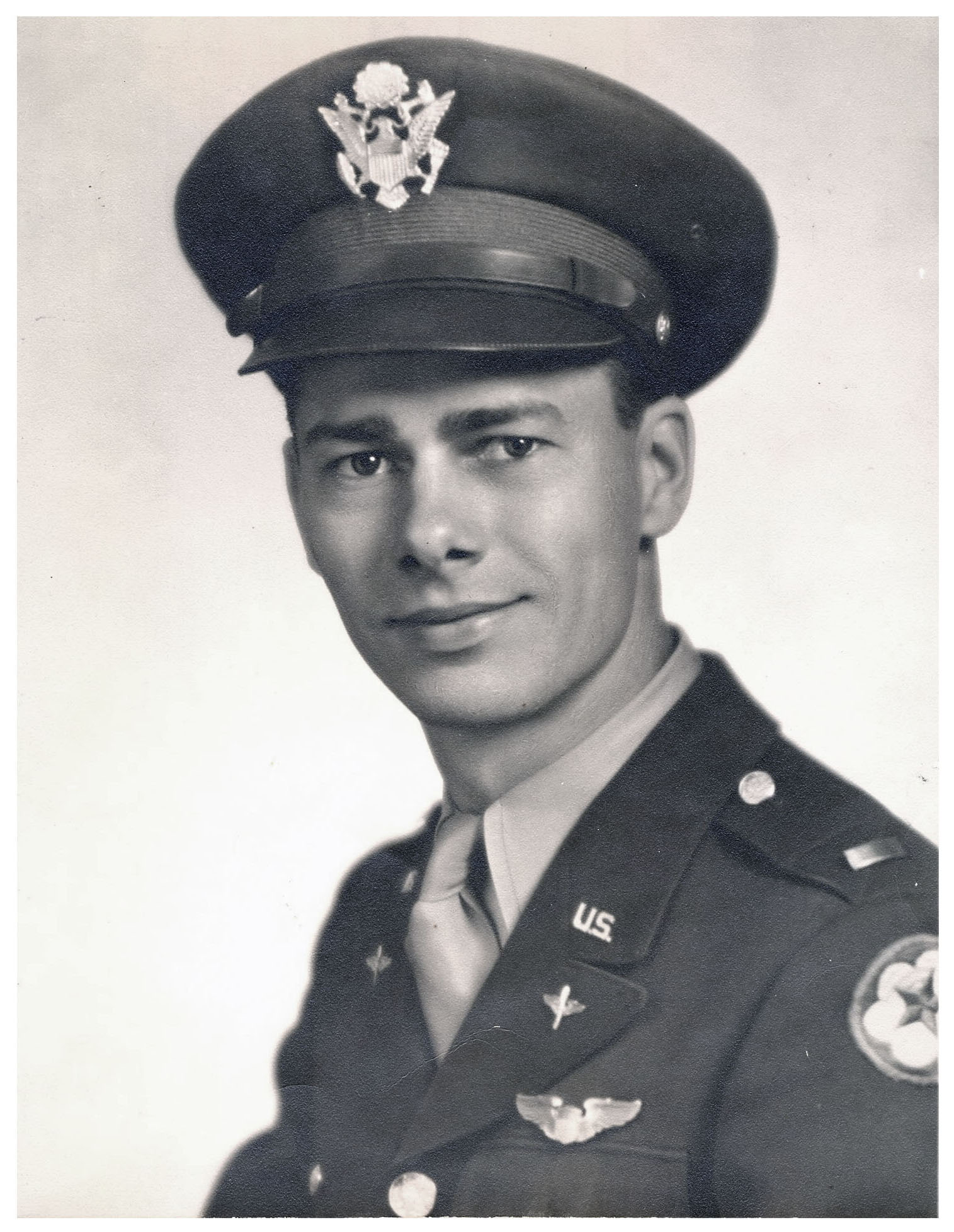
One such aviator was First Lieutenant Nathan Margolies (0-806295).  The son of Moses and Rose (Blatt) Margolies, he was born in Brooklyn on July 6, 1915, and resided with his parents at 8301 Bay Parkway, in that rather well known New York borough.  The recipient of the Distinguished Flying Cross, Air Medal with three Oak Leaf Clusters, and Purple Heart, his name can be found on page 387 of American Jews in World War II.  His name appeared in a Casualty List released on April 19, 1945, and can also be found upon the Tablets of the Missing at Manila American Cemetery, Manila, Philippines, while a commemorative matzeva bearing his name is present at Section MF, Plot 46-D-12, at Arlington National Cemetery.  His name also appears in Robert Dorr’s 7th Bombardment Group / Wing 1918-1995 (page 248) and in Chick Marrs Quinn’s The Aluminum Trail (page 389). 

As indicated from this commemorative information and the latter two books – and as you’ll see from this post – he did not survive the war. 

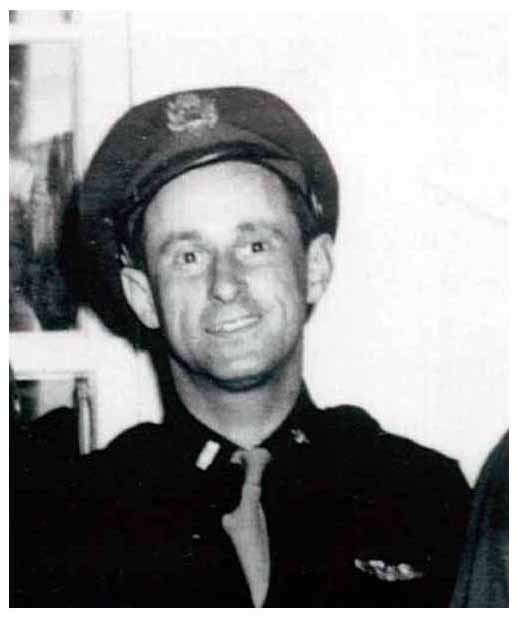
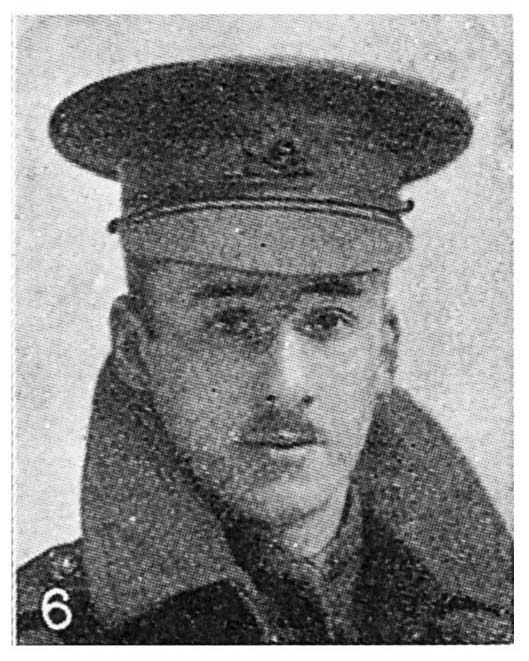
This is him…

A member of the 9th Bomb Squadron of the 10th Air Force’s 7th Bomb Group, Lt. Margolies was reportedly wounded by anti-aircraft fire on March 19, 1945.  Thus, his inclusion in “this” series of blog posts concerning Jewish military casualties on March 19, 1945.  However…  

…he was killed during a combat mission five days later, on March 24, 1945, while in command of B-24L Liberator 44-49607 (tail number 28) during a mission from Pandaveswar, in West Bengal, India, to “Bridge Q633″ on the Burma-Siam Railway. 

______________________________

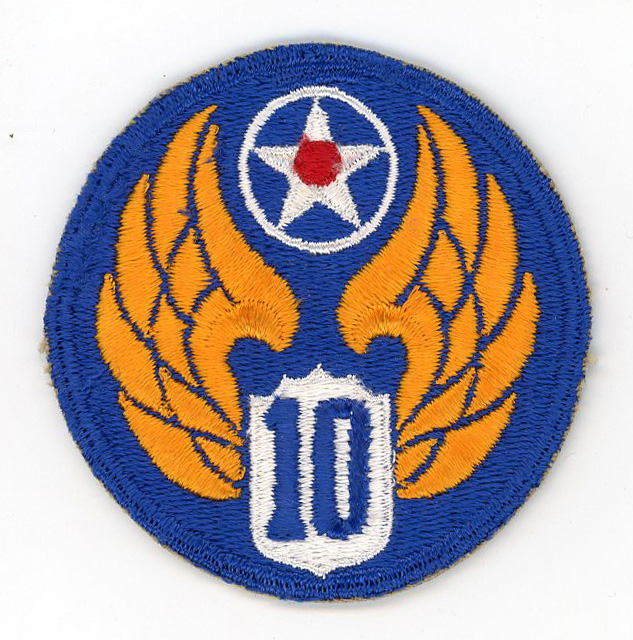
The insignia of the 10th Air Force.

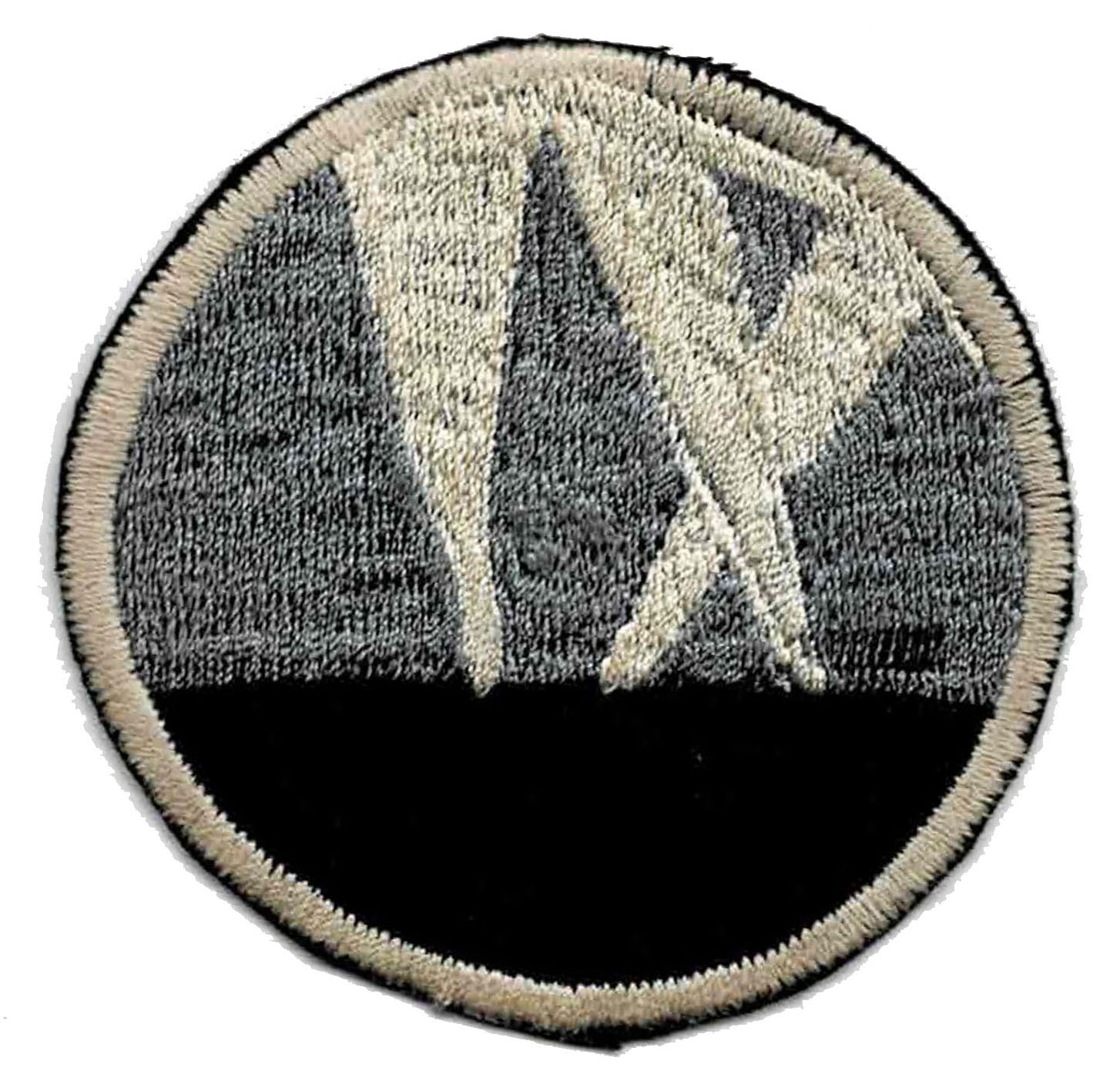
This example of the 9th Bomb Squadron insignia was found at Etsy.  Though the gray rays in the upper half of the insignia resemble searchlight beams – as if pinpointing enemy aircraft at night – in reality, they simply form the Roman numeral “IX”, representing the number “9”.  As in 9th Squadron.

______________________________

From Edward M. Young’s B-24 Liberator Units of the CBI (Osprey Combat Aircraft 87), this profile, by Mark Styling, is a representative image of the markings carried by 9th Bomb Squadron B-24s slightly before the general time-frame of the Margolies crews’ missions.  This plane, B-24J 44-40857, RANGOON RANGLER, shows the squadron’s black & white checkerboard rudder with a horizontal fin band, and, plane-in-squadron number.  RANGOON RANGLER survived the war with many combat missions and other sorties, and postwar was turned over to the Reconstruction Finance Corporation (RFC).  There’s no record of the Margolies crews’ 44-49607 having a nickname.  

______________________________

The names and eventual fates of Lt. Margolies’ crew members on the March 24 mission are listed below:

Co-Pilot – Chaffee, Arthur Richard, 1 Lt., 0-755518, Seattle, Wa. – Survived
Navigator – Scranton, Edwin Ely, 1 Lt., 0-685742, Alliance, Oh.  (See herehere, and here) – KIA
Bombardier – Meridith, James M., 1 Lt., 0-889303, Wichita, Ks. – Survived
Flight Engineer – Sadloski, Stanley P., T/Sgt., 11010475, Hartford, Ct. – Survived
Radio Operator – Nelson, James F., T/Sgt., 32086547, Brooklyn, N.Y. – Survived
Gunner – Reed, Edward, S/Sgt., 11090457, Fall River, Ma. – KIA
Gunner – Cunningham, John E., S/Sgt., 14147628, Atlanta, Ga. – KIA
Gunner – Moriarty, Leo, S/Sgt., 32185901, Ware, Ma. Survived
Gunner – Herald, Kenneth William, S/Sgt., 39559281, Pomona, Ca. – Survived

Unlike most (most; not all) MACRs, the eyewitness statements in MACR 13435 describing 28’s loss were not recounted by crew members of other planes in the 9th’s formation.  Rather, they were reported by two of Lt. Margolies’ six surviving crew members: bombardier Lt. Meredith and gunner Sgt. Herald.  The MACR also includes Casualty Questionnaires filed by T/Sgt. Sadloski for his four fallen fellow crew members.  Through these records, it’s possible to reconstruct what transpired over India that day, seventy-nine years ago.  

First, as described by Lt. Meredith…

Were flying indicated altitude of 2500’.  We were one hour and forty minutes out from the field when the oil pressure started dropping off on #1 engine [left outer engine, as viewed from above] very fast.  Lt. Margolies told me to go down in the nose and salvo the bombs which I immediately did.  When I crawled back up to the flight deck the engineer was salvoing the bomb bay [fuel] tank.  The pilot could only get the engine partly feathered causing a terrific drag on the left side.  We were losing about a thousand feet a minute so the pilot yelled “bail out”.  I buckled on my chute and went out the right front bomb bay.  I saw only one other parachute beside my own and did not see the plane crash.

…and then, S/Sgt. Herald: 

At 11:15 it was reported that number one engine had bad oil pressure and Lt. Margolies proceeded to feather it.  Due to some mechanical failure, the prop would not feather, which caused an excess of drag on our left wing forcing us to lose altitude even after out bombs and gas tank were dropped.  Our pilot fought it but to no avail.  The first order was to prepare for a ditching and as soon as that was given another order was to put on chutes, and there came the bail out order.  The waist windows had been broken out, so as soon as we were told to bail out, I went through the right waist and hit the ground very soon after my chute opened.  The altitude we went out at was about 700 ft.  I hit the trees and soon joined out co-pilot and radio operator. 

As indicated above, the bomber was already flying at the low altitude of 2,500 feet (remarkably low by the standards of the 8th or 15th Air Forces, but perhaps typical for a 10th Air Force mission of this nature…?) when mechanical failure – a drop in oil pressure – was encountered in the number 1 engine.  (Interestingly, the header page of the MACR attributes the aircraft loss to carburetor icing, but I don’t how know (or if) such a problem could contribute to low oil pressure.  Especially at low altitude.  Especially in the climate of India and Burma!)  Regardless, Lt. Margolies’ first command was for the crew to prepare for ditching.  Immediately afterwards came an order to bail out, in light of the plane’s very rapid loss of altitude and the danger inherent to ditching a B-24 with very limited control and very little time for preparation.  (Not that ditching a B-24 was easy under optimal circumstances, to begin with.) 

Six crewmen left the plane:  Lt. Margolies’ officers, and, Sergeants Nelson, Cunningham, and Herald.  

Of the six, the parachutes of Lt. Scranton and Sgt. Cunningham were either deployed too low and too late, or, failed to open.  

Four crewmen remained in the aircraft: Lt. Margolies, and Sergeants Sadloski, Reed, and Moriarty.

Of these men, Lt. Margolies, severely injured in the ditching, was unable to escape the sinking aircraft.  Sgt. Reed managed to leave the wreck, but he did not survive.

Thus, from a crew of ten, six returned.  Of the four who did not survive, only Sergeant Reed’s body was recovered to eventually have a place of burial. 

Photos of the fallen appear below.  They, and several images of Lt. Margolies, as well, have been contributed to the mens’ biographical profiles at FindAGrave by Mr. Walter N. Webb (cousin of Lt. Scranton) about whom you can read more here.

______________________________

2 Lt. Edwin F. Scranton, Navigator

______________________________

S/Sgt. John E. Cunningham, Gunner

______________________________

S/Sgt. Edward Reed, Gunner

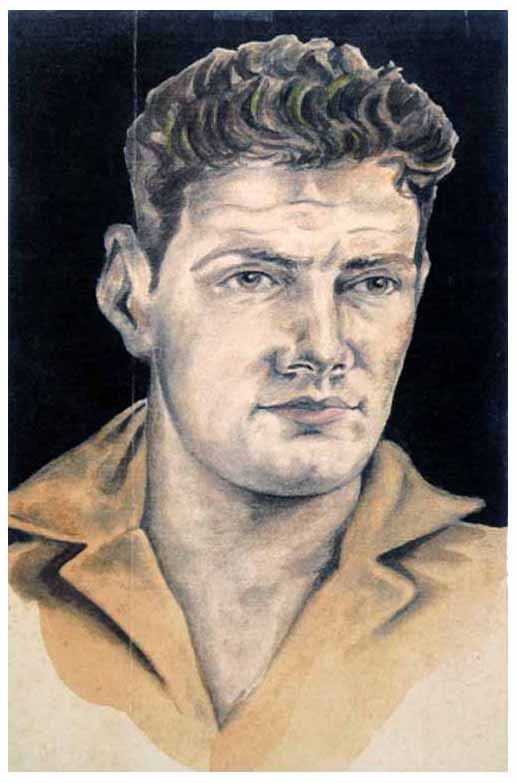
Sgt. Reed was also “an amateur artist and wood carver and played the guitar.”  This is his water-color self-portrait.

______________________________

But wait (!) there’s even more…(!!)…

In the early 2000s, Mr. Walter N. Webb, who had been researching the histories of 7th Bomb Group crews lost in WW II – with a focus on his cousin, Lt. Scranton – posted the results of his investigation at the website of the 7th Bomb Group (“7th Bombardment Group (H)”), which in 2024 is no longer “up and running”.  The title of his work was: “A Special Tribute to the Margolies Crew – Photos and research by Walt Webb”.

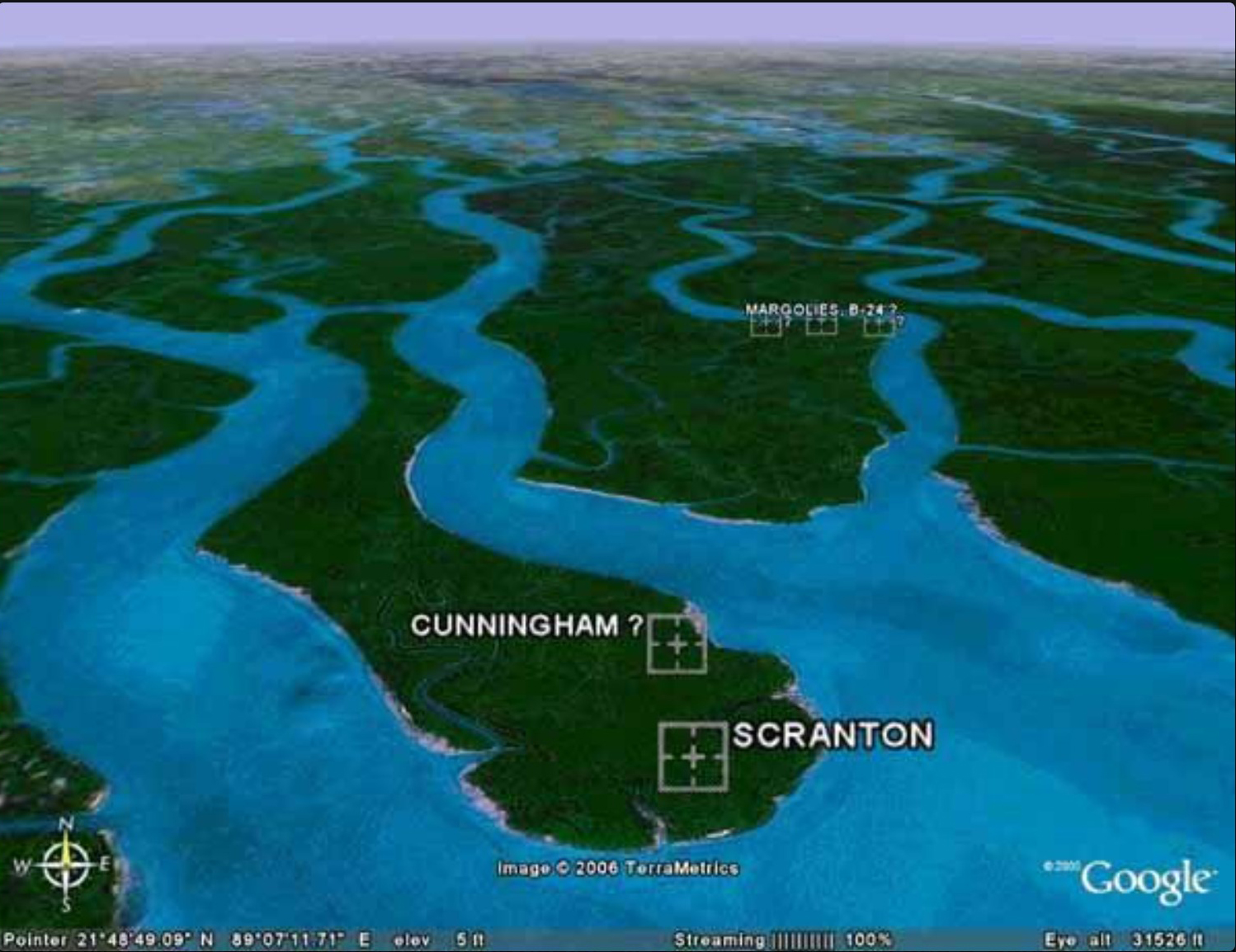
Mr. Webb’s post includes speculation about the location where B-24 28 and her crew – both the survivors and those killed – came to earth, and, photos of the Margolies crew (and another 9th BS crew, that of 1 Lt. John F. Albert), the above-mentioned photographs of Lieutenants Margolies and Scranton, and, Sergeants Cunningham and Reed, two Google Earth images simulating the probable final course of 28, and finally, a symbolic memorial ceremony that he arranged in honor of Lieutenants Margolies and Scranton, and Sgt. Cunningham, that took place at Arlington National Cemetery on May 26, 2005

Well, to quote from Mr. Webb’s post…

I’ve been researching a 9th Squadron crew, four of whom were killed in a March 24, 1945, air accident en route to Thailand.  Three of those men still are missing in the Ganges Delta region along with their B-24. One of them was a cousin I never really knew (Lt. Edwin E. Scranton).  These photos are about this crew, the last two photos are of the Arlington ceremony that I arranged for the families of the three MIAs.

I was able to download Google Earth and use it in an unusual way–to simulate the Margolies B-24 final descent route across the Ganges Delta (Mar. 24, 1945) and to visualize what the pilots saw as they crossed these islands at altitudes of 1,000 feet and below.  Google Earth allows you to “fly” to any point on a 3D globe, drop to any altitude, tilt to get an oblique view, and even rotate around the target!  The earth coverage comes from satellite imagery.  The detail varies; major cities have the highest resolution.  Since I saved the entire descent path, all I have to do to revisit is to press the “Tour” button and then watch as the path automatically runs!

I’ve used information in Mr. Webb’s post, specifically his two Google Earth maps,  to build “this” post a little further, in terms of mapping and illustrating the final flight of 28 and her four fallen airmen.  

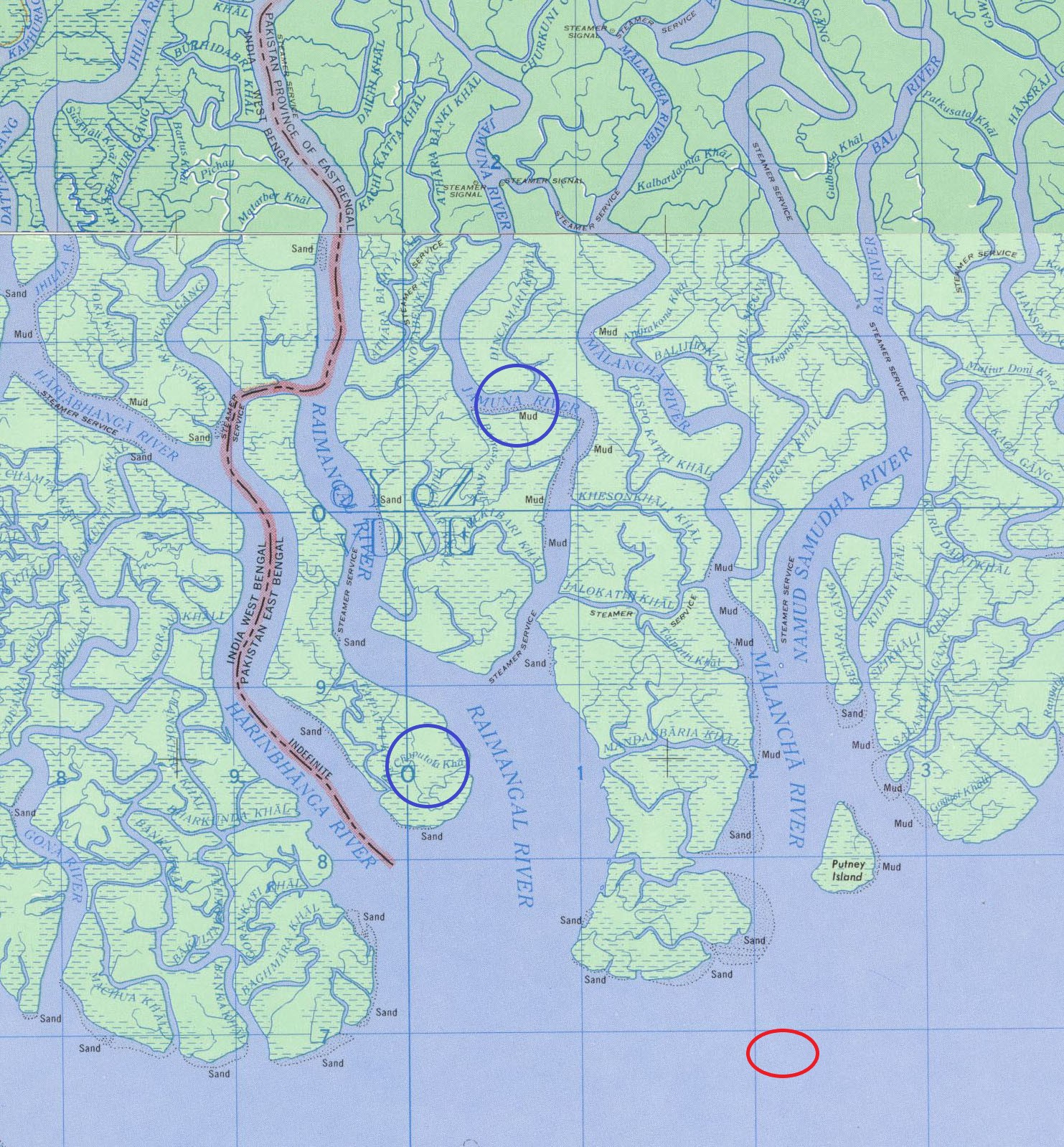
This map, included in MACR 13435, shows the last witnessed location of 28: Over the Bay of Bengal, just a few miles south of the coast of modern day Bangladesh.  Note that the map is only a snippet cut from the much larger “Army / Air” 1:1,000,000 map: “NF-45”, which you’ll see with just a quick mouse scroll down.  

XXXXXXXXXX

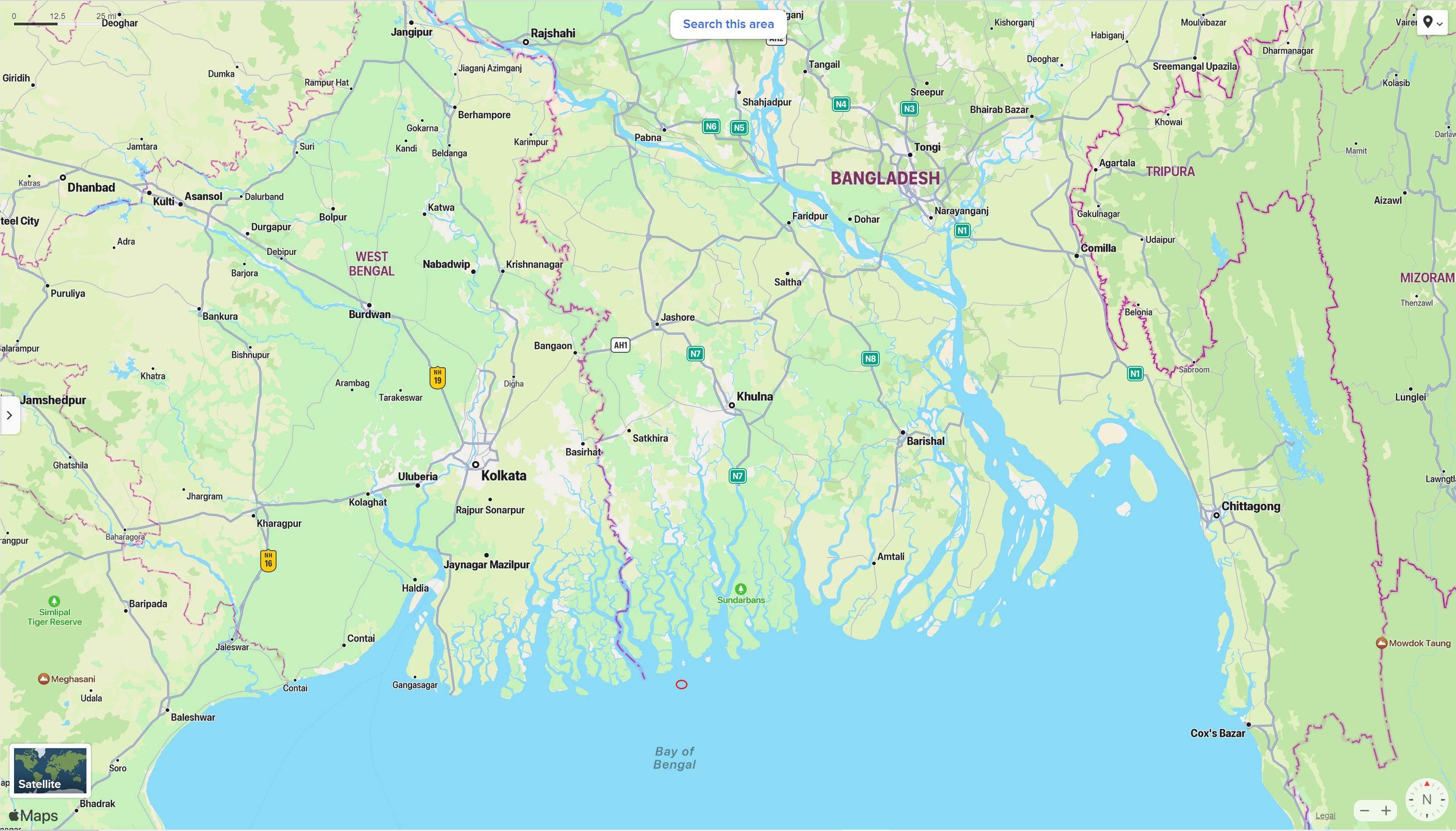
Based on the MACR map, the map below, at a vastly smaller scale, shows the aircraft’s last reported position in the wider geographic context of the Bay of Bengal, India, Bangladesh, and Burma.  It’s designated by the miniscule, almost-invisible (and really tiny) red oval in the center of the map.

Going to a larger scale, here’s 28’s last reported position in the context of the Ganges-Brahamputra Delta.

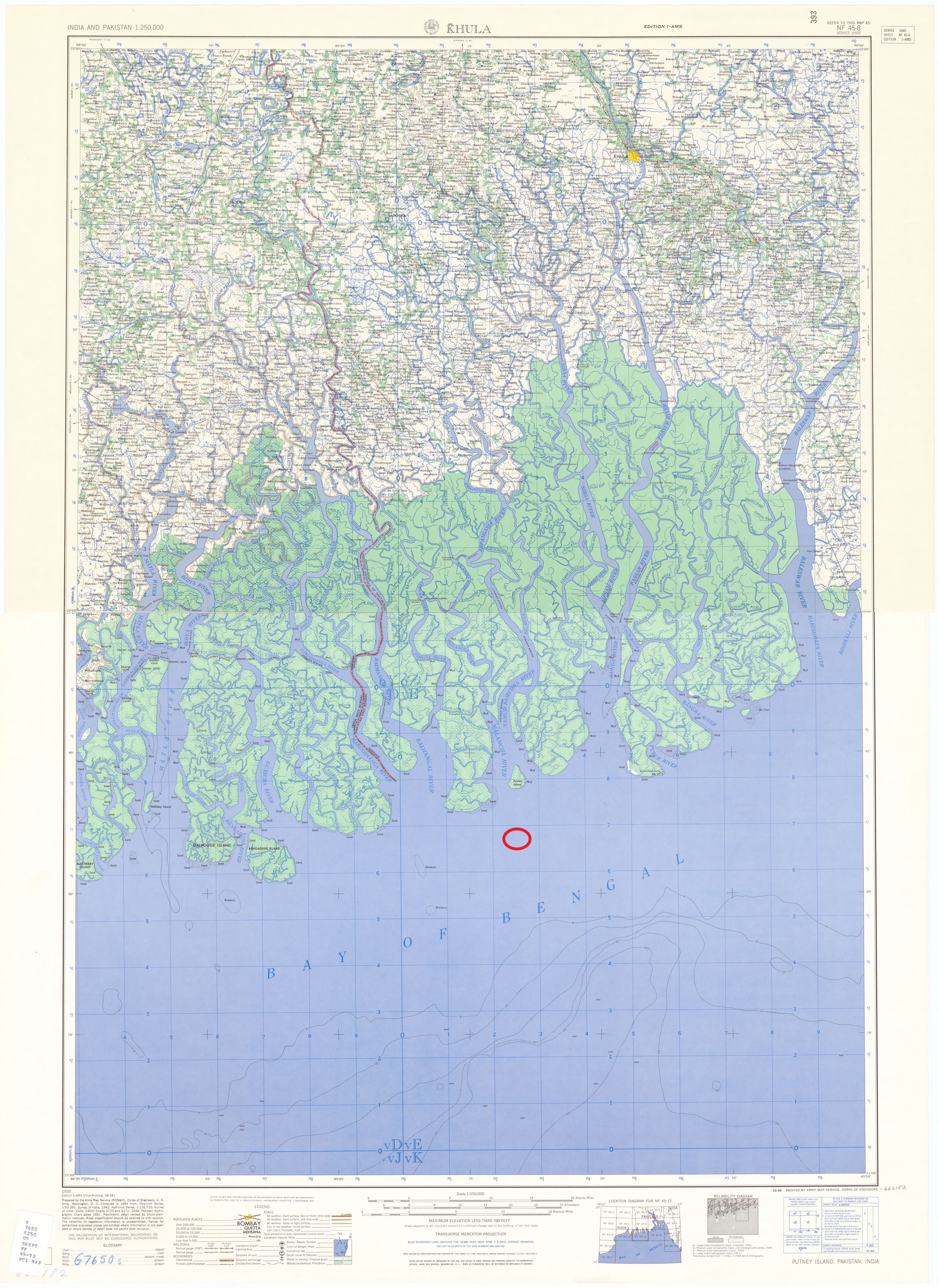
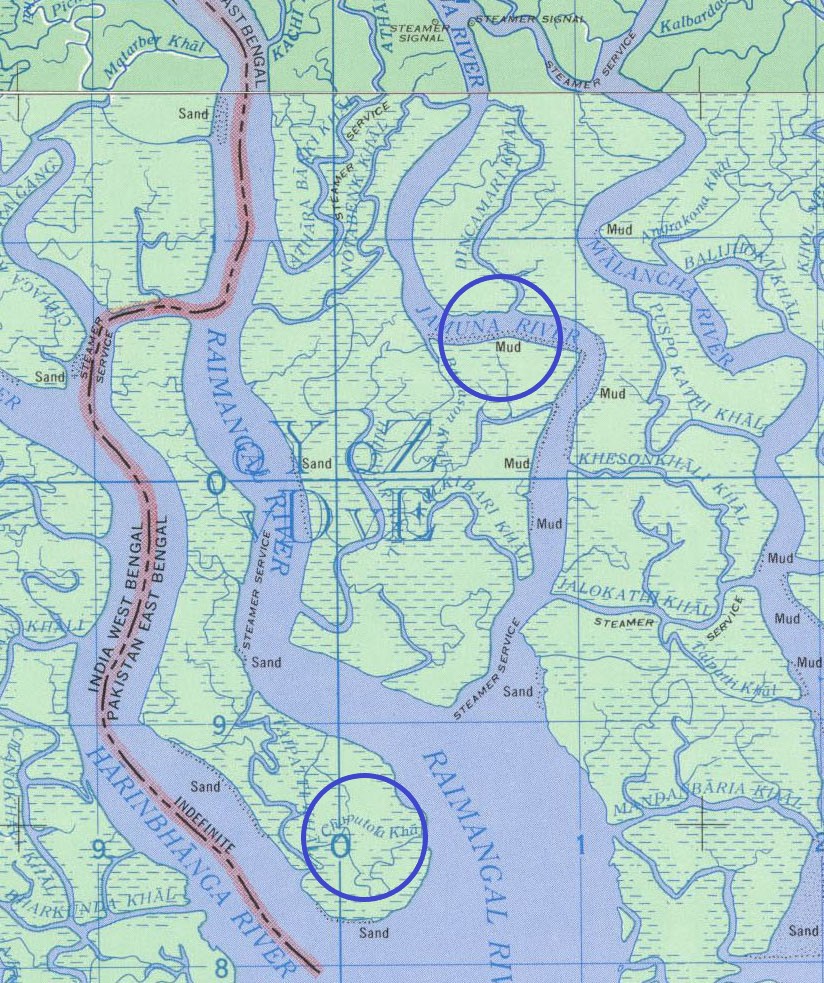
A tiny section of map NF-45 in MACR 13435 is shown above.  Below, via the University of Texas, is a complete version of a later edition of the same map – “NF-45-12” (“Putney Island, Pakistan; India”) – spliced via photoshop with the adjoining map to the north, “NF-45-8” (“Khula, Pakistan; India”).  These two adjoining maps, at 1:250,000 scale, were compiled in 1955 from the 1923-1942, and, 1924 Surveys of India, and are October, 1959 editions prepared by the Army Map Service and printed by the Corps of Engineers.  For the purposes of this post, this photoshopped Army composite map illustrates the setting of 28’s loss in a detailed context, and clarifies a Google Earth image from Mr. Webb, which follows…    

And so, more from Mr. Webb:

[Two] photos are … sample scenes from the simulation, both overviews in tilt mode.  I also have views from the lower heights actually flown by the crippled aircraft along its final path.

[The first scene …  (not illustrated here!) looks S to N across the bailout island where 6 of the crew jumped.]  Scranton and Cunningham (chutes didn’t open) fell under the plane’s path, while the 4 on chutes probably drifted a bit to the NNE, thus shown displaced slightly in that direction.  Cunningham delayed his jump and so is separated from the rest.  (A British air-sea rescue eyewitness recalled seeing the parachutes hanging in the trees “in a perfectly straight line.”)  Thirteen miles to the N, the 3 distant targets represent the general area where I believe the plane actually may have ditched with 4 on board  (Margolies and Reed perished; only Reed was recovered.)

[This] scene (image below!) shows approximately where the 3 crew MIAs may be located.  Although the B-24 may have ditched somewhere along that stretch of the river, it’s uncertain whether the submerged wreckage still is there, lodged in the mud (the B-24 broke into 3 sections), or has drifted farther downstream.

Using Mr. Webb’s Google Earth map as a basis, here are the probable locations of Cunningham’s and Scranton’s bailout and 28’s crash, shown on Maps NF-45-12 and NF-45-8 (you can see where I spliced them by the difference in the intensity of shading), as respectively indicated by the blue circles.

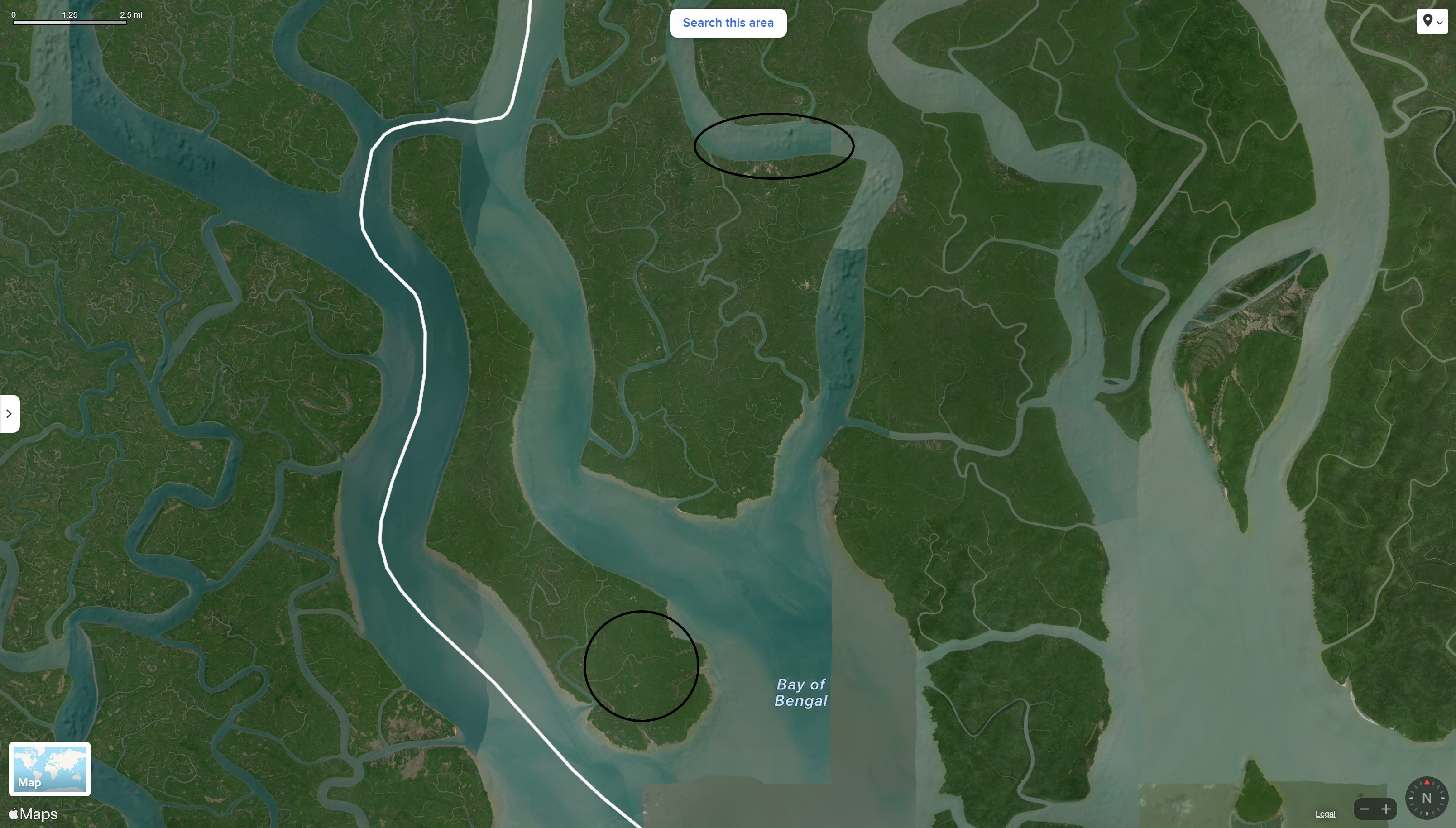
A much, much closer view.  Assuming that the crash location is correct, the aircraft came down in the vicinity of or in the Jamuna River.

This air photo view of the plane’s probable crash location is at the same scale as the NF-45 composite maps above….

…while this air photo is a very (very (very)) close view of this branch of the Jamuna River. 

Between 2011 and 2013, the missing men and plane were the subject of discussion at Wikimapia, under the heading “crash site, invisible“.  

There, this message appears: “B-24 Liberator piloted by Lt. Nathan Margolies crashed here after others bailed out(but not all survived).  They were on their way to bomb a bridge on the infamous Burma-Siam Railway on 24 March 1945.  Still missing are Pilot Margolies, Navigator Lt. Edwin E. Scranton, and a Gunner S/Sgt. John E. Cunningham.  Navigator’s cousin still is searching for remains of both aircraft and personnel.  Contact wwebb24@verizon.net. The plane took off from Pandaveswar, West Bengal, India.

Coordinates: 21°55’11″N 89°10’22″E”

This inquiry generated three comments – by Bangladesh citizens “TurboProp”, “asisdutta_jc”, and “ershadahmed”, which are presented verbatim below:

TurboProp (2011)
CALLING OFFICERS OF BANGLADESH NAVY OR COAST GUARD TO COMMENT ON THIS. THERE ARE 2 ESTABLISHMENTS–ONE WITHIN THE MARKED AREA, ONE LITTLE UPSTREAM.  MAY BE THESE PEOPLE WILL HAVE SOME IDEA
13 years ago

asisdutta_jc (2012)
Condoled by SDutta: +919593000434
12 years ago

ershadahmed (2014)
Inaccessible and isolated mangrove remains inundated.  Officers of Bangladesh Navy or Forest Deptt should try to locate the spot and help them finding.  Its two years already, the request has been made by the US air force persons to Bangladesh Navy. Engr. Ershad Ahmed +(88-02)-01711548879 9 (cell)
10 years ago

______________________________

And, two pictures from time ago.

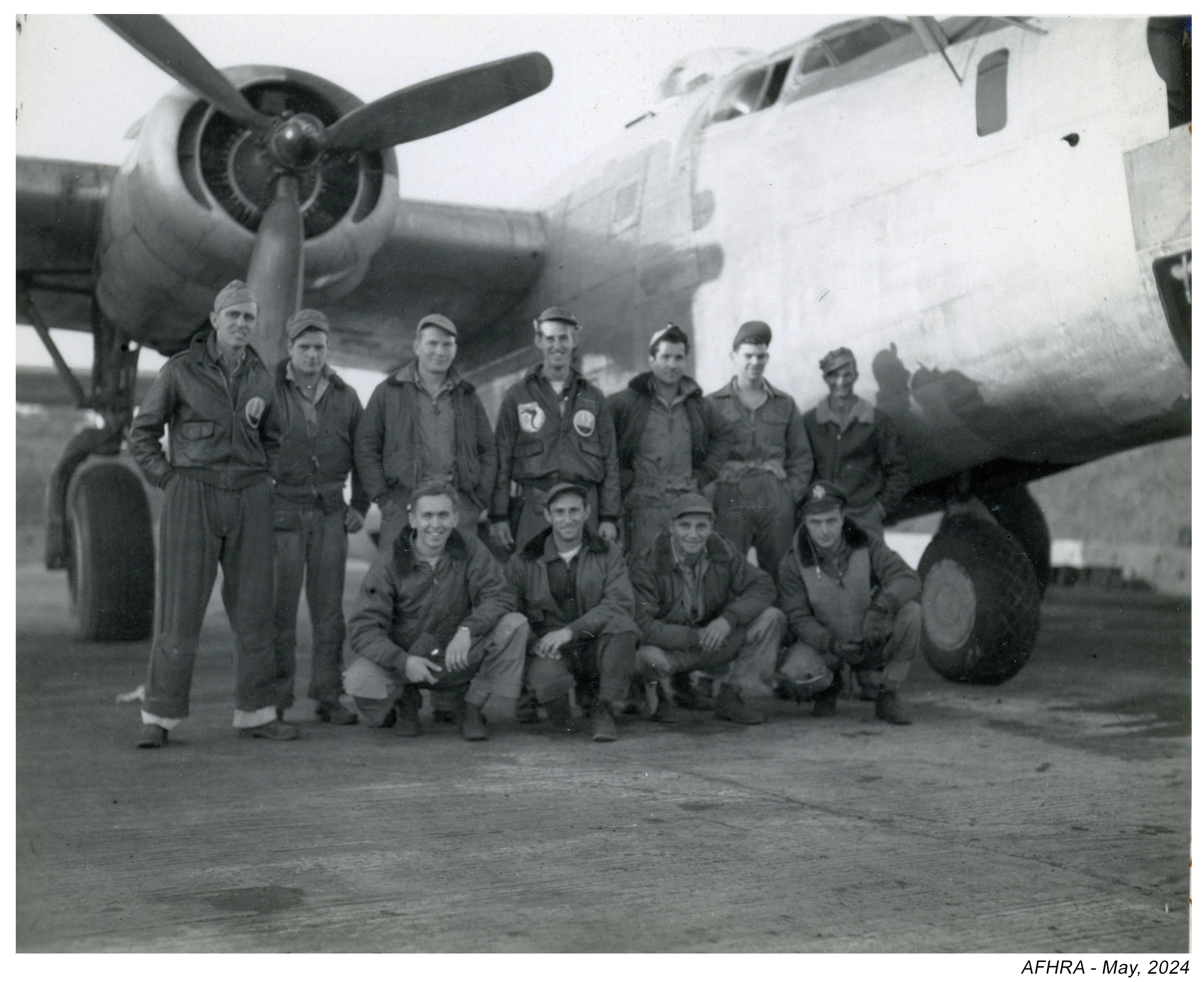
As mentioned above, Mr. Webb’s post from the early 2000s at the 7th Bomb Group’s website includes a photo of Lt. Margolies crew, and, a photo of the crew of 1 Lt. John F. Albert.  These photos, and several other images of 9th Bomb Squadron crews, can be found in the historical records of the 9th Bomb Squadron for March, 1945.

This image shows the Margolies crew in front of B-24 squadron number 33 prior to takeoff on February 5, 1945.  The mission was to bomb the pair of bridges at Kanchanaburi, Thailand.  The crew had to abort and return.  

The men are:

Back row, left to right:

1 Lt. James M. Meredith
S/Sgt. Edward Reed
T/Sgt. James F. Nelson
S/Sgt. John E. Cunningham
S/Sgt. Kenneth W. Herald
S/Sgt. Leo Moriarty
Cpl. John L. Sulgrove

Front row, left to right:

1 Lt. Arthur R. Chaffee
Lieutenant Margolies
T/Sgt. Stanley P. Sadloski
1 Lt. Edwin E. Scranton

This photo was also taken on February 5, 1945, and is significant in showing 44-49607, with, “…a hand-painted “28”, an indicator of its recent arrival to the squadron.” 

The men are, left to right:

1 Lt. Donald P. Funk – Co-Pilot
2 Lt. Owen H. Brownfield – Bombardier
T/Sgt. Arthur L. Burdette – Flight Engineer
1 Lt. Bernard D. Kahn – Navigator
1 Lt. John F. Albert – Pilot
T/Sgt. Lyle L. Vralsted – Radio Operator
S/Sgt. H.Q. Smith – Gunner
S/Sgt. Gordon Greenberg – Gunner
S/Sgt. Paul R. Hon – Gunner

Almost seventy-nine years have transpired since the loss of “28” and her four crew members.  Given the passage of time, let alone the very nature of the terrain and climate where the 44-49607 came to earth (and actually, sea) it must be accepted that the missing men and their plane will never be found.  Still, a measure of memory, even if belated, is better than no memory at all.  

Some Books

Dorr, Robert F., 7th Bombardment Group / Wing 1918-1995, Turner Publishing Company, Paducah, Ky., 1996

Dublin, Louis I., and Kohs, Samuel C., American Jews in World War II – The Story of 550,000 Fighters for Freedom, The Dial Press, New York, N.Y., 1947

Quinn, Chick Marrs, The Aluminum Trail – How & Where They Died – China-Burma-India World War II 1942-1945, Chick Marrs Quinn, 1989

Rust, Kenn C, Tenth Air Force Story, Historical Aviation Album, Temple City, Ca., 1980

Young, Edward M., B-24 Liberator Units of the CBI, Osprey Publishing, Oxford, England, 2011

And otherwise…

I want to express my thanks to the Air Force Historical Research Agency for the Albert and Margolies crew photos: “Thanks very much!”

AFHRA Microfilm Roll A0538

Soldiers from New York: Jewish Soldiers in The New York Times, in World War Two: March 19, 1945 (In the Air… – …Twice Down, Twice Returned)

Every man’s life is a tapestry of stories, the majority mundane, some startling and dramatic; some traumatic and transformative; and a few – on rare occasion – inspiring by the very magnitude of their impact.  Such were the wartime experiences of First Lieutenant Bernard William Bail (0-807964), who served as a radar navigator in the 66th Bomb Squadron of the 8th Air Force’s 44th Bomb Group.

______________________________

…the insignia of the 66th Bomb Squadron (via US Wars Patches)…

______________________________

The son of Abraham (3/10/87-7/6/68) and Lillian “Lily” (Miller) (11/3/95-9/28/89) Bail and brother of Private Paul Bail of 2330 South 6th St., in Philadelphia, he was born in that city on November 18, 1920.  For the purposes of emergency correspondence, his official contact in the United States was his uncle, Dr. Harry Bail, his who resided at 2547 North 33rd St. in the same city. 

The recipient of the Air Medal with three Oak Leaf Clusters and Purple Heart, his name appeared in the Philadelphia Inquirer and Philadelphia Record on May 4 and 3, 1945, respectively.  Though his name can be found on page 509 of American Jews in World War II, oddly, absolutely nothing about him ever appeared in wartime issues of The Jewish Exponent, which was (and is) published in that Pennsylvania city. 

As the radar navigator aboard the 66th Bomb Squadron’s un-nicknamed B-24J Liberator 42-51907 (QK * B+) during the 44th Bomb Group’s March 19, 1945 mission to an Me-262 factory at Neuberg, Germany, Lieutenant Bail was one of the aircraft’s three eventual survivors – from its crew of eleven – after the plane, piloted by 1 Lt. Robert J. Podojil, was shot down by German fighters in the vicinity of Stuttgart, an event covered in Missing Air Crew Report 13574.  The very sparse outline of this story is alluded to in the following article from the Philadelphia Inquirer of May 4, 1945.  The article also makes reference to Lt. Bail having previously bailed out over the English Channel, about which much (…much…(much!)) more follows further “down” this post. 

The text of the article:

Flier Freed From Nazis Survived 3 Plane Crashes

Luck of First Lieutenant Bernard W. Bail, 24-year-old Philadelphia squadron leader, was still running strong March 19 when anti-aircraft fire brought down his B-24 bomber over Germany – his third plunge since D-Day.

“I’m on my way back to my outfit after a month and a day in a German prison camp,” he wrote in a letter received by his parents, Mr. and Mrs. Abraham Bail, of 2330 S. 6th St.

A slight wound – its nature was not disclosed – has won him a Purple Heart to go along with his Air medal, Presidential Citation and other decorations that 16 months overseas service with the Eighth Air Force have earned for him.

Lieutenant Bail, then a bombardier, lost his first plane June 6, 1944, over the English Channel.  On the way into the Continent, his pilot was killed by flak.  The co-pilot took over finished the bombing run, but lost his leg in another shower of fire.

Lieutenant Bail, with the rest of the crew, bailed out, landed in the Channel, and were picked up 13 hours later by a Coast Guard cutter.

Last January Lieutenant Bail’s second plane was peppered with heavy fire in a bombing mission over the retreating Germans.  On its return trip the plane crashed in Western France.

Lieutenant Bail, who has been in the Air Forces for almost three years, is a graduate of South Philadelphia High School and West Chester State Teacher’s College.  A brother, private Paul, 27, was wounded in North Africa and returned to this country.

Here’s the article itself, accompanied by two advertisements that give a random “flavor” of the era…

X

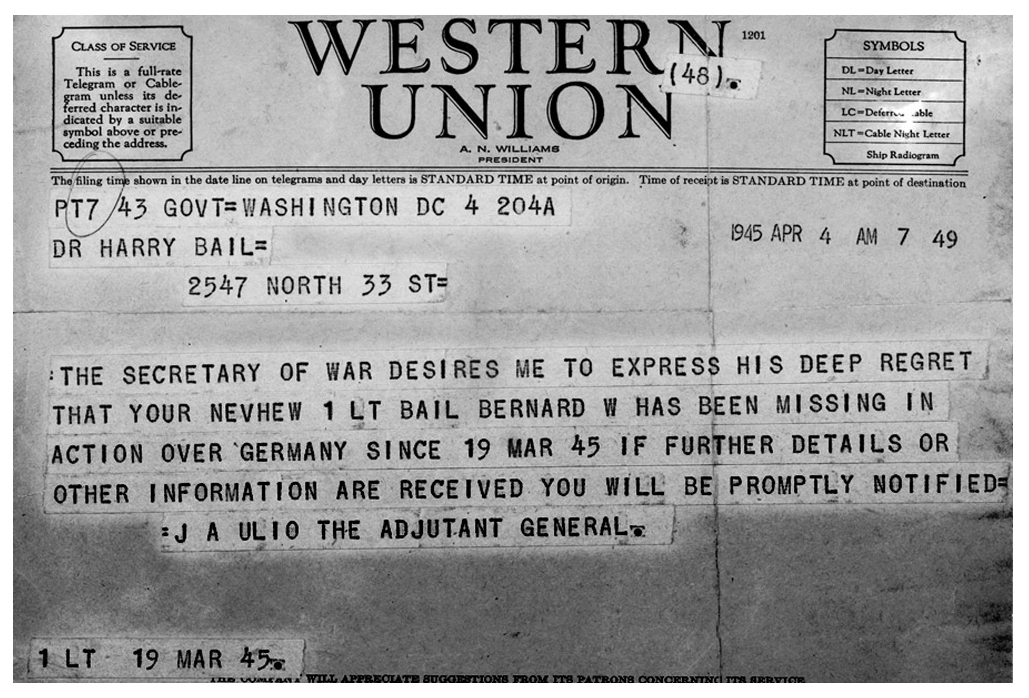
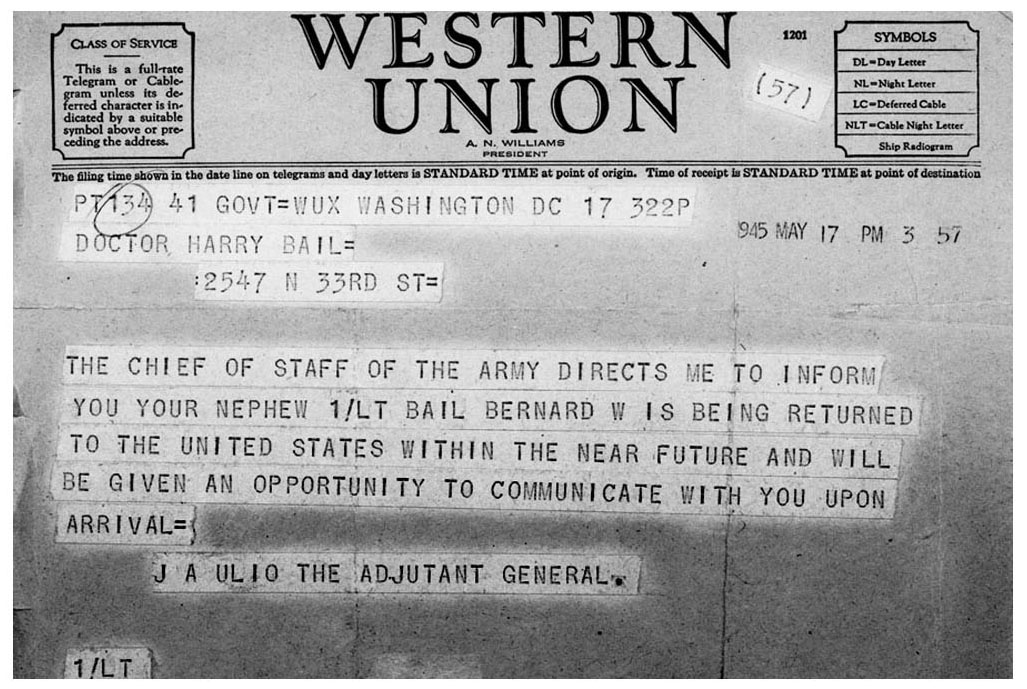
Though Dr. Bail passed away in 2021, his personal website – Bernard W. Bail M.D. – is fortunately still very much “up and running”.  His curriculum vitae includes some images and documents from his wartime service, including the Western Union telegrams informing his uncle of his missing in action status, and then, his imminent return to the United States (dated April 4 and May 17, respectively). 

Here they are:   

Here’s the crew of 42-51907…

Pilot – Podojil, Robert J., 1 Lt. 
Co-Pilot – Ritter, Frederick M., 2 Lt. 
Navigator – Chase, Dudley S., 2 Lt. 
Radar Navigator – Bail, Bernard W., 1 Lt. – Survived (11/18/20-1/26/21)
Bombardier – Crane, Walter W., 2 Lt. 
Flight Engineer – Reichenbach, Theodore H., T/Sgt. 
Radio Operator- Veitch, Max F., T/Sgt. – Survived (9/23/24-12/4/08)
Gunner (Nose) – Clark, William N., Jr., S/Sgt. (See also…)
Gunner (Right Waist) – West, John W., S/Sgt.
Gunner (Left Waist) – Mosevich, Walter F., S/Sgt. – Survived
Gunner (Tail) – Schmitz, Norbert J., S/Sgt. – Died of wounds while POW (See here and here)

An uploaded to Ancestry by Kasie Podojil on August 22, 2023, this photo shows the Podojil crew.  The men aren’t identified, but I’m certain that Lt. Podojil is one of the men in the front row.  Not being a regular member of the crew, Lt. Bail wouldn’t be in the picture.  Close examination of the data block and three digits on the forward fuselage reveal that this plane is B-24J 42-50807, which is solidly confirmed via Aviation Archeology

______________________________

Given the time-frame, though it might be assumed that there’d be an abundance of information about the loss of QK * B+, but strangely there is not.  No Luftgaukommando Report – if there even was one – for this incident survives, and, Jan Safarik’s compilation of Luftwaffe fighter victories against B-24s has no entries for this date.  In the missing Air Crew Report, observations by other airmen in the 66th are equally enigmatic.  The report states: “Very little is known as to exactly what happened to this crew.  On this mission six aircraft were originally carried as “not yet returned”, five of which have returned to base.  All five of these returned aircraft had left the formation after bombing and landed on the Continent, having run short of gas.  At 1503 hours this crew was heard from at a point approximately ten (10 miles southwest of Stuttgart and fifty-five (55) miles east of bombline, at which time the pilot thought he would be able to make it to friendly territory.  At this time he was observed to have two (2) feathered engines.  No further word was heard over VHR and no additional information has been received at this headquarters.” 

Documents in the MACR – a statement made by Sgt. Mosevich in Miami on August 31, 1945, and, Casualty Questionnaires completed by the three survivors – yield a reconstruction of what befell 42-51907 and her crew:  The plane’s #3 engine suffered a loss of power prior to reaching Neuberg due to a loss of oil pressure, with the #1 failing for the same reason after the bomb run.  Lagging behind and unable to maintain formation with the rest of the 44th, Lt. Podojil ordered his crew to jettison the plane’s machine guns, ammunition, and other equipment.  The defenseless bomber was then shot down by German fighters in an attack that must have been as sudden as it was overwhelming, this eventuating in four airmen abandoning the bomber from 15,000.  As Sgt. Mosevich stated in his Casualty Questionnaire form for Lt. Podojil, “The fighter planes attacked us very suddenly, it all seemed to be over in a few seconds.”  In his summary Casualty Questionnaire, he wrote that Sgt. Veitch opened the bomb bay doors through which Veitch and Bail jumped, while Mosevich himself jumped out the port waist window.  How Sgt. Schmitz escaped the plane is not mentioned; I’d assume through the jettisonable lower tail hatch.    

Despite what is reported from other sources (see below…) Sgt. Mosevich saw only three other parachutes in mid-air, and recalled that Clark, Crane, and West didn’t have their parachutes attached when he left the plane.  

The conclusion to be drawn from the MACR is that – with the exception of Sgt. Schmitz – none of the seven other crewmen were able to escape the aircraft. 

This parallel’s Lt. Bail’s statement in 44th Bomb Group Roll of Honor and Casualties: “On my 25th mission our plane was jumped by a couple of ME 109s.  The entire crew, with the exception of four of us, was killed over Germany near Stuttgart.  The tail gunner, S/Sgt. N.J. Schmitz, sustained a leg injury that necessitated amputation of his leg, which I witnessed.  I, myself, was wounded in my head and neck.  The young tail gunner [Schmitz] later died of gangrene.  I was present at his burial in the little town of Goppingen.”

______________________________

Here’s Lt. Bail’s reply to Major W.R Reed of the Air Corps’ Notification Branch, concerning the latter’s inquiry of June, 1945, pertaining to Lt. Ritter (co-pilot) and Sgt. Clark (nose gunner):

Tuesday – Sept 1945

Dear Major Reed,
     I have received your letter asking about Lts. Ritter, Chase, and Crane and Sgts. Reichenbach, West and Clark.
     I have written to various depts. already the fact that all of the above men are dead.
     The mission was on March 19, 1945 to Ingolstadt; we were attacked on the way back by the Luftwaffe.
     The men listed above were unable to get out of the plane, which went down, burning; so it is sure all of them died.
     I have written fully to other departments as I’ve said.  Should you want further information, I shall be glad to answer any questions you may have.
Sincerely
Bernard W. Bail

Lt. Bail’s letter, as it appears in the MACR:

______________________________

Accompanying Sgt. Mosevich’s Casualty Questionnaire forms in the MACR is this very brief summary of his escape from 42-51907:

Additional Inf:
     We were flying on two engines and we had abandoned our guns and ammunition.  Our fighter escort hadn’t arrived.  German fighters attacked suddenly.  When I bailed out the plane seemed to be starting into a spin.  As I floated down I saw a column of smoke coming from the ground.
     The action happened to fast that I didn’t get a chance to survey the conditions in the plane as I bailed out a few seconds after the plane was attacked.
     If I can be of further help please let me know but I have no more information.  Any more, would be pure guess work.
Yours truly,
Walter Mosevich

Sgt. Mosevich’s note, as it appears in the MACR:

______________________________

The FindAGrave biographical profile for Sgt. West is very extensive, and includes an account of the loss of QK * B+ written by Max F. Veitch (long after he war, I guess, and I suppose uploaded in 2018 by Donald Winters?) which corroborates the information in the MACR.

Mr. Veitch wrote: “We became a lead crew and were on our 18th mission when we were shot down over Germany.  We were flying B+ a PFF ship (#42-51907).  We had an 11-man crew on board.  We were on the bomb run when we lost our #3 engine.  After dropping our bombs on the target, we lost our #1 engine and had to leave the formation as we were losing altitude rapidly.

“We called for fighter support, but none came.  Our pilot ordered us to get rid of all the excess weight that we could.  We headed back towards our lines.  I was in the bomb bay throwing out all the excess stuff that I could, when I felt a large explosion and heat coming toward me from the rear of the ship.  I grabbed my chest chute to dive out as the ship started down.  I was able to get only one side hooked, but it carried me down okay.

“As I was floating down, I saw three German Me 109s following the ship down.  I did not see it crash.  I also saw only three other chutes going down on the other side of a river.  I did not know who got out until that night when the German civilians got us together and took us to a town and put us in a small jail cell.

“Our tail gunner’s leg [Schmitz] was shot up from his foot to his knee.  Mosevich, our waist gunner, was shot in the arm and I was hit below the eye and in the hand.  The ‘G’ Navigator, Lt. Bail, had minor injuries.

“After about a week in that jail cell with only a loaf of bread and some water, two German soldiers came and escorted us to the railroad station in Stuggart.  We got on a train and were taken to the town of Goppengen where there were four German hospitals.  Sgt. Schmitz was operated on April 1 , [two weeks later!] 1945 and died shortly afterwards.  He was buried in a cemetery near the hospital.

“We were liberated on 21 April 1945 by the 44th infantry.  Sgt. Mosevich died a few years ago.  As a side note, our navigator, Lt. James Haney, was in the 44th base hospital at that time and did not fly with us on this mission.  Lt. Dudley Chase was his replacement.  It was the first time for Lt. Bail to fly with our crew also.”

The FindAGrave profile also includes the following statement by a Willi Wagner, a civilian lumberjack from Neubaerenthal, which is described as being from “AGRC [American Graves Registration Command] case #4785, Evacuation #1F-1750”.

“On 19 March 1945 while working in the Hagenschiess forest, I observed an American bomber pursued and fired on by three German fighter planes.  Thereupon the planes disappeared.  Several minutes later, however, the bomber returned flying upside down at an altitude of approximately 40 meters only.  As far as I could see a piece of the right wing with one motor had broken off.  When the plane was just over the road leading from Wurmberg to Pforzheim-east I saw one crewmember falling out of the plane.  On visiting the place where he crashed I discovered one deceased American whose parachute had failed to open.   The plane itself continued its flight for approximately 2,000 meters and then crashed into the so-called ‘Hartheimer Rain.’  I heard a strong detonation and saw a dark smoke cloud at the place concerned.

“On the next day I found the charred remains of five or six bodies of the place of crash.  The crewmember who had fallen out of the bomber was buried at the spot where he had crashed by Rudolf Sigricht, former postman and two other men from Neubaerenthal three or four days later as I have learned.

“Nothing is known to me with regard to the burial of the five or six bodies found among the plane wreckage.

“In June 1945 the deceased American who fell out of the plane was disinterred, examined and evacuated on a truck most probably to Pforzheim by a French team.  I believe no identification was possible.”

Rob Fisk, a navigator who flew thirty missions with Howard Hinshaw’s crew, believes that Dudley Chase was killed by German civilians.  Fisk’s son, Bradley Fisk, wrote: “Dudley Chase and my father were good friends at Shipdham.  They had adjacent bunks in the same Quonset hut.  Mrs. Chase would occasionally send cookies.  To keep her son honest she would frost them with a D for Dudley or an R for Robert.  Around the time my father rotated home, he received word that Dudley Chase had been shot down.  Parachutes were seen, and my father held out hope for his friend.  However, after Dad came home, he heard that when that section of Germany was occupied by the Allies, the locals pointed out the location of the graves of several Allied airmen.  One of these turned out to be Dudley Chase…  Dad had heard that Chase had landed safely near another crewmember but that they had separated for safety.  My Mom and Dad were told at Cambridge cemetery [during a 1983 visit] that Chase was captured and killed by civilians.  His body was exhumed after the war and Dad was told that he bore the marks of multiple pitchfork wounds.”

Based on this compilation of information, I believe that there was no war crime:  A search of NARA’s database reveals no name index card in Records Group 153 (Records of the Office of the Judge Advocate General) for Dudley Chase.  Similarly, none of the three survivors mentioned encountering Sergeant Chase after bailing out.    

______________________________

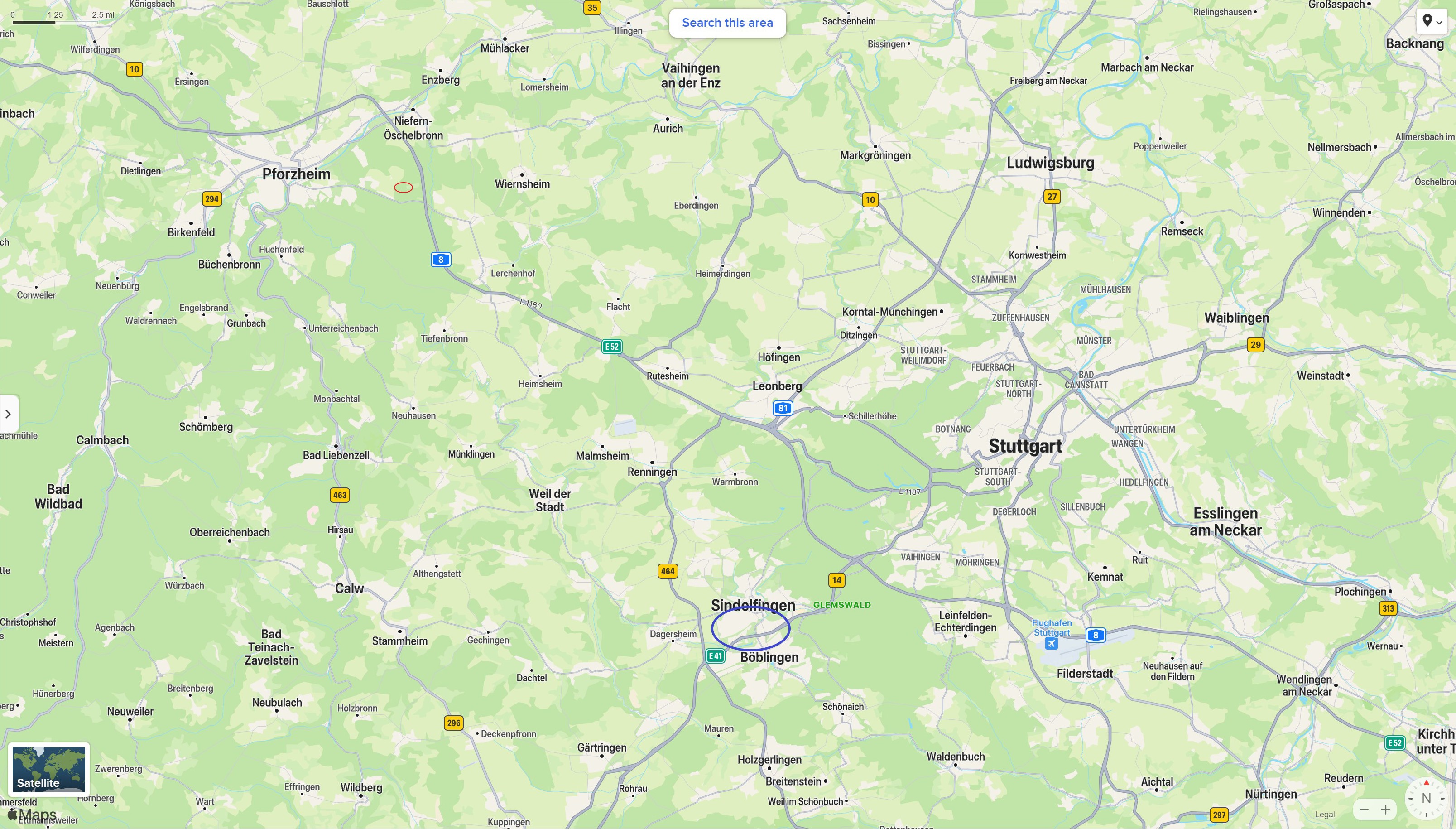
Here’s the map in MACR 13574 showing the last reported position of QK * B+: Somewhere southwest of Stuttgart…

…which corresponds to somewhere between Sindelfingen and Boblingen.

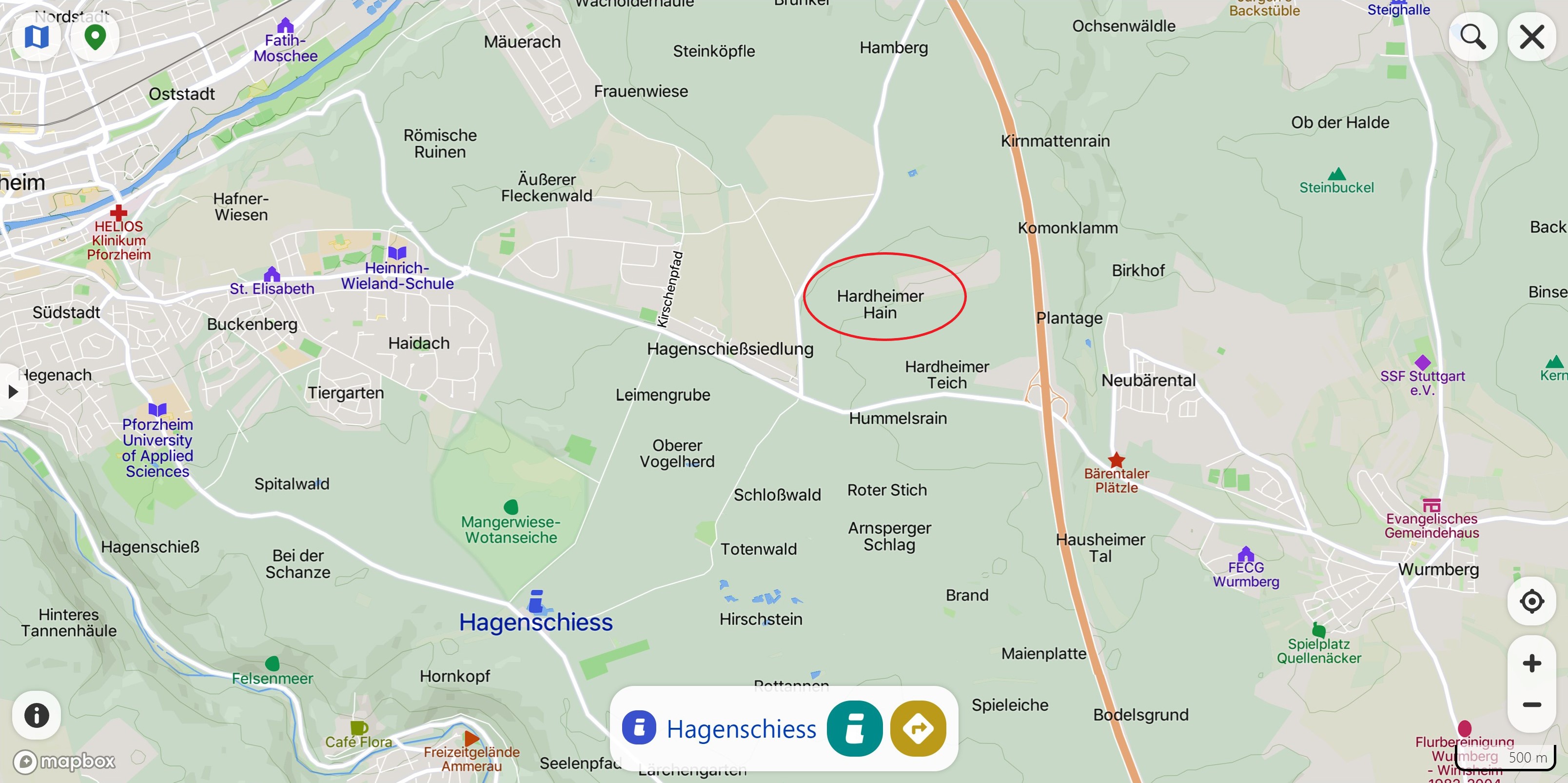
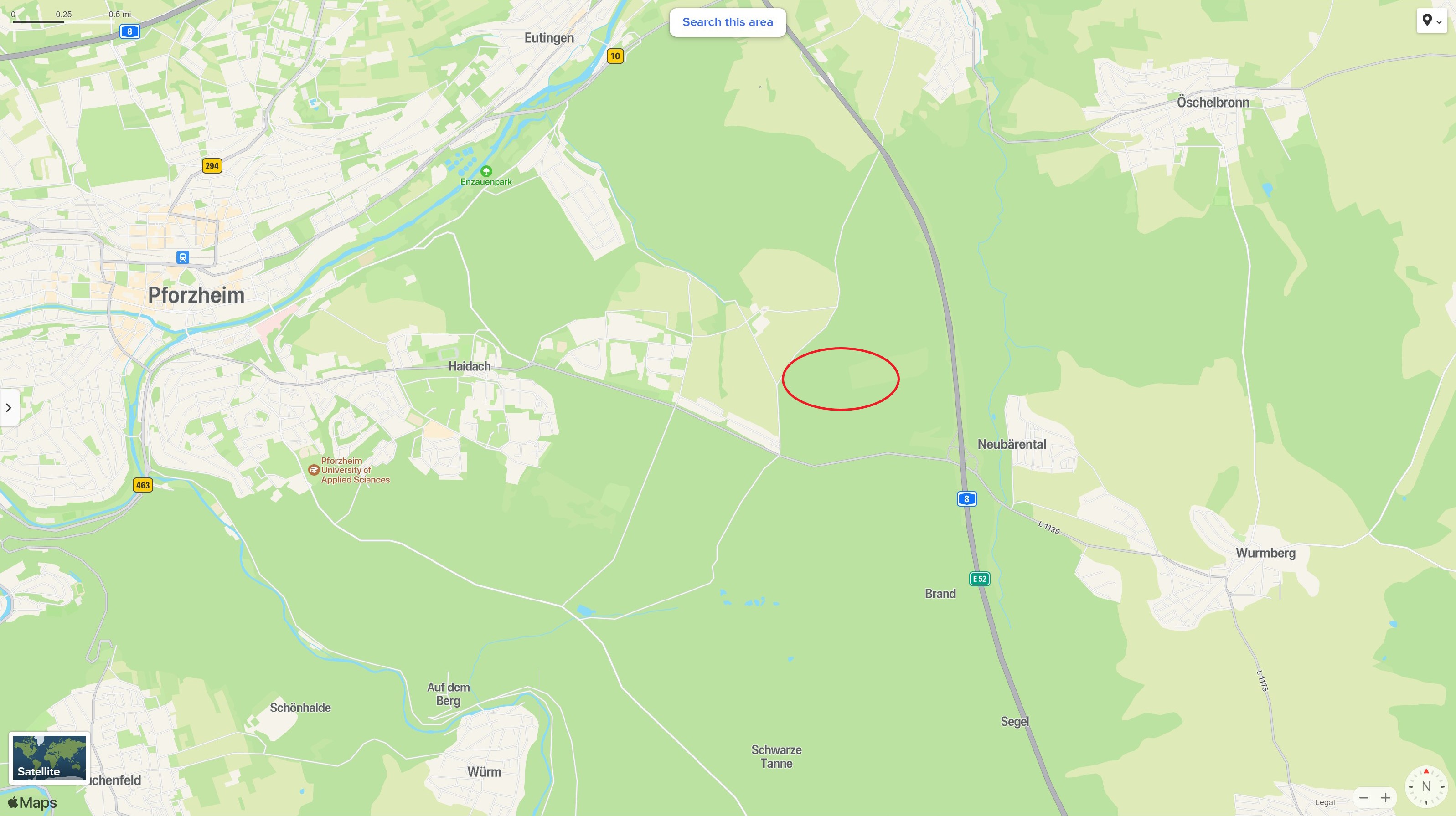
Though the MACR isn’t specific on the point, a clue to the location of QK * B+’s loss lies in lumberjack Wagner’s mention that the bomber crashed into the ‘Hartheimer Rain.’  The closest linguistic match for this phrase is “Hardheimer Hain”, the location of which corresponds to an area between Sindelfingen and Boblingen, as illustrated in this view from MapCarta.  (It’s not on Oogle Maps.)

Here’s how the location appears on an Apple Map…

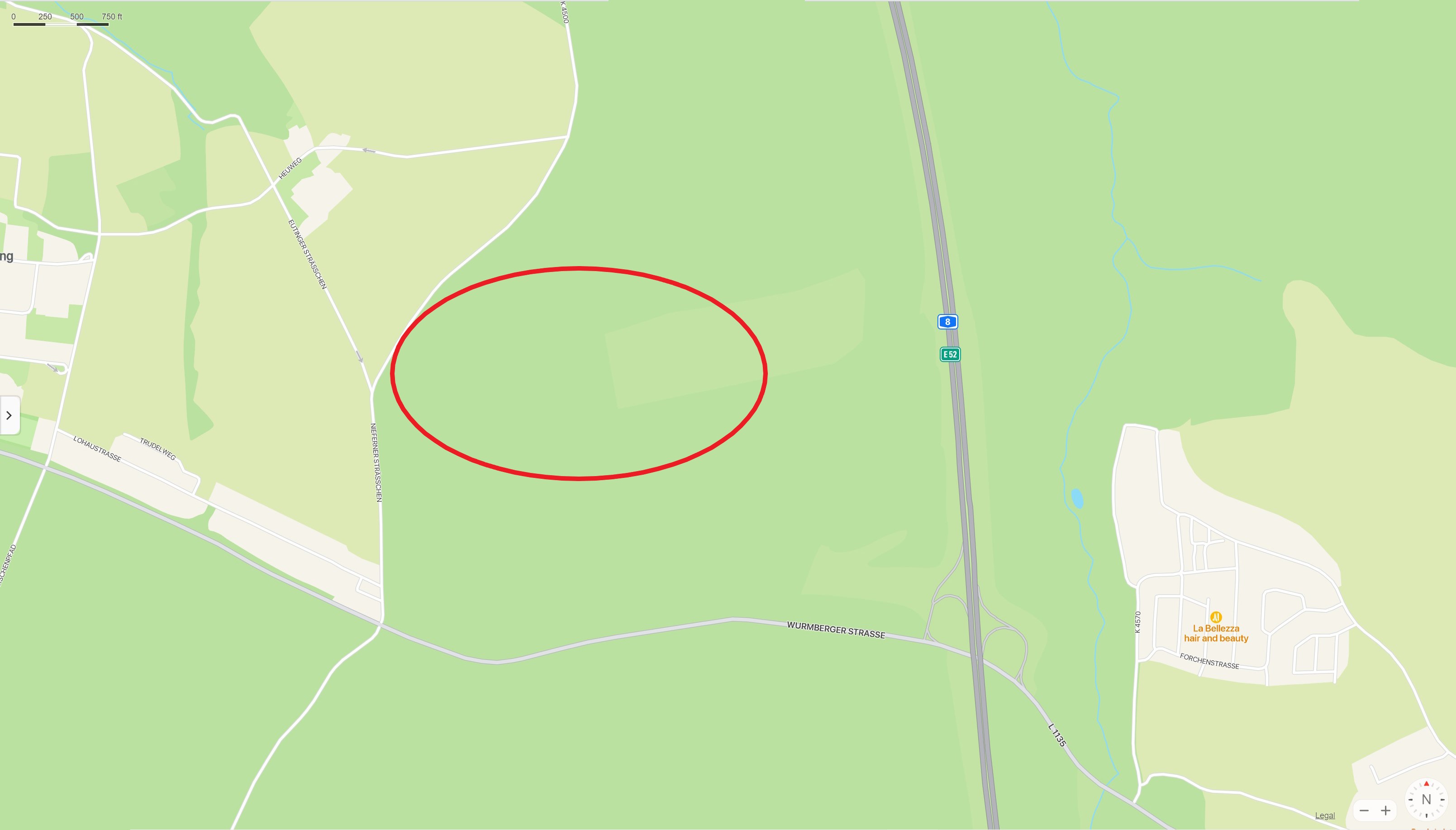
This v e r y large scale map view (note the 750 foot scale in the upper left!) reveals that this location is in a presently forested area…

…while this air photo view of the same locale – at the same scale – suggests (best as I can tell) that this area became the site of a (long since dismantled) Nike missile installation (?) from the first (?!) Cold War.

_____
__________
____________________
__________
_____

Thus for March 19, 1945, Lt. Bail’s 25th and final mission.

Much more happened to him on June 5, 1944, one day before D-Day.

On that June Monday, as a Second Lieutenant, Lt. Bail parachuted from the badly damaged B-24H 41-28690 (Missouri Sue / “QK * B“) piloted by Captain Louis A. Mazure, during a mission against German coastal defenses near Wimereux, France.  Eleven of the aircraft’s twelve crew members survived – Captain Mazure having been instantly killed by flak – among them Lt. Col Leon R. Vance, Jr., Deputy Group Commander of the 489th Bomb Group, who received the Medal of Honor (the only such award to go to an 8th Air Force B-24 crewmen) for his actions that day, and one of the fourteen 8th Air Force airmen to have received that award.  Lt. Col. Vance has received six “Remembrances” at the National WW II Memorial.   

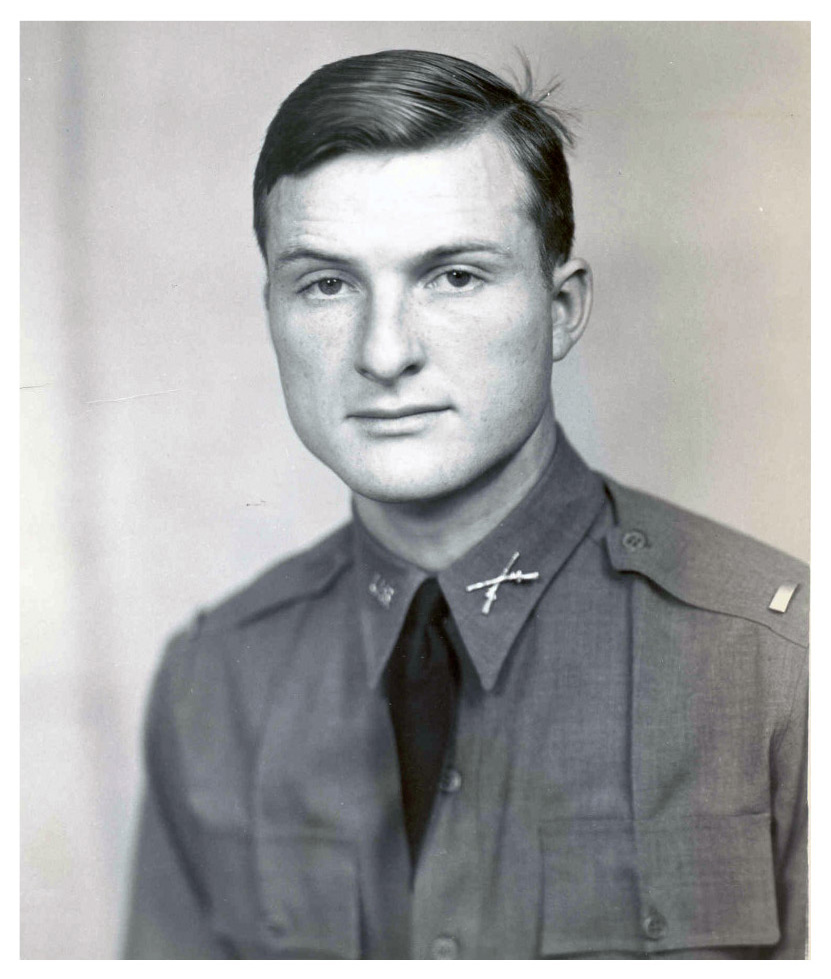
This photo of the Colonel (a few years before he was a Colonel) is from the Congressional Medal of Honor Society.  The image probably dates from 1939, the year he graduated from West Point, given that he’s wearing lieutenant’s bars and infantry collar devices.  

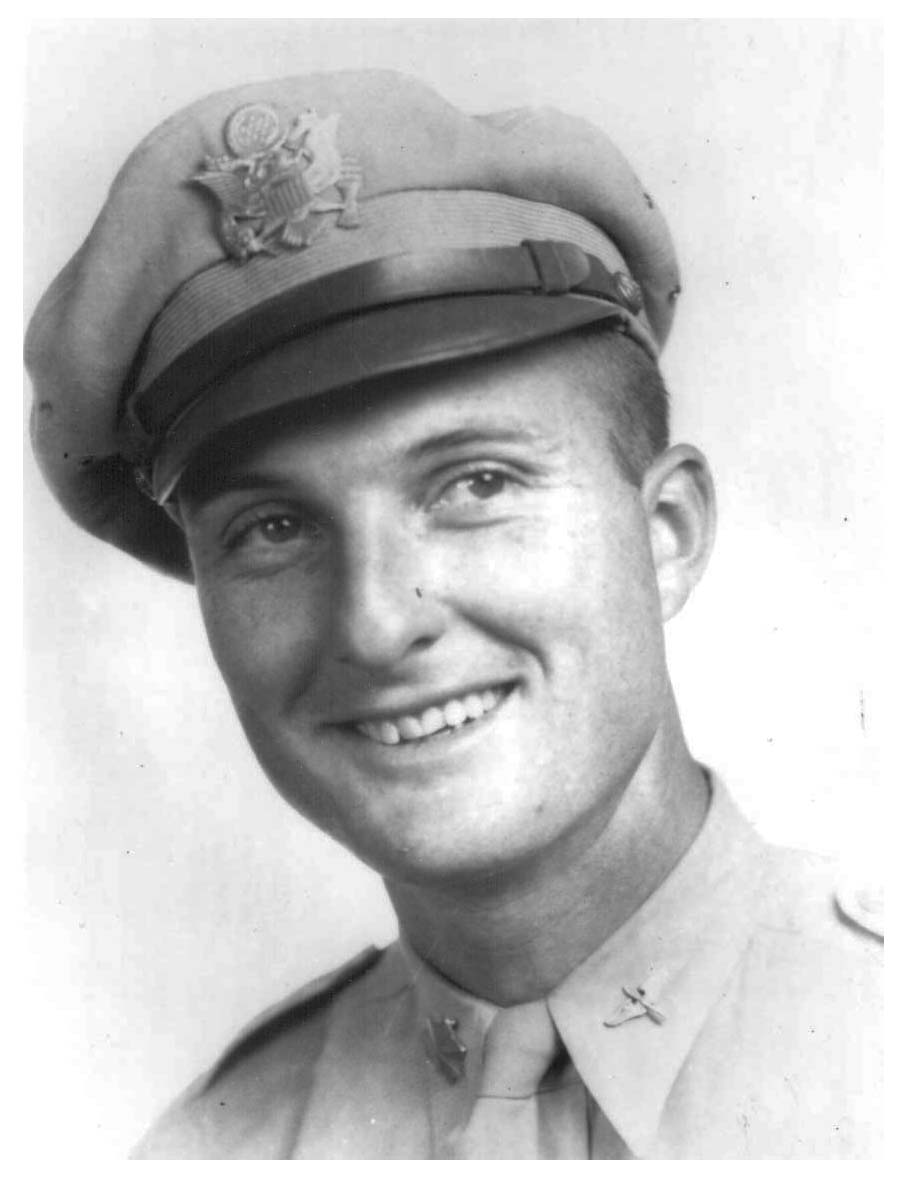
This undated portrait of the Colonel is from the Air Force Historical Support Division.  He’s now in the Air Corps, as evident by his collar devices.

While there’s no Missing Air Crew Report covering this incident – there didn’t need to be; none of the eleven survivors were missing for more than 48 hours, and Capt. Mazure’s fate was immediately known – there’s much information about the event due to its historical significance.  Rather than recapitulate and repeat each and every detail through my own write-up, this information is presented below, in the way of: 1) An excerpt from Roger Freeman’s 1970 The Mighty Eighth, 2) A transcript of Lt. Col Vance’s 1945 Medal of Honor citation from Wikipedia, 3) A transcript of a 1944 article from The Gary [Indiana] Post-Tribune found at Captain Mazure’s FindAGrave biographical profile, and, 4) The full (and actual) story of the incident from Will Lundy’s 2004 44th Bomb Group Roll of Honor and Casualties.  The latter two sources are particularly revealing. 

There appear to be at first subtle, but then – on contemplation – subtle (?) differences, in terms of the specific chain of events and individual actions that occurred aboard Missouri Sue, that emerge when comparing the Colonel’s Award Citation, to the accounts of the mission as reported in the 1944 newspaper article about Captain Mazure, and, the story in 44th Bomb Group Roll of Honor and Casualties, the latter based on reports by Missouri Sue’s bombardier, navigator, radar navigator (Lt. Bail), radio operator, and left waist gunner. 

For your consideration, I’ve highlighted these incongruities in dark brown text, like this.

The bomber’s crew comprised:

Command Pilot – Vance, Leon R., Jr., Lt. Col. 0-022050 – Severely wounded (See here and here)
Pilot – Mazure, Louis A., Capt. – Killed in Action
Co-Pilot – Carper, Earl L., 2 Lt. (Is this him…?…(1918-1980)) – Bailed out over English Channel; Rescued
Navigator – Kilgore, John R., 2 Lt. – Injured on landing
Radar Navigator – Bail, Bernard W., 2 Lt.
Bombardier – Segal, Milton, 2 Lt. – Concussion
Bombardier – Glickman, Nathaniel, 2 Lt.  (4/18/22-11/15/12)
Flight Engineer – Hoppie, Earl L., T/Sgt. (7/25/22-12/13/90)
Radio Operator – Skufca, Quentin F., T/Sgt. – Severely wounded (5/16-24-1/18/14)
Gunner (Right Waist) – Evans, Davis J., Jr., S/Sgt. – Wounded
Gunner (Left Waist) – Secrist, Harry E., S/Sgt. – Wounded (9/26/15-2/14/01)
Gunner (Tail) – Sallis, Wiley A., S/Sgt. – Wounded

______________________________

Let’s start with The Mighty Eighth (page 144):

On the eve of D-Day when the heavies were pounding coastal defences between the Cherbourg peninsula and the Pas de Calais, the 489th Group was bracketed by flak again.  The lead aircraft took a burst near the right side of the cockpit, killing the co-pilot and practically severing the right foot of the air commander, Lt. Col. Leon R. Vance, who was standing on the flight platform between the pilot’s seats.  Despite this injury Vance ordered the bomber to be kept on its bomb run for fortifications near Wimereaux.  The ailing Liberator, hit in three engines, managed to reach the English coast where Vance ordered the crew to bale out.  Told there was an injured man in the rear, who could not jump, Vance remained alone in the wreckage of the cockpit and by some miraculous effort succeeded in the difficult task of ditching a B-24.  An explosion as the aircraft settled beneath the waves, blew him clear severing his mutilated foot.  Clinging to a piece of wreckage he managed to inflate his life jacket and began to search for the wounded man he believed aboard.  Failing to find anyone he began swimming and was picked up 50 minutes later by a rescue craft.  Vance survived the extraordinary episode.  By the irony of fate, his air evacuation C-54 to the US in late July disappeared without trace on the Iceland-Newfoundland leg.  Leon Vance’s unquestionable courage, skill and self-sacrifice brought him the only Medal of Honor to go to a Liberator crewmen engaged on operations from the UK.

______________________________

Next is Lt. Col. Vance’s Medal of Honor citation, dated January 4, 1945:

For conspicuous gallantry and intrepidity above and beyond the call of duty on 5 June 1944, when he led a Heavy Bombardment Group, in an attack against defended enemy coastal positions in the vicinity of Wimereaux, France.  Approaching the target, his aircraft was hit repeatedly by antiaircraft fire which seriously crippled the ship, killed the pilot, and wounded several members of the crew, including Lt. Col. Vance, whose right foot was practically severed.  In spite of his injury, and with 3 engines lost to the flak, he led his formation over the target, bombing it successfully.  After applying a tourniquet to his leg with the aid of the radar operator, Lt. Col. Vance, realizing that the ship was approaching a stall altitude with the 1 remaining engine failing, struggled to a semi-upright position beside the copilot and took over control of the ship.  Cutting the power and feathering the last engine he put the aircraft in glide sufficiently steep to maintain his airspeed.  Gradually losing altitude, he at last reached the English coast, whereupon he ordered all members of the crew to bail out as he knew they would all safely make land.  But he received a message over the interphone system which led him to believe 1 of the crew members was unable to jump due to injuries; so he made the decision to ditch the ship in the channel, thereby giving this man a chance for life.  To add further to the danger of ditching the ship in his crippled condition, there was a 500-pound bomb hung up in the bomb bay.  Unable to climb into the seat vacated by the copilot, since his foot, hanging on to his leg by a few tendons, had become lodged behind the copilot’s seat, he nevertheless made a successful ditching while lying on the floor using only aileron and elevators for control and the side window of the cockpit for visual reference.  On coming to rest in the water the aircraft commenced to sink rapidly with Lt. Col. Vance pinned in the cockpit by the upper turret which had crashed in during the landing.  As it was settling beneath the waves an explosion occurred which threw Lt. Col. Vance clear of the wreckage.  After clinging to a piece of floating wreckage until he could muster enough strength to inflate his life vest he began searching for the crewmember whom he believed to be aboard.  Failing to find anyone he began swimming and was found approximately 50 minutes later by an Air-Sea Rescue craft.  By his extraordinary flying skill and gallant leadership, despite his grave injury, Lt. Col. Vance led his formation to a successful bombing of the assigned target and returned the crew to a point where they could bail out with safety.  His gallant and valorous decision to ditch the aircraft in order to give the crewmember he believed to be aboard a chance for life exemplifies the highest traditions of the U.S. Armed Forces.

______________________________

Here’s the story as it was reported in The Gary Post-Tribune sixteen days later, in a tribute to Captain Mazure:

Capt. Louis Mazure Dies at Controls of B-24 in Epic Story of Heroism
Gary Flier Hit by Flak Over French Target, Co-Pilot “Pushes” Crippled Plane to Coast

Friday, July 21, 1944

This portrait of Captain Mazure (as a lieutenant) is from his FindAGrave biographical profile, via Elizabeth Rhodes.

Capt. Louis A. Mazure, Froebel high school and Gary college graduate and 28-year-old son of Mrs. Helen Mazure, 110 East 43rd, had been identified today as the pilot of a Liberator bomber who alone among the ship’s complement lost has life June 2 when the plane was riddled with flak and shorn of all its power as it prepared to drop its bombs over a pre-invasion target on the French coast.

The crippled ship was glided all the way back to the English coast by Mazure’s 26-year-old co-pilot, Lieut. Earl L. Carper of 7108 Ingleside, Chicago, under direction of a colonel command pilot whose left foot had been blown off by a shell burst over the target.

Out of deference to the Gary captain’s kin, who had not yet been notified of his death, his name was omitted from an official account of the almost incredible incident released at an 8th air force Liberator station in England a few days after the tragedy.

Family Given Clew

Publication of a fragment of the graphic story in a Chicago newspaper, which named Carper as the co-pilot, gave the Mazure family the clew which led to identification of the Gary captain as the skipper of the ill-fated craft who died at the controls just as his bombardier, Lieut. Milton Segal of Brooklyn, took over the ship for the final run over the target.

In one of his letters home, written in late May, Mazure, who normally piloted Flying Fortress bombers, disclosed he had recently been flying “different types” of four-engine craft, and listed Carper and Segal among the members of his newest crew.

The captain’s brother, Anthony, who lives at 28 Ruth street, Hammond, interviewed the co-pilot’s mother, Mrs. Howard E. Carper, in Chicago, and thereafter said he was convinced that Captain Louis, who had written May 23 that he expected to be back in Gary “soon,” was the pilot of the “Lib” that made history by its motorless escape flight across the English channel.

Held Private License

A former employee of the Gary works electrical maintenance department, Mazure was one of the first CPT graduates turned out by Gary college and the Calumet air service, and had held a private pilot’s license for about two years up to the time of his induction as any army aviation cadet in August 1941.

He won his wings March 18th, 1942, at Mather Field, Calif., and before embarking for overseas served as a gunnery instructor on multi-engine bombers at Las Vegas, NM.  He was promoted to first lieutenant April 17th last year, and to a captaincy early this spring.

He received the air medal and presidential citation for his participation in the first U.S. bomber raid upon the Ploesti oil fields in Romania, and is believed to have logged more than 25 combat missions up to the time he last wrote his mother, May 23.

Ranked as First Chief

He was a squadron operations officer during the early part of his service in England, and was ranked as a flight commander at the time of his death.

A copy of the official version of Captain Mazure’s last flight and of the epic trans-channel escape of the Liberator and its crew after the pilot died from a flak wound in the temple, was obtained by the pilot’s brother from Mrs. Carper.

It disclosed that the crippled bomber finally was “ditched” in the channel just off the English coast channel by the wounded command pilot after everyone had bailed out over English soil at his orders.

Five of the crew were wounded, but Mazure was the only fatality.  The other six men were shaken and bruised, but otherwise uninjured.

“As the Liberator started on its bomb run over coastal France,” said the unidentified author of the official account, “it was subjected to a continuous hail of heavy flak and suffered repeated hits.”

“‘I don’t know at what point each engine got it,’ related Lieutenant Carper, ‘because bursts were getting us right along.’

“Good Boy,” His Last Words

“The bombardier, Lieutenant Segal, was not wearing his flak helmet when the first burst hit the nose of the ship.  He left his bombsight for a second to get it, then returned to his position.  As he bent over his sight a second burst caught the nose, knocking Segal’s helmet from his head.  This time he did not attempt to retrieve it.  Over the interphone he informed the pilot (Mazure) that he was ready to take control for the final run.  “I’ve got the ship,” he said.  “Good boy” replied the pilot.  Those were his last words, for a piece of flak struck him in the temple and killed him instantly.

“With the pilot dead, the Liberator continued over the target and the bombs were released.

“Meanwhile the entire ship was in an uproar.  At approximately the same time the pilot was killed, the command pilot (still unidentified officially) received a hit which blew off his left foot above the ankle.  Lieut B.W. Bail of Philadelphia ripped off his heavy gloves when he saw that the foot had been blown off.  From the first aid kit he removed bandages, a tourniquet and sulpha.

“Quickly applying the tourniquet to the colonel’s knee, he sprinkled sulpha over the wound and bandaged the bleeding stump.  Medical men afterwards credited this action with saving the wounded officer’s life.

4 Others Wounded

“Amid all this confusion, four other crew members had been wounded, the nose of the plane shattered and gasoline was flowing about in streams causing an extreme fire hazard.

“Carper had little chance to see what else was going on in the ship.  He took over as the pilot slumped over the controls and when he heard ‘Bombs away!” swung the nose of the ship toward England.  At this point the command pilot, who had managed to pull himself to his feet, braced himself between the pilots’ seats and leaned over and pulled the throttles, then pushed them back.

“‘No power,” he told Carper.  “Cut all the switches.”

“This Carper did, and they began the long glide back to the British coast.

Dropped 5,000 Feet

“ ‘We dropped 5,000 feet in what seemed a second,’ related Carper.  ‘A B-24 isn’t much of a glider, but we got back over England.  The colonel (command pilot) was the bravest guy I ever saw.  When we got over land, he told all the crew to bail out and then wanted me to try to ditch it.’

“Carper, who had watched the ship lose more and more altitude, wanted the command pilot to bail out but he refused and, instead, ordered Carper to ‘hit the silk’.

“The co-pilot jumped over land, but as they had turned the nose again after the rest of the crew had bailed out, he landed in the channel.  The command pilot sat on the edge of the seat and pulled back on the controls, which was all he could do to ‘ditch’ the big ship.  The Liberator landed on the water and he was thrown clear.  

“In an example of physical stamina that defies explanation, the injured man swam three miles, spending 45 minutes in the icy water, before he was picked up by a rescue boat.

“Meanwhile the other crew members who had bailed out were having plenty of trouble.  Carper became entangled in the shroud lines of his chute and had to struggle desperately to keep afloat.  It was due only to the alertness of a Spitfire pilot who saw the Liberator as it turned back to sea and kept circling it until it crashed that a rescue ship sped out and picked him up in 25 minutes.

“Segal, the bombardier, had jumped over land, but when he pulled the ripcord nothing happened.  Frantically he ripped open the canvas and pulled the silk out by hand, the chute finally blossoming above him.

“Another crew member landed in a minefield and the fact that he broke a leg in the fall and could not move probably saved his life, since a rescue party discovered that he lay within a yard of an antipersonnel mine that would have exploded had he touched it.

“The remainder of the crew made their jumps without incident, although Lieut. Nathaniel Glickman, New York City, wounded in the forehead and arm by flak fragments, complained bitterly because the wind carried him half a mile away from a WAAF camp that he had expected to land in.”

Captain Mazure’s body was not recovered, the crippled Liberator carrying it to the bottom of the channel as it sank after the crash landing.

Other injured crew members were Staff Sergts. Harry E. Secrist, Newark, O., David E. Evans, Jr., Massilon, O., and Wiley A. Sallis, Smithville, Miss.

______________________________

Finally, this complete account of Missouri Sue’s last mission is from Will Lundy’s 44th Bomb Group Roll of Honor and Casualties.  This is comprised of statements – made in the 1980s or 1990s? – by Nathaniel Glickman (bombardier), John R. Kilgore (navigator), Bernard W. Bail (radar navigator), Quentin F. Skufca (radio operator), and Harry E. Secrist (left waist gunner).

Captain Mazure was piloting this aircraft, flying lead for the 489th BG and the 2nd Division. The primary target was reported to be coastal installations at Boulogne-sur-Mer but actually was a V1 Site, Wimereaux, North Boulogne.

Briefing was scheduled for 0400, even though Colonel Vance evidently had been held up and was late.  So the briefing continued with the information that the bombing would be from 22,500 feet and the bomb load would be 10,500 pound GPs.  Stepping away from the map, the officer addressed the bombardiers and stressed the point that should they for any reason fail to drop the bombs on the first run, they were to jettison the load over the English Channel and return to their bases.  No second run was to be made over the target.

The meteorologist added that there would be broken clouds over the coast and should be clear sailing in and out.  Intelligence reported that we could anticipate flak at the French coast and that no enemy fighters were expected so there would be no fighter escort.

Col. Vance arrived at 0830, apologized for his delay, and asked Capt. Mazure to review the information we had received at the briefing.  When he had finished with the flight plan, Lt. Glickman informed him of the instructions regarding the bomb run and the specific order not to make a second run over the target.

Takeoff was at 0900; the mission was rather routine as Lt. Bail, radar-navigator, guided the formation via his radar “Mickey” toward the Pas de Calais sector of French Coast.  As they approached the IP, control of the aircraft was turned over to Lt. Segal, bombardier, for the bomb run.  Lt. Glickman called out the target and then watched for signs of flak and enemy fighters.  There appeared to be flak off to the starboard side but it was of little consequence.

As the target was approached, Lt. Segal ordered the bomb bay doors to be opened, steadied down and then called out “Bombs Away.”  Nothing happened!  Every bomb was still hanging in the bays.  The other aircraft in the formation awaiting our drop, failed to release theirs, too.  Either there had been a malfunction in the bombsight, or the arming release switch on the bombardier’s panel had not been activated.  So nothing happened due, apparently, to some faulty equipment, and no bombs were dropped by any of the aircraft in our formation.

Lt. Glickman added that “We turned off the target and at that time I notified our pilot, Mazure, that we were to head back over the Channel and jettison our bombs according to the briefing instructions.  But Col. Vance countermanded my orders and directed that we make a second run, informing us that he was in command of this flight.”

Departing the immediate area, they flew south, circled and flew parallel to the coastline, at the same altitude and airspeed, but as the enemy gunners had zeroed in on them, the first flak burst exploded off their port wing.  The pilot, Mazure, was killed when shrapnel sliced in under his helmet, and struck him in the head.  Lt. Carper, the co-pilot, immediately took over the controls.  When the next blast hit, it tore through the flight deck, hit Col. Vance (who was standing between the dead pilot and Lt. Carper) and nearly severed his right foot so that it was hanging by a shred.

Lt. Bail gave this report, “Our bomb bay doors were still open and I could see that a couple of bombs were still hung up.  About this same time, the co-pilot Carper, cut off all four engines and switches, fearing that the plane would catch fire and blow up.  He quickly turned our ship for England in a shallow glide.  I then began calling the various members of the crew on interphone and was relieved to learn that no others were badly injured.

“As soon as possible, I managed to get Colonel Vance down to my seat, took off my belt and wound it around his thigh as a makeshift tourniquet to reduce the spurting blood.”

Lt. Glickman continued, “At this same instant my nose turret took a series of bursts that shattered the Plexiglas and cut open my forehead, as well as hitting the base of my spine.  Our plane continued to be hit as we stayed on the bomb run.  My primary concern was the possibility of our bomb bays being hit before the bombs were released.

“The starboard outer engine (#1) had been hit and the propeller was now snapped with the three blades drooping downwards.  The top turret had most of the Plexiglass blown off, part of the right rudder and rudder elevator also had been hit.  Concerned about the previous inability to release our bombs and now approaching the prior drop point again, I called out that I would drop the bombs using my turret release switch that would bypass the bombardier’s panel.  The other bombers following us in our formation unloaded at the same time that I did.

“After I released our bombs, my turret took another hit which not only cut my left hand but blasted off another large portion of the turret Plexiglass.  Looking at my pilotage map I advised Carper of our position and gave him the return heading to England.  The celestial navigator had his equipment, his desk table and charts destroyed and with Bail aiding Vance, I had maps with which to aid the pilot.

“We continued to get hit; the radio room took flak which severely wounded Sgt. Skufca.”  On the flight deck and behind the two pilots and Col. Vance were the two stations for the PFF navigators: Lts. Bail and Kilgore.  John Kilgore added these comments, “As we left the south coast of England, the Germans began to jam my ‘G’ set, as usual, so I looked over at Bail to see if his “Mickey” was operating, but he shrugged his shoulders, ‘No.’  This had been the same conditions as from the other two previous missions.  We turned at our I.P. (Initial Point) and headed north, and as we approached the target, Glickman said he could see our target through the broken clouds.  I assumed that Segal was on the target with his sight.

“At ‘Bombs Away,’ nothing happened!  Vance did order a second run on the target.  Why we didn’t take some sort of evasive action or change in altitude is still a mystery to me.  The second run was uneventful until the bombs were released.  Even then, I don’t recall hearing the crump of ack-ack.  But I do recall, and very vividly, the left side of the plane pressing inwardly against my right arm.  The flak jackets jumped off the flight deck floor, my instrument panel going dead, the sight glasses of the fuel transfer system disintegrating, and raw high-octane gasoline streaming onto the flight deck.  Hoppie, our engineer, literally ‘slithered’ out of the top turret, grabbing what I thought was a flight jacket and trying to stem the flow of gasoline with one hand, turning off the fuel transfer valves with the other.

“About this time Glickman came over the intercom announcing that he had been hit in the head and blood was streaming down over his face so that he could not see.  One of the waist gunners, Secrist, came over the intercom that Skufca had been hit badly in the legs.  As he was calling no one in particular, I answered by telling him of our situation on the flight deck, and asked him and Evans to see about Sallis, our tail gunner, and to assist Skufca out of the plane when the time came.”

“Apparently we had experienced two to three hits or misses – there was no direct hit, for if there were, none of us would be here.  The plane seemed to be ‘sailing’ along on an even keel.  At no time were there any sudden diving, stalling or yawing motions.  I turned to Bail and told him to turn on the I.F.F. (Identification, Friend or Foe) switch was directly above his head, and had a red safety cover over it.  As we had left the formation, and we were approaching the English Coast, we must be identified.

“I got up from my seat and looked into the cockpit area, found Mazure slumped in his harness and his instrument panel was covered in blood.  Carper was in the co-pilot position, doing what all good co-pilots do, trying to keep the plane flying.  I then jumped down into the ‘well’ of the flight deck along side of Hoppie – not that I could assist him in any way, but to be first in line.  Hoppie didn’t need any help as he was a true professional and knew his job well.

“As we were standing there looking down at the water, the doors began to close.  Hoppie grabbed the manual crank to open them again, and I reconnected my intercom, yelled for someone not to close them again.  Apparently the message got through as the doors were never closed again.”  Glickman added, “As we headed towards England, the plane took one last blast that cut the gas lines and forced Carper to cut all the switches to prevent any fire and stopped all three remaining engines as well as the power to my nose turret.  With that action and starting the no-power glide towards England, I heard the bailout bell and someone calling us to bail out.”

S/Sgt. Harry Secrist, left waist gunner, added his recollections of what took place in the rear of the aircraft: “Skuf was hit while still in his radio room and fell out of it into the waist area ahead of us.  He was badly injured and could not stand.  Gasoline was spraying all over us in the waist and Skuf was lying on the waist floor in all of that gasoline.  So I grabbed a spare parachute and put it under his head.  As I stood up, another large burst of flak came through the side of the waist and passed between Skuf and me.  It made a hole in the right side about ten inches wide, then made several holes on the left side where it went out.

“All of the tail assembly was intact, but the left rudder and vertical stabilizer had a lot of holes in them.  Dave opened the hatch door in the floor and was sweeping some of the gasoline out with his foot.

“When we got near the coast of England, I threw the left waist gun out of the window and turned to get Wiley and Dave to help me lift Skuf to the waist window where he could bail out.  But when I turned back from the window, Wiley had Skuf and was going into the bomb bay where they eventually bailed out.  Dave went out the right window and I went out the left.  I fell about a half mile, it seemed, to get rid of the gasoline on me.  We were all soaked with it and wondered about the static electricity when the chutes opened.  I think I was the only one of us who bailed out of the rear area to land in a minefield.

“After I opened my chute, I was about a thousand feet above a large cloud and when I came out of the cloud, there was a barrage balloon under it. I missed it by about 100 feet.  Then, when I got below the balloon, I was drifting toward the cable, but missed it, too, by about 50 feet.  As I got closer to the ground, I saw men running along a dirt road toward me, then came down about 60 to 70 feet from the edge of the cliff next to the Channel, and just a few feet from a fence that ran parallel to the cliff.  My parachute fell across this fence and some barbed wire between the fence and the edge of this cliff.  This barbed wire was about eight feet high.

After releasing my parachute harness and standing up, I started to walk down to the road.  I had taken only a few steps when I understood what the British Sergeant was yelling to me.  He was shouting for me to stand still as there were land mines everywhere.  Help was on the way with maps to guide me through this field!

After spending a most interesting overnight at this remote cannon emplacement unit, Harry Secrist was driven to the huge British airbase at Manston where he was united with Sgts. Evans and Sallis.  None of them were injured in their parachuting.

Lt. Bail continued his recollections. “As our plane neared the English coast, still gliding without power and rapidly descending, I directed the crew to start bailing out.  When only Colonel Vance and I remained, I told Col. Vance that we must now jump as there was no way to land that damaged plane, especially with those bombs hung up in the bay, armed and ready to explode on impact.  Not being a doctor then, I was not fully aware that the Colonel was in shock.  When the Colonel shook his head and said he wouldn’t jump, I knew that there was no way I could drag him to the bomb bay, and assist him out.  I knew, too, that the plane was losing altitude fast, and we didn’t have much time.  I checked his tourniquet, shook his hand and made my plunge through the open bay.

“We bailed out between Ramsgate and Dover in Kent, most of the earlier ones out landing near the water, but on land.  I, being the last to parachute, came down a bit further inland, but not too far away from them.  Lt. Kilgore broke one leg in two places when he hit the ground.

______________________________

This map shows the English Channel / North Sea between Calais and Dover.  Ramsgate is northeast of Dover, on the British coast.

______________________________

Lt. Glickman continued, “I was the last man to bail out inasmuch as I was trapped in the nose turret after it had been shattered by flak and the power to turn it in position for me to fall backward had been cut off.  I was forced to break my way out although I was wounded and hit in several places.  The Air Force Telex indicated that I was blinded by blood and was led to the bomb bay simply was not true.

“When the bailout bell rang, you can imagine the mass exodus!  But now I crawled to the nose wheel area, snapped on my chest chute, and because my legs were useless, crawled through the tunnel under the flight deck to the bomb bay catwalk.  The only men I saw on board at that time on the flight deck were Col. Vance and the dead pilot, Captain Mazure.  In fact, I had to push the bombardier, Milton Segal off the catwalk before I rolled off the catwalk myself.

“I withheld opening of my chute for a time until I was sure no other aircraft was in the vicinity, and also I was very close to the Channel, with the breeze bringing me back over land.  I was lucky in that I landed on the lawn of the Royal Marine Hospital at Deal, on the cliffs of Dover.”

Lt. Bail continued, “When I visited Col. Vance in the hospital, he told me that he had worked himself forward, crawled into the co-pilot’s seat, and turned the aircraft away from that populated area and back out to sea.  Captain Mazure’s body was still in the pilot’s seat so he was forced to get into the co-pilot’s position.  When the ship hit water, the bombs exploded and destroyed the aircraft, somehow not killing the Colonel.  Finding himself still alive and conscious, the Colonel began swimming toward the shore, injured leg and all, until rescued by a ship in that vicinity.  “Later at the hospital, the Colonel told me that he was eager to get back into combat, and would as soon as he recovered.  Most unfortunately, the Colonel was killed when he was being returned to the States and his airplane was lost at sea.  After the war, I was invited to attend the ceremonies when the Colonel’s widow was presented with his Medal of Honor.”

On the 19th of March, 1945, Lt. Bail, with another crew, was shot down over Germany and became a POW.

Lt. Nathaniel Glickman added, “A number of years ago I attended a reunion of our Second Division at the Air Force Academy.  There, I met a co-pilot of one of the Wing crews on our flight who related the following story, which added a new bit of drama to the end of this flight.  He had witnessed the damage to our plane and had counted the number of our crew that had bailed out.  Our plane was still airborne and headed inland, but as you know, was losing altitude.  Someone had contacted the authorities, which, in turn, were concerned that the plane might crash into a built up area and allegedly, gave orders to them to shoot it down.  Just as they turned to follow those instructions, our plane began its very slow turn to the left back towards the Channel where both Segal and I bailed out.  The order, of course, was canceled, when it was noted that the plane was still under control and attempting to turn.  You can imagine my feelings when I heard this story!”

“I, too, visited Col. Vance at his hospital as soon as I was able to get around with a cane.  He informed me that he had submitted my name for the Silver Star which I was informed a month later had been approved.  However, the medal was not given to me until this past May (1986) at a formal dress parade at Vandenberg Air Force Base in California.

“I returned to combat within a month.  I had a sergeant carry the bombsight to the ship and I limped along with a cane during my first few flights.  Later, I was listed as Pilotage Navigator/Bombardier and 66th Squadron’s Lead Bombardier, and completed 19 more missions.”

Only Lts. Bail and Glickman and the two waist gunners flew additional operational missions!  T/Sgt. Skufca was sent to Station 93 Hospital near Oxford for treatment of his shattered ankle and leg wounds.  Skin grafts were necessary, so he remained there for several months.  Eventually he was moved to Station #318 near Norwich while his severed Achilles tendon healed.  On December 18, 1944, he was evacuated to the U.S. for further grafts and treatment.  He never walked normally again.

This mission was the subject of a lengthy article called “Sometimes I Can’t Believe It” in True magazine.  The author was Carl B. Wall.  Wall describes MISSOURI SUE as “a plain, businesslike aircraft…no fancy lettering on its sides…no pictures of pretty girls.”  Wall also tells a story about Vance’s recovery after losing his foot: “During one of the depressed stages, he was crutching along a London street when an eight-year-old boy yelled at him: ‘You’ll never miss it, Yank!’  The kid’s mother came up to me and apologized, says Vance.  Then she explained that he had lost his own foot in the blitz and was getting along fine with an artificial one.  That was the biggest boost I got. Felt a devil of a lot better after that.”

______________________________

Dr. Bail’s curriculum vitae includes two images of his fellow crew members.  While unfortunately the pictures are absent of captions, it’s still possible to identify three men in the photos.  Given that none of his fellow crewmen – with the exception of Lieutenant Glickman and Sergeants Evans and Secrist – continued to fly combat missions after the flight of June 5, 1944, and that Lt. Bail was new to the Podojil crew on March 19, 1945, it can be assumed that this was Lt. Bail’s original crew, and therefore the men who were aboard Missouri Sue on June 5, 1944.

In the picture below, Lt. Bail is third from left, Lt. Segal second from left, and I think (by comparing photos) that Lt. Mazure is at far left.  Therefore, the officer on the right is probably Lt. Carper.

This image shows nine members of Lt. Bail’s crew; was the photo taken by the tenth men – whoever he was?  Lt. Bail is second from right, and Lt. Segal probably third from right, smoking a cigarette.

______________________________

Of the two other Jewish crewmen aboard Missouri Sue, the name of one appeared in American Jews in World War II, and the other, not.

2 Lt. Nathaniel Glickman (0-751902), son of Mrs. Getrude Glickman, was born on April 18, 1922, and resided at 225 East Moshulu Parkway in Brooklyn.  The recipient of the Distinguished Flying Cross, Air Medal with three Oak Leaf Clusters, and Purple Heart, his name appears on page 323 of the above volume.  He passed away on November 15, 2012.

Like very many other American Jewish servicemen who were casualties, or, received military awards, the name of 2 Lt. Milton Segal (0-685854) was not recorded in American Jews in World War II.  However, he was mentioned in passing in the Brooklyn Eagle on August 4, 1943, and, July 14 and November 15 of 1944.  Born in Manhattan on October 7, 1915, he was the son of Solomon and Mollie Segal, and the brother of Fritzi, Joseph, Renee, and Rhonda, the family residing at 8729 14th Avenue in Brooklyn. 

To my surprise, I discovered (via FultonHistory) that by early 1945 he’d become a convalescent patient at the Army Air Force Hospital in Florence, Kentucky (southwest of Cincinnati).  This is revealed in articles published in The Boone County Recorder and Walton Advertiser of March, 1945, which describe an appearance and speech by Lt. Segal and Lt. Leonard A. Charpentier at a Red Cross rally in Florence on February 28, 1945. 

This suggests that although he was not visibly – directly – injured by flak during the downing of Missouri Sue, the concussion from the flak burst that blew the helmet from his head resulted in a long-term injury, the effects of which weren’t immediately apparent after the mission of June 5.  As recorded by Lt. Glickman in his 1986 communication, like most of the crew of June 5, Segal never flew another combat mission.  

Here are the articles from the Recorder:

LARGE CROWRDS ATTEND RALLY
OF RED CROSS HELP AT FLORENCE SCHOOL WEDNESDAY NIGHT, FEBRUARY 28 – FLYERS HEARD ON PROGRAM.

March 1, 1945

Office of Chairman, Boone County, ARC, Feb. 28 – A large crowd is expected to attend the Red Cross rally to be held Wednesday night, February 28, at 7:30 in the Florence school house.  There is no admissions charge, and an interesting program has been planned.

The Boone County school band will furnish music, and a War movie will be shown.

Lt. Milton Segal and Lt. Leonard A. Charpentier, convalescents at the AAF Hospital, Ft. Thomas, will talk about their personal experiences with the Red Cross.  Lt. Segal was a navigator on a B-24 Liberator Bomber, and served with the Eighth Air Force in England.  Lt. Christopher was a P-47 Thunderbolt pilot and served with the Twelfth Air Force in Italy.

____________________

AAF Patients Heard at Meet

March 8, 1945

OF RED CROSS HELD AT FLORENCE WEDNESDAY NIGHT – QUOTA OF $6,800.00 IS SET FOR BOONE COUNTRY

“The Red Cross was in touch with me constantly,” said Lt. Leonard A. Charpentier, when he spoke at the Red Cross Rally Wednesday night, February 28 in the Florence school house.

Lt. Charpentier was a pilot of a P-47 Thunderbolt, stationed in Italy and was shot down in German territory.  The first person he saw when he regained consciousness was a Red Cross worker ready to serve him in any way.   He said, “The Red Cross hasn’t missed a job – they are everywhere helping the service men in many ways.  Naturally, such service must have organization and organization needs funds.  I hope your Drive is a complete success.  It has been a pleasure to speak for the Red Cross, which has done so much for me.”

Lt. Milton Segal, Navigator on a B-24 Bomber, stationed in England, told how the Red Cross stood by him, when he was shot down over the English Channel.  He mentioned the coffee and food the workers always had ready for the men, no matter at what hour they started on a mission.  He emphasized the morale value of the Red Cross to Service men.  He said, “It really makes you feel the folks at home are backing you up.”

He told about the rest camps and clubs maintained by the Red Cross, and said the only place a soldier could really sleep in London was at the Red Cross club.  He told about the good American food and company of American people, and emphasized how important those things are to a soldier overseas.

He stated that he was glad to be able to speak for the Red Cross.  It is a wonderful organization – it can go where no other group can go, and it forms the link with home so essential to a Service Man’s peace of mind.  Both officers had been entertained at the home of Mr. and Mrs. J.B. Heiser.

Lt. Charpentier was 1 Lt. Leonard A. Charpentier, a Thunderbolt pilot in the 86th Fighter Squadron of the 79th Fighter Group, who was seriously wounded, and then captured, when he was shot down by flak on August 29, 1944, near Valence, France in aircraft 42-26376.  The incident is covered in MACR 8384.  Subsequent to WW II he had a long career as a physician.

Via the Army Air Forces Collection, here’s Lt. Segal as he appeared in Bombs Away, the graduation book for Bombardier Class 43-10 at Childress, Texas.  This portrait also appeared (albeit as a miniscule half-tone image) in the Brooklyn Eagle on August 4, 1943. 

A survey of documents and books pertaining to the Allied air forces of WW II reveals several instances where the crews of multi-place – typically, bomber – aircraft included three Jewish aviators (there’s one with four), and many, many more instances – I won’t even bother to tabulate the total number – with two.    

Of these, the case of Missouri Sue is only one example.  

About Lt. Segal’s postwar life I have no knowledge.

______________________________

Missing Air Crew Report 15544 (a post-war “filler” MACR), which covers the July 26, 1944, loss of C-54 42-107470, on which Lt. Col. Vance was a passenger, is a very bare-bones document, by nature due to the absence of information of what befell the plane, its crew, and passengers.  The report lists the crew and passengers by surname, the aircraft have been commanded by Robert W. Funkhouser with the other civilians probably comprising his crew.  Catherine Price was the aircraft’s flight nurse.  Though the document lists the point of departure as Newfoundland and the destination as Meeks Field, this is an obvious error.  As described at Aviation Safety, “The Douglas Skymaster departed the U.K., flying American service personnel back home.  Intermediate stops were planned at Keflavík, Iceland and Stephenville, Canada.  Last radio contact with the flight was three hours after takeoff from Keflavík, when over the North Atlantic Ocean off Greenland.  The aircraft did not arrive at Stephenville and was declared missing.  No trace of the plane was ever found.”

Though nothing about the loss of the C-54 will ever be known among men, I do find it of significance that there’s no record of a distress call from the aircraft (assuming one was broadcast) having been received by airfields or monitoring stations in Iceland, Greenland, Canada, or the United States.  This would suggest a sudden and catastrophic event that permitted neither opportunity nor time to relay a “Mayday” call.  A thorough discussion of the possible reasons for the plane’s loss can be found in the IDPF for passenger PFC Robert C. Bowman, the document suggesting that the loss of this aircraft was under investigation as recently as 2008.  

______________________________

Via Ancestry.com, here’s Bernard Bail’s 1942 graduation portrait from West Chester State Teacher’s College, in Westchester, Pennsylvania, now known as Westchester University…

…while this image, via his curriculum vitae, is his 1952 graduation portrait from Temple University’s School of Medicine.  

One last photo: Dr. Bail later in life, also from his website.

Three Books

Dublin, Louis I., and Kohs, Samuel C., American Jews in World War II – The Story of 550,000 Fighters for Freedom, The Dial Press, New York, N.Y., 1947

Freeman, Roger, The Mighty Eighth – Units, Men and Machines (A History of the US 8th Army Air Force), Doubleday and Company, Inc., Garden City, N.Y., 1970

Lundy, Will, 44th Bomb Group Roll of Honor and Casualties, 1987, 2004 (via Green Harbor Publications)

The Kaddish of The Century (and more): Gaza, January, 2024. … Israeli Soldiers at the Graves of Jewish Soldiers of the First World War

“The past is never dead.  It’s not even past.”
– spoken by “Gavin”, in from “Requiem for a Nun”, by William Faulkner

If you spend enough time focused upon the past, whether as one man or many – contemplating the past; reconstructing the past; interpreting the past – eventually, whether through an accidental epiphany, the currents of fate (is there really such a thing as fate?), or the natural and inexorable flow of time, you will eventually be drawn forward – irresistibly – to the reality of the present.

If you only spend time in the present, whether as an individual or a nation – living in the “here and now” in the manner of all mankind; immersed in the fashion of the day; oblivious of those who came before you and how and why they came before you; willfully blind to those who threaten your own people, or, civilization as a whole (whether they’re narcissistically obsessed with messianically “transforming” the world, or, have dessicated souls that can only be enlivened through chaos, destruction, and the negation of the good) you may find yourself, aghast and in horror, pulled backwards to a world – long the tragic norm for most of humanity – that only recently had become obscured from the memory of man.  

Yet, between past and present, in the lives of all peoples there occur moments when the strands of time intersect – at first randomly, and on reflection perhaps purposefully – weaving themselves into a tapestry of memory that hints at an altogether greater reality.

Such an event seems to occurred early during Israel’s ongoing war against Hamas, three months after the terror organization’s razzia of October 7, 2023 (23rd of Tishrei, 5784) in southern Israel.  (What’s a razzia?  Baruch Hasofer offers us a description: “This is a slave raid into enemy territory, involving massacre, despoliation and the taking of captives.  Razzias, or ghazawat, were employed everywhere Muslims encountered non-Muslims whom they were not capable of conquering immediately-Spain, the Balkans, Anatolia, the Ukraine, Russia, Central Asia.  The immediate aim was the weakening of the enemy and the enrichment of the participants via slavetrading.  The longterm aim was the extortion of tribute.”)

In early January, in the midst of Israel’s military operations and presented in news and social media, images and videos appeared of soldiers of the 74th Armored Battalion of Israel’s 188th Armored Brigade, paying their respects at the grave of a British Jewish soldier of the First World War, a certain “Private I. Goldreich”.  (Actually, “Goldrich”, as we shall see below.)  This occurred at the Commonwealth War Grave Commission’s Deir El Belah War Cemetery in central Gaza.  Images from this event comprise close-ups of two matzevot, and, photos of three soldiers (one of whom is a seren, or captain) at Goldrich’s matzeva, behind which they hold an Israeli-flag, and before which the captain recites Kaddish.

Here’s the insignia of the 188th Armored Brigade…

… and that of the 74th Armored Battalion.

This is the story as reported at YNetnews by Yoav Zitun on January 31, under the title “Piece of paradise in the rubble’: Soldiers find Jewish tombs in Gaza“:

IDF soldiers on Wednesday found a well-preserved cemetery near the town of Al-Mawasi in Gaza in which dozens of graves belonging to World War I veterans were located.  Patrolling the area, some of the troops noticed several of the graves were decorated with a Star of David, marking the resting spot of Jewish soldiers who fought in the British Army over a century ago.

Photos uploaded by the soldiers to the X (formerly Twitter) social media platform, featuring the Israeli flag next to the graves, went viral, with one of the posts even receiving over 3.5 million views.  Some claimed that this was evidence that Hamas also preserves Jewish graves, but an inquiry into the matter by the soldiers has disproved the claims.

“This facility is maintained by the UK via local authorities in the Gaza Strip,” Lt. Col. Oren, the commander of the 74th Battalion, told Ynet. “It’s a really special place, finding a spot that seems like a piece of paradise, with it being green and untouched amid the rubble.  It suffered some damage in the battles, but it can be restored.  We noticed the Star of David seen on the graves with names like Goldreich.  After a few days, we returned to the site and prayed in front of the graves after many years,” he recounted.

Lt. Col. Oren added the location was never settled by Israel in the past.  According to him, the British developed the site and even renovated some of the graves.  “We found about seven Jewish out of hundreds.  We photographed the names and the brief descriptions of the battle in which they fell.  It was an emotional moment.

“I told myself this wasn’t only our battle.  We’re fighting here because they did the same over a century ago,” he said.  Lt. Col. Oren described how his forces engaged in battles against Hamas terrorists who fired RPG missiles at them only 100 meters away from the location of the cemetery.

“We located a Hamas factory for manufacturing weapons and ammunition next to the cemetery.  We didn’t [know] whether terror tunnels were beneath the cemetery because we didn’t want to violate its sanctity.   We found Hamas-built tunnels below other cemeteries.  We were amazed to find such a sacred place in this cursed area.”

Here’s the story as reported by Felix Pope at the The Jewish Chronicle on February 1, under the title “IDF soldiers shocked to find Jewish graves in Gaza“.  

While fighting their way through Gaza, Israeli soldiers have stumbled across several well preserved Jewish graves.

Near the town of Al-Maazi, in the centre of the Palestinian enclave, the IDF troops discovered a British World War One cemetery. 

Some of the tombstones within it were engraved with Stars of David.

Speaking to Israeli media, Lt. Col. Oren said: “It was damaged a bit in the battles, but it can be restored.

“We noticed the stars of David on the tombstones and names like Goldreich. We returned after a few days to the place and said Kaddish on the graves after many years.

“We also found there, next to the cemetery, a cache for the production of many weapons. We did not check if there was an underground tunnel under the cemetery because we did not want to harm its sanctity.

“In other cemeteries, we located combat tunnels that Hamas had built underneath. We were amazed that we found such a pure place in this cursed area.”

Schindler added: “It was an exciting moment. I told myself it wasn’t just our fight — our war is here, because they also fought here at the beginning of the last century.”

In November, IDF soldiers prayed at a sixth-century synagogue in Gaza, marking the first time Jews had worshipped there for decades.

Located in the Rimal neighborhood of Gaza City, it was built in 508 CE during the Byzantine period.

The site featured a famous mosaic featuring King David with a lyre and his name inscribed in Hebrew that was transferred to the Israel Museum in Jerusalem after Israel captured the Gaza Strip during the 1967 Six-Day War.

And now, the photos.

First, here are images of 74th Armored Battalion soldiers at the cemetery, accompanied by captions from at YNet.  (Alas, there’s not much to the captions.  They’re presented here “as is”, the source for all three simply having been attributed to “Courtesy”.  (Whoever that is!)  

Ynet: #1: “Soldiers next to a Jewish tomb located in Gaza”

This photo shows the unidentified captain standing before Goldreich’s (Goldrich’s) matzeva.
Ynet: #2:  “IDF soldiers in the cemetery”
  XX

As mentioned above, though both YNet and The Jewish Chronicle mention the surname of the soldier who was commemorated as “Goldreich”, according to the Commonwealth War Graves Commission and other sources, the actual spelling of hissurname – as engraved on his matzeva and mentioned above – is Goldrich.
 XX
Who was he?
 XX
I. Goldrich (don’t know his first name) served in the 38th Battalion (Royal Fusiliers), and as such – as a member of the Jewish Legion – died on active service on October 19, 1918.  His name appears on page 92 of the British Jewry Book of Honour, and appeared in a Casualty List published in The Jewish Chronicle on December 20, 1918, the latter listing his serial number as J/219 (it’s actually J/249).  Born in Zeromin, Poland, in 1890, he was the son of Nison and Sharna Goldrich of Liverpool, and possibly (?) the husband of Mrs. M. Goldrich, who also hailed from Zeromin … though if so, I don’t know if she emigrated to England.  Most importantly, the soldier’s given name is unknown (Isaac? Israel? Isaiah? Iosif?), as the Chronicle, in its publication of names of Jewish military casualties during the Great War, had the genealogically exasperating habit of – typically – only including the first initial of a man’s first name.  (Whether this reflects editorial policy on the part of the Chronicle, or the content of casualty lists as provided to the newspaper by the War Office, or, Reverend Michael Adler, I’ve no idea.) 
 XX 
Ynet: #3: “One of the Jewish tombs found in Gaza”
  XX

And now, two videos.

First, on January 14, Israel’s Channel 14 made available a video captioned בלב עזה כוחותינו אומרים קדיש ומניחים דגלי ישראל על קברי חיילים יהודים שנפלו במלחמת העולם הראשונה”, which translates as “In the heart of Gaza, our forces say Kaddish and place Israeli flags on the graves of Jewish soldiers who fell in the First World War”. 

The same video – the captain reciting Kaddish, sans any introduction – can be found in at least two Facebook pages, onto both of which it was loaded on January 12, 2014.

First, the Facebook page of Mitzpe Kramim (מצפה כרמים), where the video is accompanied by the caption “גלעד היקר- אחד מנציגי מצפה כרמים בחזית, שלח לנו ד ש חמה ומרגשת מקברי יהודים בבית העלמין הבריטי בעזה. שבת שלום ובשורות טובות !”, which translates as, “Dear Gilad – one of the representatives of Mitzpe Kramim at the front, sent us a warm and moving message from the Jewish graves in the British Cemetery in Gaza.  Shabbat peace and good news!”

Second, the Facebook page of Sivan Rahav Meir (סיון רהב מאיר), where the caption is “שלום סיוון. גדוד 74 חטיבה 188 שלח הבוקר מעזה. חייל יהודי ממלחמת העולם הראשונה זוכה לאזכרה כזו, אחרי שנים, על ידי חייל יהודי, אחיו”, or… “Hello Sivan. The 74th Battalion, 188th Brigade sent this morning from Gaza.  A Jewish soldier from the First World War receives such a memorial, years later, by a Jewish soldier, his brother.”

And now … the video:

About a minute-and-a-half long, the video comprises a 360o view of the cemetery.  It commences upon a pair of Merkava tanks at left center (one of which appears to have a cope cage installed atop the turret), and then very rapidly sweeps to the right.  During this rapid movement the view encompasses damaged and destroyed buildings on the periphery of the cemetery, rows of tombstones within the cemetery, and then, at about eleven seconds, the view settles upon Pvt. Goldrich’s Israeli-flag-bedecked matzeva, with the captain on the right.  Throughout this time explanatory comments are made by the soldier videoing the scene, and then, commencing at 24 seconds, the captain begins to recite Kaddish.

No other people are visible in the video, which I assume was taken by one of the two soldiers holding the flag in YNet photo #1.

And, the sound of two volleys of gunfire echo as a backdrop to the captain’s recitation of Kaddish. 

Neither specifically a prayer about death or mourning, nor directed to the souls of those who have died  – the prayer is routinely recited a number of times during Jewish religious services, in variations such as the Half Kaddish, Full Kaddish, and the Rabbi’s Kaddish – the Kaddish is instead an acknowledgement of God’s ongoing sovereignty in the world, its recitation meant to ensure the merit of the soul of the dead (or fallen, as the case may be) in the eyes of God.  The actual Jewish mourner’s prayer is El Molai Rachamim, which is recited at grave sites and during funerals.

And, returning full-circle, the video ends where it began: With a view of the same two Merkava tanks in the background.  

And so, for a brief moment in time – outside of time – past and present – 1918 (5678) and 2024 (5784) came together.  Then, they moved apart, and then in its own way, time continued.

As does and always will the Jewish people.    

Neither the war against Israel in the Middle East
nor opposition to the Jews’ right to a state will likely fade in the years ahead.
Let us see if we have the power and moral stamina to keep that hope alive.”

– Ruth R. Wisse

The following newspaper article lists the names – surnames and first initials – of soldiers of the Jewish Legion who fell in combat (a few of whom rest in Gaza), were wounded or missing, or who received military awards.  The article was published on December 28, 1918 in The New York Times.  Remarkable and a little incongruous, given the newspaper’s abiding and animating loathing of any form of Jewish peoplehood and Jewish Nationalism.

Here are the men listed in the article:

Officers

Julian, A.W., Capt.
Wolffe, Bernard, Lt.

Sergeants

Greyson, B.
Lasefit, Edward
Levenson, B.

Corporals

Klugman, J.
Lloyd, A.
Strong, H.
Trautenberg, Mendel

Privates

Abrahamson, S.
Alick, M.
Allonowitz, L.
Barnett, Daniel
Berman, J.
Bernstein, S. (buried in Gaza – see below)
Bienstock, M.
Black, L.
Bloomenthal, S.
Breslauer, J. (buried in Gaza – see below)
Canter, H
Dietz, M.
Freeman, M. (“N.”?) (buried in Gaza – see below)
Freiner, M.
Galinsky, M.
Goldrich, L. (buried in Gaza – see below)
Greyman, B.
Hart, S.
Hartman, Louis
Levy, J. (see below)
Malkin, J.
Marx, R.
Milderner, S.
Redlich, D.
Rosenberg, Frederick
Rosenberg, S. (buried in Gaza – see below)
Serember, C.
Shaft, J.
Sobovinsky, B.
Tenans, P.
Weinberg, W.
Zimmerman, M.

Missing

Levy, B., Sgt.
Levy, C., Sgt.

Wounded

Cross, H.B., Pvt.
Leftkovitch, P., Pvt.
Robinson, A.J., Pvt.

Military Cross

Brown, T.B., Capt.
Bullock, A.E., 2 Lt.
Cameron, J., 2 Lt.
Fliegelstone, T.H., 2 Lt.

Military Medal

Angel, J., Pvt.
Broom, M., Pvt.
Elfman, M., L/Cpl.
Gordon, C., Pvt.
Robinson, A.J., Pvt.
Speichville, R., Pvt.

Below you’ll find biographical details about – and a few photographs of – Jewish WW I military casualties buried in the two CWGC cemeteries in Gaza.  Notice that the matzevot of least four of these men (Frederick A. Cohen, Paul E. Frankau, H. Furst, and J. Levy) bear crucifixes as religious symbols, while the matzevot of at least two (N. Freeman and Chaim Hazan) are apparently absent of any religious symbols.  And, notice that Private Philip Greenberg was an American.  He was from Chelsea, Massachusetts.

Deir El Belah War Cemetery
(Information from Commonwealth War Graves Commission)

This Apple map gives a general view of the Gaza Strip.

This image of the cemetery – pre 2024 – appears at the CWGC website…

…while this is a satellite (?) image of the locality.

“Deir El Belah … is about 16 kilometres east of the Egyptian border, and 20 kilometres south-west of Gaza.  To reach the cemetery, travel along main road number 4 and the entrance is to be found down a sand track just before a junction.  Look out for a sign over the road on the right of the junction.”

– .ת.נ.צ.ב.ה. –
…Tehé Nafshó Tzrurá Bitzrór Haḥayím
May his soul be bound up in the bond of everlasting life.

Breslauer, Jack Isadore, Pte., J/2862
Royal Fusiliers, 39th Battalion (Jewish Legion)
10/13/18
Mrs. M. Breslauer (?), 84 Angel Lane, Stratford, London, E, England, Poland
Tredegar Square, London, E, England
Born 1876
Deir El Belah War Cemetery – B,178 (Magen David on matzeva)
Inscription on matzeva: “Deeply mourned – By his wife and children – God grant that his soul – May rest in peace”
British Jewry Book of Honour 082
The Jewish Chronicle 12/20/18
The New York Times 12/28/18

______________________________

Chazan, Haim, Pte., 4878
Royal Fusiliers, 40th Battalion
6/10/19
Mr. and Mrs. Machloof and Simcha Hazan (parents), Rehov Ha Maaravim, Jerusalem, Israel
Born 1883
Deir El Belah War Cemetery – C,95 (No religious symbol on matzeva)
British Jewry Book of Honour – Not Listed

______________________________

Cohen, Frederick Arthur, L/Cpl., 450842
Regiment (Finsbury Rifles), 1st/11th Battalion
4/19/17
Mr. and Mrs. Henry “Hy” and Emma Louisa Cohen (parents), 56 Collingbourne Road, Hanwell, London, W12, England
Born 1893
Gaza War Cemetery – XIV,E,8 (Crucifix on matzeva)
British Jewry Book of Honour – Not Listed

______________________________

Frankau, Paul Ewart, Lt.
Rifle Brigade, 20th Battalion
11/2/17
Mrs. Frances Alica de Burgh Frankau (wife), Wilton, Macheke, Southern Rhodesia
Mr. and Mrs. Arthur and Julia Frankau (parents), 144 Mitcham Lane, London, SW16, England
Born 1887
Gaza War Cemetery – XIV,A,1 (Crucifix on matzeva)
British Jewry Book of Honour – 70

______________________________

Freeman, N., Pte., J/1266 (Died on active service)
Royal Fusiliers, 38th Battalion  (Jewish Legion)
Born 10/27/18
14 Severn St., Commercial Road, London, E1, England
Deir El Belah War Cemetery – B,211 (No religious symbol on matzeva)
British Jewry Book of Honour – 90
The Jewish Chronicle 12/20/18

______________________________

Furst, H., Rifleman, 451104
London Regiment (Finsbury Rifles), 11th Battalion
4/19/17
Mrs. Jenny Furst (mother),  24 Burma Road, Stoke Newington, London, N16, England
Born 1896
Gaza War Cemetery – XIV,G,12 (Crucifix on matzeva)
Inscription on matzeva: “Not lost, but gone before”
British Jewry Book of Honour – 126

______________________________

Goldrich, I., Pte., J/249 (see above…!)
Royal Fusiliers, 38th Battalion (Jewish Legion)
10/19/18 (Died on active service)
Mr. and Mrs. Nison and Sharna Goldrich (parents), Liverpool, England
Mr. M. Goldrich (?), Zeromin, Plocka, pow Sierpiecki, Poland
Born Zeromin, Poland, 1890
Deir El Belah War Cemetery – D,84 (Magen David on matzeva)
British Jewry Book of Honour – 92
The Jewish Chronicle 12/20/18 (Lists serial as J/219)
The New York Times 12/28/18

______________________________

Greenbaum, D., Pte., 52702
Machine Gun Corps (Cavalry), 17th Squadron
6/29/17
Mr. and Mrs. Solomon and Sarah Greenbaum (parents), 94 Bridge St., Burdett Road, Bow, London, England
Born 1888
Deir El Belah War Cemetery – C,71 (Magen David on matzeva)
Inscription on matzeva: “Gone from our sight – But not from our hearts”
British Jewry Book of Honour – Not Listed

______________________________

Greenberg, Phillip, Pte., 6427 (United States)
Royal Fusiliers, 38th Battalion  (Jewish Legion)
Mrs. Rebecca E. Greenberg (wife),  46 Quincy St., Roxbury, Ma., USA
Mr. and Mrs. Joseph and Sarah Greenberg (parents), 75 Walnut St., Chelsea, Ma., USA
Born 1/16/19
Deir El Belah War Cemetery – C,93 (Magen David on matzeva)
British Jewry Book of Honour – 94

______________________________

Jacobs, J., Driver, 624995
Royal Artillery, Honourable Artillery Company, B Battery Ammunition Col.
5/1/17
Mrs. Sarah Jacobs (mother), 78 Eric St., Mile End, London, E3, England
Born 1894
Deir El Belah War Cemetery – A,96 (Magen David on matzeva)
British Jewry Book of Honour – 99

Driver Jacobs’ matzeva.

______________________________

Rittenbaum, Barnett, Pte., J/1078
Royal Fusiliers, 38th Battalion  (Jewish Legion)
12/19/18
Mrs. Milly Rittenbaum (wife), 26 Finch St., Brick Lane (26-30 Turk St.?), Spitalfields, London, E1, England
Born Warsaw, Poland, 1892
Mr. and Mrs. Mordecai and Freda Rittenbaum (parents)
Deir El Belah War Cemetery – C,25 (Magen David on matzeva)
British Jewry Book of Honour 113

______________________________

Rosenberg, Solomon, Pte., J/303
Royal Fusiliers, 38th Battalion  (Jewish Legion)
10/21/18, Died on active service
Mrs. Esther Rosenberg (wife), 17-18 Carburton St., Great Portland St., London, W1, England
Mr. and Mrs. Aaron Leybush and Malka Rosenberg (parents), Wloszcrowie, Kielecka, Poland
Born Poland, 1880
Deir El Belah War Cemetery – B,187 (Magen David on matzeva)
Inscription on matzeva: “In fond memory from Esther – Your loving wife”
British Jewry Book of Honour 114
The Jewish Chronicle 12/20/18

Gaza War Cemetery
(Information from Commonwealth War Graves Commission)

Here’s a satellite (?) view of the cemetery.

“Gaza War Cemetery is 1.5 kilometres north-east of the city near the Bureir Road and 370 metres from the railway station.  The Cemetery is approximately 8 kilometres to the left of the main dual carriageway, Highway 250 through Gaza, and is about 200 metres back from the road through an avenue of trees.  Alternatively, turn left off the highway after 4 kilometres, continuing with Highway 4 until Sha’arei Aza junction and turn right, then turn right into Gaza proper, heading back towards the border.  In this direction the cemetery will be found on the right hand side after approximately 3 kilometres.”

– .ת.נ.צ.ב.ה. –
…Tehé Nafshó Tzrurá Bitzrór Haḥayím
May his soul be bound up in the bond of everlasting life.

Bernstein, Sam, Pte., J/698
Royal Fusiliers, 39th Battalion (Jewish Legion)
10/21/18 (Died on active service)
Mrs. Cissie Bernstein (wife), 69 Benson St., North St., Leeds, England
3 Cowper St., Leeds, England
Born 1878
Gaza War Cemetery – II,E,14
British Jewry Book of Honour – 80
The Jewish Chronicle 11/8/18, 12/20/18 (Lists name as “Bernstein, Simon”)
The New York Times 12/28/18

______________________________

Goodfriend, Hyman, Rifleman, 573510
London Regiment, 17th Battalion
11/7/17 (Wounded in action in January of 1917)
Esquire and Mrs. Michael and Leah Goodfriend (parents), 70 Settles St., Commercial Road, London, E1, England
Miss Sarah Shulman (fiancee), 39 Nottingham Place, E, London, England
Born 1892
Gaza War Cemetery – II,E,17 (Magen David on matzeva)
Inscription on matzeva: “Deeply mourned – By his beloved parents – And family”
British Jewry Book of Honour – 93
The Jewish Chronicle 2/16/17, 11/30/17, 3/28/19
The Jewish Chronicle (Obituary Page) 11/30/17

______________________________

Joseph, Wilfrid Gordon Aron, 2 Lt.
Northamptonshire Regiment, 1st Battalion (Attached to Norfolk Regiment, 1st/5th Battalion)
4/19/17
Mrs. Winifred L. Joseph (wife),  28 Heber Road, Cricklewood, NW2, London, England
Mr. Edward A. Joseph (father), 23 Clanricarde Gardens, Paddington, London, W2, England
Born 1896
Gaza War Cemetery – II,E,16
British Jewry Book of Honour – 72
The Jewish Chronicle 5/25/17, 11/23/17
The Jewish Chronicle (Obituary Page) 11/23/17

______________________________

Levy, J., 2 Lt.
Norfolk Regiment, 1st/4th Battalion
4/19/17
2 Thornfield Road, Linthorpe, Middlesborough, England
Gaza War Cemetery – XXX,F,10 (Crucifix on matzeva)
British Jewry Book of Honour 125, 610 (Lists unit as “1/5th Battalion”)
The Jewish Chronicle 6/15/17

______________________________

Magasiner, Maurice, Rifleman, 451369
London Regiment (Finsbury Rifles), 11th Battalion
11/2/17
Mrs. Rosalie Magasiner (wife),  49 High St., Stoke Newington, London, N16, England
Born 1896
Inscription on matzeva: Always remembered
Gaza War Cemetery – XIV,B,1 (Magen David on matzeva)
British Jewry Book of Honour 481 (Lists serial as “3693” and indicates not KIA)

Referentially speaking…

Here’s a Book

Adler, Michael, and Freeman, Max R.G., British Jewry Book of Honour, Caxton Publishing Company, London, England, 1922 (Republished in 2006 by Naval & Military Press, Uckfield, East Sussex)

Israeli Armed Forces

IDF Ranks, at Wikipedia

188th Armored Brigade and 74th Armored Battalion, at Wikipedia

The Kaddish Prayer

Chabad

Sefaria

Aish

My Jewish Learning

The USS Franklin (CV-13), March 19, 1945: Videos, Photos, and References

This post, in three sections, comprises videos, photographs, and references pertaining to the saga of the USS Franklin on March 19, 1945.  While I take for granted that there’s a vast amount of information – in a variety of informational formats – about the carrier’s history, I think these sources comprise a substantive core of information about the ship, its crew, and the legacy of both.    

~~~~~~~~~~~~~~~~~~~~~~~~~~~~~~

~~~~~~~~~~~~~~~~~~~~~~~~~~~~~~

Videos

Of the many other videos about the Franklin, I think these five are the best in terms of visual quality, sound, attention to detail, and comprehensiveness.

“USS Franklin – Surviving a Comet Strike”
Drachinifel
34:24 – Narrated (3/15/23)

~~~~~~~~~~~~~~~~~~~~~~~~~~~~~~

Bombing of the USS Franklin Aircraft Carrier
Daryl Wunrow
7:47 – No sound (9/4/07)

~~~~~~~~~~~~~~~~~~~~~~~~~~~~~~

USS Franklin (1945)
British Pathé
3:44 – Narrated (4/13/14)

~~~~~~~~~~~~~~~~~~~~~~~~~~~~~~

The American Carrier U.S.S. Franklin – 1945 (19 March 2021)
British Movietone
4:02 – Narrated (3/19/21)

~~~~~~~~~~~~~~~~~~~~~~~~~~~~~~

How did U.S.S. Franklin Survive the Pacific Hell (World War 2 in Color / US Navy Documentary) 1945
The Best Film Archives
24:03 – Narrated (8/14/16)

Internet Archive

The Saga of the Franklin

(National Archives and Records Administration (9/18/47))

SS Franklin (CV-13) Burning, 03/19/1945

(United States Naval Photographic Center film #11125)

~~~~~~~~~~~~~~~~~~~~~~~~~~~~~~

~~~~~~~~~~~~~~~~~~~~~~~~~~~~~~

Still Photos

Given that images of the Franklin abound – far too many to include in any one (or two, or three, or more…) post, I think these five best display what the ship and crew endured on March 19, 1945.  Even granting that they’ve been published and / or pixelated previously, they’re still excellent photos, in terms of both straightforward visual impact, and, the representations of the damage endured by the carrier.  US Navy Photo 105-19 is particularly “jaw dropping” in this regard, for it shows the ship’s stern as viewed not many yards from (I think) the Sante Fe.  In color photo 80-G-K-4760, the incinerated remnants of a Wright Twin Cyclone aircraft engine rest inert upon the carrier’s burned flight deck, the wreckage of an unidentified aircraft nearby, as the carrier enters New York harbor.  

~~~~~~~~~~~~~~~~~~~~~~~~~~~~~~

“USS Franklin (CV-13) … afire and listing after she was hit by a Japanese air attack while operating off the coast of Japan, 19 March 1945.  Photographed from USS Santa Fe (CL-60), which was alongside assisting with firefighting and rescue work.  Official U.S. Navy Photograph 80-G-273880, now in the collections of the National Archives.”

~~~~~~~~~~~~~~~~~~~~~~~~~~~~~~

The U.S. Navy aircraft carrier USS Franklin (CV-13) afire and listing after a Japanese air attack, off the coast of Japan, 19 March 1945.  Note the fire hoses and the crewmen on her forward flight deck, and water streaming from her hangar deck. Photographed from the light cruiser USS Santa Fe (CL-60).

Naval History and Heritage Command photo 80-G-273882.

~~~~~~~~~~~~~~~~~~~~~~~~~~~~~~

USS Franklin (CV-13) listing heavily after being attacked by a Japanese dive bomber, 19 March 1945.

(reddit)

~~~~~~~~~~~~~~~~~~~~~~~~~~~~~~

USS Franklin (CV-13) engulfed in flames; United States Navy sailors are observing from the deck of another ship. Official caption on front: “Inferno at sea.  The USS Franklin’s trial by sea.  US Navy Photo 105-19.”

Donated by Thomas J. Hanlon; accession number 2013.495.416

(WW2 OnLine)

~~~~~~~~~~~~~~~~~~~~~~~~~~~~~~

“The U.S. Navy aircraft carrier USS Franklin (CV-13) approaches New York City (USA), while en route to the New York Naval Shipyard for repairs, 26 April 1945.  Note the extensive damage to her aft flight deck, received when she was hit by a Japanese air attack off the coast of Japan on 19 March 1945.”

Official U.S. Navy photo 80-G-274014 from the U.S. Navy Naval History and Heritage Command.

~~~~~~~~~~~~~~~~~~~~~~~~~~~~~~

“View on the flight deck of the U.S. Navy aircraft carrier USS Franklin (CV-13), looking forward, while the carrier was in New York Harbor (USA), circa 28 April 1945.  …  Note the damage to her flight deck, the large U.S. ensign flying from her island, and the Manhattan skyline in the background.” (Wikimedia Commons)

Official U.S. Navy photo 80-G-K-4760 from the U.S. Navy Naval History and Heritage Command.

~~~~~~~~~~~~~~~~~~~~~~~~~~~~~~

~~~~~~~~~~~~~~~~~~~~~~~~~~~~~~

Some References

And finally some references, all but one (A.A. Hoehling’s book) hyperlinked.

A Book

Hoehling, Adolph August, The Franklin Comes Home, Hawthorn Books, New York, N.Y., 1974

Sites on the Web

USS Franklin (CV-13) (Wikipedia)

The USS Franklin was the Most Damaged Aircraft Carrier to Survive WWII
World War 2 – Jan 19, 2022 Jesse Beckett, Guest Author (War History OnLine)

USS Franklin (CV-13, later CVA/CVS-13, then AVT-8) (Navy History)

USS Franklin CV-13 War Damage Report No. 56 (Navy History)

Franklin III (CV-13) – 1944–1964 (Navy History)

NavSource Online: Aircraft Carrier Photo Archive – Contributed by Joe Radigan
USS FRANKLIN   (CV-13) – (later CVA-13, CVS-13 and AVT-8) (NavSource)

H-042-1: The Ship That Wouldn’t Die (1)—USS Franklin (CV-13), 19 March 1945 (Navy History)

NavSource Online: Aircraft Carrier Photo Archive – Contributed by Joe Radigan
USS FRANKLIN   (CV-13) Air Attack, March 19, 1945 (NavSource)

NavSource Online: Aircraft Carrier Photo Archive – Contributed by Joe Radigan
USS FRANKLIN   (CV-13) (later CVA-13, CVS-13 and AVT-8) (NavSource)

USS Franklin Museum Association – Remembering Big Ben CV-13 (USS Franklin.Org)

Big Ben, the flat top: the story of the U.S.S. Franklin (Digi.Com)

RIP, Aircraft Carrier: The Tragic Tale of the USS Franklin
The legendary World War II aircraft carrier had a short but very eventful life.
by James Holmes (National Interest)

USS FRANKLIN: STRUCK BY A JAPANESE DIVE BOMBER DURING WORLD WAR II (History.Net – June 12, 2006)
Franklin’s fire marshal, Lieutenant Stanley Graham, spoke for her whole crew: ‘Boys, we got pressure in the lines, we got hoses.  Let’s get in there and save her.’
By HISTORYNET STAFF 6/12/2006
(This article was written by David H. Lippman and originally appeared in the March 1995 issue of World War II.)

Researcher at Large (“This site is largely focused on the Pacific Theater of World War Two”)

U.S.S. Franklin (CV13) – War Damage Report No. 56
Suicide Plane Crash Damage – Formosa – 13 October, 1944
Bomb Damage – Luzon – 15 October, 1944
Suicide Plane Crash Damage – Samar – 30 October, 1944
Bomb Damage – Honshu – 19 March, 1945

TECHNICAL REPORT
WAR DAMAGE REPORT – U.S.S. FRANKLIN (CV 13)
ACTION OF OCT. 30, 1944.

U.S.S. FRANKLIN – CV13
WAR DAMAGE REPORT FOR THE ACTION WITH ENEMY AIRCRAFT ON 30 OCTOBER 1944

USS Franklin CV-13 (CVA-13 /CVS-13 / AVT-8), at Pacific Wrecks

Biographies

Donald Arthur Gary

Adm. Leslie Gehres Dies at 76; ‘Unsinkable’ Franklin Captain

LCDR Joseph T. O’Callahan, at…

… Wikipedia

… FindAGrave

7/11/24 – 49

Jewish Servicemen in The New York Times, in World War Two: Two Memories of the USS Franklin (CV-13), March 19, 1945

As touched upon in the post “A Minyan of Six? – Jewish Sailors in World War Two: Aboard the USS Franklin and USS Wasp, March 19, 1945 – United States Navy and United States Marine Corps”, Lt. Cdrs. Samuel Robert Sherman of San Francisco and David Berger of Philadelphia both survived the attack on the USS Franklin on that date.  Berger received the Silver Star and Sherman the Navy Cross and Purple Heart for their actions, with Lt. Cdr. Sherman’s duty as a flight surgeon including the truly awful task of identifying and “burying” (at sea) very many of the ship’s fallen, not a few of whom he knew personally.  He also discusses his extremely difficult interaction with the carrier’s Air Group Commander – the man doesn’t come across too well! – who is left unnamed in his story. 

These are the only Jewish crewmen who served on the Franklin whose recollections of that awful day have – as far as I know – been recorded and preserved.

Lt. Cdr. Sherman’s account, which appears at the website of the Naval History and Heritage Command under the heading “Oral Histories – Attacks on Japan, 1945”, with the title “Recollections of LCDR Samuel Robert Sherman, MC, USNR, Flight Surgeon on USS Franklin (CV-13) when it was heavily damaged by a Japanese bomber near the Japanese mainland on 19 March 1945”, was adapted from: “Flight Surgeon on the Spot: Aboard USS Franklin, 19 March 1945,” which was published in the July-August, 1993 (V 84 N 4), issue of Navy Medicine (pp. 4-9).  

This (I-assume-1945-ish?) photo, which appears on the cover of Navy Medicine, shows Lt. Cdr. Sherman receiving the Navy Cross.  (Photo c/o The National Museum of American Jewish Military History.) …

… while this portrait of a very civilian Dr. Sherman appears in the June, 1962, issue of California Medicine, in an article announcing Dr. Sherman’s April 17, 1962, election as President of the California Medical Association.

Here’s a verbatim transcript of Dr. Sherman’s story:

I joined the Navy the day after Pearl Harbor.  Actually, I had been turned down twice before because I had never been in a ROTC [Reserve Officer Training Corps – located at many colleges to train students for officer commissions] reserve unit.  Since I had to work my way through college and medical school, I wasn’t able to go to summer camp or the monthly week end drills.  Instead, I needed to work in order to earn the money to pay my tuition.  Therefore, I could never join a ROTC unit.

When most of my classmates were called up prior to Pearl Harbor, I felt quite guilty, and I went to see if I could get into the Army unit.  They flunked me.  Then I went to the Navy recruiting office and they flunked me for two minor reasons.  One was because I had my nose broken a half dozen times while I was boxing.  The inside of my nose was so obstructed and the septum was so crooked that the Navy didn’t think I could breathe well enough.  I also had a partial denture because I had lost some front teeth also while boxing.

[An observation:  Dr. Sherman’s comments about what seems to have been his extensive experience in boxing are intriguing, for they prompt the question of why someone with his academic background and social status – they had a private airport – would deign to pursue the sport so ardently, to the point of repeated physical injury.  To this question I can offer two answers: 1) Samuel Sherman (before he became Dr. Sherman) simply had an innate interest in the sport, and 2) Born in San Francisco in 1906 and a resident of that city, perhaps Samuel Sherman became a boxer – as was not uncommon among Jewish men in American urban environments in the early decades of the twentieth century – as self-defense in the face of antisemitism.  Which may become an imperative for American Jews once again, in this world of 2024.  And beyond.]

But the day after Pearl Harbor, I went back to the Navy and they welcomed me with open arms.  They told me I had 10 days to close my office and get commissioned.  At that time, I went to Treasure Island, CA [naval station in San Francisco Bay], for indoctrination.  After that, I was sent to Alameda Naval Air Station [east of San Francisco, near Oakland CA] where I was put in charge of surgery and clinical services.  One day the Team Medical Officer burst into the operating room and said, “When are you going to get through with this operation?”  I answered, “In about a half hour.”  He said, “Well, you better hurry up because I just got orders for you to go to Pensacola to get flight surgeon’s training.”

Nothing could have been better because airplanes were the love of my life.  In fact, both my wife and I were private pilots and I had my own little airfield and two planes.  [This was Sherman Acres , “…situated on what used to be Sherman Army Airfield, a small airfield dedicated in 1941 and used during WWII.  …  The airport was located on the east side of Contra Costa Highway and straddled present day Monument Boulevard.  Sherman Field was located northeast of the intersection of Contra Costa Boulevard and Monument Boulevard.”]

Since I wasn’t allowed to be near the planes at Alameda, I had been after the senior medical officer day and night to get me transferred to flight surgeon’s training.

I went to [Naval Air Station] Pensacola [Florida] in April 1943 for my flight surgeon training and finished up in August.  Initially, I was told that I was going to be shipped out from the East Coast.  But the Navy changed its mind and sent me back to the West Coast in late 1943 to wait for Air Group 5 at Alameda Naval Air Station.

Air Group 5

Air Group 5 soon arrived, but it took about a year or so of training to get up to snuff.  Most of the people in it were veterans from other carriers that went down.  Three squadrons formed the nucleus of this air group–a fighter, a bomber, and a torpedo bomber squadron.  Later, we were given two Marine squadrons; the remnants of Pappy Boyington’s group.

Since the Marine pilots had been land-based, the toughest part of the training was to get them carrier certified.  We used the old [USS] Ranger (CV-4) for take-off and landing training.  We took the Ranger up and down the coast from San Francisco to San Diego and tried like hell to get these Marines to learn how to make a landing.  They had no problem taking off, but they had problems with landings.  Luckily, we were close enough to airports so that if they couldn’t get on the ship they’d have a place to land.  That way, they wouldn’t have to go in the drink.  Anyhow, we eventually got them all certified.  Some of our other pilots trained at Fallon Air Station in Nevada and other West Coast bases.  By the time the [USS] Franklin [CV-13] came in, we had a very well-trained group of people.

I had two Marine squadrons and three Navy squadrons to take care of.  The Marines claimed I was a Marine.  The Navy guys claimed I was a Navy man.  I used to wear two uniforms.  When I would go to the Marine ready rooms [a ready room is a room where air crew squadrons were briefed on upcoming missions and then stood by “ready” to go to their aircraft.  Each squadron had a ready room.], I’d put on a Marine uniform and then I’d change quickly and put on my Navy uniform and go to the other one.  We had a lot of fun with that.  As their physician, I was everything.  I had to be a general practitioner with them, but I also was their father, their mother, their spiritual guide, their social director, their psychiatrist, the whole thing.  Of course, I was well trained in surgery so I could take care of the various surgical problems.  Every once in a while I had to do an appendectomy.  I also removed some pilonidal cysts and fixed a few strangulated hernias.  Of course, they occasionally got fractures during their training exercises.  I took care of everything for them and they considered me their personal physician, every one of them.  I was called Dr.  Sam and Dr.  Sam was their private doctor.  No matter what was wrong, I took care of it.

Eventually, the Franklin arrived in early 1945.  It had been in Bremerton [Washington] being repaired after it was damaged by a Kamikaze off Leyte [in the Philippine Islands] in October 1944.  In mid-February 1945 we left the West Coast and went to [Naval Base] Pearl [Harbor, Hawaii] first and then to Ulithi [in the Caroline Islands, west Pacific Ocean.  It was captured by the US in Sept.  1944 and developed into a major advance fleet base.].  By the first week in March, the fleet was ready to sail.  It took us about 5 or 6 days to reach the coast of Japan where we began launching aerial attacks on the airbases, ports, and other such targets.

The Attack

Just before dawn on 19 March, 38 of our bombers took off, escorted by about 9 of our fighter planes.  The crew of the Franklin was getting ready for another strike, so more planes were on the flight deck.  All of a sudden, out of nowhere, a Japanese plane slipped through the fighter screen and popped up just in front of the ship.  My battle station was right in the middle of the flight deck because I was the flight surgeon and was supposed to take care of anything that might happen during flight operations.  I saw the Japanese plane coming in, but there was nothing I could do but stay there and take it.  The plane just flew right in and dropped two bombs on our flight deck.

I was blown about 15 feet into the air and tossed against the steel bulkhead of the island.  I got up groggily and saw an enormous fire.  All those planes that were lined up to take off were fully armed and fueled.  The dive bombers were equipped with this new “Tiny Tim” heavy rocket and they immediately began to explode.  Some of the rockets’ motors ignited and took off across the flight deck on their own.  A lot of us were just ducking those things.  It was pandemonium and chaos for hours and hours.  We had 126 separate explosions on that ship; and each explosion would pick the ship up and rock it and then turn it around a little bit.  Of course, the ship suffered horrendous casualties from the first moment.  I lost my glasses and my shoes.  I was wearing a kind of moccasin shoes.  I didn’t have time that morning to put on my flight deck shoes and they just went right off immediately.  Regardless, there were hundreds and hundreds of crewmen who needed my attention.

Medical Equipment

Fortunately, I was well prepared from a medical equipment standpoint.  From the time we left San Francisco and then stopped at Pearl and then to Ulithi and so forth, I had done what we call disaster planning.  Because I had worked in emergency hospital service and trauma centers, I knew what was needed.  Therefore, I had a number of big metal containers, approximately the size of garbage cans, bolted down on the flight deck and the hangar deck.  These were full of everything that I needed–splints, burn dressings, sterile dressings of all sorts, sterile surgical instruments, medications, plasma, and intravenous solutions other than plasma.  The most important supplies were those used for the treatment of burns and fractures, lacerations, and bleeding.  In those days the Navy had a special burn dressing which was very effective.  It was a gauze impregnated with Vaseline and some chemicals that were almost like local anesthetics.  In addition to treating burns, I also had to deal with numerous casualties suffering from severe bleeding; I even performed some amputations.

Furthermore, I had a specially equipped coat that was similar to those used by duck hunters, with all the little pouches.  In addition to the coat, I had a couple of extra-sized money belts which could hold things.  In these I carried my morphine syrettes and other small medical items.  Due to careful planning I had no problem whatsoever with supplies.

I immediately looked around to see if I had any corpsmen [Hospital Corpsman is an enlisted rating for medical orderlies] left.  Most of them were already wounded, dead, or had been blown overboard.  Some, I was later told, got panicky and jumped overboard.  Therefore, I couldn’t find any corpsmen, but fortunately I found some of the members of the musical band whom I had trained in first aid.  I had also given first-aid training to my air group pilots and some of the crew.  The first guy I latched onto was LCDR MacGregor Kilpatrick, the skipper of the fighter squadron.  He was an Annapolis graduate and a veteran of the[USS] Lexington (CV-2) and the [USS] Yorktown (CV-5) with three Navy Crosses.  He stayed with me, helping me take care of the wounded.

I couldn’t find any doctors.  There were three ship’s doctors assigned to the Franklin, CDR Francis (Kurt) Smith, LCDR James Fuelling, and LCDR George Fox.  I found out later that LCDR Fox was killed in the sick bay by the fires and suffocating smoke.  CDR Smith and LCDR Fuelling were trapped below in the warrant officer’s wardroom, and it took 12 or 13 hours to get them out.  That’s where LT Donald Gary got his Medal of Honor for finding an escape route for them and 300 men trapped below.  Mean while, I had very little medical help.

Finally, a couple of corpsmen who were down below in the hangar deck came up once they recovered from their concussions and shock.  Little by little a few of them came up.  Originally, the band was my medical help and what pilots I had around.

Evacuation Efforts

I had hundreds and hundreds of patients, obviously more than I could possibly treat.  Therefore, the most important thing for me to do was triage.  In other words, separate the serious wounded from the not so serious wounded.  We’d arranged for evacuation of the serious ones to the cruiser [USS] Santa Fe (CL-60) which had a very well-equipped sick bay and was standing by alongside.

LCDR Kilpatrick was instrumental in the evacuations.  He helped me organize all of this and we got people to carry the really badly wounded.  Some of them had their hips blown off and arms blown off and other sorts of tremendous damage.  All together, I think we evacuated some 800 people to the Santa Fe.  Most of them were wounded and the rest were the air group personnel who were on board.

The orders came that all air group personnel had to go on the Santa Fe because they were considered nonexpendable.  They had to live to fight again in their airplanes.  The ship’s company air officer of the Franklin came up to LCDR Kilpatrick and myself as we were supervising the evacuation between fighting fires, taking care of the wounded, and so forth.

He said, “You two people get your asses over to the Santa Fe as fast as you can.” LCDR Kilpatrick, being an [US Naval Academy at] Annapolis [Maryland] graduate, knew he had to obey the order, but he argued and argued and argued.  But this guy wouldn’t take his arguments.

He said, “Get over there.  You know better.” Then he said to me, “You get over there too.”

I said, “Who’s going to take care of these people?”

He replied, “We’ll manage.”

I said, “Nope.  All my life I’ve been trained never to abandon a sick or wounded person.  I can’t find any doctors and I don’t know where they are and I only have a few corpsmen and I can’t leave these people.”

He said, “You better go because a military order is a military order.”

I said, “Well what could happen to me if I don’t go?”

He answered, “I could shoot you or I could bring court-martial charges against you.”

I said, “Well, take your choice.” And I went back to work.

As MacGregor Kilpatrick left he told me, “Sam, you’re crazy!”

Getting Franklin Under Way

After the Air Group evacuated, I looked at the ship, I looked at the fires, and I felt the explosions.  I thought, well, I better say good-bye right now to my family because I never believed that the ship was going to survive.  We were just 50 miles off the coast of Japan (about 15 minutes flying time) and dead in the water.  The cruiser [USS] Pittsburgh (CA-72) was trying to get a tow line to us, but it was a difficult job and took hours to accomplish.

Meanwhile, our engineering officers were trying to get the boilers lit off in the engine room.  The smoke was so bad that we had to get the Santa Fe to give us a whole batch of gas masks.  But the masks didn’t cover the engineers’ eyes.  Their eyes became so inflamed from the smoke that they couldn’t see to do their work.  So, the XO [Executive Officer, the ship’s second-in-command] came down and said to me, “Do you know where there are any anesthetic eye drops to put in their eyes so they can tolerate the smoke?”

I said, “Yes, I know where they are.” I knew there was a whole stash of them down in the sick bay because I used to have to take foreign bodies out of the eyes of my pilots and some of the crew.

He asked, “Could you go down there (that’s about four or five decks below), get it and give it to the engineering officer?”

I replied, “Sure, give me a flash light and a guide because I may not be able to see my way down there although I used to go down three or four times a day.”

I went down and got a whole batch of them.  They were in eyedropper bottles and we gave them to these guys.  They put them in their eyes and immediately they could tolerate the smoke.  That enabled them to get the boilers going.

Aftermath

It was almost 12 or 13 hours before the doctors who were trapped below were rescued.  By that time, I had the majority of the wounded taken care of.  However, there still were trapped and injured people in various parts of the ship, like the hangar deck, that hadn’t been discovered.  We spent the next 7 days trying to find them all.

I also helped the chaplains take care of the dead.  The burial of the dead was terrible.  They were all over the ship.  The ships’ medical officers put the burial functions on my shoulders.  I had to declare them dead, take off their identification, remove, along with the chaplains’ help, whatever possessions that hadn’t been destroyed on them, and then slide them overboard because we had no way of keeping them.  A lot of them were my own Air Group people, pilots and aircrew, and I recognized them even though the bodies were busted up and charred.  I think we buried about 832 people in the next 7 days.  That was terrible, really terrible to bury that many people.

Going Home

It took us 6 days to reach Ulithi.  Actually, by the time we got to Ulithi, we were making 14 knots and had cast off the tow line from the Pittsburgh.  We had five destroyers assigned to us that kept circling us all the time from the time we left the coast of Japan until we got to Ulithi because we were under constant attack by Japanese bombers.  We also had support from two of the new battlecruisers.

At Ulithi, I got word that a lot of my people in the Air Group who were taken off or picked up in the water, were on a hospital ship that was also in Ulithi.  I visited them there and was told that many of the dead in the Air Group were killed in their ready rooms, waiting to take off when the bombs exploded.  The Marine squadrons were particularly hard hit, having few survivors.  I have a list of dead Marines which makes your heart sink.

The survivors of the Air Group then regrouped on Guam.  They requested that I be sent back to them.  I also wanted to go with them, so I pleaded my case with the chaplain, the XO, and the skipper [ship’s commanding officer].  Although the skipper felt I had earned the right to be part of the ship’s company, he was willing to send me where I wanted to go.  Luckily, I rejoined my Air Group just in time to keep the poor derelicts from getting assigned to another carrier.

The Air Group Commander wanted to make captain so bad, that he volunteered these boys for another carrier.  Most of them were veterans of the [USS] Yorktown and [USS] Lexington and had seen quite a lot of action.  A fair number of them had been blown into the water and many were suffering from the shock of the devastating ordeal.  The skipper of the bombing squadron did not think his men were psychologically or physically qualified to go back into combat at that particular time.  A hearing was held to determine their combat availability and a flight surgeon was needed to check them over.  I assembled the pilots and checked them out and I agreed with the bombing squadron skipper.  These men were just not ready to fight yet.  Some of them even looked like death warmed over.

The hearing was conducted by [Fleet] ADM [Chester W.] Nimitz [Commander-in-Chief, Pacific Fleet and Pacific Ocean Areas].  He remembered me from Alameda because I pulled him out of the wreckage of his plane when it crashed during a landing approach in 1942.  He simply said, “Unless I hear a medical opinion to the contrary to CDR Sherman’s, I have to agree with CDR Sherman.” He decided that the Air Group should be sent back to the States and rehabilitated as much as possible.

In late April 1945, the Air Group went to Pearl where we briefly reunited with the Franklin.  They had to make repairs to the ship so it could make the journey to Brooklyn.  After a short stay, we continued on to the Alameda.  Then the Navy decided to break up the Air Group, so everyone was sent on their individual way.  I was given what I wanted–senior medical officer of a carrier–the [USS] Rendova (CVE-114), which was still outfitting in Portland, OR.  But the war ended shortly after we had completed outfitting.

I stayed in the Navy until about Christmas time [1945].  I was mustered out in San Francisco at the same place I was commissioned.  As far as the Air Group Officer, who said he would either shoot me or court-martial me, well, he didn’t shoot me.  He talked about the court-martial a lot but everybody in higher rank on the ship thought it was a really bad idea and made him sound like a damned fool.  He stopped making the threats.

5 June 2000

Lt. Cdr. Samuel R. Sherman (0-130988), was born in San Francisoc to Mrs. Lena Sherman on November 17, 1906.  He and his wife, Mrs. Marion A. (Harris) Sherman (4/17/13-6/24/98) resided at 2010 Lyon St. (490 Post Street?) in San Francisco.  His name appeared in a War Department Release of October 27, 1944, and can be found on page 54 of American Jews in World War II.  He received the Navy Cross and Purple Heart.  Dr. Sherman passed away on March 21, 1994. 

~~~~~~~~~~~~~~~~~~~~~~~~~~~~~~~~~~~~~~~~

~~~~~~~~~~~~~~~~~~~~~~~~~~~~~~~~~~~~~~~~

As a newspaper article and therefore far more topical than retrospective, William Mensing’s Philadelphia Inquirer article about Lt. Cdr. David Berger is of greater brevity than the Naval Medicine article about Lt. Cdr. Sherman.  But, it does have an interesting point in its favor:  It features a photograph of the Lt. Cdr. with Captain L.E. Gehres, commander of the Franklin, and Lt. Donald A. Gary, who was instrumental in saving so many men on the wounded warship.

PHILADELPHIAN DISCUSSING EXPERIENCES ON FRANKLIN

The Philadelphia Inquirer
May 18, 1945

Lieutenant Commander David Berger (center), of 224 E. Church Road, Elkins Park, assistant air officer on the U.S.S. Franklin, shown with Captain L.F. Gehres (left), the carrier’s skipper, and Lieutenant Donald A. Gary in New York yesterday.

~~~~~~~~~~~~~~~~~~~~~~~~~~~~~~~~~~~~~~~~

Phila. Officer’s Story Of Ordeal on Carrier
By LIEUTENANT COMMANDER DAVID BERGER

As told to William Mensing, Inquirer Staff Reporter

Philadelphia Inquirer
May 18, 1945

On the morning of March 19, as assistant air officer aboard the Franklin, I was on the bridge of the ship.  We were operating with the Fast Carrier Task Force as an air striking force against the Japanese Fleet.

I was standing by the primary flight control assisting Commander Henry H. Hale, air officer, in launching our planes.  Many of our planes were on deck fully loaded and ready for the signal to take off.

KNOCKED TO THE DECK

Suddenly there was a terrific concussion and I was knocked to the deck.  I must have been out for a matter of minutes.  When I came to I got up and was unable to see anything around me.  Huge pillars of acrid black smoke pinned me against the “island” structure.

I managed to grope and climb to the “sky forward;” the highest part of the ship.  Smoke and flame seemed to envelope the entire ship.  There was a series of explosions that rent the air and the concussion, almost made me lose my, grip on an iron rung.

With several members of the crew I threw a line over the star board side and we slid down.

DROPS THROUGH SMOKE

There was a jump of about four feet from the bottom of the line to the gun deck, on which I landed.  The smoke was so thick that I thought I was about to fly through I space.  The thud of the deck felt good.

We landed in the midst of a 40-millimer gun buttery.  We figured it was quits.  Smoke kept billowing around us and somehow the other fellows and myself got separated.  I couldn’t get my breath.  I coughed and started to choke, when suddenly through the black a little bit of blue appeared.

SHIP CHANGES COURSE

Brother, did that blue look good.  The sky never was so welcome to anybody.  I crawled toward, the air space on my stomach and sucked in all the air I could get.  About that time the captain turned the ship around and by doing so changed the course of the smoke and saved a lot of us from suffocating.

After that as many of us as were left after the initial explosions and the all-enveloping inferno formed into volunteer fire fighting groups.  We fought the fires all that day and well into the next.

While, some were fighting the fires others formed into rescue squads to reach the men trapped below decks in various compartments.

ATTACKED AGAIN

During the second day of that living hell we were attacked again.  I was in a very uncomfortable place in the hangar deck examining the wreckage caused by the fire and explosions.  It was one mass of twisted and tangled steel and rubble.

I made my way through the wreckage to the flight deck.  We were still being attacked and, brother, it was hot.  The deck was hot from the fires, the weather was hot, everybody was hot.  I tried to crouch behind the mount of a five-inch gun.

GUN READY TO EXPLODE

It wasn’t very comfortable in the crouching position.  I turned and suddenly realized that the gun itself was smoking like the very devil and about ready to explode.  Did I clear out!

Finally the attack planes disappeared and we went back to our fire-fighting task.  The experience on the Franklin was about the worst thing I have ever gone through.  The sinking of the Hornet seemed like nothing in comparison when I look back on the whole nightmare.

PHILA. MAN PRAISED

Every member of the Franklin’s crew was a hero.  It seems almost impossible to single out any one man or group of men.  However, I can’t help thinking of the heroic work done by one particular Philadelphia boy.

He is Willie Cogman, of 1412 S. Chadwick St., Negro, Steward’s Mate, who was the Captain’s steward.  All the survivors performed innumerable, tasks in the emergency.  Cogman was one of a group of Negro sailors who, directed by Commander Joe Taylor, rigged the Franklin for tow.

LONG AND TEDIOUS WORK

It was a torturous job and took long and tedious work.  Early in the afternoon, the day after we were first bombed, Cogman and his men had the ship ready to be taken in tow by the cruiser Pittsburgh.  For his heroic efforts I am given to I understand that he will receive a Navy award.

Throughout the whole ordeal there were countless personal acts of heroism and every member of the Franklin’s crew and officers acted according to the highest traditions of the Navy.

I look forward to the day when I can get back to Philadelphia and tangle in the legal battles, but not until we get back for a final crack at those Japs.

Phila. Lawyer

LIEUTENANT COMMANDER DAVID BERGER, 32, husband of Mrs. Harriet Fleisher Berger, of 224 R. Church Road, Elkins Park, was assistant air officer aboard the carrier Franklin.

He is the son of Mr. and Mrs. Jonas Berger, of Archibald, Pa.  A graduate of the University of Pennsylvania Law School, Commander Berger is a member of the Philadelphia Bar.  Prior to entering the Navy as a Lieutenant (j.g.) in March, 1942, he served with the Alien Registration Commission.

Commander Berger is one of the survivors of the carrier Hornet, sunk in the Battle of Santa Cruz in 1942.  He is also a recipient of a Presidential Unit Citation as an officer on the carrier Enterprise, veteran of Pacific battles.

Lt. Cdr. David Berger (0-136584) was born in Archibald, Pa., on September 6, 1912, to Jonas (7/9/85-2/28/55) and Anna (Raker) (1/88-2/7/60) Berger; his brothers and sister were Ellis, Norman, Shea, Rose, and Leah, the family residing at 224 Church St. in Elkins Park, Pa.  A graduate of the law school of the University of Pennsylvania, he was the husband of Harriet M. (Fleisher) Berger, of Archibald.  The Assistant Air Officer of the Franklin, he was rescued after the sinking of the USS Hornet on October 26, 1942.  Along with the above article and photo in the Philadelphia Inquirer of May 18, 1945, his name appeared in a Casualty List released on May 22, 1945, and can be found on page 510 of American Jews in World War II.  He passed away on September 22, 2007.

References

Dublin, Louis I., and Kohs, Samuel C., American Jews in World War II – The Story of 550,000 Fighters for Freedom, The Dial Press, New York, N.Y., 1947

Herman, J.K., Flight Surgeon On the Spot: Aboard USS Franklin 19 March 1945, Navy Medicine, July-August 1993, V 84, N 4, pp. 409

Hoehling, Adolph August, The Franklin Comes Home, Hawthorn Books, New York, N.Y., 1974

Webb, Eugene, Samuel R. Sherman, M.D., C.M.A. President-Elect, California Medicine, June, 1962, V 96, N 6, pp. 429-430

The USS Franklin (CV-13), March 19, 1945 – As Reported in the Press

There’s a great amount of information about the ordeal and survival of the USS Franklin and her crew on March 19, 1945.  This post presents the story of that day as it first appeared in the news media, reported by The New York Times, and appropriately (well, considering the ship’s very name … “Franklin”) the Philadelphia Inquirer, Philadelphia Record, and The Evening Bulletin on May 18, 1945, when news about the carrier’s survival first seems to have “hit the press”.  It includes transcripts of the relevant articles published on this date among all three Philadelphia newspapers, and a little from the Times, as well as some of the halftone photos (this being pre-pixel 1945) that accompanied these articles.

But to start, some symbolism in the way of an editorial cartoon from the Bulletin.  Better than the fleetingness of “Fame” would I think be “Memory”.    

“Enrolled”, by Franklin Osborne Alexander
Philadelphia Bulletin
May 18, 1945

~~~~~~~~~~~~~~~~~~~~~~~~~~~~~~~~~~~~~~~~

“USS Franklin (CV-13) … afire and listing after she was hit by a Japanese air attack while operating off the coast of Japan, 19 March 1945. Photographed from USS Santa Fe (CL-60), which was alongside assisting with firefighting and rescue work. Official U.S. Navy Photograph 80-G-273880, now in the collections of the National Archives.” 

As you’ll see as you scroll down through this post, this image appeared “above the fold” on page 1 of the Times, Inquirer, and Record.
“The U.S. Navy aircraft carrier USS Franklin (CV-13) approaches New York City (USA), while en route to the New York Naval Shipyard for repairs, 26 April 1945.  Note the extensive damage to her aft flight deck, received when she was hit by a Japanese air attack off the coast of Japan on 19 March 1945.”

Official U.S. Navy photo 80-G-274014 from the U.S. Navy Naval History and Heritage Command.”

On May 18, 1945, this map accompanied the Times’ articles about the Franklin.  Though the map correctly places the carrier’s location on March 19 as east of Kyushu and south of Shikoku, when the ship was struck during the aerial attack, its position was substantially east of that shown here…
… as you can see in these two Oogle Maps.  The blue oval shows the position generated by placing the carrier’s reported position – in degrees and minutes – into Oogle Maps’ position locator.  (To be specific, 32 01 N, 133 57 E, via Pacific Wrecks.)  Here, I’ve replaced Oogle’s “red circle and arrow” with a tiny group of blue pixels (it looks better.) …

…which also appears below, in this view at a far smaller scale.

So, here follow the articles:

Carrier Franklin an Epic of Horror and Heroism

Horror, Heroism In Carrier Epic

The Philadelphia Inquirer
May 18, 1945

(The following story was written by Alvin S. McCoy, of the Kansas City Star, only war correspondent aboard the aircraft carrier U.S.S. Franklin when she was hit by bombs from a Japanese plane March 19 just 66 miles off the coast of Japan.)

By ALVIN S. MCCOY
Representing the Combined U.S. Press

ABOARD THE U.S.S. SANTA FE IN THE WESTERN PACIFIC, March 19 (Delayed) (A.P.) – Japanese bombs struck the huge Essex Class carrier, the U.S.S. Franklin, March 19 off the southern coast of Japan, causing one of the most appalling losses of American lives in our naval history when the carrier’s own bombs and 100-octane gasoline blasted the ship for hours.

SCENES OF HORROR

Scenes of indescribable horror took place on the flattop, a ship almost as long as three city blocks.  Men were blown off the flight deck into the sea, burned to a crisp in a searing, white-hot flash of flame that swept the hangar deck, or were trapped in compartments below and suffocated by smoke.  Scores drowned in the sea.  Other scores were torn by Jagged chunks of shrapnel.

I was the only war correspondent aboard, a dazed survivor of the holocaust only because I was below decks at breakfast at the time in an area that was unhit.

EPIC OF NAVY WAR

The rescue of the crippled carrier, towed flaming and smoking from the very shores of Japan, and the saving of more than 800 men, fished out of the sea by protecting cruisers and destroyers, will be an epic of naval warfare.  Heads bobbed in the water for miles behind the carrier.  Men floated on life-rafts or swam about in the chilly water to seize lines from the rescue ships and be hauled aboard.

Countless deeds of heroism and superb seamanship saved the carrier and about two-thirds of the ship’s more than 2500 men.  The tenacity of the Franklin’s skipper, Captain L.E. Gehres, who refused to abandon it, and the aid of protecting ship and planes virtually snatched the carrier from Japanese waters to be repaired and fight again.  Fire and damage control parties who stuck with the ship performed valiantly.

690 REMAIN ABOARD

The carrier was all but abandoned, although the “abandon ship” order never was given.  The air group and about 1500 of the crew were sent to the U.S.S. Santa Fe, a light cruiser, which came alongside or were picked out of the sea.  A skeleton crew of some 600 remained aboard to try to leave the ship, as it listed nearly 20 degrees. The Franklin’s planes already aloft alighted safely on other carriers.  Navy men said the Franklin took more punishment than any other carrier ever received – and still remained afloat.  It was her own terrifically destructive bombs and rockets, loaded on planes and decks for a strike against the Japanese Empire that created havoc. 

THE PRECISE MOMENT

The Jap plane sneaked in swept across the deck and launched its bombs at the precise moment when they would cause the most destruction.  It never has happened before, and probably never will happen again.

The Franklin, one unit of the mighty task force smothering Japanese air power, was participating in her first combat action since last October.  Her planes joined the strike against Kyushu Island at the southernmost tip of Japan, March 18.  Their first day’s operation ran up a score of 17 Japanese planes shot out of the air, seven destroyed op the ground, and 12 damaged, offset by the loss of four planes and three pilots. 

A MENACING SKY

The next morning the Franklin stood 66 miles off Japan.  A powerful striking force of planes, loaded with all the munitions they could carry, began launching about 7 o’clock, almost an hour after sunrise.  The sky was dull, leaden and overcast, as if glowering forbiddingly.  Eight Corsair fighters and eight or nine Helldiver bombers already had roared off the flight deck.

Massed after on the flight deck, engines roaring for the warmup, wings still folded like those of misshapen birds, were more planes – Corsairs, Helldivers and thick-bodied Avenger torpedo planes.  Each was loaded with 500-pound bombs, 250-pound bombs, or rockets.

This was the moment, about 7.08 o’clock, that the Japanese plane skimmed in undetected and flew the length of the ship.

OFFICER SEES BOMBS HIT

I was spared seeing the bombs hit.  Details were obtained by interviewing witnesses.  Standing several thousand yards away on the U.S.S. Santa Fe, Second Lieutenant R.T. Jorvig, of Minneapolis, Minn., Marine gun crew officer, saw the Japanese plane make its run.

“The Franklin Had just launched a Helldiver,” he said, “when I saw the Jap plane, probably a single-engined Jill, coming in.  He dived out of an overcast sky at a 30-degree angle, made a perfect bomb run, skimmed about 100 feet over the deck, and dropped his bombs amidships.  A great ball of orange flame and smoke shot out of the hangar deck.  There were more explosions, and I saw men jumping off the fantail and going down lines.”

22 PLANES SET AFIRE

One bomb crashed through the flight deck forward of the “island” and exploded on the hangar deck below, wrecking the forward elevator.  Another big, hole was just aft of the “island” structure.

The initial blast set fire to gasoline and 22 more planes on the hangar deck below, each gassed and armed with bombs and rockets.  Instantly the hangar deck became a raging inferno, snuffing out the lives of virtually every man at work on the planes.  Bombs and rockets exploded-with shattering blasts.

The crew was not at battle stations.  Many men, dog-tired from nights of alarms, had been released to go to breakfast.

One of the tragedies was the long line of line of enlisted men, waiting on the hangar deck to enter a hatch leading to their mess hall below.  Presumably all were killed instantly when the white-hot flash swept the deck.  Their bodies remained in the area for hours, many with their clothing burned off and even dog tags melted.

ROCKETS ARCH OFF DECK

Fifteen minutes later there was another series of heavy explosions that jarred the carrier to her keel.  Planes on the flight deck blew up some minutes after the bomb hit, sending rockets arching off the deck like a giant fireworks, display.  Some of the pilots escaped by leaping overboard to swim to destroyers. 

The “island” control structure was riddled with shrapnel, killing many men.  Lieutenant William A. Simon, Jr., of Wilmington, N.C., an air operations officer, was one of several men who escaped from one compartment.

“The first blast stunned me,” he said.  “When I recovered consciousness I had to push some plotting boards and radio equipment off to get up.  The deck had buckled and had jammed the hatch.  Finally I forced open the hatch enough to push my way through, then went out on the flight deck to help fight fire for about 30 minutes.

“Men were screaming: “Let’s go over the side!”  Through the darkness of smoke I saw about 25 jump.  Smoke was so thick it was more night than day.  Then I realized I had been injured.”

ENGINES SMOLDER

Lieutenant H.C. Carr, Carmel, Calif., member of a Navy torpedo plane squadron, went to the hangar deck about an hour after the first explosion when it had cooled enough to permit fire fighting.  Engines smoldered about the deck and the forward elevator had collapsed in its pit.

“When I came out on the deck,” he said, “I saw about 20 bodies burned almost beyond recognition.  I had to step over one to get down the ladder.  One man actually was hanging by his neck from a rafter, where he had been blown from the deck.”

Below decks, conditions were even worse.  Hundreds of crewmen were locked in watertight compartments, the doors having been slammed shut instantly when the ship was hit.

SUFFOCATING SMOKE

Added to the horror of the explosions and the overwhelming fear that the carrier was sinking, while being trapped below decks, was the dense suffocating smoke that filled many compartments.  Many died from want of air.  A great many more were led to safety by courageous members of the crew wearing rescue breathers.  Lines of men crawled on hands and knees through smoke-filled compartments below decks to find egress at some welcome scuttle.

About 150 enlisted men were locked in an after mess hall on the third deck below when their compartment filled with smoke.  Choking, they wrapped damp handkerchiefs or towels over their nostrils and waited, praying.

LEADS MEN TO SAFETY

An hour and a half later Lieutenant (j.g.) Donald Gary, of Oakland, Calif., fuel and water officer, entered the compartment.  He led to a still lower deck to the engine them out by groups, taking the men room so they might climb out an escape vent to the top deck. 

This correspondent, who had left the riddled “island” structure 15 minutes before the bombing, was led out to the forecastle deck with a party of 25 others about 40 minutes after the blasts began.  There were 400 or 500 men huddled on the deck.  Fear showed in their faces.

FEARS TURN TO SMILES

The remark, “I’ve never been so scared in my life,” became so common that everyone grinned when he heard it.  Wounded were carried to the deck on litters and covered with blankets.  Everyone donned life-jackets from a pile on the deck, while seamen slashed ropes and dropped life rafts and lines over the side.  Then the group stood about, waiting interminable hours for orders.

The public address system was blown out immediately, making communication impossible.  Shivering in the chill air, men began wrapping blankets around them, or went into an officers area and helped themselves to coats.  For some time the ship made headway at eight knots, then finally stood dead in the water.

HANGS HEAD DOWN IN SEA

One man, sliding down a line at the fantail of the carrier, caught his leg near the water line and hung head down, drowned, dipping under and out of the sea as the carrier rolled in the swells.  He hung there for several hours.  Destroyers and cruisers circled the wounded flattop protectingly while friendly planes droned overhead.

The fight to save the mighty carrier began immediately, although commanding officers on other ships believed it Impossible.  Damage and-fire control parties labored indominately amidships, playing fire hoses on the flames while shrapnel burst around them.  Captain Gehres, standing on the bridge at the time, was knocked down by the blast and almost suffocated by smoke.  He was uninjured.

“I won’t abandon this ship.” he told his commanding officers.

INSPIRATION TO MEN

Commander Joe Taylor, executive officer, standing on the flight deck, also was floored by the blast.  He immediately began fighting fires, jettisoning ammunition, assisting the wounded and visiting various parts of the ship to serve as an inspiration to the men aboard.  Lieutenant Commander David Berger, of 224 E. Church Road, Elkins Park, Pa., the ship’s public relations officer, reported. 

Each succeeding explosion appeared to make the loss of the ship inevitable.  The captain, alone, could make the decision and his faith held fast.  Two flag officers aboard shortly were transferred to a destroyer by “Travelers.”

RESCUE WORK BEGINS

Captain Harold C. Fitz, commanding the Santa Fe, was ordered to assume command of the rescue operations within an hour after the bombing.  Four destroyers were detailed to assist.

The Santa Fe took some lines and came alongside once, her fire hoses playing on the flaming carrier deck, then cast off when there was doubt whether the carrier’s magazines had been flooded.  The carrier rocked with a mighty explosion at the stern about 10 o’clock, three hours after the bombing.

Circling quickly, the cruiser charged in across the bow, turned starboard, and stopped, almost rubbing the carrier’s decks.  The wholesale evacuation began as the ships pounded together in the swells. 

SPILLS FLAMING FUEL

A broken gasoline line in the after part of the hangar deck spilled flaming 100-octane fuel for several hours, turning that part Into a cauldron of fire.  Burning gasoline spilled over the side of the carrier and blazed on the sea below.  Fire hoses from the cruiser would not reach this area.

“I as watching and saw three men go into that fire and smoke and shut that line off,” L.E. Blair, of Williamsburg, Kas., chief carpenter on the cruiser, related.  “I don’t know who they were, but if those boys are alive, they sure deserve a medal.

He said that 40-millimeter shells were going off “like fire-crackers” and, finally, five-inch shells on one of the after-gun-mounts began exploding, cutting two of the cruiser’s five fire hoses.  Flames blazed around the mounts, even coming out of gun muzzles.  A final explosion at the stern of the carrier rocked her again about 11’ o’clock, four hours after the attack.

By this time the Franklin was listing so steeply to starboard toward the cruiser that it was difficult to keep one’s footing on the decks.  Once the wounded were across, men began scrambling to get aboard the cruiser.  Some ran frantically over a projecting radio antenna from the carrier to leap to the decks of the cruiser.  Others swung agilely across on lines.

826 TAKEN ABOARD

A catwalk was finally placed between the flight deck of the carrier and the top of one of the cruiser’s turrets.  The hundreds massed on the flight deck streamed across until the crowd seemed to melt away.  Within two hours and a half the Santa Fe had taken 826 persons [and picked] up 212.  Scattered among seven ships were more than a thousand of the Franklin’s officers and crew.  Still others had landed on various carriers of the task force.

Just before 12.30 o’clock, five and [half hours later, a Japanese] plane slipped through the protecting air patrol and made a bomb run on the carrier.  Its bombs sent up a geyser of water at the stern of the ship only 30 minutes after the transfer of personnel was completed.  Survivors aboard the Santa Fe, still clinging to lifejackets and steel helmets, dashed below decks as the anti-aircraft fired.

Two hours later another Jap plane appeared in the skies, but did not make a bomb run.  Both were reported shot down by protecting combat air patrol planes, as was the Japanese plane which bombed the carrier.

The tortuous tow picked up speed gradually to put nautical miles between it and the Empire.  The impossible was happening.  The unsinkable Franklin was heading toward safety almost from the shores of Japan.

HAZARDOUS RESCUE

The rescue of the Franklin, and the saving of more than 800 of her crew, provided one of the most amazing epics in American naval history.

Hazards of the rescue work were well known to Captain Fitz, commanding the Santa Fe.  If the magazines blew up, his own ship would be hurt.  To tie up, dead in the water, gave a perfect target for land-based Japanese planes only minutes away.  But several thousand lives were at stake in the event the Franklin went down.  Captain Fitz did not hesitate.

Lines were shot to the Franklin, even as a terrific explosion shook the Franklin’s stern.  The cruiser, small by comparison, appeared to stand only half the length of the enormous carrier.  The first wounded man was received on the cruiser at 10 o’clock, crossing the water gap on a stretcher swinging on the lines, three hours after the bomb hit.

Fifteen minutes later the Santa Fe lost her position on the Franklin.  As the lines were cut, consternation showed on the faces of the men on the sloping carrier decks.

The Santa Fe circled the Franklin.  Captain Fitz came in cutting across the carrier’s bow at 25 knots, turned hard to starboard, and stopped his ship abruptly, her engines reversed, exactly alongside the carrier.  He kept his engines going, forward and in reverse, to maneuver.  Every sailor who saw the approach marveled at the seamanship, and it was long the talk of the rescue.

The two ships pounded together in the swell and men immediately began leaving from the main deck of the Franklin to the forward six-Inch gun turrets of the cruiser.

DAMAGED BY CARRIER

Meanwhile another cruiser, the U.S.S. Pittsburgh, picked up some survivors from the water, then approached and cast a line to the Franklin. 

The Santa Fe was pounded unmercifully by the carrier’s 40-milll-meter gun mounts and other projecting equipment.  Her starboard rails were clipped off, her hull ripped, and a gun was damaged.  But she held fast. 

Sailors on the Santa Fe gave up their bunks and clothing to survivors from the Franklin.  One sailor came aboard wearing ad admiral’s life jacket.  Another was wearing a commander’s coat.  Completely fagged out, many lay down and quickly fell asleep.  It had been five hours of constant fear before I boarded the cruiser.

CLING TO LIFE-JACKET

In the wardroom, virtually every officer from the Franklin continued wearing his life-jacket and steel helmet as items too precious to abandon.

They wore them even while eating.

Everyone kept saying, “I’m glad to be aboard.”

What they really meant, and admitted, was, “I’m glad to be alive.

~~~~~~~~~~~~~~~~~~~~~~~~~~~~~~~~~~~~~~~~

Carrier Franklin is Home after Bombing Ordeal off Japan with 832 in Crew Dead or Missing

Philadelphia Bulletin
May 18, 1945

(Eyewitness account of the blasting of the Franklin appears on Page 4.)

By The Associated Press
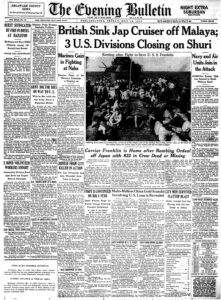
Washington, May 18 – The aircraft carrier Franklin, which miraculously survived one of the severest ordeals of this or any war, is home.  She came home, sadly crippled but under her own power, her charred and battered hull manned by a gallant crew of survivors.

Now undergoing repairs at the Brooklyn Navy Yard, she will resume her place in the war against Japan.

Until now, Japanese radio propagandists never knew how close they came to being right when they boasted that the 27,000-ton vessel of the Essex class had been sunk.  Without incredible stamina and strength built into her and without the superhuman courage of her personnel, their claim might easily have been true.

As it was the carrier suffered 1,102 casualties – 833 killed and missing and 270 wounded – more than one-third of her total complement.

Jap Scored Direct Hits

Chance played into the hands of the lone enemy dive bomber that streaked suddenly out of the clouds within 60 miles of the Japanese coast on the morning of March 19.

Two 500-pound armor piercing bombs were dropped on the Franklin, which was operating as part of a fast carrier task force in the strike against remnants of the Japanese fleet in Japan’s Inland Sea, Nippon’s “private lake”.

Released from low altitude, both bombs scored direct hits.  One exploded beneath the flight deck, on which armed planes were ready for take-off.  The other went off on the hangar deck, where other planes, fueled and armed, were waiting to be taken to the flight deck.

The attacking plane was shot down a moment later, but the bombs, exploding where they did, started a train of fires and explosions which for hours were to rend and torture the vessel.

Fires Spread

Large bombs burst and hurled men and planes the length of the ship.  Smaller bombs, rockets and machine gun ammunition killed dozens who had survived the major explosions.  Spreading fires, fed by thousands of gallons of high-test aviation gasoline, added fury to the holocaust.

But, without panic, those who miraculously had escaped death or injury and the slightly injured moved in to fight the fires.  Volunteers, including pilots, mechanics, officers and stewards, took over the job eft regularly assigned damage control parties who had been killed or trapped by flames.

Among those especially sighted by the Navy’s account were the ship’s chaplain, Lieutenant Commander Joseph O’Callahan, Boston, and Lieutenant (jg) Donald A. Gary of Oakland, Calif., both of whom performed superhuman feats of bravery.

Braved Flames

The lean, scholarly Jesuit first moved around the burning, slanting and exposed flight deck administering last rites to the dying.  Then he led officers and men into the flames, risking momentary death, to jettison hot bombs and shells.  Then he recruited a damage control party and led it into one of the main ammunition magazines to wet it down and prevent an explosion. 

The Franklin’s captain, tall, husky Leslie E. Gehres, of Coronado, Calif., who calls Father Timothy “the bravest man I’ve ever known,” himself diplayed a brand of courage that saved his ship under conditions that threatened to kill every man aboard.

Captain Gehres refuted flatly lo order the ship abandoned, declaring: “A ship that won’t be sunk can’t be sunk.”

A few hours after the first attack, the light cruiser Santa Fe came alongside to remove the wounded.  These operations were Interrupted, however, when one of the carrier’s forward five-inch gun mounts caught fire and threatened to explode.

Later, after the cruiser’s mercy mission had been completed, survivors of the carrier air group were ordered to leave the ship.  Early in the afternoon, after the fires were under control, the Franklin was taken In low by the heavy cruiser Pittsburgh.

Constant Patrol Above

Overhead, fighters flew a constant patrol.  By the next morning one of the carrier’s fire rooms had resumed operation and her severe list had been corrected.  During the day, more power was recovered and the canter worked up a speed of 23 knots under her own power.  On the second day after the attack, 300 of her men were brought back aboard from other vessels which had picked them up, and she headed for home. 

Her foreman a jagged stump, her mainmast bent at a sharp angle and her flight deck completely destroyed, the battered, burned carrier limped gallantly into New York on April 26 after a 13,400-mile voyage.

Third Naval District officials said she had lost a greater number of men and sustained more battle damage than any ship ever to enter New York Harbor under her own power.

Her steel decks were buckled and torn in scores of places.

“704 Club” Organized

The Franklin was brought home by 704 resolute Americans who refused to abandon her.  They formed the “704 Cub” and agreed to meet after the war ends.

Captain Gehres told how his “704 Club” worked furiously on the way home to make at many repairs as possible. 

“While we were coming to New York,” he related, “the hangar deck was cleared and swept down.  That saved the Navy Yard two month’s work and probably saved the Government $200,000 in labor charges.”

“She should be taken on a tour of the United States, if that were possible, to show people back home what one or two tiny enemy bombs can do, for that was what started this,” said Marine Corps Major Herbert Elliot, of Pueblo, Colo., of the Franklin’s detachment.

The Franklin, built by the Newport News, Va., Shipbuilding & Dry Dock Co, was launched October 14, 1943. and commissioned January 31, 1944.

Was Damaged Before

The Inland Sea action was the second in which the Franklin suffered damages requiring her return to the United States.  Last October 14, anniversary of her christening by Captain Mildred McAfee, WAVE director, she was attacked by four Japanese torpedo planes while participating in a two-day strike at Formosa.

She escaped major damage then, but a few days later, at the battle for Leyte Gulf, she took a direct hit on the flight deck.  That damage necessitated a return to the Puget Sound, Wash., Navy Yard for repairs.  She had just returned to action when the latest attack occurred.

~~~~~~~~~~~~~~~~~~~~~~~~~~~~~~~~~~~~~~~~

772 Lost on Blazing U.S. Carrier Hit by Japs Mar. 19, but Ship Is Saved

Philadelphia Record
May 18, 1945
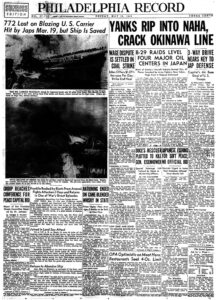
Franklin Rocked by Blasts From Arsenal, Fights Attackers 3 Days and Returns in One of War’s Great Episodes

Philadelphia Record – New York Times Foreign Service

The new 27,000-ton carrier Franklin, a scarred and blackened hull, with fire-crisped decks where hundreds of men died in one of the ugliest naval catastrophes of the war, has reached the Nary Yard in Brooklyn, proudly completing her ghastly 12,000-mile voyage under her own power, in a great display of seamanship and valor.

Releasing stories written weeks ago, the Navy paid tribute today to the ship and her men, the dead and those who survived.  More than 1000 were lost or injured, representing roughly a third of her complement, believed the greatest loss of any ship in this war.  The official casualty list reports 841 dead, 481 missing and more than 300 wounded.

Joined in Land-Sea Attack

Hit at 7:07 A. M. on March 19, some 60 miles off the Japanese main islands as the fast carrier task force blasted enemy fleet remnants in the Inland Sea, the Franklin became a raging inferno of fire and explosion, and remained so for hours.  As she was dispatching planes from her deck, she took two bombs, one forward and one aft. 

A lone Japanese dive-bomber, penetrating defense screens, sped over the ship from stem to stem, planting the heavy bombs accurately. 

Instantly, the planes on the deck burst into flame, their machine guns firing, their bombs going off.  Ready bomb stores exploded and down below, one by one, sections of the ship blossomed into flaming death traps.  Rockets were zooming in yellow flashes across the deck.  High-octane gasoline spewed forth, ran in cascade over the aides, and to watchers with the rest of the fleet the great ship seemed to disintegrate.

Refuses to Abandon Ship

Adm. Marc A. Mitscher, in command of the force, sent permission to prepare for abandoning ship, but the commanding officer, Capt. Leslie E. Gehres, of Coronado, Calif., shook his head.

“We’re still afloat,” he said, and he and his men, as courageous a crew as ever walked a deck, kept her that way.

All day the ship burned, as rescue parties pushed through choking- smoke, leading trapped men to the decks.  Others jumped over or were blown into the sea.  Some men were brought out alive 18 hours later from a steaming compartment below aft. 

Other warships, the cruiser Santa Fe and the destroyers Hunt and Marshall, stood alongside to give aid, taking off wounded or furnishing their own fire-lines to the floating inferno.  Other ships fought off several Japanese air attacks that day and the next.

Controls Gone – Heads for Japan

With her controls gone and her men ordered out of the engine rooms, the big carrier steamed slowly ahead for more than an hour and a half, heading for Japan.  And the Fanta Fe, not knowing whether the magazines had been flooded, clung closely by, bumping and crushing her rails, so close that men crawling out on the Franklin’s listing side could fall, as some helpless ones did, into the waiting arms of the Santa Fe’s crew.

Then the cruiser Pittsburgh took her in tow, for a while, until gallant men, knowing what they faced below, went down into the furious boiler and furnace compartments and finally got some of them working.  Finally the ship could make headway and maneuver by using the engines.

Rescue Parties Formed

Other men led rescue parties through choking room into compartments where men were huddling without air.

All day the great ship blazed and burst with powder, gasoline and shell, until, as night deepened, the weary officers and men, burned and hungry, brought a semblance of control into the ship that would not sink.  Her engine power was stepped up by further repair parties, and she went for home the next day, stopping at Pearl Harbor the first week of April.  Then she headed across the Pacific at good speed, like a ghost ship, with a little band of musicians holding forth on the deck, most of them with home-made instruments.

In commission only a little more than a year, the Franklin was not, the Navy stated yesterday, one of the ‘“hero ships.”  She had participated in attacks against Japan’s weakening sea power and had done her share, though too young to win the rich laurels worn by her more experienced sisters.

Joins Ranks of Heroes

“But in her hour of travail,” the Navy announcement said, “the American men, young and not so young, who comprised her crew, wrote another bright paragraph in the lone story of naval heroism at sea.  The kind of fight they waged to save their ship is typical of what their fellow-seamen have frequently done during the Pacific war.”

The Japanese the next day announced that a big carrier had been sunk.  And this time the enemy boast was not unbearable, for the ship by all standards was done, and should be today In the Pacific depths.

Naval officers and others who have seen her, blackened, with holes gaping and her compartments formless masses of twisted steel, expressed wonder she stayed afloat.  That she did, they say, was a tribute to high order, to men whose courage and determination would not let her go, and to the designers and builders who put together a stanch vessel able to take unbelievable punishment and still make if home.

She was built by the Newport News Shipbuilding and Dry Dock Company, launched in October, 1943, and commissioned the following January. 

Priest a Hero

The outstanding hero, according in Capt. Gehres, was a 40-year-old Jesuit priest, Lieut. Comdr. Joseph Timothy O’Callahan, USNR, of Cambridge, Mass, ship chaplain, and, said the captain fervently, “the bravest man I have ever seen.”

Formerly head of the mathematics department at Holy Cross College, Worcester, Mass., a bespectacled, scholarly man with membership in a number of learned societies, Chaplain O’Callahan has been in the Navy since 1940, but Joined the Franklin only 17 days before she was hit.

“Father O’Callahan,” said Capt. Gehres, “was every place, and every place was the toughest.  He set up the first receiving station for the wounded and helped the medical corpsmen.  He was giving the last rites of the church to badly wounded and went around encouraging men fighting fires.  I would look down from the bridge to the deck and see him leading the way into dense smoke clouds.  He would reappear and take more men in. 

Near Explosion

Once an explosion came right where he stood, and a man on his left was killed.  Father O’Callahan came out of it okay.  Without hesitating, he took the man on his right and went ahead fighting fire.

“He made several trips below decks as the ship reeled with explosions and turned crisp from the terrific heat.  He helped wet down explosives in a magazine, and in another, helped pass out ammunition for Jettisoning.  When the crisis was over he led men below for bodies, preparing them for burial.”

Another singled out by the captain was Lt. (J.G.) Donald A. Gray, USN, commissioned two years ago after more than 20 years as an enlisted man.

Attacked East or Inland Sea

Capt. Gehres said the attack occurred at 7.07 A.M. March 19, about 63 miles east of the Japanese Inland Sea, as the Franklin prepared to launch its planes against the Japanese mainland.

The Franklin’s planes were on the flight deck, loaded with bombs and gas for takeoffs.  A Japanese plane came out of the cloud so fast he escaped the Franklin’s guns and dropped a bomb that pierced the deck and exploded below.

“We were heavily loaded with bombs, torpedoes and fighter rockets, and flames shot almost immediately from the hangar deck and enveloped the whole forward flight deck,” said Capt Gehres.

“There was another big explosion and I saw we were hit amidships and two or three minutes later the bombs and gasoline tanks of the planes on the flight deck began exploding.

Explosion Follows Explosion

“From then until almost mid-afternoon there was one explosion after another as the planes and then the magazines blew up.

“We had about 50 tons of bombs, torpedoes and rockets and about 50 tons of other stuff aboard and it all went up,” the captain said.

“The first explosion knocked me down and when I got to the bridge the flames were shooting out of the hangar deck and enveloped the whole forward flight deck.

“All the explosions shook the ship pretty badly and knocked a lot of people into the water.  Some of the stuff dropped through to the hangar deck and one explosion killed everyone forward on the hangar deck.

“The smaller stuff, the 20 and :5 mm. machine gun ammunition, was popping around the bridge like strings of firecrackers going off.

Staff Transferred

“About 8 o’clock we transferred Adm. Ralph Davidson and his flag staff to another ship.  By that time the men in the engine rooms were collapsing: It was about 130 degrees down there and filled with smoke.

“I told them to set all instruments so we could keep steaming, and get out.  We were heading straight for Japan and couldn’t do anything about it because we couldn’t steer, but we had to keep moving.

“We kept right on running for about 45 minutes, although there was nobody in the engine rooms.  Then we went dead in the water. 

Men Blown Overboard

“Many of the men jumped overboard or were blown over board and some were picked up by other ships.  The cruiser Santa Fe had come up and we were transferring the stretcher cases and others who were badly wounded.  We got the last of the stretcher cases over about noon.  The Santa Fe backed away as the two ships were banging together in the rough seas and causing some damage.  We had a list of about 14 degrees.  Later the Santa Fe came back and helped fight the fire, even though it was a very dangerous thing for them to do.  One magazine blew up and threw the fragments over the Santa Fe’s decks.

“I want to be sure Capt. H.C. Fitz, of the Santa Fe, gets credit for what he did.  It took nerve.”

Japs Attack Again

Some time later the cruiser Pittsburgh came alongside but it took four hours to get a tow line secured on the Franklin.

During this operation a Japanese plane attacked again, making a low-level strafing and bombing attack that missed the mark.

By this time the worst of the fires were out but some of the rockets were still exploding.  Some of them roared across the decks, killing the people in their paths, and shooting out to sea where they narrowly missed other ships.  Many men were killed or injured by them.  It was a nightmare.

The Japanese sent out many other planes to “finish off” the crippled Franklin.

One Gun Mount Operating

“There was only one twin gun mount, forward, operating,” said Capt. Gehres.

“Many of the gunners had been killed, but this gun was manned by a Marine orderly, two Marine aviation mechanics, a mess cook, a messenger, a bugler and two gunner’s mates.

“They had to operate the mount by hand, but they swung it around on a Jap that attacked and despite all the handicaps, they forced the Jap off his course and his bombs went into the water, a hundred feet off the stern, without damage.”

During the early hour of the attack Capt. Gehres said the chaplain was everywhere” helping wounded, fighting fires and administering last rite to the dying. 

Handles Fire Hose

“I saw him in front of a huge billow of smoke holding a fire hose and encouraging other to go in with him while he extinguished flames,” said the captain.  “He didn’t hesitate a moment to go where nobody else would go.  I even saw him go into an ammunition magazine where there was a fire.

“There was a man killed on each side of him but he was unhurt.  A turret began smoking and I yelled down to get a hose and wet down the ammunition locker before It exploded.  The chaplain couldn’t hear me in the noise and he came over and asked what I wanted.

“With Lt. Comdr. McGregor Kirkpatrick, he got a hose and stood there and wet the locker, which might have blown up any moment, killing the both of them.

“After that the chaplain went to another gun mount and started jettisoning ammunition.”

Lt. Gary, assistant engineering officer, was at his boiler emergency station when the attack came.  Stifling smoke poured in as he stumbled aft to the mess room where 300 seamen were trapped.  He was only a few minutes behind Lt. Comdr. Dr. James L. Fuelling.

The situation was desperate, with ventilation growing worse.  Looking around, he noticed an opening in an air uptake, and assuring the men he would return, he started up, returning a few minutes later to help the men out. 

First he took 10 men, each of them clasping the hands of others to form a chain.  Leaving them on the flight deck, he came back for a larger group, and then a third.  The canister on his rescue breather was not functioning, and Lt. Gary was choking.  Hearing that men had been trapped in an evaporator room for six hours, be donned another breather and went to lead them out.

It was also Lt. Gary who led two others down into the engine room that that first night to try lighting a boiler.  They wore rescue-breathers, for the temperature was 130 degrees.  Despite the apparent hopelessness, they did get two boilers going, so the Franklin could make headway.  In his “spare” time Lt. Gary was seen single-handedly fighting fire on the flight deck, tirelessly organizing fire parties, repeatedly entering dangerous places.

The last man lo leave the mess compartment from which Lt. Gary found an escape route was Dr. Fuelling.  Unable to reach his sick bay battle station, he had taken charge in the compartment where, it was said, his voice of command rose above the excited babble of the men, many of whom were novices at war, experiencing their first action.  He ordered them to remain quiet, to atop shouting and to relax.  As they waited, the ship shook again and again with great explosions.

Start to Pray

“I tried to distract their minds from what was going on,” the doctor said.  “Someone suggested that we pray, and pray we did.”

Almost on the verge of exhaustion himself, the doctor, on reaching the deck, fell to the bloody task of giving aid to men suffering from burns and injuries.  He directed evacuation of wounded to the Santa Fe and worked ceaselessly for hours.

~~~~~~~~~~~~~~~~~~~~~~~~~~~~~~~~~~~~~~~~

CITY MEN SURVIVED FLATTOP BLAST

Sailor Jumped into Sea Blazing with Gas and Swam to Safety

Philadelphia Bulletin
May 18, 1945

A 22-year-old Philadelphia sailor who saw two of his shipmates killed beside him, escaped from the bombed carrier Franklin by jumping into a sea ablaze with spilled gasoline and swimming underwater until he was out of reach of the flames.

Earlier, Harry Arthur Stinger, pharmacist’s mate third class, of 5826 Akron St., missed death when he went to eat dinner in another section of the ship instead of going to his regular mess room.

A bomb landed in the mess room while he was still eating and killed everyone there, Stinger told his mother, Mrs. Rose Stinger.  He was wounded by the same shrapnel bursts that killed one of his companions.

Stinger was one of several Philadelphians who survived the bombing.

Among the others are Lieutenant Commander David Berger, 32, of 224 E. Church Road, Elkins Park; Charles F. Seested, Jr., aviation machinist’s mate second class, of 449 W. Price St.; Willie Cogman, 30, Negro, a steward’s mate third class, 1412 S. Chadwick St.; Edward G. McGlade, aviation machinist’s mate third class, 402 W. Spencer St., and Michael A. Monte, aviation radioman second class, 3149 N. 23d St.

Stinger, who Is now at the Brooklyn Navy Yard, told his mother that he went to another section of the ship to eat at the invitation of a shipmate.

Things got hot in that section, too.  One of the sailors there opened a door just as a bomb exploded overhead, and one of Stinger’s companions was killed in front of him.

Stinger and two other sailors managed to get to the deck by another route, and later the burned bodies of six men were found in the compartment that Stinger and his companions had left.  The bodies were on the stairway, indicating that the sailors had made a desperate effort to escape when the compartment caught fire.

Another Companion Killed

On the deck, Stinger and his two companions crawled on their stomachs to avoid bombs.  One bomb killed one of the companions.  Stinger was struck in the leg by shrapnel.

Despite his injuries, Stinger leaned over to administer a sedative to the fatally injured man and fell over him, overcome by the thick smoke.

He regained his senses and made his way to the railing.  Peering into the water, he saw it was a sea of flames.  There was no other means of escape, so he plunged overboard into the blazing gasoline and swam under water.

Soon he was out of reach of the flames and came to the surface.  Another sailor helped support him, and the two remained in the water 40 minutes until rescued by the cruiser Santa Fe.  He was in the Santa Fe’s sick bay six days under treatment for his wounds. 

Commander Berger, who was one of the survivors of the aircraft carrier Hornet, sunk in the Battle of Santa Cruz in 1942, said that his experiences aboard the Franklin seemed like a nightmare, by comparison.

Smoke Hid View

Commander Berger related that he was on the bridge of the Franklin on the morning of March 19, standing by the primary flight control, when a terrific explosion shook the ship.  He was knocked to the deck.

The concussion knocked him out for a few minutes, and when he regained his senses he was unable to see anything around him because of the acrid black smoke billowing around him

Smoke and flames, he said, seemed to envelop the entire ship, and the subsequent series of explosions almost caused him to lose his grip on the iron rung to which he clung.

Finally he lowered himself by a rope from the bridge to a point four feet above the gun deck.  He let go of the rope and fell to the deck.  Several other members of the crew did likewise.

Coughing and choking. Commander Berger crawled toward a spot through which he could see the blue sky. 

After breathing fresh air he joined other units in fighting the heavy fire that raged through the ship. 

The next day was a “living hell,” he said.  Enemy planes attacked again and his position on the hangar deck was a very uncomfortable place.  He crawled through wreckage and rubble to the flight deck, and tried to crouch behind a five-inch gun only to realize suddenly that the weapon itself was smoking “like the very devil” and seemed ready to explode.  He beat a hasty retreat.

Worst Thing Yet

Finally the attacking planes disappeared, and the men went back to their fire fighting.

“The experience on the Franklin was about the worst thing that I have ever gone through,” he said.

He praised Cogman, who was a member of a group of Negro sailors who rigged up the Franklin for towing after the attack.  Cogman, he said, did the work of a hero and undoubtedly will receive a Navy award.

Seested, whose wife Ann, lives at the Price St. address, told his story aboard a rescue vessel, and his account was made public by the Navy in Washington.

He said that he had just returned to his work shop, located aft between the flight and hangar decks when the bomb struck.  He had just taken off his life jacket for the first time in 36 hours. 

Escapes Through Port Hole

“The whole ship vibrated,” he said.  “Men were knocked off their feet and everything was a mess.  I rushed to my life jacket.  By the time I had it on, the shop was filled with smoke.  We began to choke, our eyes burned.

“I tried to get out through a hatch on the starboard side, but the second I stepped out, I felt intense heat.  I groped my way back to the shop and found a port hole had to remove my life jacket to climb through, then I had to climb down the stern of the ship about 35 feet to reach the fan tail.  I did this by letting myself drop twice.  I was holding my life jacket in one hand.

“As I reached the fan tail there were two terrible explosions.  Wood and metal were flying in every direction.  Then another blast occurred.  Something hit my head.  That’s all I remember until I came to in the water.  The ship was a long way off.”

Seested was picked up by a destroyer and was later transferred to the cruiser.

Berger In law Firm

Commander Berger, whose wife, Harriet, lives at the Church Road address, enlisted In the Navy March 15, 1942.  At that time he was a partner in the law firm of Woolston and Berger, and be also served with the Alien Registration Commission.

He was graduated from the University of Pennsylvania in 1932 and from the University’s Law School in 1938.  His parents, Mr. and Mrs. Jonas Berger, live in Archibald, Pa.

He also served on the carrier Enterprise and is the recipient of the Presidential Unit Citation.

Seested, who is 25, entered the service in May, 1943, while employed at the Bendix Aviation Corp.  On April 26, his wife received word that he had been seriously wounded.  He was graduated from Waltham, Mass, High School and is now awaiting an operation at a San Diego Naval Hospital according to word received by his wife last week. 

Cogman was inducted October 21, 1943.  He has a daughter, Catherine, 11, who is staying with his sister, Mrs. Williernae Mitchell, at the Chadwick St. address.

~~~~~~~~~~~~~~~~~~~~~~~~~~~~~~~~~~~~~~~~

Crew Rescued After Praying

The Philadelphia Inquirer
By ALVIN S. McCOY

May 18, 1945

ABOARD THE U.S.S. SANTA FE IN THE WESTERN PACIFIC, March 19 (Delayed) – At least 150 enlisted men, who were trapped in the smoke-filled mess hall on the U.S.S. Franklin after the huge Essex Class carrier had taken a direct Japanese bomb hit, testified today that their prayers were answered by Divine Providence, and a lieutenant.

The survivors were tolling their mates of the frantic hour and a half they spent below decks on the Franklin, waiting for- someone to show them a way out.

“A doctor was with us,” said B.J. Moore, Seaman First Class, Claremore, Okla., “and he, really took care of us.  He was Lieutenant Commander J.L. Fuelling, of Indianapolis.  He said, “If anyone knows any prayers, he’d better say them.”

BOW IN SILENT PRAYER

The men bowed their heads and prayed, silently.

In a few minutes the door opened and in came Lieutenant J.G. Donald Gary, of Oakland. Calif., fuel and water officer.  He told them he believed he could find a way but.  He would try it first and then return and lead them.

About twenty minutes later Lieutenant Gary returned, took ten men with him crawling on their hands and knees through water.  They went down a ladder-to the engine room a deck below, and then climbed up through an escape vent.

The remaining men said prayers again.  Lieutenant Gary returned and escorted ten more out the devious passageway.  There were more I prayers, the lieutenant returned, and the entire remaining group departed, each man crawling and holding the belt of the man ahead.

“It seemed like every time we prayed, somebody came in that door,” Seaman Moore said.

~~~~~~~~~~~~~~~~~~~~~~~~~~~~~~~~~~~~~~~~

Jazz Concert For Survivors

The Philadelphia Inquirer
May 18, 1945

WASHINGTON, May 17 (U.P.)  Survivors of the Japanese bombing attack which almost sank the aircraft carrier Franklin were treated to a concert by one of the strangest collections of musical instruments ever put together – but they loved it.

It began soon after the fires were put out.  Musician First Class Saxte Dowell, featured performer in the late Hal Kemp’s hand and composer of “Three Little Fishes,” rounded up some men to play in mess halls, knee deep in water.

Their instruments and music were ruined.  An empty gallon jug served as a bass horn, fire buckets and spoons were used by the drummer, and “Frisco horns,” not further identified, took the place of clarinets.

“We tried to play everything the boys asked for,” Musician Dowell said.  “Most of them wanted to hear “Don’t Fence Me In.”  When we got to the part of the lyrics that read ‘Give Me Land, Lot of Land’ – well, I don’t have to tell you that the entire ship’s company joined in.”

~~~~~~~~~~~~~~~~~~~~~~~~~~~~~~~~~~~~~~~~

Loss of 772 on Carrier Revealed; Ship Saved After Battle Off Japan
Survivors Refused to Quit Craft
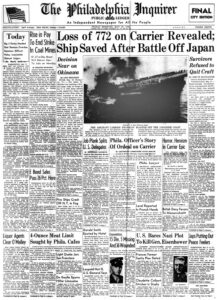
By JOHN M. McCULLOUGH
The Philadelphia Inquirer
Inquirer Washington Bureau
May 18, 1945

WASHINGTON, May 17. – Bomb-wracked, fire-blackened but unconquerable, the 27,000-ton Essex class aircraft carrier Franklin is home from the consuming fury of the Pacific war.

Her flight deck Is an empty concourse.  Her mainmast is leaning at a drunken angle.  Her foremast is a ragged stump.

341 OF CREW KILLED

Out of her total complement of more than 2500 men, 341 are dead. 431 are missing in action, and mora than 300 are wounded.

She went out a princess of the carrier fleet to hurl aerial destruction at the Jap; she came home a weary and a bedraggled harridan, a soot-stained fugitive from hell.

But she’s a “fighting lady.”  Her men, living and dead, made her so.

The Navy Department today told the almost unbelievable story of the Franklin, only 59 days after she took her all but mortal wounds from an enemy dive bomber only 66 miles off the coast of Japan.

DAMAGED MARCH II

When the mere wraith of a great carrier was nudged into her berth in the Brooklyn Navy Yard a few days ago, by official Navy pronouncement “She had lost a greater number of men and sustained more battle damage than any ship ever to enter New York Harbor under her own power.”

On March 19, the Franklin was one of the powerful combat ships in the immortal Task Force 58 which was going for what was left of the Japanese fleet, huddled dejectedly In the ports and anchorages of Japan’s Inland Sea.

‘DIGGING ‘ EM OUT

Admiral William F. Halsey. Jr., commander-in-chief of the Third Fleet, only a few days before had declared in Washington that if the enemy fleet did not choose to come out and fight, the Pacific Fleet would “go in after ‘em and dig ‘em out.”

The Franklin and her sister ships, comprising one of the fastest, most deadly and most powerful combinations of naval offensive strength ever gathered in a single attack formation, were “digging “em out.”

Most of the Franklin’s flight deck was packed with planes, ready to take off.  Scores of others were aligned handy to the elevators on the hangar deck, gassed up. loaded with ammunition and bombs to deliver their devastating strikes against the enemy.

HIT BY TWO BOMBS

Suddenly, out of the lowering overcast, a Japanese dive bomber streaked, too swiftly and unexpectedly for the carrier’s protecting fighter patrol to intervene.  One 500-pound armor-piercing bomb plunged through the flight deck, exploding beneath; a second penetrated to the hangar deck.

Within a matter of seconds, the proud carrier was an indescribable creature of Hades.  Gas tanks, bands of high-caliber ammunition, bombs and rockets detonated and foamed in a red fury.  Hopelessly trapped, men were reduced to ashes or blown to atoms in the tick of a watch.

BLASTS ROCK SHIP

All of the pent-up destruction which was to have deluged the enemy roared and thundered and shrieked in the steel-plated confines of the Franklin.

It was this very incident which had hopelessly crippled America’s early carriers — the Lexington, the Wasp, the Hornet, the Yorktown:   The instantaneous and uncontrollable ignition and detonation of their own gasoline and explosives.  It didn’t destroy the Franklin.

ATTACKER IS DESTROYED

American fighter planes pounced upon the daring Japanese dive bomber and tore it into unrecognizable fragments with a hail of fire – but the carrier herself seemed doomed.

She was only 66 miles off the coast of Japan, dead in the water, her communications system shattered, her steering mechanism gone, her highly integrated complement of officers and men chopped in half. .

In the midst of such confusion and dreadful scenes as few men upon her had ever witnessed, the ship’s discipline barely wavered.

THERE WAS NO PANIC

The Navy’s announcement said:

“There was no panic.”

A hint of the situation aboard the carrier was contained in the only story issued by the Navy from the lips of a Philadelphian surviving the ‘holocaust.  He is Charles F. Seested, Jr., at 449 West Price St., Germantown, an aviation machinist’s mate, second class, who was reported to be recovering comfortably from his injuries in the sick bay of a battle cruiser.

‘WHOLE SHIP VIBRATED’

“I had Just returned to my workshop, which is located aft between the flight deck and the hangar deck,” he was quoted as saying.  “I had just taken off my life jacket for the first time in 36 hours. Then the bomb struck.

“The whole ship vibrated.  Men were knocked off their feet, everything was a mess.  I rushed to my life-jacket.  By the time I had it on, the ship was filled with smoke.  We began to choke, our eyes burned.

“I made an attempt to get out through a hatch on the starboard side, but the second I stepped out, I felt intense heat.  I groped my way back to the shop and found a porthole. I had to remove my life-jacket to climb through, then I had to climb down the stern of the ship about 35 feet to reach the fantail.  I did this by letting myself drop twice.  I was holding to my life-jacket, with one hand.

‘TERRIFIC EXPLOSIONS’

“As I reached the fantail, there were two terrific explosions.  Wood and metal were flying in every direction.  I put on my jacket and made a grab for a lifeline. Sometime during all this time, my steel helmet had been blown off.

“Then another blast occurred.  Something hit my head.  That’s all I remember until I came to in the water.   The ship was a long way off.

He was picked tip by al destroyer – the U.S.S. Hunt, one of four which with the light cruiser Santa Fe boldly moved in until flames blistered the paint on their plates, to lend aid and rescue the survivors.

ALL LEND A HAND

The Philadelphians story is only lone of 50 which were relased by the Navy today – all testifying to conditions from which it seemed almost impossible, that any human being could escape with his life.

Every living man, including many who had been blistered and almost denuded by the intense heat, turned airless, smoke-choked passages, reached the controls which flooded as yet unexploded magazines.

After the cruiser Santa Fe had taken off the last of the injured, according to the Navy story, “the surviving members of the carrier’s air group were ordered to leave the ship.”

Whether this order was tantamount to “abandon ship” is not made clear, but if so, it was ignored.

REFUSE TO BUDGE

Deep in the fire-rooms, seamen donned gas masks and refused to budge.  Some of them died of suffocation.  Others were cremated.  Still others doubtless were drowned.  But the survivors wouldn’t quit.  By early afternoon, the carrier, wallowing drunkenly. was taken in tow by the heavy cruiser Pittsburgh while a security patrol of fighter planes circled constantly overhead.

Twenty-four hours after the attack, the indomitable engineers had one fire room in operation, adding three knots to the Franklin’s towing speed.  An ingenious seaman had rigged up an Army “walkie-talkie” for short-range communication.  The carrier was steered with her main engines.

WORK DAY AND NIGHT

Men worked day and night, without sleep, with little food, with only hastily-dressed wounds.  Little by little, the debris was cleared away, other fire rooms restored to operation.  By end of the second day, the tow – line was dropped and the Franklin, a fantastic caricature of a ship, was on her own, eastward bound.

On March 21, 300 men who had been evacuated from the ship returned to reinforce her skeleton crew.  Ships of the escort radioed to the Franklin, offering more crewmen, food and equipment.

‘PLENTY OF MEN’

The carrier’s little “walkie-talkie,” screeching and squawking like a badly worn victorola record, had the answer.

“We have plenty of men and food,” came the message.  “All we want to do is get the hell out of here.”  Surging along in the wake of her many-gunned cruiser escort, the Franklin headed for home, 12,000 miles away.

She made it, under her own power.  She’s a “Fighting Lady.”

~~~~~~~~~~~~~~~~~~~~~~~~~~~~~~~~~~~~~~~~

Pal’s Invitation to Mess Saved Mate on Franklin

Philadelphia Record
May 18, 1945

Pharmacist’s mate 3/c Harry Arthur Stinger, 22, of 5826 Akron St., a survivor of the USS Franklin, probably owes his life to a chance invitation from another shipmate to eat elsewhere than in the main mess hall.

A few minutes after he and his friend went to another section of the big carrier, a bomb landed in the mess hall, killing all who were there, Stinger told his mother, Mrs. Rose Stinger.

Sailor Nearby Killed

Even so, he narrowly escaped death from another bomb that exploded over the place where Stinger and his friends were sitting.  A sailor sitting in front of him was killed instantly, but Stinger and two others managed to reach the deck.  Six others in the compartment were burned to death while struggling up a companionway.

On the deck, Stinger received a shrapnel wound in the leg.  While attempting to give a sedative to a fatally injured man, Stinger was overcome by smoke.  When he regained consciousness, he made his way to the rail.

The sea was a mass of flaming gasoline, but Stinger plunged overboard, swimming under water until he was outside the blazing area.  He and another sailor were in the water 40 minutes until their rescue by the Santa Fe.

Survivor of Hornet

Comdr. David Berger, 32, of 224 E. Church Rd., Elkins Park, a survivor of the carrier Hornet, sunk in 1942, was knocked to the deck of the Franklin by the first explosion.  After lowering himself by a rope from the bridge, he joined other crew members in fighting the flames.

Berger said that in comparison with the Hornet sinking, the Franklin disaster was a nightmare.

Other Philadelphians saved after the bombing on March 19 included Steward’s Mate 3 c Willie Cogman, 30, of 1412 S Chadwick St.; Aviation Machinist’s Mate 3 c Edward G. Mc Glade, 402 W. Spencer St., and Aviation Radioman 2 c Michael A. Monte, 3149 N. 23d St.

Letter to Father

In a letter to his father, Leo Burt, 242 W. 11th Ave., Conshohocken, Aviation Machinist’s’ Mate 3 c Edward J. Burt, 19, told of swimming 5 1/2 hours before being rescued.  “I thought my number was up,” he wrote.  “But I kept thinking of how you’d feel if you got a telegram, and that kept me up.”

Others from this area known to have been aboard the Franklin are Machinist’s Mate 1/C Leon Ellis, 24, of 564 Pine St., Camden, saved after being trapped below decks for 15 hours, and Torpedo man 3c Russell E Vasey, 20, of 2906 Buren Ave., Camden, listed as missing.

From Cape May yesterday came the story of the meeting, in the Franklin disaster, of two local boys who had not seen each other since their school days.  When Seaman 2 c Jonathan C. Trout, a gunner on the carrier, was rescued, he found his former chum, Belford Lemunyon of West Cape May, aboard the destroyer.

~~~~~~~~~~~~~~~~~~~~~~~~~~~~~~~~~~~~~~~~

Philadelphian Trapped on Carrier Tells of Escape Through Porthole

Philadelphia Record
May 18, 1945

WASHINGTON. May 17 (AP) – Charles F. Seested. Jr., aviation machinist mate second class, today told how he escaped from the aircraft carrier Franklin.

Seested, whose wife, Mrs. Ann G. Seested. lives at 449 W. Price St., Philadelphia, told his story aboard a cruiser in the Pacific where he is recovering from his injuries.

“Whole Ship Vibrated”

“I had just returned to my work shop, which is located aft between the flight deck and the hangar deck,” he said.  “I had just taken off my life Jacket for the first time in 36 hours.  Then the bomb struck.

“The whole ship vibrated.  Men were knocked off their feet, everything was a mess.  I rushed to my life Jacket.  By the time I had It on, the shop was filled with smoke.  We began to choke, our eyes burned.

“I made an attempt to get out through a hatch on the starboard side, but the second I stepped out, I felt intense heat.  I groped my way back to the shop and found a porthole.  I had to remove my life jacket to climb through, then I had to climb down the stern of the ship about 35 feet to reach the fantail.  I did this by letting myself drop twice.  I was holding my life Jacket in one hand.

“Two Terrible Explosions”

“As I reached the fantail there were two terrible explosions.  Wood and metal were flying in every direction.  Then another blast occurred.  Something hit my head.  That’s all I remember until I came to in the water.  The ship was a long way off.”

Seested was picked up by a destroyer and later was transferred to the cruiser.

Another Philadelphian among the Franklin survivors was Lt. Comdr. David Berger, 32-year-old lawyer, of Elkins Park, who served as assistant air officer.

~~~~~~~~~~~~~~~~~~~~~~~~~~~~~~~~~~~~~~~~

MARINES WIN FOOTHOLD IN NAHA;
INFANTRY GAINS IN EAST OKINAWA;
LOSS OF 832 ON U.S. SHIP REVEALED
The New York Times
May 18, 1945

SMASHED CARRIER SAVED BY BRAVERY

Skipper and Officers Say They Never Entertained Thought of Quitting Blazing Craft

The New York Times
May 18, 1945

Despite the tremendous explosions and fires that swept the 27,000-ton aircraft carrier Franklin after she was hit by two bombs sixty miles off the Japanese coast, the thought of abandoning ship never was considered for a moment, the carrier’s skipper, Capt. Leslie E. Gehres, declared yesterday.

Interviewed with some thirty of his officers and enlisted men at the Navy Public Relations Office, 90 Church Street, Captain Gehres was liberal in his praise of the heroism and ability of the Franklin’s personnel.  Only their efforts and the aid of the accompanying warships, he said, made it possible for the carrier to reach port.

“The attack was an aviator’s dream,” the 47-year-old veteran skipper said.  “We were caught while we were launching the second flight of the day.

“Great sheets of flame enveloped the flight deck and the anti-aircraft batteries,” he continued.  “The forward elevator rose up in the air land then disappeared and dense smoke rolled skyward.  Then things started exploding all over the forward part of the ship.”

Praises Heroism of Crew

The rest, Captain Gehres said, is a story of a heroic crew that refused to believe that the Franklin, only sixteen months after she was commissioned at Newport News, Va., was destined to end her career on the floor of the Japanese seas.  It is also a story, he said, of the great work of such ships as the cruisers Santa Fe and Pittsburgh and many destroyers, including the Miller and the Hickock, which towed and protected the Franklin while she was dead in the water.

Of her crew of more than 3,000 officers and men Captain Genres disclosed, 832 are dead or missing and 270 wounded, ninety of them seriously.

Comdr. Henry H. Hale of Gary, Ind., the carrier’s air officer, was busy launching planes when the first bomb struck.

“Flame seemed to cover the whole forward part of the ship,” he said.

“The plane on the runway was picked up and turned over on its back, but the pilot, I found out, later escaped unhurt.”

All Planes Lost, 4 Jeeps Saved

“Every plane on the ship was lost,” Commander Hale said, “but oddly enough four jeeps used ordinarily to pull planes into position for take-offs were unscathed.  These jeeps came in handy later when we went to work clearing the wreckage.”

The ship’s executive officer, Comdr. Joseph Taylor of Danville, Ill., was standing next to the wave-off officer when the first explosion tore through the ship, he said.  He was blown across the deck against the starboard lifelines, but was unhurt.

“Finding myself in one piece,” he said, “I immediately made for the bridge to see how the captain was.  The captain was shaken but unhurt and ordered me to ascertain the extent of damage.  I spent the rest of that nightmare supervising fire control parties and arranging for a tow by the cruiser Pittsburgh.”

Lieut. (j.g.) W.R. Wassman, 24 years old, of New Rochelle, N.Y., who was assistant navigator on the carrier, told of his part in the rescue of five men trapped aft in the steering engine room.

New Rochelle Man Hero

“As soon as we could get aft,” he said, “we worked our wav over the hot and twisted steel to the fantail.  I heard a boy moaning and after a search found him, badly hurt, lying among a group of dead.  Aided by another sailor, I got the man to the safety of the deck and then went back again.”

“We had rescue breathers with us this time,” Lieutenant Wassman continued, “and, holding them above the sloshing water, we worked out way through four compartments, toward the trapped engine-room men.  By shifting the water from a compartment above the engine room to another compartment we were able to get the men out.”

Shipfitter, first class, Herman Friedman, 29, of 817 East 175th Street, the Bronx, was in his quarters when the attack occurred, he revealed.  He went to his battle station – repair and damage control – but stayed there only a short time, when he found the communications system out.

“I went forward for orders then,” he said, “and later when organization developed went below to counter-flood compartments to correct the ship’s list.  I was not hurt, but I was certainly scared.”
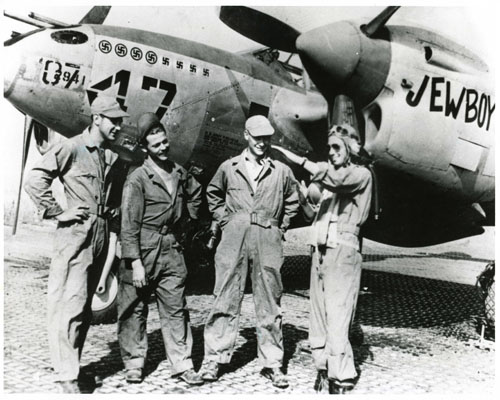
A Minyan of Six? – Jewish Sailors in World War Two: Aboard the USS Franklin (CV-13) and USS Wasp, March 19, 1945 – United States Navy and United States Marine Corps

Difficult reading…

On March 19, 1945, the most significant historical event – in terms of Allied casualties incurred during a single military action – occurred when the aircraft carrier USS Franklin was struck by two semi-armor-piercing bombs dropped from a single D4Y “Judy” dive-bomber, while conducting strikes against the southern part of the Japanese island of Kyushu as part of Task Group 58.2. 

One bomb struck the flight deck centerline and penetrated to the hangar deck, while the second struck aft and penetrated through two decks.  Due to a combination of factors – 21 aircraft on the hangar deck, many fueled and some armed; the hangar deck’s aft gasoline system remaining in operation; the presence of 31 fueled and armed aircraft on the carrier’s flight deck; “Tiny-Tim” air to surface rockets loaded onto aircraft on both both decks – the carrier endured a series of external and internal explosions (particularly on the hangar deck … a gasoline vapor explosion combined with the ricochet and explosion of Tiny-Tim rockets, the combined effects of which which left only two survivors), the ship experienced the loss of over 800 crewmen, leaving the Franklin as the most heavily damaged American aircraft carrier to survive the Second World War.

The ship was saved due to the efforts of her crew, and, the assistance of cruisers Pittsburgh and Santa Fe, and, destroyers Miller, Hickox, Hunt, and Marshall, the latter four vessels making a particular effort to retrieve crewmen who had either been blown over the Franklin’s side by explosions, or who’s jumped to save themselves from smoke and flames. 

A vast understatement, but it gives you an idea…

You can read far more about this event (and avail yourself of many historical references) at Wikipedia, from which the above account has been taken. 

The photo below has been reproduced innumerable times in print and pixels, but deservedly so, and is an apropos introduction to this post.  The image is excellent simply “as” an example of photojournalism, in terms of composition, focus, lightning, and visually capturing the dramatic entirety of a naval vessel fighting for its life.  Historically, the picture vividly shows the carrier’s post-attack list to starboard, smoke rising from the rear of the hangar deck, its damaged island, and many surviving members of the ship’s crew standing on the flight deck (at least, those able to do so).

“USS Franklin (CV-13) … afire and listing after she was hit by a Japanese air attack while operating off the coast of Japan, 19 March 1945.  Photographed from USS Santa Fe (CL-60), which was alongside assisting with firefighting and rescue work.  Official U.S. Navy Photograph 80-G-273880, now in the collections of the National Archives.”

On May 18, 1945, the following map accompanied the Times’ articles about the Japanese strike on the Franklin.  Though correct in placing the carrier’s location on March 19 as generally east of Kyushu and south of Shikoku, in reality, when the ship was struck by bombs, the carrier’s position was substantially east of that shown here…

… as you can see in the two Oogle Maps, below.  The blue oval shows the position generated by placing the carrier’s reported position in degrees and minutes into Oogle Maps’ position locator.  (To be specific, 32 01 N, 133 57 E, via Pacific Wrecks.)  Here, I’ve replaced Oogle’s “red circle and arrow” with a tiny group of blue pixels (it looks better.) …
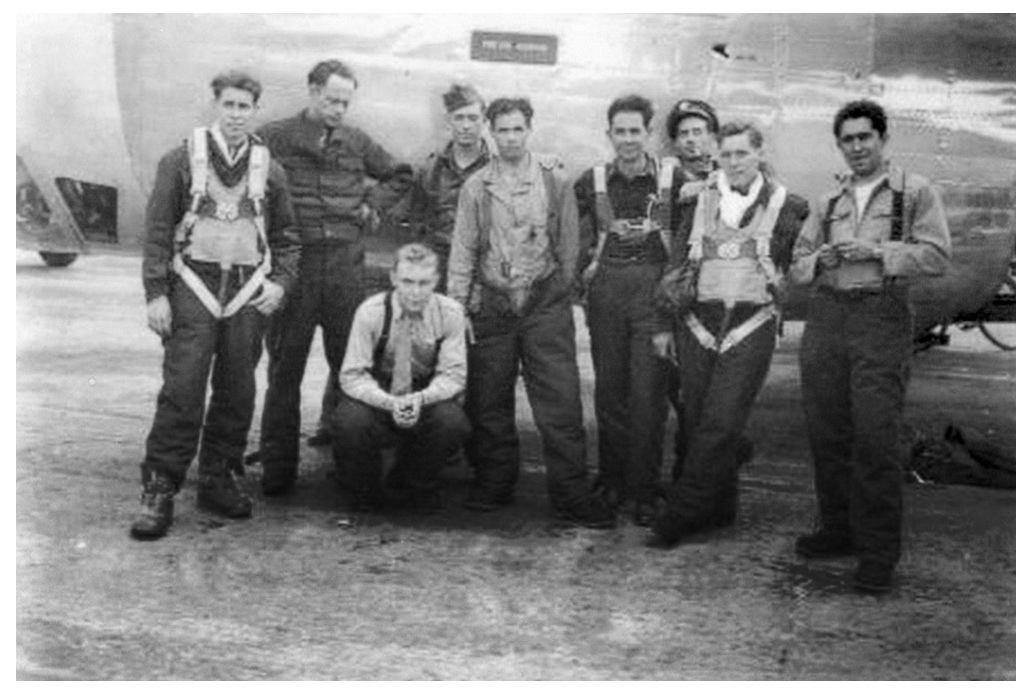
…which also appears below, in this view at a far smaller scale.

I have more more information about the March 19, 1945 Japanese attack upon the USS Franklin, comprising transcripts and images of newspaper articles published in the Philadelphia Record, Philadelphia Inquirer, The Evening Bulletin, and (to a very limited extent!) The New York Times, plus a few videos and numerous links, here.

Of the crewman aboard the Franklin one of the oldest was Electrician’s Mate 2nd Class George Benjamin Shapiro (7083561).  The son of Benjamin Shapiro of 346 New York Ave. in Brooklyn, he was born in Vilna on May 10, 1900.  The husband of Sylvia (Hannes) Shapiro, the couple’s address (or at least Sylvia’s wartime address) seems (?!) to have been 393 7th Ave. in Manhattan, which is directly across the street (still today as much as in 1945!) from Penn Station. 

Having emigrated to the United States at the age of eight, George unsurprisingly registered for the Draft upon the advent of America’s entry in World War One, and served in L Company, 23rd Regiment, of the New York National Guard.  His WW II military service was never actually chronicled by the National Jewish Welfare Board because – as revealed in the accounts below and paralleling the lives of many American Jewish WW II servicemen – he was not (fortunately!) wounded or injured, and (c’est la vie … not that important in the scheme of things!) he simply does not seem to have received any military awards, other than the invaluable and intangible award of survival. 

He simply did his duty, survived the war, and returned to his family and civilian life, within a culture and era that have passed into history, and perhaps in 2024’s retrospect, were a historical anomaly.

(Truly, the past is indeed a foreign country.)

George died at the age of ninety four on December 17, 1994, and is buried at Sharon Gardens Cemetery in Valhalla, New York

Perhaps due to the combined circumstances of his age, survival on the Franklin, and simply having been a Jew, George was the subject of news articles in the Brooklyn Eagle (on June 17) and The Jewish Times of Delaware County, Pa. (on July 13).  Though the Eagle article is uncredited, in the context of the timing and content of the Times article, it’s obviously by the author of the latter: Ben Samuel, who penned many articles about the WW II military service of American Jewish servicemen.  The clue is straightforward:  Both articles share and present their content in an identical way (for instance, mentioning Commander (then Lieutenant) Donald A. Gary, who was instrumental in saving the lives of some 300 of the Franklin’s crew members, let alone raising steam in a boiler in extremely dangerous conditions), but with different emphasis and length.  The Eagle article also includes the only photograph of George that I’ve thus far located.   

Though the Eagle’s article was published first, it’s obviously been abstracted from the content of the Times article, which, appearing a month later, obviously represented Samuel’s original text.  Both articles address Shapiro’s very extensive sports background and his enlistment in the Navy, the content of the Times’ article paying notable attention to Jewish religious services aboard the Franklin, the implication being that there were always enough men for a minyan.  (The Jewish prayer quorum which as understood through the Tanach – Numbers and Leviticus – necessitates the presence of 10 men, regardless of social status, learning, or intellect.)  The article includes the names of some of the Jewish sailors who were among the ship’s fallen, and closes with the remarkable quote (remarkable given the universalistic, self-negating American Jewish mindset of the mid-twentieth century) that one of George’s motivations for military service was actually to contribute to the war against the Third Reich

It didn’t quite work out that way, but that did not diminish the nobility of his intent.

Here are the two articles:

“Pop” of the U.S.S. Franklin

Ben Samuel
The Jewish Times (Delaware County, Pennsylvania)
July 13, 1945

When enemy bombs struck the USS Franklin, Electrician’s Mate Second Class George F. Shapiro was in the electric repair shop.  Two-bombs had hit.  Shapiro made his way forward toward the wardroom.

There were two hundred men trapped in that room.  The bulkheads had closed automatically.  Smoke was seeping in.  The men had small hope of being rescued.

When we spoke to George last week and asked him what they did in that room, he said, “we just sat there and prayed, I guess.  Then, when the smoke was getting heavy, Lt. Gary suddenly appeared in a ‘breather.’  He took out ten at a time through the air uptakes.  When we got out we found the flight deck on fire.  I joined a fire control party.  Men trapped by the fire had to jump overheard to save their lives.  Most of them were picked up later by destroyers. Then the Santa Fe came alongside and I helped tie her up to our ship.  A gangplank was heaved across and a lot of men were ordered to leave the ship.”

George could have left the ship, but he and many others stayed aboard the Franklin.

Recently, when the Franklin returned home, he was among the survivors.

Two years ago George Shapiro tried to enlist in the navy as an officer, but he was told that he was too old for a combat commission.  He had won five varsity letters at City College, and in the light of his athletic record, he was offered an athletic instructor’s commission.  But George at 43 didn’t feel old at all.  He turned down the instructor’s commission, and went into the navy as a “boot”.

He went to school for a while, then was assigned to the Franklin.

The crew of the Franklin used to call George “Pop.”  The nickname came about net only because of his age, but because the men used to go to him for advice all the time.  They gave him a lot of respect.  It was “Pop”, too, in the absence of a Jewish chaplain aboard ship, who used to conduct services.  Every Friday night he’d hold a service in the ship’s library.
George told us about the first service held after the bombing attack.

“It was the Friday after,” he said.  “There were just six of us there.  Some had been taken off, some we didn’t know what had happened to them.  Now we know, Ginde’s dead.  Irving Fishman (S 2-c, Dorchester, Mass.), Morris Bocheneck (SK 1-c. Brooklyn, N. Y.) – both dead.  Paul Fineberg (AM 2-c, Dorchester, Mass.), Morton Mittleman (MM 3-c, Bronx, N. Y.), Herman Tucker (SSML, 3-c) – they’re all missing.  And there are others.  But the six of us, we felt we had to hold the service, even if we didn’t have a “minyan.”  We held it on the flight deck and we were sad, but we were proud too, because somehow holding our Jewish service on the damaged flight deck of ‘Big Ben’ meant a great deal to us, both as Americans and Jews.”

George came here from Russia when he was eight years old.  He’s held a variety of odd jobs.  Once he was a street car conductor.  After he graduated from college, he played professional football for the Flatbush Giants.  When the war’s over, he wants to go into the automobile business.  He worked in that business before.

His athletic record at City College was exceptional.  He was on the varsity teams in football, polo, track, swimming and wrestling.

We asked him why he turned down that athletic instructor’s commission when he joined up.

“I didn’t like what the Nazis were doing.  I wanted to see some action – and I sure saw it!”

Franklin Crewman To Talk at War Plants

Brooklyn Eagle
June 17, 1945

Electrician’s Mate 3rd Class George P. Shapiro, 43, could have had a navy commission.  He could have remained on shore and been an athletic instructor on the basis of his five varsity letters won at City College.

Instead, the Brooklyn sailor who was “too old” for a combat commission enlisted as a “boot” and joined the crew of the ill-fated airplane carrier Franklin.  He was one of 200 men trapped in the wardroom when the bulkheads of the carrier closed after two Jap bombs struck her decks.

If it hadn’t been for the heroism of Lt. Donald A. Gary of Oakland, Cal., who rescued the men through the ventilation tubing, he would have suffocated in the smoke-filled room.  When Shapiro got on deck he joined a fire-control part, and when told he could leave the ship for a rescue ship, he elected to remain aboard.

In Eight Attacks

A veteran of the invasions of Guam, Palau and Leyte and attacks on Luzon, Manila, Tinian, Formosa and the second battle of the Philippine Sea, Shapiro, who lives at 346 New York Ave., is about to tour the country to address workers.  The trip will be a memorial to the buddies lost in the Franklin attack.

Since there wasn’t a Jewish chaplain aboard the ship, Shapiro, who was called “Pop” by the other sailors, conducted services Friday nights.

“There was only six of us at the first service after the attack,” he remembered.  “We didn’t know what had happened to the others then.  Now we know.  They were dead or missing.  We didn’t have a minyan (religious quorum) but we held the service anyway – on the damaged flight deck of “Big Ben”.

Shapiro served in the army during the first World War, but the armistice was declared while he was a student in Pre-Officers Training School.  He was a member of the Reserve Officers Training Corps at college and served in the New York State Guard.

At City College he was renowned as that athletic rarity, the “five-letter man”.  He was captain of the varsity polo team, acting captain of the football team, captain of the U.S. Volunteer Life-Saving Corps and member of the track and wrestling teams.  This record, combined with the fact that he was president of his freshman and junior classes, the school’s athletic association and “Soph Skull,” honorary fraternity, influenced his naval classification board to list him as officer material this time.  They wouldn’t make him a combat officer and he chose to be a seaman.

Shapiro was recently engaged to Sylvia Hannes of 1504 Sheridan Ave.  After the war he expects to return to selling insurance.

~~~~~~~~~~~~~~~~~~~~~~~~~~~~~~~~~~~~~~~~

These three documents from George’s life are from Ancestry.com.

Here’s George’s WW I Draft Registration Card, showing that as on September 12, 1918, he was a Columbia University student, enrolled in the Student Army Training Corps (SATC), and residing in a place known as Brooklyn.

This is George’s WW I New York State Abstract of Military Service card.  Cards of this format were used to record data for servicemen in other states.  But, I don’t know if such cards were used by all states for this purpose, but to their uncertain absence from Ancestry, or – if they exist – their inaccessibility.

Moving ahead in time, here’s George’s WW II Draft Card, I think categorized at Ancestry.com as an “old man’s” draft registration card.  By now, George was in his early 40s. Note that his employer was the Equitable Life Insurance Company, a profession to which he spoke of returning, within Ben Samuel’s article.  Did he postwar?  I don’t know!

~~~~~~~~~~~~~~~~~~~~~~~~~~~~~~~~~~~~~~~~

In much the same format as I’ve presented information about the military service of Jews in the Second (and First…) World War, below are records of the names of Jewish sailors and officers aboard the Franklin on March 19, 1945.  Killed in action first, then wounded, and finally, those who emerged from the terrible day unhurt.  What’s immediately noticeable in all but a very few cases (those of S2C Abraham J. Barbash – who could’ve emerged from a Damon Runyon story – and Lt. Cmdrs. Berger and Sherman, both of whom feature in another post), is the real absence of substantive information about them, “as people”.  The degree of physical destruction that occurred on the carrier eventuated in the complete obliteration of personal possessions – particularly letters, photographs, and documents – that might in “normal” circumstances have been returned to their families, and thus have preserved in time at least a faded impression of their personas. 

As before, the names of many of these men, especially the wounded, never appeared in American Jews in World War II.    

Of particular note are the names of Ginde, Fishman, Bockenek, Fineberg, Mittleman, and Tucker, all of whom figured centrally in Ben Samuel’s article, as having been regular members of Friday minyans on the Franklin. 

So, all that is left is their names, which in the fullness of time is true for all men, however high or low.  

Or, as stated by Rabbi Shimon in Pirke Avot (The Ethics of the Fathers), Chapter Four, Verse Thirteen: “There are three crowns – the crown of Torah, the crown of priesthood and the crown of sovereignty – but the crown of good name surmounts them all.”  (זָדוֹן. רַבִּי שִׁמְעוֹן אוֹמֵר, שְׁלֹשָׁה כְתָרִים הֵן: כֶּֽתֶר תּוֹרָה, וְכֶֽתֶר כְּהֻנָּה, וְכֶֽתֶר מַלְכוּת, וְכֶֽתֶר שֵׁם טוֹב עוֹלֶה עַל גַּבֵּיהֶן.)

Killed in Action

For those who lost their lives on this date…
Monday, March 19, 1945 / 5 Nisan 5705
– .ת.נ.צ.ב.ה. –
…Tehé Nafshó Tzrurá Bitzrór Haḥayím
May his soul be bound up in the bond of everlasting life.

Fallen of the USS Franklin
Commemorated at
Tablets of the Missing at Honolulu Memorial, Honolulu, Hawaii

Barbash, Abraham Jacob, S2C (Seaman), 8108675
Mrs. Minnie (Berkowitz) Barbash (wife), 940 Tiffany St., Bronx, N.Y.
Rabbi and Mrs. Aaron (4/25/80 (1883?) – 1/7/46) and Esther (Seslofsky) (8/15/84-6/13/64) Barbash (parents)
Anna, Leon, and Sylvia (sisters and brother)
2475 85th St., Brooklyn, N.Y.
Born Bronx, N.Y., 7/9/12
King Solomon Memorial Park, Clifton, N.J. – First Soroker Bessarabier in Jerusalem Section
Casualty List 5/10/45
The Franklin Comes Home – 39
American Jews in World War II – Not Listed

This photo of Seaman Barbash’s commemorative matzeva, from FindAGrave, is by dalya d

“S/2C Abe Barbash, from Tremont Avenue in the Bronx, was one of the others caught on the fantail.  Abe, famed among his shipmates for running an almost nonstop (except when on duty) poker game in the laundry and quite advantageously, had never learned to swim, else he might have graduated from quartermaster school.  He also possessed an unconquerable fear of heights.  When a young seaman with both arms broken was carried out of the hangar area onto the fantail, Abe took off his own life jacket and laced it around the injured youth, who was lowered into the sea away from the explosions on the fantail.  Abe then decided, in view of his lack of swimming ability, that he’d better locate another life jacket, even though he might not be able to muster sufficient courage to jump into the sea.  He returned inside the hangar deck – and directly into the explosion of a 500-pound bomb.  As a buddy would recall, “Not even his dog tags were ever found.”” – From “The Franklin Comes Home”

~~~~~~~~~~~~~~~~~~~~~~~~~~~~~~~~~~~~~~~~

Berkowitz, Philip Alfred, COX (Coxswain), 2023661
Mr. and Mrs. Michael (11/25/98-4/15/72) and Ethel Marion (James) (7/26/02-3/12/73) Berkowitz (parents)
26 Lewis St., Medford, Ma.
Born Boston, Ma., 6/27/24
American Jews in World War II – 150

Bochenek, Morris, SK2C (Storekeeper), 7101788
Mrs. Sylvia Simon Bochenek (wife), 5516 12th Ave. / 1163 45th St., Brooklyn, N.Y.
Mr. Hyman (12/26/83-3/14/43) and Sera (Goodman) (1881-11/16/57) Bochenek (parents)
Abraham Boshnack (brother) (4/25/06-10/26/91)
5516 12th Ave., Brooklyn, N.Y.
Born Brooklyn, N.Y., 7/22/14
Casualty List 5/10/45
American Jews in World War II – 281

Fineberg, Paul Matthew, AM2C (Aviation Metalsmith), 2025182
Mr. Louis Meyer (9/12/99-12/10/76) Fineberg (father), 486 Blue Hill Ave., Dorchester, Ma.
Born Revere, Ma., 12/24/23
American Jews in World War II – 157

Fishman, Irving, S2C (Seaman), 5790445
Mr. and Mrs. Henry and Lillian Fishman (parents); Donald (brother), 7 Irma St., Dorchester, Ma.
Born 1926?
American Jews in World War II – 157

~~~~~~~~~~~~~~~~~~~~~~~~~~~~~~~~~~~~~~~~

Geller, Herbert, PhM3C (Pharmacist’s Mate), 8110314
Mrs. Gussie Geller (mother) (1892-5/28/67), 176 Varet St., Brooklyn, N.Y.
Born Brooklyn, N.Y., 12/16/21
Casualty List 5/10/45
American Jews in World War II – 319

This photo of Gussie Geller’s matzeva, which commemorates her son Herbert, at FindAGrave, is by Brooke Schreier Ganz

~~~~~~~~~~~~~~~~~~~~~~~~~~~~~~~~~~~~~~~~

Gindi, Jacob “Jack”, S2C (Seaman), 7118530
Mr. and Mrs. Isaac (1893-2/1/31) and Rachael (Dweck) Gindi (10/22/08-4/23/99) (parents)
Estelle, Ralph, and Sam (sister and brothers)
587 Bay Parkway, Brooklyn, N.Y. (1930 address is 587 Bay Parkway)
Mr. and Mrs. Stanley Edward (1/15/03-?) and Renee (“Renee Rachel”) (Dweck) Shamosh (step-father and mother) (10/22/05 (or 10/22/08)) – 4/23/99) (married 10/4/22)
Edward S., Joseph S., and Robert S. (half-brothers)
5729 6th St., Washington, D.C.
Born Brooklyn, N.Y., 10/5/26
American Jews in World War II – 76

Groll, Abraham L., S1C (Seaman), 7129183
Mr. and Mrs. Sam (1888-?) and Tsilka (Sophie) (Epstein) (1893-3/74) Groll (parents)
205 Powell St., Brooklyn, N.Y.
Gussie, Molly, Morris, Nathan (siblings); Sam (father?), 180 Chester St., Brooklyn, N.Y.
Born New York, N.Y., 1/11/27
Casualty Lists 5/11/45, 11/6/45
American Jews in World War II – Not Listed

Hoffman, Samuel, ACOM (Aviation Chief Ordnanceman), 4024449
Mr. Oscar Hoffman (father), 79 Tehama St., Brooklyn, N.Y.
Born New York, N.Y., 4/20/11
Casualty List 5/17/45
American Jews in World War II – 346

Mittleman, Morton Joel, MM3C (Machinist’s Mate), 8107153
Mr. and Mrs. Charles (8/15/78-4/72) and Estelle (Gluck) (4/5/05-9/11/01) Mittelman (parents)
2525 Grand Concourse, Bronx, N.Y.
Born New York, N.Y., 3/15/16
Casualty List 5/11/45
American Jews in World War II – 395

Perlman, Morris, RM3C (Radioman), 8175575
Died of wounds, aboard USS Santa Fe, on 3/23/45
Mr. and Mrs. Benjamin and Mollie Perlman (parents), 882 N. Marshall St., Philadelphia, Pa.
Born Philadelphia, Pa., 4/8/20
Jewish Exponent 5/4/45
Philadelphia Inquirer 4/21/45
ABMC lists as died 5/23/45 – incorrect!
American Jews in World War II – Not Listed

~~~~~~~~~~~~~~~~~~~~~~~~~~~~~~~~~~~~~~~~

Steppach, David Henry, Jr., PhoM3C (Photographer’s Mate), 6409983
Mr. and Mrs. Dave Henry (4/15/87-12/22/66) and Rose (Johns) (6/17/97-9/28/80) Steppach (parents)
1333 Harbert Ave., Memphis, Tn.
Sally Ann (Steppach) Loeb (sister) (9/24/19-6/26/07)
Born Memphis, Tn., 6/11/22
Temple Israel Cemetery, Memphis, Tn. – Cremieux Section, Lot 90
American Jews in World War II – 568

This photo of Photographer Mate Steppach’s commemorative matzeva, from FindAGrave, is by Patrick Whitney

~~~~~~~~~~~~~~~~~~~~~~~~~~~~~~~~~~~~~~~~

Stern, Robert Cyril, S2C (Seaman), 6345185
Mr. and Mrs. Leonard E. (3/12/96-11/15/91) and Ruth (Lewis) (1/23/03-6/80) Stern (parents)
2801 W. Chestnut St., Louisville, Ky.
Born Louisville, Ky., 8/18/21
American Jews in World War II – 130

Tucker, Herman, SSML3C (Ship’s Service Man Laundryman), 8146740
Mrs. Clara (Kramer) Tucker (wife) (4/18/19-9/12/04), 1557 Hoe Ave., Bronx, N.Y.
Born N.Y., 1915
Casualty List 5/12/45
American Jews in World War II – 462

Zassman, Harry, S1C (Seaman), 8022679
Mr. and Mrs. Louis (6/30/87-11/24/59) and Sarah (Shine) (5/19/90-2/13/71) Zassman (parents)
73 Franklin Ave., Revere, Boston, Ma.
Mr. Louis Zassman (father), 12 Grant St., Beverly, Ma.
Born Beverly, Ma., 11/5/24
Casualty List 5/11/45
American Jews in World War II – 185

Wounded or Injured – Survived War

Balaban, Jule Israel, ART2C (Aviation Radio Technician), 6504319
Rescued by USS Pittsburgh (after having been blown overboard?)
Mr. and Mrs. Uscher (Harry) (11/15/95-5/11/66) and Rose (Finkel) L. (1897-1988) Balaban (parents)
Edward, Estelle (Stella), Jessel, Marion, and Selgene (brothers and sister)
118 North Maine Ave. / 147 Dewey Place, Atlantic City, N.J.
Born Philadelphia, Pa., 11/9/21 – Died 5/8/09
American Jews in World War II – Not Listed

Berger, David, Lt. Cdr., 0-136584, Air Officer (Assistant), Silver Star
See more here.

Finkelstein
, Arthur Julius, S 1C (Storekeeper), 8125189

Received aboard USS Santa Fe from U.S.S. Franklin
Mrs. Sarah Finkelstein (mother), 250 Stockton St., Brooklyn, N.Y.
Born N.Y.., 10/22/22 – Died 12/25/10
American Jews in World War II – Not Listed

Levine, Eugene, SK 2C (Seaman), 7078118
Received aboard USS Santa Fe from U.S.S. Franklin
New York, N.Y.
American Jews in World War II – Not Listed

Liebman
, Simon, S2C (Seaman), 8160710

Received aboard USS Santa Fe from U.S.S. Franklin
New York, N.Y.
American Jews in World War II – Not Listed

Miro
, David Maurice (David bar Avraham), Lt. JG, 0-374322, Communications Officer

Received aboard USS Santa Fe from U.S.S. Franklin
Mrs. Bernice Marcia (Goldman) Miro (wife) (6/14/15-6/20/93); Jeffrey and Judy (children), 1501 Burlingame, Detroit, Mi.
Mr. and Mrs. Samuel (1/4/82-11/15/44) and Fannie (Alden) (3/14/86-7/7/51) Miro (parents)
Lillian, Minnie, Morry, and Shirley (sisters and brother)
5430 Linwood St., Detroit, Mi.
Born Harrison, N.Y., 4/20/09 – Died 2/14/05
The Jewish News (Detroit) 5/25/45
American Jews in World War II – Not Listed

Rothstein
, William, S1C (Seaman), 7115376

Received aboard USS Santa Fe from U.S.S. Franklin
Mr. and Mrs. Harry (1901-5/69) and Dora (1902-1990) Rothstein (parents); Betty (sister), 986 Rutland Road, Brooklyn, N.Y.
Born New York, N.Y., 9/13/25 – Died 2/23/68
American Jews in World War II – Not Listed

Schlesinger
, Abraham Louis “Abe”, Jr, Lt., 0-101101

Received aboard USS Santa Fe from U.S.S. Franklin
Mr. and Mrs. Abraham L. (12/25/84-1953) and Elise (Cahn) (9/18/88-2/80) Schlesinger (parents), Gilmore Apt. # 210, Memphis, Tn.
Born Memphis, Tn., 2/18/15 – Died 9/24/97
American Jews in World War II – Not Listed

Serebrin, Leonard, S2C (Seaman), 8817317, Purple Heart
Mr. and Mrs. Max and Pearl (Sherman) Serebrin (parents), 601 North Cummings St., Los Angeles, Ca.
David and Edith (brother and sister)
Born Cleveland, Oh., 6/7/26 – Died 11/6/03
American Jews in World War II – Not Listed

Sherman, Samuel Robert, Lt. Cdr., 0-130988, Flight Surgeon, Navy Cross, Purple Heart

See more here.

Not Casualties – Survived War

Adelson, Albert, WT3C (Water Tender), 8100191, Letter of Commendation
Born Brooklyn, N.Y., 3/29/24 – Died 9/23/16
201 New Lots Ave., Brooklyn, N.Y.
USS Franklin Crew Commendation List
American Jews in World War II – Not Listed

Baruch
, David, S1C (Seaman), 7110026

American Jews in World War II – Not Listed

Feldman, Hyman Samuel (Herschel ben Shmuel), S 2C (Seaman), 8530886
Mr. and Mrs. Samuel and Bessie (Blinder) Feldman (parents), 318 Summit Ave., Brighton, Ma.
Born Lynn, Ma., 3/20/17 – Died 11/9/99
American Jews in World War II – Not Listed

Friedman
, Herman Samuel, SF1C (Ship Fitter), 8124906, Bronze Star Medal

Born 1916
317 (817?) E. 175th St., Bronx, N.Y.
New York Times 5/18/45, 5/22/45
USS Franklin Crew Commendation List
American Jews in World War II – Not Listed

Glasberg, Irving, AOM3C (Aviation Ordnanceman), 2044659, Letter of Commendation
Died 8/31/82
USS Franklin Crew Commendation List
American Jews in World War II – Not Listed

Hirschberg, Saul Benjamin, S1C (Seaman), 6436672
American Jews in World War II – Not Listed

~~~~~~~~~~~~~~~~~~~~~~~~~~~~~~~~~~~~~~~~

Kassover, Martin Louis (Mordechay bar Moshe), S2C (Seaman), 8106517, Letter of Coommendation
Mr. and Mrs. Morris and Martha (Zlosnick) Kassover (parents), Celia and Rose (sisters), 43 74th St., Brooklyn, N.Y.
Born New York, N.Y., 4/24/21 – Died 3/16/91
USS Franklin Crew Commendation List
American Jews in World War II – Not Listed

This image of Martin L. Kassover’s matzeva, at FindAGrave, is by Romper90069

~~~~~~~~~~~~~~~~~~~~~~~~~~~~~~~~~~~~~~~~

Sandler, Joseph, ACMM (Aviation Chief Machinist’s Mate), 2583242
Mr. Irvin Schaffer (friend), Baltimore, Md.
Born 1925 – Died 1999
American Jews in World War II – Not Listed

Schulman, Samuel, S2C (Seaman), 8151873
American Jews in World War II – Not Listed

Setner, Irving Jerome, S2C (Seaman), 9613842
American Jews in World War II – Not Listed

Shapiro, George Benjamin, EM2C (Electrician’s Mate), 7083561 – see above!

Skolnick, Seymour, S1C (Seaman), 7093448
Brooklyn, N.Y.
Born 1923 – Died 1988
American Jews in World War II – Not Listed

Soloway, Samuel Sidney, F1C (Fireman), 7116901
Mr. Jacob Soloway (father), Jack and Jerry (brothers), 185 Hillside Ave., Newark, N.J.
Born Bayonne, N.J., 11/1/25 – Died 1/27/99
American Jews in World War II – Not Listed

~~~~~~~~~~~~~~~~~~~~~~~~~~~~~~~~~~~~~~~~

Fallen of the USS Wasp
Commemorated at
Tablets of the Missing at Honolulu Memorial, Honolulu, Hawaii

The USS Wasp incurred damage from the same cause as that which befell the USS Franklin: An aerial attack.  In this case, the loss – entirely severe enough if one was among the casualties – was nowhere near the same gravity as that incurred by the Franklin, and the carrier resumed operations not long after. 

From Wikipedia: “In spite of valiant efforts of her gunners, on 19 March 1945, Wasp was hit with a 500-pound armor-piercing bomb.  The bomb penetrated the flight deck and the armor-plated hangar deck, and exploded in the crew’s galley.  Many of her shipmates were having breakfast after being at general quarters all night.  The blast disabled the number-four fire room. Around 102 crewmen were lost.  Despite the losses, Wasp continued operations with the Task Group and the air group was carrying out flight operations 27 minutes after the damage.”

Blatt, Melvin, EM2C (Electrician’s Mate), 8103051
Mr. Albert Blatt (father), 345 Georgia Ave., Brooklyn, N.Y.
Born Detroit, Mi., 7/15/23
Casualty List 5/8/45
American Jews in World War II – 278

Brust, Marvin S., S1C (Seaman), 8092779
Mr. and Mrs. Irving (?-11/16/54) and Anna (?-3/20/61) Brust (parents), Joseph (brother), 79-23 68th Ave., Middle Village, N.Y.
Born Brooklyn, N.Y., 1/31/24
Long Island Star Journal 5/7/45
Casualty List 5/8/45
American Jews in World War II – 286

Levine, Paul Harold, F1C (Fireman), 3138269
Mr. Louis Levine (father), 18027 Roselawn Ave., Detroit, Mi.
Born 1927
The Jewish News (Detroit) 4/13/45
American Jews in World War II – 193

Lippsett, Donald Michael, F1C (Fireman), 7128566
Mr. George Lippsett (father), 552 Shepherd Ave., Brooklyn, N.Y.
Born 1926
Casualty List 5/8/45
American Jews in World War II – 382

~~~~~~~~~~~~~~~~~~~~~~~~~~~~~~~~~~~~~~~~

United States Marine Corps

During Battle of Iwo Jima

(This example of the 4th Marine Division shoulder patch comes from TTMilitaria.)

Wounded in Action

Eisenberg, Sidney Seymour, Pvt., 332718, PH
1st Battalion, Headquarters Company, 24th Marine Regiment, 4th Marine Division
Mrs. Phyllis Eisenberg (wife), 2056 Grand Ave., Bronx, N.Y.
Mrs. Rose Feller (mother), 68 West 94th St., New York, N.Y.
Born Bronx, N.Y., 2/1/24
Casualty List 7/13/45
American Jews in World War II – Not Listed

~~~~~~~~~~~~~~~~~~~~~~~~~~~~~~~~~~~~~~~~

(This reproduction of the 3rd Marine Division shoulder patch is by WW II Impressions.)

Killed in Action

Norwitz, Nelson Nathan, Pvt., 829563, PH
34th Replacement Draft, 3rd Marine Division
Mrs. Nelson N. Norwitz (wife), 1729 N. Smallwood St., Baltimore, Md.
Mr. and Mrs. Benjamin (7/24/90-5/21/39) and Tillie (Cole) (4/12/93-7/28/68) Norwitz (parents)
Bernard and Herman (brothers)
1512 Appleton St., Baltimore, Md.
Born Baltimore, Md., 8/24/19 or 8/24/20
Honolulu Memorial, Honolulu, Hawaii – Plot N, Row 1, Grave 548
American Jews in World War II – 142

– Aboard the USS Franklin –

VMF-214

Killed in Action

Kuperwasser, Abraham, Cpl., 840002, Radio Technician, United States Marine Corps
Mr. and Mrs. Jacob and Itka (Gitla) Kuperwasser (parents), 1504 Charlotte St., New York, N.Y.
Mr. Eddie Caplan (friend?), 1416 North Mill St., Los Angeles, Ca.
Born Warsaw, Mazowieckie, Poland, 8/8/22
Casualty List 5/17/45
(U.S. Marine Corps History Division – Casualty Card Database and ABMC list date as 3/20/46 – one year plus one day after he was actually killed in action)
American Jews in World War II – Not Listed

Marine Detachment

Survived

Brody, Samuel Henry (Shmuel Hayyim bar Tzvi), PFC, 855237, Bronze Star Medal, 1 Oak Leaf Cluster, Purple Heart
Mr. and Mrs. Harry and Anna Brody (parents), Orchard and Landis Ave. (northeast corner), Vineland, N.J.
Born Los Angeles, Ca., 5/8/25 – Died 5/11/00
Navy Department Release 2/16/45
American Jews in World War II – 228

Killed in Action

Segal, Leon Harry, PFC, 828085, Purple Heart
Mrs. Rebecca (Kessler) Segal (wife) (2/4/14-3/11/95), 5510 Jackson St., Houston, Tx. (Married 10/17/38)
Mr. and Mrs. Abraham Nathan (1/24/79-8/22/67) and Mamie (Kaufman) (5/6/84-11/14/68) Segal (parents)
Bernard and Justine (brother and sister)
Born Nogalas, Arizona, 6/5/19 – Died 7/28/95
American Jews in World War II – 573

This photo of PFC Segal, from FindAGrave, is via Jaap Vermeer

References

Dublin, Louis I., and Kohs, Samuel C., American Jews in World War II – The Story of 550,000 Fighters for Freedom, The Dial Press, New York, N.Y., 1947

Herman, J.K., Flight Surgeon On the Spot: Aboard USS Franklin 19 March 1945, Navy Medicine, July-August 1993, V 84, N 4, pp. 409.

Hoehling, Adolph August, The Franklin Comes Home, Hawthorn Books, New York, N.Y., 1974

Webb, Eugene, Samuel R. Sherman, M.D., C.M.A. President-Elect, California Medicine, June, 1962, V 96, N 6, pp. 429-430.

The USS Wasp, at Wikipedia

And further…

Minyan

Minyan: The Prayer Quorum, by Aryeh Citron

Why Are Ten Men Needed for a Minyan?, by Shmuel Kogan

What if the tenth guy walks out?, by Menachem Posner

Why Is a Minyan Needed for Kaddish?, by Yehuda Shurpin

Soldiers from New York: Jewish Soldiers in The New York Times, in World War Two: March 19, 1945 – Allied Ground Forces [Updated – “New and improved!”…]

An editorial note…

Originally created on May 14, 2017, “this” post, one of an ongoing series pertaining to Jewish soldiers of the Second World War who were military casualties, or, who were involved in otherwise noteworthy incidents – and who were profiled in The New York Times – has now been completely revised.  Specifically pertaining to events of March 19, 1945, the 2017 post (seven years gone by already?!) originally was limited to Jewish soldiers in the ground forces of the United States Army.  However, when viewing that day in a larger context, it turns out that the sheer number of casualties and events on that now over almost eight-decades-distant Monday – whether on land, at sea, or in the air – and the sheer abundance of historical information available about what befell those men, merits the expansion of that original account into several posts: About Jewish sailors in the United States Navy (almost entirely relating to the ordeal and survival the aircraft carrier U.S.S. Franklin) and, Jewish flyers in the air forces of the Allies.

Yet, yet…  While I’d vastly prefer to limit myself to the straightforward topics of history and genealogy, the contemporary world – “the present” – has intruded upon the past, and has brought the larger and largely inescapable realization that:

You may not be interested in politics, but politics may be interested in you;

You may not be interested in current events, but current events will, in time, have an interest in you;

You may not be interested in war, but war and its attendant tragedies, sadness, and horror, may directly or indirectly – in the absence of wisdom, foresight, and the willingness to perceive the world as it actually is, unrefracted through darkly-fogged prisms of self-delusion, a lust for power, bureaucratic cant, opportunism, and cowardice – find an interest in you.  (Well, one hopes not.)

In that light, I may post some thoughts about the events of October 7, 2023 (22nd of Tishrei, 5784 / כ״ב בְּתִשְׁרֵי תשפ״ד), the reaction of many among the world’s supposed leadership classes (whether media, political, diplomatic, academic, or cultural – the players are interchangeable) to this event and Israel’s ongoing efforts to defend itself, and, the implications of both in terms of the survival of the Jewish people and by inevitable consequence the “West” in general. 

That is, of course, assuming that the West wants to survive.  One wonders…  

But for now, eight months after Hamas’ mass murder of Israeli Jews and the growing acceptance of open Jewhatred among the world’s alleged elites (from antiquity to the present, hatred of Jews typically arises, and is legitimized and promulgated by “intellectuals“, so its reemergence from academic institutions is unsurprising), perhaps we’re at Jack Williamson’s Jonbar Hinge: “The fictional concept of a crucial point of divergence between two outcomes, especially in time-travel stories.”.

Perhaps – unknown to us – the door to the future has been opened, but what lies beyond the threshold remains unknown.

Perhaps – like Schrodinger’s omnipresent Cat – possible futures are thus far mixed and indeterminate.

Perhaps – and certainly – for the Jews of the United States and the “West” as much as the Jews of Israel, and for all men and women of good and discerning will, everywhere, it is time to follow and act upon an adage of Charles Peguy:

“Il faut toujours dire ce que l’on voit;
surtout-il faut toujours, ce qui est plus difficile, voir ce que l’on voit.”

“We must always say what we see;
above all – we must always, which is more difficult, see what we see.”

And so, returning to Monday, March 19, 1945, here are biographical profiles of Jewish soldiers in the ground forces of the WW II Allies, commencing with the United States Army.  


Charles Blum, 0-1030447, a First Lieutenant in the 8th Reconnaissance Troop of the 8th Infantry Divison, was killed in Germany on March 19, 1945.  His name appeared in a War Department Casualty List published on April 17, while an obituary – transcribed below – was published in The New York Times on July 26 of that year.  

____________________

Bronx Officer Killed in Germany March 19

First Lieut. Charles Blum of 1057 Faile Street, the Bronx, was killed in action on the Cologne Plain, Germany, on March 19, according to word received here.  His age was 25.

Lieutenant Blum, who was born in this city, attended Benjamin Franklin High School and was graduated from Ursinus College in 1941.

He entered the Army in October, 1941, and was commissioned in Officer Candidate School at Fort Riley, Kan.  He had been a member of the Eighth Cavalry Reconnaissance Troop of the First Army’s Eighth Division overseas.

He leaves his parents, Mr. and Mrs. Solomon Blum; a widow, three brothers and two sisters.

Here’s Lieutenant Blum’s portrait…

…and here’s page 8 of the Times, where his obituary appeared.

____________________

Here’s the insignia of the 8th Infantry Division.  (My own patch.)

____________________

The Oogle Street View below, from 2017, shows the location (or, at least what I believe was the location) of the Blum family’s home at 1057 Faile Street in the Bronx.  If so, the address is now either a vacant lot or an apartment building.

Born in Manhattan on August 19, 1919, Charles Blum, the son of Solomon and Sarah Blum and brother of Beatrice, Leo, and Max, is one of many American Jewish soldiers whose names didn’t appear in the 1947 publication American Jews in World War Two.  As of 2024, the location of his grave is – as was when this post appeared in 2017 – unknown.

____________________

For those who lost their lives on this date…
Monday, March 19, 1945 / 5 Nisan 5705
– .ת.נ.צ.ב.ה. –
…Tehé Nafshó Tzrurá Bitzrór Haḥayím
May his soul be bound up in the bond of everlasting life.

Killed in Action

Axelrod, Herman Edward, T/4, 32639418, Purple Heart, Casualty in Europe
330th Cavalry Regiment
Mrs. Ethel (Morrison) Axelrod (wife), 74 Jackson Ave., Jersey City, N.J.
Mr. and Mrs. Joe and Bessie Axelrod (parents); Jack and Sol (brothers), 221 15 99th Ave., Queens Village, N.Y.
Born Bronx, N.Y., 7/22/16
Employee of New York Daily News
Long Island National Cemetery, Farmingdale, N.Y. – Section H, Grave 8139
Casualty List 4/10/45
American Jews in World War II – 226

______________________________

This image of the insignia of the 80th Infantry Division is from 6th June 1944

Dorf, Jerome Michael (Manuel), PFC, 36831303, Purple Heart, Casualty in Luxembourg
80th Infantry Division, 319th Infantry Regiment, A Company
Mr. and Mrs. Samuel Abraham (8/8/88-8/16/39) and Mollie (Lieberman) (11/12/01-3/28/48) Dorf (parents), Robert Philip Dorf (brother) (7/23/28-3/28/69), 4654 N. Central Park Ave., Chicago, Il.
Born Chicago, Il., 5/9/23
Waldheim Jewish Cemetery, Chicago, Il. – Gate 90, Temple Judea Section
American Jews in World War II – 97

These images of PFC Dorf’s matzeva are by FindAGrave contributor Bernie_L

______________________________

This image of the insignia of the 103rd Infantry Division is also via 6th June 1944

Mines, Rudolph, PFC, 32993385, Purple Heart, Casualty in Germany
103rd Infantry Division, 411th Infantry Regiment, A Company
Mr. and Mrs. Benjamin (9/15/88-3/17/50) and Sarah B. (1890-1/13/81) Mines (parents), 604 Crown St. / 763 Crown St., Brooklyn, N.Y.
Born Brooklyn, N.Y., 3/30/25
City College of New York School of Technology;
Beth David Cemetery, Elmont, N.Y.
Casualty List 4/14/45
American Jews in World War II – 395

______________________________

…as is this image of the 9th Infantry Division should patch.

Murofchick, Edward, Pvt., 32897836, Purple Heart, Casualty in Europe
95th Infantry Division, 378th Infantry Regiment, E Company
Private Murofchick’s name also appeared in a casualty list published on January 21, 1945, the date implying that he was wounded approximately November 21, 1944.
Mr. and Mrs. Harry (9/1/84-2/66) and Gussie “Goldie” (1889-?) Murofchick (parents), c/o Jacob Murfochick (brother?), 254 Beach 141st St., Belle Harbor, N.Y. / 1596 Prospect Place, Brooklyn, N.Y.
Born New York, N.Y., 10/7/24
Long Island National Cemetery, East Farmingdale, N.Y. – Section J, Grave 16204
Casualty Lists 1/21/45, 4/14/45
The Wave (Rockaway Beach) 12/9/48
American Jews in World War II – 397

Private Murofchick’s name can be found upon the Rockaway Veterans Memorial (sculptor Joseph P. Pollia and architect William van Alen), which is located at Rockaway Beach Boulevard and B 94th Street.  The monument bears plaques on its four compass sides – north, south, east, and west – with the names of fallen servicemen from Rockaway, each plaque dedicated to the fallen of a specific war or time period.  Pvt. Murofchick’s name can be found on the western, which, bearing the largest number of names, commemorates the fallen of WW II.   

______________________________

This image of the 43rd Infantry Division insignia comes from Griffin Militaria

Rosenbaum, Samuel H., Cpl., 13156645, Purple Heart
43rd Infantry Division, 169th Infantry Regiment
Mr. and Mrs. Joseph and Dorothy (Harris) Rosenbaum (parents), 49 Lehigh Ave., Newark, N.J.
Ilene Estelle (sister)
Born Atlantic City, N.J., 8/11/25
Har Nebo Cemetery, Philadelphia, Pa.; Buried 6/25/48
Casualty List 5/8/45
American Jews in World War II – 250

______________________________

The shoulder patch of the 36th Infantry Division.  T – for Texas.  (My patch.)

Rubin, William (Velvel Bar Yits’khak), Pvt., 35314910, Purple Heart
36th Infantry Division, 142nd Infantry Regiment, Medical Detachment
Died of wounds 3/20/45
Mr. and Mrs. Isadore and Gertrude Rubin (parents), 10530 Clairdoan Ave., Cleveland, Oh.
Mr. George Rubin (brother), 10520 Earl St., Cleveland, Oh.
Born 10/4/22
(There’s a Draft Card for a “William Rubin”, son of Isidore, DOB 10/4/20, in Russia, address 10520 Earle Ave., Cleveland – the closest match)
Hollywood Forever Cemetery, Los Angeles, Ca.
(Matzeva lists date as 3/20/45, and rank as T/4)
Cleveland Veterans Memorial
Cleveland Press & Plain Dealer, April 17, 1945
American Jews in World War II – 498

______________________________

The insignia of the 53rd Infantry Division: Blood and Fire.

Schankman, Nathan, 1 Lt., 0-1289818, Distinguished Service Cross (DSC), Silver Star (SS), Bronze Star Medal (BSM), Purple Heart
63rd Infantry Division, 255th Infantry Regiment, B Company, 1st Battalion
Mr. and Mrs. Morris (? – 12/4/77) and Minnie (? – 3/26/54) Schankman (parents), 1856 (1555?) Grand Concourse, New York, N.Y.
Born 8/23/18
Mount Lebanon Cemetery, Glendale, N.Y. – Block D, Section 2, Line 6, Grave 13; Society Akiba Eger; Buried 1/16/49
Casualty List 5/3/45
American Jews in World War II – 428

Unfortunately, I’ve no information about the specific actions or circumstances for which Lieutenant Schankman received the DSC and Silver Star.

Staller, Bernard, PFC, 12227029, Purple Heart, Casualty in Germany
63rd Infantry Division, 255th Infantry Regiment, B Company
Mr. and Mrs. Adolf (Adolph) (5/15/83-3/14/65) and Pauline “Paulie” (7/4/85-5/67) Staller (parents), 2316 Lyons Ave., New York, N.Y.
Born 1926
(There’s a Draft Card for a “Bernard Staller”, son of Louis Schiller, DOB 4/25/22, North Wildwood, N.J., address 135 East Wildwood Ave., Wildwood- closest match)
Place of burial unknown

Myra Strachner Gershkoff Papers, 1941-1946
Returned, unopened”, by Telly Halkias, May 24, 2013
Jewish Data.com
Casualty Lists 4/21/45, 5/12/45
American Jews in World War II – 453

Via Ancestry.com, this image of PFC Staller appears in the Bernard Monroe High School Yearbook for 1943.

______________________________

Schiller, Louis (Leyb bar David HaLevi), PFC, 32695870, Purple Heart, Casualty in Europe
Mr. David Horowitz (father), 215 East 54th St., Brooklyn, N.Y.
Born 1925
(There’s a Draft Card for a “Louis Schiller”, son of Jack Schiller, DOB 5/13/23, in Brooklyn, address 1440 East 14th St., in Brooklyn – closest match)
Mount Lebanon Cemetery, Glendale, N.Y. – Block WC, Section 5, Line 24, Grave 4

Casualty List 4/12/45
American Jews in World War II – 430

The engraving of a tank-within-a-wreath upon PFC Schiller’s matzeva indicates that he served – in some capacity – in an armored unit.  Since has name doesn’t appear in the casualty list of an Armored Division, I suppose that he served with an autonomous armored unit, perhaps in reconnaissance or tank destroyers. 

This image of PFC Schiller’s matzeva is by FindAGrave contributor S Daino

______________________________

Tuchinsky, Bernard (Baruch bar Yakov Meir), Pvt., 32017723, Armor (Tank “Bow Gunner”), Purple Heart, 1 Oak Leaf Cluster
Casualty in Germany
4th Armored Division, 37th Armored Tank Battalion, B Company, 2nd Platoon
Mrs. Lena Frieda (Chanchiske) Tuchinsky (wife) (1920-1990), 3033 Coney Island Ave., Brooklyn, N.Y.
Rabbi Jacob J. (Yaakov Meir) (10/15/87-6/21/72) and Hannah Rose (Krolowitz) (2/10/87-3/15/73) Tuchinsky (parents)
Rabbi Nathan Tuchinsky, Reverend Herman Tuchinsky, Harry Tuchinsky (brothers); Fay Levitz (sister)
Born Zambrow, Lomza, Poland, 10/2/16
Place of burial unknown
Syracuse Herald American 12/19/43
American Jews in World War II – 462

The image below, from the Rome Daily Sentinel of July 2, 1941 (found via the fabulous Fulton History website), shows Private Tuchinsky and fellow soldiers of the 4th Armored Division at Pine Camp, New York.  According to an article published in the Brooklyn Eagle during early February, 1941, Bernard was inducted for an (assumed) year’s service at the star of that year.

______________________________

Weiner, Jack M. (Yakov Moshe bar Avraham), T/5, 20324118, Purple Heart, Casualty in Germany
177th Cavalry Reconnaissance Squadron, A Troop
Mrs. Florence Catherine Isabell Leitch (wife) (1922-2/26/18)
Mr. and Mrs. Abraham “Abe” M. (1/15/84-10/31/73) and Esther (Goldberg) (9/10/88-7/4/67) Weiner (parents)
5323 Arlington St., Philadelphia, Pa.
Mrs. Betty W. Sholder, Daniel, Mrs. Mary Handelsman, Mrs. Rose Poplow, Mrs. Sarah Alon (siblings)
Born Bronx, N.Y., 1/19/22
Enlisted January, 1941
Mount Sharon Cemetery, Springfield, Pa. – Section L, 450, 3; Buried 1/16/49
The Jewish Exponent 4/20/45, 1/10/49
Philadelphia Inquirer 1/15/49
American Jews in World War II – 558

The following two images, from FultonHistory, show Jack Weiner’s funeral notice as published in The Philadelphia Inquirer on January 15, 1949.  The first image gives a “whole” view of the paper, with the noticed outlined in red…

…and, here’s the notice itself:

Here’s Jack’s photo and biographical blurb from the Overbrook High School yearbook, presumably class of 1940…

…his portrait…

…and, my own photo of his matzeva, taken some fifty-one years later.

England

Killed in Action

Instone, David, Cpl., 10350719, Intelligence Corps
Captain and Mrs. Alfred and Phyllis Hilda Instone (parents), J.P. 4, Cottesmore Court, Kensington, London, W8, England
Born 1922
Cesena War Cemetery, Italy – II,H,13
The Jewish Chronicle 4/16/45
WWRT I – 106

Poland
Polish People’s Army – Ludowe Wojsko Polskie
(During Operation Pomeranian Wall)

Killed in Action

Landa, Tadeusz, WO
7th Infantry Regiment
Kolobrzeg, Zachodniopomorskie, Poland
Mr. Jan Landa (father)
Born Tarnopol, Ukraine, 1914
Kolobrzeg Military Cemetery, Kolobrzeg, Poland
JMCPAWW2 I – 43

Lenada, Boleslaw, 2 Lt.
28th Infantry Regiment
Kolobrzeg, Zachodniopomorskie, Poland
Mr. Stefan Lenada (father)
Born Warsaw, Mazowieckie, Poland, 1912
Kolobrzeg Military Cemetery, Kolobrzeg, Poland
JMCPAWW2 IV – 101

France – Armée de Terre

Killed in Action

Migdal, Joseph (SCA # AC-21P-90434)
Régiment de Marche de la Légion Etrangère (Foreign Legion)
“Tué par eclat d’obus”
Lauterbourg, Bas-Rhin, France
Born 5/2/18
Place of burial unknown
ASDLF – 142

The Yishuv

Killed in Action

This image of the Jewish Brigade shoulder flash is from Arnold Levinsky: A Soldier of the Jewish Brigade

Rusak (רוסק), Zeev (Volf) זאב [(וולף)], Pvt., PAL/17757
3rd Battalion, Jewish Brigade Group, Palestine Regiment
Mr. Moshe Rusak (father)
Born Kutno, Poland, 1914
Ravenna War Cemetery, Piangipane, Ravenna, Italy – IV,A,1
Haaretz 4/1/45, 4/5/45
Palestine Post 4/2/45
WWRT I – 152, 256
The Jewish Brigade – 299
CWGC as “Russak, Wolf”; Palestine Post as “Russak, Wolf”; WWRT I as “Rusak, Zeev (Wolf)”

Here’s Private Rusak’s biography from The Jewish Brigade, as it appears in the original Hebrew, and, with an English translation.  

נפל ביום הי בניסך תשייה, 19 במארס 1945, בשעת התקפת הגדוד השלישי לאור היום שבה נלקחו השבויים .הגרמנם הראשונים  .קרבן חזית ראשון של החיל

.למד בישיבה ואחר כד בבית-ספר של המזרחי .נולר בעיר קוטנו שבפולניה בשנת 1914
.משחר נעוריו נספח לתנועה הציונית והיה חבר פעיל בהסתדרות המזרחי בעירו
.נכנס לחות-הכשרה באחת מעיירות פולין, ומשם עלה ארצה בשנת 1934
.היה חרד לגורל הישוב והארץ וער לכל המתרחש בהם
.נענה לכל קריאה של המוסדות, וכשהופיע צר הגיוס, נתנדב לצבא

.חביב על פלוגתו, רע נאמן ומסיר .בדיחותיו הכניסר תםיד רוח-חיים בין חבריו .שקט וענו, פיקח ומבדח

He fell on the day of Ben Nisach Tishiya, March 19, 1945, during the daylight attack of the 3rd Battalion in which the first German prisoners were taken.  The first frontline casualty of the corps.

Studied at a yeshiva and later at a school of the Mizrachi Noler in the city of Kutno in Poland in 1914.  From the dawn of his youth he was attached to the Zionist movement and was an active member of the Mizrahi Histadrut in his city.  He entered a training camp in one of the Polish towns, and from there immigrated to Israel in 1934.  He was anxious for the fate of the settlement and the country and was aware of everything that was happening in them.  He responded to every call from the institutions, and when the need for recruitment appeared, he volunteered for the army.

Beloved by his company, loyal and giving.  His jokes were always a source of life among his friends.  Quiet and humble, smart and funny.

Soviet Union / U.S.S.R. (C.C.C.Р.)
Red Army [РККА (Рабоче-крестьянская Красная армия)]

Tank Forces and Self-Propelled Artillery [Танковые Войска и Самоходная Артиллерия]

Killed in Action or Died of Wounds

Finkelshteyn, Boris Davidovich (Финкельштейн, Борис Давидович), Guards Captain (Гвардии Капитан)
Armor (Head of Chemical Services) (Начальник Химической Службы)
7th Tank Corps, 384th Heavy Self-Propelled Artillery Regiment (7 ТК, 384 ТСАП)
Wounded 2/9/45; Died of wounds (умер от ран) 3/21/45 at 3665th Evacuation Hospital (Звакуационный Госпиталь)
Born 1905
Mrs. Rozaliya Ilinichna Finkelshteyn (wife), City of Kiev (Kyiv?)
Buried in Częstochowa, Poland, at Kule cemetery / St. Roch Cemetery, Collective Grave No. 19
(Польша, Катовицкое воев., пов. Ченстоховский, г. Ченстохова, кладбище Куле, братская могила № 19)

______________________________

Ginzburg, Tsalik Aronovich (Гинзбург, Цалик Аронович), Guards Junior Sergeant (Гвардии Младший Сержант)
Armor (Gunner) (Пулеметчик)
30th Autonomous Guards Heavy Tank Brigade (30 Отд. Гв. Тяж. Танк. Бр.)
Born 1925
Miss Donya Aronovna Ginzburg (sister), city of Belaya Tserkov, Ukraine

______________________________

Kantor (Kantar?), Ruvim Mordkovich (Кантoр (Кантaр?), Рувим Мордкович), Junior Lieutenant (Младший Лейтенант)
Armor (Self-Propelled Gun Commander) (Командир Самоходной Установка)

1st Belorussian Front, 1818th Self-Propelled Artillery Regiment (1 Белорусский Фронт, 1818 САП)
SU-85 (СУ-85)
Born 1924

Mr. Mark Vladimirovich Kantor (Kantar) (father), city of Kiev (Kyiv?)
KPVE-PBN (КПВЕПБН) – Volume V, Page 704; Volume VIII, Page 250

______________________________

Nakhamkes, Mikhail Vulfovich (Нахамкес, Михаил Вульфович), Junior Lieutenant (Младший Лейтенант)
Armor (Platoon Commander) (Командира Взвода)
1434th Self-Propelled Artillery Regiment (1434 САП)
“He was the commander of a platoon of self-propelled artillery.  Mikhail heroically died, saving the crew, on March 19, 1945 in battles near the city of Gdansk in Poland.  The family learned about this from a letter from his colleagues after the end of the war.”
Born 1919

______________________________

Teplitskiy, Isak Efimovich (Теплицкий, Исак Ефимович), Guards Junior Sergeant (Гвардии Младший Сержант)
Armor (Radio Operator – Gunner) (Радист-Пулеметчик)
14th Guards Tank Brigade (14 Гв. Танк. Бр.)
Born 1908
KPVE-PBN (КПВЕ-ПБН) – Volume IV, Page 64

______________________________

Tsepelevich, Isay Fayforovich (Цепелевич, Исай Файфорович), Junior Lieutenant (Младший Лейтенант)
Armor (Self-Propelled Gun Commander) (Командир Самоходной установка)
3rd Guards Tank Army, 1978th Self-Propelled Artillery Regiment (3 Гв. ТА, 1978 САП)
Died of wounds (умер от ран) at 2179th Mobile Surgical Field Hospital (Хирурический Полевой Подвижной Госпиталь)
Born 1923
Mr. Pavel Mikhaylovich Tsepelevich (father), city of Maykop, Krasnodar Krai

______________________________

Zolotovskiy, Khatskel Moiseevich (Золотовcкий, Хацкель Моисеевич), Guards Private (Гвардии Рядовой)
Armor (Machine Gunner) (Автоматчик)
10th Guards Tank Corps, 72nd Guards Autonomous Heavy Tank Regiment
(10 Гв. Танк Корпус, 72 Гв. Отд. Тяж. Танк Полк / 72 Гв. Отд. Тяж. ТП)
Born 1922

______________________________

Wounded and Evacuated (But survived…) [Раненый и эвакуированный (Но выживший…)]

Gershengorin, Naum Davidovich (Гершенгорин, Наум Давыдович), Lieutenant (Лейтенант)
Armor (Self-Propelled Gun Commander) (Командир Самоходной установка)
2nd Baltic Front, 78th Autonomous Tank Brigade
(2 Прибалтийский Фронт, 78 ОТБр)
SU-76 (СУ-76)
Born 1917

Mrs. Galina Stepanovna Voskoboynikova (wife), city of Samarkand, Uzbekistan
Killed in Action or Died of Wounds

______________________________

To conclude, the tale of United States Army soldier T/4 Edward Lazar.  He was wounded, but survived.

“It is now 50 years later and to this day, I keep asking myself a question:
Why they and not me?
Why me and not they?
Why were George Fetter and Andrew Hogg killed and I saved?
There is no answer.”

Lazar, Edward Leonard, T/4, 13155230, Purple Heart; Casualty in France
70th Infantry Division, 570th Signal Company
Mrs. Ida R. Lazar (wife), Marcie Ann (YOB 1944) and Joan Susan (YOB 1949) (daughters)
6204 Washington Ave., Philadelphia, Pa. / 817 Laurel Road, Yeadon Pa.
Mr. and Mrs. Joseph and Eva (Ethel) Lazar (parents), 1853 Champlost Ave., Philadelphia, Pa.
Also 1919 N. Stanley St., Philadelphia, Pa.
Born Philadelphia, Pa.; 2/28/16
The Jewish Exponent 4/20/45
Philadelphia Inquirer and Philadelphia Record 4/12/45
American Jews in World War II – 535

From B&B Militaria comes this image of the 70th Infantry Division’s shoulder patch.

Edward Leonard Lazar’s story is an example of the challenge of reconstructing the past from the vantage point of the present.  Given that he served in the military, the fact that T/4 Lazar was wounded in action is (alas!) not, in and of itself, unusual. 

What is very unusual is that – as related in this video, and, in his untitled memoir of February 8, 2005 (… see transcript below …) a specific calendar date – March 19, 1945 – can even be attached to his story.  This is because – unlike soldiers who were killed in action or taken prisoner – for those servicemen who specifically were wounded but survived, the date of that event instead typically remains within military archives, or, a soldier’s personal communications, both of which rarely become publicly available. 

For American servicemen, though Casualty Lists issued throughout WW II (and the Korean and Vietnam Wars) by the United States War (later Defense) Department did include lists of names of servicemen wounded in action, these tabulations – paralleling lists of soldiers killed in action, missing, or taken prisoner – never included the date on which such events occurred, I’m certain for reasons of length, and of vastly greater import, the fact that the release of such information would have been a tremendous boon to the intelligence services of the Axis.       

Mr. Lazar’s March 5, 2005 interview, by Lower Merion High School students Christine Prifti and Julia Terruso on March 5, 2005, is part of the Library of Congress Veterans History Project.

And so, here’s the transcript…

February 8, 2005

The date was March 14, 1945.  [sic]  We, the members of the 570th Signal Company of the 70th Division were stationed somewhere near Forbach, France.  At about midnight, we were awakened and informed that we were moving out.

We formed a six-truck weapon’s carrier convoy and our truck was in the middle.  The only people who knew where we were going were the people in the first truck, which contained our company commander Conrad Stahl, and the people in the last truck.

Driving black out on only dirt roads, our truck made a wrong turn, and around 3 a.m. of that morning, our truck was blown up by 2 landmines.  The explosion of the 15 pounds of dynamite killed George Fetter [T/5 George A. Fetter (8/16/22 – 3/19/45)] and Andrew Hogg [T/4 Andrew David Hogg (2/12/18-3/19/45)], who were in the front of the truck, and it wounded both Shulim Huber [Shulim Carl Huber (6/2/17-1/10/13)] and me, who were in the back of the truck.  When I regained my consciousness, my hair was on fire.  I jumped out of the truck and put the fire out.  As I looked in the hedgerow, on this dark night, there stood two GIs with their M1 rifles pointed directly at me.  I yelled, “What are you doing?  Don’t shoot!”  Later at the aid station, one of the GIs told me that my yells saved my life because his finger was on the trigger.

It is now 50 years later and to this day, I keep asking myself a question: Why they and not me?  Why me and not they?  Why were George Fetter and Andrew Hogg killed and I saved?  There is no answer.

So, when I awake every morning, in honor of their memory, I determine to do a good deed for someone else that particular day.

Here we are in the year 2005.  I have recently celebrated my 89th birthday.  My wife Ida and I are married 63 years and we have 3 married daughters and their husbands, 10 grandchildren and 2 great grandchildren.

This expression means, in Morse code, “I am finished with my transmission, it is now up to you.”

Sincerely,
Ed Lazar

References

Dublin, Louis I., and Kohs, Samuel C., American Jews in World War II – The Story of 550,000 Fighters for Freedom, The Dial Press, New York, N.Y., 1947

Lifshitz, Jacob (יעקב, ליפשיץ), The Book of the Jewish Brigade: The History of the Jewish Brigade Fighting and Rescuing [in] the Diaspora (Sefer ha-Brigadah ha-Yehudit: ḳorot ha-ḥaṭivah ha-Yehudit ha-loḥemet ṿeha-matsilah et ha-golah) ((גולהה קורות החטיבה היהודית הלוחמת והמצילה אתספר הבריגדה היהודית)), Shim’oni (שמעוני), Tel-Aviv, Israel, 1950 – (“The Jewish Brigade”)

Maryanovskiy, M.F., Pivovarova, N.A., Sobol, I.S. (editors), Memorial Book of Jewish Soldiers Who Died in Battles Against Nazism – 1941-1945 – Volume IV (Surnames beginning with Т (T), У (U), Ф (F), Х (Kh), Ц (Ts), Ч (Ch), Ш (Sh), Щ (Shch), Э  (E), Ю (Yoo), Я (Ya)), Union of Jewish War Invalids and Veterans, Moscow, Russian Federation, 1997 – (“KPVE-PBN (КПВЕ-ПБН) – IV”)

Maryanovskiy, M.F., Pivovarova, N.A., Sobol, I.S. (editors), Memorial Book of Jewish Soldiers Who Died in Battles Against Nazism – 1941-1945 – Volume V (Surnames beginning with А (A), Б (B), В (V), Г (G), Д (D), Е (E), Ж (Zh), З (Z), И (I), К (K)), Union of Jewish War Invalids and Veterans, Moscow, Russian Federation, 1998 – (“KPVE-PBN (КПВЕ-ПБН) – V”)

Maryanovskiy, M.F., Pivovarova, N.A., Sobol, I.S. (editors), Memorial Book of Jewish Soldiers Who Died in Battles Against Nazism – 1941-1945 – Volume VIII (Surnames beginning with all letters of the alphabet), Union of Jewish War Invalids and Veterans, Moscow, Russian Federation, 2005 – (“KPVE-PBN (КПВЕ-ПБН) – VIII”)

Meirtchak, Benjamin, Jewish Military Casualties in the Polish Armies in World War II: I – Jewish Soldiers and Officers of the Polish People’s Army Killed and Missing in Action 1943-1945 [“JMCPAWW2 I”], World Federation of Jewish Fighters Partisans and Camp Inmates: Association of Jewish War Veterans of the Polish Armies in Israel, Tel Aviv, Israel, 1994 – (“JMCPAWW2 I”)

Meirtchak, Benjamin, Jewish Military Casualties in the Polish Armies in World War II: IV – Jewish Officers, Prisoners-of-War Murdered in Katyn Crime – Jewish Military Casualties in the Polish Resistance Movement – An Addendum [“JMCPAWW2 IV”], World Federation of Jewish Fighters Partisans and Camp Inmates: Association of Jewish War Veterans of the Polish Armies in Israel, Tel Aviv, Israel, 1997 – (“JMCPAWW2 IV”)

Morris, Henry, Edited by Gerald Smith, We Will Remember Them – A Record of the Jews Who Died in the Armed Forces of the Crown 1939 – 1945 – Volume I, Brassey’s, London, England, 1989 – (“WWRT I”)

No Author

Au Service de la France (Edité à l’occasion du 10ème anniversaire de l’Union des Engagés Volontaires et Anciens Combattants Juifs 1939-1945), l’Union Des Engagés Volontaires Et Anciens Combattants Juifs, Paris (?), France, 1955 – (“ASDLF”)

May 14, 2017 – 337

The Militant Pacifist: Captain Seymour M. Malakoff, United States Army Force … October 24, 1916 – June 6, 1944

July 30, 2023 – nearly one year ago – marked the appearance at this blog of a post about WW II Army Air Force Captain Seymour M. Malakoff, a 9th Air Force C-47 pilot (see The Invisible Airmen – The Invisible Jews: Captain Seymour M. Malakoff and the Crew of C-47 “Butchski II”, 1944).  The impetus for the post was an article published in The New York Times on February 4, 1944, which, typical of news items about soldiers in most any military conflict, presented biographical and anecdotal profiles about each member of the Captain’s crew, concluding upon a theme of steady resolution in pursuit of a larger military endeavor.  All well and true; all well and good.  Curiously though, inescapable in the hindsight of eighty years passing – and I’m certain evident even in 1944 – a singular quality of Capt. Malakoff’s crew remained unaddressed, undiscussed, and unmentioned by the Times, even in the most guarded, oblique, and passing manner:  This was the fact that – whether by chance, or, an anonymous decision arising at a higher level of command – four of the five members of the Malakoff crew, including the Captain himself, were Jews.  

Given the nature and context of the Second World War in terms of the physical survival and future of the Jewish people, and especially, contemplated from the vantage of 2024, the silence about this aspect of the Malakoff crew might be deemed remarkable.  Yet, given the nature and ethos of the article’s venue – this was The New York Times after all – and the tenor of the times (temporal times, that is) in terms of the ambivalent self-perception and even the physical security of the Jews of the United States in the somewhat Brokawishly and Spielbergianly romanticized 1940s – even during the Second World War! – the yawning silence about this aspect of the Malakoff crew in both the general and Jewish press was not – in retrospect – all that remarkable.  To the extent that the article was noticed, it seemed that only the famed (or, infamous, depending on how you look at him) radio personality Walter Winchell drew attention to the story, but, despite his prominence, even his comments were passing and truncated.

(But, getting “off-topic”, I must ask:  In light of the forces arrayed against the Jewish people globally and particularly throughout the – willfully? – dessicating “West” since October 7, 2023 (and to be honest, insidiously commencing decades earlier, amidst the ephemeral currents of post-WW II complacency, prosperity, and self-delusion), it’s not just the Times that remains unchanged (barring a new ownership, it seems congenitally incapable of change), but the times, as well.)   

Anyway, getting back “on-topic”…

Captain Malakoff did not survive the Second World War.  He and his entire crew – co-pilot, navigator, radio operator, and crew chief – were killed on D-Day, June 6, 1944, when their C-47 was shot down by anti-aircraft fire.  (The crew’s entire “stick” of paratroopers managed to successfully parachute from their plane, C-47A 43-30735 (otherwise known as “CK * P” / chalk # 37 / “Butchski II“.)  They are all buried within the continental United States.  As can be seen from the original blog post, the crew of June 6, as covered in Missing Air Crew Report 8409, was not the Captain’s crew as reported in the Times.  That crews seems (?) to have been broken up and its members allocated to other crews in the 75th Troop Carrier Squadron some time between the February publication of the Times article and the June invasion of France.

The Captain’s original crew members all survived the war.  The sole casualty among them was crew chief S/Sgt. David Lifschutz, whose C-47 was shot down during a resupply mission to Bastogne, Belgium, on December 26, 1944.  Captured, he returned in mid-1945 after liberation from a POW camp.

And yet, with this, Captain Malakoff’s story does not end.  

Not long after creating the post, I was happily surprised to have received the following message from Nancy Plevin, Captain Malakoff’s niece:

“This was just sent to me. Seymour Malakoff was my uncle – my mother’s brother.  I learned some things from this blog.”

And so, from Nancy, I in turn learned more about Captain Malakoff.  She sent me several wonderful images of her uncle, scanned to a remarkably high standard.  These images appear in this post, and and I want to express my appreciation to her for her help.  Thus: “Thanks, Nancy!”…  

And more: In May of this year, I received a message from Robert Tucker, co-pilot 2 Lt. Thomas A. Tucker’s nephew.  Robert’s communication transformed his uncle from a nominal “name and serial number” to a person with a true identity.  Robert, who’s long been researching the history of the Malakoff crew, wrote, “Through my research and books I came across the book DDay Plus 60 years by Jerry McLaughlin and reached out to him and he put me in contact with S/Sgt Walsh’s family and this story just took off.   Bottom line I was able to track down Malakoffs family (Ms Plevins) and at the time had the opportunity to actually speak with Seymour’s sister who was still living was still living at the time.  She was 92 yrs old and sharp as a tack!  She was able to fill in some of the blanks and told me my uncle was a replacement pilot 3 days before the invasion.  The original co pilot [Lt. James Philip Wilt] came down with appendicitis so my uncle got the call.   This is just some of the information I have uncovered and too much to list here.”   

Robert’s photos of his uncleare included here as well.  Thanks, Robert!

Now, on to the photos…

As revealed by the Gosport Tubes connected to his earphones, and to a lesser extent by his fluffy white scarf, this photo of Seymour Malakoff was almost certainly taken during the Primary or Basic stage of his pilot training.  I don’t know the names of the flying schools he attended during those two early stages of flight training, but I learned that he graduated from Advanced at Randolph Field, Texas (see the New York University document below) on May 20, 1942, upon which he received his wings and commission as a second lieutenant. 

This one’s about as candid as candid can be:  Here Captain (or then Lieutenant?) Malakoff at the controls of a C-47, time, place, altitude, and destination unknown. 

Identical in style and format to the image of Capt. Paul Dahl’s crew in the earlier post, this image shows Captain Malakoff, at center rear, with other C-47 crewmen.  Though the mens’ names don’t appear on the back of the original print, the airman at lower right seems – looks like – certainly appears to be – S/Sgt. Robert Donald “Donny” Walsh, Capt. Malakoff’s radio operator on the D-Day mission.  If so (and I think this is so), then with the exception of the Captain standing at rear left (there was no other Army Air Force Captain aboard Capt. Malakoff’s plane on June 6), the other crewmen might well be flight engineer Sgt. Paul B. Jacoway at lower left, and, probably navigator Edward Gaul standing at right.

This image of S/Sgt. Walsh, by researcher Matt M, appears in the sergeant’s biographical profile at FindAGrave.  S/Sgt. Walsh was buried at Jefferson Barracks National Cemetery, Lemay, Mo. (Section OPS3, Grave 2307E) on July 2, 1949.  He was 23 years old on June 6, 1944.  If you examine the portrait very closely, you’ll see Sgt. Walsh’s signature at lower right: “Love, Don”. 

Here are Robert’s two photographs of his uncle.  Note that in the first photo – below – Thomas A. Tucker is identically attired to Seymour Malakoff in the top picture: He’s wearing a flight helmet with Gosport Tubes and has a fluffy scarf around his collar.  The Gosport Tubes reveal that this portrait was taken while he was an aviation cadet…

…as does this image; the giveaways being the winged propeller cap insignia and collar devices with a similar design.  Given Robert’s statement about his uncle joining the Malakoff crew only three days before D-Day, and, the very different facial features of the man in the upper right of the Malakoff crew photo, that man is probably navigator 1 Lt. Eugene E. Gaul.

A resident of Buffalo, Lt. Tucker’s name appeared in a list of Batavia-area military casualties published in The Daily News (of Batavia) on July 25, 1944, which I discovered through FultonHistory.com.  The list appears within the “This End of the State” column, at upper right…

…and here it is close-up, with Lt. Tucker’s name surrounded by a blue box.  He was buried at Forest Lawn Cemetery in Buffalo in 1948.    

Along with a very short article in the Forverts on June 29, 1944, Captain Malakoff was the subject of a commemorative biography published by the New York University School of Law some time after the war’s end.  A transcript of the biography follows these images.  Note that the NYU essay includes excerpts of the Times’ article of February 4, 1944.  

Class of 1941

SEYMOUR M. MALAKOFF

was born in New York City on October 24, 1916.  After the usual preparatory education in the schools of Philadelphia, Pennsylvania, he attended Pennsylvania’s State College and the Washington Square College of New York University. He graduated from the New York University School of Law in June 1941 with honors and received his LL.B. degree.

He joined the Army Air Corps in August of 1941 and was successively stationed at Camps Upton, Wheeler, and Pine Bluff.  He received his wings and his commission as a Second Lieutenant in the Air Corps at Randolph Field and then proceeded to Camp Lubbock, Texas, for advanced training.  He then became an instructor in the technique of flying formations and served at Camps Wisconsin, Louisville, Kentucky, and the Sedalia Army Air Base.  He then proceeded overseas and was stationed in Great Britain as an Air Corps Troop Carrier pilot, with the rank of Captain and as operations officer of the 75th Troop Carrier Squadron of the 435th Air Group.  His was the lead-off plane of the troop carriers on the operation to invade Normandy, France, on “D” Day, June 6, 1944.

The New York Times ran the following article:

At a United States Troop Carrier Station in Britain – All the twin-engined transport planes on this station look alike in their war paint – but one is really different.  Its two chief points of difference are the white lettered name ‘Butchski’ on the nose and the fact that its entire crew of five are all from New York.

When the invasion starts and the Troop-Carrier Command begins shuttling combat soldiers from bases to actual fighting fronts ‘Butchski’ will become an “overseas branch of the Bronx Express,” according to its crew.  The skipper is quiet, youthful-looking Capt. Seymour M. Malakoff.  The plane is named for his nine year old brother, James, whose nickname is ‘Butchski’”. 

He was killed in action on June 6, 1944, while participating in the invasion of France.  In recognition of his achievements as a combat carrier pilot, he received a Presidential Citation, the Purple Heart Medal and the Air Medal.

The lady below, standing next to the Captain’s matzeva at the Normandy American Cemetery, St.-Laurent-sur-Mer, France, is a member of a French family who have voluntarily taken on the tasking of tending his grave.  With the exception of “Laurence”, who I learned about from Nancy, I don’t know their names.  The picture says much, without the use of words.

One more thing:  I know little about Seymour M. Malakoff – the person; the individual; the man – other than what is presented in these two posts.  But, one thing is remembered by Nancy: “I … am struck by the fact that Seymour enlisted before Pearl Harbor.  I had never thought about that, and it’s especially interesting in light of my mother telling me that Seymour was a pacifist so entering the war was very difficult for him, but he believed it was his duty.”

Acknowledgements

I’d like to express my appreciation to Nancy Plevin and Robert Tucker for contacting me, and, so generously providing me with such compelling and nicely scanned photos.

Here’s Three Books

Dublin, Louis I., and Kohs, Samuel C., American Jews in World War II – The Story of 550,000 Fighters for Freedom, The Dial Press, New York, N.Y., 1947

Gardner, Ian, and Day, Roger, Tonight We Die as Men: The Untold Story of Third Battalion 506 Parachute Infantry Regiment from Toccoa to D-Day, Osprey, Oxford, England, 2010 (see pages 153-155)

Rust, Kenn C., The 9th Air Force in World War II, Aero Publishers, Inc., Fallbrook, Ca., 1970