A Minyan of Six? – Jewish Sailors in World War Two: Aboard the USS Franklin (CV-13) and USS Wasp, March 19, 1945 – United States Navy and United States Marine Corps

Difficult reading…

On March 19, 1945, the most significant historical event – in terms of Allied casualties incurred during a single military action – occurred when the aircraft carrier USS Franklin was struck by two semi-armor-piercing bombs dropped from a single D4Y “Judy” dive-bomber, while conducting strikes against the southern part of the Japanese island of Kyushu as part of Task Group 58.2. 

One bomb struck the flight deck centerline and penetrated to the hangar deck, while the second struck aft and penetrated through two decks.  Due to a combination of factors – 21 aircraft on the hangar deck, many fueled and some armed; the hangar deck’s aft gasoline system remaining in operation; the presence of 31 fueled and armed aircraft on the carrier’s flight deck; “Tiny-Tim” air to surface rockets loaded onto aircraft on both both decks – the carrier endured a series of external and internal explosions (particularly on the hangar deck … a gasoline vapor explosion combined with the ricochet and explosion of Tiny-Tim rockets, the combined effects of which which left only two survivors), the ship experienced the loss of over 800 crewmen, leaving the Franklin as the most heavily damaged American aircraft carrier to survive the Second World War.

The ship was saved due to the efforts of her crew, and, the assistance of cruisers Pittsburgh and Santa Fe, and, destroyers Miller, Hickox, Hunt, and Marshall, the latter four vessels making a particular effort to retrieve crewmen who had either been blown over the Franklin’s side by explosions, or who’s jumped to save themselves from smoke and flames. 

A vast understatement, but it gives you an idea…

You can read far more about this event (and avail yourself of many historical references) at Wikipedia, from which the above account has been taken. 

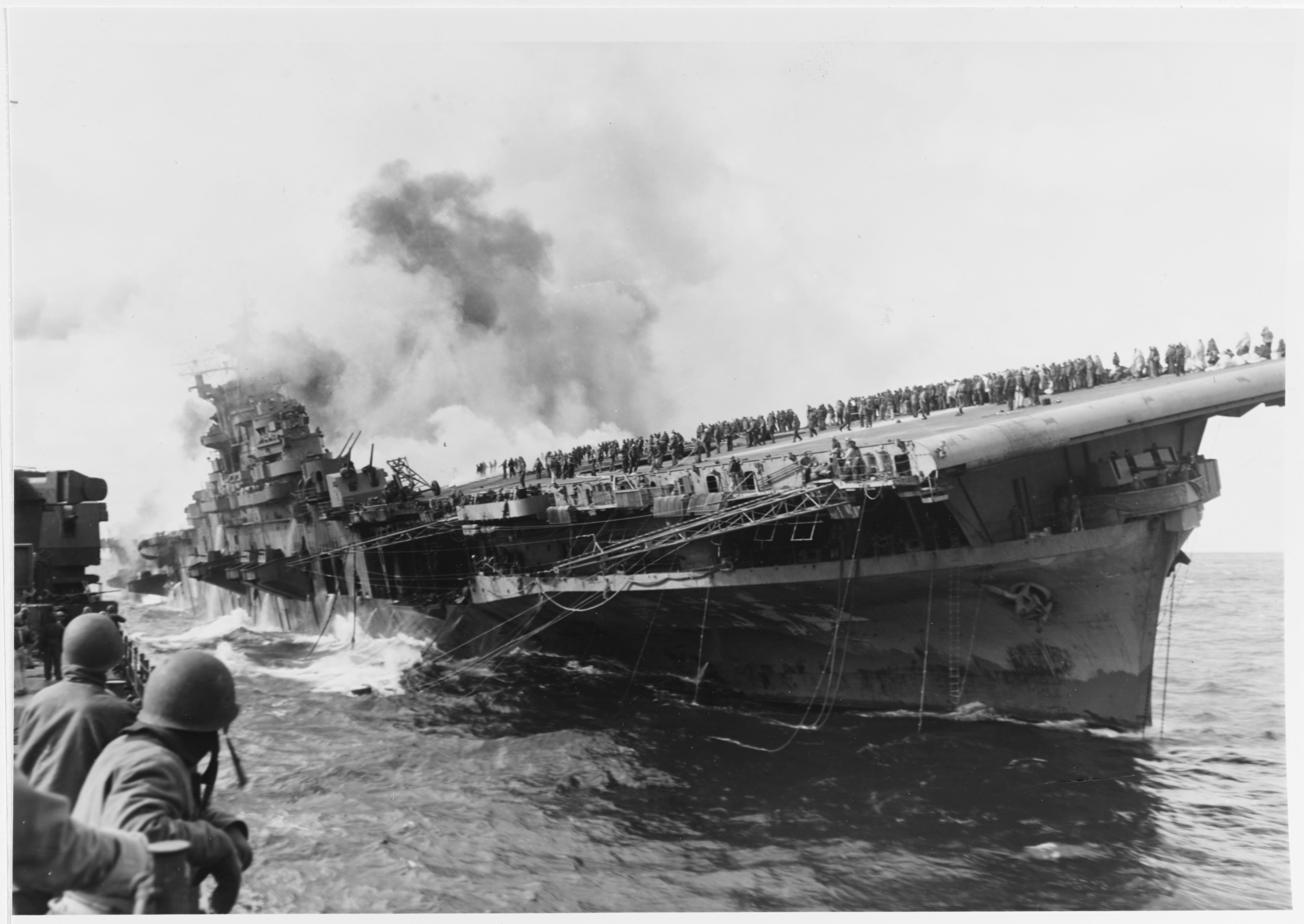
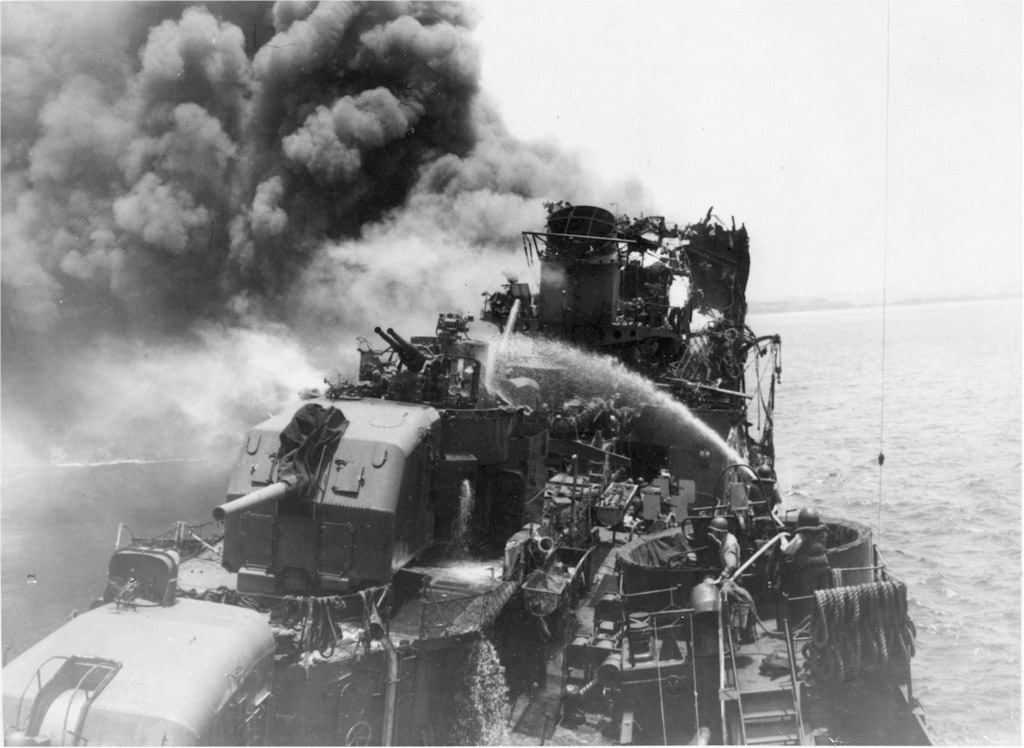
The photo below has been reproduced innumerable times in print and pixels, but deservedly so, and is an apropos introduction to this post.  The image is excellent simply “as” an example of photojournalism, in terms of composition, focus, lightning, and visually capturing the dramatic entirety of a naval vessel fighting for its life.  Historically, the picture vividly shows the carrier’s post-attack list to starboard, smoke rising from the rear of the hangar deck, its damaged island, and many surviving members of the ship’s crew standing on the flight deck (at least, those able to do so).

“USS Franklin (CV-13) … afire and listing after she was hit by a Japanese air attack while operating off the coast of Japan, 19 March 1945.  Photographed from USS Santa Fe (CL-60), which was alongside assisting with firefighting and rescue work.  Official U.S. Navy Photograph 80-G-273880, now in the collections of the National Archives.”

On May 18, 1945, the following map accompanied the Times’ articles about the Japanese strike on the Franklin.  Though correct in placing the carrier’s location on March 19 as generally east of Kyushu and south of Shikoku, in reality, when the ship was struck by bombs, the carrier’s position was substantially east of that shown here…

… as you can see in the two Oogle Maps, below.  The blue oval shows the position generated by placing the carrier’s reported position in degrees and minutes into Oogle Maps’ position locator.  (To be specific, 32 01 N, 133 57 E, via Pacific Wrecks.)  Here, I’ve replaced Oogle’s “red circle and arrow” with a tiny group of blue pixels (it looks better.) …

…which also appears below, in this view at a far smaller scale.

I have more more information about the March 19, 1945 Japanese attack upon the USS Franklin, comprising transcripts and images of newspaper articles published in the Philadelphia Record, Philadelphia Inquirer, The Evening Bulletin, and (to a very limited extent!) The New York Times, plus a few videos and numerous links, here.

Of the crewman aboard the Franklin one of the oldest was Electrician’s Mate 2nd Class George Benjamin Shapiro (7083561).  The son of Benjamin Shapiro of 346 New York Ave. in Brooklyn, he was born in Vilna on May 10, 1900.  The husband of Sylvia (Hannes) Shapiro, the couple’s address (or at least Sylvia’s wartime address) seems (?!) to have been 393 7th Ave. in Manhattan, which is directly across the street (still today as much as in 1945!) from Penn Station. 

Having emigrated to the United States at the age of eight, George unsurprisingly registered for the Draft upon the advent of America’s entry in World War One, and served in L Company, 23rd Regiment, of the New York National Guard.  His WW II military service was never actually chronicled by the National Jewish Welfare Board because – as revealed in the accounts below and paralleling the lives of many American Jewish WW II servicemen – he was not (fortunately!) wounded or injured, and (c’est la vie … not that important in the scheme of things!) he simply does not seem to have received any military awards, other than the invaluable and intangible award of survival. 

He simply did his duty, survived the war, and returned to his family and civilian life, within a culture and era that have passed into history, and perhaps in 2024’s retrospect, were a historical anomaly.

(Truly, the past is indeed a foreign country.)

George died at the age of ninety four on December 17, 1994, and is buried at Sharon Gardens Cemetery in Valhalla, New York

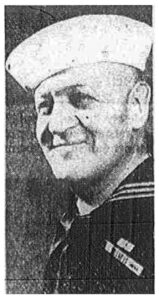
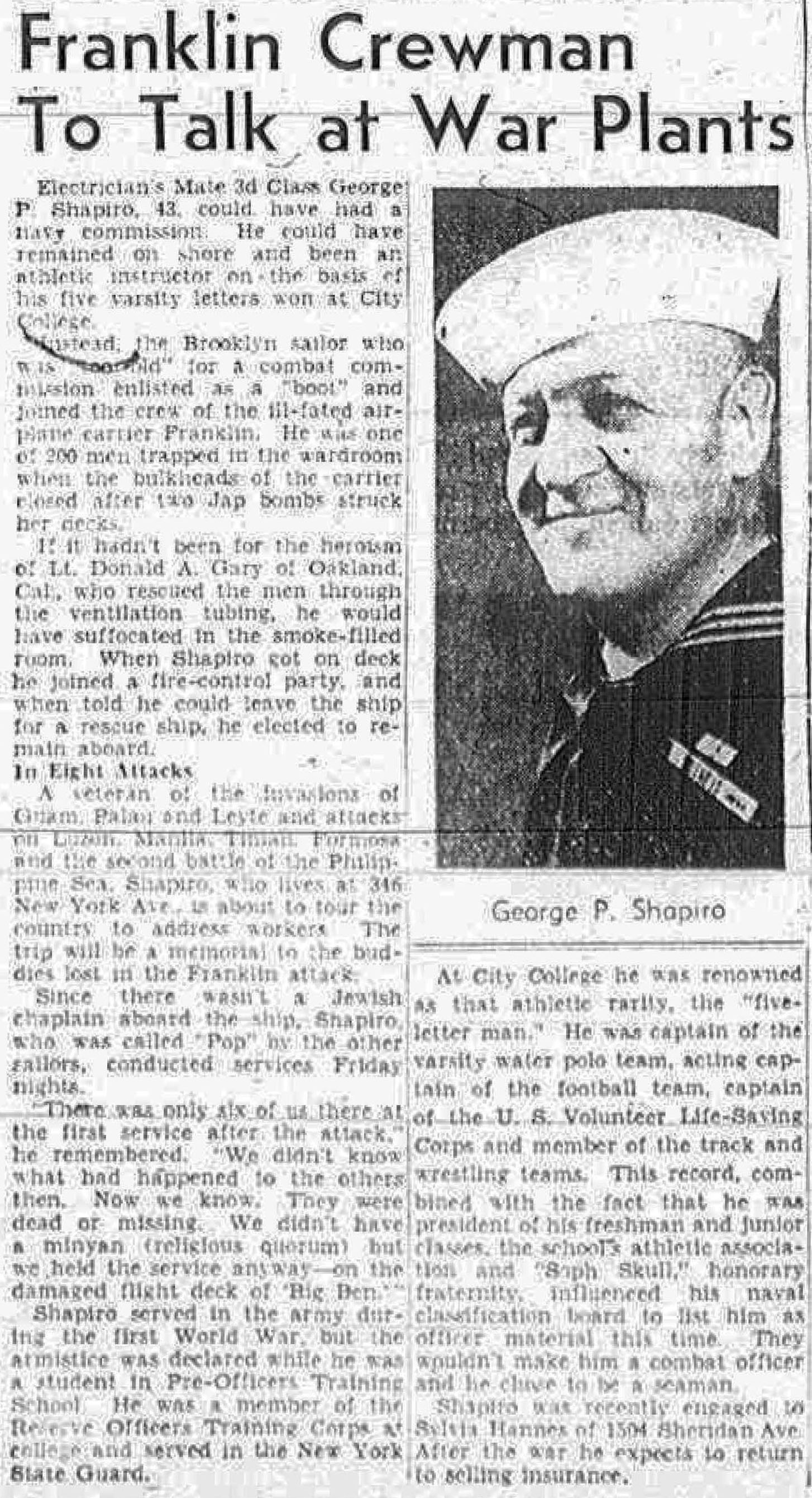
Perhaps due to the combined circumstances of his age, survival on the Franklin, and simply having been a Jew, George was the subject of news articles in the Brooklyn Eagle (on June 17) and The Jewish Times of Delaware County, Pa. (on July 13).  Though the Eagle article is uncredited, in the context of the timing and content of the Times article, it’s obviously by the author of the latter: Ben Samuel, who penned many articles about the WW II military service of American Jewish servicemen.  The clue is straightforward:  Both articles share and present their content in an identical way (for instance, mentioning Commander (then Lieutenant) Donald A. Gary, who was instrumental in saving the lives of some 300 of the Franklin’s crew members, let alone raising steam in a boiler in extremely dangerous conditions), but with different emphasis and length.  The Eagle article also includes the only photograph of George that I’ve thus far located.   

Though the Eagle’s article was published first, it’s obviously been abstracted from the content of the Times article, which, appearing a month later, obviously represented Samuel’s original text.  Both articles address Shapiro’s very extensive sports background and his enlistment in the Navy, the content of the Times’ article paying notable attention to Jewish religious services aboard the Franklin, the implication being that there were always enough men for a minyan.  (The Jewish prayer quorum which as understood through the Tanach – Numbers and Leviticus – necessitates the presence of 10 men, regardless of social status, learning, or intellect.)  The article includes the names of some of the Jewish sailors who were among the ship’s fallen, and closes with the remarkable quote (remarkable given the universalistic, self-negating American Jewish mindset of the mid-twentieth century) that one of George’s motivations for military service was actually to contribute to the war against the Third Reich

It didn’t quite work out that way, but that did not diminish the nobility of his intent.

Here are the two articles:

“Pop” of the U.S.S. Franklin

Ben Samuel
The Jewish Times (Delaware County, Pennsylvania)
July 13, 1945

When enemy bombs struck the USS Franklin, Electrician’s Mate Second Class George F. Shapiro was in the electric repair shop.  Two-bombs had hit.  Shapiro made his way forward toward the wardroom.

There were two hundred men trapped in that room.  The bulkheads had closed automatically.  Smoke was seeping in.  The men had small hope of being rescued.

When we spoke to George last week and asked him what they did in that room, he said, “we just sat there and prayed, I guess.  Then, when the smoke was getting heavy, Lt. Gary suddenly appeared in a ‘breather.’  He took out ten at a time through the air uptakes.  When we got out we found the flight deck on fire.  I joined a fire control party.  Men trapped by the fire had to jump overheard to save their lives.  Most of them were picked up later by destroyers. Then the Santa Fe came alongside and I helped tie her up to our ship.  A gangplank was heaved across and a lot of men were ordered to leave the ship.”

George could have left the ship, but he and many others stayed aboard the Franklin.

Recently, when the Franklin returned home, he was among the survivors.

Two years ago George Shapiro tried to enlist in the navy as an officer, but he was told that he was too old for a combat commission.  He had won five varsity letters at City College, and in the light of his athletic record, he was offered an athletic instructor’s commission.  But George at 43 didn’t feel old at all.  He turned down the instructor’s commission, and went into the navy as a “boot”.

He went to school for a while, then was assigned to the Franklin.

The crew of the Franklin used to call George “Pop.”  The nickname came about net only because of his age, but because the men used to go to him for advice all the time.  They gave him a lot of respect.  It was “Pop”, too, in the absence of a Jewish chaplain aboard ship, who used to conduct services.  Every Friday night he’d hold a service in the ship’s library.

George told us about the first service held after the bombing attack.

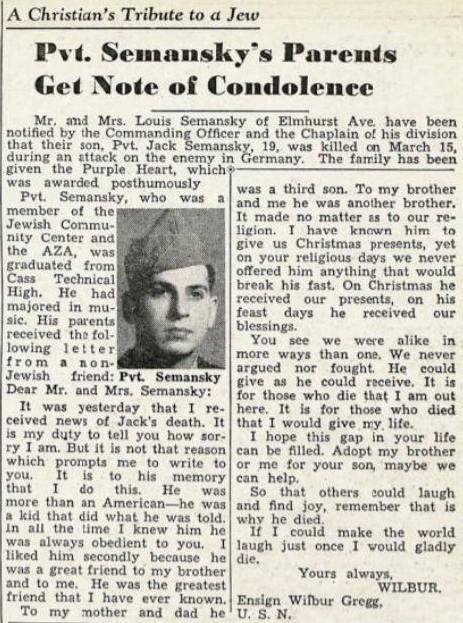
“It was the Friday after,” he said.  “There were just six of us there.  Some had been taken off, some we didn’t know what had happened to them.  Now we know, Ginde’s dead.  Irving Fishman (S 2-c, Dorchester, Mass.), Morris Bocheneck (SK 1-c. Brooklyn, N. Y.) – both dead.  Paul Fineberg (AM 2-c, Dorchester, Mass.), Morton Mittleman (MM 3-c, Bronx, N. Y.), Herman Tucker (SSML, 3-c) – they’re all missing.  And there are others.  But the six of us, we felt we had to hold the service, even if we didn’t have a “minyan.”  We held it on the flight deck and we were sad, but we were proud too, because somehow holding our Jewish service on the damaged flight deck of ‘Big Ben’ meant a great deal to us, both as Americans and Jews.”

George came here from Russia when he was eight years old.  He’s held a variety of odd jobs.  Once he was a street car conductor.  After he graduated from college, he played professional football for the Flatbush Giants.  When the war’s over, he wants to go into the automobile business.  He worked in that business before.

His athletic record at City College was exceptional.  He was on the varsity teams in football, polo, track, swimming and wrestling.

We asked him why he turned down that athletic instructor’s commission when he joined up.

“I didn’t like what the Nazis were doing.  I wanted to see some action – and I sure saw it!”

Franklin Crewman To Talk at War Plants

Brooklyn Eagle
June 17, 1945

Electrician’s Mate 3rd Class George P. Shapiro, 43, could have had a navy commission.  He could have remained on shore and been an athletic instructor on the basis of his five varsity letters won at City College.

Instead, the Brooklyn sailor who was “too old” for a combat commission enlisted as a “boot” and joined the crew of the ill-fated airplane carrier Franklin.  He was one of 200 men trapped in the wardroom when the bulkheads of the carrier closed after two Jap bombs struck her decks.

If it hadn’t been for the heroism of Lt. Donald A. Gary of Oakland, Cal., who rescued the men through the ventilation tubing, he would have suffocated in the smoke-filled room.  When Shapiro got on deck he joined a fire-control part, and when told he could leave the ship for a rescue ship, he elected to remain aboard.

In Eight Attacks

A veteran of the invasions of Guam, Palau and Leyte and attacks on Luzon, Manila, Tinian, Formosa and the second battle of the Philippine Sea, Shapiro, who lives at 346 New York Ave., is about to tour the country to address workers.  The trip will be a memorial to the buddies lost in the Franklin attack.

Since there wasn’t a Jewish chaplain aboard the ship, Shapiro, who was called “Pop” by the other sailors, conducted services Friday nights.

“There was only six of us at the first service after the attack,” he remembered.  “We didn’t know what had happened to the others then.  Now we know.  They were dead or missing.  We didn’t have a minyan (religious quorum) but we held the service anyway – on the damaged flight deck of “Big Ben”.

Shapiro served in the army during the first World War, but the armistice was declared while he was a student in Pre-Officers Training School.  He was a member of the Reserve Officers Training Corps at college and served in the New York State Guard.

At City College he was renowned as that athletic rarity, the “five-letter man”.  He was captain of the varsity polo team, acting captain of the football team, captain of the U.S. Volunteer Life-Saving Corps and member of the track and wrestling teams.  This record, combined with the fact that he was president of his freshman and junior classes, the school’s athletic association and “Soph Skull,” honorary fraternity, influenced his naval classification board to list him as officer material this time.  They wouldn’t make him a combat officer and he chose to be a seaman.

Shapiro was recently engaged to Sylvia Hannes of 1504 Sheridan Ave.  After the war he expects to return to selling insurance.

~~~~~~~~~~~~~~~~~~~~~~~~~~~~~~~~~~~~~~~~

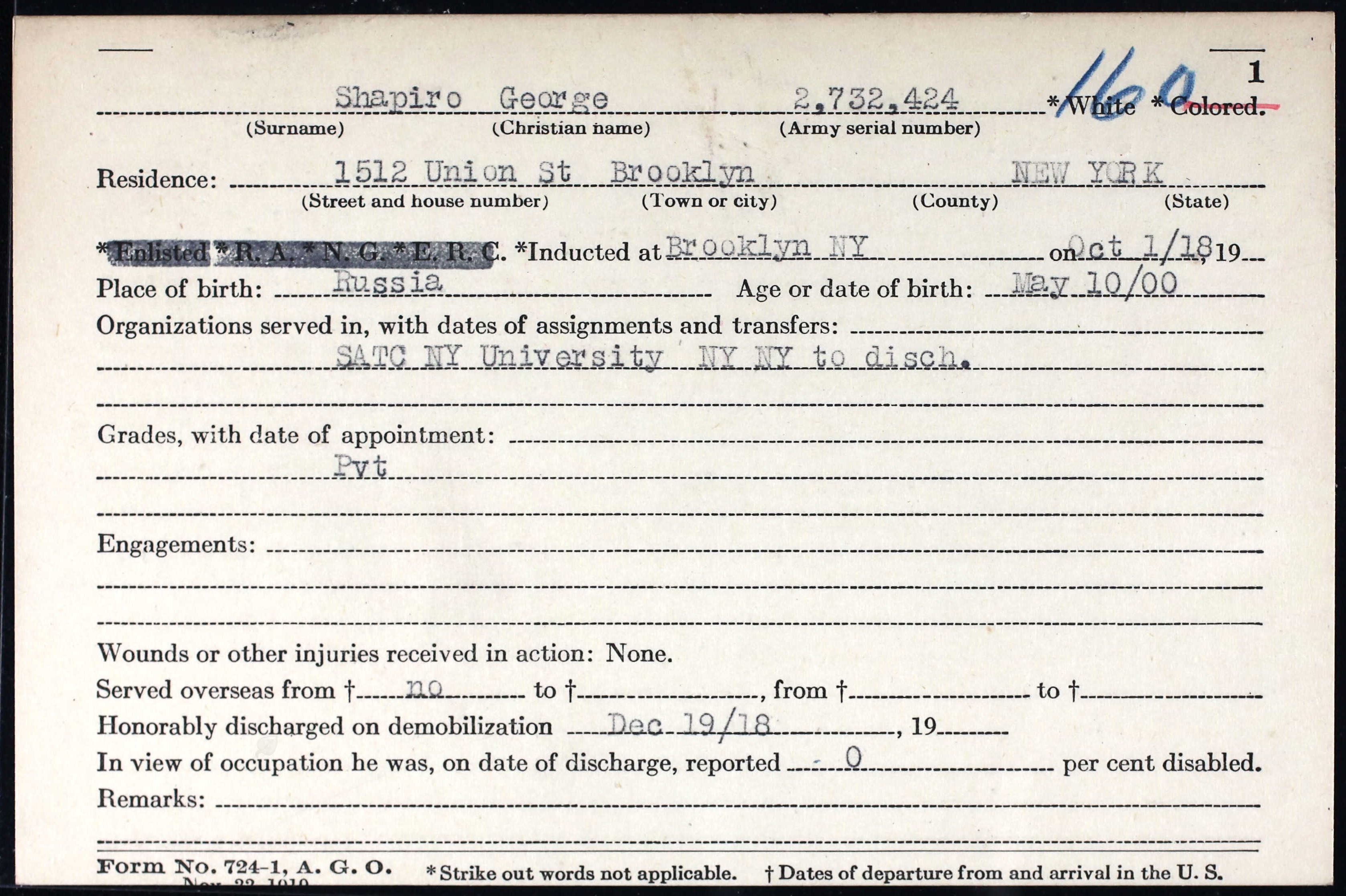
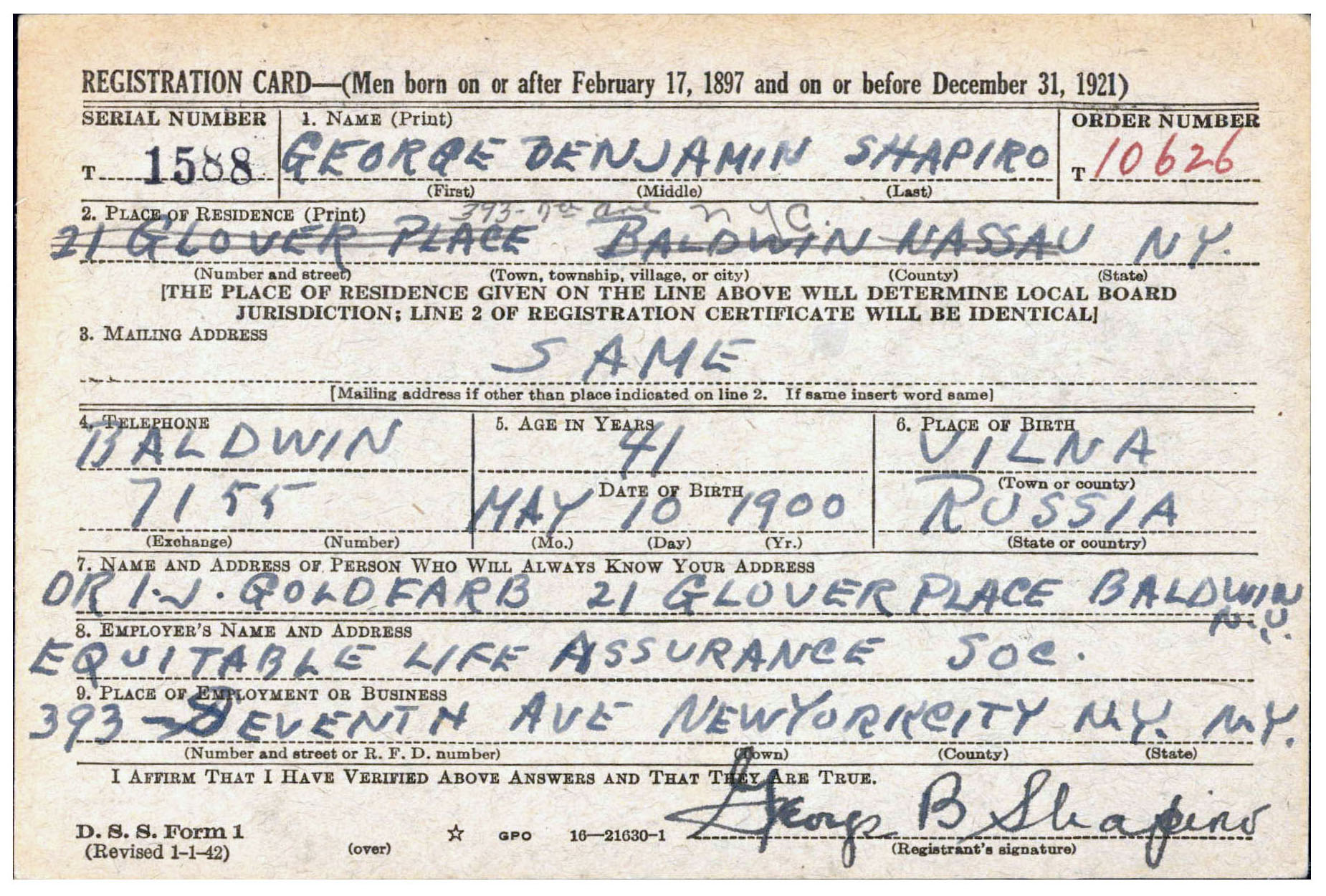
These three documents from George’s life are from Ancestry.com.

Here’s George’s WW I Draft Registration Card, showing that as on September 12, 1918, he was a Columbia University student, enrolled in the Student Army Training Corps (SATC), and residing in a place known as Brooklyn.

This is George’s WW I New York State Abstract of Military Service card.  Cards of this format were used to record data for servicemen in other states.  But, I don’t know if such cards were used by all states for this purpose, but to their uncertain absence from Ancestry, or – if they exist – their inaccessibility.

Moving ahead in time, here’s George’s WW II Draft Card, I think categorized at Ancestry.com as an “old man’s” draft registration card.  By now, George was in his early 40s. Note that his employer was the Equitable Life Insurance Company, a profession to which he spoke of returning, within Ben Samuel’s article.  Did he postwar?  I don’t know!

~~~~~~~~~~~~~~~~~~~~~~~~~~~~~~~~~~~~~~~~

In much the same format as I’ve presented information about the military service of Jews in the Second (and First…) World War, below are records of the names of Jewish sailors and officers aboard the Franklin on March 19, 1945.  Killed in action first, then wounded, and finally, those who emerged from the terrible day unhurt.  What’s immediately noticeable in all but a very few cases (those of S2C Abraham J. Barbash – who could’ve emerged from a Damon Runyon story – and Lt. Cmdrs. Berger and Sherman, both of whom feature in another post), is the real absence of substantive information about them, “as people”.  The degree of physical destruction that occurred on the carrier eventuated in the complete obliteration of personal possessions – particularly letters, photographs, and documents – that might in “normal” circumstances have been returned to their families, and thus have preserved in time at least a faded impression of their personas. 

As before, the names of many of these men, especially the wounded, never appeared in American Jews in World War II.    

Of particular note are the names of Ginde, Fishman, Bockenek, Fineberg, Mittleman, and Tucker, all of whom figured centrally in Ben Samuel’s article, as having been regular members of Friday minyans on the Franklin. 

So, all that is left is their names, which in the fullness of time is true for all men, however high or low.  

Or, as stated by Rabbi Shimon in Pirke Avot (The Ethics of the Fathers), Chapter Four, Verse Thirteen: “There are three crowns – the crown of Torah, the crown of priesthood and the crown of sovereignty – but the crown of good name surmounts them all.”  (זָדוֹן. רַבִּי שִׁמְעוֹן אוֹמֵר, שְׁלֹשָׁה כְתָרִים הֵן: כֶּֽתֶר תּוֹרָה, וְכֶֽתֶר כְּהֻנָּה, וְכֶֽתֶר מַלְכוּת, וְכֶֽתֶר שֵׁם טוֹב עוֹלֶה עַל גַּבֵּיהֶן.)

Killed in Action

For those who lost their lives on this date…
Monday, March 19, 1945 / 5 Nisan 5705
– .ת.נ.צ.ב.ה. –
…Tehé Nafshó Tzrurá Bitzrór Haḥayím
May his soul be bound up in the bond of everlasting life.

Fallen of the USS Franklin
Commemorated at
Tablets of the Missing at Honolulu Memorial, Honolulu, Hawaii

Barbash, Abraham Jacob, S2C (Seaman), 8108675
Mrs. Minnie (Berkowitz) Barbash (wife), 940 Tiffany St., Bronx, N.Y.
Rabbi and Mrs. Aaron (4/25/80 (1883?) – 1/7/46) and Esther (Seslofsky) (8/15/84-6/13/64) Barbash (parents)
Anna, Leon, and Sylvia (sisters and brother)
2475 85th St., Brooklyn, N.Y.
Born Bronx, N.Y., 7/9/12
King Solomon Memorial Park, Clifton, N.J. – First Soroker Bessarabier in Jerusalem Section
Casualty List 5/10/45
The Franklin Comes Home – 39
American Jews in World War II – Not Listed

This photo of Seaman Barbash’s commemorative matzeva, from FindAGrave, is by dalya d

“S/2C Abe Barbash, from Tremont Avenue in the Bronx, was one of the others caught on the fantail.  Abe, famed among his shipmates for running an almost nonstop (except when on duty) poker game in the laundry and quite advantageously, had never learned to swim, else he might have graduated from quartermaster school.  He also possessed an unconquerable fear of heights.  When a young seaman with both arms broken was carried out of the hangar area onto the fantail, Abe took off his own life jacket and laced it around the injured youth, who was lowered into the sea away from the explosions on the fantail.  Abe then decided, in view of his lack of swimming ability, that he’d better locate another life jacket, even though he might not be able to muster sufficient courage to jump into the sea.  He returned inside the hangar deck – and directly into the explosion of a 500-pound bomb.  As a buddy would recall, “Not even his dog tags were ever found.”” – From “The Franklin Comes Home”

~~~~~~~~~~~~~~~~~~~~~~~~~~~~~~~~~~~~~~~~

Berkowitz, Philip Alfred, COX (Coxswain), 2023661
Mr. and Mrs. Michael (11/25/98-4/15/72) and Ethel Marion (James) (7/26/02-3/12/73) Berkowitz (parents)
26 Lewis St., Medford, Ma.
Born Boston, Ma., 6/27/24
American Jews in World War II – 150

Bochenek, Morris, SK2C (Storekeeper), 7101788
Mrs. Sylvia Simon Bochenek (wife), 5516 12th Ave. / 1163 45th St., Brooklyn, N.Y.
Mr. Hyman (12/26/83-3/14/43) and Sera (Goodman) (1881-11/16/57) Bochenek (parents)
Abraham Boshnack (brother) (4/25/06-10/26/91)
5516 12th Ave., Brooklyn, N.Y.
Born Brooklyn, N.Y., 7/22/14
Casualty List 5/10/45
American Jews in World War II – 281

Fineberg, Paul Matthew, AM2C (Aviation Metalsmith), 2025182
Mr. Louis Meyer (9/12/99-12/10/76) Fineberg (father), 486 Blue Hill Ave., Dorchester, Ma.
Born Revere, Ma., 12/24/23
American Jews in World War II – 157

Fishman, Irving, S2C (Seaman), 5790445
Mr. and Mrs. Henry and Lillian Fishman (parents); Donald (brother), 7 Irma St., Dorchester, Ma.
Born 1926?
American Jews in World War II – 157

~~~~~~~~~~~~~~~~~~~~~~~~~~~~~~~~~~~~~~~~

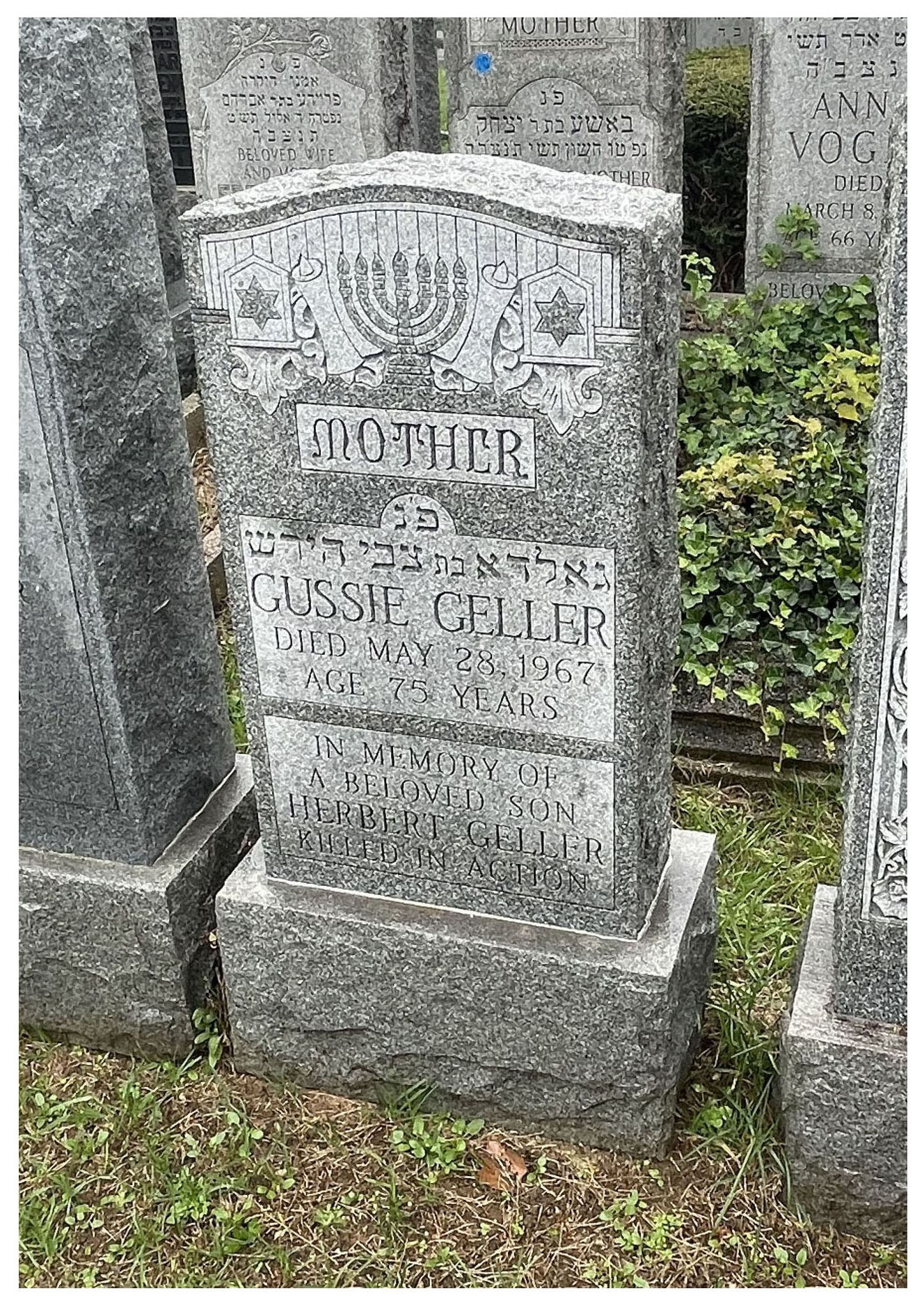
Geller, Herbert, PhM3C (Pharmacist’s Mate), 8110314
Mrs. Gussie Geller (mother) (1892-5/28/67), 176 Varet St., Brooklyn, N.Y.
Born Brooklyn, N.Y., 12/16/21
Casualty List 5/10/45
American Jews in World War II – 319

This photo of Gussie Geller’s matzeva, which commemorates her son Herbert, at FindAGrave, is by Brooke Schreier Ganz

~~~~~~~~~~~~~~~~~~~~~~~~~~~~~~~~~~~~~~~~

Gindi, Jacob “Jack”, S2C (Seaman), 7118530
Mr. and Mrs. Isaac (1893-2/1/31) and Rachael (Dweck) Gindi (10/22/08-4/23/99) (parents)
Estelle, Ralph, and Sam (sister and brothers)
587 Bay Parkway, Brooklyn, N.Y. (1930 address is 587 Bay Parkway)
Mr. and Mrs. Stanley Edward (1/15/03-?) and Renee (“Renee Rachel”) (Dweck) Shamosh (step-father and mother) (10/22/05 (or 10/22/08)) – 4/23/99) (married 10/4/22)
Edward S., Joseph S., and Robert S. (half-brothers)
5729 6th St., Washington, D.C.
Born Brooklyn, N.Y., 10/5/26
American Jews in World War II – 76

Groll, Abraham L., S1C (Seaman), 7129183
Mr. and Mrs. Sam (1888-?) and Tsilka (Sophie) (Epstein) (1893-3/74) Groll (parents)
205 Powell St., Brooklyn, N.Y.
Gussie, Molly, Morris, Nathan (siblings); Sam (father?), 180 Chester St., Brooklyn, N.Y.
Born New York, N.Y., 1/11/27
Casualty Lists 5/11/45, 11/6/45
American Jews in World War II – Not Listed

Hoffman, Samuel, ACOM (Aviation Chief Ordnanceman), 4024449
Mr. Oscar Hoffman (father), 79 Tehama St., Brooklyn, N.Y.
Born New York, N.Y., 4/20/11
Casualty List 5/17/45
American Jews in World War II – 346

Mittleman, Morton Joel, MM3C (Machinist’s Mate), 8107153
Mr. and Mrs. Charles (8/15/78-4/72) and Estelle (Gluck) (4/5/05-9/11/01) Mittelman (parents)
2525 Grand Concourse, Bronx, N.Y.
Born New York, N.Y., 3/15/16
Casualty List 5/11/45
American Jews in World War II – 395

Perlman, Morris, RM3C (Radioman), 8175575
Died of wounds, aboard USS Santa Fe, on 3/23/45
Mr. and Mrs. Benjamin and Mollie Perlman (parents), 882 N. Marshall St., Philadelphia, Pa.
Born Philadelphia, Pa., 4/8/20
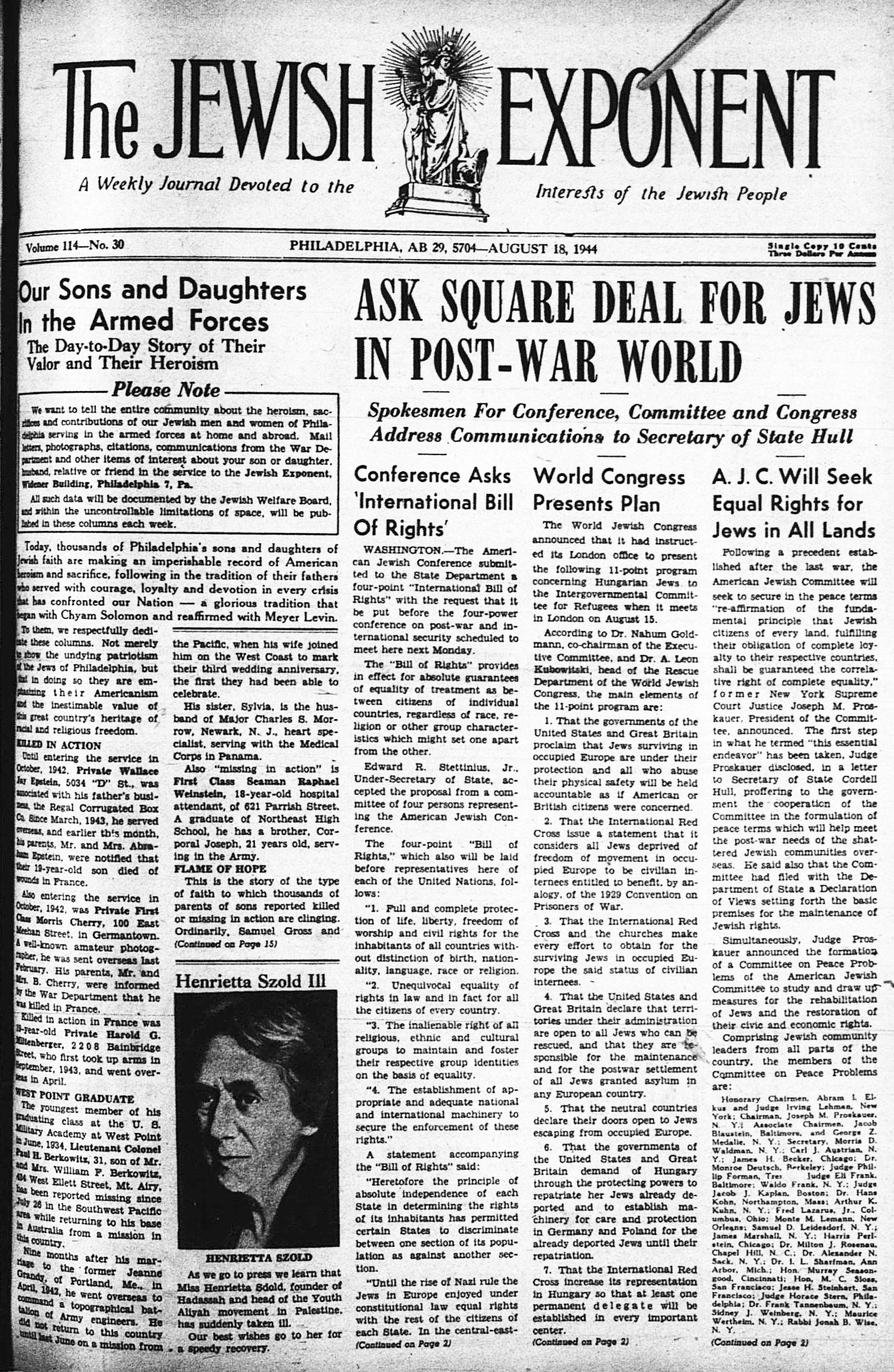
Jewish Exponent 5/4/45
Philadelphia Inquirer 4/21/45
ABMC lists as died 5/23/45 – incorrect!
American Jews in World War II – Not Listed

~~~~~~~~~~~~~~~~~~~~~~~~~~~~~~~~~~~~~~~~

Steppach, David Henry, Jr., PhoM3C (Photographer’s Mate), 6409983
Mr. and Mrs. Dave Henry (4/15/87-12/22/66) and Rose (Johns) (6/17/97-9/28/80) Steppach (parents)
1333 Harbert Ave., Memphis, Tn.
Sally Ann (Steppach) Loeb (sister) (9/24/19-6/26/07)
Born Memphis, Tn., 6/11/22
Temple Israel Cemetery, Memphis, Tn. – Cremieux Section, Lot 90
American Jews in World War II – 568

This photo of Photographer Mate Steppach’s commemorative matzeva, from FindAGrave, is by Patrick Whitney

~~~~~~~~~~~~~~~~~~~~~~~~~~~~~~~~~~~~~~~~

Stern, Robert Cyril, S2C (Seaman), 6345185
Mr. and Mrs. Leonard E. (3/12/96-11/15/91) and Ruth (Lewis) (1/23/03-6/80) Stern (parents)
2801 W. Chestnut St., Louisville, Ky.
Born Louisville, Ky., 8/18/21
American Jews in World War II – 130

Tucker, Herman, SSML3C (Ship’s Service Man Laundryman), 8146740
Mrs. Clara (Kramer) Tucker (wife) (4/18/19-9/12/04), 1557 Hoe Ave., Bronx, N.Y.
Born N.Y., 1915
Casualty List 5/12/45
American Jews in World War II – 462

Zassman, Harry, S1C (Seaman), 8022679
Mr. and Mrs. Louis (6/30/87-11/24/59) and Sarah (Shine) (5/19/90-2/13/71) Zassman (parents)
73 Franklin Ave., Revere, Boston, Ma.
Mr. Louis Zassman (father), 12 Grant St., Beverly, Ma.
Born Beverly, Ma., 11/5/24
Casualty List 5/11/45
American Jews in World War II – 185

Wounded or Injured – Survived War

Balaban, Jule Israel, ART2C (Aviation Radio Technician), 6504319
Rescued by USS Pittsburgh (after having been blown overboard?)
Mr. and Mrs. Uscher (Harry) (11/15/95-5/11/66) and Rose (Finkel) L. (1897-1988) Balaban (parents)
Edward, Estelle (Stella), Jessel, Marion, and Selgene (brothers and sister)
118 North Maine Ave. / 147 Dewey Place, Atlantic City, N.J.
Born Philadelphia, Pa., 11/9/21 – Died 5/8/09
American Jews in World War II – Not Listed

Berger, David, Lt. Cdr., 0-136584, Air Officer (Assistant), Silver Star
See more here.

Finkelstein
, Arthur Julius, S 1C (Storekeeper), 8125189

Received aboard USS Santa Fe from U.S.S. Franklin
Mrs. Sarah Finkelstein (mother), 250 Stockton St., Brooklyn, N.Y.
Born N.Y.., 10/22/22 – Died 12/25/10
American Jews in World War II – Not Listed

Levine, Eugene, SK 2C (Seaman), 7078118
Received aboard USS Santa Fe from U.S.S. Franklin
New York, N.Y.
American Jews in World War II – Not Listed

Liebman
, Simon, S2C (Seaman), 8160710

Received aboard USS Santa Fe from U.S.S. Franklin
New York, N.Y.
American Jews in World War II – Not Listed

Miro
, David Maurice (David bar Avraham), Lt. JG, 0-374322, Communications Officer

Received aboard USS Santa Fe from U.S.S. Franklin
Mrs. Bernice Marcia (Goldman) Miro (wife) (6/14/15-6/20/93); Jeffrey and Judy (children), 1501 Burlingame, Detroit, Mi.
Mr. and Mrs. Samuel (1/4/82-11/15/44) and Fannie (Alden) (3/14/86-7/7/51) Miro (parents)
Lillian, Minnie, Morry, and Shirley (sisters and brother)
5430 Linwood St., Detroit, Mi.
Born Harrison, N.Y., 4/20/09 – Died 2/14/05
The Jewish News (Detroit) 5/25/45
American Jews in World War II – Not Listed

Rothstein
, William, S1C (Seaman), 7115376

Received aboard USS Santa Fe from U.S.S. Franklin
Mr. and Mrs. Harry (1901-5/69) and Dora (1902-1990) Rothstein (parents); Betty (sister), 986 Rutland Road, Brooklyn, N.Y.
Born New York, N.Y., 9/13/25 – Died 2/23/68
American Jews in World War II – Not Listed

Schlesinger
, Abraham Louis “Abe”, Jr, Lt., 0-101101

Received aboard USS Santa Fe from U.S.S. Franklin
Mr. and Mrs. Abraham L. (12/25/84-1953) and Elise (Cahn) (9/18/88-2/80) Schlesinger (parents), Gilmore Apt. # 210, Memphis, Tn.
Born Memphis, Tn., 2/18/15 – Died 9/24/97
American Jews in World War II – Not Listed

Serebrin, Leonard, S2C (Seaman), 8817317, Purple Heart
Mr. and Mrs. Max and Pearl (Sherman) Serebrin (parents), 601 North Cummings St., Los Angeles, Ca.
David and Edith (brother and sister)
Born Cleveland, Oh., 6/7/26 – Died 11/6/03
American Jews in World War II – Not Listed

Sherman, Samuel Robert, Lt. Cdr., 0-130988, Flight Surgeon, Navy Cross, Purple Heart

See more here.

Not Casualties – Survived War

Adelson, Albert, WT3C (Water Tender), 8100191, Letter of Commendation
Born Brooklyn, N.Y., 3/29/24 – Died 9/23/16
201 New Lots Ave., Brooklyn, N.Y.
USS Franklin Crew Commendation List
American Jews in World War II – Not Listed

Baruch
, David, S1C (Seaman), 7110026

American Jews in World War II – Not Listed

Feldman, Hyman Samuel (Herschel ben Shmuel), S 2C (Seaman), 8530886
Mr. and Mrs. Samuel and Bessie (Blinder) Feldman (parents), 318 Summit Ave., Brighton, Ma.
Born Lynn, Ma., 3/20/17 – Died 11/9/99
American Jews in World War II – Not Listed

Friedman
, Herman Samuel, SF1C (Ship Fitter), 8124906, Bronze Star Medal

Born 1916
317 (817?) E. 175th St., Bronx, N.Y.
New York Times 5/18/45, 5/22/45
USS Franklin Crew Commendation List
American Jews in World War II – Not Listed

Glasberg, Irving, AOM3C (Aviation Ordnanceman), 2044659, Letter of Commendation
Died 8/31/82
USS Franklin Crew Commendation List
American Jews in World War II – Not Listed

Hirschberg, Saul Benjamin, S1C (Seaman), 6436672
American Jews in World War II – Not Listed

~~~~~~~~~~~~~~~~~~~~~~~~~~~~~~~~~~~~~~~~

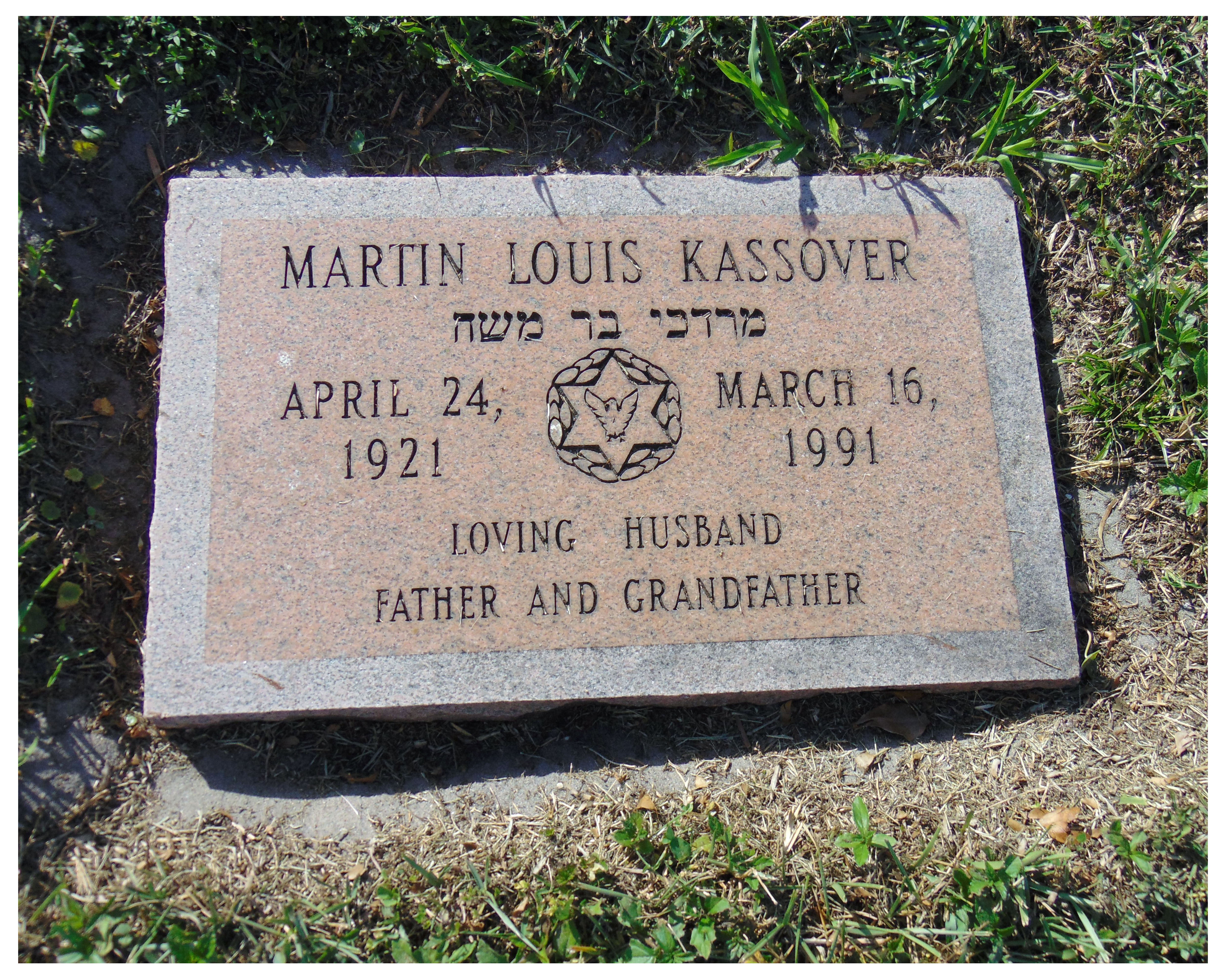
Kassover, Martin Louis (Mordechay bar Moshe), S2C (Seaman), 8106517, Letter of Coommendation
Mr. and Mrs. Morris and Martha (Zlosnick) Kassover (parents), Celia and Rose (sisters), 43 74th St., Brooklyn, N.Y.
Born New York, N.Y., 4/24/21 – Died 3/16/91
USS Franklin Crew Commendation List
American Jews in World War II – Not Listed

This image of Martin L. Kassover’s matzeva, at FindAGrave, is by Romper90069

~~~~~~~~~~~~~~~~~~~~~~~~~~~~~~~~~~~~~~~~

Sandler, Joseph, ACMM (Aviation Chief Machinist’s Mate), 2583242
Mr. Irvin Schaffer (friend), Baltimore, Md.
Born 1925 – Died 1999
American Jews in World War II – Not Listed

Schulman, Samuel, S2C (Seaman), 8151873
American Jews in World War II – Not Listed

Setner, Irving Jerome, S2C (Seaman), 9613842
American Jews in World War II – Not Listed

Shapiro, George Benjamin, EM2C (Electrician’s Mate), 7083561 – see above!

Skolnick, Seymour, S1C (Seaman), 7093448
Brooklyn, N.Y.
Born 1923 – Died 1988
American Jews in World War II – Not Listed

Soloway, Samuel Sidney, F1C (Fireman), 7116901
Mr. Jacob Soloway (father), Jack and Jerry (brothers), 185 Hillside Ave., Newark, N.J.
Born Bayonne, N.J., 11/1/25 – Died 1/27/99
American Jews in World War II – Not Listed

~~~~~~~~~~~~~~~~~~~~~~~~~~~~~~~~~~~~~~~~

Fallen of the USS Wasp
Commemorated at
Tablets of the Missing at Honolulu Memorial, Honolulu, Hawaii

The USS Wasp incurred damage from the same cause as that which befell the USS Franklin: An aerial attack.  In this case, the loss – entirely severe enough if one was among the casualties – was nowhere near the same gravity as that incurred by the Franklin, and the carrier resumed operations not long after. 

From Wikipedia: “In spite of valiant efforts of her gunners, on 19 March 1945, Wasp was hit with a 500-pound armor-piercing bomb.  The bomb penetrated the flight deck and the armor-plated hangar deck, and exploded in the crew’s galley.  Many of her shipmates were having breakfast after being at general quarters all night.  The blast disabled the number-four fire room. Around 102 crewmen were lost.  Despite the losses, Wasp continued operations with the Task Group and the air group was carrying out flight operations 27 minutes after the damage.”

Blatt, Melvin, EM2C (Electrician’s Mate), 8103051
Mr. Albert Blatt (father), 345 Georgia Ave., Brooklyn, N.Y.
Born Detroit, Mi., 7/15/23
Casualty List 5/8/45
American Jews in World War II – 278

Brust, Marvin S., S1C (Seaman), 8092779
Mr. and Mrs. Irving (?-11/16/54) and Anna (?-3/20/61) Brust (parents), Joseph (brother), 79-23 68th Ave., Middle Village, N.Y.
Born Brooklyn, N.Y., 1/31/24
Long Island Star Journal 5/7/45
Casualty List 5/8/45
American Jews in World War II – 286

Levine, Paul Harold, F1C (Fireman), 3138269
Mr. Louis Levine (father), 18027 Roselawn Ave., Detroit, Mi.
Born 1927
The Jewish News (Detroit) 4/13/45
American Jews in World War II – 193

Lippsett, Donald Michael, F1C (Fireman), 7128566
Mr. George Lippsett (father), 552 Shepherd Ave., Brooklyn, N.Y.
Born 1926
Casualty List 5/8/45
American Jews in World War II – 382

~~~~~~~~~~~~~~~~~~~~~~~~~~~~~~~~~~~~~~~~

United States Marine Corps

During Battle of Iwo Jima

(This example of the 4th Marine Division shoulder patch comes from TTMilitaria.)

Wounded in Action

Eisenberg, Sidney Seymour, Pvt., 332718, PH
1st Battalion, Headquarters Company, 24th Marine Regiment, 4th Marine Division
Mrs. Phyllis Eisenberg (wife), 2056 Grand Ave., Bronx, N.Y.
Mrs. Rose Feller (mother), 68 West 94th St., New York, N.Y.
Born Bronx, N.Y., 2/1/24
Casualty List 7/13/45
American Jews in World War II – Not Listed

~~~~~~~~~~~~~~~~~~~~~~~~~~~~~~~~~~~~~~~~

(This reproduction of the 3rd Marine Division shoulder patch is by WW II Impressions.)

Killed in Action

Norwitz, Nelson Nathan, Pvt., 829563, PH
34th Replacement Draft, 3rd Marine Division
Mrs. Nelson N. Norwitz (wife), 1729 N. Smallwood St., Baltimore, Md.
Mr. and Mrs. Benjamin (7/24/90-5/21/39) and Tillie (Cole) (4/12/93-7/28/68) Norwitz (parents)
Bernard and Herman (brothers)
1512 Appleton St., Baltimore, Md.
Born Baltimore, Md., 8/24/19 or 8/24/20
Honolulu Memorial, Honolulu, Hawaii – Plot N, Row 1, Grave 548
American Jews in World War II – 142

– Aboard the USS Franklin –

VMF-214

Killed in Action

Kuperwasser, Abraham, Cpl., 840002, Radio Technician, United States Marine Corps
Mr. and Mrs. Jacob and Itka (Gitla) Kuperwasser (parents), 1504 Charlotte St., New York, N.Y.
Mr. Eddie Caplan (friend?), 1416 North Mill St., Los Angeles, Ca.
Born Warsaw, Mazowieckie, Poland, 8/8/22
Casualty List 5/17/45
(U.S. Marine Corps History Division – Casualty Card Database and ABMC list date as 3/20/46 – one year plus one day after he was actually killed in action)
American Jews in World War II – Not Listed

Marine Detachment

Survived

Brody, Samuel Henry (Shmuel Hayyim bar Tzvi), PFC, 855237, Bronze Star Medal, 1 Oak Leaf Cluster, Purple Heart
Mr. and Mrs. Harry and Anna Brody (parents), Orchard and Landis Ave. (northeast corner), Vineland, N.J.
Born Los Angeles, Ca., 5/8/25 – Died 5/11/00
Navy Department Release 2/16/45
American Jews in World War II – 228

Killed in Action


Segal, Leon Harry, PFC, 828085, Purple Heart
Mrs. Rebecca (Kessler) Segal (wife) (2/4/14-3/11/95), 5510 Jackson St., Houston, Tx. (Married 10/17/38)
Mr. and Mrs. Abraham Nathan (1/24/79-8/22/67) and Mamie (Kaufman) (5/6/84-11/14/68) Segal (parents)
Bernard and Justine (brother and sister)
Born Nogalas, Arizona, 6/5/19 – Died 7/28/95
American Jews in World War II – 573

This photo of PFC Segal, from FindAGrave, is via Jaap Vermeer

References

Dublin, Louis I., and Kohs, Samuel C., American Jews in World War II – The Story of 550,000 Fighters for Freedom, The Dial Press, New York, N.Y., 1947

Herman, J.K., Flight Surgeon On the Spot: Aboard USS Franklin 19 March 1945, Navy Medicine, July-August 1993, V 84, N 4, pp. 409.

Hoehling, Adolph August, The Franklin Comes Home, Hawthorn Books, New York, N.Y., 1974

Webb, Eugene, Samuel R. Sherman, M.D., C.M.A. President-Elect, California Medicine, June, 1962, V 96, N 6, pp. 429-430.

The USS Wasp, at Wikipedia

And further…

Minyan

Minyan: The Prayer Quorum, by Aryeh Citron

Why Are Ten Men Needed for a Minyan?, by Shmuel Kogan

What if the tenth guy walks out?, by Menachem Posner

Why Is a Minyan Needed for Kaddish?, by Yehuda Shurpin

Soldiers from New York: Jewish Soldiers in The New York Times, in World War Two: 2 Lt. Maurice D. Kraus and Sgt. David Snider – February 6, 1945 (In the air…)

It’s time that I returned to the “Times”.  The New York Times, that is…

And so, here’s the latest post in my ongoing series covering the military service and participation of Jewish soldiers during the Second World War, based on news items published in The New York Times through the duration of that global conflict. 

As such, this is (~ about ~) my fortieth post in the series.

Otherwise, a different angle:  It’s my third post about Jewish-servicemen-in-The-New-York-Times – who, though they were the subjects of news articles published on different calendar days … in this case, Sgt. David Snider on March 4, 1945, and, Second Lieutenant Maurice David Kraus on March 8 of that same year … lost their lives on the same day: Tuesday, February 6, 1945.  (Shevat 23, 5705)  The prior two posts in this regard concerned Second Lieutenant Arthur Chasen and Sergeant Alfred R. Friedlander (December 23, 1944), and, Captain Paul Kamen, PFC Donald R. Lindheim, and PFC Arthur N. Sloan (April 20, 1945).  

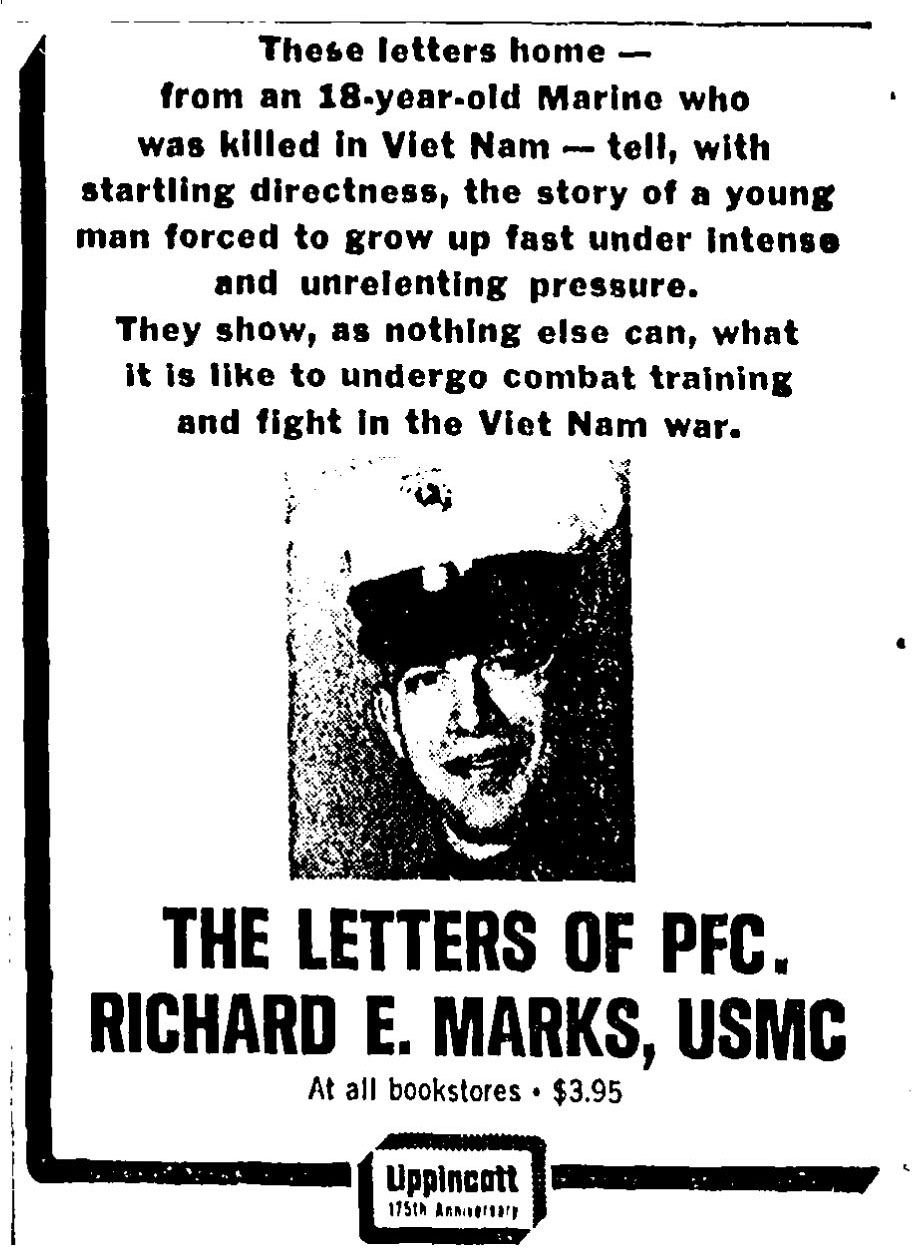
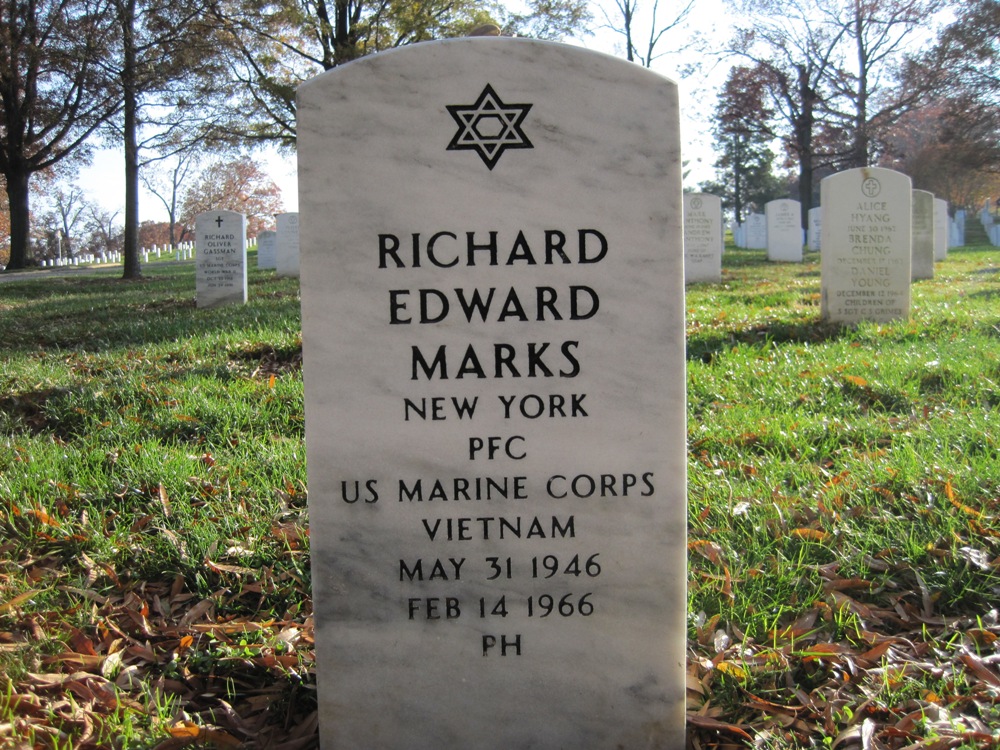
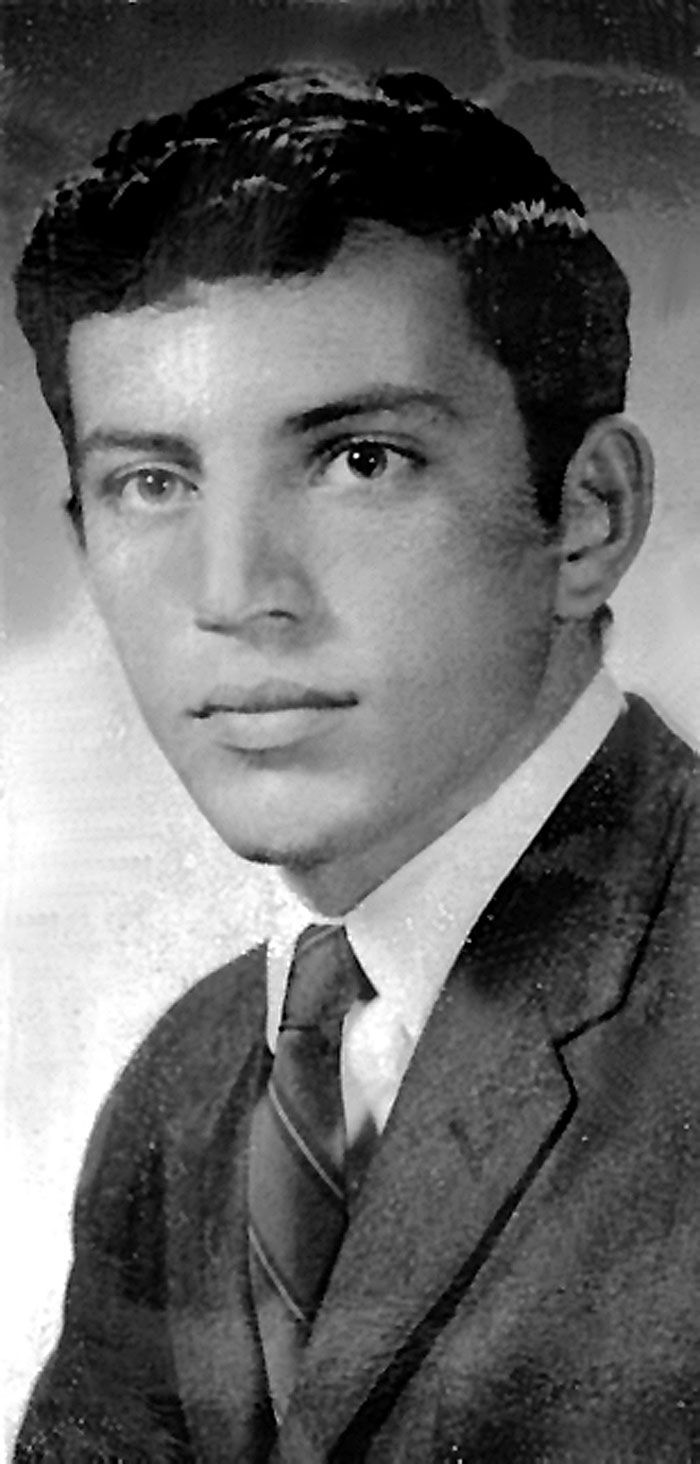
This post is unusual from another angle:  Sergeant Snider was a Marine.  Thus far, my only posts concerning Jews in the Marine Corps pertain to WW II Captain Howard K. Goodman, and, PFC Richard E. Marks, who served in Vietnam.

As before, this retrospective follows the same general format of my other “Jewish-soldiers-in-The-New-York-Times” posts.  However, being that there’s such an abundance of information about the events of “this” day – February 6 of ’45 – I’m presenting information about these soldiers in two posts. 

“This” post covers aviators.

A second post pertains to soldiers who served in the ground forces of the Allied Armies.

________________________________________

For those who lost their lives on this date…

Tuesday, February 6, 1945 / Shevat 23, 5705
– .ת.נ.צ.ב.ה. –
…Tehé Nafshó Tzrurá Bitzrór Haḥayím

May his soul be bound up in the bond of everlasting life.

________________________________________

Second Lieutenant Maurice David Kraus

United States Army Air Force

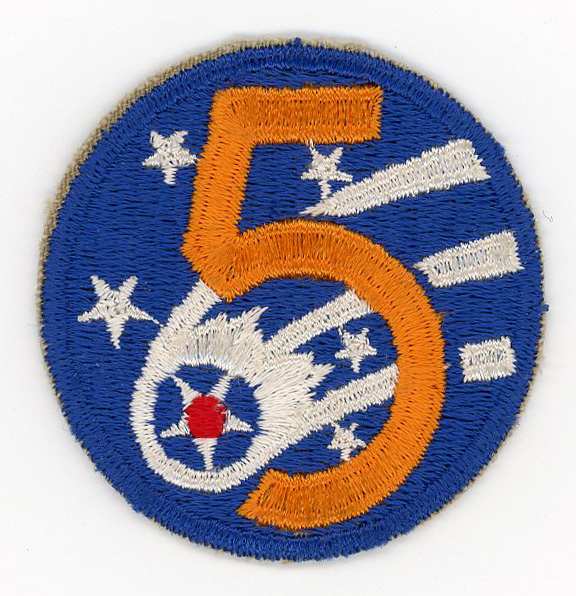
5th Air Force

5th Air Service Area Command

On Thursday, March 8, 1945, the following news item appeared in The New York Times:

Bomber Navigator Dead After a Crash on Leyte

The War Department has notified Mrs. Mary Braunstein Kraus of 482 Fort Washington Avenue that her son, Second Lieut. Maurice D. Kraus, 22 years old, a bomber navigator in the Army Air Forces, was killed Feb. 6 on Leyte in an accidental airplane crash.  Lieutenant Kraus had flown thirty-one missions in the Southwest Pacific.

Born in New York City, Lieutenant Kraus was graduates from Townsend Harris High School and was a student at City College in 1942 when he joined the Army.  He had been overseas since 1943.

In addition to his mother he leaves his father, Abraham Kraus, who is in the millinery and novelty business, and a sister, Miss Jean Kraus, both of the Fort Washington Avenue address. Miss Kraus is a Barnard College student.

Lieutenant Maurice David Kraus, whose name appears on page 368 of American Jews in World War II, was awarded the Air Medal and Purple Heart. Born in New York City on July 18, 1922, he graduated in Selman Field Class 43-08 (August of 1943) with serial number 0-805172.

Oddly, an account of the incident on Tacloban even now – in 2023 – is more conjecture than conclusion.

How so?

The Missing Air Crew Report (MACR) index name card filed for Lt. Kraus’ bears no MACR number.

The AAIR (Aviation Archeological Investigation and Research) database for 1945 is absent of any record – assuming such even existed – pertaining to a February 6, 1945 plane crash at Tacloban, or, Leyte Island.

Lt. Kraus’ IDPF (Individual Deceased Personnel File), which records his father’s business address as “Kraus Import Company, 15 West 38th St., Room 907, New York, 18, N.Y.”) lists his military unit as the 5th Air Service Area Command of the 5th Air Force, but is devoid of specific information about the Tacloban incident.

The unit history of the 5th Air Service Area Command, on AFHRA Microfilm Reel A7368, is remarkably vague about the February 6, 1945 plane crash, the Command’s history for February of 1945 (on frame 620, to be specific) stating, “A Depot #2 C-47 airplane loaded with priority freight and one passenger, crashed on takeoff at Tacloban Airstrip.  All persons were killed and the plane was completely demolished.”

Thus, the mystery.

However, some rather circuitous research suggests that the plane’s pilot may (…may…) have been 2 Lt. Ralph C. Stava of Douglas, Nebraska, who was assigned to the 43rd Service Squadron of the 12th Air Depot Group.  Quoting the news article “Lt. RALPH STAVA REPORTED KILLED” at Lt. Stava’s FindAGrave biographical profile (based on articles in the Omaha World Herald and Plattsmouth Journal):

“Edward F. Stava, Douglas, has been advised that his son, Second Lieutenant RALPH C. STAVA, was killed in a plane crash in the Leyte area of the Philippines February 6, 1945.  This message was received here in the Plattsmouth Journal office Friday by the Kenneth McCarthy family.

“Born in Plattsmouth, Lieutenant Stava graduated from Plattsmouth High School in 1940 and attended Tarkio, Missouri College prior to going into the service.  He entered the military shortly after the outbreak of the war and received his training in the south until graduation.

“Lieutenant Stava received his silver wings and was commissioned a Second Lieutenant status at the Marfa, Texas, AAF advanced two-engine pilot school.  He was assigned to Gardner Field, Taft, California.

“Lieutenant Stava was sent to the Pacific area early last summer and has since been in action in that part of the war zone.  He had been overseas seven months.”

Much like the IDPF for Lt. Kraus’, the IDPF for Lt. Stava has no specifics about the accident of February 6, 1945, whether in terms of technical information about the C-47, a list of the plane’s crew and passengers, or extracts from a report about the accident.

And so, the mystery remains.

Lt. Kraus, whose name appeared in an official casualty list published on March 8, 1945, and in the “In Memoriam” Section of the Times on February 10, 1946, is buried at Mount Hope Cemetery, in Hastings, New York.

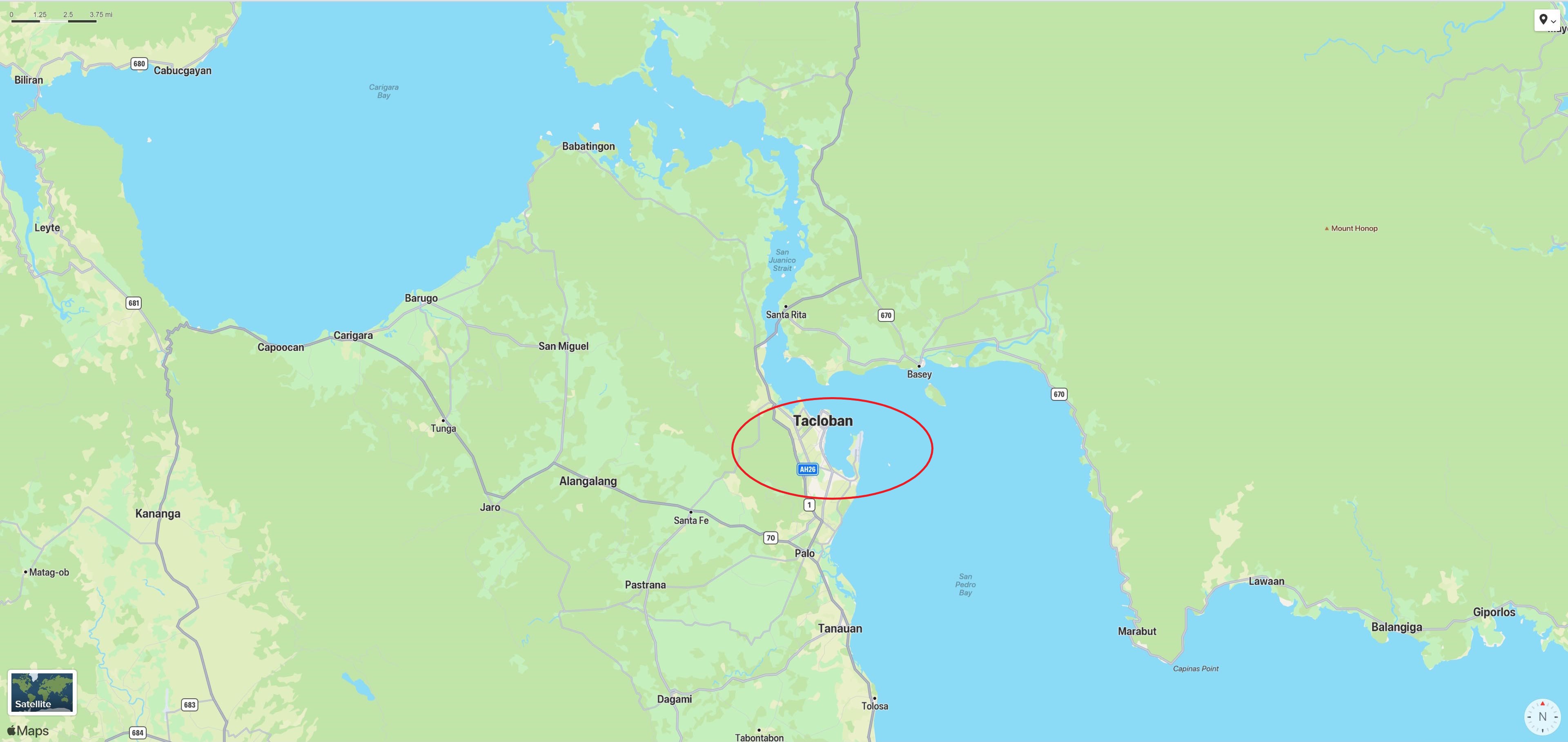
This series of Mapple Apps Apple Maps, of larger and larger scale as you scroll down the page, show the location of the current Daniel Z. Romualdez Airport (formerly Tacloban Airfield) on Leyte Island, in the Philippines.  

This first map shows Tacloban and Leyte Island in relation to other major islands of the Philippines.  

Moving in closer, we see Tacloban relative to Leyte Island on the west, Samar Island on the east (separated by San Juanico Strait), and San Pedro Bay to the South.  

Here’s the Daniel Z. Romualdez Airport in relation to Tacloban City.  

And, a closer map view of the airport itself.  Note that there is a single runway, oriented almost exactly north-south…

… which can be seen more clearly in this aerial (or satellite?) photo.

Approximately eighty years old, this photo (U.S. National Naval Aviation Museum photo 2001.294.006) show the Tacloban airfield in late 1944.  In this image, the view is looking directly south along the eastern coast of Leyte Island, with San Pablo Bay to the left (west).  

The man who may have been the pilot of the unidentified C-47: Lt. Ralph C. Stava.  This image, via FindAGrave contributor Loren Bender, is from Stava’s FindAGrave biographical profile.  The winged propeller cap insignia indicates that the photo was taken when he was an aviation cadet.  

______________________________

Sergeant David Snider

United States Marine Corps

Bombing Squadron VMB-613

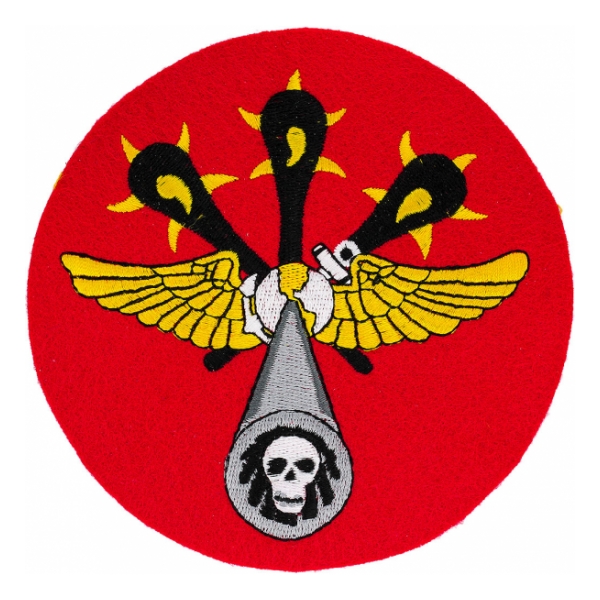
(Here’s the (un)official insignia of VMB-613, as designed by First Lieutenant James R. Edmunds III.  As described at the squadron association’s website, “This … squadron insignia was set on a circular red background.  Centered on the background were Naval Aviator wings with a globe and anchor.  Above the wings were three maces.  The main feature was a 75mm cannon tube with a skull in the muzzle, proudly denoting VMB-613’s unique status as only Marine Bombing Squadron to utilize the cannon-armed PBJ-1H in combat.”)

Sergeant David Snider’s story is known definitively, primarily through PacificWrecks.com and VMB-613.com

Here’s his obituary, as published in the Times:

Marine Sergeant Killed in Central Pacific Theatre

Sgt. David Snider, Marine Corps, of 1981 Eightieth Street, Brooklyn, was killed Feb. 6 in the Central Pacific theatre, according to word received here yesterday.  His age was 20.

Born in New York, he was graduated from Erasmus Hall High School and entered the Marine Corps in 1942.

He leaves a widow, Lenore; his parents, Mr. and Mrs. Isidore Snider; two brothers, Corp. Samuel Snider, Marine Corps, and Leon Snider, and a sister, Mrs. Ruth Barst. 

Sgt. Snider was married, his wife, Lenore, residing at 1981 80th Street in Brooklyn.  Interestingly – well, this was the United States of nearly-eight decades ago! – Lenore’s family lived “just down the street” from the Sniders, who resided at 2019 80th Street.  David’s parents were Isidore (4/3/89-5/29/52) and Baseva (Sophia or Sophie) (Melamed / Blumberg) (9/10/89-9/21/71) Snider; his brothers Samuel and Leon, and his sister Ruth Barst.  He was reburied at Riverside Cemetery in Rochelle Park, New Jersey on July 6, 1949.  

His name appeared in a Casualty List published on 2/27/45, and can also be found on page 448 of American Jews in World War II, which notes that he was awarded the Purple Heart. 

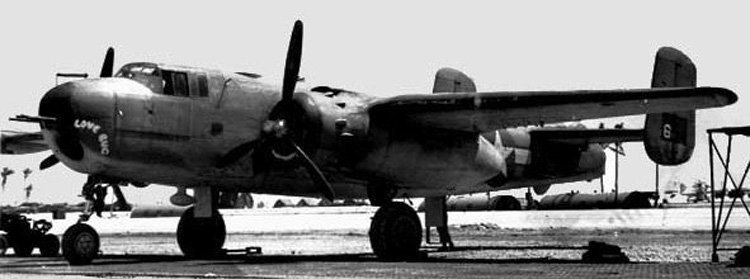
A photographer in Marine Corps bomber squadron VMSB-613 (a unit of Marine Air Group 31 of the 4th Marine Air Wing), Sergeant Snider (805866) was one of six men aboard PBJ-1H Mitchell #35275 – plane-in-squadron number “6”, otherwise known as the LOVE BUG – which was shot down by anti-aircraft fire during a bombing mission to Airstrip #2 on Ponape (Pohnpei) Island, “…one of the Senyavin Islands which are part of the larger Caroline Islands group,” an archipelago of small islands in the western Pacific Ocean. 

Piloted by 1 Lt. William John Love (0-23765) from Vineland, Kansas (whose surname inspired the bomber’s nickname), the plane’s other crewmen comprised:

Co-Pilot: Stone, Thomas William, 1 Lt. – 0-27570 – Ringwood, Ok.
Navigator: Schwaller, John Richard, S/Sgt. – 292152 – Jefferson City, Mo.
Radio Operator / Gunner: Baumbach, Leland Edward, Sgt. – 819550 – Bryant, S.D.
Radio Operator / Gunner: Becker, John Anthony, Sgt. – 870393 – Boulder, Co.

Given the plethora of information about the LOVE BUG and her crew, rather than rewrite the crew’s entire story, I’ll instead present excerpts from PacificWrecks and VMB-613.  Of particular and ironic note is the fact that Lt. William J. Love’s brother, 1 Lt. Robert E. Love, was also a pilot in VMB-613, the brothers and their crews – William J. Love’s “Crew No. 2”, and Robert E. Love’s “Crew No. 1” – alternately flying the LOVE BUG.

First, from Pacific Wrecks, quoting VMB-613 veteran Robert Yanacek

“Here is an interesting story, told to me by one of Bob Love’s radio-gunners, Lloyd McDaniel.  Bill Love and his crew were not scheduled for the fateful raid.  Bob Love and his crew were supposed to have been on the raid. Lloyd told me that at about dusk on February 5th, a Japanese sub was sighted.  VMB-613 dispatched one aircraft to investigate.  That aircraft was the “Love Bug” flown by Bob Love and his crew.  The patrolled the area for a number of hours but couldn’t locate anything.  The headed back to Eniwetok and did not land until after midnight.  Because the arrived back so late, it was decided that they would not fly the strike on Ponape.  Bill Love and his crew were then assigned to the mission.  Bill Love and his crew left Eniwetok at 9AM in the “Love Bug” never to return.  As Bob Love and his crew awoke on Eniwetok about noon, word came over the radio that there had been some problems.

Wartime History

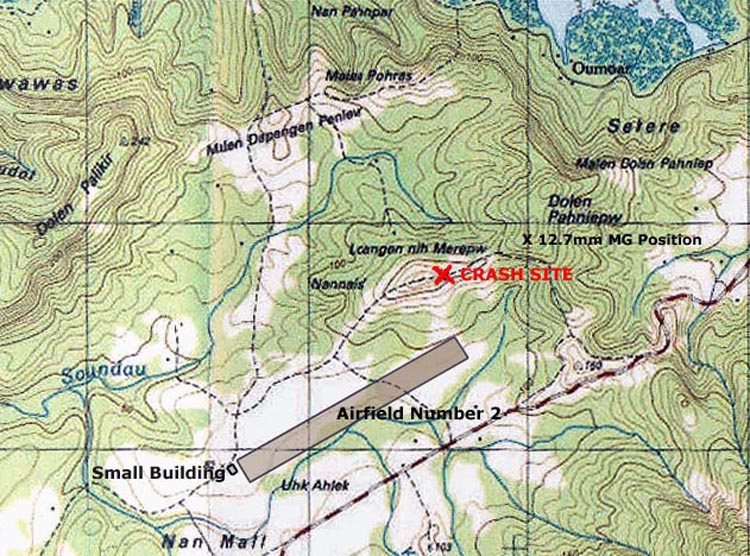
On February 6, 1945 at 9:00am took off from Enewetak Airfield (Stickell Field) piloted by 1st Lt. William J. Love with Crew No. 2 armed with four 500 pound bombs on a strike mission against Palikir Airfield (Airfield No. 2) on Ponape Island.  This formation included six PBJ Mitchells flying in three sections in pairs at an altitude of 8,000′.  This PBJ was flying as the lead plane in the third section.

Over Ponape Island were thunderstorms and the PBJs had to change their planned attack.  The first section found a hole in the weather and made a violent turn to get over the target but the second aircraft was not able to release its bombs.  The second section was able to make a better approach and flew the length of the target and claimed several bomb hits but the second plane had three bombs hang up.

When the third section attacked, it swung wide to the left then circled to the right to attack Palikir Airfield (Airfield No. 2) from another angle.  Over the target, medium and light anti-aircraft fire was intense.  During the bombing run, this PBJ was hit by anti-aircraft fire in the bottom of the fuselage that entered the nose section fire from “a small gun atop Dolen Pahniepw” (Dolen Palikir) and crashed and burned on impact at Palikir.  Soon after the crash one of the bombs still aboard exploded.

Second, VMB-613 has an extremely detailed account of the PBJ’s loss…

This comprises a transcript of the Aircraft Action Report, an account of exploration and research of the crash site in the early 2000s (two decades ago already…?!) by Stan Gajda, Richard D. Williams and Russell French, their efforts to definitively establish the fate and burial location of Sgt. Snider, and, a retrospective of the 60th anniversary memorial service (February 6, 2005) for the crew, in which the airmen were commemorated by Ambassador Suzanne K. Hale.  Particularly valuable and moving are the many (very many!) photographs of the crash location and surviving fragments of 35275 (at least, the little that still remained as of 2001 and 2005) by Stan Gajda and Dick Williams.

Third, here’s an excerpt of the Aircraft Action Report from the website of VMB-613’s Association website:

Bombing Airstrip #2, Ponape Island

“The tail gunner of the first plane of the last section saw the right wing of the last plane collapse immediately outboard of the engine nacelle just as the pilot completed a wide turn and leveled out for his approach.  The plane crashed just short of the runway exploding on impact with the ground and burning violently.  In the opinion of the tail gunner no bombs had been dropped by this plane and no heavy A/A fire was observed although light and medium flak was intense.  No cause for the collapse of the wing has been established.  It is believed that all personnel aboard were killed in the crash and also that classified material carried in the plane would have been destroyed by the fire preventing its compromise.”

It’s my understanding that the LOVE BUG was VMB-613’s only aircraft lost to enemy action during WW II.  The squadron’s only other combat fatality also occurred on the February 6 mission: Pvt. William M. Farley, serving as a navigator, was killed by a fragment from one of the 500-pound bombs dropped from his own aircraft, during the strike against airfield #2.  Unfortunately, the Bureau Number of his PBJ is not listed.

Relevant information and photos can be accessed at the following VMB-613 Association web pages:

Aircraft Action Report
PONAPE CRASH-SITE: PAGE 1 – 20 photos (map and 19 photos of crash site)
PONAPE CRASH-SITE: PAGE 2 – 20 photos (fragments of wreckage discovered in early 2000s)
PONAPE CRASH-SITE: PAGE 3 – 8 photos (fragments of aircraft wreckage, Sgt. Snider’s matzeva and dog-tag, collective grave marker for the bomber’s other five crew members, and, a contemporary (early 2000s) photo of Susan (Stone) Clare, Lt. Stone’s daughter, who was two months old at the time of her father’s death.) 

You can also view several images of Tory Mucaro’s 1/72 model of the LOVE BUG (web page from 2006) at Hyperscale.com.

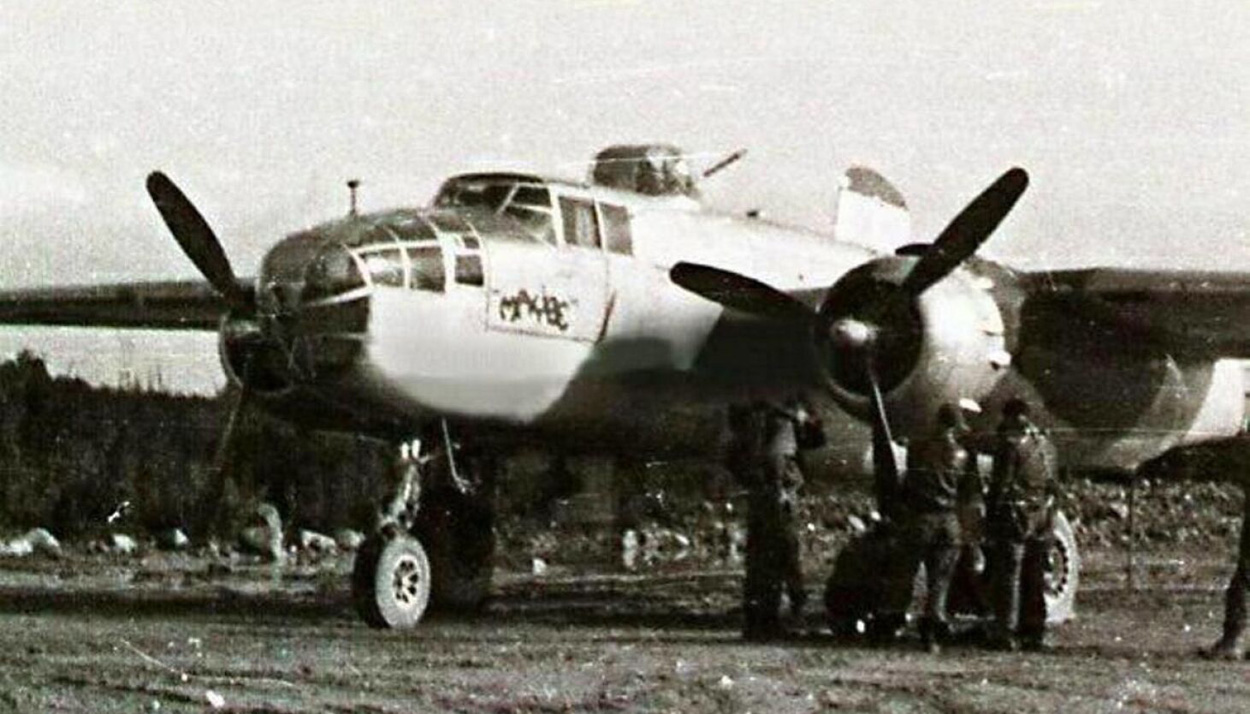
Here’s the LOVE BUG in an image from the biographical profile of co-pilot 1 Lt. Thomas W. Stone, via FindAGrave contributor John T. Chiarella.  Note that the only personal marking is the nickname itself, nose art being absent.  Other VMB-613 Mitchell nicknames, all similarly painted along the muzzle port of the plane’s 75mm cannon, included, “…8-Ball, Betty Lou, Bung-Ho!, Fireball, Flaming Fury, Green Weenie, Ladders Up, Long Gone, Marlene, Miss-Carriage, and Pregnant Annie.”

This in-flight digital depiction of the LOVE BUG in flight is among five such images of the plane at WarThunder.com.  These images clearly illustrates the camouflage and markings of VMB-613’s Mitchells: “…the three-tone color scheme adopted by the U.S. Navy in March of 1944 – sea blue, intermediate sea blue, and white.  An unusual feature of this color scheme was that the sea blue on the upper surfaces was carried over onto the leading edges of the lower surfaces of the wing and horizontal stabilizer.  The squadron number for each aircraft was stenciled in large white numbers within a dark-colored rectangular box below the aircraft’s Bureau Number on the vertical stabilizer.  The purpose of this dark-colored rectangular box was simply to obliterate the original two-digit aircraft numbers used stateside while the squadron was training.” 

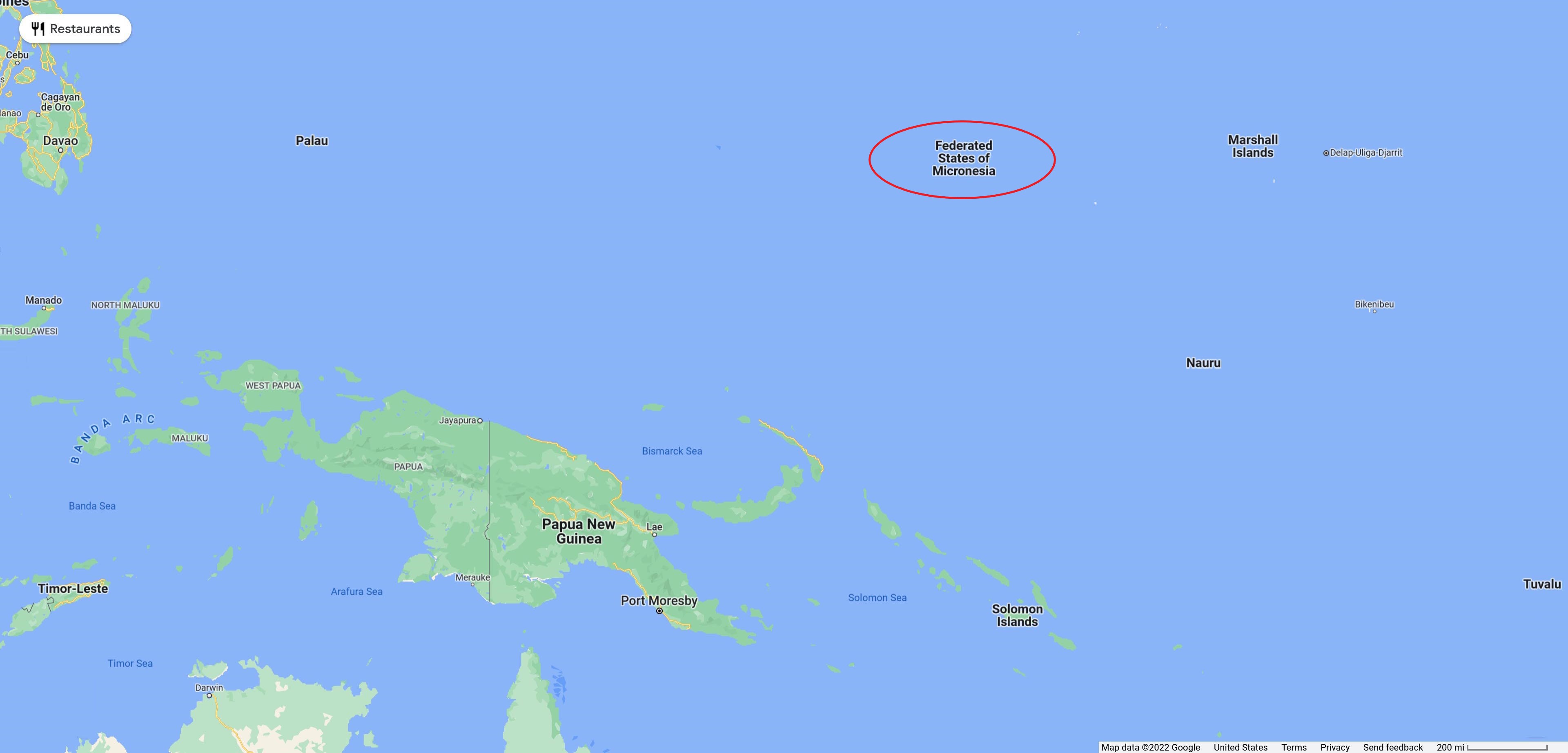
Though not actually visible at the scale of this map, Ponape Island, the site of the LOVE BUG’s loss in combat, as one of the Caroline islands, would be “within” the location designated by the red oval.

Oogling in much (much) closer onto Ponape (Pohnpei) Island, Airstrip #2 is located near Palikir, in the island’s northwest.  

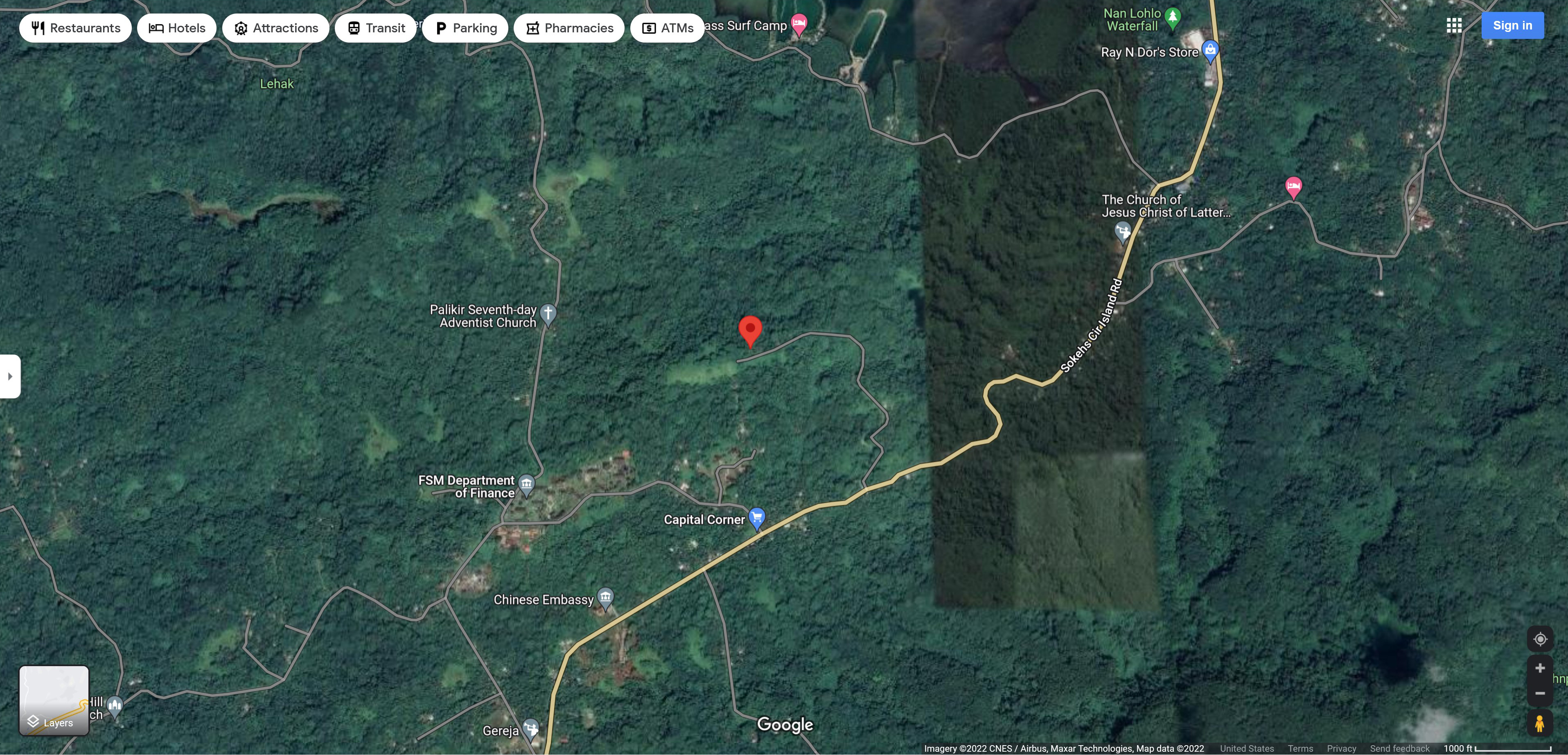
Even closer: The LOVE BUG crashed at the location indicated by Oogle’s emblematic red pointer.  In this 2022 CNES air (or is it satellite?) photo, it can be seen that Airstrip #2 has been replaced by a road, and, what appears to be a cluster of houses.  

This topographic map of the LOVE BUG’s crash site, at a slightly larger scale than the preceding Oogle image, is via VMB-613 website.  It can be seen that Lt. Love’s bomber crashed into a hillside due north of the northeast corner of the airstrip.  

From the Voith Family Tree at Ancestry.com, this image, presumably from the late 20s or early 30s, shows David’s parents Isidor and Sophie, with (left to right) brother Leon, sister Ruth, Davey (David) himself, and brother Sam in front.

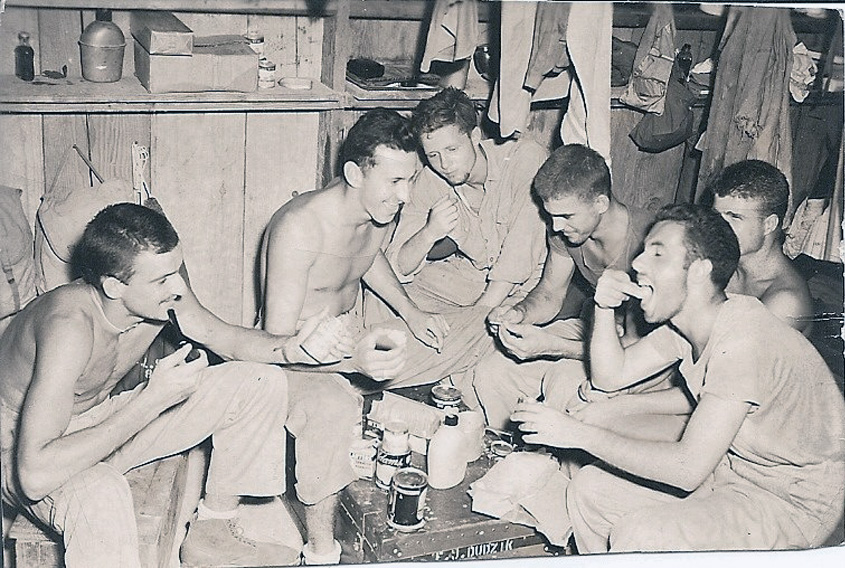
Another Voith Family Tree image.  This photo, evidently sent by Sgt. Snider to his family, is captioned: “A. L. Brasington Florida A. P. Petko : Penna. J. L. Packard – Calif R. L. Stehman, Penna. F. J. Dudzik Illinois & Your One & only Davy”.  Further research revealed that these men are:

Albert L. Brasington (Florida)
Andrew P. Petko (Pennsylvania)
James L. Packard (California)
Robert L. Stehman (Pennsylvania)
Frank J. Dudzik (Illinois)
… and … David Snider, having a bite in lower right.

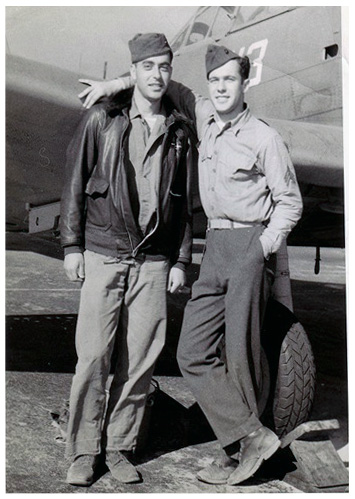
David (right) and his brother Samuel.  I’m not certain of the source of this image; it may be VMB-613.com.

David married the (almost literally) “girl next door”…

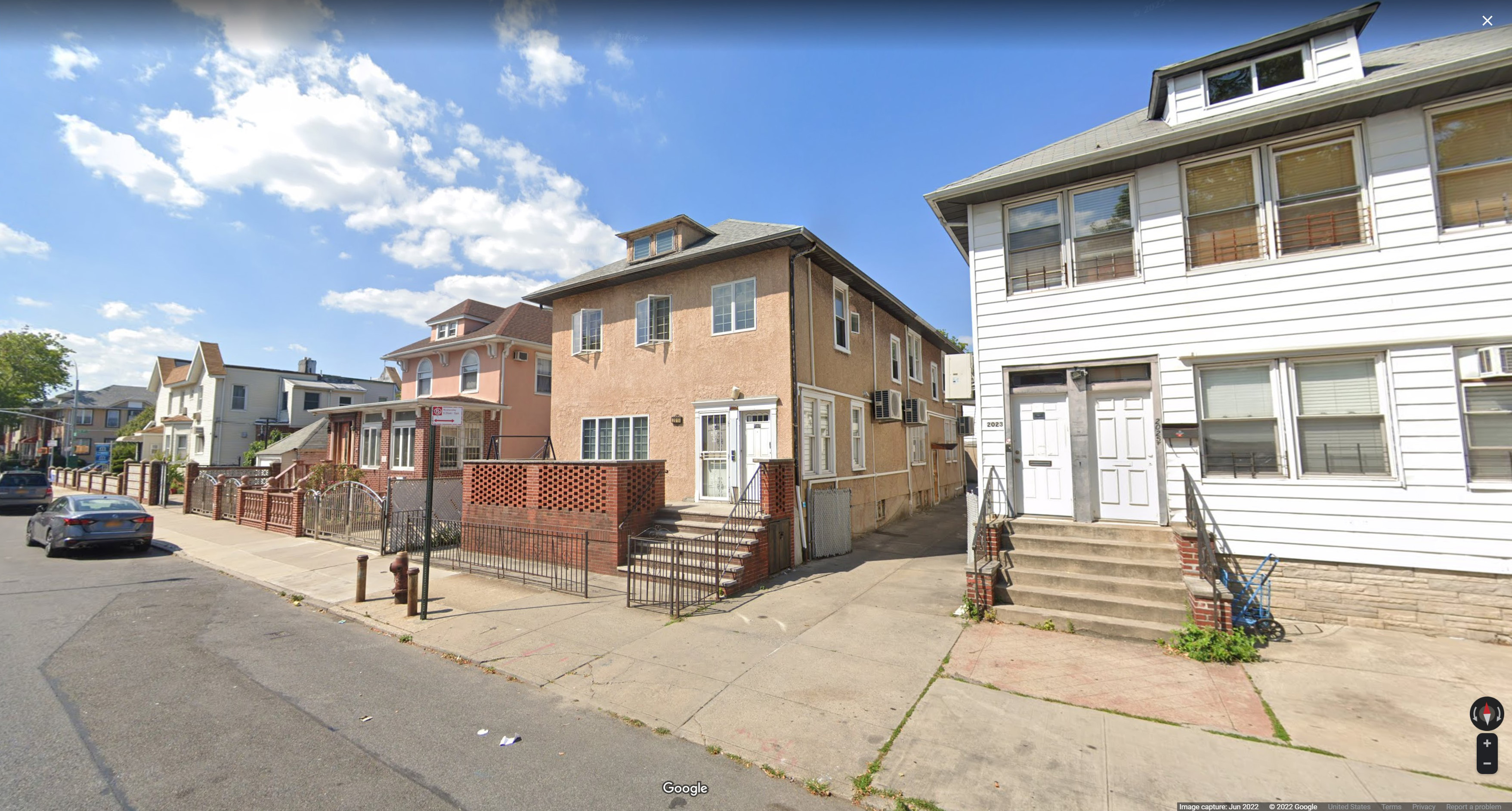
This 2022 Oogle Street View shows the former Snider home, at 2019 80th Street in Brooklyn.

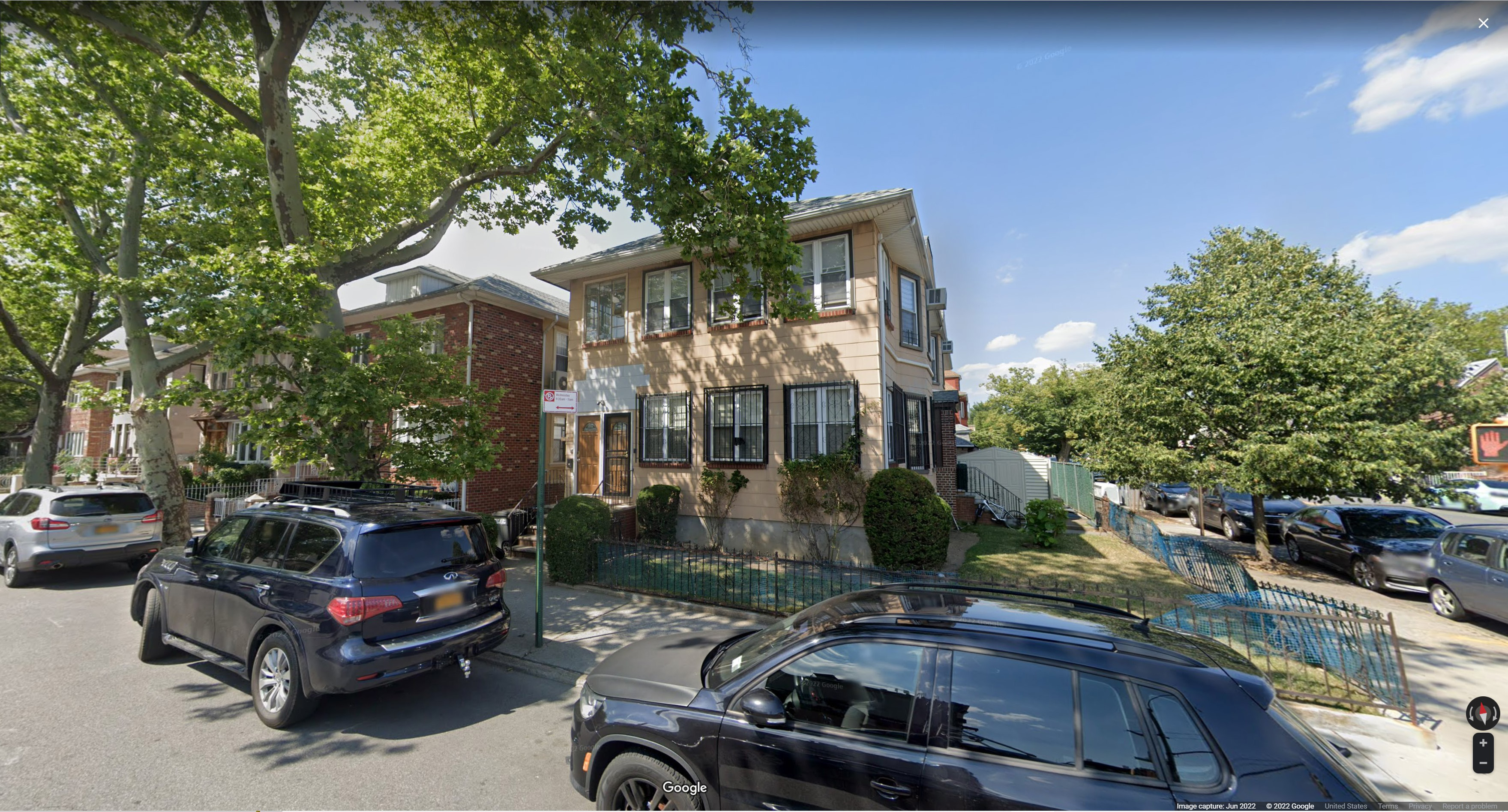
Some home, different perspective:  The view has been rotated to the left, showing the intersection of 80th Street and 20th Ave, with 1981 80th Street just to the right of the traffic light.  Not much of a walk between houses, eh?

And so, we arrive at 1981 80th St., the home of Lenore – David’s wife.  A “deep dive” into Ancestry.com revealed that Lenore – who may also have gone by the names Lenora or Leonora – was actually Lenore Ehrlich.  Born on December 25, 1923, her father was David Levine; her sister Mary; her brother Alvin.  She and David were married on May 9, 1944 in Brooklyn, their all-too-brief marriage spanning just a little over nine months.     

From VMB-613 (specifically, “TRANSFER TO MCAF NEWPORT: PAGE 1“), this Marine Corps photo (from the David Snider Collection, c/o the Manning Brothers) is captioned, “REMMEL PARK: First Lieutenant Francis S. Manning, Sergeant David Snider, and an unidentified VMB-613 member enjoy an outing at Remmel Park in Newport along with their wives.”  The obvious conclusion is that the lady to David’s left is his wife and at-one-time girl next door, Lenore.

Lt. Love and his four crew members were buried at Jefferson Barracks National Cemetery in Saint Louis, on June 10, 1949.  This photo of the crew’s collective grave, at the FindAGrave biographical profile of Sgt. John R. Schwaller, is via FindAGrave contributor Jami.

Sgt. David Snider’s dog-tag:  As described at VMB-613, “Immediately following the end of World War II, a number of squadron members went to Ponape in search of the crew of MB-6 that had been lost over the island on February 6, 1945.  One squadron member recovered a dog tag from the body of Sergeant David Snider and brought it back to Kwajalein where it was given to Dave’s friend, Corporal Herbert E. Schwartz.  [Served in Ordnance section of VMB-613.]  Corporal Schwartz had hoped to return the dog tag to Sergeant Snider’s wife upon his return to the United States, however he was unable to locate her.  Photograph: Marine Bombing Squadron Six-Thirteen (Courtesy of Herbert E. Schwartz)”

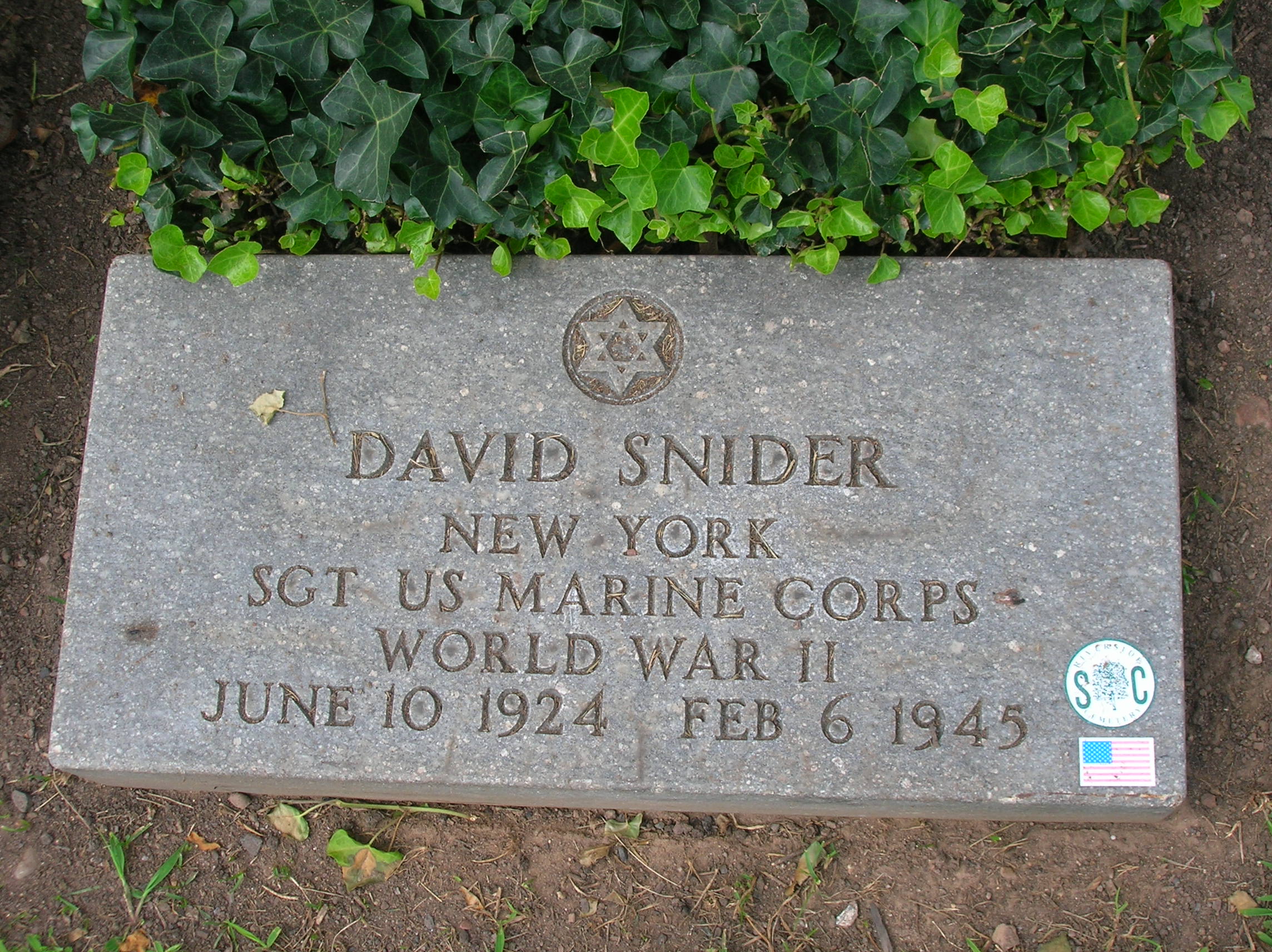
Here’s a last image from the Voith Family Tree: Sergeant David Snider’s matzeva, at Riverside Cemetery, in Rochelle Park, New Jersey.  

______________________________

Flight Officer Stanley Louis Dietel

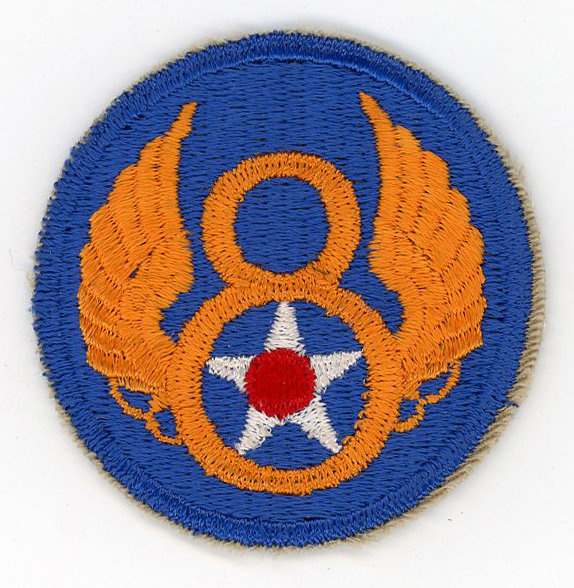
8th Air Force

509th Bomb Squadron, 351st Bomb Group

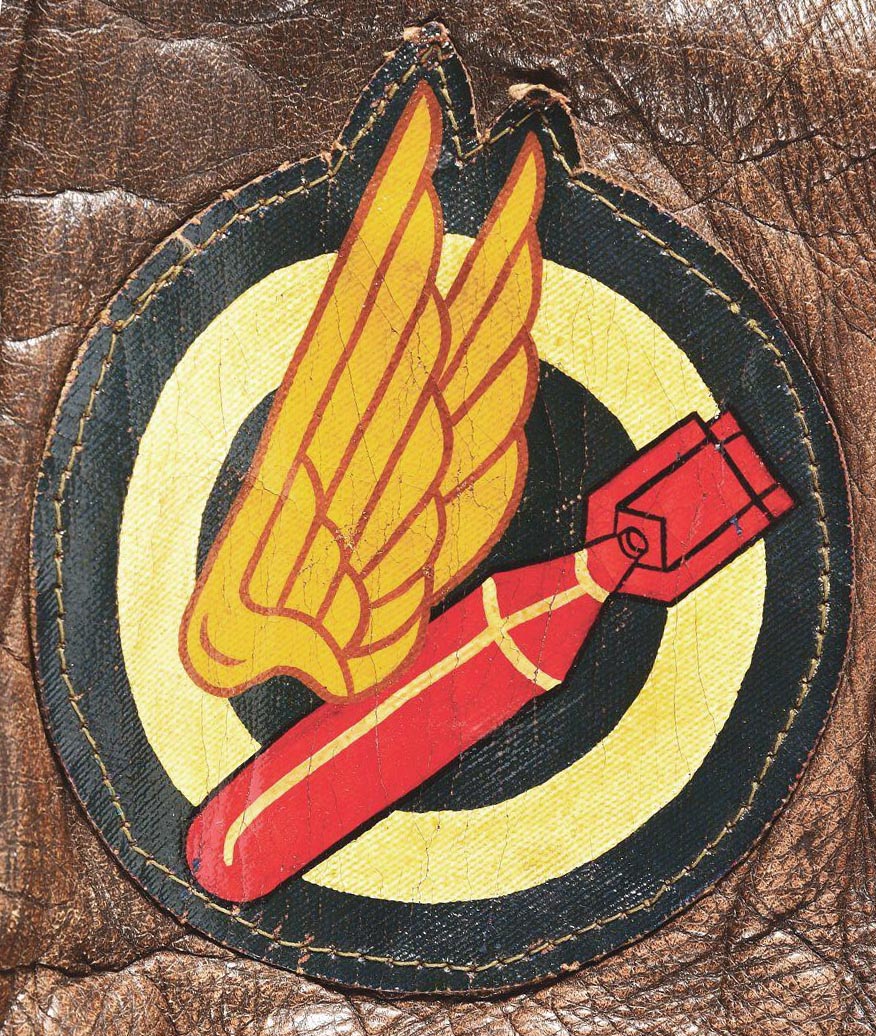
(Here’s the insignia of the 509th Bomb Squadron, as embroidered upon an A-2 flight jacket once worn by John R. Bluford of the 351st Bomb Group.  The jacket was auctioned through invaluable.com on December 15, 2020.  As shown in images at invaluable’s website, the insignia seems (?!) to have been sewn upon the jacket in an incorrect orientation.  I’ve thus Photoshopped (rotated) the image to depict the insignia as designed, such that the bomb is pointing downwards to the left.) 

Thus for the Pacific Theatre. 

Now, on the world’s other side: The European Theater.

What’s striking on February 6, 1945, is that the majority of casualties this day, except for the men who were captured, occurred in incidents that did not involve direct and immediate contact with the enemy.      

In the case of the 351st Bomb Group, after a mission to Targets of Opportunity at Eisfelde, Germany, a mid-air collision occurred between two B-17s of the 509th Bomb Squadron, claiming the lives of nineteen airmen.  While circling the Group’s base at Polebrook, Northamptonshire, un-named B-17G 43-38080 (DS * Q), piloted by 1 Lt. Edward R. Ashton, was struck from underneath by B-17G 43-37595 (“RQ * O”) piloted by 2 Lt. Reinhold W. Vergen (thus that plane’s nickname: Vergen’s Virgins) while circling the base, tearing off the right wing of 38080.  (“Clouds were down to 200 feet over the base when the planes returned, making landing difficult.”)  Both aircraft crashed in a field near Lutton, east of Polebrook, with no survivors.  

Lists of the crews of 43-38080 and 43-37595 can be found here.

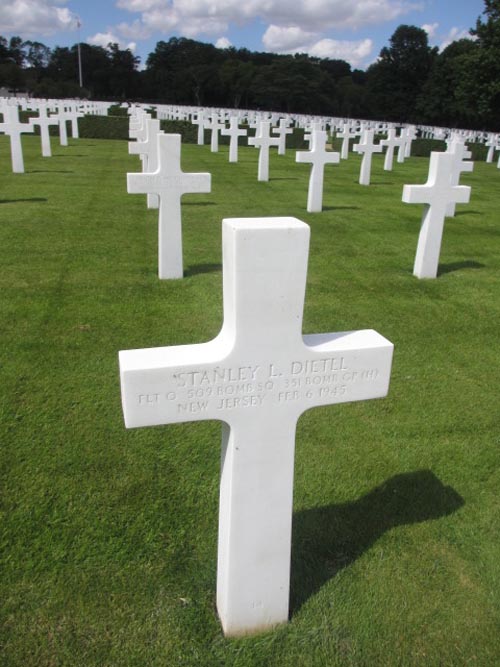
Among the nine men aboard Vergen’s Virgins was bombardier Flight Officer Stanley Louis Dietel (T-129652), from New Brunswick, New Jersey.  The son of Jacob (1885-1940) and Sarah (Ellenswig) Dietel (12/25/84-1958) of 191 Sanford Street – he also had six sisters – he was born in Highland Park on November 15, 1924. 

Though a Missing Air Crew Report name index file card was created for F/O Dietel, no MACR was actually compiled for this incident. 

F/O Dietel’s name appeared in a Casualty List published on March 15, 1945, and can be found on pages 230 and 231 of American Jews in World War II.  He received the Purple Heart and Air Medal, the 351st Bomb Group website indicating that the sortie of February 6 was his tenth mission. 

F/O Dietel is buried in Grave 14, Row 7, Plot F, of the Cambridge American Cemetery. 

This composite image shows Stanley Dietel as he appeared in the 1943 (left) and 1945 editions of the Highland Park High School yearbook.  The 1945 image is available via the Barwick Family Tree at Ancestry.com, and, Stanley Dietel’s biographical profile at FindAGrave.

This was unexpected.  While reviewing F/O Dietel’s FindAGrave biographical profile, I discovered that his matzeva is a crucifix (as seen in this photograph by Skip Farrow) in accordance instructions in his Headstone Inscription and Interment Record, which lists his mother as his next of kin. 

Both of his National Jewish Welfare Board Bureau of War Records biographical information cards verify that he was a Jew, his name also appearing on pages 230 and 231 of American Jews in World War II

Though extraordinarily rare in terms of WW II casualties in the American military, this is not entirely unprecedented, as exemplified by the story of General Maurice Rose.  Though I have no plans to access F/O Dietel’s Individual Deceased Personnel File, perhaps the explanation could be found amidst correspondence in that document.

______________________________

Second Lieutenant Morton H. Feingold

8th Air Force

549th Bomb Squadron, 385th Bomb Group

(The insignia of the 549th Bomb Squadron, from the American Air Museum in Britain.)  

There’s a detailed and moving account concerning 2 Lt. Morton H. Feingold (0-838396), a co-pilot in the 549th Bomb Squadron of the 8th Air Force’s 385th Bomb Group, by Ron McInnis, his crew’s tail gunner, at IanMcinnis.com, under the title “Flying Backwards in ‘44”. 

Mr. McInnis’ story reveals that during the February 6 mission to Chemnitz, Germany, after having bombed the target, the 385th Bomb Group temporarily became lost due to a combination of headwinds and jamming of aircraft navigational gear by the Germans.  The formation leader thus decided to descend to 12,000’ while still over Germany, the squadron (and group?) eventually breaking into clear weather directly over the city of Cologne. 

The Luftwaffe anti-aircraft gunners were ready: Flak, visually aimed, was fired directly into the 385th’s formation. 

Struck by flak as Lt. Feingold piloted Miss Fortune (43-38118; XA * K) – he and aircraft commander Lt. Jerome Stiel alternated this task on combat missions – the aircraft suddenly went into a climb verging on a stall.  After Lt. Stiel recovered control of the aircraft, it was discovered that Morton had been struck in his right kidney by a large piece of flak.  No other crew members were injured.

Lt. Stiel immediately contacted Ninth Air Force Command, informing them of a medical emergency, and was directed to land at Florennes, Belgium.  Lt. Feingold was removed from his seat by Miss Fortune’s navigator and bombardier and then given morphine, the crew’s flight engineer taking over as co-pilot.  With a remarkable job of piloting Miss Fortune during an extremely challenging landing involving – which necessitated avoiding a parked B-17 and a bellied-in C-47 – Lt. Stiel brought his B-17 to a temporary and rapid halt as medics removed Lt. Feingold from the airplane, even as he avoided yet another B-17 making an emergency landing.

Taken to a hospital in Charleroi, Lt. Feingold passed away two days later.  His injuries were too severe for survival.

Like Flight Officer Dietel, a MACR name index cards exists for Lt. Feingold, albeit with the notation “No MACR #”. 

The son of Abraham and Rose Feingold and brother of Thelma, Lt. Feingold’s family resided at 3933 Gladys Street in Chicago, where he was born on April 15, 1924.  Buried at Glen Oak Cemetery, Hillside, Illinois, on May 31, 1949, his name appears on page 98 of American Jews in World War II, which records that he received the Air Medal and Purple Heart.  News about his death in combat appeared in The Chicagoan on July 11, 1946, while notice of his burial appeared in the Chicago Tribune on May 29, 1949. 

You can read Ron McInnis’ account of the February 6 mission here, and with links to all five sections of his writings here.

This image of Miss Fortune / XA * K, is from B17FlyingFortress.de, via 385th Bomb Group.com.  Given that the aircraft’s landing gear has been lowered and it’s dropping packages at minimal altitude, it would seem that it’s engaged in a food dropping mission over the Netherlands in late April of 1945, as described on page 230 of Roger Freeman’s The Mighty Eighth.  Particularly noticeable is the distinctive late-war red checkerboard tail marking of the 385th Bomb Group.

Here’s Miss Fortune on the nose of 43-38118.  This image is from the website of the 385th Bomb Group Association.  According to Roger Freeman’s The B-17 Flying Fortress Story, this aircraft survived the war and ended up at Kingman, Arizona, by late November of 1945.  

______________________________

Flight Officer Edwin London

8th Air Force

857th Bomb Squadron, 492nd Bomb Group

(Maurer and Maurer’s Combat Squadrons of the Air Force, World War II, states that the 857th Bomb Squadron had no squadron emblem.  However, Battlefield.Store on EBay, describes this insignia as the emblem of the 857th.)

A non-combat incident claimed the crew of B-24H Liberator Gunga Din (41-29505) of the 492nd Bomb Group’s 857th Bomb Squadron. 

The aircraft, manned by 2 Lt. Charles H. Edwards with his crew of eight, crashed during a night training mission at Lyon-Bron Airfield, France, during an attempted emergency landing on three engines. 

Among the plane’s crew was bombardier F/O Edwin London (T-128655).  Born in Manhattan on Oct. 9, 1923, he was the son of Louis and Sophia London, of 2483 Davidson Ave., in the Bronx.  (Also at 138 Remsen St., in Brooklyn?) 

Paralleling F/O Dietel, though a Missing Air Crew Report name index file card was created for F/O London, the card is absent of a MACR Number, implying that no such document was filed to report on Gunga-Din’s loss. 

F/O London’s name appears on page 383 of American Jews in World War II, but this entry is absent of a notation indicating the receipt of a Purple Heart or any other award, suggesting that the Edwards crew had flown fewer than five – or perhaps no? – actual combat missions prior to the accident February 6.

F/O London is buried at King Solomon Memorial Park in Clifton, New Jersey. 

Discovered via Sarah Jane Gabig’s comments in F/O Edwin London’s biographical profile at FindAGrave, this image of the Edwards’ crew – with F/O London standing second from right, rear – is from the U.S.A.A.F. Special Operations – 801 BG Carpetbaggers 492 BG website; specifically, the Edwards crew page.

The men in the photo are:

Rear, left to right

Edwards, Charles H. – 2 Lt. – Pilot – 0-719592
Burt, Merrill A. – 2 Lt. – Co-Pilot – 0-2062978
London, Edwin – F/O – Bombardier – T-128655
Roy, Gerard L. – 2 Lt. – Navigator – 0-2065189

Front, left to right

Matthews, James D. – Sgt. – Flight Engineer – 38506486
Mellotte, James O. – Sgt. – Radio Operator – 14136535
Stuckey, John T. – Sgt. – Gunner – 38389577
Boren, Mose C., Jr. – Sgt. – Gunner – 19106534
Cathers, Allan W. – Sgt. – Gunner – 42072365
Wolfersberger, R.G., Jr. – Sgt. – Gunner – 36466780

______________________________

______________________________

Some Came Back

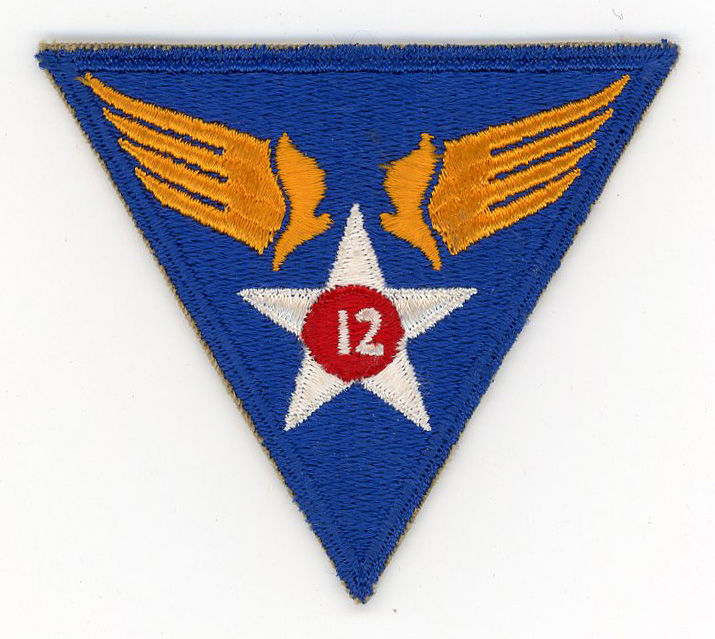
Among the Jewish airmen who were casualties during combat missions on February 6, 1945, six men were captured; all in Europe.  All returned to the United States after the war’s end in Europe.  Four of these men served in the 8th Air Force, and two in the Italian-based 12th Air Force.

______________________________

______________________________

Second Lieutetant Harold Brod

Sergeant Alexander Jacobs

8th Air Force

728th Bomb Squadron, 452nd Bomb Group

(The insignia of the 728th Bomb Squadron, from Flying Tiger Antiques.)

Starting from England…

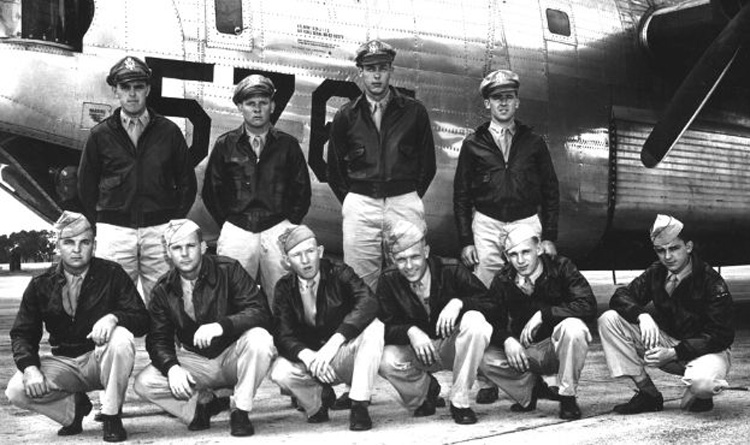
On a mission to Weisbaden, Germany, Lady Satan, B-17G 42-97175 (9Z * C) of the 728th Bomb Squadron, 452nd Bomb Group, commanded by 2 Lt. James L. Bayless, was struck by flak, setting the plane’s right inboard (#3) engine afire.  As reported in Missing Air Crew Report 12240, “Shortly afterwards the engine fell off and the fire went out.  Four chutes were seen from the A/C at 49-52 N, 07-49 E (by Gee Fix) at 1248 hours and then the A/C, losing altitude in a glide, disappeared into the clouds still under control.” 

Eight of the bomber’s nine crew members survived as prisoners of war:  Four men parachuted, and four rode Lady Satan to a crash-landing. 

It turned out that the flak burst which destroyed the #3 engine also struck co-pilot 2 Lt. Harold E. McComb, almost severing his right leg below the knee.  Unable to bail out or assist in flying the aircraft, he placed a tourniquet around his leg and remained in Lady Satan’s nose compartment, while uninjured navigator Lt. Harold Brod and wounded togglier Sgt. John Young moved to the bomber’s waist.  From then on, Lt. Bayless alone piloted the badly damaged bomber. 

According to Luftgaukommando Report KU 3649, at 1310 hours, Lady Satan made an “emergency landing” near Simmern, “behind” Dhaun, 1 km north of Kirn-Soberheim Street. 

Placed in an ambulance and taken with Sgt. Young to a hospital in the city of Kirn, Lt. McComb was given a blood transfusion from the wounded togglier, his lower leg being amputated.  However, he died during the evening. 

As for those who parachuted from the B-17?  Postwar, radio operator Sgt. Hubert Salyer reported that, “We left formation almost immediately.  Shortly after leaving the formation (approximately 2-4 minutes) I bailed out of plane on orders from pilot.  I was captured when I hit the ground, a small village named Deutschild.  Two other crew members were also picked up here with me.  I understand from Alexander Jacobs, the waist gunner on our crew, that he was captured at Bad Kreuznach, Germany.”

Navigator 2 Lt. Harold Brod (0-2065036) was born in Manhattan on June 27, 1924.  His parents were Louis and Rose, of 718 Brunswick Ave. in Elizabeth, New Jersey, and (earlier?) 111 Benjamin Street, in Cranford, New Jersey. 

Like the other six survivors of Lady Satan, Lt. Brod and Sgt. Jacobs spent the rest of the war as POWs, though the camps in which they were interned are unknown.  Neither man’s name appears in American Jews in World War II, though Sgt. Jacobs’ name appeared in a list of liberated POWs in a Casualty List published on June 10, 1945.

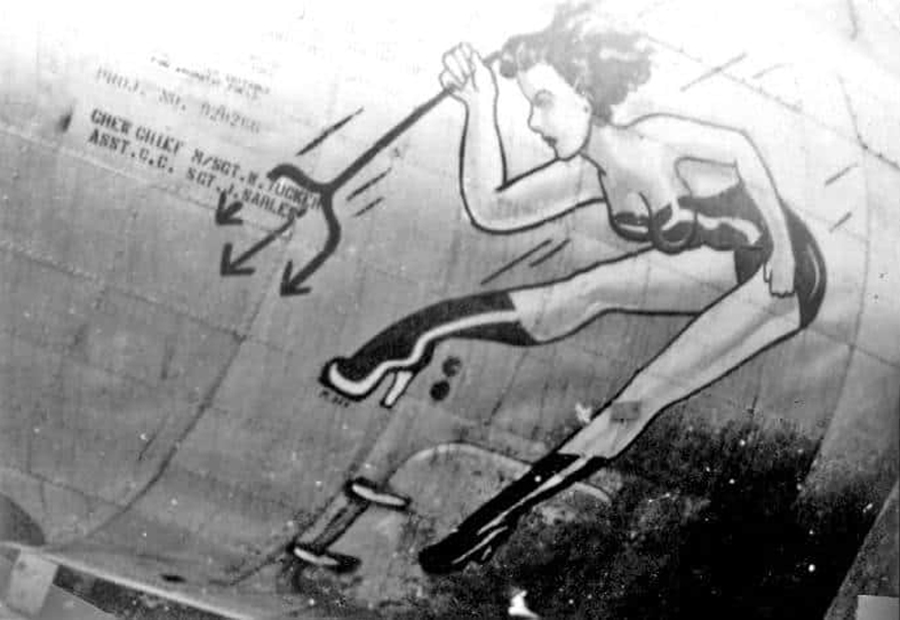
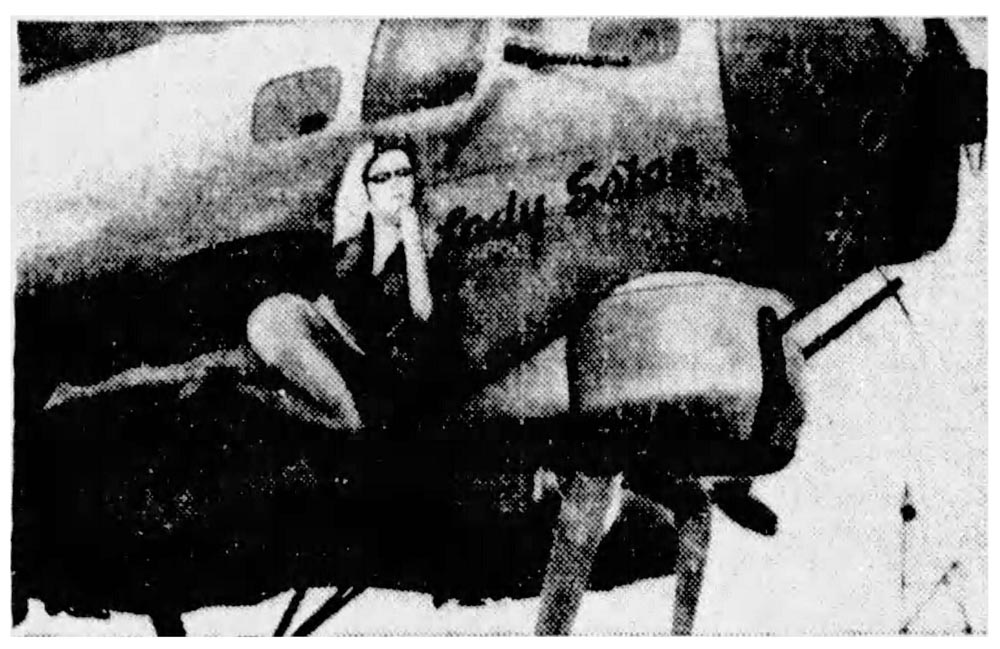
This image of Lady Satan is via the American Air Museum in Britain.

The nose art of Lady Satan, from FindAGrave contributor and historian Jaap Vermeer.  

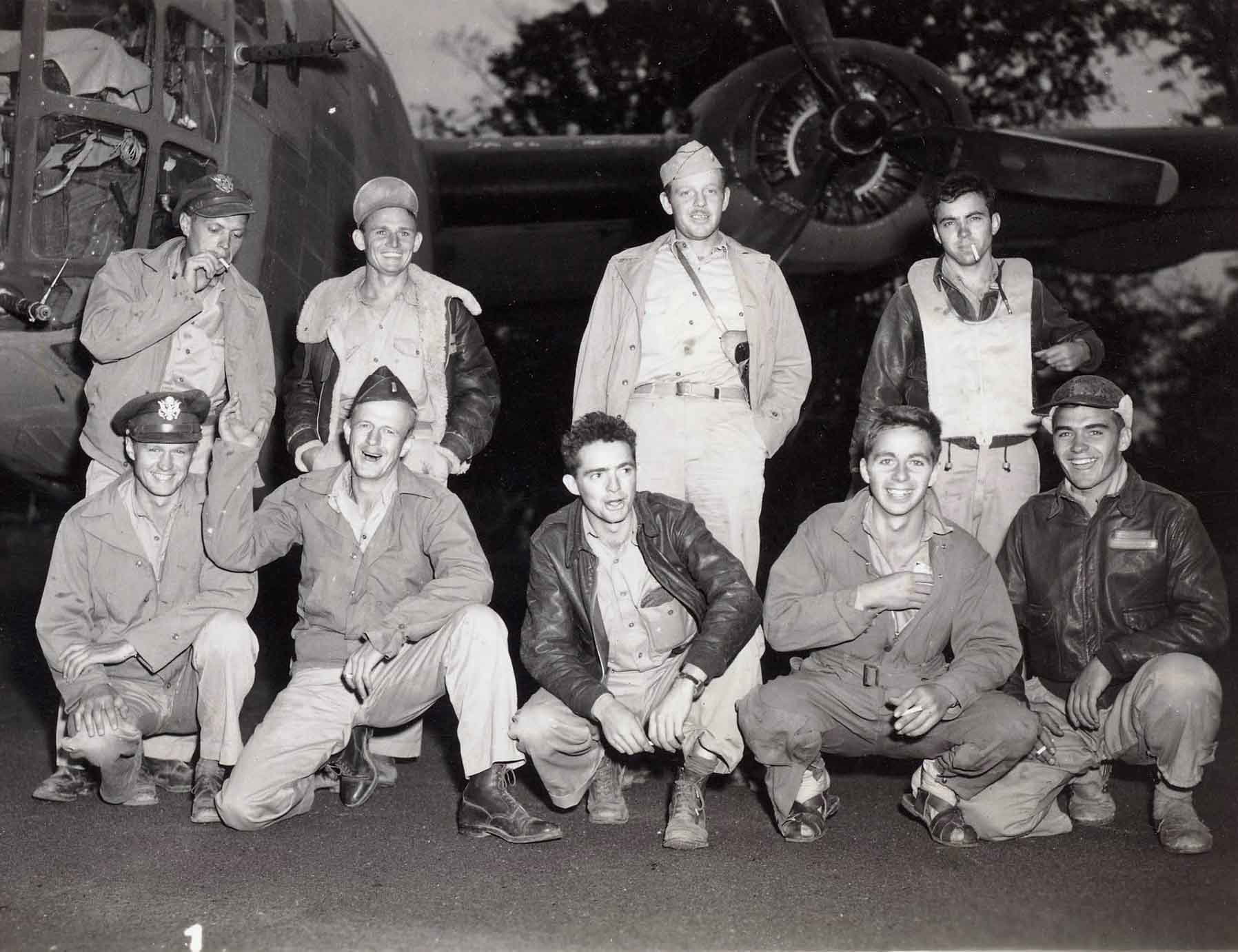
This image, also via Jaap Vermeer, is from the FindAGrave page for 2 Lt. James L. Bayless, Sr.  Though the image lacks a caption, one of the two doughnut-enjoying officers in the photo is presumably Lt. Bayless, who died in 1982.

The documents preserved in Luftgaukommando Reports can be as informative as they are striking.  In this case, Luftgaukommando Report KU 3649, which covers the identification of Lady Satan, and, the identification and “processing” of her crew, includes the crew roster shown below, which – being in English – was not compiled by German intelligence!  

I’d suggest two origins for this document.  1) It was created after the crew was formed, during training in the United States, 2) It was drafted just before the crew’s departure from the United States to England.  In either case, it probably represents the Bayless crew as originally formed.  The reason being, that Lieutenants John R. Jekutis and Maurice L. Waterson, Sr. were not aboard the aircraft when it was shot down, and Germans Intelligence was able to identity Lt. McComb and Sgt. Young as filling in for those two men’s crew positions, as evident in the notations in red in the left margin. 

In any event, though it’s my understanding that flight crews were never supposed to carry personal documents, family correspondence, photos, memorabilia, or trinkets – whether military or civilian – on combat missions, a perusal of Luftgaukommando Reports reveals that this rule was often honored in the breach.  Ironically, this can make a perusal of these documents surprising, moving, and (at times) haunting.     

As shown here.

The document below, from KU 3649, is an Angaben über Gefangennahme eines Angehörigen der feindlichen Luftwaffe (Information about the capture of a member of the enemy air force) form for Lt. Brod.

Note that Lady Satan is (correctly) recorded as having Notgelandet” (made an emergency landing), and Lt. Brod is stated to have Verweigert Aussage des Geburtsdatums und letzten Wohnortes” (Refused to state date of birth and last place of residence.)

Also note… The diminutive but not-necessarily-innocuousH penciled to the right of Lt. Brod’s name and serial number.

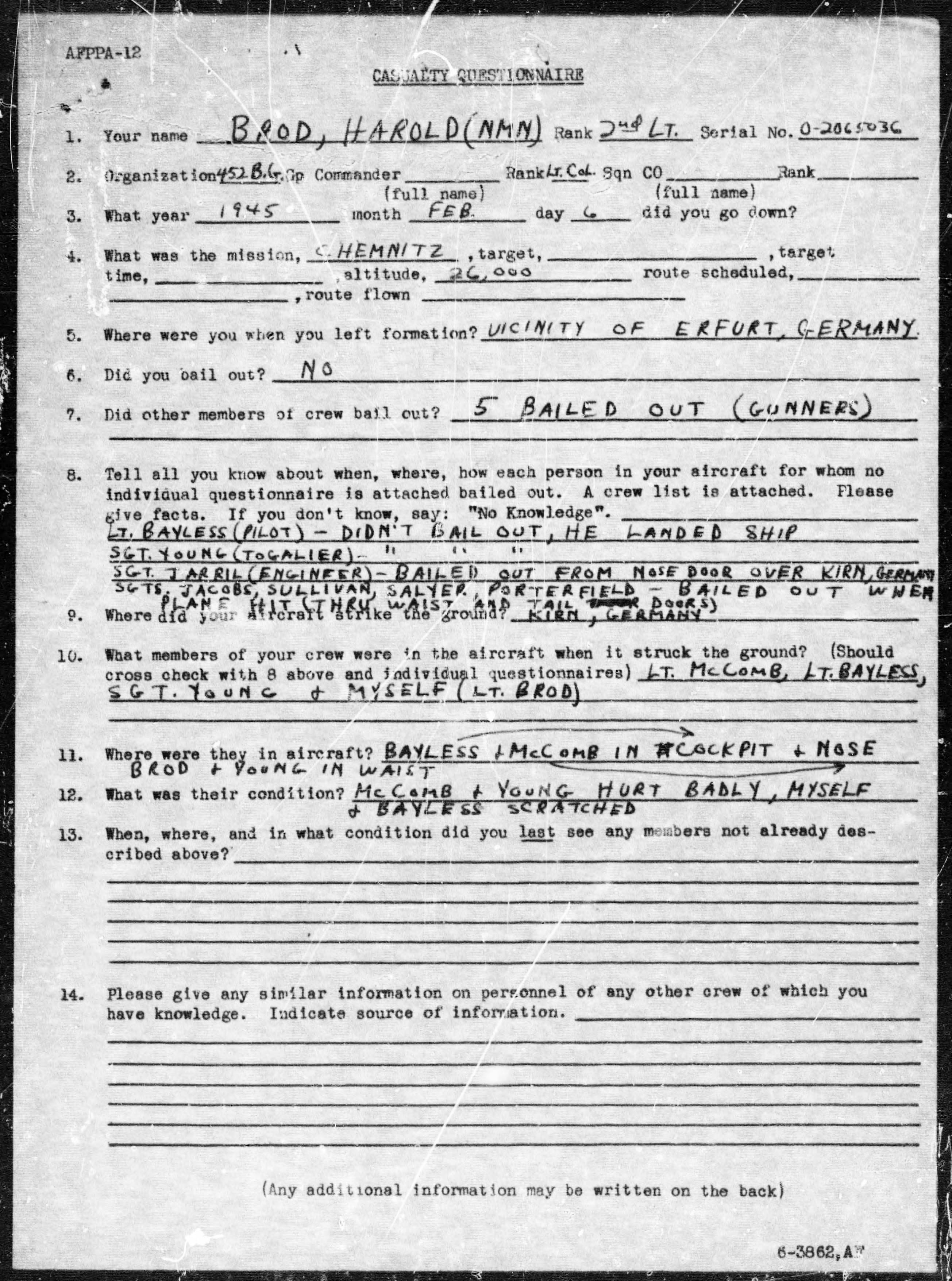
Here’s Lt. Brod’s Casualty Questionnaire from MACR 12240.  Note that Lt. Bayless landed the plane while alone in the cockpit, Lt. McComb (after having been given morphine) having been placed in the nose, while Sgt. Young (also wounded) and Lt. Brod remained in the waist.  

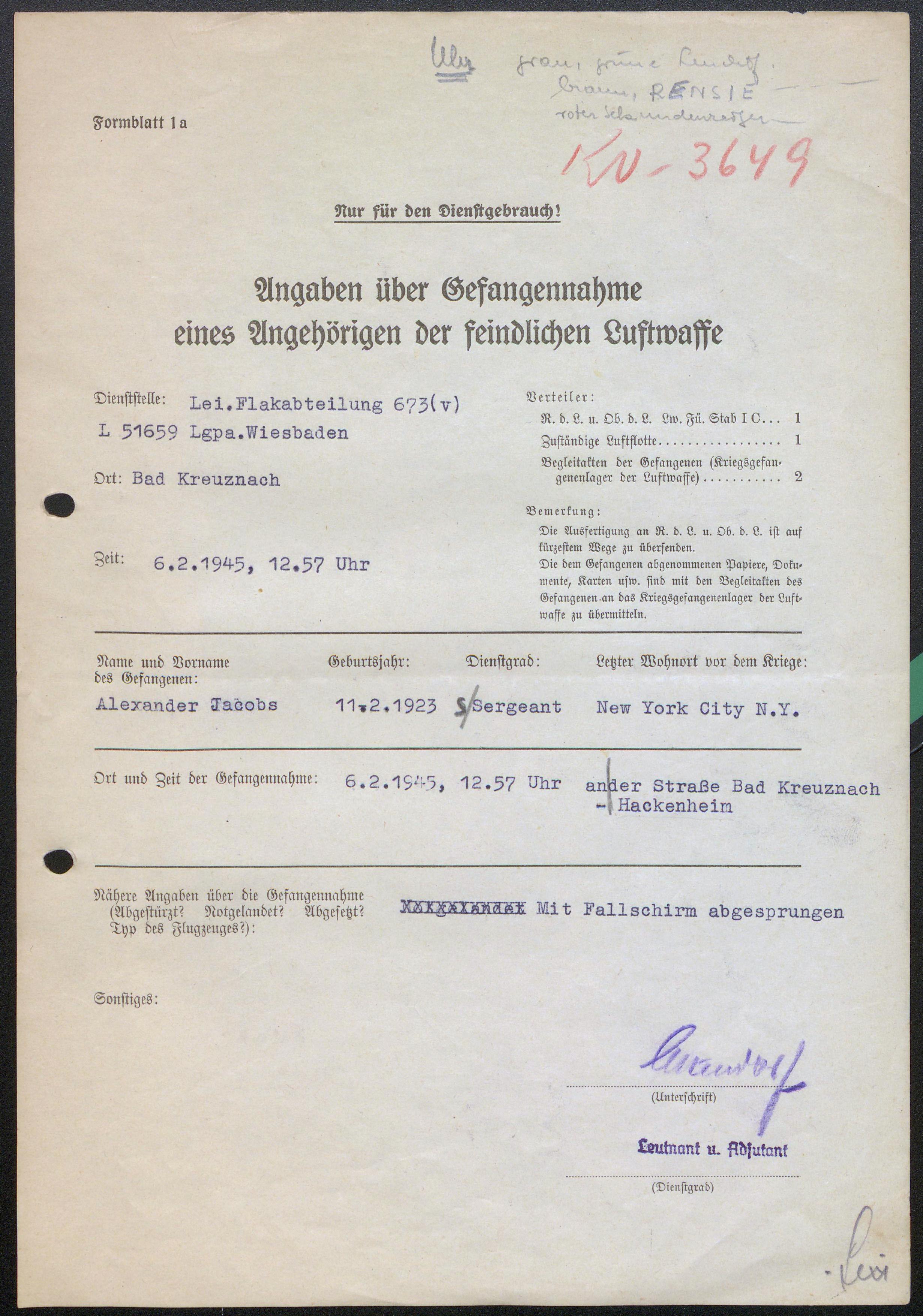
And, below is theAngaben über Gefangennahme eines Angehörigen der feindlichen Luftwaffe form for Sgt. Jacobs.

The document correctly records that the SergeantMit Fallschirm abgesprungen (Jumped out with a parachute.)

Unlike the form for Lt. Brod, that for Sgt. Jacobs – despite the fact that both men’s dog-tags were stamped with the letter “H” – lacks a notation about the Sergeant’s being a Jew.  However, comments about his physical description are penciled in the upper right corner.  

Ironically; sadly, Lt. Brod, once again “Harold Brod”, twelve years later encountered what is known in literature, myth, and legend as an “appointment in Samarra”.  To quote an example from the Talmud (Tractate Sukkah 53a):

Johanan stated,  A man’s feet are responsible for him; they lead him to the place where he is wanted.

There were once two Cushites who attended on Solomon, and these were Elihoreph and Ahyah, the sons of Shisha, scribes, of Solomon.  One day Solomon observed that the Angel of Death was sad.  ‘Why’, he said to him, ‘art thou sad?’ — ‘Because’, he answered him, ‘they have demanded from me the two Cushites who sit here’.  [Solomon thereupon] gave them in charge of the spirits and sent them to the district of Luz.  When, however, they reached the district of Luz they died.  On the following day, he observed that the Angel of Death was in cheerful spirits.  ‘Why’, he said to him, ‘art thou cheerful?’ — ‘To the place’, the other replied, ‘where they expected them from me, thither didst thou send them!’  Solomon thereupon uttered the saying, ‘A man’s feet are responsible for him; they lead him to the place where he is wanted.’

As an executive (import-export manager) of the United Stated Plywood Corporation of Los Angeles, he was killed in a plane crash at Bulog Village, Batangas Province, Luzon, on October 11, 1957, while aboard a civilian aircraft whose four other passengers included Carlos P. Romulo, Jr., eldest son of Brigadier General Carlos Romulo.  The aircraft was piloted by Paul Irving “Pappy” Gunn, famed WW II aviator and – at the time, as owner of the plane – General Manager of the Philippine Air Development Company.  Strangely, while the Wikipedia entry for Pappy Gunn indicates that the plane crashed in a storm, a United Press news story dated October 11 states that the unidentified twin-engine aircraft exploded in mid-air, while an Associated Press story filed on the same day states that the aircraft ran out of fuel.  (What?!  Very strange.)

Though I’ve not been able to find any images of Harold Brod, his FindAGrave biographical profile includes this newspaper photo – probably from 1957 or ’58 – showing Beth L. Brod, his widow, donating a check to Columbia University in honor of her late husband.  The text accompanying the image follows:

“ACCEPTING a check from Mrs. Harold Brod, center, for a scholarship in honor of her late husband, to be known as the Harold Brod Memorial Room at Columbia University, Grayson Kirk, president of Columbia, is pictured above, right, as Dean Lawrence H. Chamberlain looks on.  The endowed scholarship room in a Columbia dormitory will be awarded annually to a deserving student at the college, who must maintain regular scholarship standards.  The first award will be made in the fall.  Mrs. Brod is the former Beth Drexler [Beth L. Drexler] of Larchmont, whose husband was killed Oct. 11, 1957, when the plane in which he was returning home from a business trip to Mindanao exploded 50 miles south of the Philippines.  Mrs. Brod was awaiting him in Hong Kong and the couple, married in November, 1956, [Nov. 4, 1956] had planned a round-the-world trip.  The five passengers in the plane, including Carlos P. Romulo, Jr., were all killed.  Members of the class of 1947 at Columbia of which Mr. Brod was president, have also formed a Harold Brod Scholarship Committee to contribute to the scholarship established by Mrs. Brod.  The thirty-three-year-old Mr. Brod was import-export manager for U.S. Plywood at the time of his death.”

Sgt. Alexander Jacobs (12178235), the bomber’s waist gunner, was reported in Luftgaukommando Report KU 3649 (Luftgaukommando Reports can be rather detailed!)) as having been captured at 1257 hours on Bad Kreuznach-Hackenheim Street.  The son of Rubin (11/7/90-10/27/41) and Rose (Katz) (1887-4/6/75) Jacobs, his family’s residence was 2720 Grand Concourse, in the Bronx.  Born in Manhattan like Lt. Brod – on February 11, 1923 – he passed away at the young age of 45 in June of 1968.

______________________________

Sergeant Martin Howard Rubin

8th Air Force

330th Bomb Squadron, 93rd Bomb Group

(The emblem of the 330th Bomb Squadron, from abqmetal’s ebay store.)

Staff Sergeant Martin Howard Rubin (32896697) was also captured on February 6. 

A nose gunner in the 330th Bomb Squadron of the 8th Air Force’s 93rd Bomb Group, his B-24J Liberator 42-50505 (AG * E), Gremlin’s Roost, was shot down by flak during a mission to Magdeburg, Germany.  Piloted by 1 Lt. Howard E. Jennings, seven of the bomber’s nine crewmen survived the loss of their aircraft, with waist gunners S/Sgt. Arthur S. Humphreys, and S/Sgt. Vance K. Jeffers being killed in action. 

As reported in Missing Air Crew Report 12355, the aircraft left the 93rd’s formation 15 miles south of Alkmar, Holland. 

According to German records (specifically, Luftgaukommando Report AV 1908/45) Gremlin’s Roost crashed 2 km north of Akersloot.

S/Sgt. William R. Barton and 2 Lt. Billie J. Holmes, respectively, describe the bomber’s loss in these accounts from MACR 12355:

On mission 6 February 1945 I was flying tail gunner in ship #880/S.  After we had crossed the Dutch coast I heard over the interphone that #42-50505/E had been hit and was going down.  At this time I saw 505/E make a right turn away from the main formation.  The ship then straighten(ed) out and I saw three chutes come out.  After flying straight for a few moments the ship started a steep climb and about ten seconds before the ship turned over on its back I saw one man come out of the bomb-bay.  On the way down the ship blew up into three or four pieces all of which were on fire.  I then watch(ed) one chute hit the water about three or four hundred yards from the coast, and another two chutes I saw land on the beach.  I also saw the ship hit the ground about two minutes before the first chute hit.

On mission 6 February 1945 I was flying co-pilot in ship 880/S.  As we were crossing the Dutch coast I saw ship #42-50505/E receive a direct hit behind #2 engine, the ship must have received hits on the flight deck, for at the time flares started shooting out of the ship.  After the flares went off flames started coming out of the bomb-bay, then the ship turned away from the formation to the right.  After a few moments it started climbing and I saw three chutes come out.  After this we turned a little and this obstructed my view.  At the end of the ship’s steep climb I saw the ship roll over on its back and start down.  After 505/E had fallen about six thousand feet (approximately 10,000 feet off of the ground) it blew up into three or four pieces, all of which were on fire.  At this point the entire formation made a turn to the left and here I lost sight of the ship.

Sergeants Barton’s and Lt. Holmes’ statements report that only three to four crew members escaped the mortally damaged bomber.  However, Casualty Questionnaires in the Missing Air Crew Report suggest that S/Sgt. Vance K. Jeffers, left waist gunner, though mortally wounded by flak, was able to successfully parachute from the damaged plane.  After landing, he walked several yards to the home of a Dutch family, in whose presence he died.  S/Sgt. Arthur S. Humphrey, the right waist gunner, was killed aboard the aircraft and never left the plane. 

Luftgaukommando Report KU 3672 contains a small plethora of documents that were in Sgt. Rubin’s possession when he was captured.  As listed in the report, these include:

Booklet AAF Form No. 206
2 pages of immunization register
3 self-photos
2 receipts numbered 1993 and 1994
1 green card
1 N.C.O. Club card
1 identification card
Card 1 Bicycle Permit A-2323 and card authorizing transfer of bicycle
Slip of paper regarding spectacle prescription data
Calendar paper slips cut from newspaper

As for Sergeant Rubin, his mother Sarah lived at 68-35 Burns Street, in Forest Hills, New York.  MACR 12355 reports that he completed 27 missions.  His capture was reported in the Long Island Star Journal on April 19, 1945, while his name appeared in a list of liberated POWs published on June 22 of that year.  His name – like other names reported for February 6, 1945 – is absent from American Jews in World War II, while the POW camp in which he was interned is similarly unknown. 

Born in Brooklyn on September 26, 1924, he died on January 11, 1999. 

Three photographs as one:  This is a composite image of the three Escape and Evasion portraits carried by Sgt. Martin Rubin, found in Luftgaukommando Report KU 3672.  Though such pictures are present in many Luftgaukommando Reports (well, at least it seemed (?!) that way when I reviewed the original physical reports  at NARA, at least based on a cursory examination of the documents), only a miniscule number of these images bear an airman’s name.  In such cases, as in the center image of Sgt. Rubin, his name was presumably written by a German investigator.  

Among the many personal documents carried by Sgt. Rubin is this civilian personal identification card, from the Pioneer Suspender Company of Philadelphia.  

______________________________

Sergeant Jacob Zuckerman

8th Air Force

849th Bomb Squadron, 490th Bomb Group

(The colorful nose art of B-17G 43-37894, BIG POISON, of the 849th Bomb Squadron, via the American Air Museum in Britain.  According to InchHighGuy, the artist was Master Sergeant Jay D. Cowan and the photographer Captain Arnold Delmonico.  (Perhaps the original image was Kodachrome?)

Another mid-air collision during the Chemnitz mission … this incident involving aircraft of the 388th and 490th Bomb Groups.

B-17G 43-37806, Miss Fortune, of the 561st Bomb Squadron, 388th Bomb Group, piloted by Lt. George Thompson, collided over England with B-17G 43-37894, Big Poison, of the 849th Bomb Squadron, 490th Bomb Group, piloted by Lt. John W. Hedgecock. 

Miss Fortune crashed in the vicinity of Wicken, Cambridgeshire.  Of the bomber’s nine crewmen, 1 Lt. Robert A. Wettersten was killed. 

Big Poison crashed in the vicinity of Prickwillow, Suffolk, killing two civilians on the ground, along with ball turret gunner Sgt. Edward T. Tijan.  The rest of the bomber’s crew parachuted to safety. 

In Big Poison’s crew was Togglier Sergeant Jacob Zuckerman (32179227).  The son of Rose Zuckerman, of 3150 Rochambeau Ave. in Manhattan, his name appears on page 478 of American Jews in World War II.  He received the Air Medal. 

______________________________

Second Lieutenant William Stanley Schoenfeld

Sergeant Hymie Mehlman

8th Air Force

850th Bomb Squadron, 490th Bomb Group

(EBay seller spsw1967 offers remarkably realistic, detailed, hand-painted reproductions of the insignia of USAAF, AVG, and USMC WW II combat squadrons, among which is this nice example of the 850th Bomb Squadron’s flak-evading mutt.) 

Other combat losses not involving enemy action…

During the above-mentioned mission to Chemnitz, a mid-air collision occurred between two B-17G Flying Fortresses of the 490th Bomb Group’s 850th Bomb Squadron: Aircraft 43-38699, and 43-38167 (Lucky Strike), collided at an altitude of 17,000 feet, in the vicinity of Mittersheim, Moselle, France.

From B-17G 43-38699, piloted by 1 Lt. Marshall C. Dunn, there emerged three survivors: The bomber’s radio operator (S/Sgt. George A. Naifeh), and two gunners (S/Sgts. Dean R. Smith and Osvil F. Johnston).  The crew (list from France – Crashes 39-45) comprised:

Pilot: Dunn – KIA
Co-Pilot: 2 Lt. Jack O. Philley – KIA
Navigator: 2 Lt. Helmer O. Baland – KIA
Togglier: S/Sgt. Donald B. Mayew – KIA
Togglier: S/Sgt. Edward J. Mulvihill – KIA
Flight Engineer: T/Sgt. Clarence H. McKinney – KIA
Radio Operator: S/Sgt. Osvil F. Johnston – Survived
Gunner: S/Sgt. Fred H. Horton – KIA
Gunner: S/Sgt. Dean R. Smith – Survived
Gunner: S/Sgt. George A. Naifeh – Survived

From Lucky Strike, piloted by 1 Lt. William Seymour Schoenfeld, there emerged four survivors, who presumably survived by parachuting from their B-17: Lt. Schoenfeld himself, 2 Lt. Raymond D. Schar (one of two co-pilots aboard the plane), flight engineer (Sgt. Frank M. Alexander, Jr.), and a gunner (Sgt. Irwin H. Wrampe).  The crew (list also from France – Crashes 39-45) consisted of:

Pilot: Schoenfeld – Survived
Co-Pilot: Lt. Jack R. Owen – KIA
Co-Pilot: 2 Lt. Raymond D. Schar – Survived
Navigator: 2 Lt. Garry I. Leonard – KIA
Bombardier: F/O Bradell – KIA
Flight Engineer: Sgt. Frank M. Alexander, Jr. – Survived
Radio Operator: Mehlman – KIA
Gunner: Cpl. Drayton P. Mannies – KIA
Gunner: Sgt. Irwin H. Wrampe – Survived

Lt. Schoenfeld and his radio operator, Sgt. Hymie Mehlman, are most definitely listed in American Jews in World War II: The former on page 433, with the notation that he received the Air Medal and Purple Heart, and the latter on page 49, with the notation that he received the Purple Heart.

Lt. Schoenfeld (0-694266) was the husband of Charlotte Schoenfeld, and the son of Abraham and Antoinette (Weiss) Schoenfeld, of 4515 12th Ave., Brooklyn, where he was born on January 3, 1921 – just over a hundred and two years ago.  He passed away on November 27, 2002.  His name can be found on page 433 of American Jews in World War II, with the notation that he received the Air Medal and Purple Heart.

Cpl. Hymie Mehlman (19181734) was born in Manhattan on June 1, 1923.  His parents were Charles (8/15/96-3/26/66) and Dora (Appelbaum) (4/30/96-2/1/79) Mehlman, and his sister Shirley Ann (5/12/30-12/12/06), who resided at 3546 Whiteside Street in Los Angeles.  His brother Jacob (“Jack”) Bernard Mehlman (7/2/21-5/24/18) possibly lived at 2032 Palm Grove, also in L.A.

Cpl. Mehlman married Miriam Frances (Licker), of 801 North Mott Street, Los Angeles, on September 14, 1944 in California.  The couple had one child, Bruce Raymond, who was born on June 28, 1945, almost five months after his father’s death; Bruce Raymond passed away on January 1, 2009.  

Cpl. Mehlman, whose name appears on page 49 of American Jews in World War II, was awarded the Purple Heart, and is buried at Hollywood Forever Cemetery in Los Angeles.

In the image below, published on page 43 of Rank’n File – The Spirit of 44-D! (the class 44-D graduation album of the Rankin Aeronautical Academy at Tulare, California – via Army Air Forces Collection – Historical Documents from World War II), Cpl. Mehlman – at the time of the photo, Aviation Cadet Mehlman – stands at far left.  Given his status as an Cadet, it would seem that he became a radio operator after having “washed out” of pilot training.

The other men – all members are Squadron C – are, left to right:

H.A. Oliver
J.J. Mehlhoff
E.E. Mecker
W.A. Majors
R.H. McMillen
At rear center in cap and scarf stands Instructor Bertram

______________________________

Second Lieutenant David Kames (Kaminkowitz)

8th Air Force

860th Bomb Squadron, 493rd Bomb Group

(From “100 Missions” (1945), here’s the emblem of the 493rd Bomb Group.)

(Though Maurer and Maurer’s Combat Squadrons of the Air Force, World War II, indicates that the 860th Bomb Squadron had no squadron emblem, Battlefield.Store on EBay, describes this insignia as the emblem of the 860th Bomb Squadron.)

A few of my prior posts mentioning Jewish airmen in the 8th and 15th Air Forces recounted incidents in which their aircraft, on missions to Germany, landed behind Soviet lines in Eastern Europe, due to fuel exhaustion and / or combat damage, with their crews eventually returning American military control.  At least one such incident occurred on February 6, when un-nicknamed B-17G 43-38593 of the 493rd Bomb Group’s 860th Bomb Squadron, piloted by 2 Lt. Warren P. Whitson, Jr., with his eight crewmen, disappeared during the mission to Chemnitz.

As recorded in Missing Air Crew Report 12235, “Very little is known as to the whereabouts of A/C 593. At 1145 hours or approximately one half hour after target time, Lt. Whitson, pilot of A/C/ 593 radioed that he was proceeding to Russia. Later, at 1330, a message from 3D Air Division instructed Lt. Whitson to proceed to Motala (58 32 N, 15 02 E) in Sweden. Last position of A/X ascertained from radio message. – No further information on A/C 593 is available at this time.”

It turned out that 43-38593 landed behind Soviet lines at Oppeln, Germany, Lt. Whitson and his entire crew eventually returning to the 860th.  The crew was as follows:

Whitson, Warren P., Jr. – 2 Lt. – Pilot
Morrow, Charles H., Jr. – 2 Lt. – Co-Pilot
Kames, David – 2 Lt. – Navigator
Flesher, Robert A. – 2 Lt. – Bombardier
McClure, Ronald W. – Sgt. – Flight Engineer
Magee, Robert S. – Sgt. – Radio Operator
Justice, Ora G. – Sgt. – Gunner (Ball Turret)
Kelly, Robey J. – Sgt. – Gunner (Waist)
Dyrud, Kenneth M. – Sgt. – Gunner (Tail)

Lt. Whiton’s crew resumed flying combat missions, only to be shot down by an Me-109 in B-17G 43-39070 (S) on the April 7, 1945 mission to Gustrow, as reported in MACR 13890. They were fortunate once again, for the entire crew survived, all returning to military control from mid-April to early May.  With their date of return to American military control listed, they were:

Whitson, Warren P., Jr. – 2 Lt. – Pilot – 5/2/45
Morrow, Charles H., Jr. – 2 Lt. – Co-Pilot – 5/5/45
Kames, David – 2 Lt. – Navigator – 5/2/45
Flesher, Robert A. – 2 Lt. – Bombardier – 5/1/45
Rinaldi, Carmen C. – T/Sgt. – Flight Engineer – 5/2/45
Magee, Robert S. – Sgt. – Radio Operator – 4/15/45
Long, James C. – S/Sgt. – Gunner (Ball Turret) – 4/15/45
Belsinger, Robert H. – Sgt. – Gunner (Waist) – 4/15/45
Gardner, Thomas T. – S/Sgt. – Gunner (Tail) – 4/15/45
Meyers, James W. – Sgt. – Radio Countermeasures – 4/15/45

It can be seen that the officers (pilot, co-pilot, navigator, and bombardier), and radio operator (Magee), were identical on both missions.

Among Lt. Whitson’s crew was 2 Lt. David Kames (0-2060303), the bomber’s navigator.  The location of the POW camp (camps?) where he spent the European war’s final month is unknown, but based on postwar reports by fellow crewmen, it seems that the men – who returned to Allied control from one week to nearly a month after having been shot down – were never at any once location for a truly lengthy interval.

Research via Ancestry.com revealed that David Kames was born on Feb. 17, 1919 – as David Kaminkowitz – to Philip and Luba (Kartt) Kaminkowitz.  He retained that surname through October of 1940, when he signed his Draft Registration Card – and was thereafter known, in military and civilian life – as David Kames, under which name he married Martha Siegel (later his wife, “Molly”?) in 1941.  The couple’s wartime address was 5908 20th Ave., in a place called Brooklyn.

David Kames passed away on April 15, 1996.  Continuing with the theme of Jewish-soldiers’-names-not-present-in-the-1947-compilation-American Jews in World War II, his name is likewise absent from that volume.

As “David Kaminkowitz”, here’s David Kames’ portrait – via Ancestry.com – in the 1936 edition of the Erasmus Hall High School yearbook

Taken on January 4, 1945, here’s a portrait of the Whitson crew, with Lt. Whitson standing far left.  Going by his facial features in the portrait above, it looks as if Lt. Kames is standing at far right, in the rear row.  (USAAF photo B-62290AC – A10478)

This picture was taken on April 6, 1945, one day before the Whitson crew was shot down on the Gustrow mission.  Once again going by “looks”, I believe Lt. Kames is fourth from left.  The airman standing third from left is wearing a ushanka (ушанка) – the universally-recognized Russian fur cap – probably a souvenir of the crew’s sojourn in Soviet territory after the mission of February 6.  Lt. Warren P. Whitson stands at far right as the crew collectively contemplates someone’s “short snorter“.  (USAAF photo 62301AC – A10513)

From the American Air Museum in Britain, this image shows B-17s of the 860th Bomb Squadron, with 43-39070 – S – flown by the Whitson crew of April 7 – in foreground.  Nicely visible are the red wing and tail stripes of the 493rd.  (Photo UPL36820.)

In terms of information about this crew’s missions of February 6 and April 7, Missing Air Crew Reports 12235 and 13890 – which respectively cover those two dates – are confusing in organization, as most of the documentation for both MACRs pertain to the April 7 mission.  This includes transcripts of the Group Intelligence Officer’s interviews of Lieutenants Flesher and Morrow.  These accounts are fascinating in recounting the highly varied (extraordinarily dangerous and threatening, or, rather indifferent to ostensibly benign) attitudes of German military personnel and civilians towards Allied POWs just before the war’s end, and, the chaos and disorder prevailing in that country at the time.  One interesting facet of Lt. Flesher’s account: Knowledge about the 493rd Bomb Group (down to aircraft serial numbers!) available to the Germans.

Transcripts of these transcripts follow below:

Lieutenant Morrow:

INTERROGATION OF CHARLES H. MORROW, 2nd Lt, AC, 0-775970,
860th BOMB SQUADRON,
ESCAPED PRISONER OF WAR.

On the 7th of April I was flying as co-Pilot with Lt. Whitson and crew on a mission to Gustrov, Germany.  The formation was attacked by enemy fighters about three minutes before the I.P. I saw only one ME 109.  The bomb bay of our aircraft was set on fire after an attack from 6 o’clock high by this plane.  The A/C was flown out of formation and the bombs jettisoned.  Shortly after this, the oxygen system caught fire and the bail out order was given.  It is believed that the engineer, S/Sgt Carmen Rinaldi, was the first to jump.  There were 10 men on the plane.  However, only 9 chutes were seen and Rinaldi has not been accounted for at this date.

I landed in the vicinity of Neustadt.  A civilian farmer was waiting for me when I landed.  My left shoulder was fractured and I had a little difficulty in getting out of the harness.  The farmer did not help, but rather threatened me.  He started me off down a road, and about a mile along, I saw Lt Whitson who was in the custody of several civilian guards.  They took us to a farm house, where we met Lt David Kames.  A Luftwaffe captain came in and we were taken to an Airdrome at Neustadt where we were put in separate cells.  It was 36 hours before we were fed or given medical attention.  After this interval, we were given some bread and margarine.  We stayed at this base for seven days.  Since we were hungry, we asked the major in charge if we couldn’t be sent to a regular P/W camp.  He agreed, and shortly thereafter, we were sent to the railroad station, but no train arrived.  So we waited by the road for motor transport.  None came.  The two guards in charge agreed to send us to a nearby political camp where forty RAF and US flyers were being held.  Again there was little to eat. Staying overnight at Beuerline, we moved the next day to a small village.  For five days we were kept in a barn.  Here, Red Cross packages ware given to us.  After 5 days, the little group started on the road again, heading north toward Lubeck.  Marches were about 25 miles a day.  We finally wound up at Lebenz, about 40 miles southeast of Lubeck.  We were all in fairly bad physical condition.  The guards were rather brutal in urging the party along and appeared to be quite disgusted with the whole proceedings.  There were roughly three guards to each man.  The party, which started out composed of 43 men, arrived at Lebenz with some 60 officers and enlisted men; RAF, US and Canadians.

The evening of the arrival, the German major in charge of us, told Major Polleson, a US pilot of B-24s, that he was disgusted with us and was going to leave us where we were to be over run and picked up by the advancing British.  Four German guards, volunteers, were left with us.  The following morning, British tanks came in. Several British soldiers took over the German guards.

From there on in, the British took care of me as well as the other Allied P/Ws.

The Germans interrogated me the first night at Beuerline, asking for my name, rank, age and position on crew.  Also if I was married, number of children, what part of the US I was from, my wife’s address.  I refused to answer these latter questions, although my wallet which was taken from me, contained all the required information and also L 62.  The interrogator asked about my bomb group and our assigned target.  The interrogator was an officer and was not harsh or brutal during interrogation.  He did not threaten, although he couldn’t understand why I didn’t answer all of his questions.  No medical attention was given to me by the Germans who claimed facilities and attendants were not available because of many German wounded.

Lieutenant Flesher:

INTERROGATION OF ROBERT A. FLESHER, 2nd Lt., A.C.,
ESCAPED PRISONER OF WAR.

The assigned target for our Group was Gustrov, Germany, about; 85 miles Northwest of Berlin.  The data was April 7, 1945.

Just after leaving the I.P. and while on the bomb run an ME 109, attacked our aircraft from five o’clock high.  Our aircraft was hit in the bomb bay, probably by incendiary bullets; at any rate a fire was started in the bomb bay.  We dropped out of formation, jettisoned our bombs (incendiary and G.P.), and exhausted both of our fire extinguishers.  The fire continued to spread and it became evident that we could not put it out.  After it appeared that the plane would explode at any minute the pilot gave the signal to bail out.  I was the last one to bail out, and prior to leaving the plane I made an examination of the other positions to make sure that everyone had left.  When it came my turn to leave the plane, the escape hatch had developed a malfunction and I was unable to get it open.  My escape was made by diving through the bomb bay doors which were burning furiously; the metal was red hot.  My face, ears and nose were burned, which necessitated medical treatment later.

My landing was made near Rastow, a small German town.  Upon landing I was told that nine chutes had been observed coming from our plane.  I was immediately gathered in by four German civilians who searched me for a gun and then took me into town to get the burgomaster.  The burgomaster then marched me to the Wehrmacht headquarters, which was in a thick forest beautifully camouflaged.

S/Sgt. Thomas T. Gardner, tail gunner in our plane, and I were first taken before an officer who appeared to be the Commanding Officer and who became highly indignant at the burgomaster for bringing us there.  He took the position that we should have been shot upon reaching the ground, as it appeared that our jettisoned bombs had hit a German school house, killing a number of German children.  We were then stripped of our clothing and taken outside to be shot.  At this time some Nazi official put in his appearance, asked us if we were Canadians, and when it developed that we were Americans he ordered the other Germans to give us back our clothes.  We were than blindfolded, marched down the road a mile or so and put on a hay wagon where we were taken to a house which was used as a radio station.  After spending the night in separate cells, we were taker back to the Headquarters, and then taken to the Deutsche Luftwaffe on a bus where we were treated extremely well, being fed roast beef, lettuce and other palatable articles of food.  Some of the German airmen talked to me, were very friendly, in a low state of morale and ware extremely bitter against the Nazi party and against the S.S. troops.  Since this was not an interrogation center and since they made no effort to get any information from me, it was my own impression that this was no “come on” gag, but was sincere.

That night were taken by train to Stendal, which is a Stalag interrogation center for airmen.  I stayed there for four days and three nights in solitary confinement.  We were fed two cups of soup and a piece of black bread per day.

On the fourth day, I was taken before a German Major for interrogation.  He asked me my name, rank and serial number which I disclosed.  He then attempted to get other information, such as my Group number, my Mother’s name, what air force I belonged to, name of our assigned target with I.P., whether it was an all-out effort on the part of the air force.  I refused to answer these questions.  He then stated that this was a mere routine examination and that he already knew the answers to the questions which he had propounded.  He then reached in his desk and pulled out a paper with a picture of a B-17 with the 493rd Group markings, the number of our aircraft and our call number.  After this he pulled out a book, turned to the page that was for the 493rd Bomb Group and showed me the number of all of our planes with call numbers, the names of most of the pilots and the squadron commanders.  It is interesting to note that Major Sianis, former CO of the 862nd was not listed.  He also had the name of Lt. Col. Fitzgerald.  He then asked me how it was that Col. Helton was not with the 493rd Group any more.  The interrogator then indicated on the map the route which we had taken, giving timings of fighter rendezvous, time of takeoff etc.  He gave no indication as to where he obtained his Information, and the amount which he had at his finger tips was amazing.  The interrogator was very friendly, offered me cigarettes and was respectful at all times.

After interrogation I was taken back to the cell for more solitary confinement.  Colonel Crawford of the 446th Bomb Group made arrangements that night with a German Lieutenant interrogator for our escape.  The Interrogator gave Col. Crawford the key to our cells, and that night we took off, 29 Americans and one R.A.F. navigator from England.  The German Lieutenant and one German Sgt. went with us where we stayed at a barn for two days waiting on the approaching Americans.  During this time the two Germans guarded us and prevented other Germans from detecting us, the understanding being that when the Americans rescued us we would take care of these two Germans and see that they were decently taken care of.

On April 13th we saw an advancing column in the distance but were unable to determine whether it was friendly or enemy.  When an FW 190 flew overhead and was fired upon by these troops we knew that it was one of our columns.  We were them rescued by the 5th Armored Division and the two Germans were later turned over to American forces with instruction that they should receive fair treatment.

______________________________

Sergeant Isidore Ifshin

Sergeant Norman Babe Lubinsky

12th Air Force

447th Bomb Squadron, 321st Bomb Group

(Via the 57th Bomb Wing, here’s the insignia of the 447th Bomb Squadron, from Vintage Leather Jackets.)

Moving south to Italian latitudes, Sergeants Isidore “Sonny” Ifshin and Norman Babe Lubinsky, both members of the 321st Bomb Group’s 447th Bomb Squadron, were captured after their B-25 Mitchell bombers were shot down by anti-aircraft fire during a mission to the Roverto Railroad Station. 

Sergeant Ifshin (32821301), the flight engineer of B-25J 43-36240 (MAYBE) was among the bomber’s five survivors, all of whom escaped by parachuting from their damaged plane, which was piloted by 1 Lt. Earl H. Remmel (completed 67 missions) 2 Lt. Leslie J. Speer (completed 15 missions), neither of whom survived. 

The pilots managed to keep their damaged B-25 under control long enough to give their crew a chance to escape, but were unable to leave the spinning and broken aircraft before it crashed into mountains below.  Both men were killed when MAYBE crashed at Pannone, as reported in Luftgaukommando Report ME 2783. 

As described by S/Sgt. Robert Cubbage in Missing Air Crew Report 12134, “I saw a ship after his right engine was feathered and it was sliding off to the left losing altitude.  Four parachutes opened out of the ship.  The plane then went into an inverted spin, tail down, to crash about half way up the side of a mountain at north end of Lake Gorda.

One of the chutes floated over the mountain peak and into the valley toward Roverto.  The other three men went down on the side of the peak.”

2 Lt. John B. Allendorph reported, “I saw the ship go into a spin and almost immediately one chute opened behind it.  Then I very short order, two more left the plane.  It fell for a good length of time then two more chutes appeared, very close together.  I didn’t see the plane hit although I watched it until I lost it against the mountainside.  I am positive that there were five parachutes that came from the plane.”

Bombardier Lt. Darrel, in his postwar Casualty Questionnaires for Lieutenants Remmel and Speer, reported that, “Plane was very badly damaged by flak.  Lt. Remmel managed to keep it from going out of control as long as possible but as we were preparing to leave, tail section and left wing broke up and plane went into spin.”  “1st Lt. Harlan Tulley and T/Sgt. Isidore Ifshin [bailed out] from front hatch, T/Sgt. Bernard Guild and Sgt. Albert Barrett [bailed out] from rear hatch.  All men bailed out immediately upon receiving order from 1st Lt. Earl Remmel, pilot.”  Lt. Darrel also reported that Lt. Remmel, “Ordered all crew members to leave ship.  Said he would hold it as steady as possible.  … He told me he was not wounded just before I bailed out.”  At the same time, Lt. Speer, “Was helping pilot hold ship while crew members bailed out,” and, “climbing from co-pilot’s seat preparing to bail out.” 

Sgt. Ifshin was captured at 1500 hours, 3 kilometers north of Pannone, near Rovereto, by “3./SS Police-Regiment Schlanders”.  According to notes at the Ifshin Batterman Family Tree at Ancestry.com, “Sonny bailed out and landed in a tree.  …  The Italians spotted him in the tree & had him jump to the ground, then turned him over to the Germans.  He injured his ankle upon jumping from the tree, and was forced to march from Italy to Germany in the snow.  …  He had flown 60 missions.” 

Sgt. Ifshin was eventually interned at Stalag 7A (Moosburg). 

His parents were Morris (5/1/96-3/18/82) and Jacha “Yetta” (Kaplan) (9/15/00-6/25/82) Ifshin, his family residing at 500 Southern Boulevard.  Born in Manhattan on September 8, 1924, he passed away on December 15, 2017. 

His name – a repeating pattern here?! – is absent from American Jews in World War II.

A wedding portrait of Irving’s parents Jacha and Morris.  This image, and the related photos that follow, are all from the Ifshin Batterman Family Tree at Ancestry.com. 

Irving Ifshin, presumably photographed in the United States.  

In this composite image, the photo on the left shows Irving Ifshin during training at Miami Beach, while the right image shows Irving and his mother Yetta in front of the family’s candy shop … at 500 Southern Boulevard in the Bronx?  

MAYBE, at the 321st Bomb Group’s base in Corsica.  The plane is a natural-metal (un-camouflage-painted) aircraft.  Unfortunately, the plane’s individual identification letter – painted on the outer surface of its fins and rudders – isn’t visible in this picture.    

As the bomber’s flight engineer, one of Sgt. Ifshin’s responsibilities would have been to have manned the aircraft’s upper gun turret, next to which he’s sitting in this photo.   

Here’s most of the crew of MAYBE:  At least four of the men in this photo were aboard the aircraft on the mission of February 6.

Rear, left to right:

2 Lt. Leslie Thomas Speer (Co-Pilot) – Killed
1 Lt. Earl Howard “The Fox” Remmel (Pilot) – Killed
1 Lt. Franklin Lloyd Darrel, Jr. (Bombardier) – Survived

Front, left to right:

T/Sgt. Harold R. Bauer (not aboard MAYBE on the February 6 mission)
T/Sgt. Ifshin – Survived 
T/Sgt. Bernard Robert Guild? (Radio Operator) – Survived

This image, via FindAGrave contributor Patti Johnson, shows pilot Lt. Remmel as an Aviation Cadet.  His FindAGrave biographical profile is here.  Given that he’s listed in the Missing Air Crew Report as a Lieutenant, while his tombstone indicates his rank as Captain, I suppose the latter rank was a posthumous promotion.   

This composite image of Co-Pilot 2 Lt. Leslie Thomas Speer is comprised of photos via FindAGrave contributors patootie (left photo), and, PRINCESSBARBI (right photo).  The left image of Lt. Speer is from Army Air Forces Training Command 1943 Walnut Ridge, Arkansas – Class 43-E (May, 1943), while the newspaper article on the right, probably from March or April of 1945, reports on his (then) “Missing in Action” status.  There are actually two FindAGrave commemorative pages for Lt. Speer: Here, and here.  

______________________________

447th Bomb Squadron, 321st Bomb Group

A bombardier, Sgt. Norman Babe Lubinsky (39577232) and his crew in un-nicknamed B-25J 43-27730 – piloted by 1 Lt. Jackson R. Didson – had a more benign fate than the men of Maybe: 43-27730’s entire crew survived by parachuting. According to Luftgaukommando Report ME 2784, their bomber, shot down by Anti-Aircraft Battalion 454, crashed 3 kilometers west of Schio (south-east of Roverto … or … 7 ½ kilometers east of Roverto, at Piazza.

As one of three 447th Bomb Squadron B-25s lost on February 6, there was a degree of ambiguity in terms of a report of the planes’ loss, as reflected by Operations Officer Captain J. Maurice Wiginton in Missing Air Crew Report 12131. Namely, “Inasmuch as there were three aircraft involved (the entire lead element) and there occurred confusion and dispersion of the aircraft that followed, due to the loss of the lead element, it becomes difficult to disseminate all reports of returning crews. No one observer can give a complete sequence of happenings regarding each or all three aircraft in distress.

In light of the above, it is reasonable to conclude that the following did happen to plane 730: At approximately bomb-release point, the plane was hit by flak and immediately fell out of formation and dived to about 7000 feet. As the plane was in a dive two parachutes were seen to leave the plane. The plane leveled out and at about 7000 feet and one engine was feathered.

The last that anyone saw of it, it seemed to be under control and going west, just north of Lake Gorda. The formation tried to contact him by radio but failed.

The third 447th Bomb Squadron loss on February 6 was B-25J 43-27542, Superstitious Aloysius. Piloted by 1 Lt. Carl W. Cahoon, the plane’s entire crew of 6 survived, as reported in MACR 12133 and Luftgaukommando Report ME 2782.

The son of Paul I. (1/24/82-2/16/60) and Lena L. (Gordon) (12/15/85-1960) Lubinsky and brother of Louis and Sam, Norman Lubinsky and his family resided at 130 West Colton Ave., in Loma Linda, California. Born in Los Angeles on March 30, 1919, he passed away at the age of 93 on April 19, 2012.  Though his name appeared in a list of liberated POWs published on June 12, 1945, his POW camp is unknown, and his name is absent (once again) from American Jews in World War II.

About a month before becoming a prisoner of war (and having his name recorded in Missing Air Crew Report 12131), Sgt. Lubinsky’s statement concerning the loss of a B-25 was recorded in MACR 11713. 

Specifically, “On the mission on January 18th I was Bombardier on the plane flying on Lt. Murchland’s left wing. Just after coming off the target it was obvious that Lt. Murchland’s plane was in trouble. The first thing that I saw leave the ship looked like a bomb, but it was a delayed jump and the chute opened at about 1000 feet. In just a few seconds another came out and opened, and then two more blossomed out. Then it seemed a minute before the last man that I saw jump came out, and his chute opened immediately. While the last man that I saw jump was floating to the ground that the ship went into an 86 degree bank, made a right turn, and dived onto the bank of the river (Adige).”

There were four survivors from the six crewmen aboard this aircraft, B-25J 43-4069, piloted by 1 Lt. Robert K. Murchland.  The identification and recovery of the aircraft and crew is covered in Luftgaukommando Report ME 2735.  

______________________________

Leading Aircraftman Woolf “Willie” Nerden

England

Royal Air Force Volunteer Reserve

Number 140 Wing

In the Royal Air Force, Leading Aircraftman Woolf “Willie” Nerden (1440455), of No. 140 Wing Royal Air Force, was killed in the crash of Dakota III (C-47) KG630, piloted by W/O Peter M. Oleinikoff. The aircraft struck a hill at South Downs Folkington, East Sussex, in bad weather, eventuating in the loss of all 23 crew and passengers.

Born in Poplar, London, in 1921, he was the son of John and Hannah (Hirsch) Nerden, and brother of Joseph and Phillip, all of 2 British Street, Bow, London, E3. Buried at East Ham (Marlow Road) Jewish Cemetery, Essex, England (at Block U, Grave 29), the inscription on his Matzeva states, “Deeply mourned by parents – Brothers and relatives – Remembered by all”.

Notice of his death appeared in The Jewish Chronicle on March 2, 1945, while his name is recorded on page 218 of Volume I of Henry Morris’ We Will Remember Them.

You can read much more about his life, and the accident that claimed the crew and passengers of KG630, at Cathie Hewitt’s magisterial website Remembering the Jews of WW2.  (Which incidentally features biographical records of Jews in the Merchant Navy and Royal Navy.)

This image of LAC Nerden’s matzeva is by FindAGrave contributor Mike Ganly.  

______________________________

Matelot Radio (Aerial Wireless Operator / Gunner) Sylvain Isaac Boucris

France

Aéronautique Navale en Grande-Bretagne (A.N.G.B.)

Forces Navales Françaises Libres (F.N.F.L.)

Number 4 Wireless School, Medley, England

To conclude, yet another non-combat accident.

Matelot Radio (Aerial Wireless Operator / Gunner) Sylvain Isaac Boucris, assigned to No. 4 Wireless School, Medley, England / F.N.F.L. (Forces Navales Françaises Libres) – (Aeronautique Navale), of the aéronautique navale en Grande-Bretagne (ANGB), was killed in the crash of a Percival Proctor III (LZ595) during flight training over England.  The aircraft – piloted by F/Sgt. Christian Henry Gerner – crashed at Oswestry, Shropshire. 

Born in Mahdia, Tunisia, on February 28, 1925, Matelot Radio Boucris’ place of burial is unknown.  His name appears on page 109 of the rare volume Livre d’Or et de Sang.

A detailed account of the loss of LZ595 can be found at BHAA (Borders Historical Aviation Archeology), in Ray and Rob’s moving 2004 essay “A Pair of Knitted Boots”. 

This image of Matelot Radio Sylvain Isaac Boucris is from page 109 of Livre d’Or et de Sang.  His family origins and place of burial are unknown.   

I was very (very!) fortunate to access and scan the first (and only) edition of Livre d’Or et de Sang.  This copy is from the University of Toronto.  

Exactly four months after the crash of Proctor LZ595, pilot F/Sgt. Christian Henry Gerner’s father, Chris H. Gerner, sent the following letter to Officer Commanding, Records, Department of Air, in Melbourne, requesting information about the accident that claimed the life of his son and Matelot Boucris…  The letter was found in F/Sgt. Gerner’s Casualty File, via the National Archives of Australia.

This image of box-art for the Dora Wings plastic model company’s 1/48 plastic model of the Percival Proctor depicts the aircraft in RAF colors, and is probably representative of LZ595 as it appeared in 1945.  

Here’s a nice video of a Proctor in flight – “Percival Proctor and Mew Gulls – Shuttleworth Vintage Airshow” – circa October of 2022, at the YouTube channel of Patrick Clear.

References

Four Books

Dublin, Louis I., and Kohs, Samuel C., American Jews in World War II – The Story of 550,000 Fighters for Freedom, The Dial Press, New York, N.Y., 1947

Freeman, Roger A., The Mighty Eighth – Units, Men and Machines (A History of the US 8th Army Air Force), Doubleday and Company, Inc., Garden City, N.Y., 1970

Freeman, Roger A., The B-17 Flying Fortress Story: Design – Production – History, Arms & Armour Press, London, England, 1998

Morris, Henry, Edited by Gerald Smith, We Will Remember Them – A Record of the Jews Who Died in the Armed Forces of the Crown 1939 – 1945, Brassey’s, United Kingdom, London, 1989

Soldiers from New York: Jewish Soldiers in The New York Times, in World War Two: May 4, 1945 – United States Navy and United States Marine Corps

This is the third of four (well, e v e n t u a l l y four) posts covering Jewish military casualties on Friday, May 4, 1945 (by the Hebrew calendar, 22 Iyyar 5705) “this” post pertaining to members of the United States Marine Corps, and, United States Navy.  (I’ve already presented information about ground forces, and, the Army Air Force.)  As you’ll see by scrolling down, of the nine men whose names are listed below, one was a Marine while the other eight were members of the Navy.

The fourth and “final” post in this “May 4, 1945 series” will cover one, and only one, person: naval aviator Lt. (jg) Saul Chernoff, a fighter pilot in VF-85.

________________________________________

________________________________________

United States Marine Corps

I have no information about the circumstances under which Cpl. Abrams was killed, but based on the time-frame and the identity of his organization – the 5th Marine Regiment – I assume he lost his life during the battle for Okinawa.  

Cpl. Simon Abrams

– .ת. נ. צ. ב. ה –
תהא נפשו צרורה בצרור החיים

Abrams, Simon, Cpl., 472612, Purple Heart
Headquarters Company, 3rd Battalion, 5th Marine Regiment, 1st Marine Division
Born 6/15/14
Mrs. Pauline Abrams (mother), 1671 W. 4th St., Brooklyn, N.Y.
Long Island National Cemetery, Farmingdale, N.Y. – Section J, Grave 15535; Buried 2/10/49
Casualty List 6/25/45
American Jews in World War II – 263

This image of Cpl. Abrams’ matzeva is by FindAGrave contributor Glenn

________________________________________

________________________________________

United States Navy

The commonality of the fate of the men listed below was that all were crewmen of ships that were sunk by kamikaze attacks during the battle for Okinawa.  (Well, two of the did survive to be rescued!)  Specifically, these vessels were the USS LSM(R)-194 (LSM(R) = Landing Ship Medium (Rocket)), and the Destroyers Luce and Morrison.  All three ships – even the LSM(R)-194 – were engaged in radar picket duty off Okinawa, which Wikipedia summarizes as such:   

The radar picket system saw its ultimate development in World War II in the Battle of Okinawa.  A ring of 15 radar picket stations was established around Okinawa to cover all possible approaches to the island and the attacking fleet.  Initially, a typical picket station had one or two destroyers supported by two landing ships, usually landing craft support (large) (LCS(L)) or landing ship medium (rocket) (LSM(R)), for additional AA firepower.  Eventually, the number of destroyers and supporting ships were doubled at the most threatened stations, and combat air patrols were provided as well.  In early 1945, 26 new construction Gearing-class destroyers were ordered as radar pickets without torpedo tubes, to allow for extra radar and AA equipment, but only some of these were ready in time to serve off Okinawa.  Seven destroyer escorts were also completed as radar pickets.

The radar picket mission was vital, but it was also costly to the ships performing it.  Out of 101 destroyers assigned to radar picket stations, 10 were sunk and 32 were damaged by kamikaze attacks.  The 88 LCS(L)s assigned to picket stations had two sunk and 11 damaged by kamikazes, while the 11 LSM(R)s had three sunk and two damaged.

Given the historical, military, and technological significance (let alone the simple human significance!) of this episode in American and Japanese history, there is an abundance of literature – print and now digital – about the topic, which has long been a subject of study and analysis, perhaps with applicability even for the world of 2021.  And, beyond. 

So, some works pertaining to this topic are listed below:

At Naval History and Heritage Command

20 July 1945: Radar Pickets and Methods of Combating Suicide Attacks Off Okinawa

June 2020, by Shawn R. Woodford, Ph.D., Historian, NHHC Histories and Archives Division: The Most Difficult Antiaircraft Problem Yet Faced By the Fleet”: U.S. Navy vs. Kamikazes at Okinawa

By Trent Telenko at Chicagoboyz:

2 April 2020: The Beginning of the Okinawa Campaign — Plus 75 years

7 March 2014: History Friday: Analyzing The Okinawa Kamikaze Strikes & Japanese/US Planning For Operation Olympic

At Navy Matters Blogspot

28 September 2020: Okinawa and Unmanned Vessels (Includes map of Radar Picket stations)

To place the events of this day in a clearer context, these two maps show the locations of the fifteen radar picket stations off Okinawa; it can be seen that the stations are numbered in a clockwise fashion, with “R.P. 1” north-northeast of the island, and “R.P. 15” north-northwest.  Also note that the stations were not located at a uniform distance from Okinawa.  

This map, from Radar Pickets and Methods of Combating Suicide Attacks Off Okinawa, is captioned, “Fifteen radar picket stations are shown.  Stations will be occupied as directed by OTC.  Radar pickets steam within a radius of 5000 yds. of center of station.  The station center of each radar picket is indicated in latitude and longitude, range and bearing from point BOLO. COMPHIBSPAC OP PLAN Ai-45.”  The map also appears in The Beginning of the Okinawa Campaign, with the important caveat, “It is the primary story of radar at Okinawa…and it leaves out most of what really happened there.”

…while this map, from Okinawa and Unmanned Vessels provides another view of the location of the Okinawa Radar Picket Stations…

________________________________________

________________________________________

USS LSM(R)-194

(Radar Picket Station 1)

“Fire control of weapons aboard the USS LSM(R) 194 was found inadequate for night firing to a degree which made the ship practically defenseless in darkness or in conditions of low visibility.  If rocket ships are to be used for patrol or escort missions as in the past a system of radar fire control will be advisable.”

These four images of LSM(R)-194 are from NavSource.org.

“Underway off Okinawa, circa 26 March to 4 May 1945.  National Archives photo.”

“Port broadside view, passing under the Cooper River Bridge, Charleston, S.C., 2 December 1944.  US Navy Yard Charleston photo 3520-44.”

Ship underway, date and location unknown.

Ship equally underway, date and location equally unknown.

Lieutenant Allan Myers Hirshberg (0-228315), commander of the LSM(R)-194, received the Navy Cross for his actions on this date.  Born in McKeesport, Pa., on April 12, 1921, he was the husband of Sally Hirshberg, who lived at 642 Shaw Ave., in McKeesport.  His parents, Mr. and Mrs. S.H. and Carrie Hirshberg, also residents of McKeesport, lived at 1120 in that city at McCleary Street.  Lt. Hirshberg’s name appears on page 529 of American Jews in World War II.

Several days after the sinking of his ship, Lt. Hirshberg submitted an Action Report covering the events of May 4.  Note that the ship was stationed at above-mentioned Radar Picket Station 1, north-northwest of Okinawa and northwest of Inaya Retto, a direct line distance of 51 miles from Point Bolo (Bolo Airfield) on the coast of the East China Sea.  The report follows…  

USS LSM(R) 194

Summary of action:

…USS LSM(R) 194 was patrolling on radar picket station 1 on longitude 127-50 E and latitude 27-16.6 N in company were the USS Morrison (DD 560), the USS Ingraham (DD 694), and the LCS 21, 31 & 23.  The Morrison was acting OTC for the entire company and the LCS 31 was OTC for the small craft.  The ships were maneuvering in accordance with flaghoist received from DD 560.  The four gunboats were in column formation with a destroyer on each beam of the formation. 

At 0758 (Item) sounded General Quarters as Flash Red Control Green, enemy planes approaching from the north was reported from OTC.  OTC called the CTF 51 requesting more planes.  At that time there were 12 CAPS above.  Subsequently 24 more arrived.  Action commenced at 0815 (Item) with both destroyers hit by suicide planes, the DD 560 taking 3 planes.  The DD 560 immediately listed, lost control and abandoned ship, the ship sinking at 0837 (item). 

Then a Tony crossed LCS 21 and headed toward LSM(R) 194 on starboard beam which opened fire with 40 mm and 5”/38 – latter gun checking fire to avoid hitting LCS.  As the plane came closer the 20mm and 50 cal. opened fire.  The plane was hit and swerved coming aft. to frame 27 where it crash dived the ship.  The plane was carrying a bomb.  Time 0838 (item).  Fires were started in aft steering and engine room.  The boiler blew up.  The handling room was in flames.  Fire and flushing system was ruptured.  Sprinkle systems all turned on but it is questionable that much water was forthcoming.  The after damage control party were all badly burned and Commanding Officer called forward damage control to proceed aft and take over.  The ship immediately started to settle by the stern with a list to starboard before the hose could be rigged to pump out; the ship had settled too far to save, with water washing up on main deck aft. 

The order was given to abandon ship for all hands except 40mm gun crews.  Then ordered 40mm gun crews to abandon ship, following which Commanding Officer abandoned ship.  Ship settled straight down stern first.  About 5 minutes after she went down a terrific explosion occurred.  Three life rafts were employed, the others unavailable due to damage and fire in aft portion of ship.  Commanding Officer and 48 men were picked up by LCS 21 at 0935 (item).  Remainder of men picked up by LCS 23. 

Ordnance:

Armament aboard the USS LSM(R) 194 proved inadequate to protect the ship from a low flying ramming plane.  The aircraft performed evasive maneuvers until the plane was within 1000 yards of the ship.  The 5”/38 dual purpose gun was unable to score hits because of the evasive action of the plane and the fact that the Mk 51 Mod 3 director was not in working order.  The two single mount 40mm guns scored a few hits but failed to effect sufficient damage to destroy the plane.  One 20mm machine gun and one 50 cal. machine gun fired at the plane but also failed to score a sufficient number of hits to destroy the aircraft.

Damage:

Fire in aft steering space, engine room and handling room.  Boiler exploded.  Fire and flushing system ruptured.  Ship holed by suicide plane and bomb frame 27 starboard. 

Conclusion: 

From experience gained during this attack and observation of similar attack on other vessels, twin and quad mount 40mm guns with Mk 51 directors are considered the most satisfactory for this type of attack.  For this reason it is recommended that twin mount 40mm guns with director control be seriously considered when arming future rocket ships.

Fire control of weapons aboard the USS LSM(R) 194 was found inadequate for night firing to a degree which made the ship practically defenseless in darkness or in conditions of low visibility.  If rocket ships are to be used for patrol or escort missions as in the past a system of radar fire control will be advisable. 

__________

A news article reporting on the survival of Lt. Hirshberg (and Lt. Joseph C. Kerr of the Mannert L. Abele) was published in The Pittsburgh Press on June 3, 1945.  This is the only image I’ve been able to find of the Lieutenant.    

The citation for Lt. Hirshberg’s Navy Cross award, from Military Times, follows:

The President of the United States of America takes pleasure in presenting the Navy Cross to Lieutenant Allen Myers Hirshberg, United States Naval Reserve, for extraordinary heroism and distinguished service in the line of his profession as Commanding Officer of the U.S.S. LANDING SHIP MEDIUM (Rocket) ONE HUNDRED NINETY-FOUR (LSM(R)-194), a close-in fire support ship, in action against enemy Japanese forces during the assault on Okinawa, Ryukyu Islands, on 4 May 1945.  After a bomb-laden suicide plane crashed into his ship, Lieutenant Hirshberg directed from the conn the entire damage control and, displaying exceptional courage when it became necessary to abandon ship, remained to supervise the continuous fire of his anti-aircraft batteries against further enemy air attacks.  His outstanding courage and his inspiring leadership of officers and men under his command reflect the highest credit upon Lieutenant Hirshberg and the United States Naval Service.

__________

Killed in Action

– .ת. נ. צ. ב. ה –
תהא נפשו צרורה בצרור החיים

F1C Herbert Meyerowitz (713252) did not survive the sinking of LSM(R)-194.  The son of Harry Meyerowitz, P.O. Box 2362, in Miami, his name is commemorated at the Tablets of the Missing at the Honolulu Memorial.  Like many other men profiled in this ongoing series of blog posts, his name never appeared in American Jews in World War II.

________________________________________

________________________________________

USS Morrison (DD-560)

(Radar Picket Station 1)

“The ship’s logs, quartermaster’s notebooks, and all records pertaining to the war diary were lost in the sinking.”

These two images of the Morrison are from Navsource.  

“…24 February 1944.  She was performing RDF calibration as part of her post-shakedown trials.  The ship is painted in Camouflage Measure 32/13d.”  (National Archives photo 80-G-455511)

As viewed from Gambier Bay (CVE 73), 24 July 1944.  On this date Morrison was operating as a A/S screening unit of TU 52.14.1, operating east of Saipan.  The ship is painted in camouflage Measure 32, Design 13d.  (National Archives photo)


As mentioned in Lt. Hirshberg’s account of the sinking of LSM(R)-194, the USS Morrison was also stationed at Radar Picket Station 1.  An account of the ship’s loss can be found in “The “Graveyard Shift”: The Most Dangerous Place off Okinawa“, by Guy Nasuti of the NHHC History and Archives Division, from April of 2020.  Unlike the LSM(R)-194 rocket ship, there is – alas – little definitive official documentation about the destroyer’s loss, for the ship’s war diary and related materials were lost in her sinking.  The following very brief account is extracted from The Mighty “Moe” ——— Birth to Death, which was written by the ship’s senior surviving officer, Commander James R. Hansen; specifically quoted is the document’s last paragraph. 

The USS Morrison (DD560) was sunk 4 May 1945 north of Okinawa Jima, Ryukyu Islands by a coordinated Japanese suicide plane attack.  The ship’s logs, quartermaster’s notebooks, and all records pertaining to the war diary were lost in the sinking. 

A daily account of the Morrison’s employment from 1 April through 4 May has been reconstructed from memory.  During this period the Morrison was operating in the general vicinity of Okinawa Jima in compliance with COM FIFTH FLEET OPPLAN A1-45, OTF 51 OPPLAN AI-45 and OTF 52 OPPLAN A19-45.

The war diary for this period is submitted in order to bring the records up to date and to close out the war diary for the USS Morrison.

__________

May the 4th dawned bright and blue.  The attack came at about 0715, a force later estimated at about 25 suicide plane.  Our Combat Air Patrol was out to meet them and shot them down faster than the reports could come in to us.  But that was not fast enough.  Some got through.  The first run on us was a strafing run.  We never found out whether or not any of our men were hit.  Our next close escape was occasioned by a bomb dropped a few yards off our starboard beam.  This did no damage.  Close upon this came a suicide plane which crashed into #1 stack and the bridge causing heavy casualties, and putting all radar and radios, and the main battery out of commission.  A few minutes later suicide #2 hit #2 stack, and #3 hit gun #3 and #4 hit gun #5.  Al these were under attack by our planes and under fire from our own guns.  They were hit repeatedly, but could not be stopped.  After the fourth hit, the stern went under the water and the ship began to list badly to starboard.  The word was passed to abandon ship.  One hundred and fifty two men were left behind, either killed or trapped.  The Morrison was no more. 

Killed in Action

– .ת. נ. צ. ב. ה –
תהא נפשו צרורה בצרור החיים

Berson, Abraham Martin, S 1C, 7078872, Purple Heart
Born New York, N.Y., 4/11/22
Mr. Louis W. Berson (father), 2778 East 22nd St., Brooklyn, N.Y.
Tablets of the Missing at Honolulu Memorial, Honolulu, Hawaii
American Battle Monuments Commission lists date as 5/5/46
Casualty List 7/6/45
New York Times (Obituary Section – in Memoriam) 5/4/47
American Jews in World War II – 277
The Jewish Veteran, Convention 1990

__________

Cohen, Max, S 1C, 8873083, Purple Heart
Mrs. Marguerite Cohen (wife), 2909 Montclair Ave., Detroit, Mi.
Tablets of the Missing at Honolulu Memorial, Honolulu, Hawaii
American Jews in World War II – Not Listed
American Battle Monuments Commission lists date as 5/5/46
Combat Connected Naval Casualties of WW II lists him as having been “MIA on Operational Mission”.

This portrait of Seaman Abrams, first published in the 1954 Jewish War Veterans of Michigan Golden Book, is one of the images from that publication now viewable via the Jewish War Veterans – Department of Michigan.  

__________

Neuger, Harold Saul (Hayyim Shmuel bar Yisrael), RDM 3C, 2839051, Purple Heart
Born Cleveland, Oh., 8/17/25
Mr. and Mrs. Sam (Neugröschl) [10/12/88-5/6/58] and Ethel (Manheim) [7/17/91-10/25/73] Neuger (parents), 11407 Kinsman Ave., Cleveland, Oh.
Ensign Sanford Neuger, Sgt. Joseph Neuger, and PFC Stanley Neuger (brothers)
Workmen’s Circle Cemetery, Parma, Ohio – SIOB, Row 2, Grave 1
Casualty List 7/6/45
Cleveland Press & Plain Dealer, July 17, 18, 28 & 29, 1945; 3/4/49
American Jews in World War II – 496

This image of Radarman Neuger’s matzeva is by FindAGrave contributor Tracy Piazza.  Notice that the engraved date is May 5 – not May 4 – 1945.  Given the circumstances of the Morrison’s loss, I don’t know if this is RDM 3C Neuger’s actual place of burial – perhaps he died of wounds on May 5, 1945? – or, a symbolic and commemorative matzeva. 

__________

Ziner, Sidney, F 2C, 9089221, Purple Heart
Born Bronx, N.Y., 10/21/20
Mr. and Mrs. Jack and Mollie Ziner (parents), 1223 White Plains Road, Bronx, N.Y.
Allen, Herbert, and Lorraine Ziner (brothers and sister)
Tablets of the Missing at Honolulu Memorial, Honolulu, Hawaii
City College of New York Class of 1942
American Battle Monuments Commission lists date as 5/5/46
American Jews in World War II – 477

________________________________________

________________________________________

USS Luce (DD-522)

(Radar Picket Station 9 or 11)

“Two enemy planes avoided the interceptors and attacked her from the portside.  Luce splashed one, but the explosion from the bomb it carried caused a power failure.  Unable to bring her guns to bear in time, she was struck in the after section by the second kamikaze.”

From Naval History and Heritage Command, this 1944 image, U.S. Navy Photograph NH 51451, shows the Luce wearing Camouflage Measure 32, Design 18D.  (Official U.S. Navy Photograph, from the collections of the Naval Historical Center.)


The following account of the Luce’s loss is from the Naval History and Heritage Command.

On 24 March she departed Leyte escorting and screening units of TF 51 which landed heavy artillery on Kelse Shima for the support of the main landings on Okinawa.  She was detached from this duty 1 April and assigned radar picket duty off Kerama Retto.  About 0740, 4 May, Japanese suicide planes were intercepted by the combat air patrol in the vicinity of Luce.  Two enemy planes avoided the interceptors and attacked her from the portside.  Luce splashed one, but the explosion from the bomb it carried caused a power failure.  Unable to bring her guns to bear in time, she was struck in the after section by the second kamikaze.  The port engine was knocked out, engineering spaces flooded, and the rudder jammed.  At 0814 Luce took a heavy list to starboard and the order to abandon ship was passed.  Moments later she slid beneath the surface in a violent explosion carrying 126 of her 312 officers and men with her.

Killed in Action

– .ת. נ. צ. ב. ה –
תהא נפשו צרורה בצרור החיים

Friedman, Sidney, F 1C, 8177304, Purple Heart
Born Philadelphia, Pa., 5/27/24
Mr. and Mrs. Nathan and Ida Friedman (parents), 260 E. Roosevelt Blvd., Philadelphia, Pa.
Tablets of the Missing at Honolulu Memorial, Honolulu, Hawaii
Jewish Exponent 7/13/45, 8/10/45
Philadelphia Record 7/8/45
American Jews in World War II – Not Listed

__________

Survived

Jacobs, Alexander, S 1C, 8115452, Purple Heart
Born New York, N.Y., 2/19/23
Mrs. Esther Jacobs (mother), 236 S. 1st St., New York, N.Y.
Casualty List 7/5/45
American Jews in World War II – 350

________________________________________

________________________________________

Here are Three Books…

Dublin, Louis I., and Kohs, Samuel C., American Jews in World War II – The Story of 550,000 Fighters for Freedom, The Dial Press, New York, N.Y., 1947

Mackay, Ron, The U.S. Navy’s “Interim” LSM(R)s in World War II: Rocket Ships of the Pacific Amphibious Forces, McFarland & Company, Inc., Jefferson, N.C., 2016

Combat Connected Naval Casualties, World War II, by States, United States Navy Department Office of Information, U.S. Government Printing Office, Washington, D.C., 1946

…and Here are Some Websites

USS LSM(R)-164, at Wikipedia

USS Luce (DD-522), at Wikipedia

USS Morrison (DD-560), at Wikipedia

USS Morrison (DD-560), at Destroyer History Foundation

USS Morrison (DD-560), at Kamikaze Images

The Man Who Saw Through Time: Pfc. Richard Edward Marks, USMC — May 31, 1946 (New York) – February 14, 1966 (Vietnam)

“It horrifies and disgusts me to think that the same students that oppose Johnson today –
will rule the nation tomorrow.”

– Corporal Richard E. Marks, July 7, 1965

When I was a young teacher at Cornell,
I once had a debate about education with a professor of psychology.
He said that it was his function to get rid of prejudices of his students.
He knocked them down like tenpins.
I began to wonder what he replaced those prejudices with.

– Alan David Bloom, The Closing of the American Mind, 1987

_____________________________

One of the most compelling forms of literary expression takes the form of correspondence.  Whether read by the historian or casual reader, the central value of this form of communication lies in its candor, immediacy, and spontaneity.

Candor, in that – (at least, largely before the advent of digital communication!) the writer could have reasonable certainty of the confidentiality of his words, and feel free to express himself in ways unconstrained by the public eye.

Immediacy, in that – the writer’s thoughts emerge from his participation in or nearness in time and place to most any event, ranging from the mundane to the transcendent: Whether the history of his community or nation; whether experienced by members of his family; within the solitude of his soul.

Spontaneity, in that – a letter can emerge from singular moments of emotional urgency, psychological intensity, and spiritual impact, in ways utterly atypical of the “routine” of one’s life.

Regardless of the era, event, or geographic setting, literary exchanges between friends, comrades, family members, lovers, and certainly even casual acquaintances, can offer a glimpse – typically, far more than a mere glimpse! – into the nature of a historical event, and of greater import, the spirit of an age. 

Inevitably, among the most interesting of these written exchanges are those that emerge from military conflicts.  Though varying enormously in style, length, and depth, the commonality of such writing is that it offers a view of war unfiltered through the perspective, ideology, or political agenda of those removed from the immediacy, impact, and nature of battle.

A moving example of such literature is the book The Letters of Pfc. Richard E. Marks, USMC, which, published in 1967, is a compilation of the letters sent by Marks – then serving as a machine gunner in Vietnam – to his mother, sister, friends, and teachers.

Within the correspondence comprising the book is this startling passage from July of 1965: “It horrifies and disgusts me to think that the same students that oppose Johnson today – will rule the nation tomorrow.  If this is what our colleges and universities are breeding today – I’m just as glad I’m a high school drop out.  I just wish there was some way to make those products of higher education realize what fools they really are.” 

(The full letter appears below.)

This statement is notable in that it’s one of the very few – if not the only? – occasions on which Richard Marks touched upon politics and “the future”.  His words reveal that despite his lack of a formal “higher education” he possessed an intuitive view of a future that by now – in the early 21st Century – has become our present.  And which possibly, depending on events and trends yet unknown to us, may – or, may not? – become permanentWell, perhaps the ability to clearly perceive both the contours of the present and the outlines future is more likely to arise from common sense, intuition, and unfiltered insight, than credentials or inculcated “knowledge”.

Thus, in the words of Rabbi Yosf Hayyim of Baghdad (1835-1909), in his work halakha Ben Ish Ḥai (“Son of Man (who) Lives”), “a collection of the laws of everyday life interspersed with mystical insights and customs, addressed to the masses and arranged by the weekly Torah portion,” regarding The Ethics of the Fathers (Pirke Avot):

“Who is wise?  He who sees the future…”

_____________________________

But, who actually was Corporal Richard E. Marks?

Born in New York City on May 31, 1946, he served in 1st Battalion, C Company, 3rd Marine Regiment, 3rd Marine Division.  He was one of nine Marines killed on February 14 (Monday), 1966 – or who later died of wounds – when the Amtrac (“Amphibious Tractor”; an LVTP-5) in which they were riding struck a mine and exploded.  The location?  Five kilometers west-southwest of the Nam-O Bridge, in Quang Nam Province, South Vietnam.

The other eight Marines who were either directly killed in the incident, or died later, were:

Avery, Allen James, Pfc., of Sumner, Ia.
Union Mound Cemetery, Sumner, Ia.

Goggan
, Herbert Gary, Cpl., of Houston, Tx.

Forest Park Cemetery (Lawndale), Houston, Tx.

Nichols
, Eli Wayne, Pfc., of Lincoln Park, Mi.

Michigan Memorial Park, Flat Rock, Mi.

Wayman, Bobby Ray, L/Cpl., of Huntingburg, In.

Taswell Cemetery, Crawford County, In.

Died February 15, 1966

Stephenson, Waymond Nelson, Pvt., of Anniston, Al.
Forestlawn Cemetery, Anniston, Al.

Died February 16, 1966

Crabbe, Frank Edward, Pfc., of Montreal, Quebec, Canada
Notre-Dame-Des-Neiges Cemetery, Montreal, Quebec, Canada

Died February 22, 1966

Olvera, Adan Monsivais, Pfc., of Alice, Tx.
Collins Cemetery, Alice, Tx.

Died February 23, 1966

Rabinovitz, Jack (Yaakov bar Yosef), Cpl., of Dorchester, Ma.
Koretzer Cemetery, West Roxbury, Ma.

Jack Rabinovitz’s matzeva, as photographed by FindAGrave contributor RickD.

_____________________________

As described at July 28/29, 1965 – The Battle for the Ca De River Bridge, at USS Stoddard, “The Ca De (Song) River enters the Bay of DaNang (Vung DaNang) Vietnam from the west.  Just off shore the river is spanned by the “Nam O” Bridge, a five span steel structure where “Highway One” and the railroad converge to make the crossing.  This is the main route from DaNang to places north such as Phu Bai and Hue.”

Here’s a view (from USS Stoddard) of the destroyed Ca De River Bridge, as it appeared on April 11, 1967…

…while here’s a view of the (repaired) bridge in 1968, from the flickr Photostream of the Frederick J. Vogel Collection at the USMC Archives. 

The two Oogle maps below show the location of the Ca De River Bridge with respect to Da Nang, by a blue oval.  The lower map also denotes the approximate location of the LVTP’s loss, by a red oval.

_____________________________

Here are two views of Marine Corps (LVTP-5) Amtracs, the acronym LVTP standing for “Landing Vehicle, Tracked, Personnel”.

This first image, from Mannhai’s flickr photostream, is captioned, “Delta 1/7 1st MarDiv starts climbing aboard LVTP-5 amphibious tractors to go the Arizona Territory, Vietnam, 2 July 1969.  Trucks, jeep, cargo trailers, M149 Water Buffalo trailers in background.”  The vehicle in the foreground gives a good impression of an LTVP’s massive size and quite blocky shape.  The vehicles had a standard capacity of 34 Marines, but were capable of carrying 45 Marines if necessary.  In this image, the viewer is facing the front of the vehicle.  Note how the Marine in the lower center of the image is climbing atop the vehicle by a series of built-in foot / handholds.

This image, from the Wikipedia page for the LVPT-5, shows an example on display at the USS Alabama Memorial, in the city of Mobile.  The vehicle was photographed in March of 2012 by Vitaly Barsov.  In the image, the Amtrac’s front faces left.

You can view more details of the LVTP-5 at Gun Truck Studios, which shows interior views, probably from the vehicle’s operation or maintenance manual.

_____________________________

The genesis of The Letters of Pfc. Richard E. Marks, USMC, published by J.B. Lippincott Company in New York City, is best described in its “Publisher’s Note”. 

Namely:

“RICHARD EDWARD MARKS was born in New York City on May 31, 1946.  He was raised along with his sister, Susan, in Eastchester, New York, and in California.  His father, Robert B. Marks, died in 1963.  Shortly afterward, at the close of his sophomore year, Richard left the Hackley School in Tarrytown, New York; subsequently he worked for a time for the Marks Music Company, a family concern.

In the autumn of 1964, Richard E. Marks joined the United States Marines.  He was trained at Parris Island and at Camp Geiger in North Carolina, and in May of 1965 he was sent to Vietnam, where he was promoted to Private First Class.  On February 14, 1966, he was killed in combat, at the age of nineteen.

During his fifteen months in the Marine Corps, Pfc. Marks wrote almost one hundred letters home.  Most of these were to his mother and sister in New York; the rest were to other relatives and friends.

These are the letters of Richard E. Marks as selected and prepared for publication. No corrections have been made as to spelling or other matters of style.”

The book is about 185 pages long, and – comprised of 98 letters written between November 1, 1964 and February 11, 1966 – is organized chronologically, being divided into two sections: 1) “Parris Island: Camp Geiger; Camp Pendleton”, and, 2) “Vietnam”. 

As mentioned in the Publisher’s Note, most letters are to Marks’ mother and sister, while the rest were addressed to: Edward Delfino, Peter Whiting, Alfred M. Marks and Family, Herb E. Marks, Steve Kramer, and 2 Lt. Edward Magazine (his brother in law). 

Fittingly, Richard’s final letter – not chronologically, but in terms of placement in the book – is his “Last Will and Testament”, penned on December 12, 1965.  This letter was held by the Marine Corps and only delivered to Richard’s mother after his burial at Arlington National Cemetery, in mid-February of 1966.

As you can see below, the book’s cover (I believe that publication was limited to this “first” and only hardcover edition) is as symbolic as it is simple, featuring an image of one of Pfc. Marks’ letters, partially removed from an envelope, upon a plain wooden tabletop. 

My own copy – you can see the Dewey Decimal number on the cover spine – was once part of the collection of the Southwest Branch of the Arlington Public Library, in Arlington, Texas, and was purchased through ABE Books, prior to the latter’s 2008 absorption by Amazon.com.

As for Richard’s photographic portrait, which appears “above”, at the beginning of this post?  That image appears on the back of the cover.

_____________________________

Though the majority of posts at this blog – thus far – have focused on World Wars One and Two and include many historical references from those eras, “this” post provides a view of information – specifically, Department of Defense (formerly War Department) Casualty Lists – from the 1960s.  

In the case of Pfc. Marks, his name first appeared on page 34 of Department of Defense News Release “126 / 66 – C-33”, dated 15 February 1966. 

The above document (which I created from a PDF) is from one of numerous lists of U.S. Casualties in Vietnam – encompassing release dates January 3, 1966, through December 1, 1969 – which were available some years ago via the South Carolina National Guard, but which no longer seem to be present.  (Example: An “original” URL for a list from February, 1966, was “http://www.scguard.com/museum/docs/vietnam/1966/February1966.pdf“.  This now generates the response: “404 – Page not found!“.)  I’m certain that these Department of Defense “News Releases” were issued through and even beyond 1974, if not longer, but I’ve never seen such documents.   

The “first” list, dated January 3, 1966, is prefaced by explanatory information written by Colonel Julian B. Cross of the Air Force:

The letter reads:

“Very shortly you will start receiving on a weekly basis, the daily Department of Defense News Release listing U.S. casualties in Vietnam.

During World War II and Korea, state Adjutants General were furnished similar casualty information.  Adjutants General have found this information invaluable, particularly in later years when requests for the names of local servicemen who died or who were wounded in combat were desired by civic, veteran or other patriotic organizations.

Since the Department of Defense does not retain these lists as part of its permanent records, we strongly urge you to keep these lists, or the applicable portions, as a part of your permanent records for future use.  As in the past, we shall continue to refer inquiries addressed to us requesting this information to the Adjutant General of the state concerned.

You will notice in the upper right hand corner of these release a “C” number in parenthesis following the release number.  By use of this number you can readily determine if you have missed a listing.  If this should occur, write us immediately and we shall supply the missing copy.

We must caution you that there are certain inherent disadvantages in connection with these listings.  The information contained therein is based upon current service record information and its accuracy should be treated accordingly.  Furthermore, the addresses given are those of next-of-kin as contained in the service record and may not necessarily be the home address of the servicemen.”

_____________________________

Pfc. Marks’ name, and the names of four other Marines and three members of the Army, appeared in The New York Times on February 16, 1966.  Though during World War Two newspapers were instructed to publish Casualty Lists and release related information only for servicemen whose next-of-kin resided in the newspapers’ area of geographic coverage – and definitely not the entire United States! – for the Vietnam War, at least during the mid-1960s, the Times – and I suppose other national newspapers? – published all names that appeared in Department of Defense News Releases, regardless of the soldier’s place of residence.  Thus, the eight names below, from Florida, Iowa, Maryland, Michigan, New York, Ohio, and Texas.

Ironically, though Pfc. Marks’ city of residence is listed as New York City, his residential address is not listed…

…but, his mother’s address, in the above News Release, is listed as “411 East 8th Street”, in Manhattan.

Well, it seems that any apartment or other building at that address no longer exists. 

By perusing (the semi-totalitarian panopticon otherwise known as…) Oogle Maps, we arrive – below – at the intersection of East 8th Street and Avenue C in Lower Manhattan, southeast from Tompkins Square Park. 

In this view, you’re looking southeast “along” East 8th Street into its intersection with Avenue C.  It appears (?) that any section of 8th Street that formerly extended beyond Avenue C no longer exists, having been replaced by a cluster of high-rise residences – New York City Housing Authority apartments? – that now occupy the area between East 8th Street and FDR Drive. 

In the below view, you’re looking in the opposite direction: Northwest “into” East 8th Street.  DeliCorp is on the corner of 403 East 8th Street. 

But – ! – it turns out that “411 East 8th Street” was not the address of the Marks family.  See more below…!

_____________________________

As for Pfc. Marks himself – as a “person”…? 

He was the son of Robert B. and Gloria D. Marks (later Kramer), and had one sister, Susan (later Mrs. Leonard Magazine).  His paternal grandfather was Edward B. Marks. 

Initially a partner with Joseph W. Stern in the “Joseph W. Stern Music Company”, Edward Marks left that firm in 1894 to found the Marks Music Company, which today exists under the name “Edward B. Marks Music Company – Classical“.

_____________________________

A tribute to Edward B. Marks, from the January 22, 1921, issue of Billboard.

_____________________________

Upon Edward’s passing in 1945, the business was taken over by his son (Richard’s uncle) Herbert.  The company was acquired on April 1, 1983, by fellow Brill Building resident Freddy Bienstock (family) Enterprises, and, the estate of Oscar Hammerstein.  At least two aspects of the Marks legacy were not only continued but enhanced: the side-by-side publication of popular and serious music, and family ownership. Acquired by both the Bienstock family and the Oscar Hammerstein Estate, Marks Music was held within a group of publishers under Carlin America, Inc. until October, 2017, when Carlin was acquired by Round Hill Music.

You can read the company’s history (from which the above summary was derived) in much greater depth and detail here.

Amidst the information about the Edward B. Marks Music Company and Edward Marks himself, oddly, there’s absolutely no mention of Richard’s own father, Robert. 

However, Robert’s perfunctory obituary in The New York Times on May 29, 1963, which states: “We record with dear sorrow the death of Robert B. Marks, president of Piedmont Music Co., Inc., on May 27th, in New York – American Society of Composers Authors and Publishers,” would suggest that Richard’s father “struck out on his own”, and – at least after 1945 – was not affiliated with his brother Edward’s company. 

Edward, who passed away on October 4, 1945, and Robert, are both buried at Riverside Cemetery, in Saddle Brook, New Jersey. 

As for Richard’s relationship to the family business?  He worked at the Edward B. Marks Music Company – then located at 136 West 52nd St., in Manhattan – for one year, under the supervision of Mr. Richard Delfino, prior to his entry into the Marine Corps. 

_____________________________

Not long after the publication of the Casualty List listing Richard’s name, the Times published two articles about him (before the appearance of the book itself) by McCandlish Phillips (John McCandlish Phillips, Jr.) and Robert E. Tomasson. 

Phillips focused upon Richard’s association with the Hackley School, his experiences in Vietnam, the correspondence with his mother, family, and friends that would eventually form the book, and to a much lesser extent, Richard’s family background.  It’s within this review that Richard’s letter of July 7, 1965 is quoted, it seems, with unarticulated approval.  Given the history of The New York Times, this was remarkable, considering both the newspaper’s history (see here, here and here) and contemporary ideological agenda (see here and here).

But then again, this was an earlier time, and perhaps an earlier kind of Times.

Tomasson discussed Richard’s last will and testament, which – mentioned above – is the last “item” in his book of collected letters, as well as intimating that Richard’s mother had by then (July of 1966) a publishing firm (unmentioned in the article, but obviously in retrospect Lippincott,) was making financial arrangements with Richard’s mother to publish her son’s letters in book form.

Both articles are, I think, highly at variance with the stereotypical impression of the Times’ coverage of the Vietnam War, in terms of focusing on the life of a specific serviceman – a single Marine – in such depth, detail, and sensitivity.

Why? 

Conjecture…

Perhaps because of Richard’s family’s association with the long-established Manhattan-based Edward B. Marks Music Company, of which his father had been vice-president.  Perhaps, too (we’ll never know) given the nature of his background and upbringing, Richard did not quite fit any taken-for-granted assumptions (however sometimes valid, and equally, however often invalid) about the nature of those serving in the military, held by the Times‘ editors and writers.

Likewise, strikingly, considering both the “times” and the nature of the Times, the reviews evoke an air of patriotism which seems to be more characteristic of journalism and news reporting from a bygone era: the years of the Second World War.

_____________________________

Another point…

Robert E. Tomasson’s article reveals that information in the Department of Defense News Release about Richard was, simply, incorrect.  Tomasson lists the address of Richard’s mother as “411 East 57th Street”, southeast of Central Park in midtown Manhattan, quite some “distance” – geographically and otherwise – from the world of 411 East 8th Street. 

An Oogle map and street view showing the actual location of Richard’s mother’s residence are shown below.  In the photo, the “411” address refers to the gray high-rise in the center of the image.

_____________________________

And so, on to McCandlish Phillips’ article…

Two Hilltops in a Marine’s Life

One on the Hudson Evoked Memories of Schooldays
Other Was a Lonely Outpost Pounded by Vietcong Fire

By McCANDLISH PHILLIPS

The New York Times
March 6, 1966

While Richard Marks was at the Hackley School in Tarrytown he was a quietly agreeable, serious boy.  Sometimes he would roam the school’s wide hilltop clearing and gaze down at the silvery Hudson or climb to the highest outlook to trace the shimmering outlines of the vast city to the south.

Two hilltops became important in Ricky’s life.  He loved the high hill at Tarrytown, with its tall shade trees and spell-inducing vistas and the ivy that rustled against the weathered gray stones of the central building.  He was one of 380 boys at the preparatory school in 1961 to 1963.

The other hill is just called Hill 69, a combat outpost in Vietnam from which, in the words of one of his letters, “they will probably try to push us off in the next few nights.”

Letters Trace Growth

“It is now dusk and we are observing artillery fire in the area around us – it is truly beautiful in a morbid sort of way,” he wrote to Peter Whiting, a mathematics instructor at Hackley.

This letter, and dozens of others received from combat zones by his mother and Mr. Whiting, tell a story of troopship impressions, excitement at travel, loneliness, yearnings, fright in battle and cherished plans for civilian tomorrows – a story known to thousands of American youths now serving in Vietnam.

The letters of Pfc. Richard E. Marks of the United States Marines – written in small-figured longhand and often running to five pages – trace the expanding consciousness of a young man placed under prolonged and terrible stress.

For Ricky Marks, the transitions from boyhood, to raw Marine recruit, to assault trooper “trained to kill,” to the intensity of battle were very swift.

He was born in New York City and reared in Eastchester and California.  His father, Robert B. Marks, vice president of a music publishing firm here, died in 1963.

He entered Hackley as a freshman in 1961, but quit school after his sophomore year.  After working briefly, he joined the Marines.

Snapshots sent home show Ricky as a trim, muscular young man 5 feet 10 and 150 pounds, before a low-grade fever began to gnaw him down.

Ricky became a helicopter assault machine gunner in one day (they told him he’d have to learn “the hard way”).  At the age of 18 he found what it was to be “scared to death” and to feel his bones “aching all the time.”

The monsoons and combat patrols of Vietnam stripped him of 30 pounds.

Last July his sergeant told him he had nine more months in Vietnam. “I’ll go crazy,” he wrote in a letter to his mother, Mrs. Stephen Kramer.”  So far we have already had six Marines in the battalion go crazy, and one Sea Bee. This place is too much for an extended period of time.”

Mission Is Vetoed

“As he saw men die,” whole companies almost wiped out, Ricky, however, came deeply to believe in the military job of “restoring peace to this troubled land.”

From a combat perspective in Vietnam, the letters show, the matters that began perplexing Ricky early were the student demonstrations here in support of Vietcong ambitions and – in his view – political interference with pursuit of the enemy in Vietnam.

“The only complaint I have about our work here is that we cannot do a complete job,” his letter last July 30 to Mr. Whiting said.  He cited “red tape” that prevented seizing strategic advantages.

“I have seen on more than one occasion when artillery targets (a large number of V.C. troops) were left unfired upon because the permission to fire had to be okayed by so many people and finally approved by the local Vietnamese official – who in many cases have been proven to be working for the V.C.”

He expressed anger when an air strike was banned against “a meeting of local V.C. leaders and some Chinese advisers … in a valley just outside our [area].”

“The local Vietnamese officials vetoed the mission because there were some cows in the area that might be killed.  With foolish circumstances such as this, our forces in Vietnam will never be effective.  We will only be effective here when the decision power is returned to the battalion and to company commanders and taken out of the hands of the politically polite, nonmilltant and usually V.C.-oriented men who now have it.”

On July 7 he asked Mr. Whiting:

“How can these people [college and university demonstrators] be serious?  Don’t they realize we are fighting the same type of bid for world take-over, here in Vietnam, as we did against Hitler in Europe, and Japan in the Pacific? … We can fight the war now in Vietnam, or in 10 years in Mexico or South America, and maybe even in our own United States.”

Counting the Days

This winter, Ricky began to count the days – 120, 90, 75 – until his time in Vietnam would be up.  His letters show increasing eagerness to get back to the States and to visit the Tarry-town campus.

His mother has 77 letters and Mr. Whiting has 11.  The first of the letters are filled with Ricky’s impressions of his first ocean voyage.

From the Pacific, after half a day in Honolulu on April 7, 1965, he wrote his mother and his married sister, Sue, that “Waikiki Beach is all and more than it is described as – the beaches are beautiful and the water is a clear, pale blue. The surfers are at it from sunup to past sundown – the bikinis are all, and less, than described.”

On April 8, while at sea, he wrote:

“Tonight I went topside at about 10 P.M., and it is beautiful out – it is a half moon, and the night is clear and warm.  The moonbeams were dancing on the water, which is calm as a summer lake. …  It makes me feel good to know from here on out there is no one to fall back on but myself – I must accept the responsibilities for all my faults now.

“One of the guys here just asked me where I was from – where is my home?  The more I think of it I haven’t really any home to call my own, except the Marine Corps.  Being on board ship gives a person a lot of time to think about things.  I’ve done a lot of thinking, and have a lot to do.”

On April 14, still at sea, he wrote his mother:

“Last night. I saw ‘Charade.’  Cary Grant and Audrey Hepburn – an A.O.K. flick.  We will land in Okinawa on Monday morning. … According to rumor we are going to Vietnam.”

Things moved fast then.  He thought he would have a month’s special combat training in Okinawa.  The reality of war began to come into sharp focus. On April 24, he wrote Mr. Whiting:

“Well yesterday it all came out.  Two companies of our sister battalion were almost wiped out by the Vietcong.  For the first time I finally realized how serious Vietnam is.  Guys I had been with the week before aboard ship were now dead.  At first I was sad, then I was angry, and finally I became scared – I still am.

“We are scheduled to leave next Monday and I will be in Vietnam on Wednesday.  That means contact by next Friday.  That is one day I do not look forward to – I would rather face Mr. Bridges when he was furious.  [A reference to the guidance director at Hackley who had remonstrated with Ricky about his grades.]

Learning the Hard Way

“I am attached to an M60 machine-gun team, and I know nothing about machine guns – the way my platoon commander put it: ‘You’ll have to learn the hard way.’  At any rate, this is one time I will not fall asleep in class.  I’m going to make the first helicopter assault landing, and I don’t want to miss my chance to practice.”

In one letter to his mother there is this request:

“Send me one bottle of Scotch, packed in popcorn – not only can I eat the popcorn, but it also absorbs much of the shock to the package.”

He joined the Book Find Club from Vietnam, asked his mother for the Old Testament and some plays of Shakespeare and for “Sam Durell” books because “he is a modified James Bond.”

“We love to get pictures of pretty girls, as you must know,” he wrote from Manhdong.  “We have all been without the pleasure of female companionship for four months.”  Later he wrote that he was “a real monsoon veteran – it has rained for 16 days straight now.”

As the young Marine went through frequent combat and saw men die, he became surer and surer of why he was there.

“I, as a member of the Fourth Marines, am not only helping to further Marine tradition, but I am also, in a small and important way, helping to write 20th century history,” he wrote proudly from the front.

“Each night they probe our lines and throw hand grenades,” he wrote Mr. Whiting from Chulai on July 30.  “Due to the noise of the rain and the wind, it is extremely hard to hear them moving in the brush – and obviously much harder to see them.  Some day soon, the V.C. will mass and overrun our outposts and then try to destroy the airfield we are guarding.

“Many lives will be lost on both sides, but the airfield will not fall.  We are outnumbered here, but we are also’ determined.”

Tired and Aching

“My bones are aching all the time, and I am always tired,” he wrote on Aug. 15, 1965, after four months in Vietnam.  He had lost 30 pounds;

His mother wrote to Senator Jacob K. Javits expressing worry about her son.  Ricky wrote her that the letter “made me seem like the only person over here involved in the war.”

“Just don’t write anymore – O.K.?” he asked, “There are 45,000 other Marines over here who had stood watch, run patrols, lost weight, had fevers, and seen action, and a hell of a lot of them will never see home again.”

The letters express a deep contempt for the aims and acts of the Vietcong, particularly rape, and a determination to drive them out.  But in the gung-ho Marine, the letters show, the civilian remained.

To Mr. Whiting he wrote of a classmate:

“I have been corresponding with Roger B.  He told me he has left the University of Pittsburgh, and is joining the Marine Corps.  No, I did not suggest it.  As a matter of fact, I think he is a damn fool.”

The letters are of dreams, too.  Several tell of his decision to get a high school diploma and then to study law in night classes after his discharge.

On Feb. 5 he wrote: “I have just returned today from a patrol that lasted seven nights and six days … the whole time out there I was scared to death … today I was overjoyed at being alive …”

And Now In Print

Not long ago, Mr. Whiting wrote to tell Ricky that excerpts from his letters were to run in the Hackley alumni journal.  The Marine replied that he had never been able to get any work of his into the school literary or newspapers “and now, out of a rainy Vietnamese sky, I’m in print. …  It is hard to find words to tell you how wonderful that makes me feel.”

At Danang he enjoyed an unexpected-breather.  “All of the helicopters have been diverted, therefore our patrol today, which would have required helicopters, has been canceled, thank God,” he wrote.  “I figured this patrol I would get a Purple Heart.  Nothing serious – just enough to shake the in-sides out of me.”

As the days on his calendar of combat duty in Vietnam dropped from many to few, he wrote Mr. Whiting:

“Please put me down to attend all the events of the Homecoming.  From the invitations I realize that many additions have come to the school. …  But the old traditional rivalry of Riverdale and Hackley has not changed. I suppose there are some things in the world that never change.”

Ricky was invited by Mr. Whiting to address the student body on April 4.  He will not be there.

Instead, a memorial service for him will be held in King Chapel at the school next Sunday afternoon.

Ricky’s Marine dog tag rests now on a table in an apartment in Manhattan: “MARKS. R.E. 2030503 USMC A M JEWISH.”

Last Feb. 14 he was riding in an amphibious tractor near Danang.  The machine touched a mine.  Light flashed up all around it and he “sustained multiple extreme burns of the entire body,” as the military telegram said.

Ricky was buried on Feb. 21 at Arlington National Cemetery on a gentle slope just below the crest of a hill.  He was 19 years old.

_____________________________

And, Robert Tomasson’s…

A Letter Marine Never Wanted Read: His Will
19-Year-Old Vietnam Veteran Killed in Action by Mine
Mother Here Had Received 77 Epistles on the War

The New York Times
July 16, 1966

By ROBERT E. TOMASSON

Tucked away in Pfc. Richard E. Marks’s sea bag in Danang, South Vietnam, was a letter the 19-year-old marine had written but had hoped would never be read.

The three pages from a writing pad were neatly folded and sealed in an airmail envelope addressed to his mother in Manhattan.  Instead of a return address at the top, he had written, “Last Will and Testament of Pfc. Richard E. Marks.”

Last Feb. 14 Private Marks was killed in action, and the letter, in which he had written “in the event that I am killed,” has been filed for probate in Surrogate’s Court for the supervised distribution of his remaining possessions.

“First of all,” Private Marks wrote two months before his death, “I want to say, that I am here as a result of my own desire …  I am here because I have always wanted to be a marine and because I always wanted to see combat.

“Since I have been here, I have done my job to the best of my ability.  I have been scared many times, but I have also been proud an equal number of times.

Fighting for His Beliefs

“I am fighting to protect and maintain what I believe in and what I want to live in – a democratic society.

“If I am killed while carrying out this mission, I want no one to cry or mourn for me.  I want people to hold their heads high and be proud of me for the job I did.”

“I don’t like being over here, but I am doing a job that must be done – I am fighting an inevitable enemy that must be fought – now or later.”

According to the court papers, Private Marks estate was estimated at about $5,000, including $500 in savings, four shares of American Telephone & Telegraph stock and about $500 in back pay.

In an affidavit submitted by Private Marks’s mother, Mrs. Gloria D. Kramer of 411 East 57th Street, a publishing firm has agreed to pay $3,500 to the estate for a book based on the scores of letters the young marine sent home.

The 77 letters received by his mother trace the emotions and attitudes of a young man placed under almost continuous combat strain for a cause he felt to be just.

Sister Gets Life Insurance

The standard $10,000 life insurance policy issued to servicemen will be paid to Private Marks’s sister, Mrs. Leonard Magazine of Charleston, S. C.

His sister and mother will also share in $750 in Government bonds, which were not included in the provision of the will since they had previously been named beneficiaries.

His mother will receive 25 per cent of the estate and Mrs. Magazine and her husband the rest.

Private Marks’s father, Robert B. Marks, who had been vice president of a music publishing firm here, died in 1963.

More than a month after Private Marks wrote his will last Dec. 12 he added a note saying that he had named his sister beneficiary of his life insurance policy.

“The reason I am adding this on now,” he wrote, “is because we are about to go on a problem that will be pretty big, and I just want to be sure all this is settled before I go out on the problem.”

It was signed, “Love and kisses, Rick.”

Two weeks later, while out on the “problem,” the amphibious tractor in which he was riding hit a land mine, and he “sustained multiple extreme burns of the entire body,” the telegram to his mother said.

Pfc. Richard E. Marks was buried Feb. 21 at Arlington National Cemetery.

_____________________________

A Monument to Our Vietnam Dead
THE LETTERS OF PFC. RICHARD E. MARKS, U.S.M.C.  185 pages.  Lippincott.  $3.95.

Courier-Post (Camden, N.J.)
April 22, 1967

The author of this book is dead.  He was 19 when the enemy’s bullet tore through his flesh, ending forever his dreams for the future.

Pfc. Richard E. Marks joined the U.S. Marine Corps in November 1964 at the age of 18.  In the hectic months that followed, the young Marine was headed, and being trained, for death.  He was earmarked for a bullet in Vietnam.  During the months of training and through combat, Marks poured out his heart and hopes in a hundred letters, most of them addressed to his widowed mother and his sister.  Others were directed to friends, former employers and educators.

The young, impetuous recruit wrote with pride; he lay bare his soul without reservation for he did not write for publication.  The missives are intimate, immature, philosophical, didactic, all at once.  The collection shows a brave, young American who paid a supreme price for his beliefs.

Under the careful direction of the boy’s mother and the publishers, this collection represents the most graphic description of Marks.  They are a reproduction, unedited, of the young man’s thoughts and dreams, his views on politics, economics, religion, sex, marriage – all from the inexperienced position of a teenager who was being made to grow up fast.

The reader will find he immediately identifies with the young Marine whose letters are mostly homey and direct, mostly unaffected, classics of simplicity and directness.

The majority reproduced in this modern “Red Badge of Courage” begin simply “Dear Mom and Sue.”  The letters are presented in chronological sequence, divided into two major phases of the boy’s life as a Marine.  The first group deals with his training and developing philosophy of the Marine Corps.  They are written from Parris Island, S.C., Camp Geiger, N.C., and Camp Pendleton, Calif.  The second series come from foxholes and gun emplacements somewhere in Vietnam.

The author had some doubts about his abilities as a new Marine, reflecting on his lack of a high school education.  In a letter while in basic training, dated Nov. 19, Marks wrote:

“My hopes for security were shot yesterday – we had a battery of tests and we were told our duty stations would be decided on the results of these tests – so from here on it’s pot luck.”

His letter of Nov. 29, 1964 states in part:

“We had a civilian rabbi, and we said the prayers and lit the candles – it was all very comfortable – just a bunch of guys (20) sitting around and trying to pay homage to God in their own way.  I think it is the first real service I have ever seen – no one was forced to be there – and everyone took part – there was something unexplainable about it that was real and wonderful.”

After advanced training, Marks was stationed at Chu Lai Airfield about 100 miles from Da Nang.  In a letter addressed to a friend, he wrote:

“This airfield is now protected by nine infantry companies, and an assortment of armored equipment and artillery and God knows what else.  All this building up is for one reason – when monsoon season begins in about two months they expect about a division of VCs and Communist Chinese to try and attack and destroy the airfield.  It’ll be a damn good fight if they try.”

Although some of his letters lack the luster and polish of a grammarian, they are dynamic because of their mistakes, their simplicity, and their expressions of hope for the future.  The only veering from this is that the young author does become somewhat affected in his letters when writing to his former teacher.

This collection of letters, published yesterday, is a fitting monument to all who will not return to the land for which they gave their lives. – WAYNE E. GIBBS

_____________________________

And so, here is Richard’s letter of July 7, 1965, in its entirety:

July 7, 1965

I got a card from you today, and to my knowledge the V.C.  have not begun the push yet – at least if they have we have not felt it yet.

Mom, I want to get back to the states just as much as you want me to, but there are no short cuts – I do my tour here just like the other 4,000 Marines I came here with, and we will all leave here at the same time.  We should both know by now that there are no short cuts, or easy ways, that pay off – so let’s just forget about Army Special Forces – I’m an FMF Marine.

I also received a letter from Tony today, and he told me you were sending some Bay Rum – I hope it is of the rare J.B. variety.  Regiment has lost 18 loads of mail so I hope you didn’t send it before June 28.

The more I read about people opposing the American action in V.N., the more I realize what a short memory people have – we are fighting the same type of world takeover now that we fought in the late 30’s & 40’s, except Johnson is no Chamberlain – we can either fight the war here and now in VN, or in 10 years in Mexico, and South America, or maybe even in our own United States of America.  It horrifies and disgusts me to think that the same students that oppose Johnson today – will rule the nation tomorrow.  If this is what our colleges and universities are breeding today – I’m just as glad I’m a high school drop out.  I just wish there was some way to make those products of higher education realize what fools they really are.

I plan writing Mr. Whiting, and thanking him for his interest in me, and also for making me so happy by knowing that I am still a part of Hackley.

There is no more of interest to write, without entering on the realm of rumor.  There are a lot of rumors about when we will be back in the states, and one is we will be home for Christmas – but they told that to the Marines in Korea too.

I close here by saying I am in good health, and have a great tan, and miss you both.

Love & Kisses,

_____________________________

Though I began work on this post in April, I actually first read The Letters of Pfc. Richard E. Marks, USMC in 2009, at which time I was struck – among many aspects of the book – by the prescience of Richard’s observations.  Albeit, they’ve not been entirely (entirely) correct about future political developments in Central and South America.  

Some years later, I read Alan Bloom’s The Closing of The American Mind

Though by definition one can’t draw a direct parallel between a few lines within a letter, and, an entire book, taken as a whole, I was nonetheless immediately struck by the consilience of thought between the two: In 1965, Richard saw the direction of the future, while in the mid-1980s, Alan Bloom located the nature of the present – our present – within the recent past. 

_____________________________

Below, under “Reflections I”, I’ve provided links to blogs where you can read further, deeper discussions about Bloom’s observations.   

_____________________________

In closing, here are two quotes from The Closing of The American Mind (many are apt!) that explain “how we got here” – as a society; as a country; potentially as a civilization.  

As to where we’re going, perhaps fortunately, that is yet unknown.        

Certainly compassion and the idea of the vanguard
were essentially democratic covers for elitist self-assertion.
 

They themselves wanted to be the leaders of a revolution of compassion.
The great objects of their contempt and fury were the members of the American middle class, professionals, workers, white collar and blue, farmers –
all of those vulgarians who made up the American majority
and who did not need or want either the compassion or the leadership of the students.
They dared to think themselves equal to the students
and to resist having their consciousness raised by them.
It is very difficult to distinguish oneself in America,
and in order to do so the students substituted conspicuous compassion
for their parents’ conspicuous consumption.
They specialized in being the advocates of all those in America and the Third World
who did not challenge their sense of superiority and who,

they imagined,
would accept their leadership.
None of the exquisite thrills of egalitarian vanity were alien to them.

Thus the true elitists of the university have been able to stay
on the good side of the forces of history

without having to suffer any of the consequences.

_____________________________

An advertisement for The Letters of Pfc. Richard E. Marks, published in the Chicago Tribune on April 23, 1967.

______________________________

Pfc. Marks’ matzeva (Section 38, Grave 389) in Arlington National Cemetery, photographed by FindAGrave contributor A Horan.  He was buried on February 21, 1966. 

_______________________________

Reflections I

ChicagoBoyz

Michael Kennedy – “The Closing of the American Mind; and worse.” (September 25, 2015)

The New Neo (formerly NeoNeocon)

Harvard and Ronald Sullivan: the dancing bears of the university give in to student pressure (May 16, 2019)

Allan Bloom Quotes to Ponder (November 24, 2018)

Allan Bloom on Undermining the American Vision (March 28, 2018)

Allan Bloom Redux: Education for Tolerance (June 1, 2017)

Allan Bloom on Undermining the American Vision (May 2, 2016)

Allan Bloom: on learning history and cultural relativism (August 26, 2013)

Allan Bloom and the struggle for the soul of the university (June 5, 2009)

Had Enough Therapy? (Stuart Schneiderman)

The American Mind on Therapy (August 29, 2018)

Fabius Maximus (Larry Kumer)

The Founders’ error dooms our Republic, but not the next (January 13, 2020)

SHAZAM! It’s fun indoctrination for kids. (April 8, 2019)

Romance is dying. Intellectuals no longer find it funny. (December 27, 2018)

Origin of the Gender Wars (February 29, 2018)

______________________________

Reflections II

There exists at least one other collection of correspondence by a Jewish Marine who served in the Vietnam War: That of Second Lieutenant Marion Lee Kempner.

A platoon commander in M Company, 3rd Battalion, 7th Marines, 1st Marine Division, Lieutenant Kempner lost his life on November 11, 1966, during “Operation Golden Fleece”, when he detonated a boobytrap while crossing a stream near Binh Son, in Hua Nghia Province. 

Born in Galveston on April 16, 1942, he was son of Harris L. and Ruth (Levy) Kempner, and brother of Harris L. Kempner, Jr.

A Graduate of Duke University and a member of the University of Texas Law School Class of 1965, his ashes were scattered at sea near Galveston.

Thirteen years after his death, his father compiled his letters as a lengthy article which appeared in the April, 1979, issue of the American Jewish Archives, under the appropriate title Lt. Marion E. “Sandy” Kempner – Letters from Sandy, by Marion Lee Kempner.  This work had been available in PDF format at the American Jewish Archives, but I’m presently – in 2021 – uncertain of its availability.

Very different in total length, literary style, and underlying “mood” from Richard Marks’ writings, Marion’s letters add another dimension to the recollections and reflections of Jewish servicemen in the Vietnam War. 

Marion Lee Kempner

Marion Lee Kempner biographical profile, at FindAGrave

Marion Lee Kempner, at Vietnam Veterans Memorial Fund Wall of Faces

Marion Lee Kempner, at Virtual Wall

References, and, Readings-at-not-so-Random

Bloom, Allan, The Closing of the American Mind, Simon and Schuster, New York, N.Y., 1987

Kramer, Gloria D., Editor, The Letters of Pfc. Richard E. Marks, USMC, J.B. Lippincott Company, Philadelphia, Pa., 1967

Rubin, Barry, Silent Revolution – How the Left Rose to Political Power and Cultural Dominance, HarperCollins Publishers, New York, N.Y., 2014

Winograd, Leonard, Jungle Jews of Vietnam, Rabbi Leonard Winograd, D.H.L., 1993

The Battle for the Ca De River Bridge, at USS Stoddard

LVTP-5 (Landing Vehicle, Tracked, Personnel), at Wikipedia

LVTP-5s in Vietnam, at flickr photostream of mannhai

LVTP-5 Interior Views, at GunTruck Studios

Rabbi Yosef Hayyim, at Wikipedia

Daily Review of Pirke Avot / Ethics of The Fathers (specifically, Chapter 2, Mishna 3) at DafYomiReview

Blogs

ChicagoBoyz

TheNewNeo (formerly NeoNeocon)

Buying (physical ?-!) Books

Letters from Sandy (at ABE Books)

The Letters of Pfc. Richard E. Marks, USMC (at ABE Books) (Like all else in the world of 2020, owned by an oligopoly otherwise known as Amazon(azon(azon)).com.)

Soldiers from New York: Jewish Soldiers in The New York Times, in World War Two: Hospital Apprentice 1st Class Stuart E. Adler – March 15, 1945 [Revised post…]

History does not end: It persists.   

An ongoing aspect of this blog has been the presentation of information about American Jewish WW II military casualties in the context of news items about Jewish servicemen that appeared in The New York Times between 1941 and 1945.  As such, I’ve created and organized such posts in the simplest manner possible – alphabetically, by the soldier’s surname – the posts thus far encompassing servicemen whose surnames began with the letters “A” through “J”. 

This information emerged from my research into identifying relevant articles and news items found by manually scrolling through every issue of The New York Times published between 1941 and 1946, on 35mm microfilm.  (Microfilm, you ask?  Well, this was a few years ago.) 

I focused on Times because I initially assumed that the combination of the newspaper’s status, scope of news coverage, and especially its geographic setting in the New York metropolitan area (sort of the symbolic and demographic center of American Jewish life) would have resulted in its featuring information about the role of American Jewish soldiers to a greater degree than other national publications, and this specifically in the context of the Second World War having been – even if it was unrecognized, denied, or ignored at the time – parallel battles for the survival of the Jewish people, and, the Allied nations.

In the process, I discovered I was half right. 

Certainly the paper featured many, many (many) such items, as well as – alas, inevitably – many obituaries (particularly from 1944 through 1946) for Jewish soldiers, sailors, marines, and airmen who lost their lives in the conflict. 

In the same process, I learned I was half wrong. 

I was soon disabused of my assumptions about the Times’ coverage of Jewish military service, for Jewish participation in the war never seemed to have been perceived or recognized as such by the newspaper, to begin with.  Every article, news item, and (yes, too) obituary about or alluding to Jewish servicemen was absent of any mention of the war’s ideological underpinnings – at least in the European Theater – and its implications in terms of the collective survival of the Jewish people.  Then again, among WW II issues of other American newspapers I’ve reviewed (not as thoroughly as the Times, but deeply enough), I found this to have been equally so, and really no differently perceived by Jewish newspapers, as well.

Here’s how this subject was approached by The Jewish Exponent in its issue of August 4, 1944, in which the newspaper began to specifically focus on coverage of the military service of Jewish soldiers from the Philadelphia metropolitan area.  In light of the era, that the Exponent attempted to cover this topic in a comprehensive manner to begin with, stands to its credit. 

The text of this article follows below.  I’ve italicized some key passages….

Our Sons and Daughters In the Armed Forces

The Day-to-Day Story of Their Valor and Heroism

Please Note

We want to tell the entire community about the heroism, sacrifices and contributions of our Jewish men and women of Philadelphia serving in the armed forces at home and abroad.  Mail letters, photographs, citations, communications from the War Department and other items of interest about your son or daughter, husband, relative or friend in the service to the Jewish Exponent, Widener Building, Philadelphia, 7, Pa.

All such data will be documented by the Jewish Welfare Board, and within the uncontrollable limitations of space, will be published in these columns each week.

Today, thousands of Philadelphia’s sons and daughters of Jewish faith are making an imperishable record of American heroism and sacrifice, following in the tradition of their fathers who served with courage, loyalty and devotion in every crisis that has confronted our Nation – a glorious tradition that began with Chyam Solomon and reaffirmed with Meyer Levin.

To them, we respectfully dedicate these columns.  Not merely to show the undying patriotism of the Jews of Philadelphia, but that in doing so they are emphasizing their Americanism and the inestimable value of this great country’s heritage of racial and religious freedom.

KILLED IN ACTION

Until entering the service in October, 1942, Private Wallace Jay Epstein, 5034 “D” St., was associated with his father’s business, the Regal Corrugated Box Co.  Since March, 1943, he served overseas, and earlier this month, his parents, Mr. and Mrs. Abraham Epstein, were notified that their 19-year-old son died of wounds in France.

Also entering service in October, 1942, was Private First Class Morris Cherry, 100 East Meehan Street, in Germantown.  A well-known amateur photographer, he was sent overseas last February.  His parents, Mr. and Mrs. B. Cherry, were informed by the War Department that he was killed in France.

Killed in action in France was 10-year-old Private Harold G. Miltenberger, 2208 Bainbridge Street, who first took up arms in September, 1943, and went overseas in April.

WEST POINT GRADUATE

The youngest member of his graduating class at the U.S. Military Academy at West Point in June, 1943, Lieutenant Colonel Paul H. Berkowitz, 31, son of Mr. and Mrs. William F. Berkowitz of 434 West Ellett Street, Mt. Airy, has been reported missing since July 26 in the Southwest Pacific area while returning to his base in Australia from a mission in this country.

Nine months after his marriage to the former Jeanne Grandy, of Portland, Me., in April, 1942, he went overseas to command a topographical battalion of Army engineers.  He did not return to this country until last June on a mission from the Pacific, where his wife joined him on the West Coast to mark their third wedding anniversary, the first they had been able to celebrate.

His sister, Sylvia, is the husband [sic] of Major Charles S. Morrow, Newark, N.J., heart specialist, serving with the Medical Corps in Panama.

Also “missing in action” is First Class Seaman Raphael Weinstein, 18-year-old hospital attendant, of 621 Parrish Street.  A Graduate of Northeast High School, he has a brother, Corporal Joseph, 21 years old, serving in the Army.

FLAME OF HOPE

This is the story of the type of faith to which thousands of parents of sons reported killed or missing in action are clinging.  Ordinarily, Samuel Gross and his wife, Freda, 3026 West Susquehanna Avenue, place little credence in “second-hand news”.  But a bit of “second-hand news” relayed to them over thousands of miles has kept their spirits buoyed up since July 17.

It was back in January that they received word their 22-year-old son, Technical Sergeant Joseph Gross, was missing in action over France, when the Flying Fortress on which he was a gunner and radio operator was shot down, over Bordeaux.  But the flame of hope for their son, one of two in the armed forces, burned feebly.

Then a letter received from the mother of Lt. James Bradley, of Lido, N.M., fanned the flame of hope into a burning conviction that their son was alive.  She revealed that she had received a letter from a French woman who told how her son and three other members of the crew of the plane, including Gross, had been picked up by a Frenchman, hidden and smuggled out of France.  An then the other day a cable from Sgt. Gross to his parents.  It read: “All well and safe.”

Sgt. Gross, an honor graduate of West Philadelphia High School, class of 1939, joined the Air Force in September, 1942.  His 18-year-old brother, Morris, is an aviation cadet at San Antonio, Tex., and his wife, Martha, 21, lives at 5405 Walnut Street.

The same flame of hope now burns brightly for Mrs. Rae W. Fleishman, 4600 North Marvine Street, who was officially notified this week that her 20-year-old son, Second Lieutenant Milton H. Fleishman, a navigator on a B-24, who was missing over France, is safe.  He has two other brothers in the service, William, a signalman in the Navy, and Leon, a sergeant in the Army Transport Command.

Reported missing in June, Mr. and Mrs. S. Finkelstein, 5814 Montrose Street, were informed this week by the War Department that their 19-year-old son, Private Morris M. Finkelstein, is a prisoner of the German government.  A brother, Alex F., is also an Army private.

(Portrait of Morris M. (Martin) Finkelstein, from the Honoree Page at the WW II Memorial created in his honor by his daughter.  A member of H Company, 505th Parachute Infantry Regiment, 82nd Airborne Division, he was captured on D-Day, and spent the remainder of the war at Stalag 4B (Muhlberg).  The son of Samuel and Mollie Finkelstein, his name never appeared in American Jews in World War II.)

THE MARINES ARE IN

The largest group of First Division Marines to be returned from combat duty in the South Pacific landed by transport at San Diego.  These were all men from the famous First Division, that fighting group which started America’s offensive against the Japs on August 7, 1942.  Among this group was Private First Class Martin S. Rothstein, 24 years of age, husband of Megan Rothstein and son of Mr. and Mrs. Samnuel Rothstein, 6116 Castor Avenue.

WITH THE LADIES

The welcome mat is getting a special dusting at 4550 “D” Street, where Mr. and Mrs. Harry Applebaum are eagerly awaiting the homecoming this week of Corporal Zelda Applenbaum, her first furlough since joining the U.S. Women’s Marine Corps 17 months ago, and stationed at San Francisco.  Zelda’s sister, Apprentice Seaman Betty B. Applebaum, is in the WAVES, stationed at Hunters College, New York.

Proud parents are Mr. and Mrs. Nathan Lazar, 424 Tree Street, whose daughter, Seaman First Class Bettye Lazar, graduated this week from the WAVES Naval Training School at Stillwater, Okla.

WOUNDED IN ACTION

Private Gilbert B. Shapiro, 24, husband of Mrs. Claire B. Shapiro, 3864 Poplar Street, was wounded in France.  An infantryman, he attended Overbrook and Central High Schools and worked in the fur business until joining the service in October, 1942.  He has been overseas since last January.  A brother, Milton, is a captain in the Army.

Private Irving I. Bleiman, 17, son of Harry B. Bleiman, 494 North 3rd Street, was wounded on Saipan Island in the Pacific while fighting with the Marine Corps.

Staff Sergeant Morris Krivitsky, husband of Mrs. Charlotte Krivitsky, 5009 “B” Street, was reported wounded in action.

Technical Sergeant Arnold Miller, son of Mrs. Fannie Miller, 2518 South Marshall Street, in the European Theatre.

Private Armand F. Eiseman, son of Mrs. Rose Weiss, 1594 North 52nd Street, in the European theatre.

Private Herman S. Hershman, 19, son of Mr. and Mrs. Joseph Hershman, 4515 North 13th Street, was wounded in France.

Private David Polnerow
, son of Mr. and Mrs. Morris Polnerow, 4822 North 9th Street, is recuperating in a hospital in England from wounds received in action in France.

Private Aaron Leibowitz, 5383 Columbia Avenue, was wounded in France, his brother Philip was notified.

Private Alexander Glick, 33, husband of Mrs. Lena Glick, 524 South 60th Street, in the European theatre.  Before joining the Army in April, 1943, he worked as a salesman, and went overseas last November.

Staff Sergeant Martin Glickman, son of Boris Glickman, 7919 Harley Avenue.

________________________________________

Anyway, regarding the Times, only over time (accidental pun…) did I arrive at an appreciation of the evolution and ideological orientation of the newspaper, in terms of the collective identity and survival of the Jewish people as a people (not merely a religious group).  This was through such works as Laurel Leff’s Buried By the Times, which revealed how strongly the Times’ ethos influenced wartime coverage of the Shoah by the news media, in general.  Does this perhaps irrevocably ingrained attitude continue to animate that newspaper’s news reporting concerning the Jewish people and especially the nation-state of Israel?  Well,…

Not merely a sign of the Times, but an ongoing sign of our “times”…

________________________________________

In any event, my first post about this topic appeared on April 30, 2017 and pertained to Navy Hospital Apprentice First Class Stuart Adler, who was killed on Okinawa on March 15, 1945. 

The post was limited in scope, only covering Jewish naval personnel and Marines who were casualties on that March day.  Nearly three years having passed since April of 2017, I thought it worthwhile to revisit the post to correct a few inaccuracies, and of far greater importance, add records about some of that day’s other Jewish military casualties.

As a result, the post is now a little longer than it was three years ago.

________________________________________

Finally, more than a little “off-topic” but very much “on time” (that is, time past): An artifact from March of 1945:  That month’s issue of Astounding Science Fiction

And herewith, back to the post…

________________________________________

________________________________________

Notice about Hospital Apprentice Stuart Emanuel Adler (7124266) appeared in a Casualty List published in The New York Times on May 17, 1945.  Stuart was attached to the 1st Marine Battalion, 21st Marine Regiment, 3rd Marine Division when he was killed on Iwo Jima by a sniper, while attempting to render medical aid to a wounded Marine.  Born on May 2, 1926, he is buried at the Washington Cemetery in Brooklyn, N.Y. (Chevra Anshe Ragole, Section 4, Post 440)

His obituary, transcribed below, was published on August 9, 1945.

__________

Slain Hospital Apprentice Honored by His Comrades

Hospital Apprentice Stuart Adler, 18 years old, who was killed on March 15 on Iwo Island by a Japanese sniper’s bullet, has been honored by his comrades, who have named a company street on Iwo in his memory.

In a recent letter to his mother, Mrs. Betty Lee Adler of 245 East Gunhill Road, Maj. Gen. G.B. Erskine, Marine Corps, praised the youth’s “devotion to duty”.

Enlisting in the Navy on Feb. 8, 1944, shortly after his graduation from DeWitt Clinton High School, he was attached to the First Battalion, Twenty-First Marines, during the Iwo Campaign.  He was killed when he went to the aid of a wounded marine.

A younger brother, Robert; a sister, Faith, and his father, David Adler, also survive.
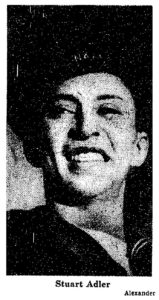
These are contemporary (2010-ish) views – from apartments.com – of the Adler family’s wartime residence: 245 East Gunhill Road, in the Bronx.

________________________________________

Saperstein, Charles (Yekutiel ben Hayyim), MoMM1C, 6425696, Motor Machinist’s Mate
Born 1921
United States Navy, Probably crew member of LCT(6) – #36
Mr. Herman Saperstein (father), 32 Lakeview Drive, Silvermine, Norwalk, Ct.
Memorialized on Tablets of the Missing at Manila American Cemetery, Manila, Philippines
Memorial matzeva at Beth Israel Cemetery, Norwalk, Ct.
Casualty List 5/27/45
American Jews in World War II – 69

Finkelstein, Albert Jacob, HA1C, 7109973, Hospital Apprentice
United States Navy, 5th Marine Division, 31st Replacement Battalion (attached)
Mr. Samuel Finkelstein (father), 1445 Saint Marks Ave., Brooklyn, N.Y.
Place of burial unknown
Casualty List 6/30/45
American Jews in World War II – not listed

Photograph via ShaneO

Wounded in Action

Percoff, Manuel, PFC, 884682
United States Marine Corps, 5th Marine Division, 28th Marine Regiment, 2nd Battalion, Headquarters Company
Mr. Sam Percoff (father), Laurel, Mississippi
Casualty List 6/6/45
American Jews in World War II – 206

Swarts, John Leonard, Cpl. 863329
United States Marine Corps, 2nd Armored Amphibious Division, C Company
Mrs. Rosalind M. Swarts (wife), 225 West End Ave., New York, N.Y.
Born New York, N.Y. 1/14/12, Died 8/17/03
American Jews in World War II – 459

________________________________________

Some other Jewish military casualties on Thursday, March 15, 1945 (1 Nisan 5705) include…

Killed in Action

– .ת.נ.צ.ב.ה. –

United States Army (Ground Forces)

Amira, Ralph (“Robert”?), S/Sgt., 32398826, Silver Star, Purple Heart
11th Airborne Division, 188th Glider Infantry Regiment, B Company
Mr. and Mrs. Isaac Becky (Rebecca?) Amira (parents), 1920 24th Ave., Astoria, Long Island, N.Y.
Mount Hebron Cemetery, Flushing, N.Y. – (Possibly Block 12, Reference 3, Section A, Line E/F, Grave 12, Society Life & Charity / Source of Life); Buried 4/12/49
Casualty List 4/14/45
Long Island Star Journal 9/23/48
American Jews in World War II – 265

Auerbach
, Robert, PFC, 12219224, Infantry, Purple Heart, 1 Oak Leaf Cluster

(Wounded previously, on 12/3/44)
103rd Infantry Division, 410th Infantry Regiment, K Company
Born 1924
Mrs. Mildred Auerbach (mother), 1132 Fulton St., Woodmere, N.Y.
Long Island National Cemetery, Farmingdale, N.Y. – Section J, Grave 16229
Casualty List 4/10/45
American Jews in World War II – 267

Bass, Solomon, M/Sgt., 6667553, Infantry
United States Army, 45th Infantry Division, 157th Infantry Regiment
Born 1922
Mrs. Adelle Bass (wife), 916 Parkwood Drive, Cleveland, Oh.
Pvt. Jack Bass and Mrs. Ann Falcone (brother and sister)
Zachary Taylor National Cemetery, Louisville, Ky. – Section I, Grave 231
Cleveland Press & Plain Dealer 9/10/45
American Jews in World War II – Not Listed

________________________________________

Bernstein, Louis (Levi bar Levi), PFC, 32876996, Infantry, Purple Heart, 1 Oak Leaf Cluster
3rd Infantry Division, 30th Infantry Regiment
(Wounded previously, around 2/25/44 and 10/20/44)
Born 1910
Mrs. Beatrice Bernstein (wife), 1163 President St., Brooklyn, N.Y.
Beth David Cemetery, Elmont, N.Y.
Casualty Lists 3/25/44, 12/20/44, and 4/10/45
American Jews in World War II – 276

Photograph of matzeva by Lainie Cat

________________________________________

Cantor, Alvin D., PFC, 42108329, Infantry, Purple Heart
100th Infantry Division, 397th Infantry Regiment
39 North Park Ave., Buffalo, N.Y.
Lorraine American Cemetery, St. Avold, France – Plot B, Row 18, Grave 56
Buffalo Courier-Express 12/31/44, 5/8/45
American Jews in World War II – 287

________________________________________

Cohn, Jack B. (Yakov Benymain bar David Haayim), PFC, 32923274, Infantry, Purple Heart, on Luzon Island, Philippines
25th Infantry Division, 161st Infantry Regiment
Born 2/19/23
Mrs. Anna Cohn (mother), New Brunswick, N.J.
Poile Zedek Cemetery, New Brunswick, N.J.
Casualty List 5/5/45
American Jews in World War II – 230
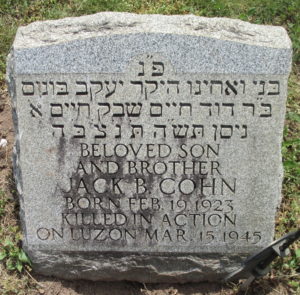
Photograph of matzeva by F Priam

________________________________________

Cohn, Jack L., T/5, 37604995, Signal Corps, Purple Heart
103rd Infantry Division, 103rd Signal Company
Born 1913
Mrs. Ida Cohn (mother), 5883 Maffitt Ave., St. Louis, Mo.
Chevra Kadisha Adas B’Nai Israel Vyeshurun, University City, St. Louis, Mo.
Saint Louis Post Dispatch 3/28/45 and 3/29/45
American Jews in World War II – 208

Drucker, Simon, PFC, 32882827, Infantry, Purple Heart
3rd Infantry Division, 7th Infantry Regiment, Headquarters Company, 3rd Battalion
Born 3/30/20
Mrs. Fanny Drucker (mother) and Mr. Morris Drucker (brother), 721 Van Sicklen Ave., Brooklyn, N.Y.
Mount Hebron Cemetery, Flushing, N.Y. – Block 25, Reference 12, Section I, Line 6, Grave 14, Society 1st Toporower S&B
Casualty List 4/14/45
American Jews in World War II – 299

Farash, Solomon, Pvt., 32420791, Infantry, Purple Heart
36th Infantry Division, 142nd Infantry Regiment, Headquarters Company
Born 1921
Mr. Hyman Farash (father), 250 New Lots Ave., Brooklyn, N.Y.
Also Pittsburgh, Pa.
Cemetery unknown
Casualty List 4/14/45
American Jews in World War II – 305

Finer, Morris L., 2 Lt., 0-2005368, Infantry, Purple Heart
99th Infantry Division, 393rd Infantry Regiment
Born 1920
Mr. Miller Finer (father), Greene and Johnson Streets, Philadelphia, Pa.
Mount Sinai Cemetery, Philadelphia, Pa.
The Jewish Exponent 4/20/45
The Philadelphia Record 4/12/45
American Jews in World War II – 520

________________________________________

Fleck, Jack (Yakov bar Pesach HaLevi), Cpl., 35510000, Purple Heart, in Germany
290th Field Artillery Observation Battalion
Born Youngtown, Oh., 7/7/22
Mr. and Mrs. Peter and Getrude (Sachs) Fleck (parents), 741 Kenilworth SE, Niles, Oh.
Also Warren, Oh.
Bernard and Irwin (brothers), Mrs. M. Reisman (sister)
Ohio State University Class of 1945
Beth Israel Cemetery, Warren, Oh.; Buried 11/19/47
Warren Tribune Chronicle 11/17/47
American Jews in World War II – 486

This is Corporal Fleck’s obituary from the Warren Tribune Chronicle of November 17, 1947, provided by FindAGrave contributor Rick Nelson

________________________________________

Geller, Seymour L., 2 Lt., 0-1329107, Infantry, Purple Heart
36th Infantry Division, 142nd Infantry Regiment, F Company
Born 1921
Mrs. Seymour L. Geller (wife), c/o H. Cohen, 85 McClellan St., Bronx, N.Y.
Also 1727 Walton Ave., New York, N.Y.
Cemetery unknown
Casualty List 4/14/45
The New York Times – Obituary Page (In Memoriam Section) 3/15/46
American Jews in World War II – 319

Gold
, Louis, Pvt., 16185802, Infantry, Purple Heart
36th Infantry Division, 142nd Infantry Regiment, G Company
Mr. Charles Gold (father), 6632 South Troy St., Chicago, Il.
Lorraine American Cemetery, St. Avold, France – Plot K, Row 14, Grave 10
Casualty List 6/10/45
American Jews in World War II – 100

Horowitz, Bernard L., 2 Lt., 0-534380, Bronze Star Medal, 2 Oak Leaf Clusters, Purple Heart
9th Infantry Division, 746th Tank Battalion
(Wounded previously, around 12/16/44 and 1/15/45)
Born 2/8/23
Mr. Isaac M. Horowitz (father), 2-12 Sickles St., New York, N.Y.
Mr. Gilbert Horowitz (?), 1155 Walton Ave., c/o Kessler, Bronx, N.Y.
City College of New York Class of 1943
Cedar Park Cemetery, New York, N.Y.
Casualty Lists 2/28/45 and 4/12/45
American Jews in World War II – 348

Klein, Bernard, PFC, 32249842, Infantry, Purple Heart
3rd Infantry Division, 7th Infantry Regiment
Born 3/6/15
Bronx, N.Y.
Long Island National Cemetery, Farmingdale, N.Y. – Section J, Grave 15567
American Jews in World War II – 363

________________________________________

Lebrecht, Alfred W., PFC, 32897544, Infantry, Purple Heart
3rd Infantry Division, 15th Infantry Regiment
Mr. and Mrs. William and Emma F. Lebrecht (parents), 920 Riverside Drive, New York, N.Y.
Lorraine American Cemetery, St. Avold, France – Plot B, Row 31, Grave 13
Casualty List 4/17/45
New York Post 1/21/51
Jewish Criterion (Pittsburgh) 9/20/46 – “Double Gold Stars”, by Helen Kantzler
American Jews in World War II – 373


Photograph of Alfred’s matzeva by Marc Burba

Among the many families who lost multiple sons during the war – profiled in Helen Kantzler’s 1946 Jewish Criterion article “Double Gold Stars” – was that of William and Emma Lebrecht, German refugees who arrived in the United States in 1939.  Alfred’s older brother Ferdinand was killed on February 20, 1945, while serving in the 10th Mountain Division. 

The brothers (Alfred’s matzeva shown above and Ferdinand’s below) are buried adjacent to one another at the Lorraine American Cemetery in Saint Avold, France.

Lebrecht, Ferdinand, PFC, 32695706, Bronze Star Medal, Silver Star, Purple Heart
10th Mountain Division, 85th Mountain Infantry Regiment, L Company
KIA 2/20/45
Lorraine American Cemetery, St. Avold, France – Plot B, Row 31, Grave 14

Jewish Criterion (Pittsburgh) 9/20/46 – “Double Gold Stars”, by Helen Kantzler
New York Post 1/19/51, 1/21/51
American Jews in World War II
– 573
Casualty List 3/20/45
Lorraine American Cemetery, St. Avold, France – Plot B, Row 31, Grave 14


Photograph of Ferdinand’s matzeva by Marc Burba

The incident in which Ferdinand was killed in action is described at Next Exit History:

18 Feb 45 • On the evening of the 18th, 700 men of the 86th Regiment make a daring night climb and successful assault on Riva Ridge, which rises steeply 1700-2000 feet above the rushing Dardagna River.  Using five carefully prepared climbing routes, including two that require fixed ropes, the attack takes the enemy by complete surprise.

American casualties result from fierce counterattacks that occur over the next four days.  For their heroism on Riva Ridge, three soldiers receive Silver Stars posthumously:

Pvt. Michael G. Bostonia (33938591, Washington County, Pa.)

Pfc. Ferdinand Lebrecht, and

1st Lt. John A. McCown II (0-1305285, Philadelphia, Pa.)

Eight other Silver Stars are awarded to: Pfc. Jack A. Booh [?], Pfc. Franklyn C. Fairweather, 1st Lt. Frank D. Gorham, Jr., 2nd Lt. Floyd P. Hallett, Lt. Col. Henry J. Hampton, 1st Lt. James W. Loose, Jr., Pfc. Roy Steen, and S/Sgt. Robert P. Thompson.

Two days later, engineers from D. Company of the 126th Engineers complete an aerial tramway to a point near the top of one of Riva’s peaks, Mt. Cappel Buso.  On the first day of operation, 30 wounded are evacuated and 5 tons of supplies delivered.

Just before midnight, without artillery preparation, five other battalions of the 10th Mountain Division begin their attack of Mt. Belvedere and its sister peak, Mt. Gorgolesco.  Orders are to use only grenades and bayonets until first light.  By dawn the positions have been taken.

____________________

Here is another account of Ferdinand’s last battle, from Charles J. Sanders’ The Boys of Winter – Life and Death in the U.S. Ski Troops During the Second World War:

Fortuitously obscured by a dense fog, the climbers attacked the stunned Nazi defenders at dawn.  The Germans fell back in confusion as the Tenth Mountaineers charged out of the mist, firing and hurling grenades, and screaming demands for surrender.  A number of the enemy capitulated, but the rest quickly regrouped.  The Americans then endured fierce counterattacks throughout the following days, as the enemy desperately and unsuccessfully tried to stave off the main attack on Belvedere and its sister peaks by attempting to recapture the heights of Riva.  Among the many who would give their lives holding this precious ground was Private Ferdinand Lebrecht of 86 C.  He was a big Austrian-born mountaineer who had knelt in prayer with Jacques Parker and the others in the tiny attic at the base of Rive prior to the climb.

____________________

The story of the Lebrecht brothers appeared as two articles in The New York Post in January of 1951.  The first article follows (transcribed below)…

Dad Receives 10 Hero Awards For GI Killed in Italy in 1945

The New York Post
January 19, 1951

The father of an Upper Manhattan soldiers killed in World War II near Mt. Sarrasiccia, Italy, on Feb. 20, 1945, today received belated recognition for the heroic feats of his son.

A Silver Star, Bronze Star Medal and eight other awards were presented to William Lebrecht, 920 Riverside Dr., father of PFC Ferdinand Lebrecht, who was 26 at the time of death, by 1st Army officials at a quiet ceremony in his home.

Official notification of the outstanding role played by young Lebrecht was received by the father a month ago in the form of a letter from the Army Dept., office of the Adjutant General, St. Louis, Mo.  The letter said that, after five years of search, missing copies of general Army orders had been located, disclosing Lebrecht’s courageous record under fire.

First word of his son’s bravery came to Lebrecht from young men who kept dropping into his home during the past five years.  Each said that, “Ferdie helped to save my life.”

The official message, signed by Col. John J. Donovan, said: “During a recent examination of the retained records of the 10th Mountain Division, the missing copies of General Orders announcing the award of the Silver Star to your son, service number 32,695,706, were located.

“Your pride in the gallantry displayed by your son in rendering aid to his wounded comrades while subjected to intense fire, will no doubt alleviate to some extent the grief caused by your great loss and the delay in receiving evidence of his heroism.

“It is hoped that these mementoes of your son’s outstanding service will be a source of comfort to you.  They are tangible evidence of his country’s gratitude for the gallantry and devotion to duty that your son so courageously and heroically displayed.”

The general order itself, dated Nov. 21, 1945, specifying the posthumous award of the Silver Star, told of the uptown soldier’s care for his wounded comrades and how he died in the act of aiding his squad leader and several other men unable to move because of severe wounds suffered during fighting in a “most forward area.”

…while here is the second article, accompanied by a photograph of William, seated with Emma, holding his sons’ portraits.  Their sons’ Purple Hearts are on the right, and Ferdinand’s Silver and Bronze Stars on the left.

Father Has 10 Medals For Son Slain in War

The New York Post
January 21, 1951

It’s official now. 

William Lebrecht, 920 Riverside Dr., has 10 medals, including a posthumous Silver Star, to prove that his son, Ferdinand, 26, a private, first class, died a hero on Mt. Sarrasiccia in Italy five years ago.

But the grieving exporter, who fled to this country from Nazi Germany in 1939, also had the sad memory of another son lost in World War II.  Both sons had given their lives for the country in which he had hoped they would live in freedom.

The uptown man yesterday told the story of his sons, after an Army major and a captain came to his home last week from First Army Headquarters on Governor’s Island to bring him Ferdinand’s hero citation, which had been lost in heaps of Army records since Feb. 20, 1945.

And in recalling his sorrows, he revealed that the second son, Pfc. Alfred Lebrecht, 21, had been killed by Nazis while fighting on the Metz front in France – just 20 days after the older brother fell in action.

“Within a few short weeks,” the father said yesterday, speaking for himself and for his wife, Emma, “we lost everything we lived for.”

The death of Alfred was an especially bitter blow, since his parents had tried in vain to save him.

Soon after they learned of Ferdinand’s death, they went to Washington and begged that Alfred be withdrawn from the fighting front.  War Dept. officials told them, however, that such measures were taken only after two fatal casualties in a family.

The Lebrechts returned home, only to receive word a week later that Alfred too had been killed.

A sergeant in Alfred’s outfit later told the father than the younger brother had been grieving about Ferdinand’s death at the time he was killed.

“He was so downcast,” the sergeant said, “that he just moved about in a daze.”

Told of Son’s Heroism.

The elder Lebrecht might never have known of Ferdinand’s posthumous citation had it not been for one of the beneficiaries of his son’s heroism. One of the eight men the young soldier saved in the action which cost his life visited the father and told him of the citation.

The War Dept., however, at that time reported it had no record of the citation, indicating that the records were lost.  But after years of searching, they were turned up a month ago.
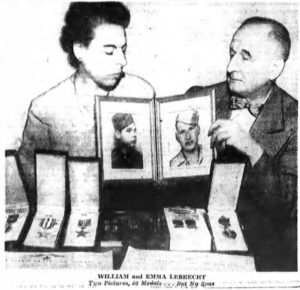
I don’t know if the Post reported any further stories about the Lebrecht family. 

Then again, what more could be said?

________________________________________

Salus, Joseph W., PFC, 42057443, Infantry, Purple Heart
100th Infantry Division, 399th Infantry Regiment
Mr. Joseph Salus (father)
Mr. Francois Salus, Mr. Harry Salus, and Mr. William Salus (sons), 3560 Rochambeau Ave., New York, N.Y.
Harriet Hammer Minde (cousin); Gerson and Miriam Goldman (niece and nephew)
Cemetery unknown; Buried 9/28/48
Casualty List 4/19/45
Long Island Star Journal 4/7/45
The New York Times – Obituary Pages 9/27/48 and 9/28/48
American Jews in World War II – Not Listed

________________________________________

Semansky, Jack, Pvt., 36914179, Infantry, Purple Heart
78th Infantry Division, 311th Infantry Regiment, L Company
Born Detroit, Mi., 3/4/26
Mr. and Mrs. Louis [1891-8/2/60] and Nettie [1895-7/15/69] Semansky (parents), Elmhurst Ave., Detroit, Mi.
Mrs. Ann Gertrude (Semansky) Golden and Clare (Semansky) Tierman (sisters)
Machpelah Cemetery, Ferndale, Mi. – Section 6, Lot 18, Grave 151D; Buried 11/23/47
Detroit Jewish Chronicle 10/31/47
The Jewish News (Detroit) 6/15/45
American Jews in World War II – 195

An article about Private Semansky from the Detroit Jewish Chronicle of October 31, 1947…

Though genealogical information about soldiers is not difficult to find, locating images of their next of kin is much more problematic.  The case of Private Semansky is an exception: The lady below is his mother Nettie, as she appeared in an article in the Detroit Jewish Chronicle of May 7, 1943, at the age of forty-eight. 

________________________________________

Sweet, Albert, S/Sgt., 36715694, Infantry, Purple Heart, in France
103rd Infantry Division, 411th Infantry Regiment, A Company
Born 10/21/05
Mrs. Judy Sweet (daughter)
Mr. and Mrs. Fishel and Rose Swislowsky (parents), Mrs. Annie Lohn (sister), 1542 S. Drake Ave., Chicago, Il.
Waldheim Jewish Cemetery (Ticktin Cemetery), Forest Park, Il.
American Jews in World War II – 118

Photograph of matzeva by Bernie_L

________________________________________

Theodore, Julius (Yehuda bar Kasriel), Sgt., 31142262, Medical Corps, Purple Heart
100th Infantry Division, 397th Infantry Regiment, Medical Detachment
Born 1908
Mrs. Fanny Theodore (wife), 6 Vine St., Hartford, Ct.
Beth Alom Cemetery, New Britain, Ct. – Section DB
American Jews in World War II – 71

Photograph of matzeva by Jan Franco

Killed Non-Battle

Beckenstein, Charles J., T/5, 33119096, Passenger (Infantry)
40th Infantry Division, Headquarters Company

Flight of C-46D 44-77360 from Elmore Field, Mindoro, to Tarauan, Leyte
Aircraft crashed 4 miles northwest of San Roque, Philippines.  Loss covered in Missing Air Crew Report 15996.

The plane’s crew consisted of…

Pilot: 1 Lt. Wilson B. Haslan
Co-Pilot: 2 Lt. Myles V. Reed
Flight Engineer: S/Sgt. Arthur T. Poillucci
Radio Operator: Samuel A. Bruno

  …and the aircraft carried 21 passengers, members of the Army ground forces and Army Air Force.  There were no survivors.

As reported in MACR 15996: “C-46 (Commando) Transport plane which departed from Elmore Field, Mindoro, P.I., about 1630, 15 March 1945, with intended destination Tarauan, Leyte, P.I.  Plane crashed into a mountain approximately 4 miles northwest of San Roque, Leyte, P.I.  Accident was apparently due to weather conditions.  All members of the crew and passengers were killed.”

An online memorial for 23 of the 25 crew and passengers of C-46D 44-77360 can be viewed at FindAGrave.

Corporal Beckenstein’s parents were Harry and Bella, of 949 Ridgemont Road, Charleston, in West Virginia.

Buried at Manila American Cemetery, Manila, Philippines – Plot F, Row 7, Grave 67
American Jews in World War II – Not Listed

Prisoner of War

Cohen, Jacob, S/Sgt., 33794401, Purple Heart, 1 Oak Leaf Cluster
3rd Infantry Division, 7th Infantry Regiment
(Wounded previously, around 6/6/44)
Born Salonika, Greece, 9/5/19
Mrs. Gertrude Cohen (wife), 412 Monroe St., Philadelphia, Pa.
Mrs. Esther Cohen [Magriso] (mother), 1515 S. 6th St., Philadelphia, Pa.
POW Camp unknown
The Jewish Exponent 4/27/45
The Philadelphia Inquirer 4/17/45
The Philadelphia Record 7/6/44 and 4/7/45
American Jews in World War II – 515

Wounded in Action

Abrahams, Henry G., 0-1328211, 2 Lt., Purple Heart, in France
Born East Orange, N.J., 1920
Mrs. Lola Ruth (Waldman) Abrahams (wife), 36-08 29th St., Astoria, N.Y.
Major Herbert Waldman (brother in law), 29-11 36th Ave., Long Island City, N.Y.
Casualty List 4/10/45
Long Island Star Journal 4/10/45
American Jews in World War II – 262

Pearl, James, S/Sgt., 33050971, Purple Heart, France
Born Philadelphia, Pa., 5/28/13
Mr. Harry Pearl (father), 1014 North 63rd St., Philadelphia, Pa.
Mrs. Elizabeth B. Pearl (mother), Deborah Rose and Rebecca (daughters), 1615 Robinson Ave., Philadelphia, Pa.
The Philadelphia Record 4/12/45
American Jews in World War II – 543

Zlotnick, Leon, Sgt., 33805527, Purple Heart, Germany
Born Philadelphia, Pa., 9/11/26
Mr. and Mrs. Gersin and Anna Zlotnick (parents), 619 Porter St., Philadelphia, Pa.
The Jewish Exponent April 20, 1945
The Philadelphia Inquirer 4/10/45
The Philadelphia Record 4/11/45
American Jews in World War II – 561


United States Army Air Force

8th Air Force

Eighth Air Force losses on March 15, 1945 (8th Air Force Mission 889) occurred during heavy bomber strikes against 1) German Army headquarters at Zossen, 2) marshalling yards at Oranienburg, Stendal, and Birkendwerder, 3) rail sidings and centers at Gardelegen, Wittenberge, and 4) targets at Gusen and Havelburg.

303rd Bomb Group, 427th Bomb Squadron: B-17G 43-39220, “GN * G
MACR 13568, Pilot 2 Lt. Thomas W. Richardson, 8 crew members – all survived

Grossman, Howard Alvin, S/Sgt., 36035598, Radio Operator
Returned to Molesworth with crew after aircraft landed at Okecie Airfield, near Warsaw
Born Chicago, Il., 2/21/19
Mr. and Mrs. Morris and Anna (Marks) Grossman (parents), Chicago, Il.
American Jews in World War II – Not Listed

Tractman, Bernard Lawrence, F/O, T-133026, Navigator, 35 missions
Born Philadelphia, Pa., 6/9/22 (Died 9/15/97)
Mr. and Mrs. Morris and Betty (Saltzman) Tractman (parents), 1515 Elbridge St., Philadelphia, Pa.
Within MACR 13568, listed as a witness to the loss of B-17G 43-39220
American Jews in World War II – Not Listed

____________________

Four B-17G Flying Fortresses of the 447th Bomb Group, comprising one plane of the 709th Bomb Squadron and three of the 711th Bomb Squadron, were lost to flak on this mission.  These aircraft were:

709th Bomb Squadron

42-97836, “Bugs Bunny Jr.”, “IE * P”, piloted by 1 Lt. Ralph D. Putnam and hit by flak near Wittenburg.  The 447th Bomb Group Battle Damage Report mentions that the aircraft was seen by fighter pilots to have belly-landed in the Steinhuder Lake area.  The entire crew of nine survived.

711th Bomb Squadron

44-6016, “TNT KATIE”, “IR * P”, piloted by 1 Lt. Henry M. Chandler, also struck by flak in the vicinity of Wittenburg.  Of TNT KATIE’s nine crew members, three survived.

43-38731, “Blythe Spirit”, “IR * Q”.  Piloted by 1 Lt. Harluf T. Jessen, the plane exploded after being hit by flak near the I.P. (I.P. – an acronym for “Initial Point”:  “…some identifiable land mark about 20 miles more of less from the target.  The formation flew there and at that point had to fly straight and level, no evasive action, to the target with the bomb bay doors open, usually under autopilot for the bombardier to do his job.  This was sweating time. [Contributed by Wally Blackwell, B-17 pilot, at 398th Bomb Group website].)  Only two of Blythe Spirit’s crew of ten survived.

43-38849, “IR * O”, piloted by 2 Lt. Lloyd L. Karst.  Also hit by flak in the vicinity of the I.P, seven of the aircraft’s nine crewmen suvived the bomber’s “shoot-down”, but only five actually returned. 

More detailed information about these aircraft and their crews is given below.

____________________

711th Bomb Squadron: B-17G 43-38731, “Blythe Spirit”, “IR * Q
MACR 13044, Pilot: 1 Lt. Harluf T. Jessen, 10 crew members – 2 survivors

Hoffman, Walter Samuel, 2 Lt., 0-2065557, Navigator, Air Medal, Purple Heart
Captured: Wounded and Prisoner of War (Name of POW camp unknown)
Mr. Morris Hoffman (father), 673 Avenue D, Rochester, N.Y.
New York Sun 4/19/45
Rochester Times-Union 2/15/44, 10/13/44
Rome Daily Sentinel 4/18/45
American Jews in World War II – 347

“Blythe Spirit” was struck by flak in the aircraft’s bomb-bay, and, between its #3 and #4 engines.  The aircraft fell straight down out of control and exploded.  Though no parachutes were observed to emerge from the falling plane, miraculously there were two survivors: co-pilot 2 Lt. Robert P. Dwight (son of Mrs. Isabel Dwight, residing at 1787 Granville Ave., in West Los Angeles, California) and navigator Walter Samuel Hoffman, of Rochester, New York, who both – being shot down over central Germany – were inevitably captured. 

The MACR includes Individual Casualty Questionnaires and Casualty Interrogation Forms covering the eight crewmen who did not survive, all these documents having been completed by Lt. Hoffman in late July of 1945, probably while at his home in Rochester.  There are no documents in the MACR by Lt. Dwight. 

With the exception of togglier S/Sgt. Hary E. Pfautz (probably already injured by flak, and not wearing a parachute) Lt. Hoffman’s comments about his fellow crewmen were all essentially the same:  “Plane was hit by flak and went into a spin.  The co-pilot and I were thrown out, and the plane broke into pieces.  Neither of us [Lt. Dwight] saw any more parachutes.  Later a German interrogation officer at Stendal POW Camp, Germany, told us that all eight men had been killed in the crash.  He had a correct list of their names.”

According to Lt. Hoffman, the plane crashed approximately 30 nautical miles due west of Oranienburg.  Fortunate in already wearing his parachute (he didn’t specify if it was a chest-chute or back-pack – probably the latter), he was thrown out of the B-17 through its shattered plexiglass nose (“after” S/Sgt. Pfautz), while Lt. Dwight, who was wearing a back-pack parachute (about which, see more below…) was also thrown to safety through the bomber’s nose. 

Concerning his month in German captivity, there is no information. 

____________________

711th Bomb Squadron: B-17G 44-6016, “TNT KATIE”, “IR * P
MACR 13045, Pilot 1 Lt. Henry M. Chandler, 9 crew members – 3 survivors

The nose art of “TNT Katie”, displaying at least 53 mission symbols.  (Image UPL 24300, from the Hutchinson & Cortright collection at the American Air Museum in Britain)

Murachver, Sidney Albert, 2 Lt., 0-788410, Bombardier, Air Medal, 3 Oak Leaf Clusters, Purple Heart
Captured: Wounded and Prisoner of War (Name of POW camp unknown)
Born 10/30/22 – Died 8/26/05
Mrs. Rose Murachver (mother), 85 Francis St., Everett, Ma.
David, Joanne, and Roberta (children)
https://447bg.smugmug.com
American Jews in World War II – Not Listed

Skalka, David W., 2 Lt., 0-2000413, Navigator, Air Medal, 4 Oak Leaf Clusters, Purple Heart
Captured: Wounded and Prisoner of War (Name of POW camp unknown)
Born 1919
Mrs. Frances Skalka (mother), 265 E. 176th St., New York, N.Y. / Bronx, N.Y.
https://447bg.smugmug.com
American Jews in World War II – 447

The fate of TNT KATIE and her crew was to a degree similar to that which befell Blythe Spirit: The plane was directly struck by flak.  Hit under the cockpit and nose, the plane was seen to break apart at the top turret.  Airmen in nearby aircraft witnessed between three and four parachutes emerge from the falling plane. 

Full information as to the fate of the bomber and its crew would would arrive after the war from the plane’s three survivors: First Lieutenant Henry M. Chandler (pilot), and Second Lieutenants Sidnay A. Murachver (bombardier) and David W. Skalka (navigator), all of whom succinctly and vividly recounted the events of their last mission in Individual Casualty Questionnaires or Casualty Interrogation Forms.

In sum, the flak burst blew the B-17’s bombardier / navigator (nose) compartment directly off the aircraft.  Both Sidney Murachver and David Skalka, temporarily rendered unconscious and still within this falling section of the plane, in turn fell away or were blown free, and awakening in mid-air, parachuted to safety.  The same flak burst tore away the B-17’s instrument panel, control columns, rudder pedals, throttle controls, and right wing, leaving (what was left) of the falling plane completely uncontrollable and in a near-vertical dive.  After vainly attempting to assist co-pilot Velmer Diefe, pilot Henry Chandler was left with no choice but to drop through the wreckage into empty space, to land by parachute. 

Notably, the three surviving crewmen specifically attributed their survival to back-pack type parachutes (probably of the “B-8” type; see the photograph below from The Rigger Depot), which by design and form they were already wearing when the plane was struck by flak.  As such, unlike Lt. Diefe and their five fellow crewmen, they did not have to rely on chest-type parachutes, which an airman had – in case of emergency – to lift and then attach to double clips on his parachute harness.  You can view this design of harness in the photo of Lt. Chandler’s crew (as worn by all five men in the front row) and, in the individual photos of Sergeants Ivos, Swem, Stephens, and Reinartson.

The photo shows a group of American fighter pilots, probably of the 8th or 9th Air Force, standing before the tail of a wrecked Focke-Wulfe FW-190 in the winter of 1944-45.  The man on the left wears a back-pack (B-8) parachute, while the pilot on the right is wearing a seat parachute, to which is attached a one-man life-raft. 

Text accompanying photo:  “Originally designed by the Pioneer Parachute Company as their Model B-3-B, the USAAF’s copy (B-8) was standardized on October 1942.  …  The B-8 saw operational use in the ETO around late 1943, replacing the rigid B-7 and serving well into the postwar era.  It was the standard rig for bomber pilots as well as operational fighter pilots of the P-38 and P-51.”

Here’s David Skalka’s statement in Missing Air Crew Report 13035 (not 13045), in reply to an inquiry from the Casualty Branch of January 11, 1946, concerning the loss of his crew:

“The nose and right wing of the plane were torn away, as the bombardier and myself were blown clear, and the pilot, unlatching his safety belt, dropped out.  Having been knocked unconscious, I woke up after falling through the air a few seconds and pulled my chute.  I looked around and noticed pieces of the plane falling about me.”

And, here are Sidney Murachver’s comments, from his Casualty Questionnaire in Missing Air Crew Report 13045…

“The reason I know so little of my crew is that I was unconscious when I left my plane.  I was probably knocked out by the concussion of the flak, which struck at the point where the nose of the B-17 joins the fuselage.  I know only of the pilot, Lt. Henry Chandler, who bailed out, and the navigator, Lt. David Skalka, who was also blown out.  We have never seen or heard any information as to the remaining six members of my crew.  We presumed that they never left the plane because we were told that it fell about 1,000 ft & then exploded.”

…while Murachver also replied to the Casualty Branch inquiry of January 11, 1946:

“The nose of the plane was blown off and I was blown out of the nose, or through it, unconscious.  I had on the new type back-pack parachute, fortunately.  I came to while falling through the air and opened my chute.  As for the rest of the crew, they all had chest pack chutes.  We never heard of or saw them again.  We were told that the plane fell a thousand feet and exploded.”

Likewise, Henry Chandler’s reply to the Casualty Branch, in MACR 13035:

“The action took place over Pearlburg, Germany, on March 15, 1945 at about 3:40 p.m. at which time our group was flying west following the bombing of a railroad yard at Oranianburg, north of Berlin.  As out group passed over the same (flak) battery we received at least one direct hit between the nose and cockpit on the right side, completely demolishing the nose section, destroying the instrument panel and the glass enclosure of the cockpit and removing both sets of controls including the throttle quadrant.  At the moment we were hit I was knocked unconscious.  When I recovered the ship seemed to be in a vertical dive and the condition of the cockpit was as described above.  My co-pilot, Lt. Diefe, was still in his seat and as soon as I realized there was no way in which to regain control of the airplane, I attempted to attract his attention and reach his chest pack which was hanging at his side of the seat.  However, I was unable to get his attention nor to move far enough to reach his chute and left the wreckage before it crashed.  I left the wreckage by releasing my safety belt and falling through the hole in front of me.  I was wearing a back pack.”

____________________

1 Lt. Henry M. Chandler and his crew in a happier time:  The men gather for an undated (but certainly Winter of 1944-45) group photo before B-17G 42-97836, Bugs Bunny Jr. (IE * P), of the 709th Bomb Squadron, mentioned above as having been lost to flak on March 15.  (Image UPL 24298, from the Hutchinson & Cortright collection)

As I was unable to identify this photograph at Fold3’s collection of WW II USAAF photographs, I suppose it was taken and archivally retained at the level of the 711th Bomb Squadron, and thus never went “further” into the main holdings of the Army Air Force.  Notably, the unknown photographer – he had a good photographic eye – took individual portraits of eight of the crewmen, with each man standing near (or for the pilots, sitting within) his crew station.  Thus, in the evocative images below, Ivos and Swem stand by a waist gun position, Stephens by the dorsal turret, Reinartson by the ball turret, Chandler and Diefe sit in the pilot’s seat, and Murachver and Skalka by the nose compartment entry / exit hatch.         

Front row, left to right…

Sgt. Costas A. Ivos (Radio Operator) (Image UPL 24289, from the Hutchinson & Cortright collection
Mr. and Mrs. Anthony and Garifelia Ivos (parents), Lowell, Ma.

Westlawn Cemetery, Lowell, Ma.
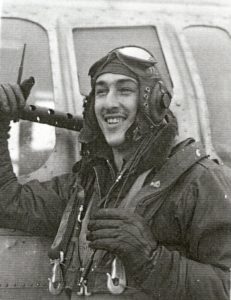
____________________

Sgt. Allan B. Swem (Waist Gunner) (Image UPL 24297, from the Hutchinson & Cortright collection
Mrs. Bella M. Swem (mother), 1006 East Grand Boulevard, Detroit, Mi.
Ardennes American Cemetery and Memorial, Neuville-en-Condroz, Belgium

____________________

S/Sgt. Robert M. Stephens (Flight Engineer) (Image UPL 24295, from the Hutchinson & Cortright collection
Mrs. Clara Wilkins Stephens (mother), 3rd Street, Manchester, Ga.
Ardennes American Cemetery and Memorial, Neuville-en-Condroz, Belgium

____________________

Sgt. Robert C. Reinartson (Ball Turret Gunner) (Image UPL 24296, from the Hutchinson & Cortright collection
Mrs. Verna M. Reinartson (mother), 1620 12th Avenue South West, Fort Dodge, Ia.
Ardennes American Cemetery and Memorial, Neuville-en-Condroz, Belgium
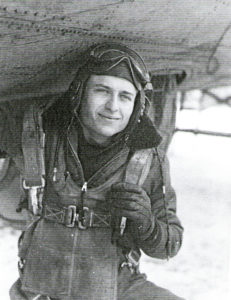
____________________

Sgt. Rouse (?) (Not in this crew when aircraft shot down, and, going by records at Fold3.com, probably not a casualty)

____________________

Rear row, left to right:

1 Lt. Henry D. Chandler (Pilot) (Image UPL 24290, from the Hutchinson & Cortright collection) – Survived
Mrs. Marie Chandler (mother), 361 Gates Ave., Brooklyn, N.Y.

____________________

2 Lt. Velmer M. Diefe (Co-Pilot) (Image UPL 24294, from the Hutchinson & Cortright collection
Mr. and Mrs. Frederick and Leontina Diefe (parents), Marlin, Wa.
Odessa Cemetery, Odessa, Wa.
____________________

2 Lt. David Skalka (Navigator) (Image UPL 24291, from the Hutchinson & Cortright collection) – Survived

____________________

2 Lt. Sidney A. Murachver (Bombardier) (Image UPL 24292, from the Hutchinson & Cortright collection) – Survived

Not in photo:

Sgt. John R. Piccardo (Tail Gunner)
Mr. Peter J. Piccardo (father), 1701 West Acacia St., Stockton, Ca.
Casa Bonita Mausoleum, Stockton, Ca.

____________________

711th Bomb Squadron: B-17G 43-38849, “IR *O
MACR 13030, Pilot 2 Lt. Lloyd L. Karst, 9 crew members – 5 survivors

Wiseman, Frank, 2 Lt., 0-926665, Navigator, Purple Heart, First mission
Apparently murdered upon capture.  According to statements by fellow crew members and a captured B-24 crew member, he was beaten to death by civilians after safely landing by parachute near the city of Tangerhütte.
Born Lowell, Ma., 5/20/22
City College of New York Class of 1944
Mrs. Evelyn R. Wiseman (wife), 301 West 20th St., New York, N.Y.
Mr. and Mrs. Samuel Solomon [Died 8/4/00] and Anne Wiseman (parents); Ruth (sister); Rifka (sister; 6/20/21-6/29/21), 548 West 164th St., New York, N.Y.
Wellwood Cemetery, Farmingdale, N.Y. – Block 45, Row 4, Section B, Grave 8R; Buried 12/4/49
Casualty List 4/19/45
American Jews in World War II – 473

The crew of IR * Q

Pilot: Karst, Lloyd L., 2 Lt. – Survived (POW)
Co-Pilot: Courtney, Samuel E., F/O – Survived (POW)
Navigator: Wiseman, Frank, 2 Lt. – Murdered upon capture
Bombardier: Corr, Raymond F., Sgt. – Survived (POW)
Radio Operator: O’Connor, William M., Sgt. – Survived (POW)
Flight Engineer: Isham, James M., Jr., Sgt. – Murdered upon capture
Mrs. Florence Isham (mother), Route Number One, Box 13, Buena Park, Ca.
Ardennes American Cemetery, Neupre (Neuville-en-Condroz), Belgium, Plot A, Row 15, Grave 16
Awards: Purple Heart
Gunner (Ball Turret): Hannah, Cecil W., Sgt. – Survived (POW)
Gunner (Waist): Dove, Clyde Sherwood, Jr., Sgt. – Killed in action
Gunner (Tail): Huschka, Bernard F., Sgt. – Killed in action

Though it was assumed by other crews that this B-17 was headed to Russian-occupied territory, the crew, with the plane’s #4 engine feathered and the pilot and co-pilot reportedly wounded, experienced a very sad fate.

As revealed by co-pilot Courtney in post-war documentation, the aircraft never reached the Russian lines, for in reality, the aircraft lost power in all four engines and then caught fire. 

Pilot Karst, co-pilot Courtney, navigator Wiseman, togglier Corr, flight engineer Isham, and waist gunner Dove parachuted from the aircraft.  Dove, who had been calling for tail-gunner Huschka to parachute, remained too long in the aircraft, and was killed when he jumped at too low an altitude for parachute to fully open.  Radio operator O’Connor, ball turret gunner Hannah, and tail gunner Huschka (probably wounded or already dead) “rode the plane in”, the former two when they realized that the plane was already at too low an altitude for a safe parachute jump.  Remarkably, they survived the crash of the unpiloted bomber near Tangerhütte, Germany, albeit O’Connor’s back was fractured.

As for Frank Wiseman and Harry Isham? 

Though they made successful parachute jumps (Wiseman from 12,000 feet), they did not live to become prisoners of war.  According to statements in the MACR, both men were apparently murdered – beaten to death – by civilians upon landing.  They were seen lying near one another by an American POW from another aircrew, whose name in the MACR is listed as “Jack Smith”.  This man was probably Corporal Jack E. Smith, a radio countermeasures operator in the 565th Bomb Squadron of the 389th Bomb Group, who parachuted north of Magdeburg (52-40 N, 11-33 E) from B-24J 44-10510 (“You Cawn’t Miss It”, “YO * Q”) during a mission to Zossen, after his plane’s #2 engine caught fire from flak.  Ironically, pilot 1 Lt. Harold G. Chamberlain flew the bomber back to base.

Based on Individual Casualty Questionnaires in the Missing Air Crew Report, this seems to have been the Karst’s crew’s first mission.

There’s no Case File in NARA Records Group 153 (Records of the Office of the Judge Advocate General) concerning Frank Wiseman, probably because the location of the aircraft’s loss – in what would become the Soviet Zone of Occupation of Germany, during the (first) Cold War – prevented American and Allied military investigators from investigating this incident, and identifying and prosecuting the murderers.

Frank Wisemen was one of a number of Jewish WW II servicemen in both the European and Pacific theaters who did not survive their initial capture, and / or their eventual captivity.  This was either because of the grim chances of fate that potentially befall all prisoners of war, or – in the European theater, in some cases – calculation: Because they were Jews.

This map shows the location of Tangerhütte in relation to Berlin….

…and here’s a map view of Tangerhütte and nearby towns at a larger scale…

…while this is an air photo view of the above map, at the same scale.
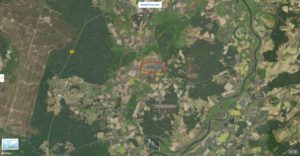
____________________

487th Bomb Group, 838th Bomb Squadron: B-17G 43-38028, “High Tailed Lady”, “2C * O”
Pilot: 2 Lt. William C. Sylvernal.  9 crew members – all survived.  Aircraft crash-landed in Russian-occupied Poland; Entire crew eventually returned to squadron. 

Forgotson, Donald, T/Sgt., 32992703, Flight Engineer, Distinguished Flying Cross, Air Medal, 2 Oak Leaf Clusters, Purple Heart
487th Bomb Group, 838th Bomb Squadron
Injured in crash-landing. 
No Missing Air Crew Report
Born 1917
Mrs. Roslin Forgotson (wife), 2055 Anthony Ave., Bronx, N.Y.

Mr. Jerry Garavuso (son-in-law)
487th Bomb Group.org – Photo – High Tailed Lady
487th Bomb Group.org – Aircraft Roster
487th Bomb Group.org – 838th Bomb Squadron Roster
American Jews in World War II – 311

This is the probable loading list (crew roster) for mission of March 15, 1945, based on information at 487th Bomb Group wesbite:

Sylvernal, William C., 2 Lt. – Pilot
Peachey, Jim L., 2 Lt. – Co-Pilot
Personette, Chester A., 1 Lt. – Navigator
Forgotson, Donald, S/Sgt. – Flight Engineer
Taylor, Harold F., Cpl. – Radio Operator
Montague, Paul M., Cpl. – Gunner (Ball Turret) (and, Hughey, Henry W., S/Sgt.?)
Kennedy, Harold L., Cpl. – Gunner (Waist)
Payne, Harold L., Cpl. (or) Walsh, George P., Cpl. – Gunner (Tail)

____________________

The High-Tailed Lady amidst flak bursts over Germany.  (Image FRE 8544, from the Roger Freeman collection)
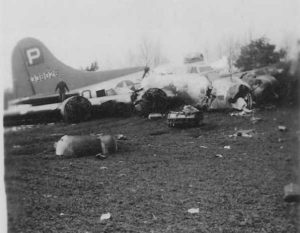
The rather fragmented wreck of the High-Tailed Lady, behind Soviet lines in Poland.  (Photo from 487th Bomb Group wesbite.) 

____________________

The following account of the High Tailed Lady’s final mission and the return of her crew was written by ball turret gunner Paul M. Montague (this was his 17th mission), and appears Martin Bowman’s Castles in the Air – The Story of the B-17 Flying Fortress Crews of the US 8th Air Force.

“This mission was another long haul into and out of Germany.  Our crew in the High Tailed Lady had made it before.  All went well until we approached the turning point toward the IP west of Berlin.  We were flying at 24,000 feet when, suddenly, an accurate burst of flak hit our ship.  The co-pilot was seriously wounded, one engine quit, the intercom only functioned sporadically and all the control cables on the port side, except the rudder, were severed.  This caused us to bank to starboard at about 30 degrees.  We dropped from formation, apparently unseen, lost altitude and turned toward Berlin.  At only 12,000 feet over Berlin a second flak burst smashed part of the Plexiglas nose, stopped a second engine, ruptured the oxygen system and started a fire in the bomb bay.  Twelve 500 pounders stuck there would neither jettison or toggle.  Several crew members were hit by shrapnel.  Our pilot gave us the alternative of baling out or staying while he attempted to ride the Lady down to a crash landing in Poland.  As we gazed directly down at the Tiergarten, no-one had the nerve to jump!  The fire in the bomb bay was finally extinguished and we managed to jettison our bombs into a lake below.  Thankfully, we were alone.  No German fighters appeared.  As we crossed the Oder River at only a few thousand feet, our Russian allies fired on us but no hits were sustained.

“Our pilot did a magnificent job of approach to what appeared to be a level field enclosed on three sides by woods.  We had no flaps, gear, air speed indicator and many other vital instruments but all the crew survived the crash landing.  The co-pilot and the engineer were later placed in a hospital for Russian wounded and the seven remaining crew were ‘looked after’ by their Russian army hosts.  The crew were disrobed by some Russian army women who then proceeded to wash them with cloths and basins of water.  Their uniforms were taken away and replaced with ‘pyjamas’ (the type worn in concentration and prison camps).  Paul Montague continues.  Little did we seven suspect that everything would be pantomime for two ensuing weeks and these pyjamas would be our clothes.  We were under constant guard.  We were prisoners – not guests of our ‘allies’.  Just as we were falling asleep several of us heard the unmistakable click of the lock in our door.

“Next morning we had our first breakfast.  I recall being very thirsty and I spotted a large cut-glass container of water in the centre of the oval breakfast table.  After pouring a glass-full, I took a large swallow and my breath was whisked away!  Pure vodka at 05:30!  I tried to warn the crew members but was speechless.  A few others made the same error.  The Russians roared with laughter.  For the next two weeks we used vodka in our cigarette lighters; it worked marvelously – like an acetylene torch!”

Montague and his fellow crew members were finally transported to Poznan and on through Poland to Lodz where they continued to Kiev.  They finally reached a Russian fighter base near Poltava where a Lend-Lease C-46 flew them nearer freedom.  Paul Montague recalls.  ‘After flying for quite a time we noticed the co-pilot coming back to the area where the wing joins the fuselage.  He unscrewed a cap of some sort, removed a rubber siphon from his jacket and proceeded to drink something.  Could this possibly be de-icer fluid?  Our pilot, his head still bandaged from our crash, remarked, ‘My God!  I may have to end up flying this plane’.  After flying some hours at high altitude over some mountain ranges, we began our descent and finally made a very rough landing in Tehran, Persia.  This was the last we were to see of any Russians.  After spending a few days at the American base in Tehran we were flown on to Abadan by an American pilot in a C-47 transport.  From then on it was shuttle hops by American pilots to Cairo, a nearly deserted base in the Libyan desert, on to Athens, Paris and finally to Lavenham.  Since we were due for “R&R” about this time, we were granted a week’s leave and spent a most pleasant time in Girvan, Scotland, before returning to base to fly two more missions.”
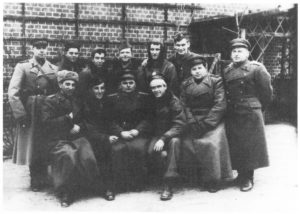
“Crew of the High Tailed Lady pose with their Russian hosts.  Paul Montague, the ball turret gunner, is second from left in the back row.  (Montague)”

________________________________________

Dressler, Jacob (“Jack”) Harry, 2 Lt., 0-824608, Fighter Pilot, Air Medal
355th Fighter Group, 357th Fighter Squadron
“Lieutenant Dressler on this mission ran short of gas and was last seen heading toward the Russian lines.  He wasn’t heard for two weeks and was given up as missing in action.  Then on the 30th of March the report came in that he was safe and was on his way back to the squadron.”
No MACR; Aircraft P-51D 44-14314 “Sexless Stella / One More Time”, “OS * L
Born Brooklyn, N.Y., 4/25/23, Died 11/2/17
Mr. and Mrs. Morris [12/27/95] and Anna (Braunfeld) Dressler (parents), 81-21 20th Ave., New York, N.Y.
Jack, Miriam [8/22/26-3/19/06], and Paul (sister and brothers)
American Jews in World War II – 299
Information about Jack Dressler – identical to the record above – appears in an earlier blog post, concerning the experiences of Lieutenant William Stanley Lyons as a fighter pilot, both having served in the 357th Fighter Squadron of the 355th Fighter Group.

________________________________________

15th Air Force

Dobkin, Joseph, F/O, T-129423, Bombardier, Air Medal, Purple Heart
98th Bomb Group, 415th Bomb Squadron
MACR 12998, Aircraft B-24L 44-50225, “red T”, Pilot 1 Lt. Charles H. Estes, 11 crew members – all survived
WIA; Returned with crew (presumably after parachuting over, or landing in, Yugoslavia)
Mrs. Rose Dobkin (mother), 3054 Pingree, Detroit, Mi.
American Jews in World War II – 189

Koty, Gerald, T/Sgt., 20251634, Radio Operator
463rd Bomb Group, 772nd Bomb Squadron
MACR 12999, Aircraft B-17G 44-6555, Pilot 1 Lt. Walter R. Griffith, 11 crew members – all survived
Returned with crew (possibly after presumably parachuting over, or landing in, Yugoslavia)
Mr. and Mrs. Morris and Florence Koty (parents), 465 National Blvd., Long Beach, N.Y.
Lew Koty and Helen (Koty) Globus (brother and sister)
American Jews in World War II – Not Listed

Polish People’s Army [Ludowe Wojsko Polskie]

Broch, Aleksander, WO, in Poland, at Zachodniopomorskie, Kolobrzeg
Born Sosnowiec, Poland, 1923
Mr. Stanislaw Broch (father)
Kolobrzeg Military Cemetery, Kolobrzeg, Poland
Jewish Military Casualties in the Polish Armies in World War II: Vol I, p 73

Chuszycer, Szaul, Pvt., during Operation Pomeranian Wall
4th Infantry Regiment
Mr. Jakub Chuszycer (father)
Place of burial unknown
Jewish Military Casualties in the Polish Armies in World War II: Vol I, p 13

Gotszalek, Wlodzimierz, WO, in Poland, at Pomorskie, Reda, during Operation Pomeranian Wall
1st Tank Brigade
Born Brodniki, Kujawsko-Pomorskie, Poland, 1912
Mr. Stefan Gotszalek (father)
Place of burial unknown
Jewish Military Casualties in the Polish Armies in World War II: Vol I, p 25

Lelkowski, A., Sergeant Major, in Poland, at Zachodniopomorskie, Walcz (died at Walcz Hospital)
11th Infantry Regiment
Kochanowka, Poland, 1922
Mr. Szmuel Lelkowski (father)
Place of burial unknown
Jewish Military Casualties in the Polish Armies in World War II: Vol I, p 44

Rad, Ben Zion, Cpl., in Poland, at Zachodniopomorskie, Kolobrzeg
11th Infantry Regiment
Born Lodz, Poland, 1909
Mr. Michael Rad (father)
Place of burial unknown
Jewish Military Casualties in the Polish Armies in World War II: Vol I, p 95

Sajort, Icek, Pvt., in Poland, at Zachodniopomorskie, Gryfice
Kamien Pomorski Military Cemetery, Kamien Pomorski, Poland
Jewish Military Casualties in the Polish Armies in World War II: Vol IV, p 103

Suchopar, Jozef, Pvt., in Germany, at Kolberg
Born Milkiewicze (d. Nowogrodek), Poland, 1924
Mr. Seymour Suchopar (father)
Kolobrzeg Military Cemetery, Kolobrzeg, Poland
Jewish Military Casualties in the Polish Armies in World War II: Vol I, p 64

Widomlawski, Nachum, at Field Hospital 45, during Operation Pomeranian Wall
Born 1913
Mr. Icchak Widomlawski (father)
Place of burial unknown
Jewish Military Casualties in the Polish Armies in World War II: Vol I, p 74

Soviet Union

Army Ground Forces / Red Army

Killed in Action

Gekhtman, llya Natanovich (Гехтман, Илья Натанович), Junior Sergeant (Младший Сержант)
Cannon Commander (Командир Орудия)
55th Guards Rifle Division, 213th Tank Battalion
Wounded 3/15/45; Died of wounds (умер от ран) 3/20/45
Born: 1914
Wife: Sofya Aleksandrovna Valoshina
Memorial Book of Jewish Soldiers Who Died in Battles Against Nazism – 1941-1945 – Volume V – 452 [Книги Памяти евреев-воинов, павших в боях с нацизхмом в 1941-1945 гг – Том V – 452]

Gerber, Abram Kelmanovich (Герберь, Абрам Кельманович), Guards Lieutenant (Гвардии Лейтенант)
Tank Platoon Commander (Командира Танкового Взвода)
31st Tank Corps, 237th Tank Brigade, 3rd Tank Battalion
Killed in action (убит в бою)
Born: 1912; Wife: Frida Markovna Gerber
Memorial Book of Jewish Soldiers Who Died in Battles Against Nazism – 1941-1945 – Volume V – 443 [Книги Памяти евреев-воинов, павших в боях с нацизхмом в 1941-1945 гг – Том V – 443]

Krolik, Iosif Peysakhovich (Кролик, Иосиф Пейсахович), Guards Junior Lieutenant (Гвардии Младший Лейтенант)
Rifle Platoon Commander (Командир Стрелкового Взвода)
18th Guards Rifle Division, 53rd Guards Rifle Regiment
Killed (убит)
Born 1922, Tolochinskiy raion, Vitebsk oblast
Friend / Acquaintance: Nina Mikhaylovna Savinich

Levin, Boris Mikhaylovich (Левин, Борис Михайлович) Guards Junior Lieutenant (Гвардии Младший Лейтенант)
Rifle Platoon Commander (Командир Стрелкового Взвода]
1st Guards Tank Army, 19th Guards Motorized Brigade
Died of wounds (умер от ран), at Mobile Field Hospital 470 (Полевой Подвижной Госпиталь (ППГ) 470)
Born 1925, city of Omsk
Father: Mikhail Iosifovich Levin

Levin, Solomon Iosifovich (Левин, Соломон Иосифович), Lieutenant (Лейтенант)
Rifle Platoon Commander (Командира Взвода)
313th Rifle Division, 1072nd Rifle Regiment
Killed (убит)
Born 1908, city of Borisov, Minsk oblast, Belorussian SSR
Sister: Anna Iosifovna Levin

Magid, Leonid Moiseevich (Магид, Леонид Моисеевич), Junior Lieutenant (Младший Лейтенант)
Rifle Platoon Commander (Командир Стрелкового Взвода)
5th Rifle Division, 190th Rifle Regiment
Killed (убит)
Born 1923, city of Simferopol
Mother: Juliya Magid

Milner, Zinoviy Abramovich (Мильнер, Зиновий Абрамович), Guards Senior Lieutenant (Гвардии Старший Лейтенант)
Rifle Platoon Commander (Командир Стрелкового Взвода)
60th Guards Rifle Division, 180th Guards Rifle Regiment
Killed (убит)
Born 1912, City of Polotsk, Vitebsk oblast

Pritsman, Isaak Samuilovich (Прицман, Исаак Самуилович), Junior Lieutenant (Младший Лейтенант)
Self-Propelled Gun Commander (Командир Самоходной Установии) SU-100 (СУ-100)
17th Guards Tank Brigade, 1st Tank Battalion
Killed (убит)
Born: 1922
Father: Samuil Borisovich Polikarpov
Memorial Book of Jewish Soldiers Who Died in Battles Against Nazism – 1941-1945 – Volume III – 168 [Книги Памяти евреев-воинов, павших в боях с нацизхмом в 1941-1945 гг – Том III – 168]

Reytburg (or) Roytburd, Boris Avisheevich (Рейтбург (или) Ройтбурд, Борис Авишеевич), Guards Lieutenant (Гвардии Лейтенант)
Company Commander (Командир Танковой Роты)
10th Guards Tank Corps, 62nd Guards Tank Brigade, 3rd Tank Battalion
Killed (убит), in Lower Silesia, Gross Brizen, Germany (Германия, Гросс Бризен, Нижняя Силезия)

Born: 1922 or 1924
Father: Avishim Berkovich Reytburg (or) Roytburd, Vinnitskaya Oblast, Bershad, Uritskiy Street, Building 1
Memorial Book of Jewish Soldiers Who Died in Battles Against Nazism – 1941-1945 – Volume VI – 248; Volume XI – 282 [Книги Памяти еврееввоинов, павших в боях с нацизхмом в 1941-1945 гг – Том VI – 248, Том XI – 282]

Military Air Forces – VVS

Beylin, Sakhno Ayzikovich (Бейлин, Сахно Айзикович), Senior Technician-Lieutenant (Старший Техник-Лейтенант) Senior Technician / Construction (Старший Техник по Строительству)
2nd Air Army, 26th Air Base Area, 83rd Airfield Engineer Battalion
Killed in plane crash (Погиб при Катастрофе самолета)
Born: 1920
Sister: Anna Ayzikovna Beylin
Passenger in Po-2 (По-2) piloted by Junior Lieutenant Dmitriy Fedorovich Popov (Младший Лейтенант Дмитрий Федорович Попов); Both Killed
Memorial Book of Jewish Soldiers Who Died in Battles Against Nazism – 1941-1945 – Volume V – 160 [Книги Памяти евреев-воинов, павших в боях с нацизхмом в 1941-1945 гг – Том V – 160]

Images of the Po-2 / U-2 are abundant, which is hardly surprising given the aircraft’s long history, versatility, and lengthy production run, over 33,500 having been constructed between 1928 and 1954.  However, one of the better representations of the aircraft is actually plastic-model “box-art” painting for the ICM Model Company’s 1/72 kit of the U-2 / Po-2VS.  The painting clearly shows significant features of the aircraft (the depicted example, aircraft “white 19” of the 889th Night Light Bomber “Novorossiysk” Regiment (former 889th Composite / Aviation Attack Regiment, 654th Night Light Bomber Regiment) flown by a female crew) – like its five-cylinder Shvetsov M-11 engine – more clearly than many photographs.  While the camouflage and markings of the plane crewed by Beylin and Popov are unknown, the painting nonetheless gives a nice depiction of the aircraft’s general appearance. 

United Kingdom

Died of Illness

Ohrenstein, Edward, LAC, 3003850
Royal Air Force Volunteer Reserve (probably stationed at RAF Stornoway)
Died of illness in Yishuv
Born 1926
Mr. and Mrs. Isaac and Bluma Ohrenstein (parents), Petach Tikva, Israel
Miss S. Ohrenstein (sister), 20 Charles Ave., Thornbury, Bradford, England
Bradford (Scholemoor) Jewish Cemetery, Yorkshire, England – Grave 166
The Jewish Chronicle – 3/30/45
We Will Remember Them Volume I, p 218

“VICTIM OF GERMAN FASCISM – DEEPLY MOURNED BY PARENTS AND SISTERS”
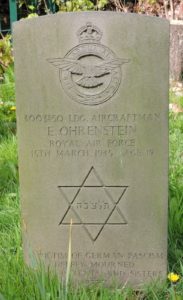
Photograph of matzeva by Bob the Greenacre Cat

Killed in Action

Martin, Felix Mondschein, Trooper, 13053492
Royal Armoured Corps, 3rd Carabiniers (POW Dragoon Guards)
Born 1920
Mr. and Mrs. Max and Eugenia Mondschein (parents)
Taukkyan War Cemetery, Taukkyan, Rangoon, Myanmar – 19,J,19
We Will Remember Them Volume I, p 218

“HE GAVE HIS LIFE FOR THE SALVATION OF HIS OPPRESSED PEOPLE”

Finkelstein, Hans, Sapper, PAL/13194
Royal Engineers
Died in Yishuv
WWRT I as “Finkelstein (Funkel), Hans”; CWGC as “Funkenstein, Hans”
Heliopolis War Cemetery, Heliopolis, Cairo, Egypt – 4,A,27
We Will Remember Them Volume I, p 243

________________________________________

________________________________________

References

Bowman, Martin W., Castles in the Air – The Story of the B-17 Flying Fortress Crews of the US 8th Air Force, Patrick Stephens, Wellingborough, Northants, England, 1985

Dublin, Louis I., and Kohs, Samuel C., American Jews in World War II – The Story of 550,000 Fighters for Freedom, The Dial Press, New York, N.Y., 1947

Meirtchak, Benjamin, Jewish Military Casualties in the Polish Armies in World War II: I – Jewish Soldiers and Officers of the Polish People’s Army Killed and Missing in Action 1943-1945, World Federation of Jewish Fighters Partisans and Camp Inmates: Association of Jewish War Veterans of the Polish Armies in Israel, Tel Aviv, Israel, 1994

Meirtchak, Benjamin, Jewish Military Casualties in the Polish Armies in World War II: IV – Jewish Officers, Prisoners-of-War, Murdered in Katyn Crime; Jewish Military Casualties in the Polish Resistance Movement; An Addendum, World Federation of Jewish Fighters Partisans and Camp Inmates: Association of Jewish War Veterans of the Polish Armies in Israel, Tel Aviv, Israel, 1997

Morris, Henry, Edited by Gerald Smith, We Will Remember Them – A Record of the Jews Who Died in the Armed Forces of the Crown 1939 – 1945, Brassey’s, United Kingdom, London, 1989

Rottman, Gordon (Colour plates by Frances Chinn), US Army Air Force: 1 (Elite Series), Osprey Publishing Ltd., London, England, 1993

Sanders, Charles J., The Boys of Winter – Life and Death in the U.S. Ski Troops During the Second World War, University Press of Colorado, Boulder, Co., December, 2004

Memorial Book of Jewish Soldiers Who Died in Battles Against Nazism – 1941-1945 – Volume III [Surnames beginning with О (O), П (P), Р (R), С (S)], Maryanovskiy, M.F., Pivovarova, N.A., Sobol, I.S. (editors), Union of Jewish War Invalids and Veterans, Moscow, Russia, 1996

Memorial Book of Jewish Soldiers Who Died in Battles Against Nazism – 1941-1945 – Volume V [Surnames beginning with А (A), Б (B), В (V), Г (G), Д (D), Е (E), Ж (Zh), З (Z), И (I), К (K)], Maryanovskiy, M.F., Pivovarova, N.A., Sobol, I.S. (editors), Union of Jewish War Invalids and Veterans, Moscow, Russia, 1998

Memorial Book of Jewish Soldiers Who Died in Battles Against Nazism – 1941-1945 – Volume VI [Surnames beginning with Л (L), М (M), Н (N), О (O), П (P), Р (R), С (S), Т (T), У (U), Ф (F), Х (Kh), Ц (Ts), Ч (Ch), Ш (Sh), Щ (Shch), Э (E), Ю (Yoo), Я (Ya)], Maryanovskiy, M.F., Pivovarova, N.A., Sobol, I.S. (editors), Union of Jewish War Invalids and Veterans, Moscow, Russia, 1999

Memorial Book of Jewish Soldiers Who Died in Battles Against Nazism – 1941-1945 – Volume IX [Surnames beginning with all letters of the alphabet], Maryanovskiy, M.F., Pivovarova, N.A., Sobol, I.S. (editors), Union of Jewish War Invalids and Veterans, Moscow, Russia, 2006

Websites

447th Bomb Group Documents and Photos, at 447th BG Smug Mug

East Pomeranian Offensive, at Wikipedia

WW II Parachute and Flight Gear Reproductions, at The Rigger Depot – Reproductions of United States Army, United States Army Air Force, United States Navy, and Royal Air Force WW II Flight Gear and related equipment

USAAF B-8 Backpack Parachute, at The Rigger Depot

119
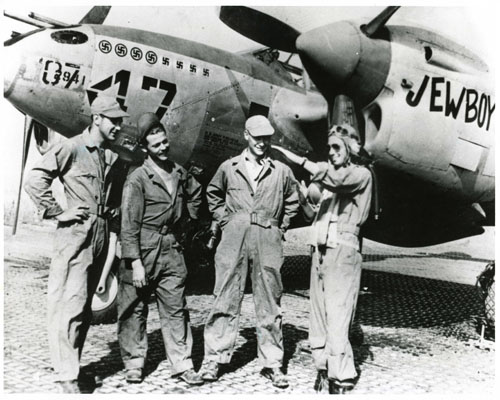
Soldiers from New York: Jewish Soldiers in The New York Times, in World War Two: PFC Warren W. Jacobs (May 22, 1945)

This post marks a return to an ongoing theme (one of several) at this blog: A survey of Jewish military service during the Second World War, based upon obituaries for Second World War Jewish military casualties from the New York Metropolitan area, which appeared in The New York Times, particularly during 1945. 

Given the demographic characteristics of American Jews during the mid-twentieth century, it was perhaps inevitable that a vast amount of information about the military service of American Jews during that war would be presented in the Times.  Yet, given the ideology and identity – such as it was, is, and continues to be – of the owners and editors of the Times regarding the perception of the Jewish people as a people – an ethnos – the subject of a vast amount of academic and popular literature, the most outstanding example being Laurel Leff’s Buried By The Times, virtually no Second World War era news item in the Times touching upon the military service of Jewish soldiers, ever placed the latter within the larger context of the collective survival of the Jewish people.  (Well, truth be told, one did, in language as tangential as it was guarded.  But, that will be the subject of a future post.)

Given the tenor of the times and the nature of the Times – and by any stretch of the imagination not only the Times! – it would probably have been futile to have expected otherwise.

So…  Having thus far covered surnames commencing with the letters “A” though “H”, this post is centered upon Private First Class Warren W. Jacobs of the United States Army Air Force, whose death was reported upon in the Times on May 31, 1945. 

Notably, given that there is no Missing Air Crew Report pertaining to him, information about the circumstances of his death is probably limited to the historical records of the 11th Bomb Squadron.

Bronx Radio Operator Killed on China Flight

May 31, 1945

Pfc. Warren W. Jacobs, son of Mr. and Mrs. Dave Jacobs of 1694 Clay Avenue, the Bronx, was killed in action over China on May 22, his parents have been notified.  A member of the Eleventh Combat Squadron of the Tenth Air Force, he had 725 flying hours to his credit.

Private Jacobs, 24 years old, had received the Distinguished Flying Cross with two Oak Leaf clusters and the Air Medal with three clusters.  He was a radio operator in a B-29 [sic].

The soldier was a graduate of DeWitt Clinton High School and left Long Island University to join the armed forces.  He was studying to be an engineer.  In addition to his parents he is survived by a sister, Mrs. Edward Flegler of Yonkers.

Warren Jacobs’ portrait in the Times.

 __________________________

Contemporary view of 1694 Clay Ave., the Bronx, the wartime residence of the Jacobs family.

 __________________________

Jacobs, Warren W. (Zeev bar David), PFC, 32425076, Radio Operator, Distinguished Flying Cross, Air Medal, 5 Oak Leaf Clusters, Purple Heart
United States Army Air Force, 10th Air Force, 341st Bomb Group, 11th Bomb Squadron
Born 5/2/21
Mr. Dave Jacobs (father), 1694 Clay Ave., Bronx, N.Y.
Mrs. Edward Fliegler (sister), Yonkers, N.Y.
No Missing Air Crew Report; Circumstances unknown
Bayside Cemetery, Ozone Park, N.Y.
Casualty List 5/31/45
The New York Times (Obituary Section) 5/22/46, 5/22/48
American Jews in World War II – 351

Matzeva of PFC Jacobs (Zeev bar David), from FindAGrave contributor ntatap.

 __________________________

______________________________

Other Jewish military casualties on May 22, 1945 (10 Sivan 5705), include the following…

Killed in Action

– .ת. נ. צ. ב. ה
תהא

נפשו
צרורה
בצרור
החיים

United States Army Air Force

The end of the war in Europe did not mean the end of the war.  S/Sgt. Leonard Orloff and T/Sgt. Marvin Schaefer, both members of the Pacific-based 5th Air Force of the United States Army Air Force, were lost during combat missions in Pacific Theater, albeit not immediately and specifically due to enemy action.

As recorded in John Alcorn’s The Jolly Rogers, “The heavy operational schedule was plagued by a distressing series of losses.  …a similar tragedy occurred when the 319th B-24L of Lt. Roy E. Hurd failed to gain altitude after takeoff from Mindoro.  The right wing was seen to hit the water, and the stricken craft burst into flames as it smashed into the water.  Two injured crewmen survived, [2 Lt.] Lt. Hershell Miller [0-700513], the co-pilot, and T/Sgt. Lawrence Cote [11070352], the radio operator.”

And, as recorded in the diary of 90th Bomb Group pilot Lt. Merle B. Winne, “22 May 1945 Today we were assigned to go to Kiirun Formosa carrying 5- 1000 lb. Demos.  Due to weather however, we could not reach the target.  We used our second alternate of military barracks and installations at Toshien Formosa.  Due to a C-1 failure in our lead ship, we had to make two runs over the target getting very light flak both times.  We flew #3 in the #3 squadron. Joe flew the run.  On take off here at the field before daylight, Lt. Hurd and his crew crashed into the sea just off the end of the runway.  The Co-pilot and one gunner were saved after the ship exploded.  The Co-pilot was unscratched but the gunner had a broken back.  I was pallbearer today for the three bodies that were recovered.”

Orloff, Leonard R., S/Sgt., 33789646, Gunner, Air Medal, Purple Heart
90th Bomb Group, 319th Bomb Squadron
Born 1921
Mr. and Mrs. Aaron [?-1/11/41] and Rose [1895-5/6/68] Orloff (parents), 2138 Arch St., Philadelphia, Pa.
Mr. Albert P. Orloff (brother), 710 Brown St., Philadelphia, Pa.
MACR 15378, Aircraft B-24L 44-41552, Pilot 1 Lt. Roy E. Hurd, 10 crew members – 2 survivors
Golden Gate National Cemetery, San Bruno, Ca. – Section B, Grave 373; Buried 11/3/48
Philadelphia Inquirer 6/16/45
Philadelphia Bulletin 6/16/45
American Jews in World War II – 542

Born in 1917, Hershell L. Miller died in 1972, and is buried at Fort Logan National Cemetery, in Denver.  Born in 1922, Lawrence R. Cote died in 1993 and is buried at Atascadero, California.

______________________________

The crew roster for B-24 44-41552 and information about the aircraft’s loss on the mission of May 22, 1945, appear in this “first” page of MACR 15378. 

______________________________

The Philippine archipelago.  San Jose Airfield, then the base of the 90th Bomb Group, is located at the southern tip of Mindoro Island, which is located just to the left of the center of this (Goggle) map view. 

______________________________

A large-scale view of the location of San Jose Airfield (now San Jose Airport)…

______________________________

…and, an equivalently oriented satellite view of the above map, with the single runway of San Jose Airfield (now San Jose Airport) readily visible in the center of the image. 

______________________________

Akin to Private Jacobs, no Missing Air Crew Report actually exists for the loss of T/Sgt. Schaefer’s aircraft, albeit like many airmen, an index card was filed in his name and incorporated within the MACR name card index. 

Information about the incident instead comes from a variety of links at the website of The Flying Circus – the 380th Bomb Group.  By consulting the Group’s abbreviated roster of personnel and list of aircraft by serial numbers, his plane was identified as B-24L 44-42487.  Piloted by Harry B. Trimble, the bomber was abandoned 35 miles off coast of Mindoro, in the Philippine archipelago, after a strike against Kiirun Stores on Formosa.  The crew’s bombardier – 2 Lt. Ralph J. Walsh, from Denver, Colorado – was also killed (buried at Manila American Cemetery, Fort Bonifacio, Manila, Philippines), while the other crew members were presumably rescued and survived.

Schaefer, Marvin, T/Sgt., 15133790, Flight Engineer, Air Medal, 2 Oak Leaf Clusters, Purple Heart, 35 missions
380th Bomb Group, 529th Bomb Squadron
Born 1921
Mr. and Mrs. Harry N. [?-8/16/66] and Sophia [?-2/9/87] Schaefer (parents), 17725 Crestland Road, Cleveland, Oh.
Capt. Leonard Schaefer and Ruth Jean Schaefer (brother and sister)
Tablets of the Missing at Manila American Cemetery, Manila, Philippines
Cleveland Press & Plain Dealer, June 14 & 15, 1945
American Jews in World War II – 498

Though the actual composition of Schaefer’s crew is uncertain, based on records at the Flying Circus website, the men p r o b a b l y were:

Definite crew members
Trimble, Harry B., Pilot / Aircraft Commander, 0-421379 (also in Harry E. Rollings, Jr.’s, Crew)

Walsh, Ralph Joseph, 2 Lt., Bombardier, 0-696289 (also in Henry H. Day’s Crew)

Probable crew members
Steil, Robert J., Pilot / Aircraft Commander, T-764600 / 0-2024055

Lowell, Joseph F., Navigator, 0-807261
Richards, George W., III, Flight Engineer, 13107493
Rinoldo, Anthony C., Flight Engineer, 32934641
Warzecha, Stanley J., Gunner, 36861232
Smart, George J., Gunner, 36308822
Fox, George W., 15118322, Gunner / Photographer (also in other crews)

Possible crew member
Melton, Thomas I., Bombardier, 0-731176

______________________________

An in-flight view of the actual aircraft flown by the Trimble crew on May 22, 1945 (though the date of the image is unknown): Un-nicknamed B-24L 44-42487, from the Robert Chandler collection

______________________________

Casualties in other theaters of war

Cohen, Ephraim, Driver, T/183391, Mentioned in Despatches, Gazette 7/19/45
England, Royal Army Service Corps
Born 1917
Mr. P. Cohen (father), Newcastle-on-Tyne, England
Died on active service
Udine War Cemetery, Udine, Italy – III,B,1
The Jewish Chronicle 7/13/45
We Will Remember Them – A Record of the Jews Who Died in the Armed Forces of the Crown 1939 – 1945 – 74
We Will Remember Them – A Record of the Jews Who Died in the Armed Forces of the Crown 1939 – 1945 – An Addendum – 61

Gash
, Robert W., PFC, 36219819, Purple Heart, in Luzon, Philippines

United States Army, 40th Infantry Division, 160th Infantry Regiment, Headquarters Company, 1st Battalion
Born 9/27/19
Mrs. Rose W. Gash (mother), 1812 East Belleview Place, Milwaukee, Wi.
Temple Menorah Ever-Rest Cemetery, Milwaukee, Wi. – SEBA,L13,G6
American Jews in World War II – 584

Greenberg, Jerome H., Sgt., 36579605
United States Army, 106th Infantry Division, 424th Infantry Regiment
Non-Battle, in Germany
Born 1918
Mrs. Anne R. Greenberg (wife), 9360 Genesee St., Detroit, Mi.
Mr. Herman H. Greenberg (father)
Graduate of Detroit College of Law
Machpelah Cemetery, Ferndale, Mi. – Section Z, Lot 15, Grave 439D; Buried 1/5/49
WW II Honoree page by Mrs. Anne Radner, daughter
The Jewish News (Detroit) 6/8/45
American Jews in World War II – 191

Photograph of Sergeant Greenberg at the WW II Honoree page created by his daughter, Anna Radner

______________________________

Koslovitz, Mattathiahu, Cpl., PAL/17467
Yishuv, Jewish Brigade Group, Palestine Regiment, 1st Battalion
Caserta War Cemetery, Italy – V,B,14
Name in Commonwealth War Graves Commission database is “Kozlowicz, M.”
We Will Remember Them – A Record of the Jews Who Died in the Armed Forces of the Crown 1939 – 1945 – 249 (as “Koslovitz, Mattathiahu”)
The Book of the Jewish Brigade: The History of the Jewish Brigade Fighting and Rescuing [in] the Diaspora (Sefer ha-Brigadah ha-Yehudit: ḳorot ha-ḥaṭivah ha-Yehudit ha-loḥemet ṿeha-matsilah et ha-golah ((גולהה קורות החטיבה היהודית הלוחמת והמצילה אתספר הבריגדה היהודית)) – 292

Portrait of Corporal Koslovitz from The Book of the Jewish Brigade: The History of the Jewish Brigade Fighting and Rescuing [in] the Diaspora

Biography, in Hebrew, of Corporal Koslovitz in The Book of the Jewish Brigade: The History of the Jewish Brigade Fighting and Rescuing [in] the Diaspora

Translation of the above…

Corporal Koslovitz Mattathiahu – God rest his soul

Died on 6th of Sivan 22.5.1945

He was hit in the chest by a shell as his regiment (the First Regiment) passed the Senio River.  His wound seemed slight: he was moved from one military hospital to another, recovered, and managed to walk.  But when he underwent surgery on 22.5.1945, he died suddenly during the operation.

He came to Israel as a child.  He went to elementary school and later to the “Max Fine” professional school and was also occupied in youth jobs.  He enlisted into the No. 20 infantry unit and like thousands of his comrades, tolerated inaction and guard duty.  When the Jewish Brigade was formed, and especially during the training period in Fuji [sic] he was happy and proud of himself.  He would say: “we have a real army”.  He was promoted to the rank of Corporal at the front line for his dedication and diligence.

Even as a child he was diligent and loved working, and was also loyal and dedicated to his friends and ideals.  He was loved by his friends in his platoon for his kindness, good spirit, cheerfulness, friendly attitude and willingness to help.  At the front line he demonstrated courage and willingness to do any job.  In the many letters he sent to his friends from the hospitals he was in, he expressed his desire to go back to the front lines.

______________________________

Miedzinski, Hersz, Pvt. (Germany, Saxony, Forstgen (During Operation Brand Berlin)) (Died of wounds?)
Poland, Polish People’s Army, 5th Infantry Division
Born Ukraine, Zloczow (d. Tarnopol); 9/28/18
Mr. Majer Miedzinski (father)
Place of burial unknown
Jewish Military Casualties in the Polish Armies in World War II: I – Jewish Soldiers and Officers of the Polish People’s Army Killed and Missing in Action 1943-1945 – 49

Sierczyk, Daniel, Sergeant Major (Poland, Janow), Died of wounds
Poland, Polish People’s Army, Infantry Officer’s School
Born Chelm, Lubelskie, Poland, 5/16/25
Mr. Jakub Sierczyk (father)
Biala Street Community Cemetery, Lublin, Poland
Jewish Military Casualties in the Polish Armies in World War II: IV – Jewish Officers, Prisoners-of-War, Murdered in Katyn Crime; Jewish Military Casualties in the Polish Resistance Movement, An Addendum – 103

Yonis, Ralph (Rafael bar Rachmim), Pvt., 11131585, Purple Heart, in Mindanao, Philippines
United States Army, 24th Infantry Division, 21st Infantry Regiment
Born 1926
Mr. and Mrs. Rachamim [8/9/90-10/11/63] and Sophie (Pappos) [5/15/00-10/15/60] Yonis (parents), 133 Main St., Peabody, Ma.
John, Samuel, and Sara (brothers and sister)
Buried at Sons of Jacob Cemetery, Danvers, Ma.
Casualty List 6/26/45
American Jews in World War II – 185

Matzeva of Private Yonis, from FindAGrave contributor Pamela Filbotte-Hollabaugh

______________________________

Wounded in Action

Epstein, Albert, Pvt., Purple Heart, in Luzon, Philippines
United States Army
Born 1926
Mr. Michael Epstein (father), 103 Durfor St., Philadelphia, Pa.
The Jewish Exponent 7/6/45
Philadelphia Bulletin 6/26/45
Philadelphia Record 6/26/45
American Jews in World War II – 519

Rubin, Irving Thomas, PFC, 896700, Purple Heart
United States Marine Corps, 6th Marine Division, 4th Marine Regiment, 1st Battalion, B Company
Born 1918
Mrs. Lydia B. Rubin (wife), 283 Beach St. (or) 94 Walnut Ave., Revere, Ma.
American Jews in World War II – 177

Silver, Solomon Saul, PFC, 502669, Purple Heart
United States Marine Corps, 1st Marine Division, 1st Marine Regiment, 1st Battalion, C Company
Mr. Abraham Silver (father), 471 Neptune Ave., Brooklyn, N.Y.
Mrs. Thelma S. Brown (sister)
WW II Memorial Honoree Page
Casualty List 7/13/45
American Jews in World War II – 443

References

Alcorn, John S., The Jolly Rogers – History of the 90th Bomb Group During World War II, Historical Aviation Album, Temple City, Ca., 1981

Dublin, Louis I., and Kohs, Samuel C., American Jews in World War II – The Story of 550,000 Fighters for Freedom, The Dial Press, New York, N.Y., 1947

Lifshitz, Jacob (יעקב, ליפשיץ), The Book of the Jewish Brigade: The History of the Jewish Brigade Fighting and Rescuing [in] the Diaspora (Sefer ha-Brigadah ha-Yehudit: ḳorot ha-ḥaṭivah ha-Yehudit ha-loḥemet ṿeha-matsilah et hagolah ((גולהה קורות החטיבה היהודית הלוחמת והמצילה אתספר הבריגדה היהודית)), Shim’oni (שמעוני), Tel-Aviv, 1950

Meirtchak, Benjamin, Jewish Military Casualties in the Polish Armies in World War II: I – Jewish Soldiers and Officers of the Polish People’s Army Killed and Missing in Action 1943-1945, World Federation of Jewish Fighters Partisans and Camp Inmates: Association of Jewish War Veterans of the Polish Armies in Israel, Tel Aviv, Israel, 1994

Meirtchak, Benjamin, Jewish Military Casualties in the Polish Armies in World War II: IV – Jewish Officers, Prisoners-of-War, Murdered in Katyn Crime; Jewish Military Casualties in the Polish Resistance Movement; An Addendum, World Federation of Jewish Fighters Partisans and Camp Inmates: Association of Jewish War Veterans of the Polish Armies in Israel, Tel Aviv, Israel, 1997

Morris, Henry, Edited by Gerald Smith, We Will Remember Them – A Record of the Jews Who Died in the Armed Forces of the Crown 1939 – 1945, Brassey’s, United Kingdom, London, 1989

Morris, Henry, Edited by Hilary Halter, We Will Remember Them – A Record of the Jews Who Died in the Armed Forces of the Crown 1939 – 1945 – An Addendum, AJEX, United Kingdom, London, 1994

McGuire Airdrome / McGuire Airfield (San Jose Airport), at Pacific Wrecks

1 Lt. Roy E Hurd, at FindAGrave

Diary of Merle B. Winne, at 90th Bomb Group

Plus, special thanks to Ari for help with the Hebrew-to-English translation. 

Soldiers from New York: Jewish Soldiers in The New York Times, in World War Two: Captain Howard K. Goodman, USMC – January 7, 1944

Here’s a revision to this post, which originally appeared some time ago…

I recently discovered a photograph of Captain Howard Goodman in The Forward (Forverts) of July 5, 1943, and have now incorporated the picture – below – into this post.  I discovered this image – purely by chance – while reviewing the newspaper at the website of the Historical Jewish Press, at the National Library of Israel.

Throughout the Second World War, and I suppose well before and years after, The Forward included within its pages many, many photographs of Jewish military personnel and sometimes, their families.  These images appeared within specific news items directly pertaining to servicemen themselves, as “stand-alone” photo items, and especially, within the latter page of every issue, which comprised a selection of compelling, dramatic, topical, or just-plain-interesting recent photographs from both the United States and overseas.  
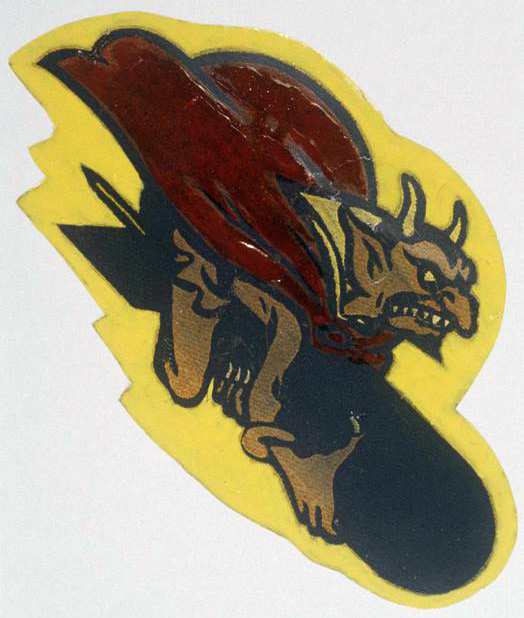
Within these Forward photo pages, many – but certainly not all, at all – images illustrated Jewish personnel in the armed forces of the United States.  Thus, the image of Captain Goodman, pictured in the act of receiving the Silver Star.

I may be able to bring you more such images, in the future.

______________________________

In the summer of 1943, both The New York Times and Brooklyn Eagle accorded recognition to a Jewish member of the Marine Corps – Captain Howard Kenneth Goodman, of Long Beach – for his receipt of the Silver Star, which was awarded in recognition of his service in the Solomon Islands, where he was wounded on November 3, 1942.  Curiously, the Eagle’s article was more comprehensive, presenting both a photograph of Captain Goodman’s mother, and, the full award citation.

Wins Marines Medal
New York Times
July 3, 1943

WASHINGTON, July 2 (U.P.) – Secretary Knox has awarded the Silver Star Medal to Captain Howard K. Goodman, U.S.M.C., 25, son of Mr. and Mrs. Samuel Goodman of Long Beach, L.I.  Captain Goodman formerly lived at 1660 Crotona Park East, New York.

While still a First Lieutenant, Captain Goodman was cited for leading here successive bayonet and hand-grenade charges with minimum casualties to his men in the face of heavy-machine gun and mortar fire during the Solomons offensive.

Captain Goodman attended Long Beach High School before enrolling at City College, from which he was graduated with a Bachelor of Social Science degree.  In college he was a member of the editorial staff of The Campus, the college orchestra and the ROTC band.

He enlisted in the Marines on July 3, 1941, soon after he was admitted to the bar of New York State after three years at Columbia Law School. 

Captain Goodman’s pre-war residence, at 1660 Crotona Park East.

Leatherneck Captain Gets Star for Leading 3 Charges on Japs

Brooklyn Eagle
July 2, 1943

For “leading three successive bayonet and hand grenade charges against the Japanese,” Capt. Howard K. Goodman, U.S.M.C.., of 1012 W. Beach St., has been awarded the Silver Star medal by Secretary of the Navy Frank Knox.

West Beach Street, in the Bronx of 2016.  The Saloon Restaurant (actually, at 1016 West Beach Street) now occupies the location where the home of Rose Goodman once stood.

While he was still a first lieutenant, Goodman was cited for leading three successive charges in the face of heavy machine gun and mortar fire with minimum casualties to his men.  He accomplished this feat during the Solomons offensive.

Yesterday his mother, Mrs. Samuel Goodman, received a letter from her hero son.  He wrote: “It’s Captain Goodman now.  Yes, I was promoted.”  He gave the date as May 31 and went on to say that he had passed the physical examination, signed the acceptance and put on the bars.  It would mean a raise and also a change of station, she added.

She’s ‘Very Proud Mother’

“I’m a very proud mother,” said Mrs. Goodman.  “He always has been an exceptional boy.  He didn’t hang around on the street corners like so many do.  He was very studious.”

Goodman’s letter didn’t mention the award.  He wrote he was going to have pictures taken as soon as he could get to town.  “He has been to the movies, too,” said Mrs. Goodman.  He saw “Keeper of the Flame.”

Columbia Law Graduate

Goodman, 25, is a 1938 graduate of City College of New York and studied law at Columbia University.  Shortly after he enlisted on July 3, 1941, he was sworn in as a member of the bar.  In May, 1942, he went overseas.

The citation, which accompanies the award, reads:

“For conspicuous gallantry and intrepidity as a member of the First Marine Division during action against enemy Japanese forces in the Solomon Islands on Nov. 3, 1942.  While temporarily attached to a battalion launching an assault against the enemy, 1st Lt. Goodman, in the face of heavy machine gun and mortar fire, led his platoon in three successive bayonet and hand grenade charges against the Japanese.  By his outstanding leadership and courageous aggressiveness, he contributed to the annihilation of a hostile strong point of about one battalion, with minimum casualties to his own troops.”

______________________________

Here’s the photograph of Captain Goodman receiving the Silver Star, from The Forward of July 5, 1943.

______________________________

Sadly, Captain Goodman did not survive the war.  He was killed in action half a year later, on January 7, 1944.

Unlike the servicemen profiled in previous posts concerning The New York Times, that newspaper never published an obituary or retrospective concerning the Captain.  Instead, his name simply appeared in Casualty Lists published in the Times (and Long Island Star Journal) on March 2, 1944, and the Nassau Daily-Review Star on February 16.  Captain Goodman’s name also appeared in the “In Memoriam” section of the Times on February 6, 1947, and February 24, 1949.  His awards comprised the Silver Star, Bronze Star, and Purple Heart with one Oak Leaf Cluster.

A member of M Company, 3rd Battalion, the 5th Marine Regiment, 1st Marine Division, Captain Goodman (serial number 0-8730) was buried at New Montefiore Cemetery, in West Babylon, New York (Block 6, Grave 4, Section 3, Long Beach Brith Abraham Society) on February 6, 1949.

Some other Jewish military casualties on Friday, January 7, 1944, include…

Killed in Action

– .ת.נ.צ.ב.ה. –

Becker, Sidney, 2 Lt., 0-741226, Bombardier, Purple Heart
United States Army Air Force, 8th Air Force, 445th Bomb Group, 701st Bomb Squadron
Mrs. Elaine B. Becker (wife), 2910 Madison Ave., Newport News, Va.
Born 11/12/19
MACR 15103; Aircraft: B-24H 41-29119; Pilot: 2 Lt. Lester I. Eike; 10 crewmen – 4 survivors
Aircraft crashed at Wethingsett, Suffolk, England, on return from mission to Ludwigshaven
Jewish Cemetery of the Virginia Peninsula, Hampton, Va. (Photo of Matzeva by Dawn Stewart.)
American Jews in World War II – 577

______________________________

Briskman, Edward, Pvt., 32880900, Purple Heart
United States Army, 34th Infantry Division, 168th Infantry Regiment, G Company
Mrs. Fanny Briskman (mother), 2959 Nostrand Ave., Brooklyn, N.Y.
Born 5/10/24
Long Island National Cemetery, Farmingdale, N.Y. – Section H, Grave 11026
Casualty List 3/8/44
American Jews in World War II – 284

Friedman, Morris Samuel, 2 Lt., 0-682101, Bombardier, Purple Heart
United States Army Air Force, 8th Air Force, 96th Bomb Group, 337th Bomb Squadron
Mrs. Alice S. Friedman (wife), 1823 Maple St., Bethlehem, Pa.
Born 1921
MACR 2018; Luftgaukommando Report KU 660; Aircraft: B-17F 42-30130 (“The Klap Trap II”, “AW * J”) Pilot: 2 Lt. Roland E. Peterson; 10 crewmen – 2 survivors [Right Waist Gunner Sgt. William Brian Roberts, and Tail Gunner Sgt. Andrew Francis Weiss]
Netherlands American Cemetery, Margraten, Netherlands – Plot O, Row 20, Grave 12
American Jews in World War II – 522

______________________________

Heilbronn, Eric Moses (Moshe ben Yitzhak), Pvt., 32816833, Purple Heart
United States Army, 34th Infantry Division, 168th Infantry Regiment, A Company
Rabbi Isak [6/4/80-6/9/43] and Mrs. Erna Esther [2/9/92-5/3/77] Heilbronn (parents), Cecil and Irmgard (Pinto) Heilbronn, 382 Wadsworth Ave., New York, N.Y.
Born Nurnberg, Germany, 1924
Burial location unknown
Casualty List 2/22/44
Aufbau 5/12/44
American Jews in World War II – 342

The May 12, 1944 edition of Aufbau, which carried news about Private Heilbronn, is shown below:

Here is the news item about Private Heilbronn, which is followed by a transcription of the German text, and an English-language translation:

Pvt. Eric M. Heilbronn

ist im Alter von nur 20 Jahren auf dem italienischen Kriegsschauplatz gefallen.  Er war seit dem 7 Januar dieses Jahres als vermisst gemeldet, aber erst vor wenigen Tagen hat seine Mutter die Nachricht von seinem Tod erhalten.

Pvt. Heilbronn ist der Sohn des ihm sieben Monate im Tod vorangegangenen Rabbiners Dr. Isaak Heilbronn und stammte aus Nurnberg.  Er widmete such insbesondere der Jugendbewegung innerhalb der Gemeinde seines Vaters, der Congregation Beth Hillel, und versuchte, die eingewanderte deutsch-jüdische Jugend mit der americanischen Weltanschauung vertraut zu Machen und sie fur die Ideale Amerikas zu begeistern.

Pvt. Heilbronn kam Antang 1939 nach Amerika, absolvierte die High School in New York und nahm später Abendkurse in Buchprüfung am City College.  Tagsüber war er bei der Federation of Jewish Charities beschaftigt.  Im März 1943 rückte er in die Armee ein.

Pvt. Eric M. Heilbronn

died at the age of only 20 in the Italian theater of war.  He was reported missing since January 7 of that year, but only a few days ago his mother received the news of his death.

Pvt. Heilbronn is the son of Rabbi Isaac Heilbronn from Nurnberg, who died seven months before his death.  He was particularly dedicated to the youth movement within his father’s congregation, Congregation Beth Hillel, and tried to familiarize immigrant German-Jewish youths with the American world view and to inspire them with the ideals of America.

Pvt. Heilbronn came to America in 1939, graduated from high school in New York and later took evening classes in auditing at City College.  By day he was employed by the Federation of Jewish Charities.  In March 1943 he joined the army.

______________________________

Malkin, losif Borisovich (Малкин, Иосиф Борисович), Senior Sergeant [Старший Сержант]
U.S.S.R., Red Army, 32nd Tank Brigade
Radio Operator
Born: 1925
Probable place of burial: Ukraine, Kirovograd oblast, city of Kirovograd
Memorial Book of Jewish Soldiers Who Died in Battles Against Nazism – 1941-1945 – Volume II – 464 [Книги Памяти евреев-воинов, павших в боях с нацизхмом в 1941-1945 гг – Том II – 464]

______________________________

Roodman, Harold, 2 Lt., 0-796603, Navigator, Distinguished Flying Cross, Purple Heart
United States Army Air Force, 8th Air Force, 389th Bomb Group, 566th Bomb Squadron
Mrs. Jackie R. Roodman (wife) [4/11/23-1/4/98], Ronnie Lee Roodman (son), 706 West 179th St., New York, N.Y.
Born 1917
11/17/43, 2/27/44, 4/20/44
MACR 1853; Luftgaukommando Report KU 666; Aircraft: B-24D 42-41013 (“Trouble”; “RR * K+”); Pilot: Capt. David L. Wilhite; 11 crewmen – 1 survivor (Sgt. Robert H. Sweatt, of Lovington, New Mexico).  Shot down at Bolbec, France
Loss of aircraft described in Escape & Evasion Report # 535, by Sgt. Robert H. Sweatt
Long Island National Cemetery, Farmingdale, N.Y. – Section J, Grave 14445; Buried 8/24/49
P.M. – 9/3/43
Jews Fight Too
, p. 202

American Jews in World War II – 415
Name listed in “List of Ploesti Mission Award Recipients” – Published 11/17/43 (“Awards Given for 1,548 in Ploesti Attack”).  Listed as recipient of Distinguished Flying Cross
Casualty Lists – 2/27/44 (Missing in Action), 4/20/44 (Killed in Action)

Lt. Roodman, a member of the 389th “Sky Scorpions” Bomb Group, participated in the Ploesti bombing mission of August 1, 1943 as a member of the crew of Richard B. Smith.  He’s presumably one of the crewmen in the photograph below (image UPL 15403, at the American Air Museum in Britain) though “who is who”, is unknown, as the caption only lists the name of Lt. Smith.  Lt. Roodman was also among the 1,548 men whose names were published as award recipients for the Ploesti mission, in a War Department Release of November 16, 1943. 

Continuing to fly missions, Lt. Roodman was one of the eleven crewmen aboard Trouble, a B-24D Liberator shot down over Bouville, France – according to information compiled by Jan Safarik – by an FW-190 of Stab / Jagdgeschwader 2 Richthofen. 

Information about the plane and crew can be found at Daniel Carville’s France Crashes website. 

A memorial honoring the plane’s fallen crew members, dedicated to sole survivor Sgt. Robert H. Sweatt, can be found at Bouville’s town church, which is located on the southwest corner of the Place de l’Eglise.  Mounted on the exterior wall adjacent to a monument commemorating the community’s fallen of World War One, the memorial includes a plaque listing the plane’s crew members, and, a painting of Trouble in flight.  (I’d typically include the images from that website “here” – at this post – but since they’re copyrighted (!) I refer you to AeroSteles, where these images are on display.)  Instead, the memorial can be seen in the photograph below, by Arnaud Théron:
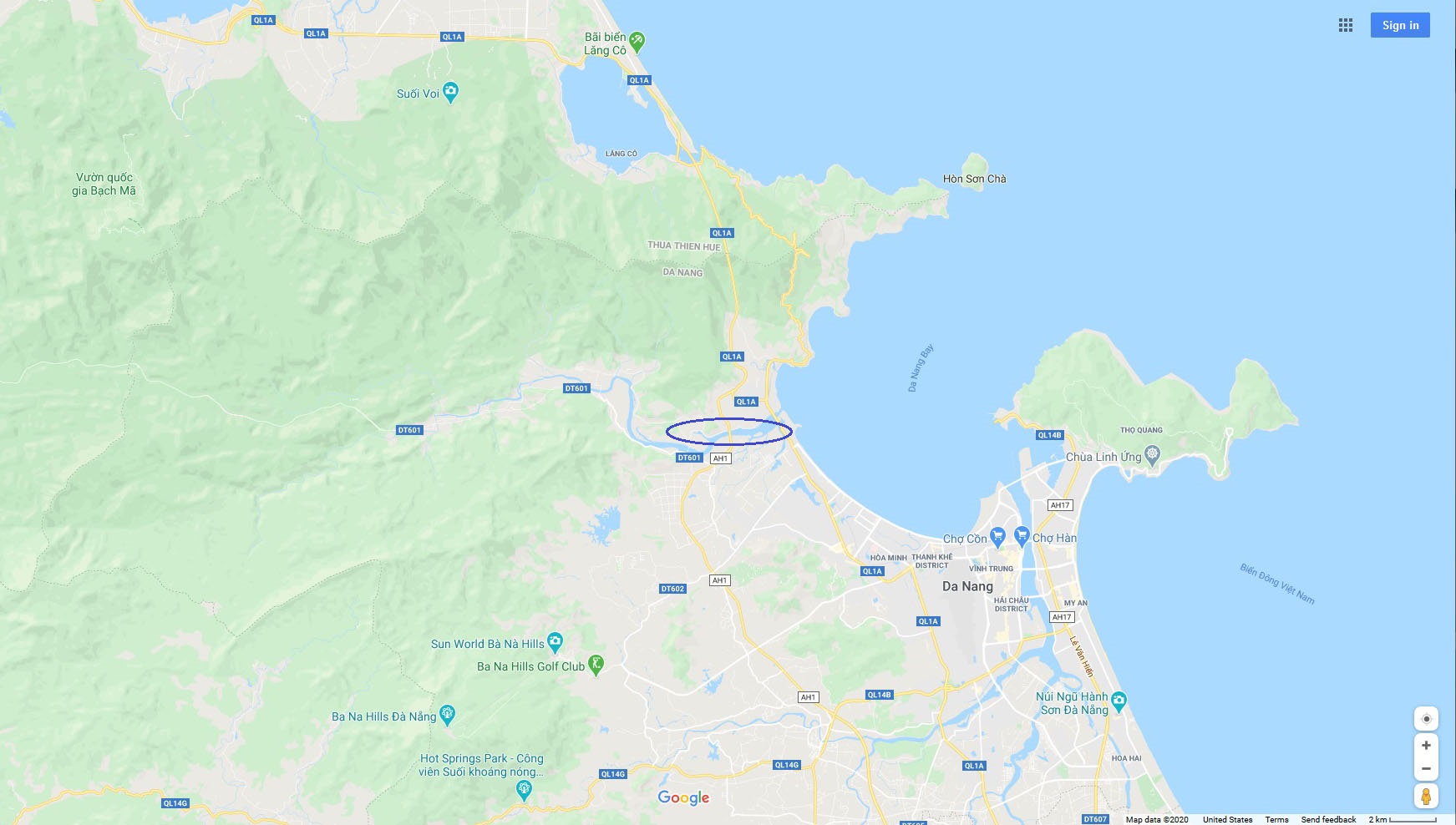
Sergeant Sweatt, who evaded capture and returned to England on March 26, 1944, described his survival in Escape & Evasion Report 535, part of which is presented below.  The “strikethroughs” and text in red represent changes to Sgt. Sweatt’s report which appear in the actual document.  (You can read the full report here.)
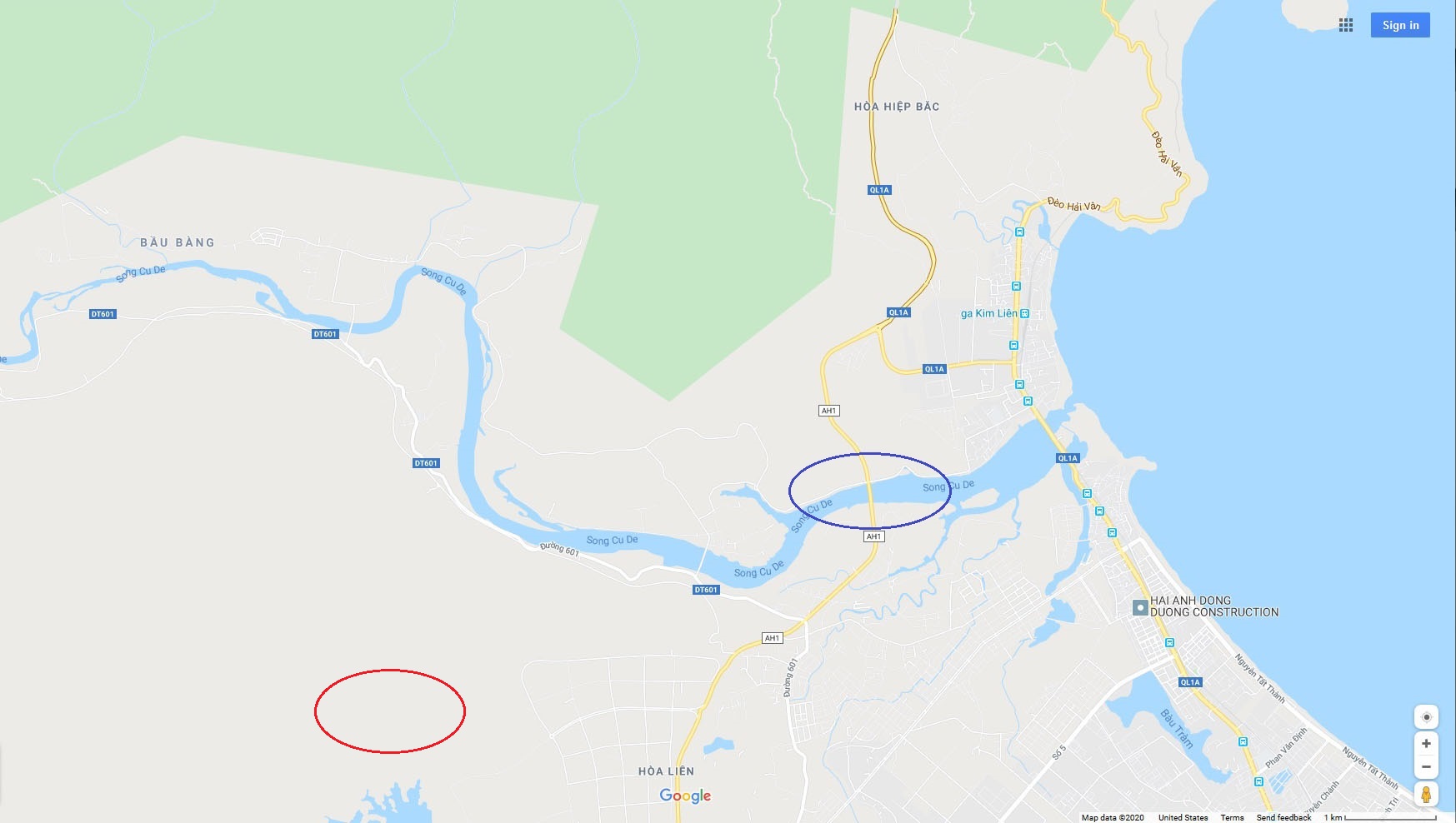
We were flying on our course returning from our target at Wilhelmshaven on 7 January 1944.  Near Chartres fighters attacked us.  Our ship seemed to stop dead in mid-air.  I was hit.  Arm had been hit, and I had to out on my chute with one hand.  Suddenly I was thrown against the other waist gunner, and as I stumbled to my feet I heard a loud explosion.  I remember that my head and shoulders were pushed out of the waist window, but the next thing that I recall is falling through the air.

I pulled my ripcord and then saw pieces of our ship all about me and a fully inflated dinghy floating above me.  The field in which Ianded was frozen.  I landed in a field, and took off my harness, and found when I tried to bury my chute that the ground was frozen.  [but could not bury my chute in the frozen ground]  I then ran [300 yds] to a clump of trees and sat down next to a stock of grain in this grove [grain-sheaves].  Half a dozen Frenchmen suddenly sprang up all around me [surrounded me].  One of them asked whether I was English, and when I answered “American” he pulled off his clothes and gave them to me.  After I had put [them on and my flying clothes] on these clothes and my heated suit and flying boots had been hidden in the grain sheaves, three young French men and I walked across the fields.  We had not gone 300 yards when a German soldier came towards us and called for us to halt.  One of the Frenchmen motioned me to stay where I was, and he went forward and talked to the soldier for several minutes.  Finally the German made two of the young men pick up a large piece of metal from our ship and carry it to a car, which was standing on a hill about 400 yards away in the distance.  I motioned to the other Frenchman, and we snatched grabbed another piece of metal and walked off towards the car.  After we had gone about 400 yards I ducked into a [clump] growth of trees and covered myself with leaves and twigs.  I remained hidden here for six hours, and after dark the young Frenchman and his father returned in a cart, took me to their house, and put me to bed.  They kept me in bed for five days while they treated my wounds and then took me to another farmhouse from which where the rest of my journey was arranged.

Postwar, Robert Sweatt became a rancher in Texas. 

But, there’s more to the story.  (There’s always more to every story.)  To be specific, two photographs.  One image – an excellent image, at that – is an official Army Air Force photograph photo B-27323 AC / 3A16214, showing of Trouble, in flight.  Among six B-24s over Cognac, France, the aircraft appears in the lower foreground.  The plane’s nose art and aircraft letter (K+) are plainly visible, as are the waist gunners (seen through the open waist windows) and pilot.  The photograph was taken some time before February 8, 1944.

A close-up of Trouble’s nose art, from Database Memoire.

The other image is very different.  Found via Thomas M. Tryniski’s remarkable FultonHistory website, it lends a striking poignancy to an ostensibly straightforward chronicle of dates and events:  A photo of Jackie Roodman and Ronnie Lee Rodman, the young wife and four-month-old son of Lt. Roodman. 

Published in P.M. on September 3, 1943, under the title “V-Mail Photos for Dads in Service”, this feature seemed to have been a regular feature of P.M., at least going by its instructions: “If your baby is less than a year old and was born after your husband went into service overseas, we’ll take a picture of you and the child and reprint it on a V-Mail blank which you can mail to your husband.  Call Sterling 3-2501 between 10 a.m. and 5 p.m. and ask for the V-Mail Editor.  There is no charge for this service, which is restricted to New York City.”

Jackie Roodman passed away on January 4, 1998.  She is buried next to her husband at Long Island National Cemetery, in Farmingdale, New York.  Her Honor Record in his memory can be seen at the Registry of the National WW II Memorial. 

Wounded in Action

Rappaport, Samuel, Pvt. (on Bougainville)
United States Army
Mrs. Sadie Krasner (sister), Harry (brother), 1001 Lincoln Place, Brooklyn, N.Y.
Born Toronto, Ontario, Canada, 1920
Brooklyn Eagle and New York Times 2/8/44
American Jews in World War II – 410

Tate, Daniel, Pvt., B/40356
Canada, Royal Canadian Infantry Corps, Canadian-American First Special Service Force
Mr. Samuel Tate (father), Harry (brother), 365 Huron St., Toronto, Ontario, Canada
Canadian Jews in World War II – Part II: Casualties – 117

Turiansky
, George Gordon, 1 Lt., Distinguished Flying Cross, Air Medal, 3 Oak Leaf Clusters, Purple Heart, 30 missions

United States Army Air Force, 8th Air Force, 92nd Bomb Group, 325th Bomb Squadron
Wounded over Ludwigshaven, Germany
Mr. Abraham Turiansky (father), 707 Beverly Road, Brooklyn, N.Y.
Miss Elaine Brown (fiancee)
Born 1923
Aircraft: B-17
Brooklyn Eagle 7/21/44
American Jews in World War II – 462

Prisoners of War

Hirsch, Robert H., 2 Lt., 0-805918, Co-Pilot
United States Army Air Force, 8th Air Force, 389th Bomb Group, 565th Bomb Squadron
SL 3 Sagan (33) (Compound unknown); S 7A Moosburg (13)
Mrs. Ruth B. Hirsch (wife), 715 Veronica Ave., East Saint Louis, Il.
Born Rochester, N.Y., 5/2/22
MACR 1852; Luftgaukommando Report KU 663; Aircraft: B-24H 42-7593 (“Blunder Bus!”); Pilot: 2 Lt. Royce E. Smith; 11 crewmen – 9 survivors
American Jews in World War II – Not listed

A nice image of Blunder Bus!’ nose art, from B-24 Best Web.  Unfortunately, the crewmen are unidentified.

______________________________

Spritz, Sigmund, 2 Lt., 0-682256, Navigator
United States Army Air Force, 8th Air Force, 93rd Bomb Group, 328th Bomb Squadron
Evaded capture through 2/29/44
SL 3 Sagan (33) (West Compound); S 7A Moosburg (13)
Mr. Benjamin H. Spritz (father), 3851 Boarman Ave., Baltimore, Md.
Born Baltimore, Md., 8/6/17; Died 1/5/94
Casualty List 6/21/45
MACR 2368; Luftgaukommando Report KU 658; Aircraft: B-24H 42-7614 (“Lady Shamrock”; “K”) Pilot: 2 Lt. James Carnahan; 10 crewmen – 8 survivors
American Jews in World War II – Not listed

Three of Lady Shamrock’s crewmen – Right waist gunner S/Sgt. Robert J. Fruth, co-pilot 2 Lt. Edward C. Miller, radio operator S/Sgt. Willis E. Spellman, evaded capture, with Spellman known to have returned Allied control by March 20.  Two other men – left waist gunner Sgt. Jay W. Stearns and tail gunner S/Sgt. William D. Wahrheit – did not survive the mission.

Lt. Spritz was captured and survived the war as a POW. 

Though there is only nominal mention of him in Lady Shamrock‘s Missing Air Crew Report, an altogether different document sheds highlight about his experience after parachuting from the Liberator…

Lt. Spritz was able to evade capture until February 29, 1944, when he was apprehended by the German SD (Sicherheitsdienst – Security Service) and brought to a prison in Fresnes.  This is confirmed in his story of (temporary) evasion, published in The Baltimore Sun on January 11, 1994, at his FindAGrave biographical profile.  The account is presented below:

Sigmund Spritz, who as a prisoner of the Germans during World War II credited his survival to the American Red Cross packages that occasionally reached camp, died Wednesday of an upper respiratory infection at Sinai Hospital.  The Northwest Baltimore resident, a retired optometrist, was 76.

He’d been a navigator aboard a B-24 bomber that was hit by flak during a raid over Ludwigshafen, Germany, forcing the crew to bail out over Melun, France.

Mr. Spritz parachuted into woods and stayed there for three days before being taken to the home of a farmer who hid him for several days.

“About 30 people came the next day bringing gifts to me.  They treated me like a god,’’ he said in a 1965 Evening Sun interview.

The local priest provided him with false identification papers and the identity of a deaf-mute from a town whose records had been destroyed by Allied bombing.  Contact was made with an English woman living in Paris who had French underground connections, and he was sent there – but not before spending several terrifying hours waiting for the train surrounded by German soldiers.

He avoided capture in Paris for nearly three months until an escape attempt went awry.  A British torpedo boat with which he had rendezvoused hit a reef and began to sink.  The boat drifted back to the French coast where its occupants were arrested.  He convinced a Gestapo interrogator he was a flier and not a spy and was sent to jail in Paris.

After spending time in several camps, he and several thousand other prisoners were marched through a blizzard, packed aboard stock cars and shipped to Nuremberg and eventually to the Moosburg prison camp, where his ordeal of 20 months came to an end when the camp was liberated in May 1945 by Gen. George S. Patton’s 3rd Army.

He said he’d liked the dark German bread that his captors fed him but never learned to like the soup they called “green death,’’ which was a camp staple.  He attributed his survival to the Red Cross packages that contained powdered milk, canned butter, cigarettes, matches and soap.  They were “the difference between starvation and life,’’ he said.

Born and reared in Baltimore, he was a 1933 graduate of City College and earned his bachelor’s degree from Towson State College in 1940.  He taught elementary school before enlisting in the Army Air Corps in 1941.  He was discharged with the rank of lieutenant in 1945 and was awarded the Bronze Star and the Purple Heart.

But, there is even more confirmation of his story.  This is an “Admission Notice” – an “Einlieferungs-Anzeige” – filed by the Germans after Lt. Spritz’s capture.  Found with his dog-tags in the Luftgaukommando Report for Lady Shamrock (in the National Archives) the Admission Notice contains a fascinating clue: The “Day / time of admission” (to the prison) is recorded as 8:00 A.M. on February 29, 1944, nearly two months after Lady Shamrock was shot down. 

Lt. Spritz’s dog-tag and prison Admission Notice are show below, along with the latter’s translation.  (It’s also notable that the Germans listed his “creed” as Catholic, despite the “J” stamped upon his dog-tag…) 

You can find more information about Luftgaukommando Reports here and here, at my brother blog, ThePastPresented.

______________________________

S/Sgt. Irving J. Balsam and 2 Lt. Manuel M. Rogoff served in the same air crew.  Assigned to the 389th Bomb Group’s 567th Bomb Squadron (8th Air Force), their B-24D Liberator 42-40747 (“Heavy Date”), piloted by 1 Lt. Carl A. Mattson, was shot down during a mission to the oil refinery at Ludwigshaven, Germany.  The aircraft’s loss is covered in MACR 1851, and, Luftgaukommando Report KU 667.  Of the plane’s crew of ten, there were 5 survivors.  The other survivor from the forward part of the aircraft was the co-pilot, while from the rear, the ball turret gunner, right waist gunner, and tail gunner survived.  All survivors except the ball turret gunner evaded capture and returned to England by March, 1944.

Balsam, Irving J., S/Sgt., 12183535, Gunner (Left Waist), Air Medal, Purple Heart, ~ 6 missions
KIA
Mr. and Mrs. Hyman [11/2/47] and Gussie [10/28/51] Balsam (parents), 2928 West 21st St., Brooklyn, N.Y.
Mount Zion Cemetery, Maspeth, N.Y. – Path 1, Lot 30R, Kremenitzer Society; Buried 10/21/48
Casualty Lists 2/17/44, 3/28/44
American Jews in World War II – 269

Rogoff, Manuel M., 2 Lt., 0-678392, Bombardier, Air Medal, Purple Heart, 7 missions
WIA (severely burned); Evaded capture; Returned to Duty 3/17/44
Mr. and Mrs. Jacob and Edith Rogoff (parents), Bernard and Leonard (brothers), 1146 Maplewood Ave., Ambridge, Pa.
Born 2/11/17; Civilian occupation: Businessman
Escape & Evasion Report 465
American Jews in World War II – 546

An edited extract from Lieutenant Rogoff’s Escape & Evasion Report (the full document is longer and more detailed) is presented below.  As is obvious from the story, Lt. Rogoff was very badly burned upon exiting his bomber through the nose-wheel opening, but recovered from his injuries due to the care and diligence of his helpers and rescuers.  As in the above Report for Sergeant Sweatt, “strikethroughs” represent textual changes which appear in the actual document.  (You can read the full report here.)

First account of bailing out.

The time of the attack was approximately 1:30 P.M. about one half hour from the coast.  The three F.W. 190s attacked from two o’clock low out of a haze that persisted from the right side.

The aircraft were sighted when at point blank range then two in tight formation fired 20 mm & machine guns simultaneously riddling the ship from behind the nose to the length of the waist.

**********

I turned my attention to the fire which was of a bright red or scarlet color.  After a quick examination I found there was no fire extinguisher.  I grabbed the B3 bag of the navigator’s to try to smother the fire.  After an abortive attempt I gave this up because I could not squeeze through the narrow openings.  I turned back reconnected my oxygen line.  The fire spread and as if under pressure, had spread until the flames reached past the navigator’s desk.  I entered the fire and opened the nose wheel door after three attempts.  I hoped that the slip stream might extinguish the blaze. 

Perceiving that it had no effect and that the fire increased I handed the navigator his chest chute and told him to jump.  **********  I motioned for him to follow me and entered the flames and left the ship.

At the time of leaving the ship was in level flight and in seemingly perfect working order.  The interphone to my knowledge was inoperative or unused.  The nose was beginning to burn; a parachute belonging to the original crew had ignited; my summer flying suit had burned in spots.

I left the airplane head first, was twisted about severely by the slip stream, then found myself falling in slow turns.  With my hands at my side I spread my legs thus stopping that motion and heading straight down in a 135 [degree] angle.  I reached for my rip cord counted a rapid ten and pulled sharply.  The chute opened with a rough jerk but as the straps were very secure I suffered no ill effect.  I glanced up saw our ship in straight flight then saw it go into a left banked turn.  A guest of wing turned me and I lost sight.  In a minute a formation of Liberators passed overhead.  I noticed three other chutes in the air off at some distance from me that I believe belonged to members of the same crew.

Was up there from 10 or 12 minutes.  About 1000 feet noticed I was going to hit.  I pulled _____ up hit a plowed field and tumbled in the chute. 

Second account of bailing out, including highlights of assistance by French civilians.

We were attacked by FW-190s half an hour inland from the coast on our way to the target.

Our ship was burning when I bailed out at 21,000 feet.  I was temporarily blinded by the flames and pulled my rip-cord after counting ten.  My chute opened with a considerable jerk, but my harness was tight and I was not hurt by it. 

On my way down I noticed about 50 people running to meet me.  I landed in a plowed field and several of the men helped me to my feet and took my chute.  After some discussion one of the men motioned to me to follow him, and we went to an old stone barn a few hundred yards away.  There he spread butter on my face, which was very painfully burned.

I was taken to the house and all identification was removed except my dog-tags.  My friends fitted me out with a beret, a heavy leather overcoat, and a pair of white shoes.  They pooled their money and got together their 1250 Francs, which they gave me.  Then they treated my burns again with more butter and I followed two of the men out.

We skirted fields and my helpers stopped once in a while to pick up RAF leaflets, and one of them found an American flying jacket which he kept.  In about twenty minutes we came to a peasant’s house, where I was given brandy and put to bed.

For the next month or so I was blind and helpless.  I was moved about from house to house and was under the constant care of physicians, to whose skill I probably owe my sight.  In spite of the great difficulty and danger involved because of my conspicuous injuries, my helpers did not relax their vigilance and care and got me out care and successfully arranged my journey as soon as I was able to see.

______________________________

Another Incident: Crash-landed his fighter plane, but “walked away”…

Bloom, Herman Ben, Lt., 0-736958, Fighter Pilot, Air Medal, Bronze Star Medal, Purple Heart
United States Army Air Force, 10th Air Force, 311th Fighter Group, 529th Fighter Squadron
Injured; Crash-landed due to engine failure 20 miles north of Sumprabum, Burma
Mrs. Ruth (Nasbarg) Bloom (wife), 1523 Federal, Denver, Co.
No MACR; Aircraft: P-51A 43-6193 (Record at Aviation Archeology)
Graduated from Advanced Flying School and Commissioned 1 Lt. on 2/16/43
American Jews in World War II – 58

Lieutenant Bloom’s portrait – found in the National Archives in Records Group 18-PU “Records of the Army Air Forces: Photographic Prints of Air Cadets and Officers, Air Crew, and Notables in the History of Aviation” – is shown below.  You can read more about this collection in my post “Five Pilots in December“, at ThePastPresented

References

Dublin, Louis I., and Kohs, Samuel C., American Jews in World War II – The Story of 550,000 Fighters for Freedom, The Dial Press, New York, N.Y., 1947.

Canadian Jews in World War II
– Part II: Casualties, Canadian Jewish Congress, Montreal, Quebec, Canada, 1948.

Davis, Mac; Curley, James M.; Simon, Howard, Jews Fight, Too!, Hebrew Publishing Company, New York, N.Y., 1945

Memorial Book of Jewish Soldiers Who Died in Battles Against Nazism – 1941-1945 – Volume II [Surnames beginning with К (K), Л (L), М (M), Н (N)], Maryanovskiy, M.F., Pivovarova, N.A., Sobol, I.S. (editors), Union of Jewish War Invalids and Veterans, Moscow, Russia, 1995

B-24D Liberator 41-29119 (at American Air Museum)

B-24D Liberator 42-40747 (at American Air Museum)

B-24D Liberator 42-41013 (at Aerosteles, American Air Museum, and Database Memoire)

B-24H Liberator 42-7593 (at Aerosteles, American Air Museum, and B-24 Best Web)

P-51A Mustang 43-6193 (at Aviation Archeology)

Soldiers from New York: Jewish Soldiers in The New York Times, in World War Two: TM3C Jerome Ernest Faber – May 18, 1945

Previously, blog posts covering Jewish military casualties reported in The New York Times have covered men who served in the United States Army, whether in the Army ground forces, or Army Air Force. 

This post is different, for it concerns a member of the United States Navy.

On July 22, 1945, the Times published an obituary for Torpedoeman’s Mate Third Class Jerome Ernest Faber, a crewman of the U.S.S. Longshaw (DD-559), a Destroyer lost off Okinawa on May 18.

The Longshaw, a Fletcher-Class destroyer commissioned on December 4, 1943.  The ship served in the Hollandia, Marianas, Western Carolinas, Leyte, Luzon, and Iwo Jima Operations, ultimately taking part in the invasion of Okinawa, where she arrived on March 25, providing naval gunfire against Japanese ground targets in support of American troops.

On May 18, after a four-day interval of continuous support of American ground forces on the island, she became trapped – at 0719 hours – on an undersea coral reef.  At 1101 hours, almost immediately after the tug U.S.S. Arikara (ATF 98) arrived and attempted to take the destroyer in tow, Japanese coastal artillery straddled the sea between the Arikara and Longshaw.  Under the command of Lieutenant Commander Clarence W. Becker, the destroyer fired back, but soon after received a direct hit in her forward magazine, which exploded, blowing off the ship’s bow and devastating the vessel.  Half her officer compliment, Lt. Cdr. Becker among them, and 66 sailors were killed. 

Between 1105 and 1115 an “abandon ship” order was relayed among the destroyer crew by word of mouth, and by 1200 hours, Infantry landing craft LCI(M)-356 evacuated survivors.  After those crewmen (7 of whom later died of wounds) had been taken off the vessel or rescued, the ship was by sunk – later the same day – by gunfire and torpedoes from American ships.

______________________________

An image of the Longshaw (date unknown) from Wikimedia commons.

______________________________

The Longshaw, after the explosion of her forward magazine.  This photograph, from Navsource.org, was taken by RM2C David M. Nelson of LCI(M)-356.

______________________________

Another image of the mortally wounded Longshaw, from Navsource.org.  This image was also taken by RM2C David M. Nelson.

Bronx Petty Officer Is Killed Off Okinawa

Torpedoman’s Mate 3C Jerome Ernest Faber, formerly of 3504 Rochambeau Avenue, the Bronx, a member of the crew of the U.S.S. Longshaw and credited with thirteen engagements in the Pacific Theatre, was killed in action off Okinawa on May 18, when his ship was shelled and sunk after being caught on a coral reef, according to word received by his mother, Mrs. Siegfried Faber of 3509 Eleventh Street, N.W., Washington.  He was 19 years old.

Before entering the Navy in 1943, he was employed by the Allied Typographical Company, here.  He went to sea the following year.

Torpedoeman Faber, serial number 7111868, was born in New York, New York, to Siegfried and Josephine Faber on August 3, 1925.  His siblings included sisters Beatrice Weinberg and Esther Francisco, and brother Bernard.

A notice commemorating Torpedoeman Faber appeared in the Memorial Section of the New York Times obituary pages on April 2, 1949.  According to the FindAGrave website, a commemorative headstone exists for him at Cedar Park Cemetery, in Paramus, New Jersey. 

______________________________

A 2016 Google Maps (what else?!…) image of 3504 Rochambeau Avenue in the Bronx, the original home of the Faber family.

______________________________

Some other Jewish military casualties on Friday, May 18, 1945, include…

Killed in Action

– .ת.נ.צ.ב.ה. –

“No one has heard from him or any of the others with him.”

A newspaper article about Seaman First Class Murray Kushner – also a casualty on the Longshaw – appeared in the Herald Statesman (Yonkers) (located through Tom Tyrinski’s FultonHistory website) in July of 1945.  The full text is presented below, followed by biographical information about Seaman Kushner.

Old Newspapers

Kushner Listed Missing With Lost Destroyer
Seaman Assigned to Longshaw Sunk By Japs Off Naha

The Herald Statesman (Yonkers) July 12, 1945

Murray Kushner, seaman, first class, in the U.S. Navy, is missing in action after the sinking of the U.S.S. Longshaw, to which he was assigned, off Naha on May 18, according to word from the Navy Department to his wife, the former Shirley Marilyne Friedman of 74 Post Street.

The hull of the Longshaw, the Navy announced recently, was caught on a reef off Naha and the crew was attempting to move the ammunition being carried on the ship to another position aboard the vessel when Japanese shore batteries opened up on it.  Some time later, the Longshaw went down.

Letter From Crewmate

In a letter to Mrs. Kushner, a friend of her husband who also was assigned to the ship, told her that he had last seen Seaman Kushner “going up to the starboard side with his right hand bleeding profusely.”  The Yonkers man’s battle station, he added, was in “number one handling room, which could have blown up.”  He explained, “No one has heard from him or any of the others with him.”

A Native of New York City, Seaman Kushner was employed by the Auto Ordnance Company in Bridgeport, Conn., when he entered the service on March 28, 1944.  After boot training at Sampson, N.Y., he was stationed at Newport, R.I.; Norfolk, Va.; and Shoemaker, Calif., before going overseas in November, 1944.  He and the former Miss Friedman were married on June 29, 1941.

Kushner, Murray, S1C, 9081610, Purple Heart (Killed off Okinawa)
United States Navy, USS Longshaw (DD-559)
Mrs. Shirley Marilyne (Friedman) Kushner (wife), 74 Post St., Yonkers, N.Y.  (Married 6/29/41)
Tablets of the Missing at Honolulu Memorial, Honolulu, Hawaii
http://www.lonesailor.org
Casualty Lists 7/8/45, 8/10/45
The Herald Statesman (Yonkers) 7/12/45, 7/27/45
American Jews in World War Two – 370

______________________________

Levinson, Gabriel R., 2 Lt., 0-785639, Bombardier, Air Medal, Purple Heart, 5 Missions
United States Army Air Force, 5th Air Force, 43rd Bomb Group, 65th Bomb Squadron
Mrs. Alice R. (Lotker) Levinson (wife), 35-20 190th St., Flushing, N.Y.
Mr. Max Levinson (father); David and Shirley (brother and sister), Philadelphia, Pa.
Born 1921
Studied physics at Penn State University
MACR 14531, B-24J 42-109684; “Smitty, Jr.”, Pilot: 2 Lt. Charles R. Wilt; 11 crewmen – 7 survivors
Tablets of the Missing at Manila American Cemetery, Manila, Philippines
Casualty Lists 6/14/45, 3/22/46
Long Island Star Journal 6/15/45, 3/20/46
New York Sun 9/15/43
American Jews in World War Two – 378

Lt. Levinson was one of the four aviators who lost their lives after bailing out of Second Lieutenant Charles R. Wilt’s B-24J Liberator Smitty, Jr., during a mission to Tainan, Formosa.  The plane was struck by flak, and possibly debris from the destruction of the 65th Bomb Squadron’s lead aircraft, B-24M 44-42358, piloted by 1 Lt. James J. Franklin (from whose crew of 11 there were no survivors).  Lt. Wilt’s crew parachuted over the South China sea, south of the city of Takao.

(A search of Fold3.com’s MACR database reveals no Missing Air Crew Report for Lt. Franklin’s plane and crew.  However, the crew’s names can be found in the KensMen Casualty List.)

The Missing Air Crew Report for Smitty, Jr., covers the loss of plane in very great detail, through statements given by the seven survivors after their rescue by Navy PBY (Catalina) seaplanes.  While all eleven crewmen were witnessed – in mid-air- to have opened their parachutes none of the four missing men were seen afterwards.

Like some MACRs for aircraft lost at sea, for which some (but not all) of the crew were rescued, next-of-kin information is only listed for casualties, not airmen who survived.  Thus, MACR 14351 gives next-of-kin and address information only for Lt. Levinson, Lt. Straeck (Co-Pilot), and Cpls. Stauffer and Christensen (gunners).

These first two pages summarize details about how the plane and crew, and provide a very brief description about how the plane was lost.

An eyewitness account of the crew’s bail-out and rescue, from flight engineer Cpl. Billie J. Cole.

A list of Smitty, Jr.’s four lost crewmen.

This small-scale map shows the general location of the bail-out from Smitty, Jr.

______________________________

Rudsten, Leon Samuel, PFC, 926304, Purple Heart (Okinawa)
United States Marine Corps, 6th Marine Division, 29th Marine Regiment, 3rd Battalion, G Company
Mr. Philip Rudsten (father), 23 Angell St., Dorchester, Ma.
Born 5/2/24
Honolulu Memorial, Honolulu, Hawaii – Plot N-1344; Buried 3/2/49
http://www.sixthmarinedivision.com/14.html
American Jews in World War Two – 177

Tauss, Martin William, PFC, 902748, Purple Heart (Okinawa)
United States Marine Corps, 6th Marine Division, 29th Marine Regiment, 3rd Battalion, H Company
Mr. and Mrs. Sam and Lillian Tauss (parents), 676 Water St., New York, N.Y.
Born 8/10/25
Beth David Cemetery, Elmont, N.Y.
Casualty Lists 6/23/45, 7/8/45
American Jews in World War Two – 460

Wounded

Nirenberg, Albert A., S/Sgt., 33341122 (Wounded on Okinawa)
United States Army
Mr. Charles Nirenberg (father), 2635 N. 31st St., Philadelphia, Pa.
Born 12/24/21; Died 7/19/03
Jewish Exponent 7/13/45
Philadelphia Bulletin 7/2/45
Philadelphia Record 7/3/45
American Jews in World War Two – 541

References

USS Longshaw, at…

Hazegray

NavSource Naval History

Wikipedia

Wrecksite

USS Longshaw Casualty List (86 names, with serial numbers and next-of-kin information (at Wrecksite))

Books

Dublin, Louis I., and Kohs, Samuel C., American Jews in World War II – The Story of 550,000 Fighters for Freedom, The Dial Press, New York, N.Y., 1947

Roscoe, Theodore, Tin Cans – The True Story of the Fighting Destroyers of World War II, Bantam Books, New York, N.Y., 1968