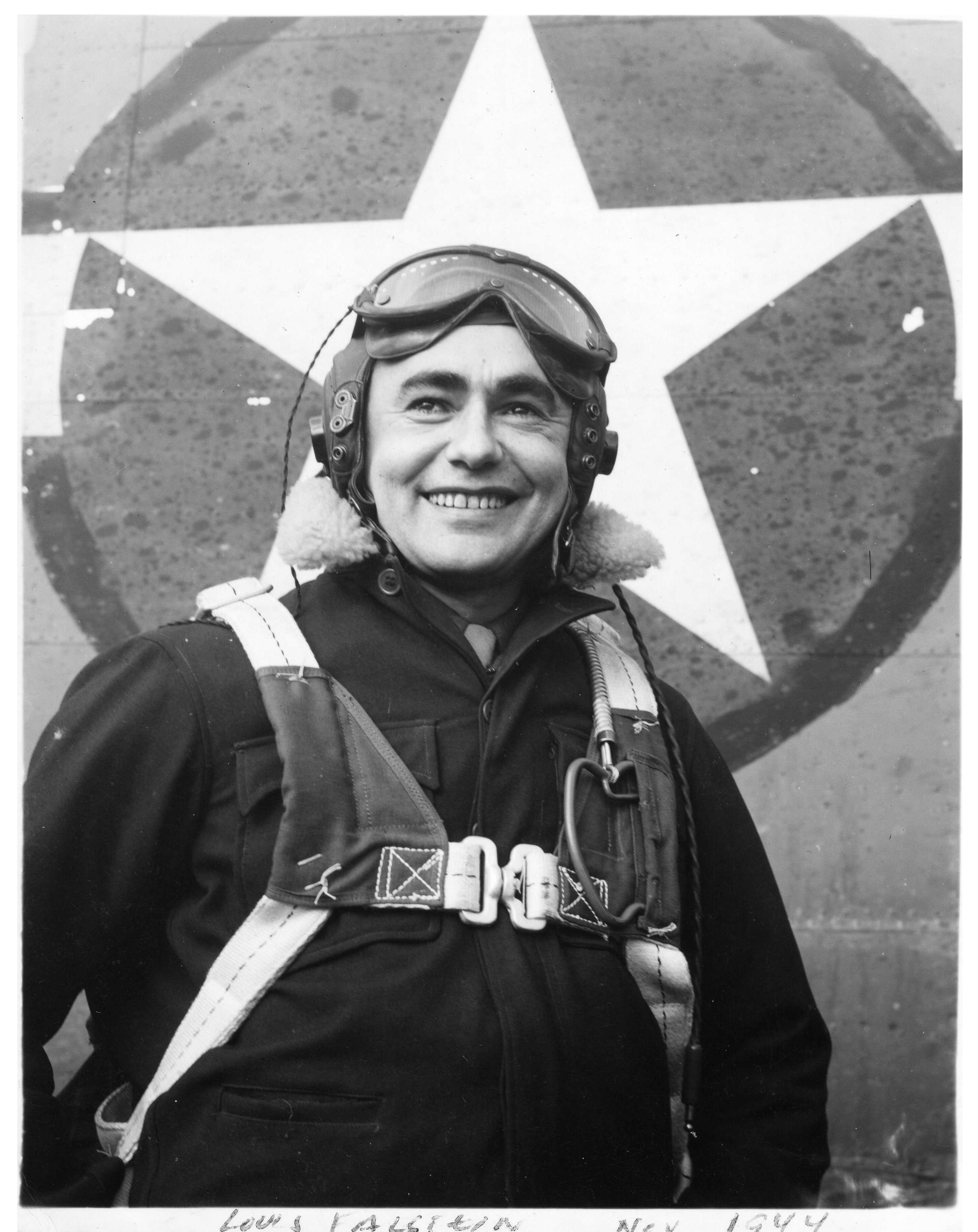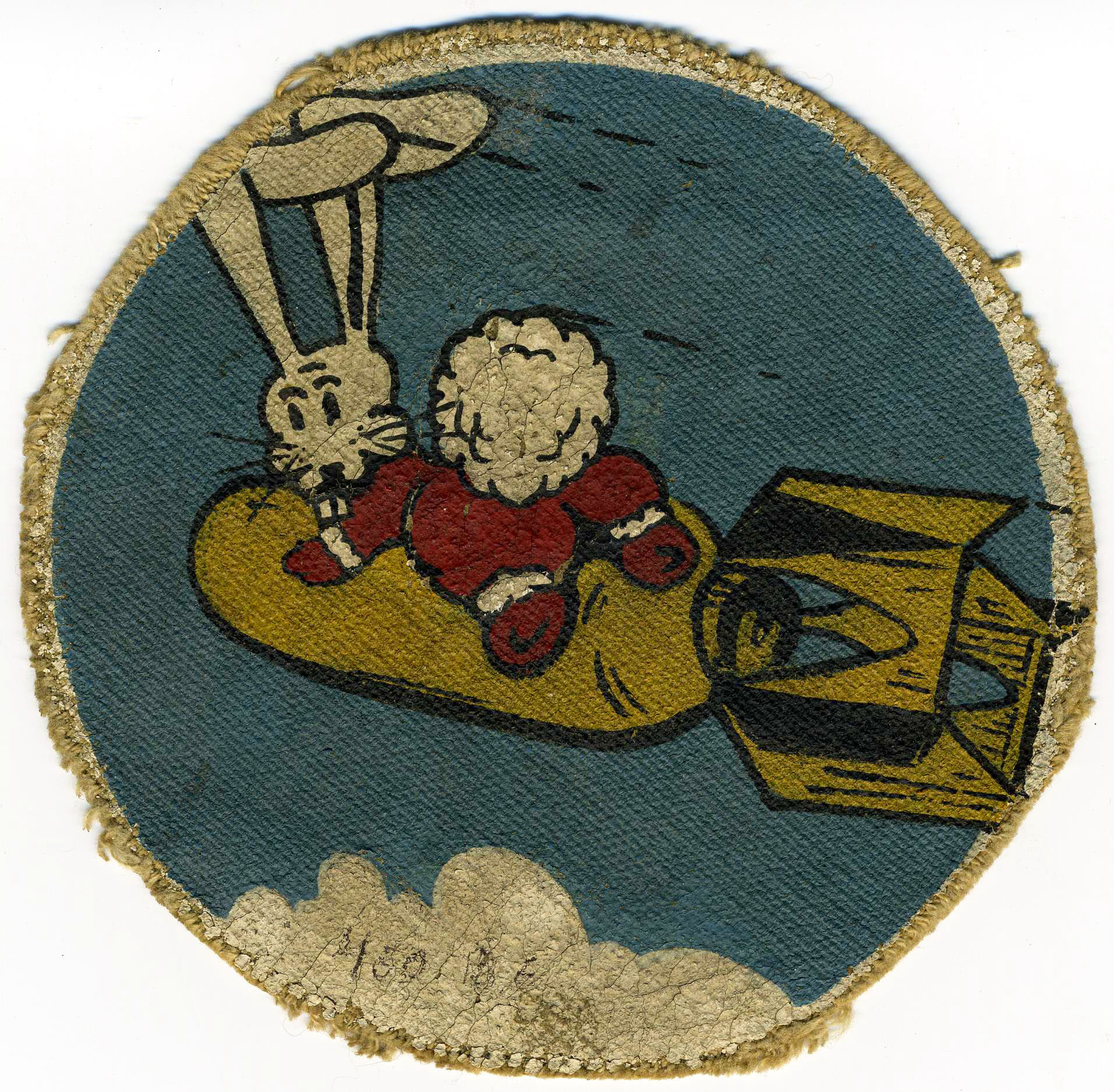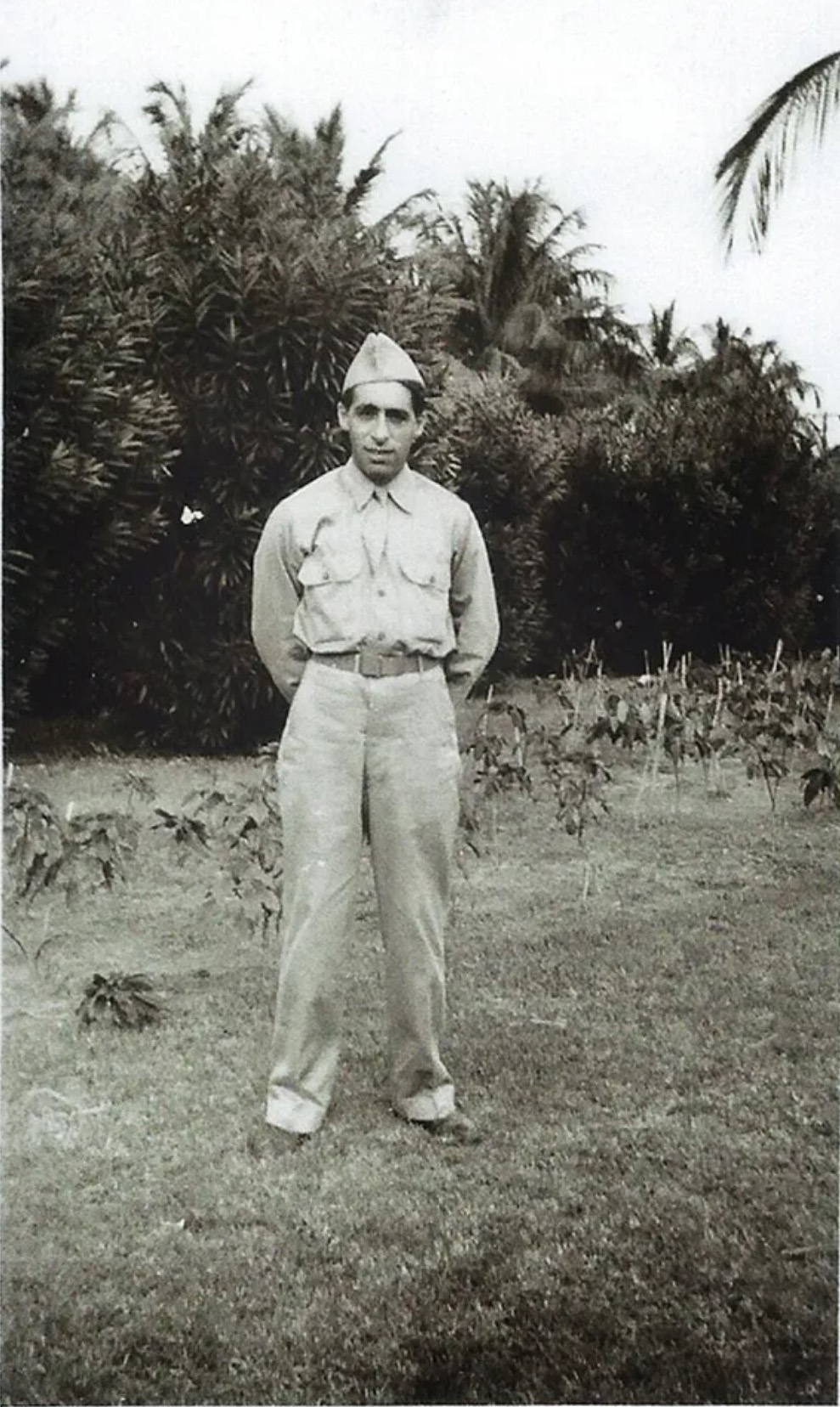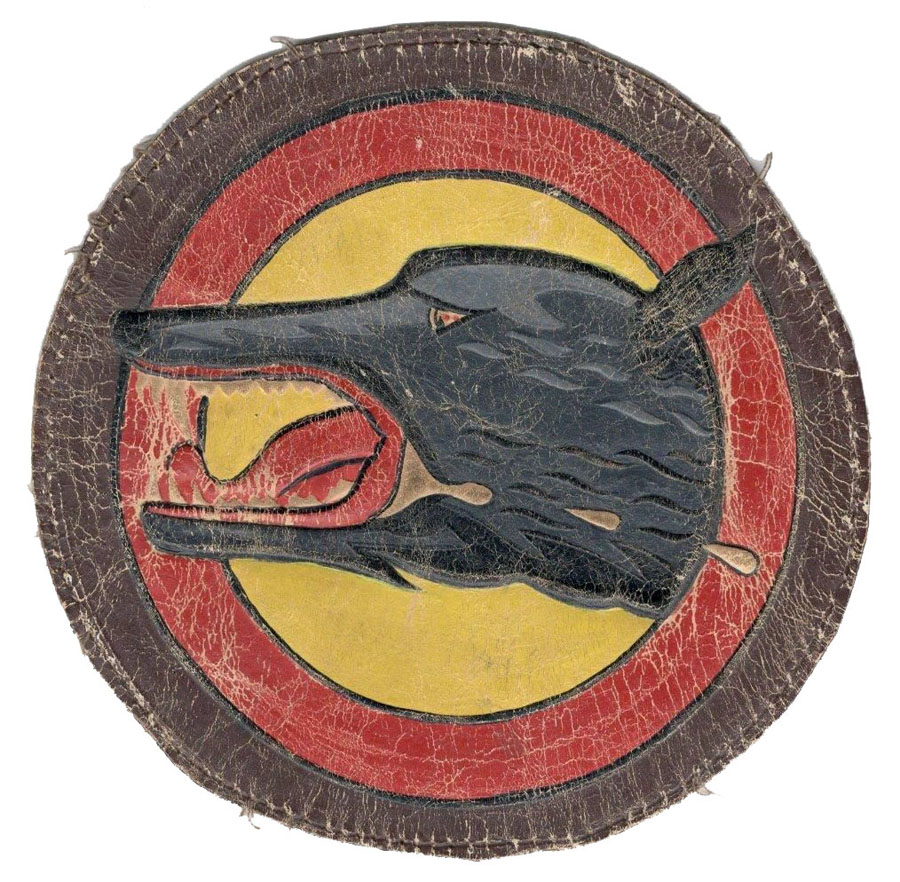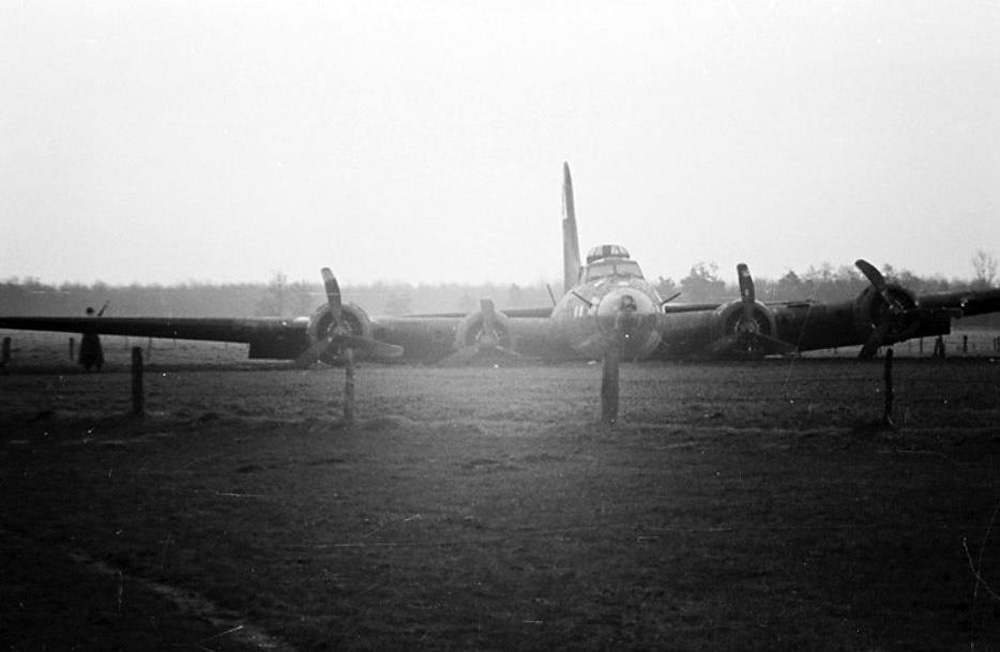
A Tale of a Tail Gunner: Louis Falstein and “Face of a Hero” – III: First Published Writings: “Molto Buono”, and, “The New Republic”

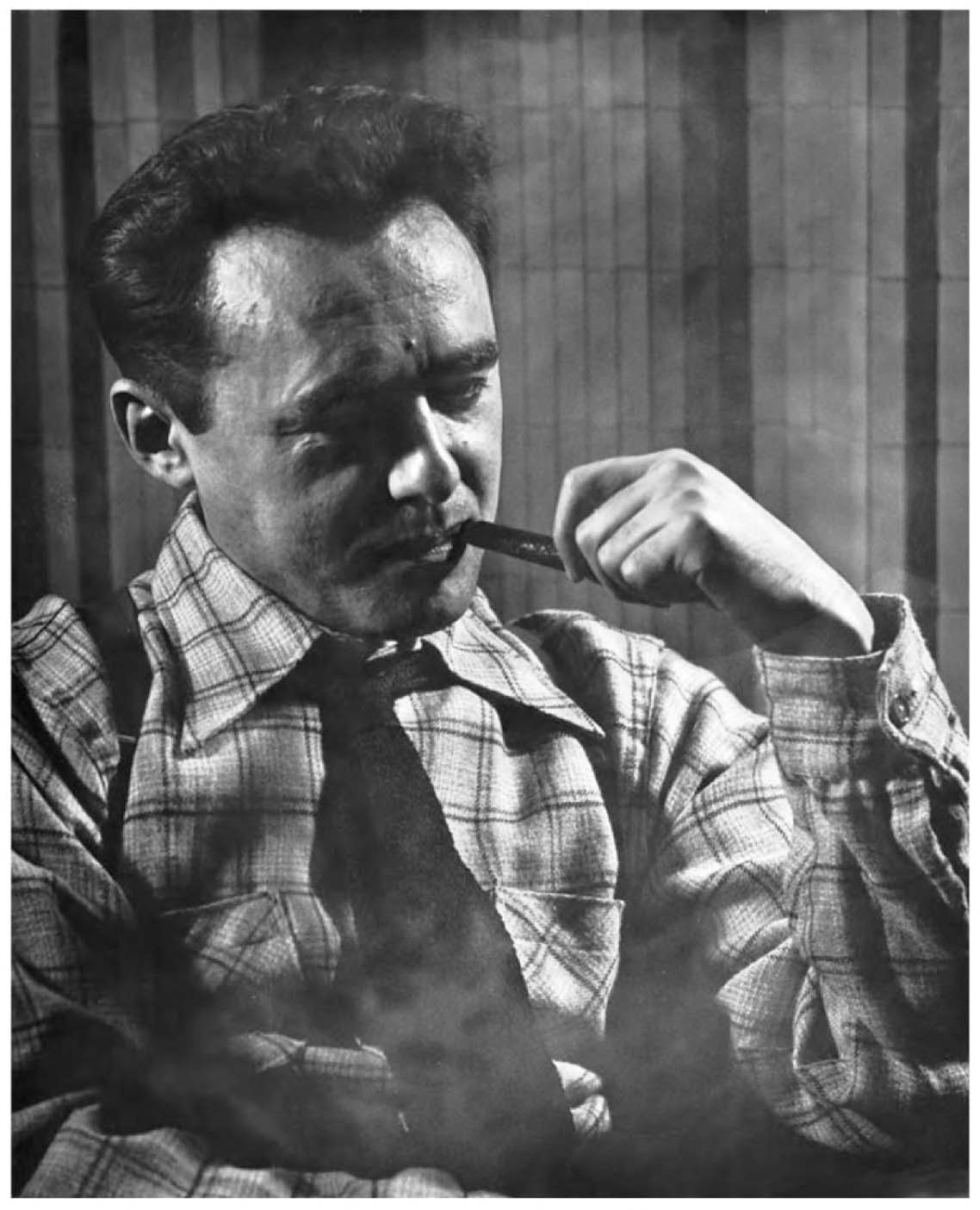
Louis Falstein’s literary oeuvre commenced at least five years – and probably more – before the 1950 publication of Face of a Hero, based on this very brief news item from Molto Buono (Italian for “Very Good”), the unofficial wartime newspaper of (first) the 723rd Bomb Squadron, and (subsequently) the 450th Bomb Group.  The article specifically mentions that Louis was an editor of New Writers and Midwest magazines, and was solicited to write articles for Free World, a publication affiliated with the United Nations.  

The article confirms Lou’s service as a combat airman in the 723rd Bomb Squadron, the article’s publication date, February 3, 1945, placing an approximate time-frame on the period of Lou’s service with the Cottontails: The latter part of 1944 through early 1945.  

Molto Buono, February 3, 1945

723rd Notes

Did you know that S/Sgt Lou Falstein, who very recently wound up his missions and took the long but wonderful voyage home, is a professional writer, a former editor of “New Writers” and “Midwest” Magazines?  Just before leaving, Lou was asked to write a series of monthly articles on the development of democracy in Italy for “Free World,” an outstanding international publication, dealing with United Nations economic and political problems.

________________________________________

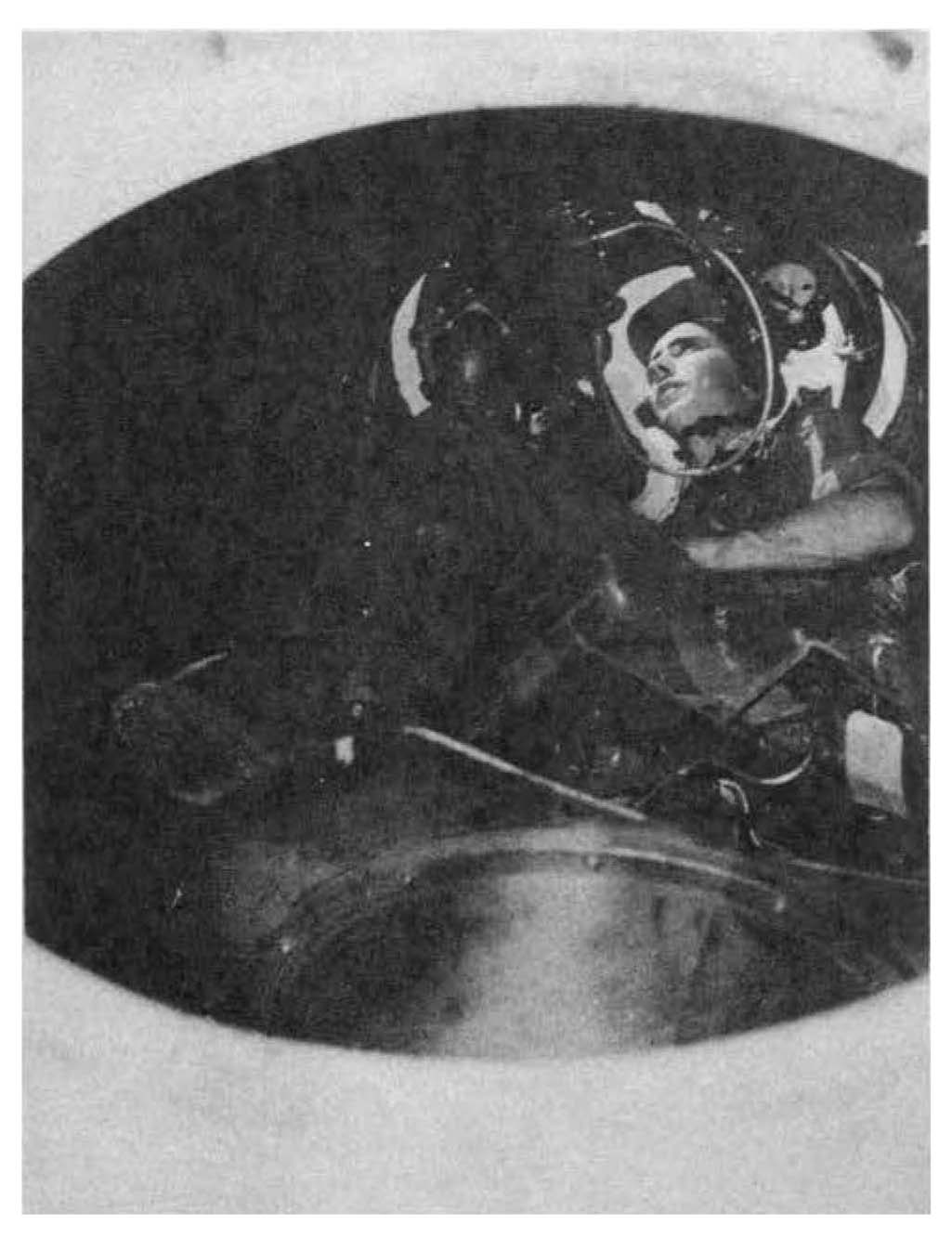
To give an appreciation of the technical aspects of being a B-24 Liberator tail gunner, this video, “Consolidated B-24 Tour – Subscriber’s Request! – Part 1“, at Kermit Weeks’ YouTube channel, shows the interior of the rear fuselage of a B-24J Liberator, with particular emphasis on the interior of Louis’ crew station, the Emerson tail turret.  The aircraft is “Joe”, 44-44272.    

________________________________________

It seems that Louis’ first published writing appeared in a periodical of great significance: The New Republic.  From August of 1945 through January of 1946, he authored five articles for that magazine, three of which were based upon his experiences in the Armed forces, the other two reporting on the development of the atomic bomb.  The commonality of the articles is their very “human” approach to their subject matter: they emphasize neither Lou’s military experiences per se, nor the purely technological and scientific aspects of the extraction and refinement of uranium for use in atomic weapons.  Instead, they focus on Lou’s impressions of civilian refugees, fellow soldiers, and scientists and their families, paying particular attention to language, speech, and emotion.  However, the final two articles are somewhat analytical, one covering moral and political controversies arising from the use of atomic weapons, and, the other entirely straightforward discussion of veterans’ organizations in the post-WW II United States.

These are the article titles and their publication dates:

“From a Flier’s Notebook” – August 20, 1945
“You’re on Your Own” – October 8, 1945
“Oak Ridge: Secret City” – November 12, 1945
“The Men Who Made the A-Bomb” – November 26, 1945
“Veterans Welcome” – January 28, 1946

Full transcripts of all five articles are given below, with each article “headed” by quotes – in dark red, like this – that I think exemplify or highlight the article’s central point.  The two articles about the Oak Ridge National Laboratory are accompanied by images of cartoons (one from P.M., the other from the Daily Mail) that actually appeared in those pieces.  

Of special note – for the purpose of this series of posts – is Lou’s very first article: “From a Flier’s Notebook”.  Note that in the first paragraph Lou mentions “our crew”, the only non-fiction reference to his fellow crew members – whoever they were – that I’ve found.  And, in light of the statement, “Today we find ourselves in a luxurious palace.  We’re on a high hill, and below our rocky cliffs flows the bluest of seas, so blue it hurts your eyes; its waters so clear you can see many fathoms down from your window,” was the un-named location of their “luxurious rest” Capri, or, Naples?

Of much greater import in terms of Face of a Hero is Lou’s detailed and moving account of his interactions and conversation with Yugoslavian refugees, both partisans and civilians, at a nearby rest camp, the article concluding upon his crew’s encounter with Jewish refugees from Yugoslavia, Austria, and Poland, at a “refugee colony on the coast.”  Both of these encounters would be the basis a very lengthy passage in Lou’s then-future novel. 

There, Sergeant Ben Isaacs feels an intense and immediate sense of identification – if not empathy – with these people, his awareness of this shared history giving rise to memories of escaping the Ukraine and reaching America in the wake of the Russian Civil War.  And yet, even with closeness, there is distance:  He comes to the realization that the trajectory of his life – the passage of time, and, his years in America, as an American – have created a near-unbridgeable gulf between himself and the people who in both symbolism and reality, embody his past.

But, that’s for later.

Here are the articles:

August 20, 1945 – “From a Flier’s Notebook

October 8, 1945 – “You’re On Your Own

November 12, 1945 – “Oak Ridge: Secret City

November 26, 1945 – “The Men Who Made the A-Bomb

January 28, 1946 – “Veterans Welcome

________________________________________

From a Flier’s Notebook

The New Republic
August 20, 1945

Today we find ourselves in a luxurious palace.
We’re on a high hill,
and below our rocky cliffs flows the bluest of seas,
so blue it hurts your eyes;
its waters so clear you can see many fathoms down from your window.
We are here for a three-day rest.
Combat fatigue.

There is a Yugoslav rest camp nearby….

**********

In the shoe-repair-shop were two elderly people – Viennese.
The woman, still showing signs of former good living, looked up and smiled.
“A guest,” she said, and embraced me.
Vienna.
Had I ever heard of Vienna?
Yes, I said, I’d had occasion to hear of it…
“Ah, you’ve been bombing it!” she exclaimed.
“Goot! Goot! I have a great house there, but I don’t care.
Bomb it.
Hitler is there.
Destroy it!
Destroy the evil genie!”
America – would I tell them something about America, the outside world?
She held onto me: “Please come to our casa, if only for an hour…”

They live on this rocky, craggy coast, far away from their native lands.
They work and pray in their little synagogue.
They are very dexterous with their hands and are self-supporting.
But they have no place to go.
They are strangers here and strangers in their homelands.
Some of them talk of Palestine, of America.
But most of them live with nothing to look forward to.

The manager saw us to the road.
He shook my hand and said:
“Please come back.
We are apart from the world…
Shalom (Peace be with you).”

IN WAR things change very quickly from the sublime to the ridiculous, and vice versa.  Yesterday our crew was in very Spartan surroundings eating C-rations and sleeping on the hard canvas bunks.  Today we find ourselves in a luxurious palace.  We’re on a high hill, and below our rocky cliffs flows the bluest of seas, so blue it hurts your eyes; its waters so clear you can see many fathoms down from your window.  We are here for a three-day rest.  Combat fatigue. 

There is a Yugoslav rest camp nearby, and in the beautiful village below our palace I met several Yugos at the well.  Many of them wear uniforms, British style, and all have Partisan caps, even babes in arms.  We started a conversation with a couple, of lads and found that we could understand one another quite well.  They invited us to an affair which was to take place that evening.  As we talked, a fierce mustachioed giant came over.  A Yugo M.P.  He listened to our talk, nodded approvingly and finally said in – English: “You come tonight to party, h-okay.  H-eight o’clock, h-okay.”  And he put his huge paw gently on my shoulder and concluded: “American aviaticheri very good, sure.” 

The show took place in a monastery.  The program consisted of short sketches – crude, agitational, but good front-line stuff.  The poetry is on a high level.  These people sing well and are impressive even to those who do not understand them.  And they sing at the slightest provocation.  The blind, emaciated accordionist would strike up a tune, and the whole assemblage of men, women and children would join in lustily.  Then someone would shout in their language: “Death to Fascism, Freedom to the People!” and there would be an echo.  They have a fine, proud, dignified bearing.  They are poor, but offer you cigarettes.  British.  (You prevail upon them to take your American smokes.  They accept, but reluctantly.)  The children have mature faces.  They do not beg or accept candy like many of the little Italians who ask for “chungum…chocolat…caramel…”  They follow the sketches intently.  Some of the twelve-year-olds have seen action in battle.  The women are big, some quite attractive; they carry rifles, like the men. 

Blaj Bralle, the blind Dalmatian, plays the accordion like a master.  I met him in a cool wine cellar.  He agreed to share my bottle of wine if he could reciprocate.  “I’ll play for you,” he said.  He played and sang in a high passionate tenor voice and drank for three hours.  While Blaj and I were drinking, the giant mustachioed M.P. lumbered in.  He dented my back with his huge paw and said he was very happy to see me, but he could not stay; he was on duty.  Very sorry.  But he would have just one sip.  A quick one.  He tossed off one glass, wiped his mustaches and said, “I go now.”  I asked him to have another.  “H-okay.”  He drained another glass.  “Good!”  He said he sure missed the wine when he was imprisoned by the Germans for three full years.  Then he excused himself, said duty called; he would have just one more drink.  He told me how he’d starved, how the Nazis tied his hands over his head for days, how they shot people.  He showed me an old copy of Stars and Stripes which carried his fierce mustache and an article detailing his experiences as a Partisan and prisoner of war.  We killed the bottle, and he finally left, saying: “H-okay, h-okay, I’ll see you…”

It’s been a long time, and I’ve flown many missions.  Back at the rest camp facing the blue sea.  I fell in love with this spot on my first visit here two months ago: The warm sun and the beach are far away from the droning planes and early alerts.  The grim war-life is erased from my mind for a few brief days. 

I cannot find my old friends among the Yugoslavs here.  A young lad, Dmitri, promised to take me to another accordionist who might have word of Blaj.  Dmitri is fifteen, a dignified, taciturn peasant boy.  He is a veteran guerrilla, recovering from wounds received in action.  He wears a Partisan cap with five-point-star, but no shoes.  We went to the “home” of Professor Nikita.  A barren, cavernous room with a mattress on the stone floor.  Two broken chairs.  Nothing else. 

Professor Nikita is also blind.  Blaj Bralle is no longer here, he said.  He is sick with tuberculosis and has been taken away.  (These people have so little, so tragically little, to eat.)  “I will oblige you with some accordion playing.”

The accordionist and I drank.  His wife poured the wined with delicate hand like a hostess accustomed to gracious manners.  I sat on the floor, but she refused to sit on the chair, insisting that I take it.

I had one cigar in my pocket, our week’s ration.  I offered it to Nikita.  He refused, but finally took it.  He fondled the cellophane wrapper for a long time.  Then he undid it ceremoniously, mumbling: “Ah, my dear friend!  What a treat!  It’s been so many years…  But you are depriving yourself- “

“Smoke it, please,” I said.

“Surely, surely,” Nikita exclaimed, his strong, stony face beaming.  “Mama, we’ll proceed to smoke this wonderful thing.  Mama, smell it.”  We lit the cigar.  “Mama, come here.  The sheer fragrance of it.  Now I’m happy.  I shall smoke it slowly and I shall play some songs for our dear comrade.”

As we played and sang, a young bespectacled Italian priest in dark brown cassock and his boy assistant entered.  The hostess gave him her seat.  They spoke Italian.  The priest asked for some operatic airs and sang in a strong tenor voice.  His face grew red and sweaty.  My Luckies made the rounds.  The hostess stood and smiled graciously, wanting her guests to be happy.

How poor these people are!  But what dignity!  “Our land is afire!”  the accordion player said.  “It is a beautiful land, but the incendiaries have put it to the torch.  You can do the same to them.  You and your mighty airplanes.”

The other night the Red Cross gave a party for us and Invited Dmitri.  He came reluctantly.  He has no shoes – and he doesn’t like to sit at dances.  As we walked to the hotel, we met several friends of Dmitri’s and I invited them too.  There was one husky girl, her left hand in a cast.  Her name was Zinka.  She is of peasant origin, wears a Partisan cap and trousers and there are three battle stars on her jacket.  She has a peasant’s suspicion of city folk, of strangers, of Americans, too.  She spoke very little.  Dmitri told me that she had been a commander, of three hundred Partisans, with a legendary reputation for heroism and leadership.  Her husband was killed at her side.  She doesn’t laugh much nor smile.  Her hatred is grim, but the children here, the many Yugoslav orphans, love her.  She is very tender to them.  We danced a waltz together.  “I like these,” she said.  “When there was music at home, we danced much.”  I brought Zinka some punch and cake.  Later in the evening she offered me some.  “Take it,” she said.  “But I’m full,” I told her.  “You brought me some before,” Zinka retorted.  “Now you will share mine.”  She hails from the mountains and her dialect is not easy for me to understand, but we managed.  She has killed many Germans.  “You have too?” she asked.  “Many?”  I said I didn’t know how many.  “But you kill them.  That is what matters.  That makes us brothers-in-arms.”

Yesterday we played Santa Claus to a group of Yugoslav children.  A truckload of us took off for a coastal town where the orphans are housed.  We carried several cartons of candy with us.

In an improvised hospital with cold, drab rooms were little tots, all feverish eyes in dry, white faces.  The English Red Cross worker, named Mercy, led us among the children.  They knew instinctively the meaning of a toy: a teddy bear or a clumsy dog made of olive drab.  But candy – few had ever seen it.  One youngster reluctantly accepted the bar I gave him.  He gazed at it blankly, no reaction on his face.  We removed the cellophane wrapper and suggested that he taste the candy.  He did, hesitantly.  Finally he realized that candy is to be eaten.

The older children, aged nine or ten, understood the occasion.  They lined up solemnly, not like our kids yelling with joy and anticipation.  They did not reach out.  But as we made the rounds, each one upon taking the candy said quietly: “Chvala (Thank you).”

In the evening a bonfire was built in the village square.  The youngsters marched in, singing as usual, and sat around the fire.  A silver-bearded old guerrilla who looked like a professor, played Santa Claus.  He wore a big white robe, and a Partisan cap.  Before passing out the toys and candy, Santa Claus made a brief speech.  He told the children of the gifts brought them by their allies; gifts which they must gladly accept, some day to be repaid.  He said it was necessary to move up this Christmas celebration because they were all going back to Yugoslavia where great tasks awaited them and their leader, Tito.  The children cheered Tito, the Allies and Santa Claus.

Earlier in the afternoon we had visited a Jewish refugee colony on the coast.  Here were Yugoslav, Austrian and a few Polish Jews.  In a huge villa, once inhabited by rich fascists, these homeless people have set up workshops.  They make bedsprings of telephone wires, as well as clothes, toys and shoes.  They have access to discarded materials only.  Yet their work is superb.

The general manager, with a Hitler mustache, showed us ground.  “Out of 70,000 Jews once inhabiting Yugoslavia, only 6,000 are left,” he said.  “And they are alive today because they are with the Partisans.”  He was once a big businessman in Belgrade.  Now he has nothing, expects nothing.

An old nearsighted Austrian Jew was wiring bedsprings in a dark room.  There is no electricity.  He asked me eagerly from where I came.  “New York,” I told him.  “Ah, New York!” he exclaimed.  “Do you know the Schumans on Eighty-sixth Street?  Please see them.  Tell them of my plight…  Please…” 

In the shoe-repair-shop were two elderly people – Viennese.  The woman, still showing signs of former good living, looked up and smiled.  “A guest,” she said, and embraced me.  Vienna.  Had I ever heard of Vienna?  Yes, I said, I’d had occasion to hear of it…  “Ah, you’ve been bombing it!” she exclaimed.  “Goot!  Goot!  I have a great house there, but I don’t care.  Bomb it.  Hitler is there.  Destroy it!  Destroy the evil genie!”  America – would I tell them something about America, the outside world?  She held onto me: “Please come to our casa, if only for an hour…”

They live on this rocky, craggy coast, far away from their native lands.  They work and pray in their little synagogue.  They are very dexterous with their hands and are self-supporting.  But they have no place to go.  They are strangers here and strangers in their homelands.  Some of them talk of Palestine, of America.  But most of them live with nothing to look forward to.

The manager saw us to the road.  He shook my hand and said: “Please come back.  We are apart from the world…  Shalom (Peace be with you).”

SERGEANT LOUIS FALSTEIN

________________________________________

You’re on Your Own

The New Republic
October 8, 1945

There was no hell-raising in the barracks.
If there was any joy in our hearts, it was an inner joy.
We asked each other, somewhat sheepishly: “What do you intend to do for a living?”

**********

A private from New York, said:
“I can just see myself …
riding on the Eighth Avenue subway. …
All of a sudden I feel inside my shirt and discover I ain’t got my dog tags on …
I’m scared stiff an MP will catch me and I’ll get restricted.
“So I pull the emergency cord for the train to stop, and I run home for my dog tags. …
I can just see it.”

**********

For most of us it was the last night in the Army.
No doubt some felt a sentimental twinge in parting with a life so thoroughly lived
that its imprints would linger forever in one’s being.
It had not all been blood and sweat,
and even for those of us who had seen the burial of our comrades,
there had also been many moments of joy and warmth and common feeling of accomplishment.
And some of us spoke freely of joining the Reserve
and even reenlisting if we could not make a go of it in civilian life.
An infantry sergeant who had been through the hell of Anzio, said:
“For months now I’ve been sweating it out, looking forward to this.
Now that it’s come, I’m afraid.”

ELEVEN of us boarded the train in Chicago with orders to report at Fort Dix for, separation from the Army.  We were a jubilant bunch of high-point men.  It was our last train ride as GIs, and one we had been looking forward to for many years.  We found our Pullman compartments but did not stay in them long.  A feeling of great excitement and anticipation imbued each of us.  The club-car was crowded; the washrooms, platforms and passageways were loud with talk and handshakes and back-slapping.  There were hundreds of us riding the Freedom Train.  In the dining-car we presented our government meal tickets and received the inevitable stew, but this time we did not resent it.  For this was the last time.  We were lavish in our tips.  We called each other Mister.

The following morning we arrived at Fort Dix.  At the gate we saw a GI coming in our direction, a barracks bag slung over his shoulder and a shiny, new cloth discharge emblem on his shirt.  “How long does it take to get a discharge?”  Joe Myron, a waist gunner who had flown with the 15th Air Force, asked.  “Forty-eight hours,” the brand-new civilian replied.

“That’s too long for me,” Joe said as we moved on.

Forty-eight hours isn’t a long time after years in the Army.  But even the most stolid and patient among us considered one day’s delay in our discharge as an irreparable blow to the progress of mankind.  We were in a hurry.  And here, finally, was the opportunity.  No golden promises awaited us outside, and many looked with fear and uncertainty to the future.  But now, getting out was the important thing.

We were issued bedding, assigned to barracks in the Casual Area, and told to listen to the public address system and read the bulletin board.  “Your names will appear on the roster tomorrow,” the non-com from Operations said indifferently, “Most of you will get on it tomorrow, but some won’t.  And if you don’t, you’ll know your service record is not in order.  And please don’t come to Operations and ask us why you didn’t make the roster.  We just work here – 24 hours a day.”

In the barracks we found three men who said they’d been there four days already.  One of the men, tall, flabby, with six overseas bars on his shirt-sleeve, talked with the bitterness and cynicism one finds so frequently in the Army among those who feel trapped.  “Four days I been here!” he said.  “I ain’t no dischargee.  If you ask me, I’m a retainee.”

Twice daily, rosters were posted along a large wall in front of a modest little building called Operations.  These rosters contained the names of men and the schedule for their discharge processing.  The most prevalent question among us was: “Did you get on a roster?”  Of our original group of eleven men, ten got on.  Jimmie Moore, former radio-operator-gunner, didn’t make it.  “You’ll get on tomorrow,” we consoled him.  But Jimmie was broken-hearted.  “I know my service record is in order,” he muttered dejectedly.  “It always happens to me.”  He lay in his bunk and sweated it out.  We, the lucky ones, thought of tomorrow, our first day of processing, and many obstacles loomed in our minds.  Suppose we flunked the physical test and the Army refused to release us?  Suppose Finance snafu-ed the works?  We built a thousand pessimistic suppositions.  A former paratrooper in dirty uniform and sparkling jump-boots summed up our feelings: “You ain’t out of the Army till you got that white piece of paper.”

Our processing began in the afternoon.  About fifteen hundred of us crowded into a large, unfinished auditorium to hear a welcome speech by a lieutenant, and an outline of the processing steps.  Then the Protestant chaplain, who looked like a tough racket-buster, offered his three principles to guide us when we changed over from khaki to civvies.  “Take it easy,” he thundered.  “Have confidence in God,” and “Help build a better America.”  It was a big order on a warm afternoon; and orientation talks never were popular among GI’s.  But we were in a festive and magnanimous mood.  And the chaplain had a sense of humor.  “Take it easy,” he counseled, “no matter what you undertake. … If you want to get married, think it out, take it easy.  If you want to use the vocabulary you acquired in the Army, think it over, take it easy.  Ask for the salt if you want it; no adjectives needed, they’ll know what you mean…”

An Over-age Destroyer-a man 38 or more being released because of age-said philosophically: “The only way to beat the insurance companies is to die young.”  How to convert bur government insurance was the most debated question.  We argued it among ourselves in the barracks, and sought clarification on the following morning when our group started processing in earnest.  The counselors sat in plywood-partitioned cubby holes, armed with our service records and large, unpleasant-looking tomes.  My counselor, a staff sergeant who’d toured the globe for the Army, had a friendly handshake for me.  He said he would give me as much time as I desired.  He was here to help me and advise me on my rights as a veteran; how to convert my insurance, and so on.  We scanned my service record thoroughly, and toward the end, when we got up, he put his hand on my shoulder and said in paternal fashion: “I’d also advise you to have some children.  In old age they make life much brighter.”

In the afternoon the much dreaded physical examination came up.  It was as thorough as the one I had during induction several years ago, but much less personal.  The doctors and medics seemed more harassed and colder; they worked at a swift pace, and there was little time for oral questioning.  One doctor regarded us with envy and said: “I heard a rumor the Army is going to discharge a doctor this year.”  We were thumped and jabbed and stabbed by needles and shoved along in assembly-line fashion until we were thoroughly explored and recorded and ordered to dress and leave.  My friend, the waist gunner, was told to stay; the doctors discovered a murmur in his heart.  He sat in misery, upstairs, awaiting reexamination.  Some were advised to file claims with the Veterans’ Administration for service-connected disabilities.  One fellow with large, feverish eyes who suffered from recurrent malaria, asked: “If I file a claim, will it hold up my discharge?”  He was assured that it would take only an additional ten minutes to file a claim with the VA.  Of course, one was not certain of having the claim approved, but it was best to have it -on record, for some of the service-connected disabilities were liable to grow worse in the future.  By filing now, one would save a great deal of time and red tape.  But there were many men who did not file claims because they feared it might create another obstacle in their path to liberation. 

We were through for the day.  In the evening we drank beer out of small paper cups at the PX, and studied the merchandise on the shelves.  It reminded me of the evening before our crew took off for overseas.  We had done a great deal of shopping.  We bought razor blades, pipes, tobacco, candy, cigarettes; our co-pilot took along silk stockings and rouge and lipstick in order to establish a good bargaining position with the girls in the ETO.  Now we were studying the shelves again, wondering what to buy before taking off into the unexplored domain of civilian life. 

There was no hell-raising in the barracks.  If there was any joy in our hearts, it was an inner joy.  We asked each other, somewhat sheepishly: “What do you intend to do for a living?”  Most of us did not intend going back to our old jobs.  The future for us was tomorrow – when we would get that White Piece of Paper; beyond that was a blank.  Jimmie Moore, who’d spent the day listening to the loudspeaker and scanning the many rosters, was more dejected than ever.  “Tomorrow will be two days, and I ain’t on yet.”  Some men played poker; not recklessly, not like overseas when money meant little, when you did not know whether you would be alive the next evening to play again. 

The lights went out at 10 p.m.  One tech sergeant, who had flown missions out of England and had been wounded and, much decorated, mused out loud: “Seems to me,” he said in mock dejection, “I never will get that Good Conduct Ribbon.”  His record was spotless, he assured us, but it seemed, he never was stationed in one place long enough to receive that award.  His service record stated that he was “favorably considered” for that’ high honor at eight different camps.  “Now it’s too late,” he said with resignation.  “What will I tell my grandchildren, when they ask: ‘Grandpa, did you receive the Good Conduct Ribbon in the Great War?’”  Beneath the sergeant, in the lower bunk, a high-point cook’s helper outlined his plans for the future: “I’m going back to Italy,” he said.  “I got a woman there, and she’s got two kids.  I never seen a cook like her in all my life!”  A private from New York, said: “I can just see myself … riding on the Eighth Avenue subway. … All of a sudden I feel inside my shirt and discover I ain’t got my dog tags on … I’m scared stiff an MP will catch me and I’ll get restricted.  “So I pull the emergency cord for the train to stop, and I run home for my dog tags. … I can just see it.”  Another man said: “Tomorrow I’ll be a civilian.  From tomorrow on I ain’t stationed in a place, I live there, see!  And when I decide to travel, it ain’t ‘…in accordance with AR 20-64, said EM ordered to report at destination no later than …’  I report when I please.  And when I go some place, it ain’t on a furlough 15 days plus traveling time-it’s a vacation and I stay as long as I want.  Tomorrow I’ll be a free man.”

The waist gunner who was held back because of his heart murmur did not indulge in flights of fancy.  And neither did a couple of other men who were scratched from the roster for further check-ups.  They could sweat it out several days more; but each day was eternity.

For most of us it was the last night in the Army.  No doubt some felt a sentimental twinge in parting with a life so thoroughly lived that its imprints would linger forever in one’s being.  It had not all been blood and sweat, and even for those of us who had seer the burial of our comrades, there had also been many moments of joy and warmth and common feeling of accomplishment.  And some of us spoke freely of joining the Reserve and even reenlisting if we could not make a go of it in civilian life.  An infantry sergeant who had been through the hell of Anzio, said: “For months now I’ve been sweating it out, looking forward to this.  Now that it’s come, I’m afraid.”

In the morning-our last morning as soldiers-the omnipresent loudspeaker from Operations instructed us to turn in our bedding and to fall out in front of Operations with our baggage.  We said goodbye to the men who stayed behind.  Jimmy Moore, who had finally got on a roster, remarked: “You guys will be unemployed just two days longer than me.”  A guide with an orange armband marched us off at 7:30 past the mess hall where German PWs were sweeping the cement sidewalk and eyeing us blankly.  Among us there were some angry mutterings, and then someone in our ranks started humming: “When this war is over, we will all enlist again, When this war is over, we will all enlist again, Like hell we will, like hell…”

We were marched into a long, fluorescent-lighted building to sign the discharge papers.  Even for the average Army cynic the impending ceremony had a touch of solemnity in it.  We lined up along a tall table and our service records were placed in front of us, on large blotters covered in ink with many names that preceded us.  We were told to sign three copies, one in indelible pencil.  The instructions were concise and simple; certainly there could be no room for error.  Arid yet we were nervous.  And the huge, sandy-haired man whose name was Dombrowski trembled when he took up the pen and, beads of perspiration stood on his forehead.  After the signing and finger-printing we stood outside briefly to relax from the ordeal. 

At the clothing-exchange shed, grimy shirts and trousers were discarded for new ones.  A doggie parted reluctantly with his high infantry combat shoes.  “They ain’t even-good for work,” he said.  Someone suggested they were perfect for hunting.  “Not job-hunting,” the doggie said, trying on a pair of GI shoe, “sand that’s the only kind I’ll do for a while.”

For some days we’d looked with envy on men who had the cloth discharge emblem sewn on their uniforms.  We deemed such honor and accomplishment beyond our reach.  Now it was our turn.  A battery of sewing machines which lined two sides of a large shed was operated by GI’s with bored expressions.  They grabbed the shirts and blouses we threw down on the tables, and the needles raced above the right breast pockets, wedding the shiny, golden emblem irrevocably to our shirts.  We dressed and patted the emblem lovingly, and we were off again, to Finance, this time.  On the company street we saw a group of Negro dischargees march by; they were processed separately, as if belonging to another army.  But they too wore happy grins.

At Finance, the pay roster was called, and we lined up again to receive our final pay.  This was the last hurdle.  The room was filled with smoke and nervous chatter.  The paratrooper who still had his shiny boots on, said, “Soon as I get the dough from the cashier, I run.  Don’t matter if I get overpaid or underpaid.  And by the time they find the mistake, I’ll, be in Buffalo.”  The loudspeaker interrupted our speculations and warned us that of the money due us, all but $50 would come in check form.  It was for our own protection, the loudspeaker said, for there were instances in the past when a man who carried $500 with him when he left the discharge center would beg an MP for carfare to get out of Trenton.

We were paid and given our lapel discharge button.  The paratrooper did not take off across the fields.  Everything went smoothly and efficiently.  Outside, a Permanent Party non-com said: “Everybody put on a tie and smarten up because we’re going to the chapel from here for the discharge papers.”

About 300 of us took our seats silently in the big, mural-covered chapel: I remembered the one at Grand Central Palace in New York when I was sworn in.  The room was dark then and hushed in silent bewilderment.  This was a little different.  The windows were open and the bright sun came in.  A major with narrow eyes sat on the podium underneath a flamboyant mural depicting George Washington reviewing two armies: the Continentals and the Army of today.  In the pear, on the balcony, the organ played softly: “America”  We looked back, and the Wac at the organ winked at us: The Jewish chaplain said a brief prayer.  I did not hear the prayer.  And I caught only snatches of the major’s speech who said he was bidding us a warm farewell in the name of the Chief of Staff.  I watched the faces of my buddies, and; like myself, they were impatient to hear their names called.  The major stepped down from the podium.  He took up the envelopes which contained our discharges and the names were read off.  A name was called and a man stepped forward to salute for the last time and to receive his paper after a hearty handshake.  The ceremony proceeded quietly.  Occasionally the major found it difficult to pronounce names that were of Polish, Czech or perhaps Armenian origin.  And they were all there, in this small group, names from all the lands and religions that forged out of their blood the flaming letter V. 

LOUIS FALSTEIN

________________________________________

Oak Ridge: Secret City

The New Republic
November 12, 1945

I asked my driver, a young woman from this Bible Belt country, where the plants were.
“Well git to ‘em,” she said with a knowing smile.
“It takes time.”
And like a trained guide she pointed to the neighborhoods and called them off:
“Where you’re staying, that’s Jackson Square, main residential and business section.”
I scribbled in my notebook:
Pine Valley, Elm Grove, Grove Center, Jefferson Center, Middletown, Happy Valley.
While pointing out the neighborhoods,
she also suggested that I jot down the A&P’s,
the Farmers’ Market, Supermarkets,
and a hot dog stand selling Coney Island dogs for ten cents.
She called my attention to the fact that in the Trailer Camps
the streets were named after animals: Squirrel, Terrier, Racoon.
But I didn’t ask her how come there was a Lincoln Road in the heart of Tennessee.

EIGHTEEN MILES WEST of Knoxville lies the town of Oak Ridge, birthplace of the atomic bomb.  We drove over a recently constructed road and I asked the driver, a young private, when the road was built and how far it extended.  He smiled obligingly, hesitated and finally said: “Suppose it’s perfectly all right to tell you, but I wish you’d inquire about it from the proper authorities when we get to Oak Ridge.”

____________________
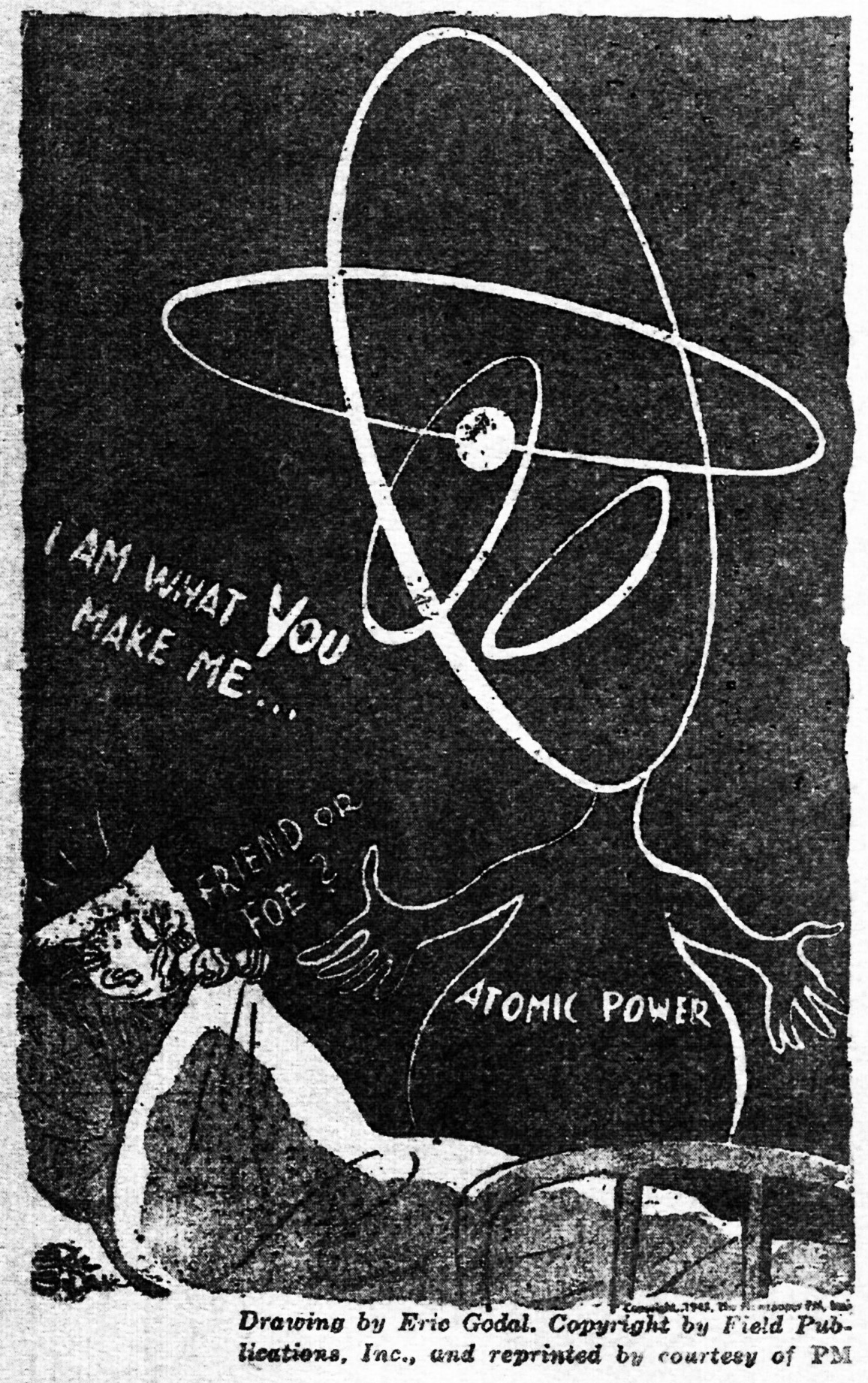
Drawing by Eric Godal.  Copyright by Field Publications, Inc., and reprinted by courtesy of PM

____________________

That was my first lesson in what is a habit of long standing with Oak Ridgers: security.  I found out that security includes not only the Clinch River and Cumberland Mountains which keep the outside world from this atomic city.  I saw gates within gates and barbed wire fences and signs warning of “Prohibited Zones” and “Restricted Areas.”  And posters in dormitories, offices and stores: “Protect Project Information….”

People in authority say, “Don’t quote me on this” or ‘This is off the record.”

A young scientist told me, “Even those who talked m their sleep learned to keep their mouths shut.”  I asked naively wherein lay the danger of talking in one’s sleep, and the reply was: “What if the wife heard you?”  Things aren’t so bad now, he said with relief.  “There was a time, coming home from the lab, when I couldn’t talk to my wife at all.  I pretty well knew what the Project was making, but I couldn’t tell her.  We’d sit around the dinner table and the strain was terrible.  A man could bust.  Then we started quarreling.  Over nothing, really.  So we decided to have a baby.”

A psychiatrist at the Oak Ridge Hospital told me of his increased work load during the days before the Bomb was dropped.  “The strain was terrible,” he said.  “I had my hands full.  But practically no one talked.  One fellow couldn’t stand it, so he told his wife.  But she felt the secret was too much for her and she told it to a friend.  So they had to terminate all three of them in a hurry.”

Actually very few of the 75,000 Oak Ridgers knew what was being done on this great reservation.  Some rumors had it that synthetic rubber was being made.  Wiseacres said they were getting ready to manufacture buttons for the Fourth Term.  One plant didn’t know what the other was doing, and even within plants the work was completely departmentalized.  The people on top knew, the scientists knew, but they didn’t talk.  The Bomb hit Hiroshima and the Oak Ridge Journal ran a banner head: “Oak Ridge Attacks Japan.”

But the people still don’t talk.  The whole world knows what Oak Ridge is producing.  What isn’t known is how it’s being produced.  As an outsider you will be heard out with tolerant suspicion when you talk of atomic fission or the Bomb, but if you mention plutonium or U-235, the cold stares set in.  The more polite Ridger will listen to your question, dig into his pocket for the Smyth Report, and pointing to a well worn page, will say: “There is your answer.”

The fact of the matter is, the Smyth Report contains more information about the Bomb than most people in this town possess.  The ones who know more keep it to themselves, and the rest feel it’s none of your business.

At first glance you wonder what all these thousands of people from all parts of the United States are doing in this hidden Tennessee country.  From the ridges-which lace the reservation in all directions, you look in vain for signs of industrial activity.  Finally you discover several smokestacks.  But they are smokeless.  All over the place, seemingly planless at first, are a jumble of hutments, barracks, dormitories, trailer camps.  Perched on the ridges are the dormitories on stilts looking like chicken coops, the houses and permanent apartments.  The over-all impression is a combination of army base, boomtown, construction camp, summer resort.  The “Colored Hutment” section looks like an Emergency Housing Slum Area.

I asked my driver, a young woman from this Bible Belt country, where the plants were.  “Well git to ‘em,” she said with a knowing smile.  “It takes time.”  And like a trained guide she pointed to the neighborhoods and called them off: “Where you’re staying, that’s Jackson Square, main residential and business section.”  I scribbled in my notebook: Pine Valley, Elm Grove, Grove Center, Jefferson Center, Middletown, Happy Valley.  While pointing out the neighborhoods, she also suggested that I jot down the A&P’s, the Farmers’ Market, Supermarkets, and a hot dog stand selling Coney Island dogs for ten cents.  She called my attention to the fact that in the Trailer Camps the streets were named after animals: Squirrel, Terrier, Racoon.  But I didn’t ask her how come there was a Lincoln Road in the heart of Tennessee.

“I want you-all to write a good story about Oak Ridge,” she said warningly.  “There’s been many of you writers from the North, but I ain’t seen a good story yet.  You fellas don’t seem to git the sperit of this place.”  I heard a great deal more on the subject of “the spirit” from articulate residents during my stay.

“There’s 53 old cemeteries here,” my informant continued, “spread over the 95,000 acres of Roane an’ Anderson Counties.  When the people was moved off the land for the Project to commence, the Army promised it would take care of the cemeteries.  And they do.”  On Decoration Day the approximately 3,000 former inhabitants of these ridges are all granted passes to come and decorate the graves, “What happens when somebody on the Project dies?” I asked.  “Well,” my driver said, “they’s shipped back home where they’s from.”  What’s more, she added, few people ever die here, because most of the workers are young.  “I never seen a grandmother in two years I been here,” she said.

The plants are widely dispersed and hidden in the valleys.  Miles of wooded areas separate them from one another and from the residential districts.  Mountains and ridges prevent any observation until you are actually near them.  First come the warning signs, then the big fences and guard towers, and in the background are the massive atomic fortresses.  Again there are smokestacks, and no smoke pours out.  I said to my guide it didn’t seem to me as if anything were going on inside those plants.  “Plenty going on,” she replied, “just ain’t no smoke to it.”

The mystery deepened even more with the realization that while a great many things entered the huge structures, very little seemed to come out.  Later I learned that it required big quantities of ore and many complicated processes – done here and elsewhere-finally to isolate the negligible bit of precious uranium from the mixture of U-235 and U-238.

There are several methods of extracting the uranium.  The Tennessee Eastman plant, known as Y-12, and comprising 270 buildings, uses the electro-magnetic process.  Carbide and Carbon Corporation, K-25, occupying 71 buildings, obtains the same results by gaseous diffusion.  S-50, operated by the Fercleve Corporation, employs the thermal-diffusion method.  All these processes have been tested, and they all work.  X-10, the Clinton Laboratories, formerly connected with duPont, are doing research on plutonium, the main plant being at the Hanford Engineering Works in the State of Washington.

Three shifts keep the plants in operation day and night, and thousands of workers and technicians from Oak Ridge and its environs check in past the maze of fences, guards and more guards.  Few of them ever see the finished product, and before the Bomb struck Hiroshima they hadn’t the least inkling of what was going on behind the thick walls that separated them from the radio-active uranium.  Charlie Chaplin’s awe at entering the super-modern factory in “Modern Times” was nothing compared to what the Project workers first experienced in the plants.  Charlie at least saw what he was making.  The Ridgers still can’t see, but they know.  There’s a purpose to all the button-pushing; and fantastic equipment.

“I still don’t see how a gadget can take the place of a brain,” a worker said philosophically, “but leave it to them long-hairs to think things out.”

Three years ago the Manhattan Engineer Distict was a plan.  The Black Oak Ridge country was chosen as one of the three atomic sites for its electric power, supplied by the TVA, its inaccessibility to enemy attacks, its water supply and the then uncritical late area.  The small farmers who inhabited these ridges were moved off the land with proper remunerate and dispatch.  They could not be told why.

The bulldozers moved in, and with them arrived the jeeps and the automobiles.  The army, having the scientists in mind at first, built several hundred permanent houses and put fireplaces in them.  Often the fireplaces were there before the walls were up.  Then the plans were changed, and more houses were built.  More workers arrived, and the need for shelter became acute.  They started building barracks, hutments and the TVA came to the rescue with those square, matchbox demountables.  And finally the trailers were bought in and set up below the ridges.

IT WAS not an inspired migration.  Many were lured by high wages; others by promises of comfortable living.  The scientists, those who had worked with the Project in other parts of the country, knew the reasons.  The GIs came because they were told to come.  One woman said it was a good way of getting rid of her husband.  “I knew he couldn’t follow me past the gates.”

They waded in the red-clay mud, and some walked about barefoot for fear of losing their shoes.  The clay was hard and they had to water it at night in order to dig it next morning.  People knew there was no gold to be found in the Cumberlands, and therefore it is the more remarkable that they worked with such fervor and pioneering zeal.

When Oak Ridge had 15,000 inhabitants, there was only one grocery store in town.  Businessmen, unable to find out the potential number of customers or clients, were reluctant to move in.  One five-and-ten concern asked for a contract barring competitors for a period of ten years.  Slowly, warily, entrepreneurs set up shop in Oak Ridge.  And they’ve done quite well by themselves, so well, in fact, that the OPA has had to step in on occasion to curb some enterprising souls.

Roads were laid out, buses started to operate, taxi-cabs were brought in.  Neon lights went up on business establishments, and some people started calling Oak “Ridge “home.”  They cut weeds and planted Victory gardens and raised pets.  People started having children, many children.  “Pretty near all there was to do in those days,” a father said.

Today the city has its Boosters and Junior Chamber of Commerce, and a Women’s Club.  It has beauticians; one hair stylist advertises as being connected “formerly [with] Helena Rubinstein’s Fifth Avenue, N.Y.”  There are tennis and handball courts.  A symphony orchestra, composed of Project employees, is led by a prominent scientist.  There are seven recreation halls into which people can wander and join a bridge game or participate in community singing.  There are several movie houses and a Little Theatre and a high school.  But Oak Ridge still has no sidewalks.  “When I first came here,” a youngster of ten said, “I missed sidewalks most.  Now I don’t care.”

Some people point with pride.  Others point at the “Colored Hutments,” where living facilities are primitive, to say the least, though comparable to some of the housing for white workmen.  Negro children are not permitted to go to school with whites; they journey to nearby Clinton for their education.  And for that reason many Negroes did not bring their children to Oak Ridge.  Plans are now being made to provide school facilities for the Negroes as soon as a sufficient number of children are enrolled to justify it.  They have one recreation hall, the Atom Club, and one movie house, which is located 12 miles from their hutments, in the K-25 area.

The GI scientists point to the great discrepancy in salaries.

No one points at the food served at Oak Ridge cafeterias, and that’s as it should be.

One of the town’s most interesting institutions is the Oak Ridge Hospital.  It is an experiment in what its brilliant young director, a lieutenant colonel, says “has absolutely no relationship with socialized medicine.”  He calls it “The Group Insurance Plan.”  Nevertheless, I advise Dr. Fishbein not to be lulled by the colonel’s reassurances.  The plan works something-like this: each family head pays $4 a month, and the medical services include all his children below the age of 19.  Doctors make private calls, but the fees go to the hospital.  There is no private practice.  The hospital has 300 beds and can handle 1,500 in-patients monthly.  Five psychiatrists are attached to the institution, and their emphasis is on what they call group therapy.  The hospital is staffed with high-caliber practitioners, many of them from the Mayo Clinic.  Everybody in Oak Ridge can afford to enjoy good health.

THIS is the only city in the United States which has no unemployment and no reconversion problem.  There are no election headaches, since the councilmen act only in an advisory capacity to the District Engineer, who is both an army officer and the mayor.  Those who acquire an additional child try to move from a B-house to a C-house, and so on up to a F-house, which rents for $73 a month.  And those who marry and are lucky move from their “Single”‘ dormitories to an A-house.  But no matter where they move, most of it is Cemesto (cement and asbestos rolled into sheets).  And there’s a feeling of temporariness about the whole place.  The one bank in town is bulging with assets, for which the state of Tennessee is not ungrateful.  The inhabitants of Knoxville have learned to tolerate the outsiders, if not for their ways, for the revenue they’ve brought. 

There is a tendency among many to talk about the “past” and about “the spirit” they had “in those days.”  A few have left for the other “home,” but most are waiting.  The Bomb that pulverized Hiroshima was the reason for their existence.  The world was shaken to its very foundations.  Now the people who’ve unchained this fury are thinking of its implications not only lor their immediate tomorrow, but for the world’s also.

Louis Falstein, recently discharged from the Army, flew 50 missions with the 15th Air Force.  Now in New York, his working on short stories and a novel.  He visited Oak Ridge as a special correspondent for the New Republic.

________________________________________

The Men Who Made the A-Bomb

The New Republic
November 26, 1945

In July, 1945, the A-Bomb was tested in the desert of New Mexico.
I’m told that a flyer who was sent up to observe the explosion from a safe distance
was so startled by the bomb’s flash that he radioed a terrified message to the ground:
“The damned long-hairs have let it get away from them!”

The flyer was wrong.
The bomb was a success.
Many of the men who made it then petitioned the President
not to use it on the remaining Axis power, Japan, without prior warning.
However, they felt it was more dangerous for the world’s future to keep the bomb secret
than to explode it over Japan and thus shorten the war.
They wanted it to be used in some way,
realizing their own responsibility for the consequences.

With Hiroshima came the end of an epoch.
“When the papers came out with news and it was no longer a secret,”
an Austrian refugee scientist relates,
“we rushed it out in the streets and hollered ourselves hoarse:
“Uranium … graphite pile … uranium… Then we got drunk.”

X-10, OR CLINTON LABORATORIES, lies hidden between the ridges and is surrounded by great forests.  The plant, inscrutable like all plants at Oak Ridge, shows no sign of life or activity.  Three smokeless stacks and the white buildings give the impression of an abandoned ghost factory, and the guard towers and barbed-wire fences seem as if they are there only for the purpose of assuring peaceful slumber.  Nearby, a big sign depicts a lazy sun coming up over the horizon with the inscription: “Dawn of Peace.  Lee’s Make It Forever.”  It’s a serene picture, but a false one.  X-10 is very much alive.  It works three shifts making plutonium for experimental purposes.  And it has a greater concentration of scientists than any other plant at Oak Ridge, among them many G.I.s.  Lately, these scientists have been very vociferous.

____________________

The Atom Squatters

Illingworth in the Trans-Atlantic edition of the London Daily Mail.

____________________

To Oak Ridgers the scientists are known as “long-hairs.”  To mountaineer Southerners on the Project the long-hairs are a peculiar lot who were at one time in favor of interdenominational services, “all praying in one church and at the same time,” I heard said with obvious disapproval.  And their children in school are forever clamoring for more student representation on the council.  “They got ‘em that Symphony Orchester playin’ classical stuff.”  Some of them don’t like segregation of the Negroes into “Colored Hutments” at Oak Ridge.  Now they’re raising a fuss about what should be done with the A-Bomb.

I was introduced to my first long-hair in the lobby of the Oak Ridge Guest House.  He was a tall young man of about twenty-five, and was absorbed in the funnies when I came up.  “I like the funnies very much,” he said, “but Orphan Annie’s politics make me mad.”

In the evening I met another long-hair.  He, too, was in his twenties.  His wife looked like a girl recently out of college.  “And this is my dog, Pluto,” the young scientist said, “named after plutonium.  A very intelligent dog.”  He turned to the dog and said: “Pluto, would you rather work for duPont or be a dead dog?”  Pluto rolled over on his back and played dead.  The owner tossed him a biscuit.  Then he said: “Have you seen the May-Johnson bill?  It’s suicide.  Something must be done …”

There are 75,000 people at Oak Ridge connected in one way or another with the Project.  The Project is making atomic bombs.  The war is over, and the Ridgers are well aware of the fact that atomic bombs are not needed for peace.  They’re thinking of the A-Bomb and the future, but only the scientists have made themselves heard.  I wondered whether the others were silent because of their long habit of security or from fear of censorship by the Army.  One chemist said to me: “I just don’t think there’s any hope.  Don’t quote me on that.  I feel a terrible guilt.  I sometimes wish I could be religious.”

The Oak Ridge Journal, a town weekly, carries in its October 18 issue an interview with five Project workers picked at random.  “What form of control do you favor for the atomic bomb?”  To the outside world such a question suggests nothing out of the ordinary.  But in Oak Ridge, where the people have kept quiet for three years, and where one of the large companies recently issued an order through the Army, forbidding, among other things, discussion and speculation on “…international agreements, beyond the presidential releases …” the Journal’s modest poll is quite significant.  Of the five questioned, four expressed themselves as favoring some sort of international control, while the fifth, an Army sergeant, said: “We should keep it here and use it as a powerful threat to ensure world peace…”

THE SEVERAL HUNDRED civilian scientists at Clinton Laboratories have organized to find an answer to this most urgent problem.  I met with members of the executive committee of the Association of Oak Ridge Scientists.  It was somewhat surprising to find that the oldest man in the group was not yet thirty.  But these men, chosen for their outstanding work in physics and chemistry, are a mature and responsible lot.  There is an urgency about them now, and deep concern in their faces.  They’ve fashioned a terrible weapon and consider themselves the Responsibles.  They think how the weapon should be controlled jointly – by the world.

Who are these Responsibles?  Most of them have been with the Project since its inception.  They worked with it in Chicago on the “Metallurgical Project,” where the first experiments were made on a limited scale with graphite piles by Dr. Fermi.  Unlike most Ridgers, they knew what the Project was doing in its later stages, and what its end product would be.  They worked stubbornly, tirelessly, completely disregarding their own safety.  They, too, were front-line soldiers.  “When Dr. Fermi set off the first graphite pile beneath a fence near Chicago University,” a young scientist reminisced, “some men stood around with water hoses to put out the fire if the chain reaction threatened to get out of control.  I was praying hard, hoping it wouldn’t blow sky high, and there were these guys with little water hoses!”

When part of the Project moved to Oak Ridge in 1942, the scientists moved with it.  Many of them went to work at Clinton Laboratories for further research on plutonium.  And there, side by side with GI scientists, they embarked on a feverish race with Hitler for the completion of the atomic bomb.  They trudged through the red-clay mud and often spent sixteen hours daily at the laboratory.  At home, evenings, they stared at their wives silently.  They could report neither their near-successes nor failures.  The wives learned not to ask questions.  “So we played Chinese checkers,” one physicist said, “till we got sick of it.”

“Once I found myself doodling on a piece of paper after dinner.  My wife came up to where I was sitting.  She didn’t say anything.  We’d got into the habit of not talking.  But she looked at the paper on which I was drawing aimlessly and her eyes seemed to ask the question: ‘What are you doing?’  And what was I doing?  Drawing a chain reaction on paper unconsciously.  I tore the paper and threw it in the fireplace.  Then we went to bed.”

Dr. Harrison Brown, who had come to the Project from Johns Hopkins and who at the age of twenty-nine is an outstanding scientist and member of the Association, told me the story of those heartbreaking and crucial days.  “On New Year’s Eve, 1943, we finally achieved our first great goal,” he said.  “A complete milligram of plutonium – 1/1000th of a gram!  We sent it off to Chicago for critical experimental purposes and stayed in the laboratory to celebrate.  But how long can you keep slapping each other on the shoulder?  We could not tell our wives of the great triumph.  So we retired at nine.”

In July, 1945, the A-Bomb was tested in the desert of New Mexico.  I’m told that a flyer who was sent up to observe the explosion from a safe distance was so startled by the bomb’s flash that he radioed a terrified message to the ground: “The damned long-hairs have let it get away from them!”

The flyer was wrong.  The bomb was a success.  Many of the men who made it then petitioned the President not to use it on the remaining Axis power, Japan, without prior warning.  However, they felt it was more dangerous for the world’s future to keep the bomb secret than to explode it over Japan and thus shorten the war.  They wanted it to be used in some way, realizing their own responsibility for the consequences.

With Hiroshima came the end of an epoch.  “When the papers came out with news and it was no longer a secret,” an Austrian refugee scientist relates, “we rushed it out in the streets and hollered ourselves hoarse: “Uranium … graphite pile … uranium…  Then we got drunk.”

IN THE FIRST WEEK of September the scientists at X Oak Ridge began informal meetings to discuss the implications of the A-Bomb for the future.  They found their concern shared by others.  Two weeks later they set up a tentative organization and elected an executive committee.  They issued their first Statement of Intent, boldly announcing that: 1. The A-Bomb is no secret.  2. We cannot long have a monopoly of its manufacture.  3. International control is the only solution.

By the end of September more than 90 percent of all civilian scientists at Clinton Laboratories banded formally into the Association of Oak Ridge Scientists.  Similar groups came into existence in Chicago and Los Alamos, New Mexico.

Dr. P.S. Henshaw, a biologist on leave from the National Cancer Institute and one of the leading members of the Association, summed up the scientist’s viewpoint.  “For many years an accusing finger has been pointed at the scientist for his concern solely with the work in his laboratory.  To some extent such accusation was correct.  We were not, in large, concerned with the social implications of our work.  But now we can no longer remain unconcerned.  The necessity to speak out has been forced upon us by the nature of the weapon which we ourselves helped make.  Man’s very existence is threatened unless intelligent use is made of our discoveries.”

It is ridiculous, the scientists point out, to claim that the A-Bomb and the so-called “know-how” can remain strictly an American possession.  What about the great roster of European scientists who have experimented in the nuclear field for many years?  And what about the scientists of European origin who had worked on aspects of the Project and who have since returned to their native lands?  Nor need the other countries invest two billion dollars to achieve their goals.  Our work was handicapped by the necessity for basing major decisions on largely theoretical predictions.  They know the A-Bomb works.  They know it can be manufactured through any one of four processes: electromagnetic, gaseous diffusion, thermal diffusion, and plutonium.  They need use only one of these methods, or they can develop one of their own.

The May-Johnson bill, the scientists feel, even if considerably watered down by amendments, will defeat the very purposes which its short-sighted backers seek.  For, rather than work under a cloak of secrecy and be subject to all manner of restrictive measures, many nuclear scientists will leave the field altogether, as some have already threatened to do.

The scientists do not claim to have an answer as to how the world should get along.  They say an answer must be found.  The world cannot afford not to get along.  If we reveal no more information to the other nations, this country may hold leadership for a few years.  After five years the United States cannot rely for its security upon producing more deadly atomic bombs.  This knowledge has led some to propose that we ensure our security by forcibly preventing other nations from producing atomic bombs.  Since no nation would peacefully accept this prohibition, such a step would mean that we should have to conquer the world within the next five years.  At the present stage of atomic development, such world conquest would be neither quick nor certain.  Nor would the American people acquiesce in such a course.

International control [say the scientists] is another alternative that has been widely proposed.  No specific plans have been prepared, and we do not intend to offer one.  We recognize that any such plan involves many difficulties, and may require that in order to preserve the peace of the world, we forgo some potential peaceful applications of atomic power and some phases of our national sovereignty.

The alternatives are clear!  I If we ignore the potentialities of atomic warfare, in less than a generation we may find ourselves on the receiving end of atomic raids.  If we seek to achieve our own security through supremacy in atomic warfare, we will find that in ten years the whole world is as adequately armed as we, and that the threat of imminent destruction will bring about a “preventive war.”  If we recognize that our present leadership in atomic power can last at the most several years and we attempt to dominate the world, we will find ourselves immediately involved in another and greater war in violation of our democratic moral code and with no assurance of victory.

In view of the disastrous nature of these alternatives, we must expend every effort to achieve international cooperation and control as the only possible long-term solution.

We strongly urge the people of the United States and their leaders to think about, and find means for, the international control of atomic power.  The United States must exert leadership to promote this.  The citizens of our country, together with the peoples of the rest of the world, must demand that their leaders work together to find the means of effective international cooperation on atomic power.  They must not fail.  The alternatives lead to world suicide.

I talked to the men who made the A-Bomb, and that’s their message to you.

Louis Falstein, recently discharged from the Army, flew 50 missions with the 15th Air Force.  Now in New York, his working on short stories and a novel.  He visited Oak Ridge as a special correspondent for the New Republic.  He visited Oak Ridge as a special correspondent for The New Republic. 

________________________________________

Veterans Welcome

The New Republic
January 28, 1946

The young man with the ruptured duck is skeptical and cautious,
as a result of his bitter experiences with authorities, promises and flowing phrases.
He is justifiably disillusioned with the state of our nation,
and the great danger is that he will retire into himself to sulk alone.
A greater danger is that he will be attracted by the fascist groups
who will direct his disillusionment into their own channels.
It is incumbent on all progressive veterans’ groups
to speak out boldly on the pressing issues of the day;
to take sides with men who act for progress.
Show the veteran the proper path, and trust his intelligence.

THE YOUNG MAN wearing a “ruptured duck” in his lapel may not be the most popular guy in the world with the housing authorities or the employment agencies, which are downright ashamed of their meager offerings, but there are more than half a hundred outfits who shout a lusty welcome to our hero.  These are the veterans’ organizations, and they’re out for big business.  The ruptured duck, so far as the mushrooming legions are concerned, is a soaring eagle, and nothing is too good for the man who wears one.  Thirteen million men and women will eventually be veterans; add their families, and the sum total means a sizable chunk of influence for good or bad.

Heading the vast array of ex-servicemen’s organizations are the Big Two: the American Legion and the Veterans of Foreign Wars.  Both have been in business a long time and are well aware that their considerable prestige can be maintained only by striking out for the new returnee.  The AL and the VFW have set aside great sums of money for high-powered campaigns that reach out to the prospective veteran while he’s still overseas.  The Legion is reputed to have a hundred million in the kitty, with a plan for setting up a radio station, FM, television, all working toward the goal of five million members by 1947.

It’s a long haul, but the AL is in an advantageous position to get the desired quota of 3,300,000 new members.  The influence it wields, particularly in small towns throughout the country, is undeniably strong.  Like the VFW, the Legion is firmly established with its rituals, halls, bars, billiard rooms and occasional parades down Main Street to show off the brand-new veteran to admiring and cheering crowds.  There’s the handshake and the slap on the shoulder and a few drinks.  Then a promise of the old job back, perhaps, or the “let’s-see-what-we-can-do-for-you” attitude.  The pressure is strong, and the small-town veteran joins, in the end, not only for the social and economic benefits, but because it is the prudent thing to do.  In the larger cities, where social outlet is greater and more varied, the Big Two are making slower progress.

Six hundred thousand new veterans have joined the American Legion in the past few years.  The old men are still in control, but the young voices are being heard.  The recent convention, held in Chicago, was the soberest in years, and a new, serious note was injected into the deliberations.  A move to deny charters to new Labor Legionnaire Posts, of which there are already more than a hundred, was defeated on the convention floor.  The Labor Legionnaire Conference proposed some resolutions that would have brought down upon it the wrath of the Americanization Committee in the past.  Among the proposals were: action on the full-employment bill; condemnation of the Wall Street Post for an “Americanism” award to Cecil B. De Mille; opposing the National Convention’s going on record regarding compulsory military training, until all men were out of uniform and able to vote on the subject.  The Labor Legionnaires urged the convention to reverse its previous stand on immigration; to encourage the passage of the 65-cents-an-hour minimum-wage bill and abolition of the poll tax; to endorse the winter clothing drive for the Yugoslavian people.  The labor resolutions were not adopted, but for the first time in its career, the AL Convention listened to a CIO speaker.  Its final decisions were no model of progressivism, but it would be wrong to assume that the powerful American Legion, which contains so many new veterans, can be ignored and shunned.

The VFW, older but numerically smaller than the AL, has, on the whole, been the more liberal of the two.  There is no doubt that the 800,000 new members – out of a total of 1,000,000 – have to a great extent generated the fresh breeze now coursing through the smoky VFW halls.  Several posts have collaborated with trade unions on issues pertaining to veterans.  These moves have not been discouraged by the top leadership, which is committed to expansion.  The organization’s great enticement is a proposal for a Big Bonus which is calculated to give the veteran a huge amount of money, a maximum of $5,000 per man.

Both organizations make grudging provisions for Negro veterans, who are shunted into posts of their own.  The AL has posts for women, while the VFW decided at its recent annual encampment in Chicago to postpone the woman problem until next year.

TRAILING the Big Two is a roster of new veterans’ organizations, ranging from budding progressivism to outright pro-fascism.  Gerald L.K. Smith, of the America First Party, is the chief-of-staff of the Nationalist Veterans of World War II.  Smith wants the white “Christian” veterans only.  “My time will come,” warns the bombastic disciple of the late, unlamented Huey Long, “in the postwar period, in the election of ‘48.  The candidate will not be me – it will be a young veteran of this war – but I’ll be behind him.  If business conditions are bad – inflation, widespread unemployment, farm foreclosures – then my candidate will be elected.”

Edward J. Smythe, a defendant in the sedition trial of 1944, has hatched the Protestant War Veterans, “a voluntary association of white gentiles of the Protestant faith who served in any of the wars of the Republic.”  He advocates a bonus of $1,000 for every discharged veteran.

Joe McWilliams, the Yorkville Fuhrer who has managed so successfully to keep out of trouble with the law, put his pro-fascist cronies to shame with his stupendous “Serviceman’s Reconstruction Plan” which “will utterly destroy the long prepared program of the Marxists.”  And the way to achieve this is by “the just payment of $7,800 to our several million militarily trained young men and their establishment as business-owning citizens …”  The Chicago Tribune, an old hand at protecting “the American way,” has supported the plan.

There was a time when the Shrine of the Little Flower out at Royal Oak, Michigan, was known among Detroiters as the Shrine of the Little Swastika.  Social Justice was banned in ‘42, but you can’t keep a good man down.  Father Coughlin, whose heart “bled for the people,” formed the Saint Sebastian Brigade, this time to “help” the soldier.  He collected 400,000 names of servicemen from wives, mothers and sweethearts, and he prayed with equal fervor for all of them to St. Sebastian, the soldier’s patron saint.  There was an incidental charge for the services, amounting to $700,000.  The St. Sebastian Brigade is not a veterans’ organization, but Father Coughlin, who never lets go of a good thing, should obviously be closely watched by the government, the Catholic Church and the people.

Behind these well known rabble-rousers are the smaller fry, and the list of their sponsors reads like Who’s Who at a sedition trial.  They’re out in force to snatch the confused, disgruntled and embittered ex-serviceman.  And unless something is done immediately to improve conditions for the new civilian, the fascists in our midst will reap a rich harvest.

Fortunately, the rabble-rousers do not have the field to themselves.  Liberal and progressive groups are being formed throughout the country, some as small “committees,” others as fledgling organizations of veterans.  Then there are those who appeal to limited groups, like the Jewish War Veterans, Catholic War Veterans, Italian-American World War Veterans, Blinded Veterans’ Association, Bilateral Leg Amputee Club of America, and others.  One of the smallest but most active is New York’s Veterans Against Discrimination.  Born as a result of John O’Donnell’s vicious attacks against minorities in the New York Daily News, the committee’s main function is picketing.  The veterans picketed the News offices, and carried the fight to the large stores advertising in that paper.  For whatever reason, some of the large advertisers in the News have recently withdrawn their copy.  Veterans in other cities arc emulating New York’s example.

OF THE moderately successful new groups, the American Veterans of World War II, Amvets, has been bogged down recently by a series of splits and factional fights on the question of labor.  The smoke of battle has not cleared, and it is too early to pass final judgment.

The American Veterans’ Committee, comparatively new in the field, but highly publicized in recent months due to its effective work on behalf of housing for veterans, is emerging as one of the important organizations.  The Committee’s “Statement of Intentions” says: “We look forward to … living in freedom from the threat of another war …  We are associating ourselves with American men and women, regardless of race, creed or color, who are serving with or have been honorably discharged from the armed forces, merchant marine, or allied forces …”  Its aims include: “Adequate financial, medical, vocational and educational assistance for every veteran.  Thorough social and economic security.  Free speech, press, worship, assembly and ballot …  Active participation of the United States in UNO …  Establishment of an international veterans’ council for the furtherance of world peace and justice among the peoples of all nations.”

The AVC, with forty chapters in the states, is scheduled to hold its Constitutional Convention in Des Moines in March, at which time the committee will be transformed into a full-fledged veterans’ organization.

The young man with the ruptured duck is skeptical and cautious, as a result of his bitter experiences with authorities, promises and flowing phrases.  He is justifiably disillusioned with the state of our nation, and the great danger is that he will retire into himself to sulk alone.  A greater danger is that he will be attracted by the fascist groups who will direct his disillusionment into their own channels.  It is incumbent on all progressive veterans’ groups to speak out boldly on the pressing issues of the day; to take sides with men who act for progress.  Show the veteran the proper path, and trust his intelligence.

Louis Falstein, recently discharged from the Army, flew 50 missions with the 15th Air Force.  Now in New York, he is working on short stories and a novel.

Here’s Some References…

Molto Buono, February 3, 1945 (page 3), at 450th BG.com

Manhattan Project, at Wikipedia

Oak Ridge, Tennessee, at Atomic Heritage Foundation

Oak Ridge National Laboratory, at Wikipedia

Falstein, Louis, Face of a Hero, Steerforth Press, South Royalton, Vt., 1999

A Tale of a Tail Gunner: Louis Falstein and “Face of a Hero” – II: Louis Falstein’s War in the Air… Before, During, and After

It’s appropriate to begin at a beginning.   

With that, this post – presenting biographical information about Louis Falstein – is a composite of information derived from his biographical profile as published in a late-1980s edition of Contemporary Authors, excerpts from Alan M. Wald’s Trinity of Passion: The Literary Left and the Antifascist Crusade, documents at Ancestry.com, and, details provided to me by Louis Falstein himself some years back. 

We all start somewhere.  In Lou Falstein’s case, like his Face of a Hero protagonist Ben Isaacs, he hailed from Eastern Europe, having been born in the city of Nemirov, in the Vinnytsia Oblast, Ukraine, on the 1st of May, 1909.  (This city is also the birthplace of Nathan of Breslov, the chief disciple of Rebbe Nachman of Breslov; see also….)  

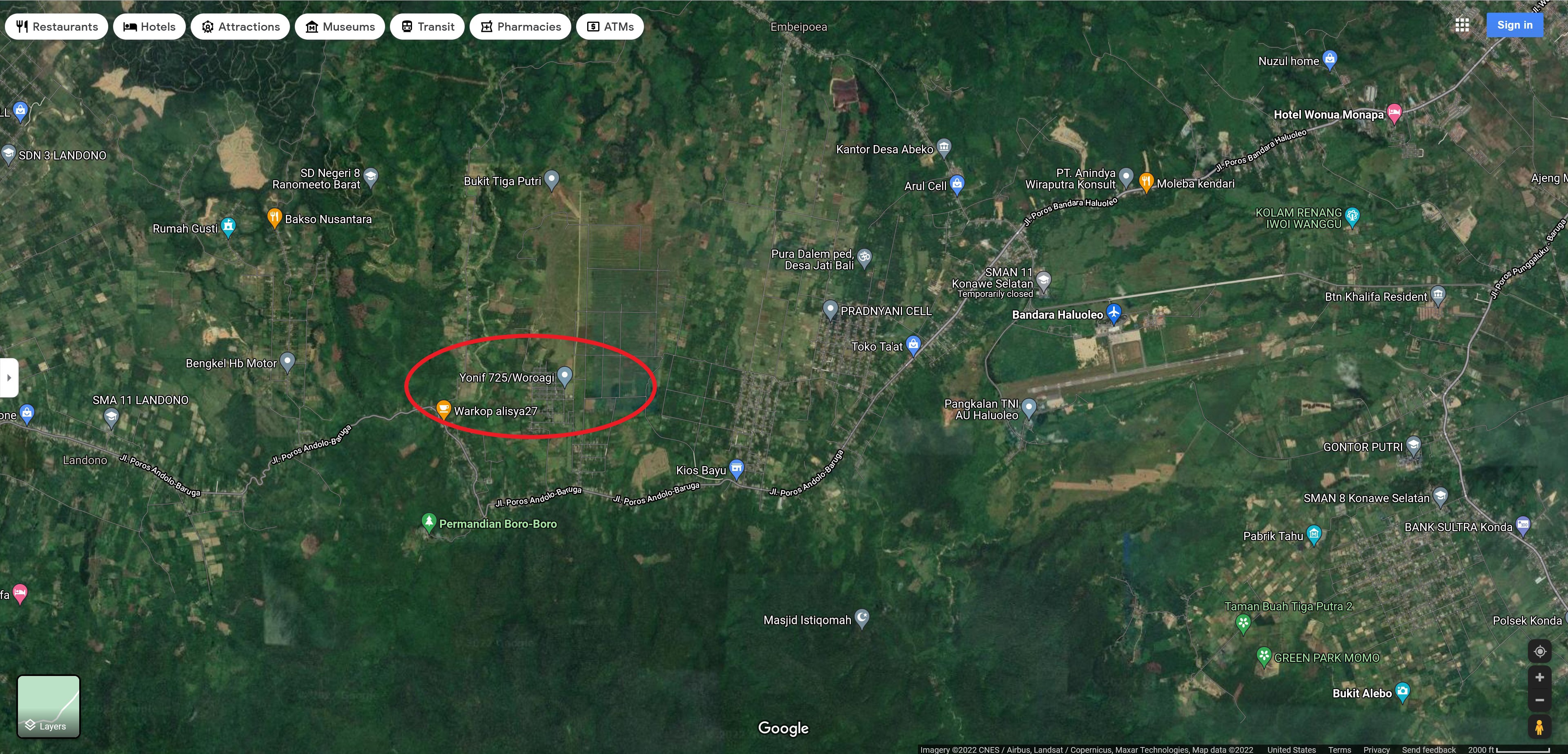
In this Oogle map, Nemirov, denoted by the blue oval, appears in the left center, just southeast of Vinnytsia…

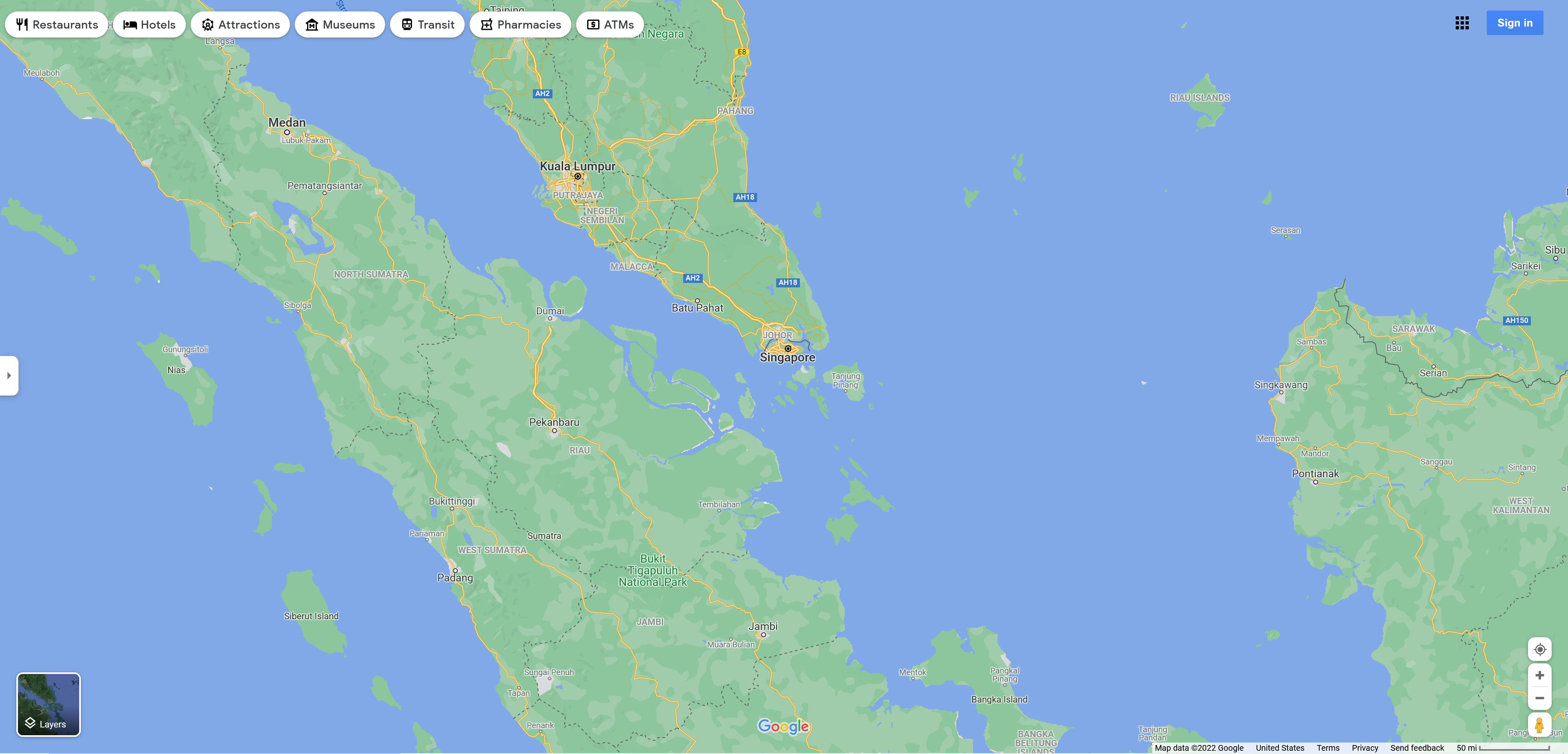
…while the city is in the lower center of this larger scale map.

While some aspects – unpleasant aspects – of Ben Isaacs life in the Ukraine are related in the latter part of Face of a Hero, the details of Louis Falstein’s own life in the Ukraine are unknown, except for Alan Wald’s comment in Trinity of Passion: The Literary Left and the Antifascist Crusade.  Namely:  “His father had orchards in the Ukraine, but he became a businessman in the United States.”  The 1930 Census lists his parents as Joe (Yoseph bar Avraham Mordechai; 1881-2/5/55) and Bessie (Bessie bat Shmuel; 1887-7/11/57), and his siblings as Frieda, Lorna, Morris, and Tonia (?), all having been born in Russia, and living at 148 Maplewood Street in Chicago.  Joe’s vocation is listed as factory laborer, and Louis’ – at the time, he was twenty years old – as clothing cutter.    

As revealed by his “Declaration Of Intention” (shown below; via Ancestry.com), Louis departed Europe from Antwerp, Belgium, and arrived in Quebec in mid-1925.  From there, he reached his point of lawful entry into the United States – Detroit, Michigan – via the “SCP RR” (South Carolina Pacific Railroad), on May 16, 1925.

He signed his “Declaration Of Intention” on May 29, 1933, and his “Petition for Naturalization” on March 5, 1936.  On June 10 of that year, at just over the age of 27, he became an American citizen.  At the time, he listed his vocation as “singer”.      

Here’s an enlargement of Lou’s portrait in his “Declaration Of Intention”…

…and here’s his Petition for Naturalization:

Leading up the the Second World War, the intervening years of Lou Falstein’s life are recounted Trinity of Passion:

“The family had no interest in either radical politics or Zionism, and Falstein lacked direction as an adolescent.  He was forced to go to Hebrew school but found it dull.  He attended but did not graduate from high school in Chicago, although he later secured a diploma by taking a special course.  During the early Depression he found work for a while as a shoe salesman, but he was mainly unemployed.  In 1934 he came to Detroit to seek work in the auto plants.  At this time he was drawn to the John Reed Club, where he became friends with the African American poet Robert Hayden and developed an admiration for the radical attorney Maurice Sugar.  Occasionally he wrote skits for fund-raising events.  His name appeared (as Lewis Fall) as one of the editors of the Detroit Left publication New Voices, but he published nothing.  After changing his name for a while to Fallon, because of the Ford Motor Company’s reputation as being anti-Semitic, he at last found work.  But when a union leaflet was discovered in his lunch bucket, he was fired and was forced to apply for “pick and shovel” work with the WPA.  To his good fortune, he secured a job with the Federal Writers Project.”

At the WPA Falstein found himself under attack by the Black Legion, a neofascist organization that denounced him and other radicals as Red spies and threatened their lives.  Falstein recalled that he was referred to in the newspapers as an “agent of the Third International.”  Shortly afterward a coworker on the Federal Writers Project was murdered.  In order to help save the WPA from elimination, Falstein joined the Save Our Jobs March in Washington, D.C., spending a week living in a tent in Potomac Park and lobbying congressmen.  At this time, Falstein became obsessed with the Spanish Civil War.  He generally felt like an unheroic, perhaps even cowardly person, but the logic of his political views made him susceptible to pressure to take action on behalf of the Spanish Republic.

When two of his friends joined the Abraham Lincoln Brigade and were killed in battle, Falstein volunteered.  Before he could depart, however, he received a court order to appear as a witness at the impending trial of the members of the Black Legion.  This was an event that attracted worldwide attention.  Legion “executioners” paraded before a crowded courtroom and bragged about their exploits in killing scores of persons – sometimes by burying them alive in lime pits – because they were African American or “Red unionists.”  When the trial was over, Falstein found work at a General Motors plant, only a week before the famous sit-down strike began.  He remained in his plant for six weeks.  He was often frightened by the efforts of the police and vigilantes to evict the strikers, but he drew strength from his sense of solidarity with other men and women in the battle.

Just before the start of World War II he moved to New York.  As a Communist he believed that he should participate in the war, even though he felt fearful and unsuited.  To his amazement he was accepted for combat duty in the army air force…”

Here’s Louis’ Draft Registration Card, which was completed on October 16, 1940.  As can be seen, Louis was by now employed at the A.F.G. literary agency at 545 5th Avenue in Manhattan, otherwise known as the Lorraine Building.  Though this occupation presaged the future direction of his life, of A.F.G. I know nothing further, for there are no records – none! – about the agency at either Duck Duck Go or Oogle.  

Now, we jump a few years ahead.

As related by Ben Isaacs’ in Face of a Hero, his bomb group was known as the “Tigertails”, his bomb squadron the “227th”, their base “Mandia” at Italy.  These clues ostensibly suggest that Louis Falstein served in the 722nd Bomb Squadron of the 450th Bomb Group, for the Group’s identifying marking late in the war was a series of vertical black and yellow stripes painted on the fins and rudders of their planes, while their base was at Manduria.  The Group’s original form of aircraft identification was the white-painted rudders of their Liberators, thus their initial (continuing and much better known!) nickname being the “Cottontails”. 

Louis confirmed my suppositions some years back, verifying that while he indeed served in the 450th Bomb Group, he actually was a member of the 723rd – not the 722nd – Bomb Squadron.

Unfortunately, details of Lou’s actual military service are unknown. 

A review of the historical records of the 450th Bombardment Group and 723rd Bomb Squadron obtained from the Air Force Historical Research Agency – at least, those records that I have access to or know of (!) – does not reveal Lou’s name, but as the expression goes, “absence of evidence is not evidence of absence”.  However, his name does appear in the context of a most interesting document at the website of the 450th Bomb Group Memorial Association.  So, other than the all-too-succinct biographical blurb published in the jacket and on the cover of the 1950 and 1999 editions of Face of a Hero, nothing is known about his crew, the dates and destinations of his combat missions, or significant experiences during his combat tour.  Similarly, like very many American Jewish servicemen who served in combat in WW II and received military awards (or were casualties) his name never appeared in the 1947 compilation American Jews in World War II.  

Still, there are a few pictures to go by.

The photo below will be familiar to readers of Steerforth Press’s 1999 edition of Face of a Hero, for this image – overprinted, of course, with title, author’s name, and the blurb, “The novel of World War II air combat that predated Catch-22 by a decade” – comprises the book’s cover art.  

The backdrop of the portrait, taken in November of 1944, is the rear fuselage of a B-24 Liberator.  It can be seen that the star cocarde has an unusually dark surround, which is probably a dark blue overpaint of the red surround which was used as part of the Army Air Force national insignia until August of 1943.  The light-colored camouflage paint may be a color known as “desert pink”, or, it’s very (very!) deeply faded olive drab.  As will be related in a future post, Ben Isaacs’ (and Lou Falstein’s?) last combat mission seems to have taken place in late January to early February of 1945, which implies that this November, 1944 photo – a publicity shot? – a picture for his family? – was taken in the midst of his combat tour.   

Since Lou is wearing a tie, the picture is kind of formal.  He would have been 35 years old at the time, an unusually “old” age (but then again by no means unheard of) for an Army Air Force bomber crewman in 1944. 

This insignia is well-known: It’s the emblem of the 15th Air Force.

This insignia, a cottontail bunny rabbit riding a bomb through the sky, is a little less well-known:  It’s the insignia of the 723rd Bomb Squadron.  To be specific, this is the patch which once adorned Louis Falstein’s own Army Air Force jacket.  

______________________________

This series of Oogle maps and air photos shows the location and present appearance of the 450th Bomb Group’s base at Manduria, Italy.  

First, this map shows the location of Manduria relative to the coast of Italy.  The city is located along the southern edge – or inner “heel” – of the Italian “boot”, southeast of Taranto and inland from the coast of the Ionian Sea.

Moving in closer, this view reveals that the southern limits of Manduria lie six miles north of the coast.  However, the Oogle map doesn’t reveal the location of the Cottontails’ base – between highways SP96 and SP97, just north of the city limits – probably because the air base has not been used as such for decades.  

Moving to a slightly larger scale brings the 450th Bomb Group’s former base into view in obvious and striking clarity.  The base is situated about two miles from the built-up northern outskirts of Manduria, and is surrounded by farmland and orchards (?), with quarries at the south.  Given that nearly eight decades have transpired since WW II’s end, the fact that the airfield has not been converted back to agricultural or commercial (at least, as of the date this image was taken) is surprising.

This close view clearly shows the Cottontail’s single runway, which is oriented SSE-NNW.  The locations of thirteen hardstands can be seen along west perimeter road, and three less clearly along on the east road.  The network of the base’s interior roads is also visible.  

Here are three hardstands along the west perimeter track, each measuring about 50 by 100 feet.  It appears that the land just adjacent to this group of hardstands, along the inner edge of the perimeter track, is used for agricultural purposes.  Remnants of two roads inside the perimeter road are also visible.

Since no active highways or roads traverse the site of the airfield within the outer track, Oogle street views of the base can only be accessed via the active highway – SP97; Strada Provinciale Manduria-Oria – paralleling the eastern side of the former airfield.  Highway SP96 is too far west to obtain any views of the former base.

This Oogle street view looks into and across the base towards the southwest from northeastern “corner” of the field, from a point where SP97 intersects the east-west access road running across the base.  At this point – at the entrance to the base at the northeast “corner” of the airfield, as it were – there appears to be some kind of marker or monument in the form of two pillars and a wall, with a plaque between them.  Note that the stone buildings inside the base, in the left center of the photos – Masseria Schiavone ex campo aviazione – are abandoned and dilapidated.  

For the image below, we’ve virtually traveled south (from the above photo) along SP97 to a point about a fourth of the way between the base’s northeast corner, and, its southern point.  We are again looking southwest “into” the airfield, from a point on SP97 opposite the Centrale Electrica Solare bank of solar collectors. 

What’s especially interesting is the sign along the former airfield’s boundary, on which is painted: ZONA-MILITARE – DIVIETO DI ACCESSO, meaning “Military Zone – No Access”.  In 2022, why?  Is there live ordnance buried at the airfield?  I don’t know.  Even assuming that the base was stripped of all salvageable material after it was abandoned in 1945, one wonders what buried artifacts might today be found with a metal detector. 

______________________________

This photo below, which I received from Louis, is interesting. 

Shown are two 450th Bomb Group B-24 Liberators in formation over snow-covered mountains (the Alps?), the nearer aircraft (41-28774) being a B-24H.  The triangle-in-circle at the top of the fin designates the 15th Air Force’s 47th Bomb Wing, which – in addition to the 450th Bomb Group – was comprised of the 98th, 376th, and 449th Bomb Groups.  The “4” at the bottom of the fin, in combination with the white rudder (the above-mentioned “Cottontail” marking) together designate this plane as being assigned to the 450th Bomb Group.  The number “25” on the rudder indicates that 41-28774 is an aircraft of the 450th Bomb Group’s 721st Bomb Squadron, which, along with the 720th, above-mentioned 722nd, and 723rd squadrons, were the four squadrons comprising the 450th.  

If you examine the image closely, you’ll notice a spherical object suspended below 41-28774’s fuselage.  This isn’t a Sperry ball turret; it’s a radome housing H2X radar, used for ground mapping for bombing missions during inclement weather.  The radome has a light-colored horizontal band painted around it, I think a visual cue for adjacent planes as to whether the radome has actually been fully, or only partially, extended.  Another image of this plane, taken a moment later in flight, can be viewed at the American Air Museum in Britain.    

41-28774 survived the war, to be returned to the United States and salvaged in August of 1945.  I suppose it’s been long since turned into aluminum siding.

This pair of photos, from the 450th Bomb Group Memorial Association, showing Down & Go (42-52152), a B-24H of the 722nd Bomb Squadron, are an excellent example of the early and late group identification markings painted on 450th Bomb Group B-24s.  Just like the above image of B-24H 41-28774, the upper picture shows the outer rudders in white, with an individual aircraft number – in this case, 41 in black – painted upon them.  The lower picture shows how the white rudder insignia has been replaced by a set of vertical black and white stripes, but the fin retains the “triangle in circle” 47th Bomb Wing marking at the top of the rudder. 

Same plane, different clothes.

Down & Go was written off after a taxiing accident on September 8, 1944

____________________

Digressing, another part of Louis Falstein’s life, though not a part of the world of Face of a Hero, was the wartime experience of his cousin, Lawrence I. Falstein.  A fellow Chicagoan (from 1004 North Kedzie Avenue), Lawrence, the son of Fannie H. Falstein, was born on July 25, 1925.  A PFC (36694283) in K Company, 110th Infantry Regiment, 28th Infantry Division, Lawrence was captured during the Ardennes Offensive on December 20, 1944, and was a POW at Stalag 4B, in Muhlberg, Germany.  Akin to Louis, his name never appeared in American Jews in World War II.    

____________________

While Louis Falstein’s literary oeuvre will be presented and discussed in subsequent posts, the only substantive information I’ve found about his postwar personal life again comes from Trinity of Passion: The Literary Left and the Antifascist Crusade, which states, “Politically, he remained outside the Party membership but was more loyal to the Party than ever.  He faithfully read the Daily Worker and the New Masses and its successors.  Through the dancer and poet Edith Siegal he met Michael Gold, and he knew Len Zinberg as well.  He believed that Stalin could do no wrong and was unaffected by the revelations at the Twentieth Congress in 1956, and he continued to read and study Marx in his spare time.  His wife worked as a guidance counselor, and in 1946-48 he took courses at New York University, after which he taught writing there in 1949-50 and at City College in 1956.”

As for Mike Gold (not the most congenial fellow) and Len Zinberg, the following snippets from Wikipedia are enlightening:

Mike Gold was the pen-name of Jewish American writer Itzok Isaac Granich.  A lifelong communist, Gold was a novelist and literary critic.  His semi-autobiographical novel Jews Without Money (1930) was a bestseller.  …  As a critic, Gold fiercely denounced left-wing authors who he believed had deviated from the Communist Party line.  Among those Gold denounced were screenwriter Albert Maltz and “renegade” Ernest Hemingway, who while never a Communist had been sympathetic to leftist causes but came under fire by some for his writing on the Spanish Civil War in For Whom the Bell Tolls.  Hemingway responded with “Go tell Mike Gold, Ernest Hemingway says he should go fuck himself.”

Leonard S. Zinberg, otherwise known as Ed Lacy, was a member of the League of American Writers, and served on its Keep America Out of War Committee in January 1940 during the period of the Hitler-Stalin pact.”

Much more than at Wikipedia, Zinberg / Lacy’s life is covered in great detail by Ed Lynskey, at MysteryFile.  Regardless of his politics, Lacy … Zinberg … was a very interesting man.

I was more than stunned to read about Louis’ longstanding identification with Marxism, but on reflection, in light of his family history, social background, vocational history, the social circles in which he moved, and especially the tenor of the times, his ideological loyalty to and identification with “the Party” – even if he was thankfully never a member – would not (alas; alas) have been altogether unprecedented.  Still, for one’s beliefs to have remained unchanged by Nikita Kruschev’s revelations at the closed session of the Twentieth Party Congress on February 25, 1956, and, the Soviet Union’s repression of the Hungarian Uprising in 1956 (both events having been the impetus for many to break all affiliation with Communism, whether in terms of beliefs or politics) says much about the nature of the human capacity to believe, and, the difficulty of change

If anything mitigates all this, it is that regardless of the nature of Louis Falstein’s political beliefs, they neither motivated nor were evident in Face of a Hero or his other works.  This is especially so in terms of the centrality of his identity as a Jew, and, the ongoing survival and future of the Jewish people, which will remain anathema to Marxism and really all forms of secular collectivism.

____________________

Lou Falstein after the war, from Trinity of Passion.

Louis Falstein passed away on May 22, 1995.  I don’t know the location of his place of burial, though I assume it’ near New York City.  

Some Things to Refer to…

Books

Bell, Dana, Air Force Colors Vol. 2 – ETO & MTO 1942-45, Squadron / Signal Publications, Carrollton, Tx., 1980

Besancon, Alain, A Century of Horrors – Communism, Nazism, and the Uniqueness of the Shoah, ISI Books, Wilmington, De., 2007 (“Is it better to be a beast that plays the angel or a man that plays the beast – given that both are beasts “of prey”?  This is indeterminable.  In the first case, the degree of the lie is stronger and the appeal is greater.  The communist falsification of the good went deeper, since the crime more clearly resembled the good than the naked crime of the Nazi.  This trait allowed communism to expand more widely and to work on hearts that would have tuned away from an SS calling.  Making good men bad is perhaps more demonic than making men who are already bad worse.“)

Blue, Allan G., The B-24 Liberator – A Pictorial History, Charles Scribner’s Sons, New York, N.Y., 1975

Dublin, Louis I., and Kohs, Samuel C., American Jews in World War II – The Story of 550,000 Fighters for Freedom, The Dial Press, New York, N.Y., 1947

Eldad, Israel (Lehi.org; see also Jewish Virtual LibraryJewish Revolution – Jewish Statehood, Shengold Publishers Inc., New York, N.Y., 1971  (Writing in 1971 and speaking of the late 19th and early 20th centuries, “The present flirtation [late 1960s early 1970s] of many Jewish youngsters with the New Left cannot hold a candle to the spell that the socialist-communist ideal cast over the young Jewish generations at that time.  It is no exaggeration to say that the best Jewish minds, the nation’s greatest mental and physical resources, were sacrificed on the altar of this new God.”)

Falstein, Louis, Face of a Hero, Steerforth Press, South Royalton, Vt., 1999
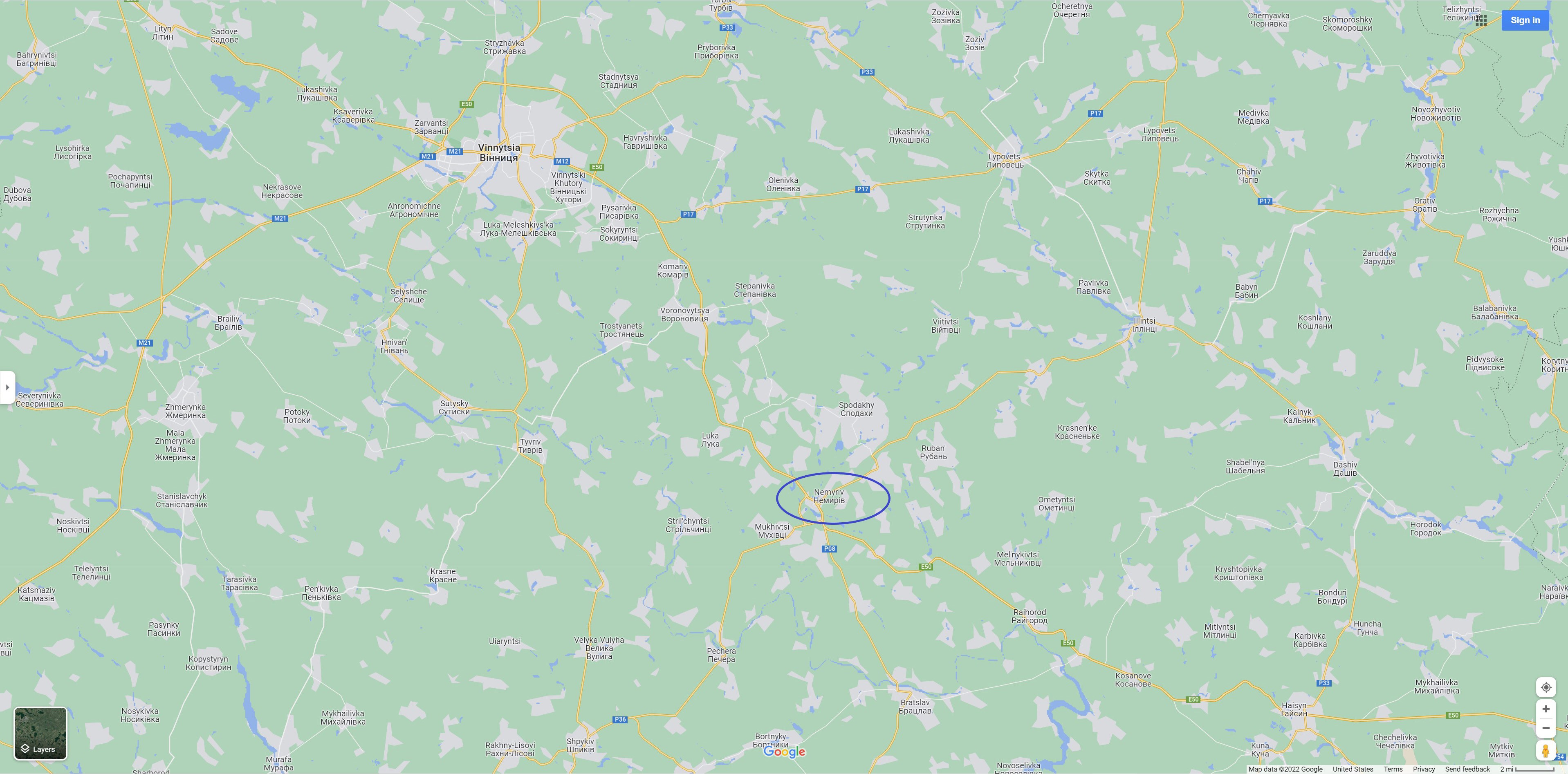
Freeman, Roger, Camouflage & Markings – United States Army Air Force 1937-1945, Ducmins Books Limited, London, England, 1974

Rottman, Gordon and Chin, Francis, US Army Air Force I, Osprey Publishing Ltd., London, England, 1993

Rust, Kenn C., Fifteenth Air Force Story, Historical Aviation Album, Temple City, Ca., 1976

Wald, Alan M., Trinity of Passion: The Literary Left and the Antifascist Crusade, University of North Carolina Press, Chapel Hill, N.C., 2014

Nemirov, at…

Wikipedia

ru.Wikpedia

Encyclopedia.com

Yivo

MyShtetl

International Jewish Cemetery Project

Uncovering My Family History, the untold story of Chassidism and the Holocaust (by Shmuel Polin)

The Revelations and Events of 1956

Khrushchev’s Secret Speech, 1956, at NARA

Premier Nikita S. Khrushchev – The Secret Speech to the Communist Party’s Central Committee – Stalin and the Cult of Personality – Moscow, February 25, 1956 (PDF full text), at Inside the Cold War

Hungarian Revolution of 1956 (June 23 to November 11, 1956), at Wikipedia

Air Force Historical Research Agency Unit Histories

723rd Bomb Squadron

A0656 Sq-Bomb-718-Hi 9/47 through Sq-Bomb-735-Hi 6/44

450th Bomb Group

B0593 Gp-449-Su-Op-S 24 Apr 45 through Gp-450-Hi 8/44
B0594 Gp-450-Hi 9/44 through Gp-450-Su-Op-S 1-5/44
B0595 Gp-450-Su-Op-S 6-10/44 through Gp-451-Hi 1/45

A Tale of a Tail Gunner: Louis Falstein and “Face of a Hero” – I: A Mirror of The Past

“Now that’s what I call a dead parrot.”

________________________________________

I: Anti Antiheroism

As the character of every man is unique, so is the spirit of every age. 

The nature of that spirit can be animated by many things; some coincidental, some acting in concert, and some irreconcilable.  As for the latter, perhaps most apparent in recent decades has been the clash – a clash lying deep in history and even deeper within human nature – between an appreciation of the past and confidence in the future, and, a world view that finds meaning and power through being relentlessly adversarial, solely and simply for the sake of being adversarial.  

In any event, it’s only through the perspective of time – whether years or decades – that the spirit of an age can be understood.  So, I think back…  

____________________

During my freshman year at Easton College, my course of study involved – like that of all incoming students – a year of English.  My first and second semester classes in that subject – both titled “Literary Form and Meaning” – were taught instructors who had very dissimilar teaching styles, and who were equally unlike in the strictness and rigor with which they graded students’ compositions and tests.  Despite thee differences, the two classes had a commonality in their approach to literature, and, the body of readings assigned to students.  In theme and content, both placed a clear and specific emphasis on literary works centered upon the concept of the anti-hero; the transgressor or questioner of norms; the individual set against mores and social convention.  Not necessarily – perhaps? – as a figure to be emulated, but definitely – for certain! – as an individual embodying and symbolizing an alternative, contrary way of understanding, moving within, and ultimately contending with the world.  

Or to put it more succinctly, as I remember in the simple phrase of one of my instructors, people who were “knaves and rogues”.  People who were antiheroes.  

Even now, I remember some of the stories and books that we read. 

Shirley Jackson’s The Lottery.  Alan Sillitoe’s The Loneliness of the Long-Distance Runner; very well-written, but astonishingly bleak.  Herman Melville’s Bartleby The Scrivener; compelling, but I would prefer not to again read it.  Anthony Burgess’ A Clockwork Orange.  Molière’s Tartuffe.  Homer’s Odyssey.  Two works of Shakespeare: Henry IV, with a perhaps-inevitable focus on Sir John Falstaff, who I found as tiresome as he was boring.  Oliver Twist, with equal time devoted to Bill Sikes and Fagin.  (It would be so nice to see an alternative depiction of Fagin, as inspired by Will Eisner’s graphic novel…)  Of these eight works (there were others) my favorite was by far the Odyssey; my least favorite (by far; by far) Tartuffe (awful and pretentious); the most disturbing and memorable – and I’m certain intended as such – Burgess’ Clockwork.  Did the latter glorify and validate violence, condemn such, or, was it a detached depiction of a society in the midst of self-induced and persisting disintegration fostered by apathy and collectivism?  Perhaps it was all of these, and more.  

I found the emphasis on this literary theme to be more than odd, but I never broached my puzzlement to anyone.  However, as the months passed, even as I was unevenly matched in a sumo-style wrestling-bout with introductory calculus, struggling with chemistry, and gradually reconciling myself to the fact that engineering would never be my forte, and above all trying to navigate other uncertainties (where I felt as if I was blindfolded during an unending eclipse), I soon noticed something: 

Given the universal requirement of a year of English for all freshmen, and the inevitably large number of classes needed for so very many incoming students, the suite of required readings – whether novels, novelettes, short stories, or plays – varied somewhat from class to class.  But, most (most) English classes, I think, used the same general set of literary works.  I suppose the selection of books was made by the college’s English Department, rather than by individual instructors themselves, although with allowance for professors’ literary tastes and preferences.  In any case, I soon saw that the required readings in “Literary Form and Meaning” were very different from those of virtually all other English classes.  Very.  

II: The Flight That Failed

That’s when I took notice of a certain novel, first among the books of my friend R., and second, realizing that this novel was one of the assigned readings of the majority of freshman English students.  The author was a man named Joseph Heller.  The novel was Catch-22.

I knew a little bit about Catch-22.  To be more accurate, I knew “of” Catch-22, the movie.  

I became vaguely aware of the film in 1970, via an article in a special edition of Flying magazine (I think it was Flying magazine?) which in either a special edition, or, a special section of a regular monthly issue, displayed photographs of B-25J bombers used in the movie by that name.  These images, ground shots and in-flight photos, clearly illustrated the contrived nose art, unit insignia, and simulated armament featured by these aircraft.  I don’t remember – and looking back I would not think – that the magazine paid any attention to Heller’s novel in a literary or historical sense, or focused on the movie as an example of cinematography.  Then again why would it, for the magazine was aimed at pilots and aviation enthusiasts.  Though to be admitted, I was at that time too young to be interested in such things.  (Though I did enjoy 2001 A Space Odyssey when I saw it in the summer of ’68.  Well, okay, only the scenes of David Bowman, Frank Poole, and Hal the computer.  I had no idea why those crazy monkeys were dancing at the film’s beginning, and what that glowing baby and “big black monolith” – as it was dubbed in Mad Magazine’s March 1969 parody, “201 min. of a Space Idiocy” [check it out at the tumblr feed dedicated to Keir Dullea!] – were doing in the fancy hotel room at the movie’s end.  Which scene, admittedly, freaked me out.  A little.)

____________________

I still possessed that copy of Flying two years later, when I bought the Aurora plastic model company’s 1/48 plastic model kit of the B-25J Mitchell.  At the time (we’re talking fifty-two years ago) the kit was the only 1/48 “J” on the market, though Revell did manufacture the “B” in the same scale.

Here are two versions of the box art for Aurora’s kit.  The first is, I think, from its initial release in the mid-1950s, and the second from its mid-1960s version.

Via EBay seller blackandwhitemaui1 (not a plug, just giving the source!), here’s the instruction sheet the Aurora kit.  Suffice to say this ain’t no Monogram 1/48 B-25J (whether solid or glass nose) or Academy 1/48 B-25B.  Not by any stretch of imagination, thought, or sprue.  

____________________

A few years after graduating from Easton College, I wanted to learn just why (“Why?!”) Catch-22 had been and continued to be the center of literary attention, to the point where the very expression – c a t c h – 2 2 – had passed into the English language as a figure of speech, seemingly unrelated to Heller’s novel.  More (hey, I do like a good story) I simply wanted to read the book.  I quickly found a paperback copy in very nice condition at a used bookstore; not too difficult, as new and used copies of the book were then abundant, just as were once physical stores selling new and used books. 

Just as were physical stores in general.   

Here’s an image of the cover of the novel’s first paperback edition.  Note (especially!) the prominent above-the-title placement given to Nelson Algren’s November, 1961 endorsement from The Nation: “…the best American novel that has come out of anywhere in years.”  “Wow!”  Hey, if the book’s endorsed by The Nation and The New York Times then just as night follows day, it must be good.  (The sarcasm is intentional, as you’ll read later.)

I opened the book.

I was fully aware that this was a novel and so – by definition – not a historical work.  However, given its setting and time-frame, I nonetheless thought it would provide some degree of insight, however dramatized and fanciful, about WW II and the Mediterranean Air War, drilling down to and focusing on the experience of aerial combat from the vantage point – whether physical, psychological, or intellectual – of the individual aviator.  Assuming that the novel was inspired by fact – so I reasoned – suggested to me that at least some elements of historical reality – a changed unit name here; an altered target name there; the details of a pivotal combat mission altered in detail elsewhere – could easily be perceived within its pages.  This, coupled with a fictionalized discourse or reverie – or two, or three, or more?! – about such topics as human nature, courage, cowardice, camaraderie (and even humor and absurdity!) from the perspective of by then a quarter-century since the war’s end – would I thought certainly be found in Heller’s writing. 

Anyway, it was long.  There was bound to be something good within it, somewhere. 

So, I started to read it.  And then, after reaching a point perhaps 100-odd pages into the novel, I stopped. 

I never made my way to the end.  I tried.  Really, I tried.  But, I couldn’t get any further, for to read on would have wasted time that could be more wisely spent elsewhere.      

My assumptions about and hopes for the book were wrong.  Entirely wrong.  Startlingly wrong.  Catch-22 was to me as was poor “Polly”, the famed mythical Norwegian Blue Parrot of Monty Python fame, for it ran down the curtain literary and should have long since joined the remaindered inventory invisible.  To wit:  

This parrot is no more.
It has ceased, to be.
This, is an ex-parrot.

Truly, it was awful.

The novel seemed to violate even the most expansive and generous concepts of plot, theme, organization, brevity versus descriptiveness, and, character development; concepts which I’ve taken for granted from all my prior reading.  (For example, the works of WW II veteran James Jones, principally the magnificent novels From Here to Eternity and The Thin Red Line, or Irwin Shaw’s The Young Lions.)  Other than being set in the Mediterranean Theater of War in the latter part of WW II, the book was bereft of even the most indirect or tangential historical context, for no sense of place, time, or a larger setting emerged from its pages.  For all its length and verbosity – and admitted linguistic cleverness (oh wow, gee, I guess there’s that) – it was jarringly one-dimensional.  At the core, the novel was a form of literary self-indulgence: unrefined prose randomly splashed onto its pages as if from a high-pressure fire-hose, lacking a transcendent central message, absent of meaningful character transformation, and above all, bereft of any larger moral and historical insight.  

At least, that’s how I felt about it in my early 20s. 

I gave it another try some years later; I had the same experience.  I grew as exasperated as I had the first time.  I know that my literary tastes had by then substantially changed (hey, they’ve changed a helluva lot since), but my aversion to Catch-22 remained. 

But about the war, I wanted to read more.  

III: On Wings of Words

In the mid-1980s, while browsing through the inventory of a used bookstore in a small town in Pensylvania, I chanced across a paperback book – a Pocket Book in near-pristine condition, that – first by virtue of its cover art, and second by the explanatory “blurb” on its rear cover, immediately caught my attention.  The book was entitled “Face of a Hero”.  Its author was one Louis Falstein.   

Here’s the cover of my copy of the paperback:

The book’s origin is explained on the front endpaper:

EVERY WORD of Face of a HERO reads as though it were written on the spot.  When you finish this book you will know that this was the way it was 20,000 feet in the air with enemy planes attacking from all sides.  For Louis Falstein, like his novel’s hero, Ben Isaacs, was there.  As an aerial gunner with the Fifteenth Air Force, Mr. Falstein won a Purple Heart, four Air Medals, and nine battle stars.

Face of a Hero is Louis Falstein’s first novel.  It was originally published by Harcourt, Brace & Company.  

I bought the book, but I was unable to actually read it, for I didn’t want to risk damaging it in light of its (then) nearly fifty-year fragility.  Instead, I purchased a copy of the Harcourt, Brace 1950 hardcover first edition from a specialty used bookseller.  That copy I read, and read twice. 

Here’s the jacket:

Here’s Louis Falstein’s 1950 portrait by “Arni”, featured inside the book’s jacket…

xxxx

I thought that Face of a Hero was excellent. 

I think it remains so. 

I read the novel from three perspectives: Simply as a work of diversion – of fiction, for fiction’s sake; to gain an understanding of WW II aerial combat from the vantage of an enlisted man serving as an aerial gunner; to see what perspectives and insights could be availed from a Jewish aviator flying combat missions against Nazi Germany, given the nature and ethos of the Third Reich.  As for Catch-22?  By the time I read Face of a Hero, Hell’s novel had – in contemporary parlance – long since “fallen off my radar”.  Far, far, off.  Well, the “scope” had been turned off years before.  

Thirteen years later, in April of 1998, both novels came to public attention as a result of an inquiry to the Sunday Times of London by one Louis Pollock, inquiring whether, as his letter was quoted in the Chicago Tribune, “…anyone could account for the amazing similarity of characters, personality traits, eccentricities, physical descriptions, personnel injuries and incidents” among the two novels.  Pollock’s question was addressed by Michael Mewshaw in the Washington Post, Mel Gussow in the New York Times, and Sanford Pinsker in The Forward.  It was also touched upon in biographical retrospectives of Joseph Heller published in the two “Posts” (that of Washington, and, Jerusalem) just after that author’s death in December of 1999.  

I think this controversy was at least the partial impetus for Steerforth Press’s 1999 reissue of Face of a Hero in trade paperback format…

…the cover of which appears below:  

The novels do parallel one another on first glance.  Both stories are set in the Mediterranean Theater of War in the final years of WW II.  Sergeant Ben Isaacs, Falstein’s protagonist, is a Jew and an aerial gunner on B-24 Liberator bombers in the 15th Air Force.  Heller’s Captain John Yossarian, a bombardier of distant Assyrian heritage, serves on B-25 Mitchell bombers in the 12th Air Force.  However, despite these superficial similarities, and other aspects of the two texts, the novels really are utterly different in terms of style, overarching plot, theme, character development, and especially the perception, role and fate of the protagonist (and even secondary characters) in a larger historical context.  

Beyond the different nature of the novels as literature, the literary and cultural fate of the two books has been dissimilar to a degree so vast as to be…  Well, how sounds the word “absurd”?  Despite positive reviews in The New York Times, the Washington Post, The New Republic, and glowing comments in other newspapers and periodicals, Face of a Hero fell into an obscurity from which it was only lightly and temporarily revived in the Steerforth Press edition.  Catch-22 has experienced a fate vastly different:  Whether as a novel, a film, a television (mini)-series, or an expression that has become part of contemporary language, culture, and thought, Catch-22 and “catch-22” live on.  

But, this series of posts is about Louis Falstein and Face of a Hero.  

More, to follow…

A Few References…

Falstein, Louis, Face of a Hero, Harcourt, Brace & Company, New York, N.Y., 1950

Falstein, Louis, Face of a Hero, Pocket Books, Inc., New York, N.Y., 1951

Falstein, Louis, Face of a Hero, Steerforth Press, South Royalton, Vt., 1999

Heller, Joseph, Catch-22, Dell Publishing, New York, N.Y., 1968

A Tale of a Tail Gunner: Louis Falstein and “Face of a Hero”

A Tale of a Tail Gunner: Louis Falstein and “Face of a Hero”

Sergeant Louis Falstein, Manduria, Italy, November, 1944

Sometimes, you have to change your routine…  

The great majority of my posts at TheyWereSoldiers have approached the subject of Jews in the military though biographical records, photographs, official documents, and in a few cases, interviews of veterans.  But, there’s far more to a man’s life than a straightforward recitation of dates, places, and events.  His thoughts and beliefs; his understanding of the world around him, let alone his “own” interior world, may only germinate well after an event has actually occurred, regardless of whether that event – at least in the unknowing eyes of others – is mundane or dramatic. 

And through this self-understanding, whether expressed in prose, poetry, the visual arts – or perhaps the irony of silence? – we can sometimes understand the nature of an era better, than through a nominal recitation of purely factual information.  (People, after all, can’t be reduced to mere numbers.  Though in 2022 many in the Managerial Professional Class would ardently wish it were so.)  One way of understanding the past – a very well-known way, at that – is through the novel.  

Louis Falstein’s 1950 novel Face of a Hero is a case in point.  With a bent towards writing well before the Second World War, Falstein, an aerial gunner in the 723rd Bomb Squadron of the 450th “Cottontails” Bomb Group, found in military service the inspiration for this work, his first published book.  Despite having received favorable to excellent reviews, his novel rapidly faded from prominence, only really returning to the public eye – and that, temporarily – in 1999.  This came about as the result of questions about the origin of another novel: Joseph Heller’s Catch-22, a work which has had enormous and continuing cultural and literary impact; a work – despite superficial similarities – utterly different in style and far more importantly ethos than Falstein’s novel.    

Face of a Hero merits a deeper view for what it reveals about Jewish military service in WW II; for its portrayal of WW II aerial combat from the vantage point of an enlisted man; for the way that the author built a fictional world from one of fact.  To that end, the following eleven (yep, count ’em, eleven!) posts cover different aspects of the novel, its author, and (to a limited extent), Catch-22

____________________

[But first!…

…though this post was created on October 7, 2022, only yesterday – on October 18 – did I make a most fortuitous discovery: An audio interview of Louis Falstein by Warren Bower of WNYC Radio recorded on February 3, 1951.  This 23-minute-long interview is “Archives Item 69684 / Municipal Archives Item LT715”.]

In conversation with Louis Falstein, Mr. Bower, of New York University’s School of Continuing Education, at first asks about how the novel was constructed. 

It’s revealed that though Louis initially considered presenting his story from the vantage point of every one of the ten aviators in the crew of B-24 Liberator Flying Foxhole, this approach was rejected because he didn’t want to write a first novel that was “sprawling”.

So, he related and universalized the story through one man only – Ben Isaacs – to maintain “constant and dramatic movement” in the novel.  In turn, Mr. Bower suggests that Isaacs, “…is not more important than the other members of the crew,” to which author Falstein agrees.  However, Falstein adds that by “knowing” Isaacs better than the other nine crewmen and showing what he lived through, felt, thought, and learned, another dimension would emerge from the novel.

Stepping away from the novel’s contents, Mr. Bower addresses something ostensibly simple yet quite fundamental:  The origin of the book’s title.  When asked about the very meaning of “Face of a Hero”, Falstein replies that the title is intended to be realistic and not symbolic.  “A hero is comprised of many things.  A ‘hero’ is a very human, being, subject to many doubts, and many fears.  Ben Isaacs knew why he fought, and that is part of being a hero.”

Mr. Bower’s observations about the novel mirror those of several reviewers, specifically in terms of the book’s explicit (at least, for the time!) use of language.  When asked about this, Louis stated that the book reflected the reality of language as it was actually spoken by combat airmen, and that he didn’t want to forego linguistic realism.  This included the use of the phrase “a man went down,” rather than the irrevocably grim expression “having been killed”, for all but the most unambiguous circumstances pertaining to the loss of an aircrew.

Ultimately, when asked about the motivation for continuing to fly combat missions despite one’s ambivalence about his ability to serve as an airman, or, in the face of the enemy, Louis stated that, “Indoctrination and knowing that one has a just cause gives one a great deal of so-called ‘courage’, that one might lack,” adding that Ben Isaacs felt as if he were reborn on the end of his fiftieth mission.

Mr. Bower concludes his interview with thoughts similar to those of the novel’s reviewers, for he admires the way the book is written:  Simply, unostentatiously, and with no fancy style, but powerfully and impressively.

Though the radio program is about 23 minutes long, Mr. Bower’s interview of Louis Falstein only comprises its first eighteen minutes.  The final five minutes pertain to two recent books; fiction and non-fiction respectively.  The first is Ernest Hemingway’s latest work, Over the River and Into the Trees, of which Bower is highly critical (really – wow!), deeming the novel, “…a colossal bore,” suggesting that the author’s heart simply wasn’t in the work, which is simply a very thin autobiography.  The second book, coming in for very high praise, is Thor Heyerdahl’s Kon-Tiki.

Here’s Mr. Bower’s obituary, from The New York Times:

WARREN BOWER, TEACHER; WAS HOST OF RADIO SHOW

October 29, 1976

Warren Bower, professor emeritus of English and a former assistant dean of New York University’s School of Continuing Education, died Tuesday at St. Vincent’s Hospital.  He was 78 years old and lived at the Salmagundi Club, at 45 Fifth A venue.

Mr. Bower was well known as the host of a WNYC radio program, “The Reader’s Almanac,” which offered interviews with authors between 1938 and 1967.  In 1962 he was given the Peabody Award for the show, which reflected his deep interest in books and authors.

He was born in Elkhart, Ind., and graduated from Hillsdale College in 1920.  He earned his master’s degree from the University of Michigan in 1923.

Mr. Bower was the author of “The College Writer,” “New Directions” and “How to Write for Pleasure and Profit.”

He is survived by his wife, Lesley.

____________________

And now (…minor drum roll, please…) here are the posts.  They are…

____________________

1. A Tale of a Tail Gunner: Louis Falstein and “Face of a Hero” (This post!)

2: A Mirror of The Past (How I discovered Catch-22, and, Face of a Hero)

3: Louis Falstein’s War in the Air… Before, During, and After (Biographical overview of Louis Falstein’s life, focusing on his military service.)

4: First Published Writings: “Molto Buono”, and, “The New Republic”

5: The Events of the Novel (List and descriptions of characters in the novel; chronological list of events and details in the story)

6: Excerpts From the Novel – An Aviator’s Life and Thoughts

7: Excerpts From the Novel – Jewish Aviators at War

8: An Excerpt From the Novel – The Edge of Survival

9: The Art of The Novel (Cover and interior art of first (1950) edition of the novel, and its four subsequent editions.)

10: Book Reviews

11: After The Hero: Later Books (Illustrations of covers of Louis Falstein’s later works, with details about some.)

12: When Parallels Diverge – “Catch 22” and “Face of a Hero”

13: “Catch-22” In The Perspective of History

14: A Still, Small Voice; A Still, Small Novel

I’ll post these essays sequentially, rather than all at once, and link them to this introductory post, as I do so.

Here goes…

(Note: I want to thank Saul Schwarz for his “suggestion”: “Thanks, Saul!”)

Soldiers from New York: Jewish Soldiers in The New York Times, in World War Two: Albert H. Bendix – December 22, 1943 [Updated post…]

[Here’s a new version of an old post – “old” that is, at least by Internet standards.  It’s really, really (did I say really?!) long, like the majority of my posts.  Well, in this world of 2022, somebody’s gotta’ write at length.  I guess that person is me…]

As part of my ongoing series of posts about Jewish WW II servicemen who appeared in The New York Times – whether as military casualties, awards recipients, or as subjects of general news items – “this” post, originally created in August of 2017 and focusing on 2 Lt. Albert Hunt Bendix of the United States Army Air Force – has now been expanded and corrected.  It now more broadly reflects the service of Jewish airmen and soldiers who were military casualties December 22, 1943, the late December Wednesday when Lt. Bendix did not return from a combat mission to Germany.  For those men who were members of the United States Army Air Force, the post now includes – where available – images of the emblems of the squadrons to which they were assigned.  

So first, to start with Lt. Bendix himself…

From the Upper West Side of Manhattan, Lieutenant Bendix (0-683894) was the navigator of a B-17 Flying Fortress, and lost his life during a mission to the city of Munster.  Reported Missing in Action in a Casualty List published on February 8, 1944, his brief obituary, transcribed below, appeared in the Times on September 21, 1945. 

Albert’s parents were Harry Hunt and Olga (Coyne) Bendix; his sisters and brother Mrs. Annette Mack, Mrs. Maxine Bloom, and Harry, Jr.  According to biographical information at FindAGrave.com, his grandfather Theodore Bendix, “…was musical director of “The Spring Maid” with Mizzi [actually, “Mitzi”] Hajos.”

__________

Lieut. Albert Hunt Bendix, son of Mr. and Mrs. Harry Bendix of 140 Riverside Drive, navigator of a B-17 in the Eighth Air Force and winner of the Air Medal, who was listed as missing in action Jan. 10, 1944, has been reported officially dead.  He was 26 years old.

Lieutenant Bendix was shot down over Muenster, Germany, on his eighth mission on Dec. 22, 1943.  He had been associated with an insurance brokerage concern in this city.  He entered the Army in 1940.

__________

Here’s the location of the Bendix family’s residence: 140 Riverside Drive in Manhattan, an image originally from (and no longer at!) RealtyHop.com.

__________

Albert was a crew member aboard B-17G 42-37773, of the 563rd Bomb Squadron, 388th Bomb Group, 8th Air Force, piloted by 2 Lt. Webster Merriam Bull (0-745609; from Omaha, Ne.).  

42-37773, nicknamed Full House, last seen with its #1 engine feathered, crashed into the Ijsselmeer, near Edam, Holland, shortly after the 388th’s formation had dropped its bombs and was enroute back to England.

Of the plane’s ten crewmen, two survived:  They were left waist gunner S/Sgt. John F. Rogowski (32381701; left waist gunner, from Buffalo, N.Y.), and tail gunner S/Sgt. Thomas Glenn Wesson, Jr. (14182114; tail gunner, from Florence, Al.), both of whom parachuted just before the aircraft crashed at sea.  Captured, they spent the remainder of the war as POWs at Stalag 17B Braunau Gneikendorf, near Krems Austria.  The bomber’s other eight crewmen parachuted at too low an altitude, or, succumbed to the coldness of the December sea. 

As reported in Missing Air Crew Report 3148, “Lt. Bull’s wing man report[s] that he dropped slowly behind the formation about 5 to 10 minutes after bombs away on the return route.  One of the men dropped back with him a considerable distance behind the group.  Bull feathered his #1 engine and called to his wing man over the radio, telling him to rejoin the formation, as he would be unable to do so.  Bull’s A/C was last seen somewhere over Holland.  Going down into the overcast under control and escorted by 4 P-47s.” 

Besides Lt. Bendix and Bull, and Sergeants Rogowski and Wesson, Full House’s crew included:

Hobbs, Leavitt Patrick, 2 Lt., 0-680636 – Co-Pilot – (San Rafael, Ca.) – KIA
Gunderson, Loran Arthur, 2 Lt., 0-744274 – Bombardier – (Chicago, Il.) – KIA
Pasque, Angelo, T/Sgt., 39165858 – Flight Engineer – (Los Angeles, Ca.) – KIA
Riley, Howard William, T/Sgt., 16150364 – Radio Operator – (Detroit, Mi.) – KIA
Rush, Chester Noah, Sgt., 39250775 – Gunner (Ball Turret) – (St. Louis, Mo.) – KIA
Marsilio, Rudolph Ceaser, S/Sgt., 13126890 – Gunner (Right Waist) – (Philadelphia, Pa.) – KIA

__________

This excellent in-flight photo of Full House, from the American Air Museum in Britain website, was taken on December 20, 1943, two days before the plane’s loss…

…while this image, showing the bomber flying through flak bursts, is from the 388th Bomb Group Database.  

__________

Born on November 22, 1916, Albert was buried – at Block I, Section 28, Plot 197, Grave 2 – at Riverside Cemetery, in Saddle Brook, New Jersey, on May 13, 1949.  His name is listed on page 273 of Volume II of American Jews in World War II. His matzeva, photographed by FindAGrave contributor dalya d, is shown below:

Full information about the loss of Full House and its crew can be found in this remarkably detailed account at the ZZAirwar (Zuyder Zee Air War) website. 

____________________

Other Jewish military casualties on December 22, 1943 (25 Kislev 5704) are listed below.  

For those who lost their lives on this date…
– .ת.נ.צ.ב.ה. –
…Tehé Nafshó Tzrurá Bitzrór Haḥayím
May his soul be bound up in the bond of everlasting life.

__________

306th Bomb Group, 367th Bomb Squadron

Sall, Henry, S/Sgt., 32177039, Gunner (Right Waist), Air Medal, 2 Oak Leaf Clusters, Purple Heart, 17 missions
Mr. Andrew Sall (brother), 535 Graham Ave., Brooklyn, N.Y.
MACR 1716; B-17F, 42-3363 (“GY * G”, “Punchy”); Pilot – 1 Lt. James E. Winter; 10 crewmen – 3 survivors; Luftgaukommando Report KU 547
Netherlands American Cemetery, Margraten, Netherlands – Plot P, Row 20, Grave 1
Casualty Lists 1/23/44, 8/24/44
American Jews in World War II – 425

Though believed to have been shot down by German fighters, there are no specific eyewitness statement about Punchy’s loss in MACR 1716.  However, the report lists the aircraft as having been last sighted by Second Lieutenants John J. Stolz and Charles O. Smith, and, First Lieutenant Martin Newstreet.  

Of the plane’s ten crew members, there were three survivors: 

2 Lt. Robert F. Jones – Navigator
T/Sgt. David M. Hovis – Flight Engineer
S/Sgt. Otis F. Thomas – Tail Gunner

According to Lt. Jones, Lt. Winter was last seen, “At the controls of the plane.”  He was believed to have been attempting, “…to get the plane under control so the other crew members could bail out.”  “The interphone system was knocked out by [a] flak burst in nose of plane about 5 min. before we were finished off by fighter planes.  All casualties either dead, or, wounded and unable to escape by parachute.”

__________

445th Bomb Group, 701st Bomb Squadron

Silverman, Conrad, 2 Lt., 0-685748, Navigator, Purple Heart
Brooklyn, N.Y. – 12/18/15
Mr. and Mrs. Tobias and Fannie Silverman (parents), Beatrice, Estelle, and Leo Silverman (sisters and brother), 1060 52nd St., Brooklyn, N.Y.
MACR 16098; B-24H 42-7520 (not 42-64438!), “Snow Goose”; Pilot – 2 Lt. Norman H. Nelson; 10 crewmen – no survivors; Luftgaukommando Report AV 447/44
Crashed near Bolsward, Netherlands
Zachary Taylor National Cemetery, Louisville, Ky. – Section E 101
Brooklyn Eagle 7/25/43, 2/26/44
Casualty Lists 1/23/44, 2/27/44

American Jews in World War II – 444

Two months after the loss of Snow Goose, the following article about Lt. Silverman appeared in the Brooklyn Eagle.

Won’t Accept Death Of Brother in Nazi Raid
February 26, 1944

Sister of Lt. Silverman, an Army Nurse Overseas, Searching for Further Details

Beatrice Silverman, sister of Lt. Conrad Silverman, officially listed as killed in a raid over Germany, refuses to take news of his death as final and is conducting a personal investigation for further details.  She is a lieutenant in the army nursing corps and stationed overseas.

Silverman is 27.  He was in the infantry first and later transferred to the air corps as a navigator.  He was shipped across in November, 1943.

Two other members of her family are in the armed forces – Estelle, a navy nurse, and Leo, a major in the army.  Conrad attended New Utrecht High School and Brooklyn College.  The family lives at 1060 52nd St.

Postwar “fill-in” Missing Air Crew Report 16098, which incorrectly denotes the serial number of Snow Goose as 42-64438, carries only the cryptic statement, “Ship #438 [sic] attacked by fighters at time of bombs away.  It was last seen going down out of control and no chutes were observed.” 

In 2008, a monument in memory of Snow Goose’s crew was erected at the bomber’s crash site, seen in this flickr photostream image of Edwin van Bloois.  As mentioned by Mr. van Bloois and unknown to the Army Air Force in December of 1943, “Above Friesland, the B-24 was attacked by a German night fighter and in the dramatic fire fight that followed the crew tried desperately to shoot down its belligerent.  The crew tried to land the plane but crashed near Bolsward.  The bombs were not dropped before the landing and exploded during the crash.” 

In early May of 2013 (nineteen years ago already?!…), two nieces of Lt. Nelson paid homage to their uncle at the bomber’s crash site, in an event – seen in the video below – reported upon by GPTV.  While the video is unaccompanied by English-language translation (oh, well…), the caption, translated via OogleTranslate, is as follows, “In many places, 2 minutes of silence was observed on Saturday evening at a war memorial.  One such monument commemorates the crash of the B-24 bomber Snow Goose in Bolsward.  The monument was placed in 2008.  Ten young men were killed in the crash.  On Saturday a number of relatives of one of the fallen crew members came to Bolsward.  Two nieces of Norman Nelson. Joanne Nelson and Lynda Brown-Nelson.”

Additional information about the December 22 mission and Snow Goose can be found at the websites of the 445th Bomb Group, and, Teunis Schuurman.

__________

446th Bomb Group, 704th Bomb Squadron

Jacobson, Sydney Charles, 2 Lt., 0-742719, Pilot (Bomber), Purple Heart, 2 Missions
Mrs. Eleanor A. Jacobson (wife), 1777 Somerset St., Providence, R.I.
MACR 2008; B-24H 42-7613 (“FL * H”, “Mi Akin Ass”); 10 crewmen – 7 survivors
Zachary Taylor National Cemetery, Louisville, Ky. – Section F 29
American Jews in World War II – 562

Akin to the Snow Goose, the Missing Air Crew Report for Mi Akin Ass is entirely vague about what actually happened to the bomber, for which there are no eyewitness accounts, other than the generic statement, “Information not available, undoubtedly due to enemy action.  Aircraft last seen apparently under control entering overcast.” 

What is present in the MACR are co-pilot 1 Lt. Robert Dale Bingham’s postwar comments about the fate of the three crewmen who did not survive the mission: Lt. Jacobson, Bombardier 2 Lt. Wade H. Krauss, and Flight Engineer S/Sgt. Orley E. Kjelgren, who are buried in common grave F-29 at Zachary Taylor National Cemetery.  Lt. Bingham’s comments follow.  While certainly informative about the fate of all three men, when it comes to Lt. Jacobson, they reveal something else about Robert D. Bingham, and that with immediate clarity.

Circumstances of bail out of crew members for whom no individual questionnaire is attached: No knowledge other than that none jumped the bail out signal, all was regular.  I just didn’t happen to actually see a crew member jump.

What members of crew were in the aircraft when it struck the ground?  Have no positive knowledge but believe 2nd Lt. Wade H. Krauss and Kjelgren, Orley E. S/Sgt.

Bombardier Krauss:

Any hearsay information: He did not fire a shot at attacking aircraft, he had turret turned to one side & did not move it or himself when Lt. Cranford attempted to get him to bail out by pounding on turret glass to attract his attention.

Flight Engineer Kjelgren:

Any hearsay information: Lt. Cranford claims to have seen a leg through trap door calculated to have been Kjelgren, Orley E., from position last seen in.

Pilot Jacobson:

Did he bail out: Uncertain.

Last contact or conversation just prior to or at time of loss of plane: I told of and pointed to fire in bomb bay.

Was he injured: Not at last contact with him.

Where was he last seen: Stepping out onto flight deck.

Any hearsay information: The radio operator, S/Sgt. Mahan told me on ground that S.C. Jacobson stepped out on flight deck & attempted to put on parachute but that it opened & was in his arms.  Later Sgt. Evans (tail gunner) told me that he was seen to attempt a jump only to have chute catch on plane.

Any explanation of his fate based in part of wholly on supposition: I believe the above to be true as he did leave the controls without warning and take to the flight deck in a big rush as if to be in a hurry to get out.  He was a smart boy & a Jew, it seems to fit.”  

Well now.  What Robert Bingham really suggested was that Lt. Jacobson’s actions in attempting to abandon his aircraft were not the actions of Lt. Sydney C. Jacobson the man, but instead “a Jew” named Sydney Jacobson, for whom Bingham’s use of the word “smart” is far more indictment than compliment.  In a larger sense, while an attitude of comradeship and solidarity was not at all uncommon among Army Air Force air crews (many, many accounts in Missing Air Crew Reports attest to this, often in riveting, dramatic, and tragic detail), this was not universally so.  Yet, having reviewed all the Missing Air Crew Reports, I can state that comments such as Bingham’s are extraordinarily few in number.

One of the seven survivors of Mi Akin Ass was the plane’s left waist gunner, Sergeant Sidney H. Raiken (16155375), the son of Harry (1/3/82-1/31/58) and Fanny (Robin) Raiken, and brother of Florence, who hailed from 2718 North 40th Street, in Milwaukee.  Captured, he spent the remainder of the war at Stalag Luft 4.  His name appeared in a list of liberated POWs released by the War Department on June 6, 1945, and in 1947, on page 585 of American Jews in World War II, wherein it’s indicated that he was awarded the Purple Heart.  The absence of his receipt of the Air Medal (and Oak Leaf Clusters for that medal) suggests that he flew less than five combat missions.  

Sidney Raiken’s account of his final mission – below – is excerpted from Evelyn R. Lewis’ book The War Stories of Sidney H. Raiken.  Two discrepancies are present in his account.  Note that he mentions, “the ball turret gunner to the left of me,” and, words to the effect that he (himself?!) had to shut down one of the plane’s engines.  Given his crew position as left waist gunner, the “ball gunner” referred to was almost certainly the right waist gunner (S/Sgt. Joseph P. McDonald), the ball turret gunner – not directly visible from the waist gun position – having been S/Sgt. Scott F. Swinburn.  Shutting down one of the bomber’s engines probably refers to an action taken by Lieutenants Jacobson or Bingham.

Flying along and this ball gunner on the left of me, I didn’t even know him, but flying along, it was cold, I looked at him.  He had ice on the eyelashes.  Periodically, we would cock the gun because of the cold [to] be sure it’s working so it wouldn’t freeze up.  So it was difficult to do.  You didn’t have much to brace on, and your oxygen hose went down your chest here.  So this guy next to me, he couldn’t cock his gun so he had to have a brace against his chest.  So what he does is disconnect his oxygen mask, which is the worst thing you could do.  So it was just lucky that I turned around that instant because here he is, slumped over the gun, no oxygen, 25,000 feet.  So what I did was I gave him a… I put on his oxygen hose again, connected it, and gave him a pure shot of oxygen which we could do.  And he came to, but another minute he would have been gone.

We’re in formation coming back and the wing is starting to vibrate pretty badly, so I had to shut off one engine.  And a couple minutes later another, the wing started vibrating again.  I had to shut off another engine.  So we’re operating on two engines so we start drifting back from the formation and we were no more than 100 yards from formation when a black night fighter, Me 110 was on my side with the wing up and right in front of me here’s this black wing with the German crosses on and I told the ball gunner, I says, “Well why didn’t you tell me he was coming?  I could have taken a shot at him and he says, “I was just too scared.”

That was our first time we were under fire attack.  So here the fighters are coming in, so the pilot would call out.  He’d say, “Three coming in at 11 o’clock out of the sun.”  And you’d turn your body so it would be toward 11 o’clock to give the least amount of area.  And they kept coming in and I noticed the plane started burning and the pilot was kind of trying to hit the cloud cover almost in a dive.  And I couldn’t get at the fire because it was pretty hard to get to and started burning there and I guess the bomb bay must have been all aflame too and I don’t know just what happened but the thing was burning to the extent and I didn’t hear any orders to leave so we scrambled to the rear hatch and just left; the ball gunner and I left.  We found out that the plane exploded just a couple minutes after that so the ball gunner, like I said before, was above me as we drifted down.  You got that story.

Right after that first Me 110 made a pass at us, subsequent passes of these fighters, I noticed my gloves were all ripped apart.  I had the thumbs on the gun and the first thing I knew my gloves were in shreds, both of them.  I couldn’t feel anything.  I didn’t know what was going on and I didn’t realize that my two hands were wounded and, of course, it dawned on me after I bailed out that not only was my hands wounded, but my bone was sticking out of the one hand.

And it was a lucky thing I didn’t put on that flack jacket.  We had a bullet proof vest that weighed a ton, it was made out of layers of steel and had I put that on I would have been a dead man because not only were my hands wounded but my leather jacket was all kinds of ripped apart, the flaps were gone, things like that.  Found out later that they were shooting 20mm shells that exploded inside the airplane, like a grenade and I was just lucky it was just my finger.  I wasn’t blinded or killed, something like that.  If I wore a bullet proof vest, instead of knocking the flaps off my leather jacket and all that, it would have went inside the vest.  The vest just protected you in the front and the rear but not on the side, so the shot would have gone inside the vest, but that thing weighed a ton, we didn’t wear them. 

Going out the lower hatch, the ball gunner is out of the bubble on the bottom and they are leaving.  The lower hatch opens easily.  We go out.  Nothing is happening.  I am tugging at the handle and nothing is happening and then it dawns on me that I am pulling the wrong handle.  I don’t know how far I fell freefall and I pulled the red handle.  It was the red handle that opened, and I start drifting down and at that point I saw the ball gunner was above me.   …

Sidney Raiken passed away on December 1, 2002, and is buried at Mount Sinai Memorial Park, Los Angeles, Ca.

__________

448th Bomb Group, 714th Bomb Squadron

There were no survivors from the 11 crew members of B-24H 42-52105, an apparently un-nicknamed Liberator piloted by 2 Lt. David E. Manning.  The crew included 2 Lt. Jerome Slepin, the bomber’s navigator, and S/Sgt. Irving Mazur, its left waist gunner.

Unlike other bomber losses on December 22, 1943, an eyewitness account does exist pertaining to this plane’s loss.  As stated in MACR 3313 by First Lieutenant Karl M. Schlund, pilot of nearby B-24H 42-7683 (“Sweet Sioux“), “I was flying the #2 position in a three ship element of which Lt. Manning was in the #3 position which Lt. Hughey was leading.  Over the target area which was Osnabruck, Germany Lt. Manning’s ship was seen going thru heavy flak.  A minute or so later his ship left the formation and was last seen going thru the cloud cover with enemy fighters attacking his ship as it went down.  The ship appeared to be under control.  No chutes were seen leaving the ship.”  The events pertaining to the bomber’s loss are diagrammed at zzairwar.  

Only five members of the bomber’s crew were ever found, and thus, have places of burial.  Along with Lt. Slepin, these men were:

2 Lt. Robert F. Palicki (Co-Pilot)
2 Lt. Arne O. Bergrum (Bombardier)
2 Lt. Byron E. Lanphear (Observer)
Sgt. William S. Pennypacker (Right Waist Gunner)

This plane’s loss is covered in Luftgaukommando Report AV 879/44 (which specifically pertains to Lt. Slepin), and, reports U 2611, U 2658, and U 2742. 

Lt. Slepin’s parents were William (2/7/93-2/20/76) and Eva (Rosenberg) Slepin (12/2/96-7/26/57), and his family, including brothers Louis and Richard, resided at 929 Park Avenue in New York City.  His father was in some way – what way, I don’t know – associated with the Trutex Dress Company at 1385 Broadway in Manhattan.  His name having appeared in casualty lists issued by the War Department on January 23, 1944 (Missing in Action), and September 19, 1944 (confirmed Killed in Action), he is buried at the Netherlands American Cemetery, in Margraten, Holland, at Plot B, Row 18, Grave 18.  His name can be found on page 447 of American Jews in World War II, where his sole award is listed as the Purple Heart.  He was born in 1922.

S/Sgt. Mazur was another New Yorker, albeit a Brooklyn type of New Yorker.  His father was Samuel A. Mazur, who resided at 2000 84th Street, and his brother was Sidney, who lived at 206 Quenton Road.  Born in 1921, his name appeared in the same January 23, 1944, casualty list as that of Lt. Slepin, and on page 390 of American Jews in World War II, where he is listed as having been awarded the Air Medal and Purple Heart, suggesting that he had completed between 5 and 10 combat missions.  His name is commemorated at the Tablets of the Missing at Netherlands American Cemetery, at Margraten, Holland.   

__________

Killed (Non-Battle)

En Route to European or Mediterranean Theater of War

As shown in many of my prior blog posts, and especially as revealed in literature about WW II military aviation, whether online, at (for example) Aviation Archeology, or in printed format, in the form of Anthony J. Mireles magisterial three-volume work Fatal Army Air Forces Aviation Accidents in the United States, 1941-1945, a tremendous number of Second World War United States aircraft and personnel losses occurred within and near the continental United States during activity neither directly nor immediately associated with contact with the enemy.  (I’m sure something analogous could be said for the air forces of other nations that took part in the war, though other than for RAF Bomber Command, I don’t know how well, of if, this has been documented.)

One such incident occurred near West Palm Beach, Florida, on December 22, 1943, and involved the loss of a B-24 Liberator departing on a ferry mission to Europe.  Piloted by 2 Lt. Samuel G. Dean, the bomber, carrying 14 crew and passengers, crashed 3 miles northwest of Morrison Army Airfield shortly after taking off.  As described by Anthony Mireles in Volume I (page 622) of Fatal Army Air Forces Aviation Accidents in the United States, “The airplane was taking off [0200 hours] on a ferry mission to the European War Theater when it collided with treetops about three-quarters of a mile from the end of the northwest runway.  The collision apparently caused the failure of at least two engines, the pieces of which were found near the trees.  The airplane climbed slightly after the initial impact and, losing power, veered to the left and crashed about three miles from the end of the northwest runway.  The B-24 crashed into swampy terrain … Lt. Cáceres [2 Lt. Radames E. Cáceres] and S/Sgt. [Howard G.] Sewell were found alive in the wreckage.  Lt. Cáceres died at 1930 EWT.  S/Sgt. Sewell died on 12/23/43 at 1350 EWT.”

Eliot Kleinberg’s story of the bomber’s loss, accompanied by illustrations, and, biographical profiles of the plane’s crew and passengers, appeared in the Palm Beach Post on May 25, 2014 (since updated on May 26, 2022), under the title “The Forgotten 14: A Story Never Told“.  As of September, 2022, his story is still – fortunately! – accessible online.

Among the bomber’s crew was aerial gunner S/Sgt. Louis Karp (Leezer bar Yakov Yosef) (32629703) from the Bronx.  Born in Manhattan on September 14, 1918, he was the son of Jacob and Jennie Karp, his family residing at 1343 Findley Avenue.  Buried at Mount Lebanon Cemetery, Glendale, N.Y.  (Society Workmen’s Circle, Block WC, Section 5, Line 27, Grave 7), his name appears on page 357 of American Jews in World War Two, with a simple notation indicating that he lost his life in a non-combat event.  

“Louis Karp in West Palm Beach in December, 1943” (Karp Family Photo, from “The Forgotten 14”)

“In an undated photograph believed to be from the 1940s, Louis Karp’s mother Jennie makes one of her nearly weekly visits to his grave in New York.  When Louis died, she had two other sons in the war.  When another was shot down and believed killed, she asked the President to bring the other home.”  (Karp Family Photo, from “The Forgotten 14”)

This 2017 image of Sgt. Karp’s matzeva is by FindAGrave contributor S. Daino.

____________________

United States Army Air Force, 15th Air Force

“The only information I gave them was my name, rank and serial number.”

And, a related story…

Louis had five siblings – Edith, Julius, Maurice, Milton, and Morris – his four brothers all serving in the military, though “The Forgotten 14” states that Morris, then in Europe, was returned from there to complete his military service in the continental United States.  However, Julius an aerial gunner like his brother, left the United States for Europe on December 25, 1943 (ironically departing from Morrison Field), and was assigned to the 2nd Bomb Group, a B-17-equipped bombardment group of the 15th Air Force.   

Julius wrote an account of his military service entitled (well, pretty appropriately!) The Julius Karp Story, which gives a substantive overview of his military experiences, and very briefly touches his pre-war and post-war life. 

Initially assigned to the 2nd Bomb Group’s 20th Bomb Squadron…

…Julius was wounded on February 24, 1944 – during “Big Week” – and was awarded the Silver Star for his actions that day.  His award citation reads: “For gallantry in action while participating as Right Waist Gunner on a B-17 type aircraft during a bombing mission against an important enemy aircraft factory at Styer, Austria, on 24 February 1944, his formation was intercepted and heavily attacked by approximately 150 enemy fighters.  In the ensuing engagement the aircraft was severely damaged and Sergeant Karp received a serious and painful wound in the left leg from the enemy plane cannon fire.  Despite the pain and shock he continued to man his guns in gallant defense of his plane and crew, beating off successive attacks until he lost consciousness from loss of blood and lack of oxygen.  By his conspicuous courage and unselfishness in his determination to carry out his mission regardless of all hazards together with his gallantry and devotion to duty in the fulfillment of his personal responsibility, Sergeant Karp has distinguished himself and the Armed Forces of the United States of America.”

On a date unknown during his service in the 2nd Bomb Group, Julius was apparently transferred to the Group’s 49th Bomb Squadron…

…which may – or may not? – have been related to the following incident: “…if you were Jewish in the service at that time, you had to sort of keep to yourself because there was anti-Semitism among the Americans at times too.  One pilot I flew with did something wrong on the flight and I told him so.  I was the flight engineer.  When we got back, he called me a “damned Jew”.  I went to my commanding officer and told him about this and I refused to fly with them again.  He agreed and grounded me for a few days and then put me with another crew.  The next day, the crew that I had flown with was shot down.” 

In any event, Julius Karp was shot down on his 48th mission.

This occurred during a bombardment mission to Blechhammer South, Germany, on August 7, 1944.  Flying in a B-17G piloted by 1 Lt. Dwight F. Hastings, his aircraft was struck by anti-aircraft fire.  The entire crew parachuted east of and over the target, Lt. Hastings last of all.  According to navigator 2 Lt. James A. Shaw, “[Hastings] was last man to leave and believe he should receive commendation the way he stuck to the controls up to the last.”  The loss of this un-nicknamed aircraft, 44-6176, is covered in Missing Air Crew Report 7470 and Luftgaukommando Report KSU / ME 1890.

Nine of the bomber’s ten crew members survived.  Ball turret gunner S/Sgt. Howard J. Kidney was definitely uninjured when he left the aircraft, but did not survive, other crewmen (in 1946, at least) being uncertain of his actual fate.  Lt. Shaw reported having been told by a German guard at Mechnitz, that Kidney was shot while descending in his parachute, or (as related to him by the radio operator and left waist gunner), that Kidney may have been killed during an escape attempt with Russian POWs.  The former is the most likely eventuality, as the pertinent Luftgaukommando Report includes the (deliberately?) ambiguous statement that the Sergeant “met his death by being shot down in an air attack”, thus, intentionally not specifying how he died.  

A notable aspect of Sgt. Karp’s memoir concerns his capture and interrogation, specifically in terms of both his refusal to answer his captors’ questions, and, in reference to his identity as a Jew.  As stated in his essay, “We were searched and locked up until some SS troopers arrived to question us.  The only food they gave us was some black bread and water.  I was there for three days when I was taken to a railroad yard and put in a pig box car and shipped to Frankfurt for more questioning by SS troopers.  They asked me again and again where we were flying and what our mission was.  The only information I gave them was my name, rank and serial number.  They got angry and made me get undressed and put me in another room.  They poured ice water on me.  After a while they told me to get dressed and I was taken again to another room.  The guard looked at my dog tag and asked me what religion I was.  I had an H on my dog tags for Hebrew, but I smashed the H with pliers before I went over seas.  I had heard rumors that they were killing Jews.  I told them I was Protestant.”

Well…  There is a difference between what Julius recorded and what has been preserved.  As seen in this image of Julius’ dog-tag, one of the items within Luftgaukommando Report KSU / ME 1890 (accessed via the National Archives) the dog-tag, obviously bearing an “H” for Hebrew, is intact and undamaged, appearing much the same as it did when worn nearly eight decades ago.  

However, the “Angaben über Gefangennahme eines Angehörigen der feidnlichen Luftwaffe” – the “Report of the Capture of Enemy Air Force Personnel” in KSU / ME 1890 – does corroborate at least part of Julius’ account of his interrogation.  

This full translation of the report (note that it was completed on August 10, three days after Julius’ capture) reveals that Julius refused to give his date of birth, and similarly, “To all other questions Prisoner of War refused to make any statement.”

This photo, from mid-summer of 1945, shows a pensive Julius with his sister Edith (the only girl in the family?), and mother Jennie at Louis’ grave, shortly after Julius’ return to the United States.

Born in Manhattan on June 11, 1922, Julius passed away on February 9, 2011.  The photo below, from 2006, accompanies his February 10, 2011 obituary in the Houston Chron News.  

____________________

Prisoners of War

44th Bomb Group, 66th Bomb Squadron

Fleischman, Abel, S/Sgt., 32509819, Radio Operator, Air Medal, Purple Heart
POW at Stalag Luft 4 (Gross-Tychow) and Stalag Luft 1 (Barth)
Mr. William Fleischman (father), 1634 Sterling Place, Brooklyn, N.Y.
Born 3/5/21 – Died 9/23/98
MACR 1713; B-24H 42-7533; Pilot – 1 Lt. Warren W. Oakley; 10 crewmen – 3 survivors; Luftgaukommando Report KU 539
Casualty Lists 1/23/44 (Missing in Action), 4/21/44 (Prisoner of War), 6/8/45 (Liberated)
American Jews in World War II – 311

This account of the survival of S/Sgt. Fleischman, flight engineer T/Sgt. John F. Byers, and navigator 1 Lt. Frank D. Powers comes from Will Lundy’s 44th Bomb Group Roll of Honor and Casualties.  As he reported in MACR 1713, six of the crew’s seven fatalities were entirely uninjured, but were unable to exit the falling aircraft because of the force of its final spin.  Lt. Christian was able to escape from the plane, but his parachute malfunctioned.  

The second 66th Squadron aircraft lost was piloted by 1st Lt. Warren W. Oakley and Richard K. Collins.  The MACR contains this information: Aircraft #533 was reported as lagging in the rear of the formation just after target with bomb bay doors still open.  Different crews observed this aircraft at various times between 1400 and 1431 hours and each one reported that it was losing altitude but apparently under control.  Aircraft #548 (Heskett’s) had been flying on the right wing and Heskett reported that he pulled alongside #533 to determine why they were not keeping up with the formation.  (It was later learned that #533 had lost three superchargers.)  Oakley motioned for him to go ahead and catch the formation.  At 1431, the tail gunner of #548, saw the ship begin to spiral down below into the clouds.  It was not believed likely that any of the crew survived as no chutes were seen to open.

A crew member, Sgt. Abel Fleischman, tells his account: “I was flying spare radio operator on this crew.  First of all, we were hit by flak, and then jumped by about five to seven fighters.  We couldn’t unload our bombs as they were stuck as were the bomb bay doors.  Our bombardier, Christian, asked the pilot if he should unload them by hand, but the pilot said, ‘No.  We are over enemy-occupied land.’ “The fighters knocked all or at least part of our tail off.  After Byers (engineer) came out of the top turret and bailed out, I think we started to go into a spin, but I managed to get out as well.  Just Byers and I got out.  [Editor’s note: One more crewmember, Lt. Frank Powers, also got out.] “Miller’s crew also went down the same day – that was my original crew with whom I trained.  I landed by parachute in Holland (near Den Ham).  After hiding out a couple of hours, was captured and taken to a Dutch hospital for about six weeks.  Then to Frankfurt, Stalag Luft 6, 4, and l.”

Lt. Frank D. Powers, navigator, adds, “We were a squadron leader and made our target.  But we lost two engines on the return, our wingmen abandoned us, and flak or fighters hit the tail surfaces – and we spiraled down, out of control.  T/Sgt.  Christian, the bombardier, and I had no warning of how serious the problem was, so we stayed with the plane.  (Pilots were so busy trying to regain control they couldn’t ring the bail out warning.) We thought that Warren Oakley would regain control.  Byers and the radio operator (Fleischman) knew about the tail damage and they abandoned ship at high altitude.  Had Byers warned us, we probably all would have made it.  Christian, bless him, helped me put on my parachute and was killed by the jump.  We were so low, less than 800 feet at that time, that Christian’s chute never fully opened.

“Before the local policemen arrived, a young man of about 25 or so, came up to me and in good English, said ‘I congratulate you – all of your friends are dead.’ At that time I did not know we were in the Netherlands and had the fleeting thought that he was a German and was going to inflict a terrible beating on me.

“Then a policeman, a young man about my age, 22, arrived and his sympathy was with me, but with the surrounding families knowing that I was there, he had to phone the German authorities and release me to them.”

I contacted the widow of John F. Byers, who gave me the following information: “John told me much of what Abel Fleishman told you.  He also thought that they were the only two to get out.  John was too big to wear his chute in the turret, so he grabbed it and snapped it on, but when he tried to pull the ripcord, he had it on upside down.  In his own words, it scared the hell out of him, but as you know, it worked.  He landed in a plowed field somewhere in Holland, went in to the top of his boots, and hurt his knee.  Some men were there almost as soon as he landed – they helped him to a barn, then hid him in the hay, under gobs of hay.  Soon S.S. men came with pitch forks, but he was hidden deep enough that they missed him.  When they left, one of the Dutch men got him on a bicycle, took him in to town and to a doctor (Den Ham?).  He stayed there over a Pub or bar until they could move him a few days later.”

John managed to avoid capture for a considerable period, had many close calls – too many to include in this report.  Then an informer notified the S.S. and he was captured and became a POW.

P.C. Meijer, Dutch historian from Den Ham, Netherlands, has sent data about his investigation of this crew.  “Last week I found the place where the Liberator came down, and met a farmer who lives near the place.  The farmer, Mr. Bril, said he remembered all what happened, he was outdoors when the plane came in at low speed and was just above the roof of the barn.  At first, he thought it was a belly landing, but it hit very hard.  Then immediately, he saw an American come running toward him (Powers, who had just parachuted) and was yelling, ‘Bomb! Bomb!’ and making gestures to lie down – and he did.  The aircraft exploded immediately and it was like a fireworks display with the ammunition exploding, fire, flares, etc.  Pieces of the plane were strewn about.  The explosions made a large crater seven meters deep and 20 meters in diameter, broke the windows in his house, and blew the doors open.

“One crew member landed about 30 meters from his house – Powers.  People later told him that another chutist, Fleischman, came down southwest of his farm, and he hid in the woods and was soon captured.  And the third chutist, Byers, was found and hidden by the other farmers in the area.  In a very short time, the Germans arrived to take Powers prisoner, but they could not understand English, so brought in a teacher who spoke English to interpret for them.  Later, he was taken away…”

In 1985, during the 40th anniversary celebration of the liberation of their country, the people of Den Ham honored this crew with speeches, flowers, photographs – they are remembered!

On September 10, 1945, this two-sentence news item pertaining to Sgt. Fleischman’s military service appeared in the Brooklyn Eagle.

T/Sgt. Abel Fleischman of 1634 Sterling Place has reported to the air force redistribution station, Atlantic City, N.J., after 22 months in Europe as a B-24 radio gunner. He wears the Air Medal and Purple Heart.

Abel Fleischman died on September 23, 1998, and is buried at Florida National Cemetery, in Bushnell, Florida.  

__________

91st Bomb Group, 322nd Bomb Squadron

Harris, George D., S/Sgt., 12180643, Radio Operator, Air Medal
POW at Stalag Luft 3 (Sagan) and Stalag 7A (Moosburg)
Mr. Joseph Harris (father), 562 West 164th St., New York, N.Y.
MACR 1715; B-17G 42-37738 (“LG * T”; Miss AMERICA); Pilot – 2 Lt. Edward M. Steel; 10 crewmen – 9 survivors
Casualty Lists 2/26/44, 5/29/45
American Jews in World War II – 341

Missing Air Crew Report 1715, like other MACRs covering bomber losses this day, is very brief:  “Aircraft B-17G 42-37738 was seen at 1440 hours, 52-33 N, 05-03 E, 25,300 feet, leaving the formation and slowly losing altitude but continuing on course under control.  Subject aircraft was badly shot up.”  

Nine of Miss AMERICA’s ten crew members survived the mission.  Ball turret gunner Sgt. Gerald Dutton Glaze – the subject of an extensive “write-up” by Lt. Steel in a Casualty Questionnaire within MACR 1715 – was confirmed by fellow crewmen to have successfully left the aircraft, but he was never seen again.  At Dulag Luft, a German interrogator reported to 2 Lt. Robert E. Emmick (the plane’s navigator) that Glaze had been killed, but did not elaborate.  It was suggested by some of his fellow crew members that his parachute may have failed, or, he was murdered by German soldiers or civilians.  In any event, his body was definitely recovered and identified, for his dog-tag was displayed to one of the nine survivors while the latter were at Dulag Luft.  As of 2022, Sgt. Glaze remains missing

This image (Joe Harlick photo N3257 / image UPL 45480 from the American Air Museum in Britain) shows the nose art of Miss AMERICA…

…while this diagram, in MACR 1715, sketched by former co-pilot William P. Meyers in 1945 or 1946, shows the last course of Miss AMERICA, which passed over Texel Island.  “Left formation 6 mi. from coast turning to 170 [degrees] along which course No. 1-7 bailed out, then turned south while remainder of crew left the plane.  Plane was in gentle bank to right when I left it, and No. 9, Sgt. Lane, reported he saw it blow up.  I was delaying pulling rip-cord and could not observe because of motion of body.”

__________

389th bomb Group, 566th Bomb Squadron

Ross, Samuel, S/Sgt., 12158089, Gunner (Right Waist)
POW at Stalag 17B (Gneixendorf)
Mr. Martin H. Ross (father), 181 Hawthorne St., Brooklyn, N.Y.
Born 3/24/24
MACR 2047; B-24D 42-40706; Pilot – 1 Lt. Paul J. Lambert; 10 crewmen – 9 survivors; Luftgaukommando Report KU 545
Casualty List 6/19/45
American Jews in World War II – Not Listed

MACR 2047 is absent of eyewitness accounts of the loss of B-24D 42-40706, but Casualty Questionnaires indicates that the aircraft’s position in the 389th Bomb Group’s formation was “coffin corner”, or, “extreme right rear”, the plane having left the formation just before reaching the Initial Point.  Postwar questionnaires in the MACR reveal that power was lost in two engines.  By the time it was realized that neither of these engines could be restarted, the aircraft was at too low an altitude for the crew to bail out, necessitating a crash-landing.  This occurred near Osnabruck, Germany, two miles from the town of Mettingen.  Though the MACR is not specific, it seems that the plane was attacked by fighters. 

The entire crew were able to take up crash positions, with the pilots in their seats, four men on the flight deck, and the four remaining crewmen in the rear of the aircraft.  Tail gunner S/Sgt. Charles E. Smith died the evening of December 22 as a result of injuries sustained during the landing, while left waist gunner S/Sgt. Melvin V. Wile, like Sgt. Ross previously wounded by gunfire from German fighter planes (also having been injured in the crash landing) recovered from his injuries after spending two months in hospital. 

__________

92nd Bomb Group, 407th Bomb Squadron

Wolfson, Seymour Nathan, Sgt., 35380868, Gunner (Left Waist)
POW at Stalag 17B (Gneixendorf)
Mr. and Mrs. Morris and Sarah A. Wolfson (parents), 110 West Ross St., Wilkes-Barre, Pa.
Mrs. Gerald DeBaer (sister), 893 Stadelman Ave., Akron, Oh.
Born 1918
MACR 1711; B-17F 42-3184 (“PY * Q”; “USS ALIQUIPPA”); Pilot – 2 Lt. Henry J. Roeber; 10 crewmen – all survived; Luftgaukommando Report KU 536; Bergung Report 293
Casualty Lists 3/13/44, 6/21/45
American Jews in World War II – Not Listed

Unlike some of the other losses recounted above, there were three direct eyewitnesses to the loss of USS ALIQUIPPA, all having been crew members – navigator, ball turret gunner, and tail gunner – of B-17F 42-30716, the Aliquippa’s left wingman, the latter leading the 92nd’s high squadron (the 92nd leading the wing). 

The ALIQUIPPA dropped down and under 42-30716, losing altitude.  Smoke was seen to emerge from the 42-3184’s #4 (outer right) engine, and the aircraft began losing altitude.  Then, the bomber’s #1 (outer left) engine began smoking, with the crew firing green flares.  Escorting P-38s approached the ailing B-17.  When last seen, the bomber was under control, descending into clouds at 12,000 feet, while covered by P-47s.

It was assumed that the aircraft ditched, but fortunately, the bomber actually bellied-in at the De Haar Farm, near “Aselo” (Azelo), east-southeast of Bornerbroek, in the province of Overijssel, Holland, at 14:30 hours.  With – so it seems from the MACR – no injuries to the crew.

Numerous photographs of the bomber – I would assume clandestinely taken at very great risk by a Dutch civilian! – can be viewed at a Facebook page of the Almelo Canadian Militaria Collection – 1940-1945 (Canadese Militaria & Almelo 1940 – 1945), specifically Bornerbroek USS Aliquippa.  The images have been provided by Frits Lamberts of the Nederlands Photo Museum, while text associated with this page states, “Op 22 december 1943 storte bij Bornerbroek een B17 bommenwerper neer van de USAAF.  Het vliegtuig een Boeing B-17F met registratie letters PY-Q en serienummer 42-3182 behoorde toe aan het 327ste Bomb Squadron [error] van de 92ste Bomb Group.

Het was diezelfde morgen opgestegen van basis podington voor een aanval op Osnabruck om 14:15 vloog het nog in formatie boven Nordhorn, een kwartier later kwam het toestel in moeilijkheden en maakte met de buitenste motoren in brand een geslaagde noodlanding in het weiland bij boerderij “De Haar” aan de Doodsweg in Bornerbroek.

Vier bemanningsleden wisten te vluchten, maar niet voordat ze in het toestel eerst alles hadden vernield, de rest van de crew had het vliegtuig al eerder verlaten per parachute.”

Translation?

“On December 22, 1943, a USAAF B17 bomber crashed near Bornerbroek.  The aircraft, a Boeing B-17F with registration letters PY-Q and serial number 42-3182, belonged to the 327th Bomb Squadron [error] of the 92nd Bomb Group.

It had taken off that same morning from base Podington for an attack on Osnabruck at 14:15 it was still flying in formation over Nordhorn, fifteen minutes later the aircraft ran into difficulties and made a successful emergency landing with the outer engines on fire in the meadow near the farm “De Haar” at the Doodsweg in Bornerbroek.

Four crew members managed to flee, but not before destroying everything in the aircraft, the rest of the crew had already left the aircraft by parachute.”

Sergeant Wolfson was captured by “Custom Officers” in the town of Itterbeck, along with 2 Lt. George Sokolsky (bombardier), 2 Lt. Donald J. McPhee (navigator), and, S/Sgt. Hubert F. O’Neill (radio operator), though the KU Report doesn’t specify if these men parachuted from the plane, or, remained aboard during the crash-landing.  Given the fact that neither pilot nor co-pilot is among this group of four, this suggests to me that these four men were among those who parachuted from the bomber.    

Here are four of the thirteen photos of USS ALIQUIPPA at the Bornerbroek USS Aliquippa Facebook page:

In these two images, German soldiers can be seen guarding and inspecting the plane.  Assuming that the crew wrecked the interior of the plane to such a degree as to render it’s repair impossible, no damage is actually visible in these photos except for all four propellers having been bent in the belly-landing.  

Duitse militairen bewaken de USS Aliquippa gestoken in de buitgemaakte bomberjacks die waren achtergelaten door de bemamming.  “German soldiers guard the USS Aliquippa [dressed] in the captured bomber jackets left behind by the crew.

MACR 1711 includes a copy of the Salvage (“Bergung“) Report (number 293) pertaining to the recovery of the downed bomber.  In terms of physical format and general appearance this document is very similar to Luftgaukommando Reports filed for USAAF bomber losses during 1944 and 1945 – for example having data fields for the types and serial numbers of engines and radio equipment – but it isn’t actually a Luftgaukommando Report, per se.    

So, here’s a translation of the Salvage Report…

United States Army

Unlike the majority of men whose biographies are presented in this post, Second Lieutenant Harold J. Glickman (0-1546994) was not an aviator:  He served in the 9th General Hospital in the Army ground forces, and died of illness on Goodenough Island, New Guinea.  Buried in Manila at the Manila American Cemetery (Plot L, Row 14, Grave 42), his name appears in American Jews in World War II on page 322, with a simple notation indicating that – like Sergeant Louis Karp of the Army Air Force – he died under non-combat circumstances.

Born in Manhattan on February 19, 1913, he was the husband of Pearl P. Glickman, the couple residing at 3340 Fenton Ave. in New York City.  His parents were Meyer and Leah J. Glickman, whose wartime addresses – all in the Bronx – were 1) 1162 Sherman Ave., 2) 1109 Morris Ave., and 3) 2482 Valentine Ave.  After the war’s end, Leah resided at 5307 Chandler Ave., in Baltimore, Maryland. 

United States Navy

Another Jewish non-combat casualty on December 22, 1943, was a member of the United States Navy: He was Ensign (Aviation Cadet) Irving Spivak, then assigned to training unit VN8D-8B, at NAS Pensacola, Florida.  

As reported in this article from The Pensacola Journal on December 23, 1943, Ensign Spivak was killed in the crash of a PBY Catalina seaplane during a night-time training mission:  

Four Killed and Three Missing In Plane Crash

Four persons are dead and three are missing as the result of three crashes involving Pensacola Naval Air Training Center personnel, it was announced yesterday by the center’s public relations office. 

Three fliers were killed and two are missing in the crash of a plane from Squadron 8B of Bronson Field, five miles south of Bronson Field on Perdido Bay at 8:30 P.M. Wednesday.  The dead are: Ensign Morton Van Cragg [sic – should be “Morton Van Praag, Jr.”], USNR, the pilot who is survived by his wife & mother of Kansas City, Kan. and Cadets Douglas A. Thompson, USNR, son of Mr. & Mr. T.E. Thompson of Devils Lake, S.D., and Charles Edward Sikora, son of Mrs. T.M. Sikora, Sheridan Wy.  Missing are: Cadets Irving Spivak, USNR, son of Samuel P. Spivak of Syracuse, N.Y. and Cadet Thomas G. Wolf, USN, son of Mrs. Florence Rothering of St. Paul, Mn.  A search for the missing is being conducted.  Bodies of Thompson & Sikora will be sent to their homes at 1:30 today with escorts. 

The above news article was found in the 1994 Newsletter of the PBY Catalina International Association – a.k.a. “PBY-CIA” – (specifically, Volume 6, Number 1, page 8), and is mentioned in passing in the organization’s 1990 Newsletter (Volume 2, Number 4, page 9).   

Born in Syracuse, New York, on October 20, 1917, Ensign Spivak was the son of Samuel P. (6/15/91-11/11/67) and Esther (4/97-7/5/43) Spivak, of 239 Fellows Ave., or, 315 East Raynor Ave., in that city, and his sister was Mrs. Melvyn Lessen.  News about his death in the December 22 accident appeared in The Times-Union (Albany) on 12/25/43, and Syracuse Herald Journal (1/19/44), while postwar, his name was mentioned in the Post-Standard on 4/14/46 and 5/30/48.  A Graduate of the University of Syracuse Class of 1942, his name appears in American Jews in World War II on page 452.   

Soviet Union / U.S.S.R. (C.C.C.Р.)
Red Army [РККА (Рабоче-крестьянская Красная армия)]

Akselrod, Ekusim Moiseevich (Аксельрод, Екусим Моисеевич)
Lieutenant [Лейтенант]
Infantry (Platoon Commander) [Командира Взвода]
122nd Guards Rifle Regiment, 41st Guards Rifle Division
Born 1924, city of Nevel

Barembaum, Evgeniy Semenovich (Барембаум, Евгений Семенович)
Lieutenant [Лейтенант]
Infantry (Platoon Commander) [Командира Взвода]
1506th Anti-Tank Artillery Regiment
Born 1913, city of Ashkhabad

Bindler, Gersh Yoodelivich / Yoorevich (Биндлер, Герш Юделивич / Юрьевич)
Lieutenant [Лейтенант]
Infantry (Company Commander – Military Communications Section) [Командир Роты Связи Войсковой Части]
Military Unit 37226, 342nd Rifle Regiment, 136th Rifle Division
Born 1917, city of Minsk

Brodetskiy, Valf / Volf Khananovich (Бродецкий, Вальф / Вольф Хананович)
Sergeant Major [Старшина]
Killed during artillery shelling [Убит При Артиллерийского Обстрела]
3rd Tank Battalion, 175th Tank Brigade
Armor (Turret Gunner) [Башнии Стрелок]
Born 1910, Kalininskiy Raion

Eydelshteyn (Eldeyshteyn), Boris Isaakovich (Эйдельштеин ((Эльдейштейн), Борис Исаакович)
Captain [Капитан]
Infantry (Battalion Commander) [Командир Батальона]
620th Rifle Regiment, 164th Rifle Division
Born 1912, city of Ovruch, Zhitomir Oblast, Ukraine
Buried in Luchinki, Vitebsk Oblast, Belorussia

Lvov, Yakov Khaimovich / Khananovich (Львов, Яков Хаимович / Хананович)
Junior Lieutenant [Младший Лейтенант]
Infantry (Machine Gun Platoon Commander) [Командир Пулеметного Взвода]
62nd Rifle Division
Born 1911
Buried at Cherkassiy Raion, Cherkassiy Oblast, Ukraine

Ruvinskiy / Ruvizhskiy, Samuil Abramovich (Рувинский / Рувижский, Самуил Абрамович)
Guards Junior Lieutenant [Гвардии Младший Лейтенант]
Infantry (Machine Gun Platoon Commander) [Командир Пулеметного Взвода]
68th Guards Rifle Division
Born 1923, city of Mariupol

Shrabshteyn / Shraybshteyn, Emanuil Mironovich (Шрабштейн / Шрайбштейн, Эмануил Миронович)
Lieutenant [Лейтенант]
Infantry – Platoon Commander (Gunnery Company) [Командир Взвода Пульроты]
77th Rifle Division, 105th Rifle Regiment, Military Unit / Military Post 26786
Born 1924, city of Brovariy, Kiev Oblast, Ukraine
Buried Yasnaya Polyana, Hornostaivka Raion, Nikolaevskiy (Nikolayevsky District Ulyanovsk) Oblast, Ukraine

Sloosar, Yakov Abramovich (Слюсарь, Яков Абрамович)
Senior Lieutenant [Старший Лейтенант]
Infantry (Battery Commander) [Командир Батареи]
758th Rifle Regiment, 88th Rifle Division, Western Front
Born 1924, Platonovo, Tatarskiy Raion, Novosibirsk Oblast
Buried in Ripenki, Vitebsk Oblast, Belorussia

Tselman, Leonid Vladimirovich (Цельман, Леонид Владимирович)
Colonel [Полковник]
Infantry – Chief – Division Headquarters [Начальник Штаба Дивизии]
315th Rifle Division
Wounded in action 12/15/43; Died of wounds [умер от ран] 12/22/43 at Evacuation Hospital [Звакуационный Госпиталь] Number 1019
From Yaroslavl Oblast
Buried at city of Ufa, Ufimskiy Raion, Bashkir ASSR (Bashkortostan)

Vaks, Semen Solomonovich (Вакс, Семен Соломонович)
Junior Lieutenant [Младший Лейтенант]
Infantry – Platoon Commander (Mortar Platoon) [Командир Взвода [Минометной Роты]]
105th Rifle Regiment, 77th Rifle Division
Born 1924, city of Kremenchug

Vilenskiy, Izrail Grigorevich (Виленский, Израиль Григорьевич)
Guards Lieutenant [Гвардии Лейтенант]
Infantry (Platoon Commander) [Командира Взвода]
137th Guards Rifle Regiment, 47th Guards Rifle Division
Born 1899 (!!), city of Sosnitsiy

England

Royal Air Force Volunteer Reserve

In the same way that the names of Sgt. Louis Karp and Ensign Irving Spivak appear on this day of December 22, 1943 in the context of military activity that did not involve direct contact with the enemy, so does that of Flight Sergeant Arthur Lipshitz (Aharon bar Avraham Yitzchak haKohen) 1383809, of the Royal Air Force Volunteer Reserve. 

Born in Whitechapel in 1922, he was the son of Abraham Isaac and Zelda Lipshitz, the family residing at 19 Northfield Road, Stoke Newington, London, N16.  He was the youngest of six children, his siblings comprising Anne, Betsy, Chaim, Jacob, Morris, and Sarah.

The image below is a recent (verrrry recent – July, 2022 recent) Oogle street view of Northfield Road in Stoke Newington, with address #19 (white frame around black door) behind the stone fence in the center of the image.  (At least, assuming my virtual navigation of London streets via Oogle maps is correct…)  

A navigator, F/Sgt. Lipshitz received the Distinguished Flying Medal while serving in No. 10 Squadron RAF

On the evening of December 22-23, 1943, he was a member of a crew of six aboard Wellington 1c (W5714) of No. 15 Operational Training Unit, piloted by F/O Donald Eugene Raymond, RCAF, which departed at 1832 hours from RAF Hampstead Norris on a night navigation exercise.  As recounted in Royal Air Force Bomber Command Losses (Volume VII, p 267),After midnight, a call for assistance was made and the first class fix, which placed the aircraft at 50° 02’ N 06° 46’ W, was acknowledged.  At 0058 hrs, a second call asking for urgent help was received and a second class fix, at 50° 00’ N 06° 50’ W, was duly sent.  This was not acknowledged and the final call from the aircraft came at 0121 hrs with the wireless operator holding down his key, the transmission gradually fading away.”  The aircraft was presumed to have crashed into the sea west of the Isles of Scilly.  Of the crew, only F/Sgt. Lipshitz body was ever found.  He is buried at Edmonton Federation Jewish Cemetery, Middlesex, England (Section V, Row 8, Grave 2).  

While some visitors to this blog may be well-familiar with the Wellington bomber, for those who aren’t (probably very many, in this year of 2022) the painting below, of Wellington III X3662 of No. 115 Squadron RAF, is a nice representative image of the general appearance of this aircraft.

These two Oogle maps show the last location of Wellington W5714.  This first map displays the aircraft’s position relative to Ireland, England, and the English Channel…

…while this larger-scale map shows the aircraft’s position relative to the Scilly Islands and southwestern tip of Cornwall.  What the image does not show – and no mere map can possibly convey – and for which words are utterly inadequate – were the enormous odds bearing against the survival of the crew of W5714 that late December evening: A night-time ditching; trying to escape from a sinking (even if intact?) aircraft in pitch-darkness; the negligible odds of surviving the chilling winter waters of the English Channel, even if within a dinghy.  

Aside from F/Sgt. Lipshitz and F/O Raymond, Wellington W5714’s crew comprised:  

Sgt. Arthur Charles Reece Miles – Navigator (2nd)
F/Sgt. Geoffrey Alfred Hebblewhite RAAF – Wireless Operator
Sgt. Charles Griggs – Air Gunner
Sgt. Frederick William Mittonette – Air Gunner

Here’s the “Report on Flying Accident or Forced Landing Not Attributable to Enemy Action” for Wellington W5714.  It’s from F/Sgt. Hebblewhite’s Casualty File at the National Archives of Australia.  The Report indicates that F/Sgt. Lipshitz had accumulated over 210 flight hours in Wellington aircraft, but is otherwise absent (as it will always be absent) of specific information about the fate of W5714.  

This article about F/Sgt. Lipshitz appeared in the Jewish Chronicle on May 21, 1943.  It’s from F/Sgt. Lipshitz’s biographical profile , which appears under “RAF” at Cathe Hewitt’s website Remembering the Jews of WW 2.  A transcript follows. 

The Distinguished Flying Medal has been awarded, in recognition of gallantry and devotion to duty in the execution of air operations, to Sergeant Arthur Lipshitz, R.A.F., No. 10 Squadron.  His citation states:

“Sergeant Lipshitz had taken part in a large number of operational sorites.  As a navigator, he has never failed to fly his aircraft to the target area and back.  Although his aircraft has been seriously damaged by anti-aircraft fire on several occasions, this airman’s enthusiasm for operation flying has remained undiminished.  Sergeant Lipshitz has a splendid record of courage and devotion to duty.”

Sgt. Lipshitz, who is 20, is the son of Mrs. Z. Lipshitz, of 19, Northfield Road, Stamford Hill, N.16, and of the late A.I. Lipshitz, Hebrew teacher at the Canon Street Road Synagogue.  The Sgt. was a member of the choir of the New Synagogue, Stamford Gill, and a member of the Stamford Hill Jewish Boys’ Club and of Habonim.  In civil life he was a salesman, and he volunteered for the R.A.F. at the age of 18. 

Also in F/Sgt. Lipshitz’s biographical profile is this photographic portrait, the very image used in the above Jewish Chronicle article.

F/Sgt. Lipshitz’s also name appeared in the Jewish Chronicle on December 31, 1943, and, February 25, 1944, while his name is listed page 214 of Henry Morris’ We Will Remember Them

This image of F/Sgt. Lipshitz’s mateva is by FindAGrave contributor darealjolo.  

“MAY HIS SACRIFICE NOT HAVE BEEN IN VAIN”

Canada

Captain Charles Krakauer was a medical officer – by civilian profession, a physician and surgeon – in the Hastings and Prince Edward Regiment of the Royal Canadian Infantry Corps.  Born in Toronto on May 24, 1915, he was the son of Isaac and Mona Krakauer, his parents residing at 61 Henry Street, in Toronto.  Killed in action on December 22, 1943, he is buried at the Moro River Canadian War Cemetery in Chieti, Italy, in plot IV, E, 12.  His name appeared in The Jewish Chronicle on January 21, 1944, and can be found on page 40 of Volume II (“Casualties”) of Canadian Jews in World War II.  

This portrait of Captain Krakauer is from the Canadian Virtual War Memorial.

____________________

Amidst my other posts, I’ll continue updating my existing posts about Jewish soldiers in The New York Times, and, create new posts in this series, as well. 

There have been many, and there may be many more.

____________________

References

Books

Chorley, W.R., Royal Air Force Bomber Command Losses – Operational Training Units 1940-1947 (Volume 7), Midland Publishing, Hinckley, England, 2002

Dublin, Louis I., and Kohs, Samuel C., American Jews in World War II – The Story of 550,000 Fighters for Freedom, The Dial Press, New York, N.Y., 1947

Lewis, Evelyn R., The War Stories of Sidney H. Raiken, Smashwords Edition (ISBN 9781005359706), at SCRIBD, July 31, 2021

Lundy, Will, 44th Bomb Group Roll of Honor and Casualties, Green Harbor Publications, 1987, 2004

Maryanovskiy, M.F., Pivovarova, N.A., Sobol, I.S. (editors), Memorial Book of Jewish Soldiers Who Died in Battles Against Nazism – 1941-1945, Union of Jewish War Invalids and Veterans, Moscow, Russian Federation

Mireles, Anthony J., Fatal Army Air Forces Aviation Accidents in the United States, 1941-1945 – Volume 2: July 1943 – July 1944, McFarland & Company Inc., Jefferson, North Carolina, 2006

Morris, Henry, Edited by Gerald Smith, We Will Remember Them – A Record of the Jews Who Died in the Armed Forces of the Crown 1939 – 1945, Brassey’s, London, United Kingdom, 1989

Richards, Charles W., The Second Was First, Maverick Publishing, Bend, Or., 1999

Canadian Jews in World War II – Part II: Casualties, Canadian Jewish Congress, Montreal, Quebec, Canada, 1948

A Newspaper Article

Kleinberg, Eliot, The Forgotten 14: A Story Never Told, The Palm Beach Post, May 25, 2014, updated May 26, 2022 (“On Dec. 22, 1943, the Army Air Corps sent 14 flyboys to a ‘secret’ destination in a bomber that took off from what is now PBIA.  Minutes later, a fiery crash took their lives.  But they got scant attention in the press, until 70 years later, when a Post reporter stumbled across the story and set out to tell their tale.”)

Some Websites

B-17G 42-37773…

…at American Air Museum in Britain

…at Zuyder Zee Air War (ZZAirwar)

F/Sgt. Arthur Lipshitz…

Number 15 Operational Training Unit, at RAF Web

Isles of Scilly

Remembering the Jews of WW 2

Merchant Navy

Navy

Royal Air Force

Arthur’s brother Jacob writes memoirs of the family’s origins and life

Arthur’s sister Anne’s memoirs of the family life

571 as of August 18, 2022 April 30, 2017

Soldiers from New York: Jewish Soldiers in The New York Times, in World War Two: Captain William Hays Davidow [A Pilot’s Reminiscences]

WW II Army Air Force Captain William Hays Davidow, a pilot in the 12th Ferry Group and relative of Arthur Hays Sulzberger, publisher of The New York Times, was the ironic subject of an article item published in that newspaper on January 27, 1943.  The impetus for that news item’s appearance was Captain Davidow’s sad death in a take-off accident at Accra only six days earlier, on January 21, 1943. 

In the above-linked post about Captain Davidow, I presented the small measure of information still that exists about him now, in 2022, seventy-nine years later.  Given the passages of almost eight decades since the accident in which he lost his life, coupled with the fact that he left no descendants, his correspondence, military records, and related memorabilia probably no longer exists.

At least, that’s what I assumed as of December of 2021, when I last updated that post! 

But fortunately, I stand to have been corrected.

Recently, while researching the Air Force History Index, I was intrigued to come across an entry for an document entitled, “Interview with Capt. W.H. Davidow”, the abstract for which states that the document is an “Interview with Capt Davidow, Pan American World Airway, Covering Clipper Operations in South American, Africa, Middle East, India, and China.”  The interview is on AFHRA Microfilm Roll A1272, the document being one of several (I don’t know how many!) categorized under the subject heading, “Intelligence, Army Air Forces”.

Now, that was unexpected.

Comprising twenty-two pages of typewritten text, the document is headed, “Current Intelligence Section, A-2”, and is dated September 23, 1942, and consists of a series of questions by a “Colonel Coiner” to Captain Davidow.  Though Colonel Coiner’s full name does not appear in the interview, I think he was Richard T. Coiner, Jr., who eventually rose to the rank of Major General in the Air Force.   

Information supporting this suggestion comes from (Major General) Coiner’s biography, which states, “In January 1941, he organized the 19th Transportation Squadron which he commanded until October of the same year when he was named assistant executive to the assistant secretary of war for air.  In March 1944 he became the executive.”, and, “From March 1943 until February 1944, he was in Tampa, Fla., first as flying safety officer, Third Air Force, and later at McDill Field as commander of the 21st Bomb Group and then the 397th Bomb Group which he led in its move to England.”  The central theme being, that within the time period during which he met Captain Davidow – September of 1942 – he was involved in transportation and flying safety, rather than combat, the latter commencing for him after February of 1944.  A West Point graduate like his father, he passed away at the age of 70 in 1980, and is buried at Mission Burial Park South, in San Antonio, Texas.  

______________________________

But first, to re-introduce Captain Davidow, here’s some biographical information about him, extracted from and identical to that appearing in the above-mentioned “first” blog post:

This image of Captain Davidow standing in front a PT-17 Stearman biplane, presumably a semi-official portrait taken during his pilot training, appeared in the Scarsdale Inquirer on November 6, 1942.

A more formal portrait of William Davidow as a Flying Cadet, from the United States National Archives collection of “Photographic Prints of Air Cadets and Officers, Air Crew, and Notables in the History of Aviation“.  (RG 18-PU)  Lt. Davidow received his wings on August 15, 1941. 

This portrait of William Davidow appeared both in the Times’ obituary and the Lafayette College Book of Remembrance, the latter profiling alumni of Lafayette College (in Easton, Pennsylvania) who lost their lives in World War Two.

______________________________

And so, getting back to the interview?

It’s transcribed verbatim, below.

Immediately apparent is the unsurprising but notable fact that the interview focuses on flying, per se, rather than aerial combat, of which – by virtue of Captain Davidow’s assignment as a ferry pilot, geography, and the time-frame of late-1942 – there’s absolutely none.  In terms of enemy opposition in general, the only mention is that of being fired upon by the Vichy French while coming in to land at Fort Lamay.  (“Fort Lamay”?  I think that’s an alternate spelling of Fort-Lamy, which if so (!?) is currently N’Djamena, in the country of Chad, in central Africa.)  In a larger sense, the document is an overview of the challenges of flying – in terms of geography, weather conditions, navigation, communications, and the psychological and physical impact of such activity on pilots, in primitive conditions – throughout Africa, and secondarily in south Asia, during an era when flying did not have the naively unwarranted quality of taken-for-grantedness that it does now, in 2022.  (At least, for now.)        

The document sheds light on Captain Davidow’s sense of conscientiousness and his love of flying, but by definition and nature reveals nothing about him as a “man” … in terms of his personality, beliefs, and opinions.  Those thoughts, as they have for all men; as they eventually will for all men, have receded into history. 

To enable better comprehension of the interview, I’ve hyperlinked some place names and acronyms, and have provided current or alternate spellings for the names of less commonly known geographic features, cities, or locales.  These appear as italicized deep red text, just like “this”.

And so, without further delay…

______________________________

September 23, 1942

Current Intelligence Section, A-2

INTERVIEW WITH CAPTAIN W.H. DAVIDOW

PAN-AMERICAN

oOoOo

Lt. Colonel Coiner: These four captains have just returned from Accra.  We are going to ask Captain Davidow, who is to be the spokesman for the group, to tell us about some of their experiences and their operations with Pan-American-African on that route.  I believe you fellows also went to India once, didn’t you?

Answer: Yes.

Lt. Colonel Coiner: That was part of the operations.  Captain Davidow will lead off and bring us up to the present and the other gentlemen will make such comments as they think appropriate.

Captain Davidow: Well, gentlemen, I will start off with the very beginning.  When they first came to get us to go over on this job we were stationed at different fields throughout the country.  They came and asked for volunteers to go over for six months, on leave from active duty, to establish this line through Africa.  The four of us here today went over from _____ [this word left blank in original document!] School.  We were instructors there.  We went with Pan-American as co-pilots.

We left from New York by Clipper.  We went down to South America – Natal, and over to Lagos, and then to Accra.  Accra was then very different from what it is now.  We had about six planes over there and operations were very slow.  We only ran one or two trips a week, depending on what we had to move.  We didn’t have any brake drums on the planes.  One plane would come in and slip the brake drums.  They would service the plane that just arrived and take our another one.

Conditions over there at first were very bad.  We got over there in the fall just after the rainy season.  Malaria held up operations quite a bit.  We had no adequate medical facilities at that time, but we managed to get through that all right.

Gradually we got more and more personnel over there – more pilots, more planes.  First we would just fly from Accra to Takoradi [Sekondi-Takoradi] and Khartoum and over to Bathurst.  As time went on we extended our lines up into Cairo and eventually on over to Karachi, running a schedule three times a week, then seven times a week.  When we left they were running something like six planes a day over to Freetown and up the line to Cairo, Tehran, and over to Karachi.

Maintenance problems over there were very tough at first.  We didn’t have a supply of anything in any great number.  Everybody did a pretty swell job and pitched in.

At first a bunch of us – about 12 – were flying with the R.A.F., who didn’t have too much to do.  They had an over-supply of pilots.  We ferried some Hurricanes and Blenheims from their base at Takoradi to Cairo.

As we got more planes war was declared, cutting out pilot supply off.  We couldn’t get any more pilots from the Army.  All the men coming over were called back.  When our six months were up, they asked us if we wouldn’t stay on.  Then we were flying about 145 hours a month.  We were flying almost every day.  Some months all but two or three days we would fly.  They tried to get pilots over to us.  We got some pilots – civilian trained boys – who went in as co-pilots.  That is what they are using over there now.  All the original Army men are checked out.  The co-pilots are all C.P.T. [CP.T.P. – Civilian Pilot Training Program] boys with anywhere from 200 hours on up.

As it stood when we left, operations were running a regular schedule up into Cairo and then, as conditions warranted, branching off and going somewhere else.  About the time they were having a lot of trouble out in Burma, a group of our boys with 12 planes were called for by the 10th A.F. to act as transport group out there.  They operated all over throughout Burma and China – Leiwing, Lashio, and out of Dinjan, evacuating the Burmese and any supplies around in there.  Some of the stories they brought back are pretty remarkable.  Three or four of the boys took off with 75 people in DC-3s.  They are supposed to have 21 people on board.  With this load they flew over mountain peaks, no oxygen, 23,000 or 24,000 feet altitude, icing conditions, on instruments, no de-icers.  They take all de-icers off.  They brought back some pretty interesting information on what a DC-3 could do.

There was nothing very stereotyped about the work there.  A job would come up – they would come in and get a bunch of us and say, “We have such and such a job to do.  Let’s go.”  Just a little while ago, up in the Western Desert, they needed some fuses and 37mm shells in a hurry.  I think they had a 48 hours supply left.  Rommel was coming in from Mersa Matruh and they didn’t know whether they were going to stop him.  They woke the boys up in Accra and sent them down to Lagos, where they picked up the fuses.  They flew from Accra to Cairo in 24 or 25 hours, which is a distance of 3,500 miles.  They set a record for that run.  Of course, the British were there to pick up the fuses and get them on up.  That is fairly typical of the stuff they had to do over there.

We got some P-40s in for the A.V.G. [American Volunteer Group] when they were very hard up out in Burma.  A group of our men ferried them out.  I went as far as Cairo on that.  We flew those all the way up across the desert and into Dinjan and down into Kunming.  We only lost one plane which was bombed on the way on the ground.  Most of the trips we made with no equipment whatsoever in case we met up with the enemy.

On operations out of Accra our crew consisted of two men on board, the pilot and the co-pilot.  No navigator or radio operator.  The first group of us that got over there about eleven months ago learned the route pretty well.  When we started off we had no radio communications at all, no ground-air communications.  All we had was a map which was 1/2,000,000 and not too accurate.  We had very fine weather.  There is very good weather in the fall and right through to the early spring before you get the rainy season.  No clouds at all.   We were pretty lucky we got to know the route.  Now we have radio at every station and by now we have a D/F signal which they turn on for you when requested, at every one of our stations, Accra, Lagos, and Khartoum.  They don’t give you anything in Cairo because of Rommel being so close.  They give us a warning if an air raid is on.

A few months ago we started operations at night.  There were a lot of difficulties caused by it.  We had no facilities for that.  If we were caught in bad weather and the radio compass went out, we had no way of knowing where we were.  Operations were confined to take off at night and flying into daylight so when we got there we had a fair chance of knowing where you were regardless of the weather conditions.  They had flown the route actually landing at night.  A couple of times they had a little trouble in finding the destination.  All of the towers are blacked out.  I have come into Kano just after dark and I was close enough to know where I was.  If I had been down here (map) on my way up I would have had nothing to check on on a dark night.  The native camp fires are all over.  There were no beacons and then we didn’t have radio.  You can’t just tell – if your dead reckoning is perfect you hit it on the nose.

Weather information over there is very unreliable due to the fact that we have no meteorological stations through the area to give pressure readings and reports daily.  We do have stations at Fishermans Lake [Lake Piso or Lake Pisu], Monrovia, and Accra and Khartoum.  The rest of them are R.A.F. stations.  I would say that their weather reports, on the whole, are fairly unreliable.  We can never put too much faith in them.  We use them for indications: We go ahead and take a look at it – if it looks good we keep on going … if it looks bad, we go back.  The only kind of bad weather you get are the line squalls which can be very severe.  In late spring and summer this whole run is made completely on instruments.  Ewe make that almost every day.  You take off at Accra and climb up over the overcast and go all the way down on instruments and when you get there come in on D/F.  If you get a 200 foot ceiling that is fair.  If you get a 300 or 350 foot ceiling, it is good.  You take off again and come back on instruments.  It isn’t very rough; just rain and thick soup.

Weather up here (around Egypt) is mostly sand-storms.  Like thunderstorms, with a lot of sand in them.  That is about the most rugged thing you meet.  That is something we never do try to go through.  I tried landing in one at night and it was about the closest I ever came in getting messed up.

Our ground personnel was [sic] very inexperienced at first.  We had a bunch of college boys – young boys with no experience with airplanes, or airplane work.  They were smart and eager, but they didn’t know very much.  You would think sometimes they would give you a fair analysis of the situation that could be depended on.  That time I came into Khartoum an hour after dark, they told me there was a 30 mile wind with a little blowing sand.  It was dark and all I had was a flare.  I landed in a 50 mile cross wind in a sandstorm.  I learned a lot.  You learned not to trust anything over there except mostly yourself.

The food situation has been all right.  We had very good food for the first six months.  The second six months the supplies never did come through the way they should have.  A lot of stuff spoiled at first because preparations at Accra were not completed at the time the personnel arrived.  The generating systems weren’t set up.  The housing was bad – no screens and no medical equipment.  Sanitary conditions weren’t exactly what they should have been.  A lot of meat spoiled and things like that.  We always got plenty to eat.  Sometimes, though, it was what you might call exotic fare, but on the whole, everything went very well.  We all pitched in and everything improved.  By the time we left it was a very well-run organization, with trips going out.  We kept planes in the air all the time with minimum maintenance.  Our loads average up to 90%.  Very seldom do you take off without a full load.  At first most of them were over-loaded.

If there are any questions at all, I’ll try to answer them.

Question: Your pilots that have been flying across the ocean – did they report seeing any submarines?

Answer: I won’t say many, sir.  I guess about ten or twelve.  I saw one myself one day I was coming back from Bathurst.  I saw one right off Monrovia.

Question: Do they make any attempt to get away from Pan-American ships?

Answer: The one I saw, sir, I don’t know about the others, but one boy said he was fired on.  That was pooh-pooed by a lot of the British and Army men over there.  They thought it might be that he had been seeing things.  The one I saw was sub-surface at periscope depth.  I could see the outline of the sub.  IU came down fairly close to make sure it was a sub.

Question: Did it dive?

Answer: No sir.  It just kept going.  He was headed for Marshall where there were 25 ships in the harbor.  He was coming down the coast about eight miles off shore.  Of course, we didn’t have any guns or anything.  I didn’t have any code or any radio operator.  I just went back and radioed by voice.  I didn’t think I could get them, but I did.  I spoke to Accra and Kano, 1,700 miles away.  I reported a sub headed for Marshall.  They sent out word for the R.A.F.  We never heard what happened.  That is the way most of it goes.  We spot very few.  We fly down the coast here all the time.  There was the one I saw and one other.  Of the Air Ferries and the Army boys coming across, one said he saw four at one time all together.  But those cases are fairly isolated.

Question: The reason we asked is that we heard they made no effort to avoid the Clippers at all.

Answer: I don’t believe they did submerge when they saw them.

Question: Are your ships camouflaged like Army ships?

Answer: They were, sir, after December 7.  At first they were silver.  Some of them were painted desert tan, a sort of yellow, almost.  Now they are all green – dark green.  It doesn’t help very much in the desert, but it does in flying over this country (map) here.

One other thing I forgot to say – one thing that bothered us a lot – after we had this built up and we were getting 25, 35 or 40 ships on field at a time, B-24s – and up to 40 or 60 P-40s – I don’t remember how many planes, but one night we had about 90 planes on the field and we had four little pop guns for defense and they were handled by native troops of the English Army.  We had no defense whatsoever as far as combat aircraft went.  Colonel Harden said, “If they don’t come in and bomb us tonight, they are a lot stupider than I think they are.”  We didn’t have a thing.  We never had any planes capable of going up and engaging any enemy aircraft at all.  They could have come in any afternoon, or the middle of the day, and knocked down our operations, that is our headquarters there, which would have disrupted the line for I don’t know how long.

Question: We hear the weather is much worse in Monrovia than Accra.  Why would that be?

Answer: I don’t know, sir.  All weather charts list heavy rain all the way down and right at Accra there is a little clear circle.  It’s pretty bad right in through there, it’s true.  In the last three months, before I got back, I hadn’t been into Marshall on a clear day.

It was a circus coming in there.  You would have planes coming across the ocean.  You would get in there at 1,000 feet and call the radio and ask them if it was clear to come in for a landing.  “Yes, the wind is calm in any direction you want.”  Just a boy on the radio.  I remember one time when he told me that.  I took plenty of time to get an approach set and came in and made a landing.  No sooner was I on the ground than four planes came right down on the field.  They had been right up there with me.  One of them was on the field ready to take off.  He took off half way down the runway.  He looked up and saw a plane landing in the opposite direction on the same runway and so he headed off the runway and burned up.

There was a little confusion down there in had weather before we had any sort of control.

Question: There is a small circle of good weather at Accra?

Answer: Yes, along the West coast there.

Question: Have they got a good control officer in Monrovia now?

Answer: I think the main trouble was that the radio was located in a spot where he couldn’t possibly see the field and wouldn’t be able to see whether it was clear or not.  If he didn’t hear anybody else coming in – and many pilots didn’t report or check in with the tower – he would say it was clear for a take-off.  They probably have a tower out there now, so that they have a view of the field.  It was a pretty bad situation out there then.

Question: Is the emergency landing field at Roberts Port [Robertsport] valuable to you at all?

Answer: We use it a lot, sir.  The Clippers all come in at Fisherman’s Lake.  We had a good runway there – one end was unusable, because it was raining so much.  We would go over there to pick up freight – high priority freight – and passengers coming in by Clipper.  That is about twenty minutes flight from Montreal.  We would stop at Marshall going over to Fisherman’s Lake on a little runway – nothing but one single sand runway, and pick them up there.  If it rains a lot you can’t use it very well.  We use it as a regular field, not an emergency field.

Question: What is the largest plane that has been taken in there?

Answer: We took a DC-3 in there with 30 inches of mercury on a damp day.  I wouldn’t want to fly in anything heavier.  It is just sand.  We had a couple of planes stuck there for awhile.  In really bad weather we get a lot of rain there.  There is no surfacing at all.

Question: What is the Lagos-Calcutta Ferry?

Answer: I don’t know, sir.  We operate into Karachi.  From Karachi on the regular operations are by Trans-India transport.  C.N.A.C. [China National Aviation Corporation] picks it up from there, I think.  The only operations we used to do – we tried going through here (map) for awhile – the Southern Route through Arabia.  I went through there once and I almost got interned.  I made the mistake of staying overnight in a tent and almost got interned.  The Sultan wanted to know why I was there.  They closed that route – or they had when I left.  We ran occasionally to Calcutta [also “Kolkata”].  Ferry some DC-3s out there and stuff like that.  I think Pan-American comes in and fly [sic] their planes all the way there themselves.  Some of them get out as far as Kunming.

Question: What is your opinion of the route across the north of the Belgian Congo?  In case the other line is cut off?

Answer: I have never flown over that country, sir.  All of our operations have been up in here (map).  I don’t know what the fields are.  I know Captain Greenwood surveyed some of that stuff.  The airfields when he went there were quite small – in fact he barely got in and out of them.

Question: Do you have any suggestions to make on these operations – things that would make it easier or things that have been done wrong and should be corrected?

Answer: It would help a great deal if we could get competent weather information from men who know their job.  Of course, a place like Marshall, with a control system like they have, should be corrected.  I guess it is by now.  The main trouble at first, from the entrance of the war on, was such a shortage of personnel of our own and of the Army over there.  Men were taking over jobs they knew nothing about.  Army control officers would be boys who had been meteorologists here and made second lieutenants and were sent over, and the only personnel around some major control officer at a field.  The pilots coming through – the Army pilots – didn’t feel they were competent personnel to give orders and to advise them as to what conditions were along the route as far as briefing and everything else went.  They were probably excellent meteorologists, or whatever their special field was.  I think that condition no longer exists the way it was then.

Question: How about communications?  Air-ground radio?

Answer: It started off very poorly.  We all had to break in and just before we left it had gotten quite good.  Occasionally you would have a little trouble.  The thing is so important over there – it’s the only navigation aid we have – if a plane get off course, there are so few little check points throughout there.  You may go 300 miles without seeing a check point.  You come in on D/F.  If you call the station and can’t get him – the operator is asleep or busy, or on another wire.  There is a terrific amount of traffic and not enough channels.  They are using voice and C.W. [continuous wave Morse Code] on the same channel.  They are handling it very well considering the equipment.  They need more of it.  The airway are jammed most of the time.

Question: How about maps now?  Are they better maps?

Answer: The same maps.

Question: Are they putting out any photographs of the route to people at all now?

Answer: No, they haven’t any at all.  They are planning to make up new maps though.  They requested all captains of the ships to write up a list of their own personal check points, just where they are located, and turn them in to the chief pilot’s office so they may draw up more accurate maps.

Question: I have heard that a lot of the civilian maintenance personnel belonging to Pan-American-Africa are coming back.  Do you think that they would go back if they were asked to go?

Answer: I have heard they would, sir.  The top foreman over there, who has been over there ever since they got organized – I saw in New York – said all the boys wanted to come back almost 100% for at least a vacation.  They were all stuck in one spot and while there most of them were working up to 18 hours a day.  In places like Khartoum, were it gets to be 135o, they would work all day in the sun until they just dropped, literally.  They lost weight and were in pretty rotten shape.  They did a wonderful job and had a swell spirit de corps.  They wanted to get home.  If they went into the Army now, the Army told them they would try to give them leave as soon as possible.  They don’t feel they want to get into the Army until they know exactly.  I hear they are coming home and Ryan, the foreman, said he thinks at least 90% of them are perfectly willing to go back if they are asked.

Question: What is the general character of the country between Accra and Khartoum as you fly over it?

Answer: Right in here (map) we fly over water.  (All this with map:)  This is all jungle.  This is Vichy territory.  All of this in here is jungle.  You come on up here.  About in here it starts to think out a little – more bush.  It stays bush country all in through here to Port Lamy [N’Djamena], getting dryer and hotter all the time.  When you get up to El Fashir [Al Fashir, Al-Fashir or El Fasher] it starts to get desert with occasional bush.  Sandy country.  From Khartoum on up to Cairo, of course, it is nothing but sand and rock.  As far as the terrain goes, in here you have quite a mountain range, goes up to 12,000 feet.  You have in between Kano and Lagos various hills, not going up that high.  Down south of it, southeast, there are some mountains there.  This is all just flat desert, nothing to distinguish it very much.

Question: How do you fly that country from Khartoum to Cairo?  Did you ever lose any planes on that route – get lost with all that sand and crap?

Answer: You can’t get lost, sir, if you remember which side of the Nile you are on.  The Nile goes right on up.  We go straight up.  Here you meet the Nile.  You meet it again here and here and at Cairo.  If you don’t meet it here for awhile, you keep heading in left.  If you don’t meet it up here you lose heading in right.

Question: There aren’t any check points?

Answer: The worst place is between Khartoum and El Fashir.  There you have nothing.  Our check points here – the first place you get a check point is a little mountain 45 minutes out.  Then the sand turns white in a spot out here.  That is a check point.  That is the last check point you have until you hit El Fashir.  That is 525 miles, two check points.  Actually only one, the mountain is almost at Khartoum.  That is the place where we had the most trouble when we had no radio.  El Fashir is a tiny little town, must [sic] little black mud huts along the river bank.  It is not a river, but a little stream.  Streams like that are every 50 yards throughout the country.  If you don’t get within five or ten miles of El Fashir, you have no idea where you are.  Of course, going up the other way, you always hit the Nile.  I know a bunch of our pilots wandered around for a couple of hours trying to find the place.  All the airports are so hard to distinguish.  You can fly right over top of an airport and never see it.  They are not actually towns, just a group of huts, and they look like any other river bank.  Most of the river banks in the summer are black with black shrubs.  The huts look the same in the air.  You can’t see them at all.

Question: Did you have any contact with the Vichy French?

Answer: Yes, at Fort Lamy.  Of course, they used to shoot at us.

Question: I mean, did you get a chance to talk to them?

Answer: Yes, but I don’t speak good French.

Question: What, in general, was their attitude toward the Americans?

Answer: They like us.  They are a fine bunch.  We had several in Fort Lamay.  Our of our planes operated with the French for awhile up into the desert.

Question: You are talking about the Free French.  How about the Vichy French?

Answer: No contact at all with them.  The Free French and not the Vichy French shot at us.  They had been bombed and they fired at us even if we were coming in to land.

Wait a minute, I was shot at, and I think somebody else reported they were shot at.

Question: In Vichy territory.

Answer: We were supposed to stay away from all Vichy territories.

Question: There aren’t any spots for emergency landings on the Western end of the route are there?

Answer: Only the coast, sir – the beach.

They have little fields in between Lagos and Kano.  They have one field at Oshogbo  [Osogbo (also Oṣogbo, rarely Oshogbo]] which you practically never see.  It is always overcast, but it is there and a very good field.  In here (map) you have little tiny clearings in the sand that are spotted on some maps and aren’t spotted on others.  All the way up they have little cleared places and they have been used.  B-24s and B-25s have come down there and waited for daylight to find out where they were and go again.  Up here (map), of course, you land almost anywhere you want to.  They have a fair number of little auxiliary fields, but you can’t bring good equipment in really safely.  They are there, but I don’t think you could find them when you needed them.

Question: Do you know from where the airplanes took off that bombed Fort Lamy?

Answer: I don’t believe so, sir.  They think they came from Zinder [also Sinder].  That is where they though they came from at one time – I don’t know whether they ever verified this.

It was just one plane that came.  Everybody was at lunch.  It just flew in and dropped its bombs.

Question: Did you have any trouble over there because the route wasn’t militarized, or have you had any thoughts on that at all?

Answer: I never experienced any personally, but I think the only difficulties were due to a civilian agency working along with the Army in later stages.  That comes up anytime you have one group that thinks it is doing a swell job and there is a little rivalry in between.  There was a liaison problem there.  But as far as we were concerned, we were half and half anyway.

The only thing was they were needing pilots badly there for operations expected of them.  Just couldn’t get them anywhere.  They were getting a few now and then – also maintenance men and new equipment.  That was the chief problem as far as operations and line and equipment.  They were doing the best they could.  They expected to double their operations and couldn’t do it as a civilian company.  Couldn’t just go out and hire the people.

Question: Merely personnel and supply problem rather than personal?

Answer: That was the whole trouble.

Soldiers from New York: Jewish Soldiers in The New York Times, in World War Two: May 4, 1945 – United States Navy – Naval Aviator Saul Chernoff – II [Revised post…!]

[First created on April 6, 2022, this post has now been updated … read on! …

As you can read just below – as the very “opening line” of this post, “Sometimes, it is a good thing to be wrong.” 

I penned that sentence as a result of having received – to my happy surprise and great appreciation – information and numerous photographs about Lt. JG Saul Chernoff, as a result of the appearance of the December, 2021 post Soldiers from New York: Jewish Soldiers in The New York Times, in World War Two: May 4, 1945 – United States Navy – Naval Aviator Saul ChernoffFrom Donna and Susan, Lt. JG Chernoff’s nieces, this material transformed their uncle’s identity from that of a mere “name and serial number” to a person with a fully three-dimensional life in history, and has been the basis for “this” second post, which was created in early April of 2022.

With that, Donna has clarified an aspect of their Uncle’s story about which was a little “off” – geographically speaking, that is.  This pertains to the photograph of Saul and his sister Lillian.  The correction appears below, in the same dark red text as used for this – and the preceding – paragraphs.  Scroll on down!…]

______________________________

Sometimes, it is a good thing to be wrong.

My recent post about Lt. (jg) Saul “Sonny” Chernoff, an F4U Corsair fighter pilot in Navy fighter squadron VBF-85, who scored three aerial victories on May 4, 1945 and was killed in action almost a month later, concluded on this ambiguous note:  “I have no further specifics about Lt. (jg) Saul Chernoff.  Perhaps he crashed at sea, just off the Ibusuki Seaplane Base; perhaps somewhere on the Satsuma Peninsula.  To the best of my knowledge, he was never a POW.  Even if he had been captured, his chance of survival to the war’s end, even during these closing three months of the Pacific War, in the context of the fate of Allied fliers captured by the Japanese, would only have been about 1 in 2.” 

I also noted – in lieu of other information – that, “Saul Chernoff’s name appears on page 288 of American Jews in World War II, where he is listed as having been awarded the Distinguished Flying Cross, Air Medal, and Purple Heart.  His name also appears in both volumes of the 1946 publication Combat Connected Naval Casualties of World War II.  In Volume I, his name appears on page 99 as being “Missing in Action or During Operational War Missions”, while in Volume II, his name can be found on page 12, where he is listed as “Reported in California as Missing”.”

And there, I supposed, things would remain: That nothing more would be known about Lt. (jg) Chernoff besides the appearance of his name in military records from a war – the Second World War – that ended nearly eighty years ago. 

After all, time has a way of carrying – sometimes gently; sometimes abruptly; always irrevocably – recollections of the past to horizons beyond the grasp and memory of man.  So as for Saul Chernoff the person, nothing more, I thought, would ever be known.

And so, if sometimes it is good to be wrong, this is one such time…

____________________  

Not long after the post appeared, I was more than startled to be contacted by Susan, Donna, Sandra, Nancy, and Larry, Saul Chernoff’s nieces and nephew.  Though fate never gave them the opportunity to know their uncle personally, awareness of his “place” in their family had never been lost, and continues to this day.  Perhaps, the memory of man (and, the memory of a man) can more strongly defy the grasp of time than we might imagine.  

As a result of Susan and Donna’s efforts, and especially Susan’s fine job of image scanning, this follow-up post includes images of the Chernoff family, and, Saul himself.  Also included are images of photos and documents from other sources.  Through these, it’s possible to have a glimpse of Lt. (jg) Chernoff as a pilot, and simply, a person.

____________________  

First, from the Jackson – McKane Family Tree at Ancestry.com, this image shows Saul’s father Morris in a Denver Park in 1917.  My knowledge of military aircraft surpassing my familiarity with automobiles by several order of magnitude (!), I don’t know what kind of car this is.  But, well, it is a car.  (That’s a start!)

____________________

The next ten images of Saul and his family are Susan’s ultra-high-resolution scans of family photographs.

_____

Morris Chernoff and his children in 1926:  Three-year-old Saul and his five-year-old sister Lillian stand on the running board of their father’s car, somewhere in Los Angeles.  

_____

Saul and Lillian, with their parents Sima and Morris, some-unknown-where in the Los Angeles area, during the late 1930s.     

_____

The next three images – the first, below, of Saul and Lillian, and the latter two only of Saul – were taken on the same day and same location.  The obvious clues:  Saul wearing the same striped shirt in each picture, each picture sharing the same background with an advertising banner for a realtor, and, the overall lighting conditions.  The words “Holly Vista” on the sign pertain to a neighborhood in San Bernardino, east of Los Angeles.

______________________________

Donna’s update: “You guessed that the pictures of Saul with his sister/our mom and with his model plane were taken in San Bernadino, based on the sign that said Holly Vista.  But if you look in the background of the pic of Saul and our mom, you’ll see a sign for Schwab’s Pharmacy.  Their house was located across the street from Schwab’s on Sunset Blvd. in Hollywood, on the edge of the Sunset Strip.  It’s a pretty iconic place; read about it here: A Look Back: L.A.’s Schwab’s Pharmacy Was More Than A Drugstore.”  

Well, that was interesting!  As a sometime movie-buff, I’m certain that I heard in passing “of” Schwab’s Pharmacy over the years, but I had little knowledge of its historical and cultural significance.  And so, even just a brief perusal of the Internet revealed an abundance of information and photos of Schwab’s, let alone the personalities connected to it.  Though this fascinating topic lies far beyond the scope of this blog, here are three representative images of Schwab’s, and, its present (former, really) location on Sunset Boulevard.  

A high-resolution image of Schwab’s storefront, taken some time before 1949. 

Schwab’s in the early 1950s, uploaded to Pinterest by Betsy Thompson.  This image appears to be a frame from an 8mm or 16mm movie, or, a 35mm Kodachrome slide.  To the right of Schwab’s is Googie’s Coffee Shop, designed in 1949.

Schwab’s (on the right) and adjacent businesses, in the 1930s. 

According to Wikipedia, “Schwab’s was closed in October of 1983.  On October 6, 1988, the building was demolished to make way for a shopping complex and multiplex theater.”  A May, 2022 Oogle Street view of Schwab’s former location appears below.

From the YouTube channel of NASS Video Restoration, in the video “California 1952, Sunset Blvd: Hollywood to Sunset Strip in color [60fps,Remastered] w/added sound”, Schwab’s and Coogie’s are visible at the right center from 8:27 to 8:35.   

______________________________

And so, back Saul’s story…

“Builds Models”

It seems that the event prompting the three above photos was Saul’s proud display of a powered model airplane, of which he was the builder, as indicated in the class yearbook for the Hollywood High School class of 1940…

…which indicates the interest that eventually led him to become a fighter pilot.

As for Saul’s model, it’s interesting to note that at least in terms of the popular culture of the ’30s, the phrase “airplane model” typically denoted flying, powered model aircraft, constructed of balsa and other light-weight material.  This was a some two decades before that phrase connoted non-flying (very non-flying!) models constructed from kits comprised of injection-molded polystyrene pieces, and intended purely for static display.  We’re talking some years before the advent of Monogram, Revell, AMT, MPC, Jo-Han, Renwal, Pyro, Lindberg, Aurora, Hawk, and the many plastic kit manufacturers that have come and gone, as well as the few – like Tamiya – that have survived and grown, or – like Airfix – reemerged phoenix-like, over the past few decades.

Saul’s airplane, still under construction (note that only the upper side of the wing leading edges are “skinned”) appears to be powered by a one-cylinder engine, with a control mechanism or fuel tank in the center of the fuselage. 

_____

Since, sadly, any and all documents about Saul’s aviation training and military career no longer exist, nothing is known about the location and occasion of the following photo, which “speaks for itself”, or more aptly put, “shows for itself”:  Saul is seated in the rear of a biplane.  I don’t know if – in light of his interest in aviation – Saul attained a pilot’s license before WW II, or, his aviation training occurred solely in the Navy.  But, I think this photo suggests the latter, for it looks like he’s wearing attire and equipment associated with military aviation.

As for the type of aircraft this is, I have no idea.  I was unable to find any images of this aircraft in either United States Navy Aircraft since 1911, or Navy Air Colors, suggesting that it’s a civilian aircraft.  Key identifying features are the radial engine, all metal fuselage with cylindrical front section, and a sort of notch in the lower wing near where it joins the fuselage.  

_____

Location and time completely unknown, I guess that this image shows Saul’s pilot training class … at the inception of training?  In any event, Saul is fourth from right, in the second row…  

…and here he is in close-up.

_____

A step forward in time:  Again undated; again names unknown; again location unknown, Saul has progressed further in training.  On a sunny day, a Grumman F4F Wildcat serves as a backdrop for Saul (p r o b a b l y rear row, second from right) and seven other pilots.

While the clothing and equipment worn by the pilots is largely the same, note the square pouches attached to the Mae Wests (life vests) worn by Saul, and the pilots to his right and left.  These are Life Jacket Dye Marker packets, which were used (still used today) by aviators or naval personnel lost at sea, to assist searchers and observers in rescue ships and aircraft to more easily pinpoint their location from a distance.  When opened, a Dye Marker packet releases a fluorescent bye that imparts a brilliant green color to water adjacent to the release point – in marked contrast to the shades of blue and gray typically associated with the sea – thus facilitating spotting a person’s location from either distance or altitude.  Used by flying personnel in both the Army Air Force and Navy, and the air arms of other Allied nations, there were variations in the design and markings of the packets (I guess the operating instructions were very simple, anyway), but the general appearance was consistent through the war.

_____

One version of the below image, of the pilots and enlisted men of VF-85 as seen in December of 1944, appears in my first post about Lt. JG Chernoff, where it’s taken (and improved a little via Photoshop) from the War History of VF-85 at Fold3.com.

However, this copy this of image – as seen in this post – is of greatly (really; vastly) higher resolution, contrast, and overall quality.  Susan scanned it at a resolution of 600 dpi.  (It’s big – 6 MB.)  The fact that a copy of this photo remained in the possession of Saul’s family suggests that other individuals in the picture received their own copy.  

Saul is tenth from left in the second row from the front, directly to the left of the F4U’s lowermost propeller blade. 

The name of the men in the picture are listed below.  

Front Row (sitting)

Ens. Bean, Roy N.
Ens. Hatfield, Elvin H.
Ens. Siddall, Frank S.
Ens. Edwin, Norman L.
Ens. Kirkham, Charles N. (KIA June 2, 1945)
Ens. Noel, Richard L.
Lt. Cdr. Gilmour
Lt. Cdr. Ford, Warren W.
Lt. Cdr. Roberts
Lt. Tilton, Eugene B.
Ens. Lawhon, David W.
Ens. Dunn, John C.
Ens. Bloomfield, Robert A.
Ens. Solomon, Leonard E.
Ens. Egolf, James O.
Lt. Irgens, Donald L.
Lt. (jg) Lamphar
Ens. Huber, Joseph A.

Second Row

Lt. (jg) Blair, George M.
Lt. (jg) Robbins, Joe D.
Ens. Moos, Kennard “A.”
Lt. (jg) Edwards, (William H.?)
Ens. Moore, John H.
Ens. Meltebeke, Raymond L.
Lt. (jg) Callan, Allie W.
Lt. (jg) Nichols, James B.
Lt. Wollum, Donald G.
Ens. Chernoff, Saul
Ens. Shinn, William G.
Ens. Marr, William H. (KIA June 2, 1945)
Ens. Clark, John G.
Lt. (jg) Sovanski, Lawrence
Ens. McCraken, Billie R.
Ens. Fuog, Howard W.
Ens. Yirrell, Francis
Lt. Goodnow, Robert G.
Ens. Loeffler, John D.

Third Row

Lt. (jg) Webster, Bayard
Lt. Fuller, Roy A. (KIA June 2, 1945)
Ens. Kling, Nelson P.
Ens. Kennedy, Harold R. (KIA June 2, 1945)
Ens. Pierce, James W.
Lt. Vickery, Arthur E.
Ens. Bruening, Floyd W.
Lt. (jg) Black, James B.
Lt. (jg) Horne, Hugh R. or Joseph S.
Lt. (jg) Whitney, Robert C.
Lt. (jg) Horne, Hugh R. or Joseph S.
Ens. McPhee, Duncan C.
Ens. Harrington, Henry M.
Ens. Clarke, William “R.”
Ens. Meyers, Donald E.
Ens. Fitzgerald, Louis A.
Lt. (jg) Spring
Lt. (jg) DeMott, Richard W.
Ens. Sabin, Donald G.

Enlisted Men (on Wing)

Schmidt
Goessling
ART 1C Curry, Roland H.
AMM 2C Thompson, Claud W.
AMM 1C Stransky, Lloyd J.
AMM 2C Kusmer, Erwin L.
AEM 1C Lewis, Frank H.
AM 1C Callahan, William J., Jr.
ACMM Young, Kenneth D.
ACRM Wright, Wilbur T.
Y 1C Hager, Franklin T.
AMMP 1C Brackett, William A.
AMM 3C Keegan, Joseph J.
PR 2C Kinner, Wilbert K.
AOM 3C Tanner, Charles L.
AOM 1C Richardson, William L.
ACOM Klein, Irving

____________________

As mentioned in the first post, Saul was married.  His wife, Georgette Dorothy Kamm, resided with her family at 139 Main Street, in Northport, Long Island, New York.
Searching on Ancestry.com yielded her graduation portrait from the yearbook of the 1943 class of Northport High School…   

…while here’s a low-resolution close-up of her portrait.  

____________________

Here’s the couple’s wedding announcement, from the Northport Journal of October 6, 1944, found via FultonHistory.

CHERNOFF-KAMM

Mr. and Mrs. Joseph M. Kamm of 628 East Main Street announce the marriage of their daughter Georgette Dorothy to Mr. Paul [sic] Chernoff, Ensign, U.S.N. Air Corps on last Sunday, October 1.

Ensign and Mrs. Chernoff will make their home in Hollywood, Calif.

____________________

With Georgette wearing her wedding ring, the married couple pose for a photo, probably in the Los Angeles area.

____________________

On March 8, 1946, about nine months after Lt. (jg) Chernoff was killed, the Northport Journal carried the following news item, also via FultonHistory:

The Air Medal and the Distinguished Flying Cross for action over Okinawa and Iwo Jima have been awarded Lieut. (jg) Saul Chernoff, USNR, who has been missing in action since June 21, 1945.  His wife is the former Miss Georgette Kamm, daughter of Mr. and Mrs. Joseph Kamm of Main Street, who is at present [still, in 1946] with her husband’s people in California.

____________________

The image below, at at SAS – Special Aircraft Service (digital aviation art) posted by “Lagarto” on May 19, 2019 – shows the Ibusuki Seaplane Base under attack by United States Navy aircraft on April 16, 1945.  If you examine the picture very closely, you’ll see an SB2C Helldiver dive-bomber banking to the right, in the upper center of the image.  Five aircraft, possibly Kawashini H8K “Emily” (二式大型飛行艇) Type 2 Large-Size Flying Boats, are visible on the concrete apron at the lower right center of the picture.  

____________________

Of the six VF-85 / VBF-85 pilots killed in action on June 2, 1945 during the squadron’s air battle with N1K2-J fighters of Japan’s 343rd Naval Air Group, Saul was the only pilot whose body was recovered, and who thus has a place of burial.  This document, from the Casualty File for VF-85 / VBF-85, covers his recovery and identification, his Corsair evidently having crashed somewhere near the Ibusuki Seaplane Base, perhaps in the vicinity of Uomidake Peak.  Though the document indicates that searchers found the wreck of his Corsair, unfortunately, the specific location is not given.     

The page is transcribed below. 

November 8, 1948

Report of Investigation Division, Legal Section, GHQ, SCAP.

Remains of Lt. CHERNOFF recovered and identified.
Investigations, conducted to date, indicate no atrocity involved in the death of the pilot concerned in this case.  Case closed.

Chernoff – Saul – Presumed Dead to Determined Dead

Reference: Reports of William R. Gill, dated 22 April 1948 and 21 February 1948.

DETAILS:

At Tokyo:

Previous Investigation Division Reports indicate that according to information received from Graves Registration, Unknown X-779 has been identified and confirmed by the Office of the QM General as Lt. Saul CHERNOFF, USNR.

Lt. CHERNOFF’s remains were recovered at Kagoshima-ken, Kumotsuki-gun, Neshime-machi, by Graves Registration team and was [sic] reinterred at the U.S. Cemetery in Yokohama.  The remains have been listed as Unknown X-779 prior to identification, and have been investigated under Graves Registration Case History No. 610.

Graves Registration report further stated that the Engine Number of the recovered plane coincides with the plane, piloted by Lt. CHERNOFF and dental charts also compared favorably.  Investigations conducted by this office indicate that there has been no indication of an atrocity committed in the death of Lt. Saul CHERNOFF.

Copies of all reports written on cases concerning the Kyushu Area are directed to Inv. Div. File 1505 which is a central reference for the Kyushu Area plane crashes.

On another document…

February 17, 1948 Supplementary Determination of Death

The Japanese records and the records of this Bureau agree as to date and place of crash.  The search and recovery team investigating the crash cite noted the following numbers on the engine plate: “Pratt and Whitney Aircraft, Contract No. A/S/2344, Mfg. No. P-22541”.  This corresponds with the engine number of the plane in which Lieutenant CHERNOFF was flying. 

The Casualty File for VF-85 / VBF-85 is one of many such sets of documents covering US Navy WW II aircraft and aircrew losses.  It’s in NARA Records Group 24, specifically records of the “Casualty Branch / Casualty Assistance Branch of the Personal Affairs Division”. 

____________________

Saul was buried at Hollywood Forever Cemetery on June 16, 1949. 

His mother Sima died just under one year later, and was buried alongside him.  They share the same matzeva, as seen in this image by FindAGrave contributor dml

In terms of military aviation history, with a natural focus on the design of warplanes, aerial combat strategies, aerial aces, victories and losses, camouflage and markings, military aviation heraldry, “nose art”, flying equipment, the sub-types and serial numbers of aircraft, and yet more (well, the subject is interesting) it seems that something quite fundamental is easily be lost: The fact that behind all these facets of tactics and technology is the impact of war, even upon the side of the victors.  The more one delves into the “human” side of conflict, this becomes all the more apparent. 

And so…  

The timing between Saul’s death in 1945, his 1949 burial, and his mother’s passing only one year further, was more than a mere coincidence. 

Saul’s sister Lillian related to her children that Sima’s passing was literally, “…of a ‘broken heart’, so in some ways she was another casualty of the war.” 

Lillian’s specifically recalled her mother’s reaction to the news of Saul’s Missing in Action status: “After my mother got news that my brother got shot down, she took off one day and she didn’t tell us where she was going, and what she did was on her own she went to San Diego to go on the boat that my brother had been on to see where he had slept.  So she was very very traumatized by my brother being killed.  And she really didn’t have any desire to go on.”

Saul’s father Morris died at the age of eighty, in 1970.  

____________________

Born on May 24, 1925, Georgette remained in California.  In time she remarried.  She died in Alameda on September 2, 1994.

____________________  

In many, many (did I say many?) of my prior posts, I’ve made reference to or commented about the 1947 publication of the dual-books American Jews in World War II, one volume of which is a state by state compilation of the names of American Jewish servicemen who were killed or wounded in action, and / or received military awards.  These entries are based on information recorded on color-coded index cards by the National Jewish Welfare Board, which list a serviceman’s name, rank, branch of service, (sometimes) serial number, (some other times) theater of service, awards, next of kin, and residential or correspondence address.  Paralleling the example given for Major Milton Joel, here are the two cards filed for Lt. (jg) Chernoff:  One pertaining to his “Death in Action” status, and the other denoting his receipt of the Air Medal and Purple Heart.  

____________________

This is the page (page 288) from Volume II of American Jews in World War II which lists Saul’s name: At bottom right, under “New York”, rather than “California”, reflective of his wife’s original residential address.

Here Are Some Books

Doll, Thomas E., Jackson, Berkley R., and Riley, William A., Navy Air Colors – United States Navy, Marine Corps, and Coast Guard Aircraft Camouflage and Markings – Vol. 1 1911-1945, Squadron/Signal Publications, Carrollton, Tx., 1983

Dublin, Louis I., and Kohs, Samuel C., American Jews in World War II – The Story of 550,000 Fighters for Freedom, The Dial Press, New York, N.Y., 1947

Green, William, Famous Fighters of the Second World War, Hanover House, N.Y., 1958 (Kawashini Shiden pp. 111-116)

Green, William, Famous Fighters of the Second World War – Volume II, Doubleday and Company, Inc., Garden City, N.Y., 1969 (Chance Vought Corsair pp. 79-92)

Sakaida, Henry, and Takaki, Koji, Genda’s Blade – Japan’s Squadron of Aces 343 Kokutai, Classic Publications, Surrey, England, 2003

Swanborough, Gordon, and Bowers, Peter M., United States Navy Aircraft since 1911, Funk & Wagnalls, New York, N.Y., 1968

Young, Edward M. (Illustrated by Gareth Hector), F4U Corsair vs. Ki-84 “Frank” Pacific Theater 1945, Osprey Publishing, Oxford, England, 2016 

Specific Reference Works – No Author Listed

Combat Connected Naval Casualties, World War II, by States, United States Navy Department Office of Information, U.S. Government Printing Office, Washington, D.C., 1946

A Bunch of Websites

History of Bomber Fighting Squadron Eighty-Five, at VBF85.com

Fighting Squadron Eighty-Five – May 15, 1944 – September 25, 1945, at VBF85.com

VBF-85 Cruise Book, at VBF85.com

Morris Chernoff’s Scrapbook, 1916-1938, at University of Denver Archives

Holly Vista, at Neighborhoods.com 

Aircraft Action Reports, Reports of Air Operations, War Diaries, and War Histories – at Fold3.com

VF-85 / VBF-85 Aircraft Action Report (Fighter Sweep over Airfields at Kagoshima, Chiran, and Izumi, Kyushu, Japan) – 2 June 1945

USS Shangri-La Report of Air Operations against Kyushu, Japan

USS Shangri-La War Diary – Report of Air Operations Against Kyushu

USS Shangri-La War History

War History, VP 13, 12 7 41–10 1 44 & War History, VPB 13, 10 1 44–12 21 45

Soldiers from New York: Jewish Soldiers in The New York Times, in World War Two: Corporal Philip Arkuss – January 11, 1945 [Updated post…  “New and Improved!”]

[I recently re-posted information about Jewish military casualties on July 12, 1945, based on a news item about Captain Edmond Joseph Arbib – killed in a flying accident on that date – which was published in The New York Times on July 18, 1945. 

Akin to that updated post is this similarly updated post, pertaining to Jewish military casualties on January 11, 1945.  When originally created, on May 11, 2017, this post was limited to information about two members of the United States Army Air Force (Cpl. Philip Arkuss and Lt. Edward Heiss), based on a news item about Corporal Philip Arkuss – in particular – which appeared in the Times on March 8, 1945.  Paralleling my recent post about Captain Arbib, “this” revised post is of a much larger scope, and presents information about some other Jewish military casualties on the day in question: January 11, 1945.]

______________________________

Corporal Philip Arkuss

Thursday, January 11, 1945 – 27 Tevet 5705

Tehé Nafshó Tzrurá Bitzrór Haḥayím

May his soul be bound up in the bond of everlasting life.

Corporal Philip Arkuss (32802439) served in the 100th Bomb Squadron of the 42nd Bomb Group, a B-25 Mitchell equipped combat group of the 13th Air Force, then stationed at Sansapor, New Guinea.  His name appeared in a Casualty List published in the Times on March 8, 1945, and his photograph and obituary were published in that newspaper twelve days later, on March 20. 

Cpl. Arkuss’ aircraft, B-25J 43-27979, piloted by 2 Lt. John W. Magnum, was shot down by anti-aircraft fire during a low-level bombing and strafing mission to Kendari, Southeast Sulawesi, Indonesia.  (Formerly the Netherlands East Indies.)  The plane was at too low an altitude for the crew to escape by parachute, though their chance of survival if captured would have been miniscule, at best.  

Mangum, John Wesley, 2 Lt. – Pilot (0-751383) – Dallas, Tx.
Acker, Clarence Ward “Buck”, 2 Lt. – Co-Pilot (0-765211) – Dallas, Tx.
Quinn, Thomas F., 1 Lt. – Navigator (0-569858) – Chicago, Il.
Snyder, Carl V.E., Sgt. – Flight Engineer (35867076) – Franklin County, Oh.
Hough, Wallace E., Cpl. – Gunner (12199927) – St. Lawrence County, N.Y.

“The strafers RON’d [rendezvoused] at Morotai, and repeated the performance the following day.  Capt. J.W. Thomason was the leader of the 69th; Capt. R.J. Weston, the 70th; Lieut. John M. Erdman, the 75th; Lieut. Tom J. Brown, the 100th; and Capt. Gordon M. Dana, the 390th.  It was another knockout punch; 300-pound demos exploded inside at least two buildings, sending debris up to the level of the planes, and tracers went everywhere, wiping out AA gun crews and personnel who had run to cover.  But still the AA did its damage.  Lieut. J.R. Sathern was hit and had to crash-land wheels-up at Morotai.  All the crew walked away.  Hit in the right engine just after releasing, Lieut. John W. Mangum of the 100th crashed into a 6000 foot ridge west of the target, with no possibility of escape for the crew.”

The MACR (Missing Air Crew Report) covering the loss of this plane and crew is presented below.  The number of this MACR – 15661 – indicates that the document is a “fill-in” MACR, filed after the war ended.

Course: Off Marr on Cannal through Dampier Strait to Cape Waka at the southern tip of Sanana Island to Mono_i Island to the initial point of Sampara River mouth, then direct to the target on a true heading of 210 degrees.  Retirement right divert to Morotai.  From Morotai direct to home base.

It is believed that Aircraft B-25, 43-27979 was hit in the right engine just after dropping its bombs in the target area.  The plane was observed to slowly settle while on fire.  It crashed and exploded on a ridge 6,000 feet west of the target area P-1 at Kendari.  The bomb doors were still open when the plane exploded.  There was no chance for any of the crew to escape alive.  (Ref. Mission Report #245).

According to American Jews in World War Two, Philip received the Purple Heart, but, no other military awards are listed for him.  If this is correct, it would suggest that he had flown less than five combat missions at the time of his death. 

This photo from The Crusaders provides a representative view of a 42nd Bomb Group B-25J “solid nose” Mitchell bomber in natural metal (that is, uncamouflaged aluminum), unlike most of the Group’s bombers, which were finished in olive drab and neutral gray.  This example sports the 42nd Bomb Group’s simple markings comprised of the Group’s insignia of a Crusader shield painted on the center of the fin and rudder, and the top of the vertical tails trimmed in yellow.  Interestingly, the plane’s serial number (44-30285) appears twice: Upper in the original factory-painted location, and lower in repainted stylized numbers.  Crusader B-25s carried no plane-in-squadron identification numbers or letters.

B-25J 44-30285 survived the war.

Here’s the emblem of the 13th Air Force…

…while this excellent image of the 42nd Bomb Group’s insignia with repainted serial number, characteristic of late-war Crusader Mitchells, is from World War Photos.  This B-25J (44-29775) also survived WW II.  

This image of the insignia of the 100th Bomb Squadron – crossed lion paws on a blue field – is from Maurer and Maurer’s Combat Squadrons of the Air Force – World War Two.  Images or scans of the original insignia do not (as of 2022) appear on the Internet.  

This small-scale Oogle map shows the general location of the city of Kendari, in Southeast Sulawesi, in the Celebes Islands.  The city lies in the very center of this image. 

Oogling in for a closer look, this map shows the location of the 42nd Bomb Group’s destination and target for the January 11 mission: Kendari Airfield (or Kendari II), now known as the Bandara Haluoleo airport, southwest of Kendari.  The red oval designates the general location of the crash site of 43-27979, based on latitude and longitude coordinates in MACR 15661.

Oogling yet closer…  The Mangum crew’s Mitchell crashed into a ridge west of Kendari II, not actually at the airfield itself.    

This Oogle air photo – at the same scale as the above map – shows the plane’s probable crash location, again indicated by a red oval.  The precise location of the crash would presumably be available in IDPFs (Individual Deceased Personnel Files) for any and all of the plane’s six crewmen.

The plane’s entire crew was buried in a collective grave in Section E (plot 145-146) of Zachary Taylor National Cemetery, in Louisville, Kentucky on August 16, 1949.  An image of the crew’s collective grave marker, taken by FindAGrave contributors John and Kim Galloway, is shown below:

Here is Cpl. Arkuss’ obituary, as it appeared in the Times on March 20:

Former New Opera Player Dies on Celebes Mission

On Christmas Day Corp. Philip Arkuss of 170 Claremont Ave. entertained several thousand servicemen at his base by playing a violin he had purchased from a “buddy” after he went overseas.  Before entering the service he had been with the New Opera Company and with “Porgy and Bess,” and had won a Philharmonic scholarship.  He was 23 years old.

His widow, Olga Bayrack Arkuss, has received a War Department telegram reporting that he was killed on Jan. 11 in action over the Celebes Islands.  He was a radio operator – gunner in a B-25 bomber that was shot down by Japanese anti-aircraft while flying low and crashed into a mountainside.

He had entered the service in February, 1943, training in Florida, South Dakota and South Carolina and went overseas in October of last year.  Before entering the service he had been concert master of a United Service Organization’s Symphony Orchestra that toured the country.

Besides his widow he is survived by his parents, Mr. and Mrs. Samuel Arkuss, and a brother, Albert.

This 2017 Oogle Street view shows the location of the Arkuss family’s WW II home: 170 Claremont Ave., in the Morningside Heights section of Manhattan…

…while this street scene of 170 Claremont Ave. is from streeteasy.com.

__________

Other Jewish casualties in the 100th Bomb Squadron include Sergeant James Edward Levin (14065044; Flight Engineer; MACR 15979; B-25J 43-36015), from Charleston, S.C., whose crew was lost on April 8, 1945; Second Lieutenant Joseph B. Rosenberg (0-685730; Navigator; MACR 13501; B-25J 43-27976), from New York, N.Y., whose aircraft was lost on March 10, 1945; and Flight Officer Ralph E. Roth (T-128789; Navigator; B-25J; MACR 14132; 43-27848) from South Bend, In., whose Mitchell crashed on April 14, 1945. 

______________________________

Some other Jewish military casualties on January 11, 1945 (27 Tevet 5705) were…

Tehé Nafshó Tzrurá Bitzrór Haḥayím

May his soul be bound up in the bond of everlasting life.

On the 11th of January, 1945, two bombers were lost from the twenty-five Calcutta based 58th Bomb Wing B-29 Superfortresses that struck dry-dock facilities at Singapore.  

One of these aircraft was B-29 42-24704, piloted by Lt. Col. Donald J. Humphrey.  There were eight survivors from the eleven crew members in this 793rd Bomb Squadron, 468th Bomb Group plane, the loss of which is covered in Missing Air Crew Report 10879, and at Pacific Wrecks.  Of the eight, four survived as POWs.  

In total, the crew of the other B-29, 42-65226 (the loss of which is covered in MACR 10878), plane-in-squadron number 54, did not fare so well:  Of the eleven men in this plane, only three would survive the war.  While two minutes from the target and on its bomb-run, the aircraft, piloted by Major Joseph H. Wilson, Jr., was either directly struck by anti-aircraft fire, or (as later speculated by Major Wilson himself) an aerial bomb, and exploded. 

As described in Missing Air Crew Report…

About 5 miles NE of primary target, time 0203Z, 4 objects believed to be chutes were seen in air close together, at 14,000’.  No B-29 was seen in immediate vicinity.

While on Bomb Run, about 20-25 miles N of primary target, pilot of a/c 580 saw an a/c explode directly over target.  The explosion emitted large orange flame, then the a/c seemed to disintegrate.   Observers could not be sure that this a/c was a B-29.

Contact with a/c 226 of this Squadron was last made in the vicinity of the IP.  Up to this point, 3 other aircraft had voice radio contact with 226; during this time between Assembly Point and IP, 226 was talking with these a/c , all of them attempting to get together for formation bomb run.  After leaving IP no one had any contact with 226, and subsequent efforts to call him from the local ground station were unsuccessful. 

01 15 N – 103 53 E was approximate position of a/c 226 when last contacted by voice radio.

Plane 54’s crew comprised:  

Wilson, Joseph H., Jr., Major – Aircraft Commander (0-413209) – Gainesville, Ga. – Survived (Evaded)
Fitzgerald, Russell G., 1 Lt. – Co-Pilot (0-808350) – West Medway, Ma. – Survived (Evaded)
Osterdahl, Carroll Nels, 1 Lt. – Navigator (0-739573) – Santa Barbara, Ca. – Captured; Murdered 2/10/45
Heiss, Edward, 1 Lt. – Bombardier, 0-688085, Brooklyn, N.Y. – Captured; Murdered 2/10/45
Vail, Charles E., 1 Lt. – Flight Engineer (0-860970) – What Cheer, Iowa – KIA
Yowell, Robert William, 1 Lt. – Radar Operator (0-862033) – Peola Mills, Va. – Captured; Murdered 2/10/45
Roberts, Jerry D., S/Sgt. – Radio Operator (18226784) – Jacksonville, Tx. – Survived (Evaded)
Wolk, Philip, Sgt., 32805025 – Gunner (Central), Bronx, N.Y. – KIA
Gumbert, Boyd Morris, S/Sgt. – Gunner (Right Blister) (13131774) – New Kensington, Pa. – KIA
Ellis, Samuel Burton, Jr., S/Sgt. – Gunner (Left Blister) (34687577) – Pitts, Ga. – Captured; Murdered 2/10/45
Holt, Alarick Arnold, T/Sgt. – Gunner (Tail) (37160988) – Lindstrom, Mn. – KIA

_____

Here’s the emblem of he 20th Air Force…

…while this example of the emblem of the 677th Bomb Squadron is from Military Aviation Artifacts.  


_____

As highlighted above, only three of the plane’s crew would eventually return:  Besides Major Wilson, the other two survivors were co-pilot 1 Lt. Russell G. Fitzgerald and radio operator S/Sgt. Jerry D. Roberts.

Sgt. Wolk, Flight Engineer 1 Lt. Charles E. Vail, aerial gunner (right blister) S/Sgt. Boyd M. Gumbert, and, tail gunner T/Sgt. Alerick A. Holt presumably died in the explosion or crash of the aircraft. 

Lt. Heiss, navigator 1 Lt. Carroll N. Osterdahl, radar operator 1 Lt. Robert W. Yowell, and aerial gunner (left) S/Sgt. Samuel B. Ellis, Jr. all survived the explosion and – like Wilson, Fitzgerald, and Roberts – parachuted to safety. 

But…  According to postwar statements by Major Wilson and Sgt. Roberts, Heiss and Yowell were captured by the Japanese while attempting to reach the headquarters of a local Chinese guerilla unit, possibly with the connivance of a certain Manuel Fernandez, a “plantation worker who may have been playing both ends of the game for his own personal enrichment”.  Other (web) sources suggest that Lt. Osterdahl and Sgt. Ellis were also captured. 

In any event, these four men were killed murdered by their captors (specifically, a “Sub-Lieut. Koayashi” and a “W/O Toyama” of the 10th Special Base Unit) on February 10, almost a month after they were shot down.   

A copy of the Detail of the Trial Record of members of the 10th Special Base Unit is available via ocf.berkeley.edu.  I’ve transcribed and edited the document, which you can access here.

_____

Akin to the loss of B-17G 44-6861, the loss of B-29 42-65226 marks an incident (well, there were a few) where a missing aircraft had earlier been photographically captured in an official Army Air Force photograph.  This image, Army Air Force photo A-55427AC / A1014, taken a little less than two months before the loss of the Wilson / Fitzgerald crew, is captioned:  “Boeing B-29 Superfortress of the 20th Bomber Command fly [sic] over the Himalaya Mountain range in an area now commonly referred to as “The Hump”.  Photo was taken enroute to target at Omura, Japan, 11/21/44.  In this photo cloud formations obscure the mountainous background.  [penciled in…] “444th Bomb Group.

_____

MACR 10878 includes postwar affidavit by Sgt. Roberts and an interview of Major Wilson. 

Here’s Sergeant Wilson’s affidavit, taken on June 18, 1946 at Barksdale Field, Louisiana, while he was serving in Squadron A-1 of the 2621st Army Air Force Base Unit. 

On January 11, 1945, we were scheduled for a mission to attack Singapore, Malaya.  Upon going to briefing in the morning in question, our regular Engineer assigned our crew was attached to a rest camp, which caused a vacancy to exist on our crew.  On this morning, First Lieutenant Charles E. Vail, 0-860971, was assigned to our crew as Aerial Engineer.  My assigned position on the crew was radio operator, which placed me directly across from the engineer in the plane. 

After briefing and take off about two minutes from the target, and while on the bomb run, there was an explosion, causing the ship to be blown to bits and six of us were blown out of the ship.  This knowledge was gained from the other members of the crew, as I was rendered unconscious at the time of the explosion.

The first thing I can remember is that I came to in the air and my parachute was open.  While descending, I noticed bits of the ship falling.  To the best of my knowledge, the location was about two miles from the target outside of Singapore. 

Upon reaching the ground, members of a guerilla band rescued me and on this same day at about sundown, I joined the bombardier, Lt. Heiss.  Early the next morning about three o’clock, we joined two other members of our crew, the pilot, Major Wilson, and the radar man, 1st Lt. Yowell.

While enroute to guerilla headquarters, we approached a Japanese sentry post, at which time the leader of the guerilla band that we were with placed Major Wilson and myself under cover of bushes and surrounding trees, and made a statement that he was going to try to get Lt. Heiss and Lt. Yowell past the sentry post, since they were uninjured and we were classified as stretcher cases.  He said if he could manage to get the two through without being caught, he would return for us.  After a lapse of approximately four days, a member of the guerilla band returned, at which time he told us that Lt. Heiss and Lt. Yowell had been captured by the Japanese upon crossing the road.  After a lapse of approximately two weeks, we received word that Lt. Heiss and Lt. Yowell had been executed, along with a third person whose identity is unknown to me, but it was believed by the guerilla band that he was captured immediately upon landing from bailing out of one of the airplanes in the formation.  To the best of my knowledge, we were the only ship that had been hit at that particular time.

The guerilla leader made a statement while we were stationed with him that this third member who had been executed was taken down the main street of Singapore and that the Japs were flogging him and that the man who was being flogged kept crying out, “Good for me, bad for you,” buy which they determined that he was an American because of his language.  According to the guerilla band’s information gathered from the Japs, they accounted for only four bodies in the plane, they captured three men, and the three of us made a total of ten men, which would leave another crew member still unaccounted for.

About five weeks after our accident, we joined the co-pilot of our crew, Lt. Fitzgerald, who had survived the crash and had joined natives.  He had not seen any of the crew members until we joined him. 

_____

Here’s a transcript of an interview of Major Wilson as recorded and transcribed by 1 Lt. H.P. Romanoff, the Assistant Post Intelligence Officer, Headquarters, at Army Air Force Overseas Replacement Depot and AAF Redistribution Station No. 5, Greensboro, North Carolina.  The statement specifically concerns the fate of 1 Lt. Charles E. Vail, though Major Wilson’s statements are relevant to the fates of other crew members.

Wilson stated that he was the pilot of the B-29 and that Vail was not the regular flight engineer, this being his first assignment.

Wilson stated that take-off was from Duddkhundi, India, for target at the Salita Naval Base, Singapore, on 11 January 1945.  While on the bomb run the aircraft was hit by either flak or an aerial bomb.  The aircraft exploded.  As a result of the explosion, a hole was blown in the plastic nose of the aircraft.  While trying to regain control of the aircraft, Wilson saw several black objects going rapidly through the hole in the plastic nose.  It seemed as if the objects were being thrown through as a result of the force of the explosion.  Wilson’s safety belt was tight.  This gave him an opportunity to look back just prior to being thrown himself.  He noted that Vail’s seat was empty.

Prior to the above, Wilson last saw Vail just prior to the bomb run.  On this occasion he had instructed Vail to check the fuel.

After being thrown from the aircraft, Wilson parachuted safely to the ground.

Upon receiving the ground, Wilson and four other members of his crew (1st Lt. Russell Fitzgerald, co-pilot; 1st Lt. Edward Heiss, bombardier; 1st Lt. Robert Yowell, radar operator, and S/Sgt. Jerry D. Roberts, radio operator) were gathered together that night by Chinese natives.  The latter had information that another person had been captured by the Japanese and was quite badly beaten before being taken to Singapore.  The identity of this person is unknown. 

Later that night, 1st Lt. Heiss and 1st. Lt. Yowell were captured by the Japanese and taken to either Singapore or Johore, Bahru, India.

HEARSAY INFORMATION: Later on, while assisting Major Wilson in evasive tactics, Chinese guerillas and an Indian dresser (one who works as a first-aid man on a rubber plantation), Manuel Fernandez (employed at S__gai, Plantation Esate, Massai Johore) stated that two First Lieutenants and one other person were publicly tortured to death at either Singapore or Johore.  Major Wilson feel that Vail could have been one of the three persons.  Ity is believed that Fernandez may be able to confirm this because of his close proximity to the Japs.  However, it is further believed by Major Wilson that while anti-Jap, Fernandez may have been playing both ends of the game for his own personal enrichment.  It is quite possible that Fernandez has been interrogated by the British.

Major Wilson further stated that he heard four men of his crew were found dead at the scene of the B-29 crash and that three others, in addition to Fitzgerald and Roberts, had been captured.

Major Wilson also stated that a good source of information is a Chinese guerilla named Chen Tien, alias Chai Chek.  This person is one of the guerilla leaders from Singapore who could speak English.  Chen Tien is known to British Intelligence, having worked for them while in the jungle.

_____

These three Oogle Maps show the general – presumed – location of the crash of B-29 42-65226.  This first map shows the location of Singapore: Just off the southern tip of the Malay Peninsula.  

Oogling in for a closer look, the red oval shows the bomber’s probable crash location:  Not in Singapore per se, but just beyond, between Plentong and Johor Bahru.  This estimate is based on longitude and latitude coordinates in the Missing Air Crew Report, as well as statements by witnesses to the aircraft’s loss, and, accounts by the three survivors.  

One more map, giving an even closer (!) view of the B-29’s likely crash location.  If correct (I think correct…), the crash site is now an area of residential and commercial development.  Including a shopping center.  

Life numerous American Jewish WW II servicemen, the name of Lieutenant Edward Heiss, the plane’s bombardier, is absent from the many-times-mentioned-at-this-blog book, American Jews in World War Two. 

Born in New York in 1918, he was the son of Samuel (1887-10/3/60) and Pepi (Scherzer) (1/26/89-10/15/88) Heiss, and brother of Seymour and Sylvia, the family residing at 503 East 2nd St., in Brooklyn.  The recipient of the Air Medal and Purple Heart, he flew 12 combat missions.  A symbolic matzeva exists for him Mount Moriah Cemetery, in Fairview, New Jersey, and his name is Commemorated at the Tablets of the Missing in the Manila American Cemetery, Manila.

Several images of Lt. Heiss and his family members, as well as a photo of what I believe (?) to be his crew, can be found in the blogs posts “On Memorial Day, Remembrance of my Uncle Eddie is a blessing”, and “Memorial Day – In Honor of My Uncle Eddie,” created in his memory, at Divah World, from which these pictures have been taken.  

This portrait of Edward was probably taken during training…

…while this portrait was presumably taken upon his graduation from bombardier school. 

_____

_____

_____

With his mother Pepi, and sister Sylvia?

_____

With his father Samuel and mother Pepi.

This image of Lt. Heiss’ symbolic / commemorative matzeva is by FindAGrave contributor dalya d.  There’s a stone there.  Someone visited.  Perhaps they said kaddish?

_____

Here’s – I think – Lt. Heiss’ crew – with Lt. Heiss circled.  Since the aircraft serving as a backdrop is a B-17 Flying Fortress, this photo would definitely have been taken while the crew was undergoing training in the United States.  The men standing to the right and left of Lt. Heiss would presumably have been the pilot, co-pilot, navigator, and flight engineer, while the enlisted personnel kneel in front.  Judging by appearances – see photo below – I think the officer to Lt. Heiss’ right is 1 Lt. Robert W. Yowell.

_____

1 Lt. Robert William Yowell of Peola Mills, Va., (0-862033) was the B-29’s Radar Operator.  This image of Lt. Yowell, from the Library of Virginia, was contributed to his FindAGrave profile by DebH.  

_____

This image, from the Olson Family Tree at Ancestry.com, shows the bomber’s navigator, 1 Lt. Carroll Nels Osterdahl, Navigator (0-739573), of Santa Barbara, Ca.

_____

Sergeant Philip Wolk, the B-29’s central fire control gunner, is mentioned in American Jews in World War Two, where his name appears on page 475.  He’s listed as having received only the Purple Heart, which would suggest that’d he completed less than five combat missions prior to his death on January 11.

Sergeant Wolk was married:  His wife was Bette, whose address was listed as 2810 Wallace Avenue, in the Bronx; his mother was Bertha, who by 1940 married Jacob Kleinman, and his siblings Alice and Bernard.  He was buried at Mount Zion Cemetery, Maspeth, N.Y. (Path 30 Right, Gate 2, Grave 1, Kadish Brooklyn Society) on June 21, 1950.  

_____

From Boeing’s B-29 Maintenance and Familiarization Manuel (HS1006A-HS1006D), this cutaway shows the interior details of a B-29’s aft pressurized compartment.  The forward section of the compartment (to the left) has stations for the aircraft’s port and starboard gunners, and, an upper station with an elevated seat for the bomber’s central fire control gunner, who had the ability to selectively control any one (or any number, in combination) of the bomber’s gun turrets.  Each of the three aerial gunner’s positions features a hemispherical plexiglass sighting / observation dome, with its own gunsight.  The rear section of this compartment (to the right) contains the rear upper gun turret, and, a toilet and rest bunks, the latter two accommodations rather necessary (!) due to the duration of missions capable of being flown by B-29s.  

__________

As the B-29’s central fire control gunner, Sgt. Wolk would have occupied the elevated seat in this compartment.  This image, coincidentally from The Pictorial History of the 444th Bombardment Group, Very Heavy Special, shows a “CFC” gunner in his crew position, photographed from the vantage point of one of the two side gunner positions.  As determined postwar, Sgt. Wolk never escaped the falling B-29.

United States Army (Ground Forces)

Killed in Action, Died of Wounds, or, Died While Prisoners of War

Axelrod, Seymour M., PFC, 42076821, Purple Heart, 1 Oak Leaf Cluster
78th Infantry Division, 309th Infantry Regiment, A Company
Mrs. Rose Axelrod (mother), 703 E. 5th St., New York, N.Y.
Born 1926
Place of burial unknown
American Jews in World War II – 268

____________________

Barr, Sidney Fred (Shlomo “Yidel” bar Yehiel), PFC, 33735600, Purple Heart
70th Infantry Division, 276th Infantry Regiment, L Company
Mr. Isaac Barr (father), 4950 Albany Ave., Chicago, Il.
Born Chicago, Il., 1925
Waldheim Jewish Cemetery, Forest Park, Chicago, Il. – Gate 203 (Proskover Society)
American Jews in World War II – 93

These two images of PFC Barr’s matzeva are by FindAGrave contributor Jim Craig.

____________________

Bellman, Alexander, PFC, 32312426, Purple Heart
63rd Infantry Division, 254th Infantry Regiment, K Company
Mr. Benny Bellman (father), 1725 Fulton Ave., Bronx, N.Y.
Born 8/8/18
Long Island National Cemetery, Farmingdale, N.Y. – Section H, Grave 9787
Casualty Lists 2/24/45, 3/24/45
American Jews in World War II – 272

____________________

Einhorn, Stanton Lewis Arthur (Shmuel Yehudah Asher bar Dov HaLevi), PFC, 33772037, Purple Heart
90th Infantry Division, 357th Infantry Regiment, Company E or G
Mr. and Mrs. Benjamin (9/11/86-6/20/74) and Minnie (Haber) (12/19/94-3/20/91) Einhorn (parents)
Edgar, Harold, and Cpl. Marvin D. Einhorn (brothers)
6642 Lincoln Drive, Philadelphia, Pa.
Born Philadelphia, Pa., 12/4/25
Roosevelt Memorial Park, Trevose, Pa. – Lot D3, Plot 31A, Grave 3; Buried 8/15/48
Casualty List 12/4/25
Jewish Exponent 3/16/45, 8/20/48
Philadelphia Inquirer 3/8/45, 8/14/48
Philadelphia Record 3/8/45
American Jews in World War II – 518

____________________

Fink, Harold, Sgt., 18073450, Purple Heart, in France
70th Infantry Division, 275th Infantry Regiment, G Company
Mr. and Mrs. Hyman (4/3/93-11/3/37) and Minnie (Levine) (5/18/97-8/15/91) Fink (parents), 2202 East Alabama St., Houston, Tx.
Ethel Cecile, Hortense, and Jack Joel (sisters and brother)
Born Brenham, Tx., 1923
Epinal American Cemetery, Epinal, France – Plot B, Row 39, Grave 24
American Jews in World War II – 571

This portrait of Sgt. Fink, from the Class of 1940 San Jacinto High School yearbook, is via FindAGrave contributor Patrick Lee.  

____________________

Goldsmith, Jack, S/Sgt., 32432720, Purple Heart, at Darnatel, France
Mr. and Mrs. William and Lena Goldsmith (parents), 710 Fairmount Place, Bronx, N.Y.
Irwin J. Goldsmith and Mrs. Bess (Goldsmith) Zuckerman (brother and sister)
Born 1917
Place of burial unknown – Buried 3/26/49
New York Times (Obituary Section) 3/26/49
American Jews in World War II – 327

____________________

Gorod, Sherman, PFC, 16169183, Purple Heart
14th Armored Division, 68th Armored Infantry Battalion
Mr. and Mrs. Abraham (5/1/87-5/61) and Sadie (Grawoig) (3/15/85-12/71) Gorod (parents), 311 East 69th St., Chicago, Il.
Born Chicago, Il., 3/16/24
Oak Woods Cemetery, Chicago, Il. – Buried 7/30/48 (Graveside Service)
Chicago Tribune 7/30/48
American Jews in World War II – 101

The Schwartz Family Tree, at Ancestry.com, includes this Class of 1942 Parker High School yearbook portrait of PFC Gorod. 

____________________

Hart, Rudolph I., PFC, 32700046, Purple Heart
103rd Infantry Division, 411th Infantry Regiment, K Company
Mr. Maurice Hart (uncle), 132 Bella Vista Ave., Tuckahoe, N.Y.
Born New York, N.Y.
Epinal American Cemetery, Epinal, France – Plot B, Row 22, Grave 54
Casualty List 4/3/45
The Herald Statesman (Yonkers) 4/2/45
American Jews in World War II – 341

____________________

Levinsky, Stanley M. (Shmuel Moshe bar Ben Tsion), PFC, 13125947, Purple Heart, 1 Oak Leaf Cluster
35th Infantry Division, 134th Infantry Regiment, K Company
Wounded in action previously; approximately 6/17/44
Mr. and Mrs. Barney (1892-1949) and Pauline (1893-1977) Levinsky (parents), 237 S. 57th St., Philadelphia, Pa.
Born 6/1/22
Har Zion Cemetery, Collingdale, Pa. – Section A, Lot 550, Grave 1
Jewish Exponent 8/25/44, 3/2/45
Philadelphia Record 8/17/44, 2/20/45
American Jews in World War II – 536

____________________

Levy, Joseph Leonard, Pvt., 13141950, Purple Heart
90th Infantry Division, 357th Infantry Regiment
Mr. Benjamin Levy (father), 1439 Kennedy St., NW, Washington, D.C.
Luxembourg American Cemetery, Luxembourg City, Luxembourg – Plot E, Row 5, Grave 31
American Jews in World War II – 78

________________________________________

Sergeant Seymour Millstone and PFC Stanley Rubenstein were two of the seventy-six men – from the contingent of 350 American POWS sent from Stalag 9B (Bad Orb) to the Berga am Elster slave labor camp and assigned to Arbeitskommando 625 – who died, directly or indirectly during their imprisonment at Berga, or on the forced of the surviving POWs from the camp later.  I’ve mentioned this event in blog posts about First Lieutenant Sidney DiamondPvt. Edward A. Gilpin, and Captain Arthur H. Bijur, while you can read about it in much more depth in an essay by William J. Shapiro, veteran of the 70th Infantry Division, at the Jewish Virtual Library.

Sergeant Millstone died on March 25, and PFC Rubenstein on April 4.  They were among the twenty-six POWS who died while actually at Berga, per se.  Forty-nine POW deaths occurred immediately commencing with the forced march of POWs from the camp on April 6 (not April 3, as described elsewhere), through April 23, 1945, only two weeks before the war in Europe ended.  Aaron “Teddy” Rosenberg (Aharon bar Zev Ha Cahan) of Jacksonville, Florida, initially made a complete recovery from the effects of his imprisonment, but rapidly and irreversibly relapsed.  He died in the United States on June 27, 1945, a little over two months after liberation.    

Millstone, Seymour, Sgt., 36696896
79th Infantry Division, 315th Infantry Regiment
Captured
Died (in reality, murdered) while POW 3/25/45
POW at Stalag 9B (Bad Orb), and, Berga am Elster (German POW # 27542)
Mr. and Mrs. Philip and Alice (Resnick) Millstone (parents); Miss Phyllis Millstone (sister), 1623 South Herman Ave., Chicago, 3, Il.         
Also 201 South 8th St., Las Vegas, Nv.
Born Cleveland, Oh., 7/23/25
Netherlands American Cemetery, Margraten, Holland – Plot N, Row 15, Grave 12
American Jews in World War II – 110

This newspaper item about Sgt. Millstone’s POW status is by FindAGrave contributor Jaap Vermeer.

This portrait of Sgt. Millstone is via Ancestry.com.

____________________

Rubenstein, Stanley (Yehosha bar Eliahu Shmuel), PFC, 33977622, Purple Heart
79th Infantry Division, 315th Infantry Regiment
Captured
POW at Stalag 9B (Bad Orb), and, Berga am Elster (German POW # 27465)
Died (murdered, in reality) while POW 4/4/45
Mr. and Mrs. Simeon and Sarah (Finkelstein) Rubenstein (parents), Earl (brother), 1171 Ocean Parkway, Brooklyn, N.Y.
Born New York, N.Y., 9/14/24
Long Island National Cemetery, Farmingdale, N.Y. – Section J, Grave 14645; Buried 4/13/49
New York Times – Obituary Page (Memorial Section) 9/14/45
New York Times – Obituary Page 4/10/49
American Jews in World War II – 423

________________________________________

In researching this story some years back at the United States National Archives (I considered writing a book about this story.  But, I decided not to.  That’s another story.)  Well anyway, to quote an earlier blog post:

The books – both released in 2005 – are:  Soldiers and Slaves : American POWs Trapped by the Nazis’ Final Gamble, by Roger Cohen and Michael Prichard, and, Given Up For Dead : American GIs in the Nazi Concentration Camp at Berga, by Flint Whitlock.  A review of Whitlock’s book by John Robert White can be found at H-Net Reviews, under the title Fitting Berga into the History of World War II and the Holocaust.  

The documentary, Berga: Soldiers of Another War, was the subject of reviews and discussions by the International Documentary Association (Kevin Lewis – Remembering the POWs of ‘Berga’: Guggenheim’s Final Film Celebrates His Army Unit) and The New York Times (Ned Martel – G.I.s Condemned to Slave Labor in the Holocaust).  The last project of documentary film-maker Charles Guggenheim, Soldiers of Another War was released in May of 2003, eight months after his death.)

____________________

In any effort, as part of my research, I discovered that the names of the POWs at Berga had been recorded in two lists that differ appreciably in depth and format. 

One list is quite simple in organization, and has information fields for a POW’s surname and given name, German POW number, rank, date of birth, vocation or profession, height in meters, and eye color. 

The other list is much more complex; its “header” page (scanned from a photocopy) is shown below, followed by a German-language transcription and English-language translation.     

USA
350 U.S.A.

(Datum) 16.2.45
28.März 1945

Zu= und Abgänge

des Kriegsgefangenen = Lagers IX B
Abgangs Meldung Nr.    1937     für Stalag IX B
Zugangsmeldung            176       für Stalag IX C

Bemerkungen:
1. Die liste ist zugleich die Meldung über die ausgegebenen Erknunngsmarken.
2. Die Abgänge sind hinter den Zugangen geschlossen einzutragen.
3. ”Matrikel-Nr.” = Nr. der Stammrolle ufw. des Kr. Gef. in seinem Heimatlande.

An die
“Wehrmachtauskunftstelle fur Kriegerverluste und Kriegsgefangene”
Berlin

_____

USA
350 U.S.A.

(Date) 2/16/45
28 March 1945

Arrivals and Departures

of the prisoner of war = Camp IX B
Departure Report No. 1937 for Stalag IX B
Entry message 176 for Stalag IX C

Remarks:
1. The list is at the same time the notification of the identification marks issued.
2. The departures are to be entered closed behind the arrivals.
3. “Matriculation No.” = Number of the master role etc. [military serial number] of the prisoner of war in his home country.

To the
“Wehrmacht Information Center for Lost Soldiers and Prisoners of War”
Berlin

____________________

The image below, also scanned from a paper photocopy, shows the final of the 44 pages comprising this “larger” list, with the names of Stanley Rubenstein, Seymour Millstone, and Jack Bornkind (Yakov bar Nachum), who died on April 23, literally moments before a group of POWs were liberated by American forces, being the 348th, 349th, and 350th entries.  

Note that the data fields include the soldier’s German-assigned POW number, surname, first name, date of birth, parent’s surnames, residential address and name of “contact”, Army serial number, and place/date of capture.  Ironically, on neither list does the soldier’s religion or ethnicity actually appear.  However, on the “smaller” of the two lists (not shown here) the names of the Jewish POWs comprise the first 77 entries, while in this “larger” list – overall at least – surnames / religions / nationalities are generally (generally) arranged at random. 

Finally, an opinion:  While I’ve used the word “died” to describe the fate of Seymour Millstone and Stanley Rubenstein, in moral, ethical, and philosophical fact, they and the seventy-four others who did not survive either imprisonment at Berga, or, the death march afterwards (and in the case of Aaron T. Rosenberg, its after-effects) were, simply and honestly, murdered.

____________________

Schreier, Bernard S., PFC, 32811465, Bronze Star Medal, Purple Heart
78th Infantry Division, 309th Infantry Regiment
Mr. and Mrs. Charles (12/20/90-5/25/64) and Pauline Schreier (parents), 424 Grand Concourse, New York, N.Y.
Born Bronx, N.Y., 5/27/23
Ardennes American Cemetery, Neupre, Belgium – Plot D, Row 8, Grave 54
Casualty List 11/1/1945
American Jews in World War II – 433

____________________

Schwartz, Norman, T/5, 32805024, Engineer, Purple Heart, in Belgium
87th Infantry Division, 312th Engineer Combat Battalion
Mr. Max Schwartz (father), 780 Pelham Parkway, New York, N.Y.
Born 1924
Casualty List 3/15/45
Jefferson Barracks National Cemetery, St. Louis, Mo. – Section 82, Grave 1J; Buried 3/9/50
American Jews in World War II – 436

This image of the collective grave of T/5 Schwartz and eight comrades – all presumably killed in the same January 11, 1945 incident – is by FindAGrave contributor Eric Kreft.  

____________________

Tannenbaum, Henry (“Hershy”) Irving (Yitzhak Tzvi bar Ezra Yisrael), Pvt., 33752792, Purple Heart, 1 Oak Leaf Cluster, in Belgium
83rd Infantry Division, 331st Infantry Regiment, F Company, 2nd Battalion
Mrs. Bertha (Fiedel) Tannenbaum (wife), Samuel Victor (son), 110 Division Ave., Brooklyn, N.Y.
Mr. and Mrs. Abraham and Molly Tannenbaum (parents), Leon and Sadie (brother and sister)
Born Brooklyn, N.Y., 2/29/16
Mount Hebron Cemetery, Flushing, N.Y. – Williamsburg Bikur Cholim Society, Block 25, Reference 9, Section G, Line 8, Grave 11
War Department Release 12/19/44
The Jewish War Veteran, Spring, 1989
American Jews in World War II – 459

You can read more about Pvt. Tannenbaum, the battle in which he lost hi life, and especially the impact of his death on his family, in this moving essay by his son, Samuel Victor, at the American WW II Orphans Network

Or, to quote William Faulkner in Requiem for a Nun, “The past is never dead.  It’s not even past.”

These three photos of Private Tenenbaum, his wife and son, and matzeva, are via FindAGrave contributor THR (from Samuel Tannenbaum).  

__________

Henry Tannenbaum, his wife Bertha, and their son Samuel, at Livingston Manor, New York, in July of 1944.

xxxxx

__________

Wounded in Action

Firestone, Berel (Beryl), T/4, 12154917, Radio Operator, Purple Heart, in Luzon, Philippines
Miss Lynn Spear (fiancee), 34-20 83rd St., Jackson Heights, N.Y.
Mr. Maurice Firestone (father), Boston, Ma.
Born 1923
Casualty List 3/17/45
Long Island Star Journal 3/17/45
American Jews in World War II – 309

____________________

Orlow, Michael H.M., PFC, 33791740, Purple Heart, 2 Oak Leaf Clusters, in Luxembourg
Mrs. Dora Orlow (wife), 1639 W. Huntingdon St., Philadelphia, Pa.
Mr. Morris Orlow (father), Miriam (sister)
Born 1911
Jewish Exponent 3/9/45
American Jews in World War II – 542

____________________

On November 11 of the year 2010, an article by David Rubin appeared in The Philadelphia Inquirer.  Probably not-so-coincidentally published on Armistice Day – the (92nd) anniversary of the end of World War One, otherwise known as the “Great War” – the article recounts the WW II military service of Rubin’s uncle Robert C. Paul, who served as an infantryman in the European Theater of War.  Though a single article, Rubin’s reminiscence is in reality two parallel stories:  It focuses on his uncle’s experience in the army as recounted through correspondence with his immediate family, and then segues into the war’s unsurprisingly indelible impact on Robert Paul’s life over subsequent decades.  While this impact was immediately physical (his uncle was on January 11, 1945 wounded by shrapnel in the right foot and side), on different and perhaps deeper level it was political; perhaps psychological; perhaps spiritual; perhaps more.  

A transcript of David Rubin’s article follows, in turn followed by some accompanying images scanned from the print (remember that thing called print?!) edition of the Inquirer.  

A World War II Soldier’s Letters Bring Back the Horrors of War

As a member of the Ninth Infantry Division, it was my cousin Bobby’s lot to be tethered to the front line in some of World War II’s most fearsome fighting.

Normandy.  The Huertgen Forest.  The Battle of the Bulge.

He rarely mentioned any of it.

But when he lay in the hospital, dying of cancer in the spring of 2009, he couldn’t stop talking.  And the morphine made his accounts suspect.  It wasn’t clear what he’d seen, what he’d dreamed.

When an uncle sent me a box a few months ago stuffed with my cousin’s letters from the war, I finally had the opportunity to learn about the events that shaped him, and that helped tear him apart.

At first Bobby wrote home so often his letters didn’t bear the date, just the day.

“Thurs,” begins an early correspondence to his mother from infantry camp.  “The boys thank you for the food.  Even C rations would taste good.”

Pvt. Robert C. Paul was undergoing training at Fort Meade, Md.  He was writing back home to his mother, my great-aunt Ethel.

“My moonshiner friends built a blazing fire in the downpour and I kept warm for a while.  But then I had to fix my booby traps.”

The year was 1943.  Bobby was 19, a bespectacled twig at 5-foot-9 and 130 pounds.  When he was drafted, he’d just finished his third year at Harvard College.

Bobby always thanked his good fortune to be paired with Southern boys who were crack shots.  He was an unlikely warrior, a sensitive soul who loved Abbott and Costello movies, Walt Whitman poems, and his mother’s fruitcake.

He was, by his own account, the world’s worst soldier, the very label one of his drill sergeants pinned on him.

“Fine,” went Bobby’s reply.  “Then send me home.”

Instead, they sent him to Normandy on July 1, 1944, three weeks after the invasion.  Bobby’s father was dying of kidney disease, and after a short leave my cousin caught up with the 39th Infantry Regiment, the fighting already in progress.

Most of his letters are written in pencil and scrawled on stationery from the USO, the Army, the Marine Corps, whatever he had handy.  He reported to his mother, a fellow cinema fan, on the movies he saw on leave.  He asked his father about baseball, hockey, and the ponies.  He hungered for news about his many cousins and friends back home.

The chatty tone ended with the letter dated Oct. 16, 1944:

“Here it is blue Monday and I am in Paris.  It took a shell to get me here.  I am all right, feeling better physically than mentally.  I got it in my left arm, but it is not too bad.  I’ll be none the worse for it when I get better.”

He tried to assure his parents that the hospital was modern, the doctors first rate.  He didn’t want anyone worrying, or blaming themselves for letting him ship out, as though they’d had a choice.

“This is devilish business and one has to have faith,” he wrote.  “I thought that the battle would make me a stronger person, but I realize how weak I still am.  When the shock of combat has worn off, I realize that it is but a bluff, that mask of bravery that I have been carrying on under.”

Bobby’s recovery took a couple of months.  He had been back with his company in the Huertgen Forest for just a matter of days when he was mortared again.

His wounds that time were serious, despite the Army telegram that reported he’d been injured only “slightly.”

The shell landed Jan. 11, 1945, in Belgium near the German border.  Shrapnel blew off bits of three toes on Bobby’s right foot and raked his thighs and arms.  He was evacuated to a hospital in England.

He tried to dwell on the positive when he wrote his mother on Red Cross stationery:

“I was very fortunate this time because I was wearing glasses and had no helmet on when I got hit.  It was around midnight and they had to use a snow buggy to get me out.  The company medics are the heroes of this war because they take care of the wounded regardless of the risks.  They go through everything with nothing but a red cross for protection.”

Now Bobby talked about how the war was going from his perspective, how although everyone was talking about the Russian offensive, he felt the Germans were too stubborn, too tough to quit so soon.

He’d fought for seven months, across France to the Ardennes, then helped capture Roetgen, the first German town conquered in the war.  He was exhausted.

With the war winding down, he must have sensed he would not see combat again – he’d be sent home after five months in the hospital to recuperate at Camp Edwards in Massachusetts.  He received his discharge from there that summer, a 21-year-old private first class awarded the Purple Heart.

For the rest of his life, Bobby would rally support for antiwar movements.  He never let my brother and me play with guns.

“The experience I went through wasn’t pleasant,” he wrote from his English hospital to his mother.  “It didn’t prove anything, but it was part of my sacrifice for my country.  I haven’t done much, but some of my critics should have been over here.  This is the infantry’s war, but they will get no credit when the war is over.  The rear echelon boys who have it made will be the toasts of the town.  I’ll be glad enough to just get back to you, but I will know that I did my part.”

When we were about to clean out his house in Sharon, Mass., a year ago last spring, Bobby wanted to make sure we grabbed the Nazi flag because some people might not understand why he’d kept it.  I wrote a column about my dilemma: What’s the right thing to do with it?

We wound up giving it to the town’s historical society, with his obituary and my column.  They’re all on display today, Veterans Day.  The woman who runs the society said they describe the flag as a souvenir from the war.

I have to think Bobby would laugh at that notion, as though the Nazi flag were some trinket, like a miniature Eiffel Tower, and not the symbol of the evil that made him reach so far down inside himself, not the reminder of the blood and the screams and the terror he endured.

Or maybe his voice would rise excitedly, and he’d yell, because little things would often upset him.

Reading his letters, I have a better sense why.

Here’s a biographical record about Robert C. Paul:

Paul, Robert Carlton (Reuven Caleb bar Shimon HaLevi), PFC, 31358523, Purple Heart, 1 Oak Leaf Cluster
9th Infantry Division, 39th Infantry Regiment, I Company
Wounded January 11, 1945; Slightly wounded in action previously (approximately October 15, 1944)
Mr. and Mrs. Sidney R. and Ethel (Shapiro) Paul (parents), 133 South Main St., Sharon, Ma.
Born April 22, 1924; Died March 9, 2009; Buried at Rabbi Isaac Elchonon Cemetery, Everett, Massachusetts
Philadelphia Inquirer – November 11, 2010
American Jews in World War II – Not Listed

____________________

Robert Paul, probably as seen in his high school graduation portrait. 

__________

Here’s an example of state-of-the-art communication in a world refreshingly prior email and Facebook (Facebook? – gag!):  A Western Union telegram.  In this case, the War Department’s message of January 31, 1945, to PFC Paul’s father Sidney, informing him of Robert’s wounding on January 11, 1945.  Very unusual for a telegram, the text takes the form of a handwritten message, rather than typed text.  A transcription follows… 

Sidney R. Paul
133 So Main St.
Sharon, Mass.

Regret to inform you, your son Private First Class Robert C. Paul was slightly wounded in action 11 January Belgium.  Mail address follows direct from hospital with details.

Ulio, The Adjutant General

__________

One message generates another.  Evidently, Robert’s mother sent an inquiry to the War Department upon receipt of the January 31 communication.  Her reply yielded this message, generated in the typical telegram format of lines of typed text glued to the Western Union stationary.  

PTA 415 54/55 GOVT = WUX WASHINGTON DC 1 449P
MRS SIDNEY R PAUL =
                             133 SOUTH MAIN ST SHARON MASS RTE BSN=
REURTEL NO INFORMATION RECEIVED CONCERNING CONDITION OF YOUR SON PVT FIRST CLASS ROBERT C PAUL SINCE PREVIOUS COMMUNICATION REPORT RECEIVED DID NOT GIVE NATURE OR EXTENT OF WOUNDS REPORTS OF HIS CONDITION WILL BE PROMPTLY FORWARDED TO YOU UPON RECEIPT ASSURE YOU OUR SICK AND WOUNDED SOLDIERS ARE RECEIVING BEST POSSIBLE MEDICAL CARE =
                                         J A ULIO THE ADJUTANT GENERAL

__________

The soldier has returned: This V-Mail letter of February 22, 1945, was sent by Robert to his mother while he was recovering from his wounds at “U.S. Hospital Plant 4103”.  

Dear Mother:

I am beginning to find one-sided correspondence overwhelming.  There isn’t much to write about with my routine pleasantly unexciting.  I can report that I am getting along quite nicely.  I can use a wheelchair and can hop around the ward for short distances, so I am not bed-bound.  I am not able to get to the cinema yet, but I don’t think it will be long now.  The Pacific war now seems to be getting rougher every day.  Byrnes is crouching down on everybody & everything.  But I know that you will carry on.  You should[n’t?] be forced to resort to K-rations & foxholes.  Take care of Father & yourself and give my regards to all the family. 

Hugs & Kisses
Bobby

The “Byrnes” referred to in the above letter was James F. Byrnes, head of the Office of Economic Stabilization and the Office of War Mobilization.

__________

Somewhere in the United States, Robert on crutches during his recovery.  

____________________

Pick, Harold R., Sgt., 36649783, Purple Heart
79th Infantry Division, 315th Infantry Regiment
Captured; POW at Stalag 9B (Bad Orb)
Mrs. Ida Pick (mother), 533 Addison St., Chicago, Il.
Casualty List 5/16/45
American Jews in World War II – 112

____________________

Weisbein, David, PFC, 33811447, Purple Heart, in Belgium
Mrs. Sarah Weisbein (wife); Ellen (daughter), 2519 S. Marshall St., Philadelphia, Pa.
Born 1913
Jewish Exponent 3/23/45
Philadelphia Inquirer and Philadelphia Record 3/10/45
American Jews in World War II – 559

________________________________________

Some other Jewish military casualties on January 11, 1945, include the following…

Soviet Union / U.S.S.R. (C.C.C.Р.)
Red Army [РККА (Рабоче-крестьянская Красная армия)]

Killed in Action

Davidovna, Aleksandra Abramovna (Давидовна, Александра Абрамовна), Lieutenant (Лейтенант)
Senior Nurse (Female Soldier) (Старшая Медицинская Сестра)
Mobile Field Hospital 3537
Wounded 1/10/45; Died of wounds 1/11/45 at Mobile Surgical Field Hospital 171
Born 1923, city of Moscow
Mother: Vera Semenovna “Meldenson” (Mendelson?)

Freylikhman, Motel Shlemovich (Фрейлахман, Мотель Шлемович), Lieutenant (Лейтенант)
Infantry – Senior Medic (Фельдшер Старшии)
66th Guards Rifle Division, Medical Services
Born 1923, Zhytomyr Oblast
Father: Shlema Zayvelovich

Fuksman, Abram Borisovich (Фуксман, Абрам Борисович), Lieutenant (Лейтенант)
Armor – Self-Propelled Gun Commander (Командир Самоходной Установки)
38th Artillery Regiment, Military Post 22131 “E”
Died of disease / illness at Clearing and Evacuation Hospital 1353
Born 1905, Chelyabinsk or Zhitomir
Wife: Anna Sheleevna Shterman

Krasnoshchek, Khaim Tsalevich (Краснощек, Хаим Цалевич), Lieutenant (Лейтенант)
Infantry – Battery Commander (Командир Батареи)
100th Artillery Regiment
Father: Tsal Mardukhovich Krasnoshchek

Milkher, Genrikh Abramovich (Мильхер, Генрих Абрамович), Lieutenant (Лейтенант)
Infantry – Rifle Company Platoon Commander (Командир Взвода Стрелкового Роты)
1st Polish Army, 4th Rifle Division, 12th Rifle Regiment
Born 1918, Warsaw

Sagalovich
, Naum Isaakovich (Сагалович, Наум Исаакович), Lieutenant (Лейтенант)
Infantry – Firing Platoon Commander (Командир Огневого Взвода)
100th Howitzer Artillery Regiment
Missing in Action
Born 1905
Wife: Mariya Izrailovna Shenderovna

Taymufet, Mayor Gertsovich (Таймуфет, Майор Герцович), Guards Red Army Man (Гвардии Красноармеец)
Armor – Sapper (Сапер)
27th Guards Autonomous Heavy Tank Regiment, Sapper Platoon
Missing at Pruvayni, Latvia
Estra Moiseevna Taymufet (mother), Stalinskiy Oblast, Kamenets-Podolsk, Stalina Village, House 120
Born 1922, city of Kamenets-Podolsk
Mother: Estra Moiseevna Taymufet

Polish People’s Army

Killed in Action

Cymer, Henryk, Cpl.
12th Infantry Regiment
Mr. Jakub Cymer (father)
Jewish Military Casualties in the Polish Armies in World War II, Volume I – 14

____________________

Gryner, Jozef, Pvt.
12th Infantry Regiment
Mr. Abram Gryner (father)
Born 1918
Aleksandrow Cemetery, Lodzkie, Poland – Q A1 R 3 No. 1
Jewish Military Casualties in the Polish Armies in World War II, Volume I – 26

____________________

Milcher, Henryk, 2 Lt., at Warsaw, Poland
12th Infantry Regiment
Mr. Abrahama Milcher (father)
Born Mazowieckie, Warsaw, Poland, 1919
Warsaw, Aleksandrow Street Cemetery, Warsaw, Poland
Jewish Military Casualties in the Polish Armies in World War II, Volume I – 49

____________________

Robert, Bronislaw, Cpl.
10th Infantry Regiment
Mr. Dawid Robert (father)
Warsaw, Aleksandrow Street Cemetery, Warsaw, Poland – Q A2, R 12 No. 2
Jewish Military Casualties in the Polish Armies in World War II, Volume I – 58

France – Armée de Terre

Killed in Action

Rosenberger, Hans, Sergent-Chef (“AC-21P-146645”), at Obenheim, Bas-Rhin, France
Bataillon de Marche No. 24
Born 6/11/08
Carre communal “Kogenheim”, Kogenheim, Bas-Rhin, France – Tombe individuelle, No. 2
(First name from SGA “Seconde guerre mondiale” web site – SGA “Sepultures de Guerre” web site gives name as “Jean”.  SGA “Seconde guerre mondiale” web site lists Unite as “1ere D.F.L.”, while SGA “Sepultures de Guerre” web site lists Unite as “B.M. 24”.)

And to conclude (! – ?), here are some references…

Books (Author Listed)

Dublin, Louis I., and Kohs, Samuel C., American Jews in World War II – The Story of 550,000 Fighters for Freedom, The Dial Press, New York, N.Y., 1947

Maurer, Maurer, Combat Squadrons of the Air Force – World War Two, Albert F. Simpson Historical Research Center and Officer of Air Force History, Headquarters, USAF, 1982

Russell of Liverpool, Edward F.L.R., Baron, The Knights of Bushido: A History of Japanese War Crimes During World War II, Skyhorse Publishing, New York, N.Y., 2008

Meirtchak, Benjamin, Jewish Military Casualties in the Polish Armies in World War II: I – Jewish Soldiers and Officers of the Polish People’s Army Killed and Missing in Action 1943-1945, World Federation of Jewish Fighters Partisans and Camp Inmates: Association of Jewish War Veterans of the Polish Armies in Israel, Tel Aviv, Israel, 1994

Smith, Paul T., The Pacific Crusaders, Mohave Books, Ca., 1980

Rust, Kenn C., Thirteenth Air Force Story, Historical Aviation Album, Temple City, Ca., 1981

Books (No Specific Author)

The Crusaders: A History of the 42nd Bombardment Group (M), 1946, Army & Navy Pictorial publishers, 234 Main St., Baton Rouge, La.

The Pictorial History of the 444th Bombardment Group, Very Heavy Special, 1947

A Bunch of Websites…

B-25J 43-27979 and Her Crew, at…

Pacific Wrecks

B-29 42-665226 and Her Crew, at…

Pacific Wrecks

Divah World blog

677th Bomb Squadron, 444th Bomb Group

12 O’Clock High! – Luftwaffe and Allied Air Forces Discussion Forum (under “Japanese and Allied Air Forces in the Far East”)

Dark and Bizarre Stories

Fukudome War Crime Trials, at…

World War II Document Archive – Pacific Theater Document Archive formerly at wcsc.berkeley.edu (no longer available)

Trial Record of Singapore War Crimes Case No. 235/1102 (Vice Admiral FUKUDOME Shigeru, Rear Admiral ASAKURA Bunji, Commander INO Eiichi, Vice Admiral IMAMURA Osamu, Captain MATSUDA Gengo, and Capt SAITO Yakichi), held on 9, 12, 17-20, 23 and 27 Feb 1948, at www.ocf.berkeley.edu

Pvt. Henry I. Tannenbaum, at…

American WW II Orphans Network
Geni.com
Thomas D. Curry and the men of F Company, 331st Infantry Regiment, 83rd Infantry Division

PFC Robert C. Paul, at…

Rubin, Daniel, “A World War II Soldier’s Letters Bring Back the Horrors of War”, The Philadelphia Inquirer, November 11, 2011 (formerly here; no longer available)

384

Through These Pale Cold Days – “Operation Michael” – The German Spring Offensive of March 21, 1918

Some time during the last week of March in the year 1918 – the specific date will remain unknown – Isaac Rosenberg, a Private in the British Army serving in the King’s Own Royal Lancaster Regiment – penned the following poem:

Through These Pale Cold Days

Through these pale cold days
What dark faces burn
Out of three thousand years,
And their wild eyes yearn,

While underneath their brows
Like waifs their spirits grope
For the pools of Hebron again –
For Lebanon’s summer slope.

They leave these blond still days
In dust behind their tread
They see with living eyes
How long they have been dead.

(From The Collected Works of Isaac Rosenberg, page 91)

__________

Photographic portrait of Private Isaac Rosenberg, Regimental Number 22311, probably taken in September, 1917, from Joseph Cohen’s Journey to The Trenches.

__________

Born in Bristol on November 25, 1890, Rosenberg was a painter and poet in civilian life.  Despite his pacifistic nature – attributable to his familial upbringing as much as his independent personality – both of which dispositions gave him a disinclination to military life, Rosenberg enlisted in the British Army in October of 1915.  His primary motivations were simple: Enervating uncertainty about making a livelihood, whether through the arts or most any other vocation, and more fundamentally, a matter-of-fact sense of resignation in terms of the tenor of the times.  Perhaps he felt that military service, even if he was largely unamendable to it physically, psychologically, or intellectually, would provide his life with structure and direction unavailable to him otherwise.  Even if this was in a time of war.

Rosenberg was killed in action on the first day of April in 1918, not long after he composed “Through These Pale Cold Days”, a poem which expressed his frustrated yearning to return to Eretz Israel, and, serve in a Jewish military unit, this last desire reflected by his persistent and unsuccessful application to transfer to the Judeans, the Jewish volunteer battalions organized by Vladimir Jabotinsky and then serving in Egypt and the Yishuv. 

His death came eleven days after the commencement of the great German offensive otherwise known as Operation Michael, which was (Wikipedia speaking here), “…launched from the Hindenburg Line, in the vicinity of Saint-Quentin, France.  Its goal was to break through the Allied (Entente) lines and advance in a north-westerly direction to seize the Channel Ports, which supplied the British Expeditionary Force (BEF) and to drive the BEF into the sea. …  The offensive ended at Villers-Bretonneux, to the east of the Allied communications centre at Amiens, where the Allies managed to halt the German advance; the German Army had suffered many casualties and was unable to maintain supplies to the advancing troops.” 

Rosenberg’s final battle was described by Tulane University faculty member Joseph Cohen, in his 1975 book Journey to the Trenches, as follows:

“The First King’s Own Regiment, still in the reverse trenches, moved quickly to the forward area, at one point suffering heavy casualties in terrain exposed to the enemy’s cross-fire.  Twenty-four hours later the Germans had overrun the front line, and the First King’s Own Regiment along with other adjacent units found themselves back in the reserve trenches, which became the new front lines.  Throughout that Saturday and Sunday, March 30-31, they stubbornly resisted the German advance.  When the attack eased on Sunday, the few survivors in Rosenberg’s company were ordered to the rear.  In the early morning hours of Monday, April 1, All Fools’ Day, the Company made its way back under cover of darkness.  The men had not gone more than two hundred yards when a runner caught up with them.  The attack had been renewed and every man was needed.  Since they had earned their brief respite from the fighting they were not ordered to return, but asked to volunteer.  No one had to go back.  Among the few who did was Rosenberg. 

“Certainly he knew what the odds were against his surviving that fateful hour.  He did not have to volunteer, but made the decision to go back as in 1915 he had made the decision to enlist.  He returned, and within an hour of reaching the battle area, somewhere close to the French Village of Fampoux, Isaac Rosenberg was killed in close combat.  He was twenty-seven.”

This account parallels the Wikipedia entry for Rosenberg, which states, “Having just finished a night patrol, he was killed on the night of 1 April 1918 with another ten KORL soldiers; there is a dispute as to whether his death occurred at the hands of a sniper or in close combat.  In either case, he died in a town called Fampoux, north-east of Arras.  He was first buried in a mass grave, but in 1926 the unidentified remains of the six KORL soldiers were individually re-interred at Bailleul Road East Cemetery, Plot V, Saint-Laurent-Blangy, Pas de Calais, France.  Rosenberg’s gravestone is marked with his name and the words, “Buried near this spot”, as well as – “Artist and Poet”.”

But, what of March 21, 1918, the opening date of the final German offensive in the west?

When I embarked on researching British Commonwealth Jewish military casualties of the Great War, based on information in The Jewish Chronicle and records accessible via the Commonwealth War Graves Commission, I soon noticed a relatively high number of records for soldiers killed in action on July 1, 1916, the opening of the Somme Offensive, of which I’d previously known only anecdotally.  In the same way, the CWGC database revealed a cluster of records for the fallen on March 21, 1918, of which – prior to that time being focused on the Second World War – I’d previously known, well, also-nothing-at-all.  That date, I soon learned, was the opening day of Operation Michael, which, “…had been costly for the Germans, who had suffered c. 40,000 casualties, slightly more than they inflicted on the BEF,” something paralleling, in terms of overall magnitude (though the specifics were different) the terrible events on the opening day of the Somme Offensive.

And so, akin to the post about the Somme battle, here are presented biographical records and photographs (where available) of Jewish military casualties on this March day, a little over a century and four years ago.

The names of 37 men are listed. 

Of the 37, thirty-three lost their lives in battle, one of whom, Pte. Max Rapaport, born in Rumania, was serving in the South African Infantry.  A 34th (L/Cpl. Moss Emanuel – died possibly? probably? – not in battle, similar to the 35th (Pte. Barnett Schwartz) who served in the Yishuv.  Schwartz seems to have no actual grave, being commemorated at the Jerusalem Memorial. 

Notably, the 36th man was an American: Air Mechanic Samuel Walter Arnheim, serial 152812.  From West End Avenue in New York City, he was a flying instructor in the Royal Flying Corps, and was killed in a aviation accident at the School of Aerial Gunnery at Camp Hicks, in Texas, though the specifics of that incident are unknown.  His death received extensive coverage in the both the general and Jewish press, having been reported on in at least six newspapers.

As for the “37th”, Pte. Samuel Waxman?  Wounded, he survived the day and the war.  A member of the 24th Battalion in the Australian Imperial Forces, he was born in Warsaw, and his Attestation Papers (accessed via the National Archives of Australia) reveal that as a Russian subject (however the word “subject” was then defined!) he was obligated to serve in the AIF, due to his obvious inability to return to Russia and serve in that country’s army.   

It’s notable that the names of nearly half of the 37 – fourteen – never appeared in The Jewish Chronicle, while the names of 12 of those 14 soldiers are likewise absent from the British Jewry Book of Honour.

And, awfully reflective of the awful and overwhelming nature of the Offensive’s opening day, only four of the aforementioned 33 have places of burial. 

But alas, there was more, and is more: The Wikipedia entry for the Offensive alludes to German losses for the opening day exceeding those of the British.  This is sadly reflected in the number of German Jewish soldiers lost in battle this day: 52.  Their names, military units, dates and places of birth and residence, and places of burial (where known) are listed below, though only Leutnant Erich Heilbrunn’s entry includes a photo.

As per the post about the Somme Offensive, to place the events of this day in a clearer context, I’ve included links to a variety of websites, and, some videos.

__________

“Self Portrait in Steel Helmet”, by Isaac Rosenberg (From Ben Uri Gallery & Museum Collection, at ArtsUK)

____________________

Kaiserschlacht: The German Spring Offensive, at Anglo Historian (March 21, 2018)

______________________________

Thursday, March 21, 1918 – 8 Nisan, 5678

.ת.נ.צ.ב.ה.

Tehé Nafshó Tzrurá Bitzrór Haḥayím

May his soul be bound up in the bond of everlasting life.

Killed in Action or Died of Wounds

Barnett, Samuel, Pvt., 204305
London Regiment (Royal Fusiliers), 1st Battalion (Attached to 2nd/4th Battalion)
Mr. and Mrs. Elias and Polly Barnett (parents), 240 Mile End Road, London
Also 9 Gordon Road, Stoke Newington, London, N
Born 1898
Pozieres Memorial, Somme, France – Panel 85
(CWGC lists mother’s name as Polly; did father remarry?  If not, mother was actually Miriam (Belasco) Barnett.)
British Jewry Book of Honour – 79, 462

____________________

Bensusan, Harry, Rifleman, O/461
Rifle Brigade, 9th Battalion
Mr. and Mrs. Henry and Adelaide Bensusan (parents), David, Isaac, Joseph, Reuben, Rosetta, Solomon (brothers and sister)
8 Hutchinson Ave., Aldgate
Born Spitalfields, Middlesex, 1899
Pozieres Memorial, Somme, France – Panels 81 to 84
British Jewry Book of Honour – Not Listed

____________________

Bernstein, Jacob, Pvt., 29444
West Yorkshire Regiment (Prince of Wales’ Own), 10th Battalion
Mr. and Mrs. Hyman and Leah Bernstein (parents), 53 Roseville Road, Leeds, 8
Born Leeds, 1897
Arras Memorial, Pas de Calais, France – Bay 4
British Jewry Book of Honour – photo section 128 (not listed elsewhere in book)

____________________

Inscription on matzeva: In loving memory of Jack – Mourned by his mother – Brothers and sisters

Cohen, Jacob, Pvt., 262663
Manchester Regiment, 2nd/6th Battalion
Mr. and Mrs. Wolf and Esther Cohen (parents), Israel, Reuben, Lilly, Minnie, and Victor (brothers and sisters)
31 Exchange St., Cheetham, Manchester
Born Manchester, 1894
Assevillers New British Cemetery, Somme, France – VI,D,10
The Jewish Chronicle 4/26/18 (incorrectly lists serial as 252263)
British Jewry Book of Honour – 84, 364; photo section 238

____________________

Cohen, Oscar, Pvt., G22470
The Buffs (East Kent Regiment), 7th Battalion
Mr. Philip Cohen (father), 47 West Green Road, London, N15
Born Whitechapel, London, 7/2/98
Pozieres Memorial, Somme, France – Panel 16
The Jewish Chronicle 7/26/18
British Jewry Book of Honour – 85, 238; photo section 229

____________________

Fiddler, Michael, Rifleman, S/35069
Rifle Brigade, 16th Battalion
Mr. and Mrs. Davis and Rachael Fiddler (parents), Benjamin, Blumah, Jacob, Lazarus, Samuel, and Sophy (brothers and sisters)
103 Slater St., Brick Lane, London, E
Born St. Thomas, Bethnal Green, 1899
Pozieres Memorial, Somme, France – Panels 81 to 84
The Jewish Chronicle 3/21/19
British Jewry Book of Honour – 88, 383 (incorrectly lists surname as “Fidler”)

____________________

Fraser, Hyman, Sgt., 202360
The King’s (Liverpool) Regiment, 11th Battalion, C Company
Mrs. Minnie (Shock) Fraser (wife), 17 Bannerman St., Edgehill, Liverpool
Pozieres Memorial, Somme, France – Panels 21 to 23
The Jewish Chronicle 5/10/18
British Jewry Book of Honour – 89, 288

____________________

Freedman, Mark, Pvt., 203869
Northumberland Fusiliers, 22nd (Tyneside Scottish) Battalion
Mrs. Betty Freedman (wife), 25 Grove St., Commercial Road, London
Mr. and Mrs. Morris and Annie Freedman (parents), 40 Merchant St., London, E
Born 1891
Arras Memorial, Pas de Calais, France – Bays 2-3
The Jewish Chronicle 5/24/18
British Jewry Book of Honour – 90, 242 (Lists name as “Freedman, D.M.” (p. 90) and “Freedman, W.” (p. 242)); photo section 225

____________________

Goldberg, Edward (“Eddie”), Pvt., 85316
The King’s (Liverpool Regiment), 1st Battalion
Mr. and Mrs. Abraham and Hannah Goldberg (parents), Joseph and Rachel (brother and sister)
185 Brunswick Buildings, Goulston St., Aldgate, London, E
Born Whitechapel, London, 1896
Arras Memorial, Pas de Calais, France – Bay 3
The Jewish Chronicle 5/17/18
The Jewish Chronicle (Obituary section) 4/26/18
British Jewry Book of Honour – 91, 288

____________________

Goldstone, Leonard, L/Cpl., 44748 (Formerly 3320, London Regiment)
Royal Irish Rifles, 12th Battalion
Mr. and Mrs. Alfred A. and Millie Goldstone (parents), 130 King St., Great Yarmouth, Norfolk
Born Great Yarmouth, Norfolk
Pozieres Memorial, Somme, France – Panels 74 to 76
British Jewry Book of Honour – 378

____________________

Harris, Henry, Pvt., 18268
Royal Irish Regiment, 2nd Battalion
Mr. and Mrs. John and Sarah Harris (parents), 18 (38?) Wilkes St., Spitalfields, London, E
Born 1889
Pozieres Memorial, Somme, France – Panels 30 and 31
The Jewish Chronicle 3/28/19
British Jewry Book of Honour – 95, 305

____________________

Inscription on matzeva: Deeply mourned by brother – Sisters and relatives

Himmelstein, Harry, Pvt., 203842
London Regiment (Royal Fusiliers), 2nd/2nd Battalion
Mr. and Mrs. Simon and Liba Himmelstein (parents), Fanny, Rosa, and Solomon (sisters and brother)
94 Grove St., Commercial Road, Stepney, London, SE (E1?)
Born Whitechapel, London, 1899 (Or…born in Poland…)
Chauny Communal Cemetery, British Extension, Aisne, France – 3,F,11
The Jewish Chronicle 5/3/18
British Jewry Book of Honour – 96, 472, 473

____________________

Jacobson, Samuel, Pvt., 51685
The King’s (Liverpool Regiment), 19th Battalion
Mr. and Mrs. Isaac and Yetta Jacobson (parents), Bertrice, Harry, Kate, Marks, Milly, Myer, Reuben, and Soloman (sisters and brothers)
39 Great Orford St., Liverpool
Born Liverpool, Lancashire, 1897
Pozieres Memorial, Somme, France – Panels 21 to 23
British Jewry Book of Honour – Not Listed

____________________

Kutchinsky, Alec, Rifleman, R/32227
King’s Royal Rifle Corps, 9th Battalion
Mr. and Mrs. Michael and Rosie Kutchinsky (parents)
Dawn, Esther, Isaac, Judah, and Rachel (sisters and brothers), 48 Anthony St., London, E
Born St. George in the East, Whitechapel, London, 1894
Pozieres Memorial, Somme, France – Panels 61 to 64
The Jewish Chronicle 3/28/19
British Jewry Book of Honour – 101, 360; photo section 132

____________________

Levi, Frederick Joseph, 2nd Lieutenant
Lincolnshire Regiment, 1st Battalion (Attached to 2nd/5th Battalion)
Mr. and Mrs. Mark and Bloom Levi (parents), Ada, Cissie, Lillie, and Manuel (sisters and brother)
116 Pershore Road, Edgbaston, Birmingham
Born Edgbaston, Birmingham, 1895
Arras Memorial, Pas de Calais, France – Bays 3 and 4
The Jewish Chronicle 4/19/18, 1/3/19 (Issue of 4/19/18 lists name as “Levi, F.I.”)
The Jewish Chronicle (Obituary section) 12/20/18
British Jewry Book of Honour – 72, 293; photo section 45

An image of the matzeva of Frederick Joseph’s father Mark, by FindAGrave Contributor Hockley Lass, is shown below.  Note that their son, who is commemorated at the Arras Memorial, is memorialized by engraved text.    

IN LOVING MEMORY OF
MAURICE ALBERT LEVI,
SON OF
MARK AND BLOOM LEVI,
DIED MARCH 6TH 1919, AGED 26.
ALSO OF THEIR SON
FREDERIC JOSEPH LEVI,
WHO WAS KILLED IN ACTION IN FRANCE
MARCH 21ST 1918, AGED 23.
MAY THEIR SOULS REST IN PEACE

____________________

Levi, Reuben, Pvt., 40139
Royal Scots Fusiliers, 6th/7th Battalion
Mr. and Mrs. Marks (6/3/67-8/13) and Leah (Lazarus) (died 10/7/34) Levi (parents), Sarah (“Sadie”) (1900-1973) (sister)
75 Green Road, Leeds
Born Leeds, Yorkshire, 1895
Arras Memorial, Pas de Calais, France – Bay 5
British Jewry Book of Honour – Not Listed

Marks Levi’s naturalization form of September 2, 1912, from the Sargent Family Tree (by Jacqueline Sargent), at Ancestry.com, appears below.  Note that Reuben’s name (he was then 17) is recorded on the Certificate of Naturalization to an Alien sheet.

The following three images of Reuben (he’s the center figure in the group picture) are also displayed at the Sargent Family Tree page.  

Also among Sargent Family Tree documents is this Official notification of Reuben’s death, dated January 25, 1919.  Though he has no known grave, the document reveals that his body must have been recovered and identified by the German military.  

____________________

Levy, Henry, Pvt., 31092
York and Lancaster Regiment, 2nd Battalion
Mr. and Mrs. William and Sarah Levy (parents), Florence, Jacob, Joseph, Julius, and Samuel (sister and brothers)
67 Frederick St., South Shields
Born South Shields, Durham, 1889
Arras Memorial, Pas de Calais, France – Bay 8
British Jewry Book of Honour – Not Listed

____________________

Marks, David, Cpl., 41016
Royal Dublin Fusiliers, 1st Battalion (Formerly Royal Field Artillery)
Mr. and Mrs. Labovitch (“Jacob”) and Rachel Marks (parents), Fanny, Harris, Israel, and Lazarus (sister and brothers)
9 Herdford Place, Meadwood Road, Leeds
Born Yorkshire, England, 1883
Pozieres Memorial, Somme, France – Panels 79 and 80
British Jewry Book of Honour – Not Listed

____________________

Meltzer, Solomon, Pvt., 64462 (Transferred to Labour Corps, 108th Labour Company; serial changed to 11484)
The Loyal North Lancashire Regiment, 3rd/5th Battalion
Mr. and Mrs. D. and L. Metlzer (parents), 15 Hewitt St., Hightown, Manchester
Born St. Peters, Bradford, West Yorkshire
Faubourg d’Amiens Cemetery, Arras, Pas de Calais, France – VII,B,32
The Jewish Chronicle 4/12/18
British Jewry Book of Honour – 108, 442; photo section 58

Solomon’s matzeva appears in this image by FindAGrave Contributor PearLady

____________________

Mosely, Arthur, Pvt., 275217
London Regiment (Royal Fusiliers), 3rd Battalion
Mr. and Mrs. Simon and Ann Moseley (parents)
Frances, John, Joseph, and Louis (sister and brothers), 68 Lincoln St., E3, Bow, London
Born Mile End, London, 1897
Pozieres Memorial, Somme, France – Panel 85
The Jewish Chronicle 3/28/19
The Jewish Chronicle (Obituary section) 3/28/19
British Jewry Book of Honour – 109, 480, 481 (British Jewry Book of Honour – lists surname as “Moseley”, and “Mosely”, but CWGC lists surname as “Mosely”.  1901 Census lists surname as “Moseley”)

____________________

Nyman, Maurice, Rifleman, R35759
King’s Royal Rifle Corps, 1st Battalion
Mr. and Mrs. Jacob and Leah Nyman (parents), Harry, Hyman, Philip, and Sidney (brothers), 3 Cable St., Whitechapel East, London
Born Whitechapel, London, 1898
Arras Memorial, Pas de Calais, France – Bay 7
British Jewry Book of Honour – Not Listed

____________________

Rapaport, Max, Pvt., 13190
South African Infantry, 2nd Regiment
Mr. and Mrs. Sulim and Hinda Rapaport (parents), Str Hagi, Vasluiu, Rumania
Born Rumania, 1889
Pozieres Memorial, Somme, France – Panels 95-98
British Jewry Book of Honour – Not Listed

____________________

Rosenberg, Abraham, Pvt., 34958
Machine Gun Corps, 51st Battalion
Mrs. Dora Rosenberg (mother), 92 Grafton St. / 3 Stamford St., Leeds
Born London
Arras Memorial, Pas de Calais, France
The Jewish Chronicle 5/10/18 (TJC lists name as “Rosenberg, H.”)
British Jewry Book of Honour – 114, 395

____________________

Rosenberg, Lewis, L/Cpl., 233855
London Regiment (Royal Fusiliers), 2nd Battalion
Mr. and Mrs. Israel and Edith Rosenberg (parents)
Harry, Hetty, Hyman, Leah, and Sammy (brothers and sisters)
220 St. George’s St., E (or) 21 The Highway, London
Born Wapping, London, 1898
Chauny Communal Cemetery, British Extension, Aisne, France – Sp. Mem. C; 2,F,1
The Jewish Chronicle 5/3/18
British Jewry Book of Honour – 114, 483, 484

____________________

Rottstein, Harry, Cpl., 203390
Durham Light Infantry, 2nd Battalion
Mr. and Mrs. Reuben and Ada Rottstein (parents)
Abraham, Anne, Clara, Isaac, Joseph, Rebecca, and Rose (brothers and sisters)
8 Rich St., Limehouse, St. Georges, North Somerset
Born Mile End, London, 1892
Arras Memorial, Pas de Calais, France – Bay 8
British Jewry Book of Honour – Not Listed

____________________

Rubenstein, Hyman, Pvt., 235283
East Lancashire Regiment, 2nd/4th Battalion
Mr. and Mrs. Mark Leon and Rose Rubenstein (parents)
Blanche, Fanny, Hyman, Jack, Pearl, Ray, and Sarah (sisters and brothers), 153B Kensington, Liverpool
Born Leeds, Yorkshire, 1898
Pozieres Memorial, Somme, France – Panel 42 and 43
The Jewish Chronicle 4/26/18 (Incorrectly lists surname as “Rubinstein”)
British Jewry Book of Honour – 115, 321

____________________

Schratsky, Phillip, Rifleman, R/22366
King’s Royal Rifle Corps, 7th Battalion
Mr. and Mrs. Jack (John) and Mary (Minnie) Schratsky (parents), Benjamin, Dinah, Freeman, Isaac, Kate, Leah, Sarah, and Solomon (brothers and sisters)
6 Duval St., Spitalfields, London
Born Whitechapel, London, 5/30/94
Pozieres Memorial, Somme, France – Panels 61 to 64
British Jewry Book of Honour – Not Listed

____________________

Segelman, Powell, Cpl., 44518
Sherwood Foresters (Notts and Derby Regiment), 16th Battalion
Mrs. Mary Segelman (mother), Annie Cohen, Dora Levinson, Ellis, Hetty Baker, and Max (sisters and brothers)
113 Victor St., Lincolnshire, Grimsby
Born Kovno (Kaunas), Lithuania, 1892
Pozieres Memorial, Somme, France – Panels 52 to 54
The Jewish Chronicle 5/3/18 (Mentions that he served as “Grimsby”)
British Jewry Book of Honour – 117, 340

____________________

Smullen, Abraham, Pvt., 33847
Manchester Regiment, 16th Battalion
Mr. and Mrs. Lewis and Ethel Smullen (parents), Hyman, Rachel, and Sarah (brother and sisters), 89 Stock St., Manchester
Born Belfast, Ireland, 1896
Pozieres Memorial, Somme, France – Panels 64 to 67
British Jewry Book of Honour – 119, 368

____________________

Solomons, Frank, L/Cpl., R/23189
King’s Royal Rifle Corps, 9th Battalion
Mr. Simon Solomons (father), 7 Frostie Place (12 Frostie Mansions), Whitechapel, E, London, England
Born Stepney, Middlesex
Pozieres Memorial, Somme, France – Panels 61 to 64
The Jewish Chronicle 5/3/18
British Jewry Book of Honour – 119, 362


____________________

Williams, Nathan, Pvt., 141430
Machine Gun Corps, 58th Company
Wounded (gassed)
Mr. and Mrs. Louis and Rachel Williams (parents), Annie, Florry, Isaac, Ivy, Jacob, Leah, Morris, and Sarah (sisters and brothers)
172 Green St., Bethnal Green, London, E
Born Bethnal Green, London, 1898
Pozieres Memorial, Somme, France – Panels 90 to 93
The Jewish Chronicle 5/3/18, 3/28/19 (Chronicle lists name as “N.A. Williams”, and serial as 225727)
British Jewry Book of Honour – 123, 396

____________________

Yarmovsky, Jacob, Pvt., 31879
West Yorkshire Regiment (Prince of Wales’ Own), 1st Battalion
Mr. and Mrs. Eli (“Hillel”) (1868-10/2/34) and Sophia (“Zifaie”) (1870-3/8/38) Yarmovsky (parents)
Elizbaeth Julia (“Lizzie”), Jacob Philip, Leah, Louis, Max, and Sarah Rebecca (sisters and brothers)
20 Henbury St., Benson St., Leeds
Born Leeds, Yorkshire, 1897
Arras Memorial, Pas de Calais, France – Bay 4
British Jewry Book of Honour – Not Listed

____________________

Zimmerman, Naheim, Pvt., 267774
Sherwood Foresters (Notts and Derby Regiment), 2nd/7th Battalion
Mr. and Mrs. Morris and Flora Zimmerman (parents), Aaron, Annie, Barnett, Beatrice, Ephraim, Harriet, Israel, Leah, and Leon (brothers and sisters)
184 High St., Shadwell, London, E
Arras Memorial, Pas de Calais, France – Bay 7
The Jewish Chronicle 5/31/18
British Jewry Book of Honour – 123, 341

Died Non Battle

Emanuel, Moss, L/Cpl., 41460
Royal Inniskilling Fusiliers, 2nd Battalion
Died non-battle
Mrs. Lilly (Weinrabe) Emanuel (wife)
Mr. and Mrs. Emanuel (5/1/54-7/31) and Elizabeth “Lizzie” (Lazarus) (1854-1/21) Emanuel (parents)
48 Brighton Road, Stoke Newington, London
Also 126 Maybury Road, Woking, Surrey
Born Whitechapel, London, 1886
Pozieres Memorial, Somme, France – Panels 38 to 40
The Jewish Chronicle 6/14/18, 9/27/18, 10/4/18
The Jewish Chronicle (Obituary section) 9/27/18, 10/4/18, 3/21/19
British Jewry Book of Honour – 88, 317
The Sun – 3/26/18

____________________

In Egypt or The Yishuv

Schwartz, Barnett, Pvt., 51283
Imperial Camel Corps
Mr. and Mrs. Jacob and Kate Schwartz (parents), Abraham, Esther, Leah, Nathan, Samuel, and Sarah (brothers and sisters)
289 Oxford St., Stepney, London, E
Born Mile End, London, 1894
Jerusalem Memorial, Jerusalem, Israel – Panel 7
The Jewish Chronicle 3/28/19
British Jewry Book of Honour – 117; photo section 26

An American Jew in the Royal Flying Corps

Arnheim, Samuel Walter, Cadet, 152812
Royal Flying Corps
Killed in flying accident at School of Aerial Gunnery, Camp Hicks, Texas, United States
Enlisted in Royal Flying Corps in July of 1917; sent to Texas as flying instructor.
Graduate of Yale University
Mr. and Mrs. Marks and Fannie (Frances?) (Lewald) Arnheim (parents), 246 West End Ave., New York, N.Y., United States
Mrs. Milton F. Untermeyer (sister)
Born New York, N.Y., 4/21/89
Jesherun New Burial Ground (Beth Shalom Fields?), Brooklyn, N.Y. – Plot 670, B; Buried 3/26/18 (Services led by Reverend Dr. Stephen S. Wise)
Occupation: Manufacturer of Clothing, US Army & Navy Officers’ Uniforms
The Jewish Chronicle 6/7/18
The Jewish Chronicle (Obituary section) 5/3/18, 3/21/19
British Jewry Book of Honour – Not Listed
The Daily Standard Union (Brooklyn) – 3/22/18
The Independent Republican – 4/5/18
New York Herald – 3/22/18, 3/26/18
New York Tribune – 7/9/17, 3/26/18

Wounded in Action

Waxman, Samuel, Pvt., 5905
Australian Imperial Forces, 24th Battalion
Mr. Lazar Waxman (father), Warsaw, Poland
Also Rothdown St., Carlton, Victoria, Australia
Born Warsaw, Poland, 1896
Attestation Papers list civilian trade as “Salesman”
British Jewry Book of Honour – 565

This statement of August 7, 1916, by the Consulate of Imperial Russia, in Melbourne, communicates Samuel Waxman’s obligation to serve in the Australian Expeditionary Forces in lieu of his inability to serve in the Russian army.  

________________________________________

________________________________________

Germany

Imperial German Army – Deutsches Heer

German Tactics For 1918 Spring Offensive – THE GREAT WAR Special, at The Great War (March 12, 2018)

Kaiserschlacht – German Spring Offensive 1918 – THE GREAT WAR Week 191, at The Great War (March 22, 2018)

Operation Michael Runs Out Of Breath – THE GREAT WAR Week 193, at The Great War (April 5, 2018)

______________________________

.ת.נ.צ.ב.ה.

Tehé Nafshó Tzrurá Bitzrór Haḥayím

May his soul be bound up in the bond of everlasting life.

Bachrach, Leopold, Soldat / Kanonier
Fussartillerie Bataillon 90, 2nd Kompagnie
Born 11/15/99, in Muhlhausen
Resided in Muhlhausen (Thur.)
Kriegsgräberstätte in St.Quentin (Frankreich), Block 3, Grab 704
Die Jüdischen Gefallenen – 289

____________________

Bauer, Julius, Leutnant
Infanterie Regiment 185, 1st Battalion, 2nd Kompagnie
Born 1/7/83, in Frankenthal
Resided in Mannheim
Kriegsgräberstätte in Rancourt (Frankreich), Block 3, Grab 697
Die Jüdischen Gefallenen – 281

____________________

Benger, Samuel, Soldat
Infanterie Regiment 184, 2nd Battalion, 7th Kompagnie
Born 1/20/96, in Tworog
Resided in Breslau
Die Jüdischen Gefallenen – 177

____________________

Berdass, Artur, Soldat
Reserve Infanterie Regiment 242, 1st Battalion, 2nd Kompagnie
Born 4/23/92, in Trebnitz
Resided in Chemnitz
Die Jüdischen Gefallenen – 188

____________________

Bernstein, Harry, Vizefeldwebel
Infanterie Regiment 92, 3rd Bataillon, 9th Kompagnie
Born 2/22/96, in Altenburg
Resided in Berlin
Kriegsgräberstätte in Neuville-St.Vaast (Frankreich), Block 16, Grab 1264
Die Jüdischen Gefallenen – 132

____________________

Blumenthal, Walter, Unteroffizier
Fusilier Regiment 39, 1st Battalion, 4th Kompagnie
Bor 8/8/91, in Hamm
Resided in Hamm
Kriegsgräberstätte in St.Quentin (Frankreich), Block 6, Grab 212
Die Jüdischen Gefallenen – 236

____________________

Bud, Rudolf, Soldat
Infanterie Regiment 77, 1st Battalion, 3rd Kompagnie
Born 3/24/93, in Berlin
Resided in Berlin
Die Jüdischen Gefallenen – 134

____________________

Cahn, Michael, Soldat / Grenadier
Garde Reserve Regiment 1, 2nd Battalion, 6th Kompagnie
Born 8/30/87, in Mainz
Resided in Hamburg
Kriegsgräberstätte in Neuville-St.Vaast (Frankreich), Block 17, Grab 1110
Die Jüdischen Gefallenen – 370

____________________

Fabisch, Georg, Soldat
Infanterie Regiment 25, 2nd Battalion, 8th Kompagnie
Born 2/11/90, in Tangermunde
Resided in Tangermunde
Kriegsgräberstätte in Maissemy (Frankreich), Block 5, Grab 1656
Die Jüdischen Gefallenen – 345

____________________

Feibel, Sally, Soldat / Jäger
Reserve Jäger Bataillon 2, 1st Kompagnie
Born 6/20/94, in Gr. Lichtenau
Resided in Danzig
Kriegsgräberstätte in Neuville-St.Vaast (Frankreich), Block 8, Grab 481
Die Jüdischen Gefallenen – 191

____________________

Forsch, Richard, Soldat
Reserve Infanterie Regiment 60, 2nd Battalion, 5th Kompagnie
Born 11/24/97, in Teschenmoschel
Resided in Teschenmoschel
Die Jüdischen Gefallenen – 346

____________________

Frankel, Hugo, Soldat
Infanterie Division XXXIV, Sturm Kompagnie
Missing
Born 5/10/95, in Barnsdorf
Resided in Barnsdorf
Die Jüdischen Gefallenen – 127

____________________

Frankenthal, Sally, Soldat
Infanterie Regiment 453, 1st Battalion, 4th Kompagnie
Born 7/8/91, in Altenlotheim
Resided in Altenlotheim
Die Jüdischen Gefallenen – 122

____________________

Glaser, Ernst, Soldat / Reservist
Reserve Infanterie Regiment 233, 3rd Battalion, 12th Kompagnie
Born 4/17/90, in Lubzin / Pom.
Resided in Stettin
Kriegsgräberstätte in Neuville-St.Vaast (Frankreich), Block 21, Grab 695
Die Jüdischen Gefallenen – 340

____________________

Guggenheim, Erwin, Vize-Wachtmeister
Feldartillerie Regiment 14, 1st Battalion, 3rd Kompagnie
Born 12/9/94, in Gailingen
Resided in Gailingen
Die Jüdischen Gefallenen – 221

____________________

Haarburger, Hans, Soldat / Jäger
Jäger Bataillon 9, 4th Kompagnie
Born 9/22/97, in Hamburg
Resided in Hamburg
Kriegsgräberstätte in Viry-Noureuil (Frankreich), Block 5, Grab 135
GVDK says 3/26/18
Die Jüdischen Gefallenen – 371

____________________

Hammerstein, Wilhelm, Soldat
Fusilier Regiment 73, 3rd Battalion, 10th Kompagnie
Born 3/15/88, in Berlin
Resided in Berlin
Die Jüdischen Gefallenen – 141

____________________

Heilbrunn, Erich, Leutnant, Eiserne Kreuz 2 Klasse, Entschliessung des Konigs Ludwig von Bayern (Iron Cross 2nd Class, Resolution of King Ludwig of Bavaria)
Bayerisch Infanterie Regiment 10, 2nd Battalion, 8th Kompagnie
Born 7/22/90, in Nordhausen
Resided in Nurnberg
Kriegsgräberstätte in Neuville-St. Vaast (Frankreich), Block 11, Grab 707
Freudenthal, p. 83-84
Ingolstädter Gesichter: 750 Jahre Juden in Ingolstadt – 257
Die Jüdischen Gefallenen – 305

Though the photographer’s full identity is not listed, this image of Leutnant Erich Heilbrunn’s matzeva in Neuville-St. Vaast appears in this image by “Simon“, from “Webmatters – Visiting Battlefields of the First World War”.  

____________________

Itzig, Franz, Soldat
Infanterie Regiment 132, 1st Battalion, 3rd Kompagnie
Born 1/2/96, in Berlin
Resided in Berlin
Die Jüdischen Gefallenen – 144

____________________

Koppel, Franz, Leutnant
Landwehr Infanterie Regiment 150, 3rd Battalion, 10th Kompagnie

Born 6/4/87, in Hamburg
Resided in Hamburg
“Koppel, Franz has not yet been transferred to a military cemetery set up by the Volksbund or could not be recovered as part of our reburial work. According to the information available to us, his grave is currently still in the following location: not recorded”
[Koppel, Franz wurde noch nicht auf einen vom Volksbund errichteten Soldatenfriedhof überführt oder konnte im Rahmen unserer Umbettungsarbeiten nicht geborgen werden.  Nach den uns vorliegenden Informationen befindet sich sein Grab derzeit noch an folgendem Ort: nicht verzeichnet.]

Die Jüdischen Gefallenen – 372

____________________

Korbchen, Hans, Soldat
Reserve Infanterie Regiment 262, , Maschinen-Gewehr Kompagnie 3
Born 4/20/93, in Geldern
Resided in Berlin
Die Jüdischen Gefallenen – 147

____________________

Lachmann, David, Soldat
Reserve Infanterie Regiment 232, 2nd Battalion, 8th Kompagnie
Born 2/20/84, in Grabow
Resided in Berlin
Die Jüdischen Gefallenen – 147

____________________

Laumann, David, Gefreiter
Infanterie Regiment 150, 1st Battalion, 1st Kompagnier
Born 3/1/88, in Dollstaedt
Resided in Pr. Eylau
Die Jüdischen Gefallenen – 317

____________________

Levy, Joseph Isaac, Sanitats Gefreiter
Fussartillerie Regiment 90, 1st Battalion, 4th Kompagnie
Born 2/6/98, in Hamburg
Resided in Altona
Kriegsgräberstätte in Neuville-St.Vaast (Frankreich), Block 18, Grab 1154
Die Jüdischen Gefallenen – 123

____________________

Lewin, Michaelis, Soldat
Infanterie Regiment 79, 3rd Battalion, 12th Kompagnie
Born 6/25/91, in Posen, Thuringia
Resided in Posen
“No burial report could be found for the dead man in the available documents.  However, since the French graves service carried out reburials from the surrounding places to collective cemeteries in the 1920s, he could have been buried as an “unknown” in the comrade’s grave at the war cemetery in Neuville-St.Vaast (France) prepared by the Volksbund.”
[Für den Toten konnte in den vorliegenden Unterlagen keine Grabmeldung ermittelt werden. Da der französische Gräberdienst jedoch in den 20er Jahren Umbettungen aus den umliegenden Orten jeweils auf Sammelfriedhöfe durchführte, könnte er auf der vom Volksbund hergerichteten Kriegsgräberstätte in Neuville-St.Vaast (Frankreich) als “Unbekannter” im Kameradengrab bestattet worden sein.]
Die Jüdischen Gefallenen
– 382

____________________

Lewysohn, Jakob Jaques, Soldat
Reserve Infanterie Regiment 60, 1st Battalion, 2nd Kompagnie
Born 6/30/76, in Berlin
Resided in Berlin
Die Jüdischen Gefallenen – 150

____________________

Lichtenstein, Leo, Offizier Stellvertreter
Infanterie Regiment 426, 3rd Battalion, 11th Kompagnie
Born 1/17/83, in Danzig
Resided in Berlin
Kriegsgräberstätte in St.Quentin (Frankreich), Block 8, Grab 365
Die Jüdischen Gefallenen – 151

____________________

Liffmann, Hugo, Unteroffizier
Infanterie Regiment 49, 3rd Bataillon, 9th Kompagnie
Born 2/27/90, in Odenkirchen
Resided in Munchen-Gladbach
Die Jüdischen Gefallenen – 294

____________________

Lindenheim, Bruno, Unteroffizier
Feldartillerie Regiment 76, 1st Battalion, 4th Kompagnie
Born 8/22/97, in Mannheim
Resided in Mannheim
Kriegsgräberstätte in Neuville-St.Vaast (Frankreich), Block 15, Grab 378
GVDK says 3/22/18
Die Jüdischen Gefallenen – 282

____________________

Maier, Ernst, Gefreiter
Reserve Fussartillerie Regiment 3, 2nd Battalion, 6th Kompagnie
Born 10/1/95, in Frankfurt am Main
Resided in Frankfurt am Main
Die Jüdischen Gefallenen – Nachtrag (Addendum) 2 – 427

____________________

Michels, Josef Georg, Soldat
Reserve Infanterie Regiment 230, 3rd Bataillon, 9th Kompagnie
Born 4/3/84, in Korlin
Resided in Berlin
Die Jüdischen Gefallenen – 154

____________________

Moritz, Edwin, Soldat
Infanterie Regiment 459, 2nd Battalion, 8th Kompagnie
Born 11/4/97, in Langenselbold
Resided in Langenselbold
Die Jüdischen Gefallenen – 270

____________________

Moses, Hugo, Soldat
Infanterie Regiment 184, 1st Battalion, 1st Kompagnie
Born 10/2/98, in Gr. Strehlitz
Resided in Munster (Westf.)
Die Jüdischen Gefallenen – 294

____________________

Nassauer, Salli, Soldat
Feldartillerie Regiment 10, 1st Battalion, 3rd Kompagnie
Born 7/31/89, in Wehen
Resided in Hamm.-Munden
Die Jüdischen Gefallenen – 238

____________________

Nathan, Simon, Soldat / Landsturmmann
Reserve Infanterie Regiment 219, 3rd Battalion, 11th Kompagnie
Born 10/16/77, in Czarnikau
Resided in Castrop
Kriegsgräberstätte in Viry-Noureuil (Frankreich), Block 5, Grab 81
Die Jüdischen Gefallenen – 188

____________________

Neumann, Max, Soldat
Reserve Infanterie Regiment 233, , Maschinen-Gewehr Kompagnie 3
Born 11/24/98, in Leipzig-Reudnitz
Resided in Berlin
Die Jüdischen Gefallenen – 156

____________________

Oppenheimer, Hermann, Soldat
Bayerisch Infanterie Regiment 10, 3rd Battalion, 11th Kompagnie
At St. Leger
Born 7/3/93, in Treuchtlingen
Resided in Treuchtlingen
Kriegsgräberstätte in St.Laurent-Blangy (Frankreich), Kameradengrab
Ingolstädter Gesichter: 750 Jahre Juden in Ingolstadt – 257 (lists date as 8/21/18)
Die Jüdischen Gefallenen – 349

____________________

Ottenheimer, Max, Soldat
Garde Reserve Regiment 1, 3rd Battalion, 10th Kompagnie
Born 4/17/97, in Gemmingen
Resided in Gemmingen
Die Jüdischen Gefallenen – 224

____________________

Parieser, Hermann, Soldat / Musketier
Reserve Infanterie Regiment 38, 3rd Battalion, 12th Kompagnie
Born 10/4/97, in Russ (Krs. Heydekrug)
Resided in Konigsberg (Pr.)
Kriegsgräberstätte in Billy-Berclau (Frankreich), Block 4, Grab 46
Die Jüdischen Gefallenen – 264

____________________

Phillippsohn, Oscar, Gefreiter
Infanterie Regiment 162, 2nd Battalion, 6th Kompagnie
Born 7/31/96, in Hamburg
Resided in Hamburg
Die Jüdischen Gefallenen – 374

____________________

Reiss, Norbert, Unteroffizier
Bayerisch Infanterie Regiment 24, 1st Battalion, 3rd Kompagnie
Born 1/26/78, in Oberwaldbehrungen
Resided in Neustadt (Saale)
Kriegsgräberstätte in St.Quentin (Frankreich), Kameradengrab
Die Jüdischen Gefallenen – 299

____________________

Rosenbusch, Berthold, Soldat
Infanterie Regiment 453, 2nd Battalion, 7th Kompagnie
Born 5/29/97, in Grunsfeld
Resided in Grunsfeld (i. Baden)
Die Jüdischen Gefallenen – 232

____________________

Rothenberg, Max, Soldat
Fussartillerie Bataillon 158, 2nd Kompagnie
Born 2/19/90, in Schlochau
Resided in Berlin
Die Jüdischen Gefallenen – 159

____________________

Salinger, Siegfried Fritz, Vizefeldwebel
Lehr Infanterie Regiment, 3rd Battalion, 10th Kompagnie
Born 12/16/94, in Marienburg
Resided in Berlin
Kriegsgräberstätte in Neuville-St.Vaast (Frankreich), Block 19, Grab 836
Die Jüdischen Gefallenen – 160

____________________

Schonfeld, Hans, Soldat
Infanterie Regiment 453, 1st Battalion, 1st Kompagnie
Born 11/24/92, in Sangerhausen
Resided in Koblenz
Die Jüdischen Gefallenen – 259

____________________

Seligmann, Jakob, Soldat, Musketier
Infanterie Regiment 147, 2nd Battalion, 6th Kompagnie
Born 6/2/98, in Emden
Resided in Emden (Ostfr.)
Kriegsgräberstätte in St.Quentin (Frankreich), Block 13, Grab 149
Die Jüdischen Gefallenen – 203

____________________

Simon, Siegfried, Soldat, Pionier
Pionier Kompagnie 100
Born 7/5/95, in Hamburg
Resided in Hamburg
Kriegsgräberstätte in St.Quentin (Frankreich), Block 6, Grab 77
Die Jüdischen Gefallenen – 375

____________________

Sprinz, Otto, Assistant Arzt
Bayerische Ersatz Infanterie Regiment 3, 2 Bataillon, Stab Kompagnie
Born 12/21/91, in Burghaslach
Resided in Wurzburg
Kriegsgräberstätte in Maissemy (Frankreich), Kameradengrab; bei Nauroy
Ingolstädter Gesichter: 750 Jahre Juden in Ingolstadt – 258
Die Jüdischen Gefallenen – 364

____________________

Weigert, Hans, Soldat, Kanonier
Fussartillerie Bataillon 50, 3rd Kompagnie
Born 5/11/99, in Berlin
Resided in Berlin
Kriegsgräberstätte in Maissemy (Frankreich), Block 1, Grab 871
Die Jüdischen Gefallenen – 165

____________________

Wertheim, Eugen, Soldat
Infanterie Regiment 117, 2nd Battalion, 7th Kompagnie
Born 5/2/86, in Offenbach
Resided in Offenbach (Main)
Die Jüdischen Gefallenen – 310

____________________

Wittstock, Erich, Gefreiter
Born 2/8/97, in Berlin
Resided in Berlin
Kriegsgräberstätte in Neuville-St.Vaast (Frankreich), Block 13, Grab 394
JGD lists rank as “Soldat”; Rank here from Volksbund.de.
Die Jüdischen Gefallenen – Anhang (Appendix) – 400

____________________

Wolf, Julius, Gefreiter
Garde Regiment 123, 2nd Battalion, 5th Kompagnie
Born 5/5/82, in Sennfeld
Resided in Heilbronn
Kriegsgräberstätte in Maissemy (Frankreich), Block 1, Grab 2159
Die Jüdischen Gefallenen – 241

References

Books (…Author Listed…)

Adler, Michael, and Freeman, Max R.G., British Jewry Book of Honour, Caxton Publishing Company, London, England, 1922 (Republished in 2006 by Naval & Military Press, Uckfield, East Sussex)

Cohen, Joseph, Journey to the Trenches – The Life of Isaac Rosenberg, 1890-1918, Basic Books, Inc., New York, N.Y., 1975

A Book (…No Specific Author…) …

Die Jüdischen Gefallenen Des Deutschen Heeres, Deutschen Marine Und Der Deutschen Schutztruppen 1914-1918 – Ein Gedenkbuch, Reichsbund Jüdischer Frontsoldaten, Forward by Dr. Leo Löwenstein, Berlin, Germany, 1932

Some Websites…

Operation Michael

Operation Michael, at Wikipedia

German Spring Offensive, at Wikipedia

The Importance of the Operational Level: The Ludendorff Offensives of 1918,(Lorris Beverelli), October 28, 2019, at The Strategy Bridge 

Why did the German Spring Offensive of 1918 Fail?, at Daily History

WWI’s Massive German Spring Offensive of 1918 (Mike Phifer), at Warfare History Network

Major John George Brew – 1918: Retreat from St. Quentin, via Web Archive  (http://brew.clients.ch/stquentin.htm)

German Infantry Divisions of the Great War (H.G.W. Davie), July 13, 2018, at HGW Davie

Jäger (Infantry), at Wikipedia

List of German Jäger Battalions before 1918, at Wikipedia

Isaac Rosenberg

…at Wikipedia

…at Poetry Foundation

… at Poets.org

…at Writers Inspire

…at FindAGrave

…at ArtsUK.org (12 Paintings)

…at Representative Poetry OnLine, at University of Toronto, via Internet Archive Wayback Machine (5 Poems)


Soldiers from New York: Jewish Soldiers in The New York Times, in World War Two: Edmond J. Arbib – July 12, 1945 [Updated post…  “New and Improved!”]

[This post first appeared on April 30, 2017.  Now in 2022, five years later, it’s been updated.  In its original form the post only covered Army Air Force ferry pilot Captain Edmond J. Arbib, notice of whose death in a domestic training flight on July 12, 1945, appeared in The New York Times the following July 18.  The post now covers incidents involving four other Jewish servicemen on that same July Thursday, part of a larger (lengthier) project of updating and expanding my other posts covering American Jewish WW II casualties reported upon in The Times.]  

Even if “the war” in Europe had by the second week of May, 1945, ended, the war still continued:  One airman was lost during a training flight in the European Theater, and two others in the Pacific Theater.  The fourth Jewish soldier, Gunner Solomon Rosen, from Essex, England, having survived for three and a half years as a prisoner of the Japanese, died in Borneo.

Further details about these four men appear below…

On Thursday, July 12, 1945 / 3 Av 5705

– .ת.נ.צ.ב.ה. –

Tehé Nafshó Tzrurá Bitzrór Haḥayím

May his soul be bound up in the bond of everlasting life.

Notice about the death of Army Air Force Ferry Pilot Captain Edmond J. Arbib was published in the Times on July 16 and 18, with his obituary appearing on the latter date.

Captain Arbib, a member of the 5th Ferry Group of the Air Transport Command, lost his life while piloting Douglas A-26C Invader 44-35799.  With 1 Lt. John W. Thomas (of Craighead County, Arkansas) as a pilot-rated passenger, his aircraft took off on a demonstration training flight from Love Field, in Dallas, Texas, and crashed northwest of Grand Prairie.

____________________

Veteran Air Force Pilot is Killed in Texas Crash

Capt. Edmond Joseph Arbib, Army Air Forces, 27-year-old veteran ferry pilot, was killed at Love Field, Tex., when his airplane crashed last Thursday, the War Department has informed his family here.  Descended from Jonas N. Phillips, an American Revolutionary soldier, and from Henry Marchant, a signer of the Articles of Confederation, Captain Arbib was born in New York, the son of Mr. and Mrs. Rene S. Arbib [Rene Simon Arbib; 4/11/90-7/21/47], his father being a native of Cairo, Egypt, and his mother the former Miss Sylvia Phillips.

He enlisted in September, 1941, as a private in the ground forces of the AAF.  In October, 1942, he received his wings.  Captain Arbib ferried planes to every war theatre and served in the China-Burma-India theatre for nine months, making eighty-eight round trips over the Himalayan “hump”.

He held the Distinguished Flying Cross with three bronze stars, the Air Medal with two Oak Leaf Clusters and a Presidential Wing Citation.

Surviving are his widow, Mrs. Harriet Brodie Arbib; his parents and a sister, Mrs. Harold Bartos.

Amidst advertisements for women’s clothing, Southern Comfort, and Gene Krupa (in an “air-conditioned” setting, no less – well, we are talking 1946 after all) Captain Arbib’s obituary appeared on page 13 of the Times.


____________________

Born on January 23, 1918, Edmond was buried at the Beth Olam Cemetery, in Cypress Hills, Ridgewood, Queens.  Note that his obituary calls attention to his descent from Jonas Phillips (1736-1803) and Harry Marchant. 

____________________

Here are images of the Army Air Forces Accident Report (46-7-12-5) covering the loss of A-26C 44-35799. 

This is the report’s first page, which includes nominal information about the incident: date, time, and location, and, background flight experience of the crew members.

__________

Here’s the bulk of the Report’s text.  Though it was determined by accident investigators that the port engine was feathered and not operating and insufficient power could be attained in the starboard engine to maintain flight, at the time of the crash, the specific cause of these mechanical problems couldn’t be established with certainty. 

A normal take-off was reported to have been made at Love Field, and a landing was executed several minutes later at Hensley Field.  ***  Members of the aircraft maintenance crew, who were standing by near the take-off runway, report that they observed black smoke emitting from both engines during the take-off run.  The crewmen also reported that it appeared that both engines were “sputtering, sound like they were loaded up”, and not developing full power.  As the aircraft passed them, the left engine is said to have been shaking violently, and acceleration seemed inadequate for normal take-off.  ***  As smoke was still emitting from the engines, the left engine appeared to “cut out”.  *** 

Inspection of the wreckage revealed that the left propeller was in full feathered position. 

Full consideration has been given to the experience and qualifications of Captain Arbib, and it is felt that normal preflight engine run-up was satisfactory, or flight would not have been attempted from Love Field.  The fact that the engines were reported to function normally on occasions, while checking unsatisfactorily at times, has been considered, however the exact nature and cause of the reported loss of power can not be determined.  Exact time that the aircraft was on the ground at Hensley Field, prior to take-off, could not be determined, however it was found that considerable taxiing was necessitated and there was a delay in take-off due to congested traffic.  Whether or not a pre-flight power check was run prior to the take-off is not known.

All facts and findings, as set forth above, have been reviewed and it is the opinion of members of this Aircraft Accident Investigating Board that reported engine functions indicate that both engines were “loaded up” on take-off, due possibly to excessive rich mixture.  Though it was found that the left propeller was feathered, it is believed that a similar malfunction was experienced in both engines, and that sufficient power could not be attained in the right engine to sustain single-engine flight.

It is concluded that take-off power failure, of this nature, could be fore-seen and avoided by the execution of a normal pre-flight power check and the proper manipulation of power controls.

It is recommended that the importance of pre-take-off power checks be stressed, regardless of the condition of aircraft engines, and that special attention be given to engine run-up and power checks after extended ground operations, which might be conducive to “loading up” of engines.

________

The Report also includes this letter to the Post Safety Officer, which goes into detail about Captain Arbib’s experience an proficiency, concluding that, “Captain Arbib’s ability as a pilot and his flying record was considered above average by the undersigned.

16 July 1945

TO: Flying Safety Officer, Post

FROM: Flight Training Office

SUBJECT: Captain E.J. Arbib, information concerning

1.     Captain Edmond J. Arbib was assigned to Transition on personnel memorandum number 148 – 23 June, 1945, as a pursuit A-26 instructor.

2.     The above mentioned pilot was given an instructor’s flight check ride in B-25 ship and was found highly satisfactory.  This pilot had one thousand (1000) hours first pilot time – five hundred (500) hours of which was in C-46s, one hundred hours in B-25s, one hundred (100) hours in B-24s, eighty (80) hours in P-38s, and two hundred and twenty (220) hours single engine pursuit.  Subject Officer was formerly a check pilot on B-24 type aircraft at Romulus, Michigan and held a white instrument card with two hundred and fifty (250) hours instrument time.  Pilot was not involved in any accident due to pilot error.

3.     Captain Arbib was given an original A-26 check at this Station on 13 May, 1945.  After the original check, Captain Arbib spent twelve (12) hours on A-26s under the supervision of the Pursuit Flight Commander.  This time consisted of extensive single engine work, both on take-offs and landings – practically all landings were completed under the supervision of an A-26 instructor or the Flight Commander.

4.     Captain Arbib’s ability as a pilot and his flying record was considered above average by the undersigned.

/s/ A.E. Probst
A.E. Probst
1st Lt., AC
Pursuit Flight Commander

A TRUE COPY
Wilbur G. Shine
WILBUR G. SHINE

Captain, Air Corps

____________________

United States Army Air Force

12th Air Force

Though the war in Europe had ended, Army Air Force training missions continued regardless.  On July 12, during a simulated dive-bombing mission of an airdrome at Augsburg, and, a simulated strafing mission of buildings at the Ammersee (Ammer Lake), First Lieutenant Fred B. Schwartz (0-2057031) was killed when his P-47D Thunderbolt fighter, aircraft 42-26718 (squadron identification letter “C” or “O“) struck the surface of the Ammersee and sank.  The incident was reported in Missing Air Crew Report 14953.  

A member of the 522nd Fighter Squadron, 27th Fighter Group, 12th Air Force, Lt. Schwartz, born on May 6, 1924 in McKeesport, Pa., and was the son of John and Lillian (Gelb) (10/13/93 – 1/3/83) Schwartz of 628 Petty Street.  His sister was Velma Feldman, who in 1945 resided at 1629 Cal. Avenue, in the White Oak section.  

His name appearing on page 550 of Volume II of American Jews in World War II, Lt. Schwartz had been awarded the Air Medal and two Oak Leaf Clusters, suggesting that he’d flown over 10 combat missions prior to the war’s end.  He is buried at the Luxembourg American Cemetery at Plot H, Row 4, Grave 47.  

As well as in MACR 14953, information about this incident can be found at Aviation Safety Net, and, the 12 O’Clock High Forum.  The story of the plane’s loss and eventual recovery and salvage was reported upon by Gerald Modlinger in the Augsburger Allgemeine on April 16, 2009 and June 5, 2010, though as of now – 12 years later, in 2022 – those two articles, the latter including a picture of the salvaged P-47, are behind paywalls.  (Oh, well.)  But – ! – when I first researched this story some years ago, these articles were still openly available and I was able to copy and translate them.  So, they appear below, accompanied by an air photo of the Ammersee.  

________

Here’s the shoulder-patch of the 12th Air Force…

…while this image of the emblem of the 522nd Fighter Squadron is from Popular Patch.com.

Here are two representative depictions by illustrator Chris Davey of 522nd Fighter Squadron Thunderbolts, as seen in Jonathan Bernstein’s P-47 Thunderbolt Units of the Twelfth Air Force.  A single letter on the mid-fuselage serves as a plane-in-squadron identifier on these otherwise simply marked aircraft.  

This painting is of P-47D 42-26444, “Candie Jr.“, “E“, flown by Lt. Robert Hosler, in December of 1944…

…while this painting shows P-47D 44-20856 “BETTY III“, “O“, of 1 Lt. Robert Jones, as the aircraft appeared in early April of 1945.  

________

Pilot Rests in Cemetery in Luxembourg (“Pilot-ruht-auf-Friedhof-in-Luxemberg”)

When a quiet solitude had entered Lake Ammersee in November, a lonely watercraft was sailing on the lake.  An American explorer was viewing sonar for an aircraft that crashed shortly after the end of the war.

Gerald Modlinger
April 16, 2009

Diessen – When a quiet solitude on Lake Ammersee arrived in November, a lonely watercraft was on the lake.  An American explorer was viewing sonar for a plane that crashed shortly after the end of the war, and especially for the pilot who was killed.  Aerospace researcher Josef Köttner from Diessen has now researched that the pilot who he has been looking for has been resting in a US military cemetery in Luxembourg for decades.

Bob Collings, director of the company, emailed last November when he told how moving it was when members of the family were given certainty about the mortal remains of their fathers and grandfathers who had been killed in the war.  The search campaign on the Ammersee also returned to a request from the descendants of the missing US soldier.  At the same time, the courthouse also issued the necessary permits for the exploration.

In order to clarify the fate of the pilots killed in the crash of the P-47 Thunderbolt on July 12, 1945, however, the elaborate search action would obviously not have been necessary.  After an Internet investigation and a request from the US Air Force, 79-year-old Köttner is clear about the incident and the fate of the killed pilot.

The crashed P-47 Thunderbolt was piloted by Fred B. Schwartz, a member of the US Air Force’s 522th Fighter Squadron.  This unit was stationed in Sandhofen near Mannheim in the summer of 1945.  From the accident report and the reports of pilots of other combat aircraft it is clear that on 12 July 1945 at 9:40 am, four P-47 Thunderbolt machines from Sandhofen flew to a practice site on an airfield south of Augsburg and then aimed at a row of houses on the Ammersee as targets.  At about 11 o’clock an airplane’s propeller tips came into contact with the surface of the water.  The pilot had misjudged the situation.  The plane pulled up again, then fell to the water on the south-east of Lake Ammersee and sank after a few seconds without the pilot leaving the aircraft.  The remaining three P-47s still circled around the crash site for some time and then returned to their base.

Meanwhile, a boat had arrived at the crash site, but at that time the plane had already sunk in the water, at a point where the lake is about 45 meters deep.  A buoy was installed as a marker.

Afterwards a company from Regensburg was assigned to recover the wreckage of the aircraft.  There is nothing else to read in the accident report.  On an American website, on which the overseas soldiers’ residences are listed, Köttner finally found himself in search of the fallen Lieutenant Fred B. Schwartz.  The pilot, who came from Pennsylvania, found his final place of rest at the military cemetery in Luxembourg.

In the meantime, nothing has been known about the findings gained during the days-long search on the Ammersee.  “We are also surprised that we have not heard anything at all,” said Wolfgang Müller, the courthouse’s spokesman yesterday regarding the Lieutenant.  Furthermore, the employees of the water authority would be interested in the findings of the Americans about the conditions on the bottom of the lake.

Without giving any details, Bob Collings and Bob Mester had told the search company Underwater Admiralty Sciences (UAS) about the wreckage of cars, boats and craters their sonar had encountered.  Whether or not they found the plane they were looking for, remained open.

__________

The P-47 Was Already Salvaged in 1952 (“Die P-47 wurde schon 1952 zerlegt”)

Gerald Modlinger
June 5, 2010

Diessen – The aircraft search by an American company one and a half years ago at the Ammersee was probably not only with regard to the unfortunate pilot, but also with regard to his aircraft from the start without certainty.  The underwater archaeologist Lino von Gartzen from Berg reports in the magazine Flugzeugclassic that the airplane wanted by the Americans already 1952 from the Ammersee had been salvaged.  Previously, Lachen avocational researcher Josef Köttner had already shown that the pilot who had been killed on July 12, 1945, has been lresting in an American military cemetery in Luxembourg for decades.

This picture shows the salvage of the P-47 Thunderbolt near St. Alban in the spring of 1952.  The American search team arrived 56 years too late to find it still.

Photo: 1952 Ludwigshain / Collection of Gartzen

This Wikimedia Commons image of the Ammersee is by Carsten Steger.

Aerial image of the Ammersee (view from the south)

The fact that there are probably no more aircraft in the southern Bavarian lakes today is mainly due to Ludwiging, a native of Inning, who reported on Gartzen in October 2009 in Flugzeugclassic.

Ludwigshain (1920-2009) had been trained in the Second World War by the Navy in Norway as a salvage dredger.  One needed such people among other things, in order to be able to lift airplanes, which were sunk by saboteurs in the harbor.  His knowledge remained useful to Hain after the end of the war.  With a partner he began to retrieve aircraft which had fallen into the Bavarian lakes.  When he had fished the lakes largely empty, he went to Lake Constance, where he died in the spring of 2009.

All metal was strongly sought in the 1950s

It is today the high antiquity of historical aircraft wrecks that arouses the interest in them, making after the Second World War the scarcity, especially in metals, of aircraft wrecks to worthwhile companies.  It was only in the early 1960s that such [wrecks] became gradually uninteresting, as the price of scrap metal fell sharply.

In southern Bavaria, Hain with his partner Schuster, among other things [found] a British Lancaster, a B-17, a Bf-109 and two P-47 Thunderbolts, besides various vehicles, boats, a mini-U-boat and heavy bridge parts, writes Gartzen, after a conversation he had had with Hain shortly before his death.

The eye-witnesses did not agree on the type of aircraft

Ludwigshain found one of the two American P-47 Thunderbolt machines taken from the Ammersee in the spring of 1952.  The Landsberger Tagblatt had already been mentioned by Rolf Haunz in November 2008 for this aircraft.  The Kaufbeurer spent his childhood in Diessen and was a witness to the spectacular flight of aircraft in front of St. Alban.  Haunz said at the time that it must have been a P-47.  However, other people who saw children as the plane was landed could not confirm this with certainty.

According to Gartzen, “99.99 per cent” of Ludwigshafen’s photographs made it clear that in 1952 the P-47, which was sought again a year and a half ago, was taken from the Ammersee.  The serial number was exactly what the Americans were looking for.  The cockpit of the P 47 was closed, indicating that the aircraft pilot could not leave his machine.  In addition, the time of the salvage coincided with the identification of missing pilot Fred B. Schwartz in April 1952.

After the plane was pulled ashore, it was disassembled.  The parts were transported by truck and train.  Crashed airplanes were a real treasure in the 1950s: Gartzen knows of a case in which such an aircraft produced 25,000 marks. “That was the value of a family home.”

____________________

United States Army Air Force

5th Air Force

Though combat missions had ended for the Army Air Force in the European Theater, they would continue without respite in the Pacific for four more months.

On one such mission, – to destroy oil storage tanks at Toshien, Taiwan (formerly Formosa) – B-24M Liberator 44-50390 “Becomin’ Back” of the 528th Bomb Squadron, 380th Bomb Group, piloted by Major Kenneth E. Dyson, was struck by three or four bursts of 90mm anti-aircraft fire.  Of the plane’s 11 crew members, there would be six survivors.  Second Lieutenant Eugene Stark (0-2024001), the bombardier, would not be among them.  He was seen to bail out by T/Sgt. Edward Treesh, the flight engineer, but was not seen afterwards.  The plane’s loss is described in MACR 14921.        

The son Martin and Julia (10/27/98-7/21/90) Stark, of 950 Aldus Street in New York City, Lt. Stark would be the recipient of the Air Medal, 1 Oak Leaf Cluster, and Purple Heart, indicating that he’d completed between five and ten combat missions.  His name appeared in official casualty lists on August 8 and October 3, 1945, and can be found on page 453 of Volume II of American Jews in World War II.  

The plane’s crew consisted of:

Dyson, Kenneth E., Major – Pilot (Killed – Not recovered)
Muchow, Robert Leonard, 2 Lt. – Co-Pilot (Rescued)

Flanagan, Michael J., Jr., 1 Lt. – Navigator (Killed – Buried at sea)
Stark, Eugene, 2 Lt., Bombardier (Killed – Not recovered)
Bongiorno, Thomas G., F/O – H2X Navigator (Killed – Not recovered)
Treesh, Edward Oren, T/Sgt. – Flight Engineer (Rescued)
Nagel, Lawrence J., T/Sgt. – Radio Operator (Rescued)
Latta, William E., S/Sgt. – Gunner (Rescued)
Heffington, James C., S/Sgt. – Gunner (Killed – Not recovered)
Wood, Albert W., S/Sgt. – Gunner (Rescued)
Dalton, Maurice G., S/Sgt. – Gunner (Rescued)

__________

This image of the 528th Bomb Squadron insignia is from the MASH Online military clothing and insignia store.  

__________

The Missing Air Crew Report for the plane’s loss includes detailed eyewitness statements by all six survivors – 2 Lt. Muchow, S/Sgt. Latta, T/Sgt. Treesh, S/Sgt. Dalton, T/Sgt. Nagel, and S/Sgt. Wood – of which S/Sgt. Dalton’s is by far the longest and most detailed.  Notably, the only survivor from the front of the plane was Lt. Muchow.  The last of the survivors to be rescued, he was picked up from the sea by a Martin PBM Mariner.  Here’s his account of the loss of “Becomin’ Back“:

528TH BOMBARDMENT SQUADRON (H) AAF
APO # 321

19 JULY 1945.

EYEWITNESS DESCRIPTION OF CRASH

On July 12, 1945, we were on a mission to Toshien, Formosa to knock out some oil storage tanks in the northeast corner of the town.  We were lead ship of the second squadron.  Instead of making the planned bomb run, Major Dyson asked the H2X Operator for a direct heading to the target from that position which we later found out to be north of the prescribed bomb run and directly over a battery of 90mm anti-aircraft guns.  After starting on the bomb run I could see a solid barrage of ack-ack about a mile in front of us and at out altitude.  It appeared at the time that our evasive action was insufficient an then we were hit. 

I remember only one burst close in on the left side of the plane.  This burst shattered the pilot’s window, injured Major Dyson, shot out the auto-pilot and burst the hydraulic lines in front of my feet.  I immediately called the engineer and asked him to check the leaking gas.  I then asked Major Dyson how bad he was hit.  I could see he had superficial cuts about the face and he added that his left arm or side was hit.  The blast had blown off his earphones and mike and he was very dazed.  I was dazed enough that the one burst is all I recall, later I found out we received three or four. 

I switched to “D” Channel and tried to contact the submarine, to no avail.  I finally switched to “B” Channel and contacted a fighter plane who in turn gave me the sub’s position.  I looked back then and the leaking gas in the bomb-bay looked like a solid sheet of rain.  The fumes had penetrated the plane and we were all affected to a certain degree.  We had the side windows open up front so were lucky in that respect. 

I asked Sgt. Wood to get me the navigator and when I finally made him look my way he just laughed in my face.  H was like a drunk from the gas fumes and so too, were the others on the flight deck.  This, helped account for the dazed reactions of all of us. 

All this time Major Dyson just sat with a dazed expression on his face, said nothing, and flew the ship by instinct, I thought, than from realization, of the situation.  Or ordered us to bail but we were too close inshore and continued to the submarine.  Several times I took the ship and turned it back toward the sub when Major Dyson turned back toward Formosa.

The ship was running okay from the recordings of the instruments and our main worry was losing an engine.  We were headed toward the sub and loosing altitude at about three hundred (300) feet per minute.  We were hit while at about 13,000 feet.  The first man bailed out at about 10,000 feet and I bailed out at about 8,500 feet.  I was the last man to leave the ship.  Before Lt. Flanagan bailed out he told me he was going.  I asked if all had bailed and ‘chutes opened and he said they had.  I left soon after he did and thought Major Dyson would follow me.  After my ‘chute opened I saw the ship just before it hit the water.  It had apparently lost an engine and gone in on a wing.  The men on the sub said it started burning before hitting the water, then blew up. 

The following was taken from the Log of the U.S.S. Cabrilla (SS-288), the submarine that picked us up. 
July 12
1140, received word that plane was going to be ditched. 
1145, sighted seven ‘chutes in the air.
1210, picked up Dalton, M.G.
1212, picked up Wood, A.W.
1302, picked up Flanagan, M.J.
1331, picked up Treesh, E.O.
1400, picked up Latta, W.E.
1404, picked up Nagel, L.J.
1422, picked up Muchow, R.L.
1640, buried Lt. Flanagan, M.J. at sea, Goron Bi, Formosa, baring 036 T, distance fifteen (15) miles

Robert L. Muchow

ROBERT L. MUCHOW,
2nd Lt., Air Corps,
Co-Pilot, 528th Bomb Sq.
380th Bomb Gp (H).

__________

This image of the nose art of Becomin’ Back can be found at the website of the 380th Bomb Group (the “Flying Circus“), in the historical profile of B-24M 44-50390.

__________

Here’s the 1945 map from MACR 14921 showing the approximate location of the loss of Becomin’ Back

…while here’s a 2021 Oogle Map showing the crash location, based on longitude and latitude coordinates as listed in the MACR.

____________________

United States Army Air Force

20th Air Force

During the early evening hours of July 12, 1945, the 20th Air Force’s 16th Bomb Group incurred its first combat loss.  This happened during the start of a night mission to “Kawasaki”, the name probably meaning the city of Kawasaki, in Kanagawa Prefecture, Japan.  At approximately 1935 to 1940 hours K (kilo)* time, not long after taking off from Guam, three of the four engines of the 16th Bomb Squadron B-29 42-63603 ran away, and, the engines’ propellers could not be feathered. 

As the aircraft descended rapidly from 4,500 feet, aircraft commander Lt. Milford Berry ordered his crew to bail out.  Though it will never be known if Lt. Berry himself escaped the descending plane, all other crew members in the B-29’s forward section left the airplane.  

In the rear crew compartment, all crew members left their bomber with the exception of right blister gunner S/Sgt. Harold I. Schaeffer and tail gunner Sgt. Philip Tripp.  

Of the eight men known to have parachuted from their B-29, only three survived: pilot 2 Lt. James Trivette, Jr., bombardier 1 Lt. Rex E. Werring, Jr., and left blister gunner Sgt. Clarence N. Nelson.  Four of the other five crewmen were never found.  However, Sgt. Tripp’s body was recovered; he is buried at Forest Dale Cemetery in Malden, Massachusetts.    

Among the crew members of 42-63603 was Sergeant Morton Finkelstein (32977132) the bomber’s flight engineer.  Born in a placed called Brooklyn on June 22, 1925, he was the son of Edward E. (1/30/01-5/21/83) and Rose (Lubchansky) (1900-1/24/85) Finkelstein, their family residing at 32 Joralemon Street. 

His name appeared in casualty lists published on August 15, 1945 and April 21, 1946, and can be found on page 309 of American Jews in World War II, where he is recorded as having received the Air Medal and Purple Heart.  Like the other four missing crew members, his name can be found in the Tablets of the Missing at the Honolulu Memorial.  

(Kilo Time Zone is often used in aviation and the military as another name for UTC +10.  Kilo Time Zone is also commonly used at sea between longitudes 142.5° East and 157.5° East.)

__________

This image of Sgt. Finkelstein, at the archives of the National Museum of the Pacific War, at Fredericksburg, Texas, was uploaded to FindAGrave by Chris McDougal.  

__________

Here’s the Record of Casualty for Sergeant Finkelstein, completed by Chaplain Bernard J. Gannon and provided to Major David I. Cedarbaum.  This document is from the Honor Roll in the Cedarbaum Files (Folder 5) at the American Jewish Historical Society.  

As stated in the Record of Casualty:

“The plane in which Finkelstein was riding was commanded by Lt. Milford A. Berry.  At least a portion of the crew bailed out.  Finkelstein is known to have left the plane.  The plane had three run-away engines and exploded a few feet above the water.  Three men were recovered, one body [Sgt. Tripp] was buried at Saipan the identity of which was known.

It is understood that prayers for soldier’s safety were included in your service at the 73rd Air Service Group Chapel, 15 July 1945.”

__________

A symbolic matzeva for Sgt. Finkelstein appears in this image by FindAGrave contributor Mary Lehman.  It’s located at Mount Golda Cemetery in South Huntington, New York.

__________

The crew of 42-63603:

Berry, Milford Audrain, 1 Lt. – Aircraft Commander (Last seen in aircraft)
Trivette, James, Jr., 2 Lt. – Pilot (Rescued)

Rollins, K. Warren, 1 Lt. – Navigator (Last seen bailing out)
Werring, Rex E., Jr., 1 Lt. – Bombardier (Rescued)
Ameringer, Irving W., 2 Lt. (Last seen bailing out)
Finkelstein, Morton, Sgt. – Flight Engineer (Last seen bailing out)
Lynch, Robert E., Sgt.  (Last seen bailing out)
Schaeffer, Harold I., S/Sgt. – Gunner (Right Blister) (Last seen in aircraft)
Nelson, Clarence N., Sgt. – Gunner (Left Blister) (Rescued)
Tripp, Philip Gregory, Sgt. – Gunner (Tail) (Killed (see Cederbaum report)

__________

A flying, bomb-carrying, world-spanning hippo is the central motif of the insignia of the 16th Bomb Squadron, in this image from Pinterest, uploaded by Nikolaos Paliousis.  

__________

Here’s a partial transcript of post-war “fill-in” Missing Air Crew Report 15373, which covers the loss of 42-63603:

Time and position of bailout: 1934K, 12 July 1945, approximately 80 miles north of western tip of Orote Peninsula, Guam.  Coordinates:  14-36 N, 114-25 E.

The aircraft acted properly during take-off (1940 K) and climb.  After leveling off at 6,200 feet, RPMs were reduced but No. 1 engine remained at 2400.  The Airplane Commander reduced the RPMs of No. 1 engine to 2000 with the feathering button.  Almost immediately however it increased and went wild.  The Airplane Commander hit the feathering button but it had no effect, so he pulled the throttle back, told the Bombardier to salvo the bombs and headed for Guam.  On the turn, No. 3 engine started building up and again the feathering button was ineffective.  The Airplane Commander gave the order to prepare to ditch.  Almost immediately, No. 4 engine ran away and the order to bail out was given.  The altitude was about 4500 feet, and the aircraft was dropping at about 1000 feet per minute.  The Pilot took over the plane was the Airplane Commander fastened his parachute and one-man life raft.  The Pilot rang the alarm bell and called the left scanner and tail gunner on the interphone. 

The airplane commander attempted to transmit on VHF channel, but it appeared to be dead.  He then switched to Channel A.  Bombardier reported that Pilot was not getting out on this channel.  Also, no word has been received of receipt of any message by any aircraft or ground station.

Bail out:

Exit through forward bomb bay:

The Navigator and Radio Operator went out first (order unknown), and their chutes were seen to open by the Bombardier who was third out.  The Radio Operator hesitated but left sometime between the time the Bombardier and Pilot bailed out.  The Pilot was next out and saw one chute open just before he left the airplane.  With the exception of the Airplane Commander, the front of the airplane was clear when he left, and the altimeter indicated 500 feet.  No difficulty was experienced in leaving the hatch.  The Bombardier and Pilot put their hands along the edge of the bulkhead door and dove out in one motion.

Exit through rear bomb bay:

The Right Scanner had been briefed to bail out first and was fully geared and ready to go.  The Left Scanner motioned him out but he (Right Scanner) “looked blank”.  The Left Scanner then asked him to step aside so he (Left Scanner) could go out, thinking that by so doing the Right Scanner might gain confidence.  The Right Scanner stepped aside, still mute, and the Left Scanner dove out the pressure bulkhead door.  The Right Scanner was never seen to leave the airplane. 

Altitude and time for Bail Out:

Between 1500 feet and 500 feet.  Time interval approximately 1 ½ minutes between first and last man.

Like some other MACRs for B-29 crews whose members were rescued after parachuting over, or ditching in, the Pacific Ocean, the document accords much attention to the many factors involving aircrew survival, in terms of bailout procedure, safely parachuting, use of a one-man life raft (in terms of deployment, inflation, and how-to-actually-successfully-get-into-the-raft in the first place), physical and psychological factors involved in survival at sea, and, attracting the attention of searching vessels and aircraft.

What’s notable about the bailout from 42-63603 is that this occurred at about 7:40 at night (civilian time).  Given that sunset in the Kilo Time Zone on July 12, 1945 would have occurred at 8:30 P.M., the crew would have had less than an hour of light before the arrival of total darkness.  At sea; alone.

__________

Akin to the Oogle map illustrating the loss location of Becomin’ Back, this map shows the loss location of B-29 42-63603.

__________

This cutaway image from Boeing’s B-29 Maintenance and Familiarization Manuel (HS1006A-HS1006D) shows the interior arrangement of a B-29’s forward crew compartment.  The location of the flight engineer’s station, on the right side of the compartment, is directly behind the co-pilot. 

This panoramic 360-degree-view, at 360Cities, gives a high resolution, clear view of the B-29’s front crew compartment.  Upon going to the link you’ll arrive at a view of the interior of a B-29’s forward crew compartment, facing forward.  Rotate the view 90 degrees to the right (use the right arrow), and you’ll see the flight engineer’s station with it’s small myriad of dials and switches, as well as throttle leavers.  

__________

The following diagram, from the XXI Bomber Command Combat Crew Manual, specifically Section XII – “Emergency Procedures” – depicts the sequence by which the members of a Superfortress crew were to bail out of their bomber during an in-flight emergency.  

In the nose, the bailout sequence was: 1) bombardier, 2) flight engineer, 3) co-pilot, 4) navigator, 5) radio operator, and 6, pilot.  Escape could be made through a hatch in the cockpit floor situated directly above the nose wheel (by definition, necessitating that the nose wheel be lowered), or, through the bomb bay, the latter option requiring that the crew compartment to be depressurized so that the bomb bay could be accessed through a circular hatch.

____________________

British Army

Died while Prisoner of War

The fact that four of the five servicemen mentioned in this post were aviators, all members of the United States Army Air Force, is a coincidence of the timing of July 12, 1945.  The war in Europe had ended on May 8 (or May 9, in the former Soviet Union), and combat, as such, was now only occurring in the Pacific Theater.  Along with Captain Arbib, Lieutenants Schwartz and Stark, and Sgt. Finkelstein, the fifth (known) Jewish soldier who was a casualty on July 12 was – as mentioned in the “intro” to this post – a member of the British Army.  Probably captured during the fall of Java on March 12 1942, he was Gunner Solomon Rosen (1827101).

Born in 1914, he was the husband of Henrietta Rosen, of Heathway, Dagenham, Essex, and the son of Sam and Annie.  A member of the 78th Battery, 35th Light Anti-Aircraft Regiment, he arrived in Singapore aboard the ship Nishi Maru on September 14, 1942, and then in Kuching, Borneo, aboard the Hiteru Maru on October 9 of the same year. 

It was there that he died, in tragic irony only a little over one month before the end of the Second World War.  Then again, more than a few POWs of the Japanese succumbed to illness, starvation, mistreatment, or appallingly worse, through and even after the last day of hostilities in the Pacific Theater of War.  (Such, as…)  

Gunner Rosen, whose name appears on page 148 of Volume I of Henry Morris’ We Will Remember Them, is buried at the Labuan War Cemetery, in Malaysia; Plot N,C,6.  His name appears in the Roll of Honor – Java Index.  

Gunner Rosen’s matzeva, with the Hebrew abbreviation .ת.נ.צ.ב.ה. (Tehé Nafshó Tzrurá Bitzrór Haḥayím – May his soul be bound up in the bond of life) inside the Magen David, appears in this photo by FindAGrave contributor GulfportBob.

References

Bernstein, Jonathan, P-47 Thunderbolt Units of the Twelfth Air Force, Osprey Publishing, Long Island City, New York, N.Y., 2012

Dublin, Louis I., and Kohs, Samuel C., American Jews in World War II – The Story of 550,000 Fighters for Freedom, The Dial Press, New York, N.Y., 1947.

Mireles, Anthony J., Fatal Army Air Forces Aviation Accidents in the United States, 1941-1945 – Volume 3: August 1944 – December 1945, McFarland & Company Inc., Publishers, Jefferson, N.C., 2006

Morris, Henry, Edited by Gerald Smith, We Will Remember Them – A Record of the Jews Who Died in the Armed Forces of the Crown 1939 – 1945, Brassey’s, United Kingdom, London, 1989

Rust, Kenn C., Twelfth Air Force Story, Historical Aviation Album, Temple City, Ca., 1975

No Specific Author Listed

XXI Bomber Command Combat Crew Manual, A.P.O. 234, May, 1945 (reprint obtained via EBay)

Jonas Phillips (wikipedia), at https://en.wikipedia.org/wiki/Jonas_Phillips