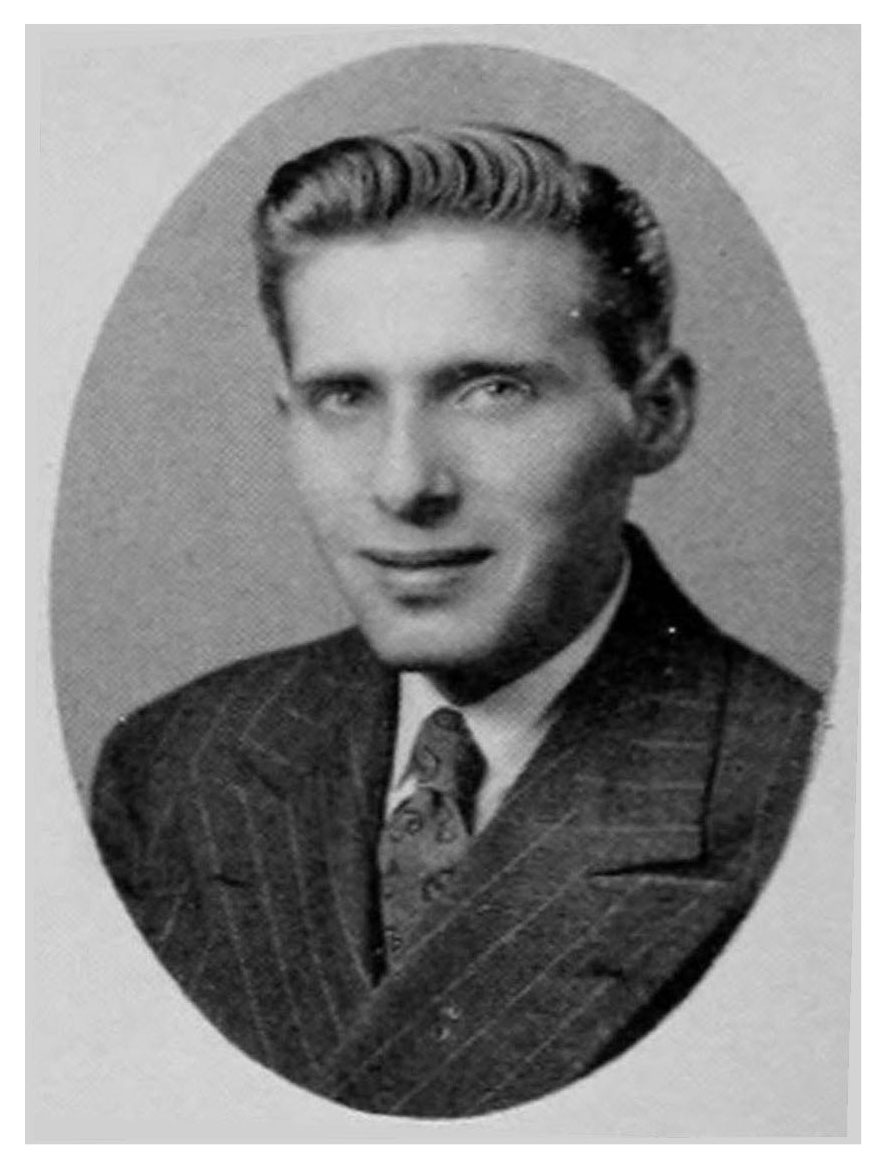
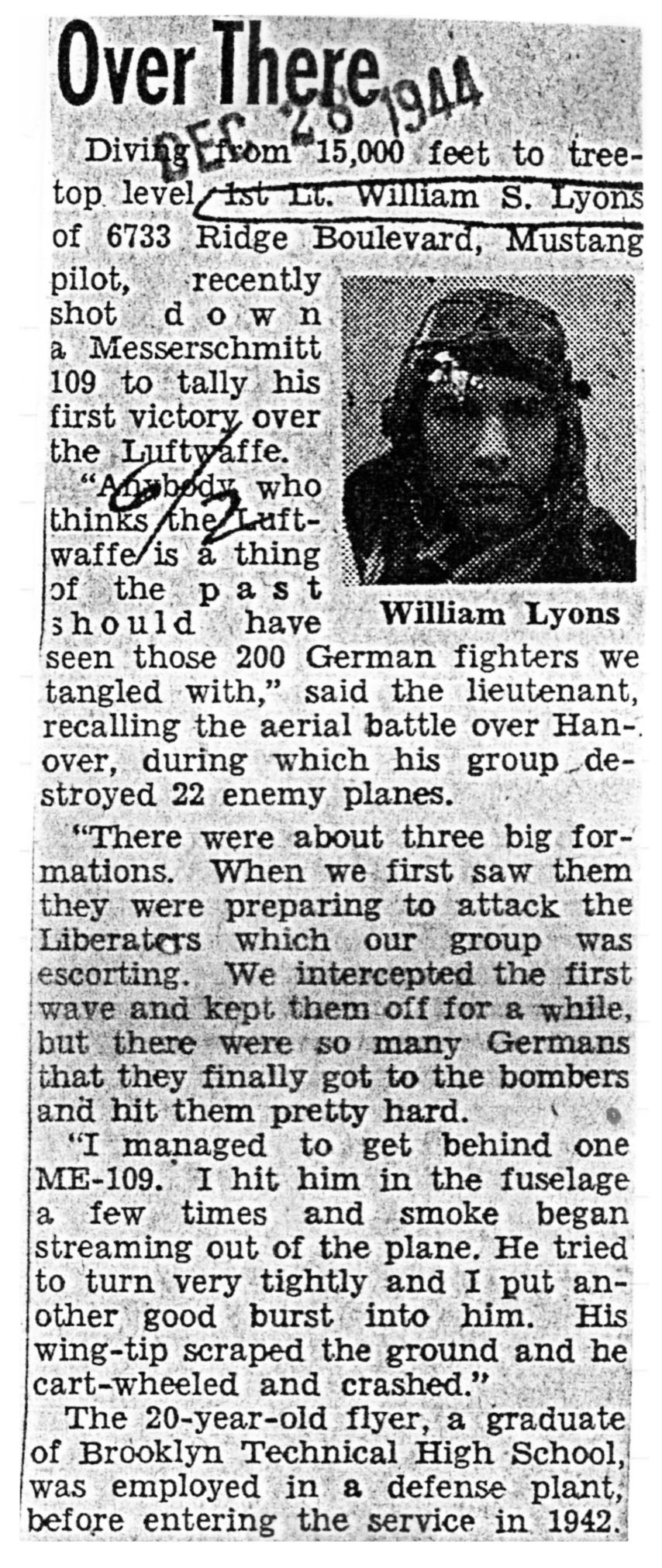
I’d like to dedicate this post to the memory of the late Dr. Ruth R. Pierson, formerly of the University of Toronto, whose 1974 article about theReichsbund Jüdischer Frontsoldaten(the RJF) inThe Leo Baeck Institute Year Bookwas instrumental in my discovery of the two editorials presented below.
~~~~~~~~~~~~~~~~~~~~~~~~~~~~~~
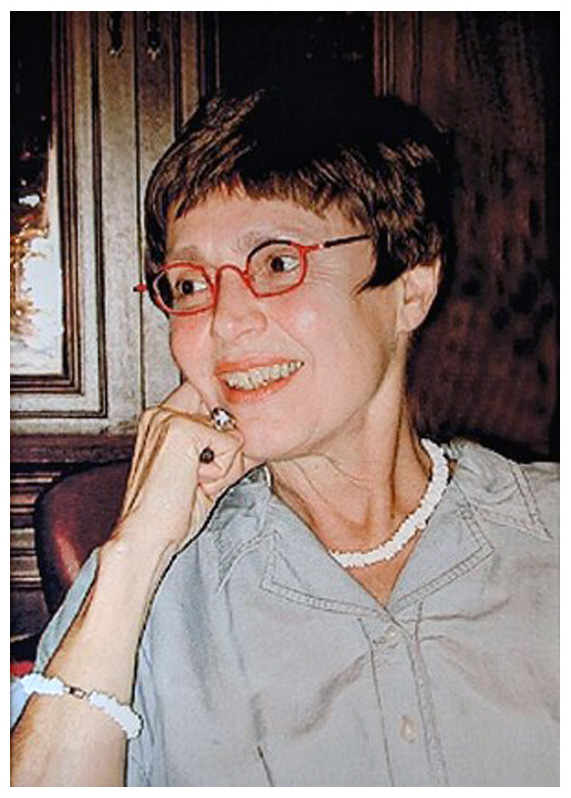
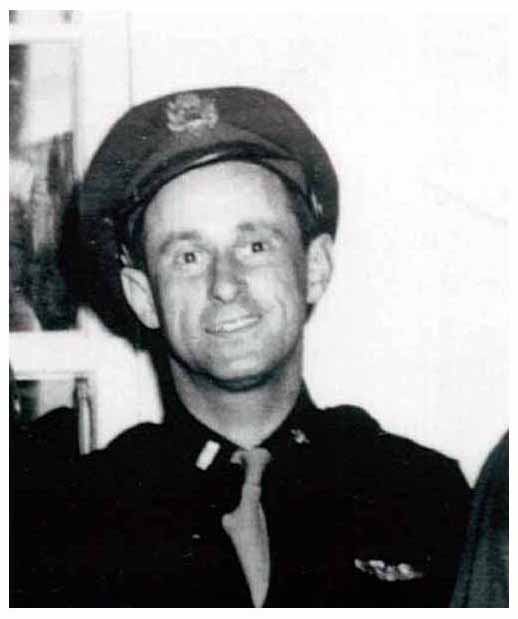
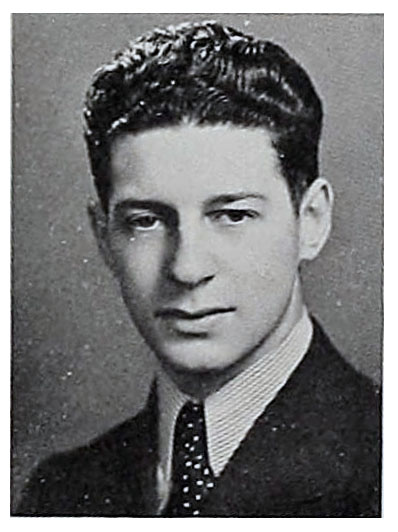
(This photograph below is from Dr. Pierson’s obituary, which appeared in the Toronto Star on October 19, 2024 (…alas; just a month before my writing this post…)
~~~~~~~~~~~~~~~~~~~~~~~~~~~~~~
By its very nature, “this” blog is an exploration of the military service of Jewish soldiers, sailors, and airmen of all areas (well… for airmen obviously since 1914!) in the militaries of all countries, with a primary emphasis – thus far – on the First and Second World Wars. One impetus for the blog has been my curiosity about the military service of Jewish soldiers in the armed forces of the WW II Allies, given the ethos and ultimate aim of the Third Reich regarding the Jewish people. This poses a question: To what extent did Jewish military service during that war impart or reinforce a sense of Jewish identity and historical consciousness among Jewish soldiers who participated in that now nearly-century-gone-by global conflict?
Yet…
Having since moved beyond WW II to explorations of Jewish military service in the “Great War”, let alone (to a thus-far, far lesser extent!) the Viet-Nam war, and, works of fiction as books and film, there arise questions that are more abstract and perhaps philosophical in nature. Namely, what are the basis and ultimate end to any commemoration of Jewish military fallen? Does a soldier having served, been wounded, taken prisoner, or fallen in war … does a recitation of names, dates, military units, and specific details about his military service – actually perpetuate a sense of Jewish peoplehood?
These questions bring to mind skeptical musings about the many works of “apologetic literature” – to the tune of “Great Jews in Sports”, “Great Jews in pick-any-other-field-of-endeavor-or-pop-culture” (rock & roll, acting, art, music, etc., etc., etc.!) produced by Jewish authors in Europe and the Americas from the nineteenth through the mid-twentieth centuries, largely prior to Israel’s 1948 re-establishment, yet still today albeit to a lesser extent today. Has such literature actually been of significance or made a positive impact in terms of the degree to which Jews are seen as equal citizens, whether in the 1930s or this year of 2024?
One of the several animating assumptions – there have been several – behind such literature is that the perception of Jews can be transformed and positively influenced by a presentation of factual information about the contributions of Jews – scientific, military, cultural, social – to the wider world. About this I wonder, for it’s largely based on the belief that attitudes toward Jews are based upon logic and reason. In reality, the perception of Jews – both recognized and unrealized – is “wired” deeply into Western Civilization, emanating from levels distant in time, near-irrevocably resistant to rationality, at perhaps founded at impenetrably deep level of consciousness.
The best and most recent explorations / explanations of this topic are Bernard Harrison’s Blaming the Jews (great book!), and, David Nirenberg’s Anti-Judaism: The Western Tradition. , which I heartily recommend.
But, I digress. (A little.)
I won’t present my own beliefs about these issues “here”, but suffice to sat that I’ve most definitely entertained thoughts about them. Of course, innumerable others have pondered these questions as well. Two such explorations, brief yet provocative, appeared nearly a century ago in Germany. They took the form of essays in the newspapers Der Israelit (The Israelite), and, Jüdische Rundschau (Jewish Review), respectively published in 1931 and 1932. I learned about these short but pithy writings a few decades ago, while researching the military service of Jews in the German armed forces during the First World War. The impetus was Dr. Ruth R. Pierson’s article “Embattled Veterans: The Reichsbund Jüdischer Frontsoldaten”, which was published in the The Leo Baeck Institute Year Book in 1974.
These essays are presented below, first in English, and then in German, translated via Oogle Translate. They approach the above-mentioned questions from perspectives reflective of the publications’ very different editorial stances regarding the nature, place (for lack of a better word … I mean that symbolically!), and perhaps the destiny of German Jews during a period of enormous and rapid social and technological change, and … to put it mildly … extraordinary political and social turbulence: Der Israelit from the standpoint of Orthodox Judaism, and Judische Rundschau from the standpoint of (I think secular) Zionism.
The excerpts are preceded by images of the newspapers’ mastheads, and also include images of the specific pages within these newspapers on which the two essays appeared.
“But is it necessary that we allow ourselves to be lured by the enemy into his blood-soaked territories, follow him into his medieval world of thought, in order to turn death and destruction into an adorable cult to which one cannot offer enough sacrifices?“
Insufficient Dead!…
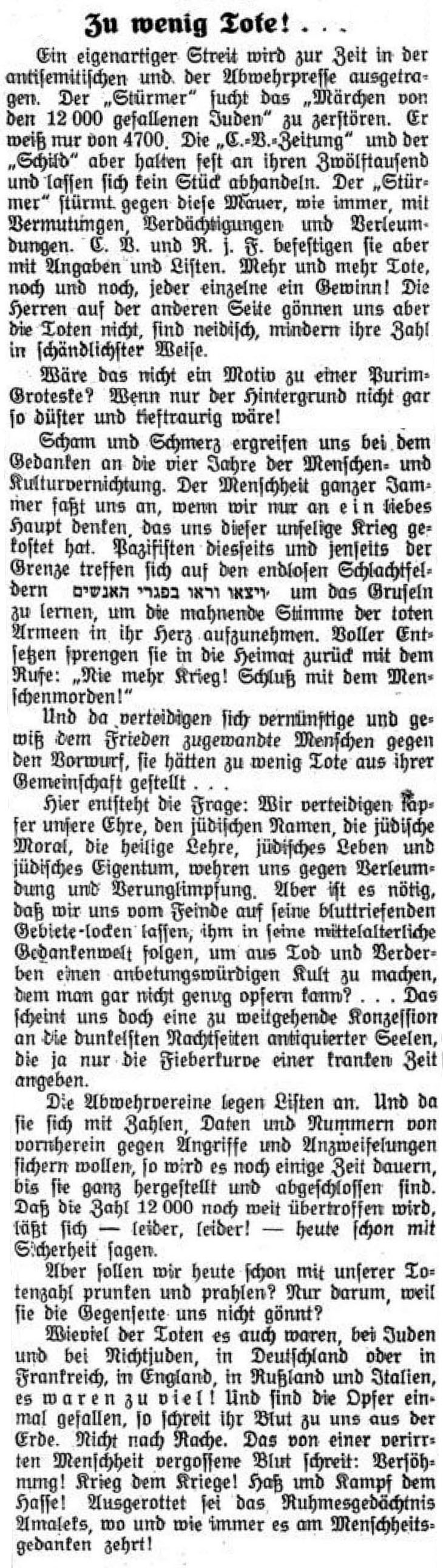
A peculiar argument is currently being waged in the anti-Semitic and Defence press. The “Stürmer” seeks to destroy the “Tale of the 12,000 fallen Jews”. It only knows of 4700. The “C.-V.-Zeitung” [Central-Verein-Zeitung] and the “Schild” stick to their twelve thousand and don’t let them deal with a single piece. The “Stürmer” storms against this wall, as always, with assumptions, suspicions and slanders. The C.V. and R.j.F. but attach them with indications and lists. More and more dead, more and more, every single one a gain! But the gentlemen on the other side don’t begrudge us the dead, they are envious; mouth their number in the most shameful way.
Wouldn’t that be a motif for a Purim-grotesque? If only the background weren’t so gloomy and deeply sad!
Shame and pain seize us at the thought of the four years of human and cultural annihilation. All of mankind’s misery grips us when we only think of a dear head, that this unfortunate war has cost us. Pacifists on both sides of the border meet on the endless battlefields [ ויצאו וראו בפגרי האנשים ] “and they went out and saw the corpses of the people to learn to shudder”, to take the admonishing voice of the dead armies into their hearts. Full of horror, they rush back home with the cry: “No more war! Stop killing people!”
And then reasonable people who are certainly open to peace defend themselves against the accusation that they had not provided enough dead from their community…
Here the question arises: we valiantly defend our honor, the Jewish name, Jewish morality, the sacred doctrine, Jewish life and property, to defend ourselves against slander and defamation. But is it necessary that we allow ourselves to be lured by the enemy into his blood-soaked territories, follow him into his medieval world of thought, in order to turn death and destruction into an adorable cult to which one cannot offer enough sacrifices? … That seems to us to be a too far-reaching concession to the darkest night sides of antiquated souls, who only indicate the fever curve of a sick time.
The defense associations draw up lists. And since they want to protect themselves against attacks and doubts with numbers, dates and numbers from the outset, it will still take some time before they are completely established and concluded. Unfortunately, unfortunately! – said with certainty today.
But should we already today boast and brag about the number of deaths ? Just because the other side doesn’t begrudge us it?
However many of the dead there were, among Jews and non-Jews, in Germany or in France, in England, in Russia and Italy, there were too many! And once the victims have fallen, their blood cries out to us on earth. Not for revenge. The blood shed by a lost humanity cries: Reconciliation! War to war! Hate and fight hate! Amalek’s memory of fame should be eradicated, wherever and however it erodes human thought!
Zu wenig Tote!…
Ein eigenartiger Streit wird zur Zeit in der antisemitischen und der Abwehrpresse ausgetragen. Der “Stürmer” sucht das “Märchen von der 12 000 gefallenen Juden” zu zerstören. Er weiss nur von 4700. Die “C.-V.-Zeitung” und der “Schild” aber halten fest an ihren Zwölftausend und lassen sich kein Stück abhandeln. Der “Stürmer” stürmt gegen diese Mauer, wie immer, mit Vermutungen, Verdächtigungen und Verleumdungen. C.V. und R.j.F. befestigen sie aber mit Angaben und Listen. Mehr und mehr Tote, noch und noch, jeder einzelne ein Gewinn! Die Herren auf der anderen Seite gönnen uns aber die Toten nicht, sind neidisch, mundern ihre Zahl in schändlichster Weise.
Wäre das nicht ein Motiv zu einer Purim-Groteske? Wenn nur der Hintergrund nicht gar so düster und tieftraurig wäre!
Scham und Schmerz ergreifen uns bei dem Gedanken an die vier Jahre der Menschen- und Kulturvernichtung. Der Menschheit ganzer Jammer fasst uns an, wenn wir nur an ein liebes Haupt denken, das uns dieser unselige Krieg gekostet hat. Pazifisten dieseits und jenseits der Grenze treffen sich auf den endlosen Schlachtfeldern ויצאו וראו בפגרי האנשים um das Gruseln zu lernen, um die mahnende Stimme der toten Armeen in ihr Herz aufzunehmen. Voller Entsetzen spregen sie in die Heimat zurück mit dem Rufe: “Nie mehr Krieg! Schluss mit dem Menschenmorden!”
Und da verteidigen sich vernünftige und gewiss dem Frieden zugewandte Menschen gegen den Vorwurf, sie hätten zu wenig Tote aus ihrer Gemeinschaft gestellt…
Hier entsteht die Frage: Wir verteidigen tapfer unsere Ehre, den jüdischen Namen, die jüdische Moral, die heilige Lehre, jüdisches Leben und jüdisches Eigentum, wehren uns gegen Verleumdung und Verunglimpfung. Aber ist es nötig, dass wir uns vom Feinde auf seine bluttriefenden Gebiete-locken lassen, ihm in seine mittelalterliche Gedankenwelt folgen, um aus Tod und Verderben einen anbetungswürdigen Kult zu Machen, dem mann gar nicht genug opfern kann? … Das scheint uns doch eine zu weitgehende Konzession an die dunkelsten Nachtseiten antiquierter Seelen, die ja nur die Fieberkurve einer kranken Zeit angeben.
Die Abwehrvereine legen Listen an. Und da sie sich mit Zahlen, Daten und Nummern von vornherein gegen Angriffe und Anzweifelungen sichern wollen, so wird es noch einige Zeit dauern, bis die ganz hergestellt und abgeschlossen sind. Dass die Zahl 12 000 noch weit übertroffen wird, lässt sich – leider, leider! – heute schon mit Sicherheit sagen.
Aber sollen wir heute schon mit unserer Totenzahl prunken und prahlen? Nur darum, weil sie die Gegenseite uns nicht gönnt?
Wieviel der Toten es auch waren, bei Juden und bei Nichtjuden, in Deutschland oder in Frankreich, in England, in Russland and Italien, es waren zu viel! Und sind die Opfer einmal gefallen, so schreit ihr Blut zu uns aud der Erde. Nicht nach Rache. Das von einer verirrten Menschheit vergossene Blut schreit: Versöhnung! Krieg dem Kriege! Hass und Kampf dem Hasse! Ausgerottet sei das Ruhmesgedächtnis Amaleks, wo und wie immer es am Menschheitsgedanken zehrt!
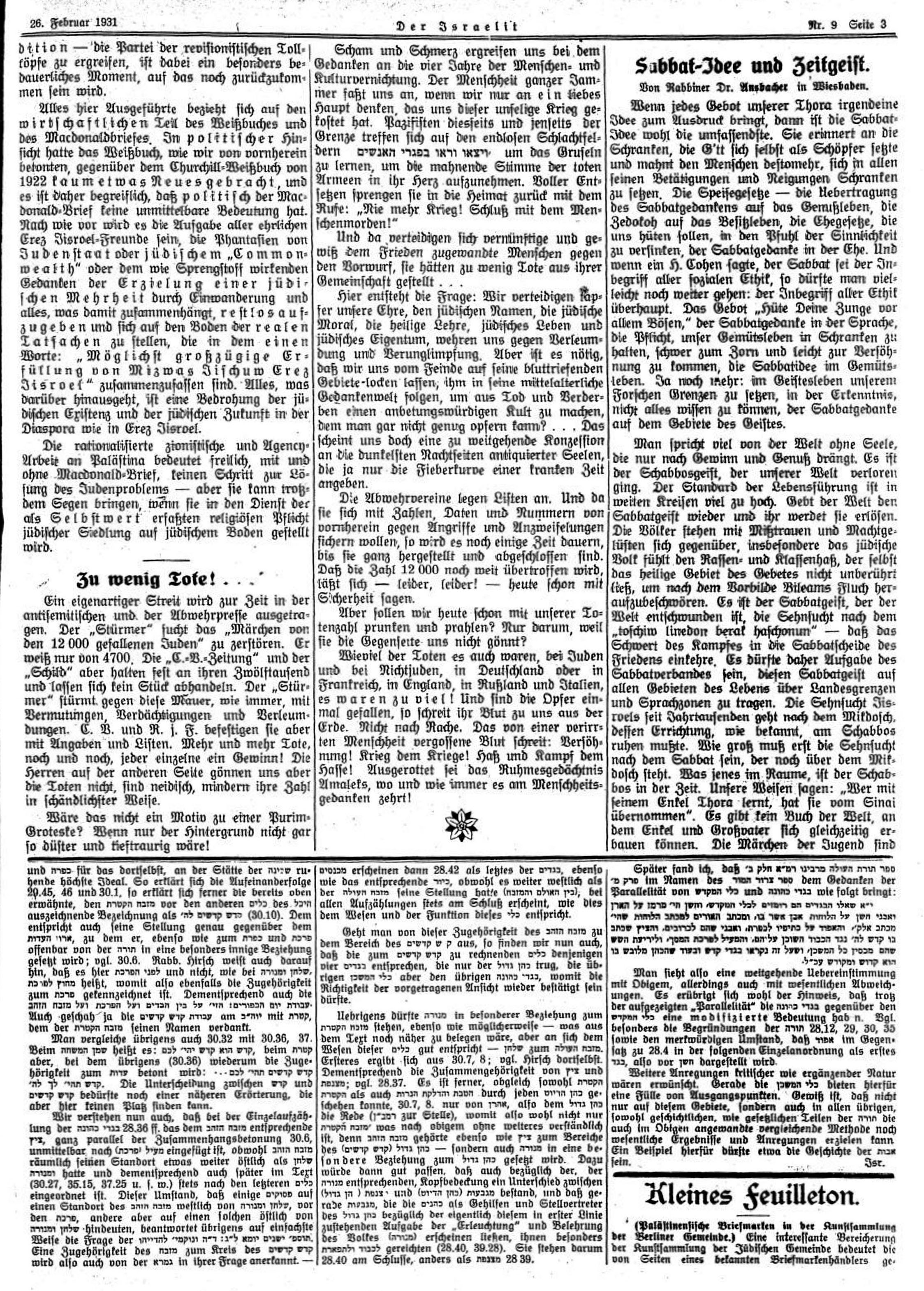
The original editorial…
Here are the first two pages of this issue of Der Israelit. The editorial appears in the first and second columns of page two.
Der Israelit had been published weekly since the spring of 1860. In late autumn 1938 the magazine was banned by the National Socialists. The circulation in October 1934 was 4250 copies. Against the backdrop of increasing secularization, growing assimilation efforts and the profound reform of Jewish ritual and worship since the beginning of the 19th century, Der Israelit was the most important publication organ of German-Jewish Orthodoxy for almost eight decades. Under the leadership of its founder, the renowned rabbi and writer Marcus Lehmann (1831-1890), the tradition-conscious magazine saw itself as a counterweight to the liberal-reform Allgemeine Zeitung des Judentums and its successor, the CV-Zeitung.
Der Israelit was considered by its long-time editor to be a forum for all interests and areas of life of German Jewry, with the most attention being paid to Jewish rituals and cults. After the old edition of the monthly magazine Jeschurun merged with Der Israelit in 1870, Lehmann initiated a Hebrew parallel edition of the paper in 1871 and a Yiddish edition in 1873, which meant that it could also be noticed beyond the borders of the German-speaking area. After Lehmann’s death in 1890, his son Oscar Lehmann (1858-1928) took over the management of the magazine.
Source reference: The graphics in the magazine Der Israelit are partly based on the original templates of the magazine in the German National Library in Leipzig (DNL).
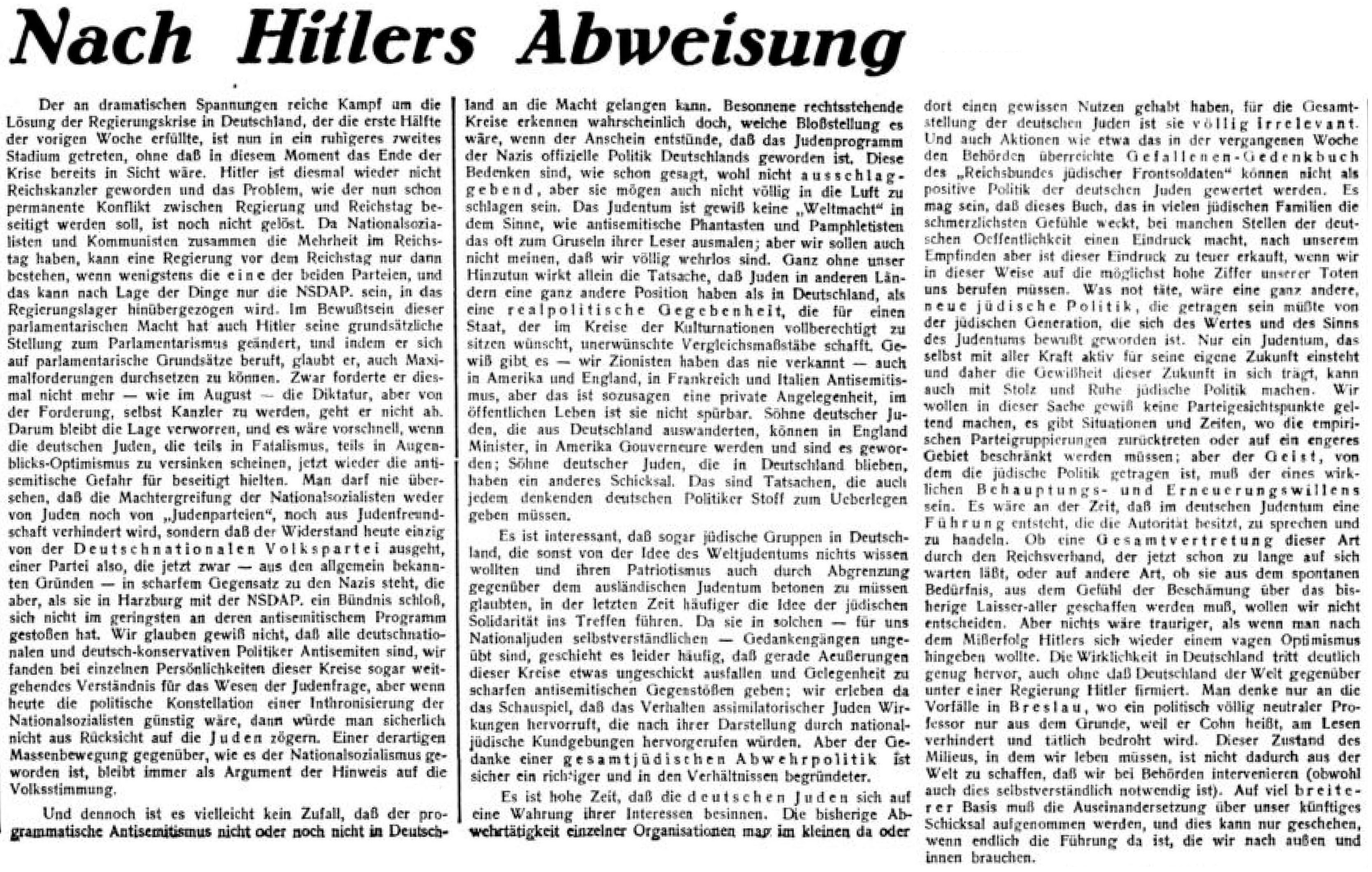
“It may be, that this book, which arouses the most painful feelings in many Jewish families, makes an impression on some parts of the German public, but in our opinion this impression is bought too dearly, if in this way we have to refer to the highest possible number of our dead.”
After Hitler’s Rejection
It is high time that the German Jews remembered to protect their interests. The previous defensive activity of individual organizations may have had a certain benefit here or there, but it is completely irrelevant to the overall position of German Jews. And also actions such as the “Reich Association of Jewish Frontline Soldiers” memorial book of the fallen, which was sent to the authorities last week, cannot be seen as a positive policy of the German Jews. It may be, that this book, which arouses the most painful feelings in many Jewish families, makes an impression on some parts of the German public, but in our opinion this impression is bought too dearly, if in this way we have to refer to the highest possible number of our dead. What is needed would be a completely different, new Jewish policy that would have to be supported by the Jewish generation, which has become aware of the value and meaning of Judaism. Only a Jewry that actively stands up for its own future with all its might and therefore carries the certainty of this future within itself can also pursue Jewish politics with pride and calm. We certainly do not claim any partisan point of view in this matter; there are situations and times when the empirical party groupings take a back seat or have to be restricted to a narrower area; but the spirit on which Jewish politics is based must be that of a real will to assert and renew. It would be time for a leadership to emerge within German Jewry that has the authority to speak and act. We do not want to decide whether a general representation of this kind by the Reich Association, which has been a long time coming, or in some other way, whether it must be created out of spontaneous need, out of the feeling of shame about the previous laissez-faire. But nothing would be sadder than returning to a vague optimism after Hitler’s defeat. The reality in Germany is clear enough, even without Germany reporting to the world under a Hitler government. Just think of the incidents in Breslau, where a politically completely neutral professor was prevented from reading and physically threatened just because his name was Cohn. This state of the milieu in which we have to live cannot be overcome by intervening with the authorities (although this, too, is of course necessary). The discussion about our future destiny has to take place on a much broader basis, and this can only happen if the leadership that we need, both externally and internally, is finally there.
Nach Hitlers Abweisung
Es ist hohe Zeit, dass die deutschen Juden sich auf eine Wahrung ihrer Interessen besinnen. Die bisherige Abwehrtätigkeit einzelner Organisationen mag im kleinen da oder dort einen gewissen Nutzen gehabt haben, für die Gesamtstellung der deutschen Juden ist sie völlig irrelevant. Und auch Aktionen wie etwa das in der vergangenen Woche den behörden überrichte Gefallenen-Gedenkbuch des “Reichsbundes jüdischer Frontsoldaten” können nicht als positive Politik der deutschen Juden gewertet werden. Es mag sein, dass dieses Buch, das in vielen jüdischen Familien die schmerzlichsten Gefühle weckt, bei manchen Stellen der deutschen Oeffentlichkeit einen Eindruck macht, nach unserem Empfinden aber ist dieser Eindruck zu teuer erkauft, wenn wir in dieser Weise auf die möglichst hohe Ziffer unserer Toten uns berufen müssen. Was not täte, wäre eine ganz andere, neue jüdische Politik, die getragen seine müsste von der jüdischen Generation, die sich des Wertes und des Sinns des Judentums bewusst geworden ist. Nur ein Judentum, das selbst mit aller Kraft aktiv für seine eigene Zukunft einsteht und daher die Gewissheit dieser Zukunft in sich trägt, kann auch mit Stolz und Ruhe jüdische Politik machen. Wir vollen in diser Sache gewiss keine Partei gesichtspuntke geltend machen, es gibt Situationen und Zeiten, wo die empirischen Partiegruppierungen zurücktreten oder auf ein engeres Gebiet beschränkt werden müssen; aber der Geist, von dem die jüdische Politik getragen ist, muss der eines wirklichen Behauptungs- und Erneuerungswillens sein. Es wäre an der Zeit, dass im deutschen Judentum eine Führung entsteht, die die Autorität besitzt, zu sprechen un zu handeln. Ob eine Gesamtvertretung dieser Art durch den Reichsverband, der jetzt schon zu lange auf sich warten lässt, oder auf andere Art, ob sie aus dem spontanen Bedürfnis, aus dem Gefühl der Beschämung über das bisherige Laisser-aller geschaffen werden muss, wollen wir nicht entscheiden. Aber nichts wäre trauriger, als wenn man nach dem Misserfolg Hitlers sich wieder einem vagen Optimismus hingeben wollte. Die Wirklichkeit in Deutschland tritt deutlich genug hervor, auch ohne dass Deutschland der welt gegenüber unter einer Regierung Hitler firmiert. Man denke nur an die Vorfälle in Breslau, wo ein politisch völlig neutraler Professor nur aus dem Grunde, weil er Cohn heisst, am Lesen verhindert und tätlich bedroht wird. Dieser Zustand des Milieus, in dem wir leben müssen, ist nicht dadurch aus der Welt zu schaffen, dass wir bei Behörden intervenieren (obwohl auch dies selbstverständlich notwendig ist). Auf viel breiterer Basis muss die Auseinandersetzung über unser künftiges Schicksal aufgenommen werden, und dies kann nur geschehen, wenn endlich die Führung da ist, die wir nach aussen und innen brauchen.
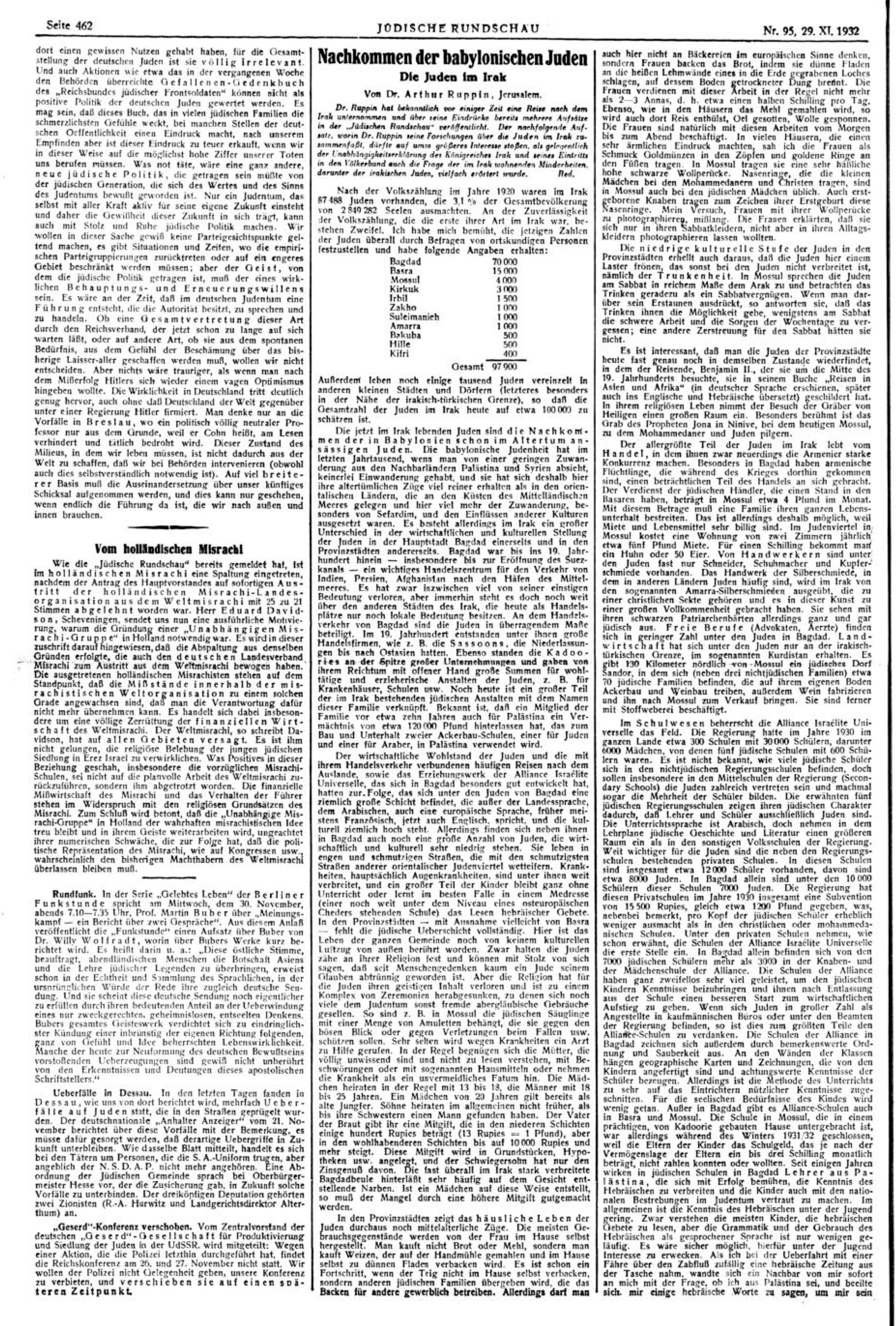
The original editorial…
Here are the first two pages of this issue of Judische Rundschau. The editorial appears in the lower right on page one and continues at the upper left of page two.
Publisher: Heinrich Loewe Changing editors-in-chief: Julius Becker, Felix Abraham, Hugo Hermann, Leo Hermann, Fritz Löwenstein, Hans Klötzel, Robert Weltsch, Hans Bloch and others. Jüdische Rundschau initially appeared once a week, but since 1919 twice a week at three – to four-day intervals. Special issues have been published mainly since 1932. In 1925 and 1936 the Rundschau briefly returned to weekly publication. From 1934 to 1938 Jüdische Rundschau had a circulation of 25,300 to 37,000 copies.
Countless supplements:
Von jüdischer Musik (On Jewish Music) (occasionally attached to the relevant issues) Palästina-Beilage (Palestine Supplement) (occasionally attached to the relevant issues) Jungzionistische Blätter (Young Zionist Paper) Jüdisches Frauenblatt (Jewish Women’s Paper) Zionistisches Frauenblatt (Zionist Women’s Paper) Unterhaltungs-Beilage (Entertainment Supplement) Frauen-Beilage (Women’s Supplement) Musik-Blatt (Music Paper) Palästina-Blatt (Palestine Paper (occasionally attached to the relevant issues)) Wirtschafts-Blatt (Business Paper) Palästina-Wirtschaftsblatt (Palestine Business Paper) occasionally attached to the relevant issues) Literatur-Blatt (Literature Paper) (in later years also occasionally attached directly to the relevant issue of the Judische Rundschau) Sport-Blatt (Sports Paper) (occasionally attached to the relevant issues) Berliner Rundschau (occasionally attached to the relevant issues) Die Jüdische Schule (The Jewish School) (occasionally attached to the relevant issues) Kinder Rundschau (Children’s Review) (occasionally attached to the relevant issues)
Jüdische Rundschau (1902-1938) – which emerged from the Berliner Vereinsboten (1895-1901) and the Israelitische Rundschau (1901-1902) – is, alongside the C.V.-Zeitung, one of the Jewish weekly newspapers with the highest circulation in the German-speaking world. Founded as the official ‘organ of the Zionist Association for Germany’, the magazine aimed, especially among young people, to “clearly and distinctly express the political idea as expressed in the Basel Program of the Zionist Party” and “to create a homeland in Palestine for the Jewish people” (H. Loewe). Zionism is considered the “national bond” that guarantees this program.
As an influential weekly newspaper, Jüdische Rundschau reported on all areas of Jewish life at home and abroad. In this context, the modern, decidedly combative reporting contributed significantly to the politicization of the Jewish press in the German-speaking world.
Due to its commitment to combating increasing anti-Semitism, the magazine was able to increase its circulation to 40,000 copies at the end of the Weimar Republic. After the National Socialists took power, Jüdische Rundschau reduced its Zionist activities in order to report more on the difficult living conditions of Jews in Germany and to provide readers who wanted to emigrate with detailed information about emigration options.
Jüdische Rundschau had to stop publishing after the so-called Reichskristallnacht on November 8, 1938; its successor, the Jüdische Weltrundschau, was published from 1939 to 1949, initially in Switzerland and later in Jerusalem.
~~~~~~~~~~
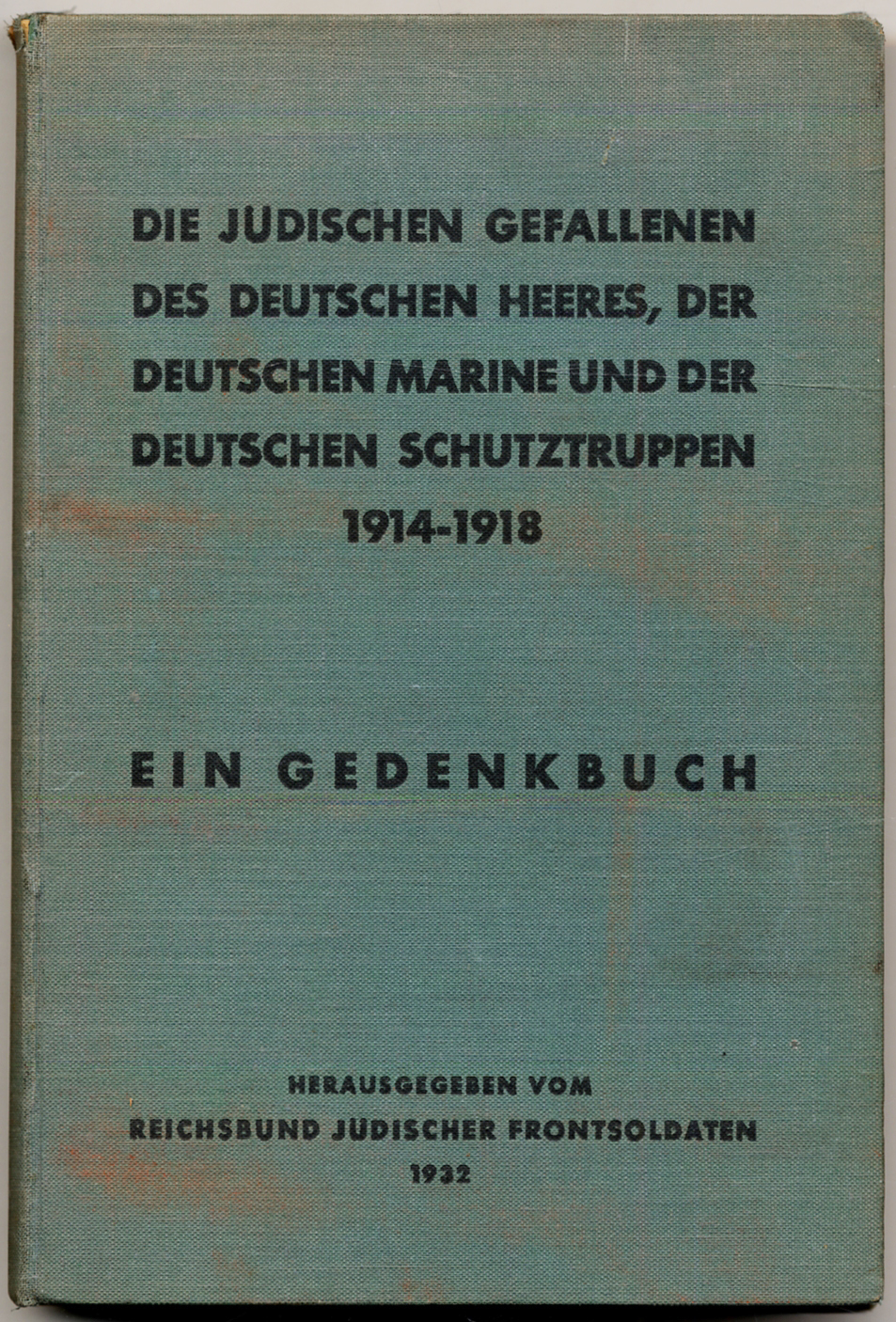
Here’s the entirely simple cover of Die Jüdischen Gefallenen Des Deutschen Heeres, Deutschen Marine Und Der Deutschen Schutztruppen 1914-1918 – Ein Gedenkbuch, Reichsbund Jüdischer Frontsoldaten, forward by Dr. Leo Löwenstein, published in Berlin in 1932 This book has been the primary (I’d say truly central and essential) source of information for my posts about German Jewish WW I military casualties.
~~~~~~~~~~~~~~~~~~~~~~~~~~~~~~
The (original) article of inspiration…
Pierson, Ruth R., Embattled Veterans: The Reichsbund Jüdischer Frontsoldaten, The Leo Baeck Institute Year Book, V 19, N 1, January 1974, pp. 139–154 (https://doi.org/10.1093/leobaeck/19.1.139)
Gadzooks, have six years gone by already? Updated on February 3, 2020, with an image of B-29 “Wugged Wascal”, I’ve (once again!) updated this post in this month of October, 2024. It now includes images of 1 Lt. Leonard Rifas, his crew, and the B-17 in which they were lost, “Miss D-day”. These images and related explanatory information were found at FindAGrave and Ancestry.. You can view them below.
* * * * *
Originally created on April 3, 2018, this post includes information about several casualties in the Army Air Force on January 9, 1945, among whom was Second Lieutenant Murray Karron, flight engineer on the B-29 “Wugged Wascal”. I’ve now updated the post to include two images of the “Wascal”, one from Steve Birdsall’s 1981 book Saga of the Superfortress, and another from Prentice Burkett’s The Unofficial History of the 499th Bomb Group (VH). These are the only images I’ve thus far found of this B-29 (42-24658).
Scroll down…
________________________________________
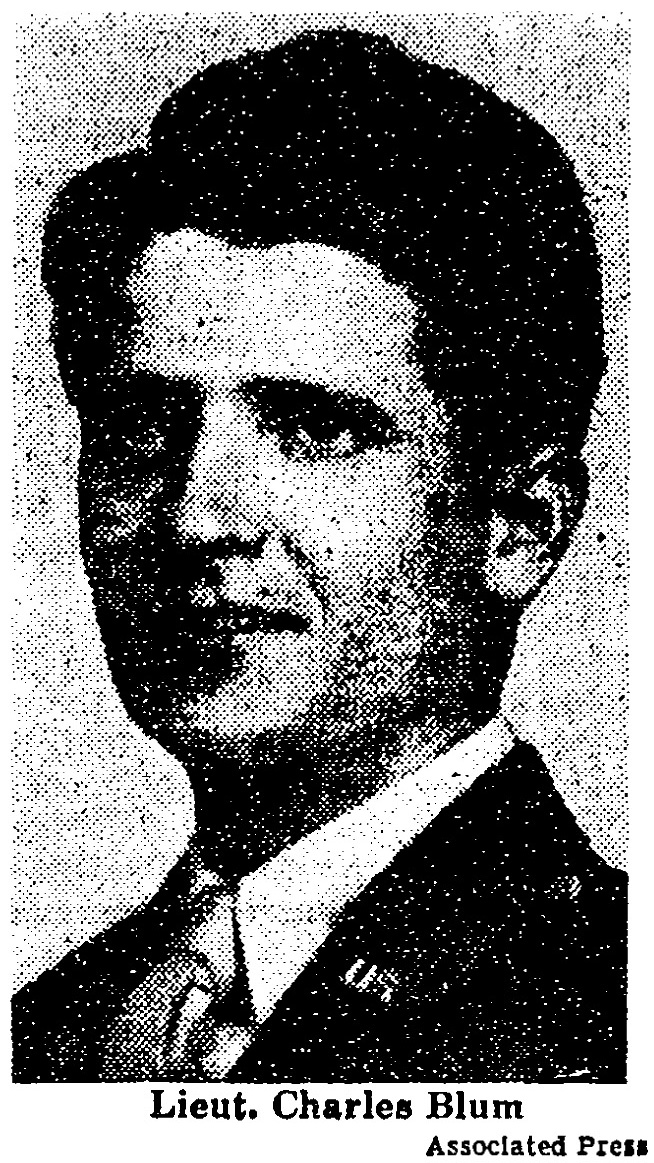
By its very nature, military activity – even when limited to action such as instruction and training; even when geographically distant from engagement with enemy forces in actual combat – has always entailed a solid element of risk and danger. One example of this appeared in The New York Times on February 15, 1945, through the publication of an obituary for Second Lieutenant George Greenfield (0-2070016), an Army Air Force navigator from the Bronx.
Killed in Bomber Crash Last Jan. 9 in England
Lieut. George Greenfield, navigator on a B-24, was killed when his bomber crashed in England on Jan. 9, the War Department has notified his family here. Lieutenant Greenfield was 22 years old.
Born in this city, he was graduated from Stuyvesant High School in 1941 and then attended the University of Indiana for two years, majoring in languages. He enlisted two years ago and was qualified as a pilot in the Air Corps, but later was transferred and graduated as a navigator at Selman Field, La. He went overseas at the end of November.
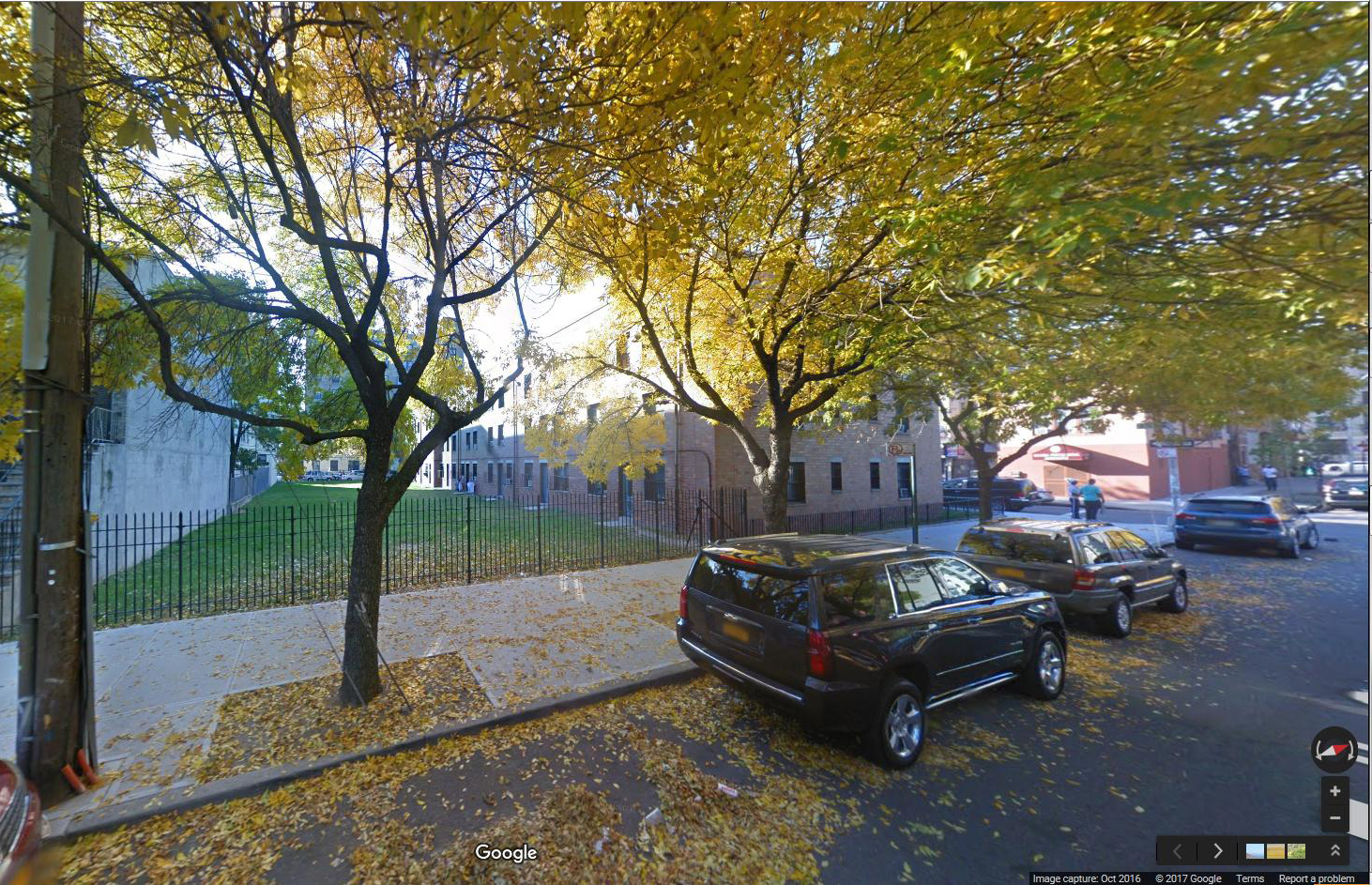
His parents, Mr. and Mrs. Philip Greenfield of 1180 Anderson Avenue, the Bronx; a twin sister, Jeanette; and two other sisters, Mrs. Paul Bergman and Margaret Greenfield, survive.
This Google Street view image shows a contemporary (2014) view of 1180 Anderson Ave.
Though there’s no Missing Air Crew Report for Lt. Greenfield and his crew (his MACR index card carries the simple notation “No MACR”), his record at the American Battle Monuments Commission provides the “clue” by which the incident of January 9, 1945, can be identified: He was a member of the 706th Bomb Squadron of the 446th Bomb Group, with the Aviation Archeology database revealing that a B-24H Liberator of that squadron (42-95306, “RT * S”, nicknamed “Dragon Lady” and piloted by 2 Lt. Andrew J. Puschock, Jr.) was lost in an accident at Whittlesford, England on that date.
Though the records of the 706th Bomb Squadron, and, any Accident Report filed after the incident would certainly list the plane’s crew, only limited information is currently available about the other casualties in this incident. Aside from Lt. Puschock, who is buried at Arlington National Cemetery, another fatality is known to have been 2 Lt. Robert Wallace Allen, presumably the bomber’s co-pilot, who is buried at the Cambridge American Cemetery, in Cambridge, England (Plot B, Row 5, Grave 54).
Lieutenant Greenfield’s name appeared in the “In Memoriam” section of The New York Times on December 1, 1945. Born on December 1, 1922, his name appears on page 335 of American Jews in World War II. His sole award is the Purple Heart, suggesting that the Puschock crew – perhaps a newly arrived crew, as implied by his November arrival in England – may have flown fewer than five combat missions prior to the accident on January 9. He is buried in the Cambridge American Cemetery, near Lt. Allen, at Plot B, Row 6, Grave 54. His matzeva, photographed by Skip Farrow, is show below:
Another aspect of this news item is more subtle, almost “hiding in plain sight”: The single-bladed propeller on Lt. Greenfield’s cap was the emblem of World War Two Army Air Force aviation cadets, suggesting that his portrait (a very good portrait) was an image in his family’s possession which was donated to the Times.
Some other Jewish military casualties on Tuesday, January 9, 1945, include…
Killed in Action – .ת.נ.צ.ב.ה. –
Boyaner, Frank, Major Canadian Dental Corps Mrs. Hazel Olive Boyaner (wife) Mr. and Mrs. Don and Kaylia Boyaner (parents) Born Saint John’s, New Brunswick, Canada, 3/23/25 Brookwood Military Cemetery, Surrey, England – 56,D,9 Canadian Jews in World War II– Part II: Casualties – 12
Carp, Paul Iban, Lt. JG, 0-184815, Purple Heart United States Navy Possibly lost while serving as a member of a liaison team aboard a French escort vessel Mr. Joseph Shepard Carp (father), 2738 SW 20th St., Miami, Fl. Miss Clare Schwartz and Mrs. Ruth C. Rosow (sisters) Graduate of Harvard University Tablets of the Missing at North African American Cemetery, Carthage, Tunisia WW II Memorial Honoree Record by Ruth C. Rosow (sister) Jewish Floridian 3/2/45 American Jews in World War II – 82
______________________________
Cohen, Clarence, Cpl., 36895289, Gunner (Central Fire Control), Air Medal, Purple Heart, 2 missions United States Army Air Force, 20th Air Force, 500th Bomb Group, 883rd Bomb Squadron Mrs. Bettie (Nettie?) Romanoff (sister), 7454 Wykes St., Detroit, Mi. Also 693 Alabama Ave., Brooklyn, 7, N.Y. MACR 10903; Aircraft: B-29 42-24657 (“Mustn’t Touch”; “Z square 45”), Pilot: Capt. John J. Charters; 11 crewmen Aircraft presumably ditched; no survivors
Corporal Cohen’s Superfortress, Mustn’t Touch, was lost during a mission to the Musashino Aircraft Works and Nakajima Aircraft Engine Factory near Tokyo. There is little (and will forever be little) definitive information about the plane’s loss, seemingly attributable to mechanical problems with the plane’s engines necessitating ditching in the Pacific Ocean roughly half-way between Saipan and Japan. As summarized in Missing Air Crew Report 10903: Shortly after take-off, his aircraft developed mechanical problems. During climb-out the #1 engine was leaking oil, and puffs of black smoke were coming from the #4 engine. At 16,000 feet his aircraft feathered the #1 engine propeller and began to abort the sortie. Last visual contact was at a geographic location of 28 degrees 10 minutes north and 137 degrees 30 minutes east, at 0315Z. Last radio contact, at 0410Z, stated they had lost an engine and were going to ditch in the ocean, approximately 900 nautical miles north of Saipan. No survivors were ever found, and he was declared killed in action one year later.
Corporal Cohen and his fellow crewmen are memorialized on the Tablets of the Missing at the Honolulu Memorial, in Honolulu. His name appears on page 290 of American Jews in World War II.
This below image of the nose art of Mustn’t Touch is from Tom McNamara’s flickr photostream, while the second image – Army Air Force photograph 64276AC / A39219 – taken on Saipan in November, 1944, shows the aircraft before the application of nose art. (The soldiers in the foreground, from an engineer battalion, are drilling holes for dynamite charges during construction of an airstrip at Isley Field.) Of technical interest, the image clearly shows the tail cannon characteristic of early B-29s, which weapon would eventually be deleted from the Superfortress due to its slow rate of fire, and, the difference between the trajectories of its 20mm shells, and, those of the twin tail-mounted co-axial 50 caliber Browning machine guns.
______________________________
Cohen, Louis, PFC, 39558749 United States Army Air Force, 77th Air Service Group, Headquarters Squadron Died (non-battle) on Tinian Island Mrs. Betty G. Cohen (wife), 1318 S. Cochran Ave., Los Angeles, Ca. Born 1911 No number on MACR index name card National Memorial Cemetery of the Pacific, Honolulu, Hawaii – Section Q, Grave 662 American Jews in World War II – 41
Frenkel, Boris Mikhailovich (Френкель, Борис Михаилович) Senior Sergeant [Старший Сержант] U.S.S.R., Red Army, 63rd Cavalry Division Radio Operator in Valentine Mk IX tank Born 1925 Probably buried at Zámoly Village, Fejér County, Hungary Memorial Book of Jewish Soldiers Who Died in Battles Against Nazism – 1941-1945 – Volume IX – 307 [КнигиПамятиевреев–воинов, павшихвбояхснацизхмомв 1941-1945 гг – Том IX – 307]
______________________________
Hertz, Joseph, Cpl., 32794422, Tail Gunner, Air Medal, Purple Heart United States Army Air Force, 5th Air Force, 345th (“Air Apaches”) Bomb Group, 500th Bomb Squadron Mr. and Mrs. Haney and Selma L. Hertz (parents), Arnold (brother), 120 Hopkins St., Brooklyn, N.Y. Born Austria, 1920 MACR 16290; Aircraft: B-25J 43-36187 (“Man of War”, or, “Man-O-War”); Pilot: 2 Lt. James O. Buffington, and five crew members
Man-O-War was struck by anti-aircraft fire during bombing and strafing mission over Luzon, crash-landing south of the city of Angeles.
Cpl. Hertz, Lt. Buffington (Peru, Indiana), and, Bombardier / Navigator 2 Lt. Vernon C. Buchanan (Indianapolis) were killed in the immediate crash of the aircraft, while three crew members survived the loss of the plane. The latter were Co-pilot Capt. Richard T. Thompson (Delta, Michigan), Flight Engineer Cpl. Bernard R. Dunnavant (Victoria, Virginia), and Radio Operator T/Sgt. Walter J. Nelson (Union City, N.J.)
Thompson and Dunnavant, both very seriously injured and unable to move, remained at the site of the wrecked plane. T/Sgt. Nelson, less seriously hurt, aided them to the best of his ability, and then attempted to reach Filipino civilians for further help.
During his absence, Japanese troops arrived at the scene of the wreck and murdered his surviving comrades.
Concealed by Filipino civilians from discovery by the Japanese – in the village of Delores Mabalacat – Sgt. Nelson was turned over to a band of Filipino guerillas, and, eventually joined by Sgt. Nolan W. Huddleston of the 387th Bomb Squadron, 312th Bomb Group, returned to American forces by January 23.
The five casualties from Man-O-War are are listed as having been awarded the Air Medal and Purple Heart, with Lt. Buffington having received two Oak Leaf Clusters, suggesting that they had flown between five and ten combat missions prior to January 9. They are listed on the Tablets of the Missing at the Manila American at Fort Bonifacio, Manila.
FindAGrave includes a record for WW II Army Air Force veteran “Walter John Nelson”, who died in 2013 and is buried at the Brigadier General William C. Doyle Veterans Memorial Cemetery in Wrightstown, New Jersey. This biographical record seems (?) to “fit” information about T/Sgt. Nelson of Man-O-War, with the exception that the record is for a Corporal – and not T/Sgt. – Nelson.
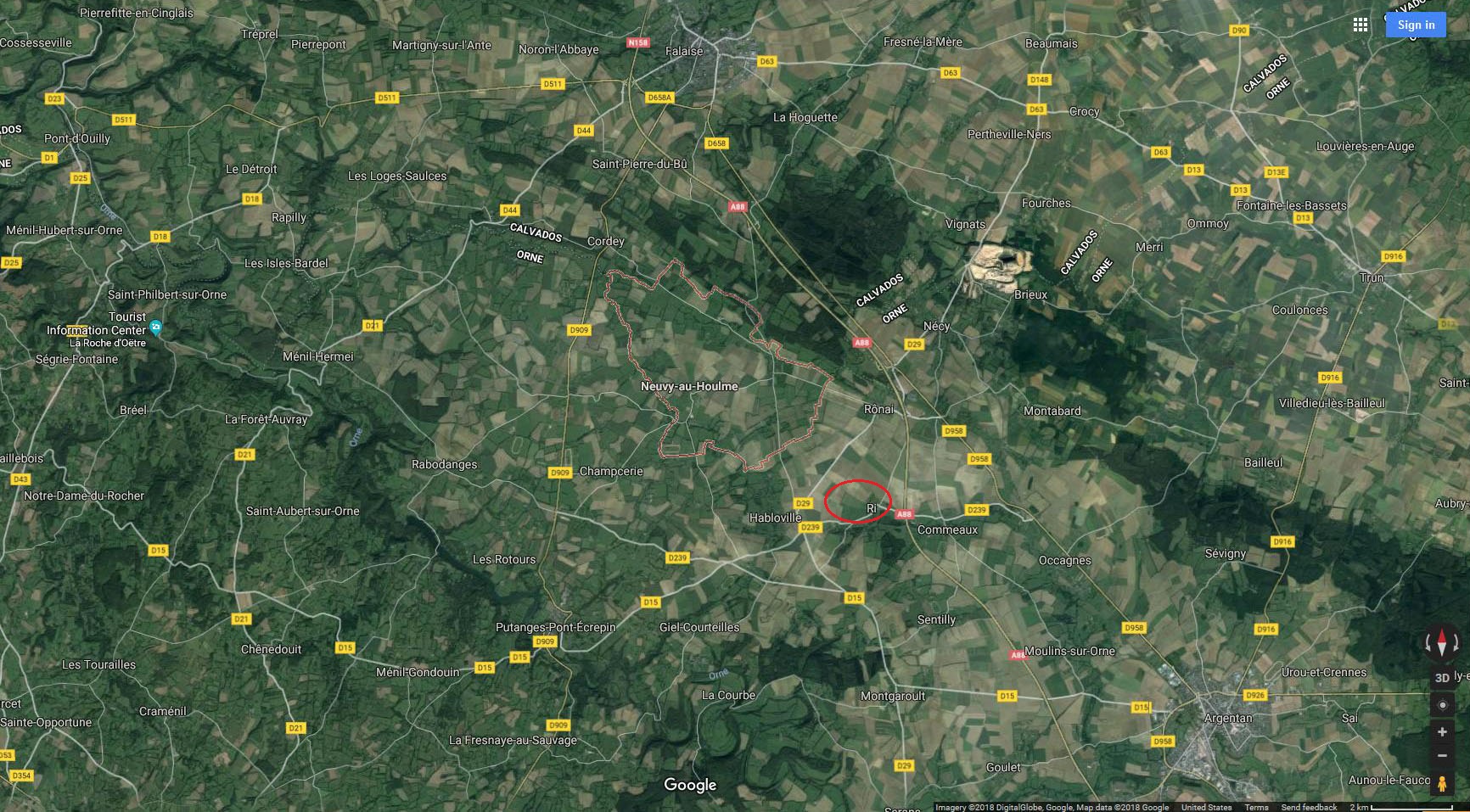
The 500th Bomb Squadron Mission Report for the 9 January mission (extracted from the 500th Bomb Squadron’s Mission Reports encompassing August 1944 through August 1945, at the 345th Bomb Group) is shown below, with sections pertaining to the loss of Man-O-War outlined in red. This is followed by a series of Google Maps showing – at successively larger scales – the probable area (as denoted by the red oval) where Man-O-War crash-landed. This location was identified through information in Lawrence Hickey’s Warpath Across the Pacific, MACR 16290, and a map of Clark Field and Vicinity, at Pacific Wrecks.
Mission Objective; Mission Description.
______________________________
Details of the Mission: “Lt. Buffington executed an unexplained 180 turn from South to North and has not been heard of since.”
But, as recounted in Warpath Across the Pacific…
“Eight miles below Tarlac, 2 Lt. James O. Buffington pulled his plane from a loose formation and doubled back to hit a pair of trucks bypassed on the adjacent highway. Minutes later, hastening to catch up with his flight, Buffington and his co-pilot, Capt. Richard T. Thompson, saw two trucks sitting on the tracks just north of Dau Junction. Their initial attack was made from fifty feet and left three box cars blazing. But as they pulled off their run, a flak battery found thee range.
T/Sgt. Walter J. Nelson was in the radio compartment when the plane jerked suddenly. Glancing forward, he saw a fire blazing in the cockpit. “This is it. We’re going down!” his mind screamed at him. Only seconds separated Nelson from possible death and he used them well. He released the emergency escape hatch, then braced himself against the transmitter, using a parachute for a head cushion. The plane jarred violently as the belly furrowed a rice paddy. A low earthen mound ripped off a wing and spun the plane into a tight loop, pitching Nelson through the open hatch.
When he awoke, the radio operator found himself on the ground next to the burning aircraft. Near the right nacelle lay Cpl. Bernard Dunnavant, the turret gunner, with one leg almost severed. Five hundred yards away sat two camouflaged bombers bearing the blood-red Japanese hinomaru on their fuselages. The ill-fated crew had come to grief on the very edge of Angeles South, one of the satellite airfields in the Clark Field complex.”
______________________________
The crew of Man-O-War.
______________________________
Luzon.
______________________________
Luzon, with Angeles and Mabalacat in the center of the map.
______________________________
The possible – general – crash location of Man-O-War: South of Angeles.
______________________________
A closer view of the possible crash site: An area bounded by the Angeles-Porac-Floridablanca-Dinaluphin Road (to the west), the Pasig-Potrero River (to the south), and MacArthur Highway / Manila North Road (to the east).
______________________________
Ioffe, Abel Abramovich [Иоффе, Абель Абрамович] (at Priekule, Latvia) 16th Lithuanian Rifle Division, 156th Rifle Brigade Mr. Avraham Yofe (father) Born 1922 Probably buried at Kuldiga County, Latvia Road to Victory – 281 (Name given as Yofe, Abel, Sgt.)
______________________________
Karron, Murray, 2 Lt., 0-868393, Flight Engineer, Air Medal, Purple Heart United States Army Air Force, 20th Air Force, 499th Bomb Group, 877th Bomb Squadron Mrs. Alyse (Cohen) Karron (wife), 1163 East 27th St., Brooklyn, N.Y. Mr. and Mrs. Louis and Tillie [11/10/53] Karron (parents); Evelyn and Jack (siblings) MACR: 10911; Aircraft: B-29 42-24658 (“Wugged Wascal”; “V square 3”) Pilot: Capt. Kimmel Parker Murphy; 11 crewmen Aircraft presumably ditched; no survivors Brooklyn Eagle 1/16/42 American Jews in World War II – 357 New York Times Obituary “In Memoriam” Section – 11/12/53
Old Newspapers
I’ve not been able to find a photograph of Murray Karron, but this is an image (not the best, but still it’s an image) of Murray’s fiancee and future wife, Alyce (Alyse?) Cohen, as published in the Brooklyn Eagle on January 16, 1942.
________________________________________
The loss of Lt. Karron’s crew in Wugged Wascal, piloted by Captain Kimmel Murphy, parallels that of Corporal Cohen’s: Target: Musashino Aircraft Works and Nakajima Aircraft Engine Factory. Reason for loss: “Operational difficulties”. Action: Ditching. Result: No survivors.
Oddly, the Missing Air Crew Report for Captain Murphy’s plane – lost after successfully completing its bombing-run – contains no statement specifically describing what actually befell the aircraft. Instead, information about the missing bomber is found in a document dated January 10, 1946 within MACR 10907, which covers the losses of six B-29s (recorded in MACRs 10903, 10904, 10907 itself, 10908, 10911, and 11220) from the mission of January 9, 1945.
The statement covering 42-24658 is as brief as it is enigmatic, simply stating:
The plane was last contacted by radio at 0908Z by Sergeant Irving R. Wirth, at 25-30 N, 146-30E. The report states that the aircraft is believed to have been ditched in the ocean as a result of operational difficulties [nature unspecified].
The coordinates 25-30 N – 146-30 E mark a location about 250 miles east of Iwo Jima, Volcano Isles. Another statement notes the search for the missing crew: Search started 1000 K 10 Jan 1945, to be continued until darkness or limited endurance of aircraft. Search will continue on subsequent days for as long as the 73rd Bomb Wing permits.
Like Corporal Cohen, Lt. Karron and his fellow crewmen are memorialized on the Tablets of the Missing at the Honolulu Memorial, in Honolulu. As for 2 Lt. Jack M. Danowitz (mentioned in the blog post covering 1 Lt. Arthur S. Goldstein), Major David I. Cedarbaum preserved a record (recorded by W.D. Bray) about Lt. Karron’s last flight – actually, far more informative than the MACR, albeit with the plane’s final location being incorrect – to which nothing further could ever be added:
The Airplane Commander was K.P. Murphy. They flew to the Jap homeland, dropped their bombs, and an hour away began to have engine trouble. They radioed the fire spread and they had to ditch, the plane being out of control. They were about 100 miles north of Iwo presumably when they hit the water. No rescue facility was ever able to locate anything of them.
________________________________________
From The Unofficial History of the 499th Bomb Group (VH), this picture shows the crew of Prentice Burkett standing before “Wugged Wascal”. Unfortunately, like all crew photos in the book, the men’s names are not given, but the five men standing at rear are likely Burkett and the crew’s other officers, while the six men in front are presumably NCOs.
________________________________________
Printed as a full-page image on page 138 of Steve Birdsall’s Saga of the Superfortress, this photograph, from the collection of Lawrence F. Reineke, is captioned, “The 499th Group’s Wugged Wascal near Fuji on January 9, with Captain Kimmel Murphy and his crew. A few hours after this photo was taken she crashed into the sea, less than seven hundred miles from Saipan.” This image also appears (in smaller size) in The Unofficial History of the 499th Bomb Group (VH).
______________________________
This is a very-high-resolution (600 dpi) scan of the “Wascal”, as seen in the above image. Even at this magnification the clarity of the image is remarkable, with structural details and the last four digits of the B-29’s serial clearly visible. More important, of course, are the eleven men inside the plane..
______________________________
Katz, Wolf, Sgt. (at Ginkunai, Lita) U.S.S.R., Red Army, 16th Lithuanian Rifle Division, 224th Artillery Brigade Mr. Chone Katz (father) Place of burial unknown Road to Victory – 290
Mirvis, Mikhail Borisovich (Мирвис, Михаил Борисович) Private [Рядовой] U.S.S.R., Red Army, 58th Rifle Division, 20th Tank Brigade, 45th Autonomous Motor Rifle Battalion Rifleman Died of wounds at Medical Facility of 45th Medical Battalion, 53rd Rifle Division Born 1924 Buried at Cemetery Number 80, Grave 1, Muzhla Village, Komarom-Estergom, Hungary Memorial Book of Jewish Soldiers Who Died in Battles Against Nazism – 1941-1945 – Volume II – 547 [Книги Памяти евреев-воинов, павших в боях с нацизхмом в 1941-1945 гг – Том II – 547]
Ples, Josef, WO 2C, W-336 (at Dunkirk, France) Czechoslovakia, 1st Czechoslovak Army Corps, 1st Armored Brigade Czechoslovakia, Lipník nad Bečvou, okres Přerov; 8/12/19 Cassel Communal Cemetery Extension, Nord, France – D,15 Zide v Ceskoslovenskem Vojsku na Zapade – 247
______________________________
Rifas, Leonard, 1 Lt., 0-771802, Bomber Pilot, Air Medal, 4 Oak Leaf Clusters, Purple Heart, 27 missions United States Army Air Force, 8th Air Force, 385th Bomb Group, 549th Bomb Squadron Born Chicago, Il., December 20, 1921 Mrs. Jeanette Rosalie (Rifas) Miller (sister) (12/21/14-7/21/04) 5125 N. Capitol St., Washington, D.C. Mr. and Mrs. Samuel Leo (1/15/88-1951) and Sarah Rieva (Kulvinsky) (3/21/90-3/85) Rifas (parents) Bertram E. “Bert” Rifas (brother) (10/27/24-11/12/11) 1216 Broadway, c/o Commonwealth, Kansas City, Mo. Aircraft: B-17G 44-6100 (“Miss D-day”) 10 crewmen – no survivors MACR 11718 Tablets of the Missing at Cambridge American Cemetery, Cambridge, England American Jews in World War II – 113
Half-way ‘round the world from the loss of Mustn’t Touch and Wugged Wascal, another bomber – 8th Air Force Flying Fortress Miss D-day, piloted by Lieutenant Leonard Rifas – was lost in circumstances as enigmatic as those two bombers: The aircraft vanished during a short flight from an emergency landing strip in France, to the 385th Bomb Group’s base at Great Ashfield, England. Though the bodies of two crewmen were found by Air/Sea Rescue, the other eight crewmen remained (still remain) missing. There were no survivors.
As stated in Missing Air Crew Report 11718: Aircraft 44-6100, returning from operational mission to Frankfurt, Germany on 8 January 1945, landed at emergency landing strip, A-70, Laon-Couvron, France. Radio message was received at station 155, that this aircraft had been given clearance on the afternoon of 9 January 1945, but due to weather conditions on the continent it was believed that clearance had been cancelled, as no further contact was made by either A-70 or station 155.
The bodies of two of the crew frozen together in a life raft [2 Lt. John W. Skoff, bombardier, and S/Sgt. Lowey I. Boyd, ball turret gunner] were picked up at 50 – 40 N, 00 – 20 E, 13 January 1945, by Air/Sea Rescue and taken to New Haven Mortuary. [New Haven is located just east of Brighton, in southern England.]
Initially found at FindAGrave, where it was uploaded by Carolyn DeLoach, this image of Lt. Rifas and his crew was originally uploaded to Ancestry.com by “kochwayne” on January 18, 2014. The original source of this halftone photo is unknown.
“kochwayne” also added a smaller photo to Ancestry to serve as a name key to the crew portrait. Using that image as a guide and correlating the names thereupon to those listed in MACR 11817 yields the following list. Note that ball turret gunner Lowey Boyd is apparently absent from the photo.
Rear
Pilot – Leonard Rifas, 1 Lt., 0-771802, Washington, D.C. Co-Pilot – Charles M. Jones, 2 Lt., 0-1997859, Cincinnati, Oh. (? – Navigator – Robert G. Chandler, 2 Lt., 0-1997897, Framingham, Ma.) (? – Bombardier – John W. Skoff, 2 Lt., 0-717902, Joliet, Il.)
Here’s a nice close-up of the bomber’s nose art. Unfortunately, its individual squadron identification letter is unknown. The 549th Bomb Squadron history in AFHRA microfilm roll A0641 is strikingly anemic, only very briefly mentioning the plane’s loss on frames 391 and 392.
What happened aboard Miss D-day will never be known, but based on information in the MACR, no emergency calls were radioed from the aircraft during its brief flight, or if they were, such signals were not received. The fact that the bombardier (from the front of the aircraft) and ball turret gunner (from the plane’s aft fuselage) survived for a time in one of the plane’s two rafts, suggests that there may have been adequate time for the crew to at least gather in the radio room for a controlled ditching, probably somewhere between Boulgone, France, and Beachy Head, England. Though Lt. Skoff and S/Sgt. Boyd were found roughly – only – fifteen miles south of Eastbourne, in the English Channel (the location designated by thered circlein the below map), in mid-winter, in an open raft, those fifteen miles might just as well have been one thousand…
According to records at the 385th Bomb Group, Lieutenant Rifas completed 27 missions. For his first twelve missions, he served as co-pilot to Ted C. Findeiss. Commencing with the Hannover mission of October 26, 1944 he served as pilot, with nine of his fifteen missions in this capacity being flown in Miss D Day.
______________________________
Rosenberg, Jacob Joseph, EM3c, 2425767, Electrician’s Mate, Purple Heart United States Navy, USS John D. Henley (DD553) “0821: Two men [EM3c Jacob J. Rosenberg and F1c Kenneth Dowd Russell] fell overboard and were not recovered after a thorough search of the area.” (11-34 N, 159-14 E) Mrs. Sophia Anna (Rosenberg) Zitzer (sister), 16 Greenock St., Boston, Ma. Tablets of the Missing at Honolulu Memorial, Honolulu, Hawaii American Jews in World War II – 176
Rubin, Harold, S 2C, 8625065, Seaman, Purple Heart United States Navy, USS Mississippi Mr. Able Rubin (father), 1659 W. Euclid Ave., Detroit, Mi. Tablets of the Missing at Manila American Cemetery, Manila, Philippines American Jews in World War II – 195
References
Birdsall, Steve, Saga of the Superfortress, Sidgwick & Jackson, London, England, 1981
Burkett, Prentiss M., Capt., The Unofficial History of the 499th Bomb Group (VH), Historical Aviation Album, Temple City, Ca., 1981
Dublin, Louis I., and Kohs, Samuel C., American Jews in World War II – The Story of 550,000 Fighters for Freedom, The Dial Press, New York, N.Y., 1947
Hickey, Lawrence J., Warpath Across the Pacific – The Illustrated History of the 345th Bombardment Group During World War II, International Research and Publishing Corporation, Boulder, Co., 1984
Leivers, Dorothy (Editing and Revisions), Road to Victory – Jewish Soldiers of the 16th Lithuanian Division, 1941-1945, Avotaynu, Bergenfield, N.J., 2009
Kulka, Erich, Zide Československém Vojsku na Západé, Naše Vojsko, Praha, Czechoslovakia, 1992 Loyd, Alwyn T., B-29 Superfortress in detail & scale – Production Version – Part 1, Aero Publishers, Inc., Fallbrook, Ca., 1983.
Sturzbecker, Russell L., The Roarin’ 20s: A History of the 312th Bombardment Group, U.S. Army Air Force – World War II, Russell L. Sturzbecker, Westchester, Pa., 1976
Canadian Jews in World War II– Part II: Casualties, Canadian Jewish Congress, Montreal, Quebec, Canada, 1948 Memorial Book of Jewish Soldiers Who Died in Battles Against Nazism – 1941-1945 – Volume II [Surnames beginning with К (K), Л (L), М (M), Н (N)], Maryanovskiy, M.F., Pivovarova, N.A., Sobol, I.S. (editors), Union of Jewish War Invalids and Veterans, Moscow, Russia, 1995 Memorial Book of Jewish Soldiers Who Died in Battles Against Nazism – 1941-1945 – Volume IX [Surnames beginning with all letters of the alphabet], Maryanovskiy, M.F., Pivovarova, N.A., Sobol, I.S. (editors), Union of Jewish War Invalids and Veterans, Moscow, Russia, 2006
“Because he was concerned to make sure of everyone’s safety before bailing out himself.”
A review of the history of the WW II Allied air campaign against the Axis, specifically in terms of missions conducted by aircraft manned by multiple crew members – here we’re largely talking about bombardment aircraft, though such aircraft certainly could be used for photo or weather reconnaissance, or, electronic warfare – reveals a consistent theme in the context of aircraft losses; a theme perhaps second nature and long taken-for-granted. This is revealed for the United States Army Air Force within Missing Air Crew Reports, in R.W. Chorley’s series of books covering Royal Air Force Bomber Command and, in a myriad of other references. In essence, it wasn’t at all unusual for the pilot (and co-pilot, as well) of a bomber to lose their lives in their final efforts to keep a damaged aircraft under some semblance of control in order to grant their fellow crewmen the chance for a safe bailout. There are many Missing Air Crew Report Casualty Questionnaires that are explicit in the descriptions of such events. A comprehensive review of these documents, or, a systematic tabulation of loss records in Chorley’s books, might enable a researcher to actually quantify just how often many otherwise uninjured pilots – who otherwise might have survived – gave their lives in such circumstances.
One such aviator was First Lieutenant Nathan Margolies (0-806295). The son of Moses and Rose (Blatt) Margolies, he was born in Brooklyn on July 6, 1915, and resided with his parents at 8301 Bay Parkway, in that rather well known New York borough. The recipient of the Distinguished Flying Cross, Air Medal with three Oak Leaf Clusters, and Purple Heart, his name can be found on page 387 of American Jews in World War II. His name appeared in a Casualty List released on April 19, 1945, and can also be found upon the Tablets of the Missing at Manila American Cemetery, Manila, Philippines, while a commemorative matzeva bearing his name is present at Section MF, Plot 46-D-12, at Arlington National Cemetery. His name also appears in Robert Dorr’s 7th Bombardment Group / Wing 1918-1995 (page 248) and in Chick Marrs Quinn’s The Aluminum Trail (page 389).
As indicated from this commemorative information and the latter two books – and as you’ll see from this post – he did not survive the war.
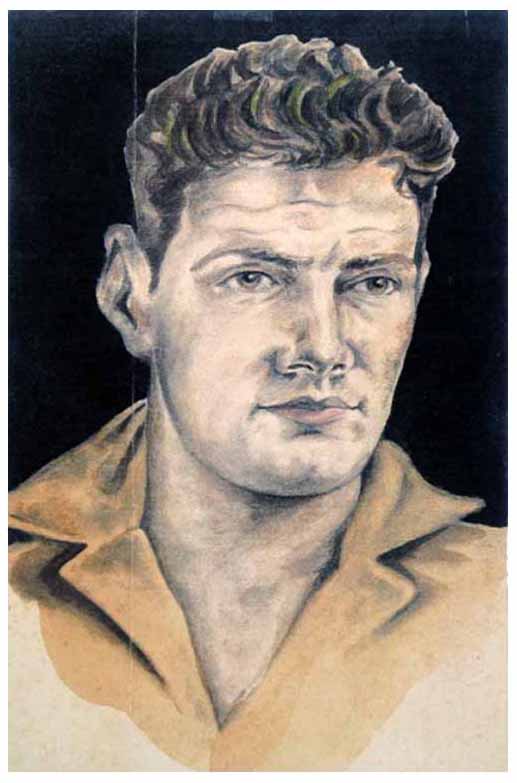
This is him…
A member of the 9th Bomb Squadron of the 10th Air Force’s 7th Bomb Group, Lt. Margolies was reportedly wounded by anti-aircraft fire on March 19, 1945. Thus, his inclusion in “this” series of blog posts concerning Jewish military casualties on March 19, 1945. However…
…he was killed during a combat mission five days later, on March 24, 1945, while in command of B-24L Liberator 44-49607 (tail number 28) during a mission from Pandaveswar, in West Bengal, India, to“Bridge Q633″ on the Burma-Siam Railway.
______________________________
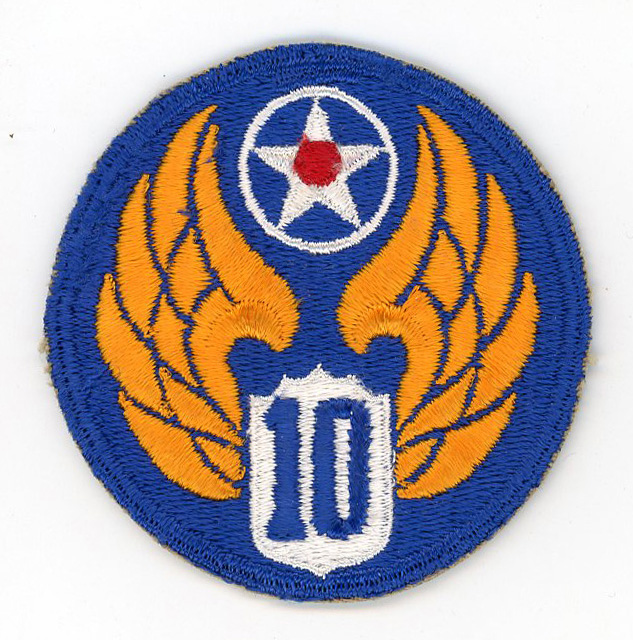
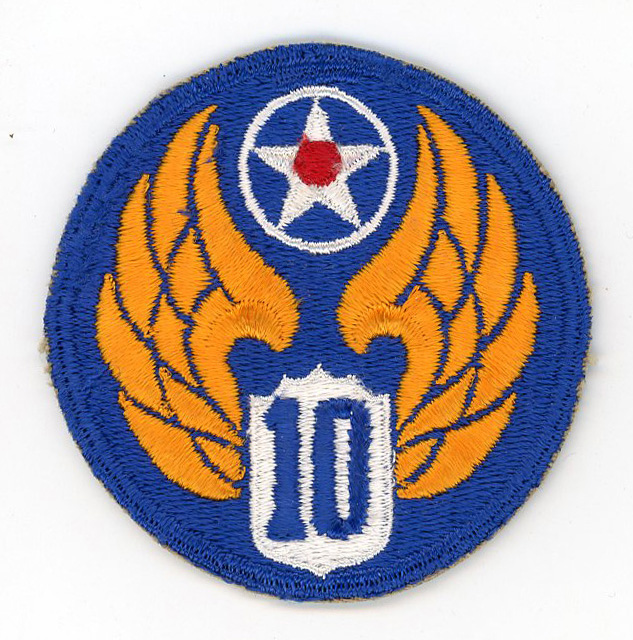
The insignia of the 10th Air Force.
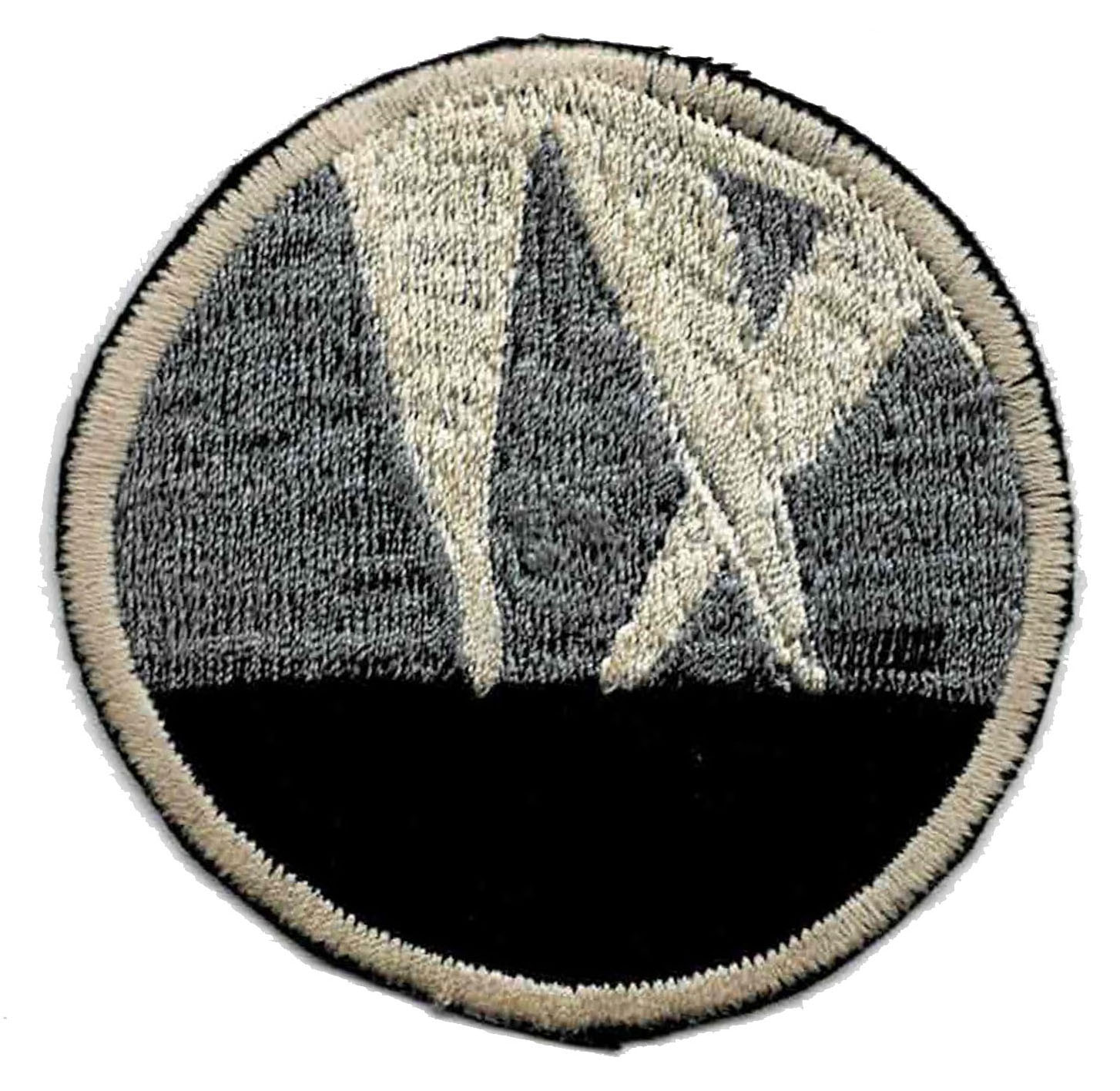
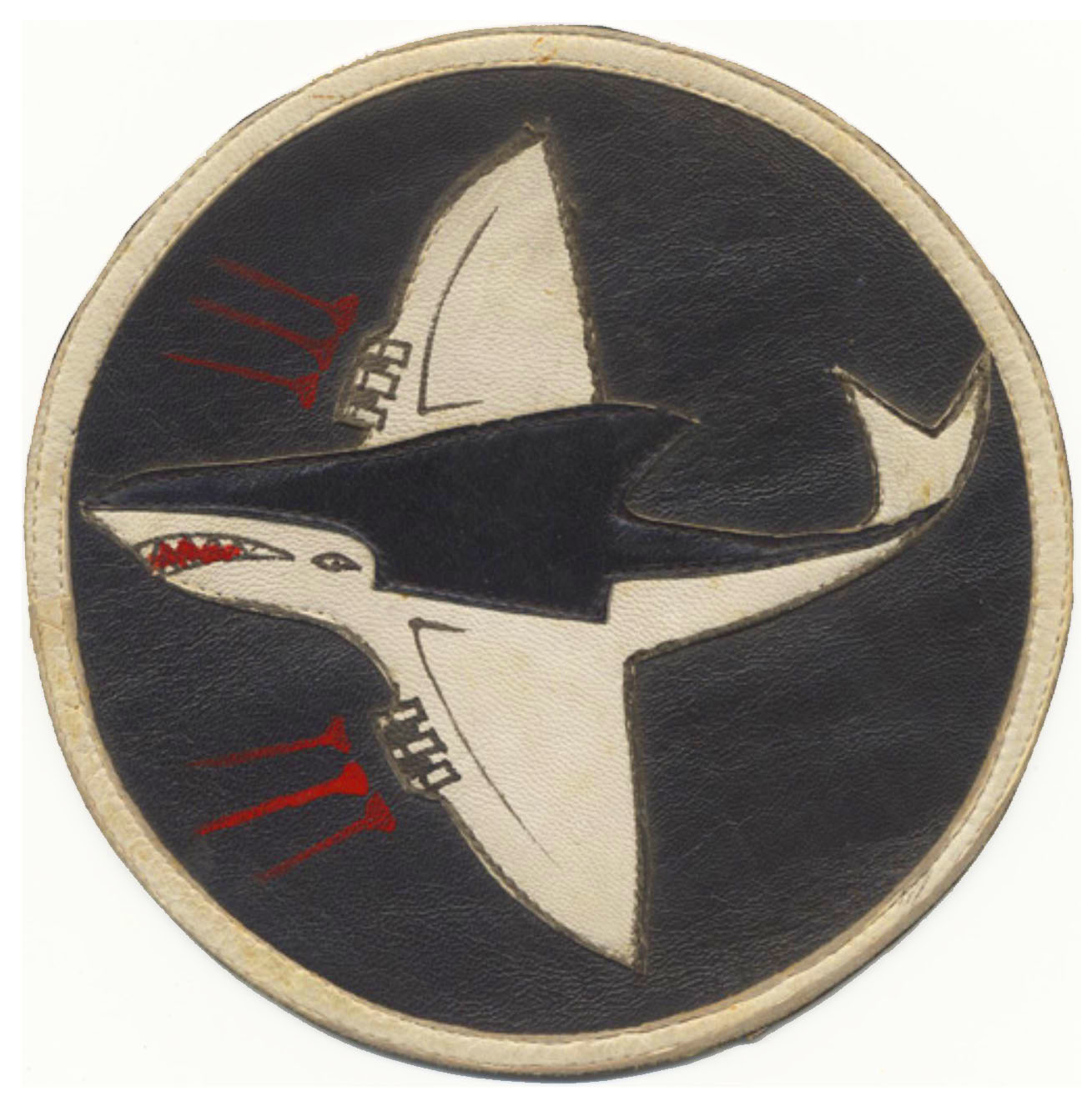
This example of the 9th Bomb Squadron insignia was found at Etsy. Though the gray rays in the upper half of the insignia resemble searchlight beams – as if pinpointing enemy aircraft at night – in reality, they simply form the Roman numeral “IX”, representing the number “9”. As in 9th Squadron.
______________________________
From Edward M. Young’s B-24 Liberator Units of the CBI (Osprey Combat Aircraft 87), this profile, by Mark Styling, is a representative image of the markings carried by 9th Bomb Squadron B-24s slightly before the general time-frame of the Margolies crews’ missions. This plane, B-24J 44-40857, RANGOON RANGLER, shows the squadron’s black & white checkerboard rudder with a horizontal fin band, and, plane-in-squadron number. RANGOON RANGLER survived the war with many combat missions and other sorties, and postwar was turned over to the Reconstruction Finance Corporation (RFC). There’s no record of the Margolies crews’ 44-49607 having a nickname.
______________________________
The names and eventual fates of Lt. Margolies’ crew members on the March 24 mission are listed below:
Co-Pilot – Chaffee, Arthur Richard, 1 Lt., 0-755518, Seattle, Wa. –Survived Navigator – Scranton, Edwin Ely, 1 Lt., 0-685742, Alliance, Oh. (See here, here, and here) – KIA Bombardier – Meridith, James M., 1 Lt., 0-889303, Wichita, Ks. – Survived Flight Engineer – Sadloski, Stanley P., T/Sgt., 11010475, Hartford, Ct. –Survived Radio Operator – Nelson, James F., T/Sgt., 32086547, Brooklyn, N.Y. –Survived Gunner – Reed, Edward, S/Sgt., 11090457, Fall River, Ma. –KIA Gunner – Cunningham, John E., S/Sgt., 14147628, Atlanta, Ga. – KIA Gunner – Moriarty, Leo, S/Sgt., 32185901, Ware, Ma. – Survived Gunner – Herald, Kenneth William, S/Sgt., 39559281, Pomona, Ca. – Survived
Unlike most (most; not all) MACRs, the eyewitness statements in MACR 13435 describing 28’s loss were not recounted by crew members of other planes in the 9th’s formation. Rather, they were reported by two of Lt. Margolies’ six surviving crew members: bombardier Lt. Meredith and gunner Sgt. Herald. The MACR also includes Casualty Questionnaires filed by T/Sgt. Sadloski for his four fallen fellow crew members. Through these records, it’s possible to reconstruct what transpired over India that day, seventy-nine years ago.
First, as described by Lt. Meredith…
Were flying indicated altitude of 2500’. We were one hour and forty minutes out from the field when the oil pressure started dropping off on #1 engine [left outer engine, as viewed from above] very fast. Lt. Margolies told me to go down in the nose and salvo the bombs which I immediately did. When I crawled back up to the flight deck the engineer was salvoing the bomb bay [fuel] tank. The pilot could only get the engine partly feathered causing a terrific drag on the left side. We were losing about a thousand feet a minute so the pilot yelled “bail out”. I buckled on my chute and went out the right front bomb bay. I saw only one other parachute beside my own and did not see the plane crash.
…and then, S/Sgt. Herald:
At 11:15 it was reported that number one engine had bad oil pressure and Lt. Margolies proceeded to feather it. Due to some mechanical failure, the prop would not feather, which caused an excess of drag on our left wing forcing us to lose altitude even after out bombs and gas tank were dropped. Our pilot fought it but to no avail. The first order was to prepare for a ditching and as soon as that was given another order was to put on chutes, and there came the bail out order. The waist windows had been broken out, so as soon as we were told to bail out, I went through the right waist and hit the ground very soon after my chute opened. The altitude we went out at was about 700 ft. I hit the trees and soon joined out co-pilot and radio operator.
As indicated above, the bomber was already flying at the low altitude of 2,500 feet (remarkably low by the standards of the 8th or 15th Air Forces, but perhaps typical for a 10th Air Force mission of this nature…?) when mechanical failure – a drop in oil pressure – was encountered in the number 1 engine. (Interestingly, the header page of the MACR attributes the aircraft loss to carburetor icing, but I don’t how know (or if) such a problem could contribute to low oil pressure. Especially at low altitude. Especially in the climate of India and Burma!) Regardless, Lt. Margolies’ first command was for the crew to prepare for ditching. Immediately afterwards came an order to bail out, in light of the plane’s very rapid loss of altitude and the danger inherent to ditching a B-24 with very limited control and very little time for preparation. (Not that ditching a B-24 was easy under optimal circumstances, to begin with.)
Six crewmen left the plane: Lt. Margolies’ officers, and, Sergeants Nelson, Cunningham, and Herald.
Of the six, the parachutes of Lt. Scranton and Sgt. Cunningham were either deployed too low and too late, or, failed to open.
Four crewmen remained in the aircraft: Lt. Margolies, and Sergeants Sadloski, Reed, and Moriarty.
Of these men, Lt. Margolies, severely injured in the ditching, was unable to escape the sinking aircraft. Sgt. Reed managed to leave the wreck, but he did not survive.
Thus, from a crew of ten, six returned. Of the four who did not survive, only Sergeant Reed’s body was recovered to eventually have a place of burial.
Photos of the fallen appear below. They, and several images of Lt. Margolies, as well, have been contributed to the mens’ biographical profiles at FindAGrave by Mr. Walter N. Webb (cousin of Lt. Scranton) about whom you can read more here.
______________________________
2 Lt. Edwin F. Scranton, Navigator
______________________________
S/Sgt. John E. Cunningham, Gunner
______________________________
S/Sgt. Edward Reed, Gunner
Sgt. Reed was also “an amateur artist and wood carver and played the guitar.” This is his water-color self-portrait.
______________________________
But wait (!) there’s even more…(!!)…
In the early 2000s, Mr. Walter N. Webb, who had been researching the histories of 7th Bomb Group crews lost in WW II – with a focus on his cousin, Lt. Scranton – posted the results of his investigation at the website of the 7th Bomb Group (“7th Bombardment Group (H)”), which in 2024 is no longer “up and running”. The title of his work was: “A Special Tribute to the Margolies Crew – Photos and research by Walt Webb”.
Mr. Webb’s post includes speculation about the location where B-24 28 and her crew – both the survivors and those killed – came to earth, and, photos of the Margolies crew (and another 9th BS crew, that of 1 Lt. John F. Albert), the above-mentioned photographs of Lieutenants Margolies and Scranton, and, Sergeants Cunningham and Reed, two Google Earth images simulating the probable final course of 28, and finally, a symbolic memorial ceremony that he arranged in honor of Lieutenants Margolies and Scranton, and Sgt. Cunningham, that took place at Arlington National Cemetery on May 26, 2005.
Well, to quote from Mr. Webb’s post…
I’ve been researching a 9th Squadron crew, four of whom were killed in a March 24, 1945, air accident en route to Thailand. Three of those men still are missing in the Ganges Delta region along with their B-24. One of them was a cousin I never really knew (Lt. Edwin E. Scranton). These photos are about this crew, the last two photos are of the Arlington ceremony that I arranged for the families of the three MIAs.
I was able to download Google Earth and use it in an unusual way–to simulate the Margolies B-24 final descent route across the Ganges Delta (Mar. 24, 1945) and to visualize what the pilots saw as they crossed these islands at altitudes of 1,000 feet and below. Google Earth allows you to “fly” to any point on a 3D globe, drop to any altitude, tilt to get an oblique view, and even rotate around the target! The earth coverage comes from satellite imagery. The detail varies; major cities have the highest resolution. Since I saved the entire descent path, all I have to do to revisit is to press the “Tour” button and then watch as the path automatically runs!
I’ve used information in Mr. Webb’s post, specifically his two Google Earth maps, to build “this” post a little further, in terms of mapping and illustrating the final flight of 28 and her four fallen airmen.
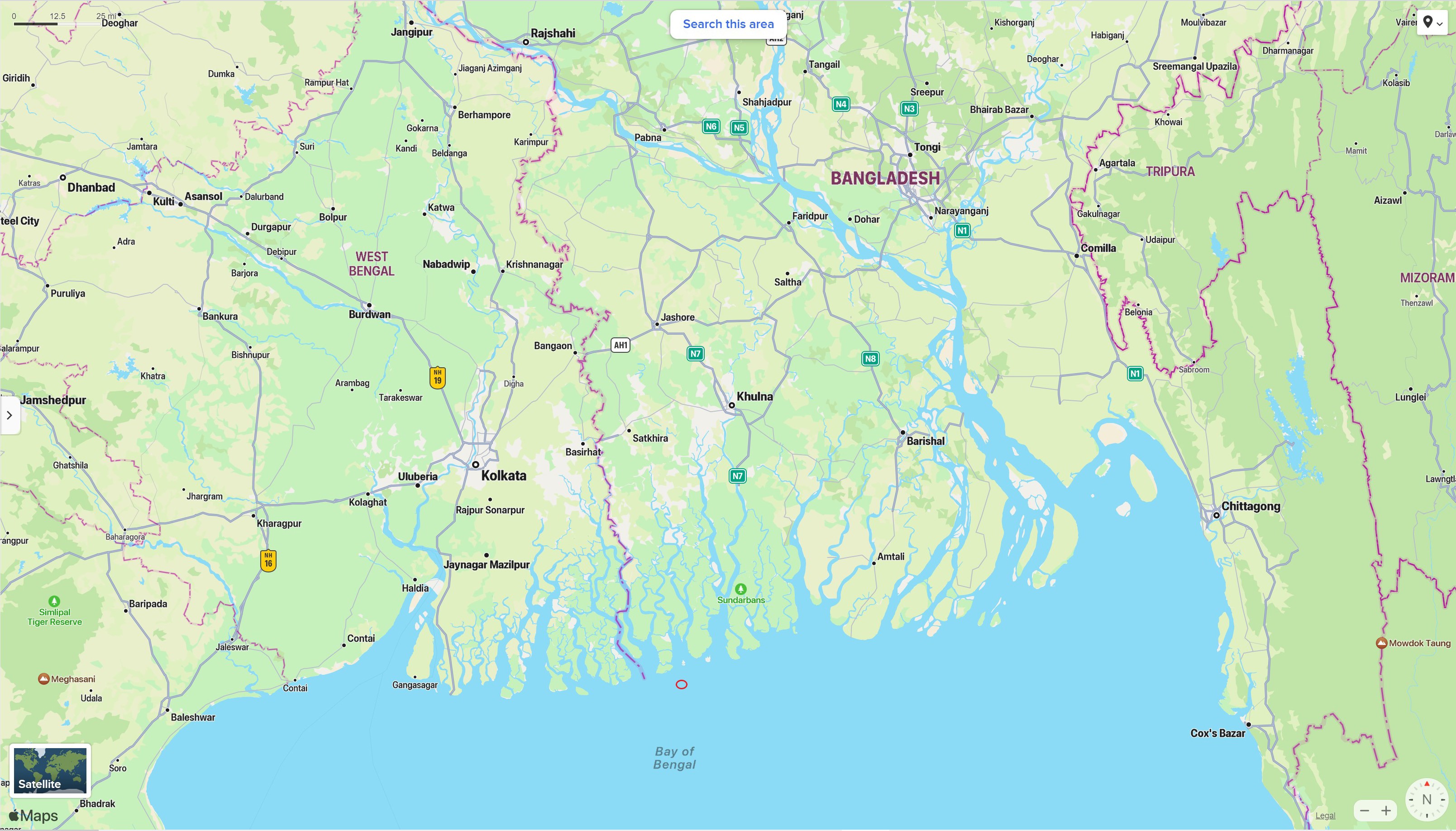
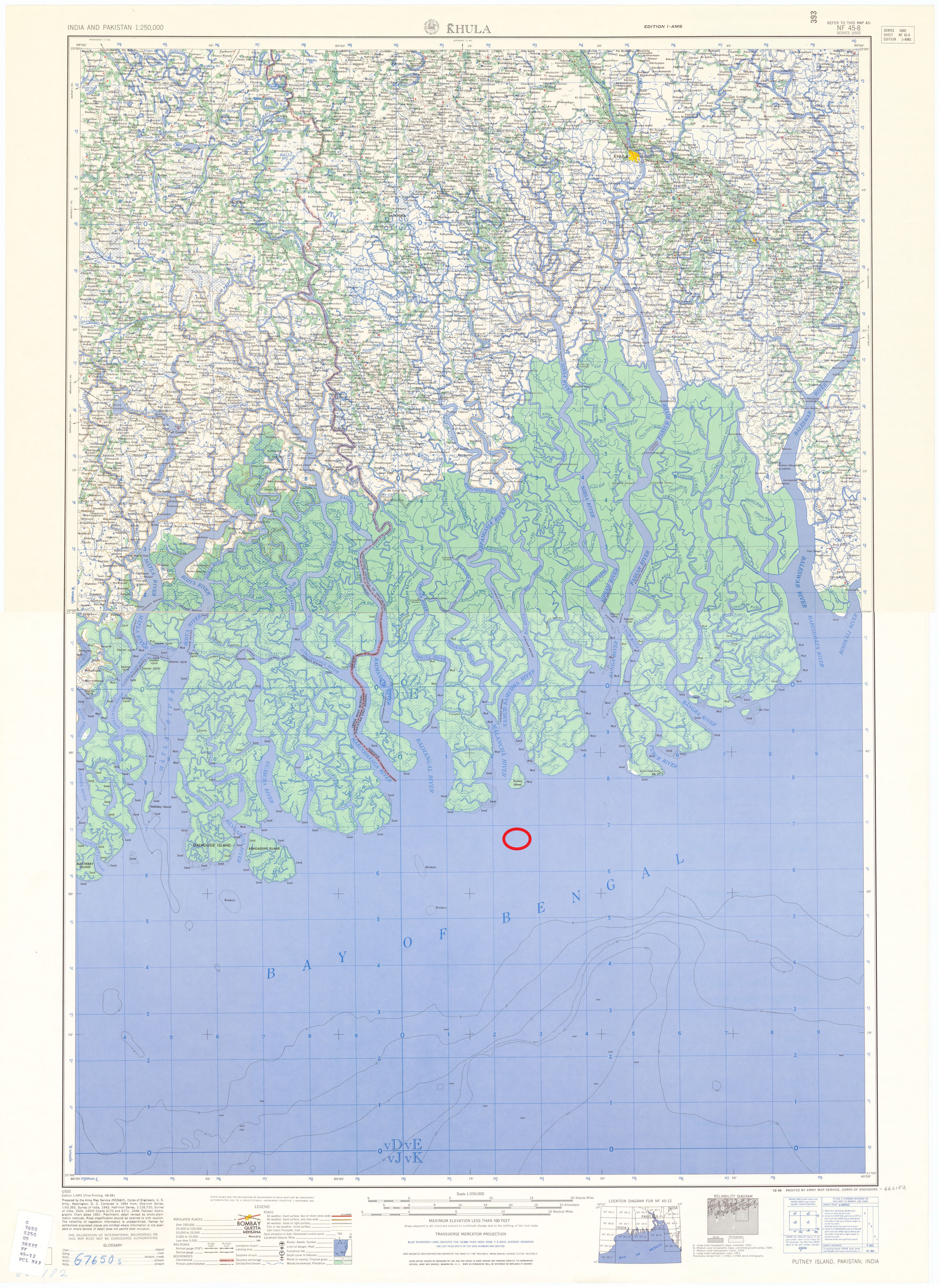
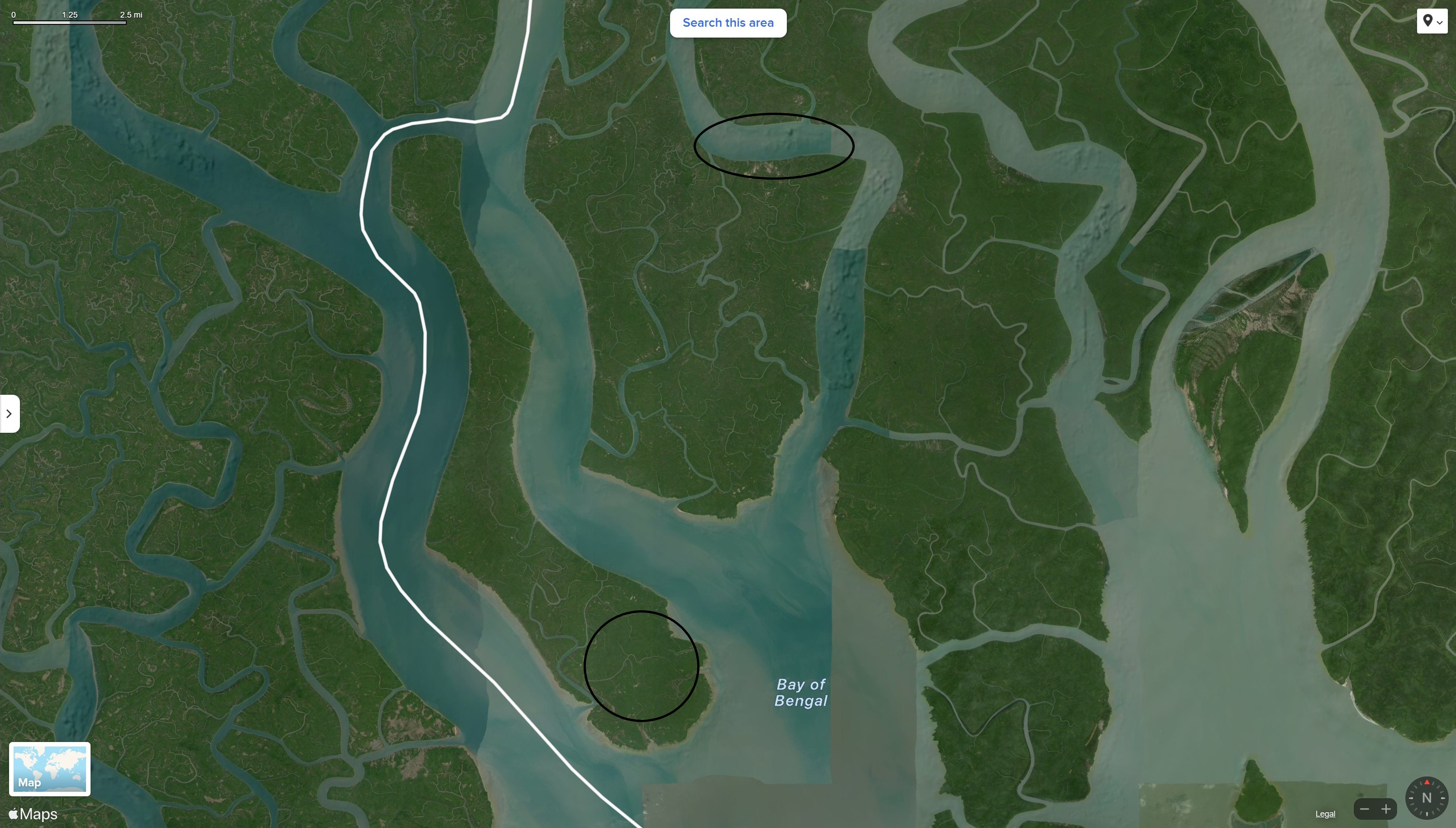
This map, included in MACR 13435, shows the last witnessed location of 28: Over the Bay of Bengal, just a few miles south of the coast of modern day Bangladesh. Note that the map is only a snippet cut from the much larger “Army / Air” 1:1,000,000 map: “NF-45”, which you’ll see with just a quick mouse scroll down.
XXXXXXXXXX
Based on the MACR map, the map below, at a vastly smaller scale, shows the aircraft’s last reported position in the wider geographic context of the Bay of Bengal, India, Bangladesh, and Burma. It’s designated by the miniscule, almost-invisible (and really tiny) red oval in the center of the map.
Going to a larger scale, here’s 28’s last reported position in the context of the Ganges-Brahamputra Delta.
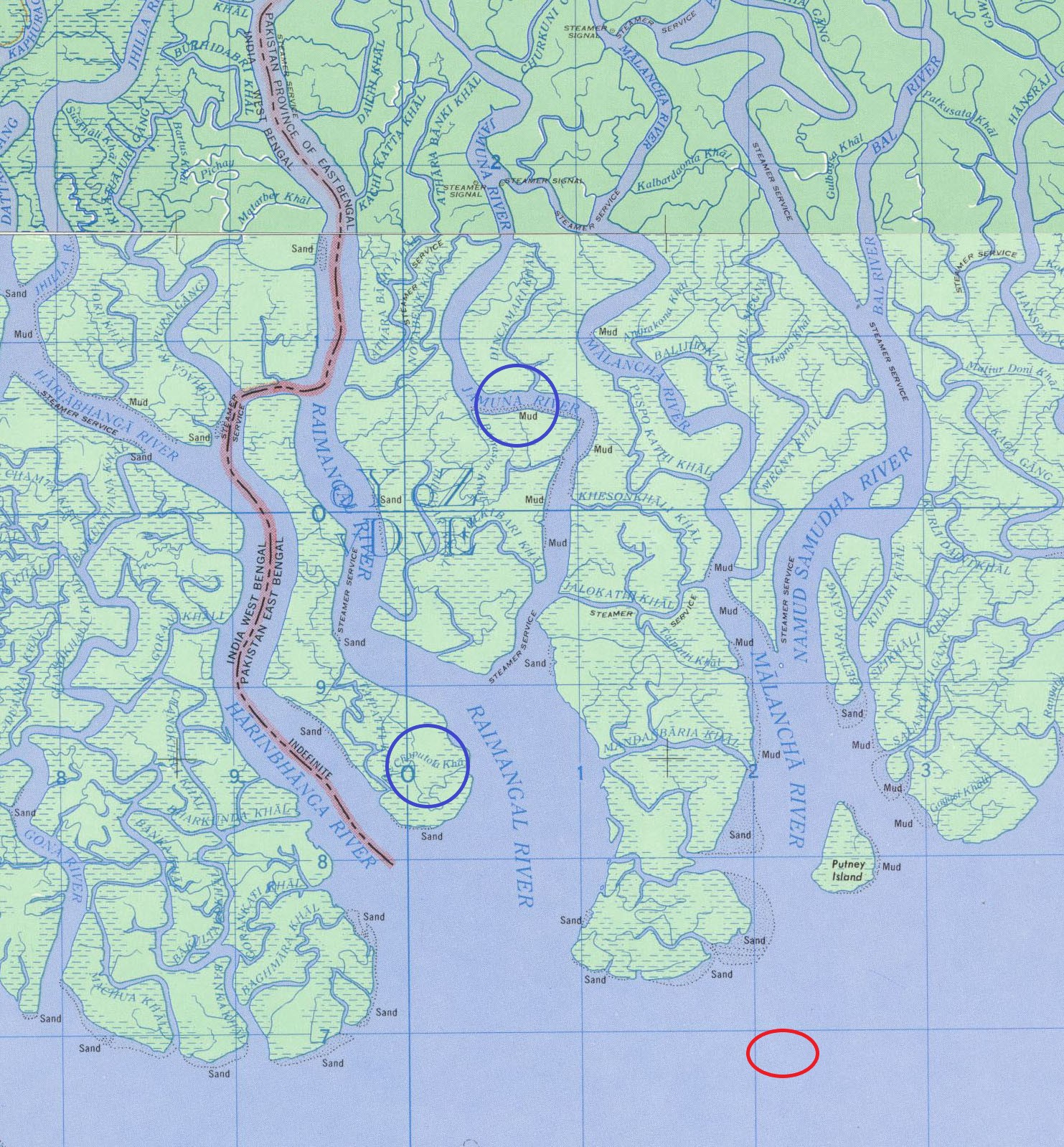
A tiny section of map NF-45 in MACR 13435 is shown above. Below, via the University of Texas, is a complete version of a later edition of the same map – “NF-45-12” (“Putney Island, Pakistan; India”) – spliced via photoshop with the adjoining map to the north, “NF-45-8” (“Khula, Pakistan; India”). These two adjoining maps, at 1:250,000 scale, were compiled in 1955 from the 1923-1942, and, 1924 Surveys of India, and are October, 1959 editions prepared by the Army Map Service and printed by the Corps of Engineers. For the purposes of this post, this photoshopped Army composite map illustrates the setting of 28’s loss in a detailed context, and clarifies a Google Earth image from Mr. Webb, which follows…
And so, more from Mr. Webb:
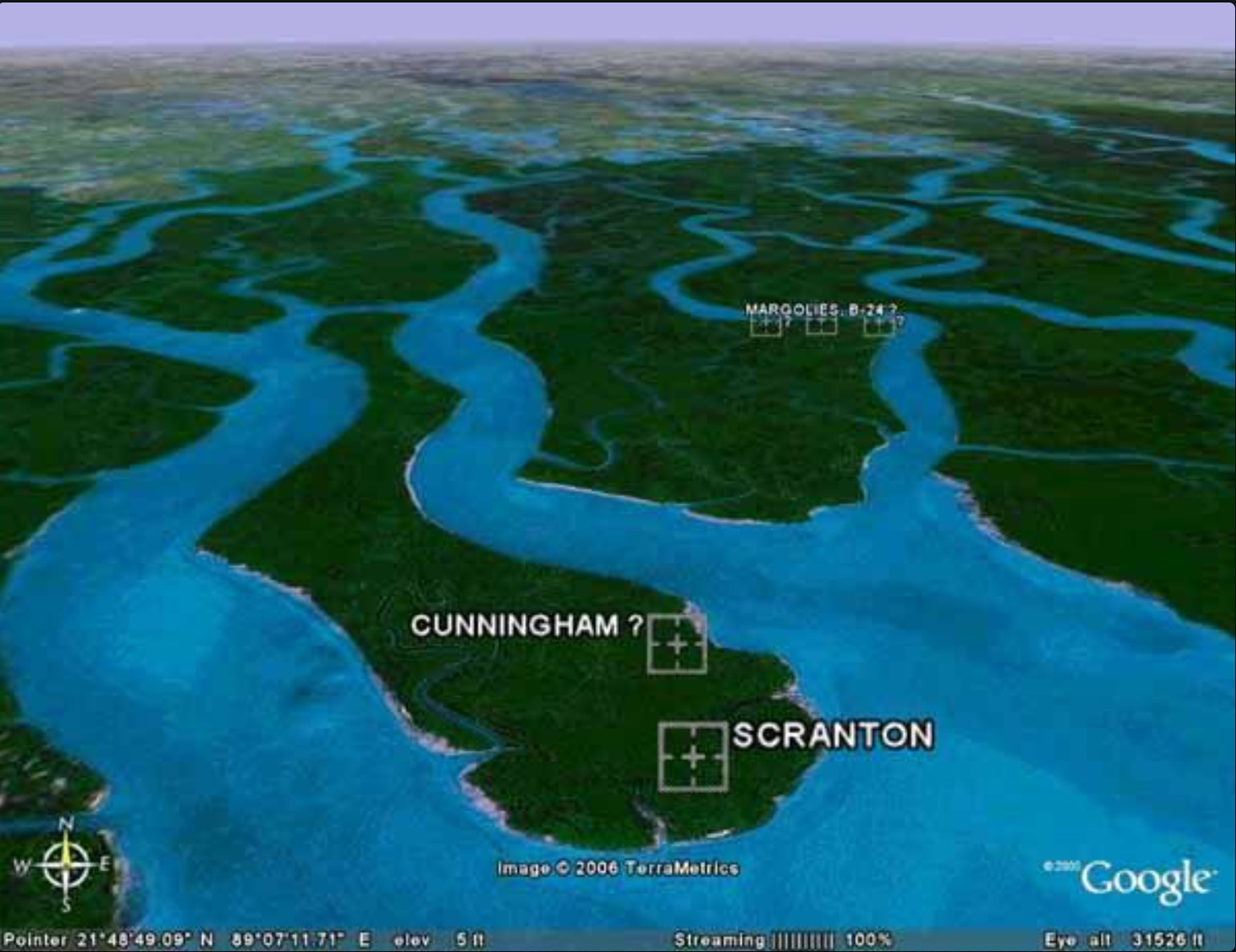
[Two] photos are … sample scenes from the simulation, both overviews in tilt mode. I also have views from the lower heights actually flown by the crippled aircraft along its final path.
[The first scene … (not illustrated here!) looks S to N across the bailout island where 6 of the crew jumped.] Scranton and Cunningham (chutes didn’t open) fell under the plane’s path, while the 4 on chutes probably drifted a bit to the NNE, thus shown displaced slightly in that direction. Cunningham delayed his jump and so is separated from the rest. (A British air-sea rescue eyewitness recalled seeing the parachutes hanging in the trees “in a perfectly straight line.”) Thirteen miles to the N, the 3 distant targets represent the general area where I believe the plane actually may have ditched with 4 on board (Margolies and Reed perished; only Reed was recovered.)
[This] scene … (image below!) shows approximately where the 3 crew MIAs may be located. Although the B-24 may have ditched somewhere along that stretch of the river, it’s uncertain whether the submerged wreckage still is there, lodged in the mud (the B-24 broke into 3 sections), or has drifted farther downstream.
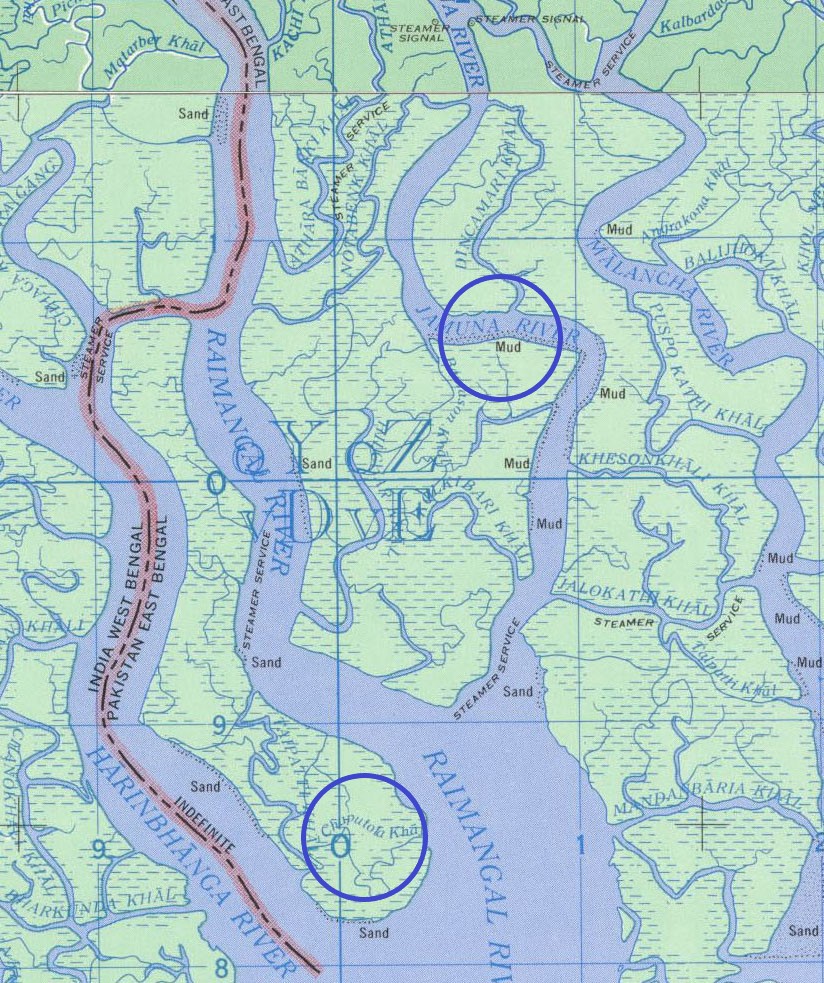
Using Mr. Webb’s Google Earth map as a basis, here are the probable locations of Cunningham’s and Scranton’s bailout and 28’s crash, shown on Maps NF-45-12 and NF-45-8 (you can see where I spliced them by the difference in the intensity of shading), as respectively indicated by the blue circles.
A much, much closer view. Assuming that the crash location is correct, the aircraft came down in the vicinity of or in the Jamuna River.
This air photo view of the plane’s probable crash location is at the same scale as the NF-45 composite maps above….
…while this air photo is a very (very (very)) close view of this branch of the Jamuna River.
Between 2011 and 2013, the missing men and plane were the subject of discussion at Wikimapia, under the heading “crash site, invisible“.
There, this message appears: “B-24 Liberator piloted by Lt. Nathan Margolies crashed here after others bailed out(but not all survived). They were on their way to bomb a bridge on the infamous Burma-Siam Railway on 24 March 1945. Still missing are Pilot Margolies, Navigator Lt. Edwin E. Scranton, and a Gunner S/Sgt. John E. Cunningham. Navigator’s cousin still is searching for remains of both aircraft and personnel. Contact wwebb24@verizon.net. The plane took off from Pandaveswar, West Bengal, India.
Coordinates: 21°55’11″N 89°10’22″E”
This inquiry generated three comments – by Bangladesh citizens “TurboProp”, “asisdutta_jc”, and “ershadahmed”, which are presented verbatim below:
TurboProp (2011) CALLING OFFICERS OF BANGLADESH NAVY OR COAST GUARD TO COMMENT ON THIS. THERE ARE 2 ESTABLISHMENTS–ONE WITHIN THE MARKED AREA, ONE LITTLE UPSTREAM. MAY BE THESE PEOPLE WILL HAVE SOME IDEA 13 years ago
asisdutta_jc (2012) Condoled by SDutta: +919593000434 12 years ago
ershadahmed (2014) Inaccessible and isolated mangrove remains inundated. Officers of Bangladesh Navy or Forest Deptt should try to locate the spot and help them finding. Its two years already, the request has been made by the US air force persons to Bangladesh Navy. Engr. Ershad Ahmed +(88-02)-01711548879 9 (cell) 10 years ago
______________________________
And, two pictures from time ago.
As mentioned above, Mr. Webb’s post from the early 2000s at the 7th Bomb Group’s website includes a photo of Lt. Margolies crew, and, a photo of the crew of 1 Lt. John F. Albert. These photos, and several other images of 9th Bomb Squadron crews, can be found in the historical records of the 9th Bomb Squadron for March, 1945.
This image shows the Margolies crew in front of B-24 squadron number 33 prior to takeoff on February 5, 1945. The mission was to bomb the pair of bridges at Kanchanaburi, Thailand. The crew had to abort and return.
The men are:
Back row, left to right:
1 Lt. James M. Meredith S/Sgt. Edward Reed T/Sgt. James F. Nelson S/Sgt. John E. Cunningham S/Sgt. Kenneth W. Herald S/Sgt. Leo Moriarty Cpl. John L. Sulgrove
Front row, left to right:
1 Lt. Arthur R. Chaffee Lieutenant Margolies T/Sgt. Stanley P. Sadloski 1 Lt. Edwin E. Scranton
This photo was also taken on February 5, 1945, and is significant in showing 44-49607, with, “…a hand-painted “28”, an indicator of its recent arrival to the squadron.”
The men are, left to right:
1 Lt. Donald P. Funk – Co-Pilot 2 Lt. Owen H. Brownfield – Bombardier T/Sgt. Arthur L. Burdette – Flight Engineer 1 Lt. Bernard D. Kahn – Navigator 1 Lt. John F. Albert – Pilot T/Sgt. Lyle L. Vralsted – Radio Operator S/Sgt. H.Q. Smith – Gunner S/Sgt. Gordon Greenberg – Gunner S/Sgt. Paul R. Hon – Gunner
Almost seventy-nine years have transpired since the loss of “28” and her four crew members. Given the passage of time, let alone the very nature of the terrain and climate where the 44-49607 came to earth (and actually, sea) it must be accepted that the missing men and their plane will never be found. Still, a measure of memory, even if belated, is better than no memory at all.
Some Books
Dorr, Robert F., 7th Bombardment Group / Wing 1918-1995, Turner Publishing Company, Paducah, Ky., 1996
Dublin, Louis I., and Kohs, Samuel C., American Jews in World War II – The Story of 550,000 Fighters for Freedom, The Dial Press, New York, N.Y., 1947
Quinn, Chick Marrs, The Aluminum Trail – How & Where They Died – China-Burma-India World War II 1942-1945, Chick Marrs Quinn, 1989
Rust, Kenn C, Tenth Air Force Story, Historical Aviation Album, Temple City, Ca., 1980
Young, Edward M., B-24 Liberator Units of the CBI, Osprey Publishing, Oxford, England, 2011
And otherwise…
I want to express my thanks to the Air Force Historical Research Agency for the Albert and Margolies crew photos: “Thanks very much!”
Every man’s life is a tapestry of stories, the majority mundane, some startling and dramatic; some traumatic and transformative; and a few – on rare occasion – inspiring by the very magnitude of their impact. Such were the wartime experiences of First Lieutenant Bernard William Bail (0-807964), who served as a radar navigator in the 66th Bomb Squadron of the 8th Air Force’s 44th Bomb Group.
______________________________
…the insignia of the 66th Bomb Squadron (via US Wars Patches)…
______________________________
The son of Abraham (3/10/87-7/6/68) and Lillian “Lily” (Miller) (11/3/95-9/28/89) Bail and brother of Private Paul Bail of 2330 South 6th St., in Philadelphia, he was born in that city on November 18, 1920. For the purposes of emergency correspondence, his official contact in the United States was his uncle, Dr. Harry Bail, his who resided at 2547 North 33rd St. in the same city.
The recipient of the Air Medal with three Oak Leaf Clusters and Purple Heart, his name appeared in the Philadelphia Inquirer and Philadelphia Record on May 4 and 3, 1945, respectively. Though his name can be found on page 509 of American Jews in World War II, oddly, absolutely nothing about him ever appeared in wartime issues of The Jewish Exponent, which was (and is) published in that Pennsylvania city.
As the radar navigator aboard the 66th Bomb Squadron’s un-nicknamed B-24J Liberator 42-51907 (QK * B+) during the 44th Bomb Group’s March 19, 1945 mission to an Me-262 factory at Neuberg, Germany, Lieutenant Bail was one of the aircraft’s three eventual survivors – from its crew of eleven – after the plane, piloted by 1 Lt. Robert J. Podojil, was shot down by German fighters in the vicinity of Stuttgart, an event covered in Missing Air Crew Report 13574. The very sparse outline of this story is alluded to in the following article from the Philadelphia Inquirer of May 4, 1945. The article also makes reference to Lt. Bail having previously bailed out over the English Channel, about which much (…much…(much!)) more follows further “down” this post.
The text of the article:
Flier Freed From Nazis Survived 3 Plane Crashes
Luck of First Lieutenant Bernard W. Bail, 24-year-old Philadelphia squadron leader, was still running strong March 19 when anti-aircraft fire brought down his B-24 bomber over Germany – his third plunge since D-Day.
“I’m on my way back to my outfit after a month and a day in a German prison camp,” he wrote in a letter received by his parents, Mr. and Mrs. Abraham Bail, of 2330 S. 6th St.
A slight wound – its nature was not disclosed – has won him a Purple Heart to go along with his Air medal, Presidential Citation and other decorations that 16 months overseas service with the Eighth Air Force have earned for him.
Lieutenant Bail, then a bombardier, lost his first plane June 6, 1944, over the English Channel. On the way into the Continent, his pilot was killed by flak. The co-pilot took over finished the bombing run, but lost his leg in another shower of fire.
Lieutenant Bail, with the rest of the crew, bailed out, landed in the Channel, and were picked up 13 hours later by a Coast Guard cutter.
Last January Lieutenant Bail’s second plane was peppered with heavy fire in a bombing mission over the retreating Germans. On its return trip the plane crashed in Western France.
Lieutenant Bail, who has been in the Air Forces for almost three years, is a graduate of South Philadelphia High School and West Chester State Teacher’s College. A brother, private Paul, 27, was wounded in North Africa and returned to this country.
Here’s the article itself, accompanied by two advertisements that give a random “flavor” of the era…
X
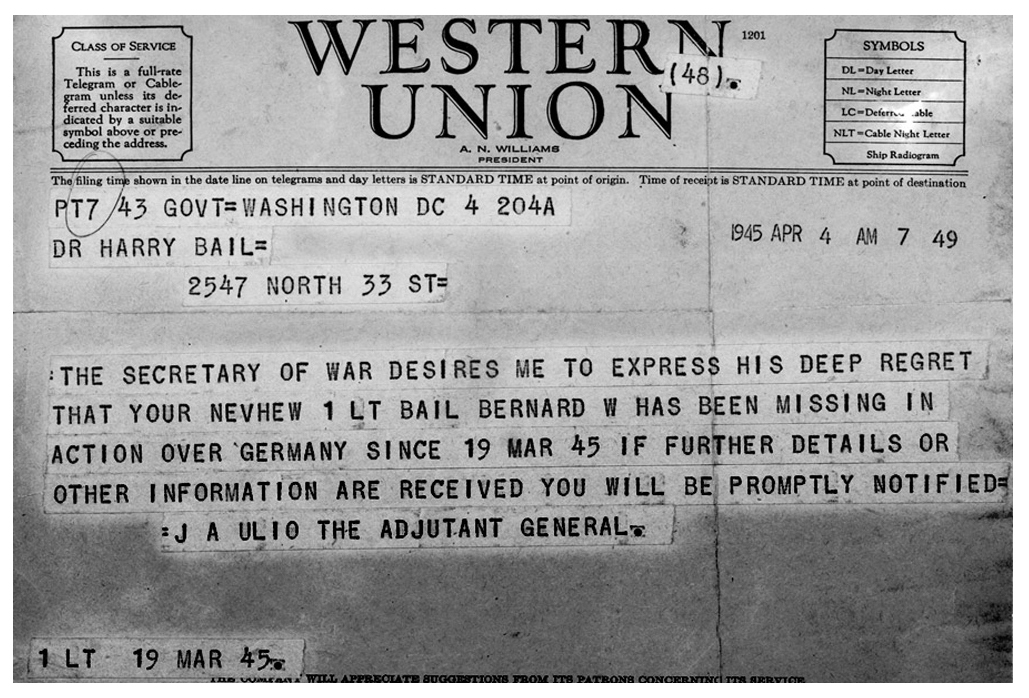
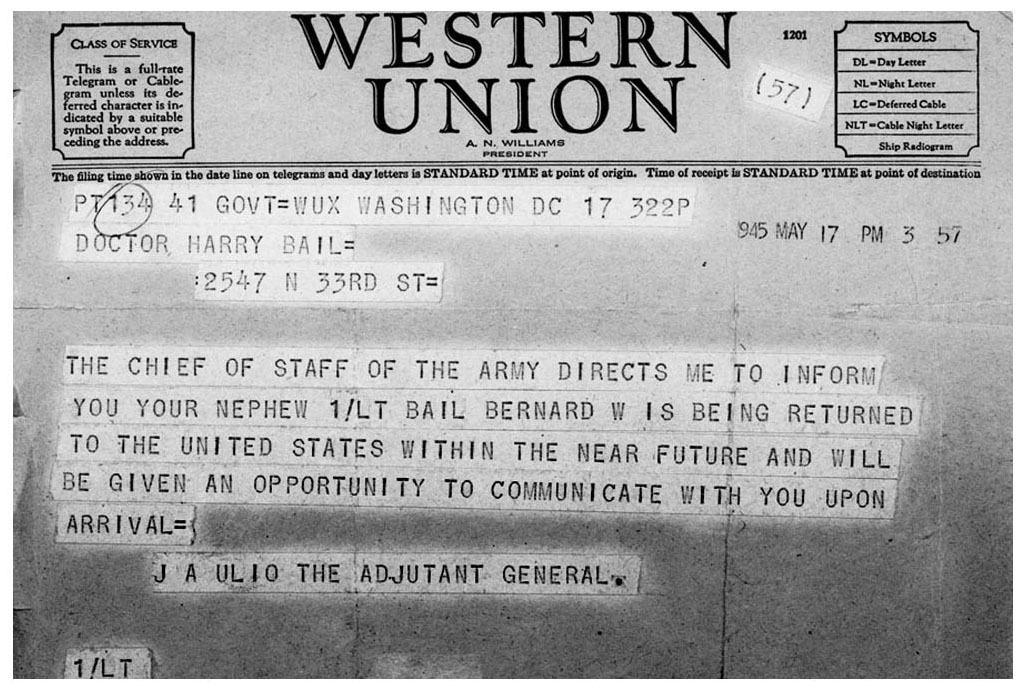
Though Dr. Bail passed away in 2021, his personal website – Bernard W. Bail M.D. – is fortunately still very much “up and running”. His curriculum vitae includes some images and documents from his wartime service, including the Western Union telegrams informing his uncle of his missing in action status, and then, his imminent return to the United States (dated April 4 and May 17, respectively).
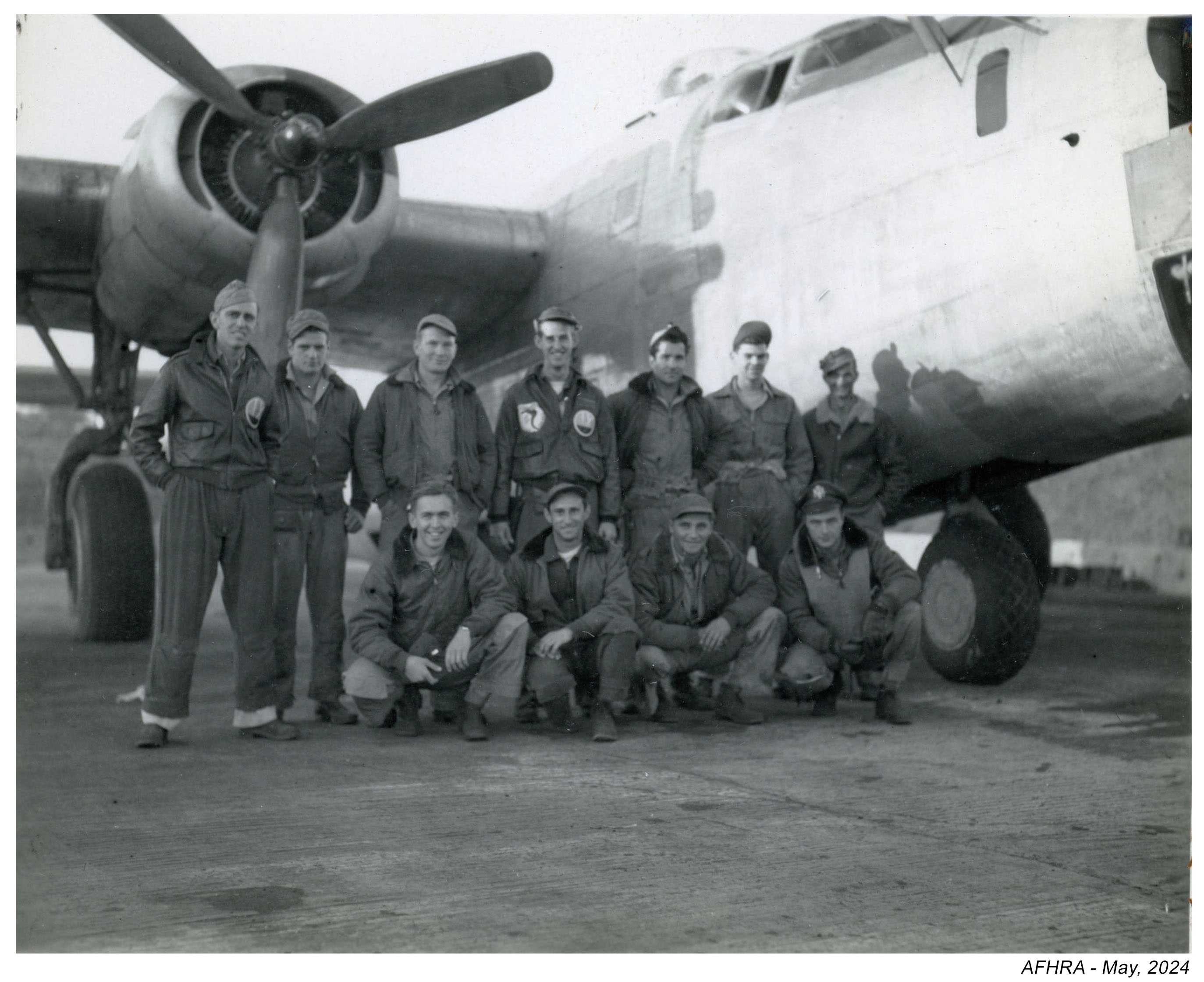
An uploaded to Ancestry by Kasie Podojil on August 22, 2023, this photo shows the Podojil crew. The men aren’t identified, but I’m certain that Lt. Podojil is one of the men in the front row. Not being a regular member of the crew, Lt. Bail wouldn’t be in the picture. Close examination of the data block and three digits on the forward fuselage reveal that this plane is B-24J 42-50807, which is solidly confirmed via Aviation Archeology.
______________________________
Given the time-frame, though it might be assumed that there’d be an abundance of information about the loss of QK * B+, but strangely there is not. No Luftgaukommando Report – if there even was one – for this incident survives, and, Jan Safarik’s compilation of Luftwaffe fighter victories against B-24s has no entries for this date. In the missing Air Crew Report, observations by other airmen in the 66th are equally enigmatic. The report states: “Very little is known as to exactly what happened to this crew. On this mission six aircraft were originally carried as “not yet returned”, five of which have returned to base. All five of these returned aircraft had left the formation after bombing and landed on the Continent, having run short of gas. At 1503 hours this crew was heard from at a point approximately ten (10 miles southwest of Stuttgart and fifty-five (55) miles east of bombline, at which time the pilot thought he would be able to make it to friendly territory. At this time he was observed to have two (2) feathered engines. No further word was heard over VHR and no additional information has been received at this headquarters.”
Documents in the MACR – a statement made by Sgt. Mosevich in Miami on August 31, 1945, and, Casualty Questionnaires completed by the three survivors – yield a reconstruction of what befell 42-51907 and her crew: The plane’s #3 engine suffered a loss of power prior to reaching Neuberg due to a loss of oil pressure, with the #1 failing for the same reason after the bomb run. Lagging behind and unable to maintain formation with the rest of the 44th, Lt. Podojil ordered his crew to jettison the plane’s machine guns, ammunition, and other equipment. The defenseless bomber was then shot down by German fighters in an attack that must have been as sudden as it was overwhelming, this eventuating in four airmen abandoning the bomber from 15,000. As Sgt. Mosevich stated in his Casualty Questionnaire form for Lt. Podojil,“The fighter planes attacked us very suddenly, it all seemed to be over in a few seconds.” In his summary Casualty Questionnaire, he wrote that Sgt. Veitch opened the bomb bay doors through which Veitch and Bail jumped, while Mosevich himself jumped out the port waist window. How Sgt. Schmitz escaped the plane is not mentioned; I’d assume through the jettisonable lower tail hatch.
Despite what is reported from other sources (see below…) Sgt. Mosevich saw only three other parachutes in mid-air, and recalled that Clark, Crane, and West didn’t have their parachutes attached when he left the plane.
The conclusion to be drawn from the MACR is that – with the exception of Sgt. Schmitz – none of the seven other crewmen were able to escape the aircraft.
This parallel’s Lt. Bail’s statement in 44th Bomb Group Roll of Honor and Casualties:“On my 25th mission our plane was jumped by a couple of ME 109s. The entire crew, with the exception of four of us, was killed over Germany near Stuttgart. The tail gunner, S/Sgt. N.J. Schmitz, sustained a leg injury that necessitated amputation of his leg, which I witnessed. I, myself, was wounded in my head and neck. The young tail gunner [Schmitz] later died of gangrene. I was present at his burial in the little town of Goppingen.”
______________________________
Here’s Lt. Bail’s reply to Major W.R Reed of the Air Corps’ Notification Branch, concerning the latter’s inquiry of June, 1945, pertaining to Lt. Ritter (co-pilot) and Sgt. Clark (nose gunner):
Tuesday – Sept 1945
Dear Major Reed, I have received your letter asking about Lts. Ritter, Chase, and Crane and Sgts. Reichenbach, West and Clark. I have written to various depts. already the fact that all of the above men are dead. The mission was on March 19, 1945 to Ingolstadt; we were attacked on the way back by the Luftwaffe. The men listed above were unable to get out of the plane, which went down, burning; so it is sure all of them died. I have written fully to other departments as I’ve said. Should you want further information, I shall be glad to answer any questions you may have. Sincerely Bernard W. Bail
Lt. Bail’s letter, as it appears in the MACR:
______________________________
Accompanying Sgt. Mosevich’s Casualty Questionnaire forms in the MACR is this very brief summary of his escape from 42-51907:
Additional Inf: We were flying on two engines and we had abandoned our guns and ammunition. Our fighter escort hadn’t arrived. German fighters attacked suddenly. When I bailed out the plane seemed to be starting into a spin. As I floated down I saw a column of smoke coming from the ground. The action happened to fast that I didn’t get a chance to survey the conditions in the plane as I bailed out a few seconds after the plane was attacked. If I can be of further help please let me know but I have no more information. Any more, would be pure guess work. Yours truly, Walter Mosevich
Sgt. Mosevich’s note, as it appears in the MACR:
______________________________
The FindAGrave biographical profile for Sgt. West is very extensive, and includes an account of the loss of QK * B+ written by Max F. Veitch (long after he war, I guess, and I suppose uploaded in 2018 by Donald Winters?) which corroborates the information in the MACR.
Mr. Veitch wrote:“We became a lead crew and were on our 18th mission when we were shot down over Germany. We were flying B+ a PFF ship (#42-51907). We had an 11-man crew on board. We were on the bomb run when we lost our #3 engine. After dropping our bombs on the target, we lost our #1 engine and had to leave the formation as we were losing altitude rapidly.
“We called for fighter support, but none came. Our pilot ordered us to get rid of all the excess weight that we could. We headed back towards our lines. I was in the bomb bay throwing out all the excess stuff that I could, when I felt a large explosion and heat coming toward me from the rear of the ship. I grabbed my chest chute to dive out as the ship started down. I was able to get only one side hooked, but it carried me down okay.
“As I was floating down, I saw three German Me 109s following the ship down. I did not see it crash. I also saw only three other chutes going down on the other side of a river. I did not know who got out until that night when the German civilians got us together and took us to a town and put us in a small jail cell.
“Our tail gunner’s leg [Schmitz] was shot up from his foot to his knee. Mosevich, our waist gunner, was shot in the arm and I was hit below the eye and in the hand. The ‘G’ Navigator, Lt. Bail, had minor injuries.
“After about a week in that jail cell with only a loaf of bread and some water, two German soldiers came and escorted us to the railroad station in Stuggart. We got on a train and were taken to the town of Goppengen where there were four German hospitals. Sgt. Schmitz was operated on April 1 , [two weeks later!] 1945 and died shortly afterwards. He was buried in a cemetery near the hospital.
“We were liberated on 21 April 1945 by the 44th infantry. Sgt. Mosevich died a few years ago. As a side note, our navigator, Lt. James Haney, was in the 44th base hospital at that time and did not fly with us on this mission. Lt. Dudley Chase was his replacement. It was the first time for Lt. Bail to fly with our crew also.”
The FindAGrave profile also includes the following statement by a Willi Wagner, a civilian lumberjack from Neubaerenthal, which is described as being from “AGRC [American Graves Registration Command] case #4785, Evacuation #1F-1750”.
“On 19 March 1945 while working in the Hagenschiess forest, I observed an American bomber pursued and fired on by three German fighter planes. Thereupon the planes disappeared. Several minutes later, however, the bomber returned flying upside down at an altitude of approximately 40 meters only. As far as I could see a piece of the right wing with one motor had broken off. When the plane was just over the road leading from Wurmberg to Pforzheim-east I saw one crewmember falling out of the plane. On visiting the place where he crashed I discovered one deceased American whose parachute had failed to open. The plane itself continued its flight for approximately 2,000 meters and then crashed into the so-called ‘Hartheimer Rain.’ I heard a strong detonation and saw a dark smoke cloud at the place concerned.
“On the next day I found the charred remains of five or six bodies of the place of crash. The crewmember who had fallen out of the bomber was buried at the spot where he had crashed by Rudolf Sigricht, former postman and two other men from Neubaerenthal three or four days later as I have learned.
“Nothing is known to me with regard to the burial of the five or six bodies found among the plane wreckage.
“In June 1945 the deceased American who fell out of the plane was disinterred, examined and evacuated on a truck most probably to Pforzheim by a French team. I believe no identification was possible.”
Rob Fisk, a navigator who flew thirty missions with Howard Hinshaw’s crew, believes that Dudley Chase was killed by German civilians. Fisk’s son, Bradley Fisk, wrote: “Dudley Chase and my father were good friends at Shipdham. They had adjacent bunks in the same Quonset hut. Mrs. Chase would occasionally send cookies. To keep her son honest she would frost them with a D for Dudley or an R for Robert. Around the time my father rotated home, he received word that Dudley Chase had been shot down. Parachutes were seen, and my father held out hope for his friend. However, after Dad came home, he heard that when that section of Germany was occupied by the Allies, the locals pointed out the location of the graves of several Allied airmen. One of these turned out to be Dudley Chase… Dad had heard that Chase had landed safely near another crewmember but that they had separated for safety. My Mom and Dad were told at Cambridge cemetery [during a 1983 visit] that Chase was captured and killed by civilians. His body was exhumed after the war and Dad was told that he bore the marks of multiple pitchfork wounds.”
Based on this compilation of information, I believe that there was no war crime: A search of NARA’s database reveals no name index card in Records Group 153 (Records of the Office of the Judge Advocate General) for Dudley Chase. Similarly, none of the three survivors mentioned encountering Sergeant Chase after bailing out.
______________________________
Here’s the map in MACR 13574 showing the last reported position of QK * B+: Somewhere southwest of Stuttgart…
…which corresponds to somewhere between Sindelfingen and Boblingen.
Though the MACR isn’t specific on the point, a clue to the location of QK * B+’s loss lies in lumberjack Wagner’s mention that the bomber crashed into the ‘Hartheimer Rain.’ The closest linguistic match for this phrase is “Hardheimer Hain”, the location of which corresponds to an area between Sindelfingen and Boblingen, as illustrated in this view from MapCarta. (It’s not on Oogle Maps.)
Here’s how the location appears on an Apple Map…
This v e r y large scale map view (note the 750 foot scale in the upper left!) reveals that this location is in a presently forested area…
…while this air photo view of the same locale – at the same scale – suggests (best as I can tell) that this area became the site of a (long since dismantled) Nike missile installation (?) from the first (?!) Cold War.
Thus for March 19, 1945, Lt. Bail’s 25th and final mission.
Much more happened to him on June 5, 1944, one day before D-Day.
On that June Monday, as a Second Lieutenant, Lt. Bail parachuted from the badly damaged B-24H 41-28690 (Missouri Sue / “QK * B“) piloted by Captain Louis A. Mazure, during a mission against German coastal defenses near Wimereux, France. Eleven of the aircraft’s twelve crew members survived – Captain Mazure having been instantly killed by flak – among them Lt. Col Leon R. Vance, Jr., Deputy Group Commander of the 489th Bomb Group, who received the Medal of Honor (the only such award to go to an 8th Air Force B-24 crewmen) for his actions that day, and one of the fourteen 8th Air Force airmen to have received that award. Lt. Col. Vance has received six “Remembrances” at the National WW II Memorial.
This undated portrait of the Colonel is from the Air Force Historical Support Division. He’s now in the Air Corps, as evident by his collar devices.
While there’s no Missing Air Crew Report covering this incident – there didn’t need to be; none of the eleven survivors were missing for more than 48 hours, and Capt. Mazure’s fate was immediately known – there’s much information about the event due to its historical significance. Rather than recapitulate and repeat each and every detail through my own write-up, this information is presented below, in the way of: 1) An excerpt from Roger Freeman’s 1970 The Mighty Eighth, 2) A transcript of Lt. Col Vance’s 1945 Medal of Honor citation from Wikipedia, 3) A transcript of a 1944 article from The Gary [Indiana] Post-Tribune found at Captain Mazure’s FindAGrave biographical profile, and, 4) The full (and actual) story of the incident from Will Lundy’s 2004 44th Bomb Group Roll of Honor and Casualties. The latter two sources are particularly revealing.
There appear to be at first subtle, but then – on contemplation – subtle (?) differences, in terms of the specific chain of events and individual actions that occurred aboard Missouri Sue, that emerge when comparing the Colonel’s Award Citation, to the accounts of the mission as reported in the 1944 newspaper article about Captain Mazure, and, the story in 44th Bomb Group Roll of Honor and Casualties, the latter based on reports by Missouri Sue’s bombardier, navigator, radar navigator (Lt. Bail), radio operator, and left waist gunner.
For your consideration, I’ve highlighted these incongruities in dark brown text, like this.
The bomber’s crew comprised:
Command Pilot – Vance, Leon R., Jr., Lt. Col. 0-022050 – Severely wounded (See here and here) Pilot – Mazure, Louis A., Capt. – Killed in Action Co-Pilot – Carper, Earl L., 2 Lt. (Is thishim…?…(1918-1980)) – Bailed out over English Channel; Rescued Navigator – Kilgore, John R., 2 Lt. – Injured on landing Radar Navigator – Bail, Bernard W., 2 Lt. Bombardier – Segal, Milton, 2 Lt. – Concussion Bombardier – Glickman, Nathaniel, 2 Lt. (4/18/22-11/15/12) Flight Engineer – Hoppie, Earl L., T/Sgt. (7/25/22-12/13/90) Radio Operator – Skufca, Quentin F., T/Sgt. – Severely wounded (5/16-24-1/18/14) Gunner (Right Waist) – Evans, Davis J., Jr., S/Sgt. – Wounded Gunner (Left Waist) – Secrist, Harry E., S/Sgt. – Wounded (9/26/15-2/14/01) Gunner (Tail) – Sallis, Wiley A., S/Sgt. – Wounded
______________________________
Let’s start with The Mighty Eighth (page 144):
On the eve of D-Day when the heavies were pounding coastal defences between the Cherbourg peninsula and the Pas de Calais, the 489th Group was bracketed by flak again. The lead aircraft took a burst near the right side of the cockpit, killing the co-pilot and practically severing the right foot of the air commander, Lt. Col. Leon R. Vance, who was standing on the flight platform between the pilot’s seats. Despite this injury Vance ordered the bomber to be kept on its bomb run for fortifications near Wimereaux. The ailing Liberator, hit in three engines, managed to reach the English coast where Vance ordered the crew to bale out. Told there was an injured man in the rear, who could not jump, Vance remained alone in the wreckage of the cockpit and by some miraculous effort succeeded in the difficult task of ditching a B-24. An explosion as the aircraft settled beneath the waves, blew him clear severing his mutilated foot. Clinging to a piece of wreckage he managed to inflate his life jacket and began to search for the wounded man he believed aboard. Failing to find anyone he began swimming and was picked up 50 minutes later by a rescue craft. Vance survived the extraordinary episode. By the irony of fate, his air evacuation C-54 to the US in late July disappeared without trace on the Iceland-Newfoundland leg. Leon Vance’s unquestionable courage, skill and self-sacrifice brought him the only Medal of Honor to go to a Liberator crewmen engaged on operations from the UK.
______________________________
Next is Lt. Col. Vance’s Medal of Honor citation, dated January 4, 1945:
For conspicuous gallantry and intrepidity above and beyond the call of duty on 5 June 1944, when he led a Heavy Bombardment Group, in an attack against defended enemy coastal positions in the vicinity of Wimereaux, France. Approaching the target, his aircraft was hit repeatedly by antiaircraft fire which seriously crippled the ship, killed the pilot, and wounded several members of the crew, including Lt. Col. Vance, whose right foot was practically severed. In spite of his injury, and with 3 engines lost to the flak, he led his formation over the target, bombing it successfully. After applying a tourniquet to his leg with the aid of the radar operator, Lt. Col. Vance, realizing that the ship was approaching a stall altitude with the 1 remaining engine failing, struggled to a semi-upright position beside the copilot and took over control of the ship. Cutting the power and feathering the last engine he put the aircraft in glide sufficiently steep to maintain his airspeed. Gradually losing altitude, he at last reached the English coast, whereupon he ordered all members of the crew to bail out as he knew they would all safely make land. But he received a message over the interphone system which led him to believe 1 of the crew members was unable to jump due to injuries; so he made the decision to ditch the ship in the channel, thereby giving this man a chance for life. To add further to the danger of ditching the ship in his crippled condition, there was a 500-pound bomb hung up in the bomb bay. Unable to climb into the seat vacated by the copilot, since his foot, hanging on to his leg by a few tendons, had become lodged behind the copilot’s seat, he nevertheless made a successful ditching while lying on the floor using only aileron and elevators for control and the side window of the cockpit for visual reference. On coming to rest in the water the aircraft commenced to sink rapidly with Lt. Col. Vance pinned in the cockpit by the upper turret which had crashed in during the landing. As it was settling beneath the waves an explosion occurred which threw Lt. Col. Vance clear of the wreckage. After clinging to a piece of floating wreckage until he could muster enough strength to inflate his life vest he began searching for the crewmember whom he believed to be aboard. Failing to find anyone he began swimming and was found approximately 50 minutes later by an Air-Sea Rescue craft. By his extraordinary flying skill and gallant leadership, despite his grave injury, Lt. Col. Vance led his formation to a successful bombing of the assigned target and returned the crew to a point where they could bail out with safety. His gallant and valorous decision to ditch the aircraft in order to give the crewmember he believed to be aboard a chance for life exemplifies the highest traditions of the U.S. Armed Forces.
______________________________
Here’s the story as it was reported in The Gary Post-Tribune sixteen days later, in a tribute to Captain Mazure:
Capt. Louis Mazure Dies at Controls of B-24 in Epic Story of Heroism Gary Flier Hit by Flak Over French Target, Co-Pilot “Pushes” Crippled Plane to Coast
Capt. Louis A. Mazure, Froebel high school and Gary college graduate and 28-year-old son of Mrs. Helen Mazure, 110 East 43rd, had been identified today as the pilot of a Liberator bomber who alone among the ship’s complement lost has life June 2 when the plane was riddled with flak and shorn of all its power as it prepared to drop its bombs over a pre-invasion target on the French coast.
The crippled ship was glided all the way back to the English coast by Mazure’s 26-year-old co-pilot, Lieut. Earl L. Carper of 7108 Ingleside, Chicago, under direction of a colonel command pilot whose left foot had been blown off by a shell burst over the target.
Out of deference to the Gary captain’s kin, who had not yet been notified of his death, his name was omitted from an official account of the almost incredible incident released at an 8th air force Liberator station in England a few days after the tragedy.
Family Given Clew
Publication of a fragment of the graphic story in a Chicago newspaper, which named Carper as the co-pilot, gave the Mazure family the clew which led to identification of the Gary captain as the skipper of the ill-fated craft who died at the controls just as his bombardier, Lieut. Milton Segal of Brooklyn, took over the ship for the final run over the target.
In one of his letters home, written in late May, Mazure, who normally piloted Flying Fortress bombers, disclosed he had recently been flying “different types” of four-engine craft, and listed Carper and Segal among the members of his newest crew.
The captain’s brother, Anthony, who lives at 28 Ruth street, Hammond, interviewed the co-pilot’s mother, Mrs. Howard E. Carper, in Chicago, and thereafter said he was convinced that Captain Louis, who had written May 23 that he expected to be back in Gary “soon,” was the pilot of the “Lib” that made history by its motorless escape flight across the English channel.
Held Private License
A former employee of the Gary works electrical maintenance department, Mazure was one of the first CPT graduates turned out by Gary college and the Calumet air service, and had held a private pilot’s license for about two years up to the time of his induction as any army aviation cadet in August 1941.
He won his wings March 18th, 1942, at Mather Field, Calif., and before embarking for overseas served as a gunnery instructor on multi-engine bombers at Las Vegas, NM. He was promoted to first lieutenant April 17th last year, and to a captaincy early this spring.
He received the air medal and presidential citation for his participation in the first U.S. bomber raid upon the Ploesti oil fields in Romania, and is believed to have logged more than 25 combat missions up to the time he last wrote his mother, May 23.
Ranked as First Chief
He was a squadron operations officer during the early part of his service in England, and was ranked as a flight commander at the time of his death.
A copy of the official version of Captain Mazure’s last flight and of the epic trans-channel escape of the Liberator and its crew after the pilot died from a flak wound in the temple, was obtained by the pilot’s brother from Mrs. Carper.
It disclosed that the crippled bomber finally was “ditched” in the channel just off the English coast channel by the wounded command pilot after everyone had bailed out over English soil at his orders.
Five of the crew were wounded, but Mazure was the only fatality. The other six men were shaken and bruised, but otherwise uninjured.
“As the Liberator started on its bomb run over coastal France,” said the unidentified author of the official account, “it was subjected to a continuous hail of heavy flak and suffered repeated hits.”
“‘I don’t know at what point each engine got it,’ related Lieutenant Carper, ‘because bursts were getting us right along.’
“Good Boy,” His Last Words
“The bombardier, Lieutenant Segal, was not wearing his flak helmet when the first burst hit the nose of the ship. He left his bombsight for a second to get it, then returned to his position. As he bent over his sight a second burst caught the nose, knocking Segal’s helmet from his head. This time he did not attempt to retrieve it. Over the interphone he informed the pilot (Mazure) that he was ready to take control for the final run. “I’ve got the ship,” he said. “Good boy” replied the pilot. Those were his last words, for a piece of flak struck him in the temple and killed him instantly.
“With the pilot dead, the Liberator continued over the target and the bombs were released.
“Meanwhile the entire ship was in an uproar. At approximately the same time the pilot was killed, the command pilot (still unidentified officially) received a hit which blew off his left foot above the ankle. Lieut B.W. Bail of Philadelphia ripped off his heavy gloves when he saw that the foot had been blown off. From the first aid kit he removed bandages, a tourniquet and sulpha.
“Quickly applying the tourniquet to the colonel’s knee, he sprinkled sulpha over the wound and bandaged the bleeding stump. Medical men afterwards credited this action with saving the wounded officer’s life.
4 Others Wounded
“Amid all this confusion, four other crew members had been wounded, the nose of the plane shattered and gasoline was flowing about in streams causing an extreme fire hazard.
“Carper had little chance to see what else was going on in the ship. He took over as the pilot slumped over the controls and when he heard ‘Bombs away!” swung the nose of the ship toward England. At this point the command pilot, who had managed to pull himself to his feet, braced himself between the pilots’ seats and leaned over and pulled the throttles, then pushed them back.
“‘No power,” he told Carper. “Cut all the switches.”
“This Carper did, and they began the long glide back to the British coast.
Dropped 5,000 Feet
“ ‘We dropped 5,000 feet in what seemed a second,’ related Carper. ‘A B-24 isn’t much of a glider, but we got back over England. The colonel (command pilot) was the bravest guy I ever saw. When we got over land, he told all the crew to bail out and then wanted me to try to ditch it.’
“Carper, who had watched the ship lose more and more altitude, wanted the command pilot to bail out but he refused and, instead, ordered Carper to ‘hit the silk’.
“The co-pilot jumped over land, but as they had turned the nose again after the rest of the crew had bailed out, he landed in the channel. The command pilot sat on the edge of the seat and pulled back on the controls, which was all he could do to ‘ditch’ the big ship. The Liberator landed on the water and he was thrown clear.
“In an example of physical stamina that defies explanation, the injured man swam three miles, spending 45 minutes in the icy water, before he was picked up by a rescue boat.
“Meanwhile the other crew members who had bailed out were having plenty of trouble. Carper became entangled in the shroud lines of his chute and had to struggle desperately to keep afloat. It was due only to the alertness of a Spitfire pilot who saw the Liberator as it turned back to sea and kept circling it until it crashed that a rescue ship sped out and picked him up in 25 minutes.
“Segal, the bombardier, had jumped over land, but when he pulled the ripcord nothing happened. Frantically he ripped open the canvas and pulled the silk out by hand, the chute finally blossoming above him.
“Another crew member landed in a minefield and the fact that he broke a leg in the fall and could not move probably saved his life, since a rescue party discovered that he lay within a yard of an antipersonnel mine that would have exploded had he touched it.
“The remainder of the crew made their jumps without incident, although Lieut. Nathaniel Glickman, New York City, wounded in the forehead and arm by flak fragments, complained bitterly because the wind carried him half a mile away from a WAAF camp that he had expected to land in.”
Captain Mazure’s body was not recovered, the crippled Liberator carrying it to the bottom of the channel as it sank after the crash landing.
Other injured crew members were Staff Sergts. Harry E. Secrist, Newark, O., David E. Evans, Jr., Massilon, O., and Wiley A. Sallis, Smithville, Miss.
______________________________
Finally, this complete account of Missouri Sue’s last mission is from Will Lundy’s 44th Bomb Group Roll of Honor and Casualties. This is comprised of statements – made in the 1980s or 1990s? – by Nathaniel Glickman (bombardier), John R. Kilgore (navigator), Bernard W. Bail (radar navigator), Quentin F. Skufca (radio operator), and Harry E. Secrist (left waist gunner).
Captain Mazure was piloting this aircraft, flying lead for the 489th BG and the 2nd Division. The primary target was reported to be coastal installations at Boulogne-sur-Mer but actually was a V1 Site, Wimereaux, North Boulogne.
Briefing was scheduled for 0400, even though Colonel Vance evidently had been held up and was late. So the briefing continued with the information that the bombing would be from 22,500 feet and the bomb load would be 10,500 pound GPs. Stepping away from the map, the officer addressed the bombardiers and stressed the point that should they for any reason fail to drop the bombs on the first run, they were to jettison the load over the English Channel and return to their bases. No second run was to be made over the target.
The meteorologist added that there would be broken clouds over the coast and should be clear sailing in and out. Intelligence reported that we could anticipate flak at the French coast and that no enemy fighters were expected so there would be no fighter escort.
Col. Vance arrived at 0830, apologized for his delay, and asked Capt. Mazure to review the information we had received at the briefing. When he had finished with the flight plan, Lt. Glickman informed him of the instructions regarding the bomb run and the specific order not to make a second run over the target.
Takeoff was at 0900; the mission was rather routine as Lt. Bail, radar-navigator, guided the formation via his radar “Mickey” toward the Pas de Calais sector of French Coast. As they approached the IP, control of the aircraft was turned over to Lt. Segal, bombardier, for the bomb run. Lt. Glickman called out the target and then watched for signs of flak and enemy fighters. There appeared to be flak off to the starboard side but it was of little consequence.
As the target was approached, Lt. Segal ordered the bomb bay doors to be opened, steadied down and then called out “Bombs Away.” Nothing happened! Every bomb was still hanging in the bays. The other aircraft in the formation awaiting our drop, failed to release theirs, too. Either there had been a malfunction in the bombsight, or the arming release switch on the bombardier’s panel had not been activated. So nothing happened due, apparently, to some faulty equipment, and no bombs were dropped by any of the aircraft in our formation.
Lt. Glickman added that “We turned off the target and at that time I notified our pilot, Mazure, that we were to head back over the Channel and jettison our bombs according to the briefing instructions. But Col. Vance countermanded my orders and directed that we make a second run, informing us that he was in command of this flight.”
Departing the immediate area, they flew south, circled and flew parallel to the coastline, at the same altitude and airspeed, but as the enemy gunners had zeroed in on them, the first flak burst exploded off their port wing. The pilot, Mazure, was killed when shrapnel sliced in under his helmet, and struck him in the head. Lt. Carper, the co-pilot, immediately took over the controls.When the next blast hit, it tore through the flight deck, hit Col. Vance (who was standing between the dead pilot and Lt. Carper) and nearly severed his right foot so that it was hanging by a shred.
Lt. Bail gave this report, “Our bomb bay doors were still open and I could see that a couple of bombs were still hung up. About this same time, the co-pilot Carper, cut off all four engines and switches, fearing that the plane would catch fire and blow up. He quickly turned our ship for England in a shallow glide. I then began calling the various members of the crew on interphone and was relieved to learn that no others were badly injured.
“As soon as possible, I managed to get Colonel Vance down to my seat, took off my belt and wound it around his thigh as a makeshift tourniquet to reduce the spurting blood.”
Lt. Glickman continued, “At this same instant my nose turret took a series of bursts that shattered the Plexiglas and cut open my forehead, as well as hitting the base of my spine. Our plane continued to be hit as we stayed on the bomb run. My primary concern was the possibility of our bomb bays being hit before the bombs were released.
“The starboard outer engine (#1) had been hit and the propeller was now snapped with the three blades drooping downwards. The top turret had most of the Plexiglass blown off, part of the right rudder and rudder elevator also had been hit. Concerned about the previous inability to release our bombs and now approaching the prior drop point again, I called out that I would drop the bombs using my turret release switch that would bypass the bombardier’s panel. The other bombers following us in our formation unloaded at the same time that I did.
“After I released our bombs, my turret took another hit which not only cut my left hand but blasted off another large portion of the turret Plexiglass. Looking at my pilotage map I advised Carper of our position and gave him the return heading to England. The celestial navigator had his equipment, his desk table and charts destroyed and with Bail aiding Vance, I had maps with which to aid the pilot.
“We continued to get hit; the radio room took flak which severely wounded Sgt. Skufca.” On the flight deck and behind the two pilots and Col. Vance were the two stations for the PFF navigators: Lts. Bail and Kilgore. John Kilgore added these comments, “As we left the south coast of England, the Germans began to jam my ‘G’ set, as usual, so I looked over at Bail to see if his “Mickey” was operating, but he shrugged his shoulders, ‘No.’ This had been the same conditions as from the other two previous missions. We turned at our I.P. (Initial Point) and headed north, and as we approached the target, Glickman said he could see our target through the broken clouds. I assumed that Segal was on the target with his sight.
“At ‘Bombs Away,’ nothing happened! Vance did order a second run on the target. Why we didn’t take some sort of evasive action or change in altitude is still a mystery to me. The second run was uneventful until the bombs were released. Even then, I don’t recall hearing the crump of ack-ack. But I do recall, and very vividly, the left side of the plane pressing inwardly against my right arm. The flak jackets jumped off the flight deck floor, my instrument panel going dead, the sight glasses of the fuel transfer system disintegrating, and raw high-octane gasoline streaming onto the flight deck. Hoppie, our engineer, literally ‘slithered’ out of the top turret, grabbing what I thought was a flight jacket and trying to stem the flow of gasoline with one hand, turning off the fuel transfer valves with the other.
“About this time Glickman came over the intercom announcing that he had been hit in the head and blood was streaming down over his face so that he could not see. One of the waist gunners, Secrist, came over the intercom that Skufca had been hit badly in the legs. As he was calling no one in particular, I answered by telling him of our situation on the flight deck, and asked him and Evans to see about Sallis, our tail gunner, and to assist Skufca out of the plane when the time came.”
“Apparently we had experienced two to three hits or misses – there was no direct hit, for if there were, none of us would be here. The plane seemed to be ‘sailing’ along on an even keel. At no time were there any sudden diving, stalling or yawing motions. I turned to Bail and told him to turn on the I.F.F. (Identification, Friend or Foe) switch was directly above his head, and had a red safety cover over it. As we had left the formation, and we were approaching the English Coast, we must be identified.
“I got up from my seat and looked into the cockpit area, found Mazure slumped in his harness and his instrument panel was covered in blood. Carper was in the co-pilot position, doing what all good co-pilots do, trying to keep the plane flying. I then jumped down into the ‘well’ of the flight deck along side of Hoppie – not that I could assist him in any way, but to be first in line. Hoppie didn’t need any help as he was a true professional and knew his job well.
“As we were standing there looking down at the water, the doors began to close. Hoppie grabbed the manual crank to open them again, and I reconnected my intercom, yelled for someone not to close them again. Apparently the message got through as the doors were never closed again.” Glickman added, “As we headed towards England, the plane took one last blast that cut the gas lines and forced Carper to cut all the switches to prevent any fire and stopped all three remaining engines as well as the power to my nose turret. With that action and starting the no-power glide towards England, I heard the bailout bell and someone calling us to bail out.”
S/Sgt. Harry Secrist, left waist gunner, added his recollections of what took place in the rear of the aircraft: “Skuf was hit while still in his radio room and fell out of it into the waist area ahead of us. He was badly injured and could not stand. Gasoline was spraying all over us in the waist and Skuf was lying on the waist floor in all of that gasoline. So I grabbed a spare parachute and put it under his head. As I stood up, another large burst of flak came through the side of the waist and passed between Skuf and me. It made a hole in the right side about ten inches wide, then made several holes on the left side where it went out.
“All of the tail assembly was intact, but the left rudder and vertical stabilizer had a lot of holes in them. Dave opened the hatch door in the floor and was sweeping some of the gasoline out with his foot.
“When we got near the coast of England, I threw the left waist gun out of the window and turned to get Wiley and Dave to help me lift Skuf to the waist window where he could bail out. But when I turned back from the window, Wiley had Skuf and was going into the bomb bay where they eventually bailed out. Dave went out the right window and I went out the left. I fell about a half mile, it seemed, to get rid of the gasoline on me. We were all soaked with it and wondered about the static electricity when the chutes opened. I think I was the only one of us who bailed out of the rear area to land in a minefield.
“After I opened my chute, I was about a thousand feet above a large cloud and when I came out of the cloud, there was a barrage balloon under it. I missed it by about 100 feet. Then, when I got below the balloon, I was drifting toward the cable, but missed it, too, by about 50 feet. As I got closer to the ground, I saw men running along a dirt road toward me, then came down about 60 to 70 feet from the edge of the cliff next to the Channel, and just a few feet from a fence that ran parallel to the cliff. My parachute fell across this fence and some barbed wire between the fence and the edge of this cliff. This barbed wire was about eight feet high.
After releasing my parachute harness and standing up, I started to walk down to the road. I had taken only a few steps when I understood what the British Sergeant was yelling to me. He was shouting for me to stand still as there were land mines everywhere. Help was on the way with maps to guide me through this field!
After spending a most interesting overnight at this remote cannon emplacement unit, Harry Secrist was driven to the huge British airbase at Manston where he was united with Sgts. Evans and Sallis. None of them were injured in their parachuting.
Lt. Bail continued his recollections. “As our plane neared the English coast, still gliding without power and rapidly descending, I directed the crew to start bailing out. When only Colonel Vance and I remained, I told Col. Vance that we must now jump as there was no way to land that damaged plane, especially with those bombs hung up in the bay, armed and ready to explode on impact. Not being a doctor then, I was not fully aware that the Colonel was in shock. When the Colonel shook his head and said he wouldn’t jump, I knew that there was no way I could drag him to the bomb bay, and assist him out. I knew, too, that the plane was losing altitude fast, and we didn’t have much time. I checked his tourniquet, shook his hand and made my plunge through the open bay.
“We bailed out between Ramsgate and Dover in Kent, most of the earlier ones out landing near the water, but on land. I, being the last to parachute, came down a bit further inland, but not too far away from them.Lt. Kilgore broke one leg in two places when he hit the ground.
______________________________
This map shows the English Channel / North Sea between Calais and Dover. Ramsgate is northeast of Dover, on the British coast.
______________________________
Lt. Glickman continued, “I was the last man to bail out inasmuch as I was trapped in the nose turret after it had been shattered by flak and the power to turn it in position for me to fall backward had been cut off. I was forced to break my way out although I was wounded and hit in several places. The Air Force Telex indicated that I was blinded by blood and was led to the bomb bay simply was not true.
“When the bailout bell rang, you can imagine the mass exodus! But now I crawled to the nose wheel area, snapped on my chest chute, and because my legs were useless, crawled through the tunnel under the flight deck to the bomb bay catwalk. The only men I saw on board at that time on the flight deck were Col. Vance and the dead pilot, Captain Mazure. In fact, I had to push the bombardier, Milton Segal off the catwalk before I rolled off the catwalk myself.
“I withheld opening of my chute for a time until I was sure no other aircraft was in the vicinity, and also I was very close to the Channel, with the breeze bringing me back over land. I was lucky in that I landed on the lawn of the Royal Marine Hospital at Deal, on the cliffs of Dover.”
Lt. Bail continued, “When I visited Col. Vance in the hospital, he told me that he had worked himself forward, crawled into the co-pilot’s seat, and turned the aircraft away from that populated area and back out to sea. Captain Mazure’s body was still in the pilot’s seat so he was forced to get into the co-pilot’s position. When the ship hit water, the bombs exploded and destroyed the aircraft, somehow not killing the Colonel. Finding himself still alive and conscious, the Colonel began swimming toward the shore, injured leg and all, until rescued by a ship in that vicinity. “Later at the hospital, the Colonel told me that he was eager to get back into combat, and would as soon as he recovered. Most unfortunately, the Colonel was killed when he was being returned to the States and his airplane was lost at sea. After the war, I was invited to attend the ceremonies when the Colonel’s widow was presented with his Medal of Honor.”
On the 19th of March, 1945, Lt. Bail, with another crew, was shot down over Germany and became a POW.
Lt. Nathaniel Glickman added, “A number of years ago I attended a reunion of our Second Division at the Air Force Academy. There, I met a co-pilot of one of the Wing crews on our flight who related the following story, which added a new bit of drama to the end of this flight. He had witnessed the damage to our plane and had counted the number of our crew that had bailed out. Our plane was still airborne and headed inland, but as you know, was losing altitude. Someone had contacted the authorities, which, in turn, were concerned that the plane might crash into a built up area and allegedly, gave orders to them to shoot it down. Just as they turned to follow those instructions, our plane began its very slow turn to the left back towards the Channel where both Segal and I bailed out. The order, of course, was canceled, when it was noted that the plane was still under control and attempting to turn. You can imagine my feelings when I heard this story!”
“I, too, visited Col. Vance at his hospital as soon as I was able to get around with a cane. He informed me that he had submitted my name for the Silver Star which I was informed a month later had been approved. However, the medal was not given to me until this past May (1986) at a formal dress parade at Vandenberg Air Force Base in California.
“I returned to combat within a month. I had a sergeant carry the bombsight to the ship and I limped along with a cane during my first few flights. Later, I was listed as Pilotage Navigator/Bombardier and 66th Squadron’s Lead Bombardier, and completed 19 more missions.”
Only Lts. Bail and Glickman and the two waist gunners flew additional operational missions! T/Sgt. Skufca was sent to Station 93 Hospital near Oxford for treatment of his shattered ankle and leg wounds. Skin grafts were necessary, so he remained there for several months. Eventually he was moved to Station #318 near Norwich while his severed Achilles tendon healed. On December 18, 1944, he was evacuated to the U.S. for further grafts and treatment. He never walked normally again.
This mission was the subject of a lengthy article called “Sometimes I Can’t Believe It” in True magazine. The author was Carl B. Wall. Wall describes MISSOURI SUE as “a plain, businesslike aircraft…no fancy lettering on its sides…no pictures of pretty girls.” Wall also tells a story about Vance’s recovery after losing his foot: “During one of the depressed stages, he was crutching along a London street when an eight-year-old boy yelled at him: ‘You’ll never miss it, Yank!’ The kid’s mother came up to me and apologized, says Vance. Then she explained that he had lost his own foot in the blitz and was getting along fine with an artificial one. That was the biggest boost I got. Felt a devil of a lot better after that.”
______________________________
Dr. Bail’s curriculum vitae includes two images of his fellow crew members. While unfortunately the pictures are absent of captions, it’s still possible to identify three men in the photos. Given that none of his fellow crewmen – with the exception of Lieutenant Glickman and Sergeants Evans and Secrist – continued to fly combat missions after the flight of June 5, 1944, and that Lt. Bail was new to the Podojil crew on March 19, 1945, it can be assumed that this was Lt. Bail’s original crew, and therefore the men who were aboard Missouri Sue on June 5, 1944.
In the picture below, Lt. Bail is third from left, Lt. Segal second from left, and I think (by comparing photos) that Lt. Mazure is at far left. Therefore, the officer on the right is probably Lt. Carper.
This image shows nine members of Lt. Bail’s crew; was the photo taken by the tenth men – whoever he was? Lt. Bail is second from right, and Lt. Segal probably third from right, smoking a cigarette.
______________________________
Of the two other Jewish crewmen aboard Missouri Sue, the name of one appeared in American Jews in World War II, and the other, not.
2 Lt. Nathaniel Glickman (0-751902), son of Mrs. Getrude Glickman, was born on April 18, 1922, and resided at 225 East Moshulu Parkway in Brooklyn. The recipient of the Distinguished Flying Cross, Air Medal with three Oak Leaf Clusters, and Purple Heart, his name appears on page 323 of the above volume. He passed away on November 15, 2012.
Like very many other American Jewish servicemen who were casualties, or, received military awards, the name of 2 Lt. Milton Segal (0-685854) was not recorded in American Jews in World War II. However, he was mentioned in passing in the Brooklyn Eagle on August 4, 1943, and, July 14 and November 15 of 1944. Born in Manhattan on October 7, 1915, he was the son of Solomon and Mollie Segal, and the brother of Fritzi, Joseph, Renee, and Rhonda, the family residing at 8729 14th Avenue in Brooklyn.
To my surprise, I discovered (via FultonHistory) that by early 1945 he’d become a convalescent patient at the Army Air Force Hospital in Florence, Kentucky (southwest of Cincinnati). This is revealed in articles published in The Boone County Recorder and Walton Advertiser of March, 1945, which describe an appearance and speech by Lt. Segal and Lt. Leonard A. Charpentier at a Red Cross rally in Florence on February 28, 1945.
This suggests that although he was not visibly – directly – injured by flak during the downing of Missouri Sue, the concussion from the flak burst that blew the helmet from his head resulted in a long-term injury, the effects of which weren’t immediately apparent after the mission of June 5. As recorded by Lt. Glickman in his 1986 communication, like most of the crew of June 5, Segal never flew another combat mission.
Here are the articles from the Recorder:
LARGE CROWRDS ATTEND RALLY OF RED CROSS HELP AT FLORENCE SCHOOL WEDNESDAY NIGHT, FEBRUARY 28 – FLYERS HEARD ON PROGRAM.
March 1, 1945
Office of Chairman, Boone County, ARC, Feb. 28 – A large crowd is expected to attend the Red Cross rally to be held Wednesday night, February 28, at 7:30 in the Florence school house. There is no admissions charge, and an interesting program has been planned.
The Boone County school band will furnish music, and a War movie will be shown.
Lt. Milton Segal and Lt. Leonard A. Charpentier, convalescents at the AAF Hospital, Ft. Thomas, will talk about their personal experiences with the Red Cross. Lt. Segal was a navigator on a B-24 Liberator Bomber, and served with the Eighth Air Force in England. Lt. Christopher was a P-47 Thunderbolt pilot and served with the Twelfth Air Force in Italy.
____________________
AAF Patients Heard at Meet
March 8, 1945
OF RED CROSS HELD AT FLORENCE WEDNESDAY NIGHT – QUOTA OF $6,800.00 IS SET FOR BOONE COUNTRY
“The Red Cross was in touch with me constantly,” said Lt. Leonard A. Charpentier, when he spoke at the Red Cross Rally Wednesday night, February 28 in the Florence school house.
Lt. Charpentier was a pilot of a P-47 Thunderbolt, stationed in Italy and was shot down in German territory. The first person he saw when he regained consciousness was a Red Cross worker ready to serve him in any way. He said, “The Red Cross hasn’t missed a job – they are everywhere helping the service men in many ways. Naturally, such service must have organization and organization needs funds. I hope your Drive is a complete success. It has been a pleasure to speak for the Red Cross, which has done so much for me.”
Lt. Milton Segal, Navigator on a B-24 Bomber, stationed in England, told how the Red Cross stood by him, when he was shot down over the English Channel. He mentioned the coffee and food the workers always had ready for the men, no matter at what hour they started on a mission. He emphasized the morale value of the Red Cross to Service men. He said, “It really makes you feel the folks at home are backing you up.”
He told about the rest camps and clubs maintained by the Red Cross, and said the only place a soldier could really sleep in London was at the Red Cross club. He told about the good American food and company of American people, and emphasized how important those things are to a soldier overseas.
He stated that he was glad to be able to speak for the Red Cross. It is a wonderful organization – it can go where no other group can go, and it forms the link with home so essential to a Service Man’s peace of mind. Both officers had been entertained at the home of Mr. and Mrs. J.B. Heiser.
Lt. Charpentier was 1 Lt. Leonard A. Charpentier, a Thunderbolt pilot in the 86th Fighter Squadron of the 79th Fighter Group, who was seriously wounded, and then captured, when he was shot down by flak on August 29, 1944, near Valence, France in aircraft 42-26376. The incident is covered in MACR 8384. Subsequent to WW II he had a long career as a physician.
Via the Army Air Forces Collection, here’s Lt. Segal as he appeared in Bombs Away, the graduation book for Bombardier Class 43-10 at Childress, Texas. This portrait also appeared (albeit as a miniscule half-tone image) in the Brooklyn Eagle on August 4, 1943.
A survey of documents and books pertaining to the Allied air forces of WW II reveals several instances where the crews of multi-place – typically, bomber – aircraft included three Jewish aviators (there’s one with four), and many, many more instances – I won’t even bother to tabulate the total number – with two.
Of these, the case of Missouri Sue is only one example.
About Lt. Segal’s postwar life I have no knowledge.
______________________________
Missing Air Crew Report 15544 (a post-war “filler” MACR), which covers the July 26, 1944, loss of C-54 42-107470, on which Lt. Col. Vance was a passenger, is a very bare-bones document, by nature due to the absence of information of what befell the plane, its crew, and passengers. The report lists the crew and passengers by surname, the aircraft have been commanded by Robert W. Funkhouser with the other civilians probably comprising his crew. Catherine Price was the aircraft’s flight nurse. Though the document lists the point of departure as Newfoundland and the destination as Meeks Field, this is an obvious error. As described at Aviation Safety, “The Douglas Skymaster departed the U.K., flying American service personnel back home. Intermediate stops were planned at Keflavík, Iceland and Stephenville, Canada. Last radio contact with the flight was three hours after takeoff from Keflavík, when over the North Atlantic Ocean off Greenland. The aircraft did not arrive at Stephenville and was declared missing. No trace of the plane was ever found.”
Though nothing about the loss of the C-54 will ever be known among men, I do find it of significance that there’s no record of a distress call from the aircraft (assuming one was broadcast) having been received by airfields or monitoring stations in Iceland, Greenland, Canada, or the United States. This would suggest a sudden and catastrophic event that permitted neither opportunity nor time to relay a “Mayday” call. A thorough discussion of the possible reasons for the plane’s loss can be found in the IDPF for passenger PFC Robert C. Bowman, the document suggesting that the loss of this aircraft was under investigation as recently as 2008.
______________________________
Via Ancestry.com, here’s Bernard Bail’s 1942 graduation portrait from West Chester State Teacher’s College, in Westchester, Pennsylvania, now known as Westchester University…
…while this image, via his curriculum vitae, is his 1952 graduation portrait from Temple University’s School of Medicine.
One last photo: Dr. Bail later in life, also from his website.
Three Books
Dublin, Louis I., and Kohs, Samuel C., American Jews in World War II – The Story of 550,000 Fighters for Freedom, The Dial Press, New York, N.Y., 1947
Freeman, Roger, The Mighty Eighth – Units, Men and Machines (A History of the US 8th Army Air Force), Doubleday and Company, Inc., Garden City, N.Y., 1970
Lundy, Will, 44th Bomb Group Roll of Honor and Casualties, 1987, 2004 (via Green Harbor Publications)
“The past is never dead. It’s not even past.” – spoken by “Gavin”, in from “Requiem for a Nun”, by William Faulkner
If you spend enough time focused upon the past, whether as one man or many – contemplating the past; reconstructing the past; interpreting the past – eventually, whether through an accidental epiphany, the currents of fate (is there really such a thing as fate?), or the natural and inexorable flow of time, you will eventually be drawn forward – irresistibly – to the reality of the present.
If you only spend time in the present, whether as an individual or a nation – living in the “here and now” in the manner of all mankind; immersed in the fashion of the day; oblivious of those who came before you and how and why they came before you; willfully blind to those who threaten your own people, or, civilization as a whole (whether they’re narcissistically obsessed with messianically “transforming” the world, or, have dessicated souls that can only be enlivened through chaos, destruction, and the negation of the good) you may find yourself, aghast and in horror, pulled backwards to a world – long the tragic norm for most of humanity – that only recently had become obscured from the memory of man.
Yet, between past and present, in the lives of all peoples there occur moments when the strands of time intersect – at first randomly, and on reflection perhaps purposefully – weaving themselves into a tapestry of memory that hints at an altogether greater reality.
Such an event seems to occurred early during Israel’s ongoing war against Hamas, three months after the terror organization’s razzia of October 7, 2023 (23rd of Tishrei, 5784) in southern Israel. (What’s a razzia?Baruch Hasofer offers us a description: “This is a slave raid into enemy territory, involving massacre, despoliation and the taking of captives. Razzias, or ghazawat, were employed everywhere Muslims encountered non-Muslims whom they were not capable of conquering immediately-Spain, the Balkans, Anatolia, the Ukraine, Russia, Central Asia. The immediate aim was the weakening of the enemy and the enrichment of the participants via slavetrading. The longterm aim was the extortion of tribute.”)
In early January, in the midst of Israel’s military operations and presented in news and social media, images and videos appeared of soldiers of the 74th Armored Battalion of Israel’s 188th Armored Brigade, paying their respects at the grave of a British Jewish soldier of the First World War, a certain “Private I. Goldreich”. (Actually, “Goldrich”, as we shall see below.) This occurred at the Commonwealth War Grave Commission’s Deir El Belah War Cemetery in central Gaza. Images from this event comprise close-ups of two matzevot, and, photos of three soldiers (one of whom is a seren, or captain) at Goldrich’s matzeva, behind which they hold an Israeli-flag, and before which the captain recites Kaddish.
IDF soldiers on Wednesday found a well-preserved cemetery near the town of Al-Mawasi in Gaza in which dozens of graves belonging to World War I veterans were located. Patrolling the area, some of the troops noticed several of the graves were decorated with a Star of David, marking the resting spot of Jewish soldiers who fought in the British Army over a century ago.
Photos uploaded by the soldiers to the X (formerly Twitter) social media platform, featuring the Israeli flag next to the graves, went viral, with one of the posts even receiving over 3.5 million views. Some claimed that this was evidence that Hamas also preserves Jewish graves, but an inquiry into the matter by the soldiers has disproved the claims.
“This facility is maintained by the UK via local authorities in the Gaza Strip,” Lt. Col. Oren, the commander of the 74th Battalion, told Ynet. “It’s a really special place, finding a spot that seems like a piece of paradise, with it being green and untouched amid the rubble. It suffered some damage in the battles, but it can be restored. We noticed the Star of David seen on the graves with names like Goldreich. After a few days, we returned to the site and prayed in front of the graves after many years,” he recounted.
Lt. Col. Oren added the location was never settled by Israel in the past. According to him, the British developed the site and even renovated some of the graves. “We found about seven Jewish out of hundreds. We photographed the names and the brief descriptions of the battle in which they fell. It was an emotional moment.
“I told myself this wasn’t only our battle. We’re fighting here because they did the same over a century ago,” he said. Lt. Col. Oren described how his forces engaged in battles against Hamas terrorists who fired RPG missiles at them only 100 meters away from the location of the cemetery.
“We located a Hamas factory for manufacturing weapons and ammunition next to the cemetery. We didn’t [know] whether terror tunnels were beneath the cemetery because we didn’t want to violate its sanctity. We found Hamas-built tunnels below other cemeteries. We were amazed to find such a sacred place in this cursed area.”
While fighting their way through Gaza, Israeli soldiers have stumbled across several well preserved Jewish graves.
Near the town of Al-Maazi, in the centre of the Palestinian enclave, the IDF troops discovered a British World War One cemetery.
Some of the tombstones within it were engraved with Stars of David.
Speaking to Israeli media, Lt. Col. Oren said: “It was damaged a bit in the battles, but it can be restored.
“We noticed the stars of David on the tombstones and names like Goldreich. We returned after a few days to the place and said Kaddish on the graves after many years.
“We also found there, next to the cemetery, a cache for the production of many weapons. We did not check if there was an underground tunnel under the cemetery because we did not want to harm its sanctity.
“In other cemeteries, we located combat tunnels that Hamas had built underneath. We were amazed that we found such a pure place in this cursed area.”
Schindler added: “It was an exciting moment. I told myself it wasn’t just our fight — our war is here, because they also fought here at the beginning of the last century.”
In November, IDF soldiers prayed at a sixth-century synagogue in Gaza, marking the first time Jews had worshipped there for decades.
Located in the Rimal neighborhood of Gaza City, it was built in 508 CE during the Byzantine period.
The site featured a famous mosaic featuring King David with a lyre and his name inscribed in Hebrew that was transferred to the Israel Museum in Jerusalem after Israel captured the Gaza Strip during the 1967 Six-Day War.
And now, the photos.
First, here are images of 74th Armored Battalion soldiers at the cemetery, accompanied by captions from at YNet. (Alas, there’s not much to the captions. They’re presented here “as is”, the source for all three simply having been attributed to “Courtesy”. (Whoever that is!)
Ynet: #1: “Soldiers next to a Jewish tomb located in Gaza”
This photo shows the unidentified captain standing before Goldreich’s (Goldrich’s) matzeva.
Ynet: #2: “IDF soldiers in the cemetery”
XX
As mentioned above, though both YNet and The Jewish Chronicle mention the surname of the soldier who was commemorated as “Goldreich”, according to the Commonwealth War Graves Commission and other sources, the actual spelling of hissurname – as engraved on his matzeva and mentioned above – is Goldrich.
XX
Who was he?
XX
I. Goldrich (don’t know his first name) served in the 38th Battalion (Royal Fusiliers), and as such – as a member of the Jewish Legion – died on active service on October 19, 1918. His name appears on page 92 of the British Jewry Book of Honour, and appeared in a Casualty List published in The Jewish Chronicle on December 20, 1918, the latter listing his serial number as J/219 (it’s actually J/249). Born in Zeromin, Poland, in 1890, he was the son of Nison and Sharna Goldrich of Liverpool, and possibly (?) the husband of Mrs. M. Goldrich, who also hailed from Zeromin … though if so, I don’t know if she emigrated to England. Most importantly, the soldier’s given name is unknown (Isaac? Israel? Isaiah? Iosif?), as the Chronicle, in its publication of names of Jewish military casualties during the Great War, had the genealogically exasperating habit of – typically – only including the first initial of a man’s first name. (Whether this reflects editorial policy on the part of the Chronicle, or the content of casualty lists as provided to the newspaper by the War Office, or, Reverend Michael Adler, I’ve no idea.)
XX
Ynet: #3: “One of the Jewish tombs found in Gaza”
XX
And now, two videos.
First, on January 14, Israel’s Channel 14 made available a video captioned “בלב עזה כוחותינו אומרים קדיש ומניחים דגלי ישראל על קברי חיילים יהודים שנפלו במלחמת העולם הראשונה”, which translates as “In the heart of Gaza, our forces say Kaddish and place Israeli flags on the graves of Jewish soldiers who fell in the First World War”.
The same video – the captain reciting Kaddish, sans any introduction – can be found in at least two Facebook pages, onto both of which it was loaded on January 12, 2014.
First, the Facebook page of Mitzpe Kramim (מצפה כרמים), where the video is accompanied by the caption “גלעד היקר- אחד מנציגי מצפה כרמים בחזית, שלח לנו ד ש חמה ומרגשת מקברי יהודים בבית העלמין הבריטי בעזה. שבת שלום ובשורות טובות !”, which translates as, “Dear Gilad – one of the representatives of Mitzpe Kramim at the front, sent us a warm and moving message from the Jewish graves in the British Cemetery in Gaza. Shabbat peace and good news!”
Second, the Facebook page of Sivan Rahav Meir (סיון רהב מאיר), where the caption is “שלום סיוון. גדוד 74 חטיבה 188 שלח הבוקר מעזה. חייל יהודי ממלחמת העולם הראשונה זוכה לאזכרה כזו, אחרי שנים, על ידי חייל יהודי, אחיו”, or… “Hello Sivan. The 74th Battalion, 188th Brigade sent this morning from Gaza. A Jewish soldier from the First World War receives such a memorial, years later, by a Jewish soldier, his brother.”
And now … the video:
About a minute-and-a-half long, the video comprises a 360o view of the cemetery. It commences upon a pair of Merkava tanks at left center (one of which appears to have a cope cage installed atop the turret), and then very rapidly sweeps to the right. During this rapid movement the view encompasses damaged and destroyed buildings on the periphery of the cemetery, rows of tombstones within the cemetery, and then, at about eleven seconds, the view settles upon Pvt. Goldrich’s Israeli-flag-bedecked matzeva, with the captain on the right. Throughout this time explanatory comments are made by the soldier videoing the scene, and then, commencing at 24 seconds, the captain begins to recite Kaddish.
No other people are visible in the video, which I assume was taken by one of the two soldiers holding the flag in YNet photo #1.
And, the sound of two volleys of gunfire echo as a backdrop to the captain’s recitation of Kaddish.
Neither specifically a prayer about death or mourning, nor directed to the souls of those who have died – the prayer is routinely recited a number of times during Jewish religious services, in variations such as the Half Kaddish, Full Kaddish, and the Rabbi’s Kaddish – the Kaddish is instead an acknowledgement of God’s ongoing sovereignty in the world, its recitation meant to ensure the merit of the soul of the dead (or fallen, as the case may be) in the eyes of God. The actual Jewish mourner’s prayer is El Molai Rachamim, which is recited at grave sites and during funerals.
And, returning full-circle, the video ends where it began: With a view of the same two Merkava tanks in the background.
And so, for a brief moment in time – outside of time – past and present – 1918 (5678) and 2024 (5784) came together. Then, they moved apart, and then in its own way, time continued.
As does and always will the Jewish people.
Neither the war against Israel in the Middle East nor opposition to the Jews’ right to a state will likely fade in the years ahead. Let us see if we have the power and moral stamina to keep that hope alive.”
– Ruth R. Wisse
The following newspaper article lists the names – surnames and first initials – of soldiers of the Jewish Legion who fell in combat (a few of whom rest in Gaza), were wounded or missing, or who received military awards. The article was published on December 28, 1918 in The New York Times. Remarkable and a little incongruous, given the newspaper’s abiding and animating loathing of any form of Jewish peoplehood and Jewish Nationalism.
Here are the men listed in the article:
Officers
Julian, A.W., Capt. Wolffe, Bernard, Lt.
Sergeants
Greyson, B. Lasefit, Edward Levenson, B.
Corporals
Klugman, J. Lloyd, A. Strong, H. Trautenberg, Mendel
Privates
Abrahamson, S. Alick, M. Allonowitz, L. Barnett, Daniel Berman, J. Bernstein, S. (buried in Gaza – see below) Bienstock, M. Black, L. Bloomenthal, S. Breslauer, J. (buried in Gaza – see below) Canter, H Dietz, M. Freeman, M. (“N.”?) (buried in Gaza – see below) Freiner, M. Galinsky, M. Goldrich, L. (buried in Gaza – see below) Greyman, B. Hart, S. Hartman, Louis Levy, J. (see below) Malkin, J. Marx, R. Milderner, S. Redlich, D. Rosenberg, Frederick Rosenberg, S. (buried in Gaza – see below) Serember, C. Shaft, J. Sobovinsky, B. Tenans, P. Weinberg, W. Zimmerman, M.
Angel, J., Pvt. Broom, M., Pvt. Elfman, M., L/Cpl. Gordon, C., Pvt. Robinson, A.J., Pvt. Speichville, R., Pvt.
Below you’ll find biographical details about – and a few photographs of – Jewish WW I military casualties buried in the two CWGC cemeteries in Gaza. Notice that the matzevot of least four of these men (Frederick A. Cohen, Paul E. Frankau, H. Furst, and J. Levy) bear crucifixes as religious symbols, while the matzevot of at least two (N. Freeman and Chaim Hazan) are apparently absent of any religious symbols. And, notice that Private Philip Greenberg was an American. He was from Chelsea, Massachusetts.
This Apple map gives a general view of the Gaza Strip.
This image of the cemetery – pre 2024 – appears at the CWGC website…
…while this is a satellite (?) image of the locality.
“Deir El Belah … is about 16 kilometres east of the Egyptian border, and 20 kilometres south-west of Gaza. To reach the cemetery, travel along main road number 4 and the entrance is to be found down a sand track just before a junction. Look out for a sign over the road on the right of the junction.”
– .ת.נ.צ.ב.ה. – …Tehé Nafshó Tzrurá Bitzrór Haḥayím May his soul be bound up in the bond of everlasting life.
Breslauer, Jack Isadore, Pte., J/2862
Royal Fusiliers, 39th Battalion (Jewish Legion)
10/13/18
Mrs. M. Breslauer (?), 84 Angel Lane, Stratford, London, E, England, Poland
Tredegar Square, London, E, England
Born 1876
Deir El Belah War Cemetery – B,178 (Magen David on matzeva)
Inscription on matzeva: “Deeply mourned – By his wife and children – God grant that his soul – May rest in peace” British Jewry Book of Honour 082 The Jewish Chronicle 12/20/18 The New York Times 12/28/18
______________________________
Chazan, Haim, Pte., 4878
Royal Fusiliers, 40th Battalion
6/10/19
Mr. and Mrs. Machloof and Simcha Hazan (parents), Rehov Ha Maaravim, Jerusalem, Israel
Born 1883
Deir El Belah War Cemetery – C,95 (No religious symbol on matzeva) British Jewry Book of Honour – Not Listed
______________________________
Cohen, Frederick Arthur, L/Cpl., 450842
Regiment (Finsbury Rifles), 1st/11th Battalion
4/19/17
Mr. and Mrs. Henry “Hy” and Emma Louisa Cohen (parents), 56 Collingbourne Road, Hanwell, London, W12, England
Born 1893
Gaza War Cemetery – XIV,E,8 (Crucifix on matzeva) British Jewry Book of Honour – Not Listed
______________________________
Frankau, Paul Ewart, Lt.
Rifle Brigade, 20th Battalion
11/2/17
Mrs. Frances Alica de Burgh Frankau (wife), Wilton, Macheke, Southern Rhodesia
Mr. and Mrs. Arthur and Julia Frankau (parents), 144 Mitcham Lane, London, SW16, England
Born 1887
Gaza War Cemetery – XIV,A,1 (Crucifix on matzeva) British Jewry Book of Honour – 70
______________________________
Freeman, N., Pte., J/1266 (Died on active service)
Royal Fusiliers, 38th Battalion (Jewish Legion)
Born 10/27/18
14 Severn St., Commercial Road, London, E1, England
Deir El Belah War Cemetery – B,211 (No religious symbol on matzeva) British Jewry Book of Honour – 90 The Jewish Chronicle 12/20/18
______________________________
Furst, H., Rifleman, 451104
London Regiment (Finsbury Rifles), 11th Battalion
4/19/17
Mrs. Jenny Furst (mother), 24 Burma Road, Stoke Newington, London, N16, England
Born 1896
Gaza War Cemetery – XIV,G,12 (Crucifix on matzeva)
Inscription on matzeva: “Not lost, but gone before” British Jewry Book of Honour – 126
______________________________
Goldrich, I., Pte., J/249 (see above…!)
Royal Fusiliers, 38th Battalion (Jewish Legion)
10/19/18 (Died on active service)
Mr. and Mrs. Nison and Sharna Goldrich (parents), Liverpool, England
Mr. M. Goldrich (?), Zeromin, Plocka, pow Sierpiecki, Poland
Born Zeromin, Poland, 1890
Deir El Belah War Cemetery – D,84 (Magen David on matzeva) British Jewry Book of Honour – 92 The Jewish Chronicle 12/20/18 (Lists serial as J/219) The New York Times 12/28/18
______________________________
Greenbaum, D., Pte., 52702
Machine Gun Corps (Cavalry), 17th Squadron
6/29/17
Mr. and Mrs. Solomon and Sarah Greenbaum (parents), 94 Bridge St., Burdett Road, Bow, London, England
Born 1888
Deir El Belah War Cemetery – C,71 (Magen David on matzeva)
Inscription on matzeva: “Gone from our sight – But not from our hearts” British Jewry Book of Honour – Not Listed
______________________________
Greenberg, Phillip, Pte., 6427 (United States)
Royal Fusiliers, 38th Battalion (Jewish Legion)
Mrs. Rebecca E. Greenberg (wife), 46 Quincy St., Roxbury, Ma., USA
Mr. and Mrs. Joseph and Sarah Greenberg (parents), 75 Walnut St., Chelsea, Ma., USA
Born 1/16/19
Deir El Belah War Cemetery – C,93 (Magen David on matzeva) British Jewry Book of Honour – 94
______________________________
Jacobs, J., Driver, 624995
Royal Artillery, Honourable Artillery Company, B Battery Ammunition Col.
5/1/17
Mrs. Sarah Jacobs (mother), 78 Eric St., Mile End, London, E3, England
Born 1894
Deir El Belah War Cemetery – A,96 (Magen David on matzeva) British Jewry Book of Honour – 99
Driver Jacobs’ matzeva.
______________________________
Rittenbaum, Barnett, Pte., J/1078
Royal Fusiliers, 38th Battalion (Jewish Legion)
12/19/18
Mrs. Milly Rittenbaum (wife), 26 Finch St., Brick Lane (26-30 Turk St.?), Spitalfields, London, E1, England
Born Warsaw, Poland, 1892
Mr. and Mrs. Mordecai and Freda Rittenbaum (parents)
Deir El Belah War Cemetery – C,25 (Magen David on matzeva) British Jewry Book of Honour 113
______________________________
Rosenberg, Solomon, Pte., J/303
Royal Fusiliers, 38th Battalion (Jewish Legion)
10/21/18, Died on active service
Mrs. Esther Rosenberg (wife), 17-18 Carburton St., Great Portland St., London, W1, England
Mr. and Mrs. Aaron Leybush and Malka Rosenberg (parents), Wloszcrowie, Kielecka, Poland
Born Poland, 1880
Deir El Belah War Cemetery – B,187 (Magen David on matzeva)
Inscription on matzeva: “In fond memory from Esther – Your loving wife” British Jewry Book of Honour 114 The Jewish Chronicle 12/20/18
“Gaza War Cemetery is 1.5 kilometres north-east of the city near the Bureir Road and 370 metres from the railway station. The Cemetery is approximately 8 kilometres to the left of the main dual carriageway, Highway 250 through Gaza, and is about 200 metres back from the road through an avenue of trees. Alternatively, turn left off the highway after 4 kilometres, continuing with Highway 4 until Sha’arei Aza junction and turn right, then turn right into Gaza proper, heading back towards the border. In this direction the cemetery will be found on the right hand side after approximately 3 kilometres.”
– .ת.נ.צ.ב.ה. – …Tehé Nafshó Tzrurá Bitzrór Haḥayím May his soul be bound up in the bond of everlasting life.
Bernstein, Sam, Pte., J/698
Royal Fusiliers, 39th Battalion (Jewish Legion)
10/21/18 (Died on active service)
Mrs. Cissie Bernstein (wife), 69 Benson St., North St., Leeds, England
3 Cowper St., Leeds, England
Born 1878
Gaza War Cemetery – II,E,14 British Jewry Book of Honour – 80 The Jewish Chronicle 11/8/18, 12/20/18 (Lists name as “Bernstein, Simon”) The New York Times 12/28/18
______________________________
Goodfriend, Hyman, Rifleman, 573510
London Regiment, 17th Battalion
11/7/17 (Wounded in action in January of 1917)
Esquire and Mrs. Michael and Leah Goodfriend (parents), 70 Settles St., Commercial Road, London, E1, England
Miss Sarah Shulman (fiancee), 39 Nottingham Place, E, London, England
Born 1892
Gaza War Cemetery – II,E,17 (Magen David on matzeva)
Inscription on matzeva: “Deeply mourned – By his beloved parents – And family” British Jewry Book of Honour – 93 The Jewish Chronicle 2/16/17, 11/30/17, 3/28/19 The Jewish Chronicle (Obituary Page) 11/30/17
______________________________
Joseph, Wilfrid Gordon Aron, 2 Lt.
Northamptonshire Regiment, 1st Battalion (Attached to Norfolk Regiment, 1st/5th Battalion)
4/19/17
Mrs. Winifred L. Joseph (wife), 28 Heber Road, Cricklewood, NW2, London, England
Mr. Edward A. Joseph (father), 23 Clanricarde Gardens, Paddington, London, W2, England
Born 1896
Gaza War Cemetery – II,E,16 British Jewry Book of Honour – 72 The Jewish Chronicle 5/25/17, 11/23/17 The Jewish Chronicle (Obituary Page) 11/23/17
______________________________
Levy, J., 2 Lt.
Norfolk Regiment, 1st/4th Battalion
4/19/17
2 Thornfield Road, Linthorpe, Middlesborough, England
Gaza War Cemetery – XXX,F,10 (Crucifix on matzeva) British Jewry Book of Honour 125, 610 (Lists unit as “1/5th Battalion”) The Jewish Chronicle 6/15/17
______________________________
Magasiner, Maurice, Rifleman, 451369
London Regiment (Finsbury Rifles), 11th Battalion
11/2/17
Mrs. Rosalie Magasiner (wife), 49 High St., Stoke Newington, London, N16, England
Born 1896
Inscription on matzeva: Always remembered
Gaza War Cemetery – XIV,B,1 (Magen David on matzeva) British Jewry Book of Honour 481 (Lists serial as “3693” and indicates not KIA)
Referentially speaking…
Here’s a Book
Adler, Michael, and Freeman, Max R.G., British Jewry Book of Honour, Caxton Publishing Company, London, England, 1922 (Republished in 2006 by Naval & Military Press, Uckfield, East Sussex)
On March 19, 1945, the most significant historical event – in terms of Allied casualties incurred during a single military action – occurred when the aircraft carrier USS Franklin was struck by two semi-armor-piercing bombs dropped from a single D4Y “Judy” dive-bomber, while conducting strikes against the southern part of the Japanese island of Kyushu as part of Task Group 58.2.
One bomb struck the flight deck centerline and penetrated to the hangar deck, while the second struck aft and penetrated through two decks. Due to a combination of factors – 21 aircraft on the hangar deck, many fueled and some armed; the hangar deck’s aft gasoline system remaining in operation; the presence of 31 fueled and armed aircraft on the carrier’s flight deck; “Tiny-Tim” air to surface rockets loaded onto aircraft on both both decks – the carrier endured a series of external and internal explosions (particularly on the hangar deck … a gasoline vapor explosion combined with the ricochet and explosion of Tiny-Tim rockets, the combined effects of which which left only two survivors), the ship experienced the loss of over 800 crewmen, leaving the Franklin as the most heavily damaged American aircraft carrier to survive the Second World War.
The ship was saved due to the efforts of her crew, and, the assistance of cruisers Pittsburgh and Santa Fe, and, destroyers Miller, Hickox, Hunt, and Marshall, the latter four vessels making a particular effort to retrieve crewmen who had either been blown over the Franklin’s side by explosions, or who’s jumped to save themselves from smoke and flames.
A vast understatement, but it gives you an idea…
You can read far more about this event (and avail yourself of many historical references) at Wikipedia, from which the above account has been taken.
The photo below has been reproduced innumerable times in print and pixels, but deservedly so, and is an apropos introduction to this post. The image is excellent simply “as” an example of photojournalism, in terms of composition, focus, lightning, and visually capturing the dramatic entirety of a naval vessel fighting for its life. Historically, the picture vividly shows the carrier’s post-attack list to starboard, smoke rising from the rear of the hangar deck, its damaged island, and many surviving members of the ship’s crew standing on the flight deck (at least, those able to do so).
“USS Franklin (CV-13) … afire and listing after she was hit by a Japanese air attack while operating off the coast of Japan, 19 March 1945. Photographed from USS Santa Fe (CL-60), which was alongside assisting with firefighting and rescue work. Official U.S. Navy Photograph 80-G-273880, now in the collections of the National Archives.”
On May 18, 1945, the following map accompanied the Times’ articles about the Japanese strike on the Franklin. Though correct in placing the carrier’s location on March 19 as generally east of Kyushu and south of Shikoku, in reality, when the ship was struck by bombs, the carrier’s position was substantially east of that shown here…
… as you can see in the two Oogle Maps, below. The blue oval shows the position generated by placing the carrier’s reported position in degrees and minutes into Oogle Maps’ position locator. (To be specific, 32 01 N, 133 57 E, via Pacific Wrecks.) Here, I’ve replaced Oogle’s “red circle and arrow” with a tiny group of blue pixels (it looks better.) …
…which also appears below, in this view at a far smaller scale.
I have more more information about the March 19, 1945 Japanese attack upon the USS Franklin, comprising transcripts and images of newspaper articles published in the Philadelphia Record, Philadelphia Inquirer, The Evening Bulletin, and (to a very limited extent!) The New York Times, plus a few videos and numerous links, here.
Of the crewman aboard the Franklin one of the oldest was Electrician’s Mate 2nd Class George Benjamin Shapiro (7083561). The son of Benjamin Shapiro of 346 New York Ave. in Brooklyn, he was born in Vilna on May 10, 1900. The husband of Sylvia (Hannes) Shapiro, the couple’s address (or at least Sylvia’s wartime address) seems (?!) to have been 393 7th Ave. in Manhattan, which is directly across the street (still today as much as in 1945!) from Penn Station.
Having emigrated to the United States at the age of eight, George unsurprisingly registered for the Draft upon the advent of America’s entry in World War One, and served in L Company, 23rd Regiment, of the New York National Guard. His WW II military service was never actually chronicled by the National Jewish Welfare Board because – as revealed in the accounts below and paralleling the lives of many American Jewish WW II servicemen – he was not (fortunately!) wounded or injured, and (c’est la vie … not that important in the scheme of things!) he simply does not seem to have received any military awards, other than the invaluable and intangible award of survival.
He simply did his duty, survived the war, and returned to his family and civilian life, within a culture and era that have passed into history, and perhaps in 2024’s retrospect, were a historical anomaly.
Perhaps due to the combined circumstances of his age, survival on the Franklin, and simply having been a Jew, George was the subject of news articles in the Brooklyn Eagle (on June 17) and The Jewish Times of Delaware County, Pa. (on July 13). Though the Eagle article is uncredited, in the context of the timing and content of the Times article, it’s obviously by the author of the latter: Ben Samuel, who penned many articles about the WW II military service of American Jewish servicemen. The clue is straightforward: Both articles share and present their content in an identical way (for instance, mentioning Commander (then Lieutenant) Donald A. Gary, who was instrumental in saving the lives of some 300 of the Franklin’s crew members, let alone raising steam in a boiler in extremely dangerous conditions), but with different emphasis and length. The Eagle article also includes the only photograph of George that I’ve thus far located.
Though the Eagle’s article was published first, it’s obviously been abstracted from the content of the Times article, which, appearing a month later, obviously represented Samuel’s original text. Both articles address Shapiro’s very extensive sports background and his enlistment in the Navy, the content of the Times’ article paying notable attention to Jewish religious services aboard the Franklin, the implication being that there were always enough men for a minyan. (The Jewish prayer quorum which as understood through the Tanach – Numbers and Leviticus – necessitates the presence of 10 men, regardless of social status, learning, or intellect.) The article includes the names of some of the Jewish sailors who were among the ship’s fallen, and closes with the remarkable quote (remarkable given the universalistic, self-negating American Jewish mindset of the mid-twentieth century) that one of George’s motivations for military service was actually to contribute to the war against the Third Reich.
It didn’t quite work out that way, but that did not diminish the nobility of his intent.
Here are the two articles:
“Pop” of the U.S.S. Franklin
Ben Samuel The Jewish Times (Delaware County, Pennsylvania) July 13, 1945
When enemy bombs struck the USS Franklin, Electrician’s Mate Second Class George F. Shapiro was in the electric repair shop. Two-bombs had hit. Shapiro made his way forward toward the wardroom.
There were two hundred men trapped in that room. The bulkheads had closed automatically. Smoke was seeping in. The men had small hope of being rescued.
When we spoke to George last week and asked him what they did in that room, he said, “we just sat there and prayed, I guess. Then, when the smoke was getting heavy, Lt. Gary suddenly appeared in a ‘breather.’ He took out ten at a time through the air uptakes. When we got out we found the flight deck on fire. I joined a fire control party. Men trapped by the fire had to jump overheard to save their lives. Most of them were picked up later by destroyers. Then the Santa Fe came alongside and I helped tie her up to our ship. A gangplank was heaved across and a lot of men were ordered to leave the ship.”
George could have left the ship, but he and many others stayed aboard the Franklin.
Recently, when the Franklin returned home, he was among the survivors.
Two years ago George Shapiro tried to enlist in the navy as an officer, but he was told that he was too old for a combat commission. He had won five varsity letters at City College, and in the light of his athletic record, he was offered an athletic instructor’s commission. But George at 43 didn’t feel old at all. He turned down the instructor’s commission, and went into the navy as a “boot”.
He went to school for a while, then was assigned to the Franklin.
The crew of the Franklin used to call George “Pop.” The nickname came about net only because of his age, but because the men used to go to him for advice all the time. They gave him a lot of respect. It was “Pop”, too, in the absence of a Jewish chaplain aboard ship, who used to conduct services. Every Friday night he’d hold a service in the ship’s library.
George told us about the first service held after the bombing attack.
“It was the Friday after,” he said. “There were just six of us there. Some had been taken off, some we didn’t know what had happened to them. Now we know, Ginde’s dead. Irving Fishman (S 2-c, Dorchester, Mass.), Morris Bocheneck (SK 1-c. Brooklyn, N. Y.) – both dead. Paul Fineberg (AM 2-c, Dorchester, Mass.), Morton Mittleman (MM 3-c, Bronx, N. Y.), Herman Tucker (SSML, 3-c) – they’re all missing. And there are others. But the six of us, we felt we had to hold the service, even if we didn’t have a “minyan.” We held it on the flight deck and we were sad, but we were proud too, because somehow holding our Jewish service on the damaged flight deck of ‘Big Ben’ meant a great deal to us, both as Americans and Jews.”
George came here from Russia when he was eight years old. He’s held a variety of odd jobs. Once he was a street car conductor. After he graduated from college, he played professional football for the Flatbush Giants. When the war’s over, he wants to go into the automobile business. He worked in that business before.
His athletic record at City College was exceptional. He was on the varsity teams in football, polo, track, swimming and wrestling.
We asked him why he turned down that athletic instructor’s commission when he joined up.
“I didn’t like what the Nazis were doing. I wanted to see some action – and I sure saw it!”
Franklin Crewman To Talk at War Plants
Brooklyn Eagle June 17, 1945
Electrician’s Mate 3rd Class George P. Shapiro, 43, could have had a navy commission. He could have remained on shore and been an athletic instructor on the basis of his five varsity letters won at City College.
Instead, the Brooklyn sailor who was “too old” for a combat commission enlisted as a “boot” and joined the crew of the ill-fated airplane carrier Franklin. He was one of 200 men trapped in the wardroom when the bulkheads of the carrier closed after two Jap bombs struck her decks.
If it hadn’t been for the heroism of Lt. Donald A. Gary of Oakland, Cal., who rescued the men through the ventilation tubing, he would have suffocated in the smoke-filled room. When Shapiro got on deck he joined a fire-control part, and when told he could leave the ship for a rescue ship, he elected to remain aboard.
In Eight Attacks
A veteran of the invasions of Guam, Palau and Leyte and attacks on Luzon, Manila, Tinian, Formosa and the second battle of the Philippine Sea, Shapiro, who lives at 346 New York Ave., is about to tour the country to address workers. The trip will be a memorial to the buddies lost in the Franklin attack.
Since there wasn’t a Jewish chaplain aboard the ship, Shapiro, who was called “Pop” by the other sailors, conducted services Friday nights.
“There was only six of us at the first service after the attack,” he remembered. “We didn’t know what had happened to the others then. Now we know. They were dead or missing. We didn’t have a minyan (religious quorum) but we held the service anyway – on the damaged flight deck of “Big Ben”.
Shapiro served in the army during the first World War, but the armistice was declared while he was a student in Pre-Officers Training School. He was a member of the Reserve Officers Training Corps at college and served in the New York State Guard.
At City College he was renowned as that athletic rarity, the “five-letter man”. He was captain of the varsity polo team, acting captain of the football team, captain of the U.S. Volunteer Life-Saving Corps and member of the track and wrestling teams. This record, combined with the fact that he was president of his freshman and junior classes, the school’s athletic association and “Soph Skull,” honorary fraternity, influenced his naval classification board to list him as officer material this time. They wouldn’t make him a combat officer and he chose to be a seaman.
Shapiro was recently engaged to Sylvia Hannes of 1504 Sheridan Ave. After the war he expects to return to selling insurance.
~~~~~~~~~~~~~~~~~~~~~~~~~~~~~~~~~~~~~~~~
These three documents from George’s life are from Ancestry.com.
Here’s George’s WW I Draft Registration Card, showing that as on September 12, 1918, he was a Columbia University student, enrolled in the Student Army Training Corps (SATC), and residing in a place known as Brooklyn.
This is George’s WW I New York State Abstract of Military Service card.Cards of this format were used to record data for servicemen in other states. But, I don’t know if such cards were used by all states for this purpose, but to their uncertain absence from Ancestry, or – if they exist – their inaccessibility.
Moving ahead in time, here’s George’s WW II Draft Card, I think categorized at Ancestry.com as an “old man’s” draft registration card. By now, George was in his early 40s. Note that his employer was the Equitable Life Insurance Company, a profession to which he spoke of returning, within Ben Samuel’s article. Did he postwar? I don’t know!
~~~~~~~~~~~~~~~~~~~~~~~~~~~~~~~~~~~~~~~~
In much the same format as I’ve presented information about the military service of Jews in the Second (and First…) World War, below are records of the names of Jewish sailors and officers aboard the Franklin on March 19, 1945. Killed in action first, then wounded, and finally, those who emerged from the terrible day unhurt. What’s immediately noticeable in all but a very few cases (those of S2C Abraham J. Barbash – who could’ve emerged from a Damon Runyon story – and Lt. Cmdrs. Berger and Sherman, both of whom feature in another post), is the real absence of substantive information about them, “as people”. The degree of physical destruction that occurred on the carrier eventuated in the complete obliteration of personal possessions – particularly letters, photographs, and documents – that might in “normal” circumstances have been returned to their families, and thus have preserved in time at least a faded impression of their personas.
As before, the names of many of these men, especially the wounded, never appeared in American Jews in World War II.
Of particular note are the names of Ginde, Fishman, Bockenek, Fineberg, Mittleman, and Tucker, all of whom figured centrally in Ben Samuel’s article, as having been regular members of Friday minyans on the Franklin.
So, all that is left is their names, which in the fullness of time is true for all men, however high or low.
Or, as stated by Rabbi Shimon in Pirke Avot (The Ethics of the Fathers),Chapter Four, Verse Thirteen: “There are three crowns – the crown of Torah, the crown of priesthood and the crown of sovereignty – but the crown of good name surmounts them all.” (זָדוֹן. רַבִּי שִׁמְעוֹן אוֹמֵר, שְׁלֹשָׁה כְתָרִים הֵן: כֶּֽתֶר תּוֹרָה, וְכֶֽתֶר כְּהֻנָּה, וְכֶֽתֶר מַלְכוּת, וְכֶֽתֶר שֵׁם טוֹב עוֹלֶה עַל גַּבֵּיהֶן.)
Killed in Action
For those who lost their lives on this date… Monday, March 19, 1945 / 5 Nisan 5705 – .ת.נ.צ.ב.ה. – …Tehé Nafshó Tzrurá Bitzrór Haḥayím May his soul be bound up in the bond of everlasting life.
Fallen of the USS Franklin Commemorated at Tablets of the Missing at Honolulu Memorial, Honolulu, Hawaii
Barbash, Abraham Jacob, S2C (Seaman), 8108675 Mrs. Minnie (Berkowitz) Barbash (wife), 940 Tiffany St., Bronx, N.Y. Rabbi and Mrs. Aaron (4/25/80 (1883?) – 1/7/46) and Esther (Seslofsky) (8/15/84-6/13/64) Barbash (parents) Anna, Leon, and Sylvia (sisters and brother) 2475 85th St., Brooklyn, N.Y. Born Bronx, N.Y., 7/9/12 King Solomon Memorial Park, Clifton, N.J. – First Soroker Bessarabier in Jerusalem Section Casualty List 5/10/45 The Franklin Comes Home – 39 American Jews in World War II – Not Listed
This photo of Seaman Barbash’s commemorative matzeva, from FindAGrave, is by dalya d
“S/2C Abe Barbash, from Tremont Avenue in the Bronx, was one of the others caught on the fantail. Abe, famed among his shipmates for running an almost nonstop (except when on duty) poker game in the laundry and quite advantageously, had never learned to swim, else he might have graduated from quartermaster school. He also possessed an unconquerable fear of heights. When a young seaman with both arms broken was carried out of the hangar area onto the fantail, Abe took off his own life jacket and laced it around the injured youth, who was lowered into the sea away from the explosions on the fantail. Abe then decided, in view of his lack of swimming ability, that he’d better locate another life jacket, even though he might not be able to muster sufficient courage to jump into the sea. He returned inside the hangar deck – and directly into the explosion of a 500-pound bomb. As a buddy would recall, “Not even his dog tags were ever found.”” – From “The Franklin Comes Home”
~~~~~~~~~~~~~~~~~~~~~~~~~~~~~~~~~~~~~~~~
Berkowitz, Philip Alfred, COX (Coxswain), 2023661 Mr. and Mrs. Michael (11/25/98-4/15/72) and Ethel Marion (James) (7/26/02-3/12/73) Berkowitz (parents) 26 Lewis St., Medford, Ma. Born Boston, Ma., 6/27/24 American Jews in World War II – 150
Bochenek, Morris, SK2C (Storekeeper), 7101788 Mrs. Sylvia Simon Bochenek (wife), 5516 12th Ave. / 1163 45th St., Brooklyn, N.Y. Mr. Hyman (12/26/83-3/14/43) and Sera (Goodman) (1881-11/16/57) Bochenek (parents) Abraham Boshnack (brother) (4/25/06-10/26/91) 5516 12th Ave., Brooklyn, N.Y. Born Brooklyn, N.Y., 7/22/14 Casualty List 5/10/45 American Jews in World War II – 281
Fineberg, Paul Matthew, AM2C (Aviation Metalsmith), 2025182 Mr. Louis Meyer (9/12/99-12/10/76) Fineberg (father), 486 Blue Hill Ave., Dorchester, Ma. Born Revere, Ma., 12/24/23 American Jews in World War II – 157
Fishman, Irving, S2C (Seaman), 5790445 Mr. and Mrs. Henry and Lillian Fishman (parents); Donald (brother), 7 Irma St., Dorchester, Ma. Born 1926? American Jews in World War II – 157
~~~~~~~~~~~~~~~~~~~~~~~~~~~~~~~~~~~~~~~~
Geller, Herbert, PhM3C (Pharmacist’s Mate), 8110314 Mrs. Gussie Geller (mother) (1892-5/28/67), 176 Varet St., Brooklyn, N.Y. Born Brooklyn, N.Y., 12/16/21 Casualty List 5/10/45 American Jews in World War II – 319
This photo of Gussie Geller’s matzeva, which commemorates her son Herbert, at FindAGrave, is by Brooke Schreier Ganz
~~~~~~~~~~~~~~~~~~~~~~~~~~~~~~~~~~~~~~~~
Gindi, Jacob “Jack”, S2C (Seaman), 7118530 Mr. and Mrs. Isaac (1893-2/1/31) and Rachael (Dweck) Gindi (10/22/08-4/23/99) (parents) Estelle, Ralph, and Sam (sister and brothers) 587 Bay Parkway, Brooklyn, N.Y. (1930 address is 587 Bay Parkway) Mr. and Mrs. Stanley Edward (1/15/03-?) and Renee (“Renee Rachel”) (Dweck) Shamosh (step-father and mother) (10/22/05 (or 10/22/08)) – 4/23/99) (married 10/4/22) Edward S., Joseph S., and Robert S. (half-brothers) 5729 6th St., Washington, D.C. Born Brooklyn, N.Y., 10/5/26 American Jews in World War II – 76
Groll, Abraham L., S1C (Seaman), 7129183 Mr. and Mrs. Sam (1888-?) and Tsilka (Sophie) (Epstein) (1893-3/74) Groll (parents) 205 Powell St., Brooklyn, N.Y. Gussie, Molly, Morris, Nathan (siblings); Sam (father?), 180 Chester St., Brooklyn, N.Y. Born New York, N.Y., 1/11/27 Casualty Lists 5/11/45, 11/6/45 American Jews in World War II – Not Listed
Hoffman, Samuel, ACOM (Aviation Chief Ordnanceman), 4024449 Mr. Oscar Hoffman (father), 79 Tehama St., Brooklyn, N.Y. Born New York, N.Y., 4/20/11 Casualty List 5/17/45 American Jews in World War II – 346
Mittleman, Morton Joel, MM3C (Machinist’s Mate), 8107153 Mr. and Mrs. Charles (8/15/78-4/72) and Estelle (Gluck) (4/5/05-9/11/01) Mittelman (parents) 2525 Grand Concourse, Bronx, N.Y. Born New York, N.Y., 3/15/16 Casualty List 5/11/45 American Jews in World War II – 395
Perlman, Morris, RM3C (Radioman), 8175575 Died of wounds, aboard USS Santa Fe, on 3/23/45 Mr. and Mrs. Benjamin and Mollie Perlman (parents), 882 N. Marshall St., Philadelphia, Pa. Born Philadelphia, Pa., 4/8/20 Jewish Exponent 5/4/45 Philadelphia Inquirer 4/21/45 ABMC lists as died 5/23/45 – incorrect! American Jews in World War II – Not Listed
~~~~~~~~~~~~~~~~~~~~~~~~~~~~~~~~~~~~~~~~
Steppach, David Henry, Jr., PhoM3C (Photographer’s Mate), 6409983 Mr. and Mrs. Dave Henry (4/15/87-12/22/66) and Rose (Johns) (6/17/97-9/28/80) Steppach (parents) 1333 Harbert Ave., Memphis, Tn. Sally Ann (Steppach) Loeb (sister) (9/24/19-6/26/07) Born Memphis, Tn., 6/11/22 Temple Israel Cemetery, Memphis, Tn. – Cremieux Section, Lot 90 American Jews in World War II – 568
This photo of Photographer Mate Steppach’s commemorative matzeva, from FindAGrave, is by Patrick Whitney
~~~~~~~~~~~~~~~~~~~~~~~~~~~~~~~~~~~~~~~~
Stern, Robert Cyril, S2C (Seaman), 6345185 Mr. and Mrs. Leonard E. (3/12/96-11/15/91) and Ruth (Lewis) (1/23/03-6/80) Stern (parents) 2801 W. Chestnut St., Louisville, Ky. Born Louisville, Ky., 8/18/21 American Jews in World War II – 130
Tucker, Herman, SSML3C (Ship’s Service Man Laundryman), 8146740 Mrs. Clara (Kramer) Tucker (wife) (4/18/19-9/12/04), 1557 Hoe Ave., Bronx, N.Y. Born N.Y., 1915 Casualty List 5/12/45 American Jews in World War II – 462
Zassman, Harry, S1C (Seaman), 8022679 Mr. and Mrs. Louis (6/30/87-11/24/59) and Sarah (Shine) (5/19/90-2/13/71) Zassman (parents) 73 Franklin Ave., Revere, Boston, Ma. Mr. Louis Zassman (father), 12 Grant St., Beverly, Ma. Born Beverly, Ma., 11/5/24 Casualty List 5/11/45 American Jews in World War II – 185
Wounded or Injured – Survived War
Balaban, Jule Israel, ART2C (Aviation Radio Technician), 6504319 Rescued by USS Pittsburgh (after having been blown overboard?) Mr. and Mrs. Uscher (Harry) (11/15/95-5/11/66) and Rose (Finkel) L. (1897-1988) Balaban (parents) Edward, Estelle (Stella), Jessel, Marion, and Selgene (brothers and sister) 118 North Maine Ave. / 147 Dewey Place, Atlantic City, N.J. Born Philadelphia, Pa., 11/9/21 – Died 5/8/09 American Jews in World War II – Not Listed
Berger, David, Lt. Cdr., 0-136584, Air Officer (Assistant), Silver Star See more here.
Finkelstein, Arthur Julius, S 1C (Storekeeper), 8125189 Received aboard USS Santa Fe from U.S.S. Franklin Mrs. Sarah Finkelstein (mother), 250 Stockton St., Brooklyn, N.Y. Born N.Y.., 10/22/22 – Died 12/25/10 American Jews in World War II – Not Listed
Levine, Eugene, SK 2C (Seaman), 7078118 Received aboard USS Santa Fe from U.S.S. Franklin New York, N.Y. American Jews in World War II – Not Listed
Liebman, Simon, S2C (Seaman), 8160710 Received aboard USS Santa Fe from U.S.S. Franklin New York, N.Y. American Jews in World War II – Not Listed
Miro, David Maurice (David bar Avraham), Lt. JG, 0-374322, Communications Officer Received aboard USS Santa Fe from U.S.S. Franklin Mrs. Bernice Marcia (Goldman) Miro (wife) (6/14/15-6/20/93); Jeffrey and Judy (children), 1501 Burlingame, Detroit, Mi. Mr. and Mrs. Samuel (1/4/82-11/15/44) and Fannie (Alden) (3/14/86-7/7/51) Miro (parents) Lillian, Minnie, Morry, and Shirley (sisters and brother) 5430 Linwood St., Detroit, Mi. Born Harrison, N.Y., 4/20/09 – Died 2/14/05 The Jewish News (Detroit) 5/25/45 American Jews in World War II – Not Listed
Rothstein, William, S1C (Seaman), 7115376 Received aboard USS Santa Fe from U.S.S. Franklin Mr. and Mrs. Harry (1901-5/69) and Dora (1902-1990) Rothstein (parents); Betty (sister), 986 Rutland Road, Brooklyn, N.Y. Born New York, N.Y., 9/13/25 – Died 2/23/68 American Jews in World War II – Not Listed
Schlesinger, Abraham Louis “Abe”, Jr, Lt., 0-101101 Received aboard USS Santa Fe from U.S.S. Franklin Mr. and Mrs. Abraham L. (12/25/84-1953) and Elise (Cahn) (9/18/88-2/80) Schlesinger (parents), Gilmore Apt. # 210, Memphis, Tn. Born Memphis, Tn., 2/18/15 – Died 9/24/97 American Jews in World War II – Not Listed
Serebrin, Leonard, S2C (Seaman), 8817317, Purple Heart Mr. and Mrs. Max and Pearl (Sherman) Serebrin (parents), 601 North Cummings St., Los Angeles, Ca. David and Edith (brother and sister) Born Cleveland, Oh., 6/7/26 – Died 11/6/03 American Jews in World War II – Not Listed Sherman, Samuel Robert, Lt. Cdr., 0-130988, Flight Surgeon, Navy Cross, Purple Heart See more here.
Not Casualties – Survived War
Adelson, Albert, WT3C (Water Tender), 8100191, Letter of Commendation Born Brooklyn, N.Y., 3/29/24 – Died 9/23/16 201 New Lots Ave., Brooklyn, N.Y. USS Franklin Crew Commendation List American Jews in World War II – Not Listed
Baruch, David, S1C (Seaman), 7110026 American Jews in World War II – Not Listed
Feldman, Hyman Samuel (Herschel ben Shmuel), S 2C (Seaman), 8530886 Mr. and Mrs. Samuel and Bessie (Blinder) Feldman (parents), 318 Summit Ave., Brighton, Ma. Born Lynn, Ma., 3/20/17 – Died 11/9/99 American Jews in World War II – Not Listed
Friedman, Herman Samuel, SF1C (Ship Fitter), 8124906, Bronze Star Medal Born 1916 317 (817?) E. 175th St., Bronx, N.Y. New York Times 5/18/45, 5/22/45 USS Franklin Crew Commendation List American Jews in World War II – Not Listed
Glasberg, Irving, AOM3C (Aviation Ordnanceman), 2044659, Letter of Commendation Died 8/31/82 USS Franklin Crew Commendation List American Jews in World War II – Not Listed
Hirschberg, Saul Benjamin, S1C (Seaman), 6436672 American Jews in World War II – Not Listed
~~~~~~~~~~~~~~~~~~~~~~~~~~~~~~~~~~~~~~~~
Kassover, Martin Louis (Mordechay bar Moshe), S2C (Seaman), 8106517, Letter of Coommendation Mr. and Mrs. Morris and Martha (Zlosnick) Kassover (parents), Celia and Rose (sisters), 43 74th St., Brooklyn, N.Y. Born New York, N.Y., 4/24/21 – Died 3/16/91 USS Franklin Crew Commendation List American Jews in World War II – Not Listed
This image of Martin L. Kassover’s matzeva, at FindAGrave, is by Romper90069
~~~~~~~~~~~~~~~~~~~~~~~~~~~~~~~~~~~~~~~~
Sandler, Joseph, ACMM (Aviation Chief Machinist’s Mate), 2583242 Mr. Irvin Schaffer (friend), Baltimore, Md. Born 1925 – Died 1999 American Jews in World War II – Not Listed
Schulman, Samuel, S2C (Seaman), 8151873 American Jews in World War II – Not Listed
Setner, Irving Jerome, S2C (Seaman), 9613842 American Jews in World War II – Not Listed
Shapiro, George Benjamin, EM2C (Electrician’s Mate), 7083561 – see above!
Skolnick, Seymour, S1C (Seaman), 7093448 Brooklyn, N.Y. Born 1923 – Died 1988 American Jews in World War II – Not Listed
Soloway, Samuel Sidney, F1C (Fireman), 7116901 Mr. Jacob Soloway (father), Jack and Jerry (brothers), 185 Hillside Ave., Newark, N.J. Born Bayonne, N.J., 11/1/25 – Died 1/27/99 American Jews in World War II – Not Listed
~~~~~~~~~~~~~~~~~~~~~~~~~~~~~~~~~~~~~~~~
Fallen of the USS Wasp Commemorated at Tablets of the Missing at Honolulu Memorial, Honolulu, Hawaii
The USS Wasp incurred damage from the same cause as that which befell the USS Franklin: An aerial attack. In this case, the loss – entirely severe enough if one was among the casualties – was nowhere near the same gravity as that incurred by the Franklin, and the carrier resumed operations not long after.
From Wikipedia: “In spite of valiant efforts of her gunners, on 19 March 1945, Wasp was hit with a 500-pound armor-piercing bomb. The bomb penetrated the flight deck and the armor-plated hangar deck, and exploded in the crew’s galley. Many of her shipmates were having breakfast after being at general quarters all night. The blast disabled the number-four fire room. Around 102 crewmen were lost. Despite the losses, Wasp continued operations with the Task Group and the air group was carrying out flight operations 27 minutes after the damage.”
Blatt, Melvin, EM2C (Electrician’s Mate), 8103051 Mr. Albert Blatt (father), 345 Georgia Ave., Brooklyn, N.Y. Born Detroit, Mi., 7/15/23 Casualty List 5/8/45 American Jews in World War II – 278
Brust, Marvin S., S1C (Seaman), 8092779 Mr. and Mrs. Irving (?-11/16/54) and Anna (?-3/20/61) Brust (parents), Joseph (brother), 79-23 68th Ave., Middle Village, N.Y. Born Brooklyn, N.Y., 1/31/24 Long Island Star Journal 5/7/45 Casualty List 5/8/45 American Jews in World War II – 286
Levine, Paul Harold, F1C (Fireman), 3138269 Mr. Louis Levine (father), 18027 Roselawn Ave., Detroit, Mi. Born 1927 The Jewish News (Detroit) 4/13/45 American Jews in World War II – 193
Lippsett, Donald Michael, F1C (Fireman), 7128566 Mr. George Lippsett (father), 552 Shepherd Ave., Brooklyn, N.Y. Born 1926 Casualty List 5/8/45 American Jews in World War II – 382
~~~~~~~~~~~~~~~~~~~~~~~~~~~~~~~~~~~~~~~~
United States Marine Corps
During Battle of Iwo Jima
(This example of the 4th Marine Division shoulder patch comes from TTMilitaria.)
Wounded in Action
Eisenberg, Sidney Seymour, Pvt., 332718, PH 1st Battalion, Headquarters Company, 24th Marine Regiment, 4th Marine Division Mrs. Phyllis Eisenberg (wife), 2056 Grand Ave., Bronx, N.Y. Mrs. Rose Feller (mother), 68 West 94th St., New York, N.Y. Born Bronx, N.Y., 2/1/24 Casualty List 7/13/45 American Jews in World War II – Not Listed
~~~~~~~~~~~~~~~~~~~~~~~~~~~~~~~~~~~~~~~~
(This reproduction of the 3rd Marine Division shoulder patch is by WW II Impressions.)
Killed in Action
Norwitz, Nelson Nathan, Pvt., 829563, PH 34th Replacement Draft, 3rd Marine Division Mrs. Nelson N. Norwitz (wife), 1729 N. Smallwood St., Baltimore, Md. Mr. and Mrs. Benjamin (7/24/90-5/21/39) and Tillie (Cole) (4/12/93-7/28/68) Norwitz (parents) Bernard and Herman (brothers) 1512 Appleton St., Baltimore, Md. Born Baltimore, Md., 8/24/19 or 8/24/20 Honolulu Memorial, Honolulu, Hawaii – Plot N, Row 1, Grave 548 American Jews in World War II – 142
– Aboard the USS Franklin –
VMF-214
Killed in Action
Kuperwasser, Abraham, Cpl., 840002, Radio Technician, United States Marine Corps Mr. and Mrs. Jacob and Itka (Gitla) Kuperwasser (parents), 1504 Charlotte St., New York, N.Y. Mr. Eddie Caplan (friend?), 1416 North Mill St., Los Angeles, Ca. Born Warsaw, Mazowieckie, Poland, 8/8/22 Casualty List 5/17/45 (U.S. Marine Corps History Division – Casualty Card Database and ABMC list date as 3/20/46 – one year plus one day after he was actually killed in action) American Jews in World War II – Not Listed
Marine Detachment
Survived
Brody, Samuel Henry (Shmuel Hayyim bar Tzvi), PFC, 855237, Bronze Star Medal, 1 Oak Leaf Cluster, Purple Heart Mr. and Mrs. Harry and Anna Brody (parents), Orchard and Landis Ave. (northeast corner), Vineland, N.J. Born Los Angeles, Ca., 5/8/25 – Died 5/11/00 Navy Department Release 2/16/45 American Jews in World War II – 228
Killed in Action
Segal, Leon Harry, PFC, 828085, Purple Heart Mrs. Rebecca (Kessler) Segal (wife) (2/4/14-3/11/95), 5510 Jackson St., Houston, Tx. (Married 10/17/38) Mr. and Mrs. Abraham Nathan (1/24/79-8/22/67) and Mamie (Kaufman) (5/6/84-11/14/68) Segal (parents) Bernard and Justine (brother and sister) Born Nogalas, Arizona, 6/5/19 – Died 7/28/95 American Jews in World War II – 573
This photo of PFC Segal, from FindAGrave, is via Jaap Vermeer
References
Dublin, Louis I., and Kohs, Samuel C., American Jews in World War II – The Story of 550,000 Fighters for Freedom, The Dial Press, New York, N.Y., 1947
Herman, J.K., Flight Surgeon On the Spot: Aboard USS Franklin 19 March 1945, Navy Medicine, July-August 1993, V 84, N 4, pp. 409.
Hoehling, Adolph August, The Franklin Comes Home, Hawthorn Books, New York, N.Y., 1974
Webb, Eugene, Samuel R. Sherman, M.D., C.M.A. President-Elect, California Medicine, June, 1962, V 96, N 6, pp. 429-430.
Originally created on May 14, 2017, “this” post, one of an ongoing series pertaining to Jewish soldiers of the Second World War who were military casualties, or, who were involved in otherwise noteworthy incidents – and who were profiled in The New York Times – has now been completely revised. Specifically pertaining to events of March 19, 1945, the 2017 post (seven years gone by already?!) originally was limited to Jewish soldiers in the ground forces of the United States Army. However, when viewing that day in a larger context, it turns out that the sheer number of casualties and events on that now over almost eight-decades-distant Monday – whether on land, at sea, or in the air – and the sheer abundance of historical information available about what befell those men, merits the expansion of that original account into several posts: About Jewish sailors in the United States Navy (almost entirely relating to the ordeal and survival the aircraft carrier U.S.S. Franklin) and, Jewish flyers in the air forces of the Allies.
Yet, yet… While I’d vastly prefer to limit myself to the straightforward topics of history and genealogy, the contemporary world – “the present” – has intruded upon the past, and has brought the larger and largely inescapable realization that:
You may not be interested in politics, but politics may be interested in you;
You may not be interested in current events, but current events will, in time, have an interest in you;
You may not be interested in war, but war and its attendant tragedies, sadness, and horror, may directly or indirectly – in the absence of wisdom, foresight, and the willingness to perceive the world as it actually is, unrefracted through darkly-fogged prisms of self-delusion, a lust for power, bureaucratic cant, opportunism, and cowardice – find an interest in you. (Well, one hopes not.)
In that light, I may post some thoughts about the events of October 7, 2023 (22nd of Tishrei, 5784 / כ״ב בְּתִשְׁרֵי תשפ״ד), the reaction of many among the world’s supposed leadership classes (whether media, political, diplomatic, academic, or cultural – the players are interchangeable) to this event and Israel’s ongoing efforts to defend itself, and, the implications of both in terms of the survival of the Jewish people and by inevitable consequence the “West” in general.
That is, of course, assuming that the West wants to survive. One wonders…
But for now, eight months after Hamas’ mass murder of Israeli Jews and the growing acceptance of open Jewhatred among the world’s alleged elites (from antiquity to the present, hatred of Jews typically arises, and is legitimized and promulgated by “intellectuals“, so its reemergence from academic institutions is unsurprising), perhaps we’re at Jack Williamson’sJonbar Hinge: “The fictional concept of a crucial point of divergence between two outcomes, especially in time-travel stories.”.
Perhaps – unknown to us – the door to the future has been opened, but what lies beyond the threshold remains unknown.
Perhaps – like Schrodinger’s omnipresent Cat – possible futures are thus far mixed and indeterminate.
Perhaps – and certainly – for the Jews of the United States and the “West” as much as the Jews of Israel, and for all men and women of good and discerning will, everywhere, it is time to follow and act upon an adage of Charles Peguy:
“Il faut toujours dire ce que l’on voit; surtout-il faut toujours, ce qui est plus difficile, voir ce que l’on voit.”
“We must always say what we see; above all – we must always, which is more difficult, see what we see.”
And so, returning to Monday, March 19, 1945, here are biographical profiles of Jewish soldiers in the ground forces of the WW II Allies, commencing with the United States Army.
✡✡✡
Charles Blum, 0-1030447, a First Lieutenant in the 8th Reconnaissance Troop of the 8th Infantry Divison, was killed in Germany on March 19, 1945. His name appeared in a War Department Casualty List published on April 17, while an obituary – transcribed below – was published in The New York Times on July 26 of that year.
____________________
Bronx Officer Killed in Germany March 19
First Lieut. Charles Blum of 1057 Faile Street, the Bronx, was killed in action on the Cologne Plain, Germany, on March 19, according to word received here. His age was 25.
Lieutenant Blum, who was born in this city, attended Benjamin Franklin High School and was graduated from Ursinus College in 1941.
He entered the Army in October, 1941, and was commissioned in Officer Candidate School at Fort Riley, Kan. He had been a member of the Eighth Cavalry Reconnaissance Troop of the First Army’s Eighth Division overseas.
He leaves his parents, Mr. and Mrs. Solomon Blum; a widow, three brothers and two sisters.
Here’s Lieutenant Blum’s portrait…
…and here’s page 8 of the Times, where his obituary appeared.
____________________
Here’s the insignia of the 8th Infantry Division. (My own patch.)
____________________
The Oogle Street View below, from 2017, shows the location (or, at least what I believe was the location) of the Blum family’s home at 1057 Faile Street in the Bronx. If so, the address is now either a vacant lot or an apartment building.
Born in Manhattan on August 19, 1919, Charles Blum, the son of Solomon and Sarah Blum and brother of Beatrice, Leo, and Max, is one of many American Jewish soldiers whose names didn’t appear in the 1947 publication American Jews in World War Two. As of 2024, the location of his grave is – as was when this post appeared in 2017 – unknown.
____________________
For those who lost their lives on this date… Monday, March 19, 1945 / 5 Nisan 5705 – .ת.נ.צ.ב.ה. – …Tehé Nafshó Tzrurá Bitzrór Haḥayím May his soul be bound up in the bond of everlasting life.
Killed in Action
Axelrod, Herman Edward, T/4, 32639418, Purple Heart, Casualty in Europe 330th Cavalry Regiment Mrs. Ethel (Morrison) Axelrod (wife), 74 Jackson Ave., Jersey City, N.J. Mr. and Mrs. Joe and Bessie Axelrod (parents); Jack and Sol (brothers), 221 15 99th Ave., Queens Village, N.Y. Born Bronx, N.Y., 7/22/16 Employee of New York Daily News Long Island National Cemetery, Farmingdale, N.Y. – Section H, Grave 8139 Casualty List 4/10/45 American Jews in World War II – 226
______________________________
This image of the insignia of the 80th Infantry Division is from 6th June 1944
Dorf, Jerome Michael (Manuel), PFC, 36831303, Purple Heart, Casualty in Luxembourg 80th Infantry Division, 319th Infantry Regiment, A Company Mr. and Mrs. Samuel Abraham (8/8/88-8/16/39) and Mollie (Lieberman) (11/12/01-3/28/48) Dorf (parents), Robert Philip Dorf (brother) (7/23/28-3/28/69), 4654 N. Central Park Ave., Chicago, Il. Born Chicago, Il., 5/9/23 Waldheim Jewish Cemetery, Chicago, Il. – Gate 90, Temple Judea Section American Jews in World War II – 97
These images of PFC Dorf’s matzeva are by FindAGrave contributor Bernie_L
______________________________
This image of the insignia of the 103rd Infantry Division is also via 6th June 1944
Mines, Rudolph, PFC, 32993385, Purple Heart, Casualty in Germany 103rd Infantry Division, 411th Infantry Regiment, A Company Mr. and Mrs. Benjamin (9/15/88-3/17/50) and Sarah B. (1890-1/13/81) Mines (parents), 604 Crown St. / 763 Crown St., Brooklyn, N.Y. Born Brooklyn, N.Y., 3/30/25 City College of New York School of Technology; Beth David Cemetery, Elmont, N.Y. Casualty List 4/14/45 American Jews in World War II – 395
______________________________
…as is this image of the 9th Infantry Division should patch.
Murofchick, Edward, Pvt., 32897836, Purple Heart, Casualty in Europe 95th Infantry Division, 378th Infantry Regiment, E Company Private Murofchick’s name also appeared in a casualty list published on January 21, 1945, the date implying that he was wounded approximately November 21, 1944. Mr. and Mrs. Harry (9/1/84-2/66) and Gussie “Goldie” (1889-?) Murofchick (parents), c/o Jacob Murfochick (brother?), 254 Beach 141st St., Belle Harbor, N.Y. / 1596 Prospect Place, Brooklyn, N.Y. Born New York, N.Y., 10/7/24 Long Island National Cemetery, East Farmingdale, N.Y. – Section J, Grave 16204 Casualty Lists 1/21/45, 4/14/45 The Wave (Rockaway Beach) 12/9/48 American Jews in World War II – 397
Private Murofchick’s name can be found upon the Rockaway Veterans Memorial (sculptor Joseph P. Pollia and architect William van Alen), which is located at Rockaway Beach Boulevard and B 94th Street. The monument bears plaques on its four compass sides – north, south, east, and west – with the names of fallen servicemen from Rockaway, each plaque dedicated to the fallen of a specific war or time period. Pvt. Murofchick’s name can be found on the western, which, bearing the largest number of names, commemorates the fallen of WW II.
______________________________
This image of the 43rd Infantry Division insignia comes from Griffin Militaria
Rosenbaum, Samuel H., Cpl., 13156645, Purple Heart 43rd Infantry Division, 169th Infantry Regiment Mr. and Mrs. Joseph and Dorothy (Harris) Rosenbaum (parents), 49 Lehigh Ave., Newark, N.J. Ilene Estelle (sister) Born Atlantic City, N.J., 8/11/25 Har Nebo Cemetery, Philadelphia, Pa.; Buried 6/25/48 Casualty List 5/8/45 American Jews in World War II – 250
______________________________
The shoulder patch of the 36th Infantry Division. T – for Texas. (My patch.)
Rubin, William (Velvel Bar Yits’khak), Pvt., 35314910, Purple Heart
36th Infantry Division, 142nd Infantry Regiment, Medical Detachment
Died of wounds 3/20/45
Mr. and Mrs. Isadore and Gertrude Rubin (parents), 10530 Clairdoan Ave., Cleveland, Oh.
Mr. George Rubin (brother), 10520 Earl St., Cleveland, Oh.
Born 10/4/22 (There’s a Draft Card for a “William Rubin”, son of Isidore, DOB 10/4/20, in Russia, address 10520 Earle Ave., Cleveland – the closest match) Hollywood Forever Cemetery, Los Angeles, Ca.
(Matzeva lists date as 3/20/45, and rank as T/4) Cleveland Veterans Memorial Cleveland Press & Plain Dealer, April 17, 1945 American Jews in World War II – 498
______________________________
The insignia of the 53rd Infantry Division: Blood and Fire.
Schankman, Nathan, 1 Lt., 0-1289818, Distinguished Service Cross (DSC), Silver Star (SS), Bronze Star Medal (BSM), Purple Heart 63rd Infantry Division, 255th Infantry Regiment, B Company, 1st Battalion Mr. and Mrs. Morris (? – 12/4/77) and Minnie (? – 3/26/54) Schankman (parents), 1856 (1555?) Grand Concourse, New York, N.Y. Born 8/23/18 Mount Lebanon Cemetery, Glendale, N.Y. – Block D, Section 2, Line 6, Grave 13; Society Akiba Eger; Buried 1/16/49 Casualty List 5/3/45 American Jews in World War II – 428
Unfortunately, I’ve no information about the specific actions or circumstances for which Lieutenant Schankman received the DSC and Silver Star.
Staller, Bernard, PFC, 12227029, Purple Heart, Casualty in Germany 63rd Infantry Division, 255th Infantry Regiment, B Company Mr. and Mrs. Adolf (Adolph) (5/15/83-3/14/65) and Pauline “Paulie” (7/4/85-5/67) Staller (parents), 2316 Lyons Ave., New York, N.Y. Born 1926 (There’s a Draft Card for a “Bernard Staller”, son of Louis Schiller, DOB 4/25/22, North Wildwood, N.J., address 135 East Wildwood Ave., Wildwood- closest match) Place of burial unknown Myra Strachner Gershkoff Papers, 1941-1946 “Returned, unopened”, by Telly Halkias, May 24, 2013 Jewish Data.com Casualty Lists 4/21/45, 5/12/45 American Jews in World War II – 453
Via Ancestry.com, this image of PFC Staller appears in the Bernard Monroe High School Yearbook for 1943.
______________________________
Schiller, Louis (Leyb bar David HaLevi), PFC, 32695870, Purple Heart, Casualty in Europe Mr. David Horowitz (father), 215 East 54th St., Brooklyn, N.Y. Born 1925 (There’s a Draft Card for a “Louis Schiller”, son of Jack Schiller, DOB 5/13/23, in Brooklyn, address 1440 East 14th St., in Brooklyn – closest match) Mount Lebanon Cemetery, Glendale, N.Y. – Block WC, Section 5, Line 24, Grave 4 Casualty List 4/12/45 American Jews in World War II – 430
The engraving of a tank-within-a-wreath upon PFC Schiller’s matzeva indicates that he served – in some capacity – in an armored unit. Since has name doesn’t appear in the casualty list of an Armored Division, I suppose that he served with an autonomous armored unit, perhaps in reconnaissance or tank destroyers.
This image of PFC Schiller’s matzeva is by FindAGrave contributor S Daino
______________________________
Tuchinsky, Bernard (Baruch bar Yakov Meir), Pvt., 32017723, Armor (Tank “Bow Gunner”), Purple Heart, 1 Oak Leaf Cluster Casualty in Germany 4th Armored Division, 37th Armored Tank Battalion, B Company, 2nd Platoon Mrs. Lena Frieda (Chanchiske) Tuchinsky (wife) (1920-1990), 3033 Coney Island Ave., Brooklyn, N.Y. Rabbi Jacob J. (Yaakov Meir) (10/15/87-6/21/72) and Hannah Rose (Krolowitz) (2/10/87-3/15/73) Tuchinsky (parents) Rabbi Nathan Tuchinsky, Reverend Herman Tuchinsky, Harry Tuchinsky (brothers); Fay Levitz (sister) Born Zambrow, Lomza, Poland, 10/2/16 Place of burial unknown Syracuse Herald American 12/19/43 American Jews in World War II – 462
The image below, from the Rome Daily Sentinel of July 2, 1941 (found via the fabulous Fulton History website), shows Private Tuchinsky and fellow soldiers of the 4th Armored Division at Pine Camp, New York. According to an article published in the Brooklyn Eagle during early February, 1941, Bernard was inducted for an (assumed) year’s service at the star of that year.
______________________________
Weiner, Jack M. (Yakov Moshe bar Avraham), T/5, 20324118, Purple Heart, Casualty in Germany 177th Cavalry Reconnaissance Squadron, A Troop Mrs. Florence Catherine Isabell Leitch (wife) (1922-2/26/18) Mr. and Mrs. Abraham “Abe” M. (1/15/84-10/31/73) and Esther (Goldberg) (9/10/88-7/4/67) Weiner (parents) 5323 Arlington St., Philadelphia, Pa. Mrs. Betty W. Sholder, Daniel, Mrs. Mary Handelsman, Mrs. Rose Poplow, Mrs. Sarah Alon (siblings) Born Bronx, N.Y., 1/19/22 Enlisted January, 1941 Mount Sharon Cemetery, Springfield, Pa. – Section L, 450, 3; Buried 1/16/49 The Jewish Exponent 4/20/45, 1/10/49 Philadelphia Inquirer 1/15/49 American Jews in World War II – 558
The following two images, from FultonHistory, show Jack Weiner’s funeral notice as published in The Philadelphia Inquirer on January 15, 1949. The first image gives a “whole” view of the paper, with the noticed outlined in red…
…and, here’s the notice itself:
Here’s Jack’s photo and biographical blurb from the Overbrook High School yearbook, presumably class of 1940…
…his portrait…
…and, my own photo of his matzeva, taken some fifty-one years later.
England
Killed in Action
Instone, David, Cpl., 10350719, Intelligence Corps Captain and Mrs. Alfred and Phyllis Hilda Instone (parents), J.P. 4, Cottesmore Court, Kensington, London, W8, England Born 1922 Cesena War Cemetery, Italy – II,H,13 The Jewish Chronicle 4/16/45 WWRT I – 106
Landa, Tadeusz, WO 7th Infantry Regiment Kolobrzeg, Zachodniopomorskie, Poland Mr. Jan Landa (father) Born Tarnopol, Ukraine, 1914 Kolobrzeg Military Cemetery, Kolobrzeg, Poland JMCPAWW2 I – 43
Lenada, Boleslaw, 2 Lt. 28th Infantry Regiment Kolobrzeg, Zachodniopomorskie, Poland Mr. Stefan Lenada (father) Born Warsaw, Mazowieckie, Poland, 1912 Kolobrzeg Military Cemetery, Kolobrzeg, Poland JMCPAWW2 IV – 101
France – Armée de Terre
Killed in Action
Migdal, Joseph (SCA # AC-21P-90434) Régiment de Marche de la Légion Etrangère (Foreign Legion) “Tué par eclat d’obus” Lauterbourg, Bas-Rhin, France Born 5/2/18 Place of burial unknown ASDLF – 142
Rusak (רוסק), Zeev (Volf) זאב [(וולף)], Pvt., PAL/17757 3rd Battalion, Jewish Brigade Group, Palestine Regiment Mr. Moshe Rusak (father) Born Kutno, Poland, 1914 Ravenna War Cemetery, Piangipane, Ravenna, Italy – IV,A,1 Haaretz 4/1/45, 4/5/45 Palestine Post 4/2/45 WWRT I – 152, 256 The Jewish Brigade – 299 CWGC as “Russak, Wolf”; Palestine Post as “Russak, Wolf”; WWRT I as “Rusak, Zeev (Wolf)”
Here’s Private Rusak’s biography from The Jewish Brigade, as it appears in the original Hebrew, and, with an English translation.
נפל ביום הי בניסך תשייה, 19 במארס 1945, בשעת התקפת הגדוד השלישי לאור היום שבה נלקחו השבויים .הגרמנם הראשונים .קרבן חזית ראשון של החיל
.למד בישיבה ואחר כד בבית-ספר של המזרחי .נולר בעיר קוטנו שבפולניה בשנת 1914 .משחר נעוריו נספח לתנועה הציונית והיה חבר פעיל בהסתדרות המזרחי בעירו .נכנס לחות-הכשרה באחת מעיירות פולין, ומשם עלה ארצה בשנת 1934 .היה חרד לגורל הישוב והארץ וער לכל המתרחש בהם .נענה לכל קריאה של המוסדות, וכשהופיע צר הגיוס, נתנדב לצבא
.חביב על פלוגתו, רע נאמן ומסיר .בדיחותיו הכניסר תםיד רוח-חיים בין חבריו .שקט וענו, פיקח ומבדח
He fell on the day of Ben Nisach Tishiya, March 19, 1945, during the daylight attack of the 3rd Battalion in which the first German prisoners were taken. The first frontline casualty of the corps.
Studied at a yeshiva and later at a school of the Mizrachi Noler in the city of Kutno in Poland in 1914. From the dawn of his youth he was attached to the Zionist movement and was an active member of the Mizrahi Histadrut in his city. He entered a training camp in one of the Polish towns, and from there immigrated to Israel in 1934. He was anxious for the fate of the settlement and the country and was aware of everything that was happening in them. He responded to every call from the institutions, and when the need for recruitment appeared, he volunteered for the army.
Beloved by his company, loyal and giving. His jokes were always a source of life among his friends. Quiet and humble, smart and funny.
Soviet Union / U.S.S.R. (C.C.C.Р.) Red Army [РККА (Рабоче-крестьянская Красная армия)]
Tank Forces and Self-Propelled Artillery [Танковые Войска и Самоходная Артиллерия]
Killed in Action or Died of Wounds
Finkelshteyn, Boris Davidovich (Финкельштейн, Борис Давидович), Guards Captain (Гвардии Капитан) Armor (Head of Chemical Services) (Начальник Химической Службы) 7th Tank Corps, 384th Heavy Self-Propelled Artillery Regiment (7 ТК, 384 ТСАП) Wounded 2/9/45; Died of wounds (умер от ран) 3/21/45 at 3665th Evacuation Hospital (Звакуационный Госпиталь) Born 1905 Mrs. Rozaliya Ilinichna Finkelshteyn (wife), City of Kiev (Kyiv?) Buried in Częstochowa, Poland, at Kule cemetery / St. Roch Cemetery, Collective Grave No. 19 (Польша, Катовицкое воев., пов. Ченстоховский, г. Ченстохова, кладбище Куле, братская могила № 19)
______________________________
Ginzburg, Tsalik Aronovich (Гинзбург, Цалик Аронович), Guards Junior Sergeant (Гвардии Младший Сержант) Armor (Gunner) (Пулеметчик) 30th Autonomous Guards Heavy Tank Brigade (30 Отд. Гв. Тяж. Танк. Бр.) Born 1925 Miss Donya Aronovna Ginzburg (sister), city of Belaya Tserkov, Ukraine
Nakhamkes, Mikhail Vulfovich (Нахамкес, Михаил Вульфович), Junior Lieutenant (Младший Лейтенант) Armor (Platoon Commander) (Командира Взвода) 1434th Self-Propelled Artillery Regiment (1434 САП) “He was the commander of a platoon of self-propelled artillery. Mikhail heroically died, saving the crew, on March 19, 1945 in battles near the city of Gdansk in Poland. The family learned about this from a letter from his colleagues after the end of the war.” Born 1919
______________________________
Teplitskiy, Isak Efimovich (Теплицкий, Исак Ефимович), Guards Junior Sergeant (Гвардии Младший Сержант) Armor (Radio Operator – Gunner) (Радист-Пулеметчик) 14th Guards Tank Brigade (14 Гв. Танк. Бр.) Born 1908 KPVE-PBN (КПВЕ-ПБН) – Volume IV, Page 64
______________________________
Tsepelevich, Isay Fayforovich (Цепелевич, Исай Файфорович), Junior Lieutenant (Младший Лейтенант) Armor (Self-Propelled Gun Commander) (Командир Самоходной установка) 3rd Guards Tank Army, 1978th Self-Propelled Artillery Regiment (3 Гв. ТА, 1978 САП) Died of wounds (умер от ран) at 2179th Mobile Surgical Field Hospital (Хирурический Полевой Подвижной Госпиталь) Born 1923 Mr. Pavel Mikhaylovich Tsepelevich (father), city of Maykop, Krasnodar Krai
______________________________
Zolotovskiy, Khatskel Moiseevich (Золотовcкий, Хацкель Моисеевич), Guards Private (Гвардии Рядовой) Armor (Machine Gunner) (Автоматчик) 10th Guards Tank Corps, 72nd Guards Autonomous Heavy Tank Regiment (10 Гв. Танк Корпус, 72 Гв. Отд. Тяж. Танк Полк / 72 Гв. Отд. Тяж. ТП) Born 1922
______________________________
Wounded and Evacuated (But survived…) [Раненый и эвакуированный (Но выживший…)]
Gershengorin, Naum Davidovich (Гершенгорин, Наум Давыдович), Lieutenant (Лейтенант) Armor (Self-Propelled Gun Commander) (Командир Самоходной установка) 2nd Baltic Front, 78th Autonomous Tank Brigade (2 Прибалтийский Фронт, 78 ОТБр) SU-76 (СУ-76) Born 1917 Mrs. Galina Stepanovna Voskoboynikova (wife), city of Samarkand, Uzbekistan Killed in Action or Died of Wounds
______________________________
To conclude, the tale of United States Army soldier T/4 Edward Lazar. He was wounded, but survived.
“It is now 50 years later and to this day, I keep asking myself a question: Why they and not me? Why me and not they? Why were George Fetter and Andrew Hogg killed and I saved? There is no answer.”
Lazar, Edward Leonard, T/4, 13155230, Purple Heart; Casualty in France 70th Infantry Division, 570th Signal Company Mrs. Ida R. Lazar (wife), Marcie Ann (YOB 1944) and Joan Susan (YOB 1949) (daughters) 6204 Washington Ave., Philadelphia, Pa. / 817 Laurel Road, Yeadon Pa. Mr. and Mrs. Joseph and Eva (Ethel) Lazar (parents), 1853 Champlost Ave., Philadelphia, Pa. Also 1919 N. Stanley St., Philadelphia, Pa. Born Philadelphia, Pa.; 2/28/16 The Jewish Exponent 4/20/45 Philadelphia Inquirer and Philadelphia Record 4/12/45 American Jews in World War II – 535
From B&B Militaria comes this image of the 70th Infantry Division’s shoulder patch.
Edward Leonard Lazar’s story is an example of the challenge of reconstructing the past from the vantage point of the present. Given that he served in the military, the fact that T/4 Lazar was wounded in action is (alas!) not, in and of itself, unusual.
What is very unusual is that – as related in this video, and, in his untitled memoir of February 8, 2005 (… see transcript below …) a specific calendar date – March 19, 1945 – can even be attached to his story. This is because – unlike soldiers who were killed in action or taken prisoner – for those servicemen who specifically were wounded but survived, the date of that event instead typically remains within military archives, or, a soldier’s personal communications, both of which rarely become publicly available.
For American servicemen, though Casualty Lists issued throughout WW II (and the Korean and Vietnam Wars) by the United States War (later Defense) Department did include lists of names of servicemen wounded in action, these tabulations – paralleling lists of soldiers killed in action, missing, or taken prisoner – never included the date on which such events occurred, I’m certain for reasons of length, and of vastly greater import, the fact that the release of such information would have been a tremendous boon to the intelligence services of the Axis.
The date was March 14, 1945. [sic] We, the members of the 570th Signal Company of the 70th Division were stationed somewhere near Forbach, France. At about midnight, we were awakened and informed that we were moving out.
We formed a six-truck weapon’s carrier convoy and our truck was in the middle. The only people who knew where we were going were the people in the first truck, which contained our company commander Conrad Stahl, and the people in the last truck.
Driving black out on only dirt roads, our truck made a wrong turn, and around 3 a.m. of that morning, our truck was blown up by 2 landmines. The explosion of the 15 pounds of dynamite killed George Fetter [T/5 George A. Fetter (8/16/22 – 3/19/45)]and Andrew Hogg [T/4 Andrew David Hogg (2/12/18-3/19/45)], who were in the front of the truck, and it wounded both Shulim Huber [Shulim Carl Huber (6/2/17-1/10/13)] and me, who were in the back of the truck. When I regained my consciousness, my hair was on fire. I jumped out of the truck and put the fire out. As I looked in the hedgerow, on this dark night, there stood two GIs with their M1 rifles pointed directly at me. I yelled, “What are you doing? Don’t shoot!” Later at the aid station, one of the GIs told me that my yells saved my life because his finger was on the trigger.
It is now 50 years later and to this day, I keep asking myself a question: Why they and not me? Why me and not they? Why were George Fetter and Andrew Hogg killed and I saved? There is no answer.
So, when I awake every morning, in honor of their memory, I determine to do a good deed for someone else that particular day.
Here we are in the year 2005. I have recently celebrated my 89th birthday. My wife Ida and I are married 63 years and we have 3 married daughters and their husbands, 10 grandchildren and 2 great grandchildren.
This expression means, in Morse code, “I am finished with my transmission, it is now up to you.”
Sincerely, Ed Lazar
References
Dublin, Louis I., and Kohs, Samuel C., American Jews in World War II – The Story of 550,000 Fighters for Freedom, The Dial Press, New York, N.Y., 1947
Lifshitz, Jacob (יעקב, ליפשיץ), The Book of the Jewish Brigade: The History of the Jewish Brigade Fighting and Rescuing [in] the Diaspora (Sefer ha-Brigadah ha-Yehudit: ḳorot ha-ḥaṭivah ha-Yehudit ha-loḥemet ṿeha-matsilah et ha-golah) ((גולהה קורות החטיבה היהודית הלוחמת והמצילה אתספר הבריגדה היהודית)), Shim’oni (שמעוני), Tel-Aviv, Israel, 1950 – (“The Jewish Brigade”)
Maryanovskiy, M.F., Pivovarova, N.A., Sobol, I.S. (editors), Memorial Book of Jewish Soldiers Who Died in Battles Against Nazism – 1941-1945 – Volume IV (Surnames beginning with Т (T), У (U), Ф (F), Х (Kh), Ц (Ts), Ч (Ch), Ш (Sh), Щ (Shch), Э (E), Ю (Yoo), Я (Ya)), Union of Jewish War Invalids and Veterans, Moscow, Russian Federation, 1997 – (“KPVE-PBN (КПВЕ-ПБН) – IV”)
Maryanovskiy, M.F., Pivovarova, N.A., Sobol, I.S. (editors), Memorial Book of Jewish Soldiers Who Died in Battles Against Nazism – 1941-1945 – Volume V (Surnames beginning with А (A), Б (B), В (V), Г (G), Д (D), Е (E), Ж (Zh), З (Z), И (I), К (K)), Union of Jewish War Invalids and Veterans, Moscow, Russian Federation, 1998 – (“KPVE-PBN (КПВЕ-ПБН) – V”)
Maryanovskiy, M.F., Pivovarova, N.A., Sobol, I.S. (editors), Memorial Book of Jewish Soldiers Who Died in Battles Against Nazism – 1941-1945 – Volume VIII (Surnames beginning with all letters of the alphabet), Union of Jewish War Invalids and Veterans, Moscow, Russian Federation, 2005 – (“KPVE-PBN (КПВЕ-ПБН) – VIII”)
Meirtchak, Benjamin, Jewish Military Casualties in the Polish Armies in World War II: I – Jewish Soldiers and Officers of the Polish People’s Army Killed and Missing in Action 1943-1945 [“JMCPAWW2 I”], World Federation of Jewish Fighters Partisans and Camp Inmates: Association of Jewish War Veterans of the Polish Armies in Israel, Tel Aviv, Israel, 1994 – (“JMCPAWW2 I”)
Meirtchak, Benjamin, Jewish Military Casualties in the Polish Armies in World War II: IV – Jewish Officers, Prisoners-of-War Murdered in Katyn Crime – Jewish Military Casualties in the Polish Resistance Movement – An Addendum [“JMCPAWW2 IV”], World Federation of Jewish Fighters Partisans and Camp Inmates: Association of Jewish War Veterans of the Polish Armies in Israel, Tel Aviv, Israel, 1997 – (“JMCPAWW2 IV”)
Morris, Henry, Edited by Gerald Smith, We Will Remember Them – A Record of the Jews Who Died in the Armed Forces of the Crown 1939 – 1945 – Volume I, Brassey’s, London, England, 1989 – (“WWRT I”)
No Author
Au Service de la France (Edité à l’occasion du 10ème anniversaire de l’Union des Engagés Volontaires et Anciens Combattants Juifs 1939-1945), l’Union Des Engagés Volontaires Et Anciens Combattants Juifs, Paris (?), France, 1955 – (“ASDLF”)
July 30, 2023 – nearly one year ago – marked the appearance at this blog of a post about WW II Army Air Force Captain Seymour M. Malakoff, a 9th Air Force C-47 pilot (see The Invisible Airmen – The Invisible Jews: Captain Seymour M. Malakoff and the Crew of C-47 “Butchski II”, 1944). The impetus for the post was an article published in The New York Times onFebruary 4, 1944, which, typical of news items about soldiers in most any military conflict, presented biographical and anecdotal profiles about each member of the Captain’s crew, concluding upon a theme of steady resolution in pursuit of a larger military endeavor. All well and true; all well and good. Curiously though, inescapable in the hindsight of eighty years passing – and I’m certain evident even in 1944 – a singular quality of Capt. Malakoff’s crew remained unaddressed, undiscussed, and unmentioned by the Times, even in the most guarded, oblique, and passing manner: This was the fact that – whether by chance, or, an anonymous decision arising at a higher level of command – four of the five members of the Malakoff crew, including the Captain himself, were Jews.
Given the nature and context of the Second World War in terms of the physical survival and future of the Jewish people, and especially, contemplated from the vantage of 2024, the silence about this aspect of the Malakoff crew might be deemed remarkable. Yet, given the nature and ethos of the article’s venue – this was The New York Times after all– and the tenor of the times (temporal times, that is) in terms of the ambivalent self-perception and even the physical security of the Jews of the United States in the somewhat Brokawishly and Spielbergianly romanticized 1940s – even during the Second World War! – the yawning silence about this aspect of the Malakoff crew in both the general and Jewish press was not – in retrospect – all that remarkable. To the extent that the article was noticed, it seemed that only the famed (or, infamous, depending on how you look at him) radio personality Walter Winchell drew attention to the story, but, despite his prominence, even his comments were passing and truncated.
(But, getting “off-topic”, I must ask: In light of the forces arrayed against the Jewish people globally and particularly throughout the – willfully? – dessicating “West” since October 7, 2023 (and to be honest, insidiously commencing decades earlier, amidst the ephemeral currents of post-WW II complacency, prosperity, and self-delusion), it’s not just the Timesthat remains unchanged (barring a new ownership, it seems congenitally incapable of change), but the times, as well.)
Anyway, getting back “on-topic”…
Captain Malakoff did not survive the Second World War. He and his entire crew – co-pilot, navigator, radio operator, and crew chief – were killed on D-Day, June 6, 1944, when their C-47 was shot down by anti-aircraft fire. (The crew’s entire “stick” of paratroopers managed to successfully parachute from their plane, C-47A 43-30735 (otherwise known as “CK * P” / chalk # 37 / “Butchski II“.) They are all buried within the continental United States. As can be seen from the original blog post, the crew of June 6, as covered in Missing Air Crew Report 8409, was not the Captain’s crew as reported in the Times. That crews seems (?) to have been broken up and its members allocated to other crews in the 75th Troop Carrier Squadron some time between the February publication of the Times article and the June invasion of France.
The Captain’s original crew members all survived the war. The sole casualty among them was crew chief S/Sgt. David Lifschutz, whose C-47 was shot down during a resupply mission to Bastogne, Belgium, on December 26, 1944. Captured, he returned in mid-1945 after liberation from a POW camp.
And yet, with this, Captain Malakoff’s story does not end.
Not long after creating the post, I was happily surprised to have received the following message from Nancy Plevin, Captain Malakoff’s niece:
“This was just sent to me. Seymour Malakoff was my uncle – my mother’s brother. I learned some things from this blog.”
And so, from Nancy, I in turn learned more about Captain Malakoff. She sent me several wonderful images of her uncle, scanned to a remarkably high standard. These images appear in this post, and and I want to express my appreciation to her for her help. Thus: “Thanks, Nancy!”…
And more: In May of this year, I received a message from Robert Tucker, co-pilot 2 Lt. Thomas A. Tucker’s nephew. Robert’s communication transformed his uncle from a nominal “name and serial number” to a person with a true identity. Robert, who’s long been researching the history of the Malakoff crew, wrote,“Through my research and books I came across the book DDay Plus 60 years by Jerry McLaughlin and reached out to him and he put me in contact with S/Sgt Walsh’s family and this story just took off. Bottom line I was able to track down Malakoffs family (Ms Plevins) and at the time had the opportunity to actually speak with Seymour’s sister who was still living was still living at the time. She was 92 yrs old and sharp as a tack! She was able to fill in some of the blanks and told me my uncle was a replacement pilot 3 days before the invasion. The original co pilot [Lt. James Philip Wilt] came down with appendicitis so my uncle got the call. This is just some of the information I have uncovered and too much to list here.”
Robert’s photos of his uncleare included here as well. Thanks, Robert!
Now, on to the photos…
As revealed by the Gosport Tubes connected to his earphones, and to a lesser extent by his fluffy white scarf, this photo of Seymour Malakoff was almost certainly taken during the Primary or Basic stage of his pilot training. I don’t know the names of the flying schools he attended during those two early stages of flight training, but I learned that he graduated from Advanced at Randolph Field, Texas (see the New York University document below) on May 20, 1942, upon which he received his wings and commission as a second lieutenant.
This one’s about as candid as candid can be: Here Captain (or then Lieutenant?) Malakoff at the controls of a C-47, time, place, altitude, and destination unknown.
Identical in style and format to the image of Capt. Paul Dahl’s crew in the earlier post, this image shows Captain Malakoff, at center rear, with other C-47 crewmen. Though the mens’ names don’t appear on the back of the original print, the airman at lower right seems – looks like – certainly appears to be – S/Sgt. Robert Donald “Donny” Walsh, Capt. Malakoff’s radio operator on the D-Day mission. If so (and I think this is so), then with the exception of the Captain standing at rear left (there was no other Army Air Force Captain aboard Capt. Malakoff’s plane on June 6), the other crewmen might well be flight engineer Sgt. Paul B. Jacoway at lower left, and, probably navigator Edward Gaul standing at right.
This image of S/Sgt. Walsh, by researcher Matt M, appears in the sergeant’s biographical profile at FindAGrave. S/Sgt. Walsh was buried at Jefferson Barracks National Cemetery, Lemay, Mo. (Section OPS3, Grave 2307E) on July 2, 1949. He was 23 years old on June 6, 1944. If you examine the portrait very closely, you’ll see Sgt. Walsh’s signature at lower right: “Love, Don”.
Here are Robert’s two photographs of his uncle. Note that in the first photo – below – Thomas A. Tucker is identically attired to Seymour Malakoff in the top picture: He’s wearing a flight helmet with Gosport Tubes and has a fluffy scarf around his collar. The Gosport Tubes reveal that this portrait was taken while he was an aviation cadet…
…as does this image; the giveaways being the winged propeller cap insignia and collar devices with a similar design. Given Robert’s statement about his uncle joining the Malakoff crew only three days before D-Day, and, the very different facial features of the man in the upper right of the Malakoff crew photo, that man is probably navigator 1 Lt. Eugene E. Gaul.
A resident of Buffalo, Lt. Tucker’s name appeared in a list of Batavia-area military casualties published in The Daily News (of Batavia) on July 25, 1944, which I discovered through FultonHistory.com. The list appears within the “This End of the State” column, at upper right…
…and here it is close-up, with Lt. Tucker’s name surrounded by a blue box. He was buried at Forest Lawn Cemetery in Buffalo in 1948.
Along with a very short article in the Forverts on June 29, 1944, Captain Malakoff was the subject of a commemorative biography published by the New York University School of Law some time after the war’s end. A transcript of the biography follows these images. Note that the NYU essay includes excerpts of the Times’ article of February 4, 1944.
Class of 1941
SEYMOUR M. MALAKOFF
was born in New York City on October 24, 1916. After the usual preparatory education in the schools of Philadelphia, Pennsylvania, he attended Pennsylvania’s State College and the Washington Square College of New York University. He graduated from the New York University School of Law in June 1941 with honors and received his LL.B. degree.
He joined the Army Air Corps in August of 1941 and was successively stationed at Camps Upton, Wheeler, and Pine Bluff. He received his wings and his commission as a Second Lieutenant in the Air Corps at Randolph Field and then proceeded to Camp Lubbock, Texas, for advanced training. He then became an instructor in the technique of flying formations and served at Camps Wisconsin, Louisville, Kentucky, and the Sedalia Army Air Base. He then proceeded overseas and was stationed in Great Britain as an Air Corps Troop Carrier pilot, with the rank of Captain and as operations officer of the 75th Troop Carrier Squadron of the 435th Air Group. His was the lead-off plane of the troop carriers on the operation to invade Normandy, France, on “D” Day, June 6, 1944.
The New York Times ran the following article:
At a United States Troop Carrier Station in Britain – All the twin-engined transport planes on this station look alike in their war paint – but one is really different. Its two chief points of difference are the white lettered name ‘Butchski’ on the nose and the fact that its entire crew of five are all from New York.
When the invasion starts and the Troop-Carrier Command begins shuttling combat soldiers from bases to actual fighting fronts ‘Butchski’ will become an “overseas branch of the Bronx Express,” according to its crew. The skipper is quiet, youthful-looking Capt. Seymour M. Malakoff. The plane is named for his nine year old brother, James, whose nickname is ‘Butchski’”.
He was killed in action on June 6, 1944, while participating in the invasion of France. In recognition of his achievements as a combat carrier pilot, he received a Presidential Citation, the Purple Heart Medal and the Air Medal.
The lady below, standing next to the Captain’s matzeva at the Normandy American Cemetery, St.-Laurent-sur-Mer, France, is a member of a French family who have voluntarily taken on the tasking of tending his grave. With the exception of “Laurence”, who I learned about from Nancy, I don’t know their names. The picture says much, without the use of words.
One more thing: I know little about Seymour M. Malakoff – the person; the individual; the man – other than what is presented in these two posts. But, one thing is remembered by Nancy: “I … am struck by the fact that Seymour enlisted before Pearl Harbor. I had never thought about that, and it’s especially interesting in light of my mother telling me that Seymour was a pacifist so entering the war was very difficult for him, but he believed it was his duty.”
Acknowledgements
I’d like to express my appreciation to Nancy Plevin and Robert Tucker for contacting me, and, so generously providing me with such compelling and nicely scanned photos.
Here’s Three Books
Dublin, Louis I., and Kohs, Samuel C., American Jews in World War II – The Story of 550,000 Fighters for Freedom, The Dial Press, New York, N.Y., 1947
Gardner, Ian, and Day, Roger, Tonight We Die as Men: The Untold Story of Third Battalion 506 Parachute Infantry Regiment from Toccoa to D-Day, Osprey, Oxford, England, 2010 (see pages 153-155)
Rust, Kenn C., The 9th Air Force in World War II, Aero Publishers, Inc., Fallbrook, Ca., 1970
It’s now mid-October of 2024, and time once again to ( … drum roll … ) update this post. Reason being, I’ve recently come across three new videos about Bill Lyons and his experiences as a fighter pilot in the Second World War. The videos are: 1) Greg’s “P-51 Mustang Out-Turned by Fw 190 D-9? Yes, This Happened But…”, 2) Zack’s “Interview with Bill Lyons, WWII Fighter Pilot, 357th Fighter Squadron, 355th Fighter Group”, and 3) Jeff Simon’s “DOGFIGHT OVER GERMANY! WWII Hero Bill Lyons’ Untold Stories of Valor in the P-51 Mustang”. The videos themselves, and links to their creators’ YouTube channels are presented below.
Thus far I’ve only been able to view Greg’s video about P-51 versus FW-190D-9 combat, and of course, it’s fascinating and professionally done. Typical of Greg’s military aviation videos, he approaches topics from multiple vantage points: Those of technology (WW II technology, of course), engineering, aerodynamics, and the influence and implications of these three factors – whether for Allied or Axis aircraft – on military tactics.
I do look forward to viewing the other two videos.
* * * * *
Update – June 8, 2024
Covering the experiences of William S. Lyons as a P-51 fighter pilot in the 8th Air Force, this post – created in October of 2018 – has now been updated. It includes a half-hour-long interview of Bill from Flight Line Media’s YouTube channel, which can be viewed (just scroll down a little) under the heading “Video”. It’s a great interview; moving, sensitively carried out, and professionally done. Notably, Bill mentions his cousin Sylvan Feld, about whom you can find information at the “bottom” of this post, along with comments about Sylvan’s brother Monroe, who – as a member of the 450th Bomb Group – was shot down and taken prisoner during a mission to Hungary in 1945. Enjoy.
______________________________
“God gives luck to somebody, but He needs such a lot of help from you!”
Lieutenant William Stanley Lyons, Steeple Morden, England, mid-August, 1944
As recounted in the previous post, Sunday, November 26, 1944 is notable for the severe losses incurred by the Eighth Air Force – principally the 445th and 491st Bomb Groups. – during its mission to rail viaducts, marshaling yards and oil installations in western Germany.
However, there’s another aspect of that day which – though it would not assuage the grief of those families whose sons were lost in combat – provides, in a purely military context, a measure of recompense for that day’s losses: The significant number of aerial victories attained by fighter pilots of the Eighth Air Force in combat with the Luftwaffe.
According to USAF Historical Study No. 85 (USAF Credits for the Destruction of Enemy Aircraft, World War II) for November 26, Eighth Air Force fighter pilots were credited with 122 aerial victories, while elsewhere in Europe the 9th, 12th, and 15th Air Forces were credited with 13 enemy planes destroyed, and in the Southwest Pacific, 6 aerial victories were credited to fighter pilots of the 5th and 13th Air Forces.
Thus, on November 26, 1944, there were 141 confirmed aerial victories of USAAF fighter groups across all theatres of war. These are listed by Fighter Groups (and other units) below:
Europe
For the Eighth Air Force, total aerial victories by Group were:
78th Fighter Group – 9 victories (by 6 pilots) 339th Fighter Group – 28 victories (by 17 pilots; the highest scoring USAAF Fighter Group on November 26) 353rd Fighter Group – 3 victories (by 3 pilots) 355th Fighter Group – 21 victories (by 13 pilots) 356th Fighter Group – 22 victories (by 17 pilots) 359th Fighter Group – 1 victory 361st Fighter Group – 23 victories (by 18 pilots) 364th Fighter Group – 9 victories (by 7 pilots) 479th Fighter Group – 1 victory
Nine Air Force fighter units (one Group and one Fighter Squadron) were credited with the following aerial victories:
354th Fighter Group – 3 victories (by 1 pilot)
422nd Night Fighter Squadron – 1 victory (1 victory each credited to both pilot and radar operator)
In the Twelfth Air Force:
324th Fighter Group – 1 victory
And, in the Fifteenth Air Force:
14th Fighter Group – 8 victories (by 8 pilots)
Southwest Pacific
In the Fifth Air Force:
35th Fighter Group – 2 victories (by 2 pilots) 49th Fighter Group – 3 victories (by 3 pilots)
And, in the Thirteenth Air Force:
18th Fighter Group – 1 victory
______________________________
Among the Eighth Air Force fighter pilots who shot down German aircraft on November 26, 1944, was First Lieutenant William (“Bill”) Stanley Lyons (0-822214) of the 355th Fighter Group’s 357th Fighter Squadron, who later – on February 9, 1945 – shot down another German fighter for his second aerial victory, ultimately completing 63 combat missions over Europe. As reported in a letter published by the Brooklyn Eagle on December 28, 1944, under the heading “Over There”:
____________________
Here’s the emblem of the 357th Fighter Squadron. This image, of a painted-leather original jacket patch from WW II, was found at PicClick. (I edited the original photo for clarity.)
____________________
Diving from 15,000 feet to tree-top level, 1st Lt. William S. Lyons, of 6733 Ridge Boulevard, Mustang pilot, recently shot down a Messerschmitt 109 to tally his first victory over the Luftwaffe.
“Anybody who thinks the Luftwaffe is a thing of the past should have seen those 200 German fighters we tangled with,” said the lieutenant, recalling the aerial battle over Hanover, during which his group destroyed 22 enemy planes.
“There were about three big formations. When we first saw them they were preparing to attack the Liberators which our group was escorting. We intercepted the first wave and kept them off for a while, but there were so many Germans that they finally got to the bombers and hit them pretty hard.
“I managed to get behind one Me-109. I hit him in the fuselage a few times and smoke began streaming out of the plane. He tried to turn very tightly and I put another good burst into him. His wing-tip scraped the ground and he cart-wheeled and crashed.”
The 20-year-old flyer, a graduate of Brooklyn Technical High School, was employed in a defense plant before entering the service in 1942.
Akin to a significant number of American Jewish servicemen who participated in combat during the Second World War, Bill’s name never appeared in the 1947 publication American Jews in World War II. Regardless, he was awarded the Distinguished Flying Cross, Air Medal, and eight Oak Leaf Clusters.
Born on June 20, 1924, Bill’s parents were Edward Immanuel and Ethel (Goldstein) Lyons; his wartime residence was 6733 Ridge Boulevard, in Brooklyn.
With the passage of time, notably commencing in the early 2000s, Bill’s story has become easily; readily; immediately accessible.
Here are websites where you can learn more about his experiences, and, view images and artistic depictions of his “personal” P-51, Tiger’s Revenge…
Interviews
Audio
At Hyperscale, you can listen to Bill’s 10-minute account – recorded in 2006 – of his aerial victory during the Magdeburg mission of February 9, 1945.
Video(s)
Conducted on August 9, 2023, and uploaded to Flight Line Media on May 19, 2024, here is Flight Line Media’s interview of Bill, directed by Andrew Horton, videographer Caleb Stopa, and editor, Shawn Zhen.
* * * * * * * * * *
“The Jewish P-51 Fighter Pilot who Fought the Nazis | #7”
At the West Point Center for Oral History, you can view a two-hour interview of Bill as he recounts his experiences during the Second World War, in an interview entitled “A Mustang Over Europe”. Of particular interest is Bill’s presentation and description of two portraits taken during his service in the 357th Fighter Squadron (one of which forms the “header” image for this post), which can be viewed at HistoryNet.
LoHud (Long Island Hudson?- Part of the USA Today Network?) features a news item of August 31, 2014: “Honor Flight to fly WWII Vets to D.C. Memorials”, by Richard Liebson, about Bill’s 2014 visit to the National World War II Memorial, U.S. Marine Corps War (Iwo Jima) Memorial and Arlington National Cemetery. The visit was organized by Hudson Valley Honor Flight. The article includes eight photos, showing Bill, Bill and his wife Carol, and Frank Kimler of Hudson Valley Honor Flight.
As mentioned above, HistoryNet has Bill’s own well-written account of the November 26, 1944 Misburg mission (“Mustang Pilot’s Mission: A Day in the Life”) derived from a January 15, 2013 article in Aviation History Magazine.
The 12 O’Clock High Luftwaffe and Allied Air Forces Discussion Forum includes a discussion about Bill’s aerial Victory of February 9, 1945. A question: Could the German plane actually have been long-nose FW-190D (“Dora”) rather than an Me-109?
Bill was assigned his own P-51 on November 29, 1944, after the completion of 129 hours of combat time. The plane bore the nicknames Tiger’s Revenge and Elaine on its port and starboard cowlings, respectively, the former being a double entendre: “Tiger” was Bill’s nickname within the 357th Fighter Squadron, while the phrase “Tiger’s Revenge” denoted vengeance on behalf of Bill’s cousin, Major Sylvan Feld, who was killed in France in the summer of 1944.
Tiger’s Revenge was lost on April 16, 1945, during a strafing attack on Eferding Airdrome, Austria, while being piloted by Captain Joseph E. Lake, of Delaware County, Indiana.
(Captain Lake was killed. According to his WW II Honoree Record (created by Martha A. Harris) his fate was only fully determined in 1949. He was buried at Elm Ridge Memorial Park, Muncie, Indiana, on May 25 of that year. Information about him can also be found at WW2 Aircraft.Net. The loss of Captain Lake and Tiger’s Revenge is an example – even in mid-1945 – of an ETO USAAF combat loss for which there is no Missing Aircrew Report.)
Nine beautifully rendered in-flight depictions of Tiger’s Revenge, seen from various vantage points, can be viewed at Sim Outhouse / SOH Combat Flight Center, under the heading “P-51D Tiger’s Revenge”. In light of copyright concerns, and, uncertainty about the artist’s identity (John Terrell?), rather than display the images “here”, you can view them directly at SIM-Outhouse.
A color profile of Tiger’s Revenge (by Nick King) can be viewed at Peter Randall’s Little Friends website, the profile being accompanied by two photographs of the actual airplane, all of which you can find at the Little Friends search page. Readily notable is the immaculate, shiny appearance of the fuselage, testimony to the conscientiousness of the fighter’s ground crew.
And, yet more…
Some years ago, I had the good fortune to meet and interview Bill “in person”. The result was a fascinating, enlightening, and moving conversation of about six hours duration, concerning his wartime, pre-war, and post-war experiences.
You can listen to excerpts from the interview – cumulatively somewhat over an hour long – below. The excerpts have been subdivided into three sections, with explanatory text and images below each section.
Akin to the interviews with Irving Newman, Lawrence Levinson, and Phil Goldstein, in my prior blog posts, the interview addresses sociological and psychological aspects of military service, and, philosophical issues, as well as (but of course) military technology and combat. Likewise, some parts of this interview cover topics perhaps not addressed elsewhere. (The intermittent vwhirrr – vwhirrr – vwhirrr – (and more vwhirrs!) – sound is from the micro-cassette recorder which was used to record the interview. (Remember audiotape?!))
Section I
00:00 – 11:08: Bill’s youth in Brooklyn, and the genealogical background of his family; his desire – from adolescence – to become a fighter pilot. His knowledge, during the 1930s, of events in Europe; the probability of war. 11:22 – 15:40: The relative degrees danger of different types of combat missions (specifically, strafing versus escort). 15:22 – 22:01: Variations in performance of different aircraft of the same type and model (for example, “P-51D versus P-51D”), and, the quality of aircraft maintenance. Preparation for combat missions.
Section II
00:10 – 02:08: Psychologically and sociologically adapting oneself to combat flying, in terms of the individual and the group. 02:24 – 03:17: The personalities of fighter pilots; Bill’s opinion of the 1986 movie Top Gun. 03:35 – 08:49: Given that he was flying combat missions over the Third Reich, Bill’s thoughts about the implications of being captured, and, identified as a Jew. The concept of courage – what is it? Human behavior in extreme situations. “God gives luck to somebody, but He needs such a lot of help from you!”
Commentary and Digression…
A number of Jewish fighter pilots became POWs of the Germans (and a few, of the Japanese) during the Second World War.
A few names are given below.
Royal Air Force – No. 65 Squadron
Waterman, Philip Fay, Flight Lieutenant, J/15023 Born in Saskatoon, Saskatchewan; 1919 Mr. M. Waterman (father), Leah and Matthew (sister and brother), 2912 West 31st Ave., Vancouver, British Columbia, Canada Shot Down January 3, 1944 Aircraft: Spitfire IX, MA847 POW at Stalag Luft III; German POW # 1372 Canadian Jews in World War, Part II, p. 133 Royal Air Force Fighter Command Losses of the Second World War, Volume III, p. 11
This example of the No. 65 Squadron crest is from Air Force Collectables, where, dating from the mid-1980s, it’s described as, “RAF Patch 65 Squadron Royal Air Force Crest Patch Shadow For 229 OCU Operational Conversion Unit Tornado F 2 F 3 1986 RAF Chivenor Applique embroidered on twill cut edge 108mm by 77mm four and one quarter inches by three inches.“
____________________
Royal Air Force – No. 71 (Eagle) Squadron
Maranz, Nathaniel, Flight Lieutenant, 86617 Born New York, N.Y., January 12, 1919 Dr. Jacob M. and Mrs. Amelia (Schimmel) Maranz (parents), 102 East Fourth St., New York, N.Y. Shot down by Me-109 of JG 2 or JG 26, on June 21, 1941. Gunshot wounds in both legs; burned foot. Picked up by German Air-Sea Rescue. Aircraft: Hurricane II, Z3461 (Also, shot down and parachuted over England on April 6, 1941; Suffered burns.) POW at Stalag Luft III, Sagan, Germany; German POW # 1372 Columbia University School of Pharmacy Graduate, Class of 1939 Changed surname to “Marans” by 1957 Died July 29, 2002, at Belvedre Tiburon, California Jewish Post (Indianapolis) 6/27/41, 7/25/41 Jewish Chronicle 8/1/41, 8/8/41 Long Island Daily Press 9/2/41 New York Sun 3/19/41 New York Times 7/18/41, 9/2/41, 9/3/41 P.M. 8/20/41 Schenectady Gazette 6/24/41 The Knickerbocker News 9/2/41 The Times Record (Troy, N.Y.) 7/18/41 Utica Daily Press 7/18/41 We Will Remember Them, Volume I, p. 214 Behind The Wire, Record # 263 Royal Air Force Fighter Command Losses of the Second World War, Volume I, p. 121
This photo of Nathaniel Maranz is from the Columbia University Yearbook of 1939.
This example of the emblem of RAF No. 71 (Eagle) Squadron was found at the Etsy store TheMilitaryPlace. It’s a very nice contemporary reproduction of the insignia.
____________________
South African Air Force – No. 1 Squadron (“The Billy Boys”)
Wayburne, Ellis, Captain, 47508V Born November 16, 1916 Mr. and Mrs. Meier Gerson and Sonia (Blank) Wayburne [Waigowsky] (parents) Cyril, Gert, Harry, Issy, Laura, Lea, Mary, and Rose (brothers and sisters) 20 Beelaerts St., Troyeville, Johannesburg, Guateng, South Africa Shot down September 23, 1944 Aircraft: Spitfire IX, MA313 POW at Stalag Luft II, Sagan, and Stalag IIIA (Luckenwalde) Eagles Victorious, p. 307 85 Years of South African Air Force, pp. 300, 307 The Story of No. 1 Squadron S.A.A.F., Sometime Known as the Billy Boys, p. 424
Marcia Myerson (wife)…
…made Aliyah to Eretz Israel in 1970
This picture of Ellis Wayburne (possibly taken while he was a student pilot) is from The Billy Boys. It also appears in his autobiography.
Here’s a representative view of a No. 1 Squadron South African Air Force Spitfire, as such aircraft would have appeared in Italy from 1944 through the war’s end. According to military history enthusiast / modeler / author William S. Marshall, in SAAF WW2 Nose Art (which focuses on markings carried by Hurricanes and Spitfires of Number 1 Squadron) the plane is finished in, …”RAF Ocean Grey /RAF Dark Green with RAF Medium Sea Grey undersides in the typical day fighter scheme used in Italy during 1944/45.” This particular aircraft is Spitfire Mk VIII JF322, as flown by Lt. Hilton Ackerman. The illustration, by P.J. van Schalkwyk, is from Winston Brent’s 85 Years of South African Air Force. Unfortunately, I’ve no idea of the identification letter or nose art (if any?) of Ellis Wayburne’s MA313.
Here’s the emblem of Number 1 Squadron SAAF, as it appeared on the engine cowlings of the Squadron’s Spitfires. The example presented here appears in SAAF WW2 Nose Art.
____________________
United States Army Air Force
Korotkin, Louis, 2 Lt., 0-749567, Distinguished Flying Cross, Purple Heart, 10 combat missions 10th Air Force, 80th Fighter Group, 459th Fighter Squadron (The “Twin Tail Dragons”) Born Brooklyn, New York, June 5, 1919 Mrs. Angelina J. (Sanicola) Korotkin (wife), 97-29 91st St., Ozone Park, N.Y. Mr. Isidore Bronstein (father), 91-07 101st Ave., Ozone Park, N.Y. Shot down February 3, 1944; Evaded until February 8, when captured by Japanese patrol; Liberated 4/28/45 Aircraft: P-38H, 42-66981; MACR 2089 POW at Burma #5; Moulmein & Rangoon Jail Graduated Williams Field, Arizona, 6/22/43 Long Island Daily Press 5/28/45 The Leader-Observer 5/31/45 The Record (Richmond Hill, N.Y.) 5/31/45, 3/1/44, 5/28/45 American Jews in World War Two, p. 366
_____
Here’s a low-resolution photo of Louis Korotkin in Propwash – Class 43-F – Sequoia Field – Visalia, Calif., from Army Air Forces Collection. This is the only image of Louis Korotkin that seems to exist on (or, via) the Internet.
_____
Here’s the squadron insignia of the 459th Fighter Squadron, which – given that the unit was equipped with P-38s – quite appropriately depicts the twin engines and central “gondola” of the Lightning as lightning-shooting snakes.
____________________
Willner, Edward A., 2 Lt., 0-671824, Air Medal, Purple Heart 10th Air Force, 311th Fighter Group, 530th Fighter Squadron Mrs. Lillian (Greenberg) Willner (wife), 2646 Tuxedo St., Detroit, Mi. Mr. C.R. Willner (father) , Westwoods, Ca. Shot down November 27, 1943 Aircraft: P-51A, 43-6265; MACR 1213 POW at Burma #5; Moulmein & Rangoon Jail The Jewish News (Detroit) 6/29/45, 7/6/45 American Jews in World War Two – Not listed
Here are two versions of the squadron insignia of the 530th FS.
…while this image is from the cover of the book 530th Fighter Squadron – 1942-?, the squadron’s wartime-printed history, once available (alas, no longer: it’s been purchased, but a few pages are still on display!) from Flying Tiger Antiques.
____________________
Wood, Henry Irving, 1 Lt., 0-789035, Air Medal, Purple Heart 14th Air Force, 23rd Fighter Group, 75th Fighter Squadron Born 1918 Mrs. Josephine (Hughes) Wood (mother), 2217 Herschell St., Jacksonville, Fl. Shot down October 1, 1943 Aircraft: P-40K, 42-46250; MACR 759 POW at Shanghai POW Camp, Kiangwan, China Craig Field, Alabama, Class 42-D Jacksonville Commentator 10/21/43, 11/5/43 American Jews in World War Two, p. 86
Lt. Wood’s portrait is from the United States National Archives collection: “Photographic Prints of Air Cadets and Officers, Air Crew, and Notables in the History of Aviation – NARA RG 18-PU”. (In this case, Box 102.)
09:06 – 09:41: Did Bill ever discuss the above topic – being a Jewish aviator, flying over Germany – with anyone else? (No.) Did he know any other Jewish airmen in the 357th Fighter Squadron? (Yes.) One: Lieutenant Jack H. Dressler. 09:38 – 18:27: An encounter with antisemitism (the comments of “Lieutenant X”).
Commentary and Digression…
The historical records of the 357th Fighter Squadron revealed that Bill’s memory of Lieutenant X’s surname – deleted for the purpose of this blog post – was dead-on accurate. The man passed away in the mid-1950s. In any event, the Latin expression: “Res ipsa loquitur,” – “The thing speaks for itself,” is as pertinent as it is sufficient.
As I listened to Bill “then”, and once again while creating this post, I was reminded of Len Giovannitti’s 1957 novel The Prisoners of Combine D, a novel about a group of American prisoners of war in Germany from late 1944 through the war’s end in May, 1945. Inspired and loosely based upon Giovannitti’s experiences as a POW in Stalag Luft III, a central plot element involves the identification and attempted segregation of Jewish POWs in the camp … which event actually transpired in Stalag Luft I and Stalag 9B (Bad Orb), but not Sagan. Jewish POWs were not segregated at the latter camp, probably due to a combination of the intervention and policies of the senior allied officers, and, the timing of the forced march of all POWs from that camp, which commenced on the evening of January 27, 1945.
The cover of Bantam Books’ 1959 paperback edition of the novel appears below. Though the cover artist is unknown and the art itself undramatic, albeit directly relevant to the story, this illustration is – ironically – vastly better than the uninspired, monochrome composition by the strangely over-rated Ben Shahn, which graces the dust jacket of the book’s (hardback) first edition.
The novel’s central characters (Bendel, Fernandez, Kitchener, Lawton, Storch, and Zuckerman) represent individuals of a variety of social, and ethnic backgrounds, while in a literary sense, all are generally “three dimensional” in terms of representing distinct individuals with different personalities.
The novel pays absolutely no attention to aerial combat, and very little attention to pre-war events, life in the United States, postwar plans, or life – in “general” – elsewhere and elsewhen. In effect and intention, the novel’s entire “world” – in terms of both time, space, and thought – is confined to the immediacy of the POW camp, and, the psychological impact of being a prisoner of war.
Not evident – perhaps intentionally so, given the tenor of the 1950s? – from the blurb on the rear cover, the central character turns out to be “Hyman Zuckerman” (I would think refreshingly unrelated to Philip Roth’s “Nathan Zuckerman”!) who is almost certainly a fictional representation of Giovannitti himself.
As for his military service, Len Giovannitti (ASN 0-811621) was a navigator in the 742nd Bomb Squadron of the 455th Bomb Group, and was one of the seven survivors from B-24H 41-29261 – Gargantua – piloted by 1 Lt. Ralph D. Sensenbrenner, which was shot down during the 15th Air Force’s mission to Vienna on June 26, 1944, his 50th mission. The plane’s loss is covered in MACR 6404 and Luftgaukommando Report ME 1492.
The image below shows Giovannitti’s “Angaben über Gefangennahme von Feindlichen Luftwaffenangehörigen” (“Information about capture of enemy air force personnel”) form, from the Luftgaukommando Report.
In Giovannitti’s semi-autobiographical novel, The Nature of the Beast (1977), the protagonist is named Dante Ebreo. The name is strikingly symbolic, seemingly derived from “Dante” – as in the name of the renowned poet “Durante degliAlighieri”, author of The Divine Comedy, combined with “Ebreo” – the Italian word for “Jew”. Within the book, Giovannitti devotes one chapter to his – or is it “Dante Ebreo’s”? – experiences during the Second World War. Here, he recounts his final mission in great detail (even naming his pilot “Sensebrenner” ), concluding with a few paragraphs which summarize the profound impact of his war experiences in general – and captivity in Germany, in particular – upon his life, within the overall arc of Dante Ebreo’s – or is it Len Giovannitt’s? – story.
Early in the novel, in the context of the fate of the camp’s Jewish POWs,Zuckerman expresses the following thoughts to his friend, Edward Lawton:
Zuckerman: I used to think a pogrom might happen in New York and I’d get killed. And now it’s my yardstick, you might say.
Lawton: How do you mean?
Zuckerman: I measure people against it. I say to myself, if a pogrom really did happen and …(if) people like me were threatened with death, what would he do, my friend? Would he fight for me or would he turn away, a little sick maybe, but turn away. It’s not really fair, I guess, because a pogrom would be after me and I’d have to fight, but I want to know who’s with me and who’s against me and who’s just going to watch and be sick.
Given Giovannitti’s literary skill, it would have been invaluable if he’d re-visited his wartime experiences in non-fiction format, as did David K. Westheimer, author of Song of the Young Sentry (and Von Ryan’s Express), in his 1992 book Sitting It Out– A World War II POW Memoir. Unfortunately for history, that book never came to be. As Len Giovannitti confided to me some years back, a little over three decades after the completion of Prisoners, he no longer had any desire to “re-visit” his Second World War experiences, whether as fiction or fact. Perhaps his novel – the writing of which spanned four years – was enough.
Perhaps more about Len Giovannitti in a future post. But in the meantime, here’s a portrait of Len Giovannitti from the jacket of his semi autobiographical novel, The Nature of the Beast. The image presumably dates from the mid-1970s, given that book’s 1997 publication date.
______________________________
And so, back to the interview with Bill Lyons…
Section III
00:06 – 0:37: What happened to Jack Dressler?
Commentary…
…as for “Dressler”, Bill’s memory was remarkably accurate:
“Dressler” was 2 Lt. Jacob (“Jack”) Harry Dressler (0-824608), from 81-21 20th Avenue, in New York. The son of Morris and Anna (Braunfeld) Dressler (parents), his siblings were Jack, Miriam, and Paul.
As recorded in the historical records of the 357th Fighter Squadron for March 15, 1945, “Lieutenant Dressler on this mission ran short of gas and was last seen heading toward the Russian lines. He wasn’t heard for two weeks and was given up as missing in action. Then on the 30th of March the report came in that he was safe and was on his way back to the squadron.” (See below.) The historical records of the 357th Fighter Squadron contain no information about his experiences in Russia, simply noting that he returned by April.
He was flying P-51D 44-14314 (OS * L), intriguingly nicknamed Sexless Stella / One More Time (what inspired that moniker?!). (This information is from Peter Randall’s Little Friends.) There is no MACR for this incident. The plane was one of at least eleven 8th and 15th Air Force P-51s that landed in the Soviet Union, or behind Soviet lines, between 1944 and 1945, based on data compiled by Martin Kyburz, of Swiss Mustangs.
Jack Dressler’s name appears on page 299 of American Jews in World War II, with the notation that he received the Air Medal, likely indicating that he completed between 5 and 10 combat missions. Born in Brooklyn, New York, on April 25, 1923, he died on November 2, 2017. His portrait, from Legacy, appears below:
00:51 – 02:17: Bill’s attitude towards the Germans, as “people”, and, as opponents in aerial combat. 02:44 – 07:58: Bill’s interactions with British civilians. Impressions of Steeple Morden and Letchworth. Dating a German-Jewish refugee girl – “Elsa” – in Letchworth. 08:11 – 17:38: Shooting down an Me-109 over Magdeburg, Germany, on February 9, 1945.
Commentary…
Here’s the Encounter Report for Bill’s aerial victory:
…and here is Ronnie Olsthoorn’s depiction of Bill’s victory, which appeared in 2007 at Hyperscale, which is accompanied by Bill’s account (audio) of this event.
Created in 2005, the original work was presented to Bill at the 355th Fighter Group reunion in October of 2005, with A-2 size signed prints (signed by Ronnie Olsthoorn and Bill) then being made available at Digital Aviation Art. The signed prints have since sold out, but Giclee (fine art digital inkjet prints) seem (?) to still be available through Mr. Olsthoorn’s site. Several qualities contribute to the striking nature of this artwork: The image is characterized by its unusual perspective – the action is viewed front the front of the aircraft, not the side; the complementary use of light (bright horizon) versus dark (shadows, earth tones, and darkened sky tones towards the top of the image); the degree of detail (details of the data block on the fuselage of the P-51 are visible); and the compositional relationship of the P-51 (foreground) and Me-109 (background).
“Moroney” is 1 Lt. Edward J. Moroney, Jr. (ASN 0-806496) who attained three confirmed victories while flying in the 357th Fighter Squadron (one on November 2, and two on November 26). He was from Highland Park, Il., and was killed in the crash of F-84E 50-1209 on June 8, 1951, one of eight F-84E Thunderjets that crashed near Richmond, Indiana, that day. He is buried at Saint Mary Catholic Cemetery, Lake County, Il. The news article below, from the Rome Daily Sentinel (New York) of June 11 (via Thomas M. Tryniski’s FultonHistory website) lists the pilots involved in the accident, as well as their addresses and next of kin:
New York State Digital library
17:38 – 22:48:Shooting down an Me-109 on November 26, 1944.
Commentary…
Here is the encounter report for this aerial victory…
…and here’s a picture of Bill, taken shortly after his return from this mission. As described by Bill in The West Point Center for Oral History video (1:58:30 – 1:59:35), the picture was taken by Bill’s crew chief using the gun camera from Bill’s Mustang (behind), which had been temporarily removed from the fighter’s wing to capture the image.
“Fred Haviland” is Capt. Fred R. Haviland, Jr., who attained six aerial victories in the 357th Fighter Squadron.
23:10 – 25:53: Encounter with an Me-262 on March 3, 1945.
Commentary and Digression…
Here’s Bill’s Encounter Report for this mission…
Since the (above) digital image – from microfilm – is extremely difficult to read, an image of a transcribed version of this Encounter Report appears below…
…while here is a (400 dpi) scan from Bill’s flight log, covering missions from March 2 through March 19, which mentions the encounter with the Me-262. “Escort to Magdeburg. – Fight with jets. – Damaged one Me-262. – Damn near had him. – Boresight off, fired with tanks.”
While some visitors to this post will doubtless be immediately familiar with the Messerschmitt 262 – and thus need no introduction to the aircraft – for those unfamiliar with WW II military aviation, a depiction of the plane is displayed below, for representative purposes. Notably, this illustration does not depict the specific Me-262 which Bill pursued on March 3, the unit and markings of which are unknown. Rather, it’s simply a very good; quite evocative picture: the “box art” for Airfix’s 1/72 scale Me-262A-1A (kit A03088), and shows a Schwalbe of KG(J) 54 attacking B-17s of the 351st Bomb Squadron of the 100th Bomb Group on March 18, 1945.
25:45 – 26:35: Memories of two pilots who were lost on November 26, 1944: 1 Lt. Bernard R.J. Barab and 2 Lt. Charles W. Kelley, killed in a mid-air collision witnessed by Bill.
Commentary…
Biographical information about Bernard R.J. Barab and Charles W. Kelley follows below:
1 Lt. Bernard R.J. Barab, 0-796643, Air Medal, 1 Oak Leaf Cluster, Purple Heart Mr. and Mrs. Samuel and Mary (Curran) Barab (parents), Thelma and Eileen (sisters), 2 South Bartram Ave. / 927 Atlantic Ave. / 127 Ocean Ave., Atlantic City, N.J. Mr. Richard L. Barab (cousin) MACR 11079, P-51D 44-13574; No Luftgaukommando Report? Name appeared in casualty list published on November 1, 1945 Ardennes American Cemetery, Neupre, Belgium – Plot C, Row 6, Grave 52
Bernard Barab’s name appeared in a Casualty List issued by the War Department on October 31, 1945. The New York Times published the list on November 1, limiting the names to servicemen from New York, New Jersey, and Connecticut. Barab’s name appearing under “New Jersey – European Area”.
2 Lt. Charles W. Kelley, 0-826462 (presumably received Purple Heart; other awards unknown) Born August 2, 1919 Probably from Hyattsville, Md. Mrs. Helen Hawk (daughter) (Information from biographical profile at Registry of National WW II Memorial) MACR 10886, P-51C 42-106910; Luftgaukommando Report J 2624 Mount Bethel United Methodist Church Cemetery, Crimora, Virginia
______________________________
The Tiger’s Cousin: Major Sylvan Feld
.ת.נ.צ.ב.ה.
Ironically, in light of the ready availability of information and photographs concerning the military service of William Lyons, there is relatively – far, if not vastly – less known about his cousin, the man who served as the inspiration for Bill’s military service: Major Sylvan “Sid” Feld.
Among American pilots who flew the famous Spitfire fighter plane while specifically serving in the United States Army Air Force, “Sid” Feld attained the highest number of kills (nine) against German aircraft.
As recounted by Bill in the West Point Center for Oral History video (from 14:00 – 15:00), along with Bill’s innate interest in aviation, his parallel inspiration to become a fighter pilot was his cousin Sylvan Feld, who was born in Woodhaven, Queens, on August 20, 1918.
Bill’s first cousin on his mother’s side, Sylvan’s family originated in Bayshore, Long Island, where Sylvan’s father Nathan worked as a driver for Bill’s grandfather, in the dairy business. Nathan subsequently worked in lumber and construction, where he and Bill’s father Immanuel became “more or less partners” until Immanuel decided to work at Wall Street. Nathan moved to Lynn, Massachusetts in mid-thirties or late thirties, where he opened a dairy.
Remembering Sylvan from his childhood in the (then) very rural area of Bayshore, Bill viewed himself as a “little kid” who Sylvan, along with Sylvan’s older brother “Herbie” (Monroe Herbert) and their older sister Evelyn, “sort of took care of me. Babysat for me.“
However, Bill didn’t actually see Sylvan after the age of six or seven. (1930 – 1931) “There was the one letter that he wrote me… He was just advising me that I’d really like to be a pilot. He said if you’re going to be in the service, then you’ve got to be an officer, and a pilot, because it’s a terrific life. The idea was that it was a good life, and a worthwhile one.”
Towards the end of Bill’s teens, while he was working at the Sperry Gyroscope, Sylvan was flying in North Africa. “I remember a letter from him in which he heard that I was interested in becoming a pilot. He encouraged me. He said there was one great job in the service, and since I was eventually going to go into the service, he just assumed that I would be a pilot.”
The photographic portraits below respectively show Sylvan as a Flight Cadet at Kelly Field, and, his graduation portrait from June of 1942. They are both found in the National Archives’ collection ” RG 18-PU: “Records of the Army Air Forces” – “Photographic Prints of Air Cadets and Officers, Air Crew, and Notables in the History of Aviation” “.
Both Monroe and Sylvan would eventually serve in the Army Air Force. Fate was kind to neither, albeit thankfully Monroe did survive the war.
Born on June 23, 1915, in New York, Monroe (“Monroe Herbert” or “Herbie”) enlisted in the Army Air Force in January, 1942, becoming a Sergeant and waist gunner in the 723rd Bomb Squadron of the 450th (Cottontails) Bomb Group. His aircraft, B-24L 44-50245 “Princess Pat”, piloted by 1 Lt. Murray G. Stowe, was struck by flak down on March 12, 1945, during a mission to the Florisdorf Marshalling Yards, in Austria, the plane’s 10 crewmen parachuting (all with good ‘chutes) went of Lente, Hungary. Of the bomber’s crewmen, 8 survived as prisoners of war. Monroe and Sgt. Lawrence Cilestio were beaten so severely by Hungarian soldiers that, upon being reunited with their fellow crewmen, they were unrecognizable.
Two other crewmen – navigator 2 Lt. Richard H. Van Huisen and gunner S/Sgt. William R. Ahlschlager – landed safely by parachute, but were never seen again. As of 2018, they remain missing.
Like his cousin William, Monroe’s name never appeared in American Jews in World War II.
Born in Woodhaven, New York, on August 20, 1918, Sylvan was commissioned as a Second Lieutenant at Kelly Field, San Antonio, Texas, on February 13, 1942. He was one of the original pilots of the 4th Fighter Squadron, 52nd Fighter Group, which was originally assigned to the 8th Air Force, and then transferred to North Africa to support the landings there in November of 1942. He attained his aerial victories (4 Me-109s, 3 FW-190s, and 2 Ju-88s) between March and June of 1943, after which he returned to the United States.
He was subsequently assigned to the Headquarters Squadron of the 373rd Fighter Group, 9th Air Force, where he served as Operations Officer. It was in this capacity that he was shot down, near Argentan, France, on August 13, 1944, while flying P-47D Thunderbolt 42-25966 (loss covered in MACR 8584).
The MACR includes only one statement about his loss: A report by 1 Lt. Virgil T. Bolin, Jr., stating, “On 13 August 1944, I was flying Gaysong Red 3 on a dive bombing strafing mission. I became lost from the first element on a strafing [pair? – run?] and joined Yellow 1 and 2. A short time later Major Feld called and told me to come North East of Argentan to join him. I was on my way from Laigle when he called and said he was on fire and was bailing out. I did not see the plane or his chute.”
Evading the Germans for a few days, Major Feld was eventually captured. (The details are unknown, and by now, probably will remain unknown.) Placed with a small group of other captured Allied personnel – aviators and ground troops; British and Canadians – these soldiers had the tragic misfortune to be caught in the midst of a raid by American bombers in the town of Bernay. Some of the captured servicemen were wounded, and with a sad and terrible irony – for it was his 26th birthday – Sylvan was severely wounded.
He died the next day at Petit-Quevilly, while the small group of prisoners were being taken to Maromme.
All this is covered in MACR 8584, which contains correspondence focusing on the search for information about his final fate. After September of 1944, the trail of information grew cold.
Sylvan remained missing for a decade and a half. But, in 1959, during the disinterment and identification of German war dead buried in France, as a step to eventual reinterment in German military cemeteries, German officials discovered an American dog-tag and flying clothing associated with the body of a man identified only as an “unknown German soldier”.
American authorities were notified, and by November of 1959, after investigation, the remains of the “German soldier” were determined to actually be those of Sylvan.
He is buried at the Ardennes American Cemetery, at Neupre, Belgium (Plot B, Row 33, Grave 58). His burial plot appears in the image below, which was provided by the American Battle Monuments Commission.
…while this 2013 image is by FindAGrave contributor Doc Wilson.
As for Thunderbolt 42-25966, it’s unknown if this was his personal aircraft, or, a Thunderbolt from one of the 373rd’s three squadrons (410th, 411th, or 412th) which he randomly chose to fly on August 13. Given the location and circumstances of its loss, it is not (and probably could not have been) covered by a Luftgaukommando Report, while it’s unknown if its exact crash location is noted in Sylvan’s IDPF (Individual Deceased Personnel File); I don’t have a copy of that document.
Lieu-dit La Commune – Neuvy-au-Houlme (1,8 km SE) -10 km S de Falaise – (Fouilles réalisées)
Location at the town of Neuvy-au-Houlme (1.8 km southeast) -10 km south of Falaise – (Excavations completed)
(Curiously, in Major Feld’s last radio message, he stated that he was northeast of Argentan, while the location 1.8 km southeast of Neuv-au-Houlme is northwest of Argentan.)
Fouille en 1988 par l‘Ansa – Recup : moteur – train mitrailleuse Browninq cal 0,50 (SN 1016677) – localisation précise du crash non communiquée
Search in 1988 by ANSA [Association Normand du Souvenir Aérien (“Normandy Air Remembrance Association”)] – Retrieved: engine – 0.50 caliber Browning machine gun (Serial Number 1016677) – precise location of the crash not communicated
Based on the above information, the maps below – shown in order of increasing scale – show the probable location of 42-25966’s crash site.
This map is centered upon the Normandy Region of France. The Red Google location pointer indicates the location listed above – 1.8 km southeast of Neuvy-au-Houlme; not visible at this scale – which is south of Falaise, in the Calvados Department.
A larger-scale view shows the location of Neuvy-au-Houlme (outlined in red).
Moving in closer, the the probable crash site of Major Feld’s Thunderbolt is denoted by thered oval.
This image is an air-photo view of the above map. The probable crash site appears to be located in farmland, denoted as above by a redoval.
The image below shows the data plate that had been attached to the Thunderbolt’s engine. Information on the plate correlates to the engine type (R-2800-63) and serial number (42-56386) listed in MACR 8584. The photo originally appeared at Passion Militaria, in an image uploaded by “CED6250” on February 3, 2014, in a sub-forum entitled “le destin tragique du major Sylvan FELD, pilote de P47”) [“The Tragic Fate of Major Sylvan Feld, P-47 Pilot”.
______________________________
Update, December 2022
At ANSA’s website, I recently discovered A.N.S.A.-MAG / Magazine de liaison de l’A.N.S.A. 39/45 for the first third of 1999 (No. 2 1er quadrimestre 1999), which carries information about the location and recovery of the wreckage of Major Feld’s Thunderbolt, specifically, “…a large piece of airframe, a complete landing gear and the engine in its entirety plus many miscellaneous parts.” The article includes two images of the plane’s Pratt & Whitney R-2800 Double Wasp engine. (Or to be specific, what’s left of the engine.) Unfortunately (oh, well…!) the exact geographic coordinates of the crash location of 42-25966 are not listed.
A transcript and English translation follow:
FOUILLES…
Le P 47 du Major Sylvan FELD
Le P 47 Thunderbolt du Major Sylvan FELD a été abattu le 13 Août 1944 lors de l’attaque de la poche de Falaise. Il appartenait au 373éme F.G.
Lors d’une attaque de bombardement et mitraillage sur des troupes allemandes au sol emprisonnées dans la poche de Falaise, après avoir effectué une passe de mitraillage , son avion prit feu. Aucun de ses co-équipiers ne le vit sauter. Il dût évacuer son avion en parachute et fut capturé en parfaite santé par les allemands.
Le Major FELD, qui était prisonnier des allemands, est mort le 21 Août à 1 heure du matin à Grand-Quevilly, aux chantiers de Normandie, des suites d’une blessure grave reçue à Bernay le 20 Août 1944 lors d’un bombardement américain. Lorsqu’il est mort, il était inconscient depuis la veille. Il attendait d’être chargé dans une ambulance allemande au bac de Croisset pour traverser la Seine en compagnie d’un canadien moins sérieusement blessé et d’un officier britannique.
Jean-Pierre NICLOT
Notre ami, Jean-Pierre NICLOT, a fait don, pour notre futur “Mémorial des combats aériens 39/45” d’un nombre impressionnant de pièces de grosse taille provenant de ce P 47 sorti de terre il y a environ 10 ans.
L’ANSA tient à le remercier vivement pour ce geste généreux qui nous va droit au coeur. Ces superbes pièces seront parfaitement mises en valeur dans le cadre d’un diorama de crash que nous avons prévu de présenter à l’intérieur du Mémorial.
Nous avons récupéré un morceau important de cellule, un train d’atterrissage complet ainsi que le moteur dans son intégralité plus de nombreuses pièces diverses.
Je laisse notre responsable de l’atelier, Roland BENARD, vous conter le rapatriement de ce matériel à notre entrepôt…. vu la taille et le poids des pièces, cela n’a pas été si simple que cela ….
Sylvain DEZELEE
Vérification de l’arrimage après quelques kilomètres de route.
1ère MISSION: Repérage du site
Au cours d’une réunion de Bureau, il fut décidé de répondre rapidement au souhait de notre ami Jean-Pierre NICLOT, membre de l’ANSA Yvelines qui souhaitait offrir de belles pièces aéronautiques pour garnir le futur Musée. C.A SIMONEAU se propose de prendre contact et le mercredi 21 Octobre, il nous emmena avec Michel DUTHEIL faire l’évaluation quantitative et réfléchir sur le mode opératoire pour manipuler des poids importants sans l’aide de moyens de levage mécanique, (l’emplacement de stockage du moteur ne permettant pas l’emploi d’engin de levage). Il nous fallait opérer avec le minimum de matériel et un maximum d’efficacité et de sécurité.
2ème MISSION: Traitement de l’objectif
C’est après avoir copieusement rempli le coffre de la 306 de quelques cales de bois, sangles, cordes, une barre à mine, des crics à crémaillère … et j’en passe, malgré un brouillard tenace et frisquet, qu’avec mon ami Michel DUTHEIL, nous nous sommes de nouveau rendus chez J-P NICLOT le mercredi 10 décembre 98. La principale difficulté concernait le moteur, il était dans une position et un endroit difficiles à manoeuvrer. A la vue de ce bijou, la tristesse et la froideur du climat furent bien vite oubliées. Un sentiment d’appréhension nous accompagna quelque temps au début de la manutention de cette pièce de plus de 800 kgs (probablement près de 900 kgs…). Rapidement, nos réflexes et savoir-faire, héritages de nos métiers antérieurs, nous permirent de faire pivoter, redresser et déplacer sur 5 métrés environ les 900 kg du moteur. Sans consulter nos montres, nos estomacs nous rappellèrent qu’il fallait “ravitailler”. Ce “stand-by” effectué dans un “mess” local, en compagnie de l’ami NICLOT et de son comparse, l’ami BERLIOZ, fût bien apprécié. La reprise des “opérations” fut consacrée à l’élévation de 40 cm du moteur sur son bâti afin de pouvoir reculer une remorque sous celui-ci et, avec le concours de quelques rouleaux …. il n’y aura … ka …pousser!
3ème MISSION: Retour à l’entrepôt
C’est avec une remorque porte-voiture prêtée par Philippe DUTHEIL et tractée par le 4 x 4 du Président, plus un fourgon et toujours accompagné d’un brouillard tenace qu’un “commando ébroïcien” a investi vers 9h le domicile de J-P NICLOT. Etant donné l’accès très difficle sur le lieu et l’étroitesse du portail, la mise en place de la remorque se fit manuellement, le manque de largeur de la rue empêchant une marche arrière aisée. L’aide de Nicolas VECCHI assisté de son père fut appréciée pour le “ya ka pousser le moteur sur la remorque”, ce qui ne fut pas une mince affaire. Ce fut ensuite le chargement d’une jambe de train (mon Dieu que c’était lourd, nous n’étions pas trop de cinq pour la lever!) et d’un bon morceau de structure (ça, c’était encore plus lourd, nous nous y sommes mis à sept pour le bouger… ), tout.ceci fut fermement arrimé. Quant au fourgon, il fut le bienvenu, car de nombreux accessoires y furent entassés, armement, pales d’hélice, cylindres du moteur, carburateur, pas variable …etc … La camionnette était pleine à mi-hauteur de vestiges.
L’arrimage du matériel ainsi que le chargement du fourgon furent termines pour midi. Après une halte au “mess local”, le retour s’effectua sans incident et c’est vers 16h environ que le déchargement se fit au dépôt avec le concours de notre hôte et de son chariot élévateur. Ce téléscopique fut le bienvenu poir vider aisément les presque deux tonnes de matériel posés sur la remorc-e if moteur, le train d’atterissage et le morceau de cellule).
Les mécanos de service vont se faire un plaisir de toiletter ces merveilles endormies. Il y a vraiment quelque chose de superbe à faire de ces belles pièces, surtout avec le moteur qui est presque complet.
Roland BENARD Responsable de l’entrepôt
****************************************
EXCAVATIONS…
Major Sylvan FELD’s P-47
The P 47 Thunderbolt of Major Sylvan FELD was shot down on August 13, 1944 during the attack on the Falaise pocket. It belonged to the 373rd F.G.
During a bombing and strafing attack on German ground troops trapped in the Falaise Pocket, after making a strafing pass, his aircraft caught fire. None of his teammates saw him jump. He had to evacuate his plane by parachute and was captured in perfect health by the Germans.
Major FELD, who was a prisoner of the Germans, died on August 21 at 1 a.m. in Grand-Quevilly, at the Normandy shipyards, following a serious injury received at Bernay on August 20, 1944 during an American bombardment. When he died, he had been unconscious since the day before. He was waiting to be loaded into a German ambulance at the Croisset ferry to cross the Seine in the company of a less seriously injured Canadian and a British officer.
Jean-Pierre NICLOT
Our friend, Jean-Pierre NICLOT, donated, for our future “39/45 Air Combat Memorial”, an impressive number of large pieces from this P 47 which came out of the ground about 10 years ago.
ANSA would like to thank him warmly for this generous gesture which goes straight to our hearts. These stunning pieces will be showcased perfectly as part of a crash diorama that we are planning to display inside the Memorial. We recovered a large piece of airframe, a complete landing gear and the engine in its entirety plus many miscellaneous parts.
I let our workshop manager, Roland BENARD, tell you about the repatriation of this material to our warehouse …. given the size and weight of the parts, it was not that simple…
Sylvain DEZELEE
Checking the stowage after a few kilometers on the road.
1st MISSION: Site scouting
During a Board meeting, it was decided to respond quickly to the wish of our friend Jean-Pierre NICLOT, member of ANSA Yvelines who wanted to offer beautiful aeronautical parts to furnish the future Museum. C.A SIMONEAU proposes to make contact and on Wednesday, October 21, he took us with Michel DUTHEIL to do the quantitative evaluation and to reflect on the operating mode for handling heavy weights without the aid of mechanical lifting means, (the location engine storage that does not allow the use of lifting gear). We had to operate with a minimum of equipment and maximum efficiency and safety.
2nd MISSION: Treatment of the objective
It was after copiously filling the trunk of the 306 with a few wooden wedges, straps, ropes, a crowbar, rack jacks… and so on, despite a tenacious and chilly fog, that with my friend Michel DUTHEIL, we went again to J-P NICLOT on Wednesday December 10, 98. The main difficulty concerned the engine, it was in a difficult position and place to maneuver. At the sight of this jewel, the sadness and the coldness of the climate were quickly forgotten. A feeling of apprehension accompanied us for some time at the beginning of the handling of this piece of more than 800 kgs (probably nearly 900 kgs…). Quickly, our reflexes and know-how, inherited from our previous trades, enabled us to rotate, straighten and move the 900 kg of the engine over approximately 5 meters. Without consulting our watches, our stomachs reminded us that we had to “refuel”. This “stand-by” carried out in a local “mess”, in the company of friend NICLOT and his sidekick, friend BERLIOZ, was well appreciated. The resumption of “operations” was devoted to the elevation of 40 cm of the engine on its frame in order to be able to move a trailer under it and, with the help of a few rollers …. there will be … ka …push!
3rd MISSION: Return to the warehouse
It was with a car carrier loaned by Philippe DUTHEIL and towed by the President’s 4 x 4, plus a van and always accompanied by a stubborn fog that an “Ebroïcien commando” took over the home of J-P NICLOT around 9 a.m. Given the very difficult access to the site and the narrowness of the gate, the installation of the trailer was done manually, the lack of width of the street preventing easy reversing. The help of Nicolas VECCHI assisted by his father was appreciated for the “ya ka pushing the engine on the trailer”, which was not an easy task. It was then the loading of a train leg (my God it was heavy, there were not too many of us to lift it!) and a good piece of structure (that was even heavier, there were seven of us to move it…), everything was firmly secured. As for the van, it was welcome, because many accessories were piled up there, armament, propeller blades, engine cylinders, carburettor, variable pitch … etc … The van was full halfway up with remains.
The stowage of the equipment as well as the loading of the van were finished by noon. After a stop at the “local mess”, the return was made without incident and it was around 4 p.m. that the unloading took place at the depot with the help of our host and his forklift. This telescopic was welcome to easily empty the almost two tons of material placed on the trailer if engine, the landing gear and the piece of cell).
The service mechanics will be happy to groom these sleeping wonders. There really is something wonderful to be done with these beautiful pieces, especially with the engine which is almost complete.
Roland BENARD Warehouse Manager
______________________________
Compared to other WW II USAAF fighter groups, photographic coverage of the 373rd Fighter Group seems to be scanty. However, ironically, there are two excellent photographs of the specific P-47 (“Gaysong Red Three”, a.k.a. R3 * G) flown by Lt. Bolin when he received Major Feld’s last radio call.
One of these pictures appears in Kent Rust’s The 9th Air Force in World War II, where it’s listed as an official Army Air Force photo – though it doesn’t seem to be available via Fold3.com. The plane is seen flying near Mont St. Michel, France. It’s now a Getty Image, captioned as “Republic P-47D Thunderbolt (42-25845 R3-G) of 410th Fighter Squadron USAAF in flight near Mont St Michael, Normandy, 26 August 1944. (Photo by Charles E. Brown / Royal Air Force Museum / Getty Images)”.
The other image of R3 * G is available at the American Air Museum in England, where it’s captioned, “A P-47 Thunderbolt (R3-G, serial number 42-25845) of the 373rd Fighter Group in flight. Image stamped on reverse: ‘Charles E Brown.’ [stamp], ‘Passed for publication 7 Sep 1944.’ [stamp] and ‘356662.’ [Censor no.] Printed caption on reverse: ‘P-47 Thunderbolt flying across open country.’” This picture has been scanned at an extremely high resolution, and zooming in on the photo reveals that the pilot is looking “up” through the canopy towards the photographer.
Unlike his brother Monroe and cousin Bill, Sylvan’s name does appear in American Jews in World War II: on page 157. There, his military awards are listed as the Silver Star, Distinguished Flying Cross, Air Medal, 21 Oak Leaf Clusters (suggesting the completion of between 105 and 115 combat missions), and the Purple Heart.
During and after the Second World War, news items about Sylvan Feld appeared in the following publications: Chicago Jewish Chronicle – 8/13/43 The American Hebrew – 8/13/43 Lynn [Massachusetts] Daily Item – 9/2/43, 11/15/44, 5/20/60
______________________________
The image below, by Chris Davey, is a profile of Sylvan Feld’s Sylvan’s personal Spitfire Vc (ES276, WD * D), which appears in Andrew Thomas’ American Spitfire Aces of World War 2. Notable is the absence of any distinctive personal markings, except for Feld’s name and victory symbols.
The British Eagle Strike Productions company also produced (in 2006) a decal set covering Major Feld’s Spitfire, and, three other USAAF MTO Spitfires, images of which also illustrate the markings and camouflage of USAAF MTO Spitfires. These decals are available from the Valka Company, located in the village of Osek nad Bečvou in the Czech Republic.
I do possess more (but not really that much more) information about Major Sylvan Feld, but the above covers the essentials of his story, so far as those essentials can be known. Alas, a telephone inquiry to Monroe in the 1990s elicited a firm unwillingness – albeit, it must be stated, an unwillingness respectful and polite – to discuss either his brother’s life or his own military experiences.
Ironically, more information seems to be available (at that, what little there really is!) about Major Feld’s aircraft; about Major Feld as a military pilot, than about Sylvan Feld as a son, brother, cousin, comrade, and friend. The final disposition of the correspondence (personal and official), documents, photographs, and memorabilia that he likely accumulated through his three years of military service – assuming that this material has even survived – is unknown. And, with the passing of his parents, sister, and brother, and members of their generations, recollections of him “as a person” have passed into history – and therefore beyond memory – as well.
Still, a memory partial, fragmentary, and indirect – for all men, both great and small – are in time remembered incompletely – is better than no memory whatsoever.
May this blog post perpetuate his memory, as best it can.
References
Books
Brent, Winston, 85 Years of South African Air Force – 1920-2005 (African Aviation Series No. 13), Freeworld Publications xx, Nelspruit, South Africa, 2005
Dublin, Louis I., and Kohs, Samuel C., American Jews in World War II – The Story of 550,000 Fighters for Freedom – Compiled by the Bureau of War Records of the National Jewish Welfare Board, The Dial Press, New York, N.Y., 1947
Franks, Norman L.R., Royal Air Force Fighter Command Losses of the Second World War, Volume I – Operational Losses: Aircraft and Crews 1939-1941, Midland Publishing, Ltd., Leicester, Great Britain, 1997
Franks, Norman L.R., Royal Air Force Fighter Command Losses of the Second World War, Volume III – Operational Losses: Aircraft and Crews 1944-1945 (Incorporating Air Defence Great Britain and 2nd TAF), Midland Publishing, Ltd., Leicester, Great Britain, 1997
Giovannitti, Len, The Prisoners of Combine D, Bantam Books, New York, N.Y., October, 1957 (Paperback edition January, 1959)
Holmes, Tony, Star-Spangled Spitfires, Pen & Sword Aviaton, Barnsley, South Yorkshire, England, 2017. (NOOK Book (eBook)), available from Barnes & Noble
Ivie, Tom, and Pudwig, Paul, Spitfires & Yellow Tail Mustangs: The U.S. 52nd Fighter Group in WWII, Stackpole Books, Mechanicsburg, Pennsylvania, 2013
Martin, Henry J., and Orpen, Neil D., Eagles Victorious: The operations of the South African Forces over the Mediterranean and Europe, in Italy, the Balkans and the Aegean, and from Gibraltar and West Africa, Purnell, Cape Town, South Africa, 1977
Morris, Henry, Edited by Gerald Smith, We Will Remember Them – A Record of the Jews Who Died in the Armed Forces of the Crown 1939 – 1945, Brassey’s, United Kingdom, London, 1989
Rust, Kenn C., The 9th Air Force in World War II, Aero Publishers, Inc., Fallbrook, Ca., 1970
Thomas, Andrew, American Spitfire Aces of World War 2, Osprey Publishing, New York, N.Y., 2007
Vee, Roger, The Story of No. 1 Squadron S.A.A.F., Sometime Known as the Billy Boys, Mercantile Atlas, Cape Town, South Africa, 1952
Wayburne, Ellis, Where There’s a Will, There’s a Way (…And Where There’s a Way, There’s a Wayburne), Israel, 1995 (privately printed)
Wright, Arnold A., Behind The Wire: Stalag Luft III – South Compound, Arnold A. Wright, Printed in Benton, Ar., 1993 (privately printed)
Canadian Jews in World War II – Part II: Casualties, Canadian Jewish Congress, Montreal, Quebec, Canada, 1947
USAF Credits for the Destruction of Enemy Aircraft, World War II, Albert F. Simpson Historical Research Center, Air University, Office of Air Force History, Headquarters, USAF, 1978.
Miscellaneous
357th Fighter Squadron Historical Records – AFHRA Microfilm Roll AO784 (“SQ-FI-357-Hi – SQ-FI-358 Hi”)
Dating Back to December 30, 2017 – have nearly seven years gone by already? – I’ve made a correction to this post based on a recent communication from Russ Czaplewski. Russ calls attention to the photo of the nose art of B-26B Marauder nicknamed “Becky“, of the 320th Bomb Group’s 441st Bomb Squadron, from Victor C. Tannehill’s book Boomerang! – Story of the 320th Bombardment Group in World War II.
In my caption to the image, I originally identified this camouflaged B-26 as aircraft 42-107711, squadron / battle number “02“, which was piloted by Lt. Paul E. Trunk and lost with its entire crew on August 15, 1944, when the plane crashed into a mountain in bad weather.
Here’s Russ’s message:
“I have an original negative with a similar view of “Becky” and the serial number above the round unit logo reads 42-96119 rather than 41-107711. There were multiple bombers named “Becky” in the 441st and the illustration shown is not sharp enough to distinguish the serial number.”
Along with the corrected information about 42-107711, I’ve updated the post by including the text of the obituary for Heinz Thannhauser’s father Justin, and, adding links to FindAGrave for the eight crew members of the lost B-26.
______________________________
Aufbau: The Reconstruction of Memory
As irony abounds in the histories of nations, so it does in the lives of men.
During World War Two, a striking irony could sometimes be found among Jewish military personnel in the Allied armed forces. Some Jewish soldiers, at one time citizens of Germany and Austria, and subsequently refugees and emigrants from those countries, might – through a combination of intention and chance – find themselves arrayed in battle against the Axis. This circumstance, a melding of civil obligation, moral responsibility, idealism, motivated by a personal sense of justice, was deeply symbolic aspect of Jewish military service during the Second World War.
For the United States, a perusal of both the Jewish press and the general news media from 1942 through 1945 reveals occasional articles – and inevitably, casualty notices – covering such servicemen. Such news items called specific attention to the circumstances behind a soldier’s arrival in the United States, and often extended to accounts of his family’s pre-war life in Germany or Austria. This was not limited to the American news media. The Jewish Chronicle of England was replete with articles covering the military service of Jewish refugee soldiers in the armed forces of England and British Commonwealth countries, including – before Israel’s re-establishment in 1948 – British military units comprised of personnel (often refugees) from the pre-State Yishuv.
In the American news media, a striking example of one such news items appeared in the Philadelphia Inquirer on June 13, 1943.
GERMAN REFUGEE MISSING IN ACTION
A 22-year-old German refugee who fled his native Leipzig in 1935 to escape Nazi persecution is one of four Philadelphians reported last night by the War Department as missing in action.
He is Corporal Maurice Derfler, of 1601 Ruscomb St., worker in a Philadelphia clothing factory before he entered the Army Air Forces on March 28, 1942.
WROTE TO FIANCEE
Derfler has been missing since May 19, just five days after his fiancée, Mildred Roush, 19, of 4813 N. Franklin St., received a letter from him, stating that he was “going on a dangerous mission” but felt sure that he would return. For, he explained, he was looking forward to his furlough next September, when he and Miss Roush would be married.
The next message was the War Department communication, which Abraham Roush, prospective father-in-law of the soldier, received on May 29. The message stated that Derfler, a radio operator in a Consolidated Liberator bomber, had failed to return from a mission.
FIANCEE CONFIDENT
Miss Roush, who is confident that Derfler will return, “and I still will be waiting,” could tell little of her fiancee’s flight from his native Germany. “He didn’t like to talk about it. It must have been an ordeal for him. He keeps it as his secret.”
Derfler, Miss Roush recalled, arrived in Philadelphia with a group of other refugees. His one desire was to get into the American forces for a “crack at the Germans.” He was naturalized in September of 1941 and the following March entered the service. Ironically, the Air Forces sent him into the Pacific area.
Corporal Derfler served as a radio operator in the 400th Bomb Squadron of the 90th (“Jolly Rogers”) Bomb Group of the 5th Air Force. His aircraft, a B-24D Liberator (serial number 41-29269) piloted by 1 Lt. Donald L. Almond, was conducting a solo daylight reconnaissance mission along the eastern coast of New Guinea. It was intercepted by five Japanese pilots of the 24th Sentai, who were flying Nakajima Ki-43 Hayabusa (Japanese for “Peregrine Falcon”; Allied code-name “Oscar”) fighter planes. One of these aviators, Sergeant Hikoto Sato, was killed during the engagement when his fighter rammed the B-24.
As the aerial engagement began, the B-24 radioed a message – likely transmitted by Corporal Derfler himself – that it was under attack by Japanese fighters.
Five minutes later, another radio message reported that the plane was going down.
No trace of the plane or crew – presumed to have crashed near Karkar Island, off the northeastern coast of New Guinea – has ever been found.
The names of the B-24’s ten crewmen are commemorated at the Tablets of the Missing at the Manila American Cemetery, in the Philippines.
Corporal Derfler (serial number 33157713) received the Air Medal and Purple Heart. In 1943, he was mentioned in The American Hebrew (August 20), the Chicago Jewish Chronicle (August 27), and The Jewish Times (Delaware County, Pennsylvania) (September 3).
Initially assigned to the famed 44th (“Flying Eightballs”) Bomb Group – which, ironically, flew bombing missions against Germany – Cpl. Derfler was the only member of his family to have escaped from Germany.
______________________________
In terms of detailed information about the military service of German-Jewish refugees in the armed forces of the Allies – in general – and United States in particular, one publication stands out: Aufbau, or in translation, “Construction”, or “Building Up”. Published between 1934 and 2004, the newspaper was founded by the German-Jewish Club, later re-named the “New World Club”. Originally intended as a monthly newsletter for the club, the periodical changed markedly when Manfred George was nominated as editor in 1939. George transformed the publication to one of the leading anti-Nazi periodicals of the German Exile Press (Exilpresse) Group, increasing its circulation from 8,000 to 40,000. According to the description of Aufbau at Archiv.org (and as can be solidly verified from perusal of its contents), writings of many well-known personalities appeared in its pages. (Three names among many: Albert Einstein, Thomas Mann, and Stefan Zweig.) According to Wikipedia, after having been published in New York City through 2004, the periodical subsequently began publishing in Zurich. However, the given link (http://www.aufbauonline.com/) seems to be inoperative.
A catalog record for Aufbau – and 29 other periodicals comprising German Exile Press publications can, appropriately, be found at the website of the German National Library – Deutsch National Bibliothek. A screen-shot of the catalag record for Aufbau is shown below:
When the Aufbau was reviewed in 2010, it could be accessed directly through the DNB’s website. However, by now – 2017 – it seems to be only available through archive.org. This is the first page of Archive.org catalog record for the publication:
And, here is the second:
Unlike the DNB website, which (as I recall?…) allowed access and viewing of the publication on an extraordinarily useful issue-by-issue and even page-by-page basis, users accessing Aufbau at Archive.org cannot view the periodical at such a fine level of informational ”clarity”. (Despite being able to scroll through and view volumation and numbering of all issues in Archive.org’s “View EAD” window.) Rather, once a hyperlink for any issue is selected, the entire content for that year is then displayed in a new window as a single file – and that year’s full content is also downloaded as a single PDF, or in other formats.
The image below shows issue records for Aufbau as they appear at the Archive.org catalog record. (The format of this information is representative of, and identical to, issue records for all other years of publication.)
And… This image shows the interface for 1942 issues of Aufbau, by which the publication – encompassing that entire year – can be viewed online, or downloaded. Other years of publication are displayed in a similar manner.
PDF file sizes for wartime editions of Aufbau are:
Published on a weekly basis, Aufbau provides overlapping windows upon American Jewry, German Jewry (particularly of course, those Jews fortunate enough to have escaped from Germany), and world Jewry, through its coverage of political, social, and intellectual developments of the late 1930s and early 1940s. News covered by the publication pertained to all facets of life, “in general”: current events; literary, cultural, cinematic, theatrical, and social news; and, innumerable essays and opinion pieces.
Intriguingly, the paper’s news coverage and editorial content – at least encompassing 1939 through 1946 – suggests intertwining, competing, and parallel aspects of thought that have persisted since the halting beginnings of Jewish “emancipation” only a few centuries ago: One one hand, a staunch and unapologetic emphasis on Jewish identity and Zionism. On the other, the subsuming of Jewish identity within a wider world of (ostensibly) democratic universalism.
(Ah, but I digress. That is another long, and continuing story…)
Back, to the topic at hand…
Though Aufbau’s central focus was not Jewish military service as such, the newspaper nonetheless serves as a tremendously rich repository of information – genealogical; biographical; historical – about the experiences of Jewish soldiers during the Second World War. In that sense, news items in Aufbau relevant to Jewish military service falls into these general themes:
1) Lists of awards and honors; 2) News about and accounts of military service by American Jewish soldiers; similarly-themed news items about military service of Jews in other Allied nations (the Soviet Union, British Commonwealth countries, France, and Poland); 3) Detailed biographies of soldiers wounded, killed, and missing in action; 4) The campaign for the establishment of some form of autonomous Jewish fighting force; 5) The activities of the Jewish Brigade Group; 6) The military service of Jews from the Yishuv in the armed forces of Britain and other Commonwealth nations; 7) Zionism – the drive to re-establish a Jewish nation-state.
These items are often accompanied by photographs of the specific servicemen in question, or, thematically relevant illustrations. Of course, given the origin and ethos of Aufbau, from editor to publisher; from correspondents to stringers to contributors; in its coverage of Jewish military service, the newspaper placed great – if not central – emphasis, on Jewish soldiers whose families originated in Germany, and who were fortunate enough to have found citizenship in the United States.
The following five categories of articles in Aufbau are immediately relevant to the seven “themes” listed above:
1) The Struggle for a Jewish Army – 139 articles 2) Jews of the Yishuv at War – 33 articles 3) Jewish Prisoners of War – 10 articles 4) Jewish Military Casualties – 132 articles 5) The Jewish Brigade – 37 articles 6) Photographs (primarily of soldiers, yet including other subjects) – 252
…while the following three categories of items, though not directly related to Jewish WW II military service, are very relevant to the “tenor of the times”…
1) antisemitism / Judeophobia – 20 articles 2) Random News Items About the Second World War – 31 articles 3) Acculturation and Assimilation – 48 articles
______________________________
As examples of such news items in Aufbau – yet more than mere examples; to bestow symbolic tribute upon the many German-Jewish soldiers who served in the Allied armed forces – news items about two WW II German-Jewish soldiers (Army Air Force S/Sgt. Heinz H. Thannhauser and Army PFC George E. Rosing) follow.
Aufbau’s biography of S/Sgt. Thannhauser is quite detailed, probably due to his family’s prominence in the German-Jewish immigrant community, and, the world of art Even before he entered the Army Air Force, Heinz’s background and accomplishments portended a remarkable future, if only his bomber had taken a slightly different course before before a Sardinian sunrise on August 15, 1944…
Heinz was the son of Justin K. (5/7/82-12/26/76) and Kate (Levi) (5/24/94-1959) Thannhauser, grandson of Heinrich Thannhauser, and the lineal descendant of Baruch Loeb Thannhauser, his father and grandfather originally having been residents of Munich, where – as art dealers – they owned the Thannhauser Galleries, specializing in Modernist art. Justin moved to Paris in 1937 with his family to escape the Third Reich, and after the outbreak of the Second World War, to Switzerland. They fled to the United States in 1941, establishing themselves in New York City, where Justin opened a private gallery, the initial core of which comprised a number of works that he had managed to bring with him to America.
Due to Heinz’s death, and the doubly tragic passing of his only other child Michel in 1952, Justin cancelled plans to open a public gallery. He remained a resident of New York until 1971, operating his gallery, collecting art, and assisting museums and galleries with exhibitions and acquisitions. In recognition and honor of his sons and their late mother Kate – as well as his support of artistic progress – Justin’s collection was bequeathed to the Guggenheim Museum in 1963. Due to the scope, size, and centrality of the collection, the Guggenheim established the Thannhauser Wing in 1965, where the original components of the collection, as well as additional works, are now on display.
Justin Thannhauser Dead at 84; Dealer in Art’s Modern Masters
December 31, 1976
GSTAAD, Switzerland, Dec. 30 (AP) —Justin Thannhauser, a German‐born United States art dealer whose landmark exhibitions spread the fame of modern masters such as Pablo Picasso, Edvard Munch and Paul Klee, died here last Sunday, a personal friend said today. He was 84 years old.
A Swiss journalist, Gaudenz Baumann, said Mr. Thannhauser suffered a heart attack in his hotel room last Friday. He was buried in Bern today.
Mr. Thannhauser’s five galleries in Gerbieny, Switzerland, France and the United States handled some of the best work of the 20th‐century masters.
He turned the Munich art gallery that his father founded in 1904 into a focal point for Mr. Munch and other Die Bruecke group expressionists, Klee, Vassily Kandinsky and Franz Marc.
Collection Seized
Mr. Thannhauser branched out to Lucerne from 1919 to 1939 and opened Galerie Thannhauser, his biggest gallery, in Berlin, in 1927.
During a 1937 Swiss visit, the Jewish dealer’s Berlin collection was seized by the Nazi regime. He was forced to reestablish himself in Paris, only to lose another collection to the Nazis during the World War II German invasion of France.
Mr. Thannhauser fled to New York in 1941 and started collecting from scratch. Among many works he donated to art museums, 75 paintings including valuable French Impressionist works are on display in the Thannhauser wing of the Guggenheim Museum in New York City.
It was in the “Moderne Gallerie” that Mr. Thannhauser ran in Munich from 1909 to 1928 that Marc and Kandinsky first met and in 1911, founded the group of artists named Der Blaue Reiter – the blue rider – after a famous Kandinsky painting.
The first major exhibitions by Picasso and Marc were held there in 1909. Mr. Thannhauser retained his links with Picasso and was one of the few visitors with regular access to the Spanish painter before he died in 1973 in his cloistered home in France.
The Moderne Gallerie staged the first Klee display in 1911 and the same year, helped fix Blaue Reither group’s place in modern art history with a pioneering exhibition.
Mr. Thannhauser left the United States in 1971 to retire in Switzerland, dividing his time between his Bern home and Gstaad.
His only surviving close relative is his second wife, Hilde, 56. A son from former marriage was killed in the crash of a United States bomber in the south of France during the 1944 Allied invasion.
______________________________
A radio operator in the 441st Bomb Squadron of the 320th Bomb Group (12th Air Force), Heinz and his seven fellow crewmen were killed when their B-26C Marauder (serial 42-107711, squadron number “02”, nicknamed “Becky” [Update, March, 2024 … see correction about aircraft identification in next paragraph…] crashed during take-off from Decimomannu, Sardinia, on August 15, 1944. The plane flew directly into the side of Monte Azza, 2 kilometers from the town of Serrenti, in the pre-dawn darkness. The aircraft had been one of 34 B-26s dispatched to bomb a beach at Baie de Cavalaire (north of Saint Tropaz), France. As revealed in the 320th Bomb Group’s report of that mission, one other B-26s was lost on take-off, fortunately with all crewmen surviving.
Heinz’s name would appear in an official casualty list published in October 21, 1944,
______________________________
The illustration below, from Victor Tannehill’s Boomerang! – Story of the 320th Bombardment Group, shows what I believe is “the” actual Becky: 42-107711. The circular emblem just behind the bombardier’s position is the insignia of the 441st Bomb Squadron, while rows of bomb symbols painted to the right of the plane’s nickname denote sorties against the enemy. [Update… Based on information from Russ Czaplewski, this aircraft isn’t 42-107711, a B-26C-45-MO. It’s actually 42-96119, a B-26B-55-MA. Being that there is neither aMissing Air Crew Reportnor anAccident Reportfor this aircraft, I would assume that the latter plane survived the war and was returned to the United States for reclamation by the RFC.]
______________________________
This image, from Vintage Leather Jackets, shows a beautiful original example of a 441st Bomb Squadron uniform patch, which would have adorned the flying jacket of many a 441st BS airman. The Latin expression “Finis Origine Pendet”, superimposed on a B-26 Marauder, means “The Beginning of the End”.
______________________________
Here is the 320th Bomb Group’s Mission Report covering the mission of August 15, 1944. Becky’s[42-107711’s] crew is listed at the bottom.
______________________________
Most of the Mission Report is comprised of crew lists for the B-26s assigned to the mission, the page below covering six aircraft of the 441st Bomb Squadron. Lieutenant Trunk’s plane and crew are listed second, with the notation “Crashed after T/O written alongside.
______________________________
As stated in the concluding paragraph of the Missing Air Crew Report covering Becky (MACR 7300), “He [1 Lt. Paul E Trunk, the plane’s pilot] made no attempt to contact us by radio so further attempts to ascertain the exact cause would only be conjecture. In our opinion the actual cause of the accident cannot be ascertained.”
Here is the first page of the Missing Air Crew Report for the loss of Becky [42-107711], with five of the plane’s crew listed at bottom…
______________________________
…while this is the second page, listing Sergeants Bratton and Winters, with Captain Brouchard, as a passenger, at the end.
______________________________
This page lists the home addresses and next of kin of thecrew.
Ein wunderbar erfülltes junges Leben hat ein jähes Ende genommen. “Heinz Thannhauser, Staff Sgt. of the U. S. Army Air Force, killed in action over Sardinia, August 15, 1944.”
Fünfundzwanzig Jahre alt. Ein Liebling der Götter und der Menschen. Glücklichste Jugend im schönsten, wärmsten Elternhaus. Begeistert Amerika liebend und überall hier Gegenliebe findend. Ungewöhnlich begabt, ungewöhnlich reif. Mit sechzehn Jahren — statt der erforderten achtzehn — war er in Cambridge zum Studium zugelassen worden — eine beispiellose Ausnahme in der traditionsgebundenen englischen Universität. In Harvard macht er seinen Doctor of Art. Mit 22 Jahren wird er Instructing Professor an der Universität Tulane, New Orleans.
Lehren ist seine Leidenschaft. Er versteht es, wie wenig andere, die Begeisterung seiner Schuler zu wecken. Nicht nur für die Kunst, zu der er von Kindheit auf die Liebe im Elternhause eingesogen hatte. Er wirbt und wirkt für das, was nur als das Höchste ansicht: für das Ideal demokratischer Freiheit. Er gründet Jugendklubs, hält Reden, schreibt Aufsehen erregende Aufsatze — er reisst die anderen durch seine starke Empfindung mit. Und durch den wunderbaren Sense of humor, den er mit seiner scharfen Beobachtungsgabe verbindet.
Aber in diesem lebensschäumenden, von Schönheit und Frohsinn erfüllten Menschen steckt ein glühender Hass gegen die brutalen Gewalten, die den Untergang Europas herbeigeführt haben. Und eine ganze Welt schwer bedrohen. Als der Krieg hier ausbricht, meldet er sich sofort freiwillig.
Im Februar 1943 verlässt Heinz Thannhauser Amerika auf seinem Bombenflugzeug. Von nun an kommen Briefe, Briefe, Briefe. Es sind nicht nur Schätze für seine Eltern. Es sind Dokumente der Zeit und Dokumente schönster Menschlichkeit. Er kennt keine Trägheit des Herzens. Er ist ein Kämpfer aus Leidenschaft — vom ersten bis zum letzten Tag. Heinz Thannhauser glaubt glühend an die gerechte Sache, die er vertritt. Wie eine Beschwörung kehrt der Satz wieder:
“Ihr musst alles tun, was in Eurer [not legible] steht um zu verhindern, dass es jemals wieder einen solchen Krieg gibt.. nicht mit Phrasen – – mit Taten…”
Er selbst leistet einen Schwur, sein Leben lang dafür zu kämpfen.
Ein Bericht aus Rom, wo er drei selige Urlaubstage verbringt, klingt wie eine Fanfare. Er ist in einem Glückstaumel. Seitenlang schildert er Details einiger Gestalten am Plafond der sixtinischen Kapelle — zum erstenmal sieht er im Original die Meisterwerke, über die er gelehrt und geschrieben hat. Er ist wie betrunken von so viel Schönheit. Aber gleich danach:
“Trotz allem, es ist wichtiger, das Leben eines einzigen unschuudigen Geisel zu retten, als das schonste alte Kunstwerk…”
In einem seiner letzten Briefe schildert er die Erregung, die mit jedem Flug verbunden ist. (Er hatte 37 Missions hinter sich…):
“…The sober anticipation before a mission. The terrible feeling of going time after time through heavy flak without being able to do anything except sit and hope for the best. The real exultation of seeing your bombs hit the target – huge flames coming up and smoke as high as you are flying. The relief and joy at seeing your field again, like home indeed! Also – losing your friends – empty beds, guys who, the night before, were talking of what names to give their children and so on… And I share his horror of war and determination that it must never happen again…”
Heinz Thannhauser hat ein Testament hinterlassen. Er vermacht alles, was er besitzt, dem “American Youth Movement for a Free World”.
– A. D.
______________________________
Fallen For Freedom
HEINZ THANNHAUSER
Aufbau September 15, 1944
A wonderfully fulfilling young life took an abrupt end. “Heinz Thannhauser, Staff Sgt. of the U.S. Army Air Force, killed in action over Sardinia, August 15, 1944.”
Twenty-five years old. A favorite of God and mankind. The happiest youth in the most beautiful, warmest home. Enthusiastic, America loving and everywhere here finding requited love. Unusually gifted; unusually mature. At sixteen years – instead of the required eighteen – he had been admitted to Cambridge to study – an unprecedented exception to the tradition-bound English university. At Harvard he makes his Doctor of Art. At 22 he is an instructing professor at Tulane University, New Orleans.
Teaching is his passion. He understands how little others awaken the passion of his students. Not only for art, which from childhood he had imbibed to love in his parents’ home. He promotes and acts only for what is the highest opinion: For the ideal of democratic freedom. He founds youth clubs, gives speeches, writes sensational essays – he pulls others with his strong feelings. And through a wonderful sense of humor, which he combines with his keen powers of observation.
But in this tumultuous beauty and joy, there is an ardent hatred against the brutal forces which have led to the downfall of Europe. And heavily threaten the whole world. When the war broke out, he immediately volunteered.
In February 1943, Heinz Thannhauser left America on his bomber aircraft. From now on arrive letters, letters, letters. They’re not just treasures for his parents. They are documents of time and documents of the most beautiful humanity. He knows no indolence of the heart. He is a fighter of passion – from the first to the last day. Heinz Thannhauser glowingly believes in the just cause he represents. Like an incantation, the sentence repeats:
“You have to do everything that is in your [power] to prevent that there is ever such a war again … not with phrases – – with deeds …”
He himself makes an oath, to fight for this all his life.
A report from Rome, where he spends three blissful holidays, sounds like a fanfare. He is in a stroke of luck. For pages on end he describes details of some figures on the ceiling of the Sistine Chapel – the first time he sees the original masterpieces, about which he has taught and written. He is intoxicated with so much beauty. But immediately afterwards:
“In spite of all this, it is more important to save the life of a single innocent hostage than the most beautiful old work of art …”
In one of his last letters, he described the excitement that is associated with each flight. (He had 37 missions behind himself…):
“… The sober anticipation before a mission. The terrible feeling of going through heavy flak time after time without being able to do anything except sit and hope for the best. The real exultation of seeing your bombs hit the target – huge flames coming up and smoke as high as you are flying. The relief and joy at seeing your field again, like home indeed! So – losing your friends – empty beds, guys who, the night before, were talking of what names to give their children and so on… And I share his horror of war and determination did it must never happen again… “
Heinz Thannhauser made a will. He bequeathed everything he owned, to the “American Youth Movement for a Free World”.
– A.D.
While the Aufbau article touched upon the depth of Heinz’s education and ambitions, his life was chronicled in much greater detail in College Art Journal in 1945 (Volume 4, Issue 2) in the form of a biography by “H.R.H.”:
On August 15, 1944, Sgt. Heinz H. Thannhauser was killed in action while in service of his country as radio operator and gunner on a Marauder Bomber in the Mediterranean theatre. His parents have recently been notified that Heinz was awarded posthumously the Purple Heart.
He was born in Bavaria on September 28, 1918. The son of the well known Berlin and Paris art dealer, Justin K. Thannhauser, Heinz had a unique opportunity of becoming acquainted with the works of modern artists at an early age. He received his primary and secondary education at the College Francais in Berlin and later in Paris at the Sorbonne. He then attended Cambridge University. England, and took his B.A, degree in 1938. In that year he came to this country at the age of twenty, and was holder of the Sachs fellowship at Harvard University. During his two years at Harvard, he specialized in the history of modern art and obtained the A.M. degree in 1941. At the Fogg his brilliant and active mind and his warm enthusiasms won Heinz the respect and the friendship of his fellow students and teachers. In the fall of 1941, he accepted an instructorship under Professor Robin Feild at Newcomb College of Tulane University. He was a collaborator of the ART JOURNAL where he published in March 1943 an article describing a project for collaboration between art and drama departments. He had planned during the summer of 1943 to begin work on his doctoral dissertation, but in February he entered the Army.
Heinz had shown much promise as a young teacher and scholar in the field of art history and his loss will be keenly felt.
H.R.H.
In January 1945, the College Art Journal published another tribute to Heinz, in the form of a transcript of a letter sent to his parents in 1944. Under the title “Furlough in Rome”, the article is an extraordinarily vivid, detailed, yet light-hearted account of a tour of artistic works among churches in that city, this letter having been alluded to in the above Aufbau article.
FURLOUGH IN ROME BY HEINZ H. THANNHAUSER
Excerpts from a letter written to his parents during the summer of 1944 after a visit to Rome
THAT morning we went to S. Luigi dei Francesi, to look at the Caravaggio pictures; but there was a big mass and celebration there by French troops of the 5th Army, so we didn’t see them. The French came out later in a parade reminiscent of some I’ve seen in Paris, with turbaned troops and all (only their uniforms, except for headgear, are always American) – we took a picture or two of them. Next, we went to the Sapienza and got into the courtyard and looked at St. Ivo; unfortunately, the inside was closed, you can see it only on days when mass is held for the laureates. But we looked at the facade for quite a while, and after this visit to Rome I have even more respect for Borromini than I had by studying him formerly. From there we went to S. Agnese in Piazza Navona, and had a good look at the Four Rivers Fountain too, which really is a pretty daring tour de force on old Bernini’s part. The veil of the Nile is quite something. All in all this visit to Rome has increased my respect for the technical courage and perfection of the Baroque masters if for nothing else in their work. Next, S. Andrea della Valle, which quite apart from its design was amazing as being the first example of Baroque cupola and ceiling decoration I’d seen – the Lanfranco dome not being, perhaps, as terrific as some of them, but quite an introduction! Then the Palazzo Farnese, which is now a French headquarters building. After asking some Sudanese guards for directions, we groped our way up and finally a maid showed us into the Galleria, which was just being cleaned up – what a thrill! A lot of super-moderns despise the Carracci as coldly academic and what-not, but when you see an ensemble like this, which so perfectly fulfills its purpose, your hat goes off to them. The freshness of the color is amazing, and both the figures and the entire composition are pure delight. Especially as a little breather after too many visits to the dark and serious churches – although I understand the fracas caused by cardinals having sexy things like that painted in their home! The other rooms were astounding too, with the woodwork ceilings, etc. I need hardly say how impressed I was with the facade in Rome, however, you get so, that the only thing you notice is a façade that is not perfect, the perfect ones being so common! Next, S. Mariain Vallicella, with another terrific ceiling, and the Rubens altar piece with the angels holding up the picture of the Virgin that the gambler is said to have stoned when it was at S. Mariadella Pace, whereupon real blood came from it.
The next day we went to Santa Susanna and then to S. Maria della Vittoria, but unfortunately the Bernini Ecstacy of St. Theresa has been walled in for protection, like so many other things. The figures of the onlooking Cornaro family in the two side boxes are still visible, though. Then we went up to see S. Carloalle Quattro Fontane, which is just about the most amazing of Borromini’s tours de force. We couldn’t get into the cloister but we looked for quite a long time at the amazing amount of movement and undulation he got into so small a facade at such a narrow corner. We tried to take pictures of it but will have to splice two together, there wasn’t enough backing room.
From there it was just a little way to Sta. Maria Maggiore, which I had especially wanted to see, after that unending paper I wrote for Koehler on the mosaics there. I was afraid they’d probably have them walled up like most of the apsidial mosaics in Rome, but lo and behold, they were all there in their full freshness! It was one of the most terrific artistic impressions I got on our stay in Rome. I had not expected anything like the strength of color that remains just gleaming out at you, – especially so, of course, in the case of the Torriti work but amazingly bright too with the old mosaics. We walked round the whole church looking at the mall: the walls of Jericho falling down, God’s hand throwing stones down on the enemy, Lot’s wife turning to salt, the passage over the Red Sea, etc. I really was happy we had been able to get into Sta. Maria Maggiore.
We had planned to go back via the Thermae of Trajan, but it got too late for that, and at S. Pietro in Vincoli, we heard that Michelangelo’s Moses was all covered up, so we didn’t bother. Instead, we dropped into San Clemente, where so many great painters have worshipped in Masaccio’s chapel. Father McSweeney (it’s a church given to the Irish in Rome), who took us around, remarked, “He was quite a big noise in those days, as you would say!” First I asked him in Italian how to get to the subterranean church, and he answered in Italian and then said “Ye don’t speak much English, do ye?” which was very funny. He proved to be an unusually interesting person, with the most intimate knowledge of art history and styles and so forth as well as all matters pertaining to his church and a lively interest in the war, discussing bombing formations and everything else. He is completely in love with Rome and said there was no place like it to live in, and that he hoped after the war we would all three come to stay and live there! The mosaics, as usual, were covered over, but we had plenty of time to study all the details of the Masaccio and Masolino works, and then went down to the old church below, with the Mithraic statue and the other amazing things. He showed us where the house of Clemens was, and pointed out the usual anecdotic details of the Cicerone with an ever so slight but delightful note of amusement in his voice, placing them where they belong: for instance, with the Aqua Mysteriosa, “because nobody knows where it comes from” he said, as if he meant to say, “and why should anybody give a damn, either?” All in all, on account of the Masolino chapel, the church itself, the subterranean part with its amazing fragments of early painting, and last but not least Father McSweeney’s delightful and enlightened manner, this was one of our most memorable visits in Rome.
We hailed a horse carriage and went straight to St. Peter’s. As Paul and I had already studied it pretty thoroughly the time before, we just glanced into give our friend a look at it, and then went straight to the Sistine Chapel. Well, there just aren’t any words to tell how overwhelming it was. Here I’d written a paper, God knows how long, about the Prophets and Sibyls and the interrelation of figures on the ceiling, but I hadn’t known a damned thing about the ceiling. It is so unbelievably powerful that you can’t say anything. I kept looking, irresistibly, at the Jonah, which epitomizes tome the whole of Michelangelo’s life and torture, and really is, in the last analysis, the culmination and cornerstone to the whole ceiling. What a piece of painting – what a piece of poetry, or philosophy, or emotional outburst, a whole age expressed in one movement of a body! The way in which everything including the Prophets and Sibyls and Atlantes builds up from the relatively quiet figures in the chronologically later pieces (Biblically speaking) to the storm that sweeps through the early Genesis scenes and the figures around them, is inexpressible in words, Romain Rolland’s or anyone’s. As for sheer perfection of painting, the Creation of Adam just can’t be beat. And say what you will, no photographs, detail enlargements of the most skillful kind, can ever do what the things themselves do to you, especially in the context from which you can’t separate them. The Last Judgment is almost an anticlimax against it; and as for the Ghirlandaios, etc., you just can’t get yourself to look at them because something immediately pulls your eye up high again. And when has there ever been a man to do so much to your sense of form with such modest and restrained use of color? You begin to wonder why Rubens ever needed all that richness when a guy like this can sweep you off your feet with just a few tints of rose and light blue and yellow – but where the tints are put, oh boy! Well, it’s all written up in all the books, but I just have to put down what it did to me. – Mediterranean Theatre
Finally, an excellent representative image of B-26 Marauders of the 441st Bomb Squadron in formation, somewhere in the Meditarreanean Theater of War. Notice that the aircraft in this photo comprise both camouflaged (olive drab / neutral gray) and “silver” (that is, uncamouflaged) aircraft. The image is from the National Museum of the Air Force.
______________________________
______________________________
Stephen Ambrose’s 1998 book The Victors included recollections of the experiences of Cpl. James Pemberton, a squad leader in the United States Army’s 103rd Infantry Division, covering combat with German forces in late 1944. Pemberton mentioned the death in battle of a German-speaking Jewish infantryman, who was killed while attempting – in his native language – to persuade a group of German soldiers to surrender.
The fact that the soldier remained anonymous lent the story a haunting note, for that man’s name deserved to be remembered.
Aufbau revealed his identity. He was Private First Class George E. Rosing.
Born in Krefeld, Germany, he arrived in the United States on a Kindertransport in 1937. As revealed in the newspaper in September of 1945 (and verified through official documents) he received the Silver Star by audaciously using his fluency in German to enable the advance of his battalion in late November of 1944.
The Victors – Eisenhower and His Boys: The Men of World War II
Stephen E. Ambrose 1998
That same day Cpl. James Pemberton, a 1942 high school graduate who went into ASTP and then to the 103rd Division as a replacement, was also following a tank. “My guys started wandering and drifting a bit, and I yelled at them to get in the tank tracks to avoid the mines. They did and we followed. The tank was rolling over Schu [anti-personnel] mines like crazy. I could see them popping left and right like popcorn.” Pemberton had an eighteen-year-old replacement in the squad; he told him to hop up and ride on the tank, thinking he would be out of the way up there. An 88 fired. The replacement fell off. The tank went into reverse and backed over him, crushing him from the waist down. “There was one scream, and some mortars hit the Kraut 88 and our tank went forward again. To me, it was one of the worst things I went through. This poor bastard had graduated from high school in June, was drafted, took basic training, shipped overseas, had thirty seconds of combat, and was killed.”
Pemberton’s unit kept advancing. “The Krauts always shot up all their ammo and then surrendered,” he remembered. Hoping to avoid such nonsense, in one village the CO sent a Jewish private who spoke German forward with a white flag, calling out to the German boys to surrender. “They shot him up so bad that after it was over the medics had to slide a blanket under his body to take him away.” Then the Germans started waving their own white flag. Single file, eight of them emerged from a building, hands up. “They were very cocky. They were about 20 feet from me when I saw the leader suddenly realize he still had a pistol in his shoulder holster. He reached into his jacket with two fingers to pull it out and throw it away.
“One of our guys yelled, ‘Watch it! He’s got a gun!’ and came running up shooting and there were eight Krauts on the ground shot up but not dead. They wanted water but no one gave them any. I never felt bad about it although I’m sure civilians would be horrified. But these guys asked for it. If we had not been so tired and frustrated and keyed up and mad about our boys they shot up, it never would have happened. But a lot of things happen in war and both sides know the penalties.”
Aufbau’s tribute to PFC Rosing appeared nineteen days after the end of the Second World War.
Pfc. George E. Rosing
Aufbau September 21, 1945
Der fruhere Gert Rozenzweig aus Krefeld, zuletzt Cincinnati, O., ist am 1. Dezember 1944 beim Vormarsch auf Schlettstadt im Elsaas im Alter von 21 Jahren gefallen. Er wurde jetzt posthum mit dem Silver Star, der dritthöchsten Auszeichnung der amerikanishen Armee, geehrt. – Es war am 24. November 1944, als die Spitze seines Bataillons in der Nähe von Lubine in Frankreich auf eine unerwartete feindliche Block-Stellung stiess, die die Strasse versperrte. Unter Lebensgefahr trat Pfc. Rosing vor und begann, den feindlichen Wachposten auf deutch ins Gespräch zu ziehen. Auf dessen Befehl legte er die Waffen nieder ung ging bis zu zehn Meter an den Wachposten heran. Damit gab er seinen Kameraden Gelegenheit, Deckung zu suchen und den Angriff vorzubereiten. Der Wachposten war uberrascht. Bevor er sich aber der Situation bewusst wurde und Alarm geben konnte, gelang es der amerikanischen Truppe, durch die Stellung durchzustossen. – Pfc. Rosing kam 1937 mit einen Kindertransport nach Amerika; 1942 nachdem er gerade ein Jahr am College of Engineering an der Universität Cincinnati studiert hatte, trat er in die Armee ein.
The former Gert Rozenzweig from Krefeld, most recently of Cincinnati, Ohio, fell on 1 December 1944 on the way to Schlettstadt in Elsaas at the age of 21 years. He has now been posthumously honored with the Silver Star, the third highest honor of the American Army. It was on November 24, 1944, when the head of his battalion encountered an unexpected enemy position blocking the road near Lubine in France. Under mortal danger, Pfc. Rosing began to draw the enemy sentinel into conversation. At his [the German sentinel’s] orders he laid down his weapons and went up to ten meters to the sentry. He gave his comrades the opportunity to seek cover and prepare for the attack. The sentry was surprised. But before he [the German sentinel] became aware of the situation and could give the alarm, the American force managed to break through the position. – Pfc. Rosing came to America in 1937 with a children’s transport; in 1942, after just one year studying at the College of Engineering at Cincinnati University, he joined the army.
Aufbau, September 21, 1945, page 7: The story of George Rosing.
HEADQUARTERS 103d INFANTRY DIVISION Office of the Commanding General
APO 470, U.S. Army 19 December 1944
GENERAL ORDERS) : NUMBER – 75)
AWARD, POSTHUMOUS, OF SILVER STAR
Private First Class George E. Rosing, 35801894, Infantry, Company “C”, 409th Infantry Regiment. For gallantry in action. During the night of 24 November 1944, in the vicinity of *** France, Private Rosing was with the battalion point, acting as interpreter, when an enemy road block was encountered. The point was cutting the surrounding barb wire entanglement around the road block when suddenly challenged. Private Rosing, a brilliant conversationalist in the enemies [sic] language, immediately stepped forward, with utter disregard for his life, to engage the sentry in conversation. He was ordered to drop his arms and advance to within 15 feet of the sentry, which he did. This gallant move gave the point an opportunity to seek cover in the immediate area. The guard stupefied by Private Rosing’s boldness was unaware of the situation confronting him. Before the guard could regain his composure, Private Rosing, assured that his group had reached safety, dived for the bushes as the sentry opened fire, and returned to his comrades unscathed. As a result of his quick thinking and calmness during a tense situation the battalion was able to pass through the enemy road block successfully in the push towards its objective. Throughout this entire activity his display of magnificent courage reflects the highest traditions of the military service. Residence: Cincinnati, Ohio. Next of kin: Eugene Rosenzweig, (Father), 564 Glenwood Avenue, Cincinnati, Ohio.
By command of Major General HAFFNER:
G.S. MELOY, JR. Colonel, G.S.C. Chief of Staff
Born on December 3, 1923, PFC Rosing (serial number 35801894) was the son of Eugene and Herta (Herz) Rosing. The brother of Pvt. John Rosing, his name appeared in Aufbau on January 12 and September 21, 1945. He is buried in Arlington National Cemetery, at Section 12, Grave 1574. His matzeva appears below, in an image at BillionGraves.com taken by Liallee.
______________________________
Two men, among many.
______________________________
As part of my research about Jewish military service during the Second World War, I reviewed all issues of Aufbau published between 1939 and 1946 for articles relating to Jewish military service and identified pertinent news-items in the categories listed above. (Whew. It took a while…) These will be presented in a future set of blog posts, with – where necessary – English-language translations accompanying the German-language article titles.
I have not translated all, many, most, or even “a lot” of these articles; I leave that to the interested reader. (!)
Well, okay.
I’ve translated a certain select and compelling few, primarily concerning Jewish prisoners of war, and, the Jewish Brigade Group, which you may find of interest.
Freeman, Roger A., Camouflage & Markings – United States Army Air Force 1937-1945, Ducimus Books Limited, London, England, 1974 (B-26 Marauder on pp. 25-48)
Tannehill, Victor C., Boomerang! – Story of the 320th Bombardment Group in World War II, Victor C. Tannehill, Racine, Wi., 1980. (Photo of “Becky” on page 115)
George E. Rosing
Ambrose, Stephen E., The Victors: Eisenhower and His Boys: The Men of WW II, Simon & Schuster, New York, N.Y., 2004.