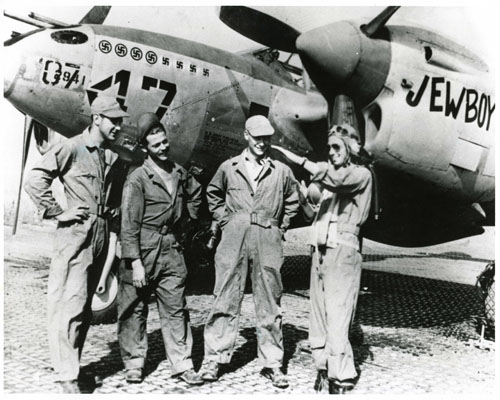
“…they think that self-derision is the mark of the “good sport”.
✡ ✡ ✡
On October 1, 2013, the Pew Research Center released the results of a telephone poll entitled “Portrait of Jewish Americans“. The poll explored the identity of American Jews in terms of child rearing, intermarriage, denominational affiliation, attitudes about Israel, and, the personal and communal factors that comprise the “meaning” of being a Jew in the United States of the early 21st Century. Comprising land-line and cellphone interviews of 3,475 persons, the poll was reported by Pew to have been the, “…most comprehensive national survey of the Jewish population since the 2000-2001 National Jewish Population Survey,” the central criterion for inclusion in the survey being identification – or as it turned out the lack thereof for some 689 respondents! – with the Jewish people in terms of religious affiliation.
Several results emerged from the poll, the central take-away being – as displayed in a graph at Pew’s website – that “culture” (an ambiguous concept open to wide interpretation!) and familial or ethnic ancestry had – as opposed to religious affiliation and observance – by 2013 become the primary markers of Jewish identity, reflective of trends by then prevailing across much of American society, if not Western civilization as a whole.
In terms of, “What does being Jewish mean in America today?”, the central take-aways from the poll were:
1) Large majorities of U.S. Jews said that remembering the Holocaust (73%) and leading an ethical life (69%) are essential to their sense of Jewishness.
2) More than half (56%) said that working for justice and equality is essential to what being Jewish means to them.
3) And about four-in-ten said that caring about Israel (43%) and having a good sense of humor (42%) are essential to their Jewish identity.
I don’t know what such a survey would reveal of the opinions and American Jews now, well into the opening decades of the twenty-first century – and in the future – in the wake of Hamas’ slaughter of Jewish civilians in Israel on October 7, 2023; in the context of Israel’s war against that terrorist organization; amidst the global eruption of openly antiJewish rhetoric and calumny that’s transpired since October 7, and in a larger context, America’s post-January-20-2009 ongoing “fundamental transformation”. (The ultimate results of the latter are not yet in, but thus far we have a solid indication of where things might be headed. Then again, history hides its own surprises.) But in terms of the survey itself, a specific result, that a good sense of humor had become central to the identity of American Jews – far, far (far) more than being part of a Jewish community, observing Jewish law (halacha), and keeping kosher – was, subsequent to the survey’s release, a point of particular notice and commentary.
Well…
Sometimes in life there’s this thing called synchronicity…
Roughly coincident with the poll’s release, during one of my many visits to the Dorot Jewish Division of the New York Public Library, while researching the Jewish Frontier (which has been the basis of many posts at this blog!) – without knowledge of its contents beforehand – I chanced across an opinion piece written 78 years before, which pertained to the topics of Jews, humor, and Jewish humor (should I put that in quotes, as per “Jew-Ish Humor“?). Written by Henry Montor and published in November of 1935, his essay, “Curse of Jewish Comedians”, discusses the nature and implications of tropes and visual stereotypes utilized by American Jewish comedians in vaudeville and popular culture during the 1930s (and by implication even earlier), and, the implications of this in terms of the collective perception of American Jews: By American society as a whole, and even more importantly (though not explicitly stated in the essay, the inference is obvious!) by the Jews of the United States themselves. Montor specifically pointed to Lou Holtz and Harry Hershfield in this regard, to a minor degree adding to this not-so-august duo George Jessel, Milton Berle, and Al Jolson. However, Montor does express praise for Jack Benny, (George) Burns and (Gracie) Allen, and another married comedic duo (never heard of them ’til I read the essay!), (Jessie) Block and (Eva) Sully.
Given the – by the 1930s – waning of vaudeville and the simultaneous preeminence of radio, Montor closed on a note of optimism:
“It is fortunate that vaudeville is dying.
It is also fortunate that radio is governed by rigid rules.
For otherwise,
the attempt to combat anti-Semitism in America
would be even more thoroughly hampered than it is
by Jews who think they are funny when they are merely being contemptible.”
When I read Montor’s essay in 2013 – even as I contemplate it now, in 2023 – it was impossible not to weigh its message in terms of what the Pew survey reported about the Jews of America, and, the nature and implications of the humor created by Jewish comedians – funnymen and funnywomen both – during the intervening decades and well into contemporary times. Leaving aside the vehemence of Montor’s arguments, I solidly empathize with his underlying theme concerning the imperative of the Jewish people manifesting a sense of pride, whether in the America – the world – of the 1930s, or the world – the America – of the 2020s.
But in a far larger sense, I can’t help wonder about the very association of Jews and humor; Jews and comedy; the assumption that a sense of humor is so central to and perhaps (perhaps…?) a part of Jewish identity. About that, I wonder. About that, I have long been a skeptic.
Does the association of Jews and comedy; the taken-for-granted belief about a sense of humor being an inherent and perennial part of the Jewish character, really reflect a continuing and inherent quality of the Jewish people? Or, is the association of Jews and humor simply a passing coincidence of long duration that reflected the confluence of modern communications technology, the ascendancy of the mass media, and – at least during the past century, but not anymore – a homogenous popular culture?
I think so. The explanation’s pretty straightforward.
Given the perennial emphasis among the Jewish people of literacy, then in light of secularization, and, Jewish political emancipation (…more de facto than de jure? – time will tell!…) social and technical developments in the modern world enabled those exceedingly few individuals favored by talent, drive, and luck (never discount luck!) the opportunity to observe, find, and enter a “niche” in mass culture – whether in print, stage, film, or pixel – created by the incongruity between the past, the present, and even the future. In this situation, the fact that some (not all) Jewish comedians and humorists would unhesitatingly promulgate negative stereotypes about Jews – regardless of the media, platform, or technology – is not at all surprising.
During an age characterized by continuing social transformation and the loss of a sense of “place” and “identity” among so very many men, they were people of two (or more) worlds who I think felt at home in none; for whom ties to the Jewish people had desiccated to the point of sentimental irrelevancy; for whom the need for social acceptability had become an end in itself.
If social acceptability and “success” internalizing and then projecting prevailing negative stereotypes, then so be it.
To sum things up, a joke is nice. A joke is funny. But, more than mere irreverence, the abiding need to make “jokes” concerning oneself and one’s people is a sign of something else entirely.
______________________________
And so, for your consideration, here’s Henry Montor’s essay, followed with an excerpt from an interview of Aharon Appelfeld by Philip Roth.
Curse of Jewish Comedians
Jewish Frontier
November, 1935
THE average American knows the average Jew as a caricature and not as a flesh-and-blood reality. His picture of the typical Jew is of a hunch-backed, long-nosed, gesturing individual, marked by a harsh accent and a cupidinous, lecherous mind.
Due to this portrayal of the Jew there has developed in America a sympathy, more widespread than is acknowledged, for the anti-Semitic program that has its most refined executioners in the Nazis of Germany.
For decades before Hitler the German public and private presses were turning out the most grotesque cartoons of Jews. Violent and offensive, they were nevertheless the product of consummate artists. Hitler had invaluable allies in these accumulating ribald sketches.
The anti-Semitic movement in America has a similar background, though the caricatures are supplied from an entirely different source. In this country they are furnished not by hostile newspapers and magazines but by Jews themselves.
For the Jews of the United States are cursed with their comedians. With a great measure of pride Jews point to the predominance on the vaudeville and musical comedy stage of men and women who originated in New York’s East Side or in some equally Jewish section of a native metropolis. They have insisted that these masters of the quip were making a genuine contribution to American folklore and that they represented the best in American humor.
It is true that these Jewish comedians have made innumerable millions laugh. They have coined phrases that have been the bulk of conversation of street-curb and drawing-room alike. In New York, Chicago, Boston, Philadelphia and other equally large centers of Jewish population, as well as in the smaller towns where few Jews have ever penetrated, there is a portrait of the Jew as clear and unequivocal as though some distinct personality had actually sat for it. The average American Christian knows the Jew only as he has been presented on a thousand stages – by Jewish comedians.
Virtually every characteristic which the Christian links with the Jew has been impressed upon him by the clowning antics of Jews. The violent gesturing with the hands, the shrugging of the shoulders, the obscene self-humiliation, the eagerness to outwit friend or foe – these attributes are the contributions of Jewish funmakers.
The stage portrayals of practically every actor whose name appears on the long list of comedians usually noted in books summarizing Jewish contributions, to American culture, contribute to the anti-Semitic indoctrination of America.
Lou Holtz, who achieved a miraculous fame during the year that New York’s Palace Theatre collapsed as the country’s premier vaudeville house, has since become known more widely through radio and movies. His stage Jew, is, in many respects, the symbol of the vulgarity, offensiveness and viciousness with which the great majority of Jewish comedians have shrouded Jews and their characteristics.
“…the prey thought that, on the whole, the hunter was right.”
– Peter Gay, from “Hermann Levi – A Study in Service and Self-Hatred”,
(in) Freud, Jews and Other Germans – Master and Victims in Modernist Culture
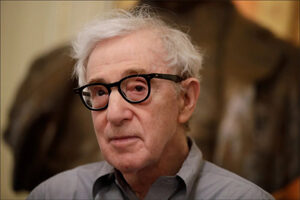
With the exception of several minor skits, notably his Maharajah story, Lou Holtz specializes in interpretations of Jewish eccentrics. Like most of his craft, Mr. Holtz has probably never given a second’s thought to the effect achieved by his stories. But the non-Jew listening to Lou Holtz’s act sees a race of whining, wheedling people who are cunning and self-opinionated, who have no hesitancy in betraying and defaming their co-religionists.
The possession of an accent is neither criminal nor dishonorable. And yet Lou Holtz manages to give to his nasal accent, presumably native to all Jews, an obsequiousness and poltroonery that must turn the stomach of any self-respecting Jew. Lou Holtz’s Jew is both a knave and a fool, a trickster and a buffoon. The audiences who laugh uproariously at his gags are nonetheless acquiring what they believe to be a realistic understanding of the true Jew.
It will be pleaded for the Jewish comedian that the effect of their portraiture is, ultimately, to display a lovable, jovial people. It will be said that there is no reason why the Jews, as well as the Scotch, Irish and Negroes, should not have their foibles satirized good-humoredly. It has also been I said that it is far better that Jews should do the fun-poking than non-Jews.
Insofar as the first two contentions are concerned the Jewish comedians are not preoccupied with portraiture; their aim is exaggeration. The more ludicrous the sketches they make, the more laughs they draw, the more salary they eventually get. Furthermore, there is not another race which is so infamously derided on the American stage as are the Jews. That is because the Jewish comedians feel no one can suspect their motives. With their twisted ideas of sportsmanship, they think that self-derision is the mark of the “good sport”.
The Jew sharpens, so to speak,
the dagger which he takes out of his enemy’s hand,
stabs himself,
then returns it gallantly to the anti-semite
with the silent reproach,
“Now see if you can do it half as well.”
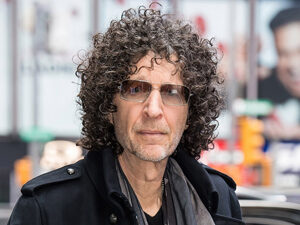
Creator and introducer of some of the most unfortunate paraphrases of Jewish thought and action is Harry Hershfield, the celebrated cartoonist. A person of the kindliest feelings and of some sensitivity, Hershfield nevertheless seems unaware of the fact that the bon mots he creates circulate in a thousand directions, bringing to the most distant points a vision of the Jew who has no regard for his traditions, who sponges on anyone who is innocent enough to be imposed upon; who leaves no path untried if it will bring him quickly to undeserved riches. As the creator of Abel Kabibble and other famous figures of the cartoon pages, Hershfield has revealed an unusual appreciation of the ambitions and failings of the average Jew. But that sense of proportion is abandoned when he frames or adapts gags for the vaudeville stage. These gags must be saltier and rawer than the next man’s offerings if they are to “wow” the customers. The result is a ghastly race between Jewish comedians to see who can create more raucous laughter by more vindictive caricatures.
Few of the Jewish comedians are genuine masters of the comedic situation. They are, in large part, slap-stick artists who provoke hearty guffaws by falling on banana peels or stepping in the way of lemon meringue pies. The intelligent play on words, the creation of intrinsically humorous scenes are processes that escape the majority of these comics. Their forte is the stimulation of belly-laughs by wisecracks that just about hit that section of the anatomy
Probably the outstanding Jewish comedian in America today is George Jessel, who is distinguished by the fact that he can speak without having a ghost writer draft his remarks in advance. He is nimble-witted, sensitive to the possibilities of phrasing. Possessed of a sly gift for satire, he has won no love from radio because he has always refused to take ether himself, the product or the manufacturer seriously. But even Jessel’s anecdotes on numerous occasions have given the quaintest ideas of Jewish practices. He has never been as offensive as his colleagues because he has always emphasized the emotional traits of Jews in such a manner as to create sympathy. His mother-and-son conversations are epics of American humor, conducted in the main with a healthy gift for wit that doesn’t leave a nauseous taste on the tongue after completion. But during the years a “fire” story here, a seduction story there, a sharp practice narrative elsewhere – all have added pigment to the American portrait of the Jew.
“He understood other people so well
that he adapted himself too much
to what they desired of him.”
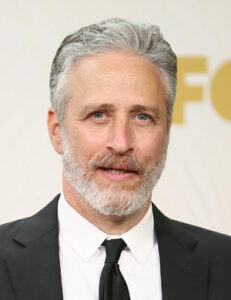
No one would contend that it is the function of the comedian, any more than of the novelist or sociologist, to present Jews as a race of purely angelic creatures to whom the slightest vice is alien. But the Jewish comedians have been making a living by doing virtually nothing else but caricature their people. One of the most horrible experiences is to sit in a metropolitan vaudeville house and listen to the roaring of an audience as some Jewish comedian concludes a story depicting a Jew getting the best of his neighbor in an underhanded way. It is no less gruesome that Jews form a large portion of such audiences.
A new crop of Jewish comedians is coming to the fore. They are imitating and enlarging upon the fashion set by their predecessors, Milton Berle, youngest of the new stars, is typical. He tells stories of perversion and “bootlegging of bottles in kosher hotels” with equal gusto. That he is an excellent comedian is undeniable. It is equally undeniable that his presumably innocently intended wisecracks are adding to the proportions of the amazing caricature of the Jew.
Jack Benny is one of the few comedians who does not infringe on good taste. But that is because he must yield to the regulations of radio. There was a time, when working for Earl Carroll, when his suave manner was being used to exploit stories more obnoxious than those he pours on the air today.
Sobbing-voiced Al Jolson has fortunately stuck to his mammy roles. The musica1 comedies in which he appeared with such great success provided him with scripts that vaulted over his own stage ideas. In radio, too, he has been more or less tied down to a routine. And yet there are occasions when he vulgarizes with the least of his imitators. It is his manner rather than the substance of Jolson’s stories that is offensive. He leaves no doubt that he is posturing as a Jew.
“What if there is too much reliance on joking, and the cure proves worse than the disease?”
Ruth R. Wisse, “Philip Roth: Portnoy’s Complaint” (from the “Rediscovered Reading” series), Sapir, Winter, 2023

That it is possible to be funny without being offensive is proved by Jack Pearl, by Burns and Allen and, to a lesser degree, by Block and Sully. For years Jack Pearl has been doing a Germanic accent. Never once has he said or done anything that would reflect on the essential honesty and decency of tree German type he was representing. He has always steered clear of Jewish caricatures, because he happens to be one of the few men on the vaudeville stage who has some conception of the responsibility he bears. Burns and Allen, most popular of the radio teams, have always managed to extract their humor from situations and not from individuals. Their phenomenal success is the greatest indictment of the other Jewish comedians, for it reveals their lack of ingenuity as well as their social irresponsibility.
Radio has been a boon to the Jews America, for it has curbed practically all the Jewish comedians who have been lucky enough to enter that kingdom. From time to time, however, they appear briefly on the national chains. Their menace is not so well curbed, on the individual and smaller chains.
It is fortunate that vaudeville is dying. It is also fortunate that radio is governed by rigid rules. For otherwise, the attempt to combat anti-Semitism in America would be even more thoroughly hampered than it is by Jews who think they are funny when they are merely being contemptible.
✡
✡ ✡
✡ ✡ ✡
“Walking the Way of the Survivor: A Talk With Aharon Appelfeld”
by Philip Roth
The New York Times Book Review
February 28, 1988
“It took me years to draw close to the Jew within me.
I had to get rid of many prejudices within me
and to meet many Jews in order to find myself in them.
Anti-Semitism directed at oneself was an original Jewish creation.
I don’t know of any other nation so flooded with self-criticism.
Even after the Holocaust Jews did not seem blameless in their own eyes.
On the contrary, harsh comments were made by prominent Jews against the victims,
for not protecting themselves and fighting back.
The Jewish ability to internalize any critical and condemnatory remark
and castigate themselves is one of the marvels of human nature.
What has preoccupied me,
and continues to perturb me,
is this anti-Semitism directed at oneself,
an ancient Jewish ailment which,
in modern times,
has taken on various guises.”
✡ ✡ ✡
✡ ✡
✡
What’s so funny about it?
HENRY MONTOR IS DEAD AT 76; U.J.A. AND ISRAEL BOND LEADER, The New York Times, April 16, 1982
Henry Montor Dead at 76, April 16, 1982 (Jewish Telegraphic Agency)
Freud, Jews and Other Germans – Master and Victims in Modernist Culture, Oxford University Press, New York, N.Y., 1978
Tobin, Jonathan S., American Jews: Laughing but Shrinking, Commentary, October 1, 2013